EP1440955A2 - Gleitelement für Dichtungen und Verfahren zu dessen Herstellung - Google Patents
Gleitelement für Dichtungen und Verfahren zu dessen Herstellung Download PDFInfo
- Publication number
- EP1440955A2 EP1440955A2 EP04001374A EP04001374A EP1440955A2 EP 1440955 A2 EP1440955 A2 EP 1440955A2 EP 04001374 A EP04001374 A EP 04001374A EP 04001374 A EP04001374 A EP 04001374A EP 1440955 A2 EP1440955 A2 EP 1440955A2
- Authority
- EP
- European Patent Office
- Prior art keywords
- carbon
- sliding element
- seals
- weight
- carbon fibers
- Prior art date
- Legal status (The legal status is an assumption and is not a legal conclusion. Google has not performed a legal analysis and makes no representation as to the accuracy of the status listed.)
- Granted
Links
- 238000000034 method Methods 0.000 title description 14
- 230000008569 process Effects 0.000 title description 14
- 238000004519 manufacturing process Methods 0.000 title description 5
- 229920000049 Carbon (fiber) Polymers 0.000 abstract description 58
- 239000004917 carbon fiber Substances 0.000 abstract description 58
- OKTJSMMVPCPJKN-UHFFFAOYSA-N Carbon Chemical compound [C] OKTJSMMVPCPJKN-UHFFFAOYSA-N 0.000 abstract description 47
- 229910052799 carbon Inorganic materials 0.000 abstract description 44
- 239000011159 matrix material Substances 0.000 abstract description 25
- 229910021396 non-graphitizing carbon Inorganic materials 0.000 abstract description 20
- 238000005461 lubrication Methods 0.000 abstract description 13
- 239000007787 solid Substances 0.000 abstract description 11
- 239000011230 binding agent Substances 0.000 abstract description 9
- 229920003002 synthetic resin Polymers 0.000 abstract description 6
- 239000000057 synthetic resin Substances 0.000 abstract description 6
- 238000004381 surface treatment Methods 0.000 abstract description 4
- 239000000463 material Substances 0.000 description 35
- 239000000203 mixture Substances 0.000 description 34
- 238000011156 evaluation Methods 0.000 description 31
- 239000003575 carbonaceous material Substances 0.000 description 24
- HBMJWWWQQXIZIP-UHFFFAOYSA-N silicon carbide Chemical compound [Si+]#[C-] HBMJWWWQQXIZIP-UHFFFAOYSA-N 0.000 description 17
- 229910010271 silicon carbide Inorganic materials 0.000 description 17
- 238000012360 testing method Methods 0.000 description 14
- 239000012530 fluid Substances 0.000 description 13
- 230000000694 effects Effects 0.000 description 12
- KXGFMDJXCMQABM-UHFFFAOYSA-N 2-methoxy-6-methylphenol Chemical compound [CH]OC1=CC=CC([CH])=C1O KXGFMDJXCMQABM-UHFFFAOYSA-N 0.000 description 11
- 230000005484 gravity Effects 0.000 description 11
- 229920001568 phenolic resin Polymers 0.000 description 11
- 239000005011 phenolic resin Substances 0.000 description 10
- 230000000052 comparative effect Effects 0.000 description 9
- 230000007423 decrease Effects 0.000 description 9
- 229920002239 polyacrylonitrile Polymers 0.000 description 9
- 230000003628 erosive effect Effects 0.000 description 8
- 229920001187 thermosetting polymer Polymers 0.000 description 8
- 229910021385 hard carbon Inorganic materials 0.000 description 7
- 238000000465 moulding Methods 0.000 description 7
- 238000005498 polishing Methods 0.000 description 7
- 239000003245 coal Substances 0.000 description 6
- 238000004898 kneading Methods 0.000 description 6
- 230000013011 mating Effects 0.000 description 6
- XLYOFNOQVPJJNP-UHFFFAOYSA-N water Substances O XLYOFNOQVPJJNP-UHFFFAOYSA-N 0.000 description 6
- 238000010304 firing Methods 0.000 description 5
- 238000002156 mixing Methods 0.000 description 5
- 238000005520 cutting process Methods 0.000 description 4
- 239000000843 powder Substances 0.000 description 4
- 239000000428 dust Substances 0.000 description 3
- 229910002804 graphite Inorganic materials 0.000 description 3
- 239000010439 graphite Substances 0.000 description 3
- 239000000314 lubricant Substances 0.000 description 3
- 239000002245 particle Substances 0.000 description 3
- 229920005989 resin Polymers 0.000 description 3
- 239000011347 resin Substances 0.000 description 3
- UFWIBTONFRDIAS-UHFFFAOYSA-N Naphthalene Chemical compound C1=CC=CC2=CC=CC=C21 UFWIBTONFRDIAS-UHFFFAOYSA-N 0.000 description 2
- 239000007789 gas Substances 0.000 description 2
- 238000005342 ion exchange Methods 0.000 description 2
- 239000003110 molding sand Substances 0.000 description 2
- 230000002787 reinforcement Effects 0.000 description 2
- 238000005245 sintering Methods 0.000 description 2
- 239000002002 slurry Substances 0.000 description 2
- 239000000243 solution Substances 0.000 description 2
- 230000003746 surface roughness Effects 0.000 description 2
- CHDQVBAPUJDYOV-UHFFFAOYSA-N 3,5-dimethylphenol;formaldehyde Chemical compound O=C.CC1=CC(C)=CC(O)=C1 CHDQVBAPUJDYOV-UHFFFAOYSA-N 0.000 description 1
- IJGRMHOSHXDMSA-UHFFFAOYSA-N Atomic nitrogen Chemical compound N#N IJGRMHOSHXDMSA-UHFFFAOYSA-N 0.000 description 1
- 238000005299 abrasion Methods 0.000 description 1
- 230000009471 action Effects 0.000 description 1
- 239000000654 additive Substances 0.000 description 1
- 230000000996 additive effect Effects 0.000 description 1
- 239000012615 aggregate Substances 0.000 description 1
- PNEYBMLMFCGWSK-UHFFFAOYSA-N aluminium oxide Inorganic materials [O-2].[O-2].[O-2].[Al+3].[Al+3] PNEYBMLMFCGWSK-UHFFFAOYSA-N 0.000 description 1
- 239000007864 aqueous solution Substances 0.000 description 1
- 239000006229 carbon black Substances 0.000 description 1
- 229920002678 cellulose Polymers 0.000 description 1
- 239000001913 cellulose Substances 0.000 description 1
- 238000006243 chemical reaction Methods 0.000 description 1
- 239000004927 clay Substances 0.000 description 1
- 239000011333 coal pitch coke Substances 0.000 description 1
- 239000010725 compressor oil Substances 0.000 description 1
- 239000002826 coolant Substances 0.000 description 1
- 230000007797 corrosion Effects 0.000 description 1
- 238000005260 corrosion Methods 0.000 description 1
- 230000009849 deactivation Effects 0.000 description 1
- 230000003247 decreasing effect Effects 0.000 description 1
- 230000007547 defect Effects 0.000 description 1
- 229910001873 dinitrogen Inorganic materials 0.000 description 1
- 229920001971 elastomer Polymers 0.000 description 1
- 239000003822 epoxy resin Substances 0.000 description 1
- 239000007849 furan resin Substances 0.000 description 1
- 238000000227 grinding Methods 0.000 description 1
- 230000020169 heat generation Effects 0.000 description 1
- 238000010438 heat treatment Methods 0.000 description 1
- 230000006872 improvement Effects 0.000 description 1
- 229910052500 inorganic mineral Inorganic materials 0.000 description 1
- 239000007788 liquid Substances 0.000 description 1
- 229910052751 metal Inorganic materials 0.000 description 1
- 239000002184 metal Substances 0.000 description 1
- 239000011707 mineral Substances 0.000 description 1
- 238000012986 modification Methods 0.000 description 1
- 230000004048 modification Effects 0.000 description 1
- CWQXQMHSOZUFJS-UHFFFAOYSA-N molybdenum disulfide Chemical compound S=[Mo]=S CWQXQMHSOZUFJS-UHFFFAOYSA-N 0.000 description 1
- 229910052982 molybdenum disulfide Inorganic materials 0.000 description 1
- 238000012856 packing Methods 0.000 description 1
- 239000002006 petroleum coke Substances 0.000 description 1
- 239000011295 pitch Substances 0.000 description 1
- 229920000647 polyepoxide Polymers 0.000 description 1
- 229920001225 polyester resin Polymers 0.000 description 1
- 239000004645 polyester resin Substances 0.000 description 1
- 239000004800 polyvinyl chloride Substances 0.000 description 1
- 239000005033 polyvinylidene chloride Substances 0.000 description 1
- 229910000679 solder Inorganic materials 0.000 description 1
- 238000005979 thermal decomposition reaction Methods 0.000 description 1
Images




Classifications
-
- C—CHEMISTRY; METALLURGY
- C04—CEMENTS; CONCRETE; ARTIFICIAL STONE; CERAMICS; REFRACTORIES
- C04B—LIME, MAGNESIA; SLAG; CEMENTS; COMPOSITIONS THEREOF, e.g. MORTARS, CONCRETE OR LIKE BUILDING MATERIALS; ARTIFICIAL STONE; CERAMICS; REFRACTORIES; TREATMENT OF NATURAL STONE
- C04B35/00—Shaped ceramic products characterised by their composition; Ceramics compositions; Processing powders of inorganic compounds preparatory to the manufacturing of ceramic products
- C04B35/515—Shaped ceramic products characterised by their composition; Ceramics compositions; Processing powders of inorganic compounds preparatory to the manufacturing of ceramic products based on non-oxide ceramics
- C04B35/52—Shaped ceramic products characterised by their composition; Ceramics compositions; Processing powders of inorganic compounds preparatory to the manufacturing of ceramic products based on non-oxide ceramics based on carbon, e.g. graphite
-
- C—CHEMISTRY; METALLURGY
- C04—CEMENTS; CONCRETE; ARTIFICIAL STONE; CERAMICS; REFRACTORIES
- C04B—LIME, MAGNESIA; SLAG; CEMENTS; COMPOSITIONS THEREOF, e.g. MORTARS, CONCRETE OR LIKE BUILDING MATERIALS; ARTIFICIAL STONE; CERAMICS; REFRACTORIES; TREATMENT OF NATURAL STONE
- C04B35/00—Shaped ceramic products characterised by their composition; Ceramics compositions; Processing powders of inorganic compounds preparatory to the manufacturing of ceramic products
- C04B35/71—Ceramic products containing macroscopic reinforcing agents
- C04B35/78—Ceramic products containing macroscopic reinforcing agents containing non-metallic materials
- C04B35/80—Fibres, filaments, whiskers, platelets, or the like
- C04B35/83—Carbon fibres in a carbon matrix
-
- F—MECHANICAL ENGINEERING; LIGHTING; HEATING; WEAPONS; BLASTING
- F16—ENGINEERING ELEMENTS AND UNITS; GENERAL MEASURES FOR PRODUCING AND MAINTAINING EFFECTIVE FUNCTIONING OF MACHINES OR INSTALLATIONS; THERMAL INSULATION IN GENERAL
- F16J—PISTONS; CYLINDERS; SEALINGS
- F16J15/00—Sealings
- F16J15/16—Sealings between relatively-moving surfaces
- F16J15/34—Sealings between relatively-moving surfaces with slip-ring pressed against a more or less radial face on one member
- F16J15/3496—Sealings between relatively-moving surfaces with slip-ring pressed against a more or less radial face on one member use of special materials
-
- C—CHEMISTRY; METALLURGY
- C04—CEMENTS; CONCRETE; ARTIFICIAL STONE; CERAMICS; REFRACTORIES
- C04B—LIME, MAGNESIA; SLAG; CEMENTS; COMPOSITIONS THEREOF, e.g. MORTARS, CONCRETE OR LIKE BUILDING MATERIALS; ARTIFICIAL STONE; CERAMICS; REFRACTORIES; TREATMENT OF NATURAL STONE
- C04B2235/00—Aspects relating to ceramic starting mixtures or sintered ceramic products
- C04B2235/02—Composition of constituents of the starting material or of secondary phases of the final product
- C04B2235/30—Constituents and secondary phases not being of a fibrous nature
- C04B2235/42—Non metallic elements added as constituents or additives, e.g. sulfur, phosphor, selenium or tellurium
- C04B2235/422—Carbon
-
- C—CHEMISTRY; METALLURGY
- C04—CEMENTS; CONCRETE; ARTIFICIAL STONE; CERAMICS; REFRACTORIES
- C04B—LIME, MAGNESIA; SLAG; CEMENTS; COMPOSITIONS THEREOF, e.g. MORTARS, CONCRETE OR LIKE BUILDING MATERIALS; ARTIFICIAL STONE; CERAMICS; REFRACTORIES; TREATMENT OF NATURAL STONE
- C04B2235/00—Aspects relating to ceramic starting mixtures or sintered ceramic products
- C04B2235/02—Composition of constituents of the starting material or of secondary phases of the final product
- C04B2235/30—Constituents and secondary phases not being of a fibrous nature
- C04B2235/48—Organic compounds becoming part of a ceramic after heat treatment, e.g. carbonising phenol resins
-
- C—CHEMISTRY; METALLURGY
- C04—CEMENTS; CONCRETE; ARTIFICIAL STONE; CERAMICS; REFRACTORIES
- C04B—LIME, MAGNESIA; SLAG; CEMENTS; COMPOSITIONS THEREOF, e.g. MORTARS, CONCRETE OR LIKE BUILDING MATERIALS; ARTIFICIAL STONE; CERAMICS; REFRACTORIES; TREATMENT OF NATURAL STONE
- C04B2235/00—Aspects relating to ceramic starting mixtures or sintered ceramic products
- C04B2235/02—Composition of constituents of the starting material or of secondary phases of the final product
- C04B2235/50—Constituents or additives of the starting mixture chosen for their shape or used because of their shape or their physical appearance
- C04B2235/52—Constituents or additives characterised by their shapes
- C04B2235/5208—Fibers
- C04B2235/526—Fibers characterised by the length of the fibers
-
- C—CHEMISTRY; METALLURGY
- C04—CEMENTS; CONCRETE; ARTIFICIAL STONE; CERAMICS; REFRACTORIES
- C04B—LIME, MAGNESIA; SLAG; CEMENTS; COMPOSITIONS THEREOF, e.g. MORTARS, CONCRETE OR LIKE BUILDING MATERIALS; ARTIFICIAL STONE; CERAMICS; REFRACTORIES; TREATMENT OF NATURAL STONE
- C04B2235/00—Aspects relating to ceramic starting mixtures or sintered ceramic products
- C04B2235/02—Composition of constituents of the starting material or of secondary phases of the final product
- C04B2235/50—Constituents or additives of the starting mixture chosen for their shape or used because of their shape or their physical appearance
- C04B2235/52—Constituents or additives characterised by their shapes
- C04B2235/5208—Fibers
- C04B2235/5264—Fibers characterised by the diameter of the fibers
-
- C—CHEMISTRY; METALLURGY
- C04—CEMENTS; CONCRETE; ARTIFICIAL STONE; CERAMICS; REFRACTORIES
- C04B—LIME, MAGNESIA; SLAG; CEMENTS; COMPOSITIONS THEREOF, e.g. MORTARS, CONCRETE OR LIKE BUILDING MATERIALS; ARTIFICIAL STONE; CERAMICS; REFRACTORIES; TREATMENT OF NATURAL STONE
- C04B2235/00—Aspects relating to ceramic starting mixtures or sintered ceramic products
- C04B2235/70—Aspects relating to sintered or melt-casted ceramic products
- C04B2235/74—Physical characteristics
- C04B2235/77—Density
-
- C—CHEMISTRY; METALLURGY
- C04—CEMENTS; CONCRETE; ARTIFICIAL STONE; CERAMICS; REFRACTORIES
- C04B—LIME, MAGNESIA; SLAG; CEMENTS; COMPOSITIONS THEREOF, e.g. MORTARS, CONCRETE OR LIKE BUILDING MATERIALS; ARTIFICIAL STONE; CERAMICS; REFRACTORIES; TREATMENT OF NATURAL STONE
- C04B2235/00—Aspects relating to ceramic starting mixtures or sintered ceramic products
- C04B2235/70—Aspects relating to sintered or melt-casted ceramic products
- C04B2235/96—Properties of ceramic products, e.g. mechanical properties such as strength, toughness, wear resistance
-
- Y—GENERAL TAGGING OF NEW TECHNOLOGICAL DEVELOPMENTS; GENERAL TAGGING OF CROSS-SECTIONAL TECHNOLOGIES SPANNING OVER SEVERAL SECTIONS OF THE IPC; TECHNICAL SUBJECTS COVERED BY FORMER USPC CROSS-REFERENCE ART COLLECTIONS [XRACs] AND DIGESTS
- Y10—TECHNICAL SUBJECTS COVERED BY FORMER USPC
- Y10T—TECHNICAL SUBJECTS COVERED BY FORMER US CLASSIFICATION
- Y10T428/00—Stock material or miscellaneous articles
- Y10T428/249921—Web or sheet containing structurally defined element or component
- Y10T428/249924—Noninterengaged fiber-containing paper-free web or sheet which is not of specified porosity
- Y10T428/249928—Fiber embedded in a ceramic, glass, or carbon matrix
-
- Y—GENERAL TAGGING OF NEW TECHNOLOGICAL DEVELOPMENTS; GENERAL TAGGING OF CROSS-SECTIONAL TECHNOLOGIES SPANNING OVER SEVERAL SECTIONS OF THE IPC; TECHNICAL SUBJECTS COVERED BY FORMER USPC CROSS-REFERENCE ART COLLECTIONS [XRACs] AND DIGESTS
- Y10—TECHNICAL SUBJECTS COVERED BY FORMER USPC
- Y10T—TECHNICAL SUBJECTS COVERED BY FORMER US CLASSIFICATION
- Y10T428/00—Stock material or miscellaneous articles
- Y10T428/28—Web or sheet containing structurally defined element or component and having an adhesive outermost layer
- Y10T428/2852—Adhesive compositions
-
- Y—GENERAL TAGGING OF NEW TECHNOLOGICAL DEVELOPMENTS; GENERAL TAGGING OF CROSS-SECTIONAL TECHNOLOGIES SPANNING OVER SEVERAL SECTIONS OF THE IPC; TECHNICAL SUBJECTS COVERED BY FORMER USPC CROSS-REFERENCE ART COLLECTIONS [XRACs] AND DIGESTS
- Y10—TECHNICAL SUBJECTS COVERED BY FORMER USPC
- Y10T—TECHNICAL SUBJECTS COVERED BY FORMER US CLASSIFICATION
- Y10T428/00—Stock material or miscellaneous articles
- Y10T428/30—Self-sustaining carbon mass or layer with impregnant or other layer
Definitions
- the present invention relates to a sliding element for seals used such as for mechanical seals and to their process of manufacturing. More particularly, the invention relates to a sliding element made from carbon having high degree of hardness which is used for mechanical seals under a heavy load condition, and which reduces the damage caused by cutting wear with floating solid foreign matters in sealed fluid or cavitation erosion of sliding material .
- carbon sliding materials are often used as seal rings for mechanical seals to seal the fluid.
- solid foreign matters such as molding sand, solder or cutting powder are tramped, floated and invaded in the sealed fluid from each parts of the system where seals are equipped, the solid foreign matters causes cutting wear on sliding face of the carbon sliding material. This may lead to the damage such as extraordinary surface roughness or extraordinary wear on sliding face and consequently, sealed fluid may leak in cases.
- silicon carbide material is poor in self-lubricant property compared to carbon material. Accordingly, by sliding under a heavy load condition, sliding faces become mirror surfaced, fluid film between the sliding faces can not be maintained and become in boundary lubrication, and along with the effect of sliding heat, the sliding faces may be secured to each other and seizure may occur in cases. And due to the sliding heat, secondary seal portion of rubber packing or the like may be damaged and sealed fluid may leak, consequently seal function may not stably be maintained.
- An object of the present invention is to provide a sliding element for seals which has high degree of hardness, excellent wear resistance property and further, solid lubrication property and their process of manufacturing.
- a sliding element for seals mainly comprising 25 to 75 weight % carbonaceous impalpable powdery aggregate of non-graphitizing carbon and/or graphitizing carbon and 20 to 50 weight % synthetic resin as binder, wherein carbonaceous carbon fibers without surface treatment are blended within the range of 5 to 25 weight % and inside carbon matrix, said carbon fibers are randomly scattered.
- “non-graphitizing carbon” and “graphitizing carbon” show degree of difficulty for graphitizing. That is, non-graphitizing carbon have difficulty in graphitizing, to the contrary, graphitizing carbon is easy to graphitize.
- Non-graphitizing carbon is exemplified by carbon black, polyvinylidene chloride (PVDC) coal, sugar coal, cellulose coal, phenol-formaldehyde resin coal and charcoals.
- Graphitizing carbon is exemplified by petroleum coke, coal pitch coke, polyvinyl chloride (PVC) coal and 3,5-dimethylphenol formaldehyde resinous coal.
- a process of manufacturing sliding element for seals comprising the steps of blending source material mainly comprising 25 to 75 weight % carbonaceous impalpable powdery aggregate of non-graphitizing carbon and/or graphitizing carbon and 20 to 50 weight % synthetic resin as binder blended with 5 to 25 weight % carbonaceous carbon fibers without surface treatment, mixing, kneading, molding and firing this to a predetermined temperature.
- carbonaceous hard carbon fibers are randomly scattered and buried for reinforcement.
- the effect of reinforced carbon fibers, for carbon fibers are carbonaceous and shows high degree of hardness, extend to impalpable powdery aggregate of non-graphitizing carbon and/or graphitizing carbon used for entire matrix of carbon material to have high degree of hardness and strength, and prevents these from falling as impalpable powdery condition. Consequently, wear resistance property improves considerably and fine seal property can be maintained, and these are its chief characteristics.
- sliding element for seals can prevent corrosion of carbon surface by the erosion.
- even soft graphite aggregate comprises carbon matrix which carbonaceous and hard carbon fibers are scattered inside to reinforce or, to the contrary, even hard carbonaceous aggregate comprises carbon matrix which soft graphite carbon fibers are scattered inside, these can not be the countermeasures against contemplate of the present invention like wear property resistance, Blister resistance or cavitation erosion resistance.
- a hard carbonaceous aggregate comprising carbon matrix which carbonaceous and hard carbon fibers are scattered inside to reinforce sliding element for seals is required.
- Said carbonaceous aggregate preferably has Vickers hardness of 80 or more.
- Carbon fibers of the present invention has diameter in a range of from 5 to 30 ⁇ m and length in a range of from 50 to 300 ⁇ m.
- the diameter is smaller than this, carbon fibers may break during kneading or molding process and the effect of reinforce inside the carbon matrix may be weakened.
- the diameter is larger than this, sliding torque may rise along with heat generation which causes damage on sliding faces and consequently sealed fluid may leak in cases. Then, when the length of carbon fibers are shorter than this, the effect of reinforce inside the carbon matrix may be weakened.
- Source materials of carbon fibers can be like PAN(polyacrylonitrile) or pitch series and are not particularly concerned but in order to prevent decrease of hardness, carbon fibers fired at maximum temperature 1500°C or less is used. When firing temperature is higher than this, carbon fibers may graphitize and carbon fibers itself deteriorates its strength. Accordingly, the effect of reinforce as well as improvement in strength of carbon matrix can not be obtained.
- Carbon fibers related to the present invention has 200 or more Vickers hardness and belongs to the category of hard carbon. Further, carbon fibers related to the present invention is not surface treated and does not require such process, accordingly lower cost sliding element for seals can be provided.
- Source materials of the present invention mainly comprising 25 to 75 weight % impalpable powdery aggregate of non-graphitizing carbon and/or graphitizing carbon and 20 to 50 weight % synthetic resin as binder is blended with the range of 5 to 25 weight % above mentioned carbonaceous carbon fibers without surface treatment.
- blend ratio of binder when it is lower than above mentioned range, aggregate and carbon fibers can not completely be coated and it can not completely be filled between the two aggregates, furthermore, fluidity of aggregate during the molding process decreases.
- said defects when it is higher than above mentioned range, said defects can be resolved but gas composition generated by thermal decomposition of binder during firing process often appears and it gives great effect on deformation or deflation of molded body, further, gas composition may remain in molded body causing cracks on molded body.
- blend ratio of aggregate is determined to be 25 to 75 weight %.
- Blending comprising said aggregate, binder and carbon fibers, after the process of mixing and kneading, has carbon fibers randomly scattered inside the kneaded material. Further, after molding process, by firing at temperature of 800 to 1500 °C , sliding element for seals according to the present invention which carbon fibers are randomly scattered inside the carbon matrix can be obtained.
- blended synthetic resin is not particularly concerned of its composition, but during kneading process, it requires sufficient wettability with the surface of aggregate such as non-graphitizing carbon or graphitizing carbon and carbon fibers. During molding process, it also requires sufficient fluidity inside the metal mold.
- Resins that satisfy these may be synthetic resins such as phenolic resin, epoxy resin, furan resin, polyester resin, and naphthalene resin. One or more kinds from these resins can be picked and used.
- the obtained carbon material having high degree of hardness which has aggregate impalpable powdery aggregate of non-graphitizing carbon and/or graphitizing carbon reinforced by carbonaceous carbon fibers having high degree of hardness as matrix, according to the purpose of use, may be added by small amount of mineral additive such as clay or solid lubricant such as graphite aggregate or molybdenum disulfide.
- Sliding element for seals according to the present invention is suitably used as mechanical seal for water pump, mechanical seal for compressor of car air conditioner, mechanical seal for pump of industrial use and mechanical seal for pump of all purposes.
- FIG 1 is a graph showing the relation between amount of carbon fibers and carbon material property according to examples of the invention.
- FIG 2 is a figure showing a testing machine of wear resistance by foreign material used in examples of the invention.
- FIG 3 is a graph showing the relation between Vickers hardness and wear volume fraction according to examples of the invention.
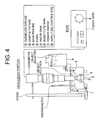
- FIG 4 is a figure showing a evaluation testing machine for cavitation erosion used in examples of the invention.
- FIG 5 is a figure showing ratios of weight decrease and sample forms after the evaluation.
- FIG 6 is a figure showing amount of leakage and form of sample sliding faces after the evaluation.
- FIG 7 is a figure showing configuration of sample sliding faces after the evaluation.
- Seal ring was produced under the same condition as example 1 except 65 weight % non-graphitizing carbon and 30 weight % thermosetting phenolic resin were used. Vickers hardness(hardness of carbon matrix) and apparent specific gravity of obtained seal ring were measured. Blend ratio of these composition and material characteristics of samples are shown in Table 1.
- Seal ring was produced under the same condition as example 1 except 62 weight % non-graphitizing carbon, 28 weight % thermosetting phenolic resin and 10 weight % carbon fibers of PAN series were used. Vickers hardness(hardness of carbon matrix) and apparent specific gravity of obtained seal ring were measured. Blend ratio of these composition and material characteristics of samples are shown in Table 1.
- Seal ring was produced under the same condition as example 1 except 54 weight % non-graphitizing carbon, 26 weight % thermosetting phenolic resin and 20 weight % carbon fibers of PAN series were used. Vickers hardness(hardness of carbon matrix) and apparent specific gravity of obtained seal ring were measured. Blend ratio of these composition and material characteristics of samples are shown in Table 1.
- Seal ring was produced under the same condition as example 1 except 50 weight % non-graphitizing carbon, 30 weight % thermosetting phenolic resin and 20 weight % carbon fibers of PAN series were used. Vickers hardness(hardness of carbon matrix) and apparent specific gravity of obtained seal ring were measured. Blend ratio of these composition and material characteristics of samples are shown in Table 1.
- Seal ring was produced under the same condition as example 3 except graphitizing carbon instead of non-graphitizing carbon was used.
- seal ring was produced under the same condition as example 1 except 72 weight % non-graphitizing carbon and 28 weight % thermosetting phenolic resin were used and carbon fibers were not blended. Vickers hardness(hardness of carbon matrix) and apparent specific gravity of obtained seal ring were measured. Blend ratio of these composition and material characteristics of samples are shown in Table 1.
- seal ring was produced under the same condition as example 1 except 71 weight % non-graphitizing carbon, 28 weight % thermosetting phenolic resin and 1 weight % carbon fibers of PAN series were used. Vickers hardness(hardness of carbon matrix) and apparent specific gravity of obtained seal ring were measured. Blend ratio of these composition and material characteristics of samples are shown in Table 1.
- seal ring was produced under the same condition as example 1 except 42 weight % non-graphitizing carbon, 28 weight % thermosetting phenolic resin and 30 weight % carbon fibers of PAN series were used. Vickers hardness(hardness of carbon matrix) and apparent specific gravity of obtained seal ring were measured. Blend ratio of these composition and material characteristics of samples are shown in Table 1.
- Wear resistance property of carbon material related to the present invention was relatively evaluated from that of other materials and its position was confirmed by said evaluation of resistance to wear by foreign material.
- example 3 of table 1 and existing carbon material A and B of conventional carbon material with good market performance are used. Further, as other materials, silicon carbide A by normal pressure sintering, silicon carbide B by reaction sintering, and silicon carbide C and D with remained carbon are used. Vickers hardness and apparent specific gravity of these carbon materials A and B and silicon carbide A to D are shown in table 2. Relativity of wear volume fraction to Vickers hardness is shown in Figure 3. sample carbon A carbon B silicon carbide A silicon carbide B silicon carbide C silicon carbide D Vickers hardness 107 73 2200 1400 870 200 apparent specific gravity 1.55 1.60 3.04 3.05 2.60 2.30
- silicon carbide with high Vickers hardness have low wear volume fractions.
- Vickers hardness is higher than 200, wear volume fractions are small but as Vickers hardness decreases lower than 200, the tendency of increase in wear volume fractions can be observed. That is, for wear resistance property of this evaluation condition, materials having high degree of hardness such as silicon carbide are not required. Materials with 200 or more Vickers hardness are well contented for wear resistance property.
- carbon fibers blended hard carbon material of example 3 has lower ratio of weight decrease relatively to those of conventional existing carbon material A or carbon material B. And under this evaluation condition, it can be said that this has erosion resistance property.
- example 3 of table 1 and carbon material A, carbon material B and silicon carbide A of table 2 were used for seal ring of mechanical seals for water pump. And as mating ring of mating sliding material, silicon carbide A was used.
- carbon fibers blended hard carbon material of example 3 is little inferior to silicon carbide A in wear resistance property, extreme wear or extreme leakage do not occur like conventional existing carbon material A or carbon material B. Accordingly, resistance to wear by foreign material and seal property as mechanical seal are well contented for their functions.
- example 3 of table 1 and carbon material A of table 2 were used for seal ring of mechanical seals for compressor of car air conditioner. And as mating ring of mating sliding material, silicon carbide A was used.
- Blister occurred on conventional existing carbon material A, to the contrary, Blister did not occur on carbon fibers blended hard carbon material of example 3. And under this evaluation condition, it can be said that this is well contented for Blister resistance property.
- sliding element for seals which has high degree of hardness, excellent wear resistance property and further, solid lubrication property and their process of manufacturing can be produced.
Landscapes
- Engineering & Computer Science (AREA)
- Chemical & Material Sciences (AREA)
- Ceramic Engineering (AREA)
- General Engineering & Computer Science (AREA)
- Manufacturing & Machinery (AREA)
- Materials Engineering (AREA)
- Structural Engineering (AREA)
- Organic Chemistry (AREA)
- Chemical Kinetics & Catalysis (AREA)
- Composite Materials (AREA)
- Mechanical Engineering (AREA)
- Sealing Material Composition (AREA)
- Mechanical Sealing (AREA)
- Lubricants (AREA)
- Ceramic Products (AREA)
Applications Claiming Priority (2)
| Application Number | Priority Date | Filing Date | Title |
|---|---|---|---|
| JP2003016707 | 2003-01-24 | ||
| JP2003016707A JP4425548B2 (ja) | 2003-01-24 | 2003-01-24 | シール用摺動部材及びその製造方法 |
Publications (3)
| Publication Number | Publication Date |
|---|---|
| EP1440955A2 true EP1440955A2 (de) | 2004-07-28 |
| EP1440955A3 EP1440955A3 (de) | 2007-06-20 |
| EP1440955B1 EP1440955B1 (de) | 2017-04-05 |
Family
ID=32588697
Family Applications (1)
| Application Number | Title | Priority Date | Filing Date |
|---|---|---|---|
| EP04001374.0A Expired - Lifetime EP1440955B1 (de) | 2003-01-24 | 2004-01-22 | Dichtungsanordnung enthaltend einem gleitelement und die verwendung eines gleitelements für dichtungen |
Country Status (5)
| Country | Link |
|---|---|
| US (1) | US7264877B2 (de) |
| EP (1) | EP1440955B1 (de) |
| JP (1) | JP4425548B2 (de) |
| KR (1) | KR100978716B1 (de) |
| CN (1) | CN100489354C (de) |
Cited By (1)
| Publication number | Priority date | Publication date | Assignee | Title |
|---|---|---|---|---|
| WO2007001421A1 (en) * | 2004-10-22 | 2007-01-04 | Metal Matrix Cast Composites, Llc | Spray deposition apparatus and methods for metal matrix composites |
Families Citing this family (13)
| Publication number | Priority date | Publication date | Assignee | Title |
|---|---|---|---|---|
| KR20050093981A (ko) * | 2004-03-17 | 2005-09-26 | 민경은 | 열경화성 수지를 이용한 미케니컬 씰의 조성물 및 그의제조방법 |
| US20090302546A1 (en) * | 2005-04-28 | 2009-12-10 | Hidekazu Takahashi | Mechanical seal device |
| JP4792843B2 (ja) * | 2005-07-08 | 2011-10-12 | スターライト工業株式会社 | シール材 |
| TW200801077A (en) * | 2006-05-01 | 2008-01-01 | Sekisui Chemical Co Ltd | Sintered resin product and electronic device comprising the same |
| US20090309262A1 (en) | 2008-06-17 | 2009-12-17 | Century, Inc. | Manufacturing apparatus and method for producing a preform |
| EP2752602B1 (de) * | 2011-09-03 | 2018-04-11 | Eagle Industry Co., Ltd. | Gleitkomponente |
| CN104736905A (zh) * | 2013-04-09 | 2015-06-24 | 伊格尔工业股份有限公司 | 密封滑动部件 |
| JP6329352B2 (ja) * | 2013-09-24 | 2018-05-23 | Ntn株式会社 | 固体潤滑剤及びその製造方法 |
| US10760616B2 (en) | 2013-09-19 | 2020-09-01 | Ntn Corporation | Solid lubricant and solid-lubrication rolling bearing |
| CN105651654B (zh) * | 2015-12-30 | 2018-08-28 | 平顶山易成新材料有限公司 | 一种精密研磨用碳化硅粉体的划伤程度检测方法 |
| CN106866149B (zh) * | 2017-03-14 | 2019-08-02 | 株洲湘火炬火花塞有限责任公司 | 一种碳化硅基复合材料机械密封滑动部件的制备方法 |
| EP3845784A4 (de) * | 2018-11-02 | 2022-08-17 | Eagle Industry Co., Ltd. | Gleitelement für dichtung und dichtungsvorrichtung |
| CN110372409A (zh) * | 2019-08-08 | 2019-10-25 | 苏州山人纳米科技有限公司 | 纳米纤维素增强石墨材料快速制备方法 |
Citations (5)
| Publication number | Priority date | Publication date | Assignee | Title |
|---|---|---|---|---|
| GB1260577A (en) | 1968-12-10 | 1972-01-19 | Atomic Energy Commission | Fibrous carbon or graphite products and method of making same |
| GB1421672A (en) | 1973-08-24 | 1976-01-21 | Atomic Energy Authority Uk | Carbon composites |
| JPS63172722A (ja) | 1987-01-13 | 1988-07-16 | Yazaki Corp | 導電性エポキシ樹脂組成物 |
| JPH03150266A (ja) | 1989-11-07 | 1991-06-26 | Akechi Ceramics Kk | 炭素/炭素複合材料の製造方法 |
| US5242746A (en) | 1990-05-10 | 1993-09-07 | Le Carbone-Lorraine | Friction elements of composite carbon-carbon material and of differential texture |
Family Cites Families (18)
| Publication number | Priority date | Publication date | Assignee | Title |
|---|---|---|---|---|
| US3107153A (en) * | 1960-09-23 | 1963-10-15 | Armour Res Found | Method of fabricating carbon and graphite structures |
| US3932568A (en) * | 1973-06-26 | 1976-01-13 | Friction Products Inc. | High-energy brake and brake components |
| CH650760A5 (en) * | 1980-06-09 | 1985-08-15 | Kostikov Valery I | Mixture for preparing a carbon base which is used in the production of silicised anti-friction material |
| JPS6295332A (ja) * | 1985-10-22 | 1987-05-01 | Aisin Seiki Co Ltd | カ−ボン摺動材料 |
| JPH0255273A (ja) * | 1988-08-18 | 1990-02-23 | Showa Denko Kk | メカニカルシール用炭化珪素焼結体およびそれを用いたメカニカルシール |
| JPH0273881A (ja) * | 1988-09-09 | 1990-03-13 | Agency Of Ind Science & Technol | グランドパッキンの製造法 |
| JPH03205361A (ja) * | 1989-12-29 | 1991-09-06 | Nippon Steel Chem Co Ltd | 炭素繊維/炭素複合材料の製造方法 |
| JPH0478380A (ja) * | 1990-07-17 | 1992-03-12 | Toyota Motor Corp | メカニカルシール |
| DE4438456C2 (de) * | 1994-10-28 | 2002-07-11 | Deutsch Zentr Luft & Raumfahrt | Reibeinheit |
| JPH0920883A (ja) * | 1995-03-31 | 1997-01-21 | Ntn Corp | スクロール型コンプレッサ用シール部材組成物 |
| US5538649A (en) * | 1995-09-28 | 1996-07-23 | John Crane Inc. | Carbon composite mateiral for tribological applications |
| US5993905A (en) * | 1995-10-03 | 1999-11-30 | Msnw, Inc. | Low-temperature densification of carbon fiber preforms by colloidal graphite impregnation and mechanical consolidation |
| JPH09292033A (ja) * | 1996-04-26 | 1997-11-11 | Eagle Ind Co Ltd | メカニカルシール |
| US5990222A (en) * | 1996-12-27 | 1999-11-23 | Kyocera Corporation | Resin-Filler composite and production method thereof |
| US5962135A (en) * | 1997-04-09 | 1999-10-05 | Alliedsignal Inc. | Carbon/carbon friction material |
| DE19727586C2 (de) * | 1997-06-28 | 2002-10-24 | Daimler Chrysler Ag | Bremseinheit aus Bremsscheibe und Bremsbelag |
| US6350520B1 (en) * | 1998-08-26 | 2002-02-26 | Reticle, Inc. | Consolidated amorphous carbon materials, their manufacture and use |
| DE10310945A1 (de) * | 2003-03-13 | 2004-10-07 | Sgl Carbon Ag | Faserverstärkter Keramik-Werkstoff |
-
2003
- 2003-01-24 JP JP2003016707A patent/JP4425548B2/ja not_active Expired - Lifetime
-
2004
- 2004-01-15 US US10/757,398 patent/US7264877B2/en not_active Expired - Lifetime
- 2004-01-20 KR KR1020040004199A patent/KR100978716B1/ko not_active Expired - Fee Related
- 2004-01-20 CN CNB2004100033124A patent/CN100489354C/zh not_active Expired - Lifetime
- 2004-01-22 EP EP04001374.0A patent/EP1440955B1/de not_active Expired - Lifetime
Patent Citations (5)
| Publication number | Priority date | Publication date | Assignee | Title |
|---|---|---|---|---|
| GB1260577A (en) | 1968-12-10 | 1972-01-19 | Atomic Energy Commission | Fibrous carbon or graphite products and method of making same |
| GB1421672A (en) | 1973-08-24 | 1976-01-21 | Atomic Energy Authority Uk | Carbon composites |
| JPS63172722A (ja) | 1987-01-13 | 1988-07-16 | Yazaki Corp | 導電性エポキシ樹脂組成物 |
| JPH03150266A (ja) | 1989-11-07 | 1991-06-26 | Akechi Ceramics Kk | 炭素/炭素複合材料の製造方法 |
| US5242746A (en) | 1990-05-10 | 1993-09-07 | Le Carbone-Lorraine | Friction elements of composite carbon-carbon material and of differential texture |
Cited By (1)
| Publication number | Priority date | Publication date | Assignee | Title |
|---|---|---|---|---|
| WO2007001421A1 (en) * | 2004-10-22 | 2007-01-04 | Metal Matrix Cast Composites, Llc | Spray deposition apparatus and methods for metal matrix composites |
Also Published As
| Publication number | Publication date |
|---|---|
| KR100978716B1 (ko) | 2010-08-30 |
| CN100489354C (zh) | 2009-05-20 |
| JP2004224982A (ja) | 2004-08-12 |
| JP4425548B2 (ja) | 2010-03-03 |
| EP1440955A3 (de) | 2007-06-20 |
| US20040146709A1 (en) | 2004-07-29 |
| KR20040068487A (ko) | 2004-07-31 |
| US7264877B2 (en) | 2007-09-04 |
| EP1440955B1 (de) | 2017-04-05 |
| CN1517580A (zh) | 2004-08-04 |
Similar Documents
| Publication | Publication Date | Title |
|---|---|---|
| US7264877B2 (en) | Sliding element for seals and their process of manufacturing | |
| EP0520520B1 (de) | Keramische Verbundwerkstoff und Verfahren zur Herstellung desselben | |
| CN1040341C (zh) | 具有独立闭孔的多孔碳化硅轴承材料及其制备方法 | |
| US4036505A (en) | Mechanical seals | |
| JPH0255273A (ja) | メカニカルシール用炭化珪素焼結体およびそれを用いたメカニカルシール | |
| CN105885641A (zh) | 一种机械设备过流冲蚀用耐磨涂层及其制备方法 | |
| KR100687019B1 (ko) | 수지 풀리 및 수지 풀리용 수지조성물 | |
| JP4998458B2 (ja) | セラミック焼結体及びこれを用いた摺動部品、並びに、セラミック焼結体の製造方法 | |
| US3969451A (en) | Mechanical seals | |
| JP4030426B2 (ja) | シール用摺動部材及びその製造方法 | |
| JP3607778B2 (ja) | カーボン摺動材 | |
| CN100507062C (zh) | 适于烧结以形成自润滑固体材料的粉末混合物 | |
| JP4589154B2 (ja) | シールリング | |
| JPH09292033A (ja) | メカニカルシール | |
| EP1860144A1 (de) | Harzriemenscheibe | |
| JP2543093B2 (ja) | シ−ル用摺動部品 | |
| JP4865146B2 (ja) | 炭化珪素焼結部品並びにそれを用いたメカニカルシール及びその製造方法 | |
| CN113862056B (zh) | 汽轮机轴瓦用耐磨自修复材料及其制备方法 | |
| JP4176184B2 (ja) | ドライガス用摺動部材 | |
| KR102467685B1 (ko) | 엔진 피스톤 실크 인쇄용 고체윤활 코팅 조성물 | |
| JPH11180790A (ja) | 摺動用炭素材及びその製造方法 | |
| CN101365660A (zh) | 陶瓷烧结体、使用其的滑动部件以及陶瓷烧结体的制造方法 | |
| JPH0733287B2 (ja) | 炭化ケイ素複合摺動部材 | |
| JPH06279117A (ja) | メカニカルシール用硼化チタン複合炭化珪素焼結体およびメカニカルシール | |
| JP2002338357A (ja) | 摺動体及びメカニカルシール |
Legal Events
| Date | Code | Title | Description |
|---|---|---|---|
| PUAI | Public reference made under article 153(3) epc to a published international application that has entered the european phase |
Free format text: ORIGINAL CODE: 0009012 |
|
| AK | Designated contracting states |
Kind code of ref document: A2 Designated state(s): AT BE BG CH CY CZ DE DK EE ES FI FR GB GR HU IE IT LI LU MC NL PT RO SE SI SK TR |
|
| AX | Request for extension of the european patent |
Extension state: AL LT LV MK |
|
| PUAL | Search report despatched |
Free format text: ORIGINAL CODE: 0009013 |
|
| AK | Designated contracting states |
Kind code of ref document: A3 Designated state(s): AT BE BG CH CY CZ DE DK EE ES FI FR GB GR HU IE IT LI LU MC NL PT RO SE SI SK TR |
|
| AX | Request for extension of the european patent |
Extension state: AL LT LV MK |
|
| RIC1 | Information provided on ipc code assigned before grant |
Ipc: C04B 35/83 20060101AFI20070516BHEP |
|
| 17P | Request for examination filed |
Effective date: 20071205 |
|
| AKX | Designation fees paid |
Designated state(s): DE FR |
|
| 17Q | First examination report despatched |
Effective date: 20090609 |
|
| REG | Reference to a national code |
Ref country code: DE Ref legal event code: R079 Ref document number: 602004051026 Country of ref document: DE Free format text: PREVIOUS MAIN CLASS: C04B0035532000 Ipc: C04B0035830000 |
|
| GRAJ | Information related to disapproval of communication of intention to grant by the applicant or resumption of examination proceedings by the epo deleted |
Free format text: ORIGINAL CODE: EPIDOSDIGR1 |
|
| GRAP | Despatch of communication of intention to grant a patent |
Free format text: ORIGINAL CODE: EPIDOSNIGR1 |
|
| GRAP | Despatch of communication of intention to grant a patent |
Free format text: ORIGINAL CODE: EPIDOSNIGR1 |
|
| GRAJ | Information related to disapproval of communication of intention to grant by the applicant or resumption of examination proceedings by the epo deleted |
Free format text: ORIGINAL CODE: EPIDOSDIGR1 |
|
| RIC1 | Information provided on ipc code assigned before grant |
Ipc: C04B 35/83 20060101AFI20160927BHEP Ipc: F16J 15/34 20060101ALI20160927BHEP |
|
| GRAP | Despatch of communication of intention to grant a patent |
Free format text: ORIGINAL CODE: EPIDOSNIGR1 |
|
| STAA | Information on the status of an ep patent application or granted ep patent |
Free format text: STATUS: GRANT OF PATENT IS INTENDED |
|
| INTG | Intention to grant announced |
Effective date: 20161124 |
|
| GRAS | Grant fee paid |
Free format text: ORIGINAL CODE: EPIDOSNIGR3 |
|
| GRAA | (expected) grant |
Free format text: ORIGINAL CODE: 0009210 |
|
| STAA | Information on the status of an ep patent application or granted ep patent |
Free format text: STATUS: THE PATENT HAS BEEN GRANTED |
|
| AK | Designated contracting states |
Kind code of ref document: B1 Designated state(s): DE FR |
|
| REG | Reference to a national code |
Ref country code: DE Ref legal event code: R096 Ref document number: 602004051026 Country of ref document: DE |
|
| REG | Reference to a national code |
Ref country code: DE Ref legal event code: R097 Ref document number: 602004051026 Country of ref document: DE |
|
| REG | Reference to a national code |
Ref country code: FR Ref legal event code: PLFP Year of fee payment: 15 |
|
| PLBE | No opposition filed within time limit |
Free format text: ORIGINAL CODE: 0009261 |
|
| STAA | Information on the status of an ep patent application or granted ep patent |
Free format text: STATUS: NO OPPOSITION FILED WITHIN TIME LIMIT |
|
| 26N | No opposition filed |
Effective date: 20180108 |
|
| PGFP | Annual fee paid to national office [announced via postgrant information from national office to epo] |
Ref country code: FR Payment date: 20221208 Year of fee payment: 20 |
|
| PGFP | Annual fee paid to national office [announced via postgrant information from national office to epo] |
Ref country code: DE Payment date: 20221130 Year of fee payment: 20 |
|
| REG | Reference to a national code |
Ref country code: DE Ref legal event code: R071 Ref document number: 602004051026 Country of ref document: DE |