EP1445329A2 - Methode und Teststreifen zur Bestimmung von Glukose in Blut - Google Patents
Methode und Teststreifen zur Bestimmung von Glukose in Blut Download PDFInfo
- Publication number
- EP1445329A2 EP1445329A2 EP04001906A EP04001906A EP1445329A2 EP 1445329 A2 EP1445329 A2 EP 1445329A2 EP 04001906 A EP04001906 A EP 04001906A EP 04001906 A EP04001906 A EP 04001906A EP 1445329 A2 EP1445329 A2 EP 1445329A2
- Authority
- EP
- European Patent Office
- Prior art keywords
- test strip
- sample
- glucose
- group
- membrane
- Prior art date
- Legal status (The legal status is an assumption and is not a legal conclusion. Google has not performed a legal analysis and makes no representation as to the accuracy of the status listed.)
- Withdrawn
Links
Images


Classifications
-
- A—HUMAN NECESSITIES
- A61—MEDICAL OR VETERINARY SCIENCE; HYGIENE
- A61B—DIAGNOSIS; SURGERY; IDENTIFICATION
- A61B5/00—Measuring for diagnostic purposes; Identification of persons
- A61B5/145—Measuring characteristics of blood in vivo, e.g. gas concentration or pH-value ; Measuring characteristics of body fluids or tissues, e.g. interstitial fluid or cerebral tissue
- A61B5/1468—Measuring characteristics of blood in vivo, e.g. gas concentration or pH-value ; Measuring characteristics of body fluids or tissues, e.g. interstitial fluid or cerebral tissue using chemical or electrochemical methods, e.g. by polarographic means
- A61B5/1486—Measuring characteristics of blood in vivo, e.g. gas concentration or pH-value ; Measuring characteristics of body fluids or tissues, e.g. interstitial fluid or cerebral tissue using chemical or electrochemical methods, e.g. by polarographic means using enzyme electrodes, e.g. with immobilised oxidase
-
- A—HUMAN NECESSITIES
- A61—MEDICAL OR VETERINARY SCIENCE; HYGIENE
- A61B—DIAGNOSIS; SURGERY; IDENTIFICATION
- A61B5/00—Measuring for diagnostic purposes; Identification of persons
- A61B5/145—Measuring characteristics of blood in vivo, e.g. gas concentration or pH-value ; Measuring characteristics of body fluids or tissues, e.g. interstitial fluid or cerebral tissue
- A61B5/14532—Measuring characteristics of blood in vivo, e.g. gas concentration or pH-value ; Measuring characteristics of body fluids or tissues, e.g. interstitial fluid or cerebral tissue for measuring glucose, e.g. by tissue impedance measurement
-
- C—CHEMISTRY; METALLURGY
- C12—BIOCHEMISTRY; BEER; SPIRITS; WINE; VINEGAR; MICROBIOLOGY; ENZYMOLOGY; MUTATION OR GENETIC ENGINEERING
- C12Q—MEASURING OR TESTING PROCESSES INVOLVING ENZYMES, NUCLEIC ACIDS OR MICROORGANISMS; COMPOSITIONS OR TEST PAPERS THEREFOR; PROCESSES OF PREPARING SUCH COMPOSITIONS; CONDITION-RESPONSIVE CONTROL IN MICROBIOLOGICAL OR ENZYMOLOGICAL PROCESSES
- C12Q1/00—Measuring or testing processes involving enzymes, nucleic acids or microorganisms; Compositions therefor; Processes of preparing such compositions
- C12Q1/54—Measuring or testing processes involving enzymes, nucleic acids or microorganisms; Compositions therefor; Processes of preparing such compositions involving glucose or galactose
-
- G—PHYSICS
- G01—MEASURING; TESTING
- G01N—INVESTIGATING OR ANALYSING MATERIALS BY DETERMINING THEIR CHEMICAL OR PHYSICAL PROPERTIES
- G01N33/00—Investigating or analysing materials by specific methods not covered by groups G01N1/00 - G01N31/00
- G01N33/48—Biological material, e.g. blood, urine; Haemocytometers
- G01N33/50—Chemical analysis of biological material, e.g. blood, urine; Testing involving biospecific ligand binding methods; Immunological testing
- G01N33/66—Chemical analysis of biological material, e.g. blood, urine; Testing involving biospecific ligand binding methods; Immunological testing involving blood sugars, e.g. galactose
-
- A—HUMAN NECESSITIES
- A61—MEDICAL OR VETERINARY SCIENCE; HYGIENE
- A61B—DIAGNOSIS; SURGERY; IDENTIFICATION
- A61B2562/00—Details of sensors; Constructional details of sensor housings or probes; Accessories for sensors
- A61B2562/02—Details of sensors specially adapted for in-vivo measurements
- A61B2562/0295—Strip shaped analyte sensors for apparatus classified in A61B5/145 or A61B5/157
-
- C—CHEMISTRY; METALLURGY
- C12—BIOCHEMISTRY; BEER; SPIRITS; WINE; VINEGAR; MICROBIOLOGY; ENZYMOLOGY; MUTATION OR GENETIC ENGINEERING
- C12Q—MEASURING OR TESTING PROCESSES INVOLVING ENZYMES, NUCLEIC ACIDS OR MICROORGANISMS; COMPOSITIONS OR TEST PAPERS THEREFOR; PROCESSES OF PREPARING SUCH COMPOSITIONS; CONDITION-RESPONSIVE CONTROL IN MICROBIOLOGICAL OR ENZYMOLOGICAL PROCESSES
- C12Q2326/00—Chromogens for determinations of oxidoreductase enzymes
-
- Y—GENERAL TAGGING OF NEW TECHNOLOGICAL DEVELOPMENTS; GENERAL TAGGING OF CROSS-SECTIONAL TECHNOLOGIES SPANNING OVER SEVERAL SECTIONS OF THE IPC; TECHNICAL SUBJECTS COVERED BY FORMER USPC CROSS-REFERENCE ART COLLECTIONS [XRACs] AND DIGESTS
- Y10—TECHNICAL SUBJECTS COVERED BY FORMER USPC
- Y10T—TECHNICAL SUBJECTS COVERED BY FORMER US CLASSIFICATION
- Y10T436/00—Chemistry: analytical and immunological testing
- Y10T436/14—Heterocyclic carbon compound [i.e., O, S, N, Se, Te, as only ring hetero atom]
- Y10T436/142222—Hetero-O [e.g., ascorbic acid, etc.]
- Y10T436/143333—Saccharide [e.g., DNA, etc.]
- Y10T436/144444—Glucose
Definitions
- the instant invention relates to a method and test strips for determining the amount of an analyte within a sample. More particularly, this invention relates to a method for determining the amount of glucose in blood, and to sample strips useful in such a method.
- Test kits for the determination of glucose in blood are well known in the art. Such test kits often involve a test strip impregnated with one or more chemicals that react in the presence of glucose to cause a color change in the test strip.
- the color change in the test strip is measured by known optical detection methods. While a change in either absorption, transmittance, or reflectance of a sample can be measured, typically for glucose determinations the change in reflectance is measured.
- the strip will generate more color and become darker. A darker test strip will give off less reflectance, such that a lower reflectance level will indicate more glucose in the sample.
- red blood cells in a blood sample can interfere with the reflectance reading by reflecting light back to the detector at the same wavelength as the glucose reading is made, or by blocking the transmission of light so that all the color developed in response to glucose cannot be read, or by scattering the light.
- some test kits require that the red blood cells be filtered out of the sample or lysed prior to applying the sample to a test strip.
- Reflectance measurements of the second surface are made at two separate wavelengths in order to compensate for interference from hematocrit variation, and for variation caused by the chromatography of the color generated in response to glucose at a given concentration.
- a timing circuit is triggered by an initial decrease in reflectance caused by the wetting of the second surface by the fluid which passes through the inert matrix. The method does not require the separation of red blood cells from serum or plasma.
- U.S. 5,484,708 assigned to Boehringer Mannheim GmbH, entitled “Method for the Colorimetric Determination of an Analyte with a PQQ-Dependent Dehydrogenase” discloses a method for the colorimetric determination of an analyte by means of enzymatic oxidation with a PQQ-dependent dehydrogenase in the presence of an electron acceptor from the group of the electron-rich aromatic nitroso compounds by enzymatic reduction of the nitroso compound to an imino compound and detection of the imino compound by color formation.
- the membrane is impregnated with a testing agent comprising a component that reacts with glucose and oxygen to create hydrogen peroxide, a color indicator that reacts with the hydrogen peroxide, and an acrylic acid polymer that reduces the effect of the red blood cells on the glucose concentration measurement. It is believed that the acrylic acid polymers used are of relatively high molecular weight, and affect the viscosity and flow of the sample.
- the detection system must adjust for the opacity of a reflective surface. It is known that a reaction surface that is more opaque will be less sensitive to the presence of red blood cells. In some such methods, the opacity is adjusted by the use of scattering centers incorporated into the reflective surface of the matrix. Such known scattering centers include titanium dioxide, diatomaceous earth, powdered metals, minerals, and various combinations of these and other materials. Other factors known to affect opacity include pore size, pore structure, and the surface area of the supporting media.
- test strip suitable for use with the inventive method.
- a method of determining glucose in a sample includes the use of a two-sided test strip in which one or more polymers are used to change the opacity of the surface being optically read.
- the polymer also will control the chromatography of the reaction product by maintaining the testing reagents at the reaction site and/or the read site.
- a method for determining glucose concentration in a sample of whole blood comprises (a) providing a test strip having a sample side and a reaction side, the test strip being adapted to accept the sample on the sample side and pass it toward the reaction side, said test strip supporting a testing reagent, said testing reagent comprising a color indicator system that changes color to indicate the presence of glucose in the sample, said test strip further having a polymer applied thereto at least on the reaction side, said polymer increasing the opacity of the reaction side of the test strip; (b) applying the blood sample to the sample side of the test strip; and, (c) measuring the change in color of the reaction side to determine the glucose concentration in the blood.
- the test strip preferably comprises a porous membrane made from a material selected from the group consisting of polyethersulfone and modified polyethersulfones.
- the one or more polymers applied to the porous membrane are preferably selected from the group consisting of acrylic latex polymers and polystyrene sodium sulfate.
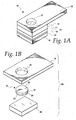
- FIG. 1A is a perspective drawing of a test strip made in accordance with the instant invention.
- FIG. 1B is an exploded view of an alternative embodiment of a test strip made in accordance with the invention.
- FIG. 1C is an exploded view of another alternative embodiment of a test strip suitable for use with the instant invention.
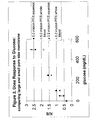
- FIG. 2 is a graph of the results achieved with large and small pore size membranes in the detection of glucose in both aqueous solutions and whole blood using test strips prepared in accordance with the invention
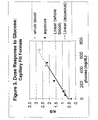
- FIG. 3 is a graph showing the response of capillary fill format test strips in accordance with the instant invention for different concentrations of glucose in both aqueous solution and whole blood.
- FIG. 4 is a graph showing the response at different endpoints of test strips made in accordance with the invention in which the reactive chemistry is applied to the test strip as a stripe.
- the method of the instant invention comprises the determination of glucose in a sample by the known steps of placing the sample on a first side of a test strip, allowing any glucose in the sample to react with reagents impregnated in the test strip, and taking an optical measurement of the opposite side of the test strip after the sample has passed through the test strip.
- the test strip is provided with one or more polymers that alter the opacity of the test strip in a manner that makes the glucose determination less sensitive to the presence of red blood cells in the sample.
- the thickness of the layers is shown for clarity of illustration and is not intended to be representative of the actual thicknesses of the layers in a test strip product.
- FIG. 1A is a perspective view of a test strip 10 suitable for use in the method of the instant invention.
- test strip 10 comprises a handle 13 to which is bonded a porous membrane 11.
- the porous membrane 11 has a first side 12, also known as the test side or the sample side, and a second side 14, also known as the reaction side.
- a sample is deposited through hole 17 in handle 13 onto test side 12 of porous membrane 11. The sample passes through the pores of the membrane to reaction side 14 of the porous membrane 11.
- An optical measurement of reaction side 14, such as reflectance, is then correlated with glucose concentration to determine the amount of glucose present in the sample.
- reaction side 14 of porous membrane 11 is treated with a testing reagent composition 16 comprising a color indicator system that changes color to indicate the presence of glucose in the sample, the reagent composition 16 further comprising a polymer that affects the opacity of reaction side 14 of porous membrane 11.
- the reagent composition 16 including the polymer can be applied to the test strip by methods such as dipping, coating, and striping. In the embodiment illustrated in FIG. 1A, the composition is applied as coating 16 over reaction side 14 of test strip 10. In another embodiment, the composition will be first applied to side 12 such as by dipping and allowed to pass through the strip to reconstitute on side 14.
- An optically clear window 18 can be applied to composition 16 by known methods, including laminating or use of a pressure-sensitive adhesive 19. Window 18 can be made of polyester or any other optically suitable material.
- FIG. 1B illustrates an alternative embodiment of a test strip made in accordance with the invention.
- test strip 20 comprises handle 13 from which has been cut a hole 15.
- Disc 25 comprises porous membrane 21 having a sample side 22 and a reaction side 24.
- a testing reagent composition 26 comprising a color indicator system that changes color to indicate the presence of glucose in the sample, and a polymer that changes the opacity of the reaction side 24 of porous membrane 21.
- Disc 25 is fitted into hole 15, and an optically clear window 28 is applied over disc 25 and the portion of handle 13 in which it is received. It may be seen that this embodiment requires less of the treated porous membrane material than the embodiment of FIG. 1A, or the prior art devices shown and described in the aforementioned prior art patents such as U.S. 5,789,255. It will be appreciated that disc 25 can be in the form of ribbons or other suitable geometric configurations.
- FIG. 1C illustrates yet another alternative embodiment of a test strip suitable for use with the instant invention.
- test strip 30 comprises handle 33.
- Ribbon 35 comprises porous membrane 31 having a sample side 32 and a reaction side 34.
- the porous membrane 31 is provided on reaction side 34 with a composition 36 comprising a testing reagent comprising a color indicator system that changes color to indicate the presence of glucose in the sample and a polymer that changes the opacity of the reaction side 34 of porous membrane 31.
- a spacer 37 having a capillary inlet 38 is applied over a portion of strip 33 and ribbon 35 with adhesive, such that capillary inlet 38 is disposed over a portion of ribbon 35.
- a lid is optionally disposed over spacer 37 to protect the instrument from contamination.
- a window is disposed on the opposite side of the test strip.
- the porous membrane supports a reagent composition that reacts in the presence of glucose to produce a reaction product that can be measured with an optical detector to allow quantitative determination of glucose.
- the chemistry of the reaction can be either reductive or oxidative.
- a reductive chemistry system suitable for use with. the instant invention can be, for example, either a PQQ-GDH or a NAD-dependent GDH system.
- a hexokinase reductive system also can be used, as can a glucose oxidase oxidative system.
- appropriate mediators include, without limitation, those disclosed in U.S. 5,520,786.
- Such mediators include compounds selected from the group of substituted or unsubstituted 3-phenylimino-3H-phenothiazines and 3-phenylimino-3H-phenoxazines.
- Appropriate indicators include, without limitation, WST-4, as well as the general classes of 2-thiazolyl tetrazolium salt compounds disclosed in U.S. 5,126,275 and U.S. 5,322,680. Each of the foregoing patents is assigned to the present assignee and is incorporated herein by reference in its entirety.
- Suitable indicators for such systems include a tetrazolium indicator such as WST-4, available from Dojindo Laboratories, or a tetrazolium salt indicator such as those disclosed in U.S. 5,126,275 and U.S. 5,322,680 as discussed above.
- Porous membrane materials suitable for use in the method of the instant invention include commercially available materials such as porous polyethersulfone membranes such as those sold under the brand name Supor and Presense and available from Pall Corporation; and modified porous polyethersulfone membranes such as those sold under the brand name Predator and available from Pall Corporation. Those skilled in the art will recognize that other porous membranes will be suited to use as membranes in test strips of the instant invention.
- Materials suitable for use as the polymer applied to the membrane include, for example, acrylic latex polymers such as those sold under the brand name UCAR and available from Union Carbide, polystyrene sodium sulfate polymers such as those available from Polysciences, Inc., and combinations thereof.
- the dose responses to glucose in both aqueous solution and whole blood for test strips prepared in accordance with the instant invention were determined for both small-pore and large-pore test strip membranes.
- the porous membranes used were Supor brand polyethersulfone membranes purchased from Pall Corporation, and having isotropic pore sizes of 0.2 microns and 5.0 microns. Each porous membrane was treated with reagent by dipping the smooth reaction side of the membrane in the composition set forth in Table 1. Reagent Final conc.
- the membranes were dried at 40-50°C. for at least 5 minutes in a high air flow oven.
- the membranes were cut into discs and fitted into strips as described above in connection with the embodiment of FIG. 1B.
- a clear polyester film window was applied to the coated reaction side using Arcare 7843 pressure sensitive adhesive available from Adhesives Research.
- the test strips were oriented with the reaction side facing down.
- Test samples of 500 nanoliters of either aqueous glucose solution or whole blood spiked with glucose were then applied to the rough sample side of each disc in the test strip.
- the glucose solutions were buffered to pH 7.5 using 0.15M Na HEPES.
- the glucose concentrations in the aqueous and whole blood samples were at 0 mg/dL, 50 mg/dL, 100 mg/dL, 250 mg/dL, and 600 mg/dL.
- the whole blood samples were spiked to the indicated level and measured as plasma glucose using a Yellow Springs Co., Inc. model 2300 STAT Plus glucose detector. Two replicates were run of each sample solution on each sample test strip.
- the reflectance of each test strip at 680 nm was measured at the clear polyester film window using the apparatus described in co-pending patent application S.N. 60/373,583, filed April 19, 2002. This instrument uses a small-read-area reflectance read head of about 0.030 inches diameter.
- K/S (1-R) 2 /2R.
- the measured reflectance for each level of glucose was substantially the same for both aqueous solutions and for whole blood, and for the different pore sizes of the test discs, indicating that for test strips made in accordance with the invention the dose response was substantially independent of both membrane pore size and whether or not whole blood was present in the sample.
- Example 1 This example demonstrates the feasibility of the dipped reagent membrane technique when the samples are applied using a lateral flow, capillary format as illustrated and discussed in connection with FIG. 1C, rather than the flow through technique used in Example 1 above.
- Samples of 0.8 micron pore size polyethersulfone membrane sold under the trade name "Presense” from Pall Corporation were treated as described in Example 1. Ribbons of the treated membrane were mounted on capillary flow test strips as illustrated in Fig. 1C. Each test strip had applied to it a 600-800 nanoliter sample of either aqueous glucose solution or glucose in 40% hematocrit whole blood.
- the concentrations of glucose in the aqueous test samples were 0, 50, 100, 250, and 500 mg/dL.
- the concentrations of glucose in the whole blood samples were 0, 50, 100, 200, 400 and 600 mg/dL, converted to plasma values.
- Test strips were prepared using 0.8 micron pore size polyethersulfone porous membrane materials sold under the brand name Presense by Pall Corporation.
- the reagent composition used was that described in Table 1.
- the reagent composition was applied by striping onto the reaction side of the porous membrane rather than by dipping.
- the test strips were then provided with clear polyester windows secured by Arcare 7843 pressure-sensitive adhesive, and were laminated with ribbons of reagent, all as described in Example 1 above.
- the test strips were oriented with the reaction side facing down. Test samples of 500 nanoliters of whole blood spiked with glucose were then applied to the rough sample side of each test strip.
- the glucose whole blood samples were at 0 mg/dL, 50 mg/dL, 100mg/dL 200 mg/dL, 400 mg/dL, and 600 mg/dL measured as plasma glucose using a Yellow Springs Instrument detector. Two replicates were run of each sample solution on each sample test strip.
- the reflectance of each test strip was measured using the instrument described in Example 1 above at 680 nm using a small-read-area reflectance read head of about 0.030 inches diameter.
- the reagent mix was used to coat the smooth side of 0.8 micron polyethersulfone Presense membrane and then assembled into capillary fill formats.
- a dose response to 0 to 600 mg/dL whole blood glucose was demonstrated with a range of approximately 30 to 10 percent reflectance.
- inventive method and test strips disclosed herein offer significant advantages over prior art glucose determination systems.
- Such prior art glucose determination systems typically require optical readings of a sample at two different wavelengths to correct for the interference introduced by the red blood cells (hematocrit) in the sample.
- the test strips provide results that are independent of the pore size of the membrane, and substantially independent of the hematocrit of the sample. Since the system is substantially independent of hematocrit, there is no need to measure reflectance at two different wavelengths and apply a correction factor. This means that the optical measurement device used with the system of the instant invention can be much simpler and less expensive than prior art systems, because it will require only one set of optics instead of two.
- a system used in connection with the instant invention also will not require a complicated algorithm to adjust for the hematocrit or chromatography.
- the invention also eliminates the need for scattering centers used in prior art systems to adjust for the opacity of a reflective surface. Also, because the sample does not need to undergo any procedure to separate the red blood cells, a much smaller sample size can be used, typically on the order of about 1 microliter or less.
Landscapes
- Health & Medical Sciences (AREA)
- Life Sciences & Earth Sciences (AREA)
- Engineering & Computer Science (AREA)
- Chemical & Material Sciences (AREA)
- Physics & Mathematics (AREA)
- Molecular Biology (AREA)
- General Health & Medical Sciences (AREA)
- Biomedical Technology (AREA)
- Biophysics (AREA)
- Pathology (AREA)
- Immunology (AREA)
- Organic Chemistry (AREA)
- Hematology (AREA)
- Public Health (AREA)
- Urology & Nephrology (AREA)
- Zoology (AREA)
- Biochemistry (AREA)
- Wood Science & Technology (AREA)
- Emergency Medicine (AREA)
- Microbiology (AREA)
- Veterinary Medicine (AREA)
- Analytical Chemistry (AREA)
- Animal Behavior & Ethology (AREA)
- Optics & Photonics (AREA)
- Biotechnology (AREA)
- Proteomics, Peptides & Aminoacids (AREA)
- Heart & Thoracic Surgery (AREA)
- Medical Informatics (AREA)
- Surgery (AREA)
- Bioinformatics & Cheminformatics (AREA)
- Chemical Kinetics & Catalysis (AREA)
- Genetics & Genomics (AREA)
- Diabetes (AREA)
- General Engineering & Computer Science (AREA)
- Cell Biology (AREA)
- General Chemical & Material Sciences (AREA)
- Food Science & Technology (AREA)
- Medicinal Chemistry (AREA)
- General Physics & Mathematics (AREA)
- Investigating Or Analysing Biological Materials (AREA)
Applications Claiming Priority (2)
| Application Number | Priority Date | Filing Date | Title |
|---|---|---|---|
| US44441403P | 2003-02-04 | 2003-02-04 | |
| US444414P | 2003-02-04 |
Publications (2)
| Publication Number | Publication Date |
|---|---|
| EP1445329A2 true EP1445329A2 (de) | 2004-08-11 |
| EP1445329A3 EP1445329A3 (de) | 2005-12-28 |
Family
ID=32655746
Family Applications (1)
| Application Number | Title | Priority Date | Filing Date |
|---|---|---|---|
| EP04001906A Withdrawn EP1445329A3 (de) | 2003-02-04 | 2004-01-29 | Methode und Teststreifen zur Bestimmung von Glukose in Blut |
Country Status (6)
| Country | Link |
|---|---|
| US (2) | US7439033B2 (de) |
| EP (1) | EP1445329A3 (de) |
| JP (1) | JP4417738B2 (de) |
| CN (1) | CN1527045A (de) |
| AU (1) | AU2004200386A1 (de) |
| CA (1) | CA2455669A1 (de) |
Families Citing this family (21)
| Publication number | Priority date | Publication date | Assignee | Title |
|---|---|---|---|---|
| CA2455669A1 (en) * | 2003-02-04 | 2004-08-04 | Bayer Healthcare, Llc | Method and test strip for determining glucose in blood |
| US7964372B2 (en) | 2004-12-13 | 2011-06-21 | Bayer Healthcare Llc | Size self-limiting compositions and test devices for measuring analytes in biological fluids |
| US20060281187A1 (en) | 2005-06-13 | 2006-12-14 | Rosedale Medical, Inc. | Analyte detection devices and methods with hematocrit/volume correction and feedback control |
| US8801631B2 (en) | 2005-09-30 | 2014-08-12 | Intuity Medical, Inc. | Devices and methods for facilitating fluid transport |
| EP2559381B1 (de) | 2005-09-30 | 2014-12-31 | Intuity Medical, Inc. | Vorrichtung für Körperflüssigkeitsprobennahme und -analyse |
| US8101403B2 (en) | 2006-10-04 | 2012-01-24 | University Of Washington | Method and device for rapid parallel microfluidic molecular affinity assays |
| MX2010006389A (es) | 2007-12-10 | 2010-06-25 | Bayer Healthcare Llc | Proceso para hacer un mediador de 3-fenilimino-3h-fenotiazina o 3-fenilimino-3h-fenoxazina. |
| EP2293719B1 (de) | 2008-05-30 | 2015-09-09 | Intuity Medical, Inc. | Schnittstelle zwischen einer Vorrichtung zur entnahme von Körperflüssigkeitsproben und der Entnahmestelle |
| US9636051B2 (en) | 2008-06-06 | 2017-05-02 | Intuity Medical, Inc. | Detection meter and mode of operation |
| JP2011522594A (ja) | 2008-06-06 | 2011-08-04 | インテュイティ メディカル インコーポレイテッド | 医用診断装置及び方法 |
| US20110151479A1 (en) * | 2008-08-25 | 2011-06-23 | University Of Washington | Microfluidic systems incorporating flow-through membranes |
| CA2782047C (en) | 2009-11-30 | 2019-10-29 | Intuity Medical, Inc. | Calibration material delivery devices and methods |
| CN102253085A (zh) * | 2011-03-11 | 2011-11-23 | 桂林优利特医疗电子有限公司 | 校正条、含校正代码的检测条及检测装置 |
| US9782114B2 (en) | 2011-08-03 | 2017-10-10 | Intuity Medical, Inc. | Devices and methods for body fluid sampling and analysis |
| US20130047415A1 (en) * | 2011-08-26 | 2013-02-28 | Lifescan Scotland Ltd. | Use of chamber height to affect calibration code in test strip manufacturing |
| CN104160277B (zh) * | 2012-01-11 | 2017-05-17 | 嘉泉大学校产学协力团 | 用于测量血糖水平的单元、包含该单元的系统以及用于测量血糖水平的方法 |
| CN103088108A (zh) * | 2012-11-16 | 2013-05-08 | 李立和 | 葡萄糖脱氢酶法检测葡萄糖的试剂盒及制备方法 |
| US20140273270A1 (en) * | 2013-03-14 | 2014-09-18 | Polymer Technology Systems, Inc. | Direct temperature measurement of a test strip |
| WO2018140568A1 (en) * | 2017-01-27 | 2018-08-02 | Becton, Dickinson And Company | Vertical flow assay device for detecting glucose concentration in a fluid sample |
| CN108120794A (zh) * | 2017-12-21 | 2018-06-05 | 深圳市赛亿科技开发有限公司 | 一种智能杯子及其检测饮料中葡萄糖浓度的方法 |
| KR102082898B1 (ko) * | 2018-04-18 | 2020-02-28 | 가천대학교 산학협력단 | 병원균 검출을 위한 비색 검출 장치 및 그의 제조방법 |
Family Cites Families (33)
| Publication number | Priority date | Publication date | Assignee | Title |
|---|---|---|---|---|
| US4631174A (en) * | 1978-05-02 | 1986-12-23 | Fuji Photo Film Co., Ltd. | Multilayer chemical analysis member having an outer waterproof layer |
| US4495291A (en) * | 1981-03-06 | 1985-01-22 | Graphic Controls Corporation | Indicators for ethylene oxide |
| JPS57200862A (en) * | 1981-06-05 | 1982-12-09 | Fuji Photo Film Co Ltd | Mutilayer analysis element utilizing unique binding reaction |
| JPS6329246A (ja) * | 1986-07-10 | 1988-02-06 | イ−ストマン コダツク カンパニ− | 展開調節域を有する分析要素 |
| US4935346A (en) | 1986-08-13 | 1990-06-19 | Lifescan, Inc. | Minimum procedure system for the determination of analytes |
| US5049487A (en) | 1986-08-13 | 1991-09-17 | Lifescan, Inc. | Automated initiation of timing of reflectance readings |
| US5049394A (en) | 1987-09-11 | 1991-09-17 | E. R. Squibb & Sons, Inc. | Pharmaceutical composition containing high drug load and method for preparing same |
| JPH0721455B2 (ja) * | 1988-12-01 | 1995-03-08 | 株式会社京都第一科学 | 液体試料中の特定成分を分析するための用具および方法 |
| US5306623A (en) * | 1989-08-28 | 1994-04-26 | Lifescan, Inc. | Visual blood glucose concentration test strip |
| AU640162B2 (en) * | 1989-08-28 | 1993-08-19 | Lifescan, Inc. | Blood separation and analyte detection techniques |
| CA2049237C (en) | 1990-09-19 | 1999-10-19 | Gunther Beck | 2-thiazolyl tetrazolium salt indicators |
| US5126275A (en) | 1990-09-19 | 1992-06-30 | Miles Inc. | Analytical method using tetrazolium salt indicators having a reflectance plateau |
| KR100243441B1 (ko) * | 1991-06-25 | 2000-03-02 | 바우만-쉴프, 루시아 | 슬러지 탈수 방법 및 장치 |
| US5260002A (en) * | 1991-12-23 | 1993-11-09 | Vanderbilt University | Method and apparatus for producing uniform polymeric spheres |
| DE4311464A1 (de) | 1993-04-08 | 1994-10-13 | Boehringer Mannheim Gmbh | Verfahren zur kolorimetrischen Bestimmung eines Analyten mit einer PQQ-abhängigen Dehydrogenase |
| CA2127172C (en) * | 1993-08-05 | 1998-07-14 | Amy H. Chu | Analyte detection device and process |
| US5360595A (en) * | 1993-08-19 | 1994-11-01 | Miles Inc. | Preparation of diagnostic test strips containing tetrazolium salt indicators |
| US5520786A (en) * | 1995-06-06 | 1996-05-28 | Bayer Corporation | Mediators suitable for the electrochemical regeneration of NADH, NADPH or analogs thereof |
| AU722471B2 (en) | 1995-10-17 | 2000-08-03 | Lifescan, Inc. | Blood glucose strip having reduced sensitivity to hematocrit |
| JP3647000B2 (ja) * | 1995-10-27 | 2005-05-11 | アークレイ株式会社 | 液体試料分析用具及び分析方法 |
| IL120587A (en) * | 1996-04-04 | 2000-10-31 | Lifescan Inc | Reagent test strip for determination of blood glucose |
| DE19629657A1 (de) * | 1996-07-23 | 1998-01-29 | Boehringer Mannheim Gmbh | Volumenunabhängiger diagnostischer Testträger und Verfahren zur Bestimmung von Analyt mit dessen Hilfe |
| AU5166198A (en) * | 1996-11-08 | 1998-05-29 | Mercury Diagnostics Inc. | Opaque reaction matrix for the analysis of whole blood |
| US6040195A (en) * | 1997-06-10 | 2000-03-21 | Home Diagnostics, Inc. | Diagnostic sanitary test strip |
| US6284194B1 (en) * | 1998-03-11 | 2001-09-04 | Albert E. Chu | Analytical assay device and methods using surfactant treated membranes to increase assay sensitivity |
| CN1116919C (zh) | 1998-04-07 | 2003-08-06 | 成都迪康血液科技有限公司 | 小面积中空纤维膜血浆分离滤器 |
| US6162397A (en) * | 1998-08-13 | 2000-12-19 | Lifescan, Inc. | Visual blood glucose test strip |
| JP2000350588A (ja) * | 1999-04-08 | 2000-12-19 | Koji Hayade | グルコース脱水素酵素 |
| US6193873B1 (en) * | 1999-06-15 | 2001-02-27 | Lifescan, Inc. | Sample detection to initiate timing of an electrochemical assay |
| US6696240B1 (en) * | 1999-10-26 | 2004-02-24 | Micronix, Inc. | Capillary test strip to separate particulates |
| US6872299B2 (en) * | 2001-12-10 | 2005-03-29 | Lifescan, Inc. | Passive sample detection to initiate timing of an assay |
| EP2221621B1 (de) * | 2001-12-21 | 2014-05-28 | Polymer Technology Systems, Inc. | Verfahren um HDL-Cholesterin im Vollblut zu bestimmen |
| CA2455669A1 (en) | 2003-02-04 | 2004-08-04 | Bayer Healthcare, Llc | Method and test strip for determining glucose in blood |
-
2004
- 2004-01-22 CA CA002455669A patent/CA2455669A1/en not_active Abandoned
- 2004-01-29 EP EP04001906A patent/EP1445329A3/de not_active Withdrawn
- 2004-01-29 US US10/767,963 patent/US7439033B2/en not_active Expired - Lifetime
- 2004-02-03 CN CNA2004100330205A patent/CN1527045A/zh active Pending
- 2004-02-03 JP JP2004026598A patent/JP4417738B2/ja not_active Expired - Fee Related
- 2004-02-03 AU AU2004200386A patent/AU2004200386A1/en not_active Abandoned
-
2008
- 2008-10-06 US US12/287,112 patent/US20090075389A1/en not_active Abandoned
Also Published As
| Publication number | Publication date |
|---|---|
| AU2004200386A1 (en) | 2004-08-19 |
| CN1527045A (zh) | 2004-09-08 |
| EP1445329A3 (de) | 2005-12-28 |
| US7439033B2 (en) | 2008-10-21 |
| US20090075389A1 (en) | 2009-03-19 |
| US20040185517A1 (en) | 2004-09-23 |
| JP2004239906A (ja) | 2004-08-26 |
| JP4417738B2 (ja) | 2010-02-17 |
| CA2455669A1 (en) | 2004-08-04 |
Similar Documents
| Publication | Publication Date | Title |
|---|---|---|
| US20090075389A1 (en) | Method for determining an analyte in a fluid | |
| CA2457665C (en) | Method for reducing effect of hematocrit on measurement of an analyte in whole blood, and test kit and test article useful in the method | |
| US6312888B1 (en) | Diagnostic assay for a sample of biological fluid | |
| JP2644331B2 (ja) | 液体の化学的分析のための改良可処分装置 | |
| CA2088652C (en) | Improved oxidative coupling dye for spectrophotometric quantitative analysis of analytes | |
| US4994238A (en) | Constant volume chemical analysis test device | |
| AU701834B2 (en) | Volume-independent diagnostic test carrier and methods in which it is used to determine an analyte | |
| EP1368649B1 (de) | Elektrochemische teststreifenkarten die ein eingebautes trockenmittel enthalten | |
| CA2388272C (en) | Electrochemical test strip for use in analyte determination | |
| JP3850497B2 (ja) | ヘマトクリットに低応感の血糖ストリップグルコース濃度測定用試薬ストリップ | |
| CN1143132C (zh) | 可用肉眼观察的血糖检测条 | |
| EP0799896A2 (de) | Reagenzteststreifen zum Nachweis von Glukose im Blut | |
| KR20030041810A (ko) | 안정화된 테트라졸륨 시약 조성물 및 이의 사용방법 | |
| US9255286B2 (en) | Methods of determining an analyte concentration that include correction information for at least one interfering variable | |
| FI126484B (en) | Disposable test strip device for detecting an analyte in a body fluid sample | |
| JP2004239906A5 (de) | ||
| JP2004325449A (ja) | 左利きにも右利きにも使える毛細管充填試験片 | |
| CA2497245A1 (en) | Test element with a one layer reaction film | |
| WO2002033407A1 (en) | Diagnostic assay for a sample of biological fluid | |
| JP2005315818A (ja) | 液体試料分析用具 | |
| JP2006087325A (ja) | 分析用試薬、乾式分析要素、および分析方法 | |
| Hamid | +++ | |
| JPH01107137A (ja) | 液体分析方法 | |
| HK1060182B (en) | Electrochemical test strip cards that include an integral dessicant | |
| HK1070942B (en) | Method for reducing effect of hematocrit on measurement of an analyte in whole blood, and test kit and test article useful in the method |
Legal Events
| Date | Code | Title | Description |
|---|---|---|---|
| PUAI | Public reference made under article 153(3) epc to a published international application that has entered the european phase |
Free format text: ORIGINAL CODE: 0009012 |
|
| AK | Designated contracting states |
Kind code of ref document: A2 Designated state(s): AT BE BG CH CY CZ DE DK EE ES FI FR GB GR HU IE IT LI LU MC NL PT RO SE SI SK TR |
|
| AX | Request for extension of the european patent |
Extension state: AL LT LV MK |
|
| RAP1 | Party data changed (applicant data changed or rights of an application transferred) |
Owner name: BAYER HEALTHCARE LLC |
|
| PUAL | Search report despatched |
Free format text: ORIGINAL CODE: 0009013 |
|
| AK | Designated contracting states |
Kind code of ref document: A3 Designated state(s): AT BE BG CH CY CZ DE DK EE ES FI FR GB GR HU IE IT LI LU MC NL PT RO SE SI SK TR |
|
| AX | Request for extension of the european patent |
Extension state: AL LT LV MK |
|
| 17P | Request for examination filed |
Effective date: 20060628 |
|
| AKX | Designation fees paid |
Designated state(s): AT BE BG CH CY CZ DE DK EE ES FI FR GB GR HU IE IT LI LU MC NL PT RO SE SI SK TR |
|
| 17Q | First examination report despatched |
Effective date: 20110915 |
|
| STAA | Information on the status of an ep patent application or granted ep patent |
Free format text: STATUS: THE APPLICATION IS DEEMED TO BE WITHDRAWN |
|
| 18D | Application deemed to be withdrawn |
Effective date: 20120327 |