EP1452286A1 - Verfahren zur herstellung von nichtbrennbarem holz - Google Patents
Verfahren zur herstellung von nichtbrennbarem holz Download PDFInfo
- Publication number
- EP1452286A1 EP1452286A1 EP02780111A EP02780111A EP1452286A1 EP 1452286 A1 EP1452286 A1 EP 1452286A1 EP 02780111 A EP02780111 A EP 02780111A EP 02780111 A EP02780111 A EP 02780111A EP 1452286 A1 EP1452286 A1 EP 1452286A1
- Authority
- EP
- European Patent Office
- Prior art keywords
- wood
- treatment agent
- decompression
- drying
- steps
- Prior art date
- Legal status (The legal status is an assumption and is not a legal conclusion. Google has not performed a legal analysis and makes no representation as to the accuracy of the status listed.)
- Granted
Links
Images


Classifications
-
- B—PERFORMING OPERATIONS; TRANSPORTING
- B27—WORKING OR PRESERVING WOOD OR SIMILAR MATERIAL; NAILING OR STAPLING MACHINES IN GENERAL
- B27K—PROCESSES, APPARATUS OR SELECTION OF SUBSTANCES FOR IMPREGNATING, STAINING, DYEING, BLEACHING OF WOOD OR SIMILAR MATERIALS, OR TREATING OF WOOD OR SIMILAR MATERIALS WITH PERMEANT LIQUIDS, NOT OTHERWISE PROVIDED FOR; CHEMICAL OR PHYSICAL TREATMENT OF CORK, CANE, REED, STRAW OR SIMILAR MATERIALS
- B27K3/00—Impregnating wood, e.g. impregnation pretreatment, for example puncturing; Wood impregnation aids not directly involved in the impregnation process
- B27K3/16—Inorganic impregnating agents
- B27K3/163—Compounds of boron
-
- B—PERFORMING OPERATIONS; TRANSPORTING
- B27—WORKING OR PRESERVING WOOD OR SIMILAR MATERIAL; NAILING OR STAPLING MACHINES IN GENERAL
- B27K—PROCESSES, APPARATUS OR SELECTION OF SUBSTANCES FOR IMPREGNATING, STAINING, DYEING, BLEACHING OF WOOD OR SIMILAR MATERIALS, OR TREATING OF WOOD OR SIMILAR MATERIALS WITH PERMEANT LIQUIDS, NOT OTHERWISE PROVIDED FOR; CHEMICAL OR PHYSICAL TREATMENT OF CORK, CANE, REED, STRAW OR SIMILAR MATERIALS
- B27K3/00—Impregnating wood, e.g. impregnation pretreatment, for example puncturing; Wood impregnation aids not directly involved in the impregnation process
- B27K3/02—Processes; Apparatus
- B27K3/08—Impregnating by pressure, e.g. vacuum impregnation
-
- B—PERFORMING OPERATIONS; TRANSPORTING
- B27—WORKING OR PRESERVING WOOD OR SIMILAR MATERIAL; NAILING OR STAPLING MACHINES IN GENERAL
- B27K—PROCESSES, APPARATUS OR SELECTION OF SUBSTANCES FOR IMPREGNATING, STAINING, DYEING, BLEACHING OF WOOD OR SIMILAR MATERIALS, OR TREATING OF WOOD OR SIMILAR MATERIALS WITH PERMEANT LIQUIDS, NOT OTHERWISE PROVIDED FOR; CHEMICAL OR PHYSICAL TREATMENT OF CORK, CANE, REED, STRAW OR SIMILAR MATERIALS
- B27K3/00—Impregnating wood, e.g. impregnation pretreatment, for example puncturing; Wood impregnation aids not directly involved in the impregnation process
- B27K3/16—Inorganic impregnating agents
- B27K3/32—Mixtures of different inorganic impregnating agents
-
- B—PERFORMING OPERATIONS; TRANSPORTING
- B27—WORKING OR PRESERVING WOOD OR SIMILAR MATERIAL; NAILING OR STAPLING MACHINES IN GENERAL
- B27K—PROCESSES, APPARATUS OR SELECTION OF SUBSTANCES FOR IMPREGNATING, STAINING, DYEING, BLEACHING OF WOOD OR SIMILAR MATERIALS, OR TREATING OF WOOD OR SIMILAR MATERIALS WITH PERMEANT LIQUIDS, NOT OTHERWISE PROVIDED FOR; CHEMICAL OR PHYSICAL TREATMENT OF CORK, CANE, REED, STRAW OR SIMILAR MATERIALS
- B27K5/00—Treating of wood not provided for in groups B27K1/00, B27K3/00
- B27K5/04—Combined bleaching or impregnating and drying of wood
-
- F—MECHANICAL ENGINEERING; LIGHTING; HEATING; WEAPONS; BLASTING
- F26—DRYING
- F26B—DRYING SOLID MATERIALS OR OBJECTS BY REMOVING LIQUID THEREFROM
- F26B7/00—Drying solid materials or objects by processes using a combination of processes not covered by a single one of groups F26B3/00 and F26B5/00
-
- B—PERFORMING OPERATIONS; TRANSPORTING
- B27—WORKING OR PRESERVING WOOD OR SIMILAR MATERIAL; NAILING OR STAPLING MACHINES IN GENERAL
- B27K—PROCESSES, APPARATUS OR SELECTION OF SUBSTANCES FOR IMPREGNATING, STAINING, DYEING, BLEACHING OF WOOD OR SIMILAR MATERIALS, OR TREATING OF WOOD OR SIMILAR MATERIALS WITH PERMEANT LIQUIDS, NOT OTHERWISE PROVIDED FOR; CHEMICAL OR PHYSICAL TREATMENT OF CORK, CANE, REED, STRAW OR SIMILAR MATERIALS
- B27K2240/00—Purpose of the treatment
- B27K2240/30—Fireproofing
-
- F—MECHANICAL ENGINEERING; LIGHTING; HEATING; WEAPONS; BLASTING
- F26—DRYING
- F26B—DRYING SOLID MATERIALS OR OBJECTS BY REMOVING LIQUID THEREFROM
- F26B2210/00—Drying processes and machines for solid objects characterised by the specific requirements of the drying goods
- F26B2210/16—Wood, e.g. lumber, timber
Definitions
- the present invention relates to incombustible wood, and more specifically to a method of manufacturing incombustible wood by impregnating the wood with an incombustibility treatment.
- wood is widely used for buildings such as housings.
- a fire retardation process there is a method in which wood is impregnated with a fire retardant, such as a water-soluble inorganic compound composed of boric acid, borax, and the like.
- a fire retardant such as a water-soluble inorganic compound composed of boric acid, borax, and the like.
- the wood tissue can be physically penetrated (impregnated) with chemicals such as borax and boric acid by decompression or compression (for example, as in steps shown in FIG. 4, drying step ⁇ decompression step ⁇ decompression impregnation step ⁇ compression impregnation step ⁇ drying step).
- decompression or compression for example, as in steps shown in FIG. 4, drying step ⁇ decompression step ⁇ decompression impregnation step ⁇ compression impregnation step ⁇ drying step.
- the wood is first dried to a predetermined moisture content.
- the wood is degassed by being decompressed a level permitting an incombustion agent to penetrate as in that state, and is compressed to allow the agent to further penetrate.
- the wood is dried to cause incompatible liquid to be fixedly impregnated in the wood tissue.
- Fire retardant wood is manufactured in accordance with the processing steps described above.
- heating-rate testing ISO 5660
- fire retardant material fire retardant wood
- incompatible material incombustible wood
- the following requirements should be satisfied under testing conditions of a heating time of 20 minutes and an emission intensity of 50 kW/m 2 for satisfying the requirements of the incombustible-wood standard.
- a bottleneck is imposed in that the condition 1), which requires the total calorific value of 8 MJ/m 2 of lower, cannot be satisfied.
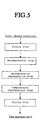
- drying is firstly performed and decompression is then performed for impregnation (decompression impregnation step). Thereafter, a step of compression for impregnation (compression impregnation step) is performed, and further, the routine of decompression impregnation step ⁇ compression impregnation step is iterated (refer to FIG. 5).
- the present invention is aimed to solve the problems described above.
- an object of the present invention is to provide a method of manufacturing incombustible wood enabling maximization of amount of an incombustion agent that is to be impregnated into wood.
- the inventors of the present invention conducted a number of extensive studies and researches. As a result, the inventors found that the process performed in the manner that the decompression impregnation step and the compression impregnation step are not simply iterated, but one drying step is added before the iteration and the decompression impregnation step and the compression impregnation step are iterated thereafter contributes to the action of penetration of the incombustion agent into the wood tissue with a more significant effect than expected.
- the present invention has been made based on knowledges acquired with the discovery.
- the present invention lies in (1) a method of manufacturing incombustible wood, comprising performing plural times of individual drying steps for drying wood, decompression steps for decompressing the wood, decompression impregnation steps for impregnating the wood with an incombustibility treatment agent in a decompressed state, and compression impregnation steps for impregnating the wood with the incombustibility treatment agent in a compressed state, the method being characterized in that two times of the individual decompression steps, individual decompression impregnation steps, and compression impregnation steps are performed, and three times of the drying steps are performed.
- the present invention further lies in (2) a method of manufacturing incombustible wood, comprising a first drying step wherein wood is dried; a first decompression step wherein, after dried by the first drying step, the wood is decompressed in a decompressed vessel; a first decompression impregnation step wherein, after decompressed by the first decompression step, the wood is immersed in an incombustibility treatment agent in the decompressed vessel to impregnate a tissue of the wood with the incombustibility treatment agent; a first compression impregnation step wherein, after impregnated by the first decompression impregnation step, the wood is compressed in a state where the wood is immersed in the incombustibility treatment agent in a vessel to impregnate the tissue of the wood with the incombustibility treatment agent; a second drying step wherein, after impregnated by the first compression impregnation step, the wood impregnated with the incombustibility treatment agent is dried;
- the present invention further lies in (3) the method of manufacturing incombustible wood, wherein in the first drying step, drying is performed by heat drying to a moisture content of 15% or lower.
- the present invention further lies in (4) the method of manufacturing incombustible wood, wherein in the second drying step, drying is performed by heat drying to a moisture content of 30% or lower.
- the present invention further lies in (5) the method of manufacturing incombustible wood, wherein in the third drying step, drying is performed by heat drying to a moisture content of 15% or lower.
- the present invention further lies in (6) the method of manufacturing incombustible wood, wherein in the decompression steps, processing is performed for a predetermined time at a negative pressure of -1.0 MPa to -0.7 MPa.
- the present invention further lies in (7) the method of manufacturing incombustible wood, wherein in the decompression steps, processing is performed for a predetermined time at a compression level of 0.7 MPa to 2.0 MPa.
- the present invention further lies in (8) the method of manufacturing incombustible wood, wherein in a state where the third drying step has been completed, the incombustibility treatment agent in solids amount is 240 kg/m 3 or greater.
- the present invention further lies in (9) the method of manufacturing incombustible wood, wherein a process temperature of the incombustibility treatment agent in the second compression impregnation step is 60 to 90°C.
- the present invention further lies in (10) the method of manufacturing incombustible wood, wherein the incombustion treatment agent is a treatment agent containing at least borax, boric acid, and phosphoric acid.
- the present invention may be configured by combining two or more selected from the above items (1) to (10) as long as they conform to the objects.
- the incombustible wood capable of satisfying the requirements of the Building Standard law can be provided for the first time.
- the method of manufacturing incombustible wood can be implemented by the provision of the drying steps in the series of processing steps, thereby providing an advantage in that specifically dedicated manufacturing steps are not necessary, but the manufacture can easily be accomplished using conventional manufacturing apparatuses.
- Incombustible wood of the present invention is made using an incombustibility treatment agent, and the invention may be applied to various kinds of wood, such as a cryptomeria, pine, and cypress, inasmuch as the wood can be impregnated with an incombustibility treatment agent.
- the incombustibility treatment agent used in the present invention may be ordinarily used one; and in particular, a treatment agent containing at least borax, boric acid, and phosphoric acid can be preferably used.
- the treatment agent may be appropriately added with addicts such as an organic leaching preventive.
- Example organic leaching preventives include, for example, acetic acid and phenol-based compounds that are used for adhesives.
- FIG. 1 is a view showing principal steps to achieve a method of manufacturing incombustible wood according to the embodiment of the present invention.
- wood to be processed is cut into boards each having a predetermined size (24 mm ⁇ 120 mm ⁇ 2 m, for example).
- boards B thus cutting-processed are put into a drying vessel (or a drying chamber) and dried therein.
- a general-use steam-type dryer is used.
- the steam-type dryer having a size of 3 m (vertical and horizontal dimensions) x 10 m (length) is used.
- the boards are each dried at a heating temperature of 40 to 90°C for a predetermined time (about 4 to 7 days, for example) to, preferably, a moisture content of 15% or lower (7%, for example).
- the board is preferably processed into an air-dried state with a moisture content of 15% or lower (state with less moisture content variations due to hygroscopic sorption).
- the board is cut by molder processing for corner portions thereof and processed into a shape similar to a product (for use as a floor board B) shown in FIG. 2.
- a wide board area can be formed in the manner that boards individually shaped as described above and shown are serially assembled with one another.
- the individual boards to be disposed in the drying vessel are preferably stacked to be efficiently dried.
- a support member (such as a spacer) is interposed between the individual boards to maintain a spacing of about 20 to 30 mm between the individual wood boards.
- the boards dried to a moisture content of 15% through the drying step are re-stored into a hermetic vessel (usable also as a decompression or compression vessel).
- a hermetic vessel A has a size of about 1.5 (diameter) ⁇ 9.5 mm (length), and has a pressure-reducing valve 1 communicating with a vacuum pump, a treatment-agent supply valve 2, a treatment-agent compression 3 communicating with a compression pump, and a treatment-agent exhaust valve 4, for example (refer to FIG. 3(A)).
- the boards disposed in the hermetic vessel are preferably stacked with spacers interposed to efficiently perform decompression.
- the pressure-reducing valve of the hermetic vessel is opened and decompressed to a negative pressure of -1.0 to - 0.7 MPa (MegaPascals) and left in that state for a predetermined time (about 30 to 90 minutes, for example).
- the negative pressure is preferably set to fall in the range described above.
- the decompression as described above causes the wood tissue (primarily formed of an aggregate of tracheids) to be negatively pressurized, thereby enabling an efficient impregnation action in a subsequent compression impregnation step.
- the treatment-agent supply valve 2 of the hermetic vessel is opened, and a heated incombustibility treatment agent is quickly filled thereinto.
- the heating temperature is preferably 40°C or higher.
- a temperature exceeding 90°C facilitates occurrence of "inner split,” “collapse,” and/or like phenomena.
- the board in the hermetic vessel is immersed in the incombustibility treatment agent, whereby the incombustibility treatment agent is introduced into the negatively pressurized wood tissue.
- an incombustibility treatment agent suitable to the board is selectively used.
- the pressure-reducing valve is closed, the incombustibility treatment agent is compressed through the treatment-agent compression 3, and the interior of the hermetic vessel is thereby conditioned to 0.7 to 2.0 MPa. Then, while the temperature of the incombustibility treatment agent is being maintained, the above-described state is maintained for a predetermined time (about 30 to 120 minutes, for example).
- the compression level in the aforementioned range is preferable from the viewpoint of penetrability of the treatment agent and preventability of deformation of the board.
- hermetic vessel used in the previous steps such as the decompression step and the decompression impregnation step
- a different compression vessel may of course be used.
- the boards are preferably stacked.
- the compression performed in this manner enables compression to a deep region of the wood tissue.
- the boards which have been impregnated with the incombustibility treatment agent according to the first compression impregnation step, are re-stored into a drying vessel and are again dried therein.
- drying vessel it is effective to employ the same drying vessel as that used in the first drying step.
- the board is preferably dried in a phenomenon of 40 to 90°C for a predetermined time (about 8 to 14 days, for example) to a state where the moisture content thereof is 30% or lower.
- the moisture content need not be reduced to the level in the above-described first drying step, from the viewpoint of penetration efficiency of the treatment agent.
- the incombustibility treatment agent penetrates into the board is solidified and fixed in the tissue thereof.
- the incombustibility treatment agent When the incombustibility treatment agent is dried and solidified in the tissue, the volume of the treatment agent is reduced with some air spacing remaining in the tissue.
- the second drying step is an intermediate step in the entire steps, so that it is very important step and is essentially required to finally cause the incombustibility treatment agent to be fixable to at least a level of about 240 kg/m 3 .
- the boards dried to a moisture content of 30% through the second drying step are re-stored into a hermetic vessel similar to that used in the above-described first decompression step, first decompression impregnation step, and first compression impregnation step.
- the incombustibility treatment agent in the hermetic vessel has already been discharged through the treatment-agent exhaust valve 4. Also in this step where the board is decompressed, it is preferable that the decompression processing be again conducted to the negative pressure of - 1.0 to -0.7 MPa for a predetermined time (about 30 to 90 minutes, for example).
- the negative pressure extends to a deep region of the tissue in which the incombustibility treatment agent has not yet been penetrated and fixed.
- the hermetic vessel is filled with the incombustibility treatment agent heated (to 60 to 90°C) by opening the treatment-agent supply valve of the hermetic vessel.
- the heating temperature is preferably 40°C or higher.
- a temperature exceeding 90°C facilitates occurrence of "inner split,” “collapse,” and/or like phenomena.
- the filling is preferably quickly performed in 10 to 15 minutes.
- the decompression level is gradually reduced down substantially to the level of atmospheric pressure at final.
- the hermetic vessel filled with the incombustibility treatment agent is again compressed to cause the wood tissue to be impregnated with the incombustibility treatment agent in the second decompression impregnation step.
- the pressure-reducing valve is closed, the incombustibility treatment agent is compressed through the treatment-agent compression 3, and the interior of the hermetic vessel is thereby conditioned to 0.7 to 2.0 MPa. Then, while the temperature of the incombustibility treatment agent is being maintained, the above-described state is maintained, preferably, for a predetermined time (about 90 to 180 minutes, for example).
- the incombustibility treatment agent penetrated into the wood tissue in the above-described second decompression impregnation step is even more securely penetrated into a deep region, thereby enabling enhancing the degree of treatment-agent impregnation.
- components of the incombustibility treatment agent fixed in the wood tissue by the second drying step are again compressed and melted at a high temperature. This enables the incombustibility treatment agent with an even higher concentration to finally be infiltrated into an even deeper region of the wood tissue.
- the treatment liquid temperature in the second compression impregnation step is preferably a temperature causing the solidified treatment agent to melt.
- boric-acid based incombustibility treatment agent such as a treatment agent containing, for example, borax (sodium borate), boric acid, and phosphoric acid
- this treatment agent is preferably heated and maintained at 60 to 90°C.
- hermetic vessel used in the previous steps such as the decompression step and the decompression impregnation step
- a different compression vessel may of course be used.
- the boards impregnated with the incombustibility treatment agent in the second compression impregnation step are re-stored into the drying vessel, and are again dried.
- drying vessel it is effective and economical to employ the same drying vessel as that used in the first drying step and second drying step.
- the drying in this case is performed as final-stage drying or finishing heat drying.
- the board is preferably dried in a phenomenon of 50 to 90°C for a predetermined time (about 8 to 14 days, for example) to a state where the moisture content thereof is 15% or lower.
- the incombustibility treatment agent penetrated into a deep tissue of the board is solidified and fixed in the tissue.
- the incombustibility treatment agent contained in 1 m 3 of wood in terms of solids weight (solids amount) is preferably 240 kg/m 3 or greater.
- the board processed into the product is measured for the weight, and is subjected to surface-planing processing by necessity to produce a board having a predetermined weight.
- a plurality of boards are packed and stored.
- the incombustibility treatment agent can be sufficiently impregnated into the tissue; and specifically, 240 kg/m 3 or greater in terms of solids amount can be impregnated thereinto.
- the decompression level negative pressure level
- the temperature of the incombustibility treatment agent the temperature of the incombustibility treatment agent
- the compression level and the temperature in the compression impregnation steps the temperature, the time, and the moisture content in the drying steps, for example.
- Two test pieces (cryptomeria boards) were prepared: one having a size of 100 mm (width) ⁇ 100 mm (length) ⁇ 24 mm (thickness) and the other having a size of 100 mm (width) ⁇ 100 mm (length) ⁇ 24 mm (thickness).
- the two test pieces were dried in a drying vessel (supplied by Shin-Shiba Setsubi Kougyo Co., Ltd.) in a heating temperature range of 45 to 70°C for six days to a moisture content of 7% (first drying step).
- test pieces were put into a decompression-dedicated hermetic vessel (supplied by Hanayama Kogyo Co., Ltd.) and were tested for 60 minutes by conducting decompression to a negative pressure of -0.98 MPa (first decompression step).
- an incombustibility treatment agent heated to 80°C was quickly filled into the hermetic vessel (for about 12 minutes) (first decompression impregnation step).
- Incombustibility treatment agent used in this step was dispensed as shown below.
- Incombustibility treatment agent Borax 17 parts Boric acid 9 parts Phosphoric acid 1 part Additives (organic leaching preventive) 3 parts Water 70 parts Total 100 parts
- Processing was performed for 60 minutes by maintaining the interior of the hermetic vessel, as is filled with the incombustibility treatment agent, to a compression pressure of 1 MPa and 80°C (first compression impregnation step).
- test pieces impregnated with the incombustibility treatment agent were re-stored into the decompression-dedicated hermetic vessel and dried in a phenomenon of 60 to 80°C for 12 days to a moisture content of 25% (second drying step).
- an average impregnation amount of the fixed incombustibility treatment agent was 170 kg/m 3 .
- test pieces were put into the decompression-dedicated hermetic vessel, again decompressed to a negative pressure of -0.98 MPa, and left in that state for 60 minutes (second decompression step).
- the incombustibility treatment agent heated to 80°C was filled into the hermetic vessel, and the test pieces were immersed therein (second decompression impregnation step).
- the interior of the hermetic vessel filled with the incombustibility treatment agent was maintained at a compression pressure of 1 MPa and 80°C and left in that state for 180 minutes (second compression impregnation step).
- test pieces impregnated with the incombustibility treatment agent were re-stored into the drying vessel, and are again dried in a phenomenon of 60 to 80°C for 14 days to a moisture content thereof is 15% (third drying step).
- an average impregnation amount of the fixed incombustibility treatment agent was 280 kg/m 3 .
- an average impregnation amount was 280 kg/m 3 , whereby the requirements of the standard for the incombustion agent were verified as being satisfied.
- heating was performed for 20 minutes at an emission intensity of 50 kW/m 2 over the surface of the test piece.
- Two test pieces (cryptomeria boards) were prepared: one having a size of 100 mm (width) ⁇ 100 mm (length) ⁇ 24 mm (thickness) and the other having a size of 100 mm (width) ⁇ 100 mm (length) ⁇ 24 mm (thickness).
- the two test pieces were dried in a drying vessel (supplied by Shin-Shiba Setsubi Kougyo Co., Ltd.) in a heating temperature range of 45 to 70°C to a moisture content of 7% (first drying step).
- test pieces were put into a compression/decompression-dedicated hermetic vessel (supplied by Hanayama Kogyo Co., Ltd.) and were tested for 60 minutes by conducting decompression to a negative pressure of -0.98 MPa (first decompression step).
- an incombustibility treatment agent heated to 80°C was filled into the hermetic vessel (first decompression impregnation step).
- Processing was performed for 60 minutes by maintaining the interior of the hermetic vessel, as is filled with the incombustibility treatment agent, to a compression pressure of 1 MPa and 80°C (first compression impregnation step).
- test pieces impregnated with the incombustibility treatment agent were re-stored into the drying vessel and again dried at a phenomenon of 60 to 80°C for 14 days to a moisture content of 15% (second drying step).
- heating was performed for 20 minutes at an emission intensity of 50 kW/m 2 over the surface of the test piece.
- the process in this case was performed in such a manner that, after the first compression impregnation step in the comparative example 1 was performed, the second decompression step, the second decompression impregnation step, and second compression impregnation step were further repeatedly performed without performing the second drying step (refer to FIG. 5).
- the first decompression step, the first decompression impregnation step, and the first compression impregnation step were performed under conditions similar to those of the comparative example 1.
- test pieces were immediately put into a different compression/decompression-dedicated hermetic vessel (supplied by Hanayama Kogyo Co., Ltd.) and were tested for 60 minutes by conducting decompression to a negative pressure of -0.98 MPa (second decompression step).
- an incombustibility treatment agent heated to 80°C was filled into the hermetic vessel (second decompression impregnation step).
- test pieces impregnated with the incombustibility treatment agent were re-stored into the drying vessel and again dried at a phenomenon of 60 to 80°C for 14 days to a moisture content of 15% (third drying step).
- heating was performed for 20 minutes at an emission intensity of 50 kW/m 2 over the surface of the test piece.
- heating was performed for 20 minutes at an emission intensity of 50 kW/m 2 over the surface of the test piece.
- the manufacturing method exhibits very high fixability of the incombustibility treatment agent.
- the impregnation amount of the incombustibility treatment agent is 240 kg/m 3 or greater, the requirements of the standard for the incombustible materials can be satisfied.
- the manufacturing method according to the present invention is the method of manufacturing incombustible wood by impregnating the wood with the incombustibility treatment agent.
- the method can be used for materials other than wood in any field in which similar effects can be expected as long as the use departs from the principles of the method.
- Fire-retardant material Semi-incombustible material Incombustible material Heating time 5 minutes 10 minutes 20 minutes Emission intensity 50 kW/m 2 Judgment criteria 1) A total heating value shall be 8 MJ/m 2 or lower. 2) Neither crack nor pore passing through to a reverse side, which is detrimental to fire retardation, shall be present. 3) A maximum heating rate shall continue for 10 seconds or longer and shall not exceed 200 kW/m 2 . 4) In gas toxicity testing, an average deactivation time of a mouse shall be 6.8 minutes or longer.
Landscapes
- Life Sciences & Earth Sciences (AREA)
- Engineering & Computer Science (AREA)
- Wood Science & Technology (AREA)
- Forests & Forestry (AREA)
- Chemical & Material Sciences (AREA)
- Inorganic Chemistry (AREA)
- Mechanical Engineering (AREA)
- General Engineering & Computer Science (AREA)
- Chemical And Physical Treatments For Wood And The Like (AREA)
Applications Claiming Priority (3)
| Application Number | Priority Date | Filing Date | Title |
|---|---|---|---|
| JP2001352476 | 2001-11-16 | ||
| JP2001352476 | 2001-11-16 | ||
| PCT/JP2002/011954 WO2003041925A1 (en) | 2001-11-16 | 2002-11-15 | Method of manufacturing noncombustible wood |
Publications (3)
| Publication Number | Publication Date |
|---|---|
| EP1452286A1 true EP1452286A1 (de) | 2004-09-01 |
| EP1452286A4 EP1452286A4 (de) | 2005-04-20 |
| EP1452286B1 EP1452286B1 (de) | 2006-04-12 |
Family
ID=19164645
Family Applications (1)
| Application Number | Title | Priority Date | Filing Date |
|---|---|---|---|
| EP02780111A Expired - Lifetime EP1452286B1 (de) | 2001-11-16 | 2002-11-15 | Verfahren zur herstellung von nichtbrennbarem holz |
Country Status (7)
| Country | Link |
|---|---|
| US (1) | US7178263B2 (de) |
| EP (1) | EP1452286B1 (de) |
| KR (1) | KR100643004B1 (de) |
| AT (1) | ATE322964T1 (de) |
| CA (1) | CA2475969C (de) |
| DE (1) | DE60210661T2 (de) |
| WO (1) | WO2003041925A1 (de) |
Cited By (3)
| Publication number | Priority date | Publication date | Assignee | Title |
|---|---|---|---|---|
| EP1930138A1 (de) * | 2006-12-10 | 2008-06-11 | Moralt Tischlerplatten GmbH & Co. KG | Leichtbauplatte sowie Herstellungsverfahren |
| ES2317814A1 (es) * | 2008-12-23 | 2009-04-16 | Tarimas Olatek, S.L | Procedimiento de obtencion de una pieza de madera ignifuga. |
| CN109396986A (zh) * | 2018-11-09 | 2019-03-01 | 江苏银泰电气科技有限公司 | 一种耐高温绝缘复合板材及其制作方法 |
Families Citing this family (13)
| Publication number | Priority date | Publication date | Assignee | Title |
|---|---|---|---|---|
| US7963048B2 (en) * | 2005-05-23 | 2011-06-21 | Pollard Levi A | Dual path kiln |
| US8201501B2 (en) | 2009-09-04 | 2012-06-19 | Tinsley Douglas M | Dual path kiln improvement |
| KR101390631B1 (ko) * | 2012-08-16 | 2014-04-29 | 전북대학교산학협력단 | 난연목재의 제조방법 |
| WO2014027812A1 (ko) * | 2012-08-16 | 2014-02-20 | 전북대학교 산학협력단 | 난연수지 및 이를 이용한 난연목재의 제조방법 |
| KR101417385B1 (ko) * | 2012-10-31 | 2014-07-10 | 오상우 | 친환경 방부목의 제조방법 |
| CN103522384B (zh) * | 2013-10-21 | 2016-01-06 | 中南林业科技大学 | 表面强化仿古杉木地板基材及其制造方法 |
| KR101751326B1 (ko) | 2015-03-16 | 2017-06-27 | 주재성 | 판재의 효과적인 방염처리 방법 |
| US10419649B2 (en) * | 2016-10-17 | 2019-09-17 | Arlo Technologies, Inc. | Electronic device mount |
| JP6804381B2 (ja) * | 2017-05-02 | 2020-12-23 | 株式会社森は宝 | 不燃液組成物及びそれを用いた不燃木材の製造方法 |
| US10619921B2 (en) | 2018-01-29 | 2020-04-14 | Norev Dpk, Llc | Dual path kiln and method of operating a dual path kiln to continuously dry lumber |
| KR102515787B1 (ko) * | 2020-09-25 | 2023-03-30 | 주식회사 유니드비티플러스 | 준불연 기능을 구비한 난연제 조성물, 이를 이용한 친환경 방염보드의 제조방법 및 이 방염보드에 사용되는 수지 조성물 |
| DE102023109083A1 (de) * | 2023-04-11 | 2024-10-17 | Fiberboard Gmbh | Verfahren zum Trocknen von Holzprodukten zum Erzeugen von Holzprodukten mit reduzierter VOC-Emission |
| US12472658B1 (en) * | 2025-04-11 | 2025-11-18 | Hema High-Tech Eco Materials Joint Stock Company | Method for the modification of wood materials to improve mechanical properties, water resistance and flame retardancy by utilizing a combination of mineralization with infusion and polymerization of biopolymers |
Family Cites Families (11)
| Publication number | Priority date | Publication date | Assignee | Title |
|---|---|---|---|---|
| US3968276A (en) * | 1972-10-25 | 1976-07-06 | Diversified Wood Products, Inc. | Process for the preservation of wood |
| IE40783B1 (en) * | 1973-08-15 | 1979-08-15 | Fosroc International Ltd | Treatment of timber |
| JPS6042003A (ja) * | 1983-08-19 | 1985-03-06 | 常盤産業株式会社 | 木材処理加工方法 |
| US5151225A (en) * | 1989-05-01 | 1992-09-29 | Hoover Treated Wood Products, Inc. | Flame retardant composition and method for treating wood |
| US5461108A (en) * | 1993-08-31 | 1995-10-24 | Polymer Wood Processors, Inc. | Preservation of wood with phenol formaldehyde resorcinol resins |
| JPH08336811A (ja) * | 1995-06-09 | 1996-12-24 | Hiroharu Urasugi | 防腐防虫処理を施した加工木材の製造方法 |
| JPH09277209A (ja) * | 1996-04-19 | 1997-10-28 | Sanko Kogyo Kk | 防腐・難燃処理木材及びその製造方法 |
| DE19780382B4 (de) * | 1996-06-04 | 2004-07-22 | Kazuo Moriya | Verfahren zum Behandeln von Schnittholz |
| FI110869B (fi) | 1997-09-11 | 2003-04-15 | Futumon Oy | Palonsuoja- ja biosidikoostumus ja menetelmä sen valmistamiseksi |
| JPH11277506A (ja) * | 1998-03-27 | 1999-10-12 | Kochi Prefecture | 多孔体における無機質複合化方法 |
| JP2001200255A (ja) * | 2000-01-19 | 2001-07-24 | Techno Giken Kk | 水溶性無機不燃液の製造法 |
-
2002
- 2002-11-15 AT AT02780111T patent/ATE322964T1/de not_active IP Right Cessation
- 2002-11-15 KR KR1020047007509A patent/KR100643004B1/ko not_active Expired - Fee Related
- 2002-11-15 CA CA002475969A patent/CA2475969C/en not_active Expired - Fee Related
- 2002-11-15 DE DE60210661T patent/DE60210661T2/de not_active Expired - Lifetime
- 2002-11-15 US US10/495,776 patent/US7178263B2/en not_active Expired - Lifetime
- 2002-11-15 WO PCT/JP2002/011954 patent/WO2003041925A1/ja not_active Ceased
- 2002-11-15 EP EP02780111A patent/EP1452286B1/de not_active Expired - Lifetime
Cited By (5)
| Publication number | Priority date | Publication date | Assignee | Title |
|---|---|---|---|---|
| EP1930138A1 (de) * | 2006-12-10 | 2008-06-11 | Moralt Tischlerplatten GmbH & Co. KG | Leichtbauplatte sowie Herstellungsverfahren |
| ES2317814A1 (es) * | 2008-12-23 | 2009-04-16 | Tarimas Olatek, S.L | Procedimiento de obtencion de una pieza de madera ignifuga. |
| ES2317814B1 (es) * | 2008-12-23 | 2010-03-16 | Tarimas Olatek, S.L | Procedimiento de obtencion de una pieza de madera ignifuga. |
| WO2010072880A1 (es) * | 2008-12-23 | 2010-07-01 | Tarimas Olatek, S. L. | Procedimiento de obtención de una pieza de material ignífugo |
| CN109396986A (zh) * | 2018-11-09 | 2019-03-01 | 江苏银泰电气科技有限公司 | 一种耐高温绝缘复合板材及其制作方法 |
Also Published As
| Publication number | Publication date |
|---|---|
| KR100643004B1 (ko) | 2006-11-10 |
| EP1452286B1 (de) | 2006-04-12 |
| WO2003041925A1 (en) | 2003-05-22 |
| US7178263B2 (en) | 2007-02-20 |
| EP1452286A4 (de) | 2005-04-20 |
| KR20040066126A (ko) | 2004-07-23 |
| CA2475969C (en) | 2009-11-24 |
| DE60210661T2 (de) | 2007-02-15 |
| DE60210661D1 (de) | 2006-05-24 |
| US20050000111A1 (en) | 2005-01-06 |
| ATE322964T1 (de) | 2006-04-15 |
| CA2475969A1 (en) | 2003-05-22 |
Similar Documents
| Publication | Publication Date | Title |
|---|---|---|
| US7178263B2 (en) | Method of manufacturing incombustible wood | |
| RU2276010C2 (ru) | Древесина, пропитанная фурановым полимером, и способ обработки древесины | |
| JP6554229B2 (ja) | 防炎、難燃、準不燃合板天井材、およびその製造方法 | |
| US7955711B2 (en) | Wood treatment solution and process | |
| JP3538194B2 (ja) | 不燃木材の製造方法 | |
| MX2009000605A (es) | Metodo para la produccion de placas de material y placa de material. | |
| KR20160131983A (ko) | 목재의 난연 방부 처리방법 | |
| US6586109B2 (en) | Fire retardant cellulose preservative treatment process | |
| KR20160070222A (ko) | 목재의 수지 주입성 개선을 위한 처리방법 | |
| JP5729718B2 (ja) | 木質材料の難燃化処理方法及び木質防火材 | |
| US20020178608A1 (en) | Method and apparatus for the production of lumber identical to natural Bog oak | |
| AU2006244684B2 (en) | Wood hardening procedures | |
| Hamzah et al. | Assessment of oil palm wood quality improvement through integrated treatment process as function of sawing pattern and slab thickness | |
| KR20150143392A (ko) | 목재의 난연 방부 처리방법 | |
| US20110151129A1 (en) | Wood treatment solution and process | |
| US6202320B1 (en) | Method of lumber preparation to improve drying and development of a new engineered wood composite | |
| JP7107524B2 (ja) | 不燃木質繊維板の製造方法 | |
| JPH09277209A (ja) | 防腐・難燃処理木材及びその製造方法 | |
| RU2474492C1 (ru) | Способ модифицирования древесины | |
| FI128756B (fi) | Menetelmä puun käsittelemiseksi | |
| CA3023215A1 (en) | A thermally modified wood product and a process for producing said product | |
| US20090142613A1 (en) | Wood hardening procedures | |
| KR20160098100A (ko) | 목재에 함침되는 수용성 난연액의 침투압력 제어방법 | |
| EP2377657B1 (de) | Verfahren zum erhalten eines aus einem feuerfesten material hergestellten teils | |
| KR20160098021A (ko) | 목재에 함침되는 수용성 난연액의 침투압력 제어방법 |
Legal Events
| Date | Code | Title | Description |
|---|---|---|---|
| PUAI | Public reference made under article 153(3) epc to a published international application that has entered the european phase |
Free format text: ORIGINAL CODE: 0009012 |
|
| 17P | Request for examination filed |
Effective date: 20040525 |
|
| AK | Designated contracting states |
Kind code of ref document: A1 Designated state(s): AT BE BG CH CY CZ DE DK EE ES FI FR GB GR IE IT LI LU MC NL PT SE SK TR |
|
| AX | Request for extension of the european patent |
Extension state: AL LT LV MK RO SI |
|
| A4 | Supplementary search report drawn up and despatched |
Effective date: 20050303 |
|
| RIC1 | Information provided on ipc code assigned before grant |
Ipc: 7B 27K 3/32 B Ipc: 7B 27K 3/08 A Ipc: 7B 27K 5/04 B |
|
| 17Q | First examination report despatched |
Effective date: 20050504 |
|
| GRAP | Despatch of communication of intention to grant a patent |
Free format text: ORIGINAL CODE: EPIDOSNIGR1 |
|
| GRAS | Grant fee paid |
Free format text: ORIGINAL CODE: EPIDOSNIGR3 |
|
| GRAA | (expected) grant |
Free format text: ORIGINAL CODE: 0009210 |
|
| AK | Designated contracting states |
Kind code of ref document: B1 Designated state(s): AT BE BG CH CY CZ DE DK EE ES FI FR GB GR IE IT LI LU MC NL PT SE SK TR |
|
| PG25 | Lapsed in a contracting state [announced via postgrant information from national office to epo] |
Ref country code: IT Free format text: LAPSE BECAUSE OF FAILURE TO SUBMIT A TRANSLATION OF THE DESCRIPTION OR TO PAY THE FEE WITHIN THE PRESCRIBED TIME-LIMIT;WARNING: LAPSES OF ITALIAN PATENTS WITH EFFECTIVE DATE BEFORE 2007 MAY HAVE OCCURRED AT ANY TIME BEFORE 2007. THE CORRECT EFFECTIVE DATE MAY BE DIFFERENT FROM THE ONE RECORDED. Effective date: 20060412 Ref country code: FI Free format text: LAPSE BECAUSE OF FAILURE TO SUBMIT A TRANSLATION OF THE DESCRIPTION OR TO PAY THE FEE WITHIN THE PRESCRIBED TIME-LIMIT Effective date: 20060412 Ref country code: CZ Free format text: LAPSE BECAUSE OF FAILURE TO SUBMIT A TRANSLATION OF THE DESCRIPTION OR TO PAY THE FEE WITHIN THE PRESCRIBED TIME-LIMIT Effective date: 20060412 Ref country code: CH Free format text: LAPSE BECAUSE OF FAILURE TO SUBMIT A TRANSLATION OF THE DESCRIPTION OR TO PAY THE FEE WITHIN THE PRESCRIBED TIME-LIMIT Effective date: 20060412 Ref country code: BE Free format text: LAPSE BECAUSE OF FAILURE TO SUBMIT A TRANSLATION OF THE DESCRIPTION OR TO PAY THE FEE WITHIN THE PRESCRIBED TIME-LIMIT Effective date: 20060412 Ref country code: LI Free format text: LAPSE BECAUSE OF FAILURE TO SUBMIT A TRANSLATION OF THE DESCRIPTION OR TO PAY THE FEE WITHIN THE PRESCRIBED TIME-LIMIT Effective date: 20060412 Ref country code: SK Free format text: LAPSE BECAUSE OF FAILURE TO SUBMIT A TRANSLATION OF THE DESCRIPTION OR TO PAY THE FEE WITHIN THE PRESCRIBED TIME-LIMIT Effective date: 20060412 Ref country code: AT Free format text: LAPSE BECAUSE OF FAILURE TO SUBMIT A TRANSLATION OF THE DESCRIPTION OR TO PAY THE FEE WITHIN THE PRESCRIBED TIME-LIMIT Effective date: 20060412 |
|
| REG | Reference to a national code |
Ref country code: GB Ref legal event code: FG4D |
|
| REG | Reference to a national code |
Ref country code: CH Ref legal event code: EP |
|
| REF | Corresponds to: |
Ref document number: 60210661 Country of ref document: DE Date of ref document: 20060524 Kind code of ref document: P |
|
| REG | Reference to a national code |
Ref country code: IE Ref legal event code: FG4D |
|
| PG25 | Lapsed in a contracting state [announced via postgrant information from national office to epo] |
Ref country code: SE Free format text: LAPSE BECAUSE OF FAILURE TO SUBMIT A TRANSLATION OF THE DESCRIPTION OR TO PAY THE FEE WITHIN THE PRESCRIBED TIME-LIMIT Effective date: 20060712 Ref country code: DK Free format text: LAPSE BECAUSE OF FAILURE TO SUBMIT A TRANSLATION OF THE DESCRIPTION OR TO PAY THE FEE WITHIN THE PRESCRIBED TIME-LIMIT Effective date: 20060712 |
|
| PG25 | Lapsed in a contracting state [announced via postgrant information from national office to epo] |
Ref country code: ES Free format text: LAPSE BECAUSE OF FAILURE TO SUBMIT A TRANSLATION OF THE DESCRIPTION OR TO PAY THE FEE WITHIN THE PRESCRIBED TIME-LIMIT Effective date: 20060723 |
|
| PG25 | Lapsed in a contracting state [announced via postgrant information from national office to epo] |
Ref country code: PT Free format text: LAPSE BECAUSE OF FAILURE TO SUBMIT A TRANSLATION OF THE DESCRIPTION OR TO PAY THE FEE WITHIN THE PRESCRIBED TIME-LIMIT Effective date: 20060912 |
|
| REG | Reference to a national code |
Ref country code: CH Ref legal event code: PL |
|
| PG25 | Lapsed in a contracting state [announced via postgrant information from national office to epo] |
Ref country code: IE Free format text: LAPSE BECAUSE OF NON-PAYMENT OF DUE FEES Effective date: 20061115 |
|
| PG25 | Lapsed in a contracting state [announced via postgrant information from national office to epo] |
Ref country code: MC Free format text: LAPSE BECAUSE OF NON-PAYMENT OF DUE FEES Effective date: 20061130 |
|
| PLBE | No opposition filed within time limit |
Free format text: ORIGINAL CODE: 0009261 |
|
| STAA | Information on the status of an ep patent application or granted ep patent |
Free format text: STATUS: NO OPPOSITION FILED WITHIN TIME LIMIT |
|
| 26N | No opposition filed |
Effective date: 20070115 |
|
| EN | Fr: translation not filed | ||
| GBPC | Gb: european patent ceased through non-payment of renewal fee |
Effective date: 20061115 |
|
| PG25 | Lapsed in a contracting state [announced via postgrant information from national office to epo] |
Ref country code: GB Free format text: LAPSE BECAUSE OF NON-PAYMENT OF DUE FEES Effective date: 20061115 |
|
| PG25 | Lapsed in a contracting state [announced via postgrant information from national office to epo] |
Ref country code: FR Free format text: LAPSE BECAUSE OF FAILURE TO SUBMIT A TRANSLATION OF THE DESCRIPTION OR TO PAY THE FEE WITHIN THE PRESCRIBED TIME-LIMIT Effective date: 20070309 Ref country code: GR Free format text: LAPSE BECAUSE OF FAILURE TO SUBMIT A TRANSLATION OF THE DESCRIPTION OR TO PAY THE FEE WITHIN THE PRESCRIBED TIME-LIMIT Effective date: 20060713 |
|
| PG25 | Lapsed in a contracting state [announced via postgrant information from national office to epo] |
Ref country code: BG Free format text: LAPSE BECAUSE OF FAILURE TO SUBMIT A TRANSLATION OF THE DESCRIPTION OR TO PAY THE FEE WITHIN THE PRESCRIBED TIME-LIMIT Effective date: 20060712 Ref country code: EE Free format text: LAPSE BECAUSE OF FAILURE TO SUBMIT A TRANSLATION OF THE DESCRIPTION OR TO PAY THE FEE WITHIN THE PRESCRIBED TIME-LIMIT Effective date: 20060412 |
|
| PG25 | Lapsed in a contracting state [announced via postgrant information from national office to epo] |
Ref country code: TR Free format text: LAPSE BECAUSE OF FAILURE TO SUBMIT A TRANSLATION OF THE DESCRIPTION OR TO PAY THE FEE WITHIN THE PRESCRIBED TIME-LIMIT Effective date: 20060412 Ref country code: LU Free format text: LAPSE BECAUSE OF NON-PAYMENT OF DUE FEES Effective date: 20061115 |
|
| PG25 | Lapsed in a contracting state [announced via postgrant information from national office to epo] |
Ref country code: FR Free format text: LAPSE BECAUSE OF FAILURE TO SUBMIT A TRANSLATION OF THE DESCRIPTION OR TO PAY THE FEE WITHIN THE PRESCRIBED TIME-LIMIT Effective date: 20060412 Ref country code: CY Free format text: LAPSE BECAUSE OF FAILURE TO SUBMIT A TRANSLATION OF THE DESCRIPTION OR TO PAY THE FEE WITHIN THE PRESCRIBED TIME-LIMIT Effective date: 20060412 |
|
| PGFP | Annual fee paid to national office [announced via postgrant information from national office to epo] |
Ref country code: DE Payment date: 20151110 Year of fee payment: 14 |
|
| PGFP | Annual fee paid to national office [announced via postgrant information from national office to epo] |
Ref country code: NL Payment date: 20151110 Year of fee payment: 14 |
|
| REG | Reference to a national code |
Ref country code: DE Ref legal event code: R119 Ref document number: 60210661 Country of ref document: DE |
|
| REG | Reference to a national code |
Ref country code: NL Ref legal event code: MM Effective date: 20161201 |
|
| PG25 | Lapsed in a contracting state [announced via postgrant information from national office to epo] |
Ref country code: NL Free format text: LAPSE BECAUSE OF NON-PAYMENT OF DUE FEES Effective date: 20161201 |
|
| PG25 | Lapsed in a contracting state [announced via postgrant information from national office to epo] |
Ref country code: DE Free format text: LAPSE BECAUSE OF NON-PAYMENT OF DUE FEES Effective date: 20170601 |