EP1460131A2 - Préparation de facteurs de la coagulation sanguine recombinants en lignées cellulaires humaines - Google Patents
Préparation de facteurs de la coagulation sanguine recombinants en lignées cellulaires humaines Download PDFInfo
- Publication number
- EP1460131A2 EP1460131A2 EP04009279A EP04009279A EP1460131A2 EP 1460131 A2 EP1460131 A2 EP 1460131A2 EP 04009279 A EP04009279 A EP 04009279A EP 04009279 A EP04009279 A EP 04009279A EP 1460131 A2 EP1460131 A2 EP 1460131A2
- Authority
- EP
- European Patent Office
- Prior art keywords
- factor
- vector
- factor viii
- human
- promoter
- Prior art date
- Legal status (The legal status is an assumption and is not a legal conclusion. Google has not performed a legal analysis and makes no representation as to the accuracy of the status listed.)
- Withdrawn
Links
Images






Classifications
-
- C—CHEMISTRY; METALLURGY
- C12—BIOCHEMISTRY; BEER; SPIRITS; WINE; VINEGAR; MICROBIOLOGY; ENZYMOLOGY; MUTATION OR GENETIC ENGINEERING
- C12N—MICROORGANISMS OR ENZYMES; COMPOSITIONS THEREOF; PROPAGATING, PRESERVING, OR MAINTAINING MICROORGANISMS; MUTATION OR GENETIC ENGINEERING; CULTURE MEDIA
- C12N15/00—Mutation or genetic engineering; DNA or RNA concerning genetic engineering, vectors, e.g. plasmids, or their isolation, preparation or purification; Use of hosts therefor
- C12N15/09—Recombinant DNA-technology
- C12N15/11—DNA or RNA fragments; Modified forms thereof; Non-coding nucleic acids having a biological activity
-
- C—CHEMISTRY; METALLURGY
- C12—BIOCHEMISTRY; BEER; SPIRITS; WINE; VINEGAR; MICROBIOLOGY; ENZYMOLOGY; MUTATION OR GENETIC ENGINEERING
- C12N—MICROORGANISMS OR ENZYMES; COMPOSITIONS THEREOF; PROPAGATING, PRESERVING, OR MAINTAINING MICROORGANISMS; MUTATION OR GENETIC ENGINEERING; CULTURE MEDIA
- C12N9/00—Enzymes; Proenzymes; Compositions thereof; Processes for preparing, activating, inhibiting, separating or purifying enzymes
- C12N9/14—Hydrolases (3)
- C12N9/48—Hydrolases (3) acting on peptide bonds (3.4)
- C12N9/50—Proteinases, e.g. Endopeptidases (3.4.21-3.4.25)
- C12N9/64—Proteinases, e.g. Endopeptidases (3.4.21-3.4.25) derived from animal tissue
- C12N9/6421—Proteinases, e.g. Endopeptidases (3.4.21-3.4.25) derived from animal tissue from mammals
- C12N9/6424—Serine endopeptidases (3.4.21)
- C12N9/6437—Coagulation factor VIIa (3.4.21.21)
-
- A—HUMAN NECESSITIES
- A61—MEDICAL OR VETERINARY SCIENCE; HYGIENE
- A61P—SPECIFIC THERAPEUTIC ACTIVITY OF CHEMICAL COMPOUNDS OR MEDICINAL PREPARATIONS
- A61P7/00—Drugs for disorders of the blood or the extracellular fluid
- A61P7/04—Antihaemorrhagics; Procoagulants; Haemostatic agents; Antifibrinolytic agents
-
- C—CHEMISTRY; METALLURGY
- C07—ORGANIC CHEMISTRY
- C07K—PEPTIDES
- C07K14/00—Peptides having more than 20 amino acids; Gastrins; Somatostatins; Melanotropins; Derivatives thereof
- C07K14/435—Peptides having more than 20 amino acids; Gastrins; Somatostatins; Melanotropins; Derivatives thereof from animals; from humans
- C07K14/745—Blood coagulation or fibrinolysis factors
-
- C—CHEMISTRY; METALLURGY
- C07—ORGANIC CHEMISTRY
- C07K—PEPTIDES
- C07K14/00—Peptides having more than 20 amino acids; Gastrins; Somatostatins; Melanotropins; Derivatives thereof
- C07K14/435—Peptides having more than 20 amino acids; Gastrins; Somatostatins; Melanotropins; Derivatives thereof from animals; from humans
- C07K14/745—Blood coagulation or fibrinolysis factors
- C07K14/755—Factors VIII, e.g. factor VIII C (AHF), factor VIII Ag (VWF)
-
- C—CHEMISTRY; METALLURGY
- C12—BIOCHEMISTRY; BEER; SPIRITS; WINE; VINEGAR; MICROBIOLOGY; ENZYMOLOGY; MUTATION OR GENETIC ENGINEERING
- C12N—MICROORGANISMS OR ENZYMES; COMPOSITIONS THEREOF; PROPAGATING, PRESERVING, OR MAINTAINING MICROORGANISMS; MUTATION OR GENETIC ENGINEERING; CULTURE MEDIA
- C12N9/00—Enzymes; Proenzymes; Compositions thereof; Processes for preparing, activating, inhibiting, separating or purifying enzymes
- C12N9/14—Hydrolases (3)
- C12N9/48—Hydrolases (3) acting on peptide bonds (3.4)
- C12N9/50—Proteinases, e.g. Endopeptidases (3.4.21-3.4.25)
- C12N9/64—Proteinases, e.g. Endopeptidases (3.4.21-3.4.25) derived from animal tissue
- C12N9/6421—Proteinases, e.g. Endopeptidases (3.4.21-3.4.25) derived from animal tissue from mammals
- C12N9/6424—Serine endopeptidases (3.4.21)
- C12N9/644—Coagulation factor IXa (3.4.21.22)
-
- C—CHEMISTRY; METALLURGY
- C12—BIOCHEMISTRY; BEER; SPIRITS; WINE; VINEGAR; MICROBIOLOGY; ENZYMOLOGY; MUTATION OR GENETIC ENGINEERING
- C12N—MICROORGANISMS OR ENZYMES; COMPOSITIONS THEREOF; PROPAGATING, PRESERVING, OR MAINTAINING MICROORGANISMS; MUTATION OR GENETIC ENGINEERING; CULTURE MEDIA
- C12N9/00—Enzymes; Proenzymes; Compositions thereof; Processes for preparing, activating, inhibiting, separating or purifying enzymes
- C12N9/14—Hydrolases (3)
- C12N9/48—Hydrolases (3) acting on peptide bonds (3.4)
- C12N9/50—Proteinases, e.g. Endopeptidases (3.4.21-3.4.25)
- C12N9/64—Proteinases, e.g. Endopeptidases (3.4.21-3.4.25) derived from animal tissue
- C12N9/6421—Proteinases, e.g. Endopeptidases (3.4.21-3.4.25) derived from animal tissue from mammals
- C12N9/6424—Serine endopeptidases (3.4.21)
- C12N9/647—Blood coagulation factors not provided for in a preceding group or according to more than one of the proceeding groups
-
- C—CHEMISTRY; METALLURGY
- C12—BIOCHEMISTRY; BEER; SPIRITS; WINE; VINEGAR; MICROBIOLOGY; ENZYMOLOGY; MUTATION OR GENETIC ENGINEERING
- C12Y—ENZYMES
- C12Y304/00—Hydrolases acting on peptide bonds, i.e. peptidases (3.4)
- C12Y304/21—Serine endopeptidases (3.4.21)
- C12Y304/21021—Coagulation factor VIIa (3.4.21.21)
-
- C—CHEMISTRY; METALLURGY
- C12—BIOCHEMISTRY; BEER; SPIRITS; WINE; VINEGAR; MICROBIOLOGY; ENZYMOLOGY; MUTATION OR GENETIC ENGINEERING
- C12Y—ENZYMES
- C12Y304/00—Hydrolases acting on peptide bonds, i.e. peptidases (3.4)
- C12Y304/21—Serine endopeptidases (3.4.21)
- C12Y304/21022—Coagulation factor IXa (3.4.21.22)
-
- A—HUMAN NECESSITIES
- A61—MEDICAL OR VETERINARY SCIENCE; HYGIENE
- A61K—PREPARATIONS FOR MEDICAL, DENTAL OR TOILETRY PURPOSES
- A61K38/00—Medicinal preparations containing peptides
-
- A—HUMAN NECESSITIES
- A61—MEDICAL OR VETERINARY SCIENCE; HYGIENE
- A61K—PREPARATIONS FOR MEDICAL, DENTAL OR TOILETRY PURPOSES
- A61K48/00—Medicinal preparations containing genetic material which is inserted into cells of the living body to treat genetic diseases; Gene therapy
Definitions
- the present invention relates to an improved method for the production of recombinant human blood clotting factors, in particular of factor VIII and factor IX, utilizing an immortalized human cell line stably expressing viral transcription activator proteins and carrying a vector having a promoter functionally linked to a DNA sequence coding for a blood coagulating factor, provided that said promoter is not a viral promoter which is stimulated by said viral transcription activator proteins; an immortalized human cell line carrying said vector; factor VIII muteins particularly suitable for the above production method; pharmaceutical compositions comprising such factor VIII muteins and the use of such factor VIII muteins for preparing a medicament for treating hemophilia.
- Hemophiliacs are suffering from hemorrhagic morbidity caused by the disturbed function of protein components of the blood coagulation cascade.
- Dependent on the affected clotting factor two types of hemophilia can be distinguished. Both have in common the inhibited conversion of soluble fibrinogen to an insoluble fibrin-clot. They are recessive X-chromosomally-linked genetic diseases affecting mainly the male population.
- Hemophilia A affects 1-2 individuals per 10.000 males. It is caused by the deficiency or absence of factor VIII, a very large glycoprotein (Mr approximately 330 kDa (Furie B., Furie B.C., Cell (1988) 53, 505-518)), which represents an important element of the blood coagulation cascade.
- the polypeptide sequence can be subdivided in three regions, an N-terminal region consisting of the so-called A1 and A2-domains, a central B-domain region and a C-terminal region composed of the A3, C1 and C2 domains.
- factor VIII occurs as an inactive precursor.
- vWF von Willebrand Factor
- thrombin acts as a stabilizing carrier protein.
- Proteolytical cleavage of factor VIII by thrombin at three specific positions (740, 372, 1689) leads to its dissociation from vWF and releases the procoagulant function within the cascade.
- factor VIII functions as a cofactor for factor IXa, thereby accelerating the proteolytic activation of factor X by several orders of magnitude.
- Hemophilia B occurs in about 1 of 25,000 males. It is characterized by the deficiency of the serine protease factor IX (Christmas factor). This 415 amino-acid polypeptide is synthesized in the liver as a 56kDa glycoprotein. In order to attain its proper function a posttranslational carboxylation step is required which only occurs in the presence of vitamin K.
- the recombinant clotting factors were usually isolated from the medium of stably transfected eukaryotic and preferably mammalian cell lines. It was, however, general practice to employ non-human cell lines in the production methods disclosed in the references mentioned herein before in order to exclude the risk of copurifying some infectious agents which may be harbored and expressed by human cells.
- non-human cell lines encountered certain disadvantages. For example unsatisfactory secretion levels of the expressed protein into the medium has been reported. This may be due to slight differences within different types of mammalian cells concerning intracellular pathways for protein translation and modification, which also might have an effect on the biological activity of the expressed polypeptide. Apart from this, there were concerns that the therapeutic proteins purified from non-human expression systems are contaminated with cellular components which can give rise to antigenic reactions in the patients.
- proteins expressed by non-human expression systems may have non-human glycosylation patterns giving rise to antigenic reactions in the patient.
- biological stability and efficacy of clotting factors is substantially influenced by their N-glycosylation pattern.
- peripheral and terminal monosaccharides are important, because they are detected by specific receptors from cells which are responsible for their degradation.
- Clotting factors carry as terminal monosaccharides sialic acid residues. Modification in the composition of sialic acids in the antennae of glycoproteins as for example the clotting factors can result in heterogenous glycosylation patterns.
- biological stability and efficacy is crucially involved when modification occurs.
- the immortalized cell lines - if carrying a vector having a promoter functionally linked to a DNA sequence 'coding for the blood clotting factor and despite the fact that the promoter is not a viral promoter which is stimulated by said viral transcription activator proteins - are capable of expressing the blood clotting factor.
- this method provides an effective system to produce safe and highly active recombinant blood clotting factors for therapeutic applications in humans.
- particular factor VIII muteins were found which are exceptionally stable against proteolytic inactivation and thus allow to be subjected to vigorous virus inactivation protocols.
- the present invention provides
- “Functionally linked” refers to configurations of the vector where the promoter is located within the vector in such a manner that it can stimulate transcription of the DNA sequence coding for the human blood clotting factor. “Not functionally linked” refers to a configuration where the promoter is so remotely located from the expressed gene sequence of the blood clotting factor that it cannot stimulate its transcription.
- Gene refers to a DNA sequence encoding a polypeptide optionally including leader and trailer sequences and introns and exons.
- Vector refers to any genetic construct, such as plasmid, phage, cosmid, etc., which is capable of replication when associated with the proper control elements.
- the term includes cloning and expression vehicles.
- Carrying a vector includes both, the stable and transient incorporation of a functional DNA segments into the host cell. The stable incorporation is, however, preferred.
- Gene transfer vector in accordance with the present invention includes a vector suitable for gene therapy. Such vector comprises functional sequences for the desired purpose as known in the art.
- mature refers to the molecular structure of a given protein directly after its cellular secretion (i.e., lacking its N-terminal export-signal polypeptide).
- Promoter refers to a region of regulatory DNA sequences for the control of transcription of a gene to which RNA polymerases bind.
- “Therapeutically effective dose” of the pharmaceutical composition of the invention refers to a dose effective for treatment or prophylaxis, for example, a dose that yields effective treatment or reduction of the symptoms of hemophilia. The determination of a therapeutically effective dose is within the purview of one skilled in the art.
- Encodes or “encoding” refers to a property of the nucleic acid sequence being transcribed (in case of DNA) or translated (in case of mRNA) into a polypeptide in vitro or in vivo when placed under the control of an appropriate regulatory sequence.
- express refers to the transcription and translation of a gene encoding a protein.
- the promoter functionally linked to the DNA sequence coding for the human blood clotting factor is not a viral promoter which is stimulated by the at least one viral transcription activator protein expressed by the immortalized human cell line.
- the immortalized human cell line preferably is an immortalized kidney, bladder, liver, lung, cardiac muscle, smooth muscle, ovary or gastrointestinal cell. More preferably the immortalized human cell line is derived from an embryonic human kidney cell and most preferably it is cell line 293 T (ECACC: tsa201, ref. 96121229; DSM ACC2494)
- the at least one transcription activator protein expressed by the immortalized cell line includes Simian virus T antigen, adenovirus E1A or E1B proteins, a protein encoded by the bovine papilloma virus early region DNA sequence and herpes virus IE proteins.
- the immortalized cell expresses at least two viral transcription activator proteins, e.g., a temperature sensitive SV40 T antigen and adenovirus E1A protein (such as the above cell line 293 T).
- the promoter functionally linked to the DNA sequence coding for the human blood clotting factor preferably includes
- the vector may carry additional viral promoters which are stimulated by said viral transcription activator proteins, but which are not functionally linked to the blood clotting factor.
- viral promoters are selected from promoters derived from adenovirus, rous sarcoma virus and cytomegalovirus.
- the vector may further comprise one or more of the following functional sequences: selection markers, regulatory sequences (e.g. PRE), etc.
- the human blood clotting factor according to embodiment (1) of the invention includes, but is not limited to, factor IX, factor VIII, factor VII, factor V, von Willebrand factor (vWF) and the like.
- the vector comprises a DNA sequence coding for factor VIII or a mutein thereof.
- recombinant factor IX is in general structurally identical to the wild type protein isolated from blood plasma
- several modified factor VIII expression constructs have been designed for recombinant expression.
- vWF important interaction sites with vWF are located in the A3-domain (amino acid 1680-1689) and in the C2-domain (Kaufman & Pipe, Haemophilia (1998) 4, 370-379). Cleavage after 1689 was proposed to liberate factor VIII from vWF and permit factor VIII to interact with charged phospholipids.
- Recombinant factor VIII constructs lacking the vWF-binding site were shown to be extremely prone to proteolytic digestion when injected into factor VIII-deficient mice.
- Recombinant expression of truncated factor VIII constructs in mammalian cell cultures demonstrated that the complete deletion of the B-domain did not alter the biological activity of the corresponding factor VIII-like protein (Eaton et. al., Biochemistry (1986) 25, 8343-8347).
- the observed expression rates of B-domain deleted constructs were significantly higher compared to wild-type factor VIII due to an increased mRNA-level in the cells (Pittman et al., Blood (1993) 81, 2925-2935).
- Four recombinant factor VIII products (Recombinate® Baxter Healthcare; Kogenate® and Kogenate FS® Bayer Corporation and Refacto® Wyeth, Genetics Institute) are currently on the market.
- the factor VIII mutein has at least one of the following mutations (a) to (d):
- “Another neutral amino acid residue” in accordance with the present invention includes Gly, Ala, Leu, Ile, Met and Pro and preferably is Ala.
- the "another hydrophilic amino acid” includes Asn, Thr and Gln and preferably is Asn.
- the acidic amino acid residue is selected from Glu and Asp and preferably is Glu.
- the factor VIII muteins of embodiment (3) it is preferred that the factor VIII mutein has at least one of the mutations (a), (b) and (c), more preferably at least one of the mutations (a) and (b), and most preferably all three mutations (a) to (c) as defined above. It is particularly preferred that the mutein comprises all three of the mutations V162A, S2011N and V2223E.
- the DNA sequence comprised by the vector of embodiment (4) of the invention has the mutations T485C, G6032A and T6668A relative to the DNA sequence of the mature wild-type factor VIII shown in SEQ ID NO: 1.
- the DNA sequence also contains the quiet (i.e., silent) mutation T6816C (again said numbering being relative to the DNA sequence of the mature wild-type factor VIII).
- the factor VIII muteins of embodiment (3) it is alternatively preferred that the factor VIII mutein has mutation (d) as defined above.
- a preferred expression system of the invention utilizes a unique factor VIII mutein which - besides the point mutation (a) to (c) as defined herein before - partially or entirely lacks its B-domain, preferably a mutein where the B-domain between position R740 and E1649 is replaced by a characteristic Arg-rich amino acid spacer as defined in (d) above.
- "Arg-rich" in accordance with the present invention means that said spacer comprises at least 3, preferably at least 4 Arg residues.
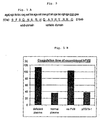
- said spacer consists of eight amino acids of the wilde type B-domain followed by eight amino acids of a variable domain (see Fig. 5A, SEQ ID NO: 9).
- vWF-binding site In such construct having the B-domain modifications discussed herein before the proposed vWF-binding site remains unchanged to prevent an immediate proteolytic digestion of secreted factor VIII in the cell culture medium or later on in the blood of the treated patients. Only after specific activation by thrombin cleavage factor VIII will be released from vWF.
- the cDNA for the preferred factor VIII was constructed by assembling four DNA-fragments, e.g., as described in Example 1.
- the protein of embodiment (3) of the invention may comprise additional N- or C-terminal sequences including, but not limited to, the natural export signal peptide (corresponding to amino acid residues -19 to -1 of the proteins shown in SEQ ID NOs 4, 13 and 15) or a fragment or analogue thereof, artificial peptides (e.g. oligo-His-tags for high-affinity purification) and the like.
- the natural export signal peptide corresponding to amino acid residues -19 to -1 of the proteins shown in SEQ ID NOs 4, 13 and 15
- artificial peptides e.g. oligo-His-tags for high-affinity purification
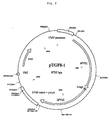
- the most preferred vector for the expression of factor VIII is vector pTGF8-1 shown in Fig. 2.
- the DNA sequence of said vector is shown in SEQ ID NO: 3, and it encompasses all five mutations addressed hereinbefore (the muteins T485C, G6032A, T6668A and T6816C (here: T1217C, G4088A, T4724A and T4872C) and a DNA sequence coding for the B-domain linker of SEQ ID NO: 9) and encodes the factor VIII mutein depicted in SEQ ID NO: 4.
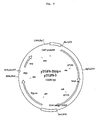
- pTGF8-2hyg-s and pTGF8-3, the common molecular structure of which is depicted in Fig. 6.
- pTGF8-2hyg-s shown in SEQ ID NO: 12 contains the silent mutation T6816C only, resulting in a factor VIII mutein having the substitution of the B domain by the linker peptide SEQ ID NO. 9, but no further change in the primary protein structure referring to the wild type sequence SEQ ID NO. 2.
- pTGF8-3 shown in SEQ ID NO: 14 contains mutations T485C, T6668A and T6816C, resulting in a factor VIII mutein showing amino acid substitutions V162A and V2223E referring to SEQ ID NO. 2 in addition to the substitution of the B domain as described above.
- the culturing is performed in the presence of von Willebrand factor.
- the von Willebrand factor is preferably used in an amount of 10 to 100, more preferably 50 to 60 mol vWF per mol factor VIII (in the culture broth and/or in the factor VIII solution during the purification procedure (see below).
- the human blood clotting factor is factor IX or a mutein thereof, preferably is wild-type factor IX shown in SEQ ID NO: 5.
- Suitable muteins of factor IX include point mutated and truncated forms of the factor IX.
- the most preferred vector for expression of factor IX are vectors pTGFG36 and pTG36hyg shown in Figs. 3 and 4, respectively.
- the culturing is preferably performed in the presence of vitamin K which may be present in an amount of 0.1 to 100 ⁇ g/ml culture broth, more preferably 1 to 20 ⁇ g/ml culture broth.
- the method according to embodiment (1) of the invention further comprises the steps
- Suitable purification steps include methods which were known in the art to maximize the yield of a pure, stable and highly active product and are selected from immunoaffinity chromatography, anion exchange chromatography, size exclusion chromatography, etc., and combinations thereof.
- detailed purification protocols for coagulation factors from human blood plasma are, e.g., disclosed in WO93/15105, EP0813597, WO96/40883 and WO 96/15140/50. They can easly be adapted to the specific requirements needed to isolate recombinant factors VIII and IX.
- the samples and/or the culture supernatant might be treated with procedures for virus inactivation including heat treatment (dry or in liquid state, with or without the addition of chemical substances including protease inhibitors). After virus inactivation a further purifying step for removing the chemical substances may be necessary.
- virus inactivation including heat treatment (dry or in liquid state, with or without the addition of chemical substances including protease inhibitors).
- a further purifying step for removing the chemical substances may be necessary.
- factor VIII isolated from blood plasma the recovery of a high purity virus-inactivated protein by anion exchange chromatography was described (WO93/15105).
- WO93/15105 the recovery of a high purity virus-inactivated protein by anion exchange chromatography
- Lipid coated viruses are effectively inactivated by treating the potentially infectious material with a hydrophobic phase forming a two-phase system, from which the water-insoluble part is subsequently removed.
- a further advantage has been proven to complement the hydrophobic phase treatment simultaneously or sequentially with a treatment with non-ionic biocompatible detergents and dialkyl or trialkyl phosphates. (WO 9636369, EP0131740, US 6,007,979).
- Non-lipid coated viruses require inactivation protocols consisting in treatment with non-ionic detergents follwed by a heating step (60-65 °C) for several hours (WO94/17834).
- a superior factor VIII mutant in accordance with embodiment (6) of the invention it is provided a superior factor VIII mutant.
- Said factor VIII mutant can be part of pharmaceutical compositions, can be used for preparing medicaments for treating hemophilia and can be applied in methods for treating hemophilia (embodiments (11) to (13) of the invention).
- the above pharmaceutical compositions and the above medicaments may comprise the factor VIII in a therapeutically effective dose, e.g., from 50 to 500 ⁇ g (with 200 ng factor VIII corresponding to one International Unit (IU)).
- a patient receives an annual dose of factor VIII of up to 200,000 IU, which is usually administered in weekly or twice weekly doses.
- the pharmaceutical compositions, medicaments or preparations applied in methods for treating hemophilia of embodiments (11) to (13) contains a therapeutically effective dose of the factor VIII mutein of embodiment (6) or the gene transfer-vector of embodiment (9).
- it may further comprise pharmaceutically acceptable additives including human serum albumin (HSA; preferably about 1 mg/ml solution); inorganic salts such as CaCl 2 (preferably 2 to 5 mM), amino acids such as glycine, lysine, and histidine (preferably 0.1 to 1 M per amino acid); disaccharides such as sucrose and/or trehalose (preferably 0.4 to 1 M); organic salts such as Na-citrate (preferably up to 50 mM); etc.
- HSA human serum albumin
- inorganic salts such as CaCl 2 (preferably 2 to 5 mM)
- amino acids such as glycine, lysine, and histidine (preferably 0.1 to 1 M per amino acid)
- disaccharides such as sucrose and/or
- the preparations may be aqueous or non-aqueous. In the latter case the major component is glycerol and/or polyethylene glycol (e.g., PEG-300).
- the preparation may also be in the dry form (to be dissolved in the desired solvent prior to administration).
- the gene transfer vector in accordance with embodiment (9) of the invention can also be part of pharmaceutical compositions, can be used for preparing medicaments for treating hemophilia and can be applied in methods for treating hemophilia (embodiments (11) to (13) of the invention).
- Said pharmaceutical compositions and medicaments may further comprise suitable matrix formulations, e.g., lipids or hormones as discussed in WO 00/49147 (the disclosure thereof being herewith incorporated by reference).
- the pharmaceutical composition or medicament comprising the gene transfer vector or the gene transfer vector of the present invention may be administered orally, intravenously, intramuscularly, subcutaneously, tropically, through mucosa (including buccal, nasal spray) or by gene gun. Oral administration (e.g., in a micronized hormone dispersion) is preferred.
- the factor VIII mutein of embodiment (6) of the invention is preferably as defined with reference to embodiment (3) above.
- Said FVIII mutein may further be prepared by standard recombinant techniques, e.g. a method comprising
- the commercially available cell line 293 T (ECACC: tsa201, ref. 96121229) was deposited with the DMSZ (Deutsche Sammlung von Mikroorganismen und Zellkulturen GmbH, Mascheroder Weg 1b, 38124 Braunschweig, Germany) on February 20, 2001 under the depositary no. DSM ACC2494.
- Example 1 - Cloning of factor VIII The sequence for the recombinant factor VIII was obtained by reverse transcription from a complete human hepatocellular RNA pool. Afterwards four fragments (1/2, 3/4, 5/6, 7/8) were amplified by standard PCR using primers designed to contain restriction sites. To fit together the fragments 3/4 and 5/6 the SmaI/SalI fragment from plasmid pBSFVIII3/4 was inserted blunt into the SalI site of pBSFVII5/6 to obtain pBSFVIII3/6. Next, the fragment 3/6 was obtained by digesting pBSFVIII3/6 with XhoI/BspHI and partially with Alw44I.
- This fragment and the PstI/Alw44I fragment from pBSFVIII1/2 were ligated in one step into the vector backbone of pBSFVIII1/2 digested with PstI and XhoI by this means obtaining pBSFVIII1/6.
- the fragment 7/8 was obtained by digesting pBSFVIII7/8 with SmaI and partially with Mva1269I and ligated into pBSFVIII1/6 cut with XhoI and Mva1269I giving rise to pBSFVIII1/8.
- Example 2 Cloning of factor IX: The vector pUC19 (MBI Fermentas) was digested with XbaI, treated with Klenow enzyme and religated. This XbaI deleted vector was then digested with EcoRI, treated with Klenow enzyme and religated in order to delete the EcoRI site. For insertion of an XbaI site into the SacI site of this vector it was digested with SacI, treated with T4-DNA-polymerase, dephosphorylated with alkaline phosphatase and ligated with the XbaI-linker CTCTAGAG (Biolabs #1032).
- Another XbaI-site was inserted by digesting the newly produced vector with HindIII, treating it with Klenow, dephosphorylating it with alkaline phosphatase and ligating it with the XbaI-linker CTCTAGAG (Biolabs #1032). This vector was named PUC19/X.
- oligonucleotides (Metabion) PRE-S (5'-GGG GTA CCA GCT TCG TAG CTA GAA CAT CAT GTT CTG GGA TAT CAG CTT CGT AGC TAG AAC ATC ATG TTC TGG TAC CCC-3'; SEQ ID NO: 10) and PRE-AS (5'-GGG GTA CCA GAA CAT GAT GTT CTA GCT ACG AAG CTG ATA TCC CAG AAC ATG ATG TTC TAG CTA CGA AGC TGG TAC CCC-3'; SEQ ID NO: 11) were hybridized and phosphorylated by kinase reaction, resulting in the insert PRE(ds).
- the vector pTGFG1 was digested with Eco0109I, treated with Klenow enzyme and dephosphorylated with alkaline phosphatase. It was then ligated with the PRE(ds) insert, resulting in the vector pTGFG5.
- the vector pUC19 (MBI Fermentas) was digested with SalI, treated with Klenow enzyme and dephosphorylated with alkaline phosphatase. It was ligated to the NotI-linker GCGGCCGC (Biolabs # 1045), resulting in the vector pUC19/N.
- Factor IX cDNA was amplified from human liver cDNA (Clontech) using two primers overlapping the start and termination codon of the factor IX open reading frame resulting in a 1387 bp fragment containing the entire open reading frame. Restriction sites for EcoRI (upstream) and BamHI (downstream) were included at the end of each primer to facilitate cloning.
- Amplification was performed with Pwo DNA-polymerase (Boehringer Mannheim) in 50 ⁇ l reaction volume [10 mM Tris HCl pH 8.85, 25 mM KCI, 5 mM (NH 4 ) 2 SO 4 , 2 mM MgSO 4 ] with 30 incubation cycles at 96°C for 1 min, 60°C for 1 min, 72°C for 2 min, followed by a final extension step at 72°C for 10 min.
- Pwo DNA-polymerase Boehringer Mannheim
- Reaction products were ligated into the EcoRI- and BamHI-sites of pUC19 and transformed into E . coli DH5- ⁇ . Positive clones were selected. Sequences were confirmed by cycle sequencing (Amersham) from both ends with labeled primers (IR-700) and automated analysis on the LiCor sequencing system (MWG, Biotech).
- This vector is a preferred one for delivery of an expression cassette encoding factor IX into the cell, and its DNA sequence is provided in SEQ ID NO: 6.
- Example 3 - Human cell line for protein expression A preferred cell line is tsA201 (ECACC Ref.: 96121229) which is a transformed embryonal human kidney cell line (293, ECACC Number 85120602) stably expressing an SV40 temperature-sensitive T antigen (J. Membrane Biol. 1996;152:39; Gene 1995;156:235; PNAS USA 1994;91:12785; Pflügers Arch. 1994;427:136; J. Gen. Physiol. 1994;104:507; BioTechniques 1993;15:906).
- Other names for this cell line include 293tsA1609neo (Mol. Cell. Biol., 1987, 7:379) and 293T.
- This epithelial-like cell line has been used in a variety of functional expression assays and been reported to produce high levels-of recombinant proteins. They can be cultivated in DMEM supplemented with 2mM glutamine and 10% FCS. For efficient production of factor IX, the medium can be modified by addition of up to 100 ⁇ g/ml vitamin K (US4770999).
- cells can be cultivated in serum-free or protein-free medium containing suitable supplements.
- secreted factor VIII requires the presence of vWF in the medium (US5198349).
- lipoproteins, phospholipids, polyglycols, trace metals, heparin, non-ionic surfactants or cyclodextrin has been reported (EP0254076, US5679549, US5198349, US5250421, US5576194, EP0872487, WO94/11525, US5378612).
- Example 4 Calcium phosphate transfection of 293T cells for the transient production of factors VIII and IX: Confluent 293T cells were plated at low density in 10 cm dishes in 6 ml DMEM/10% FCS (10 ⁇ g/ml vitamin K for FIX) the day prior to transfection. Transfection was performed roughly according to Chen and Okayama (Mol. Cell Biol., 7:2745 (1987)). 12 ⁇ g of plasmid pTGF8-1 were transfected for the production of factor VIII and pTGFG36 for the production of factor IX. Six hours after transfection the medium was replaced by fresh one and the superantant was harvested three days post transfection and either further purified or analyzed without further purification by ELISA or coagulometry (see Examples 5 and 6).
- Example 5 Determination of FIX and FVIII concentration by ELISA: Factor IX: Human recombinant factor IX levels in supernatant of transfected 293T cells were determined by ELISA using a goat polyclonal anti-human FIX (Enzyme Research Laboratories) as capture antibody. All incubations were performed for two hours in a humid chamber at 22° C. Plates (Dynex, Immulon-4) were coated with 100 ⁇ l of 8.8 ⁇ g antibody/ml coating buffer. Blocking is not required under the conditions described. Washing the plate four times (Encore 2000, Merck) with PBS-Tween® (0,1% v/v) is sufficient to block non-specific interactions.
- Factor VIII Human recombinant factor VIII levels in culture filtrate of transfected 293T cells were determined by ELISA using an affinity purified polyclonal sheep anti FVIII:C preparation (F8C-EIA-C, Affinity Biologicals) as capture antibody. Coating was performed for two hours in a humid chamber at 22° C. Plates (Dynex, Immulon-4) were coated with 100 ⁇ l of a 100-fold antibody dilution in coating buffer (50 mM sodium carbonate pH 9.6). Washing the plate four times (Encore 2000, Merck) with PBS-Tween® (0,1% v/v) was sufficient to block non-specific interactions.
- coating buffer 50 mM sodium carbonate pH 9.6
- a 5 mg O-Phenylenediamine (P-6912, Sigma) tablet was dissolved in 12 ml substrate buffer shortly before use and completed with 12 ⁇ l 30% H 2 O 2 .
- 150 ⁇ l of this substrate solution was added to each well and colorimetric recording was done in an MRX Reader (Dynex) at 490 nm after 10 min of incubation at room temperature in the dark and stopping of reaction by addition of 50 ⁇ l 2.5 M H 2 SO 4 to each well.
- Results were calculated by linear regression of standard concentrations versus standard absorbances (Fig. 7 A) and are summarized in Fig. 7 B.
- Example 6 Detection of Human Clotting Factor VIII and Factor IX Activity
- the clotting activity of human recombinant factor VIII in supernatants of cell culture 293T cells was determined as follows:
- the clotting activity was assayed based on a partial thromboplastin time assay using Cephalin (phosphatidyl ethanolamine) activation with a manual coagulation instrument (ML-2, Instrumentation Laboratories).
- Cephalin phosphatidyl ethanolamine
- ML-2 Manual coagulation instrument
- 100 ⁇ l undiluted supernatant from transfected 293 T-cells, 100 ⁇ l deficiency plasma (Progen) and 100 ⁇ l Cephalin (Instrumentation Laboratories) were incubated for 5 minutes at 37°C. Coagulation was started by adding 100 ⁇ l CaCl 2 . Sample coagulation time was compared to normal plasma.
- Fig. 5B As can be seen from Fig. 5B, cell supernatant from cells transfected with pTGF8-1 shows a coagulation activity comparable to normal plasma while non transfected cells give a value equivalent to plasma lacking factor VIII.
- Viral inactivation was performed in accordance with the method of U.S. Patent No. 6,007,979. Namely, to a potentially infectious protein solution the following compounds were added subsequently, with stirring:
- Centrifugation was performed in each case for phase separation.
- samples of 1 ml each were repeatedly taken from the aqueous fraction.
- Example 8 Establishment of cell lines stably expressing factor VIII and factor IX:
- the preferred vectors pTGF8-1 and pTGFG36 comprise constructs for transient expression of factor VIII and factor IX, respectively, in mammalian cells.
- a cassette for the hygromycin-B-phosphotransferase HisndIII-Mva 1260I fragment from TK-Hyg, Clontech was subcloned into the SmaI site being present in both vectors.
- the resulting constructs (pTGF8-1-hyg and pTG36hyg) then comprise in cis the expression cassettes for the human factor VIII or factor IX with a CMV-promotor and a SV40-polyadenylation signal and a hygromycin-B-phosphotransferase expression cassette with the HSV thymidine kinase promoter and HSV thymidine kinase polyadenylation signal (see Fig. 4).
- the vectors pTGF8-2hyg-s and pTGF8-3 are derivatives of pTGF8-1hyg, in that point mutations V162A, S2011N and V2223E (pTGF8-2hyg-s) and S2011N (pTGF8-3) were reverted to wildtype sequence by a PCR- dependent method using the QuikChange® protocol (Stratagene).
- the coding sequence for the clotting factors can be replaced by any other gene sequence of choice. These constructs allow for the establishment of stably expressing cell lines by calcium phosphate transfection and subsequent selection for hygromycine resistance. Additionally the plasmids contain a progesterone responsive element (PRE). In transient transfection experiments with pTG36hyg the production of about 40 ng active factor IX per ml culture medium could be shown by ELISA and coagulometric assay (see Examples 5 and 6).
- PRE progesterone responsive element
- factor IX 293T cells were cultivated in DMEM supplemented with 10% FCS and 10 ⁇ g/ml vitamin K (US Patent No. 4,770,999; see also Fig. 10).
- DMEM fetal calf serum
- 10 ⁇ g/ml fetal calf serum
- the critical concentration of antibiotics for an effective selection of stably transfected 293T cells had to be established.
- the cells were plated at low dilution and grown in the presence of 10 to 800 ⁇ g/ml hygromycin B. After two weeks at 200 ⁇ g/ml or higher no cells were growing, so this concentration was chosen for the selection of stably transfected cells.
- a typical transfection was performed in 10cm dishes with 293T cells split the day before at a ratio of 1:15.
- Using the calciumphosphate precipitation method Biotechniques 1988 6:7 632-638, 12 ⁇ g plasmid per dish were transfected and two days later the medium was replaced with fresh one containing 200 ⁇ g/ml hygromycin B. After 2-3 weeks of selection the medium was tested by ELISA (see Example 5) for the presence of factor VIII or IX. Positive clones were isolated and transferred to a 24-well plate.
- a method for the production of recombinant human blood clotting factor which comprises
- the immortalized human cell line is derived from an embryonic human kidney cell and preferably is cell line 293T (DSM ACC2494), and the promoter is a CMV promoter.
- the vector further comprises a selection marker and/or regulatory sequences.
- the vector comprises a DNA sequence coding for human factor VIII or a mutein thereof.
- the vector comprises a DNA sequence coding for the mature wild-type factor VIII shown in SEQ ID NO:2.
- the vector comprises a DNA sequence coding for a factor VIII mutein, said factor VIII mutein being a mutein having point mutations, a mutein being truncated at its C- or N-terminus, and/or a mutein partially or entirely lacking its B-domain, preferably the factor VIII mutein having at least one of the following mutations:
- the factor VIII mutein has at least one of the mutations (a), (b) and (c), preferably at least one of the mutations (a) and (b).
- the DNA sequence coding for the factor VIII mutein has at least one of the mutations T485C, G6032A and T6668A relative to the DNA sequence of the mature wild-type factor VIII shown in SEQ ID NO: 1, preferably the DNA sequence comprises all three of said mutations.
- Arg-rich linker peptide comprises at least 3 Arg residues.
- linker comprises:
- the factor VIII mutein comprises amino acids 1 to 1440 of SEQ ID NO: 4, 13 or 15.
- vWF von Willebrand Factor
- the vector comprises a DNA sequence coding for human factor IX or a mutein thereof.
- the vector comprises a DNA sequence coding for the wild-type factor IX shown in SEQ ID NO: 5 and preferably is vector pTG36hyg shown in Fig. 4.
- An immortalized human cell line stably expressing at least one viral transcription activator protein and carrying a vector coding for a human blood clotting factor as defined above.
- a factor VIII mutein as defined above having at least one of the mutations (a) to (d) as defined in claim 7.
- a vector comprising the DNA as defined above.
- the vector as defined above which is a gene transfer vector.
- a host cell being transformed with a vector as defined above and/or comprising a DNA sequence as defined above.
- a pharmaceutical composition comprising the factor VIII mutein as defined above or a gene transfer vector as defined above.
- a method for treating hemophilia preferably for treating hemophilia A, which comprises administering human hemophiliacs a factor VIII mutein as defined above or a gene transfer vector as defined above.
Landscapes
- Health & Medical Sciences (AREA)
- Chemical & Material Sciences (AREA)
- Life Sciences & Earth Sciences (AREA)
- Organic Chemistry (AREA)
- Engineering & Computer Science (AREA)
- Genetics & Genomics (AREA)
- Zoology (AREA)
- Bioinformatics & Cheminformatics (AREA)
- Wood Science & Technology (AREA)
- General Health & Medical Sciences (AREA)
- Biochemistry (AREA)
- Biomedical Technology (AREA)
- General Engineering & Computer Science (AREA)
- Molecular Biology (AREA)
- Medicinal Chemistry (AREA)
- Biotechnology (AREA)
- Microbiology (AREA)
- Hematology (AREA)
- Biophysics (AREA)
- Gastroenterology & Hepatology (AREA)
- Toxicology (AREA)
- Proteomics, Peptides & Aminoacids (AREA)
- Diabetes (AREA)
- Public Health (AREA)
- Nuclear Medicine, Radiotherapy & Molecular Imaging (AREA)
- General Chemical & Material Sciences (AREA)
- Animal Behavior & Ethology (AREA)
- Chemical Kinetics & Catalysis (AREA)
- Veterinary Medicine (AREA)
- Pharmacology & Pharmacy (AREA)
- Physics & Mathematics (AREA)
- Plant Pathology (AREA)
- Medicines That Contain Protein Lipid Enzymes And Other Medicines (AREA)
- Micro-Organisms Or Cultivation Processes Thereof (AREA)
- Peptides Or Proteins (AREA)
- Preparation Of Compounds By Using Micro-Organisms (AREA)
- Medicines Containing Material From Animals Or Micro-Organisms (AREA)
- Enzymes And Modification Thereof (AREA)
Priority Applications (1)
| Application Number | Priority Date | Filing Date | Title |
|---|---|---|---|
| EP04009279A EP1460131A3 (fr) | 2000-03-22 | 2001-03-21 | Préparation de facteurs de la coagulation sanguine recombinants en lignées cellulaires humaines |
Applications Claiming Priority (6)
| Application Number | Priority Date | Filing Date | Title |
|---|---|---|---|
| EP00106225A EP1136553A1 (fr) | 2000-03-22 | 2000-03-22 | Préparation de facteurs de la coagulation sanguine recombinants en lignées cellulaires humaines |
| EP00106225 | 2000-03-22 | ||
| US20324900P | 2000-05-08 | 2000-05-08 | |
| US203249P | 2000-05-08 | ||
| EP04009279A EP1460131A3 (fr) | 2000-03-22 | 2001-03-21 | Préparation de facteurs de la coagulation sanguine recombinants en lignées cellulaires humaines |
| EP01927769A EP1266006B1 (fr) | 2000-03-22 | 2001-03-21 | Production de muteines recombinantes du facteur de coagulation sanguine viii dans des lignees de cellules humaines |
Related Parent Applications (2)
| Application Number | Title | Priority Date | Filing Date |
|---|---|---|---|
| EP01927769A Division EP1266006B1 (fr) | 2000-03-22 | 2001-03-21 | Production de muteines recombinantes du facteur de coagulation sanguine viii dans des lignees de cellules humaines |
| EP01927769.8 Division | 2001-03-21 |
Publications (2)
| Publication Number | Publication Date |
|---|---|
| EP1460131A2 true EP1460131A2 (fr) | 2004-09-22 |
| EP1460131A3 EP1460131A3 (fr) | 2005-06-01 |
Family
ID=26070708
Family Applications (2)
| Application Number | Title | Priority Date | Filing Date |
|---|---|---|---|
| EP01927769A Expired - Lifetime EP1266006B1 (fr) | 2000-03-22 | 2001-03-21 | Production de muteines recombinantes du facteur de coagulation sanguine viii dans des lignees de cellules humaines |
| EP04009279A Withdrawn EP1460131A3 (fr) | 2000-03-22 | 2001-03-21 | Préparation de facteurs de la coagulation sanguine recombinants en lignées cellulaires humaines |
Family Applications Before (1)
| Application Number | Title | Priority Date | Filing Date |
|---|---|---|---|
| EP01927769A Expired - Lifetime EP1266006B1 (fr) | 2000-03-22 | 2001-03-21 | Production de muteines recombinantes du facteur de coagulation sanguine viii dans des lignees de cellules humaines |
Country Status (28)
| Country | Link |
|---|---|
| US (1) | US7572619B2 (fr) |
| EP (2) | EP1266006B1 (fr) |
| JP (1) | JP3894795B2 (fr) |
| KR (1) | KR100581574B1 (fr) |
| CN (1) | CN1454257B (fr) |
| AT (1) | ATE312176T1 (fr) |
| AU (3) | AU5471501A (fr) |
| BE (1) | BE2014C077I2 (fr) |
| BG (1) | BG65930B1 (fr) |
| BR (1) | BRPI0109494B8 (fr) |
| CA (1) | CA2404163C (fr) |
| CZ (1) | CZ303929B6 (fr) |
| DE (1) | DE60115613T2 (fr) |
| DK (1) | DK1266006T3 (fr) |
| EA (1) | EA004317B1 (fr) |
| EE (1) | EE200200538A (fr) |
| ES (1) | ES2254403T3 (fr) |
| FR (1) | FR15C0003I2 (fr) |
| HR (1) | HRP20020767B1 (fr) |
| HU (1) | HU228091B1 (fr) |
| IL (2) | IL151857A0 (fr) |
| MX (1) | MXPA02009221A (fr) |
| NO (1) | NO330910B1 (fr) |
| NZ (1) | NZ521732A (fr) |
| RS (1) | RS50743B (fr) |
| SI (1) | SI1266006T1 (fr) |
| SK (1) | SK287706B6 (fr) |
| WO (1) | WO2001070968A2 (fr) |
Families Citing this family (60)
| Publication number | Priority date | Publication date | Assignee | Title |
|---|---|---|---|---|
| US7572619B2 (en) * | 2000-03-22 | 2009-08-11 | Octagene Gmbh | Recombinant blood clotting factors |
| EP1319016A4 (fr) * | 2000-09-19 | 2006-05-10 | Univ Emory | Facteur viii modifie |
| EP1469064A1 (fr) | 2003-04-15 | 2004-10-20 | DRK-Blutspendedienst Baden-Württemberg-Hessen gGmbH | Expression des protéines dans des cellules endothéliales dérivées de cellules précurseurs du sang de cordon ombilical |
| US7425539B2 (en) | 2004-03-19 | 2008-09-16 | Baxter International Inc. | Factor IXa for the treatment of bleeding disorders |
| KR100624013B1 (ko) * | 2004-06-25 | 2006-09-19 | 주식회사 녹십자홀딩스 | 동결건조된 알부민 비함유 재조합 사람 혈액응고 제 8인자 제제 |
| DK1804839T3 (da) | 2004-09-22 | 2012-04-10 | St Jude Childrens Res Hospital | Forbedret ekspression af faktor ix i genterapivektorer |
| US20060094104A1 (en) | 2004-10-29 | 2006-05-04 | Leopold Grillberger | Animal protein-free media for cultivation of cells |
| ES2380485T3 (es) * | 2005-02-11 | 2012-05-14 | Novo Nordisk Health Care Ag | Producción de un polipéptido en un lÃquido de cultivo sin suero con hidrolizado de proteÃnas vegetales |
| EP1707634A1 (fr) | 2005-03-29 | 2006-10-04 | Octapharma AG | Procédé pour l'isolation de protéines recombinantes |
| EP1739179A1 (fr) | 2005-06-30 | 2007-01-03 | Octapharma AG | Transfection stable exempt de sérum et production des protéines recombinantes humaines dans des lignées cellulaires humaines |
| KR101495549B1 (ko) | 2006-07-13 | 2015-02-25 | 와이어쓰 엘엘씨 | 당단백질의 생산 |
| CA2683423C (fr) * | 2007-04-26 | 2020-10-27 | Inspiration Biopharmaceuticals, Inc. | Proteines dependantes de la vitamine k recombinees a teneur elevee en acide sialique et leurs procedes de preparation |
| US20110045535A1 (en) * | 2007-08-27 | 2011-02-24 | National University Corporation Nagoya University | Activator for Blood Coagulation Factor VII Promoter and Utilization of the Same |
| JP2012500250A (ja) | 2008-08-21 | 2012-01-05 | オクタファルマ アクチェン ゲゼルシャフト | 組換えにより産生したヒト第viii及び第ix因子 |
| WO2010092135A2 (fr) | 2009-02-11 | 2010-08-19 | Novozymes Biopharma Uk Ltd. | Variants de l'albumine et leurs conjugués |
| DK2482841T4 (da) | 2009-10-02 | 2022-10-24 | Childrens Hospital Philadelphia | Sammensætninger og fremgangsmåder til at forbedre koagulationsfaktor-viii-funktion |
| CN102741280B (zh) | 2009-10-30 | 2015-12-02 | 诺维信生物制药丹麦公司 | 白蛋白变体 |
| CN106977608A (zh) | 2010-04-09 | 2017-07-25 | 阿尔布麦狄克斯公司 | 白蛋白衍生物和变体 |
| BRPI1105317A2 (pt) * | 2011-01-24 | 2013-04-30 | Fundacco Hemoct De Ribeirco Preto | produÇço estÁvel e em larga escala de fviii humano em linhagem celular humana sk-hep-1 |
| CA2827923C (fr) | 2011-02-25 | 2021-11-23 | Chugai Seiyaku Kabushiki Kaisha | Anticorps fc specifique de fcgriib |
| CN102199607B (zh) * | 2011-03-30 | 2012-11-14 | 山西大学 | 重组人凝血因子ix小基因及其ptc突变体稳定细胞株 |
| CA2835053C (fr) | 2011-05-13 | 2020-07-07 | Octapharma Ag | Methode pour augmenter la productivite de cellules eucaryotes dans la production du fviii recombinant |
| TW201307563A (zh) * | 2011-05-19 | 2013-02-16 | Shire Human Genetic Therapies | 純化乙醯肝素-n-硫酸酯酶之方法 |
| JP5997151B2 (ja) | 2011-06-30 | 2016-09-28 | 中外製薬株式会社 | ヘテロ二量化ポリペプチド |
| CN102321668A (zh) * | 2011-07-06 | 2012-01-18 | 中国人民解放军军事医学科学院野战输血研究所 | 一种表达重组人凝血因子ⅶ的方法及其专用载体 |
| US20150050269A1 (en) | 2011-09-30 | 2015-02-19 | Chugai Seiyaku Kabushiki Kaisha | Antigen-binding molecule promoting disappearance of antigens having plurality of biological activities |
| CA2850579A1 (fr) | 2011-10-18 | 2013-04-25 | Carsten Horn | Procede pour l'amelioration de la stabilite du facteur viii purifie apres la reconstitution |
| HK1200842A1 (en) | 2011-11-18 | 2015-08-14 | Albumedix Ltd | Proteins with improved half-life and other properties |
| CA3233142A1 (fr) | 2011-11-30 | 2013-06-06 | Chugai Seiyaku Kabushiki Kaisha | Support contenant des medicaments dans une cellule pour former un complexe immunitaire |
| WO2013125667A1 (fr) | 2012-02-24 | 2013-08-29 | 中外製薬株式会社 | MOLÉCULE DE LIAISON D'ANTIGÈNE DESTINÉE À FAVORISER LA DISPARITION D'ANTIGÈNE VIA LE RÉCEPTEUR FcγRIIB |
| MX2014010278A (es) | 2012-03-16 | 2015-03-05 | Novozymes Biopharma Dk As | Variantes de albumina. |
| US9550819B2 (en) | 2012-03-27 | 2017-01-24 | Ngm Biopharmaceuticals, Inc. | Compositions and methods of use for treating metabolic disorders |
| GB201210357D0 (en) | 2012-06-12 | 2012-07-25 | Ucl Business Plc | Factor VIII sequences |
| US8986991B2 (en) * | 2012-07-03 | 2015-03-24 | Expression Therapeutics, Llc | High yield suspension cell line, system and method for making same |
| EP3404105A1 (fr) | 2012-07-06 | 2018-11-21 | Bioverativ Therapeutics Inc. | Lignée cellulaire exprimant des polypeptides du facteur viii à chaîne unique et ses utilisations |
| WO2014072481A1 (fr) | 2012-11-08 | 2014-05-15 | Novozymes Biopharma Dk A/S | Variants d'albumine |
| SG11201505627RA (en) * | 2013-01-24 | 2015-08-28 | Portola Pharm Inc | INHIBITION OF TISSUE FACTOR PATHWAY INHIBITOR WITH FACTOR Xa DERIVATIVES |
| TWI636062B (zh) | 2013-04-02 | 2018-09-21 | 中外製藥股份有限公司 | Fc region variant |
| EP2853538A1 (fr) | 2013-09-27 | 2015-04-01 | Université Pierre et Marie Curie (Paris 6) | Analogues de temporin-Sha et leurs utilisations |
| TN2016000578A1 (en) | 2014-07-30 | 2018-04-04 | Ngm Biopharmaceuticals Inc | Compositions and methods of use for treating metabolic disorders |
| EP3212226B1 (fr) | 2014-10-31 | 2020-03-18 | NGM Biopharmaceuticals, Inc. | Compositions et leurs méthodes d'utilisation pour le traitement de troubles métaboliques |
| GB201420139D0 (en) | 2014-11-12 | 2014-12-24 | Ucl Business Plc | Factor IX gene therapy |
| NZ730607A (en) | 2014-12-19 | 2022-07-01 | Chugai Pharmaceutical Co Ltd | Anti-myostatin antibodies, polypeptides containing variant fc regions, and methods of use |
| WO2016125495A1 (fr) | 2015-02-05 | 2016-08-11 | Chugai Seiyaku Kabushiki Kaisha | Anticorps comprenant un domaine se liant à l'antigène dépendant de la concentration d'ions, variants de la région fc, anticorps se liant à l'il-8, et leurs utilisations |
| BR102015012334A2 (pt) | 2015-05-27 | 2016-11-29 | Fundação Hemoct De Ribeirão Preto Fundherp | processo de produção do fator vii de coagulação sanguínea e fator vii de coagulação sanguínea |
| WO2016198499A1 (fr) | 2015-06-09 | 2016-12-15 | Glycotope Gmbh | Procédé de production amélioré de polypeptides γ-carboxylés |
| WO2017029407A1 (fr) | 2015-08-20 | 2017-02-23 | Albumedix A/S | Variants de l'albumine et leurs conjugués |
| CN105219739A (zh) * | 2015-09-21 | 2016-01-06 | 北京神源德生物科技有限公司 | 重组单纯疱疹病毒及它感染和制备它的宿主细胞以及它们的应用 |
| WO2017110981A1 (fr) | 2015-12-25 | 2017-06-29 | Chugai Seiyaku Kabushiki Kaisha | Anticorps anti-myostatine et procédés d'utilisation |
| EP3452102B9 (fr) | 2016-04-15 | 2024-09-04 | The Trustees of The University of Pennsylvania | Thérapie génique pour le traitement de l'hémophilie a |
| BR112019001902A2 (pt) | 2016-08-05 | 2019-07-09 | Chugai Seiyaku Kabushiki Kaisha | composição para profilaxia ou tratamento de doenças relacionadas à il-8 |
| EP3625329A1 (fr) | 2017-05-17 | 2020-03-25 | Octapharma AG | Procédé de production d'une protéine cible recombinante |
| EP3710589A4 (fr) | 2017-11-14 | 2021-11-10 | Chugai Seiyaku Kabushiki Kaisha | Anticorps anti-c1s et procédés d'utilisation |
| CN112469821B (zh) * | 2018-07-26 | 2021-12-14 | 正大天晴药业集团股份有限公司 | 一种制备重组人凝血因子ⅷ的方法 |
| IL317002A (en) | 2018-08-10 | 2025-01-01 | Chugai Pharmaceutical Co Ltd | Anti-CD137 antigen binding molecule and use thereof |
| GB201813528D0 (en) | 2018-08-20 | 2018-10-03 | Ucl Business Plc | Factor IX encoding nucleotides |
| US10842885B2 (en) | 2018-08-20 | 2020-11-24 | Ucl Business Ltd | Factor IX encoding nucleotides |
| EP3870206A4 (fr) | 2018-10-23 | 2023-04-26 | The Children's Hospital Of Philadelphia | Compositions et procédés de modulation de la fonction du facteur viii |
| CN114096562B (zh) | 2019-05-15 | 2025-02-21 | 中外制药株式会社 | 抗原结合分子、药物组合物和方法 |
| WO2022259007A1 (fr) | 2021-06-11 | 2022-12-15 | Sorbonne Universite | Peptides antimicrobiens courts |
Family Cites Families (21)
| Publication number | Priority date | Publication date | Assignee | Title |
|---|---|---|---|---|
| IL74909A (en) * | 1984-04-20 | 1992-01-15 | Genentech Inc | Preparation of functional human factor viii and dna sequences,expression vectors,transformed microorganisms and cell lines used therein |
| JPS6171774A (ja) * | 1984-09-14 | 1986-04-12 | Sony Corp | テレビジヨンカメラ装置のビ−ム電流制御装置 |
| JP2584443B2 (ja) * | 1985-04-22 | 1997-02-26 | ジエネテイツクス・インスチチユ−ト・インコ−ポレ−テツド | 活性化▲i▼▲x▼因子の高収率産生 |
| JP2525022B2 (ja) * | 1986-01-03 | 1996-08-14 | ジェネティックス・インスチチュ−ト・インコ−ポレ−テッド | ▲VIII▼:c因子型タンパク質の改良生産方法 |
| US5422260A (en) * | 1986-05-29 | 1995-06-06 | Genetics Institute, Inc. -Legal Affairs | Human factor VIII:c muteins |
| US5451521A (en) * | 1986-05-29 | 1995-09-19 | Genetics Institute, Inc. | Procoagulant proteins |
| US5024939A (en) | 1987-07-09 | 1991-06-18 | Genentech, Inc. | Transient expression system for producing recombinant protein |
| FR2638643B1 (fr) * | 1988-11-09 | 1991-04-12 | Transgene Sa | Sequence d'adn codant pour le facteur ix humain ou une proteine analogue, vecteur d'expression, cellules transformees, procede de preparation du facteur ix et produits obtenus correspondants |
| NZ236094A (en) * | 1989-11-17 | 1993-04-28 | Chiron Corp | Recombinant protein complex having human factor viii:c activity |
| SE465222C5 (sv) * | 1989-12-15 | 1998-02-10 | Pharmacia & Upjohn Ab | Ett rekombinant, humant faktor VIII-derivat och förfarande för dess framställning |
| DE69101634T4 (de) * | 1990-01-26 | 1994-12-01 | Immuno Ag | Rekombinant hergestellte blutfaktoren, verfahren zur exprimierung besagter blutfaktoren sowie in besagtem prozess verwendeter rekombinanter vaccina-virus. |
| US5445953A (en) * | 1991-08-26 | 1995-08-29 | Immuno Aktiengesellschaft | Direct molecular cloning of a modified poxvirus genome |
| EP0710288B1 (fr) * | 1993-06-10 | 2006-04-05 | Genetic Therapy, Inc. | Vecteurs adenoviraux pour le traitement de l'hemophilie |
| WO1998000541A2 (fr) * | 1996-07-03 | 1998-01-08 | Chiron Corporation | Procedes d'administration de porteurs fournissant des genes recombinants pour le traitement d'une maladie chez l'homme |
| US6114148C1 (en) * | 1996-09-20 | 2012-05-01 | Gen Hospital Corp | High level expression of proteins |
| CA2312291A1 (fr) * | 1997-12-05 | 1999-06-17 | The Immune Response Corporation | Vecteurs et genes a expression accrue |
| US6358703B1 (en) * | 1998-12-10 | 2002-03-19 | Bayer Corporation | Expression system for factor VIII |
| WO2000049147A1 (fr) * | 1999-02-19 | 2000-08-24 | Octagene Gmbh | Couples hormone-recepteur hormonal, constructions d'acides nucleiques, et utilisation de ceux-ci en therapie genique |
| WO2001012836A1 (fr) * | 1999-08-13 | 2001-02-22 | Fred Hutchinson Cancer Research Center | Cristal de produit de recombinaison proteique tronque renfermant un domaine c2 du facteur de coagulation viii, avec ou sans ligand lie, et procedes d'utilisation |
| US7572619B2 (en) * | 2000-03-22 | 2009-08-11 | Octagene Gmbh | Recombinant blood clotting factors |
| WO2003009237A1 (fr) * | 2001-07-18 | 2003-01-30 | Skaginn Hf. | Dispositif et procede pour l'etablissement d'un lien entre un operateur et des informations relatives a un objet traite par cet operateur |
-
2001
- 2001-03-21 US US10/239,498 patent/US7572619B2/en not_active Expired - Lifetime
- 2001-03-21 SI SI200130501T patent/SI1266006T1/sl unknown
- 2001-03-21 JP JP2001569351A patent/JP3894795B2/ja not_active Expired - Lifetime
- 2001-03-21 AU AU5471501A patent/AU5471501A/xx active Pending
- 2001-03-21 HR HR20020767A patent/HRP20020767B1/xx not_active IP Right Cessation
- 2001-03-21 RS YUP-710/02A patent/RS50743B/sr unknown
- 2001-03-21 AU AU2001254715A patent/AU2001254715B2/en not_active Expired
- 2001-03-21 EE EEP200200538A patent/EE200200538A/xx unknown
- 2001-03-21 KR KR1020027012443A patent/KR100581574B1/ko not_active Expired - Lifetime
- 2001-03-21 SK SK1504-2002A patent/SK287706B6/sk not_active IP Right Cessation
- 2001-03-21 CA CA002404163A patent/CA2404163C/fr not_active Expired - Lifetime
- 2001-03-21 EA EA200201008A patent/EA004317B1/ru active Protection Beyond IP Right Term
- 2001-03-21 CN CN018097456A patent/CN1454257B/zh not_active Expired - Lifetime
- 2001-03-21 DK DK01927769T patent/DK1266006T3/da active
- 2001-03-21 DE DE60115613T patent/DE60115613T2/de not_active Expired - Lifetime
- 2001-03-21 EP EP01927769A patent/EP1266006B1/fr not_active Expired - Lifetime
- 2001-03-21 EP EP04009279A patent/EP1460131A3/fr not_active Withdrawn
- 2001-03-21 ES ES01927769T patent/ES2254403T3/es not_active Expired - Lifetime
- 2001-03-21 CZ CZ20023166A patent/CZ303929B6/cs not_active IP Right Cessation
- 2001-03-21 WO PCT/EP2001/003220 patent/WO2001070968A2/fr not_active Ceased
- 2001-03-21 MX MXPA02009221A patent/MXPA02009221A/es active IP Right Grant
- 2001-03-21 IL IL15185701A patent/IL151857A0/xx unknown
- 2001-03-21 BR BRPI0109494A patent/BRPI0109494B8/pt not_active IP Right Cessation
- 2001-03-21 AT AT01927769T patent/ATE312176T1/de active
- 2001-03-21 NZ NZ521732A patent/NZ521732A/en not_active IP Right Cessation
- 2001-03-21 HU HU0300588A patent/HU228091B1/hu unknown
-
2002
- 2002-09-19 IL IL151857A patent/IL151857A/en active IP Right Grant
- 2002-09-19 NO NO20024475A patent/NO330910B1/no not_active IP Right Cessation
- 2002-09-26 BG BG107152A patent/BG65930B1/bg unknown
-
2006
- 2006-05-02 AU AU2006201848A patent/AU2006201848A1/en not_active Abandoned
-
2014
- 2014-12-29 BE BE2014C077C patent/BE2014C077I2/fr unknown
-
2015
- 2015-01-20 FR FR15C0003C patent/FR15C0003I2/fr active Active
Also Published As
Similar Documents
| Publication | Publication Date | Title |
|---|---|---|
| US7572619B2 (en) | Recombinant blood clotting factors | |
| AU2001254715A1 (en) | Production of recombinant blood clotting factors in human cell lines | |
| JP4361786B2 (ja) | 操作されたジスルフィド結合を有する安定化蛋白質 | |
| US7220569B2 (en) | Nucleic acids encoding factor X analogues having a modified protease cleavage site | |
| KR101273229B1 (ko) | 변형된 활성화 특성을 갖는 응고 인자 x 폴리펩타이드 | |
| US7122634B2 (en) | Modified factor VIII | |
| CA2636671C (fr) | Facteur de coagulation viia modifie a demi-vie prolongee | |
| JP3440097B2 (ja) | ヒト/ブタハイブリッド第viii因子 | |
| EP0506757B1 (fr) | Derive du facteur humain viii de recombinaison | |
| JP5833448B2 (ja) | セリンプロテアーゼ誘導体および血液凝固疾患の予防または処置における使用 | |
| US6905846B2 (en) | Nucleic acids encoding factor X deletion mutants and analogues thereof | |
| KR20010082521A (ko) | 변형된 인자 ⅷ | |
| US6958322B1 (en) | Factor X analog with an improved ability to be activated | |
| AU2002364509A1 (en) | Factor viii c2 domain variants | |
| Kaufman | Insight into the structure, function, and biosynthesis of factor VIII through recombinant DNA technology | |
| CZ140298A3 (cs) | Hybridní faktor VIII s modifikovanou aktivitou | |
| EP1136553A1 (fr) | Préparation de facteurs de la coagulation sanguine recombinants en lignées cellulaires humaines |
Legal Events
| Date | Code | Title | Description |
|---|---|---|---|
| PUAI | Public reference made under article 153(3) epc to a published international application that has entered the european phase |
Free format text: ORIGINAL CODE: 0009012 |
|
| AC | Divisional application: reference to earlier application |
Ref document number: 1266006 Country of ref document: EP Kind code of ref document: P |
|
| AK | Designated contracting states |
Kind code of ref document: A2 Designated state(s): AT BE CH CY DE DK ES FI FR GB GR IE IT LI LU MC NL PT SE TR |
|
| AX | Request for extension of the european patent |
Extension state: AL LT LV MK RO SI |
|
| PUAL | Search report despatched |
Free format text: ORIGINAL CODE: 0009013 |
|
| AK | Designated contracting states |
Kind code of ref document: A3 Designated state(s): AT BE CH CY DE DK ES FI FR GB GR IE IT LI LU MC NL PT SE TR |
|
| AX | Request for extension of the european patent |
Extension state: AL LT LV MK RO SI |
|
| 17P | Request for examination filed |
Effective date: 20050618 |
|
| AKX | Designation fees paid |
Designated state(s): AT BE CH CY DE DK ES FI FR GB GR IE IT LI LU MC NL PT SE TR |
|
| 17Q | First examination report despatched |
Effective date: 20061009 |
|
| STAA | Information on the status of an ep patent application or granted ep patent |
Free format text: STATUS: THE APPLICATION IS DEEMED TO BE WITHDRAWN |
|
| 18D | Application deemed to be withdrawn |
Effective date: 20070620 |