EP1482806B1 - Umesterungsreaktion zur herstellung von estern, die den milchproduktgeschmack fördern - Google Patents
Umesterungsreaktion zur herstellung von estern, die den milchproduktgeschmack fördern Download PDFInfo
- Publication number
- EP1482806B1 EP1482806B1 EP03705556A EP03705556A EP1482806B1 EP 1482806 B1 EP1482806 B1 EP 1482806B1 EP 03705556 A EP03705556 A EP 03705556A EP 03705556 A EP03705556 A EP 03705556A EP 1482806 B1 EP1482806 B1 EP 1482806B1
- Authority
- EP
- European Patent Office
- Prior art keywords
- process according
- alcohol
- esters
- enzyme
- ethanol
- Prior art date
- Legal status (The legal status is an assumption and is not a legal conclusion. Google has not performed a legal analysis and makes no representation as to the accuracy of the status listed.)
- Expired - Lifetime
Links
Images


Classifications
-
- A—HUMAN NECESSITIES
- A23—FOODS OR FOODSTUFFS; TREATMENT THEREOF, NOT COVERED BY OTHER CLASSES
- A23C—DAIRY PRODUCTS, e.g. MILK, BUTTER OR CHEESE; MILK OR CHEESE SUBSTITUTES; PREPARATION THEREOF
- A23C19/00—Cheese; Cheese preparations; Making thereof
- A23C19/06—Treating cheese curd after whey separation; Products obtained thereby
-
- A—HUMAN NECESSITIES
- A23—FOODS OR FOODSTUFFS; TREATMENT THEREOF, NOT COVERED BY OTHER CLASSES
- A23C—DAIRY PRODUCTS, e.g. MILK, BUTTER OR CHEESE; MILK OR CHEESE SUBSTITUTES; PREPARATION THEREOF
- A23C19/00—Cheese; Cheese preparations; Making thereof
- A23C19/02—Making cheese curd
- A23C19/032—Making cheese curd characterised by the use of specific microorganisms, or enzymes of microbial origin
- A23C19/0323—Making cheese curd characterised by the use of specific microorganisms, or enzymes of microbial origin using only lactic acid bacteria, e.g. Pediococcus and Leuconostoc species; Bifidobacteria; Microbial starters in general
-
- A—HUMAN NECESSITIES
- A23—FOODS OR FOODSTUFFS; TREATMENT THEREOF, NOT COVERED BY OTHER CLASSES
- A23C—DAIRY PRODUCTS, e.g. MILK, BUTTER OR CHEESE; MILK OR CHEESE SUBSTITUTES; PREPARATION THEREOF
- A23C19/00—Cheese; Cheese preparations; Making thereof
- A23C19/06—Treating cheese curd after whey separation; Products obtained thereby
- A23C19/068—Particular types of cheese
- A23C19/08—Process cheese preparations; Making thereof, e.g. melting, emulsifying, sterilizing
- A23C19/082—Adding substances to the curd before or during melting; Melting salts
-
- A—HUMAN NECESSITIES
- A23—FOODS OR FOODSTUFFS; TREATMENT THEREOF, NOT COVERED BY OTHER CLASSES
- A23C—DAIRY PRODUCTS, e.g. MILK, BUTTER OR CHEESE; MILK OR CHEESE SUBSTITUTES; PREPARATION THEREOF
- A23C19/00—Cheese; Cheese preparations; Making thereof
- A23C19/06—Treating cheese curd after whey separation; Products obtained thereby
- A23C19/09—Other cheese preparations; Mixtures of cheese with other foodstuffs
-
- A—HUMAN NECESSITIES
- A23—FOODS OR FOODSTUFFS; TREATMENT THEREOF, NOT COVERED BY OTHER CLASSES
- A23L—FOODS, FOODSTUFFS OR NON-ALCOHOLIC BEVERAGES, NOT OTHERWISE PROVIDED FOR; PREPARATION OR TREATMENT THEREOF
- A23L27/00—Spices; Flavouring agents or condiments; Artificial sweetening agents; Table salts; Dietetic salt substitutes; Preparation or treatment thereof
- A23L27/20—Synthetic spices, flavouring agents or condiments
- A23L27/24—Synthetic spices, flavouring agents or condiments prepared by fermentation
- A23L27/25—Dairy flavours
-
- A—HUMAN NECESSITIES
- A23—FOODS OR FOODSTUFFS; TREATMENT THEREOF, NOT COVERED BY OTHER CLASSES
- A23V—INDEXING SCHEME RELATING TO FOODS, FOODSTUFFS OR NON-ALCOHOLIC BEVERAGES AND LACTIC OR PROPIONIC ACID BACTERIA USED IN FOODSTUFFS OR FOOD PREPARATION
- A23V2400/00—Lactic or propionic acid bacteria
- A23V2400/11—Lactobacillus
- A23V2400/143—Fermentum
Definitions
- This invention relates to a process for producing of flavour enhancing esters. More particularly in a preferred embodiment it relates to the use of lipases or enzymes from lactic acid bacteria in catalysing a transesterification reaction to convert a mono-, di-, or triglyceride from a dairy source into desired flavour enhancing esters.
- Ethyl esters of fatty acids are most abundant. Ethyl butanoate and ethyl hexanoate are primarily responsible for causing fruity flavours in raw milk and cheeses (Bills et al, 1965; McGugan et al, 1975; Horwood et al, 1987; Engels et al, 1997; Friedrich and Acree, 1998). Fruity flavours are generally regarded as a defect in Cheddar cheese, but are valued by some consumers (Urbach, 1995; 1997).
- Esterification of free fatty acids and alcohols by the action of esterases is generally recognised as the mechanism of ester formation in cheeses, where ethanol is the major alcohol (Bills et al, 1965; Morgan, 1976; Fox et al., 2000).
- Esterases from dairy lactic acid bacteria (LAB) and pseudomonads can esterify ethanol and fatty acids to form esters such as ethyl butanoate and ethyl hexanoate (Hosono and Elliott, 1974; Hosono et al, 1974; Liu et al, 1998), but the esterifying activities are weak in aqueous media.
- JP 62-096039 there is described a two stage process for the production of a dairy flavour.
- the process involves an alcohol fermentation of a sugar such as glucose, with yeast and a hydrolysis of milk fat with a lipase at the same time.
- Caponio et al. describe, in "Modification of goat fat triglycerides of immobilised lipase", Fett / Lipid 100 (1998), Nr. 3, 5.74-78, the transesterification of the lipid fraction of goat milk using a commercially available immobilized lipase. This results in a reduction in the amount of short- and medium-chain fatty acids (C 4 -C 14 ) and an increase in the long-chain fatty acids (C 18:1 and C 18:2 ).
- a milk solid is mixed with an oil or fat that has been subjected to an interesterification with a butyric ester of an alcohol to transfer the butyric moiety into the fat or oil.
- the milk solid and modified fat are then subjected to a cheese making process.
- flavour enhancing esters which comprises:
- said esterase is a lipase.
- said enzyme is added to said glyceride and alcohol in said aqueous medium.
- the lactic acid bacteria from which said enzyme is derived is added to said glyceride and alcohol in said aqueous medium to produce said enzyme therein.
- the glyceride from a dairy source is from whole milk, cream, milk fat, cheese, enzyme modified cheese (EMC), buttermilk, whey, whey cream, fermented milk or other milk product.
- EMC enzyme modified cheese
- the alcohol is selected so that an ester (or esters) having the desired flavour characteristics is produced.
- said alcohol is ethanol.
- said alcohol is 2- phenyl ethanol.
- the invention is not confined to these alcohols and may include a range of straight chain, branched chain and aromatic alcohols including (but not restricted to) those that may occur in natural cheeses.
- the method defined above includes a fermentation step to produce alcohol.
- alcohol-producing microorganisms mediate the fermentation step.
- the alcohol-producing microorganism is Lactobacillus fermentum.
- a number of other alcohol-producing bacteria can be used, (including heterofermentative Lactobacilli and Leuconostocs ), and also yeasts.
- acyl groups of said mono-, di- or triglyceride each have up to 10 carbon atoms and said alcohol is ethanol.
- glyceride is a diglyceride
- the acyl groups thereof have up to 6 carbon atoms and said alcohol is 2-phenylethanol.
- glyceride is a monoglyceride
- the acyl groups thereof have up to 8 carbon atoms and said alcohol is 2-phenylethanol.
- said lipase is a 1,3-specific lipase from Rhizomucor miehei.
- said enzyme is derived from one or more strains of the following genera: of bacterial cultures, including (but not limited to):
- said enzyme is derived from the strain Streptococcus thermophilus ST1.
- said enzyme is derived from any one of the strains Streptococcus thermophilus NCIMB 700821 (obtained as NCDO 821 and referred to as 821 hereinafter); Lactobacillus fermentum B4017; Lactococcus lactis subsp. cremoris E8 and Lactococcus lactis subsp. lactis ML3.
- flavour enhancing ester so prepared is added as an ingredient to a food product.
- said food product is a dairy product.
- said dairy product is a cheese or a cheese based product.
- the invention may also be said broadly to consist in a flavour enhancing ester prepared by the process defined herein above.
- the invention may also be said to consist in a food product containing said flavour enhancing ester.
- said food product is a dairy product.
- said dairy product is a cheese or cheese based product.
- flavour is intended to mean flavour and/or aroma as appropriate in the context.
- glycosyceride from a dairy source is intended to mean a composition comprising one or more of triglycerides, diglycerides and monoglycerides present in or generated from milk fat.
- This is preferably milk fat of bovine origin, but also includes milk fat of ovine (sheep) or caprine (goat) origin.
- Triglycerides are the predominant lipid class in milk fat, accounting for 97 ⁇ 98% of total milk fat (Christie, 1995). Small amounts of diglycerides and monoglycerides are also present and levels of these components can be elevated by the hydrolytic action of lipases.
- the glycerides of milk fat are very diverse in their composition.
- transesterification activity a unit of transesterification activity means the amount of enzyme catalysing the synthesis from tributyrin and ethanol of 1 nmol of ethyl butanoate per minute.
- a standard assay for determining transesterification activity is set out in example 1.
- esterification activity a unit of esterification activity means the amount of enzyme catalysing the synthesis from butanoic acid and ethanol, of 1nmol of ethyl butanoate per 24 h.
- a standard assay for determining esterification activity is set out in example 2.
- Streptococcus thermophilus ST1 was from the culture collection of the Fonterra Research Centre, Palmerston North, New Zealand. Cultures were grown at 37°C in M17 - glucose broth (Difco, France). Cultures were innoculated with 1% (v/v) of precultures and were incubated statically for up to 36 h.
- cells in 300 mL (24 h-cultures) were harvested by centrifugation at 7000 g for 10 min at 4°C.
- Cells were washed in 100 mL (2 x) of 0.1 M potassium phosphate (pH 7.0), followed by centrifugation.
- the washed cell pellets were resuspended in 60 mL of the same buffer and dispensed in 10 ml aliquots into universal bottles, and stored at -20°C before use.
- a standard assay for determining the transesterification activity consisted of a 5.0 mL reaction mixture containing 80 mM potassium phosphate, pH 7.0, 2.0 mL cell suspension, 500 mM ethanol and 10 to 35 mM glyceride.
- a tributyrin substrate was prepared as described in Holland & Coolbear (1996) and other glyceride substrates were prepared accordingly.
- the reaction was started by adding 0.5 mL of 5 M ethanol to the above reaction mixture pre-incubated at 30°C for 5 min. A 1.0 mL sample was immediately removed and added to a test tube containing diethyl ether and extracted.
- a unit of enzyme activity was defined as the amount of enzyme catalysing the synthesis from tributyrin and ethanol of 1 nmol of ethyl butanoate per min and specific activity as units per mg protein or cell dry weight (cdw).
- esters were analysed by GC.
- the analysis was performed using a Shimadzu GC-15A gas chromatograph with a fused silica capillary column (liquid phase, DB-1; length, 30m; i.d., 0.25 mm; film thickness, 1.0 ⁇ m) (J&W Scientific, CA, USA).
- the oven was temperature-programmed at 45°C for 5 min, followed by increasing the temperature to 50°C at 5°C min -1 , then to 270°C at 20°C min -1 , and held at 270°C for 8 min.
- a split injection was performed at a ratio of 5:1 and 3 ⁇ L of sample were injected.
- the injector and FID (Flame Ionisation Detector) detector temperatures were 250°C and 275°C, respectively. Other conditions were: carrier gas (He) at 0.9 mL per min -1 ; H 2 and air at 0.6 kg per cm 2 , respectively; makeup gas (N 2 at 2 kg per cm 2 .
- carrier gas He
- H 2 and air at 0.6 kg per cm 2
- makeup gas N 2 at 2 kg per cm 2 .
- the FID output signal was recorded and processed using appropriate software (Shimadzu CLASS-VP TM Chromatography Data System Version 4.2 from Shimadzu, MD, USA). Esters in the samples were identified and quantified by comparison with injections of known amounts of pure standards.
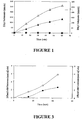
- Fig. 1 shows the time-course formation of ethyl butanoate from ethanol and tributyrin by non-growing cells of St. thermophilus ST1.
- the initial rate of synthesis was linear for the first 30 min.
- the rate of synthesis and the yield increased proportionally as the cell biomass was doubled.
- Ethyl butanoate was not detectable in the controls (cells only and substrates only).
- St. thermophilus ST1 does not synthesise ethyl butanoate from butanoic acid and ethanol under the conditions shown.
- thermophilus ST1 was not able to synthesise esters from ethanol and triglycerides of C6 to C14, diglycerides of C10 and C14 and monoglyceride of C14 (data not shown).
- Tributyrin was the only triglyceride that strain ST1 was active towards.
- Strain ST1 was also able to synthesise ethyl esters from ethanol and diglyceride of C6 (dihexanoin) and monoglycerides of C8 (monooctanoin) and C10 (monodecanoin) (Fig.2a,b,c). The rate of ester synthesis and the yield of esters were much higher than those of fatty acid release (Fig.2a,b,c).
- strain ST1 catalysed the synthesis of 2-phenyl ethyl hexanoate and 2-phenyl ethyl octanoate from 2-phenyl ethanol and dihexanoin and monooctanoin, respectively (Fig.3), but was not active towards tributyrin and monodecanoin with 2-phenylethanol as the acyl acceptor (data not shown).
- Example 2 Ester synthesis by lactic acid bacteria grown in broth cultures
- Cultures were from the culture collection of Fonterra Research Centre, Palmerston North, New Zealand, and were grown in M17-glucose broth (Difco, France) at 30°C. Lactobacillus fermentum B4017 was grown in MRS broth (Merk, Germany) at 30°C. Cultures were grown in 200 mL of appropriate broths supplemented with 50 mM ethanol and 3.3 mM tributyrin (final concentration). Controls contained either no added culture or no added ethanol or tributyrin. Cultures were incubated as stated above for up to 36 h. Samples were taken at intervals between mid-log to late stationary phases and stored at - 20°C before analysis. Samples were used for determinations of cellular dry weights, ethyl butanoate and other esters.
- Transesterification activities of growing bacterial cultures were assayed by measuring ethyl butanoate accumulation in an assay system similar to that described in Example 1.
- Bacterial cells cultured in 400 mL of appropriate broth were harvested by centrifugation at 7000 g for 10 min at 4°C. Cells were washed by resuspending cell pellets in 30 mL (2x) of potassium phosphate buffer (100 mM, pH 5.8), followed by centrifugation at 7000 g for 10 min at 4°C.
- potassium phosphate buffer 100 mM, pH 5.8
- the washed cells were then resuspended in 10 mL of the same buffer, followed by adding 5 mL each of aqueous solutions of 8 mM ethanol and 8 mM butanoic acid to give a final concentration of 2 mM each of ethanol and butanoic acid, and final concentration of 50 mM potassium phosphate in a total volume of approximately 20 mL cell suspension.
- the final suspension, containing cells, ethanol and butanoic acid was incubated statically at 22°C for 24 h and then stored at -20°C for subsequent analysis of ethyl butanoate by gas liquid chromatography (GLC).
- LLC gas liquid chromatography
- esterification activity In calculating the esterification activity, a unit of esterification activity was the amount of enzyme catalysing the formation of 1nmol of ethyl butanoate per 24 h. Specific activities were quantified as units per 100 mg dry weight of cells (dwc).
- Esters were quantified by gas chromatography as described in Example 1.
- esters in broth cultures were analysed by solid phase microextraction (SPME) and gas chromatography-mass spectrometry (GC-MS). SPME was performed as described by Liu et al (1998).
- the gas chromatograph (Shimadzu GC-17A) was equipped with a 30 m x 0.25 mm i.d. fused-silica capillary carbowax column (film thickness 0.25 ⁇ m; Alltech, IL, USA) and the injector temperature was 220°C.
- the carrier gas was helium (column pressure, 54 kPa).
- the oven temperature was programmed as: 2 min at 50°C, 3°C min -1 to 80°C, 5°C min -1 to 120°C, 20°C min -1 to 220°C and 6 min at 220°C.
- the GC column was connected directly to the ion source of a Shimadzu QP-5000 mass spectrometer (interface temperature, 230°C).
- the MS was operating in the scanning mode from 40 to 350 M/Z at 2 scan s -1 . Structures were assigned by spectrum interpretation and comparison of the spectra with bibliographic data.
- a number of lactic acid bacteria were tested for their ability to synthesise ethyl butanoate from tributyrin and ethanol by growth in broths supplemented with the two substrates. Transesterification activities obtained were then compared with the esterification activities (synthesis of esters by reacting free acids with an alcohol). These activities are set out in Table 1. With both esterification activities and transesterification activities, there were some large species and strain differences. While the diversity of transesterification activities is consistent with the diversity of esterification activities, the former activity is higher than the latter by 34-7500-fold. Strains of St. thermophilus produced the highest transesterification activities (by up to 228-fold), compared to other lactic acid bacteria tested. This is consistent with their relatively high esterase activities.
- the transesterification activity of Lb. fermentum was comparable to that of St. thermophilus.
- the transesterification activities of the two lactococcal strains tested were higher, by up to 18-fold, than the activities of the strains of Lactobacillus, Leuconostoc, and Pediococcus that were tested. Table 1.
- B4526 0.007 0.005 140 B7023 0.007 0.002 350 a Defined as nmol min -1 mg -1 ; cdw, cell dry weight. b Defined as the synthesis of ethyl butanoate from tributyrin and ethanol in broth culture. c Defined as the esterification of butanoic acid and ethanol to form ethyl butanoate; data are extracted from Liu et al (1998). d Ratio of transesterification activity to esterification activity.
- Ethyl butanoate was synthesised in a 5.0 mL reaction mixture comprising 80 mM potassium phosphate, pH 7.0, 50 mM ethanol and 33 mM tributyrin, unless specified otherwise.
- the tributyrin substrate was prepared as described elsewhere (Holland & Coolbear, 1996).
- the reaction was started by adding 0.1 mL of appropriately diluted enzyme preparation (up to 1000-fold dilution) to the above reaction mixture pre-incubated at 30°C for 5 min.
- a 1.0 mL sample was immediately removed and added to a test tube containing diethyl ether and extracted (see below). The remaining reactants were incubated at 30°C for up to 40 min and samples were taken at intervals and extracted for ethyl butanoate analysis as described below.
- Ethyl butanoate was also synthesised in a cheese-based medium using 1,3-specific lipase from Rhizomucor miehei (sold by Novo Nordisk, Denmark as "Palatase 20000L”). This was carried out in a 9 mL reaction mixture consisting of 4 g young Cheddar cheese slurry and 10 mM ethanol. A slurry was prepared using proteolytic enzymes, emulsifying salts (tri- and disodium citrate) and water. The reaction was initiated with the addition of 40 ⁇ L of lipase and the mixture was incubated at 30°C for 4 h. A control containing no added ethanol was also included.
- Figure 4 shows that lipase from Rhizomucor miehei catalysed the synthesis of ethyl butanoate from ethanol and tributyrin, being linear for the first 10 minutes, but not from ethanol and butanoic acid under the same conditions. Again, there was no formation of ethyl butanoate in the control containing no added lipase.
- Figure 5 shows the production of ethyl butanoate by lipase from Rhizomucor miehei in a cheese-based medium. There was consistent formation of this ester when ethanol was added to the medium. On the contrary, no ester was detected when either ethanol or lipase from Rhizomucor miehei was not added to the medium. In addition to ethyl butanoate, other esters such as ethyl hexanoate were detected, but were not quantifiable in the medium supplemented with ethanol.
- Fresh milk was separated and recombined to give a protein to fat ratio of 1:0.82.
- the recombined mix was pasteurised in a continuous system which held the milk at 72°C for 15 seconds.
- the milk was cooled to 32°C and 375 L placed in each of three temperature-controlled cheese-making vats (vats 3A, 3B and 4).
- rhamnosus HN001 (as described in WO99/10476) was added to each vat except that in vat 4 the mesophilic starter culture was replaced by a Streptococcus thermophilus strain.
- a further 1875 mL of a culture (LF2) of Lactobacillus fermentum was added to vat 4 to produce ethanol in situ.
- Three grams of Hansen Kid lamb lipase powder (80 LFU) was mixed into each vat and then rennet added at a rate of 10 mL per 100 L of milk. The mix was then held for 40 minutes and then the curd was cut with a curd knife with blades spaced at 12 mm intervals.
- the temperature was raised to 38°C and the whey drained after a total treatment time of 130 minutes at which time the pH was 6.2. When 30% of the vat volume had been removed, the whey was replaced with 20% of the vat volume of water. When the curd had reached pH 5.2, it was completely drained, allowed to stand for 60 minutes and then milled. Salt (NaCl) was added at a rate of 17g/kg. Two 20 kg blocks, A and B of cheese were produced from each vat. To the curd for block B of vat 3, 118 mL of ethanol mixed with 118 mL of water were added.
- the curd was pressed and then the blocks placed in porous bags, to allow CO 2 to escape.
- the blocks were stored at 20°C for one month and then at 5°C for a further month before being tasted and samples taken for chemical analysis.
- the materials used were: full cream (40% fat), lipase from Rhizomucor miehei, and ethanol (10M solution). These ingredients were combined in screw-capped bottles. Each bottle contained 50 mL of cream, 40 mL of water and 10 mL of ethanol. One bottle was retained as a control. Lipase from Rhizomucor miehei (0.15 mL of enzyme solution) was added to a second bottle ⁇ the test sample. The bottles containing these combinations were held in a water bath at 30°C. Samples (5 mL) were removed at intervals of 1, 3, 5 and 24 hours after enzyme addition to the test bottle, and stored in a freezer. The samples were later extracted using standard methods for analysis of ethyl ester content by Gas Liquid Chromatography (as described in example 1).
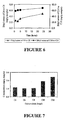
- Figure 6 shows that the ethyl esters of short chain fatty acids (C4 to C8) accumulate during the course of the reaction.
- Figure 7 shows the concentrations of the esters of short chain fatty acids (C4 to C8) and of medium chain length esters (C10 to C12) that have accumulated after five hours.
- Extraction was performed by shaking vigorously for about 2.5 min, followed by centrifugation at 1260 g for 5 min in a centrifuge (Heraeus Megafuge 1.0).
- One mL of the solvent layer was then transferred to a 16 mL Kimax tube containing 1 mL of internal standard (180 mg/L ethyl acetate in water).
- the total solvent extract containing internal standard was then run through a 500 mg aminopropyl solid phase extraction (SPE) cartridge to remove triglycerides. Ester compounds which pass straight through were then collected in a GC vial containing a small amount of oven-dried anhydrous sodium sulphate. This sample was analysed for esters by GC as described below.
- esters were analysed by GC.
- the analysis was performed using a Shimadzu GC-15A gas chromatograph with a fused silica capillary column (liquid phase, DB-1; length, 30m; i.d., 0.25 mm; film thickness, 1.0 ⁇ m) (J&W Scientific, CA, USA).
- the oven was temperature-programmed at 45°C for 5 min, followed by increasing the temperature to 50°C at 5°C min -1 , then to 270°C at 20°C min -1 , and held at 270°C for 8 min.
- a split injection was performed at a ratio of 5:1 and 3 ⁇ L of sample were injected.
- the injector and FID (Flame Ionisation Detector) detector temperatures were 250°C and 275°C, respectively. Other conditions were: carrier gas (He) at 0.9 mL per min -1 ; H 2 and air at 0.6 kg per cm 2 , respectively; makeup gas (N 2 at 2 kg per cm 2 .
- carrier gas He
- H 2 and air at 0.6 kg per cm 2
- makeup gas N 2 at 2 kg per cm 2 .
- the FID output signal was recorded and processed using appropriate software (Shimadzu CLASS-VP TM Chromatography Data System Version 4.2 from Shimadzu, MD, USA). Esters in the samples were identified and quantified by comparison with injections of known amounts of pure standards.
- a second batch flavour ingredient was prepared from cream as outlined above, but it was made from an initial mixture of 70 kg of cream, with Palatase 20000 L, ethanol (99.8% food grade from whey fermentation) and water added in the same ratio as described above for the first batch prepared. Sixty kg of the resulting product was mixed with 60 kg of cheddar cheese.and heat treated to 85 degrees for 15 minutes to inactivate the Palatase and make the product aseptic.
- a sample of ester flavoured ingredient prepared in accordance with the second batch in example 9 was mixed at 1% in a white sauce formulation.
- the white sauce was made from mixing and heating 125 g of sauce powder (5 g salt, 120 g standard white flour and 500 g cream powder), and blending with 450 g of water.
- the resulting taste was determined by the expert sensory panel (see example 4) to be fruity, sweet (pineapple lump) flavour with soapy notes.
- a cheddar formulation was prepared as follows. 0.5% of an ester flavoured ingredient prepared according to the second batch in example 9 was mixed with 58.8% cheddar cheese, 1.75% trisodium citrate and 39.4% water, the percentages being on a weight/weight basis.
- the resulting product had a balanced, fruity flavour which came through late.
- a parmesan style cheese mixture was prepared as followed. 0.5% of an ester flavoured ingredient prepared according to the second batch in example 9 was mixed with 56.2% parmesan cheese, 1.75% try sodium citrate and 42% water.
- a gouda cheese formulation was made by mixing 0.5% of ester flavoured ingredients prepared as described for the second batch in example 9 with 63.7% gouda cheese, 1.75% trisodium citrate and 34.5% water.
- a fondue recipe was prepared using 14% cheddar cheese, 23% cream, 47% milk, 9% butter, 4% flour, 1% other flavours and 2% of the ester flavoured ingredient prepared in accordance with the method described in example 6.
- the expert panel stated that the resulting fondue formulation had improved savoury/fruity and cheesy taste.
Landscapes
- Life Sciences & Earth Sciences (AREA)
- Engineering & Computer Science (AREA)
- Chemical & Material Sciences (AREA)
- Food Science & Technology (AREA)
- Polymers & Plastics (AREA)
- Biotechnology (AREA)
- Microbiology (AREA)
- Health & Medical Sciences (AREA)
- Nutrition Science (AREA)
- Preparation Of Compounds By Using Micro-Organisms (AREA)
- Dairy Products (AREA)
- General Preparation And Processing Of Foods (AREA)
- Seasonings (AREA)
- Organic Low-Molecular-Weight Compounds And Preparation Thereof (AREA)
Claims (22)
- Verfahren zum Herstellen von geschmacksverbessernden Estern, welches umfaßt:Durchführen einer Umesterungsreaktion zwischen einem Mono-, Di- oder Triglycerid aus einer Milchproduktquelle und einem Alkohol in einem wäßrigen Medium in der Gegenwart einer Esterase, die ein Verhältnis von Umesterungsaktivität zu Veresterungsaktivität mit dem Mono-, Di- oder Triglycerid von wenigstens 25:1 zeigt, um die geschmacksverbessernden Ester zu bilden.
- Verfahren zum Herstellen von geschmacksverbessernden Estern, welches umfaßt:Durchführen einer Umesterungsreaktion zwischen einem Mono- oder Diglycerid aus einer Milchproduktquelle und einem Alkohol in einem wäßrigen Medium in der Gegenwart eines Enzyms, das von Milchsäurebakterium abgeleitet wird, das ein Verhältnis von Umesterungsaktivität zu Veresterungsaktivität mit dem Mono- oder Diglycerid von wenigstens 25:1 zeigt, um die geschmacksverbessernden Ester zu bilden.
- Verfahren zum Herstellen von geschmacksverbessernden Estern, welches umfaßt:Durchführen einer Umesterungsreaktion zwischen einem Mono-, Di- oder Triglycerid aus einer Milchproduktquelle und einem Alkohol in einem wäßrigen Medium in der Gegenwart einer Mischung einer Lipase und eines Enzyms, das aus einem Milchsäurebakterien abgeleitet wird, oder einer Mischung einer Esterase und eines oder mehrerer Enzyme, die aus Milchsäurebakterien abgeleitet werden, wobei die Mischung ein Verhältnis einer Umesterungsaktivität zu Veresterungsaktivität mit dem Mono-, Di- oder Triglycerid von wenigstens 25:1 zeigt, um die geschmacksverbessernden Ester zu bilden.
- Verfahren nach einem der Ansprüche 1 oder 3, wobei die Esterase eine Lipase ist.
- Verfahren nach Anspruch 2 oder 3, wobei das Enzym zu dem Glycerid und dem Alkohol in dem wäßrigen Medium zugegeben wird.
- Verfahren nach Anspruch 2 oder 3, wobei die Milchsäurebakterien, von denen das Enzym abgeleitet wird, zu dem Glycerid und dem Alkohol in dem wäßrigen Medium zugegeben wird, um das Enzym darin zu erzeugen.
- Verfahren nach einem der vorangehenden Ansprüche, wobei das Glycerid aus einer Milchproduktquelle aus Vollmilch, Sahne, Milchfett, Käse, durch Enzym modifiziertem Käse (EMC), Buttermilch, Molke, Molkesahne, fermentierter Milch oder anderem Milchprodukt ist.
- Verfahren nach einem der vorangehenden Ansprüche, wobei der Alkohol Ethanol ist.
- Verfahren nach einem der Ansprüche 1 bis 7, wobei der Alkohol 2-Phenylethanol ist.
- Verfahren nach einem der vorangehenden Ansprüche, welches einen Fermentationsschritt einschließt, um den Alkohol zu erzeugen.
- Verfahren nach einem der vorangehenden Ansprüche, wobei Alkohol-erzeugende Mikroorganismen vorhanden sind, um den Fermentationsschritt zu vermitteln.
- Verfahren nach Anspruch 11, wobei der Alkohol-erzeugende Mikroorganismus Lactobacillus fermentum ist.
- Verfahren nach einem der Ansprüche 1 bis 8 und 10 bis 12, wobei die Mono-, Di-oder Triglyceride jeweils Acylgruppen mit bis zu 10 Kohlenstoffatomen aufweisen und der Alkohol Ethanol ist.
- Verfahren nach einem der Ansprüche 1 bis 7 und 9 bis 12, wobei das Glycerid ein Diglycerid mit Acylgruppen mit bis zu 6 Kohlenstoffatomen ist und der Alkohol 2-Phenylethanol ist.
- Verfahren nach einem der Ansprüche 1 bis 7 und 9 bis 12, wobei das Glycerid ein Monoglycerid mit Acylgruppen mit bis zu 8 Kohlenstoffatomen ist und der Alkohol 2-Phenylethanol ist.
- Verfahren nach einem der Ansprüche 3 bis 15, wobei die Lipase eine 1,3-spezifische Lipase aus Rhizomucor miehei ist.
- Verfahren nach einem der Ansprüche 2 bis 15, wobei das Enzym aus Bakterienkulturen von einem oder mehreren Stämmen der folgenden Gattungen abgeleitet wird, die einschließen:Streptococcus,Lactococcus,Lactobacillus;Leuconostoc,Pediococcus,Enterococcus,Propionibacterium, undPseudomonas.
- Verfahren nach Anspruch 17, wobei das Enzym aus dem Stamm Streptococcus thermophilus ST1 abgeleitet wird.
- Verfahren nach Anspruch 17, wobei das Enzym aus einem der Stämme Streptococcus thermophilus NCIMB 700821; Lactobacillus fermentum B4017; Lactococcus lactis subsp. cremoris E8 und Lactococcus lactis subsp. lactis ML3 abgeleitet wird.
- Verfahren nach einem der vorangehenden Ansprüche, wobei der so hergestellte geschmacksverbessernde Ester als ein Bestandteil zu einem Lebensmittel zugegeben wird.
- Verfahren nach Anspruch 20, wobei das Lebensmittel ein Milchprodukt ist.
- Verfahren nach Anspruch 21, wobei das Milchprodukt ein Käse oder ein Produkt auf Käsebasis ist.
Applications Claiming Priority (3)
| Application Number | Priority Date | Filing Date | Title |
|---|---|---|---|
| NZ51735802 | 2002-02-21 | ||
| NZ51735802 | 2002-02-21 | ||
| PCT/NZ2003/000029 WO2003070010A1 (en) | 2002-02-21 | 2003-02-20 | Transesterification reaction for production of dairy flavour enhancing esters |
Publications (3)
| Publication Number | Publication Date |
|---|---|
| EP1482806A1 EP1482806A1 (de) | 2004-12-08 |
| EP1482806A4 EP1482806A4 (de) | 2005-06-22 |
| EP1482806B1 true EP1482806B1 (de) | 2006-10-04 |
Family
ID=27752110
Family Applications (1)
| Application Number | Title | Priority Date | Filing Date |
|---|---|---|---|
| EP03705556A Expired - Lifetime EP1482806B1 (de) | 2002-02-21 | 2003-02-20 | Umesterungsreaktion zur herstellung von estern, die den milchproduktgeschmack fördern |
Country Status (10)
| Country | Link |
|---|---|
| US (1) | US20050130279A1 (de) |
| EP (1) | EP1482806B1 (de) |
| JP (1) | JP2005517417A (de) |
| AT (1) | ATE341225T1 (de) |
| AU (1) | AU2003206477A1 (de) |
| CA (1) | CA2476885A1 (de) |
| DE (1) | DE60308834T2 (de) |
| DK (1) | DK1482806T3 (de) |
| MX (1) | MXPA04008060A (de) |
| WO (1) | WO2003070010A1 (de) |
Families Citing this family (12)
| Publication number | Priority date | Publication date | Assignee | Title |
|---|---|---|---|---|
| CN100494343C (zh) * | 2007-01-23 | 2009-06-03 | 浙江工业大学 | 酿酒酵母cwy132及其在微生物发酵制备2-苯乙醇中的应用 |
| CN101497892B (zh) * | 2008-02-01 | 2011-06-22 | 爱普香料集团股份有限公司 | 一种天然酸奶香精底料及其微生物发酵生产方法 |
| CA2733562C (en) * | 2008-06-23 | 2016-08-09 | Amano Enzyme Usa, Ltd. | Enzymatic methods of flavor modification |
| BRPI1015366A2 (pt) * | 2009-06-30 | 2015-09-01 | Chr Hansen As | Método para produzir um produto de leite fermentado. |
| WO2013011993A1 (ja) * | 2011-07-20 | 2013-01-24 | 株式会社明治 | ナチュラルチーズの製造方法 |
| JP6084162B2 (ja) * | 2011-10-28 | 2017-02-22 | 株式会社明治 | ナチュラルチーズおよびその製造方法 |
| CN102511759B (zh) * | 2012-01-17 | 2013-06-05 | 哈尔滨工业大学 | 一种天然奶味增香剂的制备方法 |
| CN102816708A (zh) * | 2012-08-27 | 2012-12-12 | 山东轻工业学院 | 一株产2-苯乙醇酵母菌株及其培养方法与应用 |
| WO2018056424A1 (ja) * | 2016-09-26 | 2018-03-29 | 株式会社明治 | 風味豊かな発酵乳及びその製造方法 |
| WO2018056425A1 (ja) * | 2016-09-26 | 2018-03-29 | 株式会社明治 | 風味豊かな発酵乳及びその製造方法 |
| JP7114472B2 (ja) * | 2016-09-26 | 2022-08-08 | 株式会社明治 | 風味豊かな発酵乳及びその製造方法 |
| CN116083307B (zh) * | 2023-01-10 | 2024-05-07 | 四川轻化工大学 | 一种生产酯酶和酯类化合物的格氏乳球菌及其应用 |
Family Cites Families (6)
| Publication number | Priority date | Publication date | Assignee | Title |
|---|---|---|---|---|
| AU437571B2 (en) * | 1972-10-27 | 1973-07-03 | Sacho Shimamoto and Shizuko Izumi | Cheeselike foods and their production |
| JPS61242542A (ja) * | 1985-04-22 | 1986-10-28 | Fuji Oil Co Ltd | チ−ズ風味材の製造法 |
| JPS6296039A (ja) * | 1985-07-19 | 1987-05-02 | Sankyo Shokuhin Kogyo Kk | 乳製品フレ−バ−の製造方法 |
| JP3276696B2 (ja) * | 1993-01-26 | 2002-04-22 | 旭電化工業株式会社 | 油脂組成物及び乳化油脂組成物 |
| JPH06345617A (ja) * | 1993-06-07 | 1994-12-20 | Nippon Saafuakutanto Kogyo Kk | 化粧料および外用剤 |
| EP1389426A4 (de) * | 2001-04-25 | 2005-01-12 | Yakult Honsha Kk | Fermentierte nahrungsmittel und verfahren zu ihrer herstellung |
-
2003
- 2003-02-20 JP JP2003568985A patent/JP2005517417A/ja active Pending
- 2003-02-20 WO PCT/NZ2003/000029 patent/WO2003070010A1/en not_active Ceased
- 2003-02-20 EP EP03705556A patent/EP1482806B1/de not_active Expired - Lifetime
- 2003-02-20 DK DK03705556T patent/DK1482806T3/da active
- 2003-02-20 AU AU2003206477A patent/AU2003206477A1/en not_active Abandoned
- 2003-02-20 DE DE60308834T patent/DE60308834T2/de not_active Expired - Fee Related
- 2003-02-20 AT AT03705556T patent/ATE341225T1/de not_active IP Right Cessation
- 2003-02-20 MX MXPA04008060A patent/MXPA04008060A/es active IP Right Grant
- 2003-02-20 CA CA002476885A patent/CA2476885A1/en not_active Abandoned
- 2003-02-20 US US10/505,277 patent/US20050130279A1/en not_active Abandoned
Also Published As
| Publication number | Publication date |
|---|---|
| DE60308834D1 (de) | 2006-11-16 |
| ATE341225T1 (de) | 2006-10-15 |
| US20050130279A1 (en) | 2005-06-16 |
| WO2003070010A1 (en) | 2003-08-28 |
| CA2476885A1 (en) | 2003-08-28 |
| EP1482806A4 (de) | 2005-06-22 |
| DE60308834T2 (de) | 2007-03-15 |
| AU2003206477A1 (en) | 2003-09-09 |
| JP2005517417A (ja) | 2005-06-16 |
| EP1482806A1 (de) | 2004-12-08 |
| DK1482806T3 (da) | 2007-02-05 |
| MXPA04008060A (es) | 2005-07-01 |
Similar Documents
| Publication | Publication Date | Title |
|---|---|---|
| Holland et al. | Esterases of lactic acid bacteria and cheese flavour: Milk fat hydrolysis, alcoholysis and esterification | |
| FI58714C (fi) | Foerfarande foer framstaellning av en lipolyserat triglyceridfett innehaollande smak foerbaettrande naeringskomponent | |
| Liu et al. | Ester synthesis in an aqueous environment by Streptococcus thermophilus and other dairy lactic acid bacteria | |
| Seitz | Microbial and enzyme-induced flavors in dairy foods | |
| US20050130279A1 (en) | Transesterification reaction for production of dairy flavour enhancing esters | |
| Gao et al. | Biosynthesis of acetate esters by dominate strains, isolated from Chinese traditional fermented fish (Suan yu) | |
| Daigle et al. | Production of aroma compounds by Geotrichum candidum on waste bread crumb | |
| CA2733562C (en) | Enzymatic methods of flavor modification | |
| Tologana et al. | Correlation between the chemical, microbiological and sensory characteristics of cream cheese using a mixed and single probiotic culture | |
| Dwivedi et al. | The role of enzymes in food flavors part I: dairy products | |
| FI90719B (fi) | Aromiseos, sen käyttö ja menetelmä sen valmistamiseksi | |
| Liu et al. | Synthesis of ethyl butanoate by a commercial lipase in aqueous media under conditions relevant to cheese ripening | |
| Pappa et al. | Chemical, microbiological and sensory characteristics of ‘Tsalafouti’traditional Greek dairy product | |
| Smacchi et al. | Purification and characterization of an extracellular esterase from Arthrobacter nicotianae 9458 | |
| JP2801376B2 (ja) | チーズ風味組成物の製造方法 | |
| Alewijn | The formation of fat-derived flavour compounds during the ripening of Gouda-type cheese | |
| Abeijon Mukdsi et al. | Contribution of lactic acid bacteria esterases to the release of fatty acids in miniature ewe’s milk cheese models | |
| EP0937774A1 (de) | Milchsäurebakterien mit erniedrigte Pyruvatdehydrogenase Activität und ihren Verwendung | |
| Abeijon Mukdsi et al. | Ester synthesis by lactic acid bacteria isolated from goat's and ewe's milk and cheeses | |
| Heinsman et al. | Lipase-mediated resolution of branched chain fatty acids | |
| CA2122320C (en) | Cheese flavour | |
| Toh | Yeast-Lactobacillus co-cultures as in situ ethanol producers for flavor ester synthesis using lipase in fermented milks | |
| JP7109206B2 (ja) | 乳酸菌による低温発酵物の製造方法、およびその発酵物の用途 | |
| NL2037564B1 (en) | Cell-Free Extract, Enzyme System, and Application of Cell-Free Extract and Enzyme System in Enzyme-Modified Cheese | |
| JP2003250594A (ja) | シス−6−ドデセン−4−オリドの製造方法 |
Legal Events
| Date | Code | Title | Description |
|---|---|---|---|
| PUAI | Public reference made under article 153(3) epc to a published international application that has entered the european phase |
Free format text: ORIGINAL CODE: 0009012 |
|
| 17P | Request for examination filed |
Effective date: 20040914 |
|
| AK | Designated contracting states |
Kind code of ref document: A1 Designated state(s): AT BE BG CH CY CZ DE DK EE ES FI FR GB GR HU IE IT LI LU MC NL PT SE SI SK TR |
|
| AX | Request for extension of the european patent |
Extension state: AL LT LV MK RO |
|
| RIC1 | Information provided on ipc code assigned before grant |
Ipc: 7A 23C 9/12 B Ipc: 7A 23C 13/16 B Ipc: 7A 23C 19/00 B Ipc: 7A 23L 1/226 A Ipc: 7A 23C 23/00 B Ipc: 7C 11C 3/00 B Ipc: 7C 11C 3/10 B |
|
| A4 | Supplementary search report drawn up and despatched |
Effective date: 20050510 |
|
| GRAP | Despatch of communication of intention to grant a patent |
Free format text: ORIGINAL CODE: EPIDOSNIGR1 |
|
| GRAS | Grant fee paid |
Free format text: ORIGINAL CODE: EPIDOSNIGR3 |
|
| GRAA | (expected) grant |
Free format text: ORIGINAL CODE: 0009210 |
|
| AK | Designated contracting states |
Kind code of ref document: B1 Designated state(s): AT BE BG CH CY CZ DE DK EE ES FI FR GB GR HU IE IT LI LU MC NL PT SE SI SK TR |
|
| AX | Request for extension of the european patent |
Extension state: AL LT LV MK RO |
|
| PG25 | Lapsed in a contracting state [announced via postgrant information from national office to epo] |
Ref country code: IT Free format text: LAPSE BECAUSE OF FAILURE TO SUBMIT A TRANSLATION OF THE DESCRIPTION OR TO PAY THE FEE WITHIN THE PRESCRIBED TIME-LIMIT;WARNING: LAPSES OF ITALIAN PATENTS WITH EFFECTIVE DATE BEFORE 2007 MAY HAVE OCCURRED AT ANY TIME BEFORE 2007. THE CORRECT EFFECTIVE DATE MAY BE DIFFERENT FROM THE ONE RECORDED. Effective date: 20061004 Ref country code: CZ Free format text: LAPSE BECAUSE OF FAILURE TO SUBMIT A TRANSLATION OF THE DESCRIPTION OR TO PAY THE FEE WITHIN THE PRESCRIBED TIME-LIMIT Effective date: 20061004 Ref country code: AT Free format text: LAPSE BECAUSE OF FAILURE TO SUBMIT A TRANSLATION OF THE DESCRIPTION OR TO PAY THE FEE WITHIN THE PRESCRIBED TIME-LIMIT Effective date: 20061004 Ref country code: SK Free format text: LAPSE BECAUSE OF FAILURE TO SUBMIT A TRANSLATION OF THE DESCRIPTION OR TO PAY THE FEE WITHIN THE PRESCRIBED TIME-LIMIT Effective date: 20061004 Ref country code: FI Free format text: LAPSE BECAUSE OF FAILURE TO SUBMIT A TRANSLATION OF THE DESCRIPTION OR TO PAY THE FEE WITHIN THE PRESCRIBED TIME-LIMIT Effective date: 20061004 Ref country code: BE Free format text: LAPSE BECAUSE OF FAILURE TO SUBMIT A TRANSLATION OF THE DESCRIPTION OR TO PAY THE FEE WITHIN THE PRESCRIBED TIME-LIMIT Effective date: 20061004 Ref country code: SI Free format text: LAPSE BECAUSE OF FAILURE TO SUBMIT A TRANSLATION OF THE DESCRIPTION OR TO PAY THE FEE WITHIN THE PRESCRIBED TIME-LIMIT Effective date: 20061004 |
|
| REG | Reference to a national code |
Ref country code: GB Ref legal event code: FG4D |
|
| REG | Reference to a national code |
Ref country code: CH Ref legal event code: EP |
|
| REG | Reference to a national code |
Ref country code: IE Ref legal event code: FG4D |
|
| REF | Corresponds to: |
Ref document number: 60308834 Country of ref document: DE Date of ref document: 20061116 Kind code of ref document: P |
|
| PG25 | Lapsed in a contracting state [announced via postgrant information from national office to epo] |
Ref country code: BG Free format text: LAPSE BECAUSE OF FAILURE TO SUBMIT A TRANSLATION OF THE DESCRIPTION OR TO PAY THE FEE WITHIN THE PRESCRIBED TIME-LIMIT Effective date: 20070104 Ref country code: SE Free format text: LAPSE BECAUSE OF FAILURE TO SUBMIT A TRANSLATION OF THE DESCRIPTION OR TO PAY THE FEE WITHIN THE PRESCRIBED TIME-LIMIT Effective date: 20070104 |
|
| PGFP | Annual fee paid to national office [announced via postgrant information from national office to epo] |
Ref country code: IE Payment date: 20070112 Year of fee payment: 5 |
|
| PG25 | Lapsed in a contracting state [announced via postgrant information from national office to epo] |
Ref country code: ES Free format text: LAPSE BECAUSE OF FAILURE TO SUBMIT A TRANSLATION OF THE DESCRIPTION OR TO PAY THE FEE WITHIN THE PRESCRIBED TIME-LIMIT Effective date: 20070115 |
|
| REG | Reference to a national code |
Ref country code: DK Ref legal event code: T3 |
|
| PGFP | Annual fee paid to national office [announced via postgrant information from national office to epo] |
Ref country code: CH Payment date: 20070208 Year of fee payment: 5 |
|
| PGFP | Annual fee paid to national office [announced via postgrant information from national office to epo] |
Ref country code: DE Payment date: 20070212 Year of fee payment: 5 |
|
| PGFP | Annual fee paid to national office [announced via postgrant information from national office to epo] |
Ref country code: GB Payment date: 20070214 Year of fee payment: 5 |
|
| PGFP | Annual fee paid to national office [announced via postgrant information from national office to epo] |
Ref country code: NL Payment date: 20070216 Year of fee payment: 5 |
|
| PGFP | Annual fee paid to national office [announced via postgrant information from national office to epo] |
Ref country code: DK Payment date: 20070227 Year of fee payment: 5 |
|
| PG25 | Lapsed in a contracting state [announced via postgrant information from national office to epo] |
Ref country code: MC Free format text: LAPSE BECAUSE OF NON-PAYMENT OF DUE FEES Effective date: 20070228 |
|
| PG25 | Lapsed in a contracting state [announced via postgrant information from national office to epo] |
Ref country code: PT Free format text: LAPSE BECAUSE OF FAILURE TO SUBMIT A TRANSLATION OF THE DESCRIPTION OR TO PAY THE FEE WITHIN THE PRESCRIBED TIME-LIMIT Effective date: 20070316 |
|
| LTIE | Lt: invalidation of european patent or patent extension |
Effective date: 20061004 |
|
| ET | Fr: translation filed | ||
| PLBI | Opposition filed |
Free format text: ORIGINAL CODE: 0009260 |
|
| 26 | Opposition filed |
Opponent name: FRIESLAND BRANDS B.V. Effective date: 20070704 |
|
| PLAX | Notice of opposition and request to file observation + time limit sent |
Free format text: ORIGINAL CODE: EPIDOSNOBS2 |
|
| NLR1 | Nl: opposition has been filed with the epo |
Opponent name: FRIESLAND BRANDS B.V. |
|
| PG25 | Lapsed in a contracting state [announced via postgrant information from national office to epo] |
Ref country code: GR Free format text: LAPSE BECAUSE OF FAILURE TO SUBMIT A TRANSLATION OF THE DESCRIPTION OR TO PAY THE FEE WITHIN THE PRESCRIBED TIME-LIMIT Effective date: 20070105 |
|
| PGFP | Annual fee paid to national office [announced via postgrant information from national office to epo] |
Ref country code: FR Payment date: 20070115 Year of fee payment: 5 |
|
| PLAB | Opposition data, opponent's data or that of the opponent's representative modified |
Free format text: ORIGINAL CODE: 0009299OPPO |
|
| PG25 | Lapsed in a contracting state [announced via postgrant information from national office to epo] |
Ref country code: EE Free format text: LAPSE BECAUSE OF FAILURE TO SUBMIT A TRANSLATION OF THE DESCRIPTION OR TO PAY THE FEE WITHIN THE PRESCRIBED TIME-LIMIT Effective date: 20061004 |
|
| REG | Reference to a national code |
Ref country code: DK Ref legal event code: EBP |
|
| REG | Reference to a national code |
Ref country code: CH Ref legal event code: PL |
|
| GBPC | Gb: european patent ceased through non-payment of renewal fee |
Effective date: 20080220 |
|
| PG25 | Lapsed in a contracting state [announced via postgrant information from national office to epo] |
Ref country code: CH Free format text: LAPSE BECAUSE OF NON-PAYMENT OF DUE FEES Effective date: 20080229 Ref country code: LI Free format text: LAPSE BECAUSE OF NON-PAYMENT OF DUE FEES Effective date: 20080229 |
|
| NLV4 | Nl: lapsed or anulled due to non-payment of the annual fee |
Effective date: 20080901 |
|
| PG25 | Lapsed in a contracting state [announced via postgrant information from national office to epo] |
Ref country code: NL Free format text: LAPSE BECAUSE OF NON-PAYMENT OF DUE FEES Effective date: 20080901 |
|
| REG | Reference to a national code |
Ref country code: FR Ref legal event code: ST Effective date: 20081031 |
|
| PG25 | Lapsed in a contracting state [announced via postgrant information from national office to epo] |
Ref country code: DK Free format text: LAPSE BECAUSE OF NON-PAYMENT OF DUE FEES Effective date: 20080229 Ref country code: IE Free format text: LAPSE BECAUSE OF NON-PAYMENT OF DUE FEES Effective date: 20080220 Ref country code: DE Free format text: LAPSE BECAUSE OF NON-PAYMENT OF DUE FEES Effective date: 20080902 |
|
| PG25 | Lapsed in a contracting state [announced via postgrant information from national office to epo] |
Ref country code: FR Free format text: LAPSE BECAUSE OF NON-PAYMENT OF DUE FEES Effective date: 20080229 |
|
| PG25 | Lapsed in a contracting state [announced via postgrant information from national office to epo] |
Ref country code: GB Free format text: LAPSE BECAUSE OF NON-PAYMENT OF DUE FEES Effective date: 20080220 |
|
| PLBP | Opposition withdrawn |
Free format text: ORIGINAL CODE: 0009264 |
|
| PLBD | Termination of opposition procedure: decision despatched |
Free format text: ORIGINAL CODE: EPIDOSNOPC1 |
|
| PG25 | Lapsed in a contracting state [announced via postgrant information from national office to epo] |
Ref country code: LU Free format text: LAPSE BECAUSE OF NON-PAYMENT OF DUE FEES Effective date: 20070220 Ref country code: CY Free format text: LAPSE BECAUSE OF FAILURE TO SUBMIT A TRANSLATION OF THE DESCRIPTION OR TO PAY THE FEE WITHIN THE PRESCRIBED TIME-LIMIT Effective date: 20061004 |
|
| PG25 | Lapsed in a contracting state [announced via postgrant information from national office to epo] |
Ref country code: TR Free format text: LAPSE BECAUSE OF FAILURE TO SUBMIT A TRANSLATION OF THE DESCRIPTION OR TO PAY THE FEE WITHIN THE PRESCRIBED TIME-LIMIT Effective date: 20061004 Ref country code: HU Free format text: LAPSE BECAUSE OF FAILURE TO SUBMIT A TRANSLATION OF THE DESCRIPTION OR TO PAY THE FEE WITHIN THE PRESCRIBED TIME-LIMIT Effective date: 20070405 |
|
| PLBM | Termination of opposition procedure: date of legal effect published |
Free format text: ORIGINAL CODE: 0009276 |
|
| STAA | Information on the status of an ep patent application or granted ep patent |
Free format text: STATUS: OPPOSITION PROCEDURE CLOSED |
|
| 27C | Opposition proceedings terminated |
Effective date: 20090906 |