EP1489506A1 - Dezentralisiertes verarbeitungssystem, job-dezentralisiertes verarbeitungsverfahren und programm - Google Patents
Dezentralisiertes verarbeitungssystem, job-dezentralisiertes verarbeitungsverfahren und programm Download PDFInfo
- Publication number
- EP1489506A1 EP1489506A1 EP03743507A EP03743507A EP1489506A1 EP 1489506 A1 EP1489506 A1 EP 1489506A1 EP 03743507 A EP03743507 A EP 03743507A EP 03743507 A EP03743507 A EP 03743507A EP 1489506 A1 EP1489506 A1 EP 1489506A1
- Authority
- EP
- European Patent Office
- Prior art keywords
- job
- execution
- computer
- given
- charge
- Prior art date
- Legal status (The legal status is an assumption and is not a legal conclusion. Google has not performed a legal analysis and makes no representation as to the accuracy of the status listed.)
- Withdrawn
Links
Images




Classifications
-
- G—PHYSICS
- G06—COMPUTING OR CALCULATING; COUNTING
- G06F—ELECTRIC DIGITAL DATA PROCESSING
- G06F9/00—Arrangements for program control, e.g. control units
- G06F9/06—Arrangements for program control, e.g. control units using stored programs, i.e. using an internal store of processing equipment to receive or retain programs
- G06F9/46—Multiprogramming arrangements
- G06F9/48—Program initiating; Program switching, e.g. by interrupt
- G06F9/4806—Task transfer initiation or dispatching
- G06F9/4843—Task transfer initiation or dispatching by program, e.g. task dispatcher, supervisor, operating system
- G06F9/4881—Scheduling strategies for dispatcher, e.g. round robin, multi-level priority queues
-
- G—PHYSICS
- G06—COMPUTING OR CALCULATING; COUNTING
- G06F—ELECTRIC DIGITAL DATA PROCESSING
- G06F9/00—Arrangements for program control, e.g. control units
- G06F9/06—Arrangements for program control, e.g. control units using stored programs, i.e. using an internal store of processing equipment to receive or retain programs
- G06F9/46—Multiprogramming arrangements
- G06F9/50—Allocation of resources, e.g. of the central processing unit [CPU]
- G06F9/5005—Allocation of resources, e.g. of the central processing unit [CPU] to service a request
- G06F9/5027—Allocation of resources, e.g. of the central processing unit [CPU] to service a request the resource being a machine, e.g. CPUs, Servers, Terminals
-
- G—PHYSICS
- G06—COMPUTING OR CALCULATING; COUNTING
- G06F—ELECTRIC DIGITAL DATA PROCESSING
- G06F2209/00—Indexing scheme relating to G06F9/00
- G06F2209/50—Indexing scheme relating to G06F9/50
- G06F2209/5013—Request control
-
- G—PHYSICS
- G06—COMPUTING OR CALCULATING; COUNTING
- G06F—ELECTRIC DIGITAL DATA PROCESSING
- G06F2209/00—Indexing scheme relating to G06F9/00
- G06F2209/50—Indexing scheme relating to G06F9/50
- G06F2209/5021—Priority
Definitions
- the present invention relates to a distributed processing system including a plurality of computer systems, a job distributed processing method using a plurality of computer systems, and a program of selecting the optimum computer from a plurality of computer systems to cause the computer to execute a given job.
- the computer system becomes nowadays an Important element in the business activities to such an extent that it can be asserted that there does not exist the business activity that does not utilize the computer system.
- the Intemet started from the latter half of the 1990s and the technological innovation associated with this, the importance of the computer systems connected mutually via the network is rising more and more.
- the companies invest a great deal of administration resource to process effectively the businesses generated in all the aspects of the business activities within a term, and construct the large-scale computer system in which a plurality of computers (servers) are connected by using the local area network (LAN) or the wide area network (WAN).
- LAN local area network
- WAN wide area network
- the job allocating method in the distributed processing computer system (1) the method of allocating the job based on resource consuming states of respective servers in starting the job, as disclosed in JP-A-10-11406, (2) the method of forecasting previously an amount of server resource consumed by the executed job and allocating the job such that a total sum of the server resource used by the job does not exceed a total amount of resources possessed by the server, as disclosed in JP-A-10-19864, (3) the method of allocating the job based on the previously determined policy, and so on are carried out
- respective servers constituting the large-scale computer system are the very expensive product and the system is constructed by a large number of servers. Therefore, the server resources are used effectively in the above job allocating method, and actual results of the consumed server resource are reflected in the accounting process to the user.
- the accounting process is executed based on actual results of the used server resource irrespective of whether or not the job is completed within the term requested by the user. For example, the method of saving the department, the user, the using time, etc. of each server resource in the job running history and then totalizing them is employed.
- the first problem is that it is impossible to forecast previously, e.g., at the time of assigning the job, the decision whether or not the assigned job is completed within a term desired by the user.
- the above job allocating method there is the method of selecting the optimum server based on the resource possessed by the server and situations of other jobs in allocating the job and executing the job in the case where (2) the job whose amount of server resource used over a lifetime (a time from a start to a stop of the job) of the job has already been known is executed.
- the job whose amount of server resource used over a lifetime (a time from a start to a stop of the job) of the job has already been known is executed.
- the user cannot know finishing times of the jobs given by other users upon giving the job, such user cannot know previously the completion time of the job given by the user by this method.
- the conventional job allocating method gives the method that is capable of processing effectively the jobs in the shortest time in the order in which the jobs are given to the computer system, but such method cannot take account of scheduling elements of the job completion requested by the user at all.
- the second problem is that the computer systems distributed/arrange on the network and possessed by a plurality of departments are not always effectively operated mutually.
- Respective departments in the company construct the computer systems while supposing their maximum loads in the business.
- a high period and a low period of the frequency of use of the computer system are different among the departments because of differences in the business contents in respective departments, etc., there is a high possibility that the computer systems can be used mutually.
- the computer systems can be used mutually.
- the job queuing server in the computer system in one department sets previously an amount of acceptable job given from the job queuing servers in the computer systems in other departments, and then denies or restricts the job given from the computer systems in other departments in a period in which an operating ratio becomes high, or the like, for example, in response to the operating situation in own department.
- This method is effective in the case where it is known previously that the operating ratio of the computer system in own department becomes low in a certain period, or the case where it is decided as a rule that a predetermined amount of job should be accepted irrespective of the operating situation of the computer system in own department
- the third problem is the accounting process of the job.
- the using actual results (department, user, using time, etc.) of the jobs processed by respective servers are put together in one section, and then the charge for using the computer is calculated by totalizing the using actual results every user.
- the using actual results of the computer used as the basis of the charge for using the computer it is not considered at all whether or not the assigned job can be finished within a term that is requested by the user.
- the user's request can often be satisfied by executing the user's job prior to other jobs even when the job is not finished within the term that is requested by the user.
- the actual circumstances are that the quality of service for the computer user is not taken into consideration in the prior art. From a standpoint of the user of the computer system, it is desired that the totalizing process of the using actual results of the computer should be executed while considering whether or not the user's job is completed within the requested term.
- the present invention has been made to overcome the above problems in the prior art, and it is an object of the present invention to provide a distributed processing system, a job distributed processing method, and a program capable of forecasting previously a period within which a job offered by a user is completed in the case where the job is executed by using a plurality of computer systems, and also capable of realizing a job allocation with regard to a job finishing term in utilizing the computer systems.
- a distributed processing system set forth in Claim 1 of the present invention provides a distributed processing system including a plurality of computer systems, which comprises a means for sharing respective operating information of the computer systems; a means for pointing an optimization of an execution priority of a job given to one of the computer systems and an execution term; a means for forecasting an execution completed date of the given job and forecasting again the execution completed date of the job in the execution priority that is altered in response to a forecasted result; and a means for assigning the job execution to other computer systems that share the operating information in response to the forecasted result.
- a job distributed processing method set forth in Claim 13 of the present invention provides a job distributed processing method using a plurality of computer systems that share operating information mutually, which comprises a step of giving a job to one of the computer systems by pointing an optimization of an execution priority of a job and an execution term; a step of forecasting an execution completed date of the given job; a step of altering an execution priority of the job in response to a forecasted result; a step of forecasting the execution completed date of the job after execution priority of the job is altered; and a step of assigning the job execution to other computer systems that share the operating information in response to the forecasted result.
- a program set forth in Claim 25 of the present invention provides a program for selecting an optimum computer from a plurality of computer systems to cause the computer to execute a given job, which causes a computer to function as a means for sharing respective operating information of the computer systems, a means for forecasting an execution completed date of the given job by pointing an optimization of an execution priority and an execution term, and forecasting again the execution completed date of the job in the execution priority that is altered in response to a forecasted result, and a means for assigning the job execution to other computer systems that share the operating information in response to the forecasted result.
- the operating information are shared among the computer systems, the execution completed date of the given job is forecasted with regard to the pointed execution term while optimizing the execution priority of a job given to one of the computer systems, the job execution is assigned to other computer systems that share the operating information in response to the forecasted result. Therefore, even when the execution term requested by the user cannot be satisfied by the computer system in the department to which the user belongs, the user's request can be satisfied at a maximum level by utilizing the resource on the other computer systems.
- the job being executed now and the time required until the wait-for-execution job is completed can be forecasted individually. Therefore, in order to complete the execution of the given job in a shortest time, the proper job allocation can be achieved to utilize effectively the resource.
- the execution completed date of the given job can be forecasted by inputting the execution time predicted value from the user, and thus the process in the present system can be accelerated.
- the distributed processing system set forth in Claim 6 of the present invention in the distributed processing system according to any one of Claim 1 to Claim 5, further comprises an accounting means for adjusting a unit cost of time in a charge for using the computer for the job in response to an altered degree of the execution priority of the job.
- the job distributed processing method set forth in Claim 18 of the present invention in the job distributed processing method according to claim 13, further comprises a step of adjusting a unit cost of time in a charge for using the computer for the job in response to an altered degree of the execution priority of the job.
- the program set forth in Claim 30 of the present invention in the program according to any one of Claim 25 to Claim 29, further causes the computer to function as a means for adjusting a unit cost of time in a charge for using the computer for the job in response to an altered degree of the execution priority of the job.
- the accounting process is carried out to keep appropriately the balance between the job completed date pointed by the user and the charge for using the computer.
- the fair accounting process can be applied to the users not to change the charge for using the computer of the overall system.
- the accounting process can be carried out by taking account of the charge for using the computer decided by the computer system that executes the given job. Therefore, since the proper charge for using the computer can be paid to the sections that possess the computer systems, the mutual operation of the computer systems can be accelerated.
- a reference symbol 21, 22 are a client, 31, 33 queuing server, 32, 34 memory device, 41, 42 file server, 51, 52 server, 61, 62 accounting/totalizing server, 10, 12 local area network (LAN), 11 wide area network (WAN), 101 job history referring function, 102 job history saving function, 103 job running priority managing function, 104 job allocating function, 105 finish time computing function of a wait-for-execution job, 106 server availability computing function, 107 server performance managing function, and 108 server operational schedule managing function.
- LAN local area network
- WAN wide area network
- FIG.1 is a block diagram showing a configuration of a distributed processing system according to an embodiment of the present invention
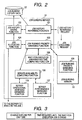
- FIG.2 is a block diagram showing a configuration of major functions of a job queuing server in the distributed processing system according to the embodiment of the present invention.
- clients 21, 22 are computers to which the job is given
- job queuing servers 31, 33 are computers that decide the priority in job execution to complete the job within a term that the user desires, search the server that is able to execute optimally the job, and allocate the job to the server.
- memory devices 32, 34 for saving the job running history data are connected to the job queuing server 31, 33 respectively.
- File servers 41, 42 are computers for holding input files and application programs used in the job
- servers 51, 52 are computers for executing the job
- accounting/totalizing servers 61, 62 are computers for executing the accounting process based on job running history data.
- Job files, input files, and application files are stored in the memory devices connected to the file servers 41, 42.
- the client 21 and the servers 31, 41, 51, 61 are the computers containing the personal computer or the work station, and are connected mutually via a local area network 10 to constitute a first computer system.
- the client 22 and the servers 32, 42, 52, 62 are the computers containing the personal computer or the work station, and are connected mutually via a local area network 12 to constitute a second computer system.
- first computer system and the second computer system are connected mutually via a wide area network 11.
- the first computer system and the second computer system are independently operated respectively and also operated as one integrated computer system because the job queuing server 31 and the job queuing server 33 can share periodically the job running environment information and the job management information in mutual systems.
- the job queuing server 31 includes a job history referring function 101 of referring the job running history data in the past, a job history saving function 102 of saving the job running history data, a job running priority managing function 103 of deciding the priority in job allocation to complete the job within the term that the user desires, a job allocating function 104 of selecting the optimal server to execute the given job and allocating automatically the job to the server, a wait-for-execution job finishing time computing function 105 of forecasting a time required until the wait-for-execution job is finished, a server availability computing function 106 of forecasting a time required until the process in operation in the server is completed, a server performance managing function 107 of normalizing the capacities of the servers that execute the job, and a server operational schedule managing function 108 of managing an operational prearranged schedules of the servers that execute the job.
- the job queuing server 33 is constructed similarly, but only the job running priority managing function 103 is shown in FIG.2 and others are omitted.
- the job running priority managing function 103 of the job queuing server 31 and the job running priority managing function 103 of the job queuing server 33 decide based on operational conditions of respective systems whether or not the server can accept the job from other systems, and then share periodically the information in a format shown in FIG.3, for example, as the job running environment information and the job management information in respective systems if the server accepts the job.
- step S20 when the user of the cllent 21 executes the job, such user gives the job to the job queuing server 31 while designating optimization of the priority in execution and a desired completion date in a job assigning format shown in FIG.5. If the optimization of the priority in execution is designated, the priority in executing the job is set to the lowest order and then a schedule to give the minimum charge for using the computer is arranged by checking whether or not the job can be completed within the desired completion date, while pulling up the priority sequentially.
- a digit "1" is pointed in the box of the priority in execution in the case where the schedule to give the lowest charge for using the computer is desired when the job should be completed until a sufficient completion date because no restriction is imposed on the job completion date or a loose job completion date is pointed, or in the case where increase in the charge for using the computer may be accepted because the high priority In execution is given to complete preferentially the job within the pointed completion date.
- a digit "0" is pointed in the box of the priority in execution in the case where the job is executed in the normal priority in execution.
- the executed number of similar jobs is pointed in the case where the job similar to the job to be executed at this time was executed previously and the executed number of similar jobs has already been known.
- a digit "0" is pointed in the box of the executed number of similar jobs in the case where the job similar to the job to be executed at this time was executed previously but the executed number of similar jobs is not known.
- a special character "*" and a time (second) estimated by the user to complete the job are pointed subsequently to a digit "1" in the case where the job similar to the job to be executed at this time was not executed previously.
- step S21 it is checked whether or not the optimization of the priority in execution is pointed. If a value in the box of the priority in execution is the digit "0", the job priority in execution is not altered and then the process goes to step S30. If a value in the box of the priority in execution is the digit "1”, the priority of the given job is brought down once to the lowest order to optimize the priority in executing the job and then the process goes to step S22.
- step S22 it is decided whether or not the similar job history number executed in the past is pointed. Then, the process goes to step S23 if the digit "0" is pointed, the process goes to step S25 if the special character "*" and the time (second) estimated by the user to complete the job are pointed subsequently to the digit "1", and the process goes to step S24 if the executed number of similar jobs is pointed by other digit.
- step S23 the job history referring function 101 searches the similar job number from the job running history data 32 if the user points the digit "0" in the box of the executed number of similar jobs.
- the user name, the type of the job, and the group name in unit of works, for example are utilized as a key used to search the similar job.
- the job queuing server 31 tabulates searched results of the similar jobs in a format shown in FIG.6, while the user selects the executed number of the similar jobs.
- step S24 the job history referring function 101 searches a time required until the given job is completed, from the job running history data 32 if the executed number of similar jobs is known by any method in this manner.
- step S25 the server availability computing function 106 computes an availability of the server that can execute the job of the type given at this time. This is used to forecast precisely a job progress rate of the job being now executed on the server and a time at which the given job is completed, based on the operational schedule of the server.
- the server availability computing function 106 receives information of the computing ability (SPEC) of each server from the server performance managing function 107 that manages the computing ability (SPEC) of each server.
- SPEC computing ability
- the server availability computing function 106 checks days and times that respective server can utilize, by the server operational schedule managing function 108. For example, when the schedule indicating that the operation of the server is stopped after 12 hours is set forth, such server is excepted from candidates of the servers that are available to the job.
- the server availability computing function 106 sums up information of the operating situations of respective servers in a format shown in FIG.7 to calculate the job progress rate (PROG) in respective servers.
- the computer availability (AVA) of respective servers for the wait-for-execution job can be calculated from this result at the existing point of time.
- step S25 the computer availability (AVA) of each server is calculated, and then the total results of all servers give the computer availability.
- the wait-for-execution jobs are managed in a format shown in FIG.8 by the job queuing server 31.
- the job consuming power is given by a value obtained by multiplying the computing ability (SPEC) required to complete the job and a time (second) required up to the end, for example.
- step S26 the time (Qutime) required to complete the wait-for-execution job is calculated at the present point of time by adding a value obtained by dividing a total sum of the job consuming powers of the wait-for-execution jobs by a total sum of the computing abilities of the servers that can execute the wait-for-execution job and the computer availability (AVA) calculated in step S25.
- AVA computer availability
- the conditions under which the job assigned by the user at this time is completed within the requested term are decided. That is, it is decided whether or not the job can be completed within the date and time, which are whether or not the job can be completed within the date and time, which are desired by the user, by pulling up the priority of the wait-for-execution job. More particularly, it is decided whether or not the execution term of the job requested by the user can be satisfied by adjusting the priority of the wait-for-execution job among a group of jobs the optimization of the execution priority of which is designated.
- the charge for using the computer per unit time must be set higher than the case where the execution priority of the job is pulled down maximally.
- a correcting rate of the charge for using the computer per unit time is decided by referring a function of managing the charge for using the computer in the accounting/totalizing server 61.
- the function of managing the charge for using the computer signifies a function of correcting the charge for using the computer on the basis of the normal charge for using the computer and, for example, correcting criteria are given as follows.
- Criterion 1 As with the job 1 whose priority in executing the job has already been altered by increasing the charge for using the computer according to the optimization of the priority of the job that is assigned at this time, the priority of the wait-for-execution job is altered under the conditions that the execution term is satisfied and the job execution priority is not pulled up higher than the normal priority in executing the jobs in the job group. At that time, the charge for using the computer that is higher than the job 1 by one level is applied to the job that is assigned at this time.
- Criterion 2 the charge for using the computer, which is higher than the charge for using the computer for the job the optimization of the job executing priority of which is not designated, is not applied as the charge for using the computer for the job 1 whose job executing priority is pulled down.
- step S27 It is decided by a following inequality based on such criteria, for example, whether or not the job is completed within a job completion data (Reqtime) requested by the user.
- Reqtime ⁇ current time+computer availability (AVA) + wait-for-execution job completing time (Qutime)
- step S28 three decisions are made by this inequality.
- the first decision is made when the job can be completed within the term requested by the user, and the process goes to step S29.
- step S29 the charge for using the computer per unit time as the condition that the job is completed within the term requested by the user is offered.
- step S30 If the job is executed, various data of the job running history are saved in the job running history data 32 in a format shown in FIG.9 in step S34 after the job is completed.
- step SS35 the priority in executing the given job is pulled up by one level. At that time, the charge for using the computer is increased at a predetermined rate. In contrast, the charge for using the computer for the job whose priority in executing the job is pulled down is reduced by an amount of money corresponding to an increase in the charge for using the computer for the job whose priority in executing the job is pulled up. In this fashion, the processes staring from step S26 are repeated again by the number (N) of the wait-for- execution jobs whose priorities are higher than the priority of the given job.
- the third decision is made when there is no possibility that the job can be completed within the term requested by the user by means of the first computer system even though the priority in executing the job is pulled up to the highest level, and the process goes to step S31.
- step S31 the availability of the second computer system operated by other departments is checked.
- the job queuing servers 31, 33 share the operating formation of the computer systems in mutual departments in a format shown in FIG.3 at a predetermined period via the job running priority managing function 103. Since this information is the information that is always calculated by the job queuing server in giving the job, there is no necessity to calculate the information newly. In step S31, this information is offered to the user.
- step S32 the user decides finally based on the offered information whether or not the job execution by utilizing the second computer system is requested. If the second computer system is not utilized, the job is not completed within the term requested by the user, and then the process goes to step S33.
- step S33 the final scheduled date when the job is executed in the shortest period is offered based on the information used previously in the decision in step S27, and then the process goes to step S29.
- the processes in step S29 et seq. are similar to the case of the first decision.
- the request of the user can be satisfied at its maximum.
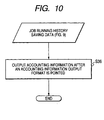
- the accounting/totalizing server 61 has a function of totalizing the accounting/totalizing information based on the charge for using the computer per unit time, which is set in altering the priority of the wait-for-execution job, from the job running history data saved in step S34 to output.
- step S36 the user associated charges for using the computer are calculated based on the information, a format of which is shown in FIG.9, saved in the job running history data 34.
- user associated CPU using time actual result reports are output in an output format shown in FIG.11.
- individual charges for using the computer are obtained by multiplying the charge for using the computer per unit time by a time required until the job is completed.
- the report is output in unit of the computer group such that the user can discriminate the charge needed in utilizing the computer systems in other departments.
- the function of demanding the charge for using the computer system in response to the altered rate of the priority in executing the job can be realized in the case where the user pulls up the priority in executing the job to execute preferentially the particular job.
- the charge for using the computer can be demanded to other departments when the user utilizes the computer systems in other departments.
- the accounting system capable of accounting fairly the charge to meet the used conditions of the user can be provided.
- the job execution can be implemented to meet the situations of the user and also the charge can be demanded in response to the used rate of the computer system. Therefore, the fairness can be satisfied over all the users.
- the computer systems share their operating information, then the execution completion date is forecasted with regard to the pointed execution term while optimizing the priority in executing the job given to one computer system, and the job is assigned to other computer systems sharing the operating information in response to the forecasted result. Therefore, the user's request can be satisfied at its maximum by utilizing the resource on the other computer systems even when the execution term requested by the user cannot be satisfied by the computer system in the department to which the user belongs. Also, the effective use of the computer resource can be achieved by operating the computer systems possessed by respective departments mutually in this manner.
- the accounting process is carried out to keep appropriately the balance between the job completed date pointed by the user and the charge for using the computer, and also the fair accounting process can be applied to the user even in the situation that the operating ratio of the computer system becomes high and thus the job waiting is generated.
Landscapes
- Engineering & Computer Science (AREA)
- Software Systems (AREA)
- Theoretical Computer Science (AREA)
- Physics & Mathematics (AREA)
- General Engineering & Computer Science (AREA)
- General Physics & Mathematics (AREA)
- Multi Processors (AREA)
- Management, Administration, Business Operations System, And Electronic Commerce (AREA)
- Computer And Data Communications (AREA)
Applications Claiming Priority (3)
| Application Number | Priority Date | Filing Date | Title |
|---|---|---|---|
| JP2002057353 | 2002-03-04 | ||
| JP2002057353A JP2003256222A (ja) | 2002-03-04 | 2002-03-04 | 分散処理システム、ジョブ分散処理方法およびプログラム |
| PCT/JP2003/002076 WO2003075160A1 (en) | 2002-03-04 | 2003-02-25 | Decentralized processing system, job decentralized processing method, and program |
Publications (2)
| Publication Number | Publication Date |
|---|---|
| EP1489506A1 true EP1489506A1 (de) | 2004-12-22 |
| EP1489506A4 EP1489506A4 (de) | 2005-05-11 |
Family
ID=27784657
Family Applications (1)
| Application Number | Title | Priority Date | Filing Date |
|---|---|---|---|
| EP03743507A Withdrawn EP1489506A4 (de) | 2002-03-04 | 2003-02-25 | Dezentralisiertes verarbeitungssystem, job-dezentralisiertes verarbeitungsverfahren und programm |
Country Status (5)
| Country | Link |
|---|---|
| US (1) | US20050144234A1 (de) |
| EP (1) | EP1489506A4 (de) |
| JP (1) | JP2003256222A (de) |
| CN (1) | CN1639688A (de) |
| WO (1) | WO2003075160A1 (de) |
Families Citing this family (24)
| Publication number | Priority date | Publication date | Assignee | Title |
|---|---|---|---|---|
| JP4485763B2 (ja) * | 2003-07-10 | 2010-06-23 | 株式会社日立製作所 | 運用管理方法及び装置 |
| US7526765B2 (en) * | 2003-11-26 | 2009-04-28 | International Business Machines Corporation | Method and apparatus for on-demand resource allocation and job management |
| JP2005165813A (ja) * | 2003-12-04 | 2005-06-23 | Matsushita Electric Ind Co Ltd | 分散計算機システム管理方法 |
| JP4281719B2 (ja) * | 2005-08-10 | 2009-06-17 | コニカミノルタビジネステクノロジーズ株式会社 | ファイル処理装置、ファイル処理方法、およびファイル処理プログラム |
| JP5065050B2 (ja) * | 2005-12-28 | 2012-10-31 | インターナショナル・ビジネス・マシーンズ・コーポレーション | クライアント・サーバ・システムにおける負荷分散 |
| US8504641B2 (en) * | 2008-04-08 | 2013-08-06 | At&T Intellectual Property Ii, L.P. | Topology aware content delivery network |
| JP2010224935A (ja) * | 2009-03-24 | 2010-10-07 | Olympus Corp | 分散処理システム |
| US8689225B2 (en) | 2009-09-29 | 2014-04-01 | Amazon Technologies, Inc. | Attributing causality to program execution capacity modifications |
| US8352609B2 (en) | 2009-09-29 | 2013-01-08 | Amazon Technologies, Inc. | Dynamically modifying program execution capacity |
| JP2011086055A (ja) * | 2009-10-14 | 2011-04-28 | Internatl Business Mach Corp <Ibm> | ネットワーク上の機器の動作状態を、ネットワークの利用者数に応じて変化させる、機器管理方法、コンピュータ・プログラム及び装置 |
| JP5385751B2 (ja) * | 2009-10-14 | 2014-01-08 | インターナショナル・ビジネス・マシーンズ・コーポレーション | ネットワーク・ユーザに、ネットワーク上の各機器から提供されるサービスの利用コストを提示する方法、コンピュータ・プログラム及び装置 |
| JP5731907B2 (ja) * | 2011-06-02 | 2015-06-10 | 株式会社東芝 | 負荷分散装置、負荷分散方法及び負荷分散プログラム |
| JP5586551B2 (ja) * | 2011-09-21 | 2014-09-10 | 東芝テック株式会社 | コンピュータシステム、及びジョブ制御方法 |
| US10555145B1 (en) | 2012-06-05 | 2020-02-04 | Amazon Technologies, Inc. | Learned configuration of modification policies for program execution capacity |
| JP6172649B2 (ja) | 2012-12-19 | 2017-08-02 | インターナショナル・ビジネス・マシーンズ・コーポレーションInternational Business Machines Corporation | 情報処理装置、プログラム、及び、情報処理方法 |
| US8949224B2 (en) | 2013-01-15 | 2015-02-03 | Amazon Technologies, Inc. | Efficient query processing using histograms in a columnar database |
| US10552774B2 (en) | 2013-02-11 | 2020-02-04 | Amazon Technologies, Inc. | Cost-minimizing task scheduler |
| US9720732B1 (en) | 2013-02-11 | 2017-08-01 | Amazon Technologies, Inc. | Parameter selection for optimization of task execution based on execution history for prior tasks |
| US9400687B2 (en) | 2014-12-11 | 2016-07-26 | International Business Machines Corporation | Method and system for dynamic pool reallocation |
| US10297347B2 (en) * | 2015-04-06 | 2019-05-21 | Preventice Solutions, Inc. | Adverse event prioritization and handling |
| US10140443B2 (en) * | 2016-04-13 | 2018-11-27 | Vmware, Inc. | Authentication source selection |
| US10791155B2 (en) * | 2017-01-18 | 2020-09-29 | Electronics And Telecommunications Research Institute | Infrastructure apparatus and method of providing collaboration between thing devices |
| US12437183B2 (en) * | 2022-06-06 | 2025-10-07 | Apple Inc. | Subtask storage for streaming convolutions in neural network processor |
| CN115756857A (zh) * | 2022-11-24 | 2023-03-07 | 西安天和防务技术股份有限公司 | 资源调度方法与电子设备 |
Family Cites Families (17)
| Publication number | Priority date | Publication date | Assignee | Title |
|---|---|---|---|---|
| DE69031233T2 (de) * | 1989-02-24 | 1997-12-04 | At & T Corp | Adaptive Arbeitsfolgeplanung für Mehrfachverarbeitungssysteme |
| JP2875284B2 (ja) * | 1989-06-23 | 1999-03-31 | 株式会社日立製作所 | 計算機システム及びその課金処理方法 |
| US5179702A (en) * | 1989-12-29 | 1993-01-12 | Supercomputer Systems Limited Partnership | System and method for controlling a highly parallel multiprocessor using an anarchy based scheduler for parallel execution thread scheduling |
| JPH05265775A (ja) * | 1992-03-19 | 1993-10-15 | Hitachi Ltd | ジョブ実行予測制御方法およびジョブ実行状況表示方法 |
| JPH0659906A (ja) * | 1992-08-10 | 1994-03-04 | Hitachi Ltd | 並列計算機の実行制御方法 |
| JPH07234740A (ja) * | 1994-02-23 | 1995-09-05 | Hitachi Ltd | ジョブ管理方法 |
| JPH07244653A (ja) * | 1994-03-03 | 1995-09-19 | Hitachi Ltd | ジョブの動作予測方式 |
| JP3658420B2 (ja) * | 1994-04-14 | 2005-06-08 | 株式会社日立製作所 | 分散処理システム |
| JPH08272627A (ja) * | 1995-03-30 | 1996-10-18 | Ricoh Co Ltd | リアルタイムタスク制御装置 |
| US6338055B1 (en) * | 1998-12-07 | 2002-01-08 | Vitria Technology, Inc. | Real-time query optimization in a decision support system |
| JP2001318776A (ja) * | 2000-05-11 | 2001-11-16 | Minolta Co Ltd | プリントシステム、プリントサーバ、画像形成装置及び端末装置 |
| JP2002024194A (ja) * | 2000-07-05 | 2002-01-25 | Matsushita Electric Ind Co Ltd | ジョブ分散処理方法および分散処理システム |
| JP2003006175A (ja) * | 2001-06-26 | 2003-01-10 | Hitachi Ltd | プロセス実行時のプログラム動作特性に基づくプロセススケジューリング方法及びこれを用いたプログラム及びデータ処理装置 |
| US6993763B2 (en) * | 2001-06-26 | 2006-01-31 | International Business Machines Corporation | Technique for scheduling execution of jobs for or by network-connected devices |
| JP2003029989A (ja) * | 2001-07-16 | 2003-01-31 | Matsushita Electric Ind Co Ltd | 分散処理システムおよびジョブ分散処理方法 |
| JP2003091424A (ja) * | 2001-09-18 | 2003-03-28 | Matsushita Electric Ind Co Ltd | 分散処理システムおよびジョブ分散処理方法 |
| US7937281B2 (en) * | 2001-12-07 | 2011-05-03 | Accenture Global Services Limited | Accelerated process improvement framework |
-
2002
- 2002-03-04 JP JP2002057353A patent/JP2003256222A/ja active Pending
-
2003
- 2003-02-25 US US10/506,427 patent/US20050144234A1/en not_active Abandoned
- 2003-02-25 WO PCT/JP2003/002076 patent/WO2003075160A1/ja not_active Ceased
- 2003-02-25 EP EP03743507A patent/EP1489506A4/de not_active Withdrawn
- 2003-02-25 CN CNA038053454A patent/CN1639688A/zh active Pending
Also Published As
| Publication number | Publication date |
|---|---|
| US20050144234A1 (en) | 2005-06-30 |
| CN1639688A (zh) | 2005-07-13 |
| WO2003075160A1 (en) | 2003-09-12 |
| JP2003256222A (ja) | 2003-09-10 |
| EP1489506A4 (de) | 2005-05-11 |
Similar Documents
| Publication | Publication Date | Title |
|---|---|---|
| EP1489506A1 (de) | Dezentralisiertes verarbeitungssystem, job-dezentralisiertes verarbeitungsverfahren und programm | |
| US8996701B2 (en) | Computer resource distribution method based on prediction | |
| US8346909B2 (en) | Method for supporting transaction and parallel application workloads across multiple domains based on service level agreements | |
| US6591262B1 (en) | Collaborative workload management incorporating work unit attributes in resource allocation | |
| Yu et al. | QoS-based scheduling of workflow applications on service grids | |
| EP1282038A2 (de) | Verfahren und Vorrichtung zur verteilten Auftragsbearbeitung | |
| Zeng et al. | Clinic scheduling models with overbooking for patients with heterogeneous no-show probabilities | |
| US8793365B2 (en) | Environmental and computing cost reduction with improved reliability in workload assignment to distributed computing nodes | |
| Bertsimas et al. | Restaurant revenue management | |
| US20060129771A1 (en) | Managing data migration | |
| EP1293901A2 (de) | Verteiltes Verarbeitungssystem, Jobverteilungsverfahren und Verteilungsprogramm | |
| US20110173626A1 (en) | Efficient maintenance of job prioritization for profit maximization in cloud service delivery infrastructures | |
| US20080104605A1 (en) | Methods and apparatus for dynamic placement of heterogeneous workloads | |
| US20020129081A1 (en) | Production server architecture and methods for automated control of production document management | |
| JP4965578B2 (ja) | ローカル・グリッドをサポートするためにホスト・グリッド内の割り振りポリシを変更するためのコンピュータ実装方法、並びに、そのデータ処理システム及びコンピュータ・プログラム | |
| US20130054289A1 (en) | System and Method for Budget-Compliant, Fair and Efficient Manpower Management | |
| CN110196773B (zh) | 统一调度计算资源的多时间尺度安全校核系统及方法 | |
| Adabi et al. | Bi-level fuzzy based advanced reservation of Cloud workflow applications on distributed Grid resources | |
| JP2009514117A5 (de) | ||
| US20140337079A1 (en) | Fluid based resource allocation and appointment scheduling system and method | |
| Püschel et al. | Management of cloud infastructures: Policy-based revenue optimization | |
| US9075832B2 (en) | Tenant placement in multitenant databases for profit maximization | |
| Li et al. | An online service provisioning strategy for container-based cloud brokers | |
| Singh et al. | Adaptive pricing for resource reservations in shared environments | |
| JP4353865B2 (ja) | 情報処理システム |
Legal Events
| Date | Code | Title | Description |
|---|---|---|---|
| PUAI | Public reference made under article 153(3) epc to a published international application that has entered the european phase |
Free format text: ORIGINAL CODE: 0009012 |
|
| 17P | Request for examination filed |
Effective date: 20040902 |
|
| AK | Designated contracting states |
Kind code of ref document: A1 Designated state(s): AT BE BG CH CY CZ DE DK EE ES FI FR GB GR HU IE IT LI LU MC NL PT SE SI SK TR |
|
| RIN1 | Information on inventor provided before grant (corrected) |
Inventor name: KODAMA, KATSUFUMI Inventor name: TANAKA, KATSUYOSHI |
|
| A4 | Supplementary search report drawn up and despatched |
Effective date: 20050329 |
|
| 17Q | First examination report despatched |
Effective date: 20050624 |
|
| STAA | Information on the status of an ep patent application or granted ep patent |
Free format text: STATUS: THE APPLICATION HAS BEEN WITHDRAWN |
|
| 18W | Application withdrawn |
Effective date: 20080425 |