EP1492006A1 - Erkennung von Speichermangel und Feinabschaltung - Google Patents
Erkennung von Speichermangel und Feinabschaltung Download PDFInfo
- Publication number
- EP1492006A1 EP1492006A1 EP20030253973 EP03253973A EP1492006A1 EP 1492006 A1 EP1492006 A1 EP 1492006A1 EP 20030253973 EP20030253973 EP 20030253973 EP 03253973 A EP03253973 A EP 03253973A EP 1492006 A1 EP1492006 A1 EP 1492006A1
- Authority
- EP
- European Patent Office
- Prior art keywords
- memory
- application
- operating system
- reserve buffer
- computer device
- Prior art date
- Legal status (The legal status is an assumption and is not a legal conclusion. Google has not performed a legal analysis and makes no representation as to the accuracy of the status listed.)
- Granted
Links
Images

Classifications
-
- G—PHYSICS
- G06—COMPUTING OR CALCULATING; COUNTING
- G06F—ELECTRIC DIGITAL DATA PROCESSING
- G06F12/00—Accessing, addressing or allocating within memory systems or architectures
- G06F12/02—Addressing or allocation; Relocation
-
- G—PHYSICS
- G06—COMPUTING OR CALCULATING; COUNTING
- G06F—ELECTRIC DIGITAL DATA PROCESSING
- G06F9/00—Arrangements for program control, e.g. control units
- G06F9/06—Arrangements for program control, e.g. control units using stored programs, i.e. using an internal store of processing equipment to receive or retain programs
- G06F9/46—Multiprogramming arrangements
- G06F9/50—Allocation of resources, e.g. of the central processing unit [CPU]
- G06F9/5005—Allocation of resources, e.g. of the central processing unit [CPU] to service a request
- G06F9/5011—Allocation of resources, e.g. of the central processing unit [CPU] to service a request the resources being hardware resources other than CPUs, Servers and Terminals
- G06F9/5016—Allocation of resources, e.g. of the central processing unit [CPU] to service a request the resources being hardware resources other than CPUs, Servers and Terminals the resource being the memory
-
- G—PHYSICS
- G06—COMPUTING OR CALCULATING; COUNTING
- G06F—ELECTRIC DIGITAL DATA PROCESSING
- G06F11/00—Error detection; Error correction; Monitoring
- G06F11/07—Responding to the occurrence of a fault, e.g. fault tolerance
- G06F11/0703—Error or fault processing not based on redundancy, i.e. by taking additional measures to deal with the error or fault not making use of redundancy in operation, in hardware, or in data representation
- G06F11/0706—Error or fault processing not based on redundancy, i.e. by taking additional measures to deal with the error or fault not making use of redundancy in operation, in hardware, or in data representation the processing taking place on a specific hardware platform or in a specific software environment
- G06F11/073—Error or fault processing not based on redundancy, i.e. by taking additional measures to deal with the error or fault not making use of redundancy in operation, in hardware, or in data representation the processing taking place on a specific hardware platform or in a specific software environment in a memory management context, e.g. virtual memory or cache management
-
- G—PHYSICS
- G06—COMPUTING OR CALCULATING; COUNTING
- G06F—ELECTRIC DIGITAL DATA PROCESSING
- G06F11/00—Error detection; Error correction; Monitoring
- G06F11/30—Monitoring
- G06F11/3003—Monitoring arrangements specially adapted to the computing system or computing system component being monitored
- G06F11/3037—Monitoring arrangements specially adapted to the computing system or computing system component being monitored where the computing system component is a memory, e.g. virtual memory, cache
Definitions
- operating systems such Microsoft TM Windows TM and UNIX based systems have a physical limit on the amount of addressable memory that can be used by an application. If the application exceeds this limit , it will often crash, leading to a loss of data that has not been stored to persistent memory, and perhaps also to crashes or slowdowns in any other applications that rely on the crashed application.
- one computer may be configured to monitor its own memory usage or the memory usage of other computers and take precautionary backup measures, either automatically or after alerting a human operator, in the event that the monitored conditions of one of the computers indicates that an application crash has occurred or is about to occur.
- such a system requires almost near constant polling of the monitored computers in order to have timely detection of a problem, and even with timely detection, the affected computer application may crash before critical data can be saved.
- the present invention provides a novel method by which warning of an impending out of memory problem can be provided sufficiently early to allow corrective or remedial action to be taken before the crash of an application.
- a method for managing low memory in a first computer device having a processor for executing an operating system and an application, and a memory available to the operating system and application, including steps of (a) reserving within a block of memory allocated to the application on startup thereof by the operating system a first reserve buffer that is unavailable to the application until released; and (b) releasing the first reserve buffer for use by the application upon determining that memory use by the application has reached a threshold.
- FIG. 1 is a block diagram showing a communications system including a a computer network in which the present invention is implemented according to embodiments of the invention
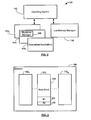
- FIG. 2 is a block diagram representation of software components implemented on computers of the computer network of Figure 1;
- FIG. 3 is a block diagram representation of memory according to embodiments of the invention.
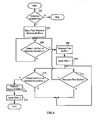
- Figure 4 is a flow diagram showing operation of a memory management process according to an embodiment of the present invention.
- the following detailed description of the embodiments of the present invention does not limit the implementation of the invention to any particular computer operating system (OS).
- OS computer operating system
- the present invention may be implemented with any OS that provides the facilities that support the requirement of the present invention.
- One embodiment is implemented using the Microsoft TM Windows TM XP TM operating system, however the invention could be implemented with other operating systems, for example UNIX.
- Figure 1 is a block diagram of a communications system that includes a networked computer system in which the present invention may be implemented.
- the networked computer system shown is a router, and more particularly, a wireless gateway 100 that functions as an intermediary and interpreter between one or more client networks 110 and one or more wireless networks 104, allowing email messages to be exchanged between mobile devices 106 within the wireless network 104 and devices connected to the client network 110.
- the present invention is not however limited to implementation in a router or wireless gateway, and in its broader aspects can be implemented in a wide range of computer systems.
- the client network 110 will often be remotely located from the wireless gateway 100 and communicates over one or more communications links with the wireless gateway 100.
- Client network 110 will typically include a client side interface for handling email communications with the gateway 100.
- the email messages may, as well known in the art, include, among other things, plain text messages, HTML messages, and attached files of a wide variety of types.
- the wireless gateway 100 provides translation and routing services between one or more client networks 110 and wireless networks 104 to facilitate email communication between mobile devices 106 and devices connected, directly or indirectly, to client network 110.
- the wireless gateway 100 includes several distributed components including, among other things, client network interfaces (CNIs) 120 1 -120 M , at least one controller 122, a database (DB) 124, and wireless transport interfaces (WTIs) 128 1 -128 M .
- CNIs client network interfaces
- DB database
- WTIs wireless transport interfaces
- the components are each preferably implemented using dedicated digital computers that are connected by a network 118 (which may be a dedicated LAN).
- a transient memory such as RAM 132
- typically a persistent writable memory such as a flash memory and/or hard drive (HD) 134
- network communications interface cards not shown.
- the client network interfaces (CNI) 120 are each configured to manage the connection between the wireless gateway 100 and at least one client network 110.
- the client network interfaces (CNI) 120 maintain an open connection with one or more client side interfaces at the client network 110 and communicate therewith using a defined protocol.
- the database 124 of the wireless gateway 100 stores data used by the other components of the wireless gateway for administrative, tracking and message recovery purposes, and in this regard a number of the components of the wireless gateway 100 are configured to write to and read from the database 124.
- the database stores configuration information for the wireless gateway components, keeps data as to the current status and state of the wireless gateway, stores information (including ID numbers and last known location) about the mobile devices 106 that communicate with the wireless gateway 100, and stores information about selected messages.
- the information stored by the database 124 assists with disaster/error recovery and can permit a backup component to take over the functions of a component that fails.
- the database 124 is an Oracle TM database, and the wireless gateway components run Oracle TM clients that allows them to write to and read from the database.
- the wireless transport interfaces (WTI) 128 are the wireless gateway's interface to the mobile devices 106, and assemble messages that are destined for mobile devices into sequences of packets, the format of which is dependent on the specific wireless network 104. Similarly, the wireless transport interfaces (WTI) 128 recombine messages from mobile devices from sequences of packets sent from the mobile devices.
- wireless transport interfaces 128 will typically communicate with the wireless network 104 through one or more wireless network interface adaptors 129.
- wireless network interface adaptors have a TCP/IP connection to wireless transport interfaces 128 and an X.25 protocol connection to wireless network 104 such that the wireless network interface adaptors route packets from the wireless transport interfaces 128 over a TCP/IP connection to an X.25 mobile network connection and vice versa.
- Mobile network 104 provides radio coverage to mobile devices 106, and may be a number of different types of network, including for example, Mobitex Radio Network, DataTAC, or a GPRS, CDMA, or iDEN network.
- Mobile devices 106 may be handheld or other mobile digital computing devices that are configured to send and receive email messages.
- the present invention is not dependent on the particular protocol or methodologies used in gateway 100 to exchange messages between client network 110 and the wireless network 104. Rather, the present invention relates to aspects of memory management of one or more or the computers that are used to implement networks such as gateway 100.
- FIG. 2 shows a block diagram representation of software components, indicated generally by reference 140, that are either resident on or accessible to at least some of the components such as the wireless transport interfaces (WTIs) 128, client network interfaces (CNIs), controller 122 and database 124 of the gateway 100, for execution by microprocessors 130.
- the software components include an operating system (OS) 142, which as noted above is of the Microsoft TM Windows TM family of operating systems in one embodiment, and specialized applications 144 1 -144 N .
- Specialized applications144 1 -144 N are those applications that are required by each of the respective gateway components so that they may perform their respective functions. The particular mix of specialized applications that are located at or available too each of the components of the gateway will generally depend on the functions performed by that component.
- OS 142 is configured to coordinate and monitor the operation of specialized applications 144 1 -144 N , and to allocate resources for each of the specialized applications.
- One of the most important resources that OS 142 allocates among the specialized applications is transient memory, i.e. RAM 132.
- Figure 3 illustrates in diagrammatic form a block of memory 150, which represents the portion of RAM 132 that the operating system 142 can allocate among specialized applications 144 1 -144 N .
- the operating system books or allocates a sub-set or block of the memory 150 for the application.
- blocks 152 1 -152 N represent memory blocks that have been allocated for specialized applications 144 1 -144 N , respectively.
- the physical memory used to implement each memory block 152 need not be consecutive physical memory locations in RAM 132, and successive data groups need not be stored in successive physical memory locations.
- software components 140 include a specialized application for managing low memory situations, namely low memory manager application 146.
- low memory manager application 146 may, in some embodiments, be fully or partly integrated into one or more of the other specialized applications 144 1 -144 N , or into the operating system 142.
- the low memory manager 146 is configured to cause part of the memory allocated to all or selected specialized applications 144 1 -144 N to be effectively held in reserve so that it can be used to support a specialized application during an occurrence of low memory, thus providing time for data backup or remedial steps to be carried out before the affected application crashes.
- the low memory manager in embodiments where the low memory manager is a stand alone application or integrated into the operating system, it monitors all specialized applications that are started by the operating system 142 and determines if the specialized application being started (in this example, application 144i) has been pre-selected for low memory management, and if so performs the memory management functions set out below. In some embodiments, all specialized applications may be selected for low memory management, in which case step 402 may be omitted.
- the low memory manager 146 may be a module of specialized application 144i, and be configured to automatically perform its memory management steps only in respect of its associated specialized application 144i.
- the low memory manager 146 instructs the operating system to allocate reserve memory blocks for the specialized application 144i.
- the operating system 142 first starts specialized application 144i, it books or allocates a block of memory 152i ( Figure 3) for the application.
- the memory block may be 2GB, which is the maximum amount of memory that WindowsTM can presently allocate to an application.
- the low memory manager 146 requests the operating system to book or allocate two reserve sub-blocks within memory block 152i such that it is broken up into three sub-blocks, namely a main block 158, and two reserve buffers B1 154 and B2 156.
- the main block 158 is made fully available for the normal operating requirements of specialized application 144i, but, from the perspective of both the operating system 142 and the specialized application 144i, the two reserve buffers B1 154 and B2 156 are booked up and unavailable until freed by the low memory manager 146 (as described below).
- the operating system 142 will typically divide memory into "pages" of predetermined size.
- low memory manager 146 books the reserve buffers B1 154 and B2 154 upon start up of the specialized application 144i, the reserve buffers are, in one example embodiment, not actually physically divided up into memory pages by the operating system until data is actually written to them, thereby reducing unnecessary processor activity.
- the reserve buffers B1 154 and B2 156 are relatively small compared to main block 158, with the second reserve buffer B2 156 being smaller than the first buffer B1 154.
- the main block 158 may be approximately 88% of the memory block 152i that has been allocated for application 144i, the first reserve buffer B1 154 approximately 10% of the memory block 152i, and the second reserve buffer B22 156 approximately 2% of the memory block 152i.
- different relative buffer sizes are used, and in some embodiments the first and second reserve buffers are identical in size.
- main memory block 158 As specialized application 144i runs, it will use the main memory block 158 for its memory requirements. Application 144i and operating system 142 may employ various memory management techniques known in the art to manage usage of the memory within main block 158, such as caching data to hard drive 134.
- operating system 142 monitors memory usage of specialized application 144i, and is configured to issue an out-of-memory exception in the event that the available memory for specialized application 144i falls below a predetermined threshold (which may be zero available memory).
- a predetermined threshold which may be zero available memory.
- the out-of memory exception results in an immediate or almost immediate crash of the specialized application, without sufficient warning for corrective or remedial action to be executed.
- the low memory manager 146 of the present invention provides a novel method by which warning of an impending out of memory problem can be provided sufficiently early to allow corrective or remedial action to be taken before the crash of an application.
- the low memory manager 146 is configured to detect, as long as the specialized application 144i is running, any out-of- memory exceptions issued by the operating system 142 in respect of specialized application 144i. An out-of-memory exception will result when the available memory in main block 158 drops below the operating system threshold.
- the low memory manager 146 instructs the operating system 142 to release the first reserve buffer B1 154, effectively integrating the memory of buffer B1 with the main block 158, thereby increasing, from the perspective of the specialized application 144i and the operating system 142, the amount of free memory available for use by the specialized application.
- the newly freed memory will in many cases delay, if not prevent altogether, an impending crash.
- the low memory manager may, as indicated in step 410, also issue a first warning alert so that corrective or remedial action can be taken.
- the first warning alert could be an audio and/or visual signal intended to alert a human operator of the condition.
- the warning alert could be an electronic signal or a variable passed to a management application that is running on the affected computer.
- the management application could be a discrete specialized application, or could be a module of the affected specialized application, or a module of the low memory manager 146.
- the warning signal could be sent to a management application running on a remote computer to which the affected computer is connected by a network.
- the warning alert signal could be sent to a management application running on controller 122, which in turn may issue an alert for a human operator to investigate the problem.
- the management application on controller 122 could be configured to take corrective action, either automatically, or with the intervention of a human operator.
- the management application on the controller 122 is in some embodiments configured to cause electronic traffic ro be rerouted to other wireless transport interfaces 128 to relieve some of the demand on the affected wireless transport interface.
- steps may be taken after the first warning signal to store information in memory 152i to a persistent storage.
- the low memory manager 146 waits to see if the operating system 142 issues a second out-of-memory exception in respect of specialized application 144i (step 412). While waiting for a second out-of-memory exception, the specialized application periodically attempts to re-reserve the first reserve buffer B1 154 (step 414) - if the memory usage level by the specialized application 144i drops down to a level that does not require reserve buffer B1 154 anymore, then the operating system 142 will allow the memory to be re-reserved by the low memory manager 146, otherwise the operating system 142 will not allow the memory to be released to the low memory manager.
- the frequency of the attempts by low memory manager to re-reserve first buffer B1 is configurable in one embodiment of the invention.
- the low memory manager resets and returns to step 406 to wait for a new first occurrence of an out-of-memory exception.
- the operating system 142 will issue a further out-of-memory exception when the additional memory that came available due to release of the reserve buffer B1 154 is used up.
- the occurrence of a second out-of-memory exception will typically indicate that any corrective action that was taken in response to the first warning alert has failed, or that the first warning alert has gone unheeded.
- the low memory manager 146 releases the second reserve buffer B2 156, effectively integrating the memory of buffer B2 with the main block 158 and the previously released first reserve buffer B1 154, thereby increasing, from the perspective of the specialized application 144i and the operating system 142, the amount of free memory available for use by the specialized application.
- the newly released memory preferably buys sufficient time for recovery supporting activity to take place prior to crashing of the affected application-for example, time for selected information in the memory block 152i to be stored to a persistent storage location so that it can be retrieved at a later time.
- the low memory manager upon releasing the second reserve buffer, the low memory manager preferably issues a second warning alert to signal that a crash is pending.
- the second warning alert is effectively a command to commence shutdown of the specialized application 144i.
- the second warning alert triggers recovery supporting activities to take place.
- the second warning alert could be a signal or variable passed to another application or within an application located on the same computer as the affected application. Alternatively, or additionally, the second warning alert could be sent to a remotely located management application on another computer.
- the affected specialized application 144i may be running on wireless transport interface 128 k and responsible for sending outgoing messages to and receiving incoming messages from mobile devices 106.
- the specialized application maintains a pending message buffer within memory block 152i that includes pending outgoing messages that are waiting to be sent out to mobile devices 106, and pending incoming messages that have been received from mobile devices 106 but not yet processed by the gateway 100.
- the pending messages may include, among other things, status messages such as error codes and acknowledgements, and conventional email messages.
- Delivery of some of the pending messages in the pending message buffer may be critical in order to avoid "lost" messages, namely messages in which an originating device such as a mobile device 106 is left with incorrect or ambiguous information as to the status of an email message that was sent from the device. Accordingly, in the event of an impeding crash of the specialized application 144i, it is desirable to serialize to a persistent storage at least the critical pending messages in memory block 152i that are required to ultimately be sent to avoid lost messages.
- the specialized application 144i includes a shutdown manager 160 that is configured to receive the second warning alert issued in step 418, and subsequently begin a shutdown routine that includes, among other things, serializing to persistent storage any critical messages that are stored in memory block 152i, thereby allowing the critical pending messages to be retrieved and sent at a later time.
- the messages could be serialized to a local persiste nt storage of the computer on which the affected application is running, or to database 124.
- the second warning alert issued in step 418 is preferably also provided, directly or indirectly, to the controller 132 so that it can cause all traffic to be rerouted away from the wireless transport interface 128k that is running the crashing application 144i, and designate one or more other wireless transport interfaces to take over the traffic and also to retrieve and send the serialized critical messages.
- the low memory management process of the present invention provides advanced warning of impending crash of an application due to an out of memory situation, thus allowing corrective actions to be taken to try and prevent the crash and also recovery supporting actions to be taken so that critical data is not lost if a crash occurs.
- two reserve buffers are reserved from the memory available to the application.
- the first reserve buffer is released, and a warning issued so that either or both automated and human controlled investigations and corrective actions can occur. If the warning does not result in a successful fix, then a second out-of-memory exception is received, causing the second buffer to be released, and the commencement of a controlled shutdown of the application during which critical data is stored to persistent memory.
- the low memory manager 146 relies on out-of-memory exceptions issued by the operating system 142, rather than attempting to directly and continuously monitor memory usage itself. As a result, low memory manager 146 uses relatively few processing resources of the computer upon which it is implemented.
- more or less than two reserve buffers may be used.
- a computer program product having a computer-readable medium tangibly embodying computer executable instructions for implementing embodiments of the invention described above.
- the computer readable medium could, among other things be a storage medium such as a magnetic medium or an optical medium, or could be a communications medium such as an electrical or optical signal onto which the computer executable instructions have been modulated.
Landscapes
- Engineering & Computer Science (AREA)
- Theoretical Computer Science (AREA)
- Physics & Mathematics (AREA)
- Software Systems (AREA)
- General Engineering & Computer Science (AREA)
- General Physics & Mathematics (AREA)
- Quality & Reliability (AREA)
- Computing Systems (AREA)
- Mathematical Physics (AREA)
- Techniques For Improving Reliability Of Storages (AREA)
- Hardware Redundancy (AREA)
- Computer And Data Communications (AREA)
- Information Retrieval, Db Structures And Fs Structures Therefor (AREA)
- Mobile Radio Communication Systems (AREA)
- Fire-Detection Mechanisms (AREA)
- Memory System (AREA)
- Debugging And Monitoring (AREA)
- Telephonic Communication Services (AREA)
- Ultra Sonic Daignosis Equipment (AREA)
- Fire Alarms (AREA)
Priority Applications (14)
| Application Number | Priority Date | Filing Date | Title |
|---|---|---|---|
| EP03253973A EP1492006B1 (de) | 2003-06-24 | 2003-06-24 | Erkennung von Speichermangel und Feinabschaltung |
| AT03253973T ATE375553T1 (de) | 2003-06-24 | 2003-06-24 | Erkennung von speichermangel und feinabschaltung |
| DE60316783T DE60316783T2 (de) | 2003-06-24 | 2003-06-24 | Erkennung von Speichermangel und Feinabschaltung |
| TW093117664A TWI317477B (en) | 2003-06-24 | 2004-06-18 | Detection of out of memory and graceful shutdown |
| SG200403678A SG120167A1 (en) | 2003-06-24 | 2004-06-22 | Detection of out of memory and graceful shutdown |
| AU2004202730A AU2004202730B2 (en) | 2003-06-24 | 2004-06-23 | Detection of out of memory and graceful shutdown |
| JP2004185650A JP4642389B2 (ja) | 2003-06-24 | 2004-06-23 | メモリ不足およびグレースフルシャットダウンの検出 |
| US10/874,291 US7284099B2 (en) | 2003-06-24 | 2004-06-24 | Detection of out of memory and graceful shutdown |
| KR1020040047450A KR100941041B1 (ko) | 2003-06-24 | 2004-06-24 | 아웃 오브 메모리 및 무리없는 셧다운의 검출 |
| CNB200410064017XA CN100362466C (zh) | 2003-06-24 | 2004-06-24 | 用于管理计算机设备中的存储器容量低的方法和系统 |
| BRPI0402518A BRPI0402518B1 (pt) | 2003-06-24 | 2004-06-24 | método e sistema para gerenciar a memória baixa em um dispositivo de computador |
| CA002472473A CA2472473C (en) | 2003-06-24 | 2004-06-25 | Detection of out of memory and graceful shutdown |
| HK05103519.1A HK1072303B (en) | 2005-04-25 | Detection of out of memory and graceful shutdown | |
| US11/851,586 US8046556B2 (en) | 2003-06-24 | 2007-09-07 | Detection of out-of-memory and graceful shutdown |
Applications Claiming Priority (1)
| Application Number | Priority Date | Filing Date | Title |
|---|---|---|---|
| EP03253973A EP1492006B1 (de) | 2003-06-24 | 2003-06-24 | Erkennung von Speichermangel und Feinabschaltung |
Publications (2)
| Publication Number | Publication Date |
|---|---|
| EP1492006A1 true EP1492006A1 (de) | 2004-12-29 |
| EP1492006B1 EP1492006B1 (de) | 2007-10-10 |
Family
ID=33396017
Family Applications (1)
| Application Number | Title | Priority Date | Filing Date |
|---|---|---|---|
| EP03253973A Expired - Lifetime EP1492006B1 (de) | 2003-06-24 | 2003-06-24 | Erkennung von Speichermangel und Feinabschaltung |
Country Status (12)
| Country | Link |
|---|---|
| US (2) | US7284099B2 (de) |
| EP (1) | EP1492006B1 (de) |
| JP (1) | JP4642389B2 (de) |
| KR (1) | KR100941041B1 (de) |
| CN (1) | CN100362466C (de) |
| AT (1) | ATE375553T1 (de) |
| AU (1) | AU2004202730B2 (de) |
| BR (1) | BRPI0402518B1 (de) |
| CA (1) | CA2472473C (de) |
| DE (1) | DE60316783T2 (de) |
| SG (1) | SG120167A1 (de) |
| TW (1) | TWI317477B (de) |
Cited By (4)
| Publication number | Priority date | Publication date | Assignee | Title |
|---|---|---|---|---|
| WO2008085386A1 (en) * | 2007-01-07 | 2008-07-17 | Apple Inc. | Memory management methods and systems |
| EP1872256A4 (de) * | 2005-04-18 | 2008-08-27 | Research In Motion Ltd | System und verfahren zur abfallbehandlung |
| CN101059768B (zh) * | 2006-04-17 | 2011-01-05 | 北京软通科技有限责任公司 | 实现操作系统备用的系统及方法 |
| US9471378B2 (en) | 2012-05-31 | 2016-10-18 | Apple Inc. | Adaptive resource management of a data processing system |
Families Citing this family (28)
| Publication number | Priority date | Publication date | Assignee | Title |
|---|---|---|---|---|
| US8725905B2 (en) * | 2006-01-11 | 2014-05-13 | Dell Products L.P. | Power over ethernet powered management and diagnoses of information handling systems |
| US8055725B2 (en) * | 2006-01-12 | 2011-11-08 | International Business Machines Corporation | Method, apparatus and program product for remotely restoring a non-responsive computing system |
| US8468131B2 (en) * | 2006-06-29 | 2013-06-18 | Avaya Canada Corp. | Connecting devices in a peer-to-peer network with a service provider |
| US7761487B2 (en) * | 2006-12-13 | 2010-07-20 | Computer Associates Think, Inc. | Predicting out of memory conditions using soft references |
| US20100318723A1 (en) * | 2007-02-23 | 2010-12-16 | Masahiro Nakanishi | Memory controller, nonvolatile memory device, and nonvolatile memory system |
| WO2008124786A2 (en) | 2007-04-09 | 2008-10-16 | Personics Holdings Inc. | Always on headwear recording system |
| JP2010009408A (ja) * | 2008-06-27 | 2010-01-14 | Sony Corp | 情報処理装置、およびデータ処理方法、並びにプログラム |
| US8245012B2 (en) * | 2008-10-16 | 2012-08-14 | International Business Machines Corporation | Adaptively preventing out of memory conditions |
| US20110016393A1 (en) * | 2009-07-20 | 2011-01-20 | Apple Inc. | Reserving memory to handle memory allocation errors |
| US8528039B2 (en) * | 2009-11-04 | 2013-09-03 | Verizon Patent And Licensing Inc. | System for and method of set-top box memory monitoring |
| CN102156675B (zh) * | 2010-02-12 | 2014-03-19 | 中兴通讯股份有限公司 | 一种内存分配方法及装置 |
| US7917954B1 (en) * | 2010-09-28 | 2011-03-29 | Kaspersky Lab Zao | Systems and methods for policy-based program configuration |
| US9336250B1 (en) * | 2011-09-23 | 2016-05-10 | Veritas Technologies, LLC | Systems and methods for efficiently backing up data |
| US8904068B2 (en) * | 2012-05-09 | 2014-12-02 | Nvidia Corporation | Virtual memory structure for coprocessors having memory allocation limitations |
| US9032168B2 (en) | 2012-05-31 | 2015-05-12 | Htc Corporation | Memory management methods and systems for mobile devices |
| US9639399B2 (en) * | 2013-02-01 | 2017-05-02 | Tencent Technology (Shenzhen) Company Limited | Method, apparatus and terminal for releasing memory |
| CN104216781B (zh) * | 2013-05-29 | 2019-10-08 | 上海联影医疗科技有限公司 | 显存分配方法及系统 |
| US9575837B2 (en) | 2015-02-03 | 2017-02-21 | Uber Technologies, Inc. | System and method for introducing functionality to an application for use with a network service |
| US9465734B1 (en) | 2015-04-08 | 2016-10-11 | Apple Inc. | Coalition based memory management |
| US11533226B2 (en) | 2015-10-13 | 2022-12-20 | Uber Technologies, Inc. | Application service configuration system |
| US10158528B2 (en) | 2015-10-13 | 2018-12-18 | Uber Technologies, Inc. | Application service configuration system |
| US11086832B2 (en) * | 2015-10-16 | 2021-08-10 | Sap Se | Out of memory error handling for data definition language operations |
| KR20170045452A (ko) * | 2015-10-16 | 2017-04-27 | 삼성디스플레이 주식회사 | 백라이트 유닛, 그것의 구동 방법, 및 그것을 포함하는 표시 장치 |
| US10942844B2 (en) | 2016-06-10 | 2021-03-09 | Apple Inc. | Reserved memory in memory management system |
| EP3871374B1 (de) * | 2018-10-22 | 2024-07-03 | ABB Schweiz AG | Verfahren und steuersystem zur überwachung mehrerer geräte in einem snmp-basierten netzwerk |
| US10977105B2 (en) | 2018-12-14 | 2021-04-13 | Uber Technologies, Inc. | Memory crash prevention for a computing device |
| US11442832B2 (en) | 2020-11-24 | 2022-09-13 | Hewlett Packard Enterprise Development Lp | Managing synchronized reboot of a system |
| US12608232B2 (en) * | 2021-07-29 | 2026-04-21 | Google Llc | Determining available memory on a mobile platform |
Citations (2)
| Publication number | Priority date | Publication date | Assignee | Title |
|---|---|---|---|---|
| WO2001084320A2 (en) * | 2000-05-04 | 2001-11-08 | Scientific-Atlanta, Inc. | System and method for a communication terminal to manage memory and maintain a current application version for multiple applications |
| WO2003038616A2 (en) * | 2001-10-31 | 2003-05-08 | Hewlett-Packard Company | A method and system for offloading execution and resources for resource-constrained networked devices |
Family Cites Families (20)
| Publication number | Priority date | Publication date | Assignee | Title |
|---|---|---|---|---|
| US4478251A (en) * | 1982-08-02 | 1984-10-23 | Daniel Industries, Inc. | Orifice fitting seal assembly |
| US5065250A (en) * | 1986-12-30 | 1991-11-12 | Victor Company Of Japan, Ltd. | Image pick-up apparatus |
| JPH02213252A (ja) * | 1989-02-13 | 1990-08-24 | Nec Corp | 電子メールシステム |
| JPH0368044A (ja) * | 1989-08-07 | 1991-03-25 | Nec Corp | 動的メモリ制御方式 |
| JPH04137046A (ja) | 1990-09-28 | 1992-05-12 | Toshiba Corp | 電子計算機のオペレーティングシステム |
| US5069252A (en) * | 1990-12-18 | 1991-12-03 | Daniel Industries, Inc. | Orifice system intermediate interface |
| US5318073A (en) * | 1992-06-09 | 1994-06-07 | Daniel Industries, Inc. | Orifice plate seal |
| JPH0614055A (ja) * | 1992-06-26 | 1994-01-21 | Nec Corp | 電子メール転送制御方式 |
| JP2842738B2 (ja) * | 1992-08-25 | 1999-01-06 | 富士通株式会社 | オンライン処理システム |
| JP2713079B2 (ja) * | 1993-01-29 | 1998-02-16 | 日本電気株式会社 | メモリ不足時におけるリカバリ援助方法 |
| JPH06245042A (ja) * | 1993-02-12 | 1994-09-02 | Fuji Xerox Co Ltd | メモリ管理装置 |
| US5784697A (en) | 1996-03-27 | 1998-07-21 | International Business Machines Corporation | Process assignment by nodal affinity in a myultiprocessor system having non-uniform memory access storage architecture |
| JPH1031592A (ja) * | 1996-07-16 | 1998-02-03 | Nec Corp | メモリ管理方法及びメモリ管理システム |
| US6938254B1 (en) * | 1997-05-06 | 2005-08-30 | Microsoft Corporation | Controlling memory usage in systems having limited physical memory |
| US6220510B1 (en) * | 1997-05-15 | 2001-04-24 | Mondex International Limited | Multi-application IC card with delegation feature |
| US6539024B1 (en) * | 1999-03-26 | 2003-03-25 | Alcatel Canada Inc. | Method and apparatus for data buffer management in a communications switch |
| US7293105B2 (en) * | 2001-12-21 | 2007-11-06 | Cisco Technology, Inc. | Methods and apparatus for implementing a high availability fibre channel switch |
| US6985087B2 (en) * | 2002-03-15 | 2006-01-10 | Qualcomm Inc. | Method and apparatus for wireless remote telemetry using ad-hoc networks |
| US20040088498A1 (en) * | 2002-10-31 | 2004-05-06 | International Business Machines Corporation | System and method for preferred memory affinity |
| WO2006113883A2 (en) * | 2005-04-19 | 2006-10-26 | Daniel Industries, Inc. | Orifice flow meters |
-
2003
- 2003-06-24 AT AT03253973T patent/ATE375553T1/de not_active IP Right Cessation
- 2003-06-24 DE DE60316783T patent/DE60316783T2/de not_active Expired - Lifetime
- 2003-06-24 EP EP03253973A patent/EP1492006B1/de not_active Expired - Lifetime
-
2004
- 2004-06-18 TW TW093117664A patent/TWI317477B/zh not_active IP Right Cessation
- 2004-06-22 SG SG200403678A patent/SG120167A1/en unknown
- 2004-06-23 AU AU2004202730A patent/AU2004202730B2/en not_active Expired
- 2004-06-23 JP JP2004185650A patent/JP4642389B2/ja not_active Expired - Lifetime
- 2004-06-24 KR KR1020040047450A patent/KR100941041B1/ko not_active Expired - Fee Related
- 2004-06-24 US US10/874,291 patent/US7284099B2/en not_active Expired - Lifetime
- 2004-06-24 CN CNB200410064017XA patent/CN100362466C/zh not_active Expired - Lifetime
- 2004-06-24 BR BRPI0402518A patent/BRPI0402518B1/pt active IP Right Grant
- 2004-06-25 CA CA002472473A patent/CA2472473C/en not_active Expired - Lifetime
-
2007
- 2007-09-07 US US11/851,586 patent/US8046556B2/en not_active Expired - Lifetime
Patent Citations (2)
| Publication number | Priority date | Publication date | Assignee | Title |
|---|---|---|---|---|
| WO2001084320A2 (en) * | 2000-05-04 | 2001-11-08 | Scientific-Atlanta, Inc. | System and method for a communication terminal to manage memory and maintain a current application version for multiple applications |
| WO2003038616A2 (en) * | 2001-10-31 | 2003-05-08 | Hewlett-Packard Company | A method and system for offloading execution and resources for resource-constrained networked devices |
Non-Patent Citations (1)
| Title |
|---|
| "Inside Macintosh Memory Chapter 1", 1992, ADDISON-WESLEY, XP002282492 * |
Cited By (11)
| Publication number | Priority date | Publication date | Assignee | Title |
|---|---|---|---|---|
| EP1872256A4 (de) * | 2005-04-18 | 2008-08-27 | Research In Motion Ltd | System und verfahren zur abfallbehandlung |
| US7738866B2 (en) | 2005-04-18 | 2010-06-15 | Research In Motion Limited | System and method of waste management |
| CN101059768B (zh) * | 2006-04-17 | 2011-01-05 | 北京软通科技有限责任公司 | 实现操作系统备用的系统及方法 |
| WO2008085386A1 (en) * | 2007-01-07 | 2008-07-17 | Apple Inc. | Memory management methods and systems |
| US7827358B2 (en) | 2007-01-07 | 2010-11-02 | Apple Inc. | Memory management methods and systems |
| US8516198B2 (en) | 2007-01-07 | 2013-08-20 | Apple Inc. | Memory management methods and systems |
| US9535771B2 (en) | 2007-01-07 | 2017-01-03 | Apple Inc. | Memory management methods and systems |
| US10127090B2 (en) | 2007-01-07 | 2018-11-13 | Apple Inc. | Memory management methods and systems |
| US10802895B2 (en) | 2007-01-07 | 2020-10-13 | Apple Inc. | Memory management methods and systems |
| US11513874B2 (en) | 2007-01-07 | 2022-11-29 | Apple Inc. | Memory management methods and systems |
| US9471378B2 (en) | 2012-05-31 | 2016-10-18 | Apple Inc. | Adaptive resource management of a data processing system |
Also Published As
| Publication number | Publication date |
|---|---|
| TW200517834A (en) | 2005-06-01 |
| US20080005523A1 (en) | 2008-01-03 |
| KR20050001401A (ko) | 2005-01-06 |
| KR100941041B1 (ko) | 2010-02-10 |
| CA2472473C (en) | 2008-11-18 |
| AU2004202730A1 (en) | 2005-01-20 |
| AU2004202730B2 (en) | 2008-09-04 |
| SG120167A1 (en) | 2006-03-28 |
| CN1577258A (zh) | 2005-02-09 |
| US7284099B2 (en) | 2007-10-16 |
| US8046556B2 (en) | 2011-10-25 |
| JP4642389B2 (ja) | 2011-03-02 |
| BRPI0402518B1 (pt) | 2016-07-05 |
| EP1492006B1 (de) | 2007-10-10 |
| BRPI0402518A (pt) | 2005-05-31 |
| JP2005018779A (ja) | 2005-01-20 |
| ATE375553T1 (de) | 2007-10-15 |
| DE60316783D1 (de) | 2007-11-22 |
| TWI317477B (en) | 2009-11-21 |
| DE60316783T2 (de) | 2008-07-24 |
| CA2472473A1 (en) | 2004-12-24 |
| HK1072303A1 (en) | 2005-08-19 |
| US20040268078A1 (en) | 2004-12-30 |
| CN100362466C (zh) | 2008-01-16 |
Similar Documents
| Publication | Publication Date | Title |
|---|---|---|
| US8046556B2 (en) | Detection of out-of-memory and graceful shutdown | |
| US6859889B2 (en) | Backup system and method for distributed systems | |
| US7770062B2 (en) | Redundancy system having synchronization function and synchronization method for redundancy system | |
| US7089445B2 (en) | External storage and data recovery method for external storage as well as program | |
| US7587627B2 (en) | System and method for disaster recovery of data | |
| US5784617A (en) | Resource-capability-based method and system for handling service processor requests | |
| JP3909062B2 (ja) | Nasの制御装置及びバックアップ方法並びにプログラム | |
| US20050268153A1 (en) | Method of solving a split-brain condition | |
| CN111385296B (zh) | 一种业务进程重启方法、装置、存储介质以及系统 | |
| CN104426694A (zh) | 一种调整虚拟机资源的方法和装置 | |
| HK1072303B (en) | Detection of out of memory and graceful shutdown | |
| CN113946376A (zh) | 负载调整方法、装置、电子设备及存储介质 | |
| EP1514184B1 (de) | Aufwärmen grosser dynamischer daten in einer redundanten funktionalen einheit | |
| JP2000148525A (ja) | サービスプロセッサ二重化システムの現用系負荷軽減方法 | |
| JP2967569B2 (ja) | 無停電電源装置 | |
| EP2270666A1 (de) | Speicherverwaltungsmedienserver und steuerungsverfahren dafür | |
| KR100814801B1 (ko) | 상용 서버의 데이터 백업 솔루션을 제공하는 방법 및시스템 | |
| JP3270400B2 (ja) | 印刷処理クラスタシステム | |
| JPH11177551A (ja) | 輻輳回避装置 | |
| JP3329265B2 (ja) | データ配布方法、クライアント装置、及びデータ配布プログラムを記録した媒体 | |
| JP4079605B2 (ja) | マルチプロセス構成における通信制御装置およびそのためのプログラム | |
| JP2006268594A (ja) | 管理プログラムの自動スケジューリング方法 | |
| JP2001043197A (ja) | マルチプロセッサシステムおよびマルチプロセッサシステムの制御方法 | |
| JPH06231066A (ja) | データ通信システム | |
| JPH11175449A (ja) | サーバ装置 |
Legal Events
| Date | Code | Title | Description |
|---|---|---|---|
| PUAI | Public reference made under article 153(3) epc to a published international application that has entered the european phase |
Free format text: ORIGINAL CODE: 0009012 |
|
| AK | Designated contracting states |
Kind code of ref document: A1 Designated state(s): AT BE BG CH CY CZ DE DK EE ES FI FR GB GR HU IE IT LI LU MC NL PT RO SE SI SK TR |
|
| AX | Request for extension of the european patent |
Extension state: AL LT LV MK |
|
| 17P | Request for examination filed |
Effective date: 20050427 |
|
| REG | Reference to a national code |
Ref country code: HK Ref legal event code: DE Ref document number: 1072303 Country of ref document: HK |
|
| AKX | Designation fees paid |
Designated state(s): AT BE BG CH CY CZ DE DK EE ES FI FR GB GR HU IE IT LI LU MC NL PT RO SE SI SK TR |
|
| AXX | Extension fees paid |
Extension state: LV Payment date: 20050427 Extension state: MK Payment date: 20050427 Extension state: LT Payment date: 20050427 Extension state: AL Payment date: 20050427 |
|
| GRAP | Despatch of communication of intention to grant a patent |
Free format text: ORIGINAL CODE: EPIDOSNIGR1 |
|
| GRAS | Grant fee paid |
Free format text: ORIGINAL CODE: EPIDOSNIGR3 |
|
| GRAA | (expected) grant |
Free format text: ORIGINAL CODE: 0009210 |
|
| AK | Designated contracting states |
Kind code of ref document: B1 Designated state(s): AT BE BG CH CY CZ DE DK EE ES FI FR GB GR HU IE IT LI LU MC NL PT RO SE SI SK TR |
|
| AX | Request for extension of the european patent |
Extension state: AL LT LV MK |
|
| REG | Reference to a national code |
Ref country code: GB Ref legal event code: FG4D |
|
| REG | Reference to a national code |
Ref country code: CH Ref legal event code: EP |
|
| REG | Reference to a national code |
Ref country code: IE Ref legal event code: FG4D |
|
| REF | Corresponds to: |
Ref document number: 60316783 Country of ref document: DE Date of ref document: 20071122 Kind code of ref document: P |
|
| NLV1 | Nl: lapsed or annulled due to failure to fulfill the requirements of art. 29p and 29m of the patents act | ||
| PG25 | Lapsed in a contracting state [announced via postgrant information from national office to epo] |
Ref country code: LI Free format text: LAPSE BECAUSE OF FAILURE TO SUBMIT A TRANSLATION OF THE DESCRIPTION OR TO PAY THE FEE WITHIN THE PRESCRIBED TIME-LIMIT Effective date: 20071010 Ref country code: ES Free format text: LAPSE BECAUSE OF FAILURE TO SUBMIT A TRANSLATION OF THE DESCRIPTION OR TO PAY THE FEE WITHIN THE PRESCRIBED TIME-LIMIT Effective date: 20080121 Ref country code: SE Free format text: LAPSE BECAUSE OF FAILURE TO SUBMIT A TRANSLATION OF THE DESCRIPTION OR TO PAY THE FEE WITHIN THE PRESCRIBED TIME-LIMIT Effective date: 20080110 Ref country code: NL Free format text: LAPSE BECAUSE OF FAILURE TO SUBMIT A TRANSLATION OF THE DESCRIPTION OR TO PAY THE FEE WITHIN THE PRESCRIBED TIME-LIMIT Effective date: 20071010 Ref country code: CH Free format text: LAPSE BECAUSE OF FAILURE TO SUBMIT A TRANSLATION OF THE DESCRIPTION OR TO PAY THE FEE WITHIN THE PRESCRIBED TIME-LIMIT Effective date: 20071010 |
|
| REG | Reference to a national code |
Ref country code: CH Ref legal event code: PL |
|
| PG25 | Lapsed in a contracting state [announced via postgrant information from national office to epo] |
Ref country code: BG Free format text: LAPSE BECAUSE OF FAILURE TO SUBMIT A TRANSLATION OF THE DESCRIPTION OR TO PAY THE FEE WITHIN THE PRESCRIBED TIME-LIMIT Effective date: 20080110 Ref country code: PT Free format text: LAPSE BECAUSE OF FAILURE TO SUBMIT A TRANSLATION OF THE DESCRIPTION OR TO PAY THE FEE WITHIN THE PRESCRIBED TIME-LIMIT Effective date: 20080310 |
|
| PG25 | Lapsed in a contracting state [announced via postgrant information from national office to epo] |
Ref country code: AT Free format text: LAPSE BECAUSE OF FAILURE TO SUBMIT A TRANSLATION OF THE DESCRIPTION OR TO PAY THE FEE WITHIN THE PRESCRIBED TIME-LIMIT Effective date: 20071010 |
|
| ET | Fr: translation filed | ||
| REG | Reference to a national code |
Ref country code: HK Ref legal event code: GR Ref document number: 1072303 Country of ref document: HK |
|
| PG25 | Lapsed in a contracting state [announced via postgrant information from national office to epo] |
Ref country code: CZ Free format text: LAPSE BECAUSE OF FAILURE TO SUBMIT A TRANSLATION OF THE DESCRIPTION OR TO PAY THE FEE WITHIN THE PRESCRIBED TIME-LIMIT Effective date: 20071010 Ref country code: DK Free format text: LAPSE BECAUSE OF FAILURE TO SUBMIT A TRANSLATION OF THE DESCRIPTION OR TO PAY THE FEE WITHIN THE PRESCRIBED TIME-LIMIT Effective date: 20071010 |
|
| PLBE | No opposition filed within time limit |
Free format text: ORIGINAL CODE: 0009261 |
|
| STAA | Information on the status of an ep patent application or granted ep patent |
Free format text: STATUS: NO OPPOSITION FILED WITHIN TIME LIMIT |
|
| PG25 | Lapsed in a contracting state [announced via postgrant information from national office to epo] |
Ref country code: RO Free format text: LAPSE BECAUSE OF FAILURE TO SUBMIT A TRANSLATION OF THE DESCRIPTION OR TO PAY THE FEE WITHIN THE PRESCRIBED TIME-LIMIT Effective date: 20071010 Ref country code: SK Free format text: LAPSE BECAUSE OF FAILURE TO SUBMIT A TRANSLATION OF THE DESCRIPTION OR TO PAY THE FEE WITHIN THE PRESCRIBED TIME-LIMIT Effective date: 20071010 Ref country code: BE Free format text: LAPSE BECAUSE OF FAILURE TO SUBMIT A TRANSLATION OF THE DESCRIPTION OR TO PAY THE FEE WITHIN THE PRESCRIBED TIME-LIMIT Effective date: 20071010 |
|
| 26N | No opposition filed |
Effective date: 20080711 |
|
| PG25 | Lapsed in a contracting state [announced via postgrant information from national office to epo] |
Ref country code: MC Free format text: LAPSE BECAUSE OF NON-PAYMENT OF DUE FEES Effective date: 20080630 Ref country code: GR Free format text: LAPSE BECAUSE OF FAILURE TO SUBMIT A TRANSLATION OF THE DESCRIPTION OR TO PAY THE FEE WITHIN THE PRESCRIBED TIME-LIMIT Effective date: 20080111 |
|
| PG25 | Lapsed in a contracting state [announced via postgrant information from national office to epo] |
Ref country code: FI Free format text: LAPSE BECAUSE OF FAILURE TO SUBMIT A TRANSLATION OF THE DESCRIPTION OR TO PAY THE FEE WITHIN THE PRESCRIBED TIME-LIMIT Effective date: 20071010 |
|
| PG25 | Lapsed in a contracting state [announced via postgrant information from national office to epo] |
Ref country code: IE Free format text: LAPSE BECAUSE OF NON-PAYMENT OF DUE FEES Effective date: 20080624 Ref country code: EE Free format text: LAPSE BECAUSE OF FAILURE TO SUBMIT A TRANSLATION OF THE DESCRIPTION OR TO PAY THE FEE WITHIN THE PRESCRIBED TIME-LIMIT Effective date: 20071010 |
|
| PG25 | Lapsed in a contracting state [announced via postgrant information from national office to epo] |
Ref country code: SI Free format text: LAPSE BECAUSE OF FAILURE TO SUBMIT A TRANSLATION OF THE DESCRIPTION OR TO PAY THE FEE WITHIN THE PRESCRIBED TIME-LIMIT Effective date: 20071010 |
|
| PG25 | Lapsed in a contracting state [announced via postgrant information from national office to epo] |
Ref country code: CY Free format text: LAPSE BECAUSE OF FAILURE TO SUBMIT A TRANSLATION OF THE DESCRIPTION OR TO PAY THE FEE WITHIN THE PRESCRIBED TIME-LIMIT Effective date: 20071010 |
|
| PG25 | Lapsed in a contracting state [announced via postgrant information from national office to epo] |
Ref country code: LU Free format text: LAPSE BECAUSE OF NON-PAYMENT OF DUE FEES Effective date: 20080624 Ref country code: HU Free format text: LAPSE BECAUSE OF FAILURE TO SUBMIT A TRANSLATION OF THE DESCRIPTION OR TO PAY THE FEE WITHIN THE PRESCRIBED TIME-LIMIT Effective date: 20080411 |
|
| PG25 | Lapsed in a contracting state [announced via postgrant information from national office to epo] |
Ref country code: TR Free format text: LAPSE BECAUSE OF FAILURE TO SUBMIT A TRANSLATION OF THE DESCRIPTION OR TO PAY THE FEE WITHIN THE PRESCRIBED TIME-LIMIT Effective date: 20071010 |
|
| PG25 | Lapsed in a contracting state [announced via postgrant information from national office to epo] |
Ref country code: IT Free format text: LAPSE BECAUSE OF NON-PAYMENT OF DUE FEES Effective date: 20080630 |
|
| REG | Reference to a national code |
Ref country code: DE Ref legal event code: R082 Ref document number: 60316783 Country of ref document: DE Representative=s name: MERH-IP MATIAS ERNY REICHL HOFFMANN, DE |
|
| REG | Reference to a national code |
Ref country code: DE Ref legal event code: R081 Ref document number: 60316783 Country of ref document: DE Owner name: BLACKBERRY LIMITED, WATERLOO, CA Free format text: FORMER OWNER: RESEARCH IN MOTION LTD., WATERLOO, ONTARIO, CA Effective date: 20140925 Ref country code: DE Ref legal event code: R082 Ref document number: 60316783 Country of ref document: DE Representative=s name: MERH-IP MATIAS ERNY REICHL HOFFMANN, DE Effective date: 20140925 Ref country code: DE Ref legal event code: R082 Ref document number: 60316783 Country of ref document: DE Representative=s name: MERH-IP MATIAS ERNY REICHL HOFFMANN PATENTANWA, DE Effective date: 20140925 |
|
| REG | Reference to a national code |
Ref country code: FR Ref legal event code: PLFP Year of fee payment: 14 |
|
| REG | Reference to a national code |
Ref country code: FR Ref legal event code: PLFP Year of fee payment: 15 |
|
| REG | Reference to a national code |
Ref country code: FR Ref legal event code: PLFP Year of fee payment: 16 |
|
| PGFP | Annual fee paid to national office [announced via postgrant information from national office to epo] |
Ref country code: GB Payment date: 20220628 Year of fee payment: 20 |
|
| PGFP | Annual fee paid to national office [announced via postgrant information from national office to epo] |
Ref country code: FR Payment date: 20220627 Year of fee payment: 20 |
|
| PGFP | Annual fee paid to national office [announced via postgrant information from national office to epo] |
Ref country code: DE Payment date: 20220629 Year of fee payment: 20 |
|
| REG | Reference to a national code |
Ref country code: DE Ref legal event code: R071 Ref document number: 60316783 Country of ref document: DE |
|
| REG | Reference to a national code |
Ref country code: GB Ref legal event code: PE20 Expiry date: 20230623 |
|
| PG25 | Lapsed in a contracting state [announced via postgrant information from national office to epo] |
Ref country code: GB Free format text: LAPSE BECAUSE OF EXPIRATION OF PROTECTION Effective date: 20230623 |