EP1496107A2 - Appareil et procédé pour l'incorporation efficace de molécules dans des cellules - Google Patents
Appareil et procédé pour l'incorporation efficace de molécules dans des cellules Download PDFInfo
- Publication number
- EP1496107A2 EP1496107A2 EP04077485A EP04077485A EP1496107A2 EP 1496107 A2 EP1496107 A2 EP 1496107A2 EP 04077485 A EP04077485 A EP 04077485A EP 04077485 A EP04077485 A EP 04077485A EP 1496107 A2 EP1496107 A2 EP 1496107A2
- Authority
- EP
- European Patent Office
- Prior art keywords
- molecules
- cells
- cell
- macromolecules
- electrodes
- Prior art date
- Legal status (The legal status is an assumption and is not a legal conclusion. Google has not performed a legal analysis and makes no representation as to the accuracy of the status listed.)
- Withdrawn
Links
Images






Classifications
-
- C—CHEMISTRY; METALLURGY
- C12—BIOCHEMISTRY; BEER; SPIRITS; WINE; VINEGAR; MICROBIOLOGY; ENZYMOLOGY; MUTATION OR GENETIC ENGINEERING
- C12M—APPARATUS FOR ENZYMOLOGY OR MICROBIOLOGY; APPARATUS FOR CULTURING MICROORGANISMS FOR PRODUCING BIOMASS, FOR GROWING CELLS OR FOR OBTAINING FERMENTATION OR METABOLIC PRODUCTS, i.e. BIOREACTORS OR FERMENTERS
- C12M35/00—Means for application of stress for stimulating the growth of microorganisms or the generation of fermentation or metabolic products; Means for electroporation or cell fusion
- C12M35/02—Electrical or electromagnetic means, e.g. for electroporation or for cell fusion
-
- A—HUMAN NECESSITIES
- A61—MEDICAL OR VETERINARY SCIENCE; HYGIENE
- A61N—ELECTROTHERAPY; MAGNETOTHERAPY; RADIATION THERAPY; ULTRASOUND THERAPY
- A61N1/00—Electrotherapy; Circuits therefor
- A61N1/02—Details
- A61N1/04—Electrodes
- A61N1/0404—Electrodes for external use
- A61N1/0408—Use-related aspects
- A61N1/0412—Specially adapted for transcutaneous electroporation, e.g. including drug reservoirs
- A61N1/0416—Anode and cathode
- A61N1/042—Material of the electrode
-
- A—HUMAN NECESSITIES
- A61—MEDICAL OR VETERINARY SCIENCE; HYGIENE
- A61N—ELECTROTHERAPY; MAGNETOTHERAPY; RADIATION THERAPY; ULTRASOUND THERAPY
- A61N1/00—Electrotherapy; Circuits therefor
- A61N1/18—Applying electric currents by contact electrodes
- A61N1/32—Applying electric currents by contact electrodes alternating or intermittent currents
- A61N1/325—Applying electric currents by contact electrodes alternating or intermittent currents for iontophoresis, i.e. transfer of media in ionic state by an electromotoric force into the body
-
- A—HUMAN NECESSITIES
- A61—MEDICAL OR VETERINARY SCIENCE; HYGIENE
- A61N—ELECTROTHERAPY; MAGNETOTHERAPY; RADIATION THERAPY; ULTRASOUND THERAPY
- A61N1/00—Electrotherapy; Circuits therefor
- A61N1/18—Applying electric currents by contact electrodes
- A61N1/32—Applying electric currents by contact electrodes alternating or intermittent currents
- A61N1/327—Applying electric currents by contact electrodes alternating or intermittent currents for enhancing the absorption properties of tissue, e.g. by electroporation
-
- C—CHEMISTRY; METALLURGY
- C12—BIOCHEMISTRY; BEER; SPIRITS; WINE; VINEGAR; MICROBIOLOGY; ENZYMOLOGY; MUTATION OR GENETIC ENGINEERING
- C12N—MICROORGANISMS OR ENZYMES; COMPOSITIONS THEREOF; PROPAGATING, PRESERVING, OR MAINTAINING MICROORGANISMS; MUTATION OR GENETIC ENGINEERING; CULTURE MEDIA
- C12N13/00—Treatment of microorganisms or enzymes with electrical or wave energy, e.g. magnetism, sonic waves
-
- C—CHEMISTRY; METALLURGY
- C12—BIOCHEMISTRY; BEER; SPIRITS; WINE; VINEGAR; MICROBIOLOGY; ENZYMOLOGY; MUTATION OR GENETIC ENGINEERING
- C12N—MICROORGANISMS OR ENZYMES; COMPOSITIONS THEREOF; PROPAGATING, PRESERVING, OR MAINTAINING MICROORGANISMS; MUTATION OR GENETIC ENGINEERING; CULTURE MEDIA
- C12N15/00—Mutation or genetic engineering; DNA or RNA concerning genetic engineering, vectors, e.g. plasmids, or their isolation, preparation or purification; Use of hosts therefor
- C12N15/09—Recombinant DNA-technology
- C12N15/87—Introduction of foreign genetic material using processes not otherwise provided for, e.g. co-transformation
Definitions
- This invention relates to a system for transferring molecules into cells and, more particularly, to a pulsed low voltage system capable of macromolecular transfer.
- low molecular weight molecules are incorporated into cells based either on the employment of lipophilic molecules which are modified into hydrophilic molecules following their penetration into the cytosol by intracellular enzymes, such esterases which act on, in example, the pH indicator 2',7'-bis(2-carboxyethyl)-5(6)-carboxyfluorescein, acetoxy methyl ester or by adenosine tri-phosphate induced formation of small pores in the membrane.
- the second method relates to the incorporation of high molecular weight molecules and is based on several approaches.
- One approach is the use of chemicals such as detergents, polyethyleneglycol, and lipofectin.
- Additional approaches include liposome-cell fusion, electroporation, and cell bombardment by coated molecules.
- macromolecules generally DNA
- the cells must be transfected with the DNA leading to transformed viable cells.
- Fusing liposomes is another approach.
- the liposomes are loaded with the appropriate genes and are fused with the target cells.
- Electroporation can be generally defined as formation of hydrophilic pores through an electrical process where larger pores allow higher permeability. Electroporation utilizes short, high voltage electrical pulses to produce a transient high permeability state (reversible electrical breakdown, REB) which occurs at the beginning of the high permeability state. REB is a decrease in the electrical resistance of a tissue which is caused by brief exposure to an abnormally high transtissue potential.
- the present invention provides an alternative method to the above, which not only enables the incorporation into cells of macromolecules without destruction of the cells, but also provides an efficient introduction of the molecules.
- the method can be accomplished in vivo or in vitro .
- the present invention provides an alternative electrode to the above, which not only enables the electrode to be applied to any cell topology, by also is much easier to construct.
- a method and apparatus (20) for introducing molecules and macromolecules into a membrane vesicle, a cell or tissue by (a) applying a train of unipolar or alternating low voltage pulses to molecules/macromolecules and cells, (b) increasing the concentration of molecules/macromolecules at the surface of the cells, leading to an increased interaction of the molecules/macromolecules with the membrane of the cells while also causing electrophoretic movement of charged proteins and lipids in the cell membrane, and (c) causing the destabilization of the cell membrane whereby the molecules/macromolecules penetrate into the cytosol via an endocytic process and via diffusion through structural defects in the membrane lipid bilayer.
- the present invention allows the introduction of molecules into cells and is not limited by the molecular weight of the molecules. There is a very high efficiency of incorporation of the molecules, including macromolecules, resulting in cytoplasmic concentrations that are at least an order of magnitude higher than the extracellular concentration of the molecule and macromolecules.
- the present invention also has a high survival rate of the treated cells.
- the method utilizes similar electrical parameters for the incorporation of molecules, including macromolecules, into different cell types. This permits ease of use of the invention.
- the present invention also includes an apparatus (20) which includes a support plate (36) having apertures (38) for allowing electrodes (22) to pass therethrough.
- Support tubes (34) located within the apertures (38) slideably surround the electrodes (22).
- Electric current supplying means (32) connected to the electrodes (22) supplies sufficient electrical current to a cell for facilitating the introduction of molecules or macromolecules into the cell.
- the present invention provides a method and apparatus for the introduction of molecules, including macromolecules, into a cell.
- the method is accomplished by the general steps of preparing either a suspension or an adherent growth of the cells and molecules to be introduced into the cells, and applying a train of unipolar or alternating low voltage pulses to the suspension or adherent layer to increase the concentration of the molecules at the cell surface.
- This leads to an increased interaction of the molecules/macromolecules with the lipid bilayer of the cell membranes driven by electric and thermal forces.
- the unipolar or alternating train or series of trains of voltage pulses leads to electrophoretic movement of the charged proteins in the cell membranes causing their accumulation in one half of the cell.
- a series of pulses such as a single train or multiple trains of unipolar low-voltage direct current (D.C.) or alternating current (A.C.) pulses, is applied to an environment containing the cells and molecules.
- the term series is used to designate a, single train of voltage pulses or a number of continuous repetitions of the train of voltage pulses or a number of continuous repetitions of the train of voltage pulses.
- These voltage pulses can be either unipolar or bipolar. This step of the process is a critical difference from other processes, such as electroporation.
- the cells are suspended in a medium of low conductance in order to limit electric heating effects and/or electrolytic reactions at the electrode - medium interface.
- a medium of low conductance in order to limit electric heating effects and/or electrolytic reactions at the electrode - medium interface.
- Such medium may consist of 300 mM sucrose or mannitol in the presence of a small amount of a buffer (e.g. 1 to 3 mM Hepes) of a pK in the pH range of 7.0 to 8.0.
- 5% glycerol can be added to the medium in order to enhance incorporation.
- the cells should be washed with PBS or growth medium and finally replacing the medium with fresh growth medium in the presence of 5%-10% FCS (fetal calf serum) or bovine calf serum.
- FCS fetal calf serum
- the train or series of trains of unipolar voltage pulses is applied by the application of two electrodes to the suspension.
- the electrodes could be made from different metal with the preference of using inert and non-polarizable electrodes (e.g., platinum or Ag/AgCl electrodes, correspondingly).
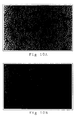
- the cells are adhered to a surface by growth in a suitable growth medium as shown in Figures 9A-D, 10A-D, and 11A-D.
- the growth medium is then removed and replaced with a suitable incubation medium such as BGJ media supplemented with 10% FCS.
- An alternating current field 60 V/cm at 30 kHz is then applied to the cells.
- the cells are washed with PBS or medium and finally replaced with fresh growth medium.
- the incorporation of macromolecules can be carried out in the presence of a very conductive medium. That is, macromolecules can be incorporated into cells in the presence of a highly conductive medium.
- the present invention can also be applied to enhance incorporation of molecules into adherent cells by utilizing both the method and apparatus of the present invention.
- adherent cells For use with adherent cells, there is no need to change the growth medium of the cells to a low conductivity medium. That is, the same medium used for cell growth can be utilized for reaction incorporating the macromolecule.
- the present invention can also be utilized in vivo by application of the molecules to be introduced at the site or area containing the cells which are the target of the introduction. Sites such as skin and internal tissues can be targets either invasively or non-invasively.
- the apparatus of the present invention is a new electrode type comprising a series of small needles 22 which are applied perpendicularly to a base 26 (plan) of a petri dish 24 containing an adherent cell layer (not shown).
- a lower end 28 of each needle 22 touches the base 26 of the dish 24 penetrating the cell monolayer while an upper end 30 of the needle 22 is connected to a pulse generator 32.
- the needles 22 are placed inside parallel tubes 34 and are held in arrangement by a support plate 36.
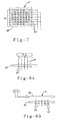
- the needles 22 can move freely within the tubes 34 so as to accommodate any cellular topology. That is, the needle electrodes 22 can move freely in the perpendicular direction to the plane of the cell or tissue layer. If the support plate 36 is thick enough, holes 38, as shown in Figure 5, in the plate 36 can replace the tubes 34.
- the needle electrodes 22 of the present invention can be constructed of any suitable conductive material such as stainless steel, platinum, and other metals or alloys of metals.
- the needle electrode 22 can also be covered with materials such as plastic in order to reduce the conductivity of the electrode or to change the direction of the field which is generated. Additionally, the needle electrodes 22 can be easily changed and discarded allowing for new needle electrodes 22 to be inserted thereby making the apparatus suitable for uses requiring sterility and patient contact.
- the support plate 36 can be constructed of any suitable material, such as a plastic material.
- connection to the pulse generator (P.G.) 32 can be made in two different ways.
- the first alternative, as shown in Figures 4A-B, 6, and 8A, can be where the needles 22 are connected directly to the P.G. 32 by a very thin and properly insulated wires 40 in such a manner as to not to limit the free movement of the needles 22 inside the tube 34 or channel 38 in the main support plate 36.
- the insulation on the wire 40 avoids possible short circuiting of the needles 22.
- the P.G. 32 can be connected to a conductive plate 42 which is divided into single or conductive arrays 46 filled with a conductive gel (not shown).
- a conductive gel can comprise any suitable conductive material such as a mixture of 1M KCl with 2% agarose.
- the conductive array 46 of the conductive plate 42 includes a plate 48 which apertures 52 which contain the conductive gel which acts to connect leads or wires 50 which connect the conductive plate 42 to the power source P.G. 32.
- the apertures 52 placed in the conductive plate 42 also allow for selection or changes in the location of the electrodes 22 in order to obtain a desired electric field.
- the arrangement of the apertures 52 in the conductive plate 42 allows the user to configure the location of the electrodes 22 in order to either achieve a particular electric field among the cells or to configure the electrodes 22 such that the electrode 22 arrangement accommodates a particular space such as the circular conformation of a typical Petri dish 24.
- the apparatus (20) does not require electrode contact with the cells in order to facilitate the incorporation molecules into the cell.
- the apparatus (20) creates electric field which facilitate the uptake of molecules without electrode-cell contact.
- the electrode apparatus 20 can function in the following way; when the plate is pushed down towards the petri dish from a disengaged position (Figure 3A) where the electrodes 22 are elevated above the surface of the cell layer toward an engaged position ( Figure 3B) where the electrodes 22 contact the cell layer and the needles electrodes 22 touch the bottom of the dish 26. Since the needle electrodes 22 are free to move inside the tubes 34, the head 44 of the needle electrode 22 moves upward with relation to the main support plate 36. Thus, when the heads 44 of the needle electrodes 22 move upward, it insures that the lower ends 28 of the needle electrodes 22 come into contact with the bottom 26 of the petri dish 24.
- the upper ends 30 or the needle electrodes 22 come into contact with the conductive gel as they move upward since the conductive plate 42 is closely positioned and parallel to the main support plate 36.
- the apparatus 20 of the present invention can be constructed so as to function with either a direct current (D.C.) source ( Figure 8A) or as with an alternating current (A.C.) source ( Figure 8B).
- D.C. direct current
- A.C. alternating current
- the effect of the present invention can be further effectuated by crosslinking the compounds to hydrophilic compounds (as carriers), such as bovine serum albumin. That is, the molecules can be found to be attached (covalently and noncovalently) to hydrophilic-charged carriers which potentiate the movement of the molecules as the pulses are applied, whereby increasing the efficiency of the system.
- hydrophilic compounds such as bovine serum albumin.
- the cellular effect involving the hydrophilic outer surface of the membrane combined with the effect of the train or series of trains of voltage pulses enable the concentration of the molecules and macromolecules at the cell surface. When the concentrated molecules at the cell surface collide with the cell membrane, the molecules aggregate at and into the hydrophilic portion of the membrane. Intracellular pinocytes are formed leading to increasing vesicle formation intracellularly.
- the molecules have achieved intracellular access.
- the concentrating effect of the present invention results in an efficient concentrated introduction of the molecules into the cells.
- the vesicles formed contain a high concentration of the molecules, thereby creating an effectively efficient introduction of the molecules into the cell.
- the same endpoint, loading or transfection can be achieved by inducing the movement of cells towards non-charged molecules or macromolecules.
- Molecules capable of incorporation by the present invention can be defined over a wide range. That is, the present invention enables an efficient introduction of molecules and macromolecules into living cells in vitro and in vivo. These molecules are within an extremely wide range of molecular weight. The molecules can range from the size of ions and small molecules up to proteins, antibodies, and large enzymes. Moreover, transfection with different DNA vectors may be possible by use of the present inventive method either by itself or in combination with other methods of transfection thereby enhancing the effectiveness of those methods. Other existing methods of incorporation include incorporation of macromolecules based on the use of chemical compounds e.g., DNA transfections based on the use of calcium phosphate precipitation.
- the present invention is based on electric field induced relative movement of charged molecules, charged macromolecules, or charged liposomes toward cells (or the converse) using appropriate electric field parameters which yield an accumulation of the charged entities near the cell membrane.
- the present invention does not use either high voltages, such as electroporation, or frequencies which create summation of voltage pulses in a way where the effective pulse is a summation of several pulses, resulting in equilibrating molecules between the extracellular and intracellular compartments.
- This method differs from electroporation (or the equivalent terms) by the following features:
- the cell suspension or the cells adhered to a surface in the presence of the molecular entity to be incorporated are exposed to an electric field produced by several trains of electrical pulses.
- the amplitude of the voltage in each train or series of trains of pulses is in the amplitude range of 1 V/cm to 250 V/cm.
- the frequency range of the pulses is from 1 Hz to 50 MHz possessing pulse widths of 20 ns to 20 ms in the case of unipolar pulses (D.C.) and 10-100 kHz for bipolar (A.C.) pulses.
- D.C. unipolar pulses
- A.C. bipolar
- the present invention has possible applications in various fields.
- the present invention can be used to load drugs into cells for slow drug release.
- the drugs are the molecules being transferred into the cells via the present invention.
- Other molecules, such as dyes and tracers, can be loaded into cells for imaging-based diagnosis.
- In-situ enzymology loading agents for diagnostics
- Loading of antibodies for therapy or diagnostics can be carried out.
- the present invention can be used for incorporating drugs into specific cell or tissue types, for example loading of drugs into tumor tissue for cancer therapy.
- enzymes can be loaded into cells for specific purposes.
- the present invention can be used as a means of transfection, as well as tissue gene therapy.
- Cells were generally treated at a concentration of 1-4 x 10 6 /ml. Prior to exposure to the electric field, the cells were washed twice with reaction medium. The exposure to the electric field was carried out in reaction medium at a temperature range of 2°C to 38°C. The molecule to be incorporated was also in the reaction medium at a concentration as detailed in the following examples, but generally within the range of 0.5 ⁇ M to 0.1 mM. The molecule is in the medium during exposure to the external electric field. Sometimes it is placed in ice for a short period after exposure to the external electric field. Following exposure, the cells were washed twice with the reaction medium. For long-term experiments, the cells were washed twice, after exposure, with culture medium containing 10% fetal calf serum and then cultured.
- Cell viability following exposure was determined by trypan blue exclusion or propidium iodide uptake. In general, 40 minutes following exposure there was no viability difference between treated and untreated cells based on trypan blue exclusion. Proliferation was determined by 3 H-thymidine incorporation and also by cell counting. Following exposure, the lymphocytes were screened for their ability to continue producing antibodies after being exposed to lipopolysaccharide (LPS). Uptake of molecules was measured by fluorescence microscopy or by a biochemical assay. In general, the electric fields to which the cells were exposed consisted of several trains of pulses. The amplitude of the voltage in each train of pulse is in the amplitude range of 10V/cm to 250V/cm.
- the frequency range of the pulses is from 1Hz to 50 MHz possessing pulse widths of 20 ns to 20 ms.
- the exact field characteristics to be applied depends upon the charge and the molecular weight of the specific molecules to be incorporated and is provided in the examples.
- the choice of the applied electric field also depends upon the medium composition and viscosity.
- the medium of the reaction is composed of 0.3 M mannitol or sucrose and 1mM buffer Hepes -NaOH or Tris-HCl, PH7.0-8.0.
- the conductivity of the final medium is very low ( ⁇ 200 ⁇ MHO), so that the cells are washed three times in this medium before the exposure to the electric fields.
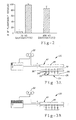
- the cells can be exposed to a 5%-10% glycerol in the medium of the washes. After the reaction the cells are washed three times with the medium used for the culture of this specific line of cells. (RPMI + 1% fetal calf serum, PBS, etc. Cellular System % Cellular Uptake RBC 80%-100% Lymphocytes I 29 80% Cos 5-7 80%-100% Swollen thylakoids vesicles 80% RBC (Ghosts) 80%-100%
- the cells all were fluorescent indicating the uptake of the 70kD-FITC dextran.
- the results for the swollen thylakoid vesicles refers to the population of vesicles which can be easily visualized under the microscope (1-10 ⁇ M). This is due to the fact that the vesicles are extremely heterogeneous in size, and it is difficult to determine an exact number. Also, the thylakoid membrane has an intrinsic red fluorescence, while the dextran was an FITC conjugate. Therefore, to distinguish uptake from binding, the vesicles were osmotically shrunk so that the value/area ratio changed.
- B-Lymphocytes I 29 were successfully treated by the method of the present invention to introduce IgG-FITC into 85% of the cell population. The following parameters were used:
- Example 3 Utilizing the experimental parameters of Example 3, a specific antibody directed against tyrosine kinase and a non-specific antibody as a control were incorporated into the lymphoblasts. DNA synthesis ( 3 H-thymidine uptake) was measured at 48 hour post-incorporation. The synthesis of DNA was 2639 cpm as compared to the controls indicating 2411 cpm.
- lymphocytes with an antibody against tyrosine phosphate resulted in a partial inhibition of antibody secretion from these cells.
- Tyrosine phosphate was chosen in order to check the involvement of tyrosine kinase with regard to the process of antibody production.
- ⁇ -Galactosidase (540 kD) was introduced into Cos5-7 cells.
- the amount of enzyme incorporated into the cells was obtained a calorimetric assay using o -nitrophenyl- ⁇ -d-galactopyranoside as a substrate.
- the activity was calculated by subtracting the background activity (control sample) and dividing by the number of cells.
- the ⁇ -galactosidase was successfully inserted into the cells.
- the parameters used for incorporation were as follows:
- the concentration of the ⁇ -galactosidase was 5 ⁇ g/ml
- the number of molecules of ⁇ -galactosidase per ml was 5.58 x 10 12 given that the volume of the cells was 2.7 x 10 -10 Therefore, the number of molecules recovered was 7.2x10 4 .
Landscapes
- Health & Medical Sciences (AREA)
- Life Sciences & Earth Sciences (AREA)
- Engineering & Computer Science (AREA)
- Genetics & Genomics (AREA)
- Bioinformatics & Cheminformatics (AREA)
- Biomedical Technology (AREA)
- Organic Chemistry (AREA)
- Chemical & Material Sciences (AREA)
- Zoology (AREA)
- Wood Science & Technology (AREA)
- General Health & Medical Sciences (AREA)
- Biotechnology (AREA)
- General Engineering & Computer Science (AREA)
- Radiology & Medical Imaging (AREA)
- Biochemistry (AREA)
- Biophysics (AREA)
- Public Health (AREA)
- Microbiology (AREA)
- Nuclear Medicine, Radiotherapy & Molecular Imaging (AREA)
- Animal Behavior & Ethology (AREA)
- Veterinary Medicine (AREA)
- Physics & Mathematics (AREA)
- Sustainable Development (AREA)
- Electromagnetism (AREA)
- Cell Biology (AREA)
- Molecular Biology (AREA)
- Plant Pathology (AREA)
- Apparatus Associated With Microorganisms And Enzymes (AREA)
- Micro-Organisms Or Cultivation Processes Thereof (AREA)
- Immobilizing And Processing Of Enzymes And Microorganisms (AREA)
Applications Claiming Priority (3)
| Application Number | Priority Date | Filing Date | Title |
|---|---|---|---|
| IL10877594 | 1994-02-25 | ||
| IL10877594A IL108775A (en) | 1994-02-25 | 1994-02-25 | Method for efficient incorporation of molecules into cells |
| EP95911913A EP0750663B1 (fr) | 1994-02-25 | 1995-02-24 | Appareil et procede permettant la penetration efficace de molecules dans des cellules |
Related Parent Applications (1)
| Application Number | Title | Priority Date | Filing Date |
|---|---|---|---|
| EP95911913A Division EP0750663B1 (fr) | 1994-02-25 | 1995-02-24 | Appareil et procede permettant la penetration efficace de molecules dans des cellules |
Publications (2)
| Publication Number | Publication Date |
|---|---|
| EP1496107A2 true EP1496107A2 (fr) | 2005-01-12 |
| EP1496107A3 EP1496107A3 (fr) | 2009-07-29 |
Family
ID=11065856
Family Applications (2)
| Application Number | Title | Priority Date | Filing Date |
|---|---|---|---|
| EP95911913A Expired - Lifetime EP0750663B1 (fr) | 1994-02-25 | 1995-02-24 | Appareil et procede permettant la penetration efficace de molecules dans des cellules |
| EP04077485A Withdrawn EP1496107A3 (fr) | 1994-02-25 | 1995-02-24 | Appareil et procédé pour l'incorporation efficace de molécules dans des cellules |
Family Applications Before (1)
| Application Number | Title | Priority Date | Filing Date |
|---|---|---|---|
| EP95911913A Expired - Lifetime EP0750663B1 (fr) | 1994-02-25 | 1995-02-24 | Appareil et procede permettant la penetration efficace de molecules dans des cellules |
Country Status (6)
| Country | Link |
|---|---|
| US (1) | US5964726A (fr) |
| EP (2) | EP0750663B1 (fr) |
| AU (1) | AU1930795A (fr) |
| DE (1) | DE69533474T2 (fr) |
| IL (1) | IL108775A (fr) |
| WO (1) | WO1995023211A1 (fr) |
Cited By (1)
| Publication number | Priority date | Publication date | Assignee | Title |
|---|---|---|---|---|
| WO2010085876A1 (fr) * | 2009-01-27 | 2010-08-05 | Labbell Inc. | Thylacoïdes et leurs dérivés fonctionnels, et leurs utilisations |
Families Citing this family (88)
| Publication number | Priority date | Publication date | Assignee | Title |
|---|---|---|---|---|
| US6041252A (en) * | 1995-06-07 | 2000-03-21 | Ichor Medical Systems Inc. | Drug delivery system and method |
| US20020028215A1 (en) | 1999-08-09 | 2002-03-07 | Jagath L. Kadurugamuwa | Novel vaccines and pharmaceutical compositions using membrane vesicles of microorganisms, and methods for preparing same |
| DE19535082A1 (de) | 1995-09-21 | 1997-03-27 | Henkel Ecolab Gmbh & Co Ohg | Pastenförmiges Wasch- und Reinigungsmittel |
| US5869326A (en) * | 1996-09-09 | 1999-02-09 | Genetronics, Inc. | Electroporation employing user-configured pulsing scheme |
| US6261281B1 (en) | 1997-04-03 | 2001-07-17 | Electrofect As | Method for genetic immunization and introduction of molecules into skeletal muscle and immune cells |
| CA2285056C (fr) * | 1997-04-03 | 2004-12-14 | Iacob Mathiesen | Methode pour l'introduction de substances pharmaceutiques et d'acides nucleiques dans le muscle squelettique |
| US5873849A (en) * | 1997-04-24 | 1999-02-23 | Ichor Medical Systems, Inc. | Electrodes and electrode arrays for generating electroporation inducing electrical fields |
| IL133708A0 (en) | 1997-06-30 | 2001-04-30 | Rhone Poulence Rorer S A | Improved method for transferring nucleic acid into multicelled eukaryotic organism cells and combination thereof |
| AU8444798A (en) | 1997-06-30 | 1999-01-25 | Centre National De La Recherche Scientifique | Improved method for transferring nucleic acid into the striped muscle and combination therefor |
| US6216034B1 (en) | 1997-08-01 | 2001-04-10 | Genetronics, Inc. | Method of programming an array of needle electrodes for electroporation therapy of tissue |
| US6241701B1 (en) | 1997-08-01 | 2001-06-05 | Genetronics, Inc. | Apparatus for electroporation mediated delivery of drugs and genes |
| US6055453A (en) | 1997-08-01 | 2000-04-25 | Genetronics, Inc. | Apparatus for addressing needle array electrodes for electroporation therapy |
| US7456012B2 (en) | 1997-11-06 | 2008-11-25 | Cellectricon Ab | Method and apparatus for spatially confined electroporation |
| US6778853B1 (en) | 1997-12-17 | 2004-08-17 | University Of South Florida | Electroporation device |
| US6135990A (en) * | 1997-12-17 | 2000-10-24 | University Of South Florida | Electroporation device and method |
| EP1067378A4 (fr) * | 1998-03-12 | 2006-05-03 | Toudai Tlo Ltd | Appareil servant a mesurer automatiquement le potentiel d'une membrane minuscule |
| EP1063287A4 (fr) * | 1998-03-12 | 2006-12-06 | Toudai Tlo Ltd | Procedes permettant de percer une cellule en un site specifique |
| US6757560B1 (en) * | 1999-04-09 | 2004-06-29 | Novosis Pharma Ag | Transdermal delivery system (TDS) with electrode network |
| EP0962524B1 (fr) * | 1998-05-27 | 2004-11-03 | Micronas GmbH | Appareil et procédé pour la manipulation intracellulaire d'une cellule biologique |
| DE19841337C1 (de) | 1998-05-27 | 1999-09-23 | Micronas Intermetall Gmbh | Verfahren und Vorrichtung zur intrazellulären Manipulation einer biologischen Zelle |
| EP1100576B1 (fr) * | 1998-06-26 | 2007-08-15 | Genetronics, Inc. | Synergism (des effects) de la photodynamique et de l'electropermeation sur la vitalité cellulaire comme nouvel agent cytotoxique |
| US7922709B2 (en) | 1998-07-13 | 2011-04-12 | Genetronics, Inc. | Enhanced delivery of naked DNA to skin by non-invasive in vivo electroporation |
| US6697669B2 (en) | 1998-07-13 | 2004-02-24 | Genetronics, Inc. | Skin and muscle-targeted gene therapy by pulsed electrical field |
| US6678556B1 (en) * | 1998-07-13 | 2004-01-13 | Genetronics, Inc. | Electrical field therapy with reduced histopathological change in muscle |
| JP2002520101A (ja) | 1998-07-13 | 2002-07-09 | ジェネトロニクス、インコーポレーテッド | 電気的に補助される化粧用薬剤の局部送達法および装置 |
| US6611706B2 (en) | 1998-11-09 | 2003-08-26 | Transpharma Ltd. | Monopolar and bipolar current application for transdermal drug delivery and analyte extraction |
| US6148232A (en) | 1998-11-09 | 2000-11-14 | Elecsys Ltd. | Transdermal drug delivery and analyte extraction |
| US6708060B1 (en) | 1998-11-09 | 2004-03-16 | Transpharma Ltd. | Handheld apparatus and method for transdermal drug delivery and analyte extraction |
| US6597946B2 (en) * | 1998-11-09 | 2003-07-22 | Transpharma Ltd. | Electronic card for transdermal drug delivery and analyte extraction |
| WO2000034434A1 (fr) * | 1998-12-07 | 2000-06-15 | Acacia Biosciences, Inc. | Reseaux d'electrodes multicanaux |
| DE19857687A1 (de) | 1998-12-15 | 2000-06-21 | Henkel Ecolab Gmbh & Co Ohg | Pastenförmiges Waschmittel |
| US6713291B2 (en) * | 1999-01-28 | 2004-03-30 | Alan D. King | Electrodes coated with treating agent and uses thereof |
| EP1163024B1 (fr) | 1999-01-28 | 2003-12-17 | Cyto Pulse Sciences, Inc. | Administration de macromolecules dans des cellules |
| US6678558B1 (en) * | 1999-03-25 | 2004-01-13 | Genetronics, Inc. | Method and apparatus for reducing electroporation-mediated muscle reaction and pain response |
| US6514762B1 (en) | 1999-04-23 | 2003-02-04 | New Mexico State University Technology Transfer Corporation | Delivery of nucleotides by electrochemical release |
| US6326177B1 (en) | 1999-08-04 | 2001-12-04 | Eastern Virginia Medical School Of The Medical College Of Hampton Roads | Method and apparatus for intracellular electro-manipulation |
| US7113821B1 (en) | 1999-08-25 | 2006-09-26 | Johnson & Johnson Consumer Companies, Inc. | Tissue electroperforation for enhanced drug delivery |
| US7133717B2 (en) * | 1999-08-25 | 2006-11-07 | Johnson & Johnson Consumer Companies, Inc. | Tissue electroperforation for enhanced drug delivery and diagnostic sampling |
| EP1237620B1 (fr) * | 1999-12-15 | 2004-11-24 | University of South Florida | Dispositif d'electroporation |
| US7136699B2 (en) * | 2002-10-02 | 2006-11-14 | Standen, Ltd. | Apparatus for destroying dividing cells |
| US7016725B2 (en) * | 2001-11-06 | 2006-03-21 | Standen Ltd. | Method and apparatus for destroying dividing cells |
| US8447395B2 (en) * | 2000-02-17 | 2013-05-21 | Novocure Ltd | Treating bacteria with electric fields |
| US8175698B2 (en) | 2000-02-17 | 2012-05-08 | Novocure Ltd. | Treating bacteria with electric fields |
| CN1416466A (zh) | 2000-02-17 | 2003-05-07 | 约朗姆·帕尔蒂 | 破坏正在分裂的细胞的方法和装置 |
| US7599746B2 (en) | 2000-02-17 | 2009-10-06 | Standen Ltd | Apparatus and method for preventing the spread of cancerous metastases and for elimination of metastases |
| US7805201B2 (en) * | 2000-02-17 | 2010-09-28 | Standen Ltd. | Treating a tumor or the like with an electric field |
| US7089054B2 (en) * | 2002-10-02 | 2006-08-08 | Standen Ltd. | Apparatus and method for treating a tumor or the like |
| US6868289B2 (en) * | 2002-10-02 | 2005-03-15 | Standen Ltd. | Apparatus for treating a tumor or the like and articles incorporating the apparatus for treatment of the tumor |
| US6645757B1 (en) | 2001-02-08 | 2003-11-11 | Sandia Corporation | Apparatus and method for transforming living cells |
| US20020198567A1 (en) * | 2001-06-07 | 2002-12-26 | Yona Keisari | Electro-endocytotic therapy as a treatment modality of cancer |
| US20040204669A1 (en) * | 2001-07-05 | 2004-10-14 | Hofmann Gunter A. | Apparatus for electroporation mediated delivery for drugs and genes |
| KR20030012995A (ko) * | 2001-08-06 | 2003-02-14 | 주식회사 토이랩 | Dc 전원을 사용한 전기천공기 |
| CA2468424A1 (fr) | 2001-11-27 | 2003-06-05 | Cecilia Farre | Procede d'administration parallele combinee d'agents et d'electroporation pour structures cellulaires et utilisation associee |
| US20030170898A1 (en) * | 2001-12-04 | 2003-09-11 | Gundersen Martin A. | Method for intracellular modifications within living cells using pulsed electric fields |
| AU2003226605A1 (en) * | 2002-04-19 | 2003-11-03 | Transpharma Medical Ltd. | Handheld transdermal drug delivery and analyte extraction |
| WO2004031353A2 (fr) * | 2002-09-30 | 2004-04-15 | Maxcyte, Inc. | Appareil et procede d'electroporation non statique |
| US7785623B2 (en) * | 2002-10-01 | 2010-08-31 | Keller Brian C | Compositions and methods useful for the reduction of fine lines and wrinkles |
| WO2004036202A1 (fr) | 2002-10-16 | 2004-04-29 | Cellectricon Ab | Electrodes nanometriques et pointes nanometriques pour l'enregistrement de courants transmembranaires dans plusieurs cellules |
| US20050058701A1 (en) * | 2003-01-29 | 2005-03-17 | Yossi Gross | Active drug delivery in the gastrointestinal tract |
| CN1774239A (zh) * | 2003-01-29 | 2006-05-17 | 埃-皮尔制药公司 | 用于胃肠道的有效药物递送 |
| US20040267240A1 (en) * | 2003-01-29 | 2004-12-30 | Yossi Gross | Active drug delivery in the gastrointestinal tract |
| AU2011244905B2 (en) * | 2004-03-15 | 2015-01-22 | Lonza Cologne Gmbh | Container and device for generating electric fields in different chambers |
| DE502004009820D1 (de) * | 2004-03-15 | 2009-09-10 | Lonza Cologne Ag | Behältnis und Vorrichtung zur Erzeugung von elektrischen Feldern in einzelnen Reaktionsräumen |
| WO2005096979A1 (fr) | 2004-04-01 | 2005-10-20 | The General Hospital Corporation | Procede et appareil de traitement dermatologique et remodelage de tissus |
| US20060003308A1 (en) * | 2004-05-12 | 2006-01-05 | Bio-Rad Laboratories, Inc. | Electrocompetent cells prepackaged for electroporation |
| DE602005020504D1 (de) * | 2004-12-07 | 2010-05-20 | Standen Ltd | Vivo über einen längeren zeitraum |
| WO2006064502A2 (fr) * | 2004-12-14 | 2006-06-22 | E-Pill Pharma, Ltd. | Administration locale de médicaments ou de substances mettant en jeu une augmentation de la perméabilité d'origine électronique |
| CA2594231C (fr) * | 2004-12-27 | 2016-04-19 | Standen Ltd. | Traitement d'une tumeur ou autre trouble semblable a l'aide de champs electriques sur differentes orientations |
| US8101169B2 (en) * | 2005-02-23 | 2012-01-24 | The Board Of Trustees Of The Leland Stanford Junior University | Ocular gene therapy using avalanche-mediated transfection |
| US7923251B2 (en) * | 2005-02-23 | 2011-04-12 | The Board Of Trustees Of The Leland Stanford Junior University | Method and apparatus for avalanche-mediated transfer of agents into cells |
| JP2008540023A (ja) * | 2005-05-19 | 2008-11-20 | イー−ピル ファーマ リミティド | 組織における一酸化窒素生成のための摂取可能デバイス |
| CN101321555B (zh) * | 2005-10-03 | 2020-12-08 | 诺沃库勒有限责任公司 | 优化电场特征以增加电场在增殖细胞上的效果 |
| US8019414B2 (en) | 2006-04-05 | 2011-09-13 | Novocure Ltd. | Treating cancer using electromagnetic fields in combination with other treatment regimens |
| DK2167194T3 (en) | 2007-03-06 | 2017-06-19 | Novocure Ltd | TREATMENT OF CANCER USING ELECTROMAGNETIC FIELDS IN COMBINATION WITH PHOTODYNAMIC THERAPY |
| EP2183024B1 (fr) * | 2007-08-14 | 2019-05-15 | Novocure Ltd. | Traitement de parasites par des champs électriques |
| KR101642523B1 (ko) * | 2008-01-17 | 2016-07-25 | 제네트로닉스, 인코포레이티드 | 가변성 전류 밀도 단일 바늘 전기 천공 시스템 |
| US20090269851A1 (en) * | 2008-04-24 | 2009-10-29 | Bio-Rad Laboratories, Inc. A Corporation Of The State Of Delaware | Use of disk surface for electroporation of adherent cells |
| JP2011520448A (ja) * | 2008-05-13 | 2011-07-21 | バイオ−ラッド ラボラトリーズ,インコーポレイティド | 密集した電極のアレイでの付着細胞の電気穿孔法 |
| US8606366B2 (en) | 2009-02-18 | 2013-12-10 | Syneron Medical Ltd. | Skin treatment apparatus for personal use and method for using same |
| US8414559B2 (en) | 2009-05-07 | 2013-04-09 | Rainbow Medical Ltd. | Gastroretentive duodenal pill |
| US20100286587A1 (en) * | 2009-05-07 | 2010-11-11 | Yossi Gross | Sublingual electrical drug delivery |
| US8207138B2 (en) * | 2009-05-19 | 2012-06-26 | Medtronic, Inc. | Methods and devices for improved efficiency of RNA delivery to cells |
| US20130004581A1 (en) * | 2010-03-19 | 2013-01-03 | Ramot At Tel-Aviv University Ltd. | Controlling uptake by cells |
| WO2012033984A1 (fr) * | 2010-09-09 | 2012-03-15 | Old Dominion University Research Foundation | Système de distribution d'impulsions électriques multi-électrode pour le traitement de tissus biologiques |
| GB2520903A (en) | 2012-10-16 | 2015-06-03 | Gene Bridges Gmbh | Electrocompetent cells and preparation thereof |
| EP3126037B1 (fr) * | 2014-04-04 | 2020-11-18 | Massachusetts Institute Of Technology | Transport actif de molécules chargées dans des matrices chargées, à l'intérieur de celles-ci et/ou à partir de celles-ci |
| US12178496B2 (en) | 2018-10-10 | 2024-12-31 | Pulse Biosciences, Inc. | Treatment of dermal glands by the application of non-thermal energy |
| TWI757205B (zh) * | 2020-06-30 | 2022-03-01 | 財團法人工業技術研究院 | 微針電轉染裝置 |
Family Cites Families (21)
| Publication number | Priority date | Publication date | Assignee | Title |
|---|---|---|---|---|
| US4476004A (en) * | 1983-04-08 | 1984-10-09 | D.E.P. Systems, Inc. | Apparatus for electrofusion of biological particles |
| US4441972A (en) * | 1983-04-08 | 1984-04-10 | D.E.P. Systems, Inc. | Apparatus for electrofusion of biological particles |
| US4578168A (en) * | 1984-07-27 | 1986-03-25 | Biotronics | Apparatus for fusing live cells with electric fields |
| US4663292A (en) * | 1984-12-21 | 1987-05-05 | Wong Daniel T | High-voltage biological macromolecule transfer and cell fusion system |
| JPS6222587A (ja) * | 1985-07-19 | 1987-01-30 | Hitachi Ltd | 細胞融合装置 |
| KR890003947B1 (ko) * | 1985-12-11 | 1989-10-13 | 가부시기가이샤 시마즈세이사구쇼 | 세포융합장치 |
| US5371003A (en) * | 1987-05-05 | 1994-12-06 | Sandoz Ltd. | Electrotransformation process |
| US5128257A (en) * | 1987-08-31 | 1992-07-07 | Baer Bradford W | Electroporation apparatus and process |
| US4970154A (en) * | 1987-10-09 | 1990-11-13 | Baylor College Of Medicine | Method for inserting foreign genes into cells using pulsed radiofrequency |
| US4822470A (en) * | 1987-10-09 | 1989-04-18 | Baylor College Of Medicine | Method of and apparatus for cell poration and cell fusion using radiofrequency electrical pulses |
| DE68925030T2 (de) * | 1988-01-21 | 1996-07-25 | Massachusetts Inst Technology | Molekültransport durch gewebe mit der verwendung von elektroporation. |
| US5389069A (en) * | 1988-01-21 | 1995-02-14 | Massachusetts Institute Of Technology | Method and apparatus for in vivo electroporation of remote cells and tissue |
| DE3838170A1 (de) * | 1988-11-10 | 1990-05-17 | Linde Ag | Verfahren und vorrichtung zur elektrobiologischen umsetzung von stoffen |
| US5124259A (en) * | 1989-08-23 | 1992-06-23 | Mitsui Toatsu Chemicals, Inc. | Method for electroporation |
| GB9002092D0 (en) * | 1990-01-30 | 1990-03-28 | P & B Sciences Ltd | Manipulation of solid,semi-solid or liquid materials |
| BE1004328A3 (fr) * | 1990-05-16 | 1992-11-03 | Scient Equipment Design & Dev | Procede et dispositif de permeabilisation de cellules vivantes. |
| US5134070A (en) * | 1990-06-04 | 1992-07-28 | Casnig Dael R | Method and device for cell cultivation on electrodes |
| JP3099049B2 (ja) * | 1992-07-29 | 2000-10-16 | 農林水産省果樹試験場長 | 電気的細胞融合及び電気的核酸導入のための大量処理用電極 |
| FR2703253B1 (fr) * | 1993-03-30 | 1995-06-23 | Centre Nat Rech Scient | Applicateur d'impulsions electriques pour traitement de tissus biologiques. |
| US5439440A (en) * | 1993-04-01 | 1995-08-08 | Genetronics, Inc. | Electroporation system with voltage control feedback for clinical applications |
| US5702359A (en) * | 1995-06-06 | 1997-12-30 | Genetronics, Inc. | Needle electrodes for mediated delivery of drugs and genes |
-
1994
- 1994-02-25 IL IL10877594A patent/IL108775A/xx not_active IP Right Cessation
-
1995
- 1995-02-24 EP EP95911913A patent/EP0750663B1/fr not_active Expired - Lifetime
- 1995-02-24 AU AU19307/95A patent/AU1930795A/en not_active Abandoned
- 1995-02-24 DE DE69533474T patent/DE69533474T2/de not_active Expired - Fee Related
- 1995-02-24 EP EP04077485A patent/EP1496107A3/fr not_active Withdrawn
- 1995-02-24 WO PCT/US1995/002309 patent/WO1995023211A1/fr not_active Ceased
-
1997
- 1997-04-16 US US08/834,340 patent/US5964726A/en not_active Expired - Lifetime
Cited By (1)
| Publication number | Priority date | Publication date | Assignee | Title |
|---|---|---|---|---|
| WO2010085876A1 (fr) * | 2009-01-27 | 2010-08-05 | Labbell Inc. | Thylacoïdes et leurs dérivés fonctionnels, et leurs utilisations |
Also Published As
| Publication number | Publication date |
|---|---|
| EP0750663B1 (fr) | 2004-09-08 |
| EP1496107A3 (fr) | 2009-07-29 |
| DE69533474T2 (de) | 2005-11-17 |
| DE69533474D1 (de) | 2004-10-14 |
| EP0750663A4 (fr) | 1999-07-21 |
| AU1930795A (en) | 1995-09-11 |
| US5964726A (en) | 1999-10-12 |
| IL108775A (en) | 2003-09-17 |
| IL108775A0 (en) | 1994-05-30 |
| EP0750663A1 (fr) | 1997-01-02 |
| WO1995023211A1 (fr) | 1995-08-31 |
Similar Documents
| Publication | Publication Date | Title |
|---|---|---|
| US5964726A (en) | Apparatus and method for efficient incorporation of molecules into cells | |
| US20020198567A1 (en) | Electro-endocytotic therapy as a treatment modality of cancer | |
| Tsong | Electroporation of cell membranes | |
| US7109034B2 (en) | Method for electro-permeabilization of individual cellular and organellar structures and use thereof | |
| Venslauskas et al. | Mechanisms of transfer of bioactive molecules through the cell membrane by electroporation | |
| Escoffre et al. | What is (still not) known of the mechanism by which electroporation mediates gene transfer and expression in cells and tissues | |
| EP1648555B1 (fr) | Méthode pour introduire un agent dans une cellule | |
| Weaver | Electroporation of biological membranes from multicellular to nano scales | |
| Jaroszeski et al. | In vivo gene delivery by electroporation | |
| Rols | Electropermeabilization, a physical method for the delivery of therapeutic molecules into cells | |
| Golzio et al. | In vitro and in vivo electric field-mediated permeabilization, gene transfer, and expression | |
| Zimmermann et al. | The effect of high intensity electric field pulses on eukaryotic cell membranes: fundamentals and applications | |
| US20080114281A1 (en) | Transdermal Delivery System for Polynucleotides | |
| Teissié et al. | Time dependence of electric field effects on cell membranes. A review for a critical selection of pulse duration for therapeutical applications | |
| Tien et al. | The bilayer lipid membrane (BLM) under electrical fields | |
| JP2012010708A (ja) | 細胞状膜を有する少なくとも2種の融合相手の選択的電気融合方法 | |
| EP0386086A1 (fr) | Procede et appareil de permeabilisation cellulaire et de fusion cellulaire utilisant des impulsions electriques h.f. | |
| Tsong | Electrically stimulated membrane breakdown | |
| Jaroszeski et al. | Delivery of genes in vivo using pulsed electric fields | |
| Hui | The application of electroporation to transfect hematopoietic cells and to deliver drugs and vaccines transcutaneously for cancer treatment | |
| Escoffre et al. | Effect of electric field intensity on plasmid DNA/membrane interaction during in-vitro gene electrotransfer | |
| Bone | ELECTRIC AND MAGNETIC FIELDS FOR BONE AND SOFT TISSUE | |
| Sandberg | Electroporation of Single Cells and Tissues with an Electrolyte-filled Capillary | |
| Agarwal | EMPIRICAL ANALYSIS OF SINGLE-CELL ELECTROPORATION WITH AN ELECTROLYTE-FILLED CAPILLARY |
Legal Events
| Date | Code | Title | Description |
|---|---|---|---|
| PUAI | Public reference made under article 153(3) epc to a published international application that has entered the european phase |
Free format text: ORIGINAL CODE: 0009012 |
|
| AC | Divisional application: reference to earlier application |
Ref document number: 0750663 Country of ref document: EP Kind code of ref document: P |
|
| AK | Designated contracting states |
Kind code of ref document: A2 Designated state(s): DE ES FR GB IT |
|
| RIN1 | Information on inventor provided before grant (corrected) |
Inventor name: KORENSTEIN, RAFI Inventor name: ROSENBERG, YOSSEF Inventor name: ZAN-BAR, ISRAEL |
|
| PUAL | Search report despatched |
Free format text: ORIGINAL CODE: 0009013 |
|
| AK | Designated contracting states |
Kind code of ref document: A3 Designated state(s): DE ES FR GB IT |
|
| RIC1 | Information provided on ipc code assigned before grant |
Ipc: C12N 15/87 20060101AFI20090623BHEP Ipc: C12N 13/00 20060101ALI20090623BHEP Ipc: C12M 3/00 20060101ALI20090623BHEP Ipc: C12M 1/42 20060101ALI20090623BHEP Ipc: A61N 1/32 20060101ALI20090623BHEP |
|
| STAA | Information on the status of an ep patent application or granted ep patent |
Free format text: STATUS: THE APPLICATION IS DEEMED TO BE WITHDRAWN |
|
| 18D | Application deemed to be withdrawn |
Effective date: 20090901 |