EP1496679A2 - Endgerät eines Telefonfestnetzes mit Verbindungsmöglichkeit eines zusätzlichen Endgerätes - Google Patents
Endgerät eines Telefonfestnetzes mit Verbindungsmöglichkeit eines zusätzlichen Endgerätes Download PDFInfo
- Publication number
- EP1496679A2 EP1496679A2 EP04102547A EP04102547A EP1496679A2 EP 1496679 A2 EP1496679 A2 EP 1496679A2 EP 04102547 A EP04102547 A EP 04102547A EP 04102547 A EP04102547 A EP 04102547A EP 1496679 A2 EP1496679 A2 EP 1496679A2
- Authority
- EP
- European Patent Office
- Prior art keywords
- telephone network
- terminal
- external terminal
- main terminal
- loop voltage
- Prior art date
- Legal status (The legal status is an assumption and is not a legal conclusion. Google has not performed a legal analysis and makes no representation as to the accuracy of the status listed.)
- Granted
Links
Images




Classifications
-
- H—ELECTRICITY
- H04—ELECTRIC COMMUNICATION TECHNIQUE
- H04M—TELEPHONIC COMMUNICATION
- H04M1/00—Substation equipment, e.g. for use by subscribers
- H04M1/738—Interface circuits for coupling substations to external telephone lines
- H04M1/74—Interface circuits for coupling substations to external telephone lines with means for reducing interference; with means for reducing effects due to line faults
-
- H—ELECTRICITY
- H04—ELECTRIC COMMUNICATION TECHNIQUE
- H04M—TELEPHONIC COMMUNICATION
- H04M1/00—Substation equipment, e.g. for use by subscribers
- H04M1/738—Interface circuits for coupling substations to external telephone lines
-
- H—ELECTRICITY
- H04—ELECTRIC COMMUNICATION TECHNIQUE
- H04M—TELEPHONIC COMMUNICATION
- H04M19/00—Current supply arrangements for telephone systems
- H04M19/08—Current supply arrangements for telephone systems with current supply sources at the substations
Definitions
- the present invention relates to a terminal equipment for a telephone network comprising first connection means for connecting to a telephone network, second connection means for connecting to an auxiliary terminal equipment such that the auxiliary equipment can be connected to a telephone network via the first connection means and switching means for selectively operatively connecting the second connection means to the first connection means.
- a main terminal generally includes a first direct current (DC current) supply unit (not shown) which communicates with an exchange (not shown) included in a telephone network (not shown).
- a first DC current signal is generated by the first DC current supply unit to obtain a first loop voltage.
- An external terminal includes a second DC current supply unit (not shown) which communicates with the exchange, included in the telephone network, via the main terminal.
- a second DC current signal is generated by the second DC current supply unit to obtain a second loop voltage.
- the first and second DC current supply units have independent structures.
- the external terminal in connection with the telephone network, generates a specific signal, the external terminal is disconnected from the telephone network and the main terminal is connected to the telephone network.
- a transient (or a pulse) may be generated because the level of the second DC current signal, generated when the external terminal is in connection with the telephone network, is different from that of the first DC current signal generated when the main terminal is in connection with the telephone network. In other words, when there is a change from the second loop voltage to the first loop voltage, a transient may be generated.
- FIGS 1A and 1B are waveform diagrams illustrating transients that may be generated by a conventional main terminal.
- a loop voltage as shown in section “A” of Figure 1A or Figure 1B
- a loop voltage is generated by a second DC current signal generated by a second DC current signal supply unit.
- a loop voltage is made by a first DC current signal generated by a first DC current signal supply unit. If the first DC current signal is lower than the second DC current signal, a transient “9" may be generated when the state of connection with the telephone network is changed. That is, when the section “B” of Figure 1A changes to the section "C”. If the second DC current signal is less than the first DC current signal, a transient "9" may be generated when the state of connection with the telephone network is changed. That is, when the section "B" of Figure 1B changes to the section "C”.
- the conventional main terminal can generate a transient when the connection of the telephone network with the external terminal is switched to the connection with the main terminal.
- the exchange may malfunction by recognizing the transient, generated by the main terminal, as a valid redial signal. Hence, the conventional main terminal may cause the exchanger to malfunction.
- a terminal equipment is characterised by means for maintaining the loop voltage at the first connection means in the event of operation of the switching means to disconnect the second connection means from the first connection means.
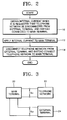
- a main terminal operating method includes operations 10 and 12, in which an internal current is obtained and applied to a main terminal, and operation 14 of switching a telephone network.
- FIG. 3 there is a main terminal 20, a telephone network 22, and an external terminal 24.
- the main terminal 20 of Figure 3 is a facsimile or a personal computer which can transmit/receive image data via the telephone network 22.
- the external terminal 24 is a telephone or an automatic answering machine.
- the telephone network 22 may be a key phone or a public switched telephone network (PSTN) and may include an exchange (not shown).
- PSTN public switched telephone network
- the main terminal 20 of Figure 3 is connected to the telephone network 22 to perform communication and connects or disconnects the external terminal 24 to the telephone network 22.
- V LA loop voltage
- an exampe 10A of operation 10 includes operations 30 through 34 of reading and storing a loop voltage and operations 36 through 38 of obtaining an internal current from the loop voltage if switching of the connection of the telephone network 22 is requested.
- operation 34 it is determined whether the use of the external terminal 24 has been concluded, in operation 36. For example, it is determined, in operation 36, whether the external terminal 24 is "on hook". If it is determined, in operation 36, that the use of the external terminal 24 has been concluded, the main terminal operating method of Figure 2 is concluded. On the other hand, if it is determined, in operation 36, that the use of the external terminal 24 has not been concluded, another determination is made as to whether it is requested that the telephone network 22 be disconnected from the external terminal 24 and instead be connected to the main terminal 20, in operation 38. If it is determined, in operation 38, that it is not requested that the telephone network 22 be disconnected from the external terminal 24 and instead be connected to the main terminal 20, the method goes back to operation 36.
- operation 10A may not include operation 36.
- operation 34 is followed by operation 38 in which it is determined whether it is requested that the telephone network 22 be disconnected from the external terminal 24 and instead be connected to the main terminal 20. If it is determined, in operation 38, that it is not requested that the telephone network 22 be disconnected from the external terminal 24 and instead connected to the main terminal 20, the determination of operation 38 is re-performed.
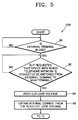
- Operation 10B includes operations 60 through 64, in which a loop voltage is read out when switching of a connection state of the telephone network 22 is requested and operation 66 of obtaining an internal current from the loop voltage.
- operation 60 it is determined whether the external terminal 24 is in use. For example, in operation 30 or 60, it is determined whether the external terminal 24 is off the hook. That is, when the external terminal 24 is in use, it is "off hook".
- operation 60 If it is determined, in operation 60, that the external terminal 24 is not in use, the determination of operation 60 is re-executed. On the other hand, if it is determined, in operation 60, that the external terminal 24 is in use, another determination is made as to whether it is requested that the device, with which the telephone network 22 be connected, be switched from the external terminal 24 to the main terminal 20, in operation 62. If it is determined, in operation 62, that it is not requested that the device, with which the telephone network 22 is connected, be switched from the external terminal 24 to the main terminal 20, the determination of operation 62 is re-executed.
- the telephone network 22 is disconnected from the external terminal 24 and instead is connected to the main terminal 20, in operation 14.
- the main terminal 20 includes a signal checking unit 80, an internal current production unit 82, a connection switching unit 84 and a controller 86.
- the main terminal 20 of Figure 6 can operate according to the method of Figure 2.
- the signal checking unit 80 and the internal current production unit 82 perform operation 10 of Figure 2.
- the signal checking unit 80 checks whether a switching request signal, requesting that the telephone network 22 be disconnected from the external terminal 24 and instead be connected to the main terminal 20, is generated.
- the signal checking unit 80 outputs the result of the checking as a first control signal C1 to the internal current production unit 82.
- the switching request signal is generated by the external terminal 24 and applied to the signal checking unit 80 via an input port IN1.
- the switching request signal may be an agreed dual tone multifrequency (DTMF) code.
- DTMF agreed dual tone multifrequency
- the internal current production unit 82 directs the produced internal current into the main terminal 20 via an output port OUT1.
- FIG. 7 another embodiment 82A of the internal current production unit 82, shown in Figure 6, includes a first terminal checker 90, a first voltage detector 92, a storage unit 94 and a first current controller 96.
- the internal current production unit 82A performs operations 30 through 36 and 40 of Figure 4 and operation 12 of Figure 2.
- the first terminal checker 90 checks whether the external terminal 24 is in use and outputs the result of the checking, as a second control signal C2, to the first voltage detector 92 and the signal checking unit 80. Accordingly, to perform operation 38, the signal checking unit 80 checks for the generation or non-generation of the switching request signal, in response to the second control signal C2, received from the first terminal checker 90. If it is recognized from the second control signal C2 that the use of the external terminal 24 is not concluded, the signal checking unit 80 checks for the generation or non-generation of the switching request signal.
- the first current controller 96 obtains the internal current.
- the first current controller 96 directs the produced internal current into the main terminal 20 via an output port OUT2.
- an internal current production unit 82B which is yet another embodiment of the internal current production unit 82 shown in Figure 6, includes a second terminal checker 110, a second voltage detector 112 and a second current controller 114.
- the internal current production unit 82B performs operations 60, 64 and 66 of Figure 5 and operation 12 of Figure 2.
- the second terminal checker 110 checks whether the external terminal 24 is in use and outputs the result of the checking as a third control signal C3 to the signal checking unit 80. If it is recognized from the third control signal C3 that the external terminal 24 is in use, the signal checking unit 80 checks for the generation or non-generation of the switching request signal to perform operation62.
- the second current controller 114 directs the internal current into the main terminal 20 via an output terminal OUT3.
- the connection switching unit 84 of Figure 6 disconnects the telephone network 22 from the external terminal 24 and instead connects the telephone network 22 to the main terminal 20.
- the connection switching unit 84 is connected to the external terminal 24 via a first node N1 and also connected to the telephone network 22 via a second node N2. Alternatively, the first node N1 may be connected to the external terminal 24 via the signal checking unit 80.
- the main terminal of Figure 6 may include a controller 86.
- the controller 86 checks whether the loop voltage, generated when the external terminal 24 is in connection with the telephone network 22, is kept constant, even when the telephone network 22 is disconnected from the external terminal 24 and instead connected to the main terminal 20, by the internal current flowing in the main terminal 20.
- the controller 86 generates the selection signal S in response to the result of the checking and outputs the selection signal S to the connection switching unit 84.
- the main terminal of the Figure 6 does not need the controller 86 to generate the selection signal S.
- the selection signal S may be generated by the first or second current controller 96, 114.
- the first or second current controller 96, 114 generates the selection signal S when an internal current is introduced into the main terminal 20.
- another main terminal 120 cooperates with a telephone network 122 and an external terminal 124.
- the external terminal 124 of Figure 9 includes a switch 150 and a direct current (DC) supply unit 152.
- the DC current supply unit 152 supplies a DC current signal to an exchange (not shown), included in the telephone network 122, so that the external terminal 124 itself can be recognized by the exchange.
- the switch 150 selectively transmits the DC current signal received from the DC current supply unit 152 to a second module jack 140 of the main terminal 120.
- the main terminal 120 of Figure 9 includes a transistor 130, a resistor R, a diode bridge 132, a switch 134, a signal checking unit 136, and first and second module jacks 138, 140.
- the signal checking unit 136 plays the role of the signal checking unit 80 of Figure 6.
- the signal checking unit 136 checks whether a switching request signal has been received from the external terminal 124 via the second module jack 140 and generates a first control signal C1 in response to the result of the checking.
- the signal checking unit 136 connects the second module jack 140 with the switch 134.
- the switch 134 plays the role of the connection switching unit 84 of Figure 6.
- the switch 134 disconnects the telephone network 122 from the external terminal 124 and instead connects the telephone network 122 to the main terminal 120.
- the switch 134 is closed when the telephone network 122 is in connection with the external terminal 124.
- the bridge 132 of the main terminal 120 is connected to the telephone network 122 via the first module jack 138 so as to extract a current with a constant polarity and output the extracted current to the transistor 130 and, for example, the first or second voltage detector 92, 112 of the internal current production unit 82 via an output port OUT4.
- the first or second voltage detector 92, 112 receives the extracted current, which is output from the bridge 132 via the output port IN4, via the input port IN3 or IN5, and can read out a loop voltage from the extracted current.
- the transistor 130 has its collector connected to the current with a constant polarity, extracted by the bridge 132, and its base connected to the produced internal current.
- the resistor R is coupled between the emitter of the transistor 130 and a reference potential.
- a telephone network can be disconnected from an external terminal and instead be connected to the main terminal without generating a transient.
- an exchange can be prevented from malfunctioning due to the generation of the transient.
Landscapes
- Engineering & Computer Science (AREA)
- Signal Processing (AREA)
- Telephonic Communication Services (AREA)
- Telephone Function (AREA)
- Sub-Exchange Stations And Push- Button Telephones (AREA)
Applications Claiming Priority (2)
| Application Number | Priority Date | Filing Date | Title |
|---|---|---|---|
| KR2003040595 | 2003-06-23 | ||
| KR1020030040595A KR100547124B1 (ko) | 2003-06-23 | 2003-06-23 | 본체 단말기 및 그의 동작 방법 |
Publications (3)
| Publication Number | Publication Date |
|---|---|
| EP1496679A2 true EP1496679A2 (de) | 2005-01-12 |
| EP1496679A3 EP1496679A3 (de) | 2008-10-15 |
| EP1496679B1 EP1496679B1 (de) | 2014-10-01 |
Family
ID=33448344
Family Applications (1)
| Application Number | Title | Priority Date | Filing Date |
|---|---|---|---|
| EP04102547.9A Expired - Lifetime EP1496679B1 (de) | 2003-06-23 | 2004-06-04 | Endgerät eines Telefonfestnetzes mit Verbindungsmöglichkeit eines zusätzlichen Endgerätes |
Country Status (4)
| Country | Link |
|---|---|
| US (1) | US7664253B2 (de) |
| EP (1) | EP1496679B1 (de) |
| KR (1) | KR100547124B1 (de) |
| CN (1) | CN100444604C (de) |
Citations (1)
| Publication number | Priority date | Publication date | Assignee | Title |
|---|---|---|---|---|
| EP0766447A2 (de) | 1995-09-29 | 1997-04-02 | Rockwell International Corporation | Datenzugriffsanordnung mit Telefonschnittstelle |
Family Cites Families (8)
| Publication number | Priority date | Publication date | Assignee | Title |
|---|---|---|---|---|
| JP3305161B2 (ja) | 1995-06-07 | 2002-07-22 | キヤノン株式会社 | 通信装置 |
| JP3685538B2 (ja) | 1996-02-08 | 2005-08-17 | 株式会社リコー | 網制御装置の制御方法 |
| JP3580678B2 (ja) * | 1996-10-16 | 2004-10-27 | 沖電気工業株式会社 | オフフック信号およびダイヤルパルス発生回路、および該回路の駆動方法 |
| CN1158532C (zh) * | 1998-06-09 | 2004-07-21 | 皇家菲利浦电子有限公司 | 电流,电压测量装置和利用这种电流测量装置的电话终端 |
| US6665398B1 (en) * | 1998-09-01 | 2003-12-16 | Christopher Ludeman | Programmable subscriber loop interface circuit and method |
| US6434232B1 (en) * | 1999-08-23 | 2002-08-13 | Intersil Corporation | Apparatus and method for measuring loop impedance |
| DE19942691A1 (de) * | 1999-09-07 | 2001-03-15 | Siemens Ag | Schaltungsanordnung zur Erkennung von Verbindungswünschen an einer analogen Teilnehmerleitung |
| TWI248056B (en) * | 2001-10-19 | 2006-01-21 | Sony Corp | Level converter circuits, display device and portable terminal device |
-
2003
- 2003-06-23 KR KR1020030040595A patent/KR100547124B1/ko not_active Expired - Fee Related
-
2004
- 2004-02-03 US US10/769,768 patent/US7664253B2/en not_active Expired - Fee Related
- 2004-06-04 EP EP04102547.9A patent/EP1496679B1/de not_active Expired - Lifetime
- 2004-06-23 CN CNB2004100616039A patent/CN100444604C/zh not_active Expired - Fee Related
Patent Citations (1)
| Publication number | Priority date | Publication date | Assignee | Title |
|---|---|---|---|---|
| EP0766447A2 (de) | 1995-09-29 | 1997-04-02 | Rockwell International Corporation | Datenzugriffsanordnung mit Telefonschnittstelle |
Also Published As
| Publication number | Publication date |
|---|---|
| US7664253B2 (en) | 2010-02-16 |
| KR100547124B1 (ko) | 2006-01-26 |
| US20040258237A1 (en) | 2004-12-23 |
| KR20050000041A (ko) | 2005-01-03 |
| CN100444604C (zh) | 2008-12-17 |
| EP1496679A3 (de) | 2008-10-15 |
| EP1496679B1 (de) | 2014-10-01 |
| CN1574867A (zh) | 2005-02-02 |
Similar Documents
| Publication | Publication Date | Title |
|---|---|---|
| US5146493A (en) | Communication system | |
| EP1496679B1 (de) | Endgerät eines Telefonfestnetzes mit Verbindungsmöglichkeit eines zusätzlichen Endgerätes | |
| JPH05268294A (ja) | 診断機能付isdnターミナルアダプタ | |
| JP2000165536A (ja) | 電話発呼機能付きインターネット接続端末 | |
| JP2680575B2 (ja) | 通信装置 | |
| JP3214434B2 (ja) | 通信端末プログラム書き換え装置及び中継装置 | |
| JP2776512B2 (ja) | 電話交換機 | |
| JP2003195885A (ja) | 通信装置およびその制御方法 | |
| CN201097454Y (zh) | 固定电话通信装置 | |
| JPH064410A (ja) | 電子機器 | |
| US6408057B1 (en) | Telephone line interfacing circuit used for both voice and non-voice terminals and method for controlling the same | |
| JP3731425B2 (ja) | 回線選択装置 | |
| JP3008862B2 (ja) | ターミナルアダプタ | |
| KR0144689B1 (ko) | 메모리 확장 부가 장치를 이용한 통화로 연결방법 | |
| JP2024118158A (ja) | ファクシミリ装置 | |
| JPH11308374A (ja) | ターミナルアダプタ装置 | |
| CN201063689Y (zh) | 计算机辅助式固定电话通信装置 | |
| JPH07298067A (ja) | 画像処理装置 | |
| JP3941117B2 (ja) | 通信装置 | |
| JP3254661B2 (ja) | ファクシミリ装置 | |
| JP2001007894A (ja) | 通信端末装置 | |
| JPS6362938B2 (de) | ||
| JPH09200424A (ja) | 網制御装置 | |
| JPH0496166A (ja) | 操作マニュアル作成装置 | |
| JP2001036631A (ja) | パーソナルコンピュータ連携電話システム |
Legal Events
| Date | Code | Title | Description |
|---|---|---|---|
| PUAI | Public reference made under article 153(3) epc to a published international application that has entered the european phase |
Free format text: ORIGINAL CODE: 0009012 |
|
| AK | Designated contracting states |
Kind code of ref document: A2 Designated state(s): AT BE BG CH CY CZ DE DK EE ES FI FR GB GR HU IE IT LI LU MC NL PL PT RO SE SI SK TR |
|
| AX | Request for extension of the european patent |
Extension state: AL HR LT LV MK |
|
| PUAL | Search report despatched |
Free format text: ORIGINAL CODE: 0009013 |
|
| AK | Designated contracting states |
Kind code of ref document: A3 Designated state(s): AT BE BG CH CY CZ DE DK EE ES FI FR GB GR HU IE IT LI LU MC NL PL PT RO SE SI SK TR |
|
| AX | Request for extension of the european patent |
Extension state: AL HR LT LV MK |
|
| 17P | Request for examination filed |
Effective date: 20090403 |
|
| AKX | Designation fees paid |
Designated state(s): DE FR GB |
|
| 17Q | First examination report despatched |
Effective date: 20090610 |
|
| RAP1 | Party data changed (applicant data changed or rights of an application transferred) |
Owner name: SAMSUNG ELECTRONICS CO., LTD. |
|
| GRAP | Despatch of communication of intention to grant a patent |
Free format text: ORIGINAL CODE: EPIDOSNIGR1 |
|
| INTG | Intention to grant announced |
Effective date: 20140423 |
|
| GRAS | Grant fee paid |
Free format text: ORIGINAL CODE: EPIDOSNIGR3 |
|
| GRAA | (expected) grant |
Free format text: ORIGINAL CODE: 0009210 |
|
| AK | Designated contracting states |
Kind code of ref document: B1 Designated state(s): DE FR GB |
|
| REG | Reference to a national code |
Ref country code: GB Ref legal event code: FG4D |
|
| REG | Reference to a national code |
Ref country code: DE Ref legal event code: R096 Ref document number: 602004045898 Country of ref document: DE Effective date: 20141113 |
|
| REG | Reference to a national code |
Ref country code: FR Ref legal event code: PLFP Year of fee payment: 12 |
|
| REG | Reference to a national code |
Ref country code: DE Ref legal event code: R097 Ref document number: 602004045898 Country of ref document: DE |
|
| PGFP | Annual fee paid to national office [announced via postgrant information from national office to epo] |
Ref country code: DE Payment date: 20150521 Year of fee payment: 12 Ref country code: GB Payment date: 20150522 Year of fee payment: 12 |
|
| PLBE | No opposition filed within time limit |
Free format text: ORIGINAL CODE: 0009261 |
|
| STAA | Information on the status of an ep patent application or granted ep patent |
Free format text: STATUS: NO OPPOSITION FILED WITHIN TIME LIMIT |
|
| PGFP | Annual fee paid to national office [announced via postgrant information from national office to epo] |
Ref country code: FR Payment date: 20150521 Year of fee payment: 12 |
|
| 26N | No opposition filed |
Effective date: 20150702 |
|
| REG | Reference to a national code |
Ref country code: DE Ref legal event code: R119 Ref document number: 602004045898 Country of ref document: DE |
|
| GBPC | Gb: european patent ceased through non-payment of renewal fee |
Effective date: 20160604 |
|
| REG | Reference to a national code |
Ref country code: FR Ref legal event code: ST Effective date: 20170228 |
|
| PG25 | Lapsed in a contracting state [announced via postgrant information from national office to epo] |
Ref country code: DE Free format text: LAPSE BECAUSE OF NON-PAYMENT OF DUE FEES Effective date: 20170103 Ref country code: FR Free format text: LAPSE BECAUSE OF NON-PAYMENT OF DUE FEES Effective date: 20160630 |
|
| REG | Reference to a national code |
Ref country code: GB Ref legal event code: 732E Free format text: REGISTERED BETWEEN 20170406 AND 20170412 |
|
| PG25 | Lapsed in a contracting state [announced via postgrant information from national office to epo] |
Ref country code: GB Free format text: LAPSE BECAUSE OF NON-PAYMENT OF DUE FEES Effective date: 20160604 |
|
| REG | Reference to a national code |
Ref country code: FR Ref legal event code: TP Owner name: S-PRINTING SOLUTION CO., LTD., KR Effective date: 20170912 |