EP1514941B1 - Gène de résistance à la paraquat - Google Patents
Gène de résistance à la paraquat Download PDFInfo
- Publication number
- EP1514941B1 EP1514941B1 EP04021478A EP04021478A EP1514941B1 EP 1514941 B1 EP1514941 B1 EP 1514941B1 EP 04021478 A EP04021478 A EP 04021478A EP 04021478 A EP04021478 A EP 04021478A EP 1514941 B1 EP1514941 B1 EP 1514941B1
- Authority
- EP
- European Patent Office
- Prior art keywords
- plant
- gene
- seq
- paraquat
- atmvr
- Prior art date
- Legal status (The legal status is an assumption and is not a legal conclusion. Google has not performed a legal analysis and makes no representation as to the accuracy of the status listed.)
- Expired - Lifetime
Links
Images

Classifications
-
- C—CHEMISTRY; METALLURGY
- C12—BIOCHEMISTRY; BEER; SPIRITS; WINE; VINEGAR; MICROBIOLOGY; ENZYMOLOGY; MUTATION OR GENETIC ENGINEERING
- C12N—MICROORGANISMS OR ENZYMES; COMPOSITIONS THEREOF; PROPAGATING, PRESERVING, OR MAINTAINING MICROORGANISMS; MUTATION OR GENETIC ENGINEERING; CULTURE MEDIA
- C12N15/00—Mutation or genetic engineering; DNA or RNA concerning genetic engineering, vectors, e.g. plasmids, or their isolation, preparation or purification; Use of hosts therefor
- C12N15/09—Recombinant DNA-technology
- C12N15/63—Introduction of foreign genetic material using vectors; Vectors; Use of hosts therefor; Regulation of expression
- C12N15/79—Vectors or expression systems specially adapted for eukaryotic hosts
- C12N15/82—Vectors or expression systems specially adapted for eukaryotic hosts for plant cells, e.g. plant artificial chromosomes (PACs)
- C12N15/8241—Phenotypically and genetically modified plants via recombinant DNA technology
- C12N15/8261—Phenotypically and genetically modified plants via recombinant DNA technology with agronomic (input) traits, e.g. crop yield
- C12N15/8271—Phenotypically and genetically modified plants via recombinant DNA technology with agronomic (input) traits, e.g. crop yield for stress resistance, e.g. heavy metal resistance
- C12N15/8274—Phenotypically and genetically modified plants via recombinant DNA technology with agronomic (input) traits, e.g. crop yield for stress resistance, e.g. heavy metal resistance for herbicide resistance
-
- C—CHEMISTRY; METALLURGY
- C12—BIOCHEMISTRY; BEER; SPIRITS; WINE; VINEGAR; MICROBIOLOGY; ENZYMOLOGY; MUTATION OR GENETIC ENGINEERING
- C12N—MICROORGANISMS OR ENZYMES; COMPOSITIONS THEREOF; PROPAGATING, PRESERVING, OR MAINTAINING MICROORGANISMS; MUTATION OR GENETIC ENGINEERING; CULTURE MEDIA
- C12N15/00—Mutation or genetic engineering; DNA or RNA concerning genetic engineering, vectors, e.g. plasmids, or their isolation, preparation or purification; Use of hosts therefor
- C12N15/09—Recombinant DNA-technology
- C12N15/63—Introduction of foreign genetic material using vectors; Vectors; Use of hosts therefor; Regulation of expression
- C12N15/79—Vectors or expression systems specially adapted for eukaryotic hosts
- C12N15/82—Vectors or expression systems specially adapted for eukaryotic hosts for plant cells, e.g. plant artificial chromosomes (PACs)
- C12N15/8216—Methods for controlling, regulating or enhancing expression of transgenes in plant cells
- C12N15/8222—Developmentally regulated expression systems, tissue, organ specific, temporal or spatial regulation
- C12N15/8223—Vegetative tissue-specific promoters
Definitions
- the present invention relates to a method for screening for a transgenic plant and to a method for imparting paraquat resistance to a plant.
- Plants are exposed to various environmental stresses on a regular basis including high and low temperatures, drought, high light intensity, salinity, air pollutant gases, pathogenic microbes and the like. Therefore, if useful plants that can grow sufficiently even under such types of environmental stresses such as, for example, crops, can be developed, food production will become possible even in regions in which crops and the like can not currently grow due to environmental stresses, and the possibility of being prepared for a grave food crisis that is forecast in the future will be increased. Consequently, the production of plants that have improved resistance to such kinds of environmental stresses is underway on a global basis.
- plants have been produced that were imparted with chilling resistance ( Nature, 356, 710-703, 1992 ; Plant Physiol., 105, 601-605, 1994 ), drought resistance ( Plant Physiol., 107, 125-130, 1995 ; Nature, 379, 683-684, 1996 ; Nature Biotech., 17, 287-291, 1999 ), salt resistance ( Science, 259, 508-510, 1993 ; Biotechnology, 14, 177-180, 1996 ; Plant J., 12, 133-142, 1997 ), air pollutants resistance ( Plant Cell Physiol., 34, 129-135, 1993 ; Biotechnology, 12, 165-168, 1994 ), disease resistance ( Kagaku to Seibutsu (Chemistry and Organisms), 37, 295-305, 385-392, 1999 ) and the like by genetic recombination techniques.
- a method is principally employed in which a gene of enzyme scavenging active oxygen species (superoxide dismutase, ascorbate peroxidase, catalase and glutathione reductase and the like) is introduced into the plant.
- active oxygen species superoxide dismutase, ascorbate peroxidase, catalase and glutathione reductase and the like
- Paraquat is a non-selective and potent herbicide that can kill all plants by continuously generating active oxygens in the photosystems. Paraquat resistance can thus be used as an indicator of the resistance to active oxygens, and analysis concerning the mechanism of paraquat resistance in plants has been conducted ( Pestic. Biochem. Physiol., 26, 22-28, 1986 ; Theor. Appl. Genet. 75, 850-856, 1988 ; and Plant Physiol., 91, 1174-1178, 1989 ).
- JP Patent Publications (Kokai) No. 10-309142 ; No. 2000-23583 ; and No. 2002-300822 a gene encoding a protein homologous to aldose reductase (JP Patent Publication (Kohyo) No. 2001-523466 ) and a gene encoding an iron-binding protein (ferritin) (JP Patent Publication (Kohyo) No. 2001-519671 ) have been disclosed as genes that can impart paraquat resistance.
- JP Patent Publications (Kokai) No. 2002-281979 and No. 2001-95585 peroxidase derived from paraquat resistant callus is disclosed as a gene capable of imparting resistance to paraquat.
- Korean patent publication No. 10-2001-0009592 discloses a paraquat resistant gene as well as it use in a screening method of a transformed plant.
- the gene used in the methods according to the present invention is a gene encoding the protein of the following (a) or (b):
- the gene encoding the protein described in the above (a) is a gene (hereafter, referred to as "AtMVR gene") encoding a protein imparting paraquat resistance which consists of the amino acid sequence represented by SEQ ID NO: 2.
- the present inventors performed a search on databases having the entire nucleotide sequence of Arabidopsis thaliana (for example, GenBank, EMBL, DDBJ, tair: The Arabidopsis Information Resource) based on the nucleotide sequence of the AtMVR gene and found that there are 13 genes homologous to the AtMVR gene (AtMVR 3-1 to AtMVR 3-13) present on the Arabidopsis thaliana genome.
- the nucleotide sequence of each of these AtMVR homologous genes and the putative amino acid sequence encoded by the relevant AtMVR homologous gene are represented by the SEQ ID NOs. listed in Table 1 below.
- Table 1 also lists the results of homology analysis between the AtMVR gene and each AtMVR homologous gene.
- the homology analysis was conducted using BLAST P at the amino acid level. Amino acids may be classified based on the chemical properties of their side chains. In the BLOSUM62 amino acid substitution matrix ( Proc. Natl. Acad.
- amino acids are classified into: an amino acid with a mercapto group (C); hydrophilic amino acids that have low molecular weight (S, T, P, A, G); acidic amino acids (N, D, E, Q); basic amino acids (H, R, K); hydrophobic amino acids that have low molecular weights (M, I, L, V); and aromatic amino acids (F, Y, W).
- C an amino acid with a mercapto group
- hydrophilic amino acids that have low molecular weight S, T, P, A, G
- acidic amino acids N, D, E, Q
- basic amino acids H, R, K
- hydrophobic amino acids that have low molecular weights
- M, I, L, V aromatic amino acids
- F, Y, W aromatic amino acids
- AtMVR As shown in Table 1, the homology of AtMVR with the 13 AtMVR homologous genes ranged from 22 to 57% for Identities and from 41 to 70% for Positives. These AtMVR homologous genes are considered to impart paraquat resistance in the same manner as the AtMVR gene.
- the AtMVR gene has homology to a senescence-associated protein, DSA 5 (GenBank accession number AF082030) ( Plant Molecular Biology 40, 237-248, 1999 ).
- DSA 5 a senescence-associated protein
- the result of homology analysis using BLAST X showed the protein encoded by the AtMVR gene has identity of 89% at the amino acid level to the protein encoded by DSA 5.
- DSA 5 is a gene that expresses upon aging of the petal of lily ( Hemerocallis hybrid cultivar) ( Plant Molecular Biology 40, 237-248, 1999 ).
- the protein encoded by DSA 5 has no homology with any known protein, it is unclear which functions the protein has. Accordingly, the AtMVR gene is a novel gene imparting paraquat resistance.
- paraquat resistance refers to having resistance to paraquat. More specifically, the term “paraquat-resistant plant” refers to a plant requiring a larger quantity of paraquat than a non-resistant plant in order to obtain a given effect from paraquat. Paraquat is a non-selective and potent herbicide that kills all plants by continuously generating active oxygens in the photochemical system. It is possible to confirm whether the AtMVR gene is a paraquat resistance gene imparting paraquat resistance by examining whether a transformant into which the gene was introduced can grow in the presence of paraquat.
- the gene encoding the protein described in the above (b) is a gene encoding a protein consisting of an amino acid sequence having a substitution, deletion or addition of 1 to 10 (or 1 to 5) relative to the amino acid sequence represented by SEQ ID NO: 2 and imparting paraquat resistance.
- PCR polymerase chain reaction
- Examples of the method for introducing a mutation into the gene according to the present invention include a known method such as the Kunkel method or the gapped duplex method or a method in accordance with such methods.
- introduction of a mutation can be performed using a kit for introducing a mutation (for example, Mutant-K (manufactured by TAKARA, Inc.), or Mutant-G (manufactured by TAKARA, Inc.)) utilizing site-directed mutagenesis or using LA PCR in vitro Mutagenesis series kit manufactured by TAKARA, Inc.
- a protein imparting paraquat resistance according to the present invention is the protein encoded by the gene according to the present invention.
- the gene according to the present invention is integrated into a vector derived from Escherichia coli or the like, and E. coli is then transformed with the obtained recombinant vector. Thereafter, the protein according to the present invention can be obtained by extracting the protein synthesized within E. coli.
- a recombinant vector according to the present invention is a recombinant vector comprising the gene according to the present invention.
- the recombinant vector according to the present invention can be obtained by inserting the gene according to the present invention into an appropriate vector.
- a vector used for inserting the gene according to the present invention is not particularly limited as long as it is capable of replication within a host, and examples thereof include a plasmid, a shuttle vector, and a helper plasmid.
- a DNA fragment that is capable of replication by a method such as insertion into the chromosome of a host may be used.
- plasmid DNA examples include a plasmid derived from E. coli (pBI221 and the like, for example, pET system such as pET30b, pBR system such as pBR322 and pBR325, pUC system such as pUC118, pUC119, pUC 18 and pUC 19, pBluescript, and pBI221), a plasmid derived from Bacillus subtilis (for example, pUB 110 and pTP5), a binary plasmid derived from Agrobacterium tumefaciens (for example, pBI system derived from pBIN19, pBI101, or pBI121), a plasmid derived from yeast (for example, YEp system such as YEp13, or YCp system such as YCp50) or the like.
- phage DNA examples include ⁇ phage (Charon 4A, Charon 21A, EMBL3, EMBL4, ⁇ gt10, ⁇ gt11, ⁇ ZAP and the like). Further, an animal virus vector such as retrovirus or vaccinia virus, a plant virus vector such as cauliflower mosaic virus, or an insect virus vector such as baculovirus can also be used.
- ⁇ phage Charon 4A, Charon 21A, EMBL3, EMBL4, ⁇ gt10, ⁇ gt11, ⁇ ZAP and the like.
- an animal virus vector such as retrovirus or vaccinia virus, a plant virus vector such as cauliflower mosaic virus, or an insect virus vector such as baculovirus can also be used.
- a method may be used in which cDNA of the gene according to the present invention is first cleaved using an appropriate restriction enzyme and then inserted into a restriction enzyme site or multicloning site of an appropriate vector DNA and ligated into the vector. Further, a method may be used in which a homologous region is respectively provided in one part of a vector and cDNA of the gene according to the present invention, and the vector and the cDNA are connected by an in vitro method using PCR or the like or an in vivo method using yeast or the like.
- a recombinant vector according to the present invention can also include a foreign gene or a foreign DNA fragment in addition to the gene according to the present invention.
- a method for inserting a foreign gene or a foreign DNA fragment into a vector is the same as the method for inserting a DNA fragment according to the present invention into a vector. Any gene or DNA fragment may be used as a foreign gene or a foreign DNA fragment.
- the gene according to the present invention can be used as a selective marker gene to indicate paraquat resistance, for example, as with an antibiotic resistance gene for kanamycin or hygromycin or the like.
- a transformant according to the present invention is a transformant having the recombinant vector according to the present invention.
- the transformant according to the present invention can be obtained by introducing the recombinant vector according to the present invention into a host.
- a host is not particularly limited as long as it is capable of expressing the gene according to the present invention, however a plant is preferred. When the host is a plant, it is possible to obtain a transgenic plant in the manner described below.
- a "plant” to be transformed in the present invention may be any of: a whole plant, a plant organ (for example, leaf, petal, stem, root, or seed), plant tissue (for example, epidermis, phloem, parenchyma, or xylem) or a plant culture cell.
- a plant organ for example, leaf, petal, stem, root, or seed
- plant tissue for example, epidermis, phloem, parenchyma, or xylem
- Examples of the plant that can be used in the transformation include, but are not limited to, a plant belonging to the family Poaceae, Brassicaceae, Solanaceae, or Leguminosae (see below).
- Poaceae Oryza sativa
- Brassicaceae Arabidopsis thaliana
- Solanaceae Nicotiana tabacum
- Leguminosae Glycine max
- the recombinant vector according to the present invention can be introduced into a plant by a conventional transformation method such as, for example, the electroporation method, Agrobacterium method, particle gun method, or PEG method.
- the recombinant vector according to the present invention is introduced into a host by conducting the treatment using an electroporation apparatus equipped with a pulse controller under conditions of a voltage of 500 to 1600 V, at 25 to 1000 ⁇ F, for 20 to 30 msec.
- the whole plant, a plant organ or plant tissue itself may be used without any treatment, a section thereof may be prepared and then used, or protoplast may be prepared and used.
- the prepared sample can then be treated using a gene transfer device (for example, PDS-1000/He manufactured by Bio-Rad Inc.).
- a gene transfer device for example, PDS-1000/He manufactured by Bio-Rad Inc.
- the treatment conditions may vary depending on the plant or sample used, the treatment is normally conducted at a pressure of approximately 450 to 2000 psi and a distance of approximately 3 to 12 cm.
- a method using the Ti plasmid or Ri plasmid of Agrobacterium takes advantage of a characteristic whereby, when a bacterium belonging to the genus Agrobacterium infects a plant, one part of plasmid DNA possessed by the bacterium is transferred into the genome of the plant. This method can thus be used to introduce the gene according to the present invention into a plant host.
- the bacteria belonging to the genus Agrobacterium when Agrobacterium tumefaciens infects a plant, it causes the formation of a tumor that is referred to as "crown gall.” Further, when Agrobacterium rhizogenes infects a plant, it incites generation of a capillary root.
- T-DNA Transferred DNA
- Ri plasmid a region referred to as a "T-DNA (Transferred DNA) region" of a Ti plasmid or Ri plasmid transferring into a plant at the time of infection to be integrated into the genome of the plant. Accordingly, the DNA to be integrated into a plant genome is first inserted into the T-DNA region of a Ti plasmid or Ri plasmid, and then the DNA can be integrated into the plant genome by infecting the plant host with a bacterium of the genus Agrobacterium.
- Examples of the method for transforming a bacterium of the genus Agrobacterium into a plant host include the above described electroporation method, patent gun method and PEG method, as well as an in planta method.
- Examples of the in planta method include a direct Agrobacterium inoculation method and an infiltration method.
- Tumor tissue or shoot, capillary root or the like obtained as the result of the transformation can be used without any treatment for cell culture, tissue culture or organ culture.
- it can be regenerated in a plant body by administration of a plant hormone (auxin, cytokinin, gibberellin, abscisic acid, ethylene, brassinolide or the like) of an appropriate concentration using a conventional plant tissue culture method.
- a plant hormone auxin, cytokinin, gibberellin, abscisic acid, ethylene, brassinolide or the like
- the gene according to the present invention may also be introduced into a plant by utilizing a plant virus as a vector.
- the plant virus examples include cauliflower mosaic virus.
- the viral genome is inserted into a vector derived from E. coli or the like to produce a recombinant, and then the gene according to the present invention is inserted into the viral genome.
- the viral genome modified in this manner is subsequently cleaved from the recombinant using a restriction enzyme, and the gene according to the present invention can then be introduced into a plant host by inoculating the viral genome into the plant host.
- the recombinant vector according to the present invention may also be introduced into bacteria belonging to the genus Escherichia such as E . coli, the genus Bacillus such as Bacillus subtilis, or the genus Pseudomonas such as Pseudomonas putida, as well as yeast such as Saccharomyces cerevisiae and Schizosaccharomyces pombe, animal cells such as COS cell or CHO cell, and insect cells such as Sf9.
- Escherichia such as E . coli
- Bacillus subtilis the genus Pseudomonas
- yeast such as Saccharomyces cerevisiae and Schizosaccharomyces pombe
- animal cells such as COS cell or CHO cell
- insect cells such as Sf9.
- the recombinant vector according to the present invention is capable of autonomous replication in the bacterium and that it is comprised of a promoter, a ribosome binding sequence, a transcription termination sequence and the gene according to the present invention. It may also comprise a gene regulating the promoter.
- the method for introducing the recombinant vector according to the present invention into a bacterium is not particularly limited as long as it is a method that can introduce DNA into a bacterium, and for example a method using calcium ion or the electroporation method may be mentioned.
- the method for introducing the recombinant vector according to the present invention into yeast is not particularly limited as long as it is a method that can introduce DNA into yeast, and for example the electroporation method, spheroplast method and lithium acetate method may be mentioned.
- monkey cell COS-7, Vero, Chinese hamster ovary cell (CHO cell), mouse L-cells or the like can be used.
- the method for introducing the recombinant vector according to the present invention into an animal cell is not particularly limited as long as it is a method that can introduce DNA into an animal cell, and for example the electroporation method, calcium phosphate method and lipofection method may be mentioned.
- an Sf9 cell or the like When using an insect cell as a host, an Sf9 cell or the like can be used.
- the method for introducing the recombinant vector according to the present invention into an insect cell is not particularly limited as long as it can introduce DNA into an insect cell, and for example the calcium phosphate method, lipofection method and electroporation method may be mentioned.
- PCR can be conducted after preparing DNA from the transformant and designing a DNA-specific primer.
- the amplification product is subjected to agarose gel electrophoresis, polyacrylamide gel electrophoresis or capillary electrophoresis or the like, and the product thereof is then stained with ethidium bromide, SYBR Green solution or the like. Thereafter, whether or not transformation has occurred can be confirmed by the detection of the amplification product as a single band.
- amplification product After conducting PCR using a primer that has been labeled previously with a fluorescent dye or the like.
- a method may be employed in which the amplification product is bound to a solid phase of a microplate or the like to enable confirmation of the amplification product by fluorescence or enzyme reaction or the like.
- a plant body according to the present invention is one having a recombinant vector comprising the gene according to the present invention and having paraquat resistance.
- the term "plant body” refers to a whole plant transformed with a recombinant vector comprising the gene according to the present invention.
- the plant body according to the present invention can be obtained by introducing the above recombinant vector into a plant cell or the like and regenerating a transgenic plant body from the obtained transgenic plant cell.
- a regeneration method a method may be employed in which transformed cells in a callus form are transferred to a culture medium in which the type and concentration of hormones have been modified and allowed to culture, and an adventitious embryo is allowed to form to obtain a complete plant body. Examples of the culture medium to be used include LS medium and MS medium.
- Introduction of a recombinant vector into a plant cell or the like can be performed by a method similar to the method described above.
- a protein imparting paraquat resistance that is encoded by the gene according to the present invention is overexpressed throughout the whole plant body.
- the plant body according to the present invention can have resistance to paraquat.
- a method of screening for transgenic plants according to the present invention is a method in which the recombinant vector according to the present invention is introduced into plants and paraquat resistance is used as an indicator to screen for transgenic plants. Transformation can be verified by employing the gene according to the present invention as a selective marker gene to indicate paraquat resistance.
- Examples of the screening method include a method in which plants transformed by the recombinant vector according to the present invention are grown in a paraquat-containing medium and the screening is carried out based on variations in the life and death as well as growth of the plants.
- the concentration of paraquat used for the screening may vary depending on the species and size of plants and the like, however, for example, when Arabidopsis thaliana is used as a host, paraquat may be present in a medium at a concentration of preferably 0.1 to 3.0 ⁇ M, more preferably 1.0 to 3.0 ⁇ M, and most preferably 3.0 ⁇ M.
- a non-transgenic plant i.e., a wild-type plant, develops chlorosis and dies in a paraquat-containing medium.
- a plant transformed with the recombinant vector according to the present invention remains green even in a paraquat-containing medium.
- Weigel T-DNA lines from which screened individuals originated were planted in a pot containing vermiculite (manufactured by Asahi Kagaku Kogyo Co., Ltd.) and grown for approximately one month at 23°C under a light intensity of 100 ⁇ E/m 2 /s with a photoperiod condition of 16 hrs photoperiod/8 hrs dark period.
- vermiculite manufactured by Asahi Kagaku Kogyo Co., Ltd.
- Genome DNA was prepared from leaves of cultivated individuals using the DNeasy Plant Mini Kit (manufactured by QIAGEN), and three types of specific primers (TL1: SEQ ID NO: 31; TL2: SEQ ID NO: 32; TL3: SEQ ID NO: 33) were designed for the vicinity of a T-DNA left sequence (T-DNA left border: SEQ ID NO: 30) of an activation-tagging vector (pSKI015: GenBank accession No. AF187951) used with the Weigel T-DNA lines.
- TAIL-PCR Shokubutsu No PCR Jikken Purotokoru (Protocols of PCR Experiments for Plants), (Eds. Shimamoto K.
- SEQ ID NO: 34 n represents a, g, c, or t (location: 1 and 11), s represents g or c (location: 7), and w represents a or t (location: 8 and 13).
- SEQ ID NO: 35 278-bp sequence information was obtained (SEQ ID NO: 35).
- n represents a, g, c, or t (location: 13, 35, 73, 108, 156, 190, 198 and 201).
- a search was performed for the obtained sequence on databases having the entire nucleotide sequence of Arabidopsis thaliana, and it was found that the insertion site is located at 77240 bp of BAC clone F17123.
- Arabidopsis thaliana (Arabidopsis thaliana ecotype Columbia (Col-0)) were planted in a pot containing vermiculite (Asahi Kagaku Kogyo Co., Ltd.) and allowed to grow for approximately one month at 23°C under a light intensity of 100 ⁇ E/m 2 /s with a photoperiod condition of 16 hrs photoperiod/8 hrs dark period.
- a primer 141dF SEQ ID NO: 36
- a primer 141dR SEQ ID NO: 37
- PCR was then performed using these primers and the following reaction mixture (Table 8) containing Takara EX-Taq (manufactured by TAKARA BIO Inc.) employing the above synthesized cDNA as a template.
- the amplification product was cloned into the pGEM-T Easy vector (manufactured by Promega), and the nucleotide sequence was then determined using the ABI PRISM 310 genetic analyzer (Applied Biosystems). As a result, a cDNA fragment of 857 bp was obtained (SEQ ID NO: 1). This cDNA fragment was designated as AtMVR gene, and the pGEM-T Easy vector containing AtMVR gene was designated as pAtMVR. The amino acid sequence encoded by the AtMVR gene is shown in SEQ ID NO: 2.
- AtMVR3-1 to AtMVR3-13 The respective AtMVR homologous genes were designated as AtMVR3-1 to AtMVR3-13.
- the nucleotide sequence of each of the AtMVR homologous genes and the putative amino acid sequence encoded by the relevant AtMVR homologous gene are shown by the SEQ ID NOs. listed in Table 9 below.
- Table 9 also lists the results of homology analysis between the AtMVR gene and each AtMVR homologous gene. The homology analysis was conducted using BLAST P at the amino acid level. The term "Identities" refers to 100% correspondence in terms of amino acids. Amino acids may be classified based on the chemical properties of their side chains.
- amino acids are classified into: an amino acid with a mercapto group (C); hydrophilic amino acids that have low molecular weights (S, T, P, A, G); acidic amino acids (N, D, E, Q); basic amino acids (H, R, K); hydrophobic amino acids that have low molecular weights (M, I, L, V); and aromatic amino acids (F, Y, W).
- C an amino acid with a mercapto group
- hydrophilic amino acids that have low molecular weights S, T, P, A, G
- acidic amino acids N, D, E, Q
- basic amino acids H, R, K
- hydrophobic amino acids that have low molecular weights
- M, I, L, V aromatic amino acids
- F, Y, W aromatic amino acids
- AtMVR As shown in Table 9, homology between AtMVR and the 13 AtMVR homologous genes ranged from 22 to 57% for Identities and from 41 to 70% for Positives.
- the AtMVR gene sequence was excised from pAtMVR using SacI/SacII and subcloned into pBlueScript (STRATAGENE). Subsequently, a fragment containing the AtMVR gene sequence was cleaved with XbaI/SacI and introduced at Xba1/SacI site that is present downstream of the CaMV 35S promoter of pBI121 (manufactured by Clontech). The resulting vector was used below as an AtMVR expression vector for plant.
- the AtMVR expression vector for plant produced in the above (1) was introduced into Agrobacterium tumefaciens LBA4404 strain by the electroporation method (Plant Molecular Biology Manual, Second Edition, B. G. Stanton, A. S. Robbert, Kluwer Academic Publishers, 1994). Subsequently, the Agrobacterium tumefaciens having the AtMVR expression vector for plant introduced therein was introduced into wild-type Arabidopsis thaliana ecotype Col-0 by an infiltration method described by Clough et al. (The Plant Journal 16: 735-743, 1998 ).
- Transformants were screened in a kanamycin-containing medium, and a T3 generation plant (homozygous line having 1 AtMVR gene introduced) was produced by self-pollination.
- AtMVR gene expressed was examined. Seeds of a transformant produced as described above and a non-transformant were respectively planted in pots containing vermiculite (Asahi Kagaku Kogyo Co., Ltd.) and allowed to grow for approximately one month under a light intensity of 100 ⁇ E/m 2 /s at 23°C with a photoperiod condition of 16 hrs photoperiod/8 hrs dark period.
- PCR reaction mixture Template (cDNA): 50 ng 10x Ex Taq buffer (TAKARA BIO Inc.): 2 ⁇ l dNTPs: 200 ⁇ M Each primer: 0.2 ⁇ M Takara EX-Taq: 1 unit Total volume 20 ⁇ l
- FIG. 1 shows the results of electrophoresis. As can be seen from FIG. 1 , in comparison to the non-transformant, the produced transformant overexpressed the AtMVR gene.
- Seeds derived from the produced AtMVR gene transformant and non-transformant were sterilely inoculated in 1/2 MS agar (1%) medium (2.3 g/l of Murashige and Skoog Plant Salt Mixture (Wako Pure Chemical Industries Ltd.), 1.5 mg/l of thiamine hydrochloride, 2.5 mg/l of nicotinic acid, 0.25 mg/l of pyridoxine hydrochloride, 1.5% of sucrose) containing 3 ⁇ M of paraquat (methyl viologen (Sigma Chemical Co.)), and cultured for eight days at 22°C under irradiation of light of 60 ⁇ mol/m 2 /s (cycle of 16 hrs photoperiod/8 hrs dark period).
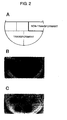
- FIG. 2 After culture, the growth of germinated individuals was evaluated. The results are shown in FIG. 2 , wherein FIG. 2B is a photograph showing growth of an AtMVR gene transformant and a non-transformant in a 1/2 MS culture medium without paraquat, and FIG. 2C is a photograph showing growth of an AtMVR gene transformant and a non-transformant in a 1/2 MS culture medium with paraquat.
- FIG. 2A is a schematic diagram showing the location of the AtMVR gene transformant and the non-transformant in FIGS. 2B and 2C .
- the results showed that in the culture medium without paraquat, the AtMVR gene transformant exhibited the same growth as the non-transformant.
- FIG. 2C in a medium containing paraquat the non-transformant developed chlorosis and died, i.e. growth was remarkably inhibited, while in contrast the seedling of the AtMVR gene transformant was able to grow.
- the AtMVR gene transformant exhibited the same growth as a non-transformant regardless of expression of the AtMVR gene, and also that in a medium with paraquat, the AtMVR gene transformant had clearly greater paraquat resistance than the non-transformant.
- SEQ ID NOS: 31 to 39 are primers.
- n represents a, g, c, or t (location: 1 and 11), s represents g or c (location: 7), and w represents a or t (location: 8 and 13).
- n represents a, g, c, or t (location: 13, 35, 73, 108, 156, 190, 198 and 201).
- a paraquat resistance gene used in the methods according to the present invention is capable of imparting resistance that is specific to paraquat without affecting growth regulation that undergoes control by the generation of active oxygens under various environments.
Landscapes
- Health & Medical Sciences (AREA)
- Genetics & Genomics (AREA)
- Life Sciences & Earth Sciences (AREA)
- Engineering & Computer Science (AREA)
- Biomedical Technology (AREA)
- Bioinformatics & Cheminformatics (AREA)
- Wood Science & Technology (AREA)
- Organic Chemistry (AREA)
- Chemical & Material Sciences (AREA)
- Biotechnology (AREA)
- General Engineering & Computer Science (AREA)
- Zoology (AREA)
- Molecular Biology (AREA)
- Microbiology (AREA)
- Physics & Mathematics (AREA)
- Plant Pathology (AREA)
- Biophysics (AREA)
- Biochemistry (AREA)
- General Health & Medical Sciences (AREA)
- Cell Biology (AREA)
- Breeding Of Plants And Reproduction By Means Of Culturing (AREA)
- Micro-Organisms Or Cultivation Processes Thereof (AREA)
- Measuring Or Testing Involving Enzymes Or Micro-Organisms (AREA)
- Peptides Or Proteins (AREA)
Claims (2)
- Procédé de dépistage d'une plante transgénique, comprenant le fait d'introduire un vecteur recombinant comprenant un acide nucléique codant une protéine de (a) ou (b) suivants et un gène étranger ou un fragment d'ADN étranger dans une plante et de dépistage d'une plante transgénique sur la base d'une résistance à la paraquat comme un indicateur:(a) une protéine consistant en la séquence d'acides aminés représentée par SEQ ID NO: 2, et(b) une protéine consistant en une séquence d'acides aminés ayant une substitution, une suppression ou une addition de 1 à 10 acides aminés par rapport à la séquence d'acides aminés comme décrite dans (a) et transmettant une résistance à la paraquat.
- Procédé pour transmettre une résistance à la paraquat à une plante, comprenant le fait d'introduire un vecteur recombinant comprenant un acide nucléique codant une protéine de (a) ou (b) suivants dans une plante et transmettant à la plante une résistance à la paraquat:(a) une protéine consistant en la séquence d'acides aminés représentée par SEQ ID NO : 2, et(b) une protéine consistant en une séquence d'acides aminés ayant une substitution, une suppression ou une addition de 1 à 10 acides aminés par rapport à la séquence d'acides aminés comme décrits dans (a) et transmettant une résistance à la paraquat.
Priority Applications (1)
| Application Number | Priority Date | Filing Date | Title |
|---|---|---|---|
| EP06001775A EP1715050B1 (fr) | 2003-09-12 | 2004-09-09 | Gène de résistance à la paraquat et promoteur spécifique pour tissu vasculaire et trichomes |
Applications Claiming Priority (2)
| Application Number | Priority Date | Filing Date | Title |
|---|---|---|---|
| JP2003322051 | 2003-09-12 | ||
| JP2003322051A JP4312012B2 (ja) | 2003-09-12 | 2003-09-12 | パラコート(登録商標)耐性遺伝子並びに維管束及びトライコーム特異的プロモーター |
Related Child Applications (1)
| Application Number | Title | Priority Date | Filing Date |
|---|---|---|---|
| EP06001775A Division EP1715050B1 (fr) | 2003-09-12 | 2004-09-09 | Gène de résistance à la paraquat et promoteur spécifique pour tissu vasculaire et trichomes |
Publications (3)
| Publication Number | Publication Date |
|---|---|
| EP1514941A2 EP1514941A2 (fr) | 2005-03-16 |
| EP1514941A3 EP1514941A3 (fr) | 2005-05-04 |
| EP1514941B1 true EP1514941B1 (fr) | 2008-02-13 |
Family
ID=34132069
Family Applications (2)
| Application Number | Title | Priority Date | Filing Date |
|---|---|---|---|
| EP04021478A Expired - Lifetime EP1514941B1 (fr) | 2003-09-12 | 2004-09-09 | Gène de résistance à la paraquat |
| EP06001775A Expired - Lifetime EP1715050B1 (fr) | 2003-09-12 | 2004-09-09 | Gène de résistance à la paraquat et promoteur spécifique pour tissu vasculaire et trichomes |
Family Applications After (1)
| Application Number | Title | Priority Date | Filing Date |
|---|---|---|---|
| EP06001775A Expired - Lifetime EP1715050B1 (fr) | 2003-09-12 | 2004-09-09 | Gène de résistance à la paraquat et promoteur spécifique pour tissu vasculaire et trichomes |
Country Status (6)
| Country | Link |
|---|---|
| US (2) | US7402732B2 (fr) |
| EP (2) | EP1514941B1 (fr) |
| JP (1) | JP4312012B2 (fr) |
| CN (2) | CN100535117C (fr) |
| DE (2) | DE602004022089D1 (fr) |
| ES (2) | ES2301908T3 (fr) |
Families Citing this family (18)
| Publication number | Priority date | Publication date | Assignee | Title |
|---|---|---|---|---|
| US7169915B2 (en) | 2003-10-14 | 2007-01-30 | Ceres, Inc. | Promoter, promoter control elements, and combinations, and uses thereof |
| US11634723B2 (en) | 2003-09-11 | 2023-04-25 | Ceres, Inc. | Promoter, promoter control elements, and combinations, and uses thereof |
| US20130117881A1 (en) | 2003-10-14 | 2013-05-09 | Ceres, Inc. | Promoter, promoter control elements, and combinations, and uses thereof |
| US11739340B2 (en) | 2003-09-23 | 2023-08-29 | Ceres, Inc. | Promoter, promoter control elements, and combinations, and uses thereof |
| US20050081261A1 (en) * | 2003-10-14 | 2005-04-14 | Pennell Roger I. | Methods and compositions for altering seed phenotypes |
| US7429692B2 (en) | 2004-10-14 | 2008-09-30 | Ceres, Inc. | Sucrose synthase 3 promoter from rice and uses thereof |
| EP2554674B1 (fr) * | 2007-12-21 | 2014-11-05 | Keygene N.V. | Promoteurs spécifiques trichomes |
| MX2011005095A (es) | 2008-11-13 | 2011-11-18 | Link Medicine Corp | Tratamiento de proteinopatias usando un inhibidor de farnesil transferasa. |
| US8153226B2 (en) | 2009-03-31 | 2012-04-10 | The Procter & Gamble Company | Capped tufted laminate web |
| CN102573442B (zh) * | 2009-10-30 | 2013-11-13 | 北京未名凯拓作物设计中心有限公司 | 百草枯抗性基因及其应用 |
| CN103153044B (zh) | 2010-10-08 | 2015-06-17 | 韩国生命工学研究院 | 源自巴西橡胶树的乳胶分泌组织特异性srpp启动子及其用途 |
| CN102061308B (zh) * | 2010-10-29 | 2013-05-08 | 北京未名凯拓作物设计中心有限公司 | 一种用百草枯筛选转基因植物的方法 |
| US9867739B2 (en) | 2013-12-20 | 2018-01-16 | The Procter & Gamble Company | Absorbent article having a clefted topsheet |
| CN112830959B (zh) * | 2019-11-22 | 2022-07-15 | 中国科学技术大学 | 一种降解百草枯的蛋白及其编码基因与应用 |
| CN114561384B (zh) * | 2020-11-27 | 2023-05-05 | 中国农业科学院油料作物研究所 | 植物维管特异性启动子pDAOFU及其应用 |
| CN116768991B (zh) * | 2022-03-10 | 2024-07-05 | 中国科学院遗传与发育生物学研究所 | 与油脂代谢调控相关的大豆四跨膜区蛋白GmTET270及其编码基因与应用 |
| CN114672489B (zh) * | 2022-05-10 | 2024-02-09 | 贵州省烟草科学研究院 | 烟草腺毛启动子pNtGGPPS2a及其应用 |
| CN119193687B (zh) | 2024-10-30 | 2026-06-19 | 山东农业大学 | 一种利用农杆菌介导法提高小麦遗传转化效率的方法 |
Family Cites Families (16)
| Publication number | Priority date | Publication date | Assignee | Title |
|---|---|---|---|---|
| US5538878A (en) * | 1988-08-08 | 1996-07-23 | Calgene, Inc. | Superoxide dismutase expression in plants |
| JPH0332358A (ja) | 1989-06-29 | 1991-02-12 | Ricoh Co Ltd | 高電圧供給装置 |
| GB9211416D0 (en) * | 1992-05-29 | 1992-07-15 | Ici Plc | Expression of genes in transgenic plants |
| JPH0814964B2 (ja) | 1993-02-15 | 1996-02-14 | 九州日立マクセル株式会社 | ディスククリーナ |
| JP3281124B2 (ja) | 1993-06-24 | 2002-05-13 | パロマ工業株式会社 | 濃淡燃焼バーナ |
| JP2000023583A (ja) | 1997-03-11 | 2000-01-25 | Natl Inst Of Agrobiological Resources | 細胞死抑制遺伝子が導入されたストレス抵抗性植物およびその作出方法 |
| JP3331367B2 (ja) * | 1997-03-11 | 2002-10-07 | 独立行政法人農業生物資源研究所 | 細胞死抑制遺伝子が導入されたストレス抵抗性植物およびその作出方法 |
| JP2002300822A (ja) | 1997-03-11 | 2002-10-15 | National Institute Of Agrobiological Sciences | 細胞死抑制遺伝子が導入されたストレス抵抗性植物およびその作出方法 |
| HUP9700762A3 (en) * | 1997-04-16 | 2000-08-28 | Btg Int Ltd | Transgenic stressresistant plants overexpressing iron-binding ferritin protein |
| HUP9702118A3 (en) | 1997-11-18 | 2000-08-28 | Btg Int Ltd | Plants over producing aldose reductase homologous protein can tolerate water deficiency and resist oxidative stresses, and process for producing them |
| EP1033405A3 (fr) * | 1999-02-25 | 2001-08-01 | Ceres Incorporated | Fragments d'ADN avec des séquences déterminées et polypeptides encodées par lesdits fragments |
| KR100350825B1 (ko) * | 1999-07-12 | 2002-09-09 | 조진기 | 파라쿠아트 내성 유전자, 이 유전자를 함유한 플라스미드벡터및 이를 이용한 형질전환 식물체 선발방법 |
| GB9917642D0 (en) * | 1999-07-27 | 1999-09-29 | Zeneca Ltd | Improvements in or relating to organic compounds |
| WO2001020008A2 (fr) | 1999-09-16 | 2001-03-22 | Universiteit Leiden | Promoteurs vasculaires specifiques |
| JP2001095585A (ja) | 1999-09-30 | 2001-04-10 | Toyota Motor Corp | パラコート耐性カルス由来のペルオキシダーゼ |
| JP2002281979A (ja) | 2001-03-28 | 2002-10-02 | Toyota Motor Corp | ストレス耐性植物 |
-
2003
- 2003-09-12 JP JP2003322051A patent/JP4312012B2/ja not_active Expired - Fee Related
-
2004
- 2004-09-09 DE DE602004022089T patent/DE602004022089D1/de not_active Expired - Lifetime
- 2004-09-09 ES ES04021478T patent/ES2301908T3/es not_active Expired - Lifetime
- 2004-09-09 EP EP04021478A patent/EP1514941B1/fr not_active Expired - Lifetime
- 2004-09-09 EP EP06001775A patent/EP1715050B1/fr not_active Expired - Lifetime
- 2004-09-09 ES ES06001775T patent/ES2332464T3/es not_active Expired - Lifetime
- 2004-09-09 DE DE602004011712T patent/DE602004011712T2/de not_active Expired - Lifetime
- 2004-09-10 US US10/937,710 patent/US7402732B2/en not_active Expired - Fee Related
- 2004-09-13 CN CNB2004100747001A patent/CN100535117C/zh not_active Expired - Fee Related
- 2004-09-13 CN CNB2006101393183A patent/CN100535118C/zh not_active Expired - Fee Related
-
2007
- 2007-12-13 US US11/956,239 patent/US7993914B2/en not_active Expired - Fee Related
Also Published As
| Publication number | Publication date |
|---|---|
| US7402732B2 (en) | 2008-07-22 |
| JP4312012B2 (ja) | 2009-08-12 |
| CN100535118C (zh) | 2009-09-02 |
| CN1970766A (zh) | 2007-05-30 |
| EP1514941A2 (fr) | 2005-03-16 |
| ES2332464T3 (es) | 2010-02-05 |
| JP2005087033A (ja) | 2005-04-07 |
| CN1594571A (zh) | 2005-03-16 |
| DE602004011712T2 (de) | 2009-01-29 |
| US20090064375A1 (en) | 2009-03-05 |
| ES2301908T3 (es) | 2008-07-01 |
| CN100535117C (zh) | 2009-09-02 |
| US20050091711A1 (en) | 2005-04-28 |
| EP1715050B1 (fr) | 2009-07-15 |
| US7993914B2 (en) | 2011-08-09 |
| EP1715050A1 (fr) | 2006-10-25 |
| DE602004011712D1 (de) | 2008-03-27 |
| EP1514941A3 (fr) | 2005-05-04 |
| DE602004022089D1 (de) | 2009-08-27 |
Similar Documents
| Publication | Publication Date | Title |
|---|---|---|
| US7993914B2 (en) | Paraquat resistance gene and a vascular tissue- and trichome-specific promoter | |
| EP3425046B1 (fr) | Protéine tolérante aux herbicides, gène codant et son utilisation | |
| US11066677B2 (en) | Plants with enhanced tolerance to multiple abiotic stresses | |
| JP2002504824A (ja) | トランスジェニック植物用の調節配列 | |
| JP5079799B2 (ja) | トキソフラビンとその誘導体分解遺伝子tflAとこれを発現する形質転換生物体 | |
| CN106749580B (zh) | 植物耐盐相关蛋白TaPUB15-D及其编码基因与应用 | |
| JPH05184373A (ja) | 抗菌ペプチドおよびそれに基づく植物耐病性 | |
| CN114585731B (zh) | 突变的羟基苯丙酮酸双加氧酶多肽、其编码基因及用途 | |
| CN100383246C (zh) | 一种负调控植物程序性细胞死亡和促进转基因愈伤组织生长分化的水稻锌指蛋白基因 | |
| CN118048339A (zh) | 一种杨树gstf12基因及其在植物抗盐性中的应用 | |
| Gális et al. | Expression of three Arabidopsis cytokinin oxidase/dehydrogenase promoter:: GUS chimeric constructs in tobacco: response to developmental and biotic factors | |
| US11319548B2 (en) | Cold- and water-inducible promoter from rice | |
| CN106518992B (zh) | 核盘菌异核体不亲和yd-7蛋白及其编码基因与应用 | |
| RU2855470C2 (ru) | Мутированный полипептид гидроксифенилпируватдиоксигеназы, а также кодирующий его ген и применение указанного полипептида | |
| CN119570838B (zh) | 番茄基因或其编码的蛋白在调控植物对低氮胁迫耐受性中的应用 | |
| EP1669443A1 (fr) | Gene nanifiant d'une plante | |
| Stump | Evaluation of the csr1-2 allele from Arabidopsis thaliana CS3102 as an imazapyr herbicide resistance marker for biolistic transformation of the shoot apical meristem | |
| TW202216994A (zh) | 編碼細胞色素p450之基因及其利用 | |
| JP2004275048A (ja) | プラスチッドの数又は大きさを制御するdna及びタンパク質 | |
| CA2253245A1 (fr) | Plantes transgeniques resistantes aux champignons | |
| AU713434B2 (en) | Fungus resistant transgenic plants | |
| US7060872B1 (en) | Method for producing plants having modified canopy size or seedless fruit | |
| Chian | Agrobacterium rhizogenes-mediated plant root transformation for study of genes important in legume nodulation | |
| MX2011001933A (es) | Mejoramiento de responsividad de nitrogeno en plantas. | |
| JP2002360253A (ja) | イネのいもち病菌接種により誘導されるプロモーター |
Legal Events
| Date | Code | Title | Description |
|---|---|---|---|
| PUAI | Public reference made under article 153(3) epc to a published international application that has entered the european phase |
Free format text: ORIGINAL CODE: 0009012 |
|
| 17P | Request for examination filed |
Effective date: 20040909 |
|
| AK | Designated contracting states |
Kind code of ref document: A2 Designated state(s): AT BE BG CH CY CZ DE DK EE ES FI FR GB GR HU IE IT LI LU MC NL PL PT RO SE SI SK TR |
|
| AX | Request for extension of the european patent |
Extension state: AL HR LT LV MK |
|
| PUAL | Search report despatched |
Free format text: ORIGINAL CODE: 0009013 |
|
| AK | Designated contracting states |
Kind code of ref document: A3 Designated state(s): AT BE BG CH CY CZ DE DK EE ES FI FR GB GR HU IE IT LI LU MC NL PL PT RO SE SI SK TR |
|
| AX | Request for extension of the european patent |
Extension state: AL HR LT LV MK |
|
| AKX | Designation fees paid |
Designated state(s): DE ES FR GB IT |
|
| 17Q | First examination report despatched |
Effective date: 20050816 |
|
| GRAP | Despatch of communication of intention to grant a patent |
Free format text: ORIGINAL CODE: EPIDOSNIGR1 |
|
| GRAS | Grant fee paid |
Free format text: ORIGINAL CODE: EPIDOSNIGR3 |
|
| GRAA | (expected) grant |
Free format text: ORIGINAL CODE: 0009210 |
|
| AK | Designated contracting states |
Kind code of ref document: B1 Designated state(s): DE ES FR GB IT |
|
| REG | Reference to a national code |
Ref country code: GB Ref legal event code: FG4D |
|
| REF | Corresponds to: |
Ref document number: 602004011712 Country of ref document: DE Date of ref document: 20080327 Kind code of ref document: P |
|
| REG | Reference to a national code |
Ref country code: ES Ref legal event code: FG2A Ref document number: 2301908 Country of ref document: ES Kind code of ref document: T3 |
|
| PLBE | No opposition filed within time limit |
Free format text: ORIGINAL CODE: 0009261 |
|
| STAA | Information on the status of an ep patent application or granted ep patent |
Free format text: STATUS: NO OPPOSITION FILED WITHIN TIME LIMIT |
|
| 26N | No opposition filed |
Effective date: 20081114 |
|
| PGFP | Annual fee paid to national office [announced via postgrant information from national office to epo] |
Ref country code: ES Payment date: 20090929 Year of fee payment: 6 |
|
| PGFP | Annual fee paid to national office [announced via postgrant information from national office to epo] |
Ref country code: GB Payment date: 20090909 Year of fee payment: 6 |
|
| PGFP | Annual fee paid to national office [announced via postgrant information from national office to epo] |
Ref country code: DE Payment date: 20090903 Year of fee payment: 6 |
|
| PGFP | Annual fee paid to national office [announced via postgrant information from national office to epo] |
Ref country code: FR Payment date: 20091012 Year of fee payment: 6 Ref country code: IT Payment date: 20090915 Year of fee payment: 6 |
|
| GBPC | Gb: european patent ceased through non-payment of renewal fee |
Effective date: 20100909 |
|
| PG25 | Lapsed in a contracting state [announced via postgrant information from national office to epo] |
Ref country code: IT Free format text: LAPSE BECAUSE OF NON-PAYMENT OF DUE FEES Effective date: 20100909 |
|
| REG | Reference to a national code |
Ref country code: FR Ref legal event code: ST Effective date: 20110531 |
|
| REG | Reference to a national code |
Ref country code: DE Ref legal event code: R119 Ref document number: 602004011712 Country of ref document: DE Effective date: 20110401 |
|
| PG25 | Lapsed in a contracting state [announced via postgrant information from national office to epo] |
Ref country code: DE Free format text: LAPSE BECAUSE OF NON-PAYMENT OF DUE FEES Effective date: 20110401 Ref country code: FR Free format text: LAPSE BECAUSE OF NON-PAYMENT OF DUE FEES Effective date: 20100930 |
|
| PG25 | Lapsed in a contracting state [announced via postgrant information from national office to epo] |
Ref country code: GB Free format text: LAPSE BECAUSE OF NON-PAYMENT OF DUE FEES Effective date: 20100909 |
|
| REG | Reference to a national code |
Ref country code: ES Ref legal event code: FD2A Effective date: 20111019 |
|
| PG25 | Lapsed in a contracting state [announced via postgrant information from national office to epo] |
Ref country code: ES Free format text: LAPSE BECAUSE OF NON-PAYMENT OF DUE FEES Effective date: 20100910 |