EP1520860B1 - Protéine PilC recombinante, méthode pour sa production et son utilisation - Google Patents
Protéine PilC recombinante, méthode pour sa production et son utilisation Download PDFInfo
- Publication number
- EP1520860B1 EP1520860B1 EP04030675A EP04030675A EP1520860B1 EP 1520860 B1 EP1520860 B1 EP 1520860B1 EP 04030675 A EP04030675 A EP 04030675A EP 04030675 A EP04030675 A EP 04030675A EP 1520860 B1 EP1520860 B1 EP 1520860B1
- Authority
- EP
- European Patent Office
- Prior art keywords
- pilc
- protein
- sequence
- pili
- gene
- Prior art date
- Legal status (The legal status is an assumption and is not a legal conclusion. Google has not performed a legal analysis and makes no representation as to the accuracy of the status listed.)
- Expired - Lifetime
Links
Images




Classifications
-
- C—CHEMISTRY; METALLURGY
- C12—BIOCHEMISTRY; BEER; SPIRITS; WINE; VINEGAR; MICROBIOLOGY; ENZYMOLOGY; MUTATION OR GENETIC ENGINEERING
- C12N—MICROORGANISMS OR ENZYMES; COMPOSITIONS THEREOF; PROPAGATING, PRESERVING, OR MAINTAINING MICROORGANISMS; MUTATION OR GENETIC ENGINEERING; CULTURE MEDIA
- C12N15/00—Mutation or genetic engineering; DNA or RNA concerning genetic engineering, vectors, e.g. plasmids, or their isolation, preparation or purification; Use of hosts therefor
- C12N15/09—Recombinant DNA-technology
- C12N15/63—Introduction of foreign genetic material using vectors; Vectors; Use of hosts therefor; Regulation of expression
- C12N15/67—General methods for enhancing the expression
-
- A—HUMAN NECESSITIES
- A61—MEDICAL OR VETERINARY SCIENCE; HYGIENE
- A61P—SPECIFIC THERAPEUTIC ACTIVITY OF CHEMICAL COMPOUNDS OR MEDICINAL PREPARATIONS
- A61P31/00—Antiinfectives, i.e. antibiotics, antiseptics, chemotherapeutics
- A61P31/04—Antibacterial agents
-
- C—CHEMISTRY; METALLURGY
- C07—ORGANIC CHEMISTRY
- C07K—PEPTIDES
- C07K14/00—Peptides having more than 20 amino acids; Gastrins; Somatostatins; Melanotropins; Derivatives thereof
- C07K14/195—Peptides having more than 20 amino acids; Gastrins; Somatostatins; Melanotropins; Derivatives thereof from bacteria
- C07K14/22—Peptides having more than 20 amino acids; Gastrins; Somatostatins; Melanotropins; Derivatives thereof from bacteria from Neisseriaceae (F)
-
- C—CHEMISTRY; METALLURGY
- C07—ORGANIC CHEMISTRY
- C07K—PEPTIDES
- C07K16/00—Immunoglobulins [IG], e.g. monoclonal or polyclonal antibodies
- C07K16/12—Immunoglobulins [IG], e.g. monoclonal or polyclonal antibodies against material from bacteria
- C07K16/1203—Gram-negative bacteria
-
- C—CHEMISTRY; METALLURGY
- C07—ORGANIC CHEMISTRY
- C07K—PEPTIDES
- C07K16/00—Immunoglobulins [IG], e.g. monoclonal or polyclonal antibodies
- C07K16/12—Immunoglobulins [IG], e.g. monoclonal or polyclonal antibodies against material from bacteria
- C07K16/1203—Gram-negative bacteria
- C07K16/1217—Neisseriaceae (F)
-
- A—HUMAN NECESSITIES
- A61—MEDICAL OR VETERINARY SCIENCE; HYGIENE
- A61K—PREPARATIONS FOR MEDICAL, DENTAL OR TOILETRY PURPOSES
- A61K38/00—Medicinal preparations containing peptides
-
- A—HUMAN NECESSITIES
- A61—MEDICAL OR VETERINARY SCIENCE; HYGIENE
- A61K—PREPARATIONS FOR MEDICAL, DENTAL OR TOILETRY PURPOSES
- A61K39/00—Medicinal preparations containing antigens or antibodies
Definitions
- the invention relates to recombinant gene sequences for the synthesis of a protein having the biological activity of the PilC protein. Furthermore, the invention relates to recombinant DNA methods for the production of proteins with the biological activity of the PilC protein and the molecular biological tools required therein. In addition, the invention relates to proteins having the biological activity of the Pilc protein.
- a crucial step in the formation and manifestation of any infection is the binding of the agent to certain molecular structures (receptors) of the host organism.
- the responsible for the binding structures of the pathogen are referred to here as adhesins. It is possible that multiple molecular interactions between adherens of the pathogen and receptors of the host organism are required for the occurrence and / or manifestation of an infection. On the other hand, it is conceivable that by blocking a single molecular interaction between an important adhesin and a receptor, an infection is already prevented. The blocking of molecular adhesin-receptor interactions is one possible form of prevention or therapy of infectious diseases.
- Preventive Approaches include, for example, the formation of antibodies that are specifically directed against the adhesin and block the interaction with its receptor by active immunization (vaccination).
- the interaction can, however, in the sense of a preventive or therapeutic measure, in principle also be prevented by passively administered antibodies or other substances, for example adhesin or receptor-analogous substances, which are collectively referred to herein as inhibitors.
- Important adhesins of many gram-negative pathogens are the pili (also called fimbriae or fibrils). These are polymeric structures that form fine filamentous appendages on the bacterial surface. The pili mediate binding of the bacteria to specific receptors of the host organism via the adhesins contained in the pili.
- Gram-negative bacteria have different types of pili.
- the majority of all known pili are heteropolymeric structures consisting of several subunits, one major subunit, and other minor subunits present in only a few copies.
- the minor subunits represent the actual adhesive structures (adhesins), while the high-copy major subunit performs the framework function ( Lindberg et al., Nature 328, 84-87, 1987 ).
- Numerous pathogenic Gram-negative bacterial species form type 4 pili, also referred to as N-Me-Phe or type IV pili. These include the pathogenic Neisseria species N. gonorrhoeae and N.
- Pseudomonas aeruginosa ( Sastry et al., FEBS Letters 151, 253-255, 1983 ), which is a major problem in patients with cystic fibrosis, in immunocompromised patients and in connection with septic infections. Effective vaccines or inhibitors against this pathogen are not yet available; The main problem is the increase in the prevalence of multidrug-resistant strains. Alternative treatment methods are therefore urgently needed.
- enteropathogenic Escherichia coli EEC; Giron et al., Science 254, 710-713, 1991
- Vibrio cholerae Shaw et al., Infect. Immune. 58, 3042-3049, 1990
- Bacteroides nodosus McKern et al., FEBS Letters 164, 149-153, 1983
- Moraxella bovis Marrs et al., J. Bacteriol. 163, 132-139, 1985
- other pathogens that cause diseases in humans and animals and against which is also intensively searched for a vaccine.
- the type 4 pili are defined by the structure of their main subunit, which is commonly referred to as pilin; In addition, for individual bacterial species specific names for the main pilin subunit, eg PilE in N. gonorrhoeae or PilA in Pseudomonas aeruginosa exist.
- the pilin of type 4 pili is fundamentally different in structure from major subunits of other pilus types, for example the group of Pap-like pili ( Baga et al. J. Bacteriol. 157, 330-333, 1984 ).
- Features of the Pilins of type 4 pili are (a) the short, positively charged, amino terminal signal sequence of the proform of pilin (exception V.
- cholerae type 4-pilin (b) the hydrophobic amino-terminal region of mature pilin, having strong sequence homology between different types 4-pilins, (c) the modification of the amino terminal Phe residue of the mature pilin by an N-terminal methyl group (N-Me-Phe), (d) two Cys residues in the carboxy-terminal region of the pilin which form a loop and (e) a property called "twitching motility".
- PilC proteins have been previously detected as components of N. gonorrhoeae and N. meningitidis. As a function of these PilC proteins, an assembly function in pilus biogenesis has hitherto been assumed ( Jonsson, Dissertation, New Series No. 322, University of Umea, ISSN 0346-6612 ). However, this work did not reveal any possible role as an important adhesin. In other experiments it was possible to isolate mutants of N. gonorrhoeae which, while still forming pili, showed no more adherence to epithelial cells ( Rudel et al., Mol. Microbiol. 6, 3439-3450, 1992 ).
- the gel electrophoretically purified PilC protein had no biological activity for the purposes of this invention.
- the antiserum directed against it therefore does not possess the property according to the invention, the binding of pili faced Neisserien to block epithelial cells.
- Using the antiserum it was initially possible to identify an E. coli phage clone carrying a partial gene encoding PilC.
- DNA hybridization was used to identify an E. coli clone with an intact PilC-encoding gene ( Jonsson et al. EMBO J. 10, 477-488, 1991 and WO 9213871 ).
- This recombinant PilC coding gene was translationally inactive due to its variable, homopolymeric sequence, so that synthesis of biologically active PilC protein did not occur.
- the nucleotide sequence of this first PilC coding gene (pilC1) from the strain N. gonorrhoeae MS11 is known; also a partial sequence of a second gene (pilC2) from this strain is known ( Jonsson et al., EMBO J. 10, 477-488, 1991 ; Jonsson, Dissertation, New Series No. 322, University of Umea, ISSN 0346-6612 and WO 9213871 ).
- Jonsson et al. EMBO J. 10, 477-488, 1991 ; Jonsson, Dissertation, New Series No. 322, University of Umea, ISSN 0346-6612 and WO 9213871 .
- none of these genes could be used to produce PilC.
- the invention is essentially based on the technical problem of providing biologically active proteins with the biological activity of the PilC protein.
- the solution to this technical problem is achieved by providing the embodiments characterized in the claims.
- biological activity of the PilC protein refers, according to the invention, to the ability of the encoded protein to assist the assembly of type 4 pili, mediate the binding of type 4 pilus-carrying bacteria to cellular receptors, or the immunological ability to induce antibodies against type 4 pilus-carrying bacteria, which compete with the attachment of the bacteria to their cellular receptors and preferably block the attachment.
- protein refers to naturally occurring proteins or modifications or fragments thereof having said biological activity.
- PATHOGENIC TYPE 4-PILI-BACTERIA refers to bacteria which, on the one hand, are causally related to the pathogenesis of diseases and, on the other hand, constitute type 4 pili as an essential element of their pathogenic property the bacteria are necessary to cellular receptors in the infected host organism.
- HOMOPOLYMER are nucleotide sequences consisting of a sequence of identical nucleotides (eg, 5'-CCCCCCC-3 ').
- "HOMOPOLYMER NUCLEOTIDE SEQUENCES” are defined by their ability to spontaneously or induce add or lose one or more identical nucleotides to the homopolymeric nucleotide sequence present. The gain of identical nucleotides of a homopolymeric nucleotide sequence causes a "PHASE VARIATION". This phase variation is by a RecA protein independent process that is essentially spontaneous ( Robertson & Meyer, Trends Genet., 8, 422-427, 1992 ).
- phase variation affects the translational reading frame of a gene and consequently the formation of the intact gene product.
- phase variation is undesirable because phase variation of the PilC-encoding DNA under the control of a strong promoter results in altering the reading frame and thus loss of formation of the desired protein with the biological activity of the PilC protein.
- An "INVARIABLE HETEROPOLYMIC NUCLEOTIDE SEQUENCE” in the sense of the invention is therefore a nucleotide sequence which has arisen from a homopolymeric nucleotide sequence by insertion or replacement of nonidentical nucleotides (in the case of the sequence 5'-GGGGGGGGGGG-3 ', that is to say nucleotides A, C and / or T) and, because of these changes, has become "NOT PHASE VARIABLE", ie, showing no phase variation. It is possible on the basis of the genetic code to modify the homopolymeric nucleotide sequence so that the encoded amino acid sequence either remains unchanged or is also changed.
- a "SIGNALPEPTID” in the sense of this invention represents an amino acid sequence at the amino terminus of the proform of a protein secreted by the gram-negative bacterium.
- a signal peptide enables the secretion of a protein via the general export pathway of the internal bacterial membrane ( Pugsley, Microbiol. Rev., 57, 50-108, 1993 ).
- the phase variable signal peptide coding portion of the gene sequence of the invention is altered by substitution of the phase variable signal peptide coding portion, which is phase variable due to the homopolymeric nucleotide sequence contained therein.
- substitution is one partial or complete replacement of the signal peptide coding sequence segment by another signal peptide coding sequence which allows the secretion of the PilC protein via said general export route, does not contain a phase-variable homopolymeric nucleotide sequence and represents a total non-phase-variable nucleotide sequence.
- the change (substitution) is introduced with the aim of allowing the expression of the gene sequence in a host cell unaffected by phase variation so as to ensure the formation of PilC protein under stable conditions and in large quantities (overproduction).
- Hybridization of chromosomal DNA from, for example, N. gonorrhoeae with an entire PilC gene as a probe gives evidence for the existence of two related PilC genes in the chromosome of this species.
- the recombinant gene sequences according to the invention enable the production of proteins with the biological activity of the PilC protein in appreciable amounts. This will be the general identification of minor subunits of type 4 pili and their reliable characterization as adhesins.
- the invention allows, in particular, the detection of the PilC proteins of pathogenic Neisseria (N. gonorrhoeae and N. meningitidis) in their function as important adhesins. Further, the invention allows the detection of PilC-analogous proteins of other type 4 pili-producing bacterial species.
- PilC-analog protein refers exclusively to the structural relationship (of nucleotide and amino acid sequence) with the PilC proteins of the pathogenic Neisseria and to the analogous function with the Neisseria PilC proteins as receptor-binding adhesins.
- PilC analog proteins of the present invention of other type 4 pili-producing bacterial species are not necessarily identical or related to the proteins already referred to in the literature as PilC (for example, the known PilC protein of Pseudomonas aeruginosa ( Nunn et al., J. Bacteriol. 172, 2911-2919, 1990 not a PilC-analog protein in the sense of this invention).
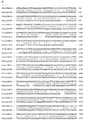
- the PilC proteins which can now be produced with the gene sequences according to the invention for example those of pathogenic Neisseria, likewise have a structural variability, as shown for example by comparison of the coding nucleotide sequences ( FIG. 4 ).
- the variability of the PilC adhesins is significantly less and does not (or to a lesser extent) affect the function of the PilC proteins, namely the molecular interaction with the receptor. This statement is confirmed by the competition experiments with biologically active PilC protein (Table 2), since with the same PilC protein bacteria that form different pilin molecules and / or PilC proteins can be displaced.
- PilC proteins are formed within a species, these species' PilC proteins recognize the same or few different receptors in the host organism. It is therefore possible, based on only a few variant forms of the PilC proteins of a species, to develop a broadly effective vaccine or broadly effective adherence inhibitor. Likewise, the invention makes it possible to develop broadly effective receptor analogues on the basis of only one or a few receptors. These possibilities also apply to the PilC-analogous adhesins formed by type 4 pili-producing bacteria that are not of the genus Neisseria. For it can be assumed that the cellular, tissue and host tropism of a species is largely determined by the interaction of the adhesins with their corresponding cellular receptors.
- An important aspect of the present invention was to guide the detection of the function of the PilC proteins as important adhesins in the context of the onset of infection. For this purpose, it was necessary to recover biologically active PilC protein in pure form and to demonstrate its biological activity in suitable test systems.
- the complete pilC2 gene from the strain N. gonorrhoeae MS11 was isolated on the basis of the information known about PilC1 and its gene and cloned in E. coli.
- the protein of the invention having the biological activity of a PilC protein of the genus Neisseria
- the phase-variable, signal peptide-encoding, homopolymeric sequence portion of the pilC2 gene was altered so that the expression of the recombinant genes in a host cell unaffected by phase variation is possible. This was accomplished by modifying the homopolymeric sequence portion to a heteropolymeric sequence using appropriate oligonucleotides via the polymerase chain reaction (PCR) (Example 2).
- the gene sequence according to the invention is obtainable by modification of a DNA sequence derived from a pathogenic, type 4 pilus-carrying bacterium.
- This bacterial group has already been characterized in more detail above. Examples of such bacteria are Neisseria, in particular N. gonorrhoeae and N. meningitidis, Pseudomonas, in particular P. aeruginosa, enteropathogenic Escherichiae, in particular E. coli (EPEC), Vibrio cholerae, Bacteroides nodosus and Moraxella bovis.
- the gene sequence is by modification of a DNA sequence from a bacterium of the genus Neisseria, preferably Neisseria gonorrhoeae or Neisseria meningitidis.
- the gene sequences of the N. gonorrhoeae pilC2 gene and of the N. meningitidis pilC A1493 gene are particularly preferred.
- the sequences shown start at position 1 with the codon ATG coding for the first amino acid (Met).
- the signal peptide coding region extends from position 1 to 99 with respect to the pilC2 gene. Included therein is the phase variable homopolymeric sequence segment extending from position 79 to 91.
- the constant nucleotides of the sequences shown are marked with stars. Individual constant sequence sections of the genes pilC1 and pilC2 are shown separately in Table 3.
- the gene sequence according to the invention is obtainable by modification of a DNA sequence, those with a constant range of DNA sequence FIG. 4 or Table 3 hybridized and a protein encoded with the biological activity of the PilC protein.
- Another object of the invention are thus gene sequences with a constant range of in Fig. 4 or Table 3 shown hybridize a protein with the biological activity of the PilC protein and derived from a pathogenic, type 4 pilus-carrying bacterium that does not belong to the genus Nesseria.
- the length of the homopolymeric nucleotide sequence modified to a heteropolymeric nucleotide sequence is at least 5 nucleotides.
- Sequence examples given are 12 G (pilC1), 13 G (pilC2), 9 G (pilC A1493); see. Position 79 to position 91 relative to the gene sequence pilC2.
- the modified gene sequence encodes a protein having the biological activity of the PilC protein which has an oligo-histidine region suitable for its purification.
- this oligo-histidine region contains 6 histidine residues (His 6 ).
- His 6 histidine residues
- the presence of the His 6 peptide allows the selective binding of the PilC protein of the invention to a nickel-NTA (Ni-nitrilotriacetic acid) -agarose column ( Hochuli et al., J. Chromat., 411, 177-184, 1987 ; Hochuli et al., Bio / Techno. 6, 1321-1325, 1988 ), where the eluted protein is pure PilC protein.
- the oligo-histidine region is at the N-terminus or at the C-terminus of the mature form of the encoded protein. This ensures a trouble-free spatial structure of the protein.
- the invention relates to recombinant vectors containing a gene sequence according to the invention.
- vectors are the E. coli replicating vectors pBR322 and pBA, vectors based on the bacteriophage M13, fd or lambda, broad host range vectors, shuttle vectors corresponding to the Hermes vectors (Kupsch et al., US Pat. for publication) which allow incorporation of cloned genes into the DNA of the recipient Neisseria cell, as well as the plasmid ptetM25.2, which can be used for the conjugative transfer of genes between Neisseria (Kupsch et al., submitted for publication).
- said gene sequence is under the control of a promoter.
- suitable promoters according to the invention are promoters which are functional in Gram-negative bacteria and, in particular, inducible promoters.
- the promoter is Ptrc, which can be both repressed and induced in the presence of IPTG in the presence of an expressed lac I q gene in Neisseria and E. coli.
- the invention relates to host cells which contain one or more recombinant vectors according to the invention.
- the host cells according to the invention serve for the replication, transcription and translation of the gene sequence according to the invention for the synthesis of a protein having the biological activity of the PilC protein.
- These are preferably Gram-negative bacteria which make it possible to secrete the synthesized protein via the inner membrane and to fold correctly. Examples of such host cells are E. coli K12 and other Gram-negative bacteria, for which suitable cloning vectors are available.
- the inventive Host cell is a non-piliated Neisseria strain which, like N. gonorrhoeae N174, has lost its pili formation due to a defective pilE gene.
- the pilE gene codes for the major subunit (pilin) of Neisseria pili. Due to the defective pilE gene, no pilin is synthesized, allowing the recovery of biologically active PilC protein that is absolutely free of pilin.
- the invention relates to methods for producing a substantially pure protein having the biological activity of the PilC protein, wherein a host cell according to the invention is grown under suitable conditions and the protein is purified.
- the protein is purified with the biological activity of the PilC protein by affinity chromatography, preferably affinity chromatography, in which the oligo-histidine regions contained in the protein according to the invention are used to bind the protein.
- Example 1 Isolation of the pilC2 gene of N. gonorrhoeae
- pTR27 vg. FIG. 1
- the pTR27 represents the basic construct Determination of the DNA Sequence of the pilC2 Gene and for the Genetic Modification of the DNA and Protein Sequence (See Example 2 and Example 6).
- Example 2 Construction of a PilC protein overproducing N. gonorrhoeae strain
- the modification of the homopolymeric nucleotide sequence which in the case of the cloned pilC2 gene consisted of 13 G nucleotides, was achieved by targeted mutagenesis using the polymerase chain reaction (PCR) in two steps.
- the plasmid pTR27 (cf., Example 1, FIG. 1 ) served as a template in these reactions.
- the first step (1st PCR) involved two separate PCR reactions of the pilC2 gene with the primer pairings TR12 (TTGGATCCGACGTCCGAAAAGGAAATACGATG) and TR28 (GCTCCACCACCTCCGCCGGTATGGGAAAAC), as well as with TR27 (ACCGGCGGAGGTGGTGGAGCGCAGGCGCAAACCCGT) and TR23 (TGTGTCTCTGCATATGACG) ( FIG. 1 ).
- TR12 TTGGATCCGACGTCCGAAAAGGAAATACGATG
- TR28 GCTCCACCACCTCCGCCGGTATGGGAAAAC
- TR27 ACCGGCGGAGGTGGTGGAGCGCAGGCGCAAACCCGT
- TR23 TGTGTCTCTGCATATGACG
- oligonucleotide TR28 directly hybridized to oligonucleotide TR27 immediately after the homopolymeric nucleotide sequence region, resulting in that neither the first nor the second PCR fragment contained the homopolymeric nucleotide sequence region.
- fragments 1 and 2 contained an invariable heteropolymeric nucleotide sequence encoding the same amino acids as the original homopolymeric nucleotide sequence.
- Fragments 1 and 2 of the first PCR were separated by agarose gel electrophoresis and extracted with GENECLEAN (BIO 101). The purified fragments were assembled into a fragment in the second PCR reaction by amplifying now in a reaction with the oligonucleotides TR12 and TR23 ( figure 2 ).
- the conditions of the second PCR were chosen as follows: 100 pmole primer, fragment 1 and fragment 2 in equimolar amounts (50 ng each) and 2 units of VentR TM polymerase. In contrast to the 1st PCR, 15 cycles were carried out under the same conditions in the 2nd PCR. Correct exchange of the variable homopolymeric nucleotide sequence for an invariable, heteropolymeric nucleotide sequence was verified by analysis of the DNA sequence. The PCR product obtained was exchanged as a BamHI / NdeI cut fragment against the corresponding BamHI / NdeI fragment of the vector pTR27, resulting in plasmid pTR81.
- fragment 1 with oligonucleotide pairing TR12 and TR71 (GTGATGATGGTGGTGATGGGTTTGCGCCTGCGCTCCA) and fragment 2 with oligonucleotide pairing TR23 and TR70 (CATCACCACCATCATCACCGTAAATACGCTATTATC) were amplified.
- the oligonucleotide TR71 mated with the codon for Thr 35 starting at the (-) strand; the oligonucleotide TR70 mated with the codon for Arg 36 starting at the (+) strand (cf. Fig. 2 ).
- the two oligonucleotides encoded the His 6 sequence, which was inserted by way of the second PCR between the codons Thr 35 and Arg 36 in pilC2 (cf. Fig. 2 ).
- the BamHI / NdeI cut PCR product of the second PCR was exchanged for the corresponding BamHI / NdeI fragment of pTR27 (see Example 1).
- the resulting construct is called plS25.
- DNA sequence analysis confirmed the correct insertion of the His 6 peptide between amino acids Thr 35 and Arg 36 .
- the inducible overexpression of the pilC2 gene with the non-phase variable nucleotide sequence and His 6 coding nucleotide sequence was achieved by controlling the BamHI / HindIII fragment from the plS25 in the Hermes-8 vector (Kupsch et al., Submitted for publication) of the P trc promoter was first cloned into E. coli K12 (pIS26, cf. Fig. 1 ), thus achieving the isopropyl- ⁇ -D-thiogalactoside (IPTG) -inducible expression of the recombinant pilC2 gene under control of the P trc promoter. By transformation of N.
- strain ISN19 was plated on 30 small GC agar plates (9 cm diameter) which additionally contained 5 ⁇ g / ml tetracycline and 100 ⁇ M IPTG and incubated at 37 ° C., 5 % CO 2 incubated.
- the GC agar plates contained the substances necessary for the growth of N. gonorrhoeae, in particular 36 g of GC agar base (Becton, Dickinson & Company) in 1 liter of water and then admixed with 10 ml of sterile-filtered vitamin mix.
- the vitamin mix contained 0.01 g of vitamin B12, 1 g of adenine, 0.03 g of guanine, 10 g of glutamine, 0.1 g of cocarboxylase, 0.03 g of thiamine, 25.9 g of L-cysteine, 1.1 g L-cystine, 150 mg arginine, 0.5 g uracil, 0.02 g Fe (NO 3 ) 3 , 0.25 diphosphopyridine nucleotide, 0.013 g p-aminobenzoic acid and Dissolve 100 g of dextrose in 1 liter of water.
- the bacteria were resuspended with cotton swabs in 30 ml of 50 mM TRIS.C1, 0.15 M NaCl, pH 8.0 and incubated at 4000 revolutions per minute (rpm) and 4 ° C for 15 min in a SS34 rotor (Sorval). centrifuged. The pellet was resuspended in 30 ml of 50 mM TRIS.Cl, 0.15 M NaCl, pH 8.0, and the bacteria were disrupted by the addition of a spatula tip of lysozyme and 5 mM ethylenediaminetetraacetic acid disodium salt dihydrate (EDTA) by sonication.
- EDTA ethylenediaminetetraacetic acid disodium salt dihydrate
- the lysed bacteria were pelleted at 5000 rpm for 20 min. At 4 ° C in the SS34 rotor. From the resulting supernatant, the membranes were pelleted at 20,000 rpm and 4 ° C for 60 min in the SS34 rotor and then in 10 ml of 50 mM TRIS.Cl, 0.15 M NaCl, 10% glycerol, 10 mM MgCl 2 , pH 8.0 and 2% Triton X100 added. The suspension was incubated at 37 ° C for 45 min and again centrifuged at 20,000 rpm and 4 ° C for 60 min.
- the membrane pellet which consisted primarily of outer membrane, was washed once with 10 ml of 50 mM TRIS.Cl 0.15 M NaCl, pH 8.0, and pelleted again at 20,000 rpm for 60 min. Now, the pellet was suspended in 10 ml of 50 mM TRIS.Cl, 0.15 M NaCl, 10 mM MgCl 2 , 10% glycerol, pH 8, 0 and 2% LDAO (N, N-dimethyldodecylamine-N-oxide) 60 min. At 37 ° C incubated.
- the supernatant, in which the biologically active PilC protein is present was purified by nickel chelate affinity chromatography.
- a nickel-NTA (Ni-nitrilotriacetic acid) agarose column was prepared with 300 ul column volume, with 5 volumes of bidistilled water. washed and 10 ml of the supernatant with the extracted PilC protein applied. By washing the column with 300 ⁇ l of 50 mM TRIS.Cl, 50 mM imidazole, 10% glycerol, pH 8.0, non-specifically bound proteins were removed to the nickel-NTA agarose column.
- the biologically active PilC protein after washing the column with 5-10 volumes of 20 mM Na X H X PO 4, 150 mM NaCl, pH (PBS) 7.5 (with a citrate / phosphate buffer 10 mM citric acid, 1 M Na X H X PO 4 , pH 3.5, 10% glycerol, 0.15 M NaCl) eluted.
- the eluate was immediately neutralized with a 1 M Na 2 HPO 4 solution.
- the pure PilC protein of the invention contained in the eluate is flash-frozen in liquid nitrogen and stored at -70 ° C.
- Example 4 Detection of a receptor for PilC on human epithelial cells
- Pili-coupled MX Covashere fluorescent particles were prepared as follows: FMPs (Duke Scientific Corporation, Paolo Alto, Calif., USA) have an active-site surface that allows for direct, spontaneous coupling of proteins. In general, 100 .mu.l of 0.5 .mu.m FMPs were mixed with about 2 .mu.g of purified pili (according to Jonsson et al., 1991) in 100 .mu.l of PBS and mixed for 2 h at room temperature on a rotary disk.
- FMPs Duke Scientific Corporation, Paolo Alto, Calif., USA
- the pili-coated particles were pelleted and washed in 1 ml of blocking buffer (20 mM TRIS.Cl with 2% fetuin, pH 7.5) to block the free coupling groups.
- the protein concentration in the supernatant after the first centrifugation was compared with the amount of clot used to determine the coupling yield. More than 80% of the pili used were covalently bound to FMPs in this reaction.
- the particles were pelleted again and taken up in 100 ⁇ l PBS.
- the FMPs were probed with purified pili of an adherent Neisseria gonorrhoeae wild-type strain (FMP-Pilin / PilC), as well as with purified pili of a pilC1 / 2 deletion mutant (MS11-N474: Facius et al., Submitted for publication) (FMP-Pilin). and coated with fetuin (FMP fetuin, negative control).
- FMP fetuin fetuin, negative control
- Epithelial cells were grown in 24-well cell culture plates on sterile coverslips in RPMI Medium with 5% fetal calf serum (FCS) at 37 ° C and cultured under 5% CO 2 gassing. Preconfluent epithelial cell monolayers were washed with fresh medium before adding 10 ⁇ l of the pili-loaded FMP suspension to each well. The adherence time was 1 h during which the cultures were incubated at 37 ° C and 5% CO 2 . Then, unbound FMPs were removed by washing 5 times with PBS and fixed with 2% paraformaldehyde in PBS for 30 min. The preparations could then be viewed under a Zeiss fluorescence microscope.
- FCS fetal calf serum
- FMP The post-PilC protein-coated FMP pilin is designated FMP (Pilin + PilC).
- FMP Pilin + PilC
- Table 1 ⁇ / u> Binding of fluorescent particles to human epithelial cells
- FMPs FMPs per epithelial cell
- FMP fetuin 0.1 - 3 FMP pilin / pilC 150 - 400
- FMPs fluorescent particles
- FMP fetuin fetuin-linked FMPs
- FMP pilin / PilC FMPs coupled to purified pili of N. gonorrhoeae strain N137
- FMP pilin with purified pili of N. gonorrhoeae strain N474 coupled FMPs
- FMP pilin + PilC with purified pili of N. gonorrhoeae strain N474 coupled FMPs, which were subsequently incubated with inventive PilC protein (Example 4).
- the results of binding are indicated in the average number of FMPs per epithelial cell.
- a second AK directed against murine immunoglobulins labeled with the fluorescent dye FITC in a 1: 2000 dilution in PBS with 0.025% Tween20 for 60 min. incubated at 20 ° C. Again, it was washed thoroughly with PBS, 0.05% Tween20 (5 times) before the slides were capped and evaluated under a Zeiss fluorescence microscope.
- the negative controls used were (a) epithelial cells without PilC with second AK; (b) Epithelial cells without PilC with 1st AK and 2nd AK, and (c) Epithelial cells with PilC and 2nd AK.
- the determination of the bacterial density was carried out with the spectrophotometer.
- the approximately 2x10 5 preconfluent epithelial cells were infected with 7x10 7 bacteria and incubated at 37 ° C, 5% CO 2 for 1 h.
- the infection was stopped by washing five times with prewarmed PBS and then fixing the cells with 2% paraformaldehyde in PBS for 30 min.
- the fixed cells were then added for at least 15 min Stained room temperature with crystal violet (0.07% w / v) and the adherent bacteria per ME-180 determined.
- Table 2 in the absence of the biologically active PilC2 protein, all the pileated Neisseria strains tested adhered while the non-piliated N. gonorrhoeae strain did not adhere.
- N137 piliated N. gonorrhoeae MS11 strain
- N174 non-piliated strain derived from N. gonorrhoeae MS11, in which the pilE gene is deleted
- TRN289 piliated N. gonorrhoeae MS11 strain exclusively producing PilC1
- TRN290 piliated N. gonorrhoeae MS11 strain exclusively producing PilC2
- N530 N. meningitidis strain, which forms an unknown PilC protein.
- the pretreatment of the epithelial cells with 20 ⁇ g / ml of PilC2 protein according to the invention is described in Example 6.
- the results of the competition experiment are given in the average number of adherent bacteria per epithelial cell.
- oligonucleotide probes were designed for the sequences identical between pilC1 and pilC2. Special emphasis was placed in the design of the oligonucleotide probes to derive the oligonucleotides alternately from DNA (+) and (-) strand in order to be able to amplify corresponding fragments by PCR, if necessary. The entire DNA sequence of the pilC1 and pilC2 genes was thus divided into overlapping, approximately 400-500 bp fragments.
- each (+) strand oligonucleotide was labeled the "M13mp” primer, each (-) strand oligonucleotide the "M13mp reverse” primer ( Vieira and Messing, Gene 19, 259-268, 1982 ) Hybridization sequence to the 5 'end added in order to determine the DNA sequence of the PCR fragments directly.
- a variety of oligonucleotide probes were labeled with biotin according to the protocol of the DIG oligonucleotide tailing kit (Boehringer Mannheim) and used to hybridize against ClaI and PvuII-cut N. gonorrhoeae chromosomal DNA.
- TR47-TR65 are the sequence comparison of the N. gonorrhoeae genes pilC1 and pilC2 in FIG. 4A taken.
- TR66 corresponds to a sequence region downstream of the coding region of the pilC genes.
- the position numbers refer to the pilC1 and pilC2 genes, respectively FIG. 4A ,
Landscapes
- Health & Medical Sciences (AREA)
- Chemical & Material Sciences (AREA)
- Organic Chemistry (AREA)
- Genetics & Genomics (AREA)
- Life Sciences & Earth Sciences (AREA)
- General Health & Medical Sciences (AREA)
- Molecular Biology (AREA)
- Biochemistry (AREA)
- Biophysics (AREA)
- Medicinal Chemistry (AREA)
- Proteomics, Peptides & Aminoacids (AREA)
- Engineering & Computer Science (AREA)
- Zoology (AREA)
- Wood Science & Technology (AREA)
- Bioinformatics & Cheminformatics (AREA)
- Immunology (AREA)
- General Engineering & Computer Science (AREA)
- Biotechnology (AREA)
- Biomedical Technology (AREA)
- Plant Pathology (AREA)
- Microbiology (AREA)
- Gastroenterology & Hepatology (AREA)
- Physics & Mathematics (AREA)
- Oncology (AREA)
- Communicable Diseases (AREA)
- Nuclear Medicine, Radiotherapy & Molecular Imaging (AREA)
- General Chemical & Material Sciences (AREA)
- Chemical Kinetics & Catalysis (AREA)
- Public Health (AREA)
- Animal Behavior & Ethology (AREA)
- Pharmacology & Pharmacy (AREA)
- Veterinary Medicine (AREA)
- Peptides Or Proteins (AREA)
- Preparation Of Compounds By Using Micro-Organisms (AREA)
- Medicines Containing Antibodies Or Antigens For Use As Internal Diagnostic Agents (AREA)
- Micro-Organisms Or Cultivation Processes Thereof (AREA)
- Saccharide Compounds (AREA)
Claims (11)
- Procédé de préparation d'une protéine essentiellement pure ayant une activité biologique de protéine PilC, dans lequel l'activité consiste en ce que la protéine favorise l'assemblage des Pili de type 4, induit la liaison des bactéries porteuses de Pilus de type 4 aux récepteurs sur des cellules épithéliales humaines ou présente l'adéquation immunologique pour l'induction d'anticorps contre les bactéries porteuses de Pilus de type 4, qui entrent en compétition avec la fixation des bactéries à leurs récepteurs sur des cellules épithéliales humaines et bloquent de préférence la fixation, susceptible d'être obtenue selon un procédé dans lequel on cultive dans des conditions appropriées une cellule hôte avec un vecteur recombinant qui contient une séquence génique recombinante représentée sur la figure 4 pour la synthèse de la protéine dont la portion de séquence contenant une séquence nucléotidique homopolymérique codant pour le peptide signal à phases variables est caractérisée par la modification suivante,(a) substitution de la portion de séquence codant pour le peptide signal à phases variables par une séquence nucléotidique hétéropolymérique comprenant CATACCGGTGGAGGTGGTGGAGCG à phases non variables qui code pour un peptide signal compatible avec la sécrétion de la protéine PilC,si bien que l'expression de la séquence génique est permise dans une cellule hôte indépendamment de la variation de phases, et on purifie la protéine.
- Procédé selon la revendication 1, dans lequel la séquence génique peut être obtenue par modification d'une séquence d'ADN issue d'une bactérie pathogène porteuse de Pilus de type 4.
- Procédé selon la revendication 2, dans lequel la bactérie pathogène est une bactérie du genre Neisseria, de préférence Neisseria gonorrhoeae ou Neisseria meningitidis.
- Procédé selon l'une des revendications 1 à 3, dans lequel la séquence nucléotidique homopolymérique modifiée en une séquence nucléotidique hétéropolymérique comprend au moins 5 nucléotides.
- Procédé selon l'une des revendications 1 à 4, dans lequel la séquence génique code en outre pour un domaine oligo-histidine approprié à sa purification.
- Procédé selon la revendication 5, dans lequel le domaine oligo-histidine codé se trouve sur en position N-terminale ou en position C-terminale de la forme mature de la protéine codée.
- Procédé selon l'une des revendications 1 à 6, dans lequel la séquence génique dans le vecteur recombinant se trouve sous le contrôle d'un promoteur.
- Procédé selon la revendication 7, dans lequel le promoteur est un promoteur actif dans les cellules hôtes Neisseria.
- Procédé selon l'une des revendications 1 à 8, dans lequel la cellule hôte est une souche Neisseria non piliée.
- Procédé selon l'une des revendications 1 à 9, dans lequel la purification comprend une chromatographie d'affinité.
- Procédé de préparation d'une protéine selon l'une des revendications 1 à 10, qui présente un marqueur détectable.
Applications Claiming Priority (3)
| Application Number | Priority Date | Filing Date | Title |
|---|---|---|---|
| DE4336530A DE4336530C1 (de) | 1993-10-26 | 1993-10-26 | Rekombinante PilC-Proteine, Verfahren zu ihrer Herstellung und ihre Verwendung |
| DE4336530 | 1993-10-26 | ||
| EP94930216A EP0725792B1 (fr) | 1993-10-26 | 1994-10-25 | PROCEDE DE PREPARATION DES PROTEINES PilC RECOMBINANTES |
Related Parent Applications (2)
| Application Number | Title | Priority Date | Filing Date |
|---|---|---|---|
| EP94930216A Division EP0725792B1 (fr) | 1993-10-26 | 1994-10-25 | PROCEDE DE PREPARATION DES PROTEINES PilC RECOMBINANTES |
| EP94930216.0 Division | 1995-05-04 |
Publications (3)
| Publication Number | Publication Date |
|---|---|
| EP1520860A2 EP1520860A2 (fr) | 2005-04-06 |
| EP1520860A3 EP1520860A3 (fr) | 2005-12-21 |
| EP1520860B1 true EP1520860B1 (fr) | 2013-01-23 |
Family
ID=6501065
Family Applications (2)
| Application Number | Title | Priority Date | Filing Date |
|---|---|---|---|
| EP94930216A Expired - Lifetime EP0725792B1 (fr) | 1993-10-26 | 1994-10-25 | PROCEDE DE PREPARATION DES PROTEINES PilC RECOMBINANTES |
| EP04030675A Expired - Lifetime EP1520860B1 (fr) | 1993-10-26 | 1994-10-25 | Protéine PilC recombinante, méthode pour sa production et son utilisation |
Family Applications Before (1)
| Application Number | Title | Priority Date | Filing Date |
|---|---|---|---|
| EP94930216A Expired - Lifetime EP0725792B1 (fr) | 1993-10-26 | 1994-10-25 | PROCEDE DE PREPARATION DES PROTEINES PilC RECOMBINANTES |
Country Status (9)
| Country | Link |
|---|---|
| US (1) | US6268171B1 (fr) |
| EP (2) | EP0725792B1 (fr) |
| JP (1) | JP3742101B2 (fr) |
| AT (1) | ATE286069T1 (fr) |
| AU (1) | AU7939894A (fr) |
| DE (2) | DE4336530C1 (fr) |
| DK (1) | DK1520860T3 (fr) |
| ES (2) | ES2235163T3 (fr) |
| WO (1) | WO1995011919A2 (fr) |
Families Citing this family (14)
| Publication number | Priority date | Publication date | Assignee | Title |
|---|---|---|---|---|
| DE19534579C2 (de) * | 1995-09-18 | 2000-06-08 | Max Planck Gesellschaft | Nucleinsäure-Moleküle codierend Proteine, die die Adhäsion von Neisseria-Zellen an humane Zellen vermitteln |
| KR100228768B1 (ko) * | 1996-10-02 | 1999-11-01 | 김영환 | 화학 기상증착 장치 및 증착방법 |
| AU2001261371A1 (en) * | 2000-05-16 | 2001-11-26 | New York University | Anti-idiotypic antibody against fimh adhesin of uropathogenic type i-fimbriated escherichia coli, compositions containing same and method for using same |
| US9777312B2 (en) | 2001-06-30 | 2017-10-03 | Enzo Life Sciences, Inc. | Dual polarity analysis of nucleic acids |
| US20040161741A1 (en) | 2001-06-30 | 2004-08-19 | Elazar Rabani | Novel compositions and processes for analyte detection, quantification and amplification |
| GB0212666D0 (en) * | 2002-05-31 | 2002-07-10 | Secr Defence | Immunogenic sequences |
| PL1697403T3 (pl) * | 2003-12-23 | 2010-09-30 | Nationwide Childrens Hospital Inc | Pilusy typu IV Haemophilus influenzae |
| GB0511722D0 (en) * | 2005-06-08 | 2005-07-13 | Secr Defence | Live and subunit vaccines |
| DE602006018308D1 (de) * | 2005-07-08 | 2010-12-30 | Nationwide Childrens Hospital | Chimärer impfstoff für haemophilus influenzae-induzierte infektion |
| EP1924279A2 (fr) * | 2005-09-07 | 2008-05-28 | The Secretary of State for Defence | Vaccin contenant un adjuvant |
| WO2008012538A2 (fr) * | 2006-07-25 | 2008-01-31 | The Secretary Of State For Defence | Souche de vaccin vivant |
| GB0906234D0 (en) | 2009-04-14 | 2009-05-20 | Secr Defence | Vaccine |
| AU2013295242C1 (en) * | 2012-07-27 | 2018-08-09 | Institut National De La Sante Et De La Recherche Medicale | CD147 as receptor for pilus-mediated adhesion of meningococci to vascular endothelia |
| US9855326B2 (en) | 2013-03-08 | 2018-01-02 | Research Institute At Nationwide Children's Hospital | Transcutaneous haemophilus influenzae vaccine formulations and methods |
Family Cites Families (3)
| Publication number | Priority date | Publication date | Assignee | Title |
|---|---|---|---|---|
| WO1992013871A1 (fr) * | 1991-01-31 | 1992-08-20 | Washington University | Polypeptides et polynucleotides utiles pour le diagnostic et le traitement de neisseria pathogene |
| US5834591A (en) * | 1991-01-31 | 1998-11-10 | Washington University | Polypeptides and antibodies useful for the diagnosis and treatment of pathogenic neisseria and other microorganisms having type 4 pilin |
| WO1994008013A1 (fr) * | 1992-10-07 | 1994-04-14 | State Of Oregon, Acting By And Through The Oregon State Board Of Higher Education On Behalf Of The Oregon Health Sciences University | Variantes de piline et leurs utilisations |
-
1993
- 1993-10-26 DE DE4336530A patent/DE4336530C1/de not_active Expired - Lifetime
-
1994
- 1994-10-25 ES ES94930216T patent/ES2235163T3/es not_active Expired - Lifetime
- 1994-10-25 AU AU79398/94A patent/AU7939894A/en not_active Abandoned
- 1994-10-25 JP JP51240295A patent/JP3742101B2/ja not_active Expired - Lifetime
- 1994-10-25 US US08/637,732 patent/US6268171B1/en not_active Expired - Lifetime
- 1994-10-25 WO PCT/EP1994/003494 patent/WO1995011919A2/fr not_active Ceased
- 1994-10-25 EP EP94930216A patent/EP0725792B1/fr not_active Expired - Lifetime
- 1994-10-25 AT AT94930216T patent/ATE286069T1/de active
- 1994-10-25 DE DE59410401T patent/DE59410401D1/de not_active Expired - Lifetime
- 1994-10-25 EP EP04030675A patent/EP1520860B1/fr not_active Expired - Lifetime
- 1994-10-25 ES ES04030675T patent/ES2402413T3/es not_active Expired - Lifetime
- 1994-10-25 DK DK04030675.5T patent/DK1520860T3/da active
Also Published As
| Publication number | Publication date |
|---|---|
| WO1995011919A2 (fr) | 1995-05-04 |
| DE59410401D1 (de) | 2005-02-03 |
| EP1520860A2 (fr) | 2005-04-06 |
| ATE286069T1 (de) | 2005-01-15 |
| AU7939894A (en) | 1995-05-22 |
| US6268171B1 (en) | 2001-07-31 |
| JPH09507745A (ja) | 1997-08-12 |
| JP3742101B2 (ja) | 2006-02-01 |
| EP0725792A1 (fr) | 1996-08-14 |
| EP1520860A3 (fr) | 2005-12-21 |
| ES2402413T3 (es) | 2013-05-03 |
| DE4336530C1 (de) | 1995-04-13 |
| WO1995011919A3 (fr) | 1995-07-13 |
| ES2235163T3 (es) | 2005-07-01 |
| DK1520860T3 (da) | 2013-03-11 |
| EP0725792B1 (fr) | 2004-12-29 |
Similar Documents
| Publication | Publication Date | Title |
|---|---|---|
| DE3588239T2 (de) | Verfahren zum Erhalten von DNS, RNS, Peptiden, Polypeptiden oder Proteinen durch DMS-Rekombinant-Verfahren | |
| EP1520860B1 (fr) | Protéine PilC recombinante, méthode pour sa production et son utilisation | |
| DE69333980T2 (de) | Auslöser von überempfindlichkeitsreaktionen in pflanzen | |
| DE68921287T2 (de) | Nukleotidesequenzen, die ein Protein mit Ureareaktivität kodieren. | |
| EP0307592B1 (fr) | Analogues de l'inhibiteur de la trypsine pancréatique bovine, leur production et utilisation | |
| EP0633028B1 (fr) | Vaccin contre la maladie de lyme | |
| DE69632625T2 (de) | Mykrobakterielle proteine, mikroorganismen welche diese produzieren und ihre verwendung als impfstoff und zum nachweis von zuberkulose | |
| DE69430246T2 (de) | Rekombinante tetc-fusionsprotein enthaltene impfstoffzusammensetzungen | |
| DD216044A5 (de) | Verfahren zur herstellung eines rekombinierenden dna-klonierungsvektors | |
| WO1995011919A9 (fr) | PROTEINES PilC RECOMBINANTES, PROCEDES DE PREPARATION ET UTILISATION | |
| DE69533102T2 (de) | Analog von haemophilus hin47 mit verminderter protease aktivität | |
| EP0297291B1 (fr) | Protéine de la membrane extérieure F de Pseudomonas aeruginosa | |
| DE69634077T2 (de) | Haemophilus Adhäsionsproeine | |
| DE69627787T2 (de) | Actinomyceten-Promotor | |
| EP0852623B1 (fr) | Molecules d'acide nucleique codant des proteines jouant un role de mediation dans l'adhesion de cellules de bacteries neisseria a des cellules humaines | |
| CH640268A5 (en) | Process for the preparation of filamentous hybrid phages, novel hybrid phages and their use | |
| DE69535705T2 (de) | Funktionelles aufspüren und/oder expressionsvektoren bei mycobakterien | |
| DE68928933T2 (de) | Faser-hemagglutinin von b. pertussis | |
| DE68927144T2 (de) | Impfstoff gegen Bordetella pertussis | |
| DE4344350A1 (de) | Bakterien zur Herstellung stabiler Fusionsproteine und Verfahren zu deren Nachweis | |
| DE68918563T2 (de) | Protease, reverse Transcriptase und Endonuklease von Retroviren und Verfahren zur Herstellung dieser Enzyme. | |
| EP0729580B1 (fr) | Procede d'identification d'anticorps specifiques contre l'hdm-2 | |
| DE19916176A1 (de) | Neue essentielle bakterielle Gene und ihre Proteine | |
| DE69729961T2 (de) | Inhibitorprotein der dna-gyrase. | |
| EP0797669A1 (fr) | Modeles de criblage |
Legal Events
| Date | Code | Title | Description |
|---|---|---|---|
| PUAI | Public reference made under article 153(3) epc to a published international application that has entered the european phase |
Free format text: ORIGINAL CODE: 0009012 |
|
| AC | Divisional application: reference to earlier application |
Ref document number: 0725792 Country of ref document: EP Kind code of ref document: P |
|
| AK | Designated contracting states |
Kind code of ref document: A2 Designated state(s): AT BE CH DE DK ES FR GB IE IT LI NL SE |
|
| RIN1 | Information on inventor provided before grant (corrected) |
Inventor name: RYLL, ROLAND RICHARD Inventor name: MEYER, THOMAS F. Inventor name: RUDEL, THOMAS Inventor name: SCHEUERPFLUG, INA |
|
| PUAL | Search report despatched |
Free format text: ORIGINAL CODE: 0009013 |
|
| AK | Designated contracting states |
Kind code of ref document: A3 Designated state(s): AT BE CH DE DK ES FR GB IE IT LI NL SE |
|
| 17P | Request for examination filed |
Effective date: 20060531 |
|
| AKX | Designation fees paid |
Designated state(s): AT BE CH DE DK ES FR GB IE IT LI NL SE |
|
| 17Q | First examination report despatched |
Effective date: 20060811 |
|
| 17Q | First examination report despatched |
Effective date: 20060811 |
|
| RAP3 | Party data changed (applicant data changed or rights of an application transferred) |
Owner name: MAX-PLANCK-GESELLSCHAFT ZUR FOERDERUNG DER WISSENS |
|
| RIC1 | Information provided on ipc code assigned before grant |
Ipc: C07K 16/12 20060101ALI20120516BHEP Ipc: C12N 5/10 20060101ALI20120516BHEP Ipc: C12N 15/63 20060101ALI20120516BHEP Ipc: C07K 14/22 20060101AFI20120516BHEP Ipc: C12N 15/67 20060101ALI20120516BHEP |
|
| GRAP | Despatch of communication of intention to grant a patent |
Free format text: ORIGINAL CODE: EPIDOSNIGR1 |
|
| RAP1 | Party data changed (applicant data changed or rights of an application transferred) |
Owner name: MAX-PLANCK-GESELLSCHAFT ZUR FOERDERUNG DER WISSENS |
|
| GRAS | Grant fee paid |
Free format text: ORIGINAL CODE: EPIDOSNIGR3 |
|
| GRAA | (expected) grant |
Free format text: ORIGINAL CODE: 0009210 |
|
| AC | Divisional application: reference to earlier application |
Ref document number: 0725792 Country of ref document: EP Kind code of ref document: P |
|
| AK | Designated contracting states |
Kind code of ref document: B1 Designated state(s): AT BE CH DE DK ES FR GB IE IT LI NL SE |
|
| REG | Reference to a national code |
Ref country code: GB Ref legal event code: FG4D Free format text: NOT ENGLISH |
|
| REG | Reference to a national code |
Ref country code: CH Ref legal event code: EP |
|
| REG | Reference to a national code |
Ref country code: CH Ref legal event code: EP Ref country code: AT Ref legal event code: REF Ref document number: 594931 Country of ref document: AT Kind code of ref document: T Effective date: 20130215 |
|
| REG | Reference to a national code |
Ref country code: IE Ref legal event code: FG4D Free format text: LANGUAGE OF EP DOCUMENT: GERMAN |
|
| REG | Reference to a national code |
Ref country code: CH Ref legal event code: NV Representative=s name: E. BLUM AND CO. AG PATENT- UND MARKENANWAELTE , CH |
|
| REG | Reference to a national code |
Ref country code: DK Ref legal event code: T3 |
|
| REG | Reference to a national code |
Ref country code: DE Ref legal event code: R096 Ref document number: 59410465 Country of ref document: DE Effective date: 20130321 |
|
| REG | Reference to a national code |
Ref country code: NL Ref legal event code: T3 |
|
| REG | Reference to a national code |
Ref country code: SE Ref legal event code: TRGR |
|
| REG | Reference to a national code |
Ref country code: ES Ref legal event code: FG2A Ref document number: 2402413 Country of ref document: ES Kind code of ref document: T3 Effective date: 20130503 |
|
| PLBE | No opposition filed within time limit |
Free format text: ORIGINAL CODE: 0009261 |
|
| STAA | Information on the status of an ep patent application or granted ep patent |
Free format text: STATUS: NO OPPOSITION FILED WITHIN TIME LIMIT |
|
| PGFP | Annual fee paid to national office [announced via postgrant information from national office to epo] |
Ref country code: DK Payment date: 20131025 Year of fee payment: 20 |
|
| 26N | No opposition filed |
Effective date: 20131024 |
|
| PGFP | Annual fee paid to national office [announced via postgrant information from national office to epo] |
Ref country code: IE Payment date: 20131018 Year of fee payment: 20 Ref country code: SE Payment date: 20131029 Year of fee payment: 20 Ref country code: CH Payment date: 20131031 Year of fee payment: 20 Ref country code: GB Payment date: 20131031 Year of fee payment: 20 Ref country code: DE Payment date: 20131129 Year of fee payment: 20 Ref country code: AT Payment date: 20131021 Year of fee payment: 20 Ref country code: FR Payment date: 20131028 Year of fee payment: 20 Ref country code: BE Payment date: 20131025 Year of fee payment: 20 |
|
| REG | Reference to a national code |
Ref country code: DE Ref legal event code: R097 Ref document number: 59410465 Country of ref document: DE Effective date: 20131024 |
|
| PGFP | Annual fee paid to national office [announced via postgrant information from national office to epo] |
Ref country code: IT Payment date: 20131023 Year of fee payment: 20 Ref country code: ES Payment date: 20131009 Year of fee payment: 20 Ref country code: NL Payment date: 20131028 Year of fee payment: 20 |
|
| REG | Reference to a national code |
Ref country code: DE Ref legal event code: R071 Ref document number: 59410465 Country of ref document: DE |
|
| REG | Reference to a national code |
Ref country code: DK Ref legal event code: EUP Effective date: 20141025 |
|
| REG | Reference to a national code |
Ref country code: DE Ref legal event code: R071 Ref document number: 59410465 Country of ref document: DE |
|
| REG | Reference to a national code |
Ref country code: CH Ref legal event code: PL |
|
| REG | Reference to a national code |
Ref country code: NL Ref legal event code: V4 Effective date: 20141025 |
|
| REG | Reference to a national code |
Ref country code: GB Ref legal event code: PE20 Expiry date: 20141024 |
|
| REG | Reference to a national code |
Ref country code: SE Ref legal event code: EUG |
|
| REG | Reference to a national code |
Ref country code: IE Ref legal event code: MK9A |
|
| REG | Reference to a national code |
Ref country code: AT Ref legal event code: MK07 Ref document number: 594931 Country of ref document: AT Kind code of ref document: T Effective date: 20141025 |
|
| PG25 | Lapsed in a contracting state [announced via postgrant information from national office to epo] |
Ref country code: IE Free format text: LAPSE BECAUSE OF EXPIRATION OF PROTECTION Effective date: 20141025 Ref country code: GB Free format text: LAPSE BECAUSE OF EXPIRATION OF PROTECTION Effective date: 20141024 |
|
| REG | Reference to a national code |
Ref country code: ES Ref legal event code: FD2A Effective date: 20150826 |
|
| PG25 | Lapsed in a contracting state [announced via postgrant information from national office to epo] |
Ref country code: ES Free format text: LAPSE BECAUSE OF EXPIRATION OF PROTECTION Effective date: 20141026 |