EP1532243B1 - Gewinnung von plasmiden in einem wässrigen zweiphasensystem - Google Patents
Gewinnung von plasmiden in einem wässrigen zweiphasensystem Download PDFInfo
- Publication number
- EP1532243B1 EP1532243B1 EP03736399A EP03736399A EP1532243B1 EP 1532243 B1 EP1532243 B1 EP 1532243B1 EP 03736399 A EP03736399 A EP 03736399A EP 03736399 A EP03736399 A EP 03736399A EP 1532243 B1 EP1532243 B1 EP 1532243B1
- Authority
- EP
- European Patent Office
- Prior art keywords
- polymer
- phase
- plasmid dna
- aqueous
- lane
- Prior art date
- Legal status (The legal status is an assumption and is not a legal conclusion. Google has not performed a legal analysis and makes no representation as to the accuracy of the status listed.)
- Expired - Lifetime
Links
- 239000013612 plasmid Substances 0.000 title claims abstract description 122
- 238000011084 recovery Methods 0.000 title description 6
- 239000012071 phase Substances 0.000 claims abstract description 222
- 229920000642 polymer Polymers 0.000 claims abstract description 129
- 238000000034 method Methods 0.000 claims abstract description 63
- 238000000746 purification Methods 0.000 claims abstract description 38
- 239000007864 aqueous solution Substances 0.000 claims abstract description 16
- 239000000203 mixture Substances 0.000 claims abstract description 16
- 239000000243 solution Substances 0.000 claims abstract description 16
- 238000005191 phase separation Methods 0.000 claims abstract description 15
- 239000008346 aqueous phase Substances 0.000 claims abstract description 6
- 229920002307 Dextran Polymers 0.000 claims description 34
- 150000003839 salts Chemical class 0.000 claims description 22
- 239000013592 cell lysate Substances 0.000 claims description 18
- IAYPIBMASNFSPL-UHFFFAOYSA-N Ethylene oxide Chemical compound C1CO1 IAYPIBMASNFSPL-UHFFFAOYSA-N 0.000 claims description 17
- GOOHAUXETOMSMM-UHFFFAOYSA-N Propylene oxide Chemical compound CC1CO1 GOOHAUXETOMSMM-UHFFFAOYSA-N 0.000 claims description 16
- 229920002472 Starch Polymers 0.000 claims description 14
- 235000019698 starch Nutrition 0.000 claims description 14
- 229920001577 copolymer Polymers 0.000 claims description 13
- 238000011033 desalting Methods 0.000 claims description 9
- 229920013821 hydroxy alkyl cellulose Polymers 0.000 claims description 8
- 239000004373 Pullulan Substances 0.000 claims description 6
- 229920001218 Pullulan Polymers 0.000 claims description 6
- 125000002768 hydroxyalkyl group Chemical group 0.000 claims description 6
- 235000019423 pullulan Nutrition 0.000 claims description 6
- 239000008107 starch Substances 0.000 claims description 6
- 238000005119 centrifugation Methods 0.000 claims description 5
- JBKVHLHDHHXQEQ-UHFFFAOYSA-N epsilon-caprolactam Chemical compound O=C1CCCCCN1 JBKVHLHDHHXQEQ-UHFFFAOYSA-N 0.000 claims description 4
- -1 poly(oxyalkylene) Polymers 0.000 claims description 4
- 238000011210 chromatographic step Methods 0.000 claims description 3
- 238000002955 isolation Methods 0.000 claims description 3
- 229920001515 polyalkylene glycol Polymers 0.000 claims description 3
- 239000004372 Polyvinyl alcohol Substances 0.000 claims description 2
- 125000000217 alkyl group Chemical group 0.000 claims description 2
- 229920002678 cellulose Polymers 0.000 claims description 2
- 239000001913 cellulose Substances 0.000 claims description 2
- 238000002156 mixing Methods 0.000 claims description 2
- 229920003213 poly(N-isopropyl acrylamide) Polymers 0.000 claims description 2
- 229920002432 poly(vinyl methyl ether) polymer Polymers 0.000 claims description 2
- 229920000570 polyether Polymers 0.000 claims description 2
- 229920002451 polyvinyl alcohol Polymers 0.000 claims description 2
- 229920000036 polyvinylpyrrolidone Polymers 0.000 claims description 2
- 239000001267 polyvinylpyrrolidone Substances 0.000 claims description 2
- 235000013855 polyvinylpyrrolidone Nutrition 0.000 claims description 2
- 239000004094 surface-active agent Substances 0.000 claims description 2
- 229920002554 vinyl polymer Polymers 0.000 claims description 2
- 239000006166 lysate Substances 0.000 description 49
- 238000000638 solvent extraction Methods 0.000 description 26
- XLYOFNOQVPJJNP-UHFFFAOYSA-N water Substances O XLYOFNOQVPJJNP-UHFFFAOYSA-N 0.000 description 23
- 108090000623 proteins and genes Proteins 0.000 description 20
- 102000004169 proteins and genes Human genes 0.000 description 17
- 239000000872 buffer Substances 0.000 description 16
- 210000004027 cell Anatomy 0.000 description 16
- 238000000926 separation method Methods 0.000 description 15
- 239000011543 agarose gel Substances 0.000 description 13
- 238000000605 extraction Methods 0.000 description 13
- 238000000246 agarose gel electrophoresis Methods 0.000 description 12
- 238000004587 chromatography analysis Methods 0.000 description 11
- BNIILDVGGAEEIG-UHFFFAOYSA-L disodium hydrogen phosphate Chemical compound [Na+].[Na+].OP([O-])([O-])=O BNIILDVGGAEEIG-UHFFFAOYSA-L 0.000 description 11
- 229910000397 disodium phosphate Inorganic materials 0.000 description 11
- 239000002202 Polyethylene glycol Substances 0.000 description 10
- 238000004458 analytical method Methods 0.000 description 10
- 229920001223 polyethylene glycol Polymers 0.000 description 10
- 239000000523 sample Substances 0.000 description 10
- 238000011026 diafiltration Methods 0.000 description 9
- 239000003550 marker Substances 0.000 description 8
- 230000009089 cytolysis Effects 0.000 description 7
- 238000001415 gene therapy Methods 0.000 description 7
- 230000002209 hydrophobic effect Effects 0.000 description 7
- 239000007858 starting material Substances 0.000 description 7
- 241000588724 Escherichia coli Species 0.000 description 6
- 239000000356 contaminant Substances 0.000 description 6
- 239000000126 substance Substances 0.000 description 6
- 238000000108 ultra-filtration Methods 0.000 description 6
- 230000003247 decreasing effect Effects 0.000 description 5
- ZMMJGEGLRURXTF-UHFFFAOYSA-N ethidium bromide Chemical compound [Br-].C12=CC(N)=CC=C2C2=CC=C(N)C=C2[N+](CC)=C1C1=CC=CC=C1 ZMMJGEGLRURXTF-UHFFFAOYSA-N 0.000 description 5
- 229960005542 ethidium bromide Drugs 0.000 description 5
- 102000004190 Enzymes Human genes 0.000 description 4
- 108090000790 Enzymes Proteins 0.000 description 4
- 150000001450 anions Chemical class 0.000 description 4
- 150000001768 cations Chemical class 0.000 description 4
- 150000001875 compounds Chemical class 0.000 description 4
- 230000007423 decrease Effects 0.000 description 4
- 230000002068 genetic effect Effects 0.000 description 4
- 239000013598 vector Substances 0.000 description 4
- PEDCQBHIVMGVHV-UHFFFAOYSA-N Glycerine Chemical compound OCC(O)CO PEDCQBHIVMGVHV-UHFFFAOYSA-N 0.000 description 3
- HEMHJVSKTPXQMS-UHFFFAOYSA-M Sodium hydroxide Chemical compound [OH-].[Na+] HEMHJVSKTPXQMS-UHFFFAOYSA-M 0.000 description 3
- 239000007853 buffer solution Substances 0.000 description 3
- 238000010790 dilution Methods 0.000 description 3
- 239000012895 dilution Substances 0.000 description 3
- 238000002523 gelfiltration Methods 0.000 description 3
- 238000005192 partition Methods 0.000 description 3
- 238000010587 phase diagram Methods 0.000 description 3
- 239000008363 phosphate buffer Substances 0.000 description 3
- 239000000047 product Substances 0.000 description 3
- 229920005604 random copolymer Polymers 0.000 description 3
- 239000011550 stock solution Substances 0.000 description 3
- 102000005666 Apolipoprotein A-I Human genes 0.000 description 2
- 108010059886 Apolipoprotein A-I Proteins 0.000 description 2
- 210000000712 G cell Anatomy 0.000 description 2
- 101100202428 Neopyropia yezoensis atps gene Proteins 0.000 description 2
- RVGRUAULSDPKGF-UHFFFAOYSA-N Poloxamer Chemical compound C1CO1.CC1CO1 RVGRUAULSDPKGF-UHFFFAOYSA-N 0.000 description 2
- 239000012507 Sephadex™ Substances 0.000 description 2
- FAPWRFPIFSIZLT-UHFFFAOYSA-M Sodium chloride Chemical compound [Na+].[Cl-] FAPWRFPIFSIZLT-UHFFFAOYSA-M 0.000 description 2
- 238000013459 approach Methods 0.000 description 2
- 230000001580 bacterial effect Effects 0.000 description 2
- 150000002061 ecdysteroids Chemical class 0.000 description 2
- 230000000694 effects Effects 0.000 description 2
- 239000000499 gel Substances 0.000 description 2
- 238000010353 genetic engineering Methods 0.000 description 2
- 239000001341 hydroxy propyl starch Substances 0.000 description 2
- 235000013828 hydroxypropyl starch Nutrition 0.000 description 2
- 238000004519 manufacturing process Methods 0.000 description 2
- 239000000463 material Substances 0.000 description 2
- 238000006386 neutralization reaction Methods 0.000 description 2
- 102000039446 nucleic acids Human genes 0.000 description 2
- 108020004707 nucleic acids Proteins 0.000 description 2
- 150000007523 nucleic acids Chemical class 0.000 description 2
- SCVFZCLFOSHCOH-UHFFFAOYSA-M potassium acetate Chemical compound [K+].CC([O-])=O SCVFZCLFOSHCOH-UHFFFAOYSA-M 0.000 description 2
- 239000002244 precipitate Substances 0.000 description 2
- 238000001556 precipitation Methods 0.000 description 2
- 238000002360 preparation method Methods 0.000 description 2
- 238000005215 recombination Methods 0.000 description 2
- 230000006798 recombination Effects 0.000 description 2
- 239000012064 sodium phosphate buffer Substances 0.000 description 2
- 238000010186 staining Methods 0.000 description 2
- 238000003756 stirring Methods 0.000 description 2
- 239000006228 supernatant Substances 0.000 description 2
- 230000001225 therapeutic effect Effects 0.000 description 2
- NKDFYOWSKOHCCO-YPVLXUMRSA-N 20-hydroxyecdysone Chemical compound C1[C@@H](O)[C@@H](O)C[C@]2(C)[C@@H](CC[C@@]3([C@@H]([C@@](C)(O)[C@H](O)CCC(C)(O)C)CC[C@]33O)C)C3=CC(=O)[C@@H]21 NKDFYOWSKOHCCO-YPVLXUMRSA-N 0.000 description 1
- OSJPPGNTCRNQQC-UWTATZPHSA-N 3-phospho-D-glyceric acid Chemical compound OC(=O)[C@H](O)COP(O)(O)=O OSJPPGNTCRNQQC-UWTATZPHSA-N 0.000 description 1
- 229920000936 Agarose Polymers 0.000 description 1
- 102000007592 Apolipoproteins Human genes 0.000 description 1
- 108010071619 Apolipoproteins Proteins 0.000 description 1
- 241000894006 Bacteria Species 0.000 description 1
- BVKZGUZCCUSVTD-UHFFFAOYSA-M Bicarbonate Chemical compound OC([O-])=O BVKZGUZCCUSVTD-UHFFFAOYSA-M 0.000 description 1
- VEXZGXHMUGYJMC-UHFFFAOYSA-M Chloride anion Chemical compound [Cl-] VEXZGXHMUGYJMC-UHFFFAOYSA-M 0.000 description 1
- 201000003883 Cystic fibrosis Diseases 0.000 description 1
- KCXVZYZYPLLWCC-UHFFFAOYSA-N EDTA Chemical compound OC(=O)CN(CC(O)=O)CCN(CC(O)=O)CC(O)=O KCXVZYZYPLLWCC-UHFFFAOYSA-N 0.000 description 1
- WQZGKKKJIJFFOK-GASJEMHNSA-N Glucose Natural products OC[C@H]1OC(O)[C@H](O)[C@@H](O)[C@@H]1O WQZGKKKJIJFFOK-GASJEMHNSA-N 0.000 description 1
- 102000005548 Hexokinase Human genes 0.000 description 1
- 108700040460 Hexokinases Proteins 0.000 description 1
- 241001298245 Lauria Species 0.000 description 1
- 229910002651 NO3 Inorganic materials 0.000 description 1
- NHNBFGGVMKEFGY-UHFFFAOYSA-N Nitrate Chemical compound [O-][N+]([O-])=O NHNBFGGVMKEFGY-UHFFFAOYSA-N 0.000 description 1
- 229910019142 PO4 Inorganic materials 0.000 description 1
- 108091000080 Phosphotransferase Proteins 0.000 description 1
- 240000004808 Saccharomyces cerevisiae Species 0.000 description 1
- 235000014680 Saccharomyces cerevisiae Nutrition 0.000 description 1
- 229920005654 Sephadex Polymers 0.000 description 1
- QAOWNCQODCNURD-UHFFFAOYSA-L Sulfate Chemical compound [O-]S([O-])(=O)=O QAOWNCQODCNURD-UHFFFAOYSA-L 0.000 description 1
- 239000007983 Tris buffer Substances 0.000 description 1
- 241000700605 Viruses Species 0.000 description 1
- 238000002835 absorbance Methods 0.000 description 1
- UPEZCKBFRMILAV-UHFFFAOYSA-N alpha-Ecdysone Natural products C1C(O)C(O)CC2(C)C(CCC3(C(C(C(O)CCC(C)(C)O)C)CCC33O)C)C3=CC(=O)C21 UPEZCKBFRMILAV-UHFFFAOYSA-N 0.000 description 1
- AVKUERGKIZMTKX-NJBDSQKTSA-N ampicillin Chemical compound C1([C@@H](N)C(=O)N[C@H]2[C@H]3SC([C@@H](N3C2=O)C(O)=O)(C)C)=CC=CC=C1 AVKUERGKIZMTKX-NJBDSQKTSA-N 0.000 description 1
- 229960000723 ampicillin Drugs 0.000 description 1
- 239000011324 bead Substances 0.000 description 1
- NKDFYOWSKOHCCO-UHFFFAOYSA-N beta-ecdysone Natural products C1C(O)C(O)CC2(C)C(CCC3(C(C(C)(O)C(O)CCC(C)(O)C)CCC33O)C)C3=CC(=O)C21 NKDFYOWSKOHCCO-UHFFFAOYSA-N 0.000 description 1
- 239000012620 biological material Substances 0.000 description 1
- 230000015572 biosynthetic process Effects 0.000 description 1
- 239000000337 buffer salt Substances 0.000 description 1
- 229940041514 candida albicans extract Drugs 0.000 description 1
- 238000004113 cell culture Methods 0.000 description 1
- 238000001514 detection method Methods 0.000 description 1
- 238000000502 dialysis Methods 0.000 description 1
- 238000009792 diffusion process Methods 0.000 description 1
- 238000011038 discontinuous diafiltration by volume reduction Methods 0.000 description 1
- UPEZCKBFRMILAV-JMZLNJERSA-N ecdysone Chemical compound C1[C@@H](O)[C@@H](O)C[C@]2(C)[C@@H](CC[C@@]3([C@@H]([C@@H]([C@H](O)CCC(C)(C)O)C)CC[C@]33O)C)C3=CC(=O)[C@@H]21 UPEZCKBFRMILAV-JMZLNJERSA-N 0.000 description 1
- 238000001962 electrophoresis Methods 0.000 description 1
- 238000005516 engineering process Methods 0.000 description 1
- 238000002474 experimental method Methods 0.000 description 1
- 238000000855 fermentation Methods 0.000 description 1
- 230000004151 fermentation Effects 0.000 description 1
- 239000000835 fiber Substances 0.000 description 1
- 238000001914 filtration Methods 0.000 description 1
- 238000005194 fractionation Methods 0.000 description 1
- 230000009395 genetic defect Effects 0.000 description 1
- 239000011521 glass Substances 0.000 description 1
- 239000008103 glucose Substances 0.000 description 1
- 238000010438 heat treatment Methods 0.000 description 1
- 210000005260 human cell Anatomy 0.000 description 1
- 229920001477 hydrophilic polymer Polymers 0.000 description 1
- 239000012535 impurity Substances 0.000 description 1
- 238000001727 in vivo Methods 0.000 description 1
- 239000012139 lysis buffer Substances 0.000 description 1
- 239000011159 matrix material Substances 0.000 description 1
- 244000005700 microbiome Species 0.000 description 1
- 239000003068 molecular probe Substances 0.000 description 1
- NKNFUMKGJYKPCT-UHFFFAOYSA-N n,n-diethylethanamine;sulfuric acid Chemical compound [O-]S([O-])(=O)=O.CC[NH+](CC)CC.CC[NH+](CC)CC NKNFUMKGJYKPCT-UHFFFAOYSA-N 0.000 description 1
- 125000005702 oxyalkylene group Chemical class 0.000 description 1
- 239000008188 pellet Substances 0.000 description 1
- 235000021317 phosphate Nutrition 0.000 description 1
- 150000003013 phosphoric acid derivatives Chemical class 0.000 description 1
- 102000020233 phosphotransferase Human genes 0.000 description 1
- 229920002492 poly(sulfone) Polymers 0.000 description 1
- 235000011056 potassium acetate Nutrition 0.000 description 1
- 238000004451 qualitative analysis Methods 0.000 description 1
- 239000012465 retentate Substances 0.000 description 1
- 238000010850 salt effect Methods 0.000 description 1
- 238000013341 scale-up Methods 0.000 description 1
- 230000035945 sensitivity Effects 0.000 description 1
- 238000010008 shearing Methods 0.000 description 1
- 238000001542 size-exclusion chromatography Methods 0.000 description 1
- 239000011780 sodium chloride Substances 0.000 description 1
- 229910000162 sodium phosphate Inorganic materials 0.000 description 1
- 239000001488 sodium phosphate Substances 0.000 description 1
- 238000007447 staining method Methods 0.000 description 1
- 150000003431 steroids Chemical class 0.000 description 1
- 229910021653 sulphate ion Inorganic materials 0.000 description 1
- 239000000725 suspension Substances 0.000 description 1
- 230000002277 temperature effect Effects 0.000 description 1
- DZLFLBLQUQXARW-UHFFFAOYSA-N tetrabutylammonium Chemical compound CCCC[N+](CCCC)(CCCC)CCCC DZLFLBLQUQXARW-UHFFFAOYSA-N 0.000 description 1
- CBXCPBUEXACCNR-UHFFFAOYSA-N tetraethylammonium Chemical compound CC[N+](CC)(CC)CC CBXCPBUEXACCNR-UHFFFAOYSA-N 0.000 description 1
- QEMXHQIAXOOASZ-UHFFFAOYSA-N tetramethylammonium Chemical compound C[N+](C)(C)C QEMXHQIAXOOASZ-UHFFFAOYSA-N 0.000 description 1
- OSBSFAARYOCBHB-UHFFFAOYSA-N tetrapropylammonium Chemical compound CCC[N+](CCC)(CCC)CCC OSBSFAARYOCBHB-UHFFFAOYSA-N 0.000 description 1
- IMFACGCPASFAPR-UHFFFAOYSA-O tributylazanium Chemical compound CCCC[NH+](CCCC)CCCC IMFACGCPASFAPR-UHFFFAOYSA-O 0.000 description 1
- ZMANZCXQSJIPKH-UHFFFAOYSA-O triethylammonium ion Chemical compound CC[NH+](CC)CC ZMANZCXQSJIPKH-UHFFFAOYSA-O 0.000 description 1
- GETQZCLCWQTVFV-UHFFFAOYSA-N trimethylamine Chemical compound CN(C)C GETQZCLCWQTVFV-UHFFFAOYSA-N 0.000 description 1
- YFTHZRPMJXBUME-UHFFFAOYSA-N tripropylamine Chemical compound CCCN(CCC)CCC YFTHZRPMJXBUME-UHFFFAOYSA-N 0.000 description 1
- LENZDBCJOHFCAS-UHFFFAOYSA-N tris Chemical compound OCC(N)(CO)CO LENZDBCJOHFCAS-UHFFFAOYSA-N 0.000 description 1
- RYFMWSXOAZQYPI-UHFFFAOYSA-K trisodium phosphate Chemical compound [Na+].[Na+].[Na+].[O-]P([O-])([O-])=O RYFMWSXOAZQYPI-UHFFFAOYSA-K 0.000 description 1
- 239000012137 tryptone Substances 0.000 description 1
- 238000003260 vortexing Methods 0.000 description 1
- 238000005303 weighing Methods 0.000 description 1
- 239000012224 working solution Substances 0.000 description 1
- 239000012138 yeast extract Substances 0.000 description 1
Images




Classifications
-
- C—CHEMISTRY; METALLURGY
- C12—BIOCHEMISTRY; BEER; SPIRITS; WINE; VINEGAR; MICROBIOLOGY; ENZYMOLOGY; MUTATION OR GENETIC ENGINEERING
- C12N—MICROORGANISMS OR ENZYMES; COMPOSITIONS THEREOF; PROPAGATING, PRESERVING, OR MAINTAINING MICROORGANISMS; MUTATION OR GENETIC ENGINEERING; CULTURE MEDIA
- C12N15/00—Mutation or genetic engineering; DNA or RNA concerning genetic engineering, vectors, e.g. plasmids, or their isolation, preparation or purification; Use of hosts therefor
- C12N15/09—Recombinant DNA-technology
- C12N15/10—Processes for the isolation, preparation or purification of DNA or RNA
- C12N15/1003—Extracting or separating nucleic acids from biological samples, e.g. pure separation or isolation methods; Conditions, buffers or apparatuses therefor
- C12N15/1006—Extracting or separating nucleic acids from biological samples, e.g. pure separation or isolation methods; Conditions, buffers or apparatuses therefor by means of a solid support carrier, e.g. particles, polymers
Definitions
- the present invention relates to a method for the purification of plasmid DNA in an aqueous two-phase system.
- the invention also encompasses a kit for purification of plasmid DNA from a cell lysate in an aqueous two-phase system.
- the present invention relates to the use of certain polymers in a two-phase system for the purification of plasmid DNA from a cell lysate.
- Plasmids are useful elements in many biotechnological applications these days. For example, in the medical and diagnostic fields, genetic engineering of cells is performed using plasmids that carry a gene encoding a protein, which is not expressed in the native cell.
- plasmids as vectors are in the field of gene therapy, which is expected to be one of the fastest growing areas in the next decade.
- Gene therapy is a therapeutic strategy where nucleic acids are introduced to human cells to cure genetic defects e.g. cystic fibrosis.
- the first human gene therapy trials began in 1990, using an ex vivo strategy. In this approach, the patient cells are harvested and cultivated in the laboratory and then incubated with vectors to introduce the therapeutic genes.
- approaches for delivering genes based on in vivo gene therapy in which the virus is directly administered to the patients, have been suggested more recently as an alternative, the plasmid retains its importance in gene therapy.
- Plasmid DNA is today often produced in Escherichia coli and involves an alkaline lysis step for release of plasmid DNA from the bacterial cells. Several contaminants such as RNA, genomic DNA, proteins, cells and cells debris are released in the alkaline lysis step. Ribeiro et al. (S.C.
- PEG polyethylene glycol
- a salt a two-phase system consisting of PEG and salt.
- the polymer is soluble in water, and at a certain salt concentration a two-phase system consisting of PEG and salt can be achieved.
- the PEG polymer can be removed by filtration or dialysis, which however often decreases the yield.
- Another drawback with this method is that PEG is a relatively expensive chemical, which will be of importance in large-scale processes.
- plasmid DNA resulting from this method will be present in an environment of high salt concentration, which is a disadvantage in applications such as gene therapy.
- thermoseparating polymer which polymer solution will separate into two phases when its temperature is increased to a point above its cloud point (CP).
- CP cloud point
- the above discussed PEG polymer can in fact be used as a thermoseparating polymer, but its high cloud point, which is 111.7 °C at a 10% solution in water, renders PEG systems highly unsuitable for separation of delicate biological materials.
- Thermoseparating two-phase systems have been suggested for partitioning of some proteins, such as enzymes, and for a water-soluble steroid.
- Harris et al. disclose the purification of the enzyme 3-phosphoglycerate kinase and hexokinase from a cell homogenate of baker's yeast in an aqueous two-phase system.
- the system used comprises a random copolymer of ethylene oxide (EO) and propylene oxide (PO) known as UCON 50-HB-5110 and dextran or hydroxypropyl starch.
- EO-PO copolymer has a cloud point that is much lower than that of PEG, namely 50°C.
- Alred et al discloses a study of the partitioning of the ectdysteroids ⁇ -ecdysone and ⁇ -ecdysone in an aqueous two-phase system by thermoseparation.
- the system comprises the same components as the above-mentioned, namely the ethylene oxide-propylene oxide random copolymer UCON 50-HB-5100 and dextran. Due to the high levels of ecdysteroids recovered, 73.6% and 85.6%, respectively, such a system is suggested as an analytical or a preparative technique for ecdysteroids.
- Persson et al Purification of recombinant apolipoprotein A-1 expressed in Escherichia coli using aqueous two-phase extraction followed by temperature-induced phase separation, Journal of Chromatography B, 711 (1998) 97-109) describe a method of purification of recombinant apolipoprotein A1 in aqueous two-phase systems comprising ethylene oxide - propylene oxide random copolymers and hydroxypropyl starch.
- the polymer system is thermoseparating in the sense that it separates into one water-rich and one polymer-rich phase when heated above a critical point. It was shown that apolipoprotein could be partitioned to the top EO-PO copolymer phase while contaminating proteins and DNA was partitioned to the bottom phase.
- the object of the present invention is to provide a method for the purification of plasmid DNA, which avoids one or more of the above-discussed drawbacks of the prior art. This can be achieved by the method as defined in the appended claim 1.
- one object of the invention is to provide a method, which is useful as a primary step in plasmid purification.
- a specific object is to provide a method for the purification of plasmid DNA in an aqueous two-phase system, which results in a product wherein the salt concentration is lowered as compared to the prior art method.
- Another object of the invention is to provide a method, which is capable of separating plasmid DNA from RNA and other impurities, such as protein and genomic DNA, in a cell lysate.
- a further object of the invention is to provide a kit useful for separation of plasmid DNA from a cell lysate in an aqueous two-phase system comprising a thermoseparating polymer.
- a biological solution embraces any solution that comprises plasmid DNA, usually together with undesired contaminating components such as cell debris, proteins, RNA etc.
- a first aspect of the present invention is a method for the purification of plasmid DNA in an aqueous two-phase system, comprising the steps of
- the first and the second polymers used in the present method are immiscible. More specifically, one polymer should be essentially hydrophilic and the other should be more hydrophobic but still water-soluble, i.e. amphiphilic. As the skilled person in this field will understand, the concentrations of the first and second polymer should be high enough to bring about a phase separation into at least two phases.
- the first polymer is amphiphilic, water-soluble and capable to interact with plasmid DNA. That way, the plasmid DNA will be extracted into the more hydrophobic phase and thereby separated from more hydrophilic contaminants such as proteins, cells, cell debris etc.
- inverse solubility means that the solubility of the polymer varies inversely with the solution temperature, and more specifically, that the solubility of the polymer decreases with increasing solution temperature. Inverse solubility is therefore directly opposed to the temperature effect exhibited by most solutes.
- the term "thermoseparating” is also used to denote the first polymer.
- the present inventors have also shown that plasmid DNA can be separated from genomic DNA and RNA using the method according to the invention. In fact, the present invention shows for the first time that plasmid DNA can be obtained in a water solution free from polymer after extraction in an aqueous two-phase system.
- the first polymer is selected from the group that consists of polyalkylene glycols, such as hydrophobically modified polyalkylene glycols, poly(oxyalkylene)polymers, poly(oxyalkylene)copolymers, such as hydrophobically modified poly (oxyalkylene) copolymers, polyvinyl pyrrolidone, polyvinyl alcohol, polyvinyl caprolactam, polyvinyl methylether, alkoxylated surfactants, alkoxylated starches, alkoxylated cellulose, alkyl hydroxyalkyl cellulose, silicone-modified polyethers, and poly N-isopropylacrylamide and copolymers thereof.
- polyalkylene glycols such as hydrophobically modified polyalkylene glycols, poly(oxyalkylene)polymers, poly(oxyalkylene)copolymers, such as hydrophobically modified poly (oxyalkylene) copolymers, polyvinyl pyrrolidone, polyviny
- the first polymer is a copolymer comprised of ethylene oxide and propylene oxide.
- the copolymer is comprised of about 50% of ethylene oxide and about 50% of propylene oxide.
- Polymers of this kind are commercially available, such as Breox PAG 50 A 1000 (available from Laporte Performance Polymers, Southampton, U.K).
- the concentration of the first polymer in the aqueous solution can be in the range of from about 0.5% up to about 30% by weight of the total weight of the aqueous solution, preferably within the range of about 3-20% by weight, more preferably within the range of about 4-15% by weight and most preferably about 4.5% by weight.
- the second polymer is as mentioned above less hydrophobic than the first polymer and water-soluble.
- the molecular weight of the second, hydrophilic polymer may be in the range of from about 3,000-5,000,000, such as 10,000-5000,000 and preferably in the range from 40,000-500,000.
- the second polymer is selected from the group that consists of hydroxyalkyl cellulose, hydroxyalkyl starches, starch, dextran, pullulan and derivatives and mixtures thereof. Polymers of this kind are also commercially available, such as e.g. Dextran 500 T (Amersham Biosciences AB, Uppsala, Sweden).
- the concentration of the second polymer in the aqueous solution can be in the range of from about 1% up to about 30% by weight of the total weight of the aqueous solution, preferably within the range of about 3-20% by weight, more preferably within the range of about 4-15% by weight and most preferably about 4.5% by weight.
- the present invention also encompasses the use of three or more polymers.
- Such multiphase separation can be designed by the skilled person in this field by selecting suitable combinations of three or more polymers and sufficiently high concentrations thereof when contacted with the aqueous solution.
- the concentration of plasmid DNA in the aqueous solution i.e. the primary system
- concentration of plasmid DNA in the starting material will depend on the production host.
- concentration of plasmid DNA in the primary system is typically between 0.1 ⁇ g/ml-500 ⁇ g/ml.
- the weight ratio of the amounts of first polymer:second polymer is about 1:1.
- the amount of the first polymer is 4.5% (w/w) and the amount of the second polymer is 4.5% (w/w) of the composition provided in step (a).
- This embodiment is especially advantageous if a more extreme partitioning to the top phase is desired.
- the partitioning of plasmid DNA to the hydrophobic phase can be enhanced by adding a compound with a hydrophobic cation or, alternatively, a hydrophilic anion, to the aqueous solution.
- Suitable compounds include inorganic salts containing cations such as straight or branched trimethyl ammonium, triethyl ammonium, tripropyl ammonium, tributyl ammonium, tetramethyl ammonium, tetraethyl ammonium, tetrapropyl ammonium and tetrabutyl ammonium, and anions such as phosphates, sulphate, nitrate, chloride and hydrogen carbonate.
- concentration of a compound with a hydrophobic cation or hydrophilic anion should be selected to give an enhanced partitioning effect, while at the same time avoiding precipitation of plasmid DNA.
- the partitioning of molecules between the phases of the two-phase systems can be shown in phase diagrams, wherein the borderline between one and two phases is called the binodial curve.
- the polymer concentration of the two phases in equilibrium with each other are described by tie lines in the phase diagram.
- the skilled person in this field can easily perform experiments for arriving at conditions for suitable partitioning between the two phases.
- the aqueous solution that comprises plasmid DNA is a cell lysate, which method comprises a step for desalting the cell lysate before step (b).
- step (b) After the contact of step (b), the plasmid DNA is partitioned to the hydrophobic phase. As mentioned above, this partitioning can be enhanced by adding a compound such as a salt. As is well known, addition of salt will also decrease the cloud temperature of the first polymer, and accordingly the phase separation provided in step (d) could use a lower temperature in that case.
- the mixing according to step (b) and the partitioning according to step (c) are performed at room temperature. This first phase separation results in a top phase comprising the first polymer and plasmid DNA in water, while the lower phase contaminating RNA and proteins in the second polymer and water.
- the top phase comprising the plasmid DNA is isolated in a separate container.
- the isolated phase is heated to a temperature above the cloud point of the thermoseparating polymer, which as mentioned above will depend on the salt concentration in the sample.
- the temperature is increased, preferably in a water bath, to a temperature above about 40°C, such as about 50°C.
- the heating results in a phase separation, wherein the top phase comprises the plasmid DNA and the lower phase comprises the polymer.
- the plasmid DNA is obtained in a water phase which is essentially free of polymer, since the polymer content in the top phase has been shown to comprise less than 1% polymer.
- the salt concentration in the solution wherein the plasmid DNA is obtained can be much lower than in the suggested prior art method wherein plasmid DNA is salted out.
- the product obtained from the method according to the invention will be more advantageous than the prior art products for applications wherein a high degree of purity is a requirement, such as for gene therapy.
- aqueous two-phase systems are known to be easy to scale up, since the partitioning is essentially independent of the size of the system.
- a last embodiment of this first aspect is a method for purification of plasmid DNA from a lysate, which comprises a first step of desalting the lysate, a second step for recovery which comprises the method described above, and a last step of chromatography for final purification of the plasmid DNA.
- the desalting can be performed by any suitable method. In one embodiment, the desalting is performed by a method selected from the group that consists of gel filtration, diafiltration and ultrafiltration.
- a composition for extraction of plasmid DNA in an aqueous two-phase system may comprise a first polymer that exhibits inverse solubility characteristics at temperatures below about 60°C, a second polymer that is immiscible in the first polymer and optionally a salt.
- the first and the second polymers are as discussed above in relation to the method according to the invention.
- the amount of the first polymer is 4.5% (w/w) and the amount of the second polymer is 4.5% (w/w).
- the composition is for separation using a method according to the invention.
- kits for purification of plasmid DNA from a cell lysate in an aqueous two-phase system comprises a first polymer that exhibits inverse solubility characteristics at temperatures below about 60°C and which is amphiphilic and capable of interacting with plasmid DNA, a second polymer that is immiscible in the first polymer and which is hydrophilic optionally a salt in one compartment as well as written instructions for the use thereof.
- the first polymer is as discussed above.
- the first polymer is comprised of ethylene oxide and propylene oxide.
- said copolymer is comprised of about 50% of ethylene oxide and about 50% of propylene oxide. Such copolymers are as discussed in detail above.
- the second polymer is selected from the group that consists of hydroxyalkyl cellulose, hydroxyalkyl starches, starch, dextran, pullulan and derivatives and mixtures thereof, as discussed in more detail above in relation to the method according to the invention.
- the weight ratio of the amounts of first polymer:second polymer is about 1:1.
- the amount of first polymer is 4.5% (w/w) and the amount of second polymer is 4.5% (w/w).
- the present kit is for purification of a cell lysate that has been desalted before being mixed with an aqueous solution that comprises plasmid DNA.
- the present kit is for use in a method according to the present invention.
- a fourth aspect of the present invention is the use of a polymer that exhibits inverse solubility characteristics at temperatures below about 60°C in an aqueous two-phase system for the purification of plasmid DNA from a cell lysate.
- the first polymer is as discussed above.
- the polymer is a copolymer of ethylene oxide and propylene oxide.
- the copolymer is comprised of about 50% of ethylene oxide and about 50% of propylene oxide.
- the polymer is used together with a second polymer that is immiscible therein.
- the second polymer is selected from the group that consists of hydroxyalkyl cellulose, hydroxyalkyl starches, starch, dextran, pullulan and derivatives and mixtures thereof.
- the second polymer is dextran.
- the second polymer can be as discussed above in relation to the method according to the invention.
- the present invention also encompasses the use of a polymer selected from the group that consists of hydroxyalkyl cellulose, hydroxyalkyl starches, starch, dextran, pullulan and derivatives and mixtures thereof in an aqueous two-phase system for the purification of plasmid DNA from a cell lysate, wherein the purification is obtained by temperature-induced phase separation.
- Fig 1 is a schematic picture of the purification of plasmid DNA in system according to the invention, wherein the thermoseparating polymer is EO 50 PO 50 and the second polymer is Dextran T 500 (Amersham Biosciences AB, Uppsala, Sweden).
- the different forms of plasmid DNA are partitioned to the top phase in the first system.
- the top phase is then isolated in a new container and heated to a temperature above its cloud point (CP).
- CP cloud point
- a new two-phase system is obtained where the plasmid DNA is recovered in the water phase free from polymer.
- Fig 2 shows an agarose gel analysis of top and bottom phases from a thermoseparating EO 50 PO 50 /Dextran T 500 and 50 mM Na 2 HPO 4 according to the invention.
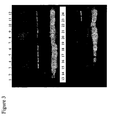
- Fig 3 shows an agarose gel analysis of top and bottom phases from a thermoseparating EO 50 PO 50 /Dextran T 500 and 50 mM Na 2 HPO 4 according to the invention. The agarose gel is stained with SYBR green. A volume of 12 ⁇ l was added to each lane.
- lane 1 is a thermoseparated top phase 5x diluted
- lane 2 is a thermoseparated top phase 5x diluted
- lane 3 is a thermoseparated top phase 2x diluted
- lane 4 is a thermoseparated top phase 2x diluted
- lane 5 is a thermoseparated top phase 1x diluted
- lane 6 is a thermoseparated top phase 1x diluted
- lane 7 is a top phase primary system 5x diluted
- lane 8 is a top phase primary system 5x diluted
- lane 9 is a top phase primary system 2x diluted
- lane 10 is a top phase primary system 2x diluted
- lane 11 is a top phase primary system 1x diluted
- lane 12 is a top phase primary system 1x diluted
- lane 13 is a bottom phase from thermoseparation 5x diluted
- lane 14 is a bottom phase from thermoseparation 2x diluted
- lane 15 is
- Fig 4 shows an agarose gel analysis of thermoseparating EO 50 PO 50 /Dextran T 500 and 50 mM Na 2 HPO 4 according to the invention.
- Fig 5 shows agarose gel electrophoresis (0.8 % w/v) of top and bottom phases from extraction of a diafiltrated lysate in an aqueous two-phase system as described in example 2 below. More specifically, in Fig 5, lane 1 is the thermoseparated bottom phase; lane 2 is the thermoseparated top-phase; lane 4 is the bottom phase (primary system); lane 5 is the top phase (primary system); lane 7is the diafiltrated lysate (starting material); and lane 9 is the Mw marker.
- Fig 6 shows agarose gel electrophoresis (0.8 % w/v) of top and bottom phases from extraction of an ultrafiltrated lysate in an aqueous two-phase system as described in example 3 below. More specifically, in Fig 6, lane 1 is the ultrafiltrated lysate (starting material); lane 2 is the top phase in primary system; lane 3 is the thermoseparated top phase; lane 4 is the thermoseparated bottom phase; and lane 5 is the Mw marker.
- the polymer Breox PAG 50 A 1000 (E050PO50) (Mr 3900) was obtained from Laporte Performance Chemicals (Southampton, U.K.) and Dextran T 500, with a molecular weight of 500,000, is available from Amersham Biosciences AB (Uppsala, Sweden). Na 2 HPO 4 was obtained from Merck Eurolab.
- a high copy number plasmid pUC 19 (2.686 kb) with a JV4 insert (3.433 kb) was a gift from Amersham Biosciences. The plasmid is referred to as pJV4 later on in the text (Vasi 1999).
- the plasmid pJV4 was cultivated in E . coli strain TG1 ⁇ over night in 2.0 L baffled shake flasks using 500 ml Lauria broth (10 g/L NaCl, 10 g/L Tryptone and 5g/L Yeast extract). The ampicillin concentration in the cultivations was 100 ⁇ g/ml and grown overnight at 37°C at 250 rpm.
- a modified alkaline lysis method was used.
- a 500 ml overnight cell culture was harvested by centrifugation at 9000 rpm in a Sorvall SLA 3000-rotor for 10 min at 4°C. The supernatant is carefully removed and 5 g of the bacterial pellet was resuspended by vortexing in 36 mL suspension buffer consisting of 61 mm glucose, 10 mM Tris, 50 mM EDTA (pH 8). After the cells are completely resuspended, 78 mL of lysis buffer P2 (0.2 M NaOH, 1 % SDS) was added while stirring gently with a magnetic stirrer. The mixture was incubated for 10 min at room temperature while stirring, assuring a complete mixture (1 phase) is achieved.
- ice cold neutralisation buffer 5 M potassium acetate, pH 5.5
- Example 1 Separation of plasmid pJV4 from an E.coli lysate, desalting by gel filtration
- the alkaline lysate was desalted by gel filtration on a Sephadex TM G-25 (Amersham Biosciences AB, Uppsala, Sweden) matrix. More specifically, the Sephadex beads were packed in a XK 50/30 column (Amersham Biosciences AB, Uppsala, Sweden), giving a total bed volume of 225 ml. The column was integrated to an ⁇ KTA TM explorer 10 system (Amersham Biosciences AB, Uppsala, Sweden) and equilibrated with the mobile phase (5 mM sodium phosphate buffer). Samples to be desalted (50-100 ml) were pumped into the column by the sample pump P-950 at a flow rate of 5 ml/min. The eluate from the column was monitored by UV absorbance and conductivity, which ensured an appropriate fractionation of nucleic acid containing eluate in 5 mM sodium phosphate buffer.
- the top and bottom phases from the phase system were analysed on an agarose gel.
- the agarose gel was run in a Hoefer TM HE 33 mini submarine electrophoresis unit from Amersham Biosciences AB.
- a 0.8 % (w/v) agarose (Duchefa, Netherlands) gel containing 15 ⁇ g/ml ethidium bromide (Quantum Biotechnologies, USA) was run for 90 V and 30 min. The gel was analysed and photographed under UV light.
- the partitioning of desalted alkaline lysate containing the plasmid DNA in an aqueous two-phase system can be influenced by different factors such as polymer concentration and salt composition.
- the object was to obtain a one sided partitioning of the plasmid to the EO 50 PO 50 phase in the primary aqueous two-phase system (Fig 1.).
- Fig 1. primary aqueous two-phase system
- plasmid DNA can be more extremely partitioned to the top phase.
- Partitioning of plasmid DNA in desalted alkaline lysate in two-phase systems composed of different concentrations of EO 50 PO 50 and Dextran T 500 was studied.
- a salt to a two-phase system forces the anion and the cation to partition together between the two different polymer phases and this will generate an electrical potential between the phases.
- the HPO 4 2- anion has affinity for the dextran phase. This will create an electrochemical driving force in the system. If a negatively charged substance e.g. plasmid DNA is added to this system, the DNA will partition to the top phase (Fig 2).
- thermoseparating system Partitioning of plasmid DNA in a thermoseparating system
- the lysate was partitioned in systems containing 4.5 % (w/w) Dextran T 500, 4.5 % (w/w) EO 50 PO 50 and 50 mM Na 2 HPO 4 .
- the systems were prepared according to the section "Material and methods" above. The systems were mixed and after phase separation the phases were separated and isolated in separate containers. The top phase was put in a water bath at 55°C. The system phase separated into two new phases, one water phase and one dense polymer phase. The thermoseparating step was utilised for separating the target plasmid from the EO 50 PO 50 polymer, and isolating the plasmid in a water phase with low ( ⁇ 1%) polymer solution.
- agarose gel electrophoresis stained with ethidium bromide From the agarose gel electrophoresis it can be seen that all forms of plasmid DNA are partitioned to the top phase in the first step and in the thermoseparating step the plasmid DNA is exclusively partitioned to the top water phase. From the agarose gel electrophoresis (Fig 2.) it can also be seen that contaminating RNA is to a high degree partitioned to the bottom phase in the primary system.
- the main objective is to remove the dominating contaminants in the solution containing the plasmid DNA.
- the bacteria When the bacteria are lysed in the alkaline lysis step protein, RNA, genomic DNA, cells and cell debris are released.
- the neutralisation step in the alkaline lysis the lysate is centrifuged and most of these contaminants are removed but there will still be significant contaminants present in the sample.
- Analysis of the total protein partitioning in the first step showed a K value of 1.4. This gives a 65 % yield of total protein in the top phase.
- the system can discard 35 % of the proteins in the first step. In the thermoseparation step the yield of the protein is 100 %. Thus, the system can discard proteins to an extent of 35 %.
- a primary purification step When a primary purification step is designed one of the issues are to decrease the process volume of the working solution. In a two-phase system this can be achieved by decreasing the volume of the top-phase. By moving along a tie-line in a phase diagram the volume ratio between the two phases can be altered without changing the partitioning of the substance. If the dextran concentration is increased in the bottom phase a larger volume of the bottom phase is created and thus decreasing the volume of the top phase.
- plasmid DNA was performed on group separation chromatography. Separation between all forms of plasmid DNA and RNA can be achieved. Results show that the total yield of the plasmid in the top water phase after thermoseparation compared to the starting material is 103.3 %. The yield of RNA in the same sample according to chromatography results is 27 %. This means that the aqueous two-phase system is able to remove 63 % of the contaminating RNA.
- Example 2 Separation of plasmid pJV4 from an E.coli lysate, desalting by diafiltration
- a polysulfon hollow fibre cartridge (A/G Technology Corporation, Needham, M.A., USA) with a 100 000 Da cut off was used for diafiltration (Lot no. 96992057061, Lumen id: 0.5 mm, area 650 m 2 ).
- the cartridge was washed with MilliQ water to remove contaminants of glycerol.
- the system was recirculated with 5 l of MilliQ water for 10 min and than with fresh 5 mM of Na-phosphate buffer for 10 min.
- a volume of 350 ml clarified lysate was diafiltrated towards a 5 mM Na-phosphate buffer pH 7.0. For complete buffer exchange, four sample volumes of 5 mM Na-phosphate buffer was used.
- a second diafiltration was performed since four buffer volumes of buffer were not enough for complete buffer exchange.
- the diafiltrated lysate was diafiltrated once more towards a 5 mM NaP buffer, pH 7. Another 8 buffer volumes were used to achieve complete buffer exchange.
- the final diafiltrated sample was further extracted in an aqueous two-phase system.
- thermoseparating system Partitioning of diafiltrated plasmid DNA in a thermoseparating system
- the diafiltrated lysate was partitioned in an aqueous two-phase system composed of 4.5 % (w/w) EO 50 PO 50 , 4.5 % (w/w) Dextran T 500 and 50 mM Na 2 HPO 4 . All chemicals and the diafiltrated lysate was added to a glass tube to a final weigtht of 10 g. The system was then separated by centrifugation (1600 g, 10 min) at room temperature. The phases were separated in one top phase and one bottom phase and isolated in new containers.
- the top phase was put in a water bath at 55° C.
- the system phase separated into two new phases, one water phase and one dense polymer phase.
- the thermoseparating step was utilised for separating the target plasmid from the EO 50 PO 50 polymer, and isolating the plasmid in a water phase with low ( ⁇ 1%) polymer solution (Fig 1).
- the phases from the aqueous two-phase extraction were analysed with agarose gel electrophoresis and size exclusion chromatography (group separation). The results from the group separation showed a one sided partitioning of the plasmid to the top phase (Table 1).
- the calculations of the concentration of the plasmid DNA are performed from a standard curve.
- Example 3 Separation of plasmid pJV4 from an E.coli lysate, desalting by ultrafiltration
- the same cartridge with same cut off as earlier described for diafiltration was also used for ultrafiltration.
- a volume of 1000 ml of clarified lysate was ultrafiltrated until a volume of 225 ml was reached.
- the ultrafiltrated lysate was than dialysed against 800 ml of 5 mM NaP buffer.
- the lysate was dialysed until the buffer was finished.
- the lysate was than ultrafiltrated again until a final volume of 72 ml and further extracted in an aqueous two-phase system.
- thermoseparating system Partitioning of ultrafiltrated plasmid DNA in a thermoseparating system
- the ultrafiltrated lysate was partitioned in an aqueous two-phase system as described earlier. From the agarose gel electrophoresis (Fig 6.) it can be seen that an almost one sided partition was achieved of the plasmid. A small loss of the plasmid to the bottom phase is achieved in this system. This is probably due to the high plasmid concentration in the system e.g. 2 mg/ml or another possibility could be insufficient buffer exchange.
- the results of samples from ultrafiltration and two-phase extraction are presented in table 2.
- the ultrafiltrated lysate is concentrated 13.9 times from the starting material. No precipitation of RNA and DNA was visible in the ultrafiltrated lysate.
Landscapes
- Health & Medical Sciences (AREA)
- Chemical & Material Sciences (AREA)
- Engineering & Computer Science (AREA)
- Biomedical Technology (AREA)
- Life Sciences & Earth Sciences (AREA)
- Genetics & Genomics (AREA)
- Organic Chemistry (AREA)
- Zoology (AREA)
- Wood Science & Technology (AREA)
- Bioinformatics & Cheminformatics (AREA)
- Biotechnology (AREA)
- General Engineering & Computer Science (AREA)
- Molecular Biology (AREA)
- Plant Pathology (AREA)
- Biophysics (AREA)
- Microbiology (AREA)
- Physics & Mathematics (AREA)
- Crystallography & Structural Chemistry (AREA)
- Biochemistry (AREA)
- General Health & Medical Sciences (AREA)
- Analytical Chemistry (AREA)
- Preparation Of Compounds By Using Micro-Organisms (AREA)
- Saccharide Compounds (AREA)
- Measuring Or Testing Involving Enzymes Or Micro-Organisms (AREA)
Claims (18)
- Verfahren zur Reinigung einer Plasmid-DNA in einem wässrigen 2-Phasen-System, umfassend die Schritte(a) Bereitstellen einer Zusammensetzung, umfassend ein erstes Polymer, das inverse Löslichkeitseigenschaften zeigt und amphiphil und fähig ist, mit Plasmid-DNA wechselzuwirken, ein zweites Polymer, das nicht mischbar in dem ersten Polymer ist und das hydrophil ist, und gegebenenfalls ein Salz;(b) Inkontaktbringen der Lösung mit einer wässrigen Lösung, umfassend Plasmid-DNA;(c) Bereitstellen einer Phasentrennung und nachfolgendes Isolieren der wässrigen Phase;(d) Vergrößern der Temperatur der isolierten Phase auf eine Temperatur oberhalb des Trübungspunkts des ersten Polymers und unterhalb der Temperatur, bei der die Plasmid-DNA abgebaut wird, und nachfolgend Isolieren der so gebildeten wässrigen Phase; und gegebenenfalls(e) einen Chromatographie-Schritt, um die Plasmid-DNA von der isolierten oberen Phase wiederzugewinnen.
- Verfahren nach Anspruch 1, bei dem das erste Polymer einen Trübungspunkt unter ungefähr 60°C in der wässrigen Lösung besitzt.
- Verfahren nach Anspruch 1 oder 2, bei dem das erste Polymer ausgewählt ist aus der Gruppe, die besteht aus Polyalkylenglykolen, Poly(oxyalkylen)-polymeren, Poly(oxyalkylen)copolymeren, Polyvinylpyrrolidon, Polyvinylalkohol, Polyvinylcaprolaktam, Polyvinylmethylether, alkoxylierte oberflächenaktive Mittel, alkoxylierte Stärken, alkoxylierte Zellulose, Alkylhydroxyalkylzellulose, Silikon-modifizierte Polyether und Poly-N-isopropylacrylamid und Copolymere davon.
- Verfahren nach einem der vorstehenden Ansprüche, bei dem das erste Polymer ein Copolymer ist, das besteht aus Ethylenoxid und Propylenoxid, bevorzugt ungefähr 50% Ethylenoxid und ungefähr 50% Propylenoxid.
- Verfahren nach einem der vorstehenden Ansprüche, bei dem das zweite Polymer ausgewählt ist aus der Gruppe, die besteht aus Hydroxyalkylcellulose, Hydroxyalkylstärken, Stärke, Dextran und Pullulan.
- Verfahren nach einem der vorstehenden Ansprüche, bei dem das Gewichtsverhältnis der Mengen vom ersten Polymer:zweiten Polymer ungefähr 1:1 beträgt.
- Verfahren nach Anspruch 6, bei dem die Menge des ersten Polymers ungefähr 4,5% (G/G) und die Menge des zweiten Polymers ungefähr 4,5% (G/G) der Zusammensetzung beträgt, die in Schritt (a), wie in Anspruch 1 definiert, bereitgestellt wird.
- Verfahren nach einem der vorstehenden Ansprüche, bei dem die wässrige Lösung, die Plasmid-DNA umfasst, ein Zelllysat ist, wobei das Verfahren umfasst einen Schritt zum Entsalzen des Zelllysats vor dem Schritt (b), wie in Anspruch 1 definiert.
- Verfahren nach einem der vorstehenden Ansprüche, bei dem das Inkontaktbringen gemäß Schritt (b), wie in Anspruch 1 definiert, Mischen bei Raumtemperatur beinhaltet.
- Verfahren nach einem der vorstehenden Ansprüche, bei dem die Isolierung gemäß Schritt (c) und/oder Schritt (d), wie in Anspruch 1 definiert, durch Zentrifugation stattfindet.
- Kit zur Reinigung von Plasmid-DNA aus einem Zelllysat in einem wässrigen Zwei-Phasen-System, wobei das Kit umfasst ein erstes Polymer, das inverse Löslichkeitseigenschaften bei Temperaturen unter ungefähr 60°C zeigt, und das amphiphil und fähig ist zum Wechselwirken mit Plasmid-DNA, ein zweites Polymer, das nicht mischbar in dem ersten Polymer ist und das hydrophil ist, und gegebenenfalls ein Salz in einer Abteilung, wie auch geschriebene Instruktionen für die Verwendung davon.
- Kit nach Anspruch 11, wobei das erste Polymer aus Ethylenoxid und Propylenoxid besteht.
- Kit nach Anspruch 11 oder 12, wobei das zweite Polymer ausgewählt ist aus der Gruppe, die besteht aus Hydroxyalkylzellulose, Hydroalkylstärken, Stärke, Dextran und Pullulan.
- Kit nach einem der Ansprüche 11 bis 13, wobei das Gewichtsverhältnis der Mengen erstes Polymer:zweites Polymer ungefähr 1:1 beträgt.
- Kit nach einem der Ansprüche 11 bis 14, das für eine Reinigung von Plasmid-DNA aus einem Zelllysat bestimmt ist, das vor dem Gemischtwerden mit einer wässrigen Lösung entsalzt worden ist, die Plasmid-DNA enthält.
- Kit nach einem der Ansprüche 11 bis 15 zur Verwendung in einem Verfahren nach einem der Ansprüche 1 bis 10.
- Verwendung eines Polymers, das inverse Löslichkeitseigenschaften bei Temperaturen unter 60°C zeigt, in einem wässrigen Zwei-Phasen-System zur Reinigung von Plasmid-DNA aus einem Zelllysat.
- Verwendung nach Anspruch 17, wobei das Polymer ein Copolymer von Ethylenoxid und Propylenoxid ist.
Applications Claiming Priority (3)
| Application Number | Priority Date | Filing Date | Title |
|---|---|---|---|
| SE0202552 | 2002-08-27 | ||
| SE0202552A SE0202552D0 (sv) | 2002-08-27 | 2002-08-27 | Recovery of plasmids in an aqueous two-phase system |
| PCT/SE2003/001016 WO2004020629A1 (en) | 2002-08-27 | 2003-06-17 | Recovery of plasmids in an aqueous two-phase system |
Publications (2)
| Publication Number | Publication Date |
|---|---|
| EP1532243A1 EP1532243A1 (de) | 2005-05-25 |
| EP1532243B1 true EP1532243B1 (de) | 2007-05-16 |
Family
ID=20288830
Family Applications (1)
| Application Number | Title | Priority Date | Filing Date |
|---|---|---|---|
| EP03736399A Expired - Lifetime EP1532243B1 (de) | 2002-08-27 | 2003-06-17 | Gewinnung von plasmiden in einem wässrigen zweiphasensystem |
Country Status (8)
| Country | Link |
|---|---|
| US (1) | US7553658B2 (de) |
| EP (1) | EP1532243B1 (de) |
| JP (1) | JP4699757B2 (de) |
| AT (1) | ATE362529T1 (de) |
| AU (1) | AU2003237740A1 (de) |
| DE (1) | DE60313870D1 (de) |
| SE (1) | SE0202552D0 (de) |
| WO (1) | WO2004020629A1 (de) |
Cited By (4)
| Publication number | Priority date | Publication date | Assignee | Title |
|---|---|---|---|---|
| US9731288B2 (en) | 2010-05-17 | 2017-08-15 | Emd Millipore Corporation | Stimulus responsive polymers for the purification of biomolecules |
| US9803165B2 (en) | 2008-12-16 | 2017-10-31 | Emd Millipore Corporation | Stirred tank reactor and method |
| US10233211B2 (en) | 2006-12-21 | 2019-03-19 | Emd Millipore Corporation | Purification of proteins |
| US10793593B2 (en) | 2006-12-21 | 2020-10-06 | Emd Millipore Corporation | Purification of proteins |
Families Citing this family (20)
| Publication number | Priority date | Publication date | Assignee | Title |
|---|---|---|---|---|
| JP2008529516A (ja) * | 2005-02-11 | 2008-08-07 | インヴィトロジェン ダイナル エーエス | エチレングリコール多量体の使用を含む核酸の単離方法 |
| EP1762616A1 (de) * | 2005-09-13 | 2007-03-14 | Qiagen GmbH | Verfahren zur selektiven Anreicherung von doppelsträngiger DNA aus Nukleinsäuregemischen |
| FR2902799B1 (fr) | 2006-06-27 | 2012-10-26 | Millipore Corp | Procede et unite de preparation d'un echantillon pour l'analyse microbiologique d'un liquide |
| US8362217B2 (en) | 2006-12-21 | 2013-01-29 | Emd Millipore Corporation | Purification of proteins |
| JP2010530462A (ja) * | 2007-06-19 | 2010-09-09 | ジーイー・ヘルスケア・バイオ−サイエンシズ・アーベー | ポリマー2相システムおよびその使用 |
| US8999702B2 (en) | 2008-06-11 | 2015-04-07 | Emd Millipore Corporation | Stirred tank bioreactor |
| PT105438B (pt) * | 2010-12-14 | 2014-08-14 | Univ Do Minho | Isolamento de dna plasmídico em sistemas de duas fases aquosas utilizando polímeros neutros derivatizados com grupos catiónicos |
| US9169379B2 (en) | 2013-07-15 | 2015-10-27 | King Fahd University Of Petroleum And Minerals | Aqueous two-phase systems |
| EP4234710A3 (de) | 2017-03-28 | 2023-11-01 | Phase Scientific International, Ltd. | Verfahren zur genauen diagnose von gegen krankheiten gerichtete biomarkers in der flüssigbiopsie |
| SG11201909324WA (en) | 2017-06-01 | 2019-11-28 | Yin To Chiu | Phase separation behavior modifying agents for aqueous two-phase separation within porous material |
| WO2019046563A1 (en) | 2017-09-01 | 2019-03-07 | Phase Diagnostics, Inc. | METHOD AND DEVICE FOR USING AQUEOUS BIPHASE SYSTEMS (ATPS) TO IMPROVE THE DIAGNOSIS OF SEXUALLY TRANSMITTED INFECTIONS |
| ES2964100T3 (es) | 2017-09-18 | 2024-04-04 | Phase Scient International Ltd | Método de utilización de un sistema acuoso bifásico para el aislamiento, purificación y/o concentración de fragmentos cortos de ácidos nucleicos |
| US11479765B2 (en) | 2018-01-19 | 2022-10-25 | Phase Scientific International, Ltd. | Method of isolating exosomes using encapsulation and aqueous micellar system |
| EP3740588A4 (de) | 2018-01-19 | 2021-10-20 | Phase Scientific International, Ltd. | Verfahren zur isolierung und reinigung von nukleinsäuren unter verwendung eines fest-flüssig-phasensystems |
| WO2019143943A2 (en) * | 2018-01-19 | 2019-07-25 | Yin To Chiu | Composition and method for concentration and enrichment of nucleic acids |
| WO2019143895A1 (en) | 2018-01-19 | 2019-07-25 | Yin To Chiu | Spontaneous nucleic acid purification and concentration in a single step |
| EP4121530A1 (de) | 2020-03-20 | 2023-01-25 | Phase Scientific International, Ltd. | Zusammensetzungen und verfahren zur ribonukleinsäureextraktion |
| CN112375109B (zh) * | 2020-11-20 | 2023-03-28 | 华东理工大学 | 利用烷基酚聚氧乙烯聚氧丙烯醚npe-108分离纯化螺旋霉素 |
| WO2023174022A1 (en) * | 2022-03-16 | 2023-09-21 | The University Of Hong Kong | Synergistic control and dynamic assembly of viscoelastic networks and biomolecular condensates by aqueous liquid-liquid phase separation and liquid-solid phase separation (aqll-ls ps2) |
| EP4612288A1 (de) | 2022-11-02 | 2025-09-10 | Phase Scientific International, Ltd. | Verfahren zur isolierung von zielanalyten aus biologischen proben unter verwendung von atps und festphasenmedien |
Family Cites Families (2)
| Publication number | Priority date | Publication date | Assignee | Title |
|---|---|---|---|---|
| SE9603304D0 (sv) * | 1996-09-11 | 1996-09-11 | Pharmacia & Upjohn Ab | Process for purifying a compound |
| JP2000513945A (ja) * | 1996-09-11 | 2000-10-24 | エスペリオン セラピューティクス インコーポレイテッド | プロセスにおける使用のためにアポリポタンパク質および組成物を精製するためのプロセス |
-
2002
- 2002-08-27 SE SE0202552A patent/SE0202552D0/xx unknown
-
2003
- 2003-06-17 WO PCT/SE2003/001016 patent/WO2004020629A1/en not_active Ceased
- 2003-06-17 AU AU2003237740A patent/AU2003237740A1/en not_active Abandoned
- 2003-06-17 JP JP2004532487A patent/JP4699757B2/ja not_active Expired - Fee Related
- 2003-06-17 AT AT03736399T patent/ATE362529T1/de not_active IP Right Cessation
- 2003-06-17 US US10/526,089 patent/US7553658B2/en not_active Expired - Fee Related
- 2003-06-17 DE DE60313870T patent/DE60313870D1/de not_active Expired - Fee Related
- 2003-06-17 EP EP03736399A patent/EP1532243B1/de not_active Expired - Lifetime
Cited By (4)
| Publication number | Priority date | Publication date | Assignee | Title |
|---|---|---|---|---|
| US10233211B2 (en) | 2006-12-21 | 2019-03-19 | Emd Millipore Corporation | Purification of proteins |
| US10793593B2 (en) | 2006-12-21 | 2020-10-06 | Emd Millipore Corporation | Purification of proteins |
| US9803165B2 (en) | 2008-12-16 | 2017-10-31 | Emd Millipore Corporation | Stirred tank reactor and method |
| US9731288B2 (en) | 2010-05-17 | 2017-08-15 | Emd Millipore Corporation | Stimulus responsive polymers for the purification of biomolecules |
Also Published As
| Publication number | Publication date |
|---|---|
| US7553658B2 (en) | 2009-06-30 |
| AU2003237740A1 (en) | 2004-03-19 |
| JP4699757B2 (ja) | 2011-06-15 |
| JP2005537004A (ja) | 2005-12-08 |
| SE0202552D0 (sv) | 2002-08-27 |
| ATE362529T1 (de) | 2007-06-15 |
| EP1532243A1 (de) | 2005-05-25 |
| DE60313870D1 (de) | 2007-06-28 |
| US20060166349A1 (en) | 2006-07-27 |
| WO2004020629A1 (en) | 2004-03-11 |
Similar Documents
| Publication | Publication Date | Title |
|---|---|---|
| EP1532243B1 (de) | Gewinnung von plasmiden in einem wässrigen zweiphasensystem | |
| EP0923592B1 (de) | Verfahren zur reinigung von nukleinsäuren | |
| US6313285B1 (en) | Purification of plasmid DNA | |
| EP0268946B1 (de) | Verfahren zur Isolierung von langkettiger Nukleinsäure | |
| US8680261B2 (en) | Methods for purifying nucleic acids | |
| AU708798B2 (en) | A method for large scale plasmid purification | |
| JP2019048807A (ja) | たんぱく質精製の新規な方法 | |
| EP1517990B1 (de) | Isolierung von nukleinsäuren unter verwendung eines polykationischen polymers als fällungsmittel | |
| JP2003527821A (ja) | 細胞から非染色体核酸分子を精製するための方法 | |
| US20030064951A1 (en) | Methods for purifying nucleic acids | |
| DK2027272T3 (en) | Plasmid DNA PREPARATIONS AND METHODS FOR THE MANUFACTURE OF SAME | |
| AU777083B2 (en) | Method for RNAse- and organic solvent-free plasmid DNA purification using tangential flow filtration | |
| Boffey | Plasmid Isolation |
Legal Events
| Date | Code | Title | Description |
|---|---|---|---|
| PUAI | Public reference made under article 153(3) epc to a published international application that has entered the european phase |
Free format text: ORIGINAL CODE: 0009012 |
|
| 17P | Request for examination filed |
Effective date: 20041222 |
|
| AK | Designated contracting states |
Kind code of ref document: A1 Designated state(s): AT BE BG CH CY CZ DE DK EE ES FI FR GB GR HU IE IT LI LU MC NL PT RO SE SI SK TR |
|
| AX | Request for extension of the european patent |
Extension state: AL LT LV MK |
|
| DAX | Request for extension of the european patent (deleted) | ||
| RAP1 | Party data changed (applicant data changed or rights of an application transferred) |
Owner name: GE HEALTHCARE BIO-SCIENCES AB |
|
| RIN1 | Information on inventor provided before grant (corrected) |
Inventor name: TJERNELD, FOLKE Inventor name: RHODIN, JENNY Inventor name: KEPKA, CECILIA |
|
| 17Q | First examination report despatched |
Effective date: 20051028 |
|
| GRAP | Despatch of communication of intention to grant a patent |
Free format text: ORIGINAL CODE: EPIDOSNIGR1 |
|
| GRAS | Grant fee paid |
Free format text: ORIGINAL CODE: EPIDOSNIGR3 |
|
| GRAA | (expected) grant |
Free format text: ORIGINAL CODE: 0009210 |
|
| AK | Designated contracting states |
Kind code of ref document: B1 Designated state(s): AT BE BG CH CY CZ DE DK EE ES FI FR GB GR HU IE IT LI LU MC NL PT RO SE SI SK TR |
|
| PG25 | Lapsed in a contracting state [announced via postgrant information from national office to epo] |
Ref country code: FI Free format text: LAPSE BECAUSE OF FAILURE TO SUBMIT A TRANSLATION OF THE DESCRIPTION OR TO PAY THE FEE WITHIN THE PRESCRIBED TIME-LIMIT Effective date: 20070516 Ref country code: LI Free format text: LAPSE BECAUSE OF FAILURE TO SUBMIT A TRANSLATION OF THE DESCRIPTION OR TO PAY THE FEE WITHIN THE PRESCRIBED TIME-LIMIT Effective date: 20070516 Ref country code: CH Free format text: LAPSE BECAUSE OF FAILURE TO SUBMIT A TRANSLATION OF THE DESCRIPTION OR TO PAY THE FEE WITHIN THE PRESCRIBED TIME-LIMIT Effective date: 20070516 |
|
| REG | Reference to a national code |
Ref country code: GB Ref legal event code: FG4D |
|
| REG | Reference to a national code |
Ref country code: CH Ref legal event code: EP |
|
| REG | Reference to a national code |
Ref country code: IE Ref legal event code: FG4D |
|
| REF | Corresponds to: |
Ref document number: 60313870 Country of ref document: DE Date of ref document: 20070628 Kind code of ref document: P |
|
| PG25 | Lapsed in a contracting state [announced via postgrant information from national office to epo] |
Ref country code: SE Free format text: LAPSE BECAUSE OF FAILURE TO SUBMIT A TRANSLATION OF THE DESCRIPTION OR TO PAY THE FEE WITHIN THE PRESCRIBED TIME-LIMIT Effective date: 20070816 |
|
| PG25 | Lapsed in a contracting state [announced via postgrant information from national office to epo] |
Ref country code: ES Free format text: LAPSE BECAUSE OF FAILURE TO SUBMIT A TRANSLATION OF THE DESCRIPTION OR TO PAY THE FEE WITHIN THE PRESCRIBED TIME-LIMIT Effective date: 20070827 |
|
| NLV1 | Nl: lapsed or annulled due to failure to fulfill the requirements of art. 29p and 29m of the patents act | ||
| PG25 | Lapsed in a contracting state [announced via postgrant information from national office to epo] |
Ref country code: AT Free format text: LAPSE BECAUSE OF FAILURE TO SUBMIT A TRANSLATION OF THE DESCRIPTION OR TO PAY THE FEE WITHIN THE PRESCRIBED TIME-LIMIT Effective date: 20070516 |
|
| REG | Reference to a national code |
Ref country code: CH Ref legal event code: PL |
|
| PG25 | Lapsed in a contracting state [announced via postgrant information from national office to epo] |
Ref country code: BE Free format text: LAPSE BECAUSE OF FAILURE TO SUBMIT A TRANSLATION OF THE DESCRIPTION OR TO PAY THE FEE WITHIN THE PRESCRIBED TIME-LIMIT Effective date: 20070516 |
|
| EN | Fr: translation not filed | ||
| PG25 | Lapsed in a contracting state [announced via postgrant information from national office to epo] |
Ref country code: SI Free format text: LAPSE BECAUSE OF FAILURE TO SUBMIT A TRANSLATION OF THE DESCRIPTION OR TO PAY THE FEE WITHIN THE PRESCRIBED TIME-LIMIT Effective date: 20070516 Ref country code: CZ Free format text: LAPSE BECAUSE OF FAILURE TO SUBMIT A TRANSLATION OF THE DESCRIPTION OR TO PAY THE FEE WITHIN THE PRESCRIBED TIME-LIMIT Effective date: 20070516 Ref country code: PT Free format text: LAPSE BECAUSE OF FAILURE TO SUBMIT A TRANSLATION OF THE DESCRIPTION OR TO PAY THE FEE WITHIN THE PRESCRIBED TIME-LIMIT Effective date: 20071016 Ref country code: MC Free format text: LAPSE BECAUSE OF NON-PAYMENT OF DUE FEES Effective date: 20070630 Ref country code: DK Free format text: LAPSE BECAUSE OF FAILURE TO SUBMIT A TRANSLATION OF THE DESCRIPTION OR TO PAY THE FEE WITHIN THE PRESCRIBED TIME-LIMIT Effective date: 20070516 Ref country code: BG Free format text: LAPSE BECAUSE OF FAILURE TO SUBMIT A TRANSLATION OF THE DESCRIPTION OR TO PAY THE FEE WITHIN THE PRESCRIBED TIME-LIMIT Effective date: 20070816 Ref country code: NL Free format text: LAPSE BECAUSE OF FAILURE TO SUBMIT A TRANSLATION OF THE DESCRIPTION OR TO PAY THE FEE WITHIN THE PRESCRIBED TIME-LIMIT Effective date: 20070516 |
|
| PG25 | Lapsed in a contracting state [announced via postgrant information from national office to epo] |
Ref country code: SK Free format text: LAPSE BECAUSE OF FAILURE TO SUBMIT A TRANSLATION OF THE DESCRIPTION OR TO PAY THE FEE WITHIN THE PRESCRIBED TIME-LIMIT Effective date: 20070516 |
|
| PLBE | No opposition filed within time limit |
Free format text: ORIGINAL CODE: 0009261 |
|
| STAA | Information on the status of an ep patent application or granted ep patent |
Free format text: STATUS: NO OPPOSITION FILED WITHIN TIME LIMIT |
|
| 26N | No opposition filed |
Effective date: 20080219 |
|
| PG25 | Lapsed in a contracting state [announced via postgrant information from national office to epo] |
Ref country code: GR Free format text: LAPSE BECAUSE OF FAILURE TO SUBMIT A TRANSLATION OF THE DESCRIPTION OR TO PAY THE FEE WITHIN THE PRESCRIBED TIME-LIMIT Effective date: 20070817 Ref country code: DE Free format text: LAPSE BECAUSE OF NON-PAYMENT OF DUE FEES Effective date: 20080101 Ref country code: IT Free format text: LAPSE BECAUSE OF FAILURE TO SUBMIT A TRANSLATION OF THE DESCRIPTION OR TO PAY THE FEE WITHIN THE PRESCRIBED TIME-LIMIT Effective date: 20070516 |
|
| PG25 | Lapsed in a contracting state [announced via postgrant information from national office to epo] |
Ref country code: RO Free format text: LAPSE BECAUSE OF FAILURE TO SUBMIT A TRANSLATION OF THE DESCRIPTION OR TO PAY THE FEE WITHIN THE PRESCRIBED TIME-LIMIT Effective date: 20070516 Ref country code: IE Free format text: LAPSE BECAUSE OF NON-PAYMENT OF DUE FEES Effective date: 20070618 |
|
| PG25 | Lapsed in a contracting state [announced via postgrant information from national office to epo] |
Ref country code: FR Free format text: LAPSE BECAUSE OF FAILURE TO SUBMIT A TRANSLATION OF THE DESCRIPTION OR TO PAY THE FEE WITHIN THE PRESCRIBED TIME-LIMIT Effective date: 20080111 |
|
| PG25 | Lapsed in a contracting state [announced via postgrant information from national office to epo] |
Ref country code: EE Free format text: LAPSE BECAUSE OF FAILURE TO SUBMIT A TRANSLATION OF THE DESCRIPTION OR TO PAY THE FEE WITHIN THE PRESCRIBED TIME-LIMIT Effective date: 20070516 |
|
| PG25 | Lapsed in a contracting state [announced via postgrant information from national office to epo] |
Ref country code: CY Free format text: LAPSE BECAUSE OF FAILURE TO SUBMIT A TRANSLATION OF THE DESCRIPTION OR TO PAY THE FEE WITHIN THE PRESCRIBED TIME-LIMIT Effective date: 20070516 |
|
| PG25 | Lapsed in a contracting state [announced via postgrant information from national office to epo] |
Ref country code: LU Free format text: LAPSE BECAUSE OF NON-PAYMENT OF DUE FEES Effective date: 20070617 |
|
| PG25 | Lapsed in a contracting state [announced via postgrant information from national office to epo] |
Ref country code: HU Free format text: LAPSE BECAUSE OF FAILURE TO SUBMIT A TRANSLATION OF THE DESCRIPTION OR TO PAY THE FEE WITHIN THE PRESCRIBED TIME-LIMIT Effective date: 20071117 Ref country code: TR Free format text: LAPSE BECAUSE OF FAILURE TO SUBMIT A TRANSLATION OF THE DESCRIPTION OR TO PAY THE FEE WITHIN THE PRESCRIBED TIME-LIMIT Effective date: 20070516 |
|
| PGFP | Annual fee paid to national office [announced via postgrant information from national office to epo] |
Ref country code: GB Payment date: 20130627 Year of fee payment: 11 |
|
| GBPC | Gb: european patent ceased through non-payment of renewal fee |
Effective date: 20140617 |
|
| PG25 | Lapsed in a contracting state [announced via postgrant information from national office to epo] |
Ref country code: GB Free format text: LAPSE BECAUSE OF NON-PAYMENT OF DUE FEES Effective date: 20140617 |