EP1533379B1 - G-Protein Chimären - Google Patents
G-Protein Chimären Download PDFInfo
- Publication number
- EP1533379B1 EP1533379B1 EP04078332A EP04078332A EP1533379B1 EP 1533379 B1 EP1533379 B1 EP 1533379B1 EP 04078332 A EP04078332 A EP 04078332A EP 04078332 A EP04078332 A EP 04078332A EP 1533379 B1 EP1533379 B1 EP 1533379B1
- Authority
- EP
- European Patent Office
- Prior art keywords
- gpa1
- receptor
- protein
- gpa1p
- receptors
- Prior art date
- Legal status (The legal status is an assumption and is not a legal conclusion. Google has not performed a legal analysis and makes no representation as to the accuracy of the status listed.)
- Expired - Lifetime
Links
- 108091006027 G proteins Proteins 0.000 title description 32
- 102000030782 GTP binding Human genes 0.000 title description 32
- 108091000058 GTP-Binding Proteins 0.000 title description 32
- 210000004027 cell Anatomy 0.000 claims abstract description 76
- 240000004808 Saccharomyces cerevisiae Species 0.000 claims abstract description 51
- 210000004899 c-terminal region Anatomy 0.000 claims abstract description 35
- 150000001413 amino acids Chemical group 0.000 claims abstract description 27
- 230000004044 response Effects 0.000 claims abstract description 21
- 108700008625 Reporter Genes Proteins 0.000 claims abstract description 19
- 230000012010 growth Effects 0.000 claims abstract description 10
- 238000000034 method Methods 0.000 claims abstract description 8
- 125000003275 alpha amino acid group Chemical group 0.000 claims abstract description 7
- 150000001875 compounds Chemical class 0.000 claims abstract description 5
- 238000012216 screening Methods 0.000 claims abstract 2
- 102000005962 receptors Human genes 0.000 claims description 145
- 108020003175 receptors Proteins 0.000 claims description 145
- 235000014680 Saccharomyces cerevisiae Nutrition 0.000 claims description 48
- 108090000623 proteins and genes Proteins 0.000 claims description 39
- 102000004169 proteins and genes Human genes 0.000 claims description 25
- 102000003688 G-Protein-Coupled Receptors Human genes 0.000 claims description 15
- 108090000045 G-Protein-Coupled Receptors Proteins 0.000 claims description 15
- 239000002773 nucleotide Substances 0.000 claims description 13
- 125000003729 nucleotide group Chemical group 0.000 claims description 13
- 108020004707 nucleic acids Proteins 0.000 claims description 3
- 102000039446 nucleic acids Human genes 0.000 claims description 3
- 150000007523 nucleic acids Chemical class 0.000 claims description 3
- 210000005253 yeast cell Anatomy 0.000 abstract description 10
- 238000006467 substitution reaction Methods 0.000 abstract description 2
- 230000006303 immediate early viral mRNA transcription Effects 0.000 abstract 2
- 101150102561 GPA1 gene Proteins 0.000 description 113
- 230000014509 gene expression Effects 0.000 description 42
- 230000008878 coupling Effects 0.000 description 33
- 238000010168 coupling process Methods 0.000 description 33
- 238000005859 coupling reaction Methods 0.000 description 33
- 239000013612 plasmid Substances 0.000 description 27
- 230000010422 pheromone response pathway Effects 0.000 description 26
- 239000000556 agonist Substances 0.000 description 25
- 238000003556 assay Methods 0.000 description 25
- 230000004913 activation Effects 0.000 description 24
- 238000002474 experimental method Methods 0.000 description 24
- 102100040796 Glycoprotein hormones alpha chain Human genes 0.000 description 23
- 101001038874 Homo sapiens Glycoprotein hormones alpha chain Proteins 0.000 description 23
- IXKSXJFAGXLQOQ-XISFHERQSA-N WHWLQLKPGQPMY Chemical compound C([C@@H](C(=O)N[C@@H](CC=1C2=CC=CC=C2NC=1)C(=O)N[C@@H](CC(C)C)C(=O)N[C@@H](CCC(N)=O)C(=O)N[C@@H](CC(C)C)C(=O)N1CCC[C@H]1C(=O)NCC(=O)N[C@@H](CCC(N)=O)C(=O)N[C@@H](CC(O)=O)C(=O)N1CCC[C@H]1C(=O)N[C@@H](CCSC)C(=O)N[C@@H](CC=1C=CC(O)=CC=1)C(O)=O)NC(=O)[C@@H](N)CC=1C2=CC=CC=C2NC=1)C1=CNC=N1 IXKSXJFAGXLQOQ-XISFHERQSA-N 0.000 description 22
- 230000000694 effects Effects 0.000 description 21
- QZAYGJVTTNCVMB-UHFFFAOYSA-N serotonin Chemical compound C1=C(O)C=C2C(CCN)=CNC2=C1 QZAYGJVTTNCVMB-UHFFFAOYSA-N 0.000 description 16
- 230000011664 signaling Effects 0.000 description 16
- 238000013459 approach Methods 0.000 description 13
- NHXLMOGPVYXJNR-ATOGVRKGSA-N somatostatin Chemical compound C([C@H]1C(=O)N[C@H](C(N[C@@H](CO)C(=O)N[C@@H](CSSC[C@@H](C(=O)N[C@@H](CCCCN)C(=O)N[C@@H](CC(N)=O)C(=O)N[C@@H](CC=2C=CC=CC=2)C(=O)N[C@@H](CC=2C=CC=CC=2)C(=O)N[C@@H](CC=2C3=CC=CC=C3NC=2)C(=O)N[C@@H](CCCCN)C(=O)N[C@H](C(=O)N1)[C@@H](C)O)NC(=O)CNC(=O)[C@H](C)N)C(O)=O)=O)[C@H](O)C)C1=CC=CC=C1 NHXLMOGPVYXJNR-ATOGVRKGSA-N 0.000 description 12
- 239000013598 vector Substances 0.000 description 12
- 102000005157 Somatostatin Human genes 0.000 description 11
- 108010056088 Somatostatin Proteins 0.000 description 11
- 229960000553 somatostatin Drugs 0.000 description 10
- UYYRDZGZGNYVBA-VPXCCNNISA-N (2s,3r,4s,5r,6r)-2-[2-chloro-4-[3-(3-chloro-4-hydroxyphenyl)-1,1-dioxo-2,1$l^{6}-benzoxathiol-3-yl]phenoxy]-6-(hydroxymethyl)oxane-3,4,5-triol Chemical compound O[C@@H]1[C@@H](O)[C@@H](O)[C@@H](CO)O[C@H]1OC1=CC=C(C2(C3=CC=CC=C3S(=O)(=O)O2)C=2C=C(Cl)C(O)=CC=2)C=C1Cl UYYRDZGZGNYVBA-VPXCCNNISA-N 0.000 description 9
- 125000001433 C-terminal amino-acid group Chemical group 0.000 description 9
- 101150050575 URA3 gene Proteins 0.000 description 8
- OIRDTQYFTABQOQ-KQYNXXCUSA-N adenosine Chemical compound C1=NC=2C(N)=NC=NC=2N1[C@@H]1O[C@H](CO)[C@@H](O)[C@H]1O OIRDTQYFTABQOQ-KQYNXXCUSA-N 0.000 description 8
- 102000005936 beta-Galactosidase Human genes 0.000 description 8
- 108010005774 beta-Galactosidase Proteins 0.000 description 8
- HNDVDQJCIGZPNO-UHFFFAOYSA-N histidine Natural products OC(=O)C(N)CC1=CN=CN1 HNDVDQJCIGZPNO-UHFFFAOYSA-N 0.000 description 8
- 239000002609 medium Substances 0.000 description 8
- 230000003993 interaction Effects 0.000 description 7
- 230000013011 mating Effects 0.000 description 7
- DRLFMBDRBRZALE-UHFFFAOYSA-N melatonin Chemical compound COC1=CC=C2NC=C(CCNC(C)=O)C2=C1 DRLFMBDRBRZALE-UHFFFAOYSA-N 0.000 description 7
- 229940076279 serotonin Drugs 0.000 description 7
- 230000019491 signal transduction Effects 0.000 description 7
- KUWPCJHYPSUOFW-YBXAARCKSA-N 2-nitrophenyl beta-D-galactoside Chemical compound O[C@@H]1[C@@H](O)[C@@H](O)[C@@H](CO)O[C@H]1OC1=CC=CC=C1[N+]([O-])=O KUWPCJHYPSUOFW-YBXAARCKSA-N 0.000 description 6
- 101100246753 Halobacterium salinarum (strain ATCC 700922 / JCM 11081 / NRC-1) pyrF gene Proteins 0.000 description 6
- YJPIGAIKUZMOQA-UHFFFAOYSA-N Melatonin Natural products COC1=CC=C2N(C(C)=O)C=C(CCN)C2=C1 YJPIGAIKUZMOQA-UHFFFAOYSA-N 0.000 description 6
- 101150006985 STE2 gene Proteins 0.000 description 6
- ISAKRJDGNUQOIC-UHFFFAOYSA-N Uracil Chemical compound O=C1C=CNC(=O)N1 ISAKRJDGNUQOIC-UHFFFAOYSA-N 0.000 description 6
- 230000001419 dependent effect Effects 0.000 description 6
- BRZYSWJRSDMWLG-CAXSIQPQSA-N geneticin Natural products O1C[C@@](O)(C)[C@H](NC)[C@@H](O)[C@H]1O[C@@H]1[C@@H](O)[C@H](O[C@@H]2[C@@H]([C@@H](O)[C@H](O)[C@@H](C(C)O)O2)N)[C@@H](N)C[C@H]1N BRZYSWJRSDMWLG-CAXSIQPQSA-N 0.000 description 6
- 230000006698 induction Effects 0.000 description 6
- 229960003987 melatonin Drugs 0.000 description 6
- 230000037361 pathway Effects 0.000 description 6
- 230000003213 activating effect Effects 0.000 description 5
- 238000010276 construction Methods 0.000 description 5
- 125000001475 halogen functional group Chemical group 0.000 description 5
- 238000011534 incubation Methods 0.000 description 5
- 239000003016 pheromone Substances 0.000 description 5
- 108090000765 processed proteins & peptides Proteins 0.000 description 5
- 239000000758 substrate Substances 0.000 description 5
- 229920001817 Agar Polymers 0.000 description 4
- 239000002126 C01EB10 - Adenosine Substances 0.000 description 4
- 108020004705 Codon Proteins 0.000 description 4
- 108020004414 DNA Proteins 0.000 description 4
- 102000004190 Enzymes Human genes 0.000 description 4
- 108090000790 Enzymes Proteins 0.000 description 4
- PGAVKCOVUIYSFO-XVFCMESISA-N UTP Chemical compound O[C@@H]1[C@H](O)[C@@H](COP(O)(=O)OP(O)(=O)OP(O)(O)=O)O[C@H]1N1C(=O)NC(=O)C=C1 PGAVKCOVUIYSFO-XVFCMESISA-N 0.000 description 4
- 229960005305 adenosine Drugs 0.000 description 4
- 239000008272 agar Substances 0.000 description 4
- 238000012217 deletion Methods 0.000 description 4
- 230000037430 deletion Effects 0.000 description 4
- 229940088598 enzyme Drugs 0.000 description 4
- 230000004927 fusion Effects 0.000 description 4
- 239000003446 ligand Substances 0.000 description 4
- 210000004962 mammalian cell Anatomy 0.000 description 4
- 230000001404 mediated effect Effects 0.000 description 4
- 230000001696 purinergic effect Effects 0.000 description 4
- PGAVKCOVUIYSFO-UHFFFAOYSA-N uridine-triphosphate Natural products OC1C(O)C(COP(O)(=O)OP(O)(=O)OP(O)(O)=O)OC1N1C(=O)NC(=O)C=C1 PGAVKCOVUIYSFO-UHFFFAOYSA-N 0.000 description 4
- KLSJWNVTNUYHDU-UHFFFAOYSA-N Amitrole Chemical compound NC1=NC=NN1 KLSJWNVTNUYHDU-UHFFFAOYSA-N 0.000 description 3
- 102100030851 Cortistatin Human genes 0.000 description 3
- 102000018898 GTPase-Activating Proteins Human genes 0.000 description 3
- 101150009006 HIS3 gene Proteins 0.000 description 3
- 101000919922 Homo sapiens Cortistatin Proteins 0.000 description 3
- 101000887490 Homo sapiens Guanine nucleotide-binding protein G(z) subunit alpha Proteins 0.000 description 3
- QIVBCDIJIAJPQS-VIFPVBQESA-N L-tryptophane Chemical compound C1=CC=C2C(C[C@H](N)C(O)=O)=CNC2=C1 QIVBCDIJIAJPQS-VIFPVBQESA-N 0.000 description 3
- 108010024777 Mating Factor Receptors Proteins 0.000 description 3
- 102000016978 Orphan receptors Human genes 0.000 description 3
- 108070000031 Orphan receptors Proteins 0.000 description 3
- 101100394989 Rhodopseudomonas palustris (strain ATCC BAA-98 / CGA009) hisI gene Proteins 0.000 description 3
- QIVBCDIJIAJPQS-UHFFFAOYSA-N Tryptophan Natural products C1=CC=C2C(CC(N)C(O)=O)=CNC2=C1 QIVBCDIJIAJPQS-UHFFFAOYSA-N 0.000 description 3
- 230000008859 change Effects 0.000 description 3
- 238000006243 chemical reaction Methods 0.000 description 3
- 231100000673 dose–response relationship Toxicity 0.000 description 3
- 239000012636 effector Substances 0.000 description 3
- 239000000284 extract Substances 0.000 description 3
- 239000008103 glucose Substances 0.000 description 3
- 102000052301 human GNAZ Human genes 0.000 description 3
- 239000003550 marker Substances 0.000 description 3
- 230000004048 modification Effects 0.000 description 3
- 238000012986 modification Methods 0.000 description 3
- 230000035772 mutation Effects 0.000 description 3
- 229940046166 oligodeoxynucleotide Drugs 0.000 description 3
- 239000002245 particle Substances 0.000 description 3
- 239000013639 protein trimer Substances 0.000 description 3
- 239000000018 receptor agonist Substances 0.000 description 3
- 229940044601 receptor agonist Drugs 0.000 description 3
- 108091008146 restriction endonucleases Proteins 0.000 description 3
- 239000001488 sodium phosphate Substances 0.000 description 3
- 229910000162 sodium phosphate Inorganic materials 0.000 description 3
- RYFMWSXOAZQYPI-UHFFFAOYSA-K trisodium phosphate Chemical compound [Na+].[Na+].[Na+].[O-]P([O-])([O-])=O RYFMWSXOAZQYPI-UHFFFAOYSA-K 0.000 description 3
- 229940035893 uracil Drugs 0.000 description 3
- XTWYTFMLZFPYCI-KQYNXXCUSA-N 5'-adenylphosphoric acid Chemical compound C1=NC=2C(N)=NC=NC=2N1[C@@H]1O[C@H](COP(O)(=O)OP(O)(O)=O)[C@@H](O)[C@H]1O XTWYTFMLZFPYCI-KQYNXXCUSA-N 0.000 description 2
- 108010064733 Angiotensins Proteins 0.000 description 2
- 102000015427 Angiotensins Human genes 0.000 description 2
- 108020004635 Complementary DNA Proteins 0.000 description 2
- 101150106375 Far1 gene Proteins 0.000 description 2
- 102100022366 Fatty acyl-CoA reductase 1 Human genes 0.000 description 2
- 108010058643 Fungal Proteins Proteins 0.000 description 2
- 108091006094 GTPase-accelerating proteins Proteins 0.000 description 2
- 108700007698 Genetic Terminator Regions Proteins 0.000 description 2
- 102100036669 Glycerol-3-phosphate dehydrogenase [NAD(+)], cytoplasmic Human genes 0.000 description 2
- 108010043121 Green Fluorescent Proteins Proteins 0.000 description 2
- 102000004144 Green Fluorescent Proteins Human genes 0.000 description 2
- 101710198286 Growth hormone-releasing hormone receptor Proteins 0.000 description 2
- 102100033365 Growth hormone-releasing hormone receptor Human genes 0.000 description 2
- NTYJJOPFIAHURM-UHFFFAOYSA-N Histamine Chemical compound NCCC1=CN=CN1 NTYJJOPFIAHURM-UHFFFAOYSA-N 0.000 description 2
- 101000824458 Homo sapiens Fatty acyl-CoA reductase 1 Proteins 0.000 description 2
- 101001072574 Homo sapiens Glycerol-3-phosphate dehydrogenase [NAD(+)], cytoplasmic Proteins 0.000 description 2
- 101001061518 Homo sapiens RNA-binding protein FUS Proteins 0.000 description 2
- 101000659267 Homo sapiens Tumor suppressor candidate 2 Proteins 0.000 description 2
- HNDVDQJCIGZPNO-YFKPBYRVSA-N L-histidine Chemical compound OC(=O)[C@@H](N)CC1=CN=CN1 HNDVDQJCIGZPNO-YFKPBYRVSA-N 0.000 description 2
- 102000043136 MAP kinase family Human genes 0.000 description 2
- 108091054455 MAP kinase family Proteins 0.000 description 2
- CSNNHWWHGAXBCP-UHFFFAOYSA-L Magnesium sulfate Chemical compound [Mg+2].[O-][S+2]([O-])([O-])[O-] CSNNHWWHGAXBCP-UHFFFAOYSA-L 0.000 description 2
- 108700026244 Open Reading Frames Proteins 0.000 description 2
- 102000011755 Phosphoglycerate Kinase Human genes 0.000 description 2
- 102000007074 Phospholipase C beta Human genes 0.000 description 2
- 108010047834 Phospholipase C beta Proteins 0.000 description 2
- 102100028469 RNA-binding protein FUS Human genes 0.000 description 2
- 101100010928 Saccharolobus solfataricus (strain ATCC 35092 / DSM 1617 / JCM 11322 / P2) tuf gene Proteins 0.000 description 2
- 101150001810 TEAD1 gene Proteins 0.000 description 2
- 101150074253 TEF1 gene Proteins 0.000 description 2
- 101001099217 Thermotoga maritima (strain ATCC 43589 / DSM 3109 / JCM 10099 / NBRC 100826 / MSB8) Triosephosphate isomerase Proteins 0.000 description 2
- 102100029898 Transcriptional enhancer factor TEF-1 Human genes 0.000 description 2
- 239000002253 acid Substances 0.000 description 2
- 150000007513 acids Chemical group 0.000 description 2
- 102000030621 adenylate cyclase Human genes 0.000 description 2
- 108060000200 adenylate cyclase Proteins 0.000 description 2
- UCTWMZQNUQWSLP-UHFFFAOYSA-N adrenaline Chemical compound CNCC(O)C1=CC=C(O)C(O)=C1 UCTWMZQNUQWSLP-UHFFFAOYSA-N 0.000 description 2
- 238000010804 cDNA synthesis Methods 0.000 description 2
- 230000010261 cell growth Effects 0.000 description 2
- 230000002759 chromosomal effect Effects 0.000 description 2
- 239000002299 complementary DNA Substances 0.000 description 2
- VYFYYTLLBUKUHU-UHFFFAOYSA-N dopamine Chemical compound NCCC1=CC=C(O)C(O)=C1 VYFYYTLLBUKUHU-UHFFFAOYSA-N 0.000 description 2
- 230000003828 downregulation Effects 0.000 description 2
- 239000013604 expression vector Substances 0.000 description 2
- 239000012634 fragment Substances 0.000 description 2
- 239000005090 green fluorescent protein Substances 0.000 description 2
- 102000034345 heterotrimeric G proteins Human genes 0.000 description 2
- 108091006093 heterotrimeric G proteins Proteins 0.000 description 2
- 230000003834 intracellular effect Effects 0.000 description 2
- 101150066555 lacZ gene Proteins 0.000 description 2
- 239000000463 material Substances 0.000 description 2
- 210000004897 n-terminal region Anatomy 0.000 description 2
- 239000002547 new drug Substances 0.000 description 2
- 238000010791 quenching Methods 0.000 description 2
- 230000000171 quenching effect Effects 0.000 description 2
- 238000011160 research Methods 0.000 description 2
- 230000000717 retained effect Effects 0.000 description 2
- 238000002798 spectrophotometry method Methods 0.000 description 2
- 230000000638 stimulation Effects 0.000 description 2
- 239000013638 trimer Substances 0.000 description 2
- SFLSHLFXELFNJZ-QMMMGPOBSA-N (-)-norepinephrine Chemical compound NC[C@H](O)C1=CC=C(O)C(O)=C1 SFLSHLFXELFNJZ-QMMMGPOBSA-N 0.000 description 1
- MIAKOEWBCMPCQR-YBXAARCKSA-N (2s,3r,4s,5r,6r)-2-(4-aminophenoxy)-6-(hydroxymethyl)oxane-3,4,5-triol Chemical compound C1=CC(N)=CC=C1O[C@H]1[C@H](O)[C@@H](O)[C@@H](O)[C@@H](CO)O1 MIAKOEWBCMPCQR-YBXAARCKSA-N 0.000 description 1
- NCYCYZXNIZJOKI-IOUUIBBYSA-N 11-cis-retinal Chemical compound O=C/C=C(\C)/C=C\C=C(/C)\C=C\C1=C(C)CCCC1(C)C NCYCYZXNIZJOKI-IOUUIBBYSA-N 0.000 description 1
- FWMNVWWHGCHHJJ-SKKKGAJSSA-N 4-amino-1-[(2r)-6-amino-2-[[(2r)-2-[[(2r)-2-[[(2r)-2-amino-3-phenylpropanoyl]amino]-3-phenylpropanoyl]amino]-4-methylpentanoyl]amino]hexanoyl]piperidine-4-carboxylic acid Chemical compound C([C@H](C(=O)N[C@H](CC(C)C)C(=O)N[C@H](CCCCN)C(=O)N1CCC(N)(CC1)C(O)=O)NC(=O)[C@H](N)CC=1C=CC=CC=1)C1=CC=CC=C1 FWMNVWWHGCHHJJ-SKKKGAJSSA-N 0.000 description 1
- SEHFUALWMUWDKS-UHFFFAOYSA-N 5-fluoroorotic acid Chemical compound OC(=O)C=1NC(=O)NC(=O)C=1F SEHFUALWMUWDKS-UHFFFAOYSA-N 0.000 description 1
- 101150021974 Adh1 gene Proteins 0.000 description 1
- 101100064720 Borrelia burgdorferi (strain ATCC 35210 / B31 / CIP 102532 / DSM 4680) fusA gene Proteins 0.000 description 1
- 102400000967 Bradykinin Human genes 0.000 description 1
- 101800004538 Bradykinin Proteins 0.000 description 1
- 102000019034 Chemokines Human genes 0.000 description 1
- 108010012236 Chemokines Proteins 0.000 description 1
- XZMCDFZZKTWFGF-UHFFFAOYSA-N Cyanamide Chemical compound NC#N XZMCDFZZKTWFGF-UHFFFAOYSA-N 0.000 description 1
- 101710106835 Cyclin-dependent kinase inhibitor FAR1 Proteins 0.000 description 1
- 241000206602 Eukaryota Species 0.000 description 1
- 230000005526 G1 to G0 transition Effects 0.000 description 1
- 101150015163 GPA3 gene Proteins 0.000 description 1
- 102000013446 GTP Phosphohydrolases Human genes 0.000 description 1
- 108010027920 GTPase-Activating Proteins Proteins 0.000 description 1
- 108091006109 GTPases Proteins 0.000 description 1
- 108700039691 Genetic Promoter Regions Proteins 0.000 description 1
- 102400000321 Glucagon Human genes 0.000 description 1
- 108060003199 Glucagon Proteins 0.000 description 1
- 108090000288 Glycoproteins Proteins 0.000 description 1
- 102000003886 Glycoproteins Human genes 0.000 description 1
- QXZGBUJJYSLZLT-UHFFFAOYSA-N H-Arg-Pro-Pro-Gly-Phe-Ser-Pro-Phe-Arg-OH Natural products NC(N)=NCCCC(N)C(=O)N1CCCC1C(=O)N1C(C(=O)NCC(=O)NC(CC=2C=CC=CC=2)C(=O)NC(CO)C(=O)N2C(CCC2)C(=O)NC(CC=2C=CC=CC=2)C(=O)NC(CCCN=C(N)N)C(O)=O)CCC1 QXZGBUJJYSLZLT-UHFFFAOYSA-N 0.000 description 1
- 101000997535 Homo sapiens Growth hormone-releasing hormone receptor Proteins 0.000 description 1
- 102000004310 Ion Channels Human genes 0.000 description 1
- -1 LEU2 Proteins 0.000 description 1
- 108060001084 Luciferase Proteins 0.000 description 1
- 239000005089 Luciferase Substances 0.000 description 1
- 241000124008 Mammalia Species 0.000 description 1
- 101710151321 Melanostatin Proteins 0.000 description 1
- 108010052285 Membrane Proteins Proteins 0.000 description 1
- 102000018697 Membrane Proteins Human genes 0.000 description 1
- 241001465754 Metazoa Species 0.000 description 1
- JADDQZYHOWSFJD-FLNNQWSLSA-N N-ethyl-5'-carboxamidoadenosine Chemical compound O[C@@H]1[C@H](O)[C@@H](C(=O)NCC)O[C@H]1N1C2=NC=NC(N)=C2N=C1 JADDQZYHOWSFJD-FLNNQWSLSA-N 0.000 description 1
- 102400000064 Neuropeptide Y Human genes 0.000 description 1
- 238000012408 PCR amplification Methods 0.000 description 1
- 101150012394 PHO5 gene Proteins 0.000 description 1
- 102000004160 Phosphoric Monoester Hydrolases Human genes 0.000 description 1
- 108090000608 Phosphoric Monoester Hydrolases Proteins 0.000 description 1
- 108091000080 Phosphotransferase Proteins 0.000 description 1
- 101000633010 Rattus norvegicus Somatostatin Proteins 0.000 description 1
- 230000010799 Receptor Interactions Effects 0.000 description 1
- 102100040756 Rhodopsin Human genes 0.000 description 1
- 108090000820 Rhodopsin Proteins 0.000 description 1
- 101150084577 SST2 gene Proteins 0.000 description 1
- 101100250396 Saccharomyces cerevisiae (strain ATCC 204508 / S288c) RPL28 gene Proteins 0.000 description 1
- 101100014150 Saccharomyces cerevisiae (strain ATCC 204508 / S288c) STE18 gene Proteins 0.000 description 1
- 108090000190 Thrombin Proteins 0.000 description 1
- 102000006612 Transducin Human genes 0.000 description 1
- 108010087042 Transducin Proteins 0.000 description 1
- 102000014384 Type C Phospholipases Human genes 0.000 description 1
- 108010079194 Type C Phospholipases Proteins 0.000 description 1
- 244000301083 Ustilago maydis Species 0.000 description 1
- 235000015919 Ustilago maydis Nutrition 0.000 description 1
- 101100527649 Wickerhamomyces ciferrii (strain ATCC 14091 / BCRC 22168 / CBS 111 / JCM 3599 / NBRC 0793 / NRRL Y-1031 F-60-10) RPL44 gene Proteins 0.000 description 1
- 238000002835 absorbance Methods 0.000 description 1
- OIPILFWXSMYKGL-UHFFFAOYSA-N acetylcholine Chemical compound CC(=O)OCC[N+](C)(C)C OIPILFWXSMYKGL-UHFFFAOYSA-N 0.000 description 1
- 229960004373 acetylcholine Drugs 0.000 description 1
- 239000002582 adenosine A1 receptor agonist Substances 0.000 description 1
- 238000013019 agitation Methods 0.000 description 1
- 108010074861 alpha-factor (Saccharomyces cerevisiae) Proteins 0.000 description 1
- 238000000137 annealing Methods 0.000 description 1
- 230000009286 beneficial effect Effects 0.000 description 1
- 230000008901 benefit Effects 0.000 description 1
- 102000012740 beta Adrenergic Receptors Human genes 0.000 description 1
- 108010079452 beta Adrenergic Receptors Proteins 0.000 description 1
- 238000004166 bioassay Methods 0.000 description 1
- 230000003115 biocidal effect Effects 0.000 description 1
- QXZGBUJJYSLZLT-FDISYFBBSA-N bradykinin Chemical compound NC(=N)NCCC[C@H](N)C(=O)N1CCC[C@H]1C(=O)N1[C@H](C(=O)NCC(=O)N[C@@H](CC=2C=CC=CC=2)C(=O)N[C@@H](CO)C(=O)N2[C@@H](CCC2)C(=O)N[C@@H](CC=2C=CC=CC=2)C(=O)N[C@@H](CCCNC(N)=N)C(O)=O)CCC1 QXZGBUJJYSLZLT-FDISYFBBSA-N 0.000 description 1
- 229930003827 cannabinoid Natural products 0.000 description 1
- 239000003557 cannabinoid Substances 0.000 description 1
- 229940065144 cannabinoids Drugs 0.000 description 1
- 230000025084 cell cycle arrest Effects 0.000 description 1
- 230000001413 cellular effect Effects 0.000 description 1
- 210000000349 chromosome Anatomy 0.000 description 1
- 238000010367 cloning Methods 0.000 description 1
- 230000001808 coupling effect Effects 0.000 description 1
- 239000013078 crystal Substances 0.000 description 1
- 230000007547 defect Effects 0.000 description 1
- 238000001514 detection method Methods 0.000 description 1
- 238000010494 dissociation reaction Methods 0.000 description 1
- 230000005593 dissociations Effects 0.000 description 1
- 229960003638 dopamine Drugs 0.000 description 1
- 230000007783 downstream signaling Effects 0.000 description 1
- 229940079593 drug Drugs 0.000 description 1
- 239000003814 drug Substances 0.000 description 1
- 238000007876 drug discovery Methods 0.000 description 1
- 238000005516 engineering process Methods 0.000 description 1
- 239000013613 expression plasmid Substances 0.000 description 1
- 108020001507 fusion proteins Proteins 0.000 description 1
- 102000037865 fusion proteins Human genes 0.000 description 1
- MASNOZXLGMXCHN-ZLPAWPGGSA-N glucagon Chemical compound C([C@@H](C(=O)N[C@H](C(=O)N[C@@H](CCC(N)=O)C(=O)N[C@@H](CC=1C2=CC=CC=C2NC=1)C(=O)N[C@@H](CC(C)C)C(=O)N[C@@H](CCSC)C(=O)N[C@@H](CC(N)=O)C(=O)N[C@@H]([C@@H](C)O)C(O)=O)C(C)C)NC(=O)[C@H](CC(O)=O)NC(=O)[C@H](CCC(N)=O)NC(=O)[C@H](C)NC(=O)[C@H](CCCNC(N)=N)NC(=O)[C@H](CCCNC(N)=N)NC(=O)[C@H](CO)NC(=O)[C@H](CC(O)=O)NC(=O)[C@H](CC(C)C)NC(=O)[C@H](CC=1C=CC(O)=CC=1)NC(=O)[C@H](CCCCN)NC(=O)[C@H](CO)NC(=O)[C@H](CC=1C=CC(O)=CC=1)NC(=O)[C@H](CC(O)=O)NC(=O)[C@H](CO)NC(=O)[C@@H](NC(=O)[C@H](CC=1C=CC=CC=1)NC(=O)[C@@H](NC(=O)CNC(=O)[C@H](CCC(N)=O)NC(=O)[C@H](CO)NC(=O)[C@@H](N)CC=1NC=NC=1)[C@@H](C)O)[C@@H](C)O)C1=CC=CC=C1 MASNOZXLGMXCHN-ZLPAWPGGSA-N 0.000 description 1
- 229960004666 glucagon Drugs 0.000 description 1
- 229960001340 histamine Drugs 0.000 description 1
- 230000003054 hormonal effect Effects 0.000 description 1
- 229940088597 hormone Drugs 0.000 description 1
- 239000005556 hormone Substances 0.000 description 1
- 102000056211 human GHRHR Human genes 0.000 description 1
- 238000003119 immunoblot Methods 0.000 description 1
- 230000006872 improvement Effects 0.000 description 1
- 238000005462 in vivo assay Methods 0.000 description 1
- 230000005764 inhibitory process Effects 0.000 description 1
- 238000003780 insertion Methods 0.000 description 1
- 230000037431 insertion Effects 0.000 description 1
- 230000010354 integration Effects 0.000 description 1
- 125000003473 lipid group Chemical group 0.000 description 1
- 239000007788 liquid Substances 0.000 description 1
- 229910052943 magnesium sulfate Inorganic materials 0.000 description 1
- 239000012528 membrane Substances 0.000 description 1
- CWWARWOPSKGELM-SARDKLJWSA-N methyl (2s)-2-[[(2s)-2-[[2-[[(2s)-2-[[(2s)-2-[[(2s)-5-amino-2-[[(2s)-5-amino-2-[[(2s)-1-[(2s)-6-amino-2-[[(2s)-1-[(2s)-2-amino-5-(diaminomethylideneamino)pentanoyl]pyrrolidine-2-carbonyl]amino]hexanoyl]pyrrolidine-2-carbonyl]amino]-5-oxopentanoyl]amino]-5 Chemical compound C([C@@H](C(=O)NCC(=O)N[C@@H](CC(C)C)C(=O)N[C@@H](CCSC)C(=O)OC)NC(=O)[C@H](CC=1C=CC=CC=1)NC(=O)[C@H](CCC(N)=O)NC(=O)[C@H](CCC(N)=O)NC(=O)[C@H]1N(CCC1)C(=O)[C@H](CCCCN)NC(=O)[C@H]1N(CCC1)C(=O)[C@@H](N)CCCN=C(N)N)C1=CC=CC=C1 CWWARWOPSKGELM-SARDKLJWSA-N 0.000 description 1
- 239000000203 mixture Substances 0.000 description 1
- 229960002748 norepinephrine Drugs 0.000 description 1
- SFLSHLFXELFNJZ-UHFFFAOYSA-N norepinephrine Natural products NCC(O)C1=CC=C(O)C(O)=C1 SFLSHLFXELFNJZ-UHFFFAOYSA-N 0.000 description 1
- URPYMXQQVHTUDU-OFGSCBOVSA-N nucleopeptide y Chemical compound C([C@@H](C(=O)N[C@@H]([C@@H](C)CC)C(=O)N[C@@H](CC(N)=O)C(=O)N[C@@H](CC(C)C)C(=O)N[C@@H]([C@@H](C)CC)C(=O)N[C@@H]([C@@H](C)O)C(=O)N[C@@H](CCCNC(N)=N)C(=O)N[C@@H](CCC(N)=O)C(=O)N[C@@H](CCCNC(N)=N)C(=O)N[C@@H](CC=1C=CC(O)=CC=1)C(N)=O)NC(=O)[C@H](CC=1NC=NC=1)NC(=O)[C@H](CCCNC(N)=N)NC(=O)[C@H](CC(C)C)NC(=O)[C@H](C)NC(=O)[C@H](CO)NC(=O)[C@H](CC=1C=CC(O)=CC=1)NC(=O)[C@H](CC=1C=CC(O)=CC=1)NC(=O)[C@H](CCCNC(N)=N)NC(=O)[C@H](C)NC(=O)[C@H](CC(C)C)NC(=O)[C@H](CC(O)=O)NC(=O)[C@H](CCC(O)=O)NC(=O)[C@H](C)NC(=O)[C@H]1N(CCC1)C(=O)[C@H](C)NC(=O)[C@H](CC(O)=O)NC(=O)[C@H](CCC(O)=O)NC(=O)CNC(=O)[C@H]1N(CCC1)C(=O)[C@H](CC(N)=O)NC(=O)[C@H](CC(O)=O)NC(=O)[C@H]1N(CCC1)C(=O)[C@H](CCCCN)NC(=O)[C@H](CO)NC(=O)[C@H]1N(CCC1)C(=O)[C@@H](N)CC=1C=CC(O)=CC=1)C1=CC=C(O)C=C1 URPYMXQQVHTUDU-OFGSCBOVSA-N 0.000 description 1
- 229940005483 opioid analgesics Drugs 0.000 description 1
- 229940094443 oxytocics prostaglandins Drugs 0.000 description 1
- 101150079312 pgk1 gene Proteins 0.000 description 1
- 230000009120 phenotypic response Effects 0.000 description 1
- 102000020233 phosphotransferase Human genes 0.000 description 1
- 239000013641 positive control Substances 0.000 description 1
- 230000008569 process Effects 0.000 description 1
- 102000004196 processed proteins & peptides Human genes 0.000 description 1
- 230000000644 propagated effect Effects 0.000 description 1
- 150000003180 prostaglandins Chemical class 0.000 description 1
- 230000009467 reduction Effects 0.000 description 1
- 238000012552 review Methods 0.000 description 1
- 229910052594 sapphire Inorganic materials 0.000 description 1
- 239000010980 sapphire Substances 0.000 description 1
- 239000006152 selective media Substances 0.000 description 1
- 230000035945 sensitivity Effects 0.000 description 1
- 230000001953 sensory effect Effects 0.000 description 1
- 239000013605 shuttle vector Substances 0.000 description 1
- 238000002741 site-directed mutagenesis Methods 0.000 description 1
- 238000010561 standard procedure Methods 0.000 description 1
- 101150023394 ste4 gene Proteins 0.000 description 1
- 230000006918 subunit interaction Effects 0.000 description 1
- 229960004072 thrombin Drugs 0.000 description 1
- 238000013518 transcription Methods 0.000 description 1
- 230000035897 transcription Effects 0.000 description 1
- 230000005030 transcription termination Effects 0.000 description 1
- 230000002103 transcriptional effect Effects 0.000 description 1
- 238000001890 transfection Methods 0.000 description 1
- 230000009466 transformation Effects 0.000 description 1
- 238000011144 upstream manufacturing Methods 0.000 description 1
- 238000001262 western blot Methods 0.000 description 1
Images







Classifications
-
- C—CHEMISTRY; METALLURGY
- C07—ORGANIC CHEMISTRY
- C07K—PEPTIDES
- C07K14/00—Peptides having more than 20 amino acids; Gastrins; Somatostatins; Melanotropins; Derivatives thereof
- C07K14/435—Peptides having more than 20 amino acids; Gastrins; Somatostatins; Melanotropins; Derivatives thereof from animals; from humans
- C07K14/46—Peptides having more than 20 amino acids; Gastrins; Somatostatins; Melanotropins; Derivatives thereof from animals; from humans from vertebrates
- C07K14/47—Peptides having more than 20 amino acids; Gastrins; Somatostatins; Melanotropins; Derivatives thereof from animals; from humans from vertebrates from mammals
- C07K14/4701—Peptides having more than 20 amino acids; Gastrins; Somatostatins; Melanotropins; Derivatives thereof from animals; from humans from vertebrates from mammals not used
- C07K14/4722—G-proteins
-
- C—CHEMISTRY; METALLURGY
- C07—ORGANIC CHEMISTRY
- C07K—PEPTIDES
- C07K14/00—Peptides having more than 20 amino acids; Gastrins; Somatostatins; Melanotropins; Derivatives thereof
- C07K14/435—Peptides having more than 20 amino acids; Gastrins; Somatostatins; Melanotropins; Derivatives thereof from animals; from humans
- C07K14/705—Receptors; Cell surface antigens; Cell surface determinants
-
- C—CHEMISTRY; METALLURGY
- C07—ORGANIC CHEMISTRY
- C07K—PEPTIDES
- C07K14/00—Peptides having more than 20 amino acids; Gastrins; Somatostatins; Melanotropins; Derivatives thereof
- C07K14/435—Peptides having more than 20 amino acids; Gastrins; Somatostatins; Melanotropins; Derivatives thereof from animals; from humans
- C07K14/705—Receptors; Cell surface antigens; Cell surface determinants
- C07K14/72—Receptors; Cell surface antigens; Cell surface determinants for hormones
- C07K14/723—G protein coupled receptor, e.g. TSHR-thyrotropin-receptor, LH/hCG receptor, FSH receptor
-
- C—CHEMISTRY; METALLURGY
- C07—ORGANIC CHEMISTRY
- C07K—PEPTIDES
- C07K2319/00—Fusion polypeptide
Definitions
- the present invention relates to chimeric G proteins, expression constructs therefor, yeast cells expressing such constructs and methods of making and using them.
- G protein-coupled receptors are integral membrane proteins, characteristically with 7 transmembrane domains, which convey hormonal and sensory signals to the cell interior (see (1) for review). These receptors are commonly referred to as 7TM receptors or 7TMRs.
- the receptors respond to ligand binding by activating heterotrimeric G proteins composed of ⁇ , ⁇ and ⁇ subunits.
- the G ⁇ subunit is bound to GDP in the G protein trimer, and interaction with an activated (ligand bound) receptor induces the replacement of GDP with GTP.
- Accompanying conformational changes result in the dissociation of G ⁇ -GTP and the ⁇ /G ⁇ particle, either of which can modulate ion channel or enzyme effectors to cause signal propagation.
- the signal persists until G ⁇ , which has GTPase activity, hydrolyses the bound GTP, allowing reassembly of the heterotrimer.
- GTPase activity members of the RGS (Regulator of G protein Signalling) protein family regulate signal duration by acting as GAPs (GTPase activating proteins) for the G ⁇ subunit (38) (17).
- GAPs GTPase activating proteins
- a well-characterised example of the trimeric G protein signalling system is the pheromone response pathway of the budding yeast Saccharomyces cerevisiae (20).
- Cells of the MAT a mating type express a receptor encoded by the STE2 gene. This receptor becomes activated upon binding of the ⁇ -factor mating pheromone, a peptide secreted by cells of the opposite ( MAT ⁇ ) mating type.
- the yeast G protein is assembled from the products of the GPA1 (G ⁇ ), STE4 (G ⁇ ), and STE18 (G ⁇ ) genes.
- the G ⁇ /G ⁇ (Ste4p/Ste18p) particle released upon activation of the Ste2p receptor conveys the signal to a mitogen-activated protein kinase (MAPK) module.
- MAPK mitogen-activated protein kinase
- the pathway is desensitised by Sst2p, a member of the RGS family.
- MAT ⁇ Cells of the opposite mating type express a different receptor (Ste3p) and thereby respond to the pheromone (a-factor) secreted by MAT a cells; otherwise the signalling apparatus utilised in the two mating types is the same.
- G ⁇ subunits At present, at least 16 G ⁇ subunits, 5 G ⁇ subunits and 11 G ⁇ subunits have been identified in mammals, which can assemble a wide diversity of trimeric G proteins.
- the G ⁇ subunits fall into at least four families, related to G ⁇ i , G ⁇ s , G ⁇ q , or G ⁇ 12 .
- a given 7TM receptor activates only a single or small subset of G ⁇ subunits.
- signalling may be specific to particular G proteins and their downstream signalling pathways.
- a combination of approaches has defined several specific regions of the G ⁇ subunit as key determinants of receptor/G protein specificity.
- regions in the N-terminus include regions in the N-terminus, the switch II to switch III regions (21) which are primarily responsible for binding ⁇ /G ⁇ , and particularly regions of the C-terminus.
- regions in the N-terminus include regions in the N-terminus, the switch II to switch III regions (21) which are primarily responsible for binding ⁇ /G ⁇ , and particularly regions of the C-terminus.
- a cluster of mutations occurring in the C-terminal region of ⁇ have been found to cause defects in receptor coupling ((29)(13) and references therein).
- peptides modelled on the C-termini of G ⁇ t (transducin) and G ⁇ i2 compete for binding to rhodopsin and the ⁇ -adrenergic receptor, respectively (9)(30)(35) and antibodies directed against the ⁇ C-terminus can also block interaction with receptors (6)(10)(36).
- the normal response to agonist stimulation of the adenosine A 1 receptor in cultured mammalian cells is the activation of G ⁇ i -family proteins, resulting in inhibition of adenylate cyclase.
- G ⁇ q -containing heterotrimers in contrast do not normally respond to A 1 activation.
- G ⁇ q subunit can be induced to interact with the A 1 receptor by exchanging the C-terminal four amino acids of G ⁇ q for the corresponding amino acids of G ⁇ i2 (7).
- phospholipase C (an effector of activated G ⁇ q ) can be activated by adenosine A1 receptor agonists when signalling is mediated by a chimeric G ⁇ subunit (7).
- the somatostatin SST 3 receptor is incompatible with G ⁇ s , but can be coupled to the activation of adenylate cyclase in COS cells by replacement of five C-terminal amino acids of G ⁇ s with corresponding residues from either G ⁇ i2 , which is known to interact with the SST 3 receptor, or from G ⁇ 16 (18).
- G ⁇ 15 and G ⁇ 16 interact with a wide range of 7TM receptors (26), and are unusual in this respect.
- the G ⁇ C-terminal tail lies on a flat, largely uncharged surface of the G protein trimer which also includes two lipid groups covalently attached to the G ⁇ N-terminus and the G ⁇ C-terminus. This surface is believed to face the membrane and to be involved in interactions with the intracellular loops of the 7TM receptor.
- yeast G protein signalling system can be coupled to heterologously expressed mammalian G protein-coupled (7TM) receptors.
- Some receptors including the rat somatostatin SST 2 receptor (33), and the rat adenosine A 2a receptor (34), can interact directly with the yeast G ⁇ protein Gpa1p, whereas other receptors, including the human growth hormone releasing hormone receptor (GHRHR)(12), are incompatible with Gpa1p.
- GHRHR human growth hormone releasing hormone receptor
- the yeast G ⁇ subunit can be deleted and the heterologous receptor co-expressed with a full-length mammalian G ⁇ subunit.
- chimeric G ⁇ subunits have been used in which the C-terminal domain (approx. one third of the peptide sequence) of Gpa1p is replaced with the equivalent region of a mammalian G ⁇ subunit. See WO95/21925 (American Cyanamid Company) for both approaches.
- Chimeras, or other modified or heterologous G ⁇ subunits must satisfy several criteria to be useful in a yeast coupling system. Most importantly, they must bind efficiently to yeast ⁇ /G ⁇ to prevent signalling in the absence of activated 7TM receptor, and they must effectively interact with agonist-bound activated receptors to be capable of signal propagation.
- Such heterologous or chimeric G ⁇ components can facilitate the coupling of a heterologous 7TM receptor to the yeast signalling system (the pheromone response pathway) so that the effects of ligands such as potential new drug molecules on the receptor can be observed in phenotypic responses of the yeast cells.
- cells may be induced to grow, and/or to convert an indicator dye compound in response to receptor agonists by introducing reporter genes downstream in the signalling pathway.
- chimeric constructs such as those described in WO95/21925 commonly show reduced affinity for the yeast G protein ⁇ subunit pair and show increased background signalling. Because of the specificity of a given receptor for one or a small number of the known G ⁇ subunits, different G ⁇ constructs have been required to demonstrate functional coupling activity with the majority of receptors tested.
- G protein transplants can be at least ten-fold more efficient than previously known chimeras in coupling mammalian 7TM receptors to the yeast mating pathway.
- the present invention provides a chimeric G ⁇ protein consisting of a full length Saccharomyces cerevisiae G ⁇ (Gpa1p) amino acid sequence, wherein 5 consecutive amino acid positions within the C-terminal 10 amino acids of Gpa1p are substituted with the corresponding 5 consecutive amino acids from the C-terminal 10 amino acids of a heterologous G ⁇ protein.
- Gpa1p Saccharomyces cerevisiae G ⁇
- the chimeric G ⁇ proteins of the present invention are believed to adopt a conformation which is more compatible with signal transduction in yeast (and is presumed to be closer to the native yeast G ⁇ conformation) than that of previously known chimeras in which the C-terminal domain of the yeast protein was exchanged for that of a mammalian G ⁇ protein.
- the chimeras of the present invention have the advantage of changing receptor specificity and permitting the coupling of diverse receptors to the yeast signalling pathway with only minimal changes to the Gpa1p sequence.
- these chimeric G ⁇ subunits retain a similar affinity for G ⁇ /G ⁇ as Gpa1 p, and expression can be directed by the GPA1 promoter to achieve an optimal stoichiometry of G ⁇ .
- Expression from various other promoters is also compatible with receptor coupling.
- the present invention also provides a nucleotide sequence encoding a chimeric G ⁇ protein according to the present invention.
- an expression vector comprising said nucleotide sequence and capable of expressing the nucleotide sequence on transfection into a suitable host cell.
- the construction of expression vectors including suitable promoters, transcription termination sequences and marker genes will be apparent to a person skilled in the art.
- the host cell may desirably be a yeast cell of the species Saccharomyces cerevisiae and represents a further aspect of the invention.
- the invention also provides a transformed S. cerevisiae cell comprising a nucleotide sequence which encodes a chimeric G ⁇ protein according to the present invention and a nucleic acid encoding a heterologous G protein-coupled receptor, including a receptor for which the ligand is unknown.
- the heterologous receptor may be a 7TM receptor.
- Such receptors include those for acetylcholine, adrenaline, noradrenaline, dopamine, histamine, melatonin, serotonin, angiotensin, prostaglandins, cannabinoids, neuropeptide Y, substance P, opioids, glucagon, angiotensin, bradykinin, chemokines, thrombin, glycoprotein hormones, adenosine, nucleotides, and somatostatin.
- Transformed yeast cells according to the present invention may also comprise a nucleotide sequence encoding a reporter gene operatively associated with a promoter responsive to the G protein signalling pathway.
- reporter genes may include HIS3 or other auxotrophic markers (such as URA3, LEU2 , or TRP1 ) or genes which confer resistance or sensitivity to drug selections, such as CYH2 or G418 R or other genes such as those encoding intracellular enzymes such as ⁇ -galactosidase ( LacZ ) and luciferase, or green fluorescent protein (GFP), or genes encoding secreted enzymes such as a phosphatase such as PHO5 , or a kinase.
- HIS3 or other auxotrophic markers such as URA3, LEU2 , or TRP1
- genes which confer resistance or sensitivity to drug selections such as CYH2 or G418 R or other genes such as those encoding intracellular enzymes such as ⁇ -galacto
- yeast cells may contain combinations of multiple reporter genes, such as FUS1-HIS3 and FUS1-lacZ .
- the transformed yeast cells will also include mutations in at least one of the GPA1, SST2 or STE2 genes. Preferably such mutations will be deletions.
- FAR1 is also deleted when a reporter gene is used to monitor activity in the G protein signalling pathway. This ensures that growth can continue even under conditions which activate the pheromone response pathway.
- the FAR1 gene may remain intact so that agonist stimulation causing activation of the signalling pathway may be monitored as resulting in growth arrest.
- Preferred yeast strains will have deletions of SST2 and GPA1 (yeast G ⁇ ) - the former to prevent down-regulation of the signal by Sst2p activation of GTP-ase, the latter to prevent signal quenching, which occurs when G ⁇ is present in stoichiometric excess to ⁇ /G ⁇ , due to rapid reassociation of the actively signalling G ⁇ /G ⁇ moiety into the inactive heterotrimer.
- SST2 and GPA1 yeast G ⁇
- the chimera between the N-terminal 467 amino acids of Gpa1p and the 5 C-terminal amino acids of G ⁇ 16 is designated as the Gpa1-G ⁇ 16 transplant.
- the chimera containing the C-terminal 5 amino acids of G ⁇ q is designated as the Gpa1-G ⁇ q transplant
- the chimera containing the C-terminal 5 amino acids of G as is designated as the Gpa1-G ⁇ s transplant.
- the following transplants have also been constructed. They are identical to those described above, ie.
- Gpa1-G ⁇ 12 they comprise the N-terminal 467 amino acids of Gpa1p and the C-terminal 5 amino acids from a G ⁇ protein as follows: Gpa1-G ⁇ 12 , Gpa1-G ⁇ 13 , Gpa1-G ⁇ 14 , Gpa1-G ⁇ i1 , Gpa1-G ⁇ i3 , Gpa1-G ⁇ 0 and Gpa1-G ⁇ z .
- a further transplant was prepared between Gpa1p, the S. cerevisiae G ⁇ and Gpa3, a G ⁇ subunit from Ustilago maydis .
- This transplant is designated Gpa1-Gpa3.
- These transplants illustrate that by changing the 5 C-terminal amino acids of Gpa1p the specificity of the G ⁇ subunit for receptors can be altered. Also the results indicate that the effectiveness of the "transplants" in coupling to foreign receptors in yeast is unexpectedly good compared to chimeric subunits with longer heterologous G ⁇ regions.
- the purinergic nucleotide P2Y 2 receptor is coupled to the activation of phospholipase C ⁇ (PLC ⁇ ) via G ⁇ q .
- PLC ⁇ phospholipase C ⁇
- the Gpa1-G ⁇ q transplant substantially improves the weak response to agonist observed with wild-type Gpa1p.
- coupling of the somatostatin SST 2 receptor achieved with the Gpa1-G ⁇ 16 transplant was enhanced ten-fold compared to either wild-type Gpa1p or the G ⁇ i/0 family chimeras, which is remarkable considering this receptor interacts with G ⁇ i/0 proteins in mammalian cells.
- the 5HT 1A receptor can interact with the Gpa1-G ⁇ 16 transplant, even though it fails to stimulate wild-type Gpa1p in MMY9 yeast cells.
- Minimal amino acid substitutions can confer on yeast Gpa1p the properties of a generic G protein (G ⁇ 16 ) which was not possible under previously described approaches to chimera construction. Therefore this invention presents for the first time the possibility of a system comprising a single G ⁇ subunit and able to couple a wide variety of 7TM receptors.
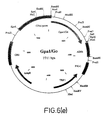
- Receptor expression constructs were based on the high copy number episomal yeast- E.coli shuttle vectors pFL61 (27), YEp24, and pDT-PGK (see plasmid map of Fig. 6(A) ), which is identical to pPGK reported by Kang et al . (14).
- Complementary DNA (cDNA) sequences encoding unmodified human G protein-coupled receptors were introduced into these vectors between the promoter and terminator regions of the PGK1 gene, to confer strong constitutive expression in yeast cells.
- the somatostatin SST 2 receptor (Genbank accession M81830) was introduced into pFL61.
- the melatonin ML 1B (Genbank accession U25341), somatostatin SST 5 (Genbank accession L14865), serotonin 5HT 1A (Genbank accession X13556), and serotonin 5HT 1D (Genbank accession M81589) receptors were introduced into pDT-PGK.
- the purinergic nucleotide P2Y 1 receptor (Genbank accession S81950) and the adenosine A 2b receptor (Genbank accession M97759) were also introduced into pDT-PGK.
- the purinergic nucleotide P2Y 2 receptor was also introduced into pDT-PGK.
- the sequence of the P2Y 2 receptor corresponded to that reported by Parr et al .
- a cassette consisting of the 1 Kb upstream region of the GPA1 gene (the GPA1 promoter), plus a multiple cloning site and the transcription terminator region of the ADH1 gene (ADHt) were inserted into the centromeric plasmid pRS314 (Stratagene), generating pJW1 ( Fig. 6 (b) ).
- the GPA1 open reading frame was inserted into the Nrul site of pJW1 to create the GPA1 expression plasmid pRS314-GPA1 ( Fig. 6 (c) ).
- Sequence encoding the chimeric G ⁇ subunit Gpa1/G ⁇ i3 was derived from the plasmid pADC2-SCGi3.
- the chimera encoded by this plasmid is of a structure identical to that reported by Kang et al. (14) (with a Bam HI site in the switch II domain) except that it contains the C-terminus of G ⁇ i3 rather than G ⁇ i2 .
- the Gpa1/G ⁇ i3 expression construct used in this study was created by PCR amplification using oligodeoxynucleotide primers to incorporate N col and N otl restriction enzyme sites adjacent to the open reading frame.
- the sequence encoding the Gpa1/G ⁇ i3 chimera was inserted between the Ncol and Not I restriction enzyme sites of pJW1, to create the plasmid pRS314-Gpa1/G ⁇ i3 ( Fig. 6 (d) ).
- Gpa1/G ⁇ 0 , Gpa1/G ⁇ i1 , Gpa1/G ⁇ i2 Gpa1/G ⁇ s Gpa1/G ⁇ q and Gpa1/G ⁇ 16 chimeras were derived from pRS314-Gpa1/G ⁇ i3 by replacing the G ⁇ i3 -derived sequence (between the Bam HI and Not I restriction enzyme sites) with sequences encoding corresponding C-terminal regions of G ⁇ 0 , G ⁇ i1 , G ⁇ i2 , G ⁇ s , G ⁇ q and G ⁇ 16 .
- Plasmid maps of pRS314-Gpa1/G ⁇ 0 , pRS314-Gpa1/G ⁇ i1 , pRS314-Gpa1/G ⁇ i2 , and pRS314-Gpa1/G ⁇ 16 are presented in Figs 6 (e), (f), (g) and (h) , respectively.
- the 'transplants' which had amino acid modifications the extreme C-terminus of Gpa1p, were generated in three steps.
- codon 467 of GPA1 was altered from AAA to AAG by site-directed mutagenesis, which was carried out using the Quik-change kit (Stratagene). This nucleotide change introduced an Afl II site without changing the encoded protein sequence.
- Fig.5C The resulting plasmids encoded in-frame fusions between amino acids 1 to 467 of Gpa1p and the 5 C-terminal acids of mammalian G ⁇ subunits.
- Fig.5D A plasmid to express a truncated version of Gpap1 lacking the 5 C-terminal acids ( Fig.5D ) was created by introducing a stop codon at codon position 468 by insertion of linkers as above (Table 1).
- the yeast strain MMY9 was created to study the functional interactions between 7 transmembrane helix receptors and G proteins. This strain was derived from the common laboratory strain W303-1A (genotype: MAT a his3 ade2 leu2 trp1 ura3 can1 ). Activation of the pheromone response pathway was monitored by two reporter genes, FUS1-HIS3 and FUS1-lacZ which were integrated into the FUS1 and leu2 loci, respectively. The FAR1 gene was deleted by one-step gene replacement using a far1 ⁇ ::URA3 DNA construct, so that growth continued even under conditions which activated the pheromone response pathway.
- the SST2 gene was deleted by one-step gene replacement using a sst2 ⁇ ::URA3 DNA construct to prevent down-regulation of G protein signalling by the GTPase-activating function encoded by this gene.
- the ura3 marker was recovered by transformation with a ura3 ⁇ fragment consisting of the of the URA3 gene with an internal 243bp ( Eco RV to Stu I) deletion, followed by 5-fluoro-orotic acid selection.
- the chromosomal GPA1 (G ⁇ ) gene was deleted by one-step gene replacement using a gpa1 ⁇ ::ADE2 DNA construct.
- the yeast strain MMY11 was derived from MMY9 by one-step gene replacement using a ste2 ⁇ ::G418 R DNA construct, selecting for geneticin resistant colonies and confirming that resistant colonies failed to respond to the Ste2p agonist, ⁇ -factor.
- Agonists somatostatin (S-14), melatonin, serotonin, adenosine 5'-diphosphate (ADP) and uridine 5'-triphosphate (UTP) were obtained from Sigma.
- Alpha factor was synthesised by Peptide and Protein Research, Wales, UK.
- 5'-N-Ethylcarboxamidoadenosine (NECA) was obtained from Research Biochemicals International.
- Reverse halo assays were carried out by growing MMY9 cells to early stationary phase (OD 600 ⁇ 4) in liquid SC-glucose (2%) medium lacking tryptophan and uracil. A uniform layer of cells (5 x 10 7 ) was plated to 22.5cm by 22.5cm bioassay dishes (Nunc) in 100ml SC-glucose agar (1%) equilibrated to 50°C. This medium lacked tryptophan, uracil and histidine, and was supplemented with 10mM 3-aminotriazole, and buffered to pH 7.0 with 0.1M sodium phosphate. Antibiotic discs were placed on the solidified agar, and a volume of agonist solution (1-5 ⁇ l) was applied to each disc. Plates were incubated at 30°C for 3 days.
- Assays for FUS1-lacZ Expression were measured with two assays.
- ONPG assay cell extracts were incubated with the substrate ONPG as described by (37). Units were defined as (A 420 x 1000)/(OD 600 x t x v) (25).
- chemiluminescent assay cells were grown to late logarithmic phase and diluted to 0.02 OD 600 in 100 ⁇ l SC-WH medium in the presence or absence of 1 ⁇ M ⁇ -factor in 96-well microtitre plates.
- the assay was conducted in a 96-well microtitre plate format. Plates were incubated for 24 hours without agitation, and absorbance at 570nm was determined using a Victor microtitre plate reader (Wallac). EC 50 values (+/- standard error) were estimated by curve-fitting, using the Robosage software package.
- This experiment used four human G protein-coupled receptors as examples of receptors capable of activating the yeast pheromone response pathway.
- the four receptors were: the melatonin ML 1B receptor, the serotonin 5HT 1A receptor, the somatostatin SST 2 receptor and the purinergic nucleotide receptor, P2Y 2 .
- These receptors were expressed in yeast strain MMY9 described above. This strain was deleted for SST2, FAR1 and GPA1 but retained the endogenous ⁇ -factor receptor encoded by STE2 .
- Activation of the pheromone response pathway was monitored with two integrated reporter genes: FUS1-HIS1 allowing a growth readout in medium lacking histidine, and FUS1-lacZ allowing a ⁇ -galactosidase readout.
- FUS1-HIS1 allowing a growth readout in medium lacking histidine
- FUS1-lacZ allowing a ⁇ -galactosidase readout.
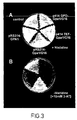
- panels A-F show a reverse halo assay performed using MMY9 cells co-transformed with the plasmid pRS314-GPA1 (panels B to F), which expresses the wild-type GPA1 gene and, in addition, with either a receptor expression construct or vector, as follows: pDT-PGK (vector; panel B); pFL61-SST 2 (panel C); pDT-PGK-ML 1B (panel D); pDT-PGK-P2Y 2 (panel E); pDT-PGK-5-HT 1A (panel F).
- Agonist-dependent activation of FUS1-HIS3 was determined by reverse halo assay in which agonists were applied to the filter discs in the arrangement shown in panel A, in quantities as follows: 3 nmol of somatostatin-14 (S-14); 40 nmol of melatonin (Mel); 3 nmol of ⁇ -factor; 100 nmol of UTP; 40 nmol of serotonin (5-HT).
- S-14 somatostatin-14
- Mel melatonin
- ⁇ -factor 100 nmol of UTP
- serotonin 5-HT
- treatment of MMY9 cells with the yeast pheromone, ⁇ -factor stimulates the endogenous yeast receptor Ste2p, resulting in increased expression of FUS1-HIS3 to enable a halo of cell growth in the absence of histidine ( Fig. 1 , Panel B).
- MMY9 cells expressing the ML 1B receptor activated FUS1-HIS3 in response to melatonin, as well as in response to ⁇ -factor.
- Cells expressing the SST 2 receptor responded to somatostatin
- cells expressing the P2Y 2 receptor responded to the agonist UTP.
- the zones of cell growth in Fig. 1 are comparable in size, although different molar quantities of agonist were required for each receptor.
- the ML 1B , SST 2 and P2Y 2 receptors can couple to the yeast pheromone response pathway, via activation of the endogenous G ⁇ , Gpa1p.
- MMY9 cells transformed with the 5-HT 1A receptor expression construct did not activate FUS1-HIS3 in response to the agonist serotonin, suggesting that this receptor interacts poorly or cannot functionally interact with Gpa1p.
- Agonist-dependent activation of FUS1-lacZ was determined by incubating cells in medium supplemented with the chromogenic, cell-permeant ⁇ -galactosidase ( lacZ ) substrate, chlorophenolred- ⁇ -D-galactopyranoside (CPRG; Boehringer Mannheim).
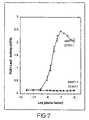
- ⁇ -factor stimulated the endogenous Ste2p receptor resulting in induction of FUS1-lacZ and provoking the strongest response with Gpa1p (EC 50 ; 5.2 +/- 0.4 nM). This value is consistent with the reported affinity of Ste2p for ⁇ -factor peptide ( K d ; 17 nM) (3).
- MMY9 cells expressing the Gpa1/G ⁇ 0 and Gpa1/G ⁇ i2 chimeras also induced FUS1-lacZ in response to high concentrations of ⁇ -factor, but dose-response curves were displaced rightwards by at least two log units, suggesting that the Ste2p receptor interacts less efficiently with these chimeras than with wild-type Gpa1p.
- MMY9 cells expressing Gpa1/G ⁇ i1 or Gpa1/G ⁇ i3 chimeras did not induce FUS1-lacZ in response to ⁇ -factor.
- the somatostatin SST 2 receptor was coupled to the pheromone response pathway by all the G ⁇ i chimeras (EC 50 values: 430 +/- 44 nM; 300 +/-38 nM; 650 +/- 65 nM; 300 +/- 22 nM; and 630 +/- 30 nM for respectively Gpa1p, Gpa1/G ⁇ 0 , Gpa1/G ⁇ i1 , Gpa1/G ⁇ i2 , and Gpa1/G ⁇ i3 ).
- 5-HT 1A and ML 1B both exhibited more efficient coupling to the pheromone response pathway in cells expressing chimeric G ⁇ subunits than those expressing Gpa1p.
- the 5-HT 1A receptor adopts a conformation in yeast capable of activating Gpa1/G ⁇ 0 , supporting the hypothesis from Experiment 1 that this receptor is incompatible or poorly compatible with Gpa1p.
- the receptors are specific for particular chimeras, for example ML 1B activates Gpa1/G ⁇ i2 but not Gpa1/G ⁇ i3 , even though these chimeras differ at just 14 amino acid positions, and levels of expression are similar in each case.
- G ⁇ 15 /G ⁇ 16 subunits are reported to interact with a much broader range of receptors than is typical for a G ⁇ subunit, and have the ability to couple receptors which normally interact with G ⁇ i , G ⁇ s or G ⁇ q (26).
- a Gpa1/G ⁇ 16 C-terminal domain chimera if it exhibited similar properties to full-length G ⁇ 16 , might be expected to couple diverse receptors to the pheromone response pathway.
- pRS314- Gpa1/G ⁇ 16 C-terminal domain chimera pRS314- Gpa1/G ⁇ 16 ; Fig. 5(b) ; Fig.
- the Gpa1/G ⁇ 16 expression construct which utilised the GPA1 promoter failed to reduce FUS1-HIS3 expression sufficiently to prevent growth under histidine-selective conditions, similar to the situation with vector-transformed cells (control). This result agrees with the ONPG assay results tabled above, therefore, the two reporter genes, FUS1-lacZ and FUS1-HIS3 , behave similarly.
- Gpa1/G ⁇ 16 can prevent the yeast G ⁇ /G ⁇ particle from activating the pheromone response pathway, presumably by assembling into a G protein trimer, no free ⁇ /G ⁇ is released in the presence of activated receptors.
- the approach of constructing this type of chimera containing a large C-terminal domain derived from a mammalian G ⁇ subunit fused to the N-terminal region of Gpa1p, is not generally applicable to all G ⁇ subunits, but is successful with some G ⁇ subunits (including the G ⁇ i family and Gas) but not others (such as G ⁇ 16 ).
- the Gpa1/G ⁇ 16 chimera lacks the important property of full-length G ⁇ 16 , that of coupling a much broader range of receptors than other G ⁇ subunits.
- This experiment confirms that Gpa1/G ⁇ 16 C-terminal domain chimeric protein is produced in cells, and thus that its failure to couple G protein-coupled receptors to the pheromone response pathway is likely to be due to incompatibility between receptor and this G ⁇ subunit.
- Gpa1/G ⁇ s chimera has been reported to couple the growth hormone releasing hormone receptor (12) when expressed from the strong constitutive promoter of the yeast phosphoglycerate kinase ( PGK1 ) gene.
- PGK1 yeast phosphoglycerate kinase
- Gpa1/G ⁇ 16 from the GPA1 promoter exhibited significantly higher activities than control cells expressing Gpa1p.
- Gpa1/G ⁇ s and Gpa1/G ⁇ q chimeras are similar to Gpa1/G ⁇ 16 in that they also have significantly higher activities than control cells expressing Gpa1p.
- cells expressing Gpa1/G ⁇ 0 , Gpa1/G ⁇ i1 , Gpa1/G ⁇ i2 , or Gpa1/G ⁇ i3 from the GPA1 promoter as expected contained activities comparable to control cells expressing Gpa1p.
- Gpa1/G ⁇ 0 , Gpa1/G ⁇ i1 , Gpa1/G ⁇ i2 , or Gpa1/G ⁇ i3 chimeras may be expressed from the GPA1 promoter and result in sufficiently low activation of the pheromone response pathway in the absence of activated receptor to be able to detect coupling, but that the Gpa1/G ⁇ S , Gpa1/G ⁇ q and Gpa1/G ⁇ 16 chimeras may not.
- Table 3 Activity of the pheromone response pathway in MMY9 cells expressing chimeric G ⁇ subunits G ⁇ subunit FUS1-LacZ Activity No ⁇ -factor 1 ⁇ M ⁇ -factor [vector] 8.7 ⁇ 2.0 7.4 ⁇ 1.6 Gpa1p 0.73 ⁇ 0.25 27.2 ⁇ 1.7 Gpa1/G ⁇ i1 0.71 ⁇ 0.2 0.68 ⁇ 0.15 Gpa1/G ⁇ i2 0.66 ⁇ 0.33 0.67 ⁇ 0.34 Gpa1/G ⁇ i3 0.50 ⁇ 0.22 0.76 ⁇ 0.23 Gpa1/G ⁇ 0 0.44 ⁇ 0.12 0.75 ⁇ 0.069 Gpa1/G ⁇ 16 3.6 ⁇ 1.9 3.6 ⁇ 1.5 Gpa1/G ⁇ S 3.1 ⁇ 2.0 5.0 ⁇ 3.0 Gpa1/G ⁇ q 8.2 ⁇ 3.9 9.6 ⁇ 4.1 Values are mean ⁇ SD light units (x10 6 cps) in the chemiluminescent ⁇ -galactosidase assay. n ⁇ 5.
- MMY9 cells were co-transformed with the transplant constructs, and in addition with pDT-PGK (vector with no heterologous receptor) or the receptor expression constructs pDT-PGK-5-HT 1A , pFL61-SST 2 or pDT-PGK-P2Y 2 .
- agonist-dependent activation of FUS1-LacZ was determined by incubating cells in medium supplemented with CPRG, and the extent of conversion to product after 24 hr incubation at 30°C was determined by spectrophotometry. The results are depicted in Fig. 4 A-D .
- This experiment shows that the transplants were able to interact efficiently with G ⁇ /G ⁇ , since they reduced FUS1-LacZ expression in MMY9 cells to basal levels when expressed from the GPA1 promoter ( Fig. 4A ).
- the transplants improved G ⁇ subunit/receptor interactions.
- the Gpa1-G ⁇ q transplant significantly enhanced coupling of the P2Y 2 receptor relative to Gpa1p, consistent with the finding that P2Y 2 signals to its effector phospholipase C ⁇ via G ⁇ q in mammalian cells.
- the capacity of the Gpa1-G ⁇ s transplant to couple P2Y 2 to the pheromone pathway was indistinguishable from that of Gpa1 p.
- the Gpa1-G ⁇ 16 transplant enhanced the agonist response of cells expressing three of the four human receptor (SST 2 , 5-HT 1A , and P2Y 2 but not ML 1B ).
- the 5-HT 1A receptor failed to signal in MMY9 cells through wild-type Gpa1p, but did so moderately well through the Gpa1-G ⁇ 16 transplant.
- the Gpa1-G ⁇ 16 transplant was the most efficient G ⁇ ; for the 5-HT 1A and P2Y 2 receptors, the Gpa1-G ⁇ 16 transplant could support coupling but not as efficiently as the Gpa1/G ⁇ 0 chimera and the Gpa1-G ⁇ q transplant, respectively.
- MMY11 was used in an experiment in which cells were transformed with pairs of plasmids as before, one to express a G ⁇ subunit and the other a receptor expression construct.
- This experiment involved the four receptor expression constructs previously described herein (pFL61-SST 2 , pDT-PGK-ML 1B , pDT-PGK-P2Y 2 and pDT-PGK-5-HT 1A ) and four further receptor expression constructs: pDT-PGK-SST 5 , pDT-PGK-A 2b , pDT-PGK-P2Y 1 and pDT-PGK-5-HT 1D .
- Table 4B presents similar data obtained in MMY9; thus differences between the values in Tables 4A and 4B are likely to be due to the effect of Ste2p on signalling by heterologously expressed receptors.
- Table 4A MMY11: chimeras transplants Gpa1 p Gpa1/ G ⁇ 0 Gpa1/ G ⁇ i1 Gpa1/ G ⁇ i2 Gpa1/ G ⁇ i3 Gpa1/ G ⁇ q Gpa1/ G ⁇ 0 Gpa1/ G ⁇ i1 Gpa1/ G ⁇ i3 Gpa1/ G ⁇ s Gpa1/ G ⁇ 14 Gpa1/ G ⁇ 16 SST 2 69 ⁇ 2 46 ⁇ 2 91 ⁇ 6 30 ⁇ 2 47 ⁇ 1 weak 65 ⁇ 4 5.6 ⁇ 0.6 1.8 ⁇ 0.1 NC 49 ⁇ 0.5 7.0 ⁇ 0.6 SST 5 26 ⁇ 0.8 115 ⁇ 4 137 ⁇ 8 56 ⁇ 3 97 ⁇ 4 66 ⁇ 3 11 ⁇ 0.5 4.9 ⁇ 0.2 3.6 ⁇ 0.2 weak 19 ⁇ 0.5 3.8 ⁇ 0.1 5-HT 1A weak
- All of the transplants enhanced P2Y 2 signalling except Gpa1-G ⁇ s , which was not significantly different from wild-type Gpa1p. Most efficient was the Gpa1-G ⁇ i3 transplant.
- the transplants enhanced the efficiency of coupling of the SST 2 , SST 5 , ML 1B , 5HT 1D and A 2b receptors, relative to either Gpa1p or to the chimeras with long C-terminal domains of ⁇ i/o , often with ten-fold or greater reductions in EC 50 .
- the P2Y 1 receptor could be coupled to the pheromone response pathway only by transplants, with the Gpa1-G ⁇ 14 transplant being most efficient.
- Gpa1/G ⁇ i2 chimera and Gpa1-G ⁇ i1 transplant which differ only in the length of sequence derived from the mammalian G ⁇ (as the C-terminal five amino acids of G ⁇ i1 and G ⁇ i2 are identical).
- the EC 50 values for ML 1B and SST 2 were more than ten-fold greater with the Gpa1-G ⁇ i1 transplant than with the Gpa1/G ⁇ i2 chimera.
- the same comparison can be made for the Gpa1/G ⁇ i3 chimera and Gpa1-G ⁇ i3 transplant.
- chimeras with shorter lengths of mammalian G ⁇ subunits can give more efficient coupling of some receptors.
- the only receptor in this study for which a transplant did not yield optimal coupling efficiency was 5HT 1A where the most efficient transplant was Gpa1-G ⁇ 0 (EC 50 in MMY11; 1.0 ⁇ 0.1 ⁇ M) but the most efficient coupling was achieved with the Gpa1/G ⁇ 0 chimera (EC 50 in MMY11; 390 ⁇ 14 nM). This suggests that for the majority of mammalian receptors, most efficient coupling in yeast will be achieved with the transplant type of G ⁇ subunit.
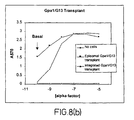
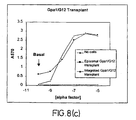
- the Gpa1-G ⁇ Z , Gpa1-G ⁇ 13 and to a lesser extent the Gpa1-G ⁇ 12 transplants expressed from the pRS314-Gpa1-G ⁇ z , pRS314-Gpa1-G ⁇ 13 , and pRS314-Gpa1-G ⁇ 12 constructs were all able to couple the Ste2p receptor but they failed to fully sequester ⁇ /G ⁇ as they were associated with increased basal levels of FUS1-LacZ activity even in the absence of receptor activation ( Fig.8 ).
- the pRS304-Gpa1-G ⁇ z , pRS304-Gpa1-G ⁇ 13 , and pRS304-Gpa1-G ⁇ 12 constructs were transformed into MMY11, targetting their integration into the trp1 locus of this strain.
- the resultant strains expressed the Gpa1-G ⁇ z , Gpa1-G ⁇ 13 and Gpa1-G ⁇ 12 transplants from genes located chromosomally rather than from genes located on free, episomal plasmids.
- MMY11 cells were transformed with either pRS304-based or pRS314-based (integrating and episomal, respectively) plasmids to express Gpa1-G ⁇ z ( Fig.8A ), Gpa1-G ⁇ 13 ( Fig.8B ), or Gpa1-G ⁇ 12 ( Fig.8C ) transplants.
- cells were transformed with Yep24-STE2 to express the STE2 gene, as this had been deleted from the MMY11 strain.
- Activation of FUS1-LacZ in response to different concentrations of ⁇ -factor was determined in a CPRG assay.
- the set of strains containing the full range of integrated transplants represents the full diversity of known mammalian G ⁇ subunits likely to be relevant to drug discovery (G ⁇ t and G ⁇ olf transplants have not been tested). The same approach of constructing transplants may be taken with any G ⁇ subunits discovered in the future.
- this approach represents a significant improvement over previously described technologies, because i) it is applicable to a wider range of G ⁇ subunits, ii) it is applicable to G ⁇ 16 in particular and iii) the Gpa1-G ⁇ 16 transplant possesses, at least to some degree, the property of G ⁇ 16 of interacting with a broad range of receptors, and therefore may be the G ⁇ subunit of choice for coupling orphan receptors, for which the physiologically relevant G protein targets are unknown.
Landscapes
- Health & Medical Sciences (AREA)
- Chemical & Material Sciences (AREA)
- Life Sciences & Earth Sciences (AREA)
- Organic Chemistry (AREA)
- Biophysics (AREA)
- Medicinal Chemistry (AREA)
- Zoology (AREA)
- Gastroenterology & Hepatology (AREA)
- Proteomics, Peptides & Aminoacids (AREA)
- Biochemistry (AREA)
- Molecular Biology (AREA)
- General Health & Medical Sciences (AREA)
- Genetics & Genomics (AREA)
- Toxicology (AREA)
- Cell Biology (AREA)
- Immunology (AREA)
- Endocrinology (AREA)
- Peptides Or Proteins (AREA)
- Micro-Organisms Or Cultivation Processes Thereof (AREA)
- Measuring Or Testing Involving Enzymes Or Micro-Organisms (AREA)
- Investigating Or Analysing Biological Materials (AREA)
- Preparation Of Compounds By Using Micro-Organisms (AREA)
- Saccharide Compounds (AREA)
Claims (7)
- Chimäres Gα-Protein, bestehend aus einer vollständigen Aminosäuresequenz von Saccharomyces cerevisiae Gα (Gpa 1p), wobei 5 aufeinanderfolgende Aminosäurepositionen innerhalb der C-terminalen 10 Aminosäuren von Gpa 1p ersetzt sind durch die entsprechenden 5 aufeinanderfolgenden Aminosäuren der 10 C-terminalen Aminosäuren eines heterologen Gα-Proteins.
- Chimäres Gα-Protein nach Anspruch 1, wobei die C-terminalen 5 Aminosäuren von Gpa 1p ersetzt sind durch die C-terminalen 5 Aminosäuren eines heterologen Gα-Proteins.
- Chimäres Gα-Protein, umfassend die N-terminalen 467 Aminosäuren des Saccharomyces cerevisiae Gα (Gpa 1 p)-Proteins und am C-Terminus davon die 5 C-terminalen Aminosäuren eines heterologen Gα-Proteins.
- Nucleotidsequenz, die ein chimäres Gα-Protein nach einem der Ansprüche 1 bis 3 codiert.
- Transfomierte Zelle von Saccharomyces cerevisiae, umfassend eine Nucleotidsequenz, die einen an heterologes G-Protein gekoppelten.Rezeptor codiert, und ein Nucleinsäuremolekül nach Anspruch 4.
- Screeningverfahren für eine Verbindung, welche mit einem Rezeptor interagiert, umfassend das Inkontaktbringen einer Verbindung von Interesse mit einer Zelle nach Anspruch 5 und Beobachten des Wachstumsverhaltens der Zelle.
- Verfahren nach Anspruch 6, wobei die Zelle weiterhin ein Reportergen umfasst und wobei das Verfahren den Schritt des Beobachtens der Produktion eines Reportergenprodukts beinhaltet.
Applications Claiming Priority (3)
| Application Number | Priority Date | Filing Date | Title |
|---|---|---|---|
| GB9719496 | 1997-09-13 | ||
| GBGB9719496.3A GB9719496D0 (en) | 1997-09-13 | 1997-09-13 | G protien chimeras |
| EP98942898A EP1012311B1 (de) | 1997-09-13 | 1998-09-11 | Chimäre des g-proteins |
Related Parent Applications (1)
| Application Number | Title | Priority Date | Filing Date |
|---|---|---|---|
| EP98942898A Division EP1012311B1 (de) | 1997-09-13 | 1998-09-11 | Chimäre des g-proteins |
Publications (2)
| Publication Number | Publication Date |
|---|---|
| EP1533379A1 EP1533379A1 (de) | 2005-05-25 |
| EP1533379B1 true EP1533379B1 (de) | 2008-05-21 |
Family
ID=10819017
Family Applications (2)
| Application Number | Title | Priority Date | Filing Date |
|---|---|---|---|
| EP98942898A Expired - Lifetime EP1012311B1 (de) | 1997-09-13 | 1998-09-11 | Chimäre des g-proteins |
| EP04078332A Expired - Lifetime EP1533379B1 (de) | 1997-09-13 | 1998-09-11 | G-Protein Chimären |
Family Applications Before (1)
| Application Number | Title | Priority Date | Filing Date |
|---|---|---|---|
| EP98942898A Expired - Lifetime EP1012311B1 (de) | 1997-09-13 | 1998-09-11 | Chimäre des g-proteins |
Country Status (9)
| Country | Link |
|---|---|
| US (1) | US6509447B1 (de) |
| EP (2) | EP1012311B1 (de) |
| JP (2) | JP4587563B2 (de) |
| AT (2) | ATE291627T1 (de) |
| AU (1) | AU9086398A (de) |
| DE (2) | DE69839536D1 (de) |
| ES (1) | ES2308104T3 (de) |
| GB (1) | GB9719496D0 (de) |
| WO (1) | WO1999014344A1 (de) |
Families Citing this family (18)
| Publication number | Priority date | Publication date | Assignee | Title |
|---|---|---|---|---|
| US7067277B1 (en) | 1999-12-23 | 2006-06-27 | H. Lundbeck A/S | Chimeric G proteins and uses thereof |
| AU2003235193A1 (en) * | 2002-04-16 | 2003-10-27 | Kyowa Hakko Kogyo Co., Ltd. | Endocrine cell lines and method of using the same |
| DE10233516A1 (de) | 2002-07-23 | 2004-02-12 | Aventis Pharma Deutschland Gmbh | Verfahren zur Identifizierung von Substanzen |
| JP5774264B2 (ja) | 2005-04-27 | 2015-09-09 | アリーナ ファーマシューティカルズ, インコーポレイテッド | 肥満および糖尿病、ならびにそれらに関連する病態の処置のため、ならびに血中glp−1レベルを増大させることによって緩和される病態の処置のための、併用療法 |
| EP1910290A2 (de) | 2005-06-30 | 2008-04-16 | Prosidion Limited | Gpcr-agonisten |
| SG10201404220TA (en) | 2006-04-11 | 2014-10-30 | Arena Pharm Inc | Methods of using gpr119 receptor to identify compounds useful for increasing bone mass in an individual |
| CL2008000018A1 (es) | 2007-01-04 | 2008-08-01 | Prosidion Ltd | Compuestos derivados de heterociclos de nitrogeno y oxigeno, agonistas de gpcr; composicion farmaceutica que comprende a dicho compuesto; y uso del compuesto para el tratamiento de la obesidad, diabetes, sindrome metabolico, hiperlipidemia, toleranci |
| US20100048632A1 (en) | 2007-01-04 | 2010-02-25 | Matthew Colin Thor Fyfe | Piperidine GPCR Agonists |
| PE20081849A1 (es) | 2007-01-04 | 2009-01-26 | Prosidion Ltd | Derivados de piperidin-4-il-propoxi-benzamida como agonistas de gpcr |
| JP2010539152A (ja) | 2007-09-10 | 2010-12-16 | プロシディオン・リミテッド | 代謝障害の治療のための化合物 |
| GB0720390D0 (en) | 2007-10-18 | 2007-11-28 | Prosidion Ltd | G-Protein coupled receptor agonists |
| GB0720389D0 (en) | 2007-10-18 | 2008-11-12 | Prosidion Ltd | G-Protein Coupled Receptor Agonists |
| EP2108960A1 (de) | 2008-04-07 | 2009-10-14 | Arena Pharmaceuticals, Inc. | Verfahren zur Verwendung eines A G Protein-gekoppelten Rezeptors zur Identifikation von Peptid YY (PYY) Sekretagoga und nützliche Verbindungen zur Behandlung von durch (PYY) Sekretagoga modulierten Zuständen und nützliche Verbindungen zur Behandlung von Zuständen durch PYY |
| GB0904287D0 (en) | 2009-03-12 | 2009-04-22 | Prosidion Ltd | Compounds for the treatment of metabolic disorders |
| GB0904284D0 (en) | 2009-03-12 | 2009-04-22 | Prosidion Ltd | Compounds for the treatment of metabolic disorders |
| GB0904285D0 (en) | 2009-03-12 | 2009-04-22 | Prosidion Ltd | Compounds for the treatment of metabolic disorders |
| US9809862B2 (en) * | 2014-08-11 | 2017-11-07 | Georgia Tech Research Corporation | G-protein coupled receptor (GPCR)-based biosensors and uses thereof |
| JP7721507B2 (ja) * | 2019-08-26 | 2025-08-12 | ザ ブリガム アンド ウィメンズ ホスピタル インコーポレイテッド | 操作された治療用微生物および関連受容体についての組成物および使用 |
Family Cites Families (2)
| Publication number | Priority date | Publication date | Assignee | Title |
|---|---|---|---|---|
| US5691188A (en) * | 1994-02-14 | 1997-11-25 | American Cyanamid Company | Transformed yeast cells expressing heterologous G-protein coupled receptor |
| WO1998016557A1 (en) * | 1996-10-11 | 1998-04-23 | The General Hospital Corporation | Assays for g-protein-linked receptors |
-
1997
- 1997-09-13 GB GBGB9719496.3A patent/GB9719496D0/en not_active Ceased
-
1998
- 1998-09-11 AT AT98942898T patent/ATE291627T1/de not_active IP Right Cessation
- 1998-09-11 DE DE69839536T patent/DE69839536D1/de not_active Expired - Lifetime
- 1998-09-11 AU AU90863/98A patent/AU9086398A/en not_active Abandoned
- 1998-09-11 WO PCT/GB1998/002759 patent/WO1999014344A1/en not_active Ceased
- 1998-09-11 DE DE69829485T patent/DE69829485T2/de not_active Expired - Lifetime
- 1998-09-11 EP EP98942898A patent/EP1012311B1/de not_active Expired - Lifetime
- 1998-09-11 US US09/508,429 patent/US6509447B1/en not_active Expired - Fee Related
- 1998-09-11 EP EP04078332A patent/EP1533379B1/de not_active Expired - Lifetime
- 1998-09-11 ES ES04078332T patent/ES2308104T3/es not_active Expired - Lifetime
- 1998-09-11 AT AT04078332T patent/ATE396273T1/de not_active IP Right Cessation
- 1998-09-11 JP JP2000511882A patent/JP4587563B2/ja not_active Expired - Fee Related
-
2010
- 2010-07-14 JP JP2010159611A patent/JP5108062B2/ja not_active Expired - Fee Related
Non-Patent Citations (1)
| Title |
|---|
| OLESNICKY N.S. ET AL: "A constitutively active G-protein-coupled receptor causes mating self-compatibility in the mushroom Coprinus", EMBO J, vol. 18, no. 10, 1999, pages 2756 - 2763 * |
Also Published As
| Publication number | Publication date |
|---|---|
| JP2010279369A (ja) | 2010-12-16 |
| ATE291627T1 (de) | 2005-04-15 |
| JP4587563B2 (ja) | 2010-11-24 |
| EP1012311A1 (de) | 2000-06-28 |
| US6509447B1 (en) | 2003-01-21 |
| DE69829485T2 (de) | 2006-05-04 |
| JP2001516587A (ja) | 2001-10-02 |
| ATE396273T1 (de) | 2008-06-15 |
| DE69839536D1 (de) | 2008-07-03 |
| WO1999014344A1 (en) | 1999-03-25 |
| AU9086398A (en) | 1999-04-05 |
| EP1533379A1 (de) | 2005-05-25 |
| DE69829485D1 (de) | 2005-04-28 |
| GB9719496D0 (en) | 1997-11-19 |
| JP5108062B2 (ja) | 2012-12-26 |
| EP1012311B1 (de) | 2005-03-23 |
| ES2308104T3 (es) | 2008-12-01 |
Similar Documents
| Publication | Publication Date | Title |
|---|---|---|
| JP5108062B2 (ja) | Gタンパク質キメラ体 | |
| US6001553A (en) | Functional expression of mammalian adenylyl cyclase in yeast | |
| US6100042A (en) | Yeast cells engineered to produce pheromone system protein surrogates, and uses therefor | |
| US5789184A (en) | Yeast cells engineered to produce pheromone system protein surrogates, and uses therefor | |
| US7081360B2 (en) | Expression of G protein-coupled receptors with altered ligand binding and/or coupling properties | |
| JP2009143932A (ja) | 改変g蛋白質を発現する酵母細胞及びそれらの利用方法 | |
| JP2002523090A (ja) | 異種gタンパク質共役受容体の増強された機能的発現 | |
| US5876951A (en) | Yeast cells engineered to produce pheromone system protein surrogates and uses therefor | |
| US20080268475A1 (en) | Yeast cells expressing modified g proteins and methods of use therefor | |
| WO2002050104A9 (en) | Methods and cells for detecting modulators of rgs proteins | |
| US7611854B2 (en) | Yeast cells engineered to produce pheromone system protein surrogates, and uses therefor | |
| WO1997040170A2 (en) | Functional expression of heterologous adenylyl cyclase | |
| US7235648B1 (en) | Yeast cells engineered to produce pheromone system protein surrogates, and uses therefor | |
| Roginskaya et al. | Effects of mutations in the N terminal region of the yeast G protein α-subunit Gpa1p on signaling by pheromone receptors | |
| WO2002083934A1 (en) | P2yac receptor involved in platelet aggregation | |
| Welton | Glucose monitoring in the fission yeast Schizosaccharomyces pombe via the gpa2 Gα and the git3 putative glucose receptor | |
| WO1998016660A1 (en) | Phenotypic assays of cyclin/cyclin-dependent kinase function |
Legal Events
| Date | Code | Title | Description |
|---|---|---|---|
| PUAI | Public reference made under article 153(3) epc to a published international application that has entered the european phase |
Free format text: ORIGINAL CODE: 0009012 |
|
| 17P | Request for examination filed |
Effective date: 20041207 |
|
| AC | Divisional application: reference to earlier application |
Ref document number: 1012311 Country of ref document: EP Kind code of ref document: P |
|
| AK | Designated contracting states |
Kind code of ref document: A1 Designated state(s): AT BE CH CY DE DK ES FI FR GB GR IE IT LI LU MC NL PT SE |
|
| AX | Request for extension of the european patent |
Extension state: AL LT LV MK RO SI |
|
| AKX | Designation fees paid |
Designated state(s): AT BE CH CY DE DK ES FI FR GB GR IE IT LI LU MC NL PT SE |
|
| AXX | Extension fees paid |
Extension state: RO Payment date: 20041207 Extension state: MK Payment date: 20041207 Extension state: LV Payment date: 20041207 Extension state: AL Payment date: 20041207 Extension state: SI Payment date: 20041207 Extension state: LT Payment date: 20041207 |
|
| 17Q | First examination report despatched |
Effective date: 20060814 |
|
| 17Q | First examination report despatched |
Effective date: 20060814 |
|
| GRAP | Despatch of communication of intention to grant a patent |
Free format text: ORIGINAL CODE: EPIDOSNIGR1 |
|
| GRAS | Grant fee paid |
Free format text: ORIGINAL CODE: EPIDOSNIGR3 |
|
| GRAA | (expected) grant |
Free format text: ORIGINAL CODE: 0009210 |
|
| AC | Divisional application: reference to earlier application |
Ref document number: 1012311 Country of ref document: EP Kind code of ref document: P |
|
| AK | Designated contracting states |
Kind code of ref document: B1 Designated state(s): AT BE CH CY DE DK ES FI FR GB GR IE IT LI LU MC NL PT SE |
|
| AX | Request for extension of the european patent |
Extension state: AL LT LV MK RO SI |
|
| REG | Reference to a national code |
Ref country code: GB Ref legal event code: FG4D |
|
| REG | Reference to a national code |
Ref country code: CH Ref legal event code: NV Representative=s name: E. BLUM & CO. AG PATENT- UND MARKENANWAELTE VSP Ref country code: CH Ref legal event code: EP |
|
| REF | Corresponds to: |
Ref document number: 69839536 Country of ref document: DE Date of ref document: 20080703 Kind code of ref document: P |
|
| REG | Reference to a national code |
Ref country code: SE Ref legal event code: TRGR |
|
| REG | Reference to a national code |
Ref country code: IE Ref legal event code: FG4D |
|
| PG25 | Lapsed in a contracting state [announced via postgrant information from national office to epo] |
Ref country code: FI Free format text: LAPSE BECAUSE OF FAILURE TO SUBMIT A TRANSLATION OF THE DESCRIPTION OR TO PAY THE FEE WITHIN THE PRESCRIBED TIME-LIMIT Effective date: 20080521 |
|
| PG25 | Lapsed in a contracting state [announced via postgrant information from national office to epo] |
Ref country code: AT Free format text: LAPSE BECAUSE OF FAILURE TO SUBMIT A TRANSLATION OF THE DESCRIPTION OR TO PAY THE FEE WITHIN THE PRESCRIBED TIME-LIMIT Effective date: 20080521 |
|
| REG | Reference to a national code |
Ref country code: ES Ref legal event code: FG2A Ref document number: 2308104 Country of ref document: ES Kind code of ref document: T3 |
|
| PG25 | Lapsed in a contracting state [announced via postgrant information from national office to epo] |
Ref country code: PT Free format text: LAPSE BECAUSE OF FAILURE TO SUBMIT A TRANSLATION OF THE DESCRIPTION OR TO PAY THE FEE WITHIN THE PRESCRIBED TIME-LIMIT Effective date: 20081021 Ref country code: DK Free format text: LAPSE BECAUSE OF FAILURE TO SUBMIT A TRANSLATION OF THE DESCRIPTION OR TO PAY THE FEE WITHIN THE PRESCRIBED TIME-LIMIT Effective date: 20080521 |
|
| PLBE | No opposition filed within time limit |
Free format text: ORIGINAL CODE: 0009261 |
|
| STAA | Information on the status of an ep patent application or granted ep patent |
Free format text: STATUS: NO OPPOSITION FILED WITHIN TIME LIMIT |
|
| 26N | No opposition filed |
Effective date: 20090224 |
|
| PG25 | Lapsed in a contracting state [announced via postgrant information from national office to epo] |
Ref country code: MC Free format text: LAPSE BECAUSE OF NON-PAYMENT OF DUE FEES Effective date: 20080930 |
|
| REG | Reference to a national code |
Ref country code: IE Ref legal event code: MM4A |
|
| PG25 | Lapsed in a contracting state [announced via postgrant information from national office to epo] |
Ref country code: IE Free format text: LAPSE BECAUSE OF NON-PAYMENT OF DUE FEES Effective date: 20080911 |
|
| PG25 | Lapsed in a contracting state [announced via postgrant information from national office to epo] |
Ref country code: LU Free format text: LAPSE BECAUSE OF NON-PAYMENT OF DUE FEES Effective date: 20080911 Ref country code: CY Free format text: LAPSE BECAUSE OF FAILURE TO SUBMIT A TRANSLATION OF THE DESCRIPTION OR TO PAY THE FEE WITHIN THE PRESCRIBED TIME-LIMIT Effective date: 20080521 |
|
| PG25 | Lapsed in a contracting state [announced via postgrant information from national office to epo] |
Ref country code: GR Free format text: LAPSE BECAUSE OF FAILURE TO SUBMIT A TRANSLATION OF THE DESCRIPTION OR TO PAY THE FEE WITHIN THE PRESCRIBED TIME-LIMIT Effective date: 20080822 |
|
| REG | Reference to a national code |
Ref country code: CH Ref legal event code: PCOW Free format text: NEW ADDRESS: 980 GREAT WEST ROAD, BRENTFORD, MIDDLESEX TW8 9GS (GB) |
|
| PGFP | Annual fee paid to national office [announced via postgrant information from national office to epo] |
Ref country code: SE Payment date: 20130909 Year of fee payment: 16 Ref country code: ES Payment date: 20130917 Year of fee payment: 16 Ref country code: NL Payment date: 20130912 Year of fee payment: 16 Ref country code: CH Payment date: 20130806 Year of fee payment: 16 |
|
| REG | Reference to a national code |
Ref country code: FR Ref legal event code: CA Effective date: 20131004 |
|
| PGFP | Annual fee paid to national office [announced via postgrant information from national office to epo] |
Ref country code: FR Payment date: 20130826 Year of fee payment: 16 |
|
| PGFP | Annual fee paid to national office [announced via postgrant information from national office to epo] |
Ref country code: IT Payment date: 20130919 Year of fee payment: 16 |
|
| PGFP | Annual fee paid to national office [announced via postgrant information from national office to epo] |
Ref country code: BE Payment date: 20131002 Year of fee payment: 16 Ref country code: DE Payment date: 20130930 Year of fee payment: 16 |
|
| REG | Reference to a national code |
Ref country code: DE Ref legal event code: R119 Ref document number: 69839536 Country of ref document: DE |
|
| REG | Reference to a national code |
Ref country code: CH Ref legal event code: PL |
|
| REG | Reference to a national code |
Ref country code: SE Ref legal event code: EUG |
|
| PG25 | Lapsed in a contracting state [announced via postgrant information from national office to epo] |
Ref country code: SE Free format text: LAPSE BECAUSE OF NON-PAYMENT OF DUE FEES Effective date: 20140912 |
|
| REG | Reference to a national code |
Ref country code: DE Ref legal event code: R119 Ref document number: 69839536 Country of ref document: DE Effective date: 20150401 |
|
| REG | Reference to a national code |
Ref country code: FR Ref legal event code: ST Effective date: 20150529 |
|
| PG25 | Lapsed in a contracting state [announced via postgrant information from national office to epo] |
Ref country code: NL Free format text: LAPSE BECAUSE OF NON-PAYMENT OF DUE FEES Effective date: 20150401 Ref country code: BE Free format text: LAPSE BECAUSE OF NON-PAYMENT OF DUE FEES Effective date: 20140930 |
|
| PG25 | Lapsed in a contracting state [announced via postgrant information from national office to epo] |
Ref country code: CH Free format text: LAPSE BECAUSE OF NON-PAYMENT OF DUE FEES Effective date: 20140930 Ref country code: DE Free format text: LAPSE BECAUSE OF NON-PAYMENT OF DUE FEES Effective date: 20150401 Ref country code: LI Free format text: LAPSE BECAUSE OF NON-PAYMENT OF DUE FEES Effective date: 20140930 |
|
| PG25 | Lapsed in a contracting state [announced via postgrant information from national office to epo] |
Ref country code: IT Free format text: LAPSE BECAUSE OF NON-PAYMENT OF DUE FEES Effective date: 20140911 Ref country code: FR Free format text: LAPSE BECAUSE OF NON-PAYMENT OF DUE FEES Effective date: 20140930 |
|
| REG | Reference to a national code |
Ref country code: ES Ref legal event code: FD2A Effective date: 20151026 |
|
| PG25 | Lapsed in a contracting state [announced via postgrant information from national office to epo] |
Ref country code: ES Free format text: LAPSE BECAUSE OF NON-PAYMENT OF DUE FEES Effective date: 20140912 |
|
| PGFP | Annual fee paid to national office [announced via postgrant information from national office to epo] |
Ref country code: GB Payment date: 20170829 Year of fee payment: 20 |
|
| REG | Reference to a national code |
Ref country code: GB Ref legal event code: PE20 Expiry date: 20180910 |
|
| PG25 | Lapsed in a contracting state [announced via postgrant information from national office to epo] |
Ref country code: GB Free format text: LAPSE BECAUSE OF EXPIRATION OF PROTECTION Effective date: 20180910 |