EP1551928B1 - Festes substrat enthaltend eine funktionalisierte elektrisch leitende oder halb-leitende oberfläche, verfahren zur dessen herstellung und seine verwendungen - Google Patents
Festes substrat enthaltend eine funktionalisierte elektrisch leitende oder halb-leitende oberfläche, verfahren zur dessen herstellung und seine verwendungen Download PDFInfo
- Publication number
- EP1551928B1 EP1551928B1 EP03762703.1A EP03762703A EP1551928B1 EP 1551928 B1 EP1551928 B1 EP 1551928B1 EP 03762703 A EP03762703 A EP 03762703A EP 1551928 B1 EP1551928 B1 EP 1551928B1
- Authority
- EP
- European Patent Office
- Prior art keywords
- interest
- fact
- organic
- groups
- electro
- Prior art date
- Legal status (The legal status is an assumption and is not a legal conclusion. Google has not performed a legal analysis and makes no representation as to the accuracy of the status listed.)
- Expired - Lifetime
Links
- 0 CCC*CC(*)C(*)C(C(*)C(*)C(*)CC(*)/C(/C*)=C(\CCCCC*)/CCCCC*C(C)/C=C(\CCC)/[N+])=C Chemical compound CCC*CC(*)C(*)C(C(*)C(*)C(*)CC(*)/C(/C*)=C(\CCCCC*)/CCCCC*C(C)/C=C(\CCC)/[N+])=C 0.000 description 1
Images





Classifications
-
- C—CHEMISTRY; METALLURGY
- C09—DYES; PAINTS; POLISHES; NATURAL RESINS; ADHESIVES; COMPOSITIONS NOT OTHERWISE PROVIDED FOR; APPLICATIONS OF MATERIALS NOT OTHERWISE PROVIDED FOR
- C09D—COATING COMPOSITIONS, e.g. PAINTS, VARNISHES OR LACQUERS; FILLING PASTES; CHEMICAL PAINT OR INK REMOVERS; INKS; CORRECTING FLUIDS; WOODSTAINS; PASTES OR SOLIDS FOR COLOURING OR PRINTING; USE OF MATERIALS THEREFOR
- C09D5/00—Coating compositions, e.g. paints, varnishes or lacquers, characterised by their physical nature or the effects produced; Filling pastes
- C09D5/44—Coating compositions, e.g. paints, varnishes or lacquers, characterised by their physical nature or the effects produced; Filling pastes for electrophoretic applications
- C09D5/4476—Coating compositions, e.g. paints, varnishes or lacquers, characterised by their physical nature or the effects produced; Filling pastes for electrophoretic applications comprising polymerisation in situ
Definitions
- the present invention relates to a functionalized solid support comprising a conductive or semiconducting surface of electricity covered with a functionalized electrografted organic layer in which at least 90% of the number of functional groups is accessible, to the process for the preparation of such a support, as well as for its uses, in particular as an adhesion primer for the fixation of molecules of interest or of objects carrying a complementary function ("molecular velcro®").
- the functionalization of a surface is the operation by which it is possible to fix a molecule of interest (for example a molecule having proven properties in solution) on a surface, so - at least - that it retains all or part of its properties.
- a molecule of interest for example a molecule having proven properties in solution
- the functionalization of a surface therefore supposes that the molecule of interest and an associated process are available to fix it on the surface.
- the molecule of interest is most often an organic (or organometallic) molecule
- the most commonly used method consists in taking advantage of the very large library of reactions of organic chemistry: the logic is only to be able to find groups functional, respectively on the surface and on the molecule of interest, which are compatible, that is to say that can easily - and if possible quickly - react with each other.
- a surface having hydroxyl or amine groups When, for example, a surface having hydroxyl or amine groups is available, it can be functionalized by endowing the molecule of interest with, for example, isocyanate or siloxane groups such as that described, for example, in the patent application.
- this surface can be pre-functionalized with a bifunctional intermediate organic molecule, one of whose functional groups is compatible with those of the surface, and the other with those of the molecule that we want to fix. It is sometimes said that the molecule is a primary adhesion (see for example: EP Plueddmann, in “Fundamentals of Adhesion", LH Lee (Ed.), P.279, Plenum Press, New York (1990) )).
- this adhesion primer that should be considered as the molecule of interest: here we are interested in how to fix a first organic fragment on a surface, particularly when it is mineral, the following stages of post-functionalization being considered as pure organic reactions.
- the electronic states of the surface are delocalized states.
- the notion of "functional grouping" in the sense of organic chemistry does not make sense, and it is thus impossible to use the library of reactions of organic chemistry to fix a molecule of interest on a surface.
- the oxide layer and its mode of production are delegated a large part of the responsibility. in the strength of the interface that will be manufactured between the organic molecule of interest and the metal surface (but some oxides, especially when they are non-stoichiometric, are not covering or even non-adherent).
- this pathway requires at least two or three steps to achieve the binding of a molecule of interest, since the oxide layer must first be constructed before the molecule is hooked up (two steps). ), or before hanging an adhesion primer that will allow the attachment of the molecule of interest (three steps).
- the use of the diazonium salt grafting process requires an intermediate step during of which the electrografted layer is functionalized by a bi-functional adhesion primer, at least one of which is compatible with the functional groups of the molecule of interest.
- this method does not allow - in practice - to produce thick layers, which leads to a relatively small number of functional groups grafted, and very close to the surface.
- the functional groups that have been grafted are globally moderately accessible for subsequent functionalization reactions with an organic molecule.
- the most direct practical consequence of this remark is that the post-functionalization reactions on conductive surfaces covered with an organic layer according to this method are slow.
- electro-graft polymers as described in this prior document is not obvious, because the characteristics of the method do not allow to graft directly on the surface a sufficient variety of usable functional groups.
- direct grafting is meant the fact of using vinyl or cyclic monomers which comprise the functional groups which it is desired to fix on the surface, or which comprise original simple precursors (that is to say precursors which are not only protected groups) of desired functional groups.
- the grafting reaction corresponds to step 1, where the growth takes place from the surface.
- Step 2 is the main parasitic reaction, which leads to obtaining an ungrafted polymer.
- the growth of the grafted chains is therefore carried out by purely chemical polymerization, that is to say independently of the polarization of the conductive surface which gave rise to the grafting. This step is therefore sensitive to (it is in particular interrupted by) the presence of chemical inhibitors of this growth.
- electro-grafted polymer films have mainly been used to carry out passive functions: anti-corrosion or lubrication as already described, for example, in patent applications.
- the Applicant has in particular set itself the goal of solving the mineral / organic interface problem so as to provide a conductive or semi-conducting support for electricity comprising a functionalized attachment zone or "molecular velcro®" useful for fixing molecules of interest (probe molecules) or objects carrying a complementary function.
- the present invention therefore has as its first object a solid support comprising at least one conductive and / or semiconducting region of reducible oxide electricity on its surface, characterized in that at least one zone of said surface is functionalized by an electro-grafted organic film obtained from electroactive organic precursors each comprising at least one functional group of interest, said organic precursors being chosen from vinyl or cyclic monomers carrying protic groups, optionally mixed with organic electro precursors -active agents having no functional group of interest, and in that the number of functional groups of interest accessible for the formation of a covalent bond, ionic or hydrogen with a complementary group within said film represents at least 90 % of the total number of functional organic groups of interest.
- One of the important specificities of the present invention is that electrografting of organic coatings is carried out by a carpet of functional groups of interest, a large part of which is accessible for post-functionalisation reactions - typically more than 90%.
- the electrografting of organic coatings makes it possible to manufacture covalent interface bonds between a conductive or semiconductor material of electricity and an organic material.
- the functionalized organic film of the support according to the present invention constitutes a true "molecular velcro®" on which we can then take advantage directly of all the properties of the precursor which has been electrografted, whether chemical properties or to fix various objects, such as molecules (chemical or biochemical), polymers, cells, or even obtain a gluing function towards a macroscopic object, for example by chemical adhesion to the grafted precursor.
- the term "functional group of accessible interest” means a functional group that is sufficiently available, in particular in steric terms, to form covalent or ionic bonds or hydrogen bonds with a complementary group of a size comparable to its own.
- the carrier molecule of this complementary functional group will be called probe molecule.
- complementary groups functional groups of organic or organometallic chemistry which can react or interact with each other to give adducts sufficiently stable to be the source of a binding between the two chemical entities - the coating and the probe molecule - who wear them.
- it can therefore be electrophilic groups or Lewis acids, such as carbonyls, carboxyls, isocyanates, epoxides, dienophiles ..., capable of reacting with nucleophilic groups or Lewis bases such as amines, alcohols, thiols, dienes and polyenes ...; of donor groups of H bonds such as amines, alcohols, thiols, carboxylic acids, etc., capable of interacting with donors of free doublets such as amines, alcohols, thiols, carboxyls, carbonyls, linkages unsaturated electron-rich ...; cationic groups, such as ammoniums, antimoniums, sulphoniums, diazoniums ...,
- the accessibility of the functional groups of interest can be evaluated, quantitatively, for example by measuring the conversion rate of these functional groups (for example by spectroscopy, infrared, UV-visible, photoelectrons, etc.) at the time of placing. reaction of the coating containing these groups with a probe molecule containing a complementary functional group. If the probe molecule is small, it may indeed react with all the functional groups of interest of the coating.
- the term "electroactive organic precursors” does not include a functional group of interest any organic group optionally functionalized but incapable of forming bonds of covalent bonds, ionic bonds or hydrogen bonds with the given complementary group and such that defined above.
- R 1 and R 2 are groups which depend on an index i not indicated, i being between 0 and n. This expresses the fact that the groups R 1 and R 2 may in fact be different from one (C (R 1 ) R 2 ) to the other in the structure of the cyclic molecules of formula (II) above.
- HEMA hydroxyethyl methacrylate
- acrylic acid and methacrylic acid aminopropyl methacrylamide
- aminohexyl methacrylamide aminohexyl methacrylamide
- the conductive or semi-conductive surface of the electricity is preferably a surface of stainless steel, steel, iron, copper, nickel, cobalt, niobium, aluminum (especially when it is freshly brushed), silver, titanium, silicon (doped or not), titanium nitride, tungsten nitride, tantalum nitride or a noble metal surface chosen by gold, platinum surfaces iridium or platinum iridium; gold surfaces being particularly preferred according to the invention.
- the density of the accessible functional groups of interest is preferably between 10 4 / ⁇ m 2 and 10 10 / ⁇ m 2 .
- the surface can be functionalized with various organic groups, and a real "molecular velcro®" can be made, which can then directly benefit from all the properties of the polymer that has been grafted, whether chemical or physical, to fix various "objects", such as molecules (chemical or biochemical), polymers, cells, or even obtain a function of gluing to a macroscopic object, for example by chemical adhesion to the graft polymer .
- objects such as molecules (chemical or biochemical), polymers, cells, or even obtain a function of gluing to a macroscopic object, for example by chemical adhesion to the graft polymer .
- the idea of the present invention is that it is not necessary to ensure growth of long chains on the surface in order to benefit from the fixation of the functional groups of interest initially borne by the functionalized vinyl monomers. .
- the parasitic reactions, or even the termination reactions, which may occur due to the presence - on the initial vinyl monomer - of unprotected protic or reactive functional groups with respect to the growing end are shortly of importance, as long as they do not consume all the functional groups of interest present on the precursors.
- the electrografting of vinyl or cyclic monomers carrying organic groups of varied interest thus makes it possible to envisage electro-grafted organic films as a means of obtaining in one step, on the conductive and semiconducting surfaces, this that it was possible to obtain at least two stages through the prior manufacture of an oxide layer (for example by combining the manufacture of an oxide layer and chemical functionalization with a bi-functional adhesion primer) .
- the method according to the invention allows the formation of covalent bonds between the metal and the graft polymer, which allows to ensure the manufacture of a layer having a significant contribution to the strength of the interface.
- the adjustment of the potential protocol makes it possible, in particular in the case of polymers, to adjust the degree of grafting, that is to say the number of graft polymers per unit area: a moderate grafting rate will allow for example a sufficient chain spacing to allow the wetting of the coating in its thickness by a suitable solvent, as well as the entry into the film of the coating of probe molecules.
- the degree of grafting is adjusted to a value of between 10 and 40%.
- the functional groups of interest are spaced apart from one another by performing electrografting from a mixture of different monomers, only a portion of which carries the functional groups of interest that the we want to see present on the final coating.
- the relative proportions of the different monomers then make it possible to adjust the number of functional groups of interest, and therefore their accessibility.
- the electroactive organic precursors having no functional group of interest represent from 0.1 to 50% of the total number of precursors present in said composition.
- the functionalized precursor concentration conditions are variable from one precursor to another. Concentrations of between 0.1 and 10 mol / l, and in particular between 0.1 and 5 mol / l, with regard to the electroactive organic precursors containing a functional group of interest, may however be considered preferential. When electroactive organic precursors which do not comprise a functional group of interest are present within the organic composition (variant b), these are then present at a concentration preferably of between 10 -3 and 18 mol / l and even more preferably between 10 -3 and 9 mol / l.
- the accessibility of the functional groups of interest can also be improved by placing them at the end of a spacer arm, which may for example be a chain of a few carbon atoms.
- This spacer arm could have been present directly on the precursors of the electrografted coating, or added a posteriori.
- These spacer arms are particularly useful when the object to be fixed on the coating is large: fixing a spacer arm on an electrografted coating is easier than that of a large object because the molecule (probe) that contains the spacer arm is usually smaller than the object. It can therefore be fixed on almost all of the functional groups of interest accessible to the electrografted coating, and replace them with even more accessible groups.
- the electrolysis is preferably carried out by polarization under voltammetric conditions.
- the organic medium used during this process is preferably selected from dimethylformamide, ethyl acetate, acetonitrile and tetrahydrofuran.
- This organic medium may also contain at least one support electrolyte that can be chosen in particular from quaternary ammonium salts such as perchlorates, tosylates, tetrafluoroborates, hexafluorophosphates, quaternary ammonium halides, sodium nitrate and sodium nitrate. sodium chloride.
- quaternary ammonium salts such as perchlorates, tosylates, tetrafluoroborates, hexafluorophosphates, quaternary ammonium halides, sodium nitrate and sodium nitrate. sodium chloride.
- TEAP tetraethylammonium perchlorate
- TBAP tetrabutylammonium perchlorate
- TPAP tetrapropylammonium perchlorate
- BTMAP benzyltrimethylammonium perchlorate
- a gold poly-methacryloylsuccinimide film is obtained by carrying out 10 voltammetric scans of -0.4 to -2.8 V / (Ag + / Ag) at 50 mV / s on a surface of gold immersed in a 0.5 mol / l solution of methacryloylsuccinimide in DMF, in the presence of 5 ⁇ 10 -2 mol / l of TEAP.
- the succinimide functions are detected by infrared reflection / absorption spectroscopy (IRRAS) on the obtained film after a 5 minute flushing under ultrasound.
- this grafted film easily allows the attachment of poly-allyl-amine, by reaction of the amine groups of the poly-allyl-amine with the succinimide groups of the poly-methacryloyl-succinimide electrolyte. graft.
- a poly-methacryloylsuccinimide film can also be obtained at 0.18 mol / l in acetonitrile, both in gold and on platinum.
- PHEMA poly-hydroxyethyl methacrylate
- this film is obtained with a monomer carrying unprotected hydroxyl groups, whereas the prior art mentioned that it was necessary to protect these hydroxyl groups in order to electrograft the HEMA (see in particular the patent application EP-A-0 665 275 ).
- this electro-grafted PHEMA film reacts easily with diisocyanate groups, to obtain a post-functionalization of the surface, which shows that the growth of the chains, however hampered by the presence of the protic group, is not necessary to obtain coatings electro-grafted that can serve as "molecular velcro®".
- the invention finally relates to the use of the support according to the invention as an adhesion primer ("molecular velcro®”) for the fixation of molecules of interest (probe molecules) or carrier objects. a complementary function.
- an adhesion primer molecular velcro®
- the support according to the invention can be used for the attachment of proteins (avidin, anti-body, growth factors, etc.).
- proteins avidin, anti-body, growth factors, etc.
- Potential applications concern, for example, the production of bio-active surfaces (angioplasty, bio-active prostheses, etc.) promoting cell adhesion and possibly recolonization; the creation of surfaces that can be used for selective cell sorting (by fixing anti-bodies specific to the wall of a given cell); the production of protein chip arrays based on a support with conductive pads.
- the support according to the invention can also be used for the fixation of nucleic acid molecules such as DNA, RNA or oligonucleotide molecules, for example to the production of bioactive surfaces (antisense oligonucleotides), or attachment pads for chips with chemical or biochemical analysis, such as for example nucleic acid chips such as DNA chips.
- nucleic acid molecules such as DNA, RNA or oligonucleotide molecules
- bioactive surfaces antisense oligonucleotides
- attachment pads for chips with chemical or biochemical analysis such as for example nucleic acid chips such as DNA chips.
- the support according to the invention can also be used for the fixation of oligosaccharides, and more generally of biomaterials (biocompatible polymers such as polysaccharides, for example dextrans, ceramics ... etc.) for example for the production of biocompatible surfaces or encapsulating properties.
- biomaterials biocompatible polymers such as polysaccharides, for example dextrans, ceramics ... etc.
- the support according to the invention can also be used to realize bonding objects on conductive or semiconductive surfaces by surface chemical reactions.
- This example illustrates both the electro-grafting of a monomer carrying a functional group of interest that can enter the functionalization by an organic molecule (succinimide group, electrophilic), and the post-functionalization reaction itself. via the reaction of amines (nucleophiles) on the succinimide groups of the electrografted polymer.
- the probe carrying the amine groups is a polymer, the poly-allyl amine, and the post-functionalisation reaction is therefore a polymer-on-polymer reaction, which illustrates the high accessibility of the succinimide groups of the electrografted coating.
- This IRRAS spectrum was performed after rinsing with acetone for 5 minutes under ultrasound.
- IRRAS% C O MASU 0.18M 5 * 1 VC, 50mV / s from -0.6 to -2.8 7.78 MASU 0.18M 5VC, 50mV / s from -0.6 to -2.8 7.13 MASU 0.25M 10VC, 50mV / s from -0.3 to -2.5 17.2 MASU 0.5M 10VC, 50mV / s from -0.6 to -2.5 45 MASU 0.5M 10VC, 50mV / s from -0.4 to -2.8 55
- This example illustrates the electrografting of a monomer carrying hydroxyl groups (HEMA), and the formation of a PHEMA film, as well as the use of the hydroxyl groups of PHEMA to react with the isocyanate groups of diisocyanatohexane to form a carbamate. It also illustrates the high accessibility of the hydroxyl groups of the electrografted polymer vis-à-vis the probe molecule that is the diisocyanatohexane, since all the groups are converted during the reaction.
- HEMA monomer carrying hydroxyl groups
- a gold PHEMA film was made by 10 voltammetric scans at 50 mV / sec -2.4 to +1 V (Ag + / Ag) on a surface of gold dipped in a solution of hydroxyethyl methacrylate (HEMA). at 2.7 mol / l in DMF, in the presence of 5 ⁇ 10 -2 mol / l of TEAP.
- HEMA hydroxyethyl methacrylate
- the tube is closed and then allowed to react at room temperature under argon for 142 hours.
- the slide was removed, rinsed with dry toluene and then dry acetone by jets. It is then dried with nitrogen.
- EXAMPLE 3 Obtaining Amino Groups on a Gold Blade by Reducing the Nitriles of an Electrografted Polymethylacrylonitrile Film
- This example illustrates the use of nitrile groups of a poly-methacrylonitrile (PMAN) film as precursors of amine groups, and the reactivity of these amine groups by formation of amides with trifluoroacetic anhydride.
- PMAN poly-methacrylonitrile
- a PMAN film on gold is made by carrying out 10 voltammetric scans of -0.5 to -2.7 V / (Ag + / Ag) at 50 mV / s on a surface of gold immersed in a 2.5 solution.
- mol / l of methacrylonitrile in DMF in the presence of 5 ⁇ 10 -2 mol / l of TEAP.
- the nitrile groups of the polymer formed by the band at 2235 cm -1 are identified by IRRAS.
- step a In a tube equipped with a septum, introducing the blade covered with the PMAN film obtained above in step a), blown with nitrogen. The septum is closed, then 20 ml of dried pyridine on molecular sieves are introduced under argon, with the aid of a purged syringe, and 1 ml of 1 mol / l LiAlH 4 lithium aluminum hydride solution are added. 1 in tetrahydrofuran (THF) dried over molecular sieves. The slide is left in the reaction medium for 2 minutes at 70 ° C.
- THF tetrahydrofuran
- the slide is then rinsed with pyridine by dipping for 5 minutes, then with jet-deionized water, dried by blowing with nitrogen, sonicated for 1 minute in a 1 mol / l solution of sodium hydroxide, rinsed with water. deionized water then dried by blowing with nitrogen.
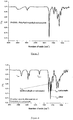
- the Figure 5 annexed represents the IRRAS spectra of the gold plate covered with an electro-grafted PMAN film (top), after reduction of the nitrile groups to amine by lithium aluminum hydride (medium), and after reaction of these groups amine with trifluoroacetic anhydride to form the amide (bottom).
- This example is intended to verify that the amine groups that were manufactured above in Example 3 are accessible and retain their reactivity. This is achieved by amidation of the amine functions, according to the procedure described in J. Org. Chem., 1989, 54, 2498 , and rehabilitated in this case for a reaction on a gold surface.
- Example 3 In a tube, 20 ml of a solution of 0.35 mol / l of trifluoroacetic anhydride in THF is prepared. The slide obtained at the end of Example 3 is immersed for 2 minutes at room temperature under argon (septum). The slide is removed, rinsed with dry THF and then dried by blowing with nitrogen.
- the coating obtained is analyzed by IRRAS (not shown), and is very characteristic of the formation of amide groups from amines: the appearance of the amide band at 1694 cm -1 , the lengthening band CN and NH strain at 1572 cm -1 , the elongation band CF at 1209 cm -1 with, around 1250 cm -1 , the deformation band CNH. At the same time, the almost total disappearance of the amine elongation band around 2929 cm -1 is observed.
- EXAMPLE 5 REACTIVITY OF AMINE GROUPS FORMED IN EXAMPLE 3 REACTION WITH 1,6-DIISOCYANATOHEXANE, FORMATION OF UREA.
- This example illustrates the reaction of the amine groups formed in Example No. 3 with a bifunctional coupling agent, to form a urea.
- Urea formed on the surface is used to fix an alcohol.
- the procedure for synthesizing urea at the surface is adapted from Org. Synth., 1988, VI, 951 .
- the film obtained is indeed reacted with trifluoroethanol according to the following protocol: in a tube, 30 ml of dry toluene (4 ⁇ molecular sieve), 1.5 ml of trifluoroethanol, and 3 drops of DBU are introduced.
- the slide carrying the electrografted film modified with 1,6-diisocyanatohexane and covered with a layer of dry toluene is placed therein.
- the slide is left in contact with the solution, under argon and with magnetic stirring, for 88 hours at room temperature.
- the slide is removed, rinsed with dry toluene, then with acetone, with deionized water, and finally with acetone by jets, and dried by blowing with nitrogen.
- the figure 6 annexed shows the IRRAS spectra of the gold plate covered with an electro-grafted PMAN film (CN), after reduction of the nitrile groups to amine by lithium aluminum hydride (CH 2 NH 2 ), after reaction of these amine groups with 1,6-diisocyanatohexane to form urea (CH 2 NHCONH (CH 2 ) 6 NCO), and after reaction with trifluoroethanol to form the carbamate (CH 2 NHCONH (CH 2 ) 6 NHCOOCH 2 CF 3 ).
- CN electro-grafted PMAN film
- the NCO band was also note the disappearance of the NCO band at 2271 cm -1 .
- Example 5 It is illustrated here that the urea formed in Example 5 above also allows the attachment of hydroxyethyl cellulose, and more generally polysaccharides.
- This pathway illustrates the reaction of a macromolecule of complex three-dimensional structure, the attachment of which is made possible by the great accessibility of the functional groups of interest on the electrografted coating. It is interesting because it allows the fixing of polymers or macromolecules which are difficult to fix on electrically conductive surfaces, and in particular on metals, and whose interest is to open the road to the surface realization biomimetics (heparin, modified dextrans, hyaluronic acid, etc ...) on metals, and binding module of molecules of biological interest complexes (DNA, proteins, growth factors ... etc.).
- a gold plate coated with an electrografted film modified with 1,6-diisocyanatohexane and bearing free isocyanate groups is produced, as described in Example 5 above.
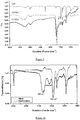
- the IRRAS spectra of the support thus obtained is represented on the Figure 7 attached.
- CN electro-grafted PMAN film
- the secondary carbamate band at 1715 cm -1 is observed, as are the characteristic bands of hydroxyethyl cellulose between 1200 and 1000 cm -1 , which correspond to the elongation bands of the ether (COC) and alcohol (OH) groups.
- the Figure 8 shows, for comparison, the spectrum of the film obtained with the gold plate according to the invention and that of a KBr pellet containing hydroxyethyl cellulose. This spectrum confirms the binding of hydroxyethylcellulose to the support of the invention.
- Both reactions are carried out in the atmosphere, at 100 ° C (internal temperature) in Bechers or open flasks. After each treatment, the slides are rinsed by soaking for 5 minutes in water and then dried by blowing with nitrogen.
- Partial treatment is obtained by dipping the slide in the acidic medium for a time equal to or less than 5 seconds and dipping it for 5 to 10 seconds in the basic medium. A treatment of 30 seconds in the two media leads to the complete disappearance of the nitrile functions, which corresponds to their complete conversion.
- An IRRAS analysis is carried out before and after each step: gold leaf covered with the electro-grafted PMAN film before and after hydrolysis of the nitrile groups to amide (acid treatment) and then after conversion to carboxylic acid functions (basic treatment).
- the IRRAS spectra obtained are represented on the figure 9 attached.
- Example 3 30 ml of a 2 mg / l solution of avidin in phosphate-buffered saline (PBS) pH 7.2 are introduced into a tube equipped with a septum. A gold plate coated with an electro-grafted PMAN film as prepared above was placed in Example 3. The slide was allowed to react for 15 hours at a temperature of 4 ° C. It is then removed and rinsed with deionized water.
- PBS phosphate-buffered saline
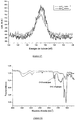
- the IRRAS spectrum of the blade thus obtained is represented on the figure 10 attached.
- EXAMPLE 9 VERIFICATION OF THE ACTIVITY OF THE AVIDINE FIXED ON AN ELECTRO-GRAFTED PMAN FILM
- the avidin fixed according to the protocol of Example 8 is active, using it as a binding point for a biotinylated oligonucleotide (ODN).
- ODN biotinylated oligonucleotide
- the ODN used is the following 15-mer: Biotin - 5 '- GCTTGCTGAAGTTCG - 3' (Biotin - SEQ ID NO: 1)
- the slide obtained according to the method of Example 8 is immersed in a 25 ⁇ M solution of this ODN in PBS buffer (pH 7.2). The slide is reacted at room temperature for 15 hours, discharged and repeatedly rinsed with deionized water.
- ODN X-ray photoelectron spectroscopy
- EXAMPLE 10 FIXATION OF ANTI-BODIES ON AN ELECTRO-GRAFTED PMAN FILM AND VERIFICATION OF ITS ACTIVITY
- an electrografted film can be used as a primer for fixing molecules of complex three-dimensional structure, and where the structure is determining in the properties of the molecule.
- the great accessibility of the functional groups of interest present on the surface makes it possible in fact a minimal distortion of the probe protein, which can thus maintain an active conformation.
- an anti-body IgG anti-rabbit immunoglobulin is carried out.
- the activity and the specificity of this antibody are then verified by reaction with a specific antigen (rabbit IgG) and with a nonspecific anti-gene (sheep IgG).
- binding of anti-bodies in particular opens the way to cell attachment via electro-grafted polymers.
- the amine and alcohol functions are often used to bind antibodies to a surface. There are thus many commercial coupling agents for creating covalent bonds between the surface functions and those of immunoglobulins.
- the cyano function allows the direct fixation of the biomolecule. This method is original and has never been used to attach an immunoglobulin to a surface, including a conductive surface.
- the antibodies contain different functions: amine (NH 2 ), acid (COOH), hydroxyl (OH) and disulphide bridges (SS) which can lead to their clashes on surfaces.
- the amine and acid functions come from the amino acids, constituents of the antibodies, and are distributed throughout the protein. There are therefore several possible binding sites, allowing an easy but non-localized coupling, which can lead to an inactivation of the antibody (denaturation) with respect to the antigen.
- the amine and acid functions make it possible to graft the whole antibody to a surface. On the contrary, it is necessary to cut the disulfide bridges (SS) and thus generate thiol functions (SH). It is then the FAB 'fragments that are fixed.
- the biomolecule layer thus obtained is denser in reactive sites and further the antibodies are oriented because the thiol functions are present in the remaining constant part. This last characteristic is important because the antibody does not bind to one of its active sites. Immunoglobulins thus immobilized are less likely to be denatured and inactivated with respect to the antigens.
- the electrografted films make it possible both to provide a primary layer and to offer functional groups of interest immediately available for the attachment of biological probe molecules.
- the thus treated slide is plunged into a specific anti-gene solution (rabbit-IgG) at 2 mg / l in PBS buffer, and left for 15 hours at room temperature. It is then removed, rinsed by jets with deionized water and dried by blowing with nitrogen.
- a specific anti-gene solution (rabbit-IgG) at 2 mg / l in PBS buffer, and left for 15 hours at room temperature. It is then removed, rinsed by jets with deionized water and dried by blowing with nitrogen.
- the slide is analyzed by IRRAS before and after treatment with the antibody as well as after treatment with the antigen.
- ODN oligonucleotide
- carboxylic acid functions of an electrografted polymer are used to react with the amine functions of a single-stranded ODN carrying an amine function on its 5 'end: H 2 N - 5 '- GCTTGCTGAAGTTCG - 3' (H 2 N - SEQ ID NO: 1)
- a prior complementary functionalization of the film is carried out: starting from an electro-grafted PMAN film, on which the nitriles are reduced to amines, for example as indicated in FIG. Example 3
- the amines are reacted with glutaric anhydride to obtain carboxylic acid functions, according to the following protocol: in a tube is introduced 30 ml of dried THF on molecular sieve (4 ⁇ ), in which we add 1 g of glutaric anhydride.
- the slide carrying amine groups is introduced into the tube, and allowed to react for 17 hours at a temperature of 50 ° C under argon and magnetic stirring (septum). The slide is then rinsed with acetone and then dried by blowing with nitrogen.
- the residual amine groups are then destroyed by amidation with trifluoroacetic anhydride, according to the following protocol: in a tube is introduced 30 ml of dried THF on molecular sieve, then 1 ml of trifluoroacetic anhydride. Then the slide of the previous step, which is allowed to react for 2.5 minutes under argon with magnetic stirring, at room temperature. The blade is removed and then rinsed by soaking in deionized water for 5 minutes, then by jets of deionized water, and finally dried by blowing with nitrogen.
- the slide is analyzed by IRRAS before and after each step; the spectra thus obtained being represented on the Figure 13 attached.
- the surface thus functionalized is then reacted with a 15 ⁇ M solution of the ODN (15-mer) amine in position 5 ', in deionized water, in the presence of N-hydroxy-succinimide (NHS) and 1 Hydrochloric acid (dimethylaminopropyl) -3-ethyl carbodiimide (EDC) at room temperature for 15 hours.
- NHS N-hydroxy-succinimide
- EDC Hydrochloric acid
- the slide was removed, rinsed with deionized water and blown dry with nitrogen, then analyzed by IRRAS and XPS.
- the slide thus obtained is then reacted with a solution of the ODN strand complementary to the fixed first strand, in deionized water, for 15 hours at room temperature, taken out, rinsed with deionized water, and then dried by blowing. 'nitrogen.
- XPS analysis of the slide reveals the presence of phosphorus at a binding energy characteristic of the phosphate groups of the DNA.
- EXAMPLE 12 ELECTROGREYPING OF A PRECURSOR MONOMER WITH A SPACER ARM.
- AminoHexyl MethAcrylAmide (AHMAA) of the following formula:
- Example No. 3 This example illustrates the possibility of performing electrografting of a monomer carrying protic groups, a spacer arm, giving rise to an electrografted polymer whose functional groups of interest are all accessible. They constitute an alternative route to that of Example No. 3 to obtain an electro-grafted film carrying amine groups. Examples 4, 5, 6 and 11, repeated with the films of the present example, give similar results.
- a gold poly-AHMAA (PAHMMA) film is made by carrying out 20 voltammetric scans of -0.5 to -3.3 V / (Ag + / Ag) at 100 mV / s on a gold surface immersed in a 0.25 mol / l solution of AHMAA in DMF, in the presence of 5.10 -2 mol / l of TEAP. The slide is removed from the electrochemical cell and then rinsed vigorously with deionized water and then with acetone, and finally dried under a stream of nitrogen.
- IRRAS spectrum (not shown) is characteristic of the expected polymer, in particular with the characteristic bands of the ammonium group at 1613, 1522 and the harmonic at 2050 cm -1 , as well as a set of fine bands between 2400 and 2800 cm -1. , and the NH + elongation band at 3327 cm -1 , in addition to the amide bands at 1535 and 1465 cm -1 .
- the PAHMAA film obtained is then soaked with stirring for 15 minutes in a 1 mol / l solution of sodium hydroxide (NaOH).
- the slide is then rinsed with deionized water and then with acetone and finally dried as before.
- Its IRRAS spectrum (not shown) reveals the complete disappearance of the bands characteristic of the ammonium groups, and the appearance of the bands characteristic of the amine groups at 2933 cm -1 (elongation CH 2 -NH 2 ) and 3360 cm -1 (elongation NH d a primary amine). This result demonstrates accessibility total ammonium groups that are converted to amines by acid-base reaction with sodium hydroxide.
- the slide is then again soaked in a hydrochloric acid solution at 1 mol / l for 20 minutes, then rinsed and dried.
- the nitrogen K (N1s) threshold region has two peaks at 400 (amide) and 402 eV (ammonium) when the film is in ammonium form, and a single peak centered around 400.5 eV when in the form of amine.
- the aim of this example is to demonstrate that the electrografting of a partially derivatized macromolecule by activated vinyl groups can be carried out, and to have non-derivatized functional groups of said molecule for subsequent post-functionalization.
- the macromolecule used is a dextran functionalized with glycidyl-methacrylate (GMA) groups.
- dextran-GMA The macro-electrophile considered, named dextran-GMA, is represented by the formula below:
- dextran-GMA solution A solution, called dextran-GMA solution, is prepared by dissolving 0.25 g of dextran-GMA in 50 ml of DMF at 10 -2 mol / l in TEAP. The solution is therefore approximately 3.3 ⁇ 10 -4 mol / l dextran-GMA.
- gold blades are prepared by spraying Joule gold on glass slides pretreated with a chrome veil.
Landscapes
- Life Sciences & Earth Sciences (AREA)
- Chemical & Material Sciences (AREA)
- Molecular Biology (AREA)
- Engineering & Computer Science (AREA)
- Materials Engineering (AREA)
- Wood Science & Technology (AREA)
- Organic Chemistry (AREA)
- Health & Medical Sciences (AREA)
- Addition Polymer Or Copolymer, Post-Treatments, Or Chemical Modifications (AREA)
- Application Of Or Painting With Fluid Materials (AREA)
- Polymerisation Methods In General (AREA)
- Other Resins Obtained By Reactions Not Involving Carbon-To-Carbon Unsaturated Bonds (AREA)
- Thin Film Transistor (AREA)
- Laminated Bodies (AREA)
- Adhesives Or Adhesive Processes (AREA)
- Apparatus Associated With Microorganisms And Enzymes (AREA)
- Other Surface Treatments For Metallic Materials (AREA)
- Electroluminescent Light Sources (AREA)
Claims (19)
- Festes Substrat, das mindestens einen elektrisch leitenden und/oder halbleitenden Bereich mit reduzierbarem Oxid auf seiner Oberfläche enthält, dadurch gekennzeichnet, dass mindestens eine Zone der Oberfläche durch einen elektrogepfropften organischen Film funktionalisiert ist, der aus elektroaktiven organischen Vorläufern erhalten wird, die jeweils mindestens eine funktionelle Gruppe von Interesse enthalten, wobei die organischen Vorläufer ausgewählt sind aus protische Gruppen tragenden Vinyl- oder zyklischen Monomeren, gegebenenfalls in Mischung mit elektroaktiven organischen Vorläufern, die keine funktionelle Gruppe von Interesse enthalten, und dadurch, dass die Anzahl der funktionellen Gruppen von Interesse, die für die Bildung einer kovalenten, ionischen oder Wasserstoffbindung mit einer komplementären Gruppe innerhalb des Films zugänglich sind, mindestens 90 % der Gesamtzahl der funktionellen organischen Gruppen von Interesse ausmacht.
- Substrat nach Anspruch 1, dadurch gekennzeichnet, dass die organischen Vorläufer ausgewählt sind aus den aktivierten Vinylmonomeren und den Molekülen, die durch nukleophilen Angriff spaltbar sind, die jeweils den folgenden Formeln (I) und (II) entsprechen:
 - A, B, R1 und R2, identisch oder verschieden, für ein Wasserstoffatom, einen C1-C4-Alkylrest, einen Nitrilrest oder eine organische Funktion stehen, ausgewählt aus Hydroxyl-, Aminfunktionen: -NHx mit x = 1 oder 3, Thiol, Carbonsäure, Ester, Amid: -C(=O)NHy, worin y = 1 oder 2, Imid, Imidoester, aromatisch, Säurehalogenid: -C(=O)X, worin X für ein Halogenatom steht, ausgewählt aus Fluor, Chlor und Brom, Säureanhydrid: -C(=O)OC(=O), Nitril, Succinimid, Phthalimid, Isocyanat, Epoxid, Siloxan: -Si(OH)z, worin z eine ganze Zahl zwischen 1 und 3 einschließlich ist, Benzochinon, Carbonyldiimidazol, para-Toluolsulfonyl, para-Nitrophenylchlorformiat, Ethylen und Vinyl oder eine organische Gruppe (oder ein Abstandhalter-Arm), die mindestens eine der vorgenannten Funktionen trägt; wobei mindestens eines von A und B und mindestens eines von R1 und R2 für eine der genannten organischen Funktionen oder eine organische Gruppe steht, die mindestens eine der genannten Funktionen trägt;- n, m und p, identisch oder verschieden, ganze Zahlen zwischen 0 und einschließlich 20 sind.
 - Substrat nach Anspruch 2, dadurch gekennzeichnet, dass die aktivierten Vinylmonomere der Formel (I) ausgewählt sind aus Hydroxyethylmethacrylat, Glycidylacrylat und -methacrylat, Acrylsäure, Methacrylsäure, Aminopropylmethacrylamid und Aminohexylmethacrylamid.
- Substrat nach Anspruch 2, dadurch gekennzeichnet, dass die durch nukleophilen Angriff spaltbaren Moleküle der Formel (II) substituierte Ethylenoxide sind.
- Substrat nach einem der vorstehenden Ansprüche, dadurch gekennzeichnet, dass die elektrisch leitende oder halbleitende Oberfläche eine Oberfläche aus Edelstahl, Stahl, Eisen, Kupfer, Nickel, Kobalt, Niob, Aluminium, Silber, Titan, Silizium, Titannitrid, Wolframnitrid, Tantalnitrid oder eine Edelmetalloberfläche ist, ausgewählt aus den Oberflächen aus Gold, Platin, Iridium oder Iridiumplatin.
- Substrat nach einem der vorstehenden Ansprüche, dadurch gekennzeichnet, dass die Dichte der zugänglichen funktionellen Gruppen vorzugsweise zwischen 104/µm2 und 1010/µM2 liegt.
- Verfahren zur Herstellung eines Substrats nach einem der Ansprüche 1 bis 6, dadurch gekennzeichnet, dass es darin besteht, in einem einzigen Schritt die Elektropfropfung von elektroaktiven organischen Vorläufern auf mindestens einer Zone mindestens eines elektrisch leitenden und/oder halbleitenden Bereichs mit reduzierbarem Oxid auf seiner Oberfläche eines festen Substrats durch Elektrolyse in einem organischen Medium einer Zusammensetzung durchzuführen, die in dem organischen Medium mindestens einen elektroaktiven organischen Vorläufer mit mindestens einer funktionellen Gruppe von Interesse enthält, durch Inkontaktbringen der Zusammensetzung mit der Zone, wobei diese einem Potentialprotokoll unterzogen wird, bei dem sie während des gesamten oder eines Teils des Potentialprotokolls auf ein Potential erhöht wird, das größer als oder gleich einem elektrischen Schwellenpotential ist, das in Bezug auf eine Referenzelektrode bestimmt wird, wobei das elektrische Schwellenpotential das Potential ist, jenseits dessen das Pfropfen der Vorläufer stattfindet, und dadurch, dass eine Zugänglichkeitsrate in funktionellen Gruppen von Interesse von mindestens 90 % (auf die Anzahl bezogen) erhalten wird:a) durch Anpassung des Potentialprotokolls, um eine Pfropfungsrate von weniger als oder gleich 60 % zu erwirken, und/oderb) durch Verwendung einer Zusammensetzung, in der die funktionalisierten elektroaktiven organischen Vorläufer in Mischung mit elektroaktiven organischen Vorläufern vorliegen, die keine funktionelle Gruppe von Interesse enthalten, wobei letztere dann 0,1 % bis 95 % der Gesamtzahl der in der Zusammensetzung vorhandenen Vorläufer ausmachen, und/oderc) durch die Verwendung von elektroaktiven organischen Vorläufern, ausgewählt aus denjenigen, in denen die funktionelle Gruppe von Interesse am Ende eines Abstandhalter-Arms getragen wird.
- Verfahren nach Anspruch 7, dadurch gekennzeichnet, dass die Pfropfungsrate auf einen Wert zwischen 10 und 40% eingestellt wird.
- Verfahren nach Anspruch 7 oder 8, dadurch gekennzeichnet, dass gemäß Variante b), die elektroaktiven organischen Vorläufer, die keine funktionelle Gruppe von Interesse enthalten, 0,1 bis 50 % der Gesamtzahl der in der Zusammensetzung vorhandenen Vorläufer ausmachen.
- Verfahren nach einem der Ansprüche 7 bis 9, dadurch gekennzeichnet, dass die Konzentration an elektroaktiven organischen Vorläufern, die eine funktionelle Gruppe von Interesse enthalten, zwischen 0,1 und 10 Mol/l liegt.
- Verfahren nach einem der Ansprüche 7 bis 10, dadurch gekennzeichnet, dass die Konzentration an elektroaktiven organischen Vorläufern, die keine funktionelle Gruppe von Interesse innerhalb der organischen Zusammensetzung enthalten, zwischen 10-3 und 18 Mol/l liegt.
- Verfahren nach einem der Ansprüche 7 bis 11, dadurch gekennzeichnet, dass die Elektrolyse unter voltammetrischen Bedingungen durchgeführt wird.
- Verfahren nach einem der Ansprüche 7 bis 12, dadurch gekennzeichnet, dass das organische Medium ausgewählt ist aus Dimethylformamid, Ethylacetat, Acetonitril und Tetrahydrofuran.
- Verfahren nach einem der Ansprüche 7 bis 13, dadurch gekennzeichnet, dass das organische Medium zusätzlich mindestens einen Trägerelektrolyten beinhaltet.
- Verwendung eines festen Substrats nach einem der Ansprüche 1 bis 6 als Haftgrundierung zur Bindung von Molekülen von Interesse oder Objekten mit einer komplementären Funktion.
- Verwendung nach Anspruch 15, dadurch gekennzeichnet, dass die Moleküle von Interesse Proteine sind und dass das Substrat dann als bioaktive Oberfläche oder als Proteinchip verwendet wird.
- Verwendung nach Anspruch 15, dadurch gekennzeichnet, dass die Moleküle von Interesse Nukleinsäuremoleküle sind und dass das Substrat dann als bioaktive Oberfläche oder als Nukleinsäurechip verwendet wird.
- Verwendung nach Anspruch 15, dadurch gekennzeichnet, dass die Moleküle von Interesse oder Objekte mit einer komplementären Funktion ausgewählt sind aus biokompatiblen Polymeren und dass das Substrat dann als biokompatible Oberfläche oder als Oberfläche mit einkapselnden Eigenschaften verwendet wird.
- Verwendung eines festen Substrats nach einem der Ansprüche 1 bis 6 zur Verklebung von Objekten auf leitenden oder halbleitenden Oberflächen durch chemische Oberflächenreaktionen.
Applications Claiming Priority (3)
| Application Number | Priority Date | Filing Date | Title |
|---|---|---|---|
| FR0208381 | 2002-07-04 | ||
| FR0208381A FR2841908B1 (fr) | 2002-07-04 | 2002-07-04 | Support solide comportant une surface conductrice ou semi-conductrice de l'electricite fonctionnalisee, son procede de preparation et ses utilisations |
| PCT/FR2003/001814 WO2004005410A1 (fr) | 2002-07-04 | 2003-06-16 | Support solide comportant une surface conductrice ou semi-conductrice de l'electricite fonctionnalisee, son procede de preparation et ses utilisations |
Publications (2)
| Publication Number | Publication Date |
|---|---|
| EP1551928A1 EP1551928A1 (de) | 2005-07-13 |
| EP1551928B1 true EP1551928B1 (de) | 2018-09-05 |
Family
ID=29725155
Family Applications (1)
| Application Number | Title | Priority Date | Filing Date |
|---|---|---|---|
| EP03762703.1A Expired - Lifetime EP1551928B1 (de) | 2002-07-04 | 2003-06-16 | Festes substrat enthaltend eine funktionalisierte elektrisch leitende oder halb-leitende oberfläche, verfahren zur dessen herstellung und seine verwendungen |
Country Status (9)
| Country | Link |
|---|---|
| US (2) | US20050272143A1 (de) |
| EP (1) | EP1551928B1 (de) |
| JP (1) | JP4403459B2 (de) |
| AU (1) | AU2003263238A1 (de) |
| BR (1) | BR0312460B1 (de) |
| CA (1) | CA2491589C (de) |
| ES (1) | ES2699830T3 (de) |
| FR (1) | FR2841908B1 (de) |
| WO (1) | WO2004005410A1 (de) |
Cited By (1)
| Publication number | Priority date | Publication date | Assignee | Title |
|---|---|---|---|---|
| CN109370359A (zh) * | 2018-09-28 | 2019-02-22 | 吴亚琴 | 一种高分散导电涂料的制备方法 |
Families Citing this family (16)
| Publication number | Priority date | Publication date | Assignee | Title |
|---|---|---|---|---|
| US6723299B1 (en) | 2001-05-17 | 2004-04-20 | Zyvex Corporation | System and method for manipulating nanotubes |
| US20040034177A1 (en) | 2002-05-02 | 2004-02-19 | Jian Chen | Polymer and method for using the polymer for solubilizing nanotubes |
| US6905667B1 (en) | 2002-05-02 | 2005-06-14 | Zyvex Corporation | Polymer and method for using the polymer for noncovalently functionalizing nanotubes |
| JP2004097173A (ja) * | 2002-07-17 | 2004-04-02 | Toyo Kohan Co Ltd | 静電層を有する固体支持体及びその用途 |
| US7479516B2 (en) | 2003-05-22 | 2009-01-20 | Zyvex Performance Materials, Llc | Nanocomposites and methods thereto |
| US7296576B2 (en) | 2004-08-18 | 2007-11-20 | Zyvex Performance Materials, Llc | Polymers for enhanced solubility of nanomaterials, compositions and methods therefor |
| ES2732255T3 (es) | 2006-06-13 | 2019-11-21 | Alchimedics | Endoprótesis de elución de fármaco con una capa de liberación biodegradable fijada con un recubrimiento de imprimación electroinjertado |
| FR2910010B1 (fr) | 2006-12-19 | 2009-03-06 | Commissariat Energie Atomique | Procede de preparation d'un film organique a la surface d'un support solide dans des conditions non-electrochimiques, support solide ainsi obtenu et kit de preparation |
| FR2910007B1 (fr) | 2006-12-19 | 2009-03-06 | Commissariat Energie Atomique | Procede de preparation d'un film organique a la surface d'un support solide dans des conditions non-electrochimiques, support solide ainsi obtenu et kit de preparation |
| FR2910008B1 (fr) * | 2006-12-19 | 2009-03-06 | Commissariat Energie Atomique | Procede de preparation d'un film organique a la surface d'un support solide dans des conditions non-electrochimiques, support solide ainsi obtenu et kit de preparation |
| US9725602B2 (en) | 2006-12-19 | 2017-08-08 | Commissariat A L'energie Atomique Et Aux Energies Alternatives | Method for preparing an organic film at the surface of a solid support under non-electrochemical conditions, solid support thus obtained and preparation kit |
| FR2910009B1 (fr) * | 2006-12-19 | 2009-03-06 | Commissariat Energie Atomique | Procede de preparation d'un film organique a la surface d'un support solide dans des conditions non-electrochimiques, su pport solide ainsi obtenu et kit de preparation |
| FR2929137B1 (fr) * | 2008-03-28 | 2011-03-11 | Commissariat Energie Atomique | Procede d'electrogreffage localise sur des substrats conducteurs ou semi-conducteurs en presence d'une microelectrode |
| FR2952384B1 (fr) * | 2009-11-10 | 2012-12-14 | Commissariat Energie Atomique | Depot selectif de nanoparticules |
| US20110162701A1 (en) * | 2010-01-03 | 2011-07-07 | Claudio Truzzi | Photovoltaic Cells |
| US20110192462A1 (en) * | 2010-01-03 | 2011-08-11 | Alchimer, S.A. | Solar cells |
Citations (1)
| Publication number | Priority date | Publication date | Assignee | Title |
|---|---|---|---|---|
| WO2002098926A2 (en) * | 2001-06-04 | 2002-12-12 | Universite De Liege | Process for depositing strong adherend polymer coating onto an electrically conductive surface |
Family Cites Families (8)
| Publication number | Priority date | Publication date | Assignee | Title |
|---|---|---|---|---|
| JPS5015485B1 (de) * | 1970-08-17 | 1975-06-05 | ||
| JPS4923808B1 (de) * | 1970-12-21 | 1974-06-18 | ||
| FR2480314A1 (fr) * | 1980-04-11 | 1981-10-16 | Commissariat Energie Atomique | Procede de depot par electropolymerisation de films minces organiques sur des surfaces conductrices de l'electricite en particulier sur des surfaces metalliques, et films minces ainsi obtenus |
| US4691045A (en) * | 1984-12-06 | 1987-09-01 | Nippon Shokubai Kagaku Co., Ltd. | Hydroxyl group-containing (meth)acrylate oligomer, prepolymer therefrom, and method for use thereof |
| US5766934A (en) * | 1989-03-13 | 1998-06-16 | Guiseppi-Elie; Anthony | Chemical and biological sensors having electroactive polymer thin films attached to microfabricated devices and possessing immobilized indicator moieties |
| FR2672661B1 (fr) | 1991-02-12 | 1993-08-27 | Commissariat Energie Atomique | Piece metallique recouverte d'un film lubrifiant et son procede de fabrication. |
| BE1008086A3 (fr) * | 1994-01-20 | 1996-01-16 | Cockerill Rech & Dev | Procede de depot par electropolymerisation d'un film organique sur une surface conductrice de l'electricite. |
| FR2761377B1 (fr) * | 1997-03-27 | 1999-05-07 | Centre Nat Rech Scient | Procede de realisation par voie electrochimique d'un materiau carbone dont la surface est modifiee par des groupes organiques, utilisation du materiau modifie |
-
2002
- 2002-07-04 FR FR0208381A patent/FR2841908B1/fr not_active Expired - Lifetime
-
2003
- 2003-06-16 EP EP03762703.1A patent/EP1551928B1/de not_active Expired - Lifetime
- 2003-06-16 ES ES03762703T patent/ES2699830T3/es not_active Expired - Lifetime
- 2003-06-16 CA CA2491589A patent/CA2491589C/fr not_active Expired - Lifetime
- 2003-06-16 JP JP2004518831A patent/JP4403459B2/ja not_active Expired - Lifetime
- 2003-06-16 BR BRPI0312460-6A patent/BR0312460B1/pt active IP Right Grant
- 2003-06-16 AU AU2003263238A patent/AU2003263238A1/en not_active Abandoned
- 2003-06-16 WO PCT/FR2003/001814 patent/WO2004005410A1/fr not_active Ceased
- 2003-06-16 US US10/518,923 patent/US20050272143A1/en not_active Abandoned
-
2009
- 2009-10-01 US US12/571,739 patent/US20100279900A1/en not_active Abandoned
Patent Citations (1)
| Publication number | Priority date | Publication date | Assignee | Title |
|---|---|---|---|---|
| WO2002098926A2 (en) * | 2001-06-04 | 2002-12-12 | Universite De Liege | Process for depositing strong adherend polymer coating onto an electrically conductive surface |
Cited By (2)
| Publication number | Priority date | Publication date | Assignee | Title |
|---|---|---|---|---|
| CN109370359A (zh) * | 2018-09-28 | 2019-02-22 | 吴亚琴 | 一种高分散导电涂料的制备方法 |
| CN109370359B (zh) * | 2018-09-28 | 2021-01-29 | 北京优氧朗芬莱环保科技有限公司 | 一种高分散导电涂料的制备方法 |
Also Published As
| Publication number | Publication date |
|---|---|
| JP4403459B2 (ja) | 2010-01-27 |
| CA2491589A1 (fr) | 2004-01-15 |
| FR2841908B1 (fr) | 2004-09-24 |
| US20050272143A1 (en) | 2005-12-08 |
| EP1551928A1 (de) | 2005-07-13 |
| BR0312460A (pt) | 2005-04-26 |
| WO2004005410A1 (fr) | 2004-01-15 |
| JP2005531678A (ja) | 2005-10-20 |
| US20100279900A1 (en) | 2010-11-04 |
| ES2699830T3 (es) | 2019-02-13 |
| FR2841908A1 (fr) | 2004-01-09 |
| AU2003263238A1 (en) | 2004-01-23 |
| BR0312460B1 (pt) | 2013-05-28 |
| CA2491589C (fr) | 2012-09-11 |
Similar Documents
| Publication | Publication Date | Title |
|---|---|---|
| CA2491589C (fr) | Support solide comportant une surface conductrice ou semi-conductrice de l'electricite fonctionnalisee, son procede de preparation et ses utilisations | |
| EP1595001B1 (de) | Oberflächenbeschichtungsverfahren | |
| EP1687463B1 (de) | Verfahren zur ausbildung eines polymerfilms auf einer elektrisch leitenden oder halbleitenden fläche durch elektropfropfen, erhaltene flächen und anwendungen davon | |
| EP2285923B1 (de) | Verfahren zum verbinden von zwei oberflächen oder einer oberfläche mit einem teilgenommenen molekül | |
| EP0569503B1 (de) | Verfahren zum modifizieren der oberflaeche von kohlenstoffmaterialien durch elektrochemische reduktion von diazoniumsalzen insbesondere fuer die herstellung von verbundmaterialien, sowie auf diese weise modifizierte kohlenstoffmaterialien | |
| EP2077918B1 (de) | Aus zwei schritten bestehendes verfahren zum bilden von organischen filmen auf elektrisch leitenden oberflächen aus wässrigen lösungen | |
| FR2910010A1 (fr) | Procede de preparation d'un film organique a la surface d'un support solide dans des conditions non-electrochimiques, support solide ainsi obtenu et kit de preparation | |
| WO2000036145A1 (fr) | Procede de fabrication d'une biopuce et biopuce | |
| EP1989345B1 (de) | Verfahren zur bildung von organischen schichten auf elektrisch leitenden oder halbleitenden oberflächen ausgehend von einer wässrigen lösung | |
| EP1203047B1 (de) | Photo-pfropfungs-elektropolymere, ihre herstellung und deren verwendung als träger für erkennungssonden spezifisch in biosensorsystemen | |
| CA2479364C (fr) | Procede de fixation de macro-objets sur une surface conductrice ou semi-conductrice de l'electricite par electro-greffage, surfaces obtenues et applications | |
| FR2883299A1 (fr) | Formation de films ultraminces greffes sur des surfaces conductrices ou semi-conductrices de l'electricite | |
| FR2910007A1 (fr) | Procede de preparation d'un film organique a la surface d'un support solide dans des conditions non-electrochimiques, support solide ainsi obtenu et kit de preparation | |
| FR2910006A1 (fr) | Procede de preparation d'un film organique a la surface d'un support solide dans des conditions non-electrochimiques, support solide ainsi obtenu et kit de preparation | |
| EP2720806B1 (de) | Verfahren zur funktionalisierung einer oberfläche mit einem bestimmten objekt oder molekül | |
| FR2897876A1 (fr) | Procede de formation de films organiques sur des surfaces conductrices ou semi-conductrices de l'electricite a partir de solutions aqueuses | |
| FR2910008A1 (fr) | Procede de preparation d'un film organique a la surface d'un support solide dans des conditions non-electrochimiques, support solide ainsi obtenu et kit de preparation |
Legal Events
| Date | Code | Title | Description |
|---|---|---|---|
| PUAI | Public reference made under article 153(3) epc to a published international application that has entered the european phase |
Free format text: ORIGINAL CODE: 0009012 |
|
| 17P | Request for examination filed |
Effective date: 20050201 |
|
| AK | Designated contracting states |
Kind code of ref document: A1 Designated state(s): AT BE BG CH CY CZ DE DK EE ES FI FR GB GR HU IE IT LI LU MC NL PT RO SE SI SK TR |
|
| AX | Request for extension of the european patent |
Extension state: AL LT LV MK |
|
| 111L | Licence recorded |
Free format text: 0100 ALCHIMER S.A. Effective date: 20050630 |
|
| DAX | Request for extension of the european patent (deleted) | ||
| 17Q | First examination report despatched |
Effective date: 20091008 |
|
| RAP1 | Party data changed (applicant data changed or rights of an application transferred) |
Owner name: COMMISSARIAT A L'ENERGIE ATOMIQUE ET AUX ENERGIES |
|
| GRAP | Despatch of communication of intention to grant a patent |
Free format text: ORIGINAL CODE: EPIDOSNIGR1 |
|
| STAA | Information on the status of an ep patent application or granted ep patent |
Free format text: STATUS: GRANT OF PATENT IS INTENDED |
|
| INTG | Intention to grant announced |
Effective date: 20180328 |
|
| GRAS | Grant fee paid |
Free format text: ORIGINAL CODE: EPIDOSNIGR3 |
|
| GRAA | (expected) grant |
Free format text: ORIGINAL CODE: 0009210 |
|
| STAA | Information on the status of an ep patent application or granted ep patent |
Free format text: STATUS: THE PATENT HAS BEEN GRANTED |
|
| 111L | Licence recorded |
Designated state(s): AT BE BG CH CY CZ DE DK EE ES FI FR GB GR HU IE IT LU MC NL PT RO SE SI SK TR Name of requester: ALCHIMER S.A., FR Effective date: 20050630 |
|
| AK | Designated contracting states |
Kind code of ref document: B1 Designated state(s): AT BE BG CH CY CZ DE DK EE ES FI FR GB GR HU IE IT LI LU MC NL PT RO SE SI SK TR |
|
| REG | Reference to a national code |
Ref country code: GB Ref legal event code: FG4D Free format text: NOT ENGLISH |
|
| REG | Reference to a national code |
Ref country code: CH Ref legal event code: EP |
|
| REG | Reference to a national code |
Ref country code: AT Ref legal event code: REF Ref document number: 1037764 Country of ref document: AT Kind code of ref document: T Effective date: 20180915 |
|
| REG | Reference to a national code |
Ref country code: DE Ref legal event code: R096 Ref document number: 60351445 Country of ref document: DE |
|
| REG | Reference to a national code |
Ref country code: IE Ref legal event code: FG4D Free format text: LANGUAGE OF EP DOCUMENT: FRENCH |
|
| REG | Reference to a national code |
Ref country code: NL Ref legal event code: MP Effective date: 20180905 |
|
| PG25 | Lapsed in a contracting state [announced via postgrant information from national office to epo] |
Ref country code: FI Free format text: LAPSE BECAUSE OF FAILURE TO SUBMIT A TRANSLATION OF THE DESCRIPTION OR TO PAY THE FEE WITHIN THE PRESCRIBED TIME-LIMIT Effective date: 20180905 Ref country code: BG Free format text: LAPSE BECAUSE OF FAILURE TO SUBMIT A TRANSLATION OF THE DESCRIPTION OR TO PAY THE FEE WITHIN THE PRESCRIBED TIME-LIMIT Effective date: 20181205 Ref country code: GR Free format text: LAPSE BECAUSE OF FAILURE TO SUBMIT A TRANSLATION OF THE DESCRIPTION OR TO PAY THE FEE WITHIN THE PRESCRIBED TIME-LIMIT Effective date: 20181206 Ref country code: SE Free format text: LAPSE BECAUSE OF FAILURE TO SUBMIT A TRANSLATION OF THE DESCRIPTION OR TO PAY THE FEE WITHIN THE PRESCRIBED TIME-LIMIT Effective date: 20180905 |
|
| REG | Reference to a national code |
Ref country code: CH Ref legal event code: PK Free format text: RECTIFICATIONS |
|
| REG | Reference to a national code |
Ref country code: ES Ref legal event code: FG2A Ref document number: 2699830 Country of ref document: ES Kind code of ref document: T3 Effective date: 20190213 |
|
| RIC2 | Information provided on ipc code assigned after grant |
Ipc: C25D 13/04 20060101ALI20040127BHEP Ipc: C09D 5/44 20060101AFI20040127BHEP |
|
| REG | Reference to a national code |
Ref country code: AT Ref legal event code: MK05 Ref document number: 1037764 Country of ref document: AT Kind code of ref document: T Effective date: 20180905 |
|
| PG25 | Lapsed in a contracting state [announced via postgrant information from national office to epo] |
Ref country code: EE Free format text: LAPSE BECAUSE OF FAILURE TO SUBMIT A TRANSLATION OF THE DESCRIPTION OR TO PAY THE FEE WITHIN THE PRESCRIBED TIME-LIMIT Effective date: 20180905 Ref country code: AT Free format text: LAPSE BECAUSE OF FAILURE TO SUBMIT A TRANSLATION OF THE DESCRIPTION OR TO PAY THE FEE WITHIN THE PRESCRIBED TIME-LIMIT Effective date: 20180905 Ref country code: RO Free format text: LAPSE BECAUSE OF FAILURE TO SUBMIT A TRANSLATION OF THE DESCRIPTION OR TO PAY THE FEE WITHIN THE PRESCRIBED TIME-LIMIT Effective date: 20180905 Ref country code: CZ Free format text: LAPSE BECAUSE OF FAILURE TO SUBMIT A TRANSLATION OF THE DESCRIPTION OR TO PAY THE FEE WITHIN THE PRESCRIBED TIME-LIMIT Effective date: 20180905 Ref country code: NL Free format text: LAPSE BECAUSE OF FAILURE TO SUBMIT A TRANSLATION OF THE DESCRIPTION OR TO PAY THE FEE WITHIN THE PRESCRIBED TIME-LIMIT Effective date: 20180905 |
|
| PG25 | Lapsed in a contracting state [announced via postgrant information from national office to epo] |
Ref country code: SK Free format text: LAPSE BECAUSE OF FAILURE TO SUBMIT A TRANSLATION OF THE DESCRIPTION OR TO PAY THE FEE WITHIN THE PRESCRIBED TIME-LIMIT Effective date: 20180905 Ref country code: PT Free format text: LAPSE BECAUSE OF FAILURE TO SUBMIT A TRANSLATION OF THE DESCRIPTION OR TO PAY THE FEE WITHIN THE PRESCRIBED TIME-LIMIT Effective date: 20190105 |
|
| REG | Reference to a national code |
Ref country code: DE Ref legal event code: R097 Ref document number: 60351445 Country of ref document: DE |
|
| PLBE | No opposition filed within time limit |
Free format text: ORIGINAL CODE: 0009261 |
|
| STAA | Information on the status of an ep patent application or granted ep patent |
Free format text: STATUS: NO OPPOSITION FILED WITHIN TIME LIMIT |
|
| PG25 | Lapsed in a contracting state [announced via postgrant information from national office to epo] |
Ref country code: DK Free format text: LAPSE BECAUSE OF FAILURE TO SUBMIT A TRANSLATION OF THE DESCRIPTION OR TO PAY THE FEE WITHIN THE PRESCRIBED TIME-LIMIT Effective date: 20180905 |
|
| 26N | No opposition filed |
Effective date: 20190606 |
|
| PG25 | Lapsed in a contracting state [announced via postgrant information from national office to epo] |
Ref country code: SI Free format text: LAPSE BECAUSE OF FAILURE TO SUBMIT A TRANSLATION OF THE DESCRIPTION OR TO PAY THE FEE WITHIN THE PRESCRIBED TIME-LIMIT Effective date: 20180905 |
|
| PG25 | Lapsed in a contracting state [announced via postgrant information from national office to epo] |
Ref country code: MC Free format text: LAPSE BECAUSE OF FAILURE TO SUBMIT A TRANSLATION OF THE DESCRIPTION OR TO PAY THE FEE WITHIN THE PRESCRIBED TIME-LIMIT Effective date: 20180905 |
|
| REG | Reference to a national code |
Ref country code: CH Ref legal event code: PL |
|
| REG | Reference to a national code |
Ref country code: BE Ref legal event code: MM Effective date: 20190630 |
|
| PG25 | Lapsed in a contracting state [announced via postgrant information from national office to epo] |
Ref country code: TR Free format text: LAPSE BECAUSE OF FAILURE TO SUBMIT A TRANSLATION OF THE DESCRIPTION OR TO PAY THE FEE WITHIN THE PRESCRIBED TIME-LIMIT Effective date: 20180905 |
|
| PG25 | Lapsed in a contracting state [announced via postgrant information from national office to epo] |
Ref country code: LU Free format text: LAPSE BECAUSE OF NON-PAYMENT OF DUE FEES Effective date: 20190616 Ref country code: CH Free format text: LAPSE BECAUSE OF NON-PAYMENT OF DUE FEES Effective date: 20190630 Ref country code: BE Free format text: LAPSE BECAUSE OF NON-PAYMENT OF DUE FEES Effective date: 20190630 Ref country code: LI Free format text: LAPSE BECAUSE OF NON-PAYMENT OF DUE FEES Effective date: 20190630 |
|
| PG25 | Lapsed in a contracting state [announced via postgrant information from national office to epo] |
Ref country code: CY Free format text: LAPSE BECAUSE OF FAILURE TO SUBMIT A TRANSLATION OF THE DESCRIPTION OR TO PAY THE FEE WITHIN THE PRESCRIBED TIME-LIMIT Effective date: 20180905 |
|
| PG25 | Lapsed in a contracting state [announced via postgrant information from national office to epo] |
Ref country code: HU Free format text: LAPSE BECAUSE OF FAILURE TO SUBMIT A TRANSLATION OF THE DESCRIPTION OR TO PAY THE FEE WITHIN THE PRESCRIBED TIME-LIMIT; INVALID AB INITIO Effective date: 20030616 |
|
| PGFP | Annual fee paid to national office [announced via postgrant information from national office to epo] |
Ref country code: IE Payment date: 20220616 Year of fee payment: 20 Ref country code: GB Payment date: 20220624 Year of fee payment: 20 Ref country code: DE Payment date: 20220621 Year of fee payment: 20 |
|
| PGFP | Annual fee paid to national office [announced via postgrant information from national office to epo] |
Ref country code: FR Payment date: 20220630 Year of fee payment: 20 |
|
| PGFP | Annual fee paid to national office [announced via postgrant information from national office to epo] |
Ref country code: IT Payment date: 20220630 Year of fee payment: 20 Ref country code: ES Payment date: 20220719 Year of fee payment: 20 |
|
| REG | Reference to a national code |
Ref country code: DE Ref legal event code: R071 Ref document number: 60351445 Country of ref document: DE |
|
| REG | Reference to a national code |
Ref country code: ES Ref legal event code: FD2A Effective date: 20230626 |
|
| REG | Reference to a national code |
Ref country code: GB Ref legal event code: PE20 Expiry date: 20230615 |
|
| PG25 | Lapsed in a contracting state [announced via postgrant information from national office to epo] |
Ref country code: ES Free format text: LAPSE BECAUSE OF EXPIRATION OF PROTECTION Effective date: 20230617 |
|
| REG | Reference to a national code |
Ref country code: IE Ref legal event code: MK9A |
|
| PG25 | Lapsed in a contracting state [announced via postgrant information from national office to epo] |
Ref country code: IE Free format text: LAPSE BECAUSE OF EXPIRATION OF PROTECTION Effective date: 20230616 Ref country code: GB Free format text: LAPSE BECAUSE OF EXPIRATION OF PROTECTION Effective date: 20230615 |