EP1555320A2 - Système d'expression dérivé de la cascade de régulation de lipase de Pseudomonasalcaligenes. - Google Patents
Système d'expression dérivé de la cascade de régulation de lipase de Pseudomonasalcaligenes. Download PDFInfo
- Publication number
- EP1555320A2 EP1555320A2 EP04015824A EP04015824A EP1555320A2 EP 1555320 A2 EP1555320 A2 EP 1555320A2 EP 04015824 A EP04015824 A EP 04015824A EP 04015824 A EP04015824 A EP 04015824A EP 1555320 A2 EP1555320 A2 EP 1555320A2
- Authority
- EP
- European Patent Office
- Prior art keywords
- seq
- expression
- lipase
- dna
- nucleic acid
- Prior art date
- Legal status (The legal status is an assumption and is not a legal conclusion. Google has not performed a legal analysis and makes no representation as to the accuracy of the status listed.)
- Granted
Links
Images






































Classifications
-
- C—CHEMISTRY; METALLURGY
- C07—ORGANIC CHEMISTRY
- C07K—PEPTIDES
- C07K14/00—Peptides having more than 20 amino acids; Gastrins; Somatostatins; Melanotropins; Derivatives thereof
- C07K14/195—Peptides having more than 20 amino acids; Gastrins; Somatostatins; Melanotropins; Derivatives thereof from bacteria
- C07K14/21—Peptides having more than 20 amino acids; Gastrins; Somatostatins; Melanotropins; Derivatives thereof from bacteria from Pseudomonadaceae (F)
-
- C—CHEMISTRY; METALLURGY
- C12—BIOCHEMISTRY; BEER; SPIRITS; WINE; VINEGAR; MICROBIOLOGY; ENZYMOLOGY; MUTATION OR GENETIC ENGINEERING
- C12N—MICROORGANISMS OR ENZYMES; COMPOSITIONS THEREOF; PROPAGATING, PRESERVING, OR MAINTAINING MICROORGANISMS; MUTATION OR GENETIC ENGINEERING; CULTURE MEDIA
- C12N15/00—Mutation or genetic engineering; DNA or RNA concerning genetic engineering, vectors, e.g. plasmids, or their isolation, preparation or purification; Use of hosts therefor
- C12N15/09—Recombinant DNA-technology
- C12N15/63—Introduction of foreign genetic material using vectors; Vectors; Use of hosts therefor; Regulation of expression
- C12N15/74—Vectors or expression systems specially adapted for prokaryotic hosts other than E. coli, e.g. Lactobacillus, Micromonospora
- C12N15/78—Vectors or expression systems specially adapted for prokaryotic hosts other than E. coli, e.g. Lactobacillus, Micromonospora for Pseudomonas
-
- C—CHEMISTRY; METALLURGY
- C12—BIOCHEMISTRY; BEER; SPIRITS; WINE; VINEGAR; MICROBIOLOGY; ENZYMOLOGY; MUTATION OR GENETIC ENGINEERING
- C12N—MICROORGANISMS OR ENZYMES; COMPOSITIONS THEREOF; PROPAGATING, PRESERVING, OR MAINTAINING MICROORGANISMS; MUTATION OR GENETIC ENGINEERING; CULTURE MEDIA
- C12N9/00—Enzymes; Proenzymes; Compositions thereof; Processes for preparing, activating, inhibiting, separating or purifying enzymes
- C12N9/14—Hydrolases (3)
- C12N9/16—Hydrolases (3) acting on ester bonds (3.1)
- C12N9/18—Carboxylic ester hydrolases (3.1.1)
- C12N9/20—Triglyceride splitting, e.g. by means of lipase
Definitions
- the present invention relates to the discovery of the lipase regulation cascade of Pseudomonas alcaligenes. Specifically, the present invention provides the nucleic acid and amino acid sequences of various components of the lipase regulation cascade which may be used in expression methods and systems designed for the production of heterologous proteins.
- the isolation and identification of a microorganism that can naturally secrete a product of potential industrial production is one of, if not the most, vital steps in the process of fermentation biotechnology.
- the ability to secrete the protein of interest usually leads to easier downstream processing.
- the next critical stage is the mutagenesis of a naturally occurring strain to a hyper-producing strain.
- scientists have developed screening strategies from which a number of exo-protein producing bacteria have been isolated.
- a large number of rounds of mutagenesis can be used to continuously select higher producing strains.
- classical strain improvement cannot be used indefinitely to further increase production levels. Therefore, a more direct method of characterization and molecular genetic manipulation is needed to achieve higher production levels.
- the present invention solves the problem of low levels of expression of proteins in Pseudomonas as well as other microbial hosts.
- the present invention relates to the discovery of a Pseudomonas lipase regulation cascade and provides individual components of the regulation cascade that can be used in expression systems for the production and secretion of proteins in host cells.
- the regulation cascade comprises, surprisingly, a two-component part that includes a kinase and a DNA binding regulator. The two components work in concert with a promoter and an upstream binding sequence to efficiently express a protein.
- the regulation cascade also comprises secretion factors that can be used in host cells to enhance the secretion of produced proteins.
- the present invention provides nucleic acid and amino acid sequences for the various components of the Pseudomonas alcaligenes lipase regulation cascade.
- the present invention also provides new, efficient expression systems, i.e., expression vectors, and host cells that can be used to express proteins at increased levels.
- the new expression systems allow for increased expression of a protein whose gene is functionally linked to components of the expression system, i.e., components of the lipase regulation cascade. A hyper-producing strain can thus be developed and used in a commercial setting.
- an isolated nucleic acid encoding a kinase that can regulate the expression of a protein, preferably a lipase is provided.
- the nucleic acid encoding a kinase is preferably derived from a Gram-negative bacteria such as a pseudomonad, preferably from Pseudomonas alcaligenes and is most preferably lipQ.
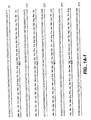
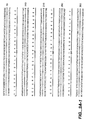
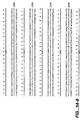
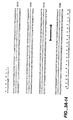
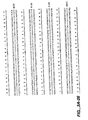
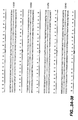
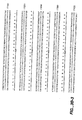
- nucleic acid encoding the kinase preferably has the sequence as shown in Figures 1A-1B (SEQ ID NO: 1) and/or has at least 50% homology with that sequence.
- the kinase protein is also provided and it is preferably derived from a bacteria, preferably from a Gram-negative bacteria such as a pseudomonad, most preferably, the kinase is from Pseudomonas alcaligenes. In a preferred embodiment, the kinase is LipQ.
- the kinase preferably has the sequence shown in Figures 1A-1B, (SEQ ID NO: 2) and/or has at least 50% homology with that sequence.
- the present invention provides a nucleic acid encoding a kinase that can regulate the expression of a lipase in Pseudomonas alcaligenes. In another embodiment, the present invention provides a kinase capable of regulating the expression of a lipase in Pseudomonas alcaligenes.
- an isolated nucleic acid encoding a DNA binding regulator that can regulate the expression of a protein, preferably a lipase is provided.
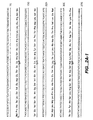
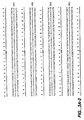
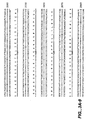
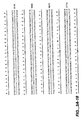
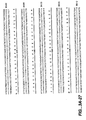
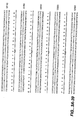
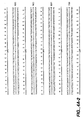
- the DNA binding regulator nucleic acid is preferably lipR. Further, it preferably has the sequence as shown in Figures 2A-2B (SEQ ID NO: 3) and/or has at least 50% homology with that sequence.
- the DNA binding regulator protein is also provided and it is preferably LipR.
- the DNA binding regulator preferably has the sequence shown in Figures 2A-2B (SEQ ID NO: 4) and/or has at least 50% homology with that sequence.
- the DNA binding regulator is from bacteria. More preferably, the DNA binding regulator is from a Gram-negative bacteria such as a pseudomonad. Most preferably, the DNA binding regulator is from Pseudomonas alcaligenes.
- the present invention provides an isolated nucleic acid that encodes a DNA binding regulator that can regulate the expression of a lipase in Pseudomonas alcaligenes. In another embodiment, the present invention provides the DNA binding regulator itself.
- nucleic acid encoding a portion of a polymerase that can regulate the expression of a protein, preferably a lipase is provided.
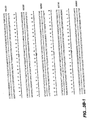
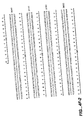
- the polymerase nucleic acid is preferable ortZ. Further, it preferably has the sequence as shown in Figure 9A-9B (SEQ ID NO: 36) and/or has at least 75% homology with that sequence. A portion of the polymerase protein is also provided and it is preferable OrfZ.
- the polymerase protein preferable has the sequence shown in Figure 9A-9B (SEQ ID NO: 37) and/or at least 75% homology with the sequence.
- the polymerase is from Gram-negative bacteria such as pseudomonad. Most preferably, the polymerase is from Pseudomonas alcaligenes.
- the kinase, the DNA binding regulator and a portion of the polymerase are present in one nucleic acid.
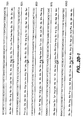
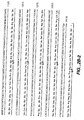
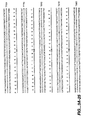
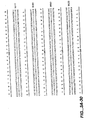
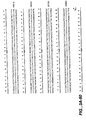
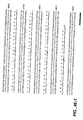
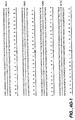
- the kinase, the DNA binding regulator and the polymerase have the nucleic acid sequence shown in Figures 4A-4G (SEQ.ID NO: 28).
- an isolated nucleic acid encoding a Pseudomonas alcaligenes sigma 54 promoter is provided.
- an isolated nucleic acid encoding a Pseudomonas alcaligenes upstream activating sequence is provided.
- the upstream activating sequence is preferably UAS. Further, it preferably has the sequence as shown in SEQ ID NO: 5 and/or has at least 50% homology with that sequence.
- the upstream activating sequence is from bacteria. More preferably, the upstream activating sequence is from a Gram-negative bacteria such as a pseudomonad. Most preferably, the upstream activating sequence is from Pseudomonas alcaligenes.
- isolated nucleic acids encoding secretion factors are provided.
- the secretion factors are preferably XcpP, XcpQ, OrfV, OrfX, XcpR, XcpS, XcpT, XcpU, XcpV, XcpW, XcpX, XcpY, XcpZ and another protein.
- OrfY having the C-terininal amino acid sequence shown in SEQ ID NO: 35. Further, they preferably have the nucleic acid sequence as shown in SEQ ID NOS: 12, 14, 30, 16, 6, 8,10, 18, 20, 22, 24, 26, 32 and 34, respectively, and/or have at least 90% homology with those sequence.
- the secretion factor proteins are also provided and preferably have the amino acid sequences shown in SEQ ID NOS: 13, 15, 31, 17, 7, 9, 11, 19, 21, 23, 25, 27, 33 and 35, respectively, and/or have at least 90% homology with that sequence.
- the secretion factors are from bacteria. More preferably, the secretion factors are from a Gram-negative bacteria such as a pseudomonad. Most preferably, the secretion factors are from Pseudomonas alcaligenes.
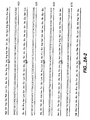
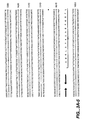
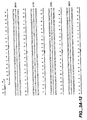
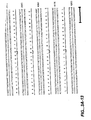
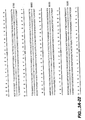
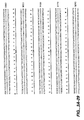
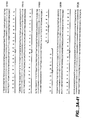
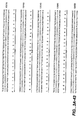
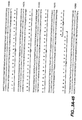
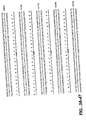
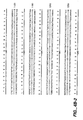
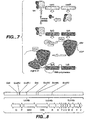
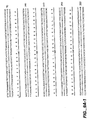
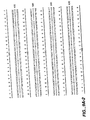
- the genes encoding the secretion factors XcpP, XcpQ, Orf V, OrfX, XcpR, XcpS, XcpT, XcpU, XcpV, XcpW, XcpY, XcpX and OrfY are present in one nucleic acid having the DNA sequence shown in Figures 3A-3B (SEQ ID NO: 29). Both xcp gene clusters xcpP ⁇ Q and xcpR ⁇ Z are oriented divergently with in between OrfV and OrfX as shown in Figure 8.
- Another embodiment of the invention includes an isolated nucleic acid encoding a Pseudomonas alcaligenes lux-box binding element and orfV -box binding elements that can regulate expression of a protein.
- Yet another embodiment provides nucleic acids that can hybridize to the nucleic acids shown in SEQ ID NOS: 1, 3, 6, 8, 10, 12, 14, 16, 18, 20, 22, 24, 26, 30, 32, 34 and 36 under high stringency conditions.
- an expression system comprising a gene encoding a protein functionally linked to nucleic acids encoding a kinase, a DNA binding regulator, a polymerase, a promoter and an upstream activating sequence.
- the expression system can also include secretion factors, and their regulatory regions.
- the regulating elements and the secretion factors are from bacteria. More preferably, the regulating elements and the secretion factors are from a Gram-negative bacteria such as a pseudomonad. Most preferably, the regulating elements and the secretion factors are from Pseudomonas alcaligenes.
- Another embodiment provides an expression system that can regulate the expression of a lipase in Pseudomonas alcaligenes.
- replicating plasmids and integrating plasmids containing the expression system or a nucleic acid encoding one or more of the secretion factors are provided.
- a host cell is transformed by introducing the plasmid to the host cell under appropriate conditions.
- the host cell is electroporated to allow the plasmid to enter the host cell.
- the host cell is bacteria. More preferably, the host cell is a Gram-negative bacteria such as a pseudomonad. Most preferably, the host cell is Pseudomonas alcaligenes.
- a cosmid library from the wild-type P.alcaligenes genome was used as a donor of DNA fragments to be introduced into a multicopy P. alcaligenes lipase production strain.
- 485 cosmids were transformed, followed by screening of cosmids containing P.alcaligenes strains with respect to their lipase production activity. Twenty cosmid strains were selected, each of which showed a significant enhancement of lipase expression as judged from various liquid and plate tests.
- the corresponding cosmids were also tested in a single copy lipase strain and some of them were found to give a threefold increase of lipase expression. The four best cosmids were found to share an overlapping fragment of 5.6 kb. The lipase stimulating activity was localized on a 4.5kb fragment.
- the present invention relates to the identification of a pseudomonas alcaligenes lipase regulation cascade, which contain multiple components associated with the expression of lipase.
- the term "regulation cascade” relates to the entire complex of individual components identified herein, such as kinase, dna binding regulator, polymerase, uas, lux-box, orfv-boxes, secretions factors and their regulatory regions. Components of the regulation cascade can be used alone or in combination with other components to modulate the expression of proteins in host cells.
- the host cell is a gram-negative host.
- the host cell is a pseudomonad.
- the host cell is pseudomonas alcaligenes.
- Preferred desired proteins for expression include enzymes such as esterases; hydrolases including proteases, cellulases, amylases, carbohydrases, and lipases; isomerases such as racemases, epimerases, tautomerases, or mutases; transferases, kinases and phophatases.
- the proteins may be therapeutically significant, such as growth factors, cytokines, ligands, receptors and inhibitors, as well as vaccines and antibodies.
- the proteins may be commercially important, such as proteases, carbohydrases such as amylases and glucoamylases, cellulases, oxidases and lipases.
- the gene encoding the protein of interest may be a naturally occurring gene, a mutated gene or a synthetic gene.
- Regulation can be achieved by either a two-component system, such as NtrB-NtrC, or by a one-component system, for example NifA, in which the protein is in close association with the substrate (reviewed by Morett and Segovia, supra).
- expression of a protein can be regulated when a kinase and a DNA binding regulator, which are provided in trans, interact with a promoter and/or an upstream activating sequence which are functionally linked to a gene encoding the protein of interest.
- the expression of the protein is increased.
- a “kinase” is an enzyme that can catalyze the transfer of phosphate to either itself or another protein.
- the kinase of the present invention is preferably LipQ, a kinase that can regulate the expression of a lipase.
- a LipQ has been isolated from Pseudomonas alcaligenes.
- the kinase preferably is encoded by a nucleic acid having the DNA sequence shown in Figures 1A-1B (SEQ ID NO: 1) and has the amino acid sequence shown in Figures 1A-1B (SEQ ID NO: 2).
- a kinase can act alone or as part of an expression system to regulate the expression of the protein. In some cases, the absence of this kinase will cause the expression of the protein to be decreased or eliminated.
- a "DNA binding regutator” is a proteinaceous substance which physically interacts with DNA and, in doing so, influences the expression of genes close to the binding position.
- the DNA binding regulator is preferably LipR, a DNA binding regulator that can regulate the expression of a lipase.
- a LipR has been isolated from Pseudomonas alcaligenes.
- the DNA binding regulator preferably is encoded by a nucleic acid having the DNA sequence shown in Figures 2A-2B (SEQ ID NO: 3) and has the amino acid sequence shown in Figures 2A-2B (SEQ ID NO: 4).
- a DNA binding regulator can act alone or as part of an expression system to regulate the expression of the protein.
- a DNA binding regulator of the present invention can be used alone or in combination with a kinase.
- the present invention encompasses variants of the DNA binding regulator disclosed herein that are capable of autophosphorylation. Such variants can lead to a constitutively higher expression of the target protein. In some cases, the absence of this DNA binding regulator will cause the expression of the protein to be decreased or eliminated.
- polymerase refers to an enzyme that elongates DNA or RNA to obtain larger strands of either DNA or RNA, respectively. It is one of the most crucial factors in the production of proteins, such as lipase.
- the polymerase is OrfZ.
- the polymerase preferably is encoded by a nucleic acid having the DNA sequence shown in Figure 9A-9B (SEQ ID NO: 36) and has the amino acid sequence shown in Figure 9A-9B (SEQ ID NO: 37). The polymerase may play a role in modifying the expression of the desired protein.
- Promoters are DNA elements that can promote the expression of a protein.
- a "sigma 54 promoter” is a bacterial promoter and is a member of a class of sigma factors with a size of approximately 54 Kda. These sigma factors are also known as RpoN proteins. Sigma 54 promoters and their functions are discussed in Morrett and Segovia (1993) J. Bacter. 175:6067-6074.
- the promoter is a Pseudomonas alcaligenes sigma 54 promoter.
- the sigma 54 promoter is the lipase promoter of P. alcaligenes (SEQ ID NO: 5) (WO 94/02617).
- the sigma 54 promoter has an upstream activating sequence.
- an "upstream activating sequence” is a binding position for a positively-acting DNA binding regulator. As indicated by its name, the upstream activating sequence is upstream of the transcription start site and is a nucleic acid.
- the upstream activating sequence is preferably UAS, an upstream activating sequence that can regulate the expression of a lipase, and is preferably derived from Pseudomonas alcaligenes.
- An upstream activating sequence can act alone or as part of an expression system to regulate the expression of the protein. In some cases, the absence of this upstream activating sequence will cause the expression of the protein to be decreased or eliminated.
- the upstream activating sequence is the consensus: TGT(N) 11 ACA .
- a secretion factor is a protein that aids in secreting another protein from a cell.
- the secretion factor is a member of the Xcp protein family and acts in concert with other members of the Xcp protein family.
- a genomic fragment encoding genes xcpQ, xcpP, orfv, orfX, xcpR, xcpS, xcpT, xcpU, xcpV, xcpW, xcpX, xcpY, xcpZ and the C-terminal part of protein OrfY has been isolated from Pseudomonas alcaligenes.
- the secretion factors preferably are encoded by a nucleic acid having the DNA sequence shown in Figures 3A-3B (SEQ ID NO: 29).
- the XcpP secretion factor is encoded by the DNA sequence shown in SEQ ID NO: 12 and has the amino acid sequence shown in SEQ ID NO: 13;
- the XcpQ secretion factor is encoded by the DNA sequence shown in SEQ ID NO: 14 and has the amino acid sequence shown in SEQ ID NO: 15;
- the OrfV protein is encoded by the DNA sequence shown in SEQ ID NO: 30 and has the amino acid sequence shown in SEQ ID NO: 31;
- the OrfX protein is encoded by the DNA sequence shown in SEQ ID NO: 16 and has the amino acid sequence shown in SEQ ID NO: 17;
- the XcpR secretion factor is encoded by the DNA sequence shown in SEO ID NO: 6 and has the amino acid sequence shown in SEQ ID NO: 7;
- the XcpS secretion factor is encoded by the DNA
- a promoter region Upstream of the lip Q gene, a promoter region has been identified. Within this promoter region, a lux -box can be recognized, see SEQ ID NO: 28. This lux -box shows significant homology to the binding site for luxR type regulator elements, which are known to be under control of autoinducer (Latifi et al. (1995) Molec. Microb. 17(2):333-323). This lux- box probably represents a linkage between the autoinducer system, LipR and lipase regulation. As such, another embodiment of the invention includes a nucleic acid encoding a lux -box element.
- the invention provides a nucleic acid encoding an orfV -box element.
- the term for the gene is not capitalized and is in italics, i.e., lipQ.
- the term for the protein is generally in normal letters and the first letter is capitalized, i.e., LipQ.
- the kinase, DNA binding regulator, promoter and upstream activating sequence will sometimes be referred to as "the regulating elements" for ease of discussion.
- the preferred regulating elements are LipQ, LipR, the Pseudomonas alcaligenes polymerase, the Pseudomonas alcaligenes sigma 54 promoter and Pseudomonas alcaligenes UAS, and can regulate the expression of a lipase in Pseudomonas alcaligenes as defined herein.
- the kinase, the DNA binding regulator and polymerase are proteins, and the promoter and the upstream activating sequence are nucleic acids.
- DNA encoding the kinase and DNA binding regulator were multiplied using a plasmid which led in turn to a higher production of the kinase and DNA binding regulator.
- the increased production of the kinase and DNA binding regulator resulted in higher transcription from the sigma 54 promoter which provides higher expression of the protein of interest.
- the kinase and DNA binding regulator of the present invention represent a two-component regulatory system.
- the two components are LipQ and LipR and can regulate the expression of a lipase in Pseudomonas alcaligenes as defined herein.
- other two-component regulatory systems are known, a low degree of homology exists between individual pieces of those systems and the amino acid sequence shown in SEQ ID NOS: 2 and 4.
- Embodiments of the invention include a kinase or a DNA binding regulator encoded by a nucleic acid having at least 50% homology with the DNA sequences shown in SEQ ID NOS: 1 or 3, respectively.
- the homology is at least 70%, more preferably at least 90% and most preferably at least 95%.
- the homology is at least 95%, more preferably at least 98%.
- Homology can be determined by lining up the claimed amino acid or DNA sequence with another sequence and determining how many of the amino acids or nucleotides match up as a percentage of the total. Homology can also be determined using one of the sequence analysis software programs that are commercially available, for example, the TFastA Data Searching Program available in the Sequence Analysis Software Package Version 6.0 (Genetic Computer Group, University of Wisconsin Biotechnology Center, Madison, Wisconsin 53705).
- nucleic acids that can hybridize with the DNA shown in Figures 1A-1B, 2A-2B, 3A-3B and 9, SEQ ID NOS: 1, 3, 6, 8. 10, 12, 14, 16, 18, 20, 22, 24, 26, 30, 32, 34, 36, respectively, under stringent conditions.
- Stringent hybridization conditions include stringent hybridization and washing conditions as is known to one of ordinary skill in the art. Hybridization and appropriate stringent conditions are described in Sambrook et at. 1989 Molecular Cloning 2d ed., Cold Spring Harbor Laboratory Press, New York.
- Bacteria include microorganisms of the class Schizomycetes. Bacteria can be either Gram-negative or Gram-positive. Gram-negative bacteria include members of the genera Escherichia, Hemophilus, Klebsiella. Proteus, Pseudomonas, Salmonella, Shigella, Vibrio, Acinetobacter, and Serratia. Gram-positive bacteria include members of the genera Bacillus, Clostridium, Staphylococcus, Streptomyces, Lactobacillus and Lactococcus.
- Gram-negative bacteria can be pseudomonads which are strains that are members of the genus Pseudomonas. Examples include Pseudomonas aeruginosa, Pseudomonas cepacia, Pseudomonas glumae, Pseudomonas stutzeri, Pseudomonas fragi, Pseudomonas alcaligenes and Pseudomonas mendocina.
- a preferred pseudomonad is Pseudomonas alcaligenes.
- Pseudomonas alcaligenes is also sometimes referred to as Pseudomonas pseudoalcaligenes.
- Lipases within the scope of the present invention include those encoded by LipA, which is generally found in close association with a modulating gene known as LipB, LipH, LipX or Lif. Lif from Pseudomonas alcaligenes is the subject of patent application WO 93/02617 as discussed above.
- LipA genes can be found in a variety of species of bacteria such as Pseudomonas aeruginosa, Pseudomonas stutzeri, Pseudomonas alcaligenes, Pseudomonas cepacia, Pseudomonas glumae, Pseudomonas fragi, Pseudomonas mendocina, Acinetobacter calcaoceticus and Serratia marcescans.
- Another embodiment of the invention provides an expression system that can regulate the expression of a protein, preferably a lipase.
- the expression system includes a kinase, a DNA binding regulator, a polymerase, a sigma 54 promoter and an upstream activating sequence.
- the expression system can also include secretion factors.
- An expression system includes one or more proteins and/or nucleic acids which, when acting together, can increase the expression of a protein in a host cell.
- the expression system can be encoded on one or more plasmids and may or may not be on the same plasmid as the gene encoding the protein of interest.
- the phrase "functionally linked” or “functionally coupled” means that the regulating elements (DNA or protein) interact physically in order to exert their function.
- This can be a protein/protein, DNA/protein or a DNA/DNA interaction.
- the DNA binding regulator interacts with the promoter but genes encoding them may be at different sites on the chromosome.
- the genes encoding the elements can be on different plasmids from each other and from the gene encoding the protein of interest and still work together to regulate expression of the protein.
- a plasmid is a nucleic acid molecule which is smaller than the chromosome and can replicate independently of the mechanisms used for chromosomal replication.
- a plasmid is a circular DNA molecule. Plasmids can be inserted into host cells where they can replicate and make more copies of the plasmid; hence, replicating plasmid. Some plasmids, called integrating plasmids, can insert the plasmid DNA into the chromosome of the host cell. The plasmid DNA is thus integrated into the chromosome of the host cell. When this happens, the plasmid no longer replicates autonomously but instead replicates in synchrony with the chromosome into which it has been inserted.
- plasmid may be present at several dozen copies per chromosome and replicate independently of the chromosome
- the integrated plasmid is present at one copy per chromosome and can replicate only when the chromosome does so.
- a host cell is a cell into which a plasmid of the present invention can be inserted through, for example, transformation.
- the host cell is preferably a bacteria.
- the host cell is preferably a Gram-negative bacteria.
- the host cell is a pseudomonad.
- the host cell is Pseudomonas alcaligenes and the regulating elements of the expression system are from Pseudomonas alcaligenes.
- the same host cell can be transformed with a further plasmid that includes a nucleic acid that encodes one or more secretion factors.
- the secretion factors are from Pseudomonas alcaligenes.
- a transformed host cell is a host cell into which one or more plasmids have been inserted. Transformation can take place by first making the host cell competent to receive the plasmid. The naked DNA is then added directly to the cells and some of the cells take it up and replicate or integrate it. One way of making the cells competent to receive the plasmid is by electroporation as described in the Examples below. Another method that is useful for construction and transferring of cosmid libraries is triparental mating. Kelly-Wintenberg and Montie (1989) J. Bacteriol. 171 (11):6357-62.
- Lipases produced according to the present invention can be used in a number of applications. Lipases can be used in detergents and other cleaning formulations as well as a number of industrial processes.
- All bacterial strains were propagated with 2xTY as a liquid or solid medium, unless otherwise stated, and are listed in Table 1.
- the medium was supplemented with the appropriate antibiotics: neomycin (10mg/1), tetracycline (5 mg/l) and chloramphenicol (3 mg/l); and for transformed Escherichia coli, ampicillin was added at 100 mg/l.
- the medium was supplemented with tetracycline (10 mg/l).
- P. alcaligenes and E. coli were grown at 37°C, aerobically. Bacterial strains used.
- Strain Relevant Characteristics Strain Relevant Characteristics P. alcaligenes: P.
- Cosmid and plasmid isolations were performed using the QIAprep Spin Plasmid kit, for 1 ml overnight culture, and the QlAfilter Plasmid Midi Kit, for 100 ml culture isolations (both Qiagen), according to the manufacturers instructions.
- lysozyme (10 ⁇ l/ml) was added to the resuspension mix and incubated for 5 minutes at 37°C to aid cell lysis.
- Cosmid DNA was eluted from the QIAprep columns with 70°C milliQ water, as recommended by the manufacturer.
- cosmid isolations from 100 ml cultures strains were grown overnight in Luria Bertani (LB) broth and the elution buffer was heated to 50°C.
- the cells were electroporated with 1.4 kV, 25 ⁇ F, 200 ⁇ , in the Gene Pulser.
- the electroporation cuvette was washed out with 1 ml 2xTY medium and the cell mixture transferred to a clean 1.5 ml eppendorf.
- the transformation mixture was then incubated for 45 minutes at 37°C. After incubation, 100 ⁇ l was plated onto 2xTY agar supplemented with tetracycline (5 mg/l) or neomycin (10 mg/l) or both (depending on which P. alcaligenes strain is used for electroporation).
- the transformation of P. alcaligenes cells was carried out at room temperature.
- Transformation of E.coli Wk6 cells were performed using electroporation. Transfer of the cosmids to E.coli K802 cells was performed by infection according to the suppliers instructions (Promega Corporation).
- Chromosomal DNA extracted from P. alcaligenes was fractionated and ligated into cosmid pLAFR3 as described in the Materials and Methods section, above. After ligation, the mixture was transferred into E. coli as described. Tetracycline resistant colonies were isolated and cosmid DNA was prepared from each of them.
- cosmid-containing P. alcaligenes strains were transformed, followed by screening of cosmid-containing P. alcaligenes strains with respect to their lipase production activity. Twenty cosmid strains were selected which showed a significant enhancement of lipase expression as judged from various liquid and plate tests (see Table 3). The corresponding cosmids were also tested in a single copy lipase strain and some of them were found to give a threefold increase in lipase expression. The four best cosmids were found to share an overlapping fragment of 5.6 kb. The lipase stimulating activity was localized on a 4.5 kb fragment of cosmid #71, #201, #505, #726.
- Figure 6 is a graphical representation of production plasmid stability in the transformed and untransformed Ps1084 (in duplicate). After 3-4 days, plasmid instability was detected in Ps1084, observed as the 80% drop in neomycin resistant colonies. Through out the week long experiment, cosmid #600 transformed Ps1084 maintained a high degree of neomycin resistance, suggesting that cosmid #600 stabilized the production plasmid.
- Cosmid #600 gave a positive signal when PCR was carried out using xcpR primers based on peptides from xcpR derived from Pseudomonas aeruginosa.
- the DNA sequence from cosmid #600 was digested with Eco RV and the resulting fragment mixture and purified fragments were ligated with Sma l-digested-pUC19 (Appligene) using the Rapid DNA Ligation kit (Boehringer Mannheim). E. coli cells were then electroporated. Transformants were selected on 2xTY plates containing ampicillin (100 mg/I), X-Gal (Boehringer Mannheim; 40 mg/l) and IPTG (Gibco BRL; 1 mM). Transformants containing the recombinant plasmid were identified as white colonies and single colonies were streaked on to fresh 2xTY agar plates (with ampicillin) for purity.
- Figures 8 show the map of cosmid #600.
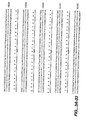
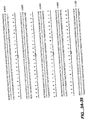
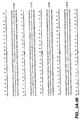
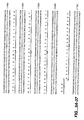
- nucleotides encompassing xcpP, xcpQ, orfv, orfx, xcpR, xcpS, xcpT, xcpU, xcpV, xcpW, xcpX, xcpY, xcpZ and part of protein OrfY have been sequenced ( Figures 3A-3B, SEQ ID NO: 29).
Landscapes
- Health & Medical Sciences (AREA)
- Chemical & Material Sciences (AREA)
- Life Sciences & Earth Sciences (AREA)
- Genetics & Genomics (AREA)
- Organic Chemistry (AREA)
- Engineering & Computer Science (AREA)
- Bioinformatics & Cheminformatics (AREA)
- Wood Science & Technology (AREA)
- Zoology (AREA)
- Biomedical Technology (AREA)
- Biotechnology (AREA)
- General Engineering & Computer Science (AREA)
- Molecular Biology (AREA)
- General Health & Medical Sciences (AREA)
- Biochemistry (AREA)
- Biophysics (AREA)
- Microbiology (AREA)
- Medicinal Chemistry (AREA)
- Plant Pathology (AREA)
- Physics & Mathematics (AREA)
- Gastroenterology & Hepatology (AREA)
- Proteomics, Peptides & Aminoacids (AREA)
- Enzymes And Modification Thereof (AREA)
- Micro-Organisms Or Cultivation Processes Thereof (AREA)
- Measuring Or Testing Involving Enzymes Or Micro-Organisms (AREA)
- Preparation Of Compounds By Using Micro-Organisms (AREA)
Applications Claiming Priority (3)
| Application Number | Priority Date | Filing Date | Title |
|---|---|---|---|
| US69909296A | 1996-08-16 | 1996-08-16 | |
| US699092 | 1996-08-16 | ||
| EP97938360A EP0918851B1 (fr) | 1996-08-16 | 1997-08-15 | Systeme d'expression pour niveaux d'expression modifies |
Related Parent Applications (1)
| Application Number | Title | Priority Date | Filing Date |
|---|---|---|---|
| EP97938360A Division EP0918851B1 (fr) | 1996-08-16 | 1997-08-15 | Systeme d'expression pour niveaux d'expression modifies |
Publications (3)
| Publication Number | Publication Date |
|---|---|
| EP1555320A2 true EP1555320A2 (fr) | 2005-07-20 |
| EP1555320A3 EP1555320A3 (fr) | 2005-07-27 |
| EP1555320B1 EP1555320B1 (fr) | 2008-05-21 |
Family
ID=24807894
Family Applications (3)
| Application Number | Title | Priority Date | Filing Date |
|---|---|---|---|
| EP97938360A Expired - Lifetime EP0918851B1 (fr) | 1996-08-16 | 1997-08-15 | Systeme d'expression pour niveaux d'expression modifies |
| EP04015824A Expired - Lifetime EP1555320B1 (fr) | 1996-08-16 | 1997-08-15 | Système d'expression dérivé de la cascade de régulation de lipase de Pseudomonas alcaligenes. |
| EP04015305A Expired - Lifetime EP1557467B1 (fr) | 1996-08-16 | 1997-08-15 | Système d'expression dérivé de la cascade de régulation de lipase de Pseudomonas alcaligenes. |
Family Applications Before (1)
| Application Number | Title | Priority Date | Filing Date |
|---|---|---|---|
| EP97938360A Expired - Lifetime EP0918851B1 (fr) | 1996-08-16 | 1997-08-15 | Systeme d'expression pour niveaux d'expression modifies |
Family Applications After (1)
| Application Number | Title | Priority Date | Filing Date |
|---|---|---|---|
| EP04015305A Expired - Lifetime EP1557467B1 (fr) | 1996-08-16 | 1997-08-15 | Système d'expression dérivé de la cascade de régulation de lipase de Pseudomonas alcaligenes. |
Country Status (8)
| Country | Link |
|---|---|
| US (3) | US6048710A (fr) |
| EP (3) | EP0918851B1 (fr) |
| AT (3) | ATE396267T1 (fr) |
| AU (1) | AU4070997A (fr) |
| CA (1) | CA2262510C (fr) |
| DE (3) | DE69738723D1 (fr) |
| DK (3) | DK1557467T3 (fr) |
| WO (1) | WO1998006836A2 (fr) |
Families Citing this family (3)
| Publication number | Priority date | Publication date | Assignee | Title |
|---|---|---|---|---|
| DE19848016A1 (de) * | 1998-10-17 | 2000-04-20 | Roche Diagnostics Gmbh | Verfahren zur Herstellung extrazellulärer Protein durch Expression in heterologen Wirtsbakterien |
| BRPI0416807A (pt) * | 2003-11-21 | 2007-01-09 | Dow Global Technologies Inc | sistemas de expressão aperfeiçoados com secreção de sistema sec |
| CN111019904A (zh) * | 2018-10-10 | 2020-04-17 | 安徽东方帝维生物制品股份有限公司 | 适应羊口疮病毒增殖的永生化羊睾丸细胞系的构建方法 |
Family Cites Families (8)
| Publication number | Priority date | Publication date | Assignee | Title |
|---|---|---|---|---|
| US5278066A (en) * | 1985-08-09 | 1994-01-11 | Gist-Brocades Nv | Molecular cloning and expression of gene encoding lipolytic enzyme |
| JP3079276B2 (ja) * | 1988-02-28 | 2000-08-21 | 天野製薬株式会社 | 組換え体dna、それを含むシュードモナス属菌及びそれを用いたリパーゼの製造法 |
| US5756315A (en) * | 1989-12-05 | 1998-05-26 | Kyowa Hakko Kogyo Co., Ltd. | Inosine-guanosine kinase |
| IE911869A1 (en) * | 1990-06-01 | 1991-12-04 | Regeneron Pharma | A family of map2 protein kinases |
| EP0652958A1 (fr) * | 1992-07-23 | 1995-05-17 | Genencor International, Inc. | Clonage et expression d'un gene modulateur de lipase a partir de genes pseudoalcalins de pseudomonas |
| US6514745B1 (en) * | 1993-07-19 | 2003-02-04 | The Regents Of The University Of California | Oncoprotein protein kinase |
| AU2524695A (en) * | 1994-05-04 | 1995-11-29 | Genencor International, Inc. | Lipases with improved surfactant resistance |
| BE1009650A5 (fr) * | 1995-10-12 | 1997-06-03 | Genencor Int | Systeme d'expression, vecteur et cellule transformee par ce vecteur. |
-
1997
- 1997-08-15 DK DK04015305T patent/DK1557467T3/da active
- 1997-08-15 EP EP97938360A patent/EP0918851B1/fr not_active Expired - Lifetime
- 1997-08-15 AT AT04015824T patent/ATE396267T1/de not_active IP Right Cessation
- 1997-08-15 DK DK04015824T patent/DK1555320T3/da active
- 1997-08-15 DK DK97938360T patent/DK0918851T3/da active
- 1997-08-15 AT AT97938360T patent/ATE279513T1/de not_active IP Right Cessation
- 1997-08-15 EP EP04015824A patent/EP1555320B1/fr not_active Expired - Lifetime
- 1997-08-15 DE DE69738723T patent/DE69738723D1/de not_active Expired - Lifetime
- 1997-08-15 US US08/911,853 patent/US6048710A/en not_active Expired - Lifetime
- 1997-08-15 AU AU40709/97A patent/AU4070997A/en not_active Abandoned
- 1997-08-15 DE DE69738724T patent/DE69738724D1/de not_active Expired - Lifetime
- 1997-08-15 DE DE69731210T patent/DE69731210T2/de not_active Expired - Lifetime
- 1997-08-15 EP EP04015305A patent/EP1557467B1/fr not_active Expired - Lifetime
- 1997-08-15 AT AT04015305T patent/ATE396268T1/de not_active IP Right Cessation
- 1997-08-15 WO PCT/US1997/014450 patent/WO1998006836A2/fr not_active Ceased
- 1997-08-15 CA CA2262510A patent/CA2262510C/fr not_active Expired - Fee Related
-
2000
- 2000-01-06 US US09/479,453 patent/US6313283B1/en not_active Expired - Lifetime
- 2000-01-06 US US09/479,409 patent/US6225106B1/en not_active Expired - Lifetime
Also Published As
| Publication number | Publication date |
|---|---|
| EP0918851A2 (fr) | 1999-06-02 |
| WO1998006836A3 (fr) | 1998-04-30 |
| ATE396268T1 (de) | 2008-06-15 |
| ATE396267T1 (de) | 2008-06-15 |
| US6225106B1 (en) | 2001-05-01 |
| CA2262510A1 (fr) | 1998-02-19 |
| DE69738723D1 (de) | 2008-07-03 |
| EP1555320B1 (fr) | 2008-05-21 |
| US6048710A (en) | 2000-04-11 |
| DK1555320T3 (da) | 2008-09-29 |
| DE69731210T2 (de) | 2005-10-20 |
| CA2262510C (fr) | 2012-10-23 |
| DK0918851T3 (da) | 2005-01-24 |
| WO1998006836A2 (fr) | 1998-02-19 |
| DE69738724D1 (de) | 2008-07-03 |
| EP1557467B1 (fr) | 2008-05-21 |
| EP0918851B1 (fr) | 2004-10-13 |
| ATE279513T1 (de) | 2004-10-15 |
| AU4070997A (en) | 1998-03-06 |
| DK1557467T3 (da) | 2008-09-15 |
| US6313283B1 (en) | 2001-11-06 |
| DE69731210D1 (de) | 2004-11-18 |
| EP1557467A1 (fr) | 2005-07-27 |
| EP1555320A3 (fr) | 2005-07-27 |
Similar Documents
| Publication | Publication Date | Title |
|---|---|---|
| Morello et al. | Lactococcus lactis, an efficient cell factory for recombinant protein production and secretion | |
| US20040005695A1 (en) | Method for producing recombinant proteins by gram-negative bacteria | |
| CA2426084C (fr) | Ameliorations apportees a un procede de fermentation aux fins de la production de produits geniques heterologues dans des bacteries d'acide lactique | |
| JP4469005B2 (ja) | 選択された生物のための人工プロモーターライブラリー及び該ライブラリー由来のプロモーター | |
| US5958728A (en) | Methods for producing polypeptides in mutants of bacillus cells | |
| JP2002504379A (ja) | バチルス細胞内でのポリペプチドの製法 | |
| AU2002210401A1 (en) | Fermentation method for production of heterologous gene products in lactic acid bacteria | |
| JP2001514529A (ja) | プロテアーゼ活性を有するポリペプチドをコードする核酸 | |
| KR20020045400A (ko) | 포자 표면발현 방법 | |
| JP2001503641A (ja) | バシラス細胞のサーファクチン突然変異株におけるポリペプチドの製造方法 | |
| EP0925364A1 (fr) | Systeme d'expression regulable de bacteries lactiques | |
| US5804409A (en) | Production of active Pseudomonas glumae lipase in homologous or heterologous hosts | |
| EP0918851B1 (fr) | Systeme d'expression pour niveaux d'expression modifies | |
| EP0464922A1 (fr) | Préparation de lipase active de pseudomonas glumae à partir d'hôtes homologues ou hétérologues | |
| US5679540A (en) | Cloning and identification of a two component signal transducing regulatory system from bacteroides fragilis | |
| AU761093B2 (en) | Construction of production strains for producing substituted phenols by specifically inactivating genes of the eugenol and ferulic acid catabolism | |
| EP1003872A1 (fr) | Augmentation de la production de proteines dans des micro-organismes gram-positifs | |
| Winteler et al. | Anaerobically controlled expression system derived from the arcDABC operon of Pseudomonas aeruginosa: application to lipase production | |
| Keith et al. | dnaK and the heat stress response of Pseudomonas syringae pv. glycinea | |
| WO1998006836A9 (fr) | Systeme d'expression pour niveaux d'expression modifies | |
| JP3340164B2 (ja) | 新規なカルシウム調節プロモータpo438 | |
| US20050042756A1 (en) | Intergenic and intragenic integration sites for foreign gene expression in recombinant S. gordonii strains | |
| US6506579B1 (en) | Increasing production of proteins in gram-positive microorganisms using SecG | |
| Murooka | Genetic designs for product formation in recombinant microbes | |
| HK1167677B (en) | Vector comprising mannose promoter and mannose promoter |
Legal Events
| Date | Code | Title | Description |
|---|---|---|---|
| PUAI | Public reference made under article 153(3) epc to a published international application that has entered the european phase |
Free format text: ORIGINAL CODE: 0009012 |
|
| PUAL | Search report despatched |
Free format text: ORIGINAL CODE: 0009013 |
|
| 17P | Request for examination filed |
Effective date: 20040726 |
|
| AC | Divisional application: reference to earlier application |
Ref document number: 0918851 Country of ref document: EP Kind code of ref document: P |
|
| AK | Designated contracting states |
Kind code of ref document: A2 Designated state(s): AT BE CH DE DK ES FI FR GB GR IE IT LI NL PT SE |
|
| AK | Designated contracting states |
Kind code of ref document: A3 Designated state(s): AT BE CH DE DK ES FI FR GB GR IE IT LI NL PT SE |
|
| RTI1 | Title (correction) |
Free format text: EXPRESSION SYSTEM DERIVED FROM THE LIPASE REGULATION CASCADE OF PSEUDOMONAS ALCALIGENES |
|
| AKX | Designation fees paid |
Designated state(s): AT BE CH DE DK ES FI FR GB GR IE IT LI NL PT SE |
|
| 17Q | First examination report despatched |
Effective date: 20060203 |
|
| 17Q | First examination report despatched |
Effective date: 20060203 |
|
| GRAP | Despatch of communication of intention to grant a patent |
Free format text: ORIGINAL CODE: EPIDOSNIGR1 |
|
| RIC1 | Information provided on ipc code assigned before grant |
Ipc: C12N 15/31 20060101AFI20071119BHEP Ipc: C12N 1/21 20060101ALI20071119BHEP Ipc: C12N 15/78 20060101ALI20071119BHEP Ipc: C12N 9/20 20060101ALI20071119BHEP Ipc: C07K 14/21 20060101ALI20071119BHEP |
|
| GRAS | Grant fee paid |
Free format text: ORIGINAL CODE: EPIDOSNIGR3 |
|
| GRAA | (expected) grant |
Free format text: ORIGINAL CODE: 0009210 |
|
| AC | Divisional application: reference to earlier application |
Ref document number: 0918851 Country of ref document: EP Kind code of ref document: P |
|
| AK | Designated contracting states |
Kind code of ref document: B1 Designated state(s): AT BE CH DE DK ES FI FR GB GR IE IT LI NL PT SE |
|
| REG | Reference to a national code |
Ref country code: GB Ref legal event code: FG4D |
|
| REG | Reference to a national code |
Ref country code: CH Ref legal event code: EP |
|
| REF | Corresponds to: |
Ref document number: 69738723 Country of ref document: DE Date of ref document: 20080703 Kind code of ref document: P |
|
| REG | Reference to a national code |
Ref country code: IE Ref legal event code: FG4D |
|
| REG | Reference to a national code |
Ref country code: DK Ref legal event code: T3 |
|
| PG25 | Lapsed in a contracting state [announced via postgrant information from national office to epo] |
Ref country code: ES Free format text: LAPSE BECAUSE OF FAILURE TO SUBMIT A TRANSLATION OF THE DESCRIPTION OR TO PAY THE FEE WITHIN THE PRESCRIBED TIME-LIMIT Effective date: 20080901 |
|
| PG25 | Lapsed in a contracting state [announced via postgrant information from national office to epo] |
Ref country code: AT Free format text: LAPSE BECAUSE OF FAILURE TO SUBMIT A TRANSLATION OF THE DESCRIPTION OR TO PAY THE FEE WITHIN THE PRESCRIBED TIME-LIMIT Effective date: 20080521 |
|
| PG25 | Lapsed in a contracting state [announced via postgrant information from national office to epo] |
Ref country code: PT Free format text: LAPSE BECAUSE OF FAILURE TO SUBMIT A TRANSLATION OF THE DESCRIPTION OR TO PAY THE FEE WITHIN THE PRESCRIBED TIME-LIMIT Effective date: 20081021 Ref country code: SE Free format text: LAPSE BECAUSE OF FAILURE TO SUBMIT A TRANSLATION OF THE DESCRIPTION OR TO PAY THE FEE WITHIN THE PRESCRIBED TIME-LIMIT Effective date: 20080821 |
|
| PLBE | No opposition filed within time limit |
Free format text: ORIGINAL CODE: 0009261 |
|
| STAA | Information on the status of an ep patent application or granted ep patent |
Free format text: STATUS: NO OPPOSITION FILED WITHIN TIME LIMIT |
|
| REG | Reference to a national code |
Ref country code: CH Ref legal event code: PL |
|
| 26N | No opposition filed |
Effective date: 20090224 |
|
| REG | Reference to a national code |
Ref country code: IE Ref legal event code: MM4A |
|
| PG25 | Lapsed in a contracting state [announced via postgrant information from national office to epo] |
Ref country code: CH Free format text: LAPSE BECAUSE OF NON-PAYMENT OF DUE FEES Effective date: 20080831 Ref country code: LI Free format text: LAPSE BECAUSE OF NON-PAYMENT OF DUE FEES Effective date: 20080831 |
|
| PG25 | Lapsed in a contracting state [announced via postgrant information from national office to epo] |
Ref country code: IE Free format text: LAPSE BECAUSE OF NON-PAYMENT OF DUE FEES Effective date: 20080815 |
|
| PG25 | Lapsed in a contracting state [announced via postgrant information from national office to epo] |
Ref country code: IT Free format text: LAPSE BECAUSE OF FAILURE TO SUBMIT A TRANSLATION OF THE DESCRIPTION OR TO PAY THE FEE WITHIN THE PRESCRIBED TIME-LIMIT Effective date: 20080521 |
|
| PG25 | Lapsed in a contracting state [announced via postgrant information from national office to epo] |
Ref country code: GR Free format text: LAPSE BECAUSE OF FAILURE TO SUBMIT A TRANSLATION OF THE DESCRIPTION OR TO PAY THE FEE WITHIN THE PRESCRIBED TIME-LIMIT Effective date: 20080822 |
|
| PGFP | Annual fee paid to national office [announced via postgrant information from national office to epo] |
Ref country code: FI Payment date: 20140812 Year of fee payment: 18 Ref country code: DE Payment date: 20140813 Year of fee payment: 18 Ref country code: NL Payment date: 20140809 Year of fee payment: 18 Ref country code: DK Payment date: 20140812 Year of fee payment: 18 |
|
| PGFP | Annual fee paid to national office [announced via postgrant information from national office to epo] |
Ref country code: GB Payment date: 20140813 Year of fee payment: 18 Ref country code: FR Payment date: 20140808 Year of fee payment: 18 |
|
| PGFP | Annual fee paid to national office [announced via postgrant information from national office to epo] |
Ref country code: BE Payment date: 20140812 Year of fee payment: 18 |
|
| REG | Reference to a national code |
Ref country code: DE Ref legal event code: R119 Ref document number: 69738723 Country of ref document: DE |
|
| REG | Reference to a national code |
Ref country code: DK Ref legal event code: EBP Effective date: 20150831 |
|
| GBPC | Gb: european patent ceased through non-payment of renewal fee |
Effective date: 20150815 |
|
| REG | Reference to a national code |
Ref country code: NL Ref legal event code: MM Effective date: 20150901 |
|
| PG25 | Lapsed in a contracting state [announced via postgrant information from national office to epo] |
Ref country code: FI Free format text: LAPSE BECAUSE OF NON-PAYMENT OF DUE FEES Effective date: 20150815 |
|
| REG | Reference to a national code |
Ref country code: FR Ref legal event code: ST Effective date: 20160429 |
|
| PG25 | Lapsed in a contracting state [announced via postgrant information from national office to epo] |
Ref country code: NL Free format text: LAPSE BECAUSE OF NON-PAYMENT OF DUE FEES Effective date: 20150901 |
|
| PG25 | Lapsed in a contracting state [announced via postgrant information from national office to epo] |
Ref country code: DE Free format text: LAPSE BECAUSE OF NON-PAYMENT OF DUE FEES Effective date: 20160301 Ref country code: GB Free format text: LAPSE BECAUSE OF NON-PAYMENT OF DUE FEES Effective date: 20150815 |
|
| PG25 | Lapsed in a contracting state [announced via postgrant information from national office to epo] |
Ref country code: DK Free format text: LAPSE BECAUSE OF NON-PAYMENT OF DUE FEES Effective date: 20150831 Ref country code: FR Free format text: LAPSE BECAUSE OF NON-PAYMENT OF DUE FEES Effective date: 20150831 |
|
| PG25 | Lapsed in a contracting state [announced via postgrant information from national office to epo] |
Ref country code: BE Free format text: LAPSE BECAUSE OF NON-PAYMENT OF DUE FEES Effective date: 20150831 |