EP1561809A2 - Cellule eucaryote exprimant phycocyanin - Google Patents
Cellule eucaryote exprimant phycocyanin Download PDFInfo
- Publication number
- EP1561809A2 EP1561809A2 EP04001504A EP04001504A EP1561809A2 EP 1561809 A2 EP1561809 A2 EP 1561809A2 EP 04001504 A EP04001504 A EP 04001504A EP 04001504 A EP04001504 A EP 04001504A EP 1561809 A2 EP1561809 A2 EP 1561809A2
- Authority
- EP
- European Patent Office
- Prior art keywords
- cpca
- phycocyanin
- recombinant
- holo
- genes
- Prior art date
- Legal status (The legal status is an assumption and is not a legal conclusion. Google has not performed a legal analysis and makes no representation as to the accuracy of the status listed.)
- Withdrawn
Links
Images












Classifications
-
- C—CHEMISTRY; METALLURGY
- C12—BIOCHEMISTRY; BEER; SPIRITS; WINE; VINEGAR; MICROBIOLOGY; ENZYMOLOGY; MUTATION OR GENETIC ENGINEERING
- C12N—MICROORGANISMS OR ENZYMES; COMPOSITIONS THEREOF; PROPAGATING, PRESERVING, OR MAINTAINING MICROORGANISMS; MUTATION OR GENETIC ENGINEERING; CULTURE MEDIA
- C12N15/00—Mutation or genetic engineering; DNA or RNA concerning genetic engineering, vectors, e.g. plasmids, or their isolation, preparation or purification; Use of hosts therefor
- C12N15/09—Recombinant DNA-technology
- C12N15/63—Introduction of foreign genetic material using vectors; Vectors; Use of hosts therefor; Regulation of expression
- C12N15/79—Vectors or expression systems specially adapted for eukaryotic hosts
- C12N15/80—Vectors or expression systems specially adapted for eukaryotic hosts for fungi
- C12N15/81—Vectors or expression systems specially adapted for eukaryotic hosts for fungi for yeasts
-
- C—CHEMISTRY; METALLURGY
- C07—ORGANIC CHEMISTRY
- C07K—PEPTIDES
- C07K14/00—Peptides having more than 20 amino acids; Gastrins; Somatostatins; Melanotropins; Derivatives thereof
- C07K14/195—Peptides having more than 20 amino acids; Gastrins; Somatostatins; Melanotropins; Derivatives thereof from bacteria
-
- C—CHEMISTRY; METALLURGY
- C12—BIOCHEMISTRY; BEER; SPIRITS; WINE; VINEGAR; MICROBIOLOGY; ENZYMOLOGY; MUTATION OR GENETIC ENGINEERING
- C12N—MICROORGANISMS OR ENZYMES; COMPOSITIONS THEREOF; PROPAGATING, PRESERVING, OR MAINTAINING MICROORGANISMS; MUTATION OR GENETIC ENGINEERING; CULTURE MEDIA
- C12N15/00—Mutation or genetic engineering; DNA or RNA concerning genetic engineering, vectors, e.g. plasmids, or their isolation, preparation or purification; Use of hosts therefor
- C12N15/09—Recombinant DNA-technology
- C12N15/11—DNA or RNA fragments; Modified forms thereof; Non-coding nucleic acids having a biological activity
- C12N15/52—Genes encoding for enzymes or proenzymes
Definitions
- the invention relates to recombinantly produced phycocyanin or functional active parts of it.
- the interactions between proteins are classically biochemical Methods such as affinity chromatography or immunoprecipitation identified or quantified. Frequently these methods are with genetic or molecular biological methods combined. For example a sought-after protein from a bacteriophage / cDNA library In some cases, the interaction may interact with a specific Protein probe detected directly in the lysate of a positive plaque become.
- GFP Green Fluorescent Protein
- the GFP shows an absorption spectrum with two peaks, namely a first peak at 395 nm and a second at 470 nm. This is due to the Tyr 66 , which transforms in its hydroxy form by the excitation at 395 nm in the phenolate form. This emits after appropriate excitation light of a wavelength of 509 nm.
- the emission and absorption spectrum of the GFP lies exactly in the spectral areas in which a variety of biological substances one Have fluorescence.
- This natural fluorescence of biological systems also known as autofluorescence - is not inconsiderable parts
- This autofluorescence therefore overlaps with the spectrum typical of the GFP protein and is responsible for high background noise when using GFP in in vivo studies.
- This background noise not infrequently leads to a loss of clarity and significance of the test results.
- the object of the present invention is therefore an alternative fluorescent protein in particular for cell biological investigations, as well as a To provide a method for its production.
- this protein should be have an absorption maximum in the longer wavelength range.
- a phycocyanin or functionally active parts thereof wherein the phycocyanin or its inventive Share a glycosylation compared to native phycocyanin exhibit.
- a transformed eukaryotic cell in particular a yeast cell provided which comprises the phycocyanin of the invention or its functionally active parts expressed.
- Phycocyanins are phycobiliproteins that are considered to be accessory Photosynthetic pigments from cyanobacteria, red algae or cryptomonads are known. In cyanobacteria and red algae are individual Phycobiliproteins predominantly aggregated into large subunits, the so-called phycobilisomes.
- the phycobiliproteins belong to the family of homologous proteins, respectively consist of a closely linked ⁇ heterodimer. Both Subunits - that is, both the ⁇ and ⁇ subunits can be one or more chromophores.
- the quality and number of covalent linked to the protein unit (apo-protein) chromophore serves the Classification of phycobiliproteins.
- the phycocyanins carry a single bilin moiety on the ⁇ subunit and two bilins at the ⁇ subunit. By comparison, for example Phycoerythrins by two or three bilins at the ⁇ subunit and three at characterized the ⁇ -subunit. Allophycocyanins, however, contribute each protein subunit only one bilin each.
- the spectroscopic properties of phycobiliproteins become essential by the number and location of the double bonds in the bilin certainly. This is the case between the phycocyanobilin (PCB), the phycobiliviolin (PXB), the phycoerythrobilin (PEB) and the phycourobilin (PUB).
- PCB phycocyanobilin
- PXB phycobiliviolin
- PEB phycoerythrobilin
- PUB phycourobilin
- the two thioether bonds to the apo-protein-containing PEB and PUB are called DiCysPEB and DiCysPUB, respectively.
- the conformation of the bilin portion is for the spectral properties of the phycobiliprotein of great importance.
- X-ray structure analyzes show that the bilin in the phycobiliprotein is usually as possible stretched conformation takes.
- the bilin free in solution? - which allows it to adopt a different conformation - shifts
- the absorption maximum is stronger in the UV range.
- the phycocyanin is - as already mentioned - by a bilin on the ⁇ -subunit and two bilins are labeled at the ⁇ -subunit.
- the ⁇ subunit is always a PCB.
- the ⁇ subunit can carry either two PCBs or a PCB and PEB. In the first case acts it is the C-phycocyanin (C-PC), while the second molecule as R-phycocyanin (R-PC) is called.
- C-PC C-phycocyanin
- R-PC R-phycocyanin
- the two PC variants differ However, they are not essential in their spectral properties.
- the Autofluorescence is based - as already mentioned above - essentially on flavin or NADH or NADPH derivatives, the absorption and emission maxima at 360-560 nm show.
- holo-CpcA thus includes first the degradation and Conversion of heme to PCB and subsequently its enzymatic Binding to the protein subunit.
- the biosynthesis proceeds accordingly the holo- ⁇ subunit (holo-CpcB), with the binding of the bilin moieties the CpcB is believed to be at least partially non-enzymatic.
- holo-CpcA and holo-CpcB dimerize these to a "monomer" of the phycocyanin.
- holo-CpcA Although the heterologous expression of holo-CpcA in E. coli has been successful in the past (Tooley et al., Supra).
- the cells were transfected with two plasmids with cpcA, cpcE and cpcF gene or hox1 and pcyA.
- the biosynthesis of holo-CpcA took place.
- this holo-CpcA showed comparable spectral properties as the native holo-CpcA.
- the yield of holo-CpcA was low since only about one-third of the available apo-CpcA was actually converted to holo-CpcA.
- Tooley et al. evaluated whether there may be a lack of available endogenous heme in E. coli for the reduced conversion of apo-CpcA to holo-CpcA. For this they have additionally offered the transformed cells ⁇ -aminolevulinic acid. However, the additional administration of this key compound of the heme metabolism has not led to an increase in the holo-CpcA yield.
- Schröder speculates on the possibility, after elucidating the complete biosynthetic pathway, to clone the relevant genes into the yeast and thus to achieve a complete in vivo biosynthesis (for a discussion of this problem see also Schröder, supra. Pages 77-79). Schroeder owes a clear explanation for the failure of his efforts to provide a semi-synthetic biosynthesis.
- the inventive expresses Eukaryotic cell the holo-CpcA.
- This can be done by the eukaryotic cell preferably with the genes cpcE and cpcF for the PCB lyase, the hox1 for the heme oxygenase, the pcyA for the ferrodoxin reductase and the cpcA for the ⁇ -subunit.
- This can be a complete endogenous biosynthesis of holo-CpcA in a heterologous eukaryotic Host can be achieved.
- holo-CpcA via a semi-synthetic To provide biosynthetic pathway.
- one or more the other genes relevant for biosynthesis are either cloned into or add their respective gene product externally. In order to is it possible - depending on the respective specific question of the experiment - to specifically induce the system.
- the subsequent Isolation of the holo-CpcA or holo-CpcB from the host cell is the invention "functionally active part" of the phycocyanin ready.
- both the holo-CpcA and the holo-CpcB in the Cell are expressed - either completely endogenous or semisynthetic as described above - the two subunits can dimerize and form a complete phycocyanin monomer. According to the invention Thus, not only a part of the phycocyanin, but also a complete Phycocyanin be provided.
- the phycocyanin provided according to the invention or its functional active parts have a glycosylation pattern that separates them from each native protein or the corresponding protein subunit.
- the CpcA expressed in a eukaryotic host is on the threonine at position 6, the serine at position 10 and the serine Position 162 of the amino acid sequence is glycosylated via an O-linkage. These glycosylations are not present in native CpcA.
- a particular advantage of the fluorescent protein according to the invention is that its emission spectrum shows a redshift in comparison with its previously known expression forms.
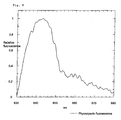
- the emission maximum of the holo-CpcA is at 643 nm, which is 2 nm further in the longer-wave range than, for example, the CpcA expressed in E. coli . Even though this difference is not quantitatively large, in practice it can serve to distinguish this signal from signals from other fluorescent dyes.
- the Holo-CpcA expressed in a transformed yeast cell is suitable in particular, the record number DSM 16134 on January 15 2004 at the German Collection of Microorganisms and Cell Cultures GmbH (DSMZ) deposited yeast strain.
- heterologous expression of holo-CpcA not only depends on the successful cloning of those required for biosynthesis Genes in the host cell, but also through a suitable choice of Cultivation conditions of the host cell is influenced. It can in particular Cultivation conditions play a role in the concentration affecting available endogenous heme in the host cells. So may be a stimulation of heme biosynthesis or an inhibition of the cellular heme degradation to increase the endogenous heme concentration to lead.
- the transformed yeast cells in to cultivate a medium with non-fermentable carbon sources, to increase the endogenous concentration of available heme.
- HMX1 enzyme is a homolog of the heme oxygenase lacking the unaltered yeast (Protchenko O., Philpott CC (2003) Regulation of Intracellular Heme Levels by HMX1, a homologue of heme oxygenase, in Saccaromyces cerevisiae JBC 278: 36582 -36,587). Since this enzyme is inhibited by iron, it is possible to inhibit this enzyme in a specific culture medium, for. By the administration of iron.
- the concentration of available heme can likewise be effected by overexpression of the key enzymes of heme synthesis.
- porphobilinogen synthase, porphobilinogen deaminase or uroporphyrinogen III decarboxylase can be overexpressed (Hoffmann et al (2003) supra).
- the activity of the promoter e.g. by to increase an increase in glucose concentration.
- glucose concentration to increase the promoter activity is initially in conflict with the associated repression of heme metabolism. It has been confirmed experimentally that in particular a Increasing the glucose concentration in the medium from that during cultivation from yeasts usual 2% to for example 13% to an optimized yield of recombinant holo-CpcA with an increase in fluorescence signal more than 7 times (see below).
- the culture medium with 2% ethanol provided. It is known that ethanol on the one hand as non-fermentable Carbon source induces the heme metabolism (Hoffmann et al (293) a.a. O.), but on the other hand also the activity of the ADH promoter (Ruohonen, L., Aalto, M.K., Keränen, S .: Modification to the ADH1 promotor of Saccharomyces ceriviseae for efficient production of heterologous proteines. Journal of Biotechnology 1995 (39) 193-203) supra).
- the invention may alternatively or additionally be provided to inhibit or retard the degradation of the recombinant phycocyanin in the cell or its parts. Since nitrogen deficiency favors enhanced degradation of the phycocyanin hexamers (Grossman AR (1990) Chromatic adaptation and the events involved in phycobilisome biosynthesis, Plant, Cell and Environment 13: 651-666), supplementation with nitrogen may counteract phycocyanin degradation.
- a yeast cell transformed As already mentioned, in one embodiment of the invention, a yeast cell transformed.
- the encoded PC genes for the To optimize expression in the yeast by first determining the GC content of the Gene is brought to an average value of 45%. So can the genetic stability and half-life of the mRNA in the host organism be extended.
- the efficiency of expression can be increased even more, by the PC genes in terms of their codon usage ("codon usage") be adjusted to the respective host organism.
- the eukaryotic cell with one or a plurality of plasmids containing one or more of the oligonucleotide sequences of SEQ. ID. No. 6 - 10 transformed.
- the selected PC genes are first cloned into a cloning vector and can then be integrated into the genome of the host cell via an integration vector be integrated stably.
- the genes can be one or more Klonienrngsvektoren be distributed.
- a particularly preferred Embodiment of the invention is the cloning of all 5 PC genes in only one Plasmid takes place.
- this gene can be a constitutive promoter - for example an ADH promoter - upstream.
- constitutive promoters such as the GAL promoter possible.
- the Promoters may be upstream of each individual gene than also regulate the entire group of genes collectively.
- an ADH promoter was chosen to to allow expression of the PC genes hox1, cpcE, pcyA and cpcF.
- the ADH promoter is in each case upstream of each gene.
- the cpcA gene is regulated via the GAL promoter. This can be an inducible system for the biosynthesis of phycocyanin or the holo- ⁇ -phycocyanin.
- the cpcA gene under the Control of the ADH. Promotors and one or more of the other genes under the control of the GAL promoter or any other promoter to deliver.
- ADH1 promoter it is beneficial to use the ADH promoter not to use in its original length of about 1500 bp, since, according to experience, the activity of the ADH1 promoter over time reduced. Thus it could be observed that the complete promoter in the shuts off late exponential growth of cells.
- an ADH1 promoter is linked to the Nucleotide sequence according to SEQ. ID. No. 5 used.
- Termination sequence according to Guo and Sherman used (Guo, Z., Sherman, F. "Signals sufficient for 3 'end formation of Yeast mRNA. Mol Cell Biol 1996 (16), 2772-2776). Particularly preferred is that shown in section 3 Termination Sequence SEQ. ID. No. 13th
- BspHI and NcoI are compatible and do not cut in the gene sequences.
- the genes were cloned into the vectors via 5 'Ncol or BspHI and 3' Xhol.
- the genes were 5 'each to the environment of the start codon appropriate restriction site.
- the restriction site became added for Xhol.
- the amino acid sequence NSR was added to each gene attached, ensuring that they are not caused by rare codons is coded.
- the vectors are intended to subsequently excise the entire gene optionally with and without His-tag allow for proof of expression to enable the single genes.
- HisTag was left out to address any issues with the to avoid additional sequence.
- the vectors Ncol-Xhol or BspHI-Xhol each contain with and without HisTag and with and without termination sequence.
- the present Design of the vectors can clone the genes into them and afterwards with / without HisTag, stop codon and termination sequence excised and be further cloned.
- sequences of the mcs of the vectors are attached (SEQ ID No. 1-SEQ. ID No. 4).
- the ADH promoter (alcohol dehydrogenase) is present in many cloning vectors present and leads there to a constitutive expression of downstream Genes. Often, however, its use is a decline the expression rate of the cloned gene up to a complete Turn off the expression after about 3 days to determine.
- This piece of the promoter was the starting point for the invention used ADH promoter, however, in the cloning of the Promotors
- the primers for the PCR were chosen to be an ADH fragment of 719 bp in total (see SEQ ID No. 5).
- the synthesis of the ADH promoter was carried out by PCR from the genome of S. cerevisiae Y190. The cloning was done in a three-fragment ligation with the gene of interest and the vector. For this purpose, the same reverse primer was used, which has an Ncol interface, since Ncol and BspHl are compatible. The forward primer has a different appended restriction site, which is selected depending on the cloning step.
- the codon usage has been optimized for the frequency of codon usage of S. cerevisiae .
- the GC content was adjusted, if possible, to an average value of about 45% in order to increase the genetic stability of the mRNA half-life.
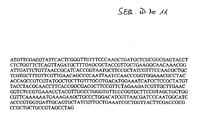
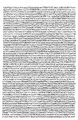
- PC genes gene SEQ. ID. No. CPCA SEQ. ID. No. 6 CPCE SEQ. ID. No. 7 cpcF SEQ. ID. No. 8th hox1 SEQ. ID. No. 9 pPcyA SEQ. ID. No. 10 CPCB SEQ. ID. No. 11
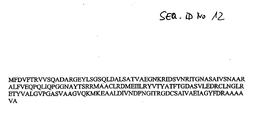
- a Holo-CpcB is to be expressed, as an alternative to cpcA the cpcB gene (SEQ ID NO: 11). This encodes an amino acid sequence according to SEQ. ID. No. 12th
- ACTCTGTAGA instead of ACTGTCTAGA; XbaI interface (SEQ ID. No. 13)).
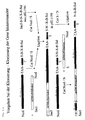
- FIG. 1 The procedure for the cloning of single genes as well as for the proof their successful expression is shown schematically in FIG.
- the representation refers by way of example to the clone B654: pSL1190 with Ncol interface and HisTag.
- the linearization of the finished vector was carried out with Stul.
- the transformation was in the yeast strain Y190 with URA deficiency.
- the genes were individually each with the ADH promoter cloned into the vector pRS306.
- This is a Integration vector, so that the genes subsequently into the genome of the yeast can be integrated.
- This essentially corresponds to the situation the intended objective, namely that the five relevant to the Holo-CpcA Genes ("PC genes") lie one behind the other.
- PC genes Holo-CpcA Genes
- the genes were first inserted into the appropriate vector (pSL1190 with BspHI or Ncol-site and HisTag), and then into a tri-fragment Ligation with the ADH promoter to be ligated.
- the employed DNA levels determined by agarose gel with entrained marker. After that The amounts of DNA used were calculated on a molar level. The vector was used 25 fmol and the two inserts per 125 fmol.
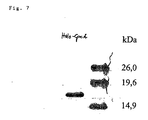
- the cell pellet after culturing protein-expressing yeasts was worked up with glass beads and vortexer. Here, denaturing conditions were chosen.
- the purification of the HisTag-bearing protein complied with the instructions of the manufacturer of Ni-NTA columns.
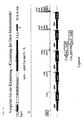
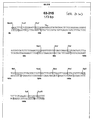
- FIGS. 4a to 4c The procedure for cloning the PC genes one behind the other is schematic shown in FIGS. 4a to 4c.
- Vector's card with the ones cloned in PC genes are shown in FIG. 5.
- the genes were cloned into pSL1190 with synthesized mcs without HisTag. Thereafter, these genes were excised with appropriate enzymes and together with the ADH promoter in succession in the vector pSL1190 set. The success of the cloning by bacterial colony PCR was detected for each gene and the identity of the isolated DNA was verified by test cuts. In addition, the promoter fraction became of the resulting vectors sequenced (AGOWA), as this by PCR was generated (varying forward primer with different restriction enzymes) and mistakes could be present. For these PCR applications the proof-reading polymerase Pfu (Promega) was used.
- Mouse Anti Histidine Tag (Serotec) 1: 250 was used as the primary antibody.
- the secondary antibody used was Goat Anti Mouse Alkaline Phosphatase (Dianova) 1: 5000. Detection was carried out with BCIP / NBT Blue Liquid (Sigma).
- the marker used was the prestained SDS gel marker (Invitrogen).
- the lysis buffer and the elution buffer were in the ratio of 60% to 40%.
- the host organism used for the heterologous expression of the PC genes according to the invention was a uracil-deficient variant of the Y190 strain of yeast.
- the yeast strain Y190 originally showed the following genotype: MATa, leu2-3, leu2-112, ura3-52, trp1-901, his3- ⁇ 200, ade2-101, GAL4- ⁇ gal80- ⁇ , URA3 :: GAL-LacZ, LYS: : GAL-HIS3, cyh r .
- yeast Y190 were prepared from this strain by the method of Boeke et al. [Boeke, J., Lacroute, F. and Fink, G.R. (1984). A positive selection for mutants doping orotidine-5-phosphate decarboxylase activity in yeast: 5-fluoro-orotic acid resistance. Mol. Gen. Genet 197, 345-346] selected yeast cells which have a deletion of the URA3 gene.
Landscapes
- Health & Medical Sciences (AREA)
- Life Sciences & Earth Sciences (AREA)
- Genetics & Genomics (AREA)
- Chemical & Material Sciences (AREA)
- Engineering & Computer Science (AREA)
- Organic Chemistry (AREA)
- Biomedical Technology (AREA)
- Bioinformatics & Cheminformatics (AREA)
- Biotechnology (AREA)
- General Engineering & Computer Science (AREA)
- Molecular Biology (AREA)
- Wood Science & Technology (AREA)
- Zoology (AREA)
- General Health & Medical Sciences (AREA)
- Biophysics (AREA)
- Biochemistry (AREA)
- Physics & Mathematics (AREA)
- Microbiology (AREA)
- Plant Pathology (AREA)
- Mycology (AREA)
- Gastroenterology & Hepatology (AREA)
- Medicinal Chemistry (AREA)
- Proteomics, Peptides & Aminoacids (AREA)
- Micro-Organisms Or Cultivation Processes Thereof (AREA)
- Preparation Of Compounds By Using Micro-Organisms (AREA)
Priority Applications (2)
| Application Number | Priority Date | Filing Date | Title |
|---|---|---|---|
| EP04001504A EP1561809A3 (fr) | 2004-01-23 | 2004-01-23 | Cellule eucaryote exprimant phycocyanin |
| PCT/EP2005/000663 WO2005093040A1 (fr) | 2004-01-23 | 2005-01-24 | Cellules eucaryotes exprimant la phycocyanine |
Applications Claiming Priority (1)
| Application Number | Priority Date | Filing Date | Title |
|---|---|---|---|
| EP04001504A EP1561809A3 (fr) | 2004-01-23 | 2004-01-23 | Cellule eucaryote exprimant phycocyanin |
Publications (2)
| Publication Number | Publication Date |
|---|---|
| EP1561809A2 true EP1561809A2 (fr) | 2005-08-10 |
| EP1561809A3 EP1561809A3 (fr) | 2005-08-17 |
Family
ID=34673651
Family Applications (1)
| Application Number | Title | Priority Date | Filing Date |
|---|---|---|---|
| EP04001504A Withdrawn EP1561809A3 (fr) | 2004-01-23 | 2004-01-23 | Cellule eucaryote exprimant phycocyanin |
Country Status (2)
| Country | Link |
|---|---|
| EP (1) | EP1561809A3 (fr) |
| WO (1) | WO2005093040A1 (fr) |
Cited By (2)
| Publication number | Priority date | Publication date | Assignee | Title |
|---|---|---|---|---|
| WO2006117225A3 (fr) * | 2005-05-04 | 2007-08-30 | Signalomics Gmbh | Systeme n-hybride competitif |
| WO2025077719A1 (fr) * | 2023-10-09 | 2025-04-17 | 永州中古生物技术有限公司 | Protéine chimérique contenant ho1 et pcya et son utilisation dans la production de phycocyanobiline |
Families Citing this family (2)
| Publication number | Priority date | Publication date | Assignee | Title |
|---|---|---|---|---|
| FR3041653B1 (fr) * | 2015-09-25 | 2017-12-29 | Fermentalg | Procede de culture d'algues, particulierement d'algues rouges unicellulaires (arus) |
| CN109678949B (zh) * | 2018-12-18 | 2022-05-24 | 海南热带海洋学院 | 一种在酵母中表达生产藻蓝蛋白β亚基的方法 |
Family Cites Families (2)
| Publication number | Priority date | Publication date | Assignee | Title |
|---|---|---|---|---|
| US7033806B2 (en) * | 2000-06-08 | 2006-04-25 | The Regents Of The University Of California | HY2 family of bilin reductases |
| US6740507B2 (en) * | 2001-07-31 | 2004-05-25 | The Regents Of The University Of California | Engineering of living cells for the expression of holo-phycobiliprotein-based constructs |
-
2004
- 2004-01-23 EP EP04001504A patent/EP1561809A3/fr not_active Withdrawn
-
2005
- 2005-01-24 WO PCT/EP2005/000663 patent/WO2005093040A1/fr not_active Ceased
Cited By (2)
| Publication number | Priority date | Publication date | Assignee | Title |
|---|---|---|---|---|
| WO2006117225A3 (fr) * | 2005-05-04 | 2007-08-30 | Signalomics Gmbh | Systeme n-hybride competitif |
| WO2025077719A1 (fr) * | 2023-10-09 | 2025-04-17 | 永州中古生物技术有限公司 | Protéine chimérique contenant ho1 et pcya et son utilisation dans la production de phycocyanobiline |
Also Published As
| Publication number | Publication date |
|---|---|
| EP1561809A3 (fr) | 2005-08-17 |
| WO2005093040A1 (fr) | 2005-10-06 |
Similar Documents
| Publication | Publication Date | Title |
|---|---|---|
| Hampton et al. | In vivo examination of membrane protein localization and degradation with green fluorescent protein. | |
| DE69208894T2 (de) | Materialien und verfahren zur biosynthese von serinen und serinverwandten produkten | |
| EP0765393A1 (fr) | Molecules d'adn codant pour un translocateur plastidial de 2-oxoglutarate/malate | |
| WO1995026406A2 (fr) | Biosynthese de la riboflavine dans des champignons | |
| EP1216259B1 (fr) | Sequences de signaux pour la fabrication de leu-hirudine au moyen de secretion par e. coli dans le milieu de culture | |
| EP1040193B1 (fr) | Promoteur issu d'ashbya gossypii | |
| EP2205767B1 (fr) | Procédé de détermination de mutations par décalage du cadre de lecture dans des acides nucléiques codants | |
| DE69326770T2 (de) | Für einen amnosäauretransporter kodierende dna-sequenzen, plasmide, bakterien,hefen, und pflanzen die einer transporter enthalten sowie ihre verwendung | |
| DE112019000467T5 (de) | Rekombinanter Mikroorganismus, Verfahren zu dessen Herstellung und seine Anwendung bei der Herstellung von Coenzym Q10 | |
| DE102008063234B4 (de) | Biotechnologische Herstellung von Riboflavin mit hoher Ausbeute | |
| EP1561809A2 (fr) | Cellule eucaryote exprimant phycocyanin | |
| US8652815B2 (en) | Transformant comprising gene coding for ws/dgat and method of producing fatty acid ethyl esters using the same | |
| EP1504103B1 (fr) | Promoteurs ayant une efficacité de transcription modifiée, derivés de levure methylotrophe hanseluna polymorpha | |
| DE602004009931T2 (de) | An der wachstumsfördernden funktion des essigsäurebakteriums beteiligtes gen und verwendungen davon | |
| WO2023111055A1 (fr) | 3-désoxyarabinoheptulosonate-7-phosphate synthase particulièrement appropriée pour la production fermentative d'acide ortho-aminobenzoïque | |
| DE112004001054B4 (de) | Sequenz für die BacillomycinD Synthese in Bacillus amyloliquefaciens FZB42 | |
| DE69420253T2 (de) | Regulator-gen für clavulansäure biosynthese | |
| DE10333144B4 (de) | Verfahren zur biotechnologischen Herstellung von Citronensäure mit einer genetisch veränderten Hefe Yarrowia lipolytica | |
| DE10101962B4 (de) | DNA-Sequenz mit regulatorischen Bereichen zur Expression von Proteinen | |
| EP1282715B1 (fr) | Procede de fabrication microbienne d'anhydride de difructose iii, micro-organisme destine a cet effet, enzyme ayant une activite d'inulase ii et sequences d'adn codant cette enzyme | |
| EP0334283B1 (fr) | Procédé de sélection de larges segments d'ADN | |
| EP1280893B1 (fr) | Procede de production de proteines dans une levure du genre arxula et promoteurs adaptes a cette fin | |
| EP0930367B1 (fr) | Champignons du genre Ashbya pour la préparation de riboflavine | |
| EP2185710A1 (fr) | Promoteurs eucaryotes pour l'expression génique | |
| DE60125754T2 (de) | Mutantenstämme geeignet zur herstellung von chemisch unterschiedlichen proteinen, die nicht-konventionelle aminosäuren enthalten |
Legal Events
| Date | Code | Title | Description |
|---|---|---|---|
| PUAI | Public reference made under article 153(3) epc to a published international application that has entered the european phase |
Free format text: ORIGINAL CODE: 0009012 |
|
| PUAL | Search report despatched |
Free format text: ORIGINAL CODE: 0009013 |
|
| AK | Designated contracting states |
Kind code of ref document: A2 Designated state(s): AT BE BG CH CY CZ DE DK EE ES FI FR GB GR HU IE IT LI LU MC NL PT RO SE SI SK TR |
|
| AX | Request for extension of the european patent |
Extension state: AL LT LV MK |
|
| AK | Designated contracting states |
Kind code of ref document: A3 Designated state(s): AT BE BG CH CY CZ DE DK EE ES FI FR GB GR HU IE IT LI LU MC NL PT RO SE SI SK TR |
|
| AX | Request for extension of the european patent |
Extension state: AL LT LV MK |
|
| 17P | Request for examination filed |
Effective date: 20060125 |
|
| AKX | Designation fees paid |
Designated state(s): AT BE BG CH CY CZ DE DK EE ES FI FR GB GR HU IE IT LI LU MC NL PT RO SE SI SK TR |
|
| RAP1 | Party data changed (applicant data changed or rights of an application transferred) |
Owner name: SIGNALOMICS GMBH |
|
| STAA | Information on the status of an ep patent application or granted ep patent |
Free format text: STATUS: THE APPLICATION IS DEEMED TO BE WITHDRAWN |
|
| 18D | Application deemed to be withdrawn |
Effective date: 20090903 |