EP1572661B1 - Forme cristalline d'un hydrochlorure de quinapril et procede de preparation de celle-ci - Google Patents
Forme cristalline d'un hydrochlorure de quinapril et procede de preparation de celle-ci Download PDFInfo
- Publication number
- EP1572661B1 EP1572661B1 EP02796958A EP02796958A EP1572661B1 EP 1572661 B1 EP1572661 B1 EP 1572661B1 EP 02796958 A EP02796958 A EP 02796958A EP 02796958 A EP02796958 A EP 02796958A EP 1572661 B1 EP1572661 B1 EP 1572661B1
- Authority
- EP
- European Patent Office
- Prior art keywords
- process according
- quinapril hydrochloride
- formula
- nitroalkane
- quinapril
- Prior art date
- Legal status (The legal status is an assumption and is not a legal conclusion. Google has not performed a legal analysis and makes no representation as to the accuracy of the status listed.)
- Expired - Lifetime
Links
- AKTZBAPUNGDCRZ-UHFFFAOYSA-N CC(CC1)=CC=C1S(O)(=O)=O Chemical compound CC(CC1)=CC=C1S(O)(=O)=O AKTZBAPUNGDCRZ-UHFFFAOYSA-N 0.000 description 1
Images



Classifications
-
- C—CHEMISTRY; METALLURGY
- C07—ORGANIC CHEMISTRY
- C07D—HETEROCYCLIC COMPOUNDS
- C07D217/00—Heterocyclic compounds containing isoquinoline or hydrogenated isoquinoline ring systems
- C07D217/22—Heterocyclic compounds containing isoquinoline or hydrogenated isoquinoline ring systems with hetero atoms or with carbon atoms having three bonds to hetero atoms with at the most one bond to halogen, e.g. ester or nitrile radicals, directly attached to carbon atoms of the nitrogen-containing ring
- C07D217/26—Carbon atoms having three bonds to hetero atoms with at the most one bond to halogen
Definitions
- the present invention relates to a novel crystalline form of quinapril hydrochloride of formula (I) and a process for its preparation thereof.
- the present invention further relates to the preparation of amorphous form of quinapril hydrochloride, of high purity and conforming to pharmacopoeial specifications, by the use of the novel crystalline quinapril hydrochloride of formula (I) as an intermediate.
- Quinapril hydrochloride (I) and its pharmaceutically acceptable salts are active as angiotensin converting enzyme (ACE) inhibitors and thus are commercially valuable antihypertensive agents.
- the diketopiperazine impurity is formed either during removal of the carboxylic acid protective group or it could be formed during drying of quinapril hydrochloride.
- the crystalline material thus obtained contains equimolar amounts of acetonitrile/acetone as part of the crystal lattice.
- the solvent(s) present in the crystal structure can be removed under vacuum at a temperature of about 50° C.
- the crystallinity of the substance is lost due to desolvation during drying, and an amorphous material is obtained which is claimed to be free of impurities, specially the diketopiperazine compound of formula (II).
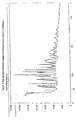
- a novel crystalline nitromethane solvate of quinapril hydrochloride of formula I exhibiting essentially the following X-ray (powder) diffraction properties: Spacing 'd' Relative intensity 16.2471 63.5 13.8426 55.5 11.9609 57.3 9.6467 17.2 7.9468 22.4 7.5064 31.1 7.1699 30.2 6.4095 52.4 6.0561 3.1 5.5041 20.4 5.2808 33.1 5.1767 22.8 4.8704 5.7 4.6830 34.4 4.4404 100 4.0977 30.9 3.9931 69.5 3.7747 62.8 3.5972 12.9 3.5058 22.8 3.4153 8.3 3.3558 7.0 3.2676 30.7 3.2054 7.6 3.1510 9.5 3.0854 16.5 2.9772 14.5 2.9403 17.5 2.9122 12.9 2.7798 7.6 2.6670 9.0 2.6216 6.0 2.5613 10.1 2.4650 5.2 2.3933 7.9 2.2963 4.9 2.2620 2.7 2.2
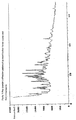
- a novel crystalline nitroethane solvate of quinapril hydrochloride of formula I exhibiting essentially the following X-ray (powder) diffraction properties: Spacing 'd' Relative intensity 17.4844 87.0 16.0841 67.2 12.0996 53.3 10.0860 18.8 8.1700 29.6 7.7522 41.2 7.3814 35.4 6.5032 39.9 6.0580 2.9 5.5780 35.8 5.3973 32.0 5.2776 23.7 4.9335 19.6 4.8335 32.9 4.7627 40.5 4.5635 88.9 4.5095 69.6 4.4227 36.5 4.2021 36.0 4.0818 100.0 3.8719 30.4 3.7802 48.7 3.6435 49.5 3.4889 10.4 3.3520 20.8 3.2948 36.3 3.1526 15.3 3.1132 19.1 3.0304 49.5 2.9280 19.2 2.9080 14.1 2.7933 7.9 2.6986 10.8 2.6399 9.4 2.5715 16.7 2.5194 9.
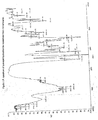
- a novel crystalline nitropropane solvate of quinapril hydrochloride of formula I exhibiting essentially the following X-ray (powder) diffraction properties Spacing 'd' Relative intensities 17.4327 100.0 15.4378 65.5 12.1079 49.5 10.4492 18.2 8.3626 21.3 7.9183 38.9 7.5253 27.5 6.6268 19.6 6.4583 17.2 5.6238 43.2 5.2713 27.8 5.1011 18.3 4.9816 30.7 4.8049 38.7 4.6878 52.0 4.5427 61.4 4.4480 35.3 4.3008 25.3 4.1690 68.6 4.0279 14.7 3.9483 23.9 3.7993 57.5 3.5871 15.5 3.4582 14.8 3.2960 32.0 3.1558 20.6 3.1053 26.1 3.0548 17.9 2.9559 9.2 2.9066 9.9 2.8044 10.6 2.7274 6.5 2.6357 9.4 2.5910 11.1 2.4880 5.3 2.4365 6.4 2.
- an amorphous form of quinapril hydrochloride of formula I in high purity, free of impurities and conforming to pharmacopoeial specifications obtained from the novel crystalline form of quinapril hydrochloride associated with the solvate of the nitroalkane.
- a simple and industrial method for purification of quinapril hydrochloride of formula I comprising crystallisation of impure quinapril hydrochloride from a nitroalkane solvent to give a novel crystalline form of quinapril hydrochloride associated with a solvate of the solvent utilised for crystallisation.
- a method for obtaining an amorphous form of quinapril hydrochloride, of high purity, free of impurities and conforming to pharmacopoeial specifications from the novel crystalline form of quinapril hydrochloride associated with the solvate of the nitroalkane solvent is provided.
- a method for preparation of amorphous form of quinapril hydrochloride, in high purity, free of impurities and conforming to pharmacopoeial specifications comprising removal of the solvent from the novel crystalline form of quinapril hydrochloride associated with the solvate of the nitroalkane solvent by subjecting the said crystalline form to drying under vacuum.
- quinapril hydrochloride of formula I obtained by a simple and industrial method for purification of quinapril hydrochloride comprising crystallisation of impure quinapril hydrochloride from a nitroalkane solvent to give a novel crystalline form of quinapril hydrochloride associated with a solvate of the solvent utilised for crystallisation.
- quinapril hydrochloride of formula I can be synthesized by two methods, as summarized in Method-I and Method-II.
- the first step of Method-I consists of condensation of N-[I(S)-carboethoxy-3-phenylpropyl]-(S)-alanine (III) with the para-toluene sulfonate salt of the benzyl ester of (S)-1,2,3,4-Tetrahydroisoquinoline-3-carboxylic acid (IV) to give the benzyl ester of (S, S, S)-2- ⁇ 2- ⁇ (1-ethoxycarbonyl)-3-phenylpropyl)amino]-1-oxopropyl]-1,2,3,4-tetrahydro-3-isoquinoline carboxylic acid or quinapril benzyl ester which is isolated as the maleic acid salt (V).
- N-[1(S)-carboethoxy-3-phenylpropyl]-(S)-alanine (III) is converted into its acid chloride by reacting with either PCl 5 or PCl 3 or SOCl 2 , but preferably with PCl 5 in a non-polar or polar solvent, such as those selected from chlorinated hydrocarbons like dichloromethane or 1,2-dichloroethane; aromatic hydrocarbons like toluene, xylene or aliphatic hydrocarbons like hexane, heptane etc.
- a non-polar solvent is preferred as the acid chloride precipitates out from such solvents and can be easily isolated by filtration.
- the acid chloride is prepared by treating the acid (III) with PCl 5 , using hexane as a solvent, the molar ratio of PCl 5 used being in the range of 0.9 moles to 1.5 moles, but preferably in the range of 1.0 mole to 1.2 moles.
- the reaction temperature employed can be between -5 to + 15°. C and for a period of time between 2-5 hrs, but preferably the temperature is in the range of 0-10° C and reaction time between 3-4 hours.
- the acid chloride thus obtained is then condensed with the free base of the benzyl ester of (S)-1,2,3,4-tetrahydroisoquinoline-3-carboxylic acid (IV).
- the free base is obtained by treatment of the organic or inorganic acid salt of (S)-1,2,3,4-tetrahydroisoquinoline-3-carboxylic acid (IV) with an organic or inorganic base like trialkyl amine, alkali hydroxide etc.
- Preparation of compound (V) is then effected in chlorinated solvents like dichloromethane, 1,2-dichloroethane, chloroform etc comprising by addition of the acid chloride of compound (III) to the solution of compound (IV) in the presence of an organic base, such as selected from triethylamine, diethylamine, tertiary butylamine, and dicyclohexylamine at temperatures ranging from -30° C to 0° C, but preferably at -15 to-20° C and subsequently raising the temperature in the range of 10-40° C, but preferably 20-30° C.
- the compound (V) is isolated by washing the organic layer with water and formation of its salt with an organic or an inorganic acid.
- a solution of the acid (III) in hexane is reacted with stoichiometric amounts of phosphorous pentachloride at a temperature between 0-10°C, with agitation for 3 hrs.
- the acid chloride thus formed is isolated by filtration.
- a solution of the acid chloride thus obtained is dissolved in dichloromethane and added to the free base of compound (IV).
- the free base of (IV) is obtained by treating the corresponding p-toluenesulfonate salt with an equimolar amount of organic base, like triethyl amine.
- the condensation between the free base of compound (IV) and the acid chloride of compound (III) is carried out in a chlorinated solvent eg. dichloromethane.
- the acid chloride is added to the free base at -15° C in the presence of an equimolar amount of an organic base eg. triethyl amine
- the reaction is then carried forward to completion at room temperature by agitating for a period ranging from 30 to 90 minutes.
- the reaction mixture is worked up by successively washing the reaction mixture with hydrochloric acid, followed by water and finally with aqueous sodium bicarbonate solution.
- Quinapril benzyl ester thus obtained is isolated as its maleate salt by treating the quinapril benzyl ester with maleic acid at room temperature in a alkyl acetate solvent, preferably ethyl acetate.
- the second step comprises hydrogenolysis of quinapril benzyl ester maleate salt (V) thus obtained in the presence of Pd/C catalyst and concentrated hydrochloric acid.
- the hydrogenolysis of the benzyl ester (V) can be carried out in an alcoholic solvent, such as methanol, ethanol or isopropanol in presence of concentrated hydrochloric acid or a solution of hydrogen chloride in the same alcohol, with hydrogen gas at a pressure ranging between 10-70 psi and at a temperature between 10-40°C.
- an alcoholic solvent such as methanol, ethanol or isopropanol
- hydrogen gas at a pressure ranging between 10-70 psi and at a temperature between 10-40°C.
- the hydrogenolysis reaction is carried out on the free base of quinapril benzyl ester (V), which in turn is obtained from the maleate salt (V) by treatment with aqueous ammonia at slightly alkaline pH of 7.5-8.5.
- Hydrogenolysis is carried out using ethanol as a solvent and in presence of concentrated hydrochloric acid at a pressure ranging between 40-60 psi and room temperature.
- the molar ratio between the benzyl ester of quinapril (V) and hydrochloric acid can be equal or greater than the stoichiometric ratio (larger amount of hydrochloric acid in the reaction mixture leads to increase in the diketopiperazine impurity (II), arising due to cyclisation of quinapril hydrochloride under acidic conditions).
- the catalyst is removed by filtration and the filtrate evaporated at low temperature, preferably below 30° C as higher temperature could lead to formation of more amounts of the diketopiperazine impurity (II).
- the second method comprises of reacting N [1(S)-carboethoxy-3-phenylpropyl]-(S)-alanyl carboxyanhydride (VI) with the free base of the benzyl ester of (S)-1,2,3,4-tetrahydroisoquinoline-3-carboxylic acid (IV).
- the free base of (IV) is obtained by treating the organic or inorganic acid salt of (S)-1,2,3,4-tetrahydroisoquinoline-3-carboxylic acid (IV) with an organic or inorganic base like trialkyl amine, alkali hydroxide aqueous ammonia etc in a mixture of water and chlorinated solvents like 1,2-dichloroethane, dichloromethane chloroform etc.
- the pH of the mixture is adjusted between 8.0 -9.0 at a temperature between -15 to +15°C, but preferably between 0-10°C.
- the reaction mixture is then stirred at room temperature, for 15 to 45 minutes, but preferably between 25-35minutes.
- the organic layer containing the free base is separated.
- the compound, N [1(S)-carboethoxy-3-phenylpropyl]-(S)-alanyl carboxyanhydride (VI) is dissolved in chlorinated solvents like dichloromethane, 1,2-dichloroethane or chloroform, but preferably in dichloromethane at room temperature. This mixture is then added to the free base of (IV) dissolved in dichloromethane, at a temperature between 20 to 45°C, but preferably at 25 to 35°C. The reaction mixture is agitated for a period between 1 to 5 hours, but preferably between 2 to 4 hours for the reaction to go to completion.
- chlorinated solvents like dichloromethane, 1,2-dichloroethane or chloroform, but preferably in dichloromethane at room temperature.
- This mixture is then added to the free base of (IV) dissolved in dichloromethane, at a temperature between 20 to 45°C, but preferably at 25 to 35°C.
- the reaction mixture is agit
- a mixture of an aqueous solution of an inorganic base like sodium bicarbonate, sodium carbonate and an organic base like triethyl amine, dicyclohexyl amine etc is added to neutralize the reaction mixture.
- the organic layer is separated and concentrated and the residue is diluted with an alkyl acetate preferably ethyl acetate.
- the resultant mixture is stirred at a temperature between 30 to 50°C, but preferably between 35 to 45°C.
- the product is isolated as a maleate salt as described in method -I.
- (S)-1,2,3,4-tetrahydroisoquinoline-3-carboxylic acid (IV) is dissolved in a mixture of water and dichloromethane at 5 to 10°C, and treated with aqueous ammonia solution, at the same temperature.
- the organic layer is separated and treated with N[1(S)-carboethoxy-3-phenylpropyl]-(S)-alanyl carboxyanhydride (VI), dissolved in dichloromethane at 25-35°C, the resultant mixture is stirred for 2-4 hours, at the same temperature till the reaction goes to completion.
- the reaction mixture is then neutralized with a mixture of aqueous sodium carbonate and triethyl amine and stirred for 2-4 hours.
- the benzyl ester quinapril maleate salt is then converted by catalytic hydogenolysis to quinapril hydrochloride, as in method -I.
- the residue of quinapril hydrochloride (I) thus obtained is made anhydrous by addition of dry dichloromethane.
- the resulting mixture is distilled to remove water as an azeotrope. This procedure is repeated until the moisture content of the mixture is less than 1.0%.
- the amount of the diketopiperazine impurity (II) present in the quinapril hydrochloride thus obtained varies between 2.0-5.0% by weight of the quinapril hydrochloride.
- nitroalkane solvent selected from nitromethane, nitroethane, and nitropropane. Among these, nitromethane is preferred since it is less costly and readily available.
- nitroalkane solvents like acetonitrile belong to Class II solvents as categorised by the International Conference on Harmonisation (ICH). However, unlike acetonitrile these solvents have higher flash point eg. that of nitromethane being 44° C as compared to 2° C for acetonitrile, -16° C for methyl acetate and -20°C for ethyl formate, rendering them easier and safer to handle during commercial manufacture.
- the crystallisation is carried out by addition of the nitroalkane solvent to the anhydrous residue of impure quinapril hydrochloride, obtained as per the method described hereinearlier at room temperature.
- the mixture is stirred for 10-15 minutes to get a clear solution.
- the solution is seeded with pure quinapril hydrochloride and then cooled to a temperature ranging between -1 to +15° C, preferably in the range of 0 to +10° C and agitated at the same temperature for a period of 1-3 hours, preferably 2.0 hrs, to allow the nitroalkane solvate of quinapril hydrochloride to crystallize out.
- the crystalline solid is filtered out at room temperature.
- the impure quinapril hydrochloride is dissolved in nitromethane at room temperature.
- the amount of nitromethane used can be between 5-10 times by volume, of the weight of the impure material.
- the solution is seeded with pure quinapril hydrochloride at same temperature and cooled to 5-10° C.
- the crystalline solvate is allowed to crystallize out at a temperature between 5-10° C and the crystalline material filtered off at room temperature.
- the quinapril hydrochloride to nitroalkane solvate ratio was determined on the basis of 1 HNMR & HPLC and was found to be having a equimolar ratio.
- the quinapril thus obtained after drying is substantially free from impurities, specially the diketopiperazine compound of formula (II) and easily conforms to pharmacopoeial specifications and highly suitable for human use.
- the organic phase was separated and washed with 200ml of hydrochloric acid followed by 200ml of water. The organic phase was then concentrated under vacuum. The residue of the quinapril benzyl ester was dissolved in 130ml ethyl acetate and washed with 200ml of 10% aqueous sodium bicarbonate solution followed by water wash (200ml).
- the benzyl ester free base obtained in Step A is dissolved in 140ml ethanol to which 1.0gm of 10%Pd/C and 6.0gms of 35% hydrochloric acid are added.
- the reaction mass is subjected to catalytic hydrogenolysis with hydrogen gas at 40-60 psi pressure and 20-30°C.
- the reaction mass is filtered and the filtrate evaporated to give crude quinapril hydrochloride.
- the residue is dissolved in dichloromethane and the solvent recovered below 35°C under reduced pressure. This operation is repeated till the water content of the residue is less than 1.0%.
- Nitromethane (125ml) is added to the anhydrous residue of quinapril hydrocloride obtained in Step B, Example-3 and the mixture is stirred at 20-25°C for 10-15 minutes to get a clear solution. The mixture is stirred at the same temperature for 30 minutes and seeded with pure quinapril hydrochloride. The mass is cooled to 5-10°C, and stirred at the same temperature for 2 hrs.
- the crystalline nitromethane solvate is then dried at 40°C / 0-5mm Hg pressure for 60 hours to give pure amorphous quinapril hydrochloride; m. p. 117-121° C; [ ⁇ ] d (2% in CH 3 OH): +14.92 in a yield of 65%.
- Nitroethane (125ml) is added to the anhydrous residue of impure quinapril hydochloride obtained in step B, Example-3 and the mixture is stirred at 20-25°C for 10-15 minutes to get a clear solution.
- the mixture is stirred at the same temperature for 30 minutes and seeded with pure quinapril hydrochloride .
- the mass is cooled to 5-10°C, and stirred at the same temperature for 2 hrs.
- reaction mass is then filtered at 20-25°C and the wet cake is washed with nitroethane (50ml) to give crystalline quinapril hydrochloride associated with a solvate of nitroethane, having HPLC purity >99% and X-ray (powder) diffraction pattern as summarized in Table-I and Fig-Ib.
- the crystalline nitroethane solvate is then dried at 40°C / 0-5mm Hg pressure for 60 hours to give pure amorphous quinapril hydrochloride, m. p 117-121° C; [ ⁇ ] d (2% in CH 3 OH): +14.92 in a yield of 65%.
- Nitropropane (125ml) is added to the anhydrous residue of quinapril hydochloride from step B, Example-3 and the mixture is stirred at 20-25°C for 10-15 minutes to get a clear solution. The mixture is stirred at the same temperature for 30 minutes and seeded with pure quinapril hydrochloride. The mass is cooled to 5-10°C, and stirred at the same temperature for 2 hrs.
- the crystalline material is then dried at 40°C / 0-5mm Hg pressure for 60 hours to give amorphous quinapril hydrochloride, m. p. 117-121°C; [ ⁇ ] d (2% in CH 3 OH): +14.92 in a yield of 65%.
Landscapes
- Chemical & Material Sciences (AREA)
- Organic Chemistry (AREA)
- Pharmaceuticals Containing Other Organic And Inorganic Compounds (AREA)
Claims (29)
- Un solvate de nitroalcane cristallin d'hydrochlorure de quinapril de formule (I):

- Un solvate de nitroalcane cristallin d'hydrochlorure de quinapril selon la revendication 1 dans lequel le nitroalcane est du nitrométhane, ledit solvate de nitrométhane d'hydrochlorure de quinapril montrant essentiellement les valeurs de diffraction des rayons X (poudre) suivantes.
espacement "d" intensité relative 16,2471 63,5 13,8426 55,5 11,9609 57,3 9,6467 17,2 9,6467 22,4 7,9468 31,1 7,5064 30,2 7,1699 52,4 6,4095 3,1 6,0561 20,4 5,5041 33,1 5,2808 22,8 5,1767 5,7 4,8704 34,4 4,6830 100 4,4404 30,9 4,0977 69,5 3,9931 62,8 3,7747 12,9 3,5972 22,8 3,5058 8,3 3,4153 7,0 3,3558 30,7 3,2676 7,6 3,2054 9,5 3,1510 16,5 3,0854 14,5 2,9772 17,5 2,9403 12,9 2,9122 7,6 2,7798 9,0 2,6670 6,0 2,6216 10,1 2,5613 5,2 2,4650 7,9 2,3933 4,9 2,2963 2,7 2,2620 3,0 2,2290 3,5 2,1672 3,4 2,1125 2,0 2,0361 3,3 1,9911 3,4 1,9714 2,5 1,8935 2,3 1,8420 2,0 1,7917 1,3 1,7630 1,1 1,6723 0,4 1,5928 0,5 1,4683 - Un solvate de nitroalcane cristallin d'un hydrochlorure de quinapril selon la revendication 1 dans lequel le nitroalcane est du nitroéthane, ledit solvate de nitroéthane d'hydrochlorure de quinapril montrant essentiellement les valeurs de diffraction des rayons X (poudre) suivantes.
espacement "d" intensité relative 17,4844 87,0 16,0841 67,2 12,0996 53,3 10,0860 18,8 8,1700 29,6 7,7522 41,2 7, 3814 35,4 6,5032 39,9 6,0580 2,9 5,5780 35,8 5,3973 32,0 5,2776 23,7 4,9335 19,6 4,8335 32,9 4,7627 40,5 4,5635 88,9 4,5095 69,6 4,4227 36,5 4,2021 36,0 4,0818 100,0 3,8719 30,4 3,7802 48,7 3,6435 49,5 3,4889 10,4 3,3520 20,8 3,2948 36,3 3,1526 15,3 3,1132 19,1 3,0304 49,5 2,9280 19,2 2,9080 14,1 2,7933 7,9 2,6986 10,8 2,6399 9,4 2,5715 16,7 2,5194 9,6 2,4535 4,6 2,4140 12,7 2,3567 8,5 2,3093 5,5 2,2801 6,1 2,1687 6,7 2,1303 4,5 2,0332 5,0 2,0031 6,6 1,9801 3,7 1,9395 2,7 1,8918 4,2 1,8632 3,5 1,8354 3,0 1,8110 2,4 1,7812 2,1 1,7024 1,1 1,5414 0,6 1,3867 0,4 - Un solvate de nitroalcane cristallin d'hydrochlorure de quinapril selon la revendication 1 dans lequel le nitroalcane est du nitropropane, ledit solvate de nitropropane d'hydrochlorure de quinapril montrant essentiellement les valeurs de diffraction des rayons X (poudre) suivantes.
espacement "d" intensité relative 17,4327 100,0 15,4378 65,5 12,1079 49,5 10,4492 18,2 8,3626 21,3 7,9183 38,9 7,5253 27,5 6,6268 19,6 6,4583 17,2 5,6238 43,2 5,2713 27,8 5,1011 18,3 4, 9816 30,7 4,8049 38,7 4,6878 52,0 4,5427 61,4 4,4480 35,3 4,3008 25,3 4,1690 68,6 4,0279 14,7 3,9483 23,9 3,7993 57,5 3,5871 15,5 3,4582 14,8 3,2960 32,0 3,1558 20,6 3,1053 26,1 3,0548 17,9 2,9559 9,2 2,9066 9,9 2,8044 10,6 2,7274 6,5 2,6357 9,4 2,5910 11,1 2,4880 5,3 2,4365 6,4 2,4053 6,0 2,3446 8,4 2,3084 5,2 2,2682 4,1 2,2075 3,0 2,1667 4,1 2,0297 13,7 2,0023 3,5 1,8765 2,2 1,8019 2,6 1,4337 2,2 1,4005 0,4 - Un procédé pour la préparation de l'hydrochlorure de quinapril selon la formule (I) sensiblement exempt d'impuretés
 a) ajuster le pH entre 7,5 - 8,5 d'une solution de sel de maléate d'ester benzylique de quinapril selon la formule (V) dans un mélange d'eau et d'un solvant organique pour obtenir un composé basique libre selon la formule (V),
 b) soumettre le composé basique libre (V) obtenu à l'étape a) à une hydrogénation catalytique dans un solvant alcoolique en présence d'acide chlorhydrique concentré ou de chlorure d'hydrogène dissout dans un solvant alcoolique et en présence d'une quantité catalytique de Pd/C pour obtenir un résidu contenant la formule (I),c) cristalliser le résidu contenant le composé selon la formule (I) ainsi obtenu par évaporation du solvant alcoolique à partir de l'étape b) à partir d'un solvant de nitroalcane pour donner de l'hydrochlorure de quinapril cristallin, associé à un solvate du solvant de nitroalcane, etd) sécher le solvate de nitroalcane d'hydrochlorure de quinapril cristallin obtenu lors de l'étape c) à une température comprise entre 40° C et 45° C sous vide pour obtenir l'hydrochlorure de quinapril pur selon la formule (I).
 - Un procédé selon la revendication 5, selon lequel le sel de maléate d'ester benzylique de quinapril selon la formule (V)


- Un procédé selon la revendication 5, selon lequel le sel de maléate d'ester benzylique de quinapril selon la formule (V)


- Un procédé selon l'étape (a) de la revendication 5, selon lequel le solvant organique est choisi à partir d'un hydrocarbure chloré.
- Un procédé selon la revendication 8, selon lequel l'hydrocarbure chloré est choisi parmi le dichlorométhane, le 1.2-dichloroéthane et le chloroforme.
- Un procédé selon l'étape (a) de la revendication 5, selon lequel le pH est ajusté en utilisant de l'ammoniaque aqueuse.
- Un procédé selon l'étape (b) de la revendication 5, selon lequel le solvant alcoolique est choisi parmi le méthanol, l'éthanol, le n-propanol et l'isopropanol.
- Un procédé selon l'étape (c) de la revendication 5, selon lequel le solvant de nitroalcane est choisi parmi le nitro-méthane, le nitro-éthane et le nitropropane.
- Un procédé selon l'étape (c) de la revendication 5, selon lequel le composé obtenu à étape (b) est dissout dans le solvant de nitroalcane à la température ambiante.
- Un procédé selon l'étape (c) de la revendication 5, selon lequel la cristallisation est effectuée une température comprise entre -15°C à +15°C.
- Un procédé selon la revendication 14, selon lequel la cristallisation est effectuée une température comprise entre 0°C à +10°C.
- Un procédé selon l'étape (d) de la revendication 5, selon lequel le séchage est effectué sous un vide entre 5 et 10 mm d'Hg pendant environ 60 à 70 heures.
- Un procédé selon la revendication 6, selon lequel l'halogénure d'acide est un bromure d'acide ou un chlorure d'acide.
- Un procédé selon la revendication 6, selon lequel le solvant organique est choisi parmi un hydrocarbure chloré ou un acétate d'alkyle.
- Un procédé selon la revendication 18, selon lequel l'hydrocarbure chloré est choisi parmi le dichlorométhane, le 1.2-dichloroéthane et le chloroforme.
- Un procédé selon la revendication 18, selon lequel l'acétate d'alkyle est choisi parmi l'acétate méthylique, l'acétate éthylique et l'acétate butylique.
- Un procédé selon la revendication 6, selon lequel la base est une base organique.
- Un procédé selon la revendication 21, selon lequel la base organique est choisie parmi la triéthylamine, la diéthylamine, la butylamine tertiaire, et la dicyclohexylamine.
- Un procédé selon la revendication 7, selon lequel le solvant organique est choisi parmi un hydrocarbure chloré ou un acétate d'alkyle.
- Un procédé selon la revendication 23, selon lequel l'hydrocarbure chloré est choisi parmi le dichlorométhane, le 1.2-dichloroéthane et le chloroforme.
- Un procédé selon la revendication 23, selon lequel l'acétate d'alkyle est choisi parmi l'acétate méthylique, l'acétate éthylique et l'acétate butylique.
- Un procédé selon la revendication 7, selon lequel la base est une base organique.
- Un procédé selon la revendication 7, selon lequel la base est une base minérale.
- Un procédé selon la revendication 26, selon lequel la base organique est choisie parmi la triéthylamine, la diéthylamine, la butylamine tertiaire, et la dicyclohexylamine.
- Un procédé selon la revendication 27, selon lequel la base minérale est choisie parmi le carbonate de sodium, le bicarbonate de sodium, le carbonate de potassium, le bicarbonate de potassium.
Priority Applications (1)
| Application Number | Priority Date | Filing Date | Title |
|---|---|---|---|
| SI200230575T SI1572661T1 (sl) | 2002-12-16 | 2002-12-16 | Kristalna oblika kvinapril hidroklorida in postopek njene priprave |
Applications Claiming Priority (1)
| Application Number | Priority Date | Filing Date | Title |
|---|---|---|---|
| PCT/IN2002/000235 WO2004054980A1 (fr) | 2002-12-16 | 2002-12-16 | Forme cristalline d'un hydrochlorure de quinapril et procede de preparation de celle-ci |
Publications (2)
| Publication Number | Publication Date |
|---|---|
| EP1572661A1 EP1572661A1 (fr) | 2005-09-14 |
| EP1572661B1 true EP1572661B1 (fr) | 2007-04-25 |
Family
ID=32587693
Family Applications (1)
| Application Number | Title | Priority Date | Filing Date |
|---|---|---|---|
| EP02796958A Expired - Lifetime EP1572661B1 (fr) | 2002-12-16 | 2002-12-16 | Forme cristalline d'un hydrochlorure de quinapril et procede de preparation de celle-ci |
Country Status (12)
| Country | Link |
|---|---|
| US (1) | US7482361B2 (fr) |
| EP (1) | EP1572661B1 (fr) |
| AT (1) | ATE360616T1 (fr) |
| AU (1) | AU2002361494A1 (fr) |
| CA (1) | CA2510773C (fr) |
| CY (1) | CY1106742T1 (fr) |
| DE (1) | DE60219837T2 (fr) |
| DK (1) | DK1572661T5 (fr) |
| ES (1) | ES2286325T3 (fr) |
| PT (1) | PT1572661E (fr) |
| SI (1) | SI1572661T1 (fr) |
| WO (1) | WO2004054980A1 (fr) |
Families Citing this family (2)
| Publication number | Priority date | Publication date | Assignee | Title |
|---|---|---|---|---|
| CL2004000541A1 (es) * | 2003-03-31 | 2005-02-04 | Warner Lambert Co | Procedimiento de preparacion de clorhidrato de quinapril por reaccion entre una 2,5-dioxo-oxazolidina y un ester terbutilico de una tetrahidro isoquinolina, util como principio activo para tratar la hipertension y la insuficiencia cardiaca congestiva |
| WO2009113081A1 (fr) * | 2008-03-10 | 2009-09-17 | Lupin Limited | Sel de tris(hydroxyméthyl)aminométhane de quinapril et de ramipril |
Family Cites Families (5)
| Publication number | Priority date | Publication date | Assignee | Title |
|---|---|---|---|---|
| US4344949A (en) | 1980-10-03 | 1982-08-17 | Warner-Lambert Company | Substituted acyl derivatives of 1,2,3,4-tetrahydroisoquinoline-3-carboxylic acids |
| IN156096B (fr) | 1981-03-19 | 1985-05-11 | Usv Pharma Corp | |
| EP0065301A1 (fr) | 1981-05-18 | 1982-11-24 | Merck & Co. Inc. | Dérivés des acides isoquinoléine-carboxyliques, leur procédé de préparation et compositions pharmaceutiques qui les contiennent |
| US4761479A (en) | 1987-03-30 | 1988-08-02 | Warner-Lambert Company | Crystalline quinapril and a process for producing the same |
| ES2122941B1 (es) | 1997-05-29 | 1999-07-01 | Esteve Quimica Sa | Procedimiento para la obtencion de quinapril clorhidrato y solvatos utiles para el aislamiento y purificacion de quinapril clorhidrato. |
-
2002
- 2002-12-16 AU AU2002361494A patent/AU2002361494A1/en not_active Abandoned
- 2002-12-16 US US10/538,858 patent/US7482361B2/en not_active Expired - Fee Related
- 2002-12-16 EP EP02796958A patent/EP1572661B1/fr not_active Expired - Lifetime
- 2002-12-16 WO PCT/IN2002/000235 patent/WO2004054980A1/fr not_active Ceased
- 2002-12-16 AT AT02796958T patent/ATE360616T1/de not_active IP Right Cessation
- 2002-12-16 PT PT02796958T patent/PT1572661E/pt unknown
- 2002-12-16 ES ES02796958T patent/ES2286325T3/es not_active Expired - Lifetime
- 2002-12-16 DK DK02796958T patent/DK1572661T5/da active
- 2002-12-16 CA CA2510773A patent/CA2510773C/fr not_active Expired - Fee Related
- 2002-12-16 DE DE60219837T patent/DE60219837T2/de not_active Expired - Fee Related
- 2002-12-16 SI SI200230575T patent/SI1572661T1/sl unknown
-
2007
- 2007-07-19 CY CY20071100960T patent/CY1106742T1/el unknown
Also Published As
| Publication number | Publication date |
|---|---|
| DE60219837T2 (de) | 2008-01-17 |
| WO2004054980A1 (fr) | 2004-07-01 |
| CA2510773A1 (fr) | 2004-07-01 |
| US7482361B2 (en) | 2009-01-27 |
| DK1572661T3 (da) | 2007-09-03 |
| AU2002361494A1 (en) | 2004-07-09 |
| EP1572661A1 (fr) | 2005-09-14 |
| CY1106742T1 (el) | 2012-05-23 |
| CA2510773C (fr) | 2010-04-13 |
| SI1572661T1 (sl) | 2007-10-31 |
| US20060058347A1 (en) | 2006-03-16 |
| DE60219837D1 (de) | 2007-06-06 |
| DK1572661T5 (da) | 2007-11-05 |
| ATE360616T1 (de) | 2007-05-15 |
| ES2286325T3 (es) | 2007-12-01 |
| PT1572661E (pt) | 2007-07-24 |
Similar Documents
| Publication | Publication Date | Title |
|---|---|---|
| TWI816651B (zh) | 7H-吡咯并[2,3-d]嘧啶衍生物的製造方法及其合成中間體 | |
| HUT58346A (en) | Process for producing dipeptide derivatives | |
| KR20180025940A (ko) | 7H-피롤로[2,3-d]피리미딘 유도체의 제조 방법 및 그의 중간체 | |
| JPH07304770A (ja) | 新規ベンゾアゼピノン誘導体 | |
| JP3871705B2 (ja) | エポキシドの合成方法 | |
| EP1572661B1 (fr) | Forme cristalline d'un hydrochlorure de quinapril et procede de preparation de celle-ci | |
| EP1713771B1 (fr) | Procede pour la preparation d'une nouvelle forme cristalline de perindopril | |
| KR100557512B1 (ko) | 엔 - (1(에스) - 에톡시카르보닐 - 3 - 페닐프로필) - 엘 - 아라닐 -아미노산의 약리적으로 허용되는 염의 제조법 | |
| AU1947100A (en) | Process for preparing growth hormone secretagogues | |
| US7915224B2 (en) | Method of preparing peptide | |
| WO2020134212A1 (fr) | Procédés de synthèse d'une halofuginone et d'un intermédiaire de celle-ci | |
| EP1861367B1 (fr) | Procede ameliore de purification du perindopril | |
| WO1996036629A1 (fr) | Procede de fabrication d'inhibiteurs de la protease du hiv | |
| EP1611106B1 (fr) | Preparation d'hydrochlorure de quinapril | |
| WO2026093183A1 (fr) | Procédé de production d'un peptide macrocyclique antibiotique | |
| WO2005068422A2 (fr) | Procede de cristallisation de ramipril et elaboration d'une forme hydratee de ce produit | |
| CN119859139A (zh) | 双盐酸安罗替尼的固体形式及其制备方法 | |
| HK1084386A (en) | Preparation of quinapril hydrochloride | |
| HK1067129A1 (en) | A process for the preparation of perindopril, its analgous compounds and salts thereof using 2,5 -dioxo-oxazolidine intermediate compounds | |
| HK1067129B (en) | A process for the preparation of perindopril, its analgous compounds and salts thereof using 2,5 -dioxo-oxazolidine intermediate compounds |
Legal Events
| Date | Code | Title | Description |
|---|---|---|---|
| PUAI | Public reference made under article 153(3) epc to a published international application that has entered the european phase |
Free format text: ORIGINAL CODE: 0009012 |
|
| 17P | Request for examination filed |
Effective date: 20050607 |
|
| AK | Designated contracting states |
Kind code of ref document: A1 Designated state(s): AT BE BG CH CY CZ DE DK EE ES FI FR GB GR IE IT LI LU MC NL PT SE SI SK TR |
|
| AX | Request for extension of the european patent |
Extension state: AL LT LV MK RO |
|
| RIN1 | Information on inventor provided before grant (corrected) |
Inventor name: RAWAT, GOVIND S.JUBILANT ORGANOSYS LTD. Inventor name: SINGH, GIRIJ P.,LUPIN LIMITED (RESEARCH PARK) Inventor name: DHAKE, VILAS N.,LUPIN LIMITED (RESEARCH PARK) Inventor name: NEHATE, SAGAR P.,LUPIN LIMITED (RESEARCH PARK) |
|
| GRAP | Despatch of communication of intention to grant a patent |
Free format text: ORIGINAL CODE: EPIDOSNIGR1 |
|
| GRAS | Grant fee paid |
Free format text: ORIGINAL CODE: EPIDOSNIGR3 |
|
| GRAA | (expected) grant |
Free format text: ORIGINAL CODE: 0009210 |
|
| AK | Designated contracting states |
Kind code of ref document: B1 Designated state(s): AT BE BG CH CY CZ DE DK EE ES FI FR GB GR IE IT LI LU MC NL PT SE SI SK TR |
|
| AX | Request for extension of the european patent |
Extension state: AL LT LV MK RO |
|
| REG | Reference to a national code |
Ref country code: GB Ref legal event code: FG4D |
|
| REG | Reference to a national code |
Ref country code: IE Ref legal event code: FG4D |
|
| REG | Reference to a national code |
Ref country code: CH Ref legal event code: EP |
|
| REF | Corresponds to: |
Ref document number: 60219837 Country of ref document: DE Date of ref document: 20070606 Kind code of ref document: P |
|
| REG | Reference to a national code |
Ref country code: PT Ref legal event code: SC4A Free format text: AVAILABILITY OF NATIONAL TRANSLATION Effective date: 20070712 |
|
| REG | Reference to a national code |
Ref country code: SE Ref legal event code: TRGR |
|
| REG | Reference to a national code |
Ref country code: CH Ref legal event code: NV Representative=s name: PATENTANWALTSBUERO DR. URS FALK |
|
| REG | Reference to a national code |
Ref country code: DK Ref legal event code: T3 |
|
| REG | Reference to a national code |
Ref country code: GR Ref legal event code: EP Ref document number: 20070402190 Country of ref document: GR |
|
| REG | Reference to a national code |
Ref country code: SE Ref legal event code: RPOT |
|
| REG | Reference to a national code |
Ref country code: EE Ref legal event code: FG4A Ref document number: E001360 Country of ref document: EE Effective date: 20070725 |
|
| LTIE | Lt: invalidation of european patent or patent extension |
Effective date: 20070425 |
|
| ET | Fr: translation filed | ||
| REG | Reference to a national code |
Ref country code: DK Ref legal event code: T5 |
|
| REG | Reference to a national code |
Ref country code: ES Ref legal event code: FG2A Ref document number: 2286325 Country of ref document: ES Kind code of ref document: T3 |
|
| PLBE | No opposition filed within time limit |
Free format text: ORIGINAL CODE: 0009261 |
|
| STAA | Information on the status of an ep patent application or granted ep patent |
Free format text: STATUS: NO OPPOSITION FILED WITHIN TIME LIMIT |
|
| 26N | No opposition filed |
Effective date: 20080128 |
|
| PGFP | Annual fee paid to national office [announced via postgrant information from national office to epo] |
Ref country code: CZ Payment date: 20081126 Year of fee payment: 7 Ref country code: DK Payment date: 20081212 Year of fee payment: 7 Ref country code: EE Payment date: 20081231 Year of fee payment: 7 Ref country code: IE Payment date: 20081120 Year of fee payment: 7 Ref country code: LU Payment date: 20081127 Year of fee payment: 7 Ref country code: MC Payment date: 20081212 Year of fee payment: 7 Ref country code: NL Payment date: 20081125 Year of fee payment: 7 Ref country code: TR Payment date: 20081113 Year of fee payment: 7 |
|
| PGFP | Annual fee paid to national office [announced via postgrant information from national office to epo] |
Ref country code: AT Payment date: 20081218 Year of fee payment: 7 Ref country code: ES Payment date: 20081125 Year of fee payment: 7 Ref country code: FI Payment date: 20081222 Year of fee payment: 7 Ref country code: PT Payment date: 20081124 Year of fee payment: 7 Ref country code: SK Payment date: 20081126 Year of fee payment: 7 |
|
| PGFP | Annual fee paid to national office [announced via postgrant information from national office to epo] |
Ref country code: SE Payment date: 20081218 Year of fee payment: 7 Ref country code: IT Payment date: 20081218 Year of fee payment: 7 Ref country code: BG Payment date: 20081220 Year of fee payment: 7 Ref country code: BE Payment date: 20081201 Year of fee payment: 7 |
|
| PGFP | Annual fee paid to national office [announced via postgrant information from national office to epo] |
Ref country code: FR Payment date: 20081128 Year of fee payment: 7 |
|
| PGFP | Annual fee paid to national office [announced via postgrant information from national office to epo] |
Ref country code: DE Payment date: 20081230 Year of fee payment: 7 |
|
| PGFP | Annual fee paid to national office [announced via postgrant information from national office to epo] |
Ref country code: CH Payment date: 20090324 Year of fee payment: 7 Ref country code: GB Payment date: 20081211 Year of fee payment: 7 Ref country code: GR Payment date: 20081209 Year of fee payment: 7 Ref country code: SI Payment date: 20081208 Year of fee payment: 7 |
|
| PGFP | Annual fee paid to national office [announced via postgrant information from national office to epo] |
Ref country code: CY Payment date: 20081127 Year of fee payment: 7 |
|
| REG | Reference to a national code |
Ref country code: PT Ref legal event code: MM4A Free format text: LAPSE DUE TO NON-PAYMENT OF FEES Effective date: 20100616 |
|
| BERE | Be: lapsed |
Owner name: LUPIN LIMITED Effective date: 20091231 |
|
| REG | Reference to a national code |
Ref country code: NL Ref legal event code: V1 Effective date: 20100701 |
|
| EUG | Se: european patent has lapsed | ||
| PG25 | Lapsed in a contracting state [announced via postgrant information from national office to epo] |
Ref country code: PT Free format text: LAPSE BECAUSE OF NON-PAYMENT OF DUE FEES Effective date: 20100616 Ref country code: MC Free format text: LAPSE BECAUSE OF NON-PAYMENT OF DUE FEES Effective date: 20100701 |
|
| REG | Reference to a national code |
Ref country code: CH Ref legal event code: PL |
|
| REG | Reference to a national code |
Ref country code: DK Ref legal event code: EBP |
|
| REG | Reference to a national code |
Ref country code: EE Ref legal event code: MM4A Ref document number: E001360 Country of ref document: EE Effective date: 20091231 |
|
| GBPC | Gb: european patent ceased through non-payment of renewal fee |
Effective date: 20091216 |
|
| PG25 | Lapsed in a contracting state [announced via postgrant information from national office to epo] |
Ref country code: AT Free format text: LAPSE BECAUSE OF NON-PAYMENT OF DUE FEES Effective date: 20091216 Ref country code: FI Free format text: LAPSE BECAUSE OF NON-PAYMENT OF DUE FEES Effective date: 20091216 Ref country code: CZ Free format text: LAPSE BECAUSE OF NON-PAYMENT OF DUE FEES Effective date: 20091216 |
|
| REG | Reference to a national code |
Ref country code: SK Ref legal event code: MM4A Ref document number: E 2375 Country of ref document: SK Effective date: 20091216 |
|
| REG | Reference to a national code |
Ref country code: FR Ref legal event code: ST Effective date: 20100831 |
|
| REG | Reference to a national code |
Ref country code: SI Ref legal event code: KO00 Effective date: 20100825 |
|
| PG25 | Lapsed in a contracting state [announced via postgrant information from national office to epo] |
Ref country code: NL Free format text: LAPSE BECAUSE OF NON-PAYMENT OF DUE FEES Effective date: 20100701 Ref country code: LI Free format text: LAPSE BECAUSE OF NON-PAYMENT OF DUE FEES Effective date: 20091231 Ref country code: IE Free format text: LAPSE BECAUSE OF NON-PAYMENT OF DUE FEES Effective date: 20091216 Ref country code: FR Free format text: LAPSE BECAUSE OF NON-PAYMENT OF DUE FEES Effective date: 20091231 Ref country code: EE Free format text: LAPSE BECAUSE OF NON-PAYMENT OF DUE FEES Effective date: 20091231 Ref country code: CY Free format text: LAPSE BECAUSE OF NON-PAYMENT OF DUE FEES Effective date: 20091216 Ref country code: CH Free format text: LAPSE BECAUSE OF NON-PAYMENT OF DUE FEES Effective date: 20091231 Ref country code: BE Free format text: LAPSE BECAUSE OF NON-PAYMENT OF DUE FEES Effective date: 20091231 |
|
| PG25 | Lapsed in a contracting state [announced via postgrant information from national office to epo] |
Ref country code: SK Free format text: LAPSE BECAUSE OF NON-PAYMENT OF DUE FEES Effective date: 20091216 Ref country code: DE Free format text: LAPSE BECAUSE OF NON-PAYMENT OF DUE FEES Effective date: 20100701 Ref country code: BG Free format text: LAPSE BECAUSE OF NON-PAYMENT OF DUE FEES Effective date: 20100630 Ref country code: SI Free format text: LAPSE BECAUSE OF NON-PAYMENT OF DUE FEES Effective date: 20091217 |
|
| PG25 | Lapsed in a contracting state [announced via postgrant information from national office to epo] |
Ref country code: GB Free format text: LAPSE BECAUSE OF NON-PAYMENT OF DUE FEES Effective date: 20091216 |
|
| PG25 | Lapsed in a contracting state [announced via postgrant information from national office to epo] |
Ref country code: DK Free format text: LAPSE BECAUSE OF NON-PAYMENT OF DUE FEES Effective date: 20100104 |
|
| REG | Reference to a national code |
Ref country code: ES Ref legal event code: FD2A Effective date: 20110302 |
|
| PG25 | Lapsed in a contracting state [announced via postgrant information from national office to epo] |
Ref country code: IT Free format text: LAPSE BECAUSE OF NON-PAYMENT OF DUE FEES Effective date: 20091216 |
|
| PG25 | Lapsed in a contracting state [announced via postgrant information from national office to epo] |
Ref country code: LU Free format text: LAPSE BECAUSE OF NON-PAYMENT OF DUE FEES Effective date: 20091216 |
|
| PG25 | Lapsed in a contracting state [announced via postgrant information from national office to epo] |
Ref country code: SE Free format text: LAPSE BECAUSE OF NON-PAYMENT OF DUE FEES Effective date: 20091217 |
|
| PG25 | Lapsed in a contracting state [announced via postgrant information from national office to epo] |
Ref country code: ES Free format text: LAPSE BECAUSE OF NON-PAYMENT OF DUE FEES Effective date: 20110301 |
|
| PG25 | Lapsed in a contracting state [announced via postgrant information from national office to epo] |
Ref country code: ES Free format text: LAPSE BECAUSE OF NON-PAYMENT OF DUE FEES Effective date: 20091217 |
|
| PG25 | Lapsed in a contracting state [announced via postgrant information from national office to epo] |
Ref country code: TR Free format text: LAPSE BECAUSE OF NON-PAYMENT OF DUE FEES Effective date: 20091216 |