EP1577367B1 - Sytème et procédé pour le traitement de résidus polyiphasiques - Google Patents
Sytème et procédé pour le traitement de résidus polyiphasiques Download PDFInfo
- Publication number
- EP1577367B1 EP1577367B1 EP05251691.1A EP05251691A EP1577367B1 EP 1577367 B1 EP1577367 B1 EP 1577367B1 EP 05251691 A EP05251691 A EP 05251691A EP 1577367 B1 EP1577367 B1 EP 1577367B1
- Authority
- EP
- European Patent Office
- Prior art keywords
- solids
- residue
- reactor
- via line
- multiphase
- Prior art date
- Legal status (The legal status is an assumption and is not a legal conclusion. Google has not performed a legal analysis and makes no representation as to the accuracy of the status listed.)
- Expired - Lifetime
Links
- 238000000034 method Methods 0.000 title claims description 53
- 230000008569 process Effects 0.000 title claims description 47
- 238000011282 treatment Methods 0.000 title claims description 18
- 239000007787 solid Substances 0.000 claims description 65
- XLYOFNOQVPJJNP-UHFFFAOYSA-N water Substances O XLYOFNOQVPJJNP-UHFFFAOYSA-N 0.000 claims description 46
- 239000003921 oil Substances 0.000 claims description 40
- 150000002430 hydrocarbons Chemical class 0.000 claims description 34
- 229930195733 hydrocarbon Natural products 0.000 claims description 32
- 239000007789 gas Substances 0.000 claims description 26
- 239000011261 inert gas Substances 0.000 claims description 23
- 238000010438 heat treatment Methods 0.000 claims description 20
- 239000002699 waste material Substances 0.000 claims description 19
- 238000006243 chemical reaction Methods 0.000 claims description 16
- 239000003208 petroleum Substances 0.000 claims description 13
- 239000004215 Carbon black (E152) Substances 0.000 claims description 9
- 238000009833 condensation Methods 0.000 claims description 9
- 230000005494 condensation Effects 0.000 claims description 9
- 238000001704 evaporation Methods 0.000 claims description 9
- 238000003795 desorption Methods 0.000 claims description 8
- 238000000197 pyrolysis Methods 0.000 claims description 8
- 239000000126 substance Substances 0.000 claims description 8
- 150000001875 compounds Chemical class 0.000 claims description 7
- 238000002347 injection Methods 0.000 claims description 5
- 239000007924 injection Substances 0.000 claims description 5
- 239000010985 leather Substances 0.000 claims description 5
- 239000002270 dispersing agent Substances 0.000 claims description 4
- 238000006073 displacement reaction Methods 0.000 claims description 4
- 238000005065 mining Methods 0.000 claims description 4
- 238000007789 sealing Methods 0.000 claims description 4
- 229910000831 Steel Inorganic materials 0.000 claims description 3
- 230000004913 activation Effects 0.000 claims description 3
- 239000010959 steel Substances 0.000 claims description 3
- 230000000694 effects Effects 0.000 claims description 2
- 239000003209 petroleum derivative Substances 0.000 claims description 2
- 150000002989 phenols Chemical class 0.000 claims description 2
- 238000005086 pumping Methods 0.000 claims description 2
- 239000004576 sand Substances 0.000 claims description 2
- 239000000047 product Substances 0.000 description 30
- 239000000243 solution Substances 0.000 description 8
- 238000012545 processing Methods 0.000 description 7
- 239000010802 sludge Substances 0.000 description 7
- 239000008186 active pharmaceutical agent Substances 0.000 description 5
- 239000000356 contaminant Substances 0.000 description 5
- 230000008020 evaporation Effects 0.000 description 5
- 239000000571 coke Substances 0.000 description 4
- 239000001993 wax Substances 0.000 description 4
- KWYUFKZDYYNOTN-UHFFFAOYSA-M Potassium hydroxide Chemical compound [OH-].[K+] KWYUFKZDYYNOTN-UHFFFAOYSA-M 0.000 description 3
- HEMHJVSKTPXQMS-UHFFFAOYSA-M Sodium hydroxide Chemical compound [OH-].[Na+] HEMHJVSKTPXQMS-UHFFFAOYSA-M 0.000 description 3
- 238000011109 contamination Methods 0.000 description 3
- 238000005516 engineering process Methods 0.000 description 3
- 239000000446 fuel Substances 0.000 description 3
- 239000000203 mixture Substances 0.000 description 3
- 239000002994 raw material Substances 0.000 description 3
- QGZKDVFQNNGYKY-UHFFFAOYSA-N Ammonia Chemical compound N QGZKDVFQNNGYKY-UHFFFAOYSA-N 0.000 description 2
- XKRFYHLGVUSROY-UHFFFAOYSA-N Argon Chemical compound [Ar] XKRFYHLGVUSROY-UHFFFAOYSA-N 0.000 description 2
- IJGRMHOSHXDMSA-UHFFFAOYSA-N Atomic nitrogen Chemical compound N#N IJGRMHOSHXDMSA-UHFFFAOYSA-N 0.000 description 2
- VEXZGXHMUGYJMC-UHFFFAOYSA-N Hydrochloric acid Chemical compound Cl VEXZGXHMUGYJMC-UHFFFAOYSA-N 0.000 description 2
- ISWSIDIOOBJBQZ-UHFFFAOYSA-N Phenol Chemical compound OC1=CC=CC=C1 ISWSIDIOOBJBQZ-UHFFFAOYSA-N 0.000 description 2
- ATUOYWHBWRKTHZ-UHFFFAOYSA-N Propane Chemical compound CCC ATUOYWHBWRKTHZ-UHFFFAOYSA-N 0.000 description 2
- QAOWNCQODCNURD-UHFFFAOYSA-N Sulfuric acid Chemical compound OS(O)(=O)=O QAOWNCQODCNURD-UHFFFAOYSA-N 0.000 description 2
- 230000002378 acidificating effect Effects 0.000 description 2
- 239000010426 asphalt Substances 0.000 description 2
- 230000008901 benefit Effects 0.000 description 2
- 238000009835 boiling Methods 0.000 description 2
- 239000003153 chemical reaction reagent Substances 0.000 description 2
- 230000003111 delayed effect Effects 0.000 description 2
- 239000006185 dispersion Substances 0.000 description 2
- 238000004821 distillation Methods 0.000 description 2
- 238000010828 elution Methods 0.000 description 2
- 238000009277 landfarming Methods 0.000 description 2
- 239000007788 liquid Substances 0.000 description 2
- 238000012423 maintenance Methods 0.000 description 2
- 229910052751 metal Inorganic materials 0.000 description 2
- 239000002184 metal Substances 0.000 description 2
- 150000002739 metals Chemical class 0.000 description 2
- 244000144977 poultry Species 0.000 description 2
- 238000011084 recovery Methods 0.000 description 2
- 238000007670 refining Methods 0.000 description 2
- 238000012958 reprocessing Methods 0.000 description 2
- 239000013535 sea water Substances 0.000 description 2
- 239000012265 solid product Substances 0.000 description 2
- ZOXJGFHDIHLPTG-UHFFFAOYSA-N Boron Chemical compound [B] ZOXJGFHDIHLPTG-UHFFFAOYSA-N 0.000 description 1
- 241000283690 Bos taurus Species 0.000 description 1
- OKTJSMMVPCPJKN-UHFFFAOYSA-N Carbon Chemical compound [C] OKTJSMMVPCPJKN-UHFFFAOYSA-N 0.000 description 1
- 239000002007 Fuel grade coke Substances 0.000 description 1
- 239000002253 acid Substances 0.000 description 1
- 239000003929 acidic solution Substances 0.000 description 1
- 230000009471 action Effects 0.000 description 1
- 238000007792 addition Methods 0.000 description 1
- 150000001412 amines Chemical class 0.000 description 1
- 229910021529 ammonia Inorganic materials 0.000 description 1
- 238000013459 approach Methods 0.000 description 1
- 239000008346 aqueous phase Substances 0.000 description 1
- 229910052786 argon Inorganic materials 0.000 description 1
- QVGXLLKOCUKJST-UHFFFAOYSA-N atomic oxygen Chemical compound [O] QVGXLLKOCUKJST-UHFFFAOYSA-N 0.000 description 1
- 230000001580 bacterial effect Effects 0.000 description 1
- 239000003637 basic solution Substances 0.000 description 1
- 229910052796 boron Inorganic materials 0.000 description 1
- 229910052799 carbon Inorganic materials 0.000 description 1
- 230000015556 catabolic process Effects 0.000 description 1
- 239000007795 chemical reaction product Substances 0.000 description 1
- 239000002894 chemical waste Substances 0.000 description 1
- 238000004140 cleaning Methods 0.000 description 1
- 238000004939 coking Methods 0.000 description 1
- 230000000052 comparative effect Effects 0.000 description 1
- 238000010924 continuous production Methods 0.000 description 1
- 239000012809 cooling fluid Substances 0.000 description 1
- 238000006731 degradation reaction Methods 0.000 description 1
- 238000011143 downstream manufacturing Methods 0.000 description 1
- 238000001035 drying Methods 0.000 description 1
- 230000005611 electricity Effects 0.000 description 1
- 238000005538 encapsulation Methods 0.000 description 1
- 230000007613 environmental effect Effects 0.000 description 1
- 230000004907 flux Effects 0.000 description 1
- 239000002737 fuel gas Substances 0.000 description 1
- 230000005484 gravity Effects 0.000 description 1
- 229910052500 inorganic mineral Inorganic materials 0.000 description 1
- 239000012263 liquid product Substances 0.000 description 1
- 230000014759 maintenance of location Effects 0.000 description 1
- 238000004519 manufacturing process Methods 0.000 description 1
- 239000000463 material Substances 0.000 description 1
- QSHDDOUJBYECFT-UHFFFAOYSA-N mercury Chemical compound [Hg] QSHDDOUJBYECFT-UHFFFAOYSA-N 0.000 description 1
- 229910052753 mercury Inorganic materials 0.000 description 1
- 229910000000 metal hydroxide Inorganic materials 0.000 description 1
- 150000004692 metal hydroxides Chemical class 0.000 description 1
- 239000011707 mineral Substances 0.000 description 1
- 238000002156 mixing Methods 0.000 description 1
- 230000007935 neutral effect Effects 0.000 description 1
- 229910052757 nitrogen Inorganic materials 0.000 description 1
- 239000010815 organic waste Substances 0.000 description 1
- 239000001301 oxygen Substances 0.000 description 1
- 229910052760 oxygen Inorganic materials 0.000 description 1
- 239000002006 petroleum coke Substances 0.000 description 1
- 239000010826 pharmaceutical waste Substances 0.000 description 1
- 239000012286 potassium permanganate Substances 0.000 description 1
- 239000001294 propane Substances 0.000 description 1
- 238000010791 quenching Methods 0.000 description 1
- 230000003014 reinforcing effect Effects 0.000 description 1
- 238000009877 rendering Methods 0.000 description 1
- 229920005989 resin Polymers 0.000 description 1
- 239000011347 resin Substances 0.000 description 1
- 239000010801 sewage sludge Substances 0.000 description 1
- 239000002689 soil Substances 0.000 description 1
- 230000035899 viability Effects 0.000 description 1
Images
Classifications
-
- C—CHEMISTRY; METALLURGY
- C10—PETROLEUM, GAS OR COKE INDUSTRIES; TECHNICAL GASES CONTAINING CARBON MONOXIDE; FUELS; LUBRICANTS; PEAT
- C10G—CRACKING HYDROCARBON OILS; PRODUCTION OF LIQUID HYDROCARBON MIXTURES, e.g. BY DESTRUCTIVE HYDROGENATION, OLIGOMERISATION, POLYMERISATION; RECOVERY OF HYDROCARBON OILS FROM OIL-SHALE, OIL-SAND, OR GASES; REFINING MIXTURES MAINLY CONSISTING OF HYDROCARBONS; REFORMING OF NAPHTHA; MINERAL WAXES
- C10G1/00—Production of liquid hydrocarbon mixtures from oil-shale, oil-sand, or non-melting solid carbonaceous or similar materials, e.g. wood, coal
- C10G1/02—Production of liquid hydrocarbon mixtures from oil-shale, oil-sand, or non-melting solid carbonaceous or similar materials, e.g. wood, coal by distillation
-
- C—CHEMISTRY; METALLURGY
- C10—PETROLEUM, GAS OR COKE INDUSTRIES; TECHNICAL GASES CONTAINING CARBON MONOXIDE; FUELS; LUBRICANTS; PEAT
- C10B—DESTRUCTIVE DISTILLATION OF CARBONACEOUS MATERIALS FOR PRODUCTION OF GAS, COKE, TAR, OR SIMILAR MATERIALS
- C10B47/00—Destructive distillation of solid carbonaceous materials with indirect heating, e.g. by external combustion
- C10B47/28—Other processes
- C10B47/32—Other processes in ovens with mechanical conveying means
- C10B47/44—Other processes in ovens with mechanical conveying means with conveyor-screws
-
- C—CHEMISTRY; METALLURGY
- C10—PETROLEUM, GAS OR COKE INDUSTRIES; TECHNICAL GASES CONTAINING CARBON MONOXIDE; FUELS; LUBRICANTS; PEAT
- C10B—DESTRUCTIVE DISTILLATION OF CARBONACEOUS MATERIALS FOR PRODUCTION OF GAS, COKE, TAR, OR SIMILAR MATERIALS
- C10B53/00—Destructive distillation, specially adapted for particular solid raw materials or solid raw materials in special form
-
- C—CHEMISTRY; METALLURGY
- C10—PETROLEUM, GAS OR COKE INDUSTRIES; TECHNICAL GASES CONTAINING CARBON MONOXIDE; FUELS; LUBRICANTS; PEAT
- C10B—DESTRUCTIVE DISTILLATION OF CARBONACEOUS MATERIALS FOR PRODUCTION OF GAS, COKE, TAR, OR SIMILAR MATERIALS
- C10B53/00—Destructive distillation, specially adapted for particular solid raw materials or solid raw materials in special form
- C10B53/07—Destructive distillation, specially adapted for particular solid raw materials or solid raw materials in special form of solid raw materials consisting of synthetic polymeric materials, e.g. tyres
-
- C—CHEMISTRY; METALLURGY
- C10—PETROLEUM, GAS OR COKE INDUSTRIES; TECHNICAL GASES CONTAINING CARBON MONOXIDE; FUELS; LUBRICANTS; PEAT
- C10B—DESTRUCTIVE DISTILLATION OF CARBONACEOUS MATERIALS FOR PRODUCTION OF GAS, COKE, TAR, OR SIMILAR MATERIALS
- C10B57/00—Other carbonising or coking processes; Features of destructive distillation processes in general
- C10B57/02—Multi-step carbonising or coking processes
-
- Y—GENERAL TAGGING OF NEW TECHNOLOGICAL DEVELOPMENTS; GENERAL TAGGING OF CROSS-SECTIONAL TECHNOLOGIES SPANNING OVER SEVERAL SECTIONS OF THE IPC; TECHNICAL SUBJECTS COVERED BY FORMER USPC CROSS-REFERENCE ART COLLECTIONS [XRACs] AND DIGESTS
- Y02—TECHNOLOGIES OR APPLICATIONS FOR MITIGATION OR ADAPTATION AGAINST CLIMATE CHANGE
- Y02P—CLIMATE CHANGE MITIGATION TECHNOLOGIES IN THE PRODUCTION OR PROCESSING OF GOODS
- Y02P20/00—Technologies relating to chemical industry
- Y02P20/141—Feedstock
- Y02P20/143—Feedstock the feedstock being recycled material, e.g. plastics
Definitions
- the present invention relates to a system for the treatment of multiphase residues. More specifically, the present invention relates to a system for treating multiphase residues having an unlimited content of water, oil and solids, for obtaining hydrocarbons and other useful products.
- the system comprises a tubular reactor where the residue is heated under reduced pressure and in the presence of an inert gas, the heating being effected in distinct temperature zones with a first evaporation zone for evaporating free and emulsified water and elution of light hydrocarbons, a second zone of thermal desorption and a third zone of mild pyrolysis. The products of each zone are eluted towards condensers.
- the reactor bottom is provided with an access for raw material and another one for collecting the resulting solids from the process.
- the invention relates further to the continuous process for the treatment of multiphase residues with the aid of the proposed system aiming at obtaining hydrocarbons and other products.
- Residues or wastes from a petroleum refinery are dispersions of oil and water where variable amounts of these two immiscible liquids are stabilized by finely divided solids such as sand, slime, high carbon content fuels, etc. Such dispersions are not easily susceptible to be broken by the usual techniques. Those and other residues have been the object of several discarding techniques at considerable costs. Incineration is an expensive process requiring highly costly, sophisticated equipment. Landfarming is a technique where the slow bacterial action leads to the final discarding.
- US patent 3,917,564 teaches mixing a petroleum residue containing solids and water (what is known as sludge) and using the so-obtained mixture to quickly quench the coke in the delayed coking process.
- the technique taught in this US patent is designed to the production of fuel grade coke.
- refinery waste streams are collected and sent to an API separator for initial processing.
- gravity separates the refinery waste into three layers, a primarily-solids or sludge layer at the bottom, a primarily-water layer in the middle and a primarily-oil layer at the top.
- the primarily oil layer is skimmed from the top of the API separator and collected in a large surge tank for eventual reprocessing to recover valuable products.
- the recovered oil or slop oil from this primarily-oil layer is typically composed of 80 to 90 weight percent oil with the remainder being water.
- Some entrained solids, such as green waxes and coke fines, may be present in the recovered oil but would usually be at very low levels.
- Recovered oil normally contains a wide boiling range of hydrocarbon materials.
- reprocessing of recovered oil is typically carried out by feeding the recovered oil to a fractionator or distillation column to separate out the various products.
- the coker fractionator that is used to fractionate the recovered oil.
- a recovered oil stream is pumped from tankage through a preheater and then fed to the bottom of the coker fractionator.
- US patent 4,985,131 teaches a process for treating refinery sludge to produce petroleum coke.
- the sludge feed is dried and heated and the light hydrocarbons and coke residue are separated.
- US patent 5,922,189 teaches a process for the refining of petroleum residues and sludge generated by the oil producers, refiners and re-refiners that comprises the steps of heating under vacuum the petroleum residues and sludge by injecting steam or inert gas or both up to a temperature in the range of 360°C and up to 538°C and keeping the mixture at that temperature for a short residence time between 1 and up to 6 hours, while vacuum and aspersion are carried out to produce asphalt. Volatile products are condensed to yield fuel; wax oil and can be further processed to yield refined fuel, wax and dewaxed oil. The obtained product is an asphalt, in a reduced time process and without using propane-based distillation processes.
- this US patent does not contemplate the processing of multiphase residues, mainly those residues having high water content, nor the use of a reactor having a gradient of heating, at various temperatures, with collectors and scrubbers for the several kinds of collected gaseous products.
- This US patent envisages a continuous inert gas feed, while in the present system and process the inert gas is added in the beginning of the operation to create an inert atmosphere, that is later on kept inert by gas generated by the process itself.
- US patents 4,618,735 , 4,781,796 , 5,865,956 and 5,847,248 are directed to the conversion of municipal wastes for producing gaseous and liquid hydrocarbon products in the absence of oxygen, basically using low-temperature conversion processes or LTC. Such processes are based on the processing of a dry feed of municipal wastes or other residues, this rendering not viable the application of such technology to the situation of petroleum residues or from other sources having unlimited contents of water, oil and solids.
- DE 3826520 describes a process for the pyrolysis of sewage sludge in an externally heated stationary reactor.
- US 2002/0100710 relates to a method and apparatus for desorption. Multiple stage desorbtion is contemplated using multiple drums.
- a system for treating multiphase residues having an unlimited content of water, oil and solids aiming at obtaining hydrocarbon fractions and other useful products
- said system comprising a tubular reactor provided with a fixed pitch screw conveyor where the multiphase residue is heated under reduced pressure and in the presence of an inert gas, the heating being carried out in distinct temperature zones with a first zone of evaporation of free and emulsified water and elution of light hydrocarbons, a second zone of thermal desorption and a third zone of mild pyrolysis, the various hydrocarbons fractions being collected in condensers while the solids are separated for post-treatment and industrial use, such system and associated treatment process being described and claimed in the present application.
- the present invention relates to a system (100) for treating a multiphase residue having an unlimited content of water, oil and solids for obtaining hydrocarbons and other useful products, wherein such system comprises:
- the residue feed is introduced into the reactor kept under negative pressure and inert atmosphere, the residue being then displaced along the tubular reactor screw conveyor, the different zones are successively heated and the produced condensable gases are independently collected in condensers connected to scrubbers for trapping contaminants or specific products.
- the solid residue is collected and further processed aiming at other industrial uses.
- the residual aqueous phase containing valuable products collected in the condensers and scrubbers is treated aiming at the best use of such products.
- the solid collection system comprises two valves and an intermediate system to keep inert the atmosphere in contact with the reactor interior.
- the process involves further directing the eluted gases to a set of scrubbers containing chemical reagents and dispersants to trap through chemical reaction and in a selective way the contaminants or specific compounds.
- the invention provides a system for treating multiphase residues having unlimited content of water, oil and solids for obtaining hydrocarbons and other useful products that comprises a tubular reactor provided with a screw conveyor and kept under an inert atmosphere and reduced pressure, said reactor being provided with three independent heating zones with separate collection of the liquid products resulting from the process, and collection of the produced solid.
- the invention further provides a process for treating multiphase residues having an unlimited contend of water, oil and solids for obtaining hydrocarbons and other products using the described system.
- the invention provides still a system and process useful for the treatment of multiphase residues originated in the petroleum industry, municipal waste, leather treatment industry, slaughterhouses, food industry, paper and pulp industry, mining, foundry sands for phenol recovery, chemical and pharmaceutical industries aiming at obtaining hydrocarbons and solid products.
- the invention provides still an environmentally friendly system since it is able to process multiphase residues such as municipal waste, petroleum and other residues, pure or in admixture in any amount, so as to obtain useful hydrocarbons and solids, while the useful substances present in the water recovered from the treated residue are equally utilized.
- One aspect of the invention is a system for treating multiphase residues having an unlimited content of water, oil and solids.
- Multiphase residues having an unlimited content of water, oil and solids susceptible to be treated by the system and process of the invention comprise:
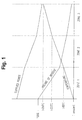
- Figure 1 is a schematic flowsheet of the behavior of the mass fluxes involved in the inventive system. It can be seen how the initial feed volume in Zone 1 requires a certain absorbed power, which diminishes in the following zone as a function of the volume variations and of the temperature gradient applied.
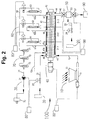
- Figure 2 illustrates the inventive system, generally designed by numeral 100, such system comprising residue feed system 10, inert gas feed system 20, reduced pressure system 30, tubular reactor 40 provided with heating, solids discharge sealed system 50, gas condensation system 60, scrubbers 70 for trapping specific compounds, control system 80 and solid product post treatment system 90.
- system 100 of the invention The several systems encompassed by system 100 of the invention will be detailed below with reference to Figure 2 .
- Residue feed system 10 is made up of a positive displacement pump 11 designed to displace the multiphase residue in a controlled way towards the interior of the tubular reactor 40 via a line 12, while a vertical column is at all times maintained filled in so as to work as a vacuum seal.
- the residue is introduced in tubular reactor 40 via inlet 43.
- Pump 11 is adapted to a hopper 13 that receives the multiphase residue.
- the feed system 10 is linked to control system 80 that allows to increase or reduce the flow rate of multiphase residue to the tubular reactor 40.
- the feed in comminuted form and homogenized so as to make easier the processing of the multiphase residue in tubular reactor 40.
- the residue can be previously milled, kneaded or crushed.
- Other residues such as used tires can be milled and the reinforcing metals separated before processing.
- Inert gas feed 20 can be made up of argon, nitrogen or any other gas providing inertness properties.
- the inert gas is introduced into tubular reactor 40 via line 21 through inlet 48. Gas injection control is implemented so as not to allow that the inner system is contaminated by the environment.
- the flow of inert gas is introduced into tubular reactor 40 so as to render the system inert. Once made inert, the whole system is kept as such thanks to the generation of gases by the system itself, so that there is no need of continuous inert gas additions.
- Vacuum system 30 is made up of a high flow rate vacuum pump, of the industrial blower kind, having the capacity to impart a depression around 400 to 1,000 mbar.
- Tubular reactor 40 is made up of a refractory steel sleeve 41 and a fixed pitch screw conveyor 42 mounted on mandrels.
- the speed of the screw conveyor 42 is variable according to the residence time desired for each kind of residue.
- Controls 80 allow to adapt the speed of the helicoid 42 to the kind of multiphase residue being processed.
- Around the outer sleeve 41 are mounted three sets of electrical resistance Z-1 to Z-3, or any other compatible system for direct heating, where each resistance set is provided with independent control and driving.
- the tubular reactor 40 is made up of a single chamber, actually it is as if there were three contiguous reactors effecting three distinct reaction processes, that is, evaporation, thermal desorption and mild pyrolysis.
- the upper part of the tubular reactor 40 is provided with a residue inlet 43a.
- Tubular reactor 40 works in the sealed mode. The sealing is effected by the residue columns (lines 12, 12a ). The added inert gas as well as gases generated in the reaction system equally keeps the system sealed.
- a distinctive feature of the inventive system when compared to state-of-the-art systems is that the present process does not contemplate gas recirculation. This prevents the need to add specific controls on the inner ambient saturation related to the contaminants and increases the safety of the whole system.
- Zone 1 the temperature starting at 80°C allows that free water as well as water emulsified in the residue are evaporated and light hydrocarbons are eluted through exit 45 up to condenser 61 via line 61a.
- Zone 3 occurs a mild pyrolysis starting at 250°C and the heavier fraction being more concentrated in resins and asphaltenes is partially converted into lower molecular weight compounds, those being vaporized and exiting through exit 47 and also eluted towards condenser 63 via line 63a.
- Each Zone generates oil having different concentrations of naphtha, LCO and Bottoms.
- Reactor 40 bottom is provided with two openings, one of them inlet 43 designed for feeding the residue raw material and the other one exit 44 for collecting the solids resulting from the process.
- the solids collection system 50 is connected to tubular reactor 40 via a line 49 and made up of two valves 51, 52, respectively upper and lower, inserted in a solids collecting device or silo 53, said silo having the purpose of keeping inert the atmosphere in contact with the interior of tubular reactor 40.
- Upper valve 51 is normally kept open, so as to expose the interior of the solids collecting device or silo 53 to the system vacuum; the lower valve 52 is kept closed so as to retain the solids.
- the collection step is carried out under gas injection. At the end of the collection step lower valve 52 is closed, pressure is increased, upper valve 51 is then opened and a new solid collection cycle is started.
- the residence time of a multiphase residue in tubular reactor 40 extends over wide ranges, depending on the content of water, oil and solids present in said residue and can vary from 40 to 120 minutes.
- Condensers 61, 62 and 63 for generated gases useful condensers are those of the tube and shell type with counter current flow of cooling fluid. Condensers 61, 62 and 63 are under vacuum and connected to exits 45, 46, 47 of tubular reactor 40 and coupled to a collecting tank (not represented), which also works as decanter.
- Valves 61 b, 62b and 63b are respectively the flow rate valves of the products collected in condensers 61, 62 and 63.
- Condensers 61, 62 and 63 are also connected to the scrubbers 70 system via line 64.
- System 70 of scrubbers 71, 72, and 73 is made up of vessels containing chemical reagents and dispersants aiming at increasing the contact surface area of the produced gas.
- the aim is, through a chemical reaction and in a selective way, to trap contaminant products or specific compounds.
- System 70 is linked to vacuum system 30 via line 74. At the end of the gas line is placed a burner 75 fed with fuel gas or LPG to neutralize the system exit. In an industrial scale, any generated gases can be directed to industrial uses.
- Chemical products and dispersants contained in scrubbers 71, 72, and 73 are usually basic, acidic or neutral solutions.
- Useful basic solutions are diluted amine solutions, diluted alkaline metal hydroxide solutions such sodium hydroxide solutions or potassium hydroxide solutions.
- Useful acidic solutions are potassium permanganate diluted solutions in an acidic medium, mineral acid diluted solutions such as sulfuric or hydrochloric acid solutions.
- scrubbers 71, 72, and 73 can contain substances for sequestering mercury, boron or any other contaminant present in the multiphase residue.
- Control system 80 is designed to control vacuum pump 31 of the vacuum system 30, the residence time in tubular reactor 40 through rotation of the screw conveyor 42, the rotation of pump 11 so as to vary the amount of introduced multiphase residue feed, valves 23 and 24 that control sealing, valves 51 and 52 and valves 61 b, 62b and 63b for the flow rate of the products to be collected in condensers 61, 62 and 63.
- Control system 80 includes electro-electronic devices besides pneumatic devices.
- a SCADA or similar interface software is associated to system 80.
- Post-treatment system 90 is to be applied to the solids collected in silo 53, such solids being directed for activation aiming at the industrial utilization of same.
- a second aspect of the invention is the process for treating multiphase residues having unlimited contents of water, oil and solids.
- the process for treating multiphase residues having unlimited contents of water, oil and solids for obtaining hydrocarbons according to the invention comprises the steps of:
- the resulting hydrocarbon collected in condensers 61, 62, and 63 is separated in decanters (not represented), obtaining hydrocarbons the water content of which is between 0.30 and 0.50 % vol/vol.
- the water recovered by evaporation and as reaction water collected in system 60 of condensers 61, 62 and 63 is analyzed and can be a source of useful products such as ammonia, metals, etc.
- the inventive system and process associated to it represent an economically viable alternative to the present process for treating municipal waste in solid form, such process requiring huge amounts of energy for drying the water present in the waste.
- the present system on the contrary can handle municipal wastes having as low as 15% w/w solids, this greatly reducing the energy expenditure for water evaporation.
- One important advantageous feature of the present system and process is that it is environmentally friendly. Such advantage is consequent to the fact that not only many kinds of organic or petroleum residues will no longer occupy huge landfarming areas, where the biological degradation is rather slow, but also, useful products resulting from the working of the multiphase residue processing will contribute to lower the cost of the system and process.
- Utilization of the solid residue is a further advantage, from the environmental as well as economic point of view, said residue being designed to several industrial uses.
- the process herein described and claimed can be considered as an integrated process in its several steps, contemplating the treatment of a raw material that is at first sight a problem and becomes a source of a series of products, from hydrocarbons up to dissolved substances in the separated water, and utilization of the final solid residue.
- a further feature of the inventive process made viable by the proposed system is its extreme versatility, since multiphase residues as varied as municipal waste, bay bottom mud, used tires, bottom tanks and API separator petroleum sludge, oil spills on sea water and soils, organic wastes from leather factories and slaughterhouses of poultry and cattle, wastes from the pulp and paper industry, mining, chemical and pharmaceutical wastes can be admitted into the system, besides making possible to recover phenols from foundry sands.
- a further patentably distinguishing feature of the invention is the economic aspect.
- the Applicant has conducted a Technical and Economic Viability Study for the present system, which revealed that it is entirely viable from an economic point of view, this feature being absent from technologies using dried feeds to be submitted to thermal conversion processes.
- Cost of comparative technologies such as plasma or encapsulation are estimated at US 150.00 per ton.
- the present system and process for the conditions set forth above, represents an annual income of nearly US 1 million, with an internal return ratio of 37-40%.
Landscapes
- Chemical & Material Sciences (AREA)
- Engineering & Computer Science (AREA)
- Oil, Petroleum & Natural Gas (AREA)
- Organic Chemistry (AREA)
- Materials Engineering (AREA)
- Combustion & Propulsion (AREA)
- Life Sciences & Earth Sciences (AREA)
- Wood Science & Technology (AREA)
- Chemical Kinetics & Catalysis (AREA)
- General Chemical & Material Sciences (AREA)
- Processing Of Solid Wastes (AREA)
- Production Of Liquid Hydrocarbon Mixture For Refining Petroleum (AREA)
Claims (6)
- Système (100) destiné à traiter des résidus polyphasiques d'eau, de pétrole et de matière solides de façon à obtenir des hydrocarbures et d'autres produits utiles, dans lequel ledit système comprend :(a) un système d'approvisionnement en résidus (10), constitué d'une pompe volumétrique (11) adaptée à une trémie (13) destinée à approvisionner les résidus polyphasiques par pompage, et à les déplacer d'une manière commandée, par l'intermédiaire d'une canalisation (12), vers l'intérieur d'un réacteur tubulaire (40), sous une atmosphère inerte et sous une pression réduite, en maintenant remplie une colonne verticale de façon à se comporter comme un joint hermétique ;(b) un réacteur tubulaire (40) qui fonctionne en mode hermétique, constitué d'une seule chambre dotée d'un dispositif d'acheminement hélicoïdal (42), et composé d'un manchon en acier réfractaire (41), trois zones de chauffage indépendantes (Z-1, Z-2 et Z-3) étant placées autour dudit manchon (41) qui forment des zones de réaction avec un gradient de température, dans lequel la partie supérieure dudit réacteur (40) est dotée de trois sorties au moins (45, 46 et 47) des gaz condensables, tandis que la partie inférieure de celui-ci est dotée d'une entrée (43) destinée à l'approvisionnement en résidus polyphasiques, et d'une sortie (44) de collecte des solides résultants ;(c) un système à pression réduite (30) constitué d'une pompe à vide à débit élevé, du genre soufflante industrielle, qui présente la capacité de fournir une dépression comprise entre 400 mbar et 1000 mbar environ ;(d) un système d'approvisionnement en gaz inerte (20), destiné à introduire à travers l'entrée (48) un gaz inerte dans le réacteur tubulaire (40) par l'intermédiaire d'une canalisation (21), de façon à rendre le système inerte ;(e) un système de collecte des matières solides (50) destiné à collecter les matières solides résultantes, constitué d'une soupape supérieure (51), d'une soupape inférieure (52), et d'un silo intermédiaire (53) ;(f) un système de condensation des gaz (60) qui comprend trois dispositif de condensation (61, 62 et 63) sous vide, qui sont connectés aux sorties (45, 46, 47) du réacteur tubulaire (40) et qui sont connectés à des dispositifs de barbotage (71, 72 et 73) par l'intermédiaire d'une canalisation (64) ;(g) un système (70) qui comprend trois dispositifs de barbotage (71, 72 et 73) reliés au système à pression réduite (30) par l'intermédiaire d'une canalisation (74) ;(h) un système de commande (80) destiné à commander la pompe à vide (31) du système à pression réduite (30), le temps de traitement dans le réacteur tubulaire (40) par l'intermédiaire de la rotation du dispositif d'acheminement hélicoïdal à pas fixe (42), la rotation de la pompe (11) de façon à faire varier la quantité de résidus polyphasiques introduits, les soupapes (23 et 24) qui commandent l'étanchéité, les soupapes (51 et 52), et les soupapes (61b, 62b et 63b) de débit des produits à collecter dans le dispositif de condensation (61, 62 et 63) ; et(i) un système de post-traitement (90) destiné au post-traitement des matières solides collectées dans le silo (53).
- Système selon la revendication 1, dans lequel les dispositifs de barbotage (71, 72 et 73) comprennent des récipients qui contiennent des produits chimiques et / ou des agents dispersants, conçu afin de laver les gaz non condensables produits dans les zones de réaction (Z-1, Z-2 et Z-3).
- Système selon la revendication 1 ou la revendication 2, dans lequel, pour les résidus hauts de matières solides et les résidus bas d'eau, la partie supérieure du réacteur (40) est dotée d'une entrée de résidus (43a).
- Système selon l'une quelconque des revendications précédentes, dans lequel les dispositifs de condensation (61, 62 et 63) connectés aux sorties (45, 46 et 47) du réacteur (40), sont accouplés à un réservoir de collecte destiné à stocker les produits hydrocarbures.
- Procédé destiné à traiter des résidus polyphasiques d'eau, de pétrole et de matière solides de façon à obtenir des hydrocarbures et d'autres produits utiles, dans lequel ledit procédé comprend les étapes suivantes consistant à :(a) fournir un système selon l'une quelconque des revendications 1 à 4, le réacteur (40) fonctionnant sous des conditions de pression réduite et d'atmosphère de gaz inerte ; et étant connecté au système de condensation des gaz (60) pour une condensation des gaz produits dans chacune des zones de chauffage, le système de condensation des gaz (60) comprenant trois dispositif de condensation (61, 62 et 63) sous vide connectés aux sorties (45, 46, 47) du réacteur tubulaire (40) ;(b) diriger une quantité de résidus à traiter, à partir d'un dispositif d'approvisionnement (11), par l'intermédiaire d'une canalisation (12) et à travers l'entrée (43) dans le réacteur (40), les résidus étant alors soumis, pendant une durée comprise entre 15 minutes et 30 minutes, à un chauffage dans la zone Z-1 à des températures partant de 80 °C afin de faire évaporer l'eau libre et l'eau émulsionnée, les hydrocarbures légers présents étant dirigés jusqu'au dispositif de condensation (61), à travers la sortie (45) et par l'intermédiaire de la canalisation (61a) ;(c) déplacer la masse résiduelle à partir de la zone Z-1 jusqu'à la zone de chauffage Z-2 du réacteur (40), les résidus étant maintenus dans ladite zone Z-2 pendant une durée comprise entre 10 minutes et 20 minutes, et chauffer ladite masse résiduelle à des températures partant de 180 °C de façon à provoquer un processus de désorption thermique, les hydrocarbures produits étant dirigés à travers la sortie (46) jusqu'au dispositif de condensation (62) par l'intermédiaire d'une canalisation (62a), en obtenant une masse résiduelle qui contient des fractions d'hydrocarbures lourdes et des matières solides ;(d) déplacer la masse résiduelle obtenue dans l'étape (c) qui contient ladite fraction lourde vers la zone de chauffage Z-3 du réacteur (40), pendant une durée de traitement comprise entre 15 minutes et 30 minutes, de façon à soumettre ladite masse à des conditions de pyrolyse modérée partant de 250 °C, de manière à effectuer une conversion partielle de ladite fraction lourde d'hydrocarbure en composés hydrocarbures de poids moléculaire plus faible, lesdits composés étant vaporisés et dirigés à travers la sortie (47) jusqu'au dispositif de condensation (63) par l'intermédiaire d'une canalisation (63a), tandis que les matières solides qui résultent du processus sont dirigées sous une atmosphère inerte par l'intermédiaire d'une canalisation (49) vers le système de collecte (50) ;(e) collecter les matières solides produites dans l'étape (d) en ouvrant une soupape supérieure (51) du silo de collecte (53) tandis que la soupape inférieure (52) est maintenue fermée ;(f) récupérer les matières solides collectées dans l'étape (e) en fermant une soupape supérieure (51) tandis que la pression du silo (53) est accrue à l'aide d'une injection de gaz inerte par l'intermédiaire du système de gaz inerte (20) connecté au silo (53) par l'intermédiaire d'une canalisation (22), et ouvrir la soupape inférieure (52) ; et(g) post-traiter par une activation des matières solides récupérées dans l'étape (f) pour des usages industriels.
- Procédé selon la revendication 5, dans lequel les résidus polyphasiques sont des déchets ménagers qui présentent au moins 15 % en poids de matière solides, sont des résidus industriels produits dans des usines de cuir et des abattoirs, sont des résidus de pétrole, sont un mélange en n'importe quelle quantité de résidus organiques et de résidus de pétrole, sont des pneus usagés, sont des résidus qui proviennent du dragage de fonds marins et de terres agricoles, sont produits par l'industrie du papier et de la pâte à papier, l'industrie minière ou l'industrie chimique et pharmaceutique, ou sont produits par un sable de fonderie d'où on récupère les phénols.
Applications Claiming Priority (2)
| Application Number | Priority Date | Filing Date | Title |
|---|---|---|---|
| BR0400305 | 2004-03-19 | ||
| BRPI0400305-5B1A BRPI0400305B1 (pt) | 2004-03-19 | 2004-03-19 | Sistema e processo para tratamento de resíduos multifásicos |
Publications (2)
| Publication Number | Publication Date |
|---|---|
| EP1577367A1 EP1577367A1 (fr) | 2005-09-21 |
| EP1577367B1 true EP1577367B1 (fr) | 2016-03-16 |
Family
ID=34831947
Family Applications (1)
| Application Number | Title | Priority Date | Filing Date |
|---|---|---|---|
| EP05251691.1A Expired - Lifetime EP1577367B1 (fr) | 2004-03-19 | 2005-03-18 | Sytème et procédé pour le traitement de résidus polyiphasiques |
Country Status (3)
| Country | Link |
|---|---|
| US (1) | US7727377B2 (fr) |
| EP (1) | EP1577367B1 (fr) |
| BR (1) | BRPI0400305B1 (fr) |
Cited By (3)
| Publication number | Priority date | Publication date | Assignee | Title |
|---|---|---|---|---|
| US12031097B2 (en) | 2021-10-14 | 2024-07-09 | Ecolab Usa Inc. | Antifouling agents for plastic-derived synthetic feedstocks |
| US12304888B2 (en) | 2021-03-10 | 2025-05-20 | Ecolab Usa Inc. | Stabilizer additives for plastic-derived synthetic feedstock |
| US12503663B2 (en) | 2020-09-14 | 2025-12-23 | Ecolab Usa Inc. | Cold flow additives for plastic-derived synthetic feedstock |
Families Citing this family (22)
| Publication number | Priority date | Publication date | Assignee | Title |
|---|---|---|---|---|
| US8021537B2 (en) * | 2006-10-24 | 2011-09-20 | Acs Engineering Technologies, Inc. | Steam generation apparatus and method |
| US20080179257A1 (en) * | 2007-01-25 | 2008-07-31 | Stephen Clarke | Process for the Thermal Treatment of Pharmaceutical Waste Material |
| US20080299021A1 (en) * | 2007-05-04 | 2008-12-04 | Boykin Jack W | System for the production of synthetic fuels |
| US20080272030A1 (en) * | 2007-05-04 | 2008-11-06 | Boykin Jack W | Method for the production of synthetic fuels |
| DE102008004732A1 (de) * | 2008-01-16 | 2009-07-23 | Lucia Viviane Sanders | Hydrothermale Karbonisierung von Biomasse |
| CA2774881C (fr) | 2009-09-25 | 2017-04-04 | Scutum Capital Ag | Procede et appareil pour le traitement thermique en plusieurs etapes de rebuts de caoutchouc, en particulier de pneus uses |
| BRPI1000208A2 (pt) | 2010-01-29 | 2011-01-04 | Sppt Pesquisas Tecnologicas Ltda | equipamento trocador de calor vibrante para conversão de baixa temperatura para tratamento de resìduos orgánicos e processo de tratamento de resìduos orgánicos mediante emprego de equipamento trocador de calor vibrante para conversão de baixa temperatura |
| US8871094B2 (en) | 2012-07-30 | 2014-10-28 | R N Industries, Inc. | Wastewater treatment facility and bioreactor for treating wastewater from oil and gas exploration and production |
| US9085735B2 (en) * | 2013-01-02 | 2015-07-21 | American Fuel Producers, LLC | Methods for producing synthetic fuel |
| GB2499329B (en) * | 2013-02-26 | 2014-01-01 | Slg Technology Ltd | A thermal energy plant for and process of utilising waste from the tanning process |
| US9920251B2 (en) * | 2013-03-15 | 2018-03-20 | Terry Karanikas | Pyrolysis apparatus and method |
| CN103740390B (zh) * | 2014-01-08 | 2015-10-28 | 北京神雾环境能源科技集团股份有限公司 | 一种蓄热式辐射管旋转炉煤热解油气采集系统 |
| CN104031672A (zh) * | 2014-05-12 | 2014-09-10 | 中机国宏(北京)高分子裂解技术研究院 | 一种废旧轮胎的连续热裂解方法和装置 |
| CN104087340B (zh) * | 2014-06-06 | 2016-04-20 | 同济大学 | 一种油、气、炭可调的废弃物热解的系统和方法 |
| US20180187085A1 (en) * | 2015-07-07 | 2018-07-05 | Konstantin Vladimirovich Ladygin | Pyrolysis method and plant for processing organic material by pyrolysis |
| CN106010651B (zh) * | 2016-05-24 | 2019-06-04 | 华东理工大学 | 一种制革废弃物的处理装置及含其的处理工艺 |
| KR101910750B1 (ko) * | 2017-11-14 | 2018-10-22 | 정숙진 | 플라스틱의 열분해유화시스템 |
| GB201809329D0 (en) * | 2018-06-06 | 2018-07-25 | Syngas International | A process system to economically convert waste materials into clean energy & safely disposable by-products |
| US11219842B2 (en) * | 2019-05-23 | 2022-01-11 | Halliburton Energy Services, Inc. | Thermal desorption of oily solids |
| CN111023104A (zh) * | 2019-12-31 | 2020-04-17 | 湖南顶立科技有限公司 | 一种热解系统气氛控制装置及方法 |
| CN113429993B (zh) * | 2021-07-26 | 2022-05-31 | 天津理工大学 | 一种连续水热液化系统和方法 |
| CN116858721B (zh) * | 2023-07-07 | 2025-08-08 | 中国测试技术研究院化学研究所 | 液氢质量溯源系统及方法 |
Family Cites Families (16)
| Publication number | Priority date | Publication date | Assignee | Title |
|---|---|---|---|---|
| US3917564A (en) * | 1974-08-07 | 1975-11-04 | Mobil Oil Corp | Disposal of industrial and sanitary wastes |
| US4123332A (en) * | 1977-09-06 | 1978-10-31 | Energy Recovery Research Group, Inc. | Process and apparatus for carbonizing a comminuted solid carbonizable material |
| US4126519A (en) * | 1977-09-12 | 1978-11-21 | Edward Koppelman | Apparatus and method for thermal treatment of organic carbonaceous material |
| US4308103A (en) * | 1980-06-02 | 1981-12-29 | Energy Recovery Research Group, Inc. | Apparatus for the pyrolysis of comminuted solid carbonizable materials |
| US4342639A (en) * | 1980-07-22 | 1982-08-03 | Gagon Hugh W | Process to separate bituminous material from sand (Tar Sands) |
| CA1225062A (fr) * | 1983-09-13 | 1987-08-04 | Trevor R. Bridle | Appareil et methode pour la transformation des boues |
| US4983278A (en) * | 1987-11-03 | 1991-01-08 | Western Research Institute & Ilr Services Inc. | Pyrolysis methods with product oil recycling |
| US4985131A (en) * | 1988-06-30 | 1991-01-15 | Thermal Waste Management | Process for treating oil sludge |
| DE3826520A1 (de) | 1988-08-04 | 1990-02-08 | Energas Gmbh | Verfahren und vorrichtung zur pyrolyse von klaerschlamm |
| US5230211A (en) * | 1991-04-15 | 1993-07-27 | Texaco Inc. | Partial oxidation of sewage sludge |
| CA2045254C (fr) * | 1991-06-21 | 1998-04-14 | Christian Roy | Traitement de residu de dechiquetage d'automobile par pyrolyse sous vide |
| US5223152A (en) * | 1991-10-08 | 1993-06-29 | Atlantic Richfield Company | Recovered oil dewatering process and apparatus with water vaporizing in blowdown drum |
| FR2720479B1 (fr) * | 1994-05-30 | 1996-07-12 | Inst Francais Du Petrole | Procédé et installation de pyrolyse de déchets ayant une unité de préchauffage. |
| AUPN910296A0 (en) * | 1996-04-03 | 1996-05-02 | Environmental Solutions International Ltd | Process and apparatus for the conversion of sludge |
| US5922189A (en) * | 1997-09-19 | 1999-07-13 | Santos; Benjamin | Process to refine petroleum residues and sludges into asphalt and/or other petroleum products |
| US20020100710A1 (en) | 2001-01-26 | 2002-08-01 | Hogan Jim Smith | Desorbtion process and apparatus |
-
2004
- 2004-03-19 BR BRPI0400305-5B1A patent/BRPI0400305B1/pt not_active IP Right Cessation
-
2005
- 2005-03-09 US US11/074,748 patent/US7727377B2/en active Active
- 2005-03-18 EP EP05251691.1A patent/EP1577367B1/fr not_active Expired - Lifetime
Cited By (3)
| Publication number | Priority date | Publication date | Assignee | Title |
|---|---|---|---|---|
| US12503663B2 (en) | 2020-09-14 | 2025-12-23 | Ecolab Usa Inc. | Cold flow additives for plastic-derived synthetic feedstock |
| US12304888B2 (en) | 2021-03-10 | 2025-05-20 | Ecolab Usa Inc. | Stabilizer additives for plastic-derived synthetic feedstock |
| US12031097B2 (en) | 2021-10-14 | 2024-07-09 | Ecolab Usa Inc. | Antifouling agents for plastic-derived synthetic feedstocks |
Also Published As
| Publication number | Publication date |
|---|---|
| EP1577367A1 (fr) | 2005-09-21 |
| US7727377B2 (en) | 2010-06-01 |
| US20050218037A1 (en) | 2005-10-06 |
| BRPI0400305A (pt) | 2005-11-01 |
| BRPI0400305B1 (pt) | 2014-01-21 |
Similar Documents
| Publication | Publication Date | Title |
|---|---|---|
| US7727377B2 (en) | System and process for the treatment of multiphase residues | |
| US20180355256A1 (en) | Production of hydrocarbon fuels from plastics | |
| US4014780A (en) | Recovery of oil from refinery sludges by steam distillation | |
| CN104685033B (zh) | 用来将受污或非受污碳氢化合物材料分离和转化成有用产品的混合热处理工艺、工艺的使用、相应系统和设备的制造 | |
| NO173192B (no) | Fremgangsmaate for resirkulering av petroleumholdig slam | |
| US3692668A (en) | Process for recovery of oil from refinery sludges | |
| KR20230119654A (ko) | 폐 플라스틱을 재활용하기 위한 시스템 및 방법 | |
| WO2021180893A1 (fr) | Procédé de récupération d'un monomère de styrène à partir d'un polymère contenant du styrène | |
| KR100265273B1 (ko) | 폐플라스틱의 유화방법 및 장치 | |
| WO2003042289A1 (fr) | Procede et appareil pour le traitement de materiaux polymeres contenant du carbone | |
| US5954949A (en) | Conversion of heavy petroleum oils to coke with a molten alkali metal hydroxide | |
| NO331511B1 (no) | Fremgangsmate for a fjerne forurensninger fra brukte, ubehandlede petroleumsdestillater | |
| EP2612715B1 (fr) | Récupération de soufre à partir de déchets contenant du soufre | |
| WO2008061304A1 (fr) | Extraction d'hydrocarbures à partir de schiste bitumineux | |
| Bian et al. | A review of pyrolysis technologies for oily sludge based on the analysis of inherent components | |
| EP2174697A1 (fr) | Procédé et unité de recyclage des résidus du pétrole | |
| US20020144928A1 (en) | Energy efficient process for converting refinery and petroleum-based waste to standard fuels | |
| US12305043B2 (en) | Thermolysis system and method for obtaining recovered carbon black and fuel from disused tires | |
| KR102660629B1 (ko) | 폐합성수지의 재생장치 및 재생방법 | |
| AU2021106834A4 (en) | A system for the chemical recycling of end of life plastics to a plastic feedstock and fuel products using a multi-stage pyrolysis kiln | |
| WO2017017692A2 (fr) | Système de craquage à multiples étages et processus associé de conversion de déchets non dégradables en carburants | |
| WO2021171313A1 (fr) | Procédé de conversion de matière plastique en carburants | |
| CA2393120C (fr) | Procedes et appareil de raffinage par cokefaction continue | |
| EP4212602B1 (fr) | Procédé d'élimination de pneus | |
| US6273923B1 (en) | Catalytic vacuum distillation process |
Legal Events
| Date | Code | Title | Description |
|---|---|---|---|
| PUAI | Public reference made under article 153(3) epc to a published international application that has entered the european phase |
Free format text: ORIGINAL CODE: 0009012 |
|
| AK | Designated contracting states |
Kind code of ref document: A1 Designated state(s): AT BE BG CH CY CZ DE DK EE ES FI FR GB GR HU IE IS IT LI LT LU MC NL PL PT RO SE SI SK TR |
|
| AX | Request for extension of the european patent |
Extension state: AL BA HR LV MK YU |
|
| 17P | Request for examination filed |
Effective date: 20060307 |
|
| AKX | Designation fees paid |
Designated state(s): AT BE BG CH CY CZ DE DK EE ES FI FR GB GR HU IE IS IT LI LT LU MC NL PL PT RO SE SI SK TR |
|
| 17Q | First examination report despatched |
Effective date: 20091218 |
|
| GRAP | Despatch of communication of intention to grant a patent |
Free format text: ORIGINAL CODE: EPIDOSNIGR1 |
|
| INTG | Intention to grant announced |
Effective date: 20150925 |
|
| GRAS | Grant fee paid |
Free format text: ORIGINAL CODE: EPIDOSNIGR3 |
|
| GRAA | (expected) grant |
Free format text: ORIGINAL CODE: 0009210 |
|
| AK | Designated contracting states |
Kind code of ref document: B1 Designated state(s): AT BE BG CH CY CZ DE DK EE ES FI FR GB GR HU IE IS IT LI LT LU MC NL PL PT RO SE SI SK TR |
|
| REG | Reference to a national code |
Ref country code: GB Ref legal event code: FG4D |
|
| REG | Reference to a national code |
Ref country code: CH Ref legal event code: EP |
|
| REG | Reference to a national code |
Ref country code: IE Ref legal event code: FG4D |
|
| REG | Reference to a national code |
Ref country code: AT Ref legal event code: REF Ref document number: 781245 Country of ref document: AT Kind code of ref document: T Effective date: 20160415 |
|
| REG | Reference to a national code |
Ref country code: DE Ref legal event code: R096 Ref document number: 602005048655 Country of ref document: DE |
|
| REG | Reference to a national code |
Ref country code: NL Ref legal event code: FP |
|
| REG | Reference to a national code |
Ref country code: LT Ref legal event code: MG4D |
|
| PG25 | Lapsed in a contracting state [announced via postgrant information from national office to epo] |
Ref country code: FI Free format text: LAPSE BECAUSE OF FAILURE TO SUBMIT A TRANSLATION OF THE DESCRIPTION OR TO PAY THE FEE WITHIN THE PRESCRIBED TIME-LIMIT Effective date: 20160316 Ref country code: GR Free format text: LAPSE BECAUSE OF FAILURE TO SUBMIT A TRANSLATION OF THE DESCRIPTION OR TO PAY THE FEE WITHIN THE PRESCRIBED TIME-LIMIT Effective date: 20160617 |
|
| REG | Reference to a national code |
Ref country code: AT Ref legal event code: MK05 Ref document number: 781245 Country of ref document: AT Kind code of ref document: T Effective date: 20160316 |
|
| PG25 | Lapsed in a contracting state [announced via postgrant information from national office to epo] |
Ref country code: BE Free format text: LAPSE BECAUSE OF NON-PAYMENT OF DUE FEES Effective date: 20160331 Ref country code: SE Free format text: LAPSE BECAUSE OF FAILURE TO SUBMIT A TRANSLATION OF THE DESCRIPTION OR TO PAY THE FEE WITHIN THE PRESCRIBED TIME-LIMIT Effective date: 20160316 Ref country code: LT Free format text: LAPSE BECAUSE OF FAILURE TO SUBMIT A TRANSLATION OF THE DESCRIPTION OR TO PAY THE FEE WITHIN THE PRESCRIBED TIME-LIMIT Effective date: 20160316 |
|
| PG25 | Lapsed in a contracting state [announced via postgrant information from national office to epo] |
Ref country code: EE Free format text: LAPSE BECAUSE OF FAILURE TO SUBMIT A TRANSLATION OF THE DESCRIPTION OR TO PAY THE FEE WITHIN THE PRESCRIBED TIME-LIMIT Effective date: 20160316 Ref country code: IS Free format text: LAPSE BECAUSE OF FAILURE TO SUBMIT A TRANSLATION OF THE DESCRIPTION OR TO PAY THE FEE WITHIN THE PRESCRIBED TIME-LIMIT Effective date: 20160716 Ref country code: PL Free format text: LAPSE BECAUSE OF FAILURE TO SUBMIT A TRANSLATION OF THE DESCRIPTION OR TO PAY THE FEE WITHIN THE PRESCRIBED TIME-LIMIT Effective date: 20160316 |
|
| REG | Reference to a national code |
Ref country code: CH Ref legal event code: PL |
|
| PG25 | Lapsed in a contracting state [announced via postgrant information from national office to epo] |
Ref country code: RO Free format text: LAPSE BECAUSE OF FAILURE TO SUBMIT A TRANSLATION OF THE DESCRIPTION OR TO PAY THE FEE WITHIN THE PRESCRIBED TIME-LIMIT Effective date: 20160316 Ref country code: CZ Free format text: LAPSE BECAUSE OF FAILURE TO SUBMIT A TRANSLATION OF THE DESCRIPTION OR TO PAY THE FEE WITHIN THE PRESCRIBED TIME-LIMIT Effective date: 20160316 Ref country code: AT Free format text: LAPSE BECAUSE OF FAILURE TO SUBMIT A TRANSLATION OF THE DESCRIPTION OR TO PAY THE FEE WITHIN THE PRESCRIBED TIME-LIMIT Effective date: 20160316 Ref country code: PT Free format text: LAPSE BECAUSE OF FAILURE TO SUBMIT A TRANSLATION OF THE DESCRIPTION OR TO PAY THE FEE WITHIN THE PRESCRIBED TIME-LIMIT Effective date: 20160718 Ref country code: SK Free format text: LAPSE BECAUSE OF FAILURE TO SUBMIT A TRANSLATION OF THE DESCRIPTION OR TO PAY THE FEE WITHIN THE PRESCRIBED TIME-LIMIT Effective date: 20160316 Ref country code: ES Free format text: LAPSE BECAUSE OF FAILURE TO SUBMIT A TRANSLATION OF THE DESCRIPTION OR TO PAY THE FEE WITHIN THE PRESCRIBED TIME-LIMIT Effective date: 20160316 |
|
| REG | Reference to a national code |
Ref country code: DE Ref legal event code: R097 Ref document number: 602005048655 Country of ref document: DE |
|
| REG | Reference to a national code |
Ref country code: IE Ref legal event code: MM4A |
|
| PG25 | Lapsed in a contracting state [announced via postgrant information from national office to epo] |
Ref country code: IT Free format text: LAPSE BECAUSE OF FAILURE TO SUBMIT A TRANSLATION OF THE DESCRIPTION OR TO PAY THE FEE WITHIN THE PRESCRIBED TIME-LIMIT Effective date: 20160316 Ref country code: BE Free format text: LAPSE BECAUSE OF FAILURE TO SUBMIT A TRANSLATION OF THE DESCRIPTION OR TO PAY THE FEE WITHIN THE PRESCRIBED TIME-LIMIT Effective date: 20160316 |
|
| PLBE | No opposition filed within time limit |
Free format text: ORIGINAL CODE: 0009261 |
|
| STAA | Information on the status of an ep patent application or granted ep patent |
Free format text: STATUS: NO OPPOSITION FILED WITHIN TIME LIMIT |
|
| PG25 | Lapsed in a contracting state [announced via postgrant information from national office to epo] |
Ref country code: LI Free format text: LAPSE BECAUSE OF NON-PAYMENT OF DUE FEES Effective date: 20160331 Ref country code: IE Free format text: LAPSE BECAUSE OF NON-PAYMENT OF DUE FEES Effective date: 20160318 Ref country code: CH Free format text: LAPSE BECAUSE OF NON-PAYMENT OF DUE FEES Effective date: 20160331 Ref country code: DK Free format text: LAPSE BECAUSE OF FAILURE TO SUBMIT A TRANSLATION OF THE DESCRIPTION OR TO PAY THE FEE WITHIN THE PRESCRIBED TIME-LIMIT Effective date: 20160316 |
|
| 26N | No opposition filed |
Effective date: 20161219 |
|
| REG | Reference to a national code |
Ref country code: FR Ref legal event code: ST Effective date: 20170120 |
|
| PG25 | Lapsed in a contracting state [announced via postgrant information from national office to epo] |
Ref country code: BG Free format text: LAPSE BECAUSE OF FAILURE TO SUBMIT A TRANSLATION OF THE DESCRIPTION OR TO PAY THE FEE WITHIN THE PRESCRIBED TIME-LIMIT Effective date: 20160616 |
|
| GBPC | Gb: european patent ceased through non-payment of renewal fee |
Effective date: 20160616 |
|
| PG25 | Lapsed in a contracting state [announced via postgrant information from national office to epo] |
Ref country code: FR Free format text: LAPSE BECAUSE OF NON-PAYMENT OF DUE FEES Effective date: 20160517 |
|
| PG25 | Lapsed in a contracting state [announced via postgrant information from national office to epo] |
Ref country code: GB Free format text: LAPSE BECAUSE OF NON-PAYMENT OF DUE FEES Effective date: 20160616 Ref country code: SI Free format text: LAPSE BECAUSE OF FAILURE TO SUBMIT A TRANSLATION OF THE DESCRIPTION OR TO PAY THE FEE WITHIN THE PRESCRIBED TIME-LIMIT Effective date: 20160316 |
|
| PG25 | Lapsed in a contracting state [announced via postgrant information from national office to epo] |
Ref country code: HU Free format text: LAPSE BECAUSE OF FAILURE TO SUBMIT A TRANSLATION OF THE DESCRIPTION OR TO PAY THE FEE WITHIN THE PRESCRIBED TIME-LIMIT; INVALID AB INITIO Effective date: 20050318 Ref country code: CY Free format text: LAPSE BECAUSE OF FAILURE TO SUBMIT A TRANSLATION OF THE DESCRIPTION OR TO PAY THE FEE WITHIN THE PRESCRIBED TIME-LIMIT Effective date: 20160316 |
|
| PG25 | Lapsed in a contracting state [announced via postgrant information from national office to epo] |
Ref country code: LU Free format text: LAPSE BECAUSE OF NON-PAYMENT OF DUE FEES Effective date: 20160318 Ref country code: TR Free format text: LAPSE BECAUSE OF FAILURE TO SUBMIT A TRANSLATION OF THE DESCRIPTION OR TO PAY THE FEE WITHIN THE PRESCRIBED TIME-LIMIT Effective date: 20160316 Ref country code: MC Free format text: LAPSE BECAUSE OF FAILURE TO SUBMIT A TRANSLATION OF THE DESCRIPTION OR TO PAY THE FEE WITHIN THE PRESCRIBED TIME-LIMIT Effective date: 20160316 |
|
| PGFP | Annual fee paid to national office [announced via postgrant information from national office to epo] |
Ref country code: NL Payment date: 20240215 Year of fee payment: 20 |
|
| PGFP | Annual fee paid to national office [announced via postgrant information from national office to epo] |
Ref country code: DE Payment date: 20240213 Year of fee payment: 20 |
|
| REG | Reference to a national code |
Ref country code: DE Ref legal event code: R071 Ref document number: 602005048655 Country of ref document: DE |
|
| REG | Reference to a national code |
Ref country code: NL Ref legal event code: MK Effective date: 20250317 |