EP1659572A1 - Méthode pour le contrôle de dialogue et système de dialogue l'utilisant - Google Patents
Méthode pour le contrôle de dialogue et système de dialogue l'utilisant Download PDFInfo
- Publication number
- EP1659572A1 EP1659572A1 EP05022475A EP05022475A EP1659572A1 EP 1659572 A1 EP1659572 A1 EP 1659572A1 EP 05022475 A EP05022475 A EP 05022475A EP 05022475 A EP05022475 A EP 05022475A EP 1659572 A1 EP1659572 A1 EP 1659572A1
- Authority
- EP
- European Patent Office
- Prior art keywords
- dialogue
- dialog
- user
- strategy
- emotional
- Prior art date
- Legal status (The legal status is an assumption and is not a legal conclusion. Google has not performed a legal analysis and makes no representation as to the accuracy of the status listed.)
- Granted
Links
Images

Classifications
-
- G—PHYSICS
- G10—MUSICAL INSTRUMENTS; ACOUSTICS
- G10L—SPEECH ANALYSIS TECHNIQUES OR SPEECH SYNTHESIS; SPEECH RECOGNITION; SPEECH OR VOICE PROCESSING TECHNIQUES; SPEECH OR AUDIO CODING OR DECODING
- G10L15/00—Speech recognition
- G10L15/22—Procedures used during a speech recognition process, e.g. man-machine dialogue
-
- G—PHYSICS
- G10—MUSICAL INSTRUMENTS; ACOUSTICS
- G10L—SPEECH ANALYSIS TECHNIQUES OR SPEECH SYNTHESIS; SPEECH RECOGNITION; SPEECH OR VOICE PROCESSING TECHNIQUES; SPEECH OR AUDIO CODING OR DECODING
- G10L15/00—Speech recognition
- G10L15/22—Procedures used during a speech recognition process, e.g. man-machine dialogue
- G10L2015/226—Procedures used during a speech recognition process, e.g. man-machine dialogue using non-speech characteristics
- G10L2015/227—Procedures used during a speech recognition process, e.g. man-machine dialogue using non-speech characteristics of the speaker; Human-factor methodology
-
- H—ELECTRICITY
- H04—ELECTRIC COMMUNICATION TECHNIQUE
- H04M—TELEPHONIC COMMUNICATION
- H04M2203/00—Aspects of automatic or semi-automatic exchanges
- H04M2203/35—Aspects of automatic or semi-automatic exchanges related to information services provided via a voice call
- H04M2203/355—Interactive dialogue design tools, features or methods
Definitions
- the invention relates to a method for dialog control in automatic dialogue systems. It continues to refer to a subsequent dialogue system.
- it is intended to control the dialogue taking into account the dialogue behavior of a person using the system and thus to influence the dialogue behavior of the person concerned.
- the method or the dialog system is designed so that also takes into account the result of this influence on the dialogue process and the dialogue strategy is adapted to this.
- a dialog system operating according to the method of the invention is basically comparable to a control loop.
- the invention relates to speech dialogue systems.
- the system described distinguishes between action-critical and non-action-critical instructions. Speech outputs of the system in response to so-called action-critical instructions are made with a particularly enhanced intonation and / or increased volume and / or are particularly hard or abruptly displayed. The same applies if the system prompts the user in a particularly critical situation to unconditionally perform an action.
- the classification of actions as action-critical or not critical to action is predetermined by the system on the basis of the semantic content of the user's speech commands.
- the solution described in the document may still allow for erroneous instructions, namely instructions that are not assignable by the speech analysis unit, by a to respond with appropriate intonation speech output and thus to draw attention to the error.
- the evaluation of the emotional state of a respective person on the basis of a prosodic classification of the linguistic utterances, in particular the evaluation of Intonation, pitch or timbre of the speech signal.
- the latter refers to the identification of emotional states of persons in connection with the realization of lie detectors.
- the object of the present invention is to provide a method and an automatic dialogue system operating thereafter which make it possible to adapt the course of a dialog to the behavior or the state of a user of a corresponding dialog system.
- An essential goal of the solution to be created is to avoid particularly fruitless dialogues or dialogue interruptions.
- the object is achieved by a method having the features of the main claim.
- An automatic dialogue system operating thereafter is characterized by the first device-related claim.
- Advantageous Ausrackingtagen developments of the invention are given by the respective subclaims.
- the proposed method for dialog control refers to automatic dialog systems in which the dialogue based on a content analysis of dialog inputs of a user of the dialogue system, thereby determined correspondence of the contents of a respective dialog input to one of several for the use of the dialogue system operator command and the respectively corresponding operating commands assigned in the system, carried out by this to the user dialog responses.
- the system can be designed so that a stereotypical dialog response is output for each dialog input for which no correspondence can be determined.
- a dialogue system designed for this purpose not only performs the content-related analysis of a dialog input received by the system, but also evaluates it in terms of determining an instantaneous emotional state of the user.
- a dialog strategy is then selected with the aid of a set of rules stored in the system and generates a dialog response intended for the respective dialogue step in the context of this dialogue strategy.
- the method is designed such that, in the case where the user is deemed not to be emotionally aroused due to the emotion indicator or a dialogue strategy ignoring his emotional state, the system is associated with the current dialog step and the respectively determined contents of the user's dialog input otherwise, a dialog response corresponding to the current dialog step and the emotion indicator is output.
- the selection of the respective dialogue strategy is carried out according to the invention at random, in dependence on the last determined emotion indicator and taking into account a weighting assigned to the dialogue strategies contained in the set of rules.
- the success of the respectively selected dialogue strategy in the context of the emotional evaluation of the dialog input of the user following the output of a dialog response is also evaluated by comparing the respectively determined emotion indicators and the result of this evaluation is used to influence the set of rules.
- the last chosen dialogue strategy was successful, this strategy will be increased in weighting or, if not, lowered.
- the success is read by the change of the emotion indicator.
- a strong excitation is characterized by a high indicator value and consequently a low excitation with a low value, i.e. a non-measurable excitation with a value of 0 or near zero.
- the emotion indicator decreases from one dialogue step to the next, the strategy is considered successful and its weighting may be increased.
- both content analysis and emotional state detection systems for example based on a person's utterances and their semantic and prosodic evaluation, are well known in the art and, therefore, as such, are not subject of the invention.
- an initial value is preferably determined for each dialog strategy contained in the set of rules.
- a dialog response which does not form the conclusion of a dialog within a set time for the dialog system no renewed dialog input of the user is registered, also a stereotypical dialog response issued. This may, as in the case mentioned above, that a dialog input is not assessable - so preferably neither content nor emotional - to act the offer to enter into a help dialog or the immediate output of help information.
- a dialog entry of the user in the form of a verbal utterance is analyzed semantically to reveal its content on the basis of a given grammar.
- the determination of an emotion indicator describing the respective emotional state of the operator or user takes place by means of a prosodic classification of the speech signal of the dialog input.
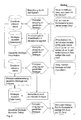
- Fig. 1 illustrates the solution of the invention in a basic schematic diagram.
- the representation relates in particular to the aspect of the invention which is essential to a dialog configuration dependent on the respective emotional status of the operator of a dialog system.
- the units for content assessment or analysis of the dialog input are not shown in the figure.
- the part of the dialog context relating to the user's dialog inputs is subjected to an analysis with the aid of an emotion reference value database 1 in a corresponding unit 2 with regard to the determination of the respective emotional state of the user.
- the system module strategy choice 4 selects the supposedly most favorable strategy for a dialog response to a user's dialog input.
- the strategy selection is carried out by means of a set of rules also stored in a database 3, the strategy execution in the execution unit 5.
- the dialog is continued by outputting the dialog response of the system resulting from the dialogue strategy.
- the user will react to this with another dialog input for controlling the system.
- this dialog input is subjected to an analysis to determine an emotional indicator reflecting the user's emotional state.
- the system performs an evaluation of the strategy selected in the preceding dialog step by means of a valuation unit 6 provided for this purpose. It checks whether the dialog response issued by the system has resulted in a reduction of the user's emotional state of excitement. If this is the case, the selected strategy can be classified as effective and a weighting assigned to it in the database 3 with the rules can be increased. If the evaluation shows that the chosen dialogue strategy was unsuccessful, the dialogue strategy, especially if this result has been shown more frequently in earlier dialogues, can be downgraded in its significance, that is, the weighting assigned to it can be reduced. For the way of influencing the rules should be done later, some versions.
- the example relates to the use of a speech dialogue system for operating a bank machine, wherein the possible sequence of a corresponding dialog, in particular from the combination of FIG. 2 and Table 1, becomes clear.
- the content analysis of the dialog inputs of the user is carried out by means of a speech recognition unit of the speech dialogue system in which the speech signal is analyzed by methods known per se and evaluated semantically.
- the speech signal is analyzed prosodically, that is, in terms of factors such as intonation, pitch, or tieri.
- the emotional state determined by this is expressed by an emotion indicator which assumes values between 0 and 1, where 0 indicates a condition without recognizable emotional arousal and 1 a condition of high emotional arousal (for example, anger).
- the strategy selection module selects the strategy of normal continuation of dialogue, taking into account the strategy decision in the database. It gives the user the account balance, for example, in the form: "Well, your balance is 245 euros and 20 cents.” Off.
- the concrete dialog response (system prompt) issued depending on the chosen dialogue strategy is in context with the current dialog step.
- Table 2 exemplarily illustrates a possible set of rules for the exemplary embodiment considered here, in which the rules consist of an if part (a condition possibly occurring in the dialog) and a part of the part (selection of the dialogue strategy).
- the rules consist of an if part (a condition possibly occurring in the dialog) and a part of the part (selection of the dialogue strategy).
- the selection of the respective strategy is random, but taking into account the weighting of the individual strategies.
- the person skilled in the corresponding means for implementing a suitable random generator are known.
- this can be for example, by generating a random number in a given range of numbers, each possible dialogue strategy being assigned a specific value interval in this numerical range, and these ranges of values being set differently in order to take into account the weightings of the individual strategies. That is, for example, a random number between 0 and 1 is generated, and a high-weight strategy within that range of numbers is assigned the interval between 0 and 0.4, and a less significant, ie, worse-weighted strategy, the interval between 0.4 and 0, 45 and so on.
- the above evaluation criteria classify the strength of the effectiveness of a dialogue strategy for the context of its current application. For example, 5 different efficacy levels are provided (strong negative effect, negative effect, neutral effect, positive effect and strong positive effect). Of course, the evaluation of the success of a strategy, as well as their selection is always in the context of the context.
- the weighting or input probability for triggering is adjusted in the then-part of the selection rules. If a strategy has proved to be particularly effective, its probability of entry is increased by a correspondingly high percentage; if it was ineffective, its weighting is lowered accordingly. The rule will then be considered in the next dialog step with this new weighting.
- the amount of change in the probabilities is added or subtracted equally from the "competing" strategies. For each strategy in a rule, a maximum and a minimum input probability or weighting are fixed. This ensures that no strategy can be completely displaced by the continuous evaluation corrections (a weighting or input probability of 0% receives) or a strategy is the only one established in a rule (input probability 100%). This is useful to maintain a basic variation in strategy choice behavior.
Landscapes
- Engineering & Computer Science (AREA)
- Acoustics & Sound (AREA)
- Health & Medical Sciences (AREA)
- Audiology, Speech & Language Pathology (AREA)
- Human Computer Interaction (AREA)
- Physics & Mathematics (AREA)
- Computational Linguistics (AREA)
- Multimedia (AREA)
- Machine Translation (AREA)
- Input Circuits Of Receivers And Coupling Of Receivers And Audio Equipment (AREA)
- Electrotherapy Devices (AREA)
- Selective Calling Equipment (AREA)
- Numerical Control (AREA)
Applications Claiming Priority (1)
| Application Number | Priority Date | Filing Date | Title |
|---|---|---|---|
| DE102004056164A DE102004056164A1 (de) | 2004-11-18 | 2004-11-18 | Verfahren zur Dialogsteuerung und danach arbeitendes Dialogsystem |
Publications (2)
| Publication Number | Publication Date |
|---|---|
| EP1659572A1 true EP1659572A1 (fr) | 2006-05-24 |
| EP1659572B1 EP1659572B1 (fr) | 2007-12-26 |
Family
ID=35708817
Family Applications (1)
| Application Number | Title | Priority Date | Filing Date |
|---|---|---|---|
| EP05022475A Expired - Lifetime EP1659572B1 (fr) | 2004-11-18 | 2005-10-14 | Méthode pour le contrôle de dialogue et système de dialogue l'utilisant |
Country Status (3)
| Country | Link |
|---|---|
| EP (1) | EP1659572B1 (fr) |
| AT (1) | ATE382179T1 (fr) |
| DE (2) | DE102004056164A1 (fr) |
Cited By (2)
| Publication number | Priority date | Publication date | Assignee | Title |
|---|---|---|---|---|
| CN109087671A (zh) * | 2018-09-20 | 2018-12-25 | 重庆先特服务外包产业有限公司 | 政府综合热线服务平台 |
| WO2022069006A1 (fr) * | 2020-10-01 | 2022-04-07 | SUSI & James GmbH | Procédé, dispositif et système d'interaction avec des tiers |
Families Citing this family (1)
| Publication number | Priority date | Publication date | Assignee | Title |
|---|---|---|---|---|
| DE102019127457A1 (de) * | 2019-10-11 | 2021-04-15 | Bayerische Motoren Werke Aktiengesellschaft | Verfahren, Vorrichtung, Fahrzeug, Computerprogramm und computerlesbares Speichermedium zur Verarbeitung von Sprachbefehlen |
Citations (4)
| Publication number | Priority date | Publication date | Assignee | Title |
|---|---|---|---|---|
| EP1076329A2 (fr) * | 1999-08-10 | 2001-02-14 | International Business Machines Corporation | Procédé de détermination de caractéristiques de la personnalité utilisant un dialogue vocal |
| US20020133347A1 (en) * | 2000-12-29 | 2002-09-19 | Eberhard Schoneburg | Method and apparatus for natural language dialog interface |
| CA2375589A1 (fr) * | 2002-03-08 | 2003-09-08 | Diaphonics, Inc. | Methode et appareil pour determiner la satisfaction de l'utilisateur de systemes de reconnaissance automatisee de la parole |
| US6731307B1 (en) * | 2000-10-30 | 2004-05-04 | Koninklije Philips Electronics N.V. | User interface/entertainment device that simulates personal interaction and responds to user's mental state and/or personality |
Family Cites Families (5)
| Publication number | Priority date | Publication date | Assignee | Title |
|---|---|---|---|---|
| EP0543329B1 (fr) * | 1991-11-18 | 2002-02-06 | Kabushiki Kaisha Toshiba | Système de dialogue vocal pour faciliter l'interaction homme-ordinateur |
| US6480826B2 (en) * | 1999-08-31 | 2002-11-12 | Accenture Llp | System and method for a telephonic emotion detection that provides operator feedback |
| DE10196793D2 (de) * | 2000-11-03 | 2004-10-07 | Voicecom Ag | Robuste Spracherkennung mit Datenbankorganisation |
| DE10154423A1 (de) * | 2001-11-06 | 2003-05-15 | Deutsche Telekom Ag | Verfahren für einen sprachgesteuerten Zugang zu einem Informationssystem und sprachgesteuerte Benutzerschnittstelle |
| EP1359566A1 (fr) * | 2002-04-29 | 2003-11-05 | Digital Design GmbH | Méthode et dispositif pour l'utilisation vocale de systèmes de mémoires, logiciel et support de mémoire lisible par ordinateur correspondants |
-
2004
- 2004-11-18 DE DE102004056164A patent/DE102004056164A1/de not_active Withdrawn
-
2005
- 2005-10-14 EP EP05022475A patent/EP1659572B1/fr not_active Expired - Lifetime
- 2005-10-14 DE DE502005002338T patent/DE502005002338D1/de not_active Expired - Lifetime
- 2005-10-14 AT AT05022475T patent/ATE382179T1/de active
Patent Citations (4)
| Publication number | Priority date | Publication date | Assignee | Title |
|---|---|---|---|---|
| EP1076329A2 (fr) * | 1999-08-10 | 2001-02-14 | International Business Machines Corporation | Procédé de détermination de caractéristiques de la personnalité utilisant un dialogue vocal |
| US6731307B1 (en) * | 2000-10-30 | 2004-05-04 | Koninklije Philips Electronics N.V. | User interface/entertainment device that simulates personal interaction and responds to user's mental state and/or personality |
| US20020133347A1 (en) * | 2000-12-29 | 2002-09-19 | Eberhard Schoneburg | Method and apparatus for natural language dialog interface |
| CA2375589A1 (fr) * | 2002-03-08 | 2003-09-08 | Diaphonics, Inc. | Methode et appareil pour determiner la satisfaction de l'utilisateur de systemes de reconnaissance automatisee de la parole |
Non-Patent Citations (4)
| Title |
|---|
| ADDOLORATA CAVALLUZZI ET AL: "Affective Advice Giving Dialogs", PROCEEDINGS OF THE WORKSHOP ON AFFECTIVE DIALOGUE SYSTEMS ADS'04: LECTURE NOTES IN COMPUTER SCIENCE, 14 June 2004 (2004-06-14) - 16 June 2004 (2004-06-16), pages 77 - 88, XP019007847 * |
| ELISABETH ANDRÉ ET AL: "Endowing Spoken Language Dialogue Systems with Emotional Intelligence", TUTORIAL AND RESEARCH WORKSHOP AFFECTIVE DIALOGUE SYSTEMS, 14 June 2004 (2004-06-14) - 16 June 2004 (2004-06-16), Kloster Irsee (Germany), pages 178 - 187, XP019007822 * |
| HARTWIG HOLZAPFEL: "Emotionen als Parameter der Dialogverarbeitung", DIPLOMARBEIT. INSTITUT FÜR LOGIK KOMPLEXITAT UND DEDUKTIONSSYSTEME., March 2003 (2003-03-01), Fakultät für Informatik Universität Karlsruhe (TH), XP002367310 * |
| HOLZAPFEL H ET AL: "Integrating emotional cues into a framework for dialogue management", MULTIMODAL INTERFACES, 2002. PROCEEDINGS. FOURTH IEEE INTERNATIONAL CONFERENCE ON 14-16 OCT. 2002, PISCATAWAY, NJ, USA,IEEE, 14 October 2002 (2002-10-14), pages 141 - 146, XP010624307, ISBN: 0-7695-1834-6 * |
Cited By (2)
| Publication number | Priority date | Publication date | Assignee | Title |
|---|---|---|---|---|
| CN109087671A (zh) * | 2018-09-20 | 2018-12-25 | 重庆先特服务外包产业有限公司 | 政府综合热线服务平台 |
| WO2022069006A1 (fr) * | 2020-10-01 | 2022-04-07 | SUSI & James GmbH | Procédé, dispositif et système d'interaction avec des tiers |
Also Published As
| Publication number | Publication date |
|---|---|
| DE102004056164A1 (de) | 2006-05-24 |
| DE502005002338D1 (de) | 2008-02-07 |
| EP1659572B1 (fr) | 2007-12-26 |
| ATE382179T1 (de) | 2008-01-15 |
Similar Documents
| Publication | Publication Date | Title |
|---|---|---|
| DE69919842T2 (de) | Sprachmodell basierend auf der spracherkennungshistorie | |
| EP1927980B1 (fr) | Procédé de classification de la langue parlée dans des systèmes de dialogue vocal | |
| DE69725802T2 (de) | Vorfilterung mittels lexikalischer Bäumen für die Spracherkennung | |
| DE60124559T2 (de) | Einrichtung und verfahren zur spracherkennung | |
| DE60108373T2 (de) | Verfahren zur Detektion von Emotionen in Sprachsignalen unter Verwendung von Sprecheridentifikation | |
| DE69938374T2 (de) | Verfahren und Vorrichtung zur Spracherkennung mittels sowohl eines neuralen Netzwerks als auch verborgener Markov-Modelle | |
| DE60007637T2 (de) | Vermeidung von Online-Sprecherüberanpassung bei der Spracherkennung | |
| DE69815067T2 (de) | Verfahren zur bestimmung modell-spezifischer faktoren für die mustererkennung im insbesonderen für sprachmuster | |
| DE4397100C2 (de) | Verfahren zum Erkennen von Sprachsignalen und Spracherkennungssystem mit rekursiver Grammatik mit endlicher Zustandsanzahl | |
| EP0299572B1 (fr) | Procédé pour la reconnaissance de mots enchaînés | |
| DE69823644T2 (de) | Auswahl von superwörtern auf der basis von kriterien aus spracherkennung sowie sprachverständnis | |
| DE60212725T2 (de) | Verfahren zur automatischen spracherkennung | |
| EP0797185A2 (fr) | Procédé et dispositif pour la reconnaissance de la parole | |
| DE69614937T2 (de) | Verfahren und System zur Spracherkennung mit verringerter Erkennungszeit unter Berücksichtigung von Veränderungen der Hintergrundgeräusche | |
| EP1926081A1 (fr) | Procédé d'adaptation du dialogue et système de dialogue destiné à l'exécution | |
| EP1456837B1 (fr) | Procede et dispositif de reconnaissance vocale | |
| WO2017157684A1 (fr) | Moyen de déplacement, système et procédé d'ajustement d'une longueur d'une pause vocale autorisée lors d'une entrée vocale | |
| EP1659572B1 (fr) | Méthode pour le contrôle de dialogue et système de dialogue l'utilisant | |
| DE10050808C2 (de) | Sprachgeführte Gerätesteuerung mit Benutzeroptimierung | |
| EP1214704B1 (fr) | Procede pour detecter et evaluer des signaux vocaux representant un mot emis par un utilisateur d'un systeme de reconnaissance vocale | |
| DE102023002711A1 (de) | Verfahren zur Verringerung eines Risikos eines Auftretens einer Stressreaktion eines Fahrzeugnutzers | |
| DE69814442T2 (de) | Strukturerkennung | |
| EP0834859B1 (fr) | Procédé de détermination d'un modèle acoustique pour un mot | |
| DE10308611A1 (de) | Ermittlung der Verwechslungsgefahr von Vokabulareinträgen bei der phonembasierten Spracherkennung | |
| EP0817167A2 (fr) | Procédé de reconnaissance de la parole et dispositif de mise en oeuvre du procédé |
Legal Events
| Date | Code | Title | Description |
|---|---|---|---|
| PUAI | Public reference made under article 153(3) epc to a published international application that has entered the european phase |
Free format text: ORIGINAL CODE: 0009012 |
|
| AK | Designated contracting states |
Kind code of ref document: A1 Designated state(s): AT BE BG CH CY CZ DE DK EE ES FI FR GB GR HU IE IS IT LI LT LU LV MC NL PL PT RO SE SI SK TR |
|
| AX | Request for extension of the european patent |
Extension state: AL BA HR MK YU |
|
| 17P | Request for examination filed |
Effective date: 20061124 |
|
| AKX | Designation fees paid |
Designated state(s): AT BE BG CH CY CZ DE DK EE ES FI FR GB GR HU IE IS IT LI LT LU LV MC NL PL PT RO SE SI SK TR |
|
| GRAP | Despatch of communication of intention to grant a patent |
Free format text: ORIGINAL CODE: EPIDOSNIGR1 |
|
| GRAS | Grant fee paid |
Free format text: ORIGINAL CODE: EPIDOSNIGR3 |
|
| GRAA | (expected) grant |
Free format text: ORIGINAL CODE: 0009210 |
|
| AK | Designated contracting states |
Kind code of ref document: B1 Designated state(s): AT BE BG CH CY CZ DE DK EE ES FI FR GB GR HU IE IS IT LI LT LU LV MC NL PL PT RO SE SI SK TR |
|
| REG | Reference to a national code |
Ref country code: GB Ref legal event code: FG4D Free format text: NOT ENGLISH |
|
| REG | Reference to a national code |
Ref country code: IE Ref legal event code: FG4D Free format text: LANGUAGE OF EP DOCUMENT: GERMAN |
|
| REG | Reference to a national code |
Ref country code: CH Ref legal event code: EP |
|
| REF | Corresponds to: |
Ref document number: 502005002338 Country of ref document: DE Date of ref document: 20080207 Kind code of ref document: P |
|
| GBT | Gb: translation of ep patent filed (gb section 77(6)(a)/1977) |
Effective date: 20080305 |
|
| PG25 | Lapsed in a contracting state [announced via postgrant information from national office to epo] |
Ref country code: SE Free format text: LAPSE BECAUSE OF FAILURE TO SUBMIT A TRANSLATION OF THE DESCRIPTION OR TO PAY THE FEE WITHIN THE PRESCRIBED TIME-LIMIT Effective date: 20080326 |
|
| PG25 | Lapsed in a contracting state [announced via postgrant information from national office to epo] |
Ref country code: LV Free format text: LAPSE BECAUSE OF FAILURE TO SUBMIT A TRANSLATION OF THE DESCRIPTION OR TO PAY THE FEE WITHIN THE PRESCRIBED TIME-LIMIT Effective date: 20071226 Ref country code: SI Free format text: LAPSE BECAUSE OF FAILURE TO SUBMIT A TRANSLATION OF THE DESCRIPTION OR TO PAY THE FEE WITHIN THE PRESCRIBED TIME-LIMIT Effective date: 20071226 Ref country code: PL Free format text: LAPSE BECAUSE OF FAILURE TO SUBMIT A TRANSLATION OF THE DESCRIPTION OR TO PAY THE FEE WITHIN THE PRESCRIBED TIME-LIMIT Effective date: 20071226 Ref country code: FI Free format text: LAPSE BECAUSE OF FAILURE TO SUBMIT A TRANSLATION OF THE DESCRIPTION OR TO PAY THE FEE WITHIN THE PRESCRIBED TIME-LIMIT Effective date: 20071226 |
|
| PG25 | Lapsed in a contracting state [announced via postgrant information from national office to epo] |
Ref country code: IS Free format text: LAPSE BECAUSE OF FAILURE TO SUBMIT A TRANSLATION OF THE DESCRIPTION OR TO PAY THE FEE WITHIN THE PRESCRIBED TIME-LIMIT Effective date: 20080426 Ref country code: ES Free format text: LAPSE BECAUSE OF FAILURE TO SUBMIT A TRANSLATION OF THE DESCRIPTION OR TO PAY THE FEE WITHIN THE PRESCRIBED TIME-LIMIT Effective date: 20080406 Ref country code: LT Free format text: LAPSE BECAUSE OF FAILURE TO SUBMIT A TRANSLATION OF THE DESCRIPTION OR TO PAY THE FEE WITHIN THE PRESCRIBED TIME-LIMIT Effective date: 20071226 Ref country code: CZ Free format text: LAPSE BECAUSE OF FAILURE TO SUBMIT A TRANSLATION OF THE DESCRIPTION OR TO PAY THE FEE WITHIN THE PRESCRIBED TIME-LIMIT Effective date: 20071226 |
|
| ET | Fr: translation filed | ||
| PG25 | Lapsed in a contracting state [announced via postgrant information from national office to epo] |
Ref country code: RO Free format text: LAPSE BECAUSE OF FAILURE TO SUBMIT A TRANSLATION OF THE DESCRIPTION OR TO PAY THE FEE WITHIN THE PRESCRIBED TIME-LIMIT Effective date: 20071226 Ref country code: SK Free format text: LAPSE BECAUSE OF FAILURE TO SUBMIT A TRANSLATION OF THE DESCRIPTION OR TO PAY THE FEE WITHIN THE PRESCRIBED TIME-LIMIT Effective date: 20071226 |
|
| PG25 | Lapsed in a contracting state [announced via postgrant information from national office to epo] |
Ref country code: PT Free format text: LAPSE BECAUSE OF FAILURE TO SUBMIT A TRANSLATION OF THE DESCRIPTION OR TO PAY THE FEE WITHIN THE PRESCRIBED TIME-LIMIT Effective date: 20080526 |
|
| REG | Reference to a national code |
Ref country code: IE Ref legal event code: FD4D |
|
| PG25 | Lapsed in a contracting state [announced via postgrant information from national office to epo] |
Ref country code: IE Free format text: LAPSE BECAUSE OF FAILURE TO SUBMIT A TRANSLATION OF THE DESCRIPTION OR TO PAY THE FEE WITHIN THE PRESCRIBED TIME-LIMIT Effective date: 20071226 Ref country code: DK Free format text: LAPSE BECAUSE OF FAILURE TO SUBMIT A TRANSLATION OF THE DESCRIPTION OR TO PAY THE FEE WITHIN THE PRESCRIBED TIME-LIMIT Effective date: 20071226 |
|
| PLBE | No opposition filed within time limit |
Free format text: ORIGINAL CODE: 0009261 |
|
| STAA | Information on the status of an ep patent application or granted ep patent |
Free format text: STATUS: NO OPPOSITION FILED WITHIN TIME LIMIT |
|
| 26N | No opposition filed |
Effective date: 20080929 |
|
| PG25 | Lapsed in a contracting state [announced via postgrant information from national office to epo] |
Ref country code: GR Free format text: LAPSE BECAUSE OF FAILURE TO SUBMIT A TRANSLATION OF THE DESCRIPTION OR TO PAY THE FEE WITHIN THE PRESCRIBED TIME-LIMIT Effective date: 20080327 |
|
| BERE | Be: lapsed |
Owner name: DEUTSCHE TELEKOM A.G. Effective date: 20081031 |
|
| PG25 | Lapsed in a contracting state [announced via postgrant information from national office to epo] |
Ref country code: BG Free format text: LAPSE BECAUSE OF FAILURE TO SUBMIT A TRANSLATION OF THE DESCRIPTION OR TO PAY THE FEE WITHIN THE PRESCRIBED TIME-LIMIT Effective date: 20080326 Ref country code: EE Free format text: LAPSE BECAUSE OF FAILURE TO SUBMIT A TRANSLATION OF THE DESCRIPTION OR TO PAY THE FEE WITHIN THE PRESCRIBED TIME-LIMIT Effective date: 20071226 |
|
| PG25 | Lapsed in a contracting state [announced via postgrant information from national office to epo] |
Ref country code: MC Free format text: LAPSE BECAUSE OF NON-PAYMENT OF DUE FEES Effective date: 20081031 |
|
| PG25 | Lapsed in a contracting state [announced via postgrant information from national office to epo] |
Ref country code: CY Free format text: LAPSE BECAUSE OF FAILURE TO SUBMIT A TRANSLATION OF THE DESCRIPTION OR TO PAY THE FEE WITHIN THE PRESCRIBED TIME-LIMIT Effective date: 20071226 |
|
| PG25 | Lapsed in a contracting state [announced via postgrant information from national office to epo] |
Ref country code: BE Free format text: LAPSE BECAUSE OF NON-PAYMENT OF DUE FEES Effective date: 20081031 |
|
| REG | Reference to a national code |
Ref country code: CH Ref legal event code: PL |
|
| PG25 | Lapsed in a contracting state [announced via postgrant information from national office to epo] |
Ref country code: HU Free format text: LAPSE BECAUSE OF FAILURE TO SUBMIT A TRANSLATION OF THE DESCRIPTION OR TO PAY THE FEE WITHIN THE PRESCRIBED TIME-LIMIT Effective date: 20080627 Ref country code: LU Free format text: LAPSE BECAUSE OF NON-PAYMENT OF DUE FEES Effective date: 20081014 |
|
| PG25 | Lapsed in a contracting state [announced via postgrant information from national office to epo] |
Ref country code: TR Free format text: LAPSE BECAUSE OF FAILURE TO SUBMIT A TRANSLATION OF THE DESCRIPTION OR TO PAY THE FEE WITHIN THE PRESCRIBED TIME-LIMIT Effective date: 20071226 |
|
| PG25 | Lapsed in a contracting state [announced via postgrant information from national office to epo] |
Ref country code: LI Free format text: LAPSE BECAUSE OF NON-PAYMENT OF DUE FEES Effective date: 20091031 Ref country code: CH Free format text: LAPSE BECAUSE OF NON-PAYMENT OF DUE FEES Effective date: 20091031 |
|
| PG25 | Lapsed in a contracting state [announced via postgrant information from national office to epo] |
Ref country code: IT Free format text: LAPSE BECAUSE OF NON-PAYMENT OF DUE FEES Effective date: 20081031 |
|
| REG | Reference to a national code |
Ref country code: FR Ref legal event code: PLFP Year of fee payment: 11 |
|
| PGFP | Annual fee paid to national office [announced via postgrant information from national office to epo] |
Ref country code: AT Payment date: 20151022 Year of fee payment: 11 |
|
| REG | Reference to a national code |
Ref country code: FR Ref legal event code: PLFP Year of fee payment: 12 |
|
| REG | Reference to a national code |
Ref country code: AT Ref legal event code: MM01 Ref document number: 382179 Country of ref document: AT Kind code of ref document: T Effective date: 20161014 |
|
| PG25 | Lapsed in a contracting state [announced via postgrant information from national office to epo] |
Ref country code: AT Free format text: LAPSE BECAUSE OF NON-PAYMENT OF DUE FEES Effective date: 20161014 |
|
| REG | Reference to a national code |
Ref country code: FR Ref legal event code: PLFP Year of fee payment: 13 |
|
| REG | Reference to a national code |
Ref country code: FR Ref legal event code: PLFP Year of fee payment: 14 |
|
| PGFP | Annual fee paid to national office [announced via postgrant information from national office to epo] |
Ref country code: NL Payment date: 20241023 Year of fee payment: 20 |
|
| PGFP | Annual fee paid to national office [announced via postgrant information from national office to epo] |
Ref country code: DE Payment date: 20241022 Year of fee payment: 20 |
|
| PGFP | Annual fee paid to national office [announced via postgrant information from national office to epo] |
Ref country code: GB Payment date: 20241024 Year of fee payment: 20 |
|
| PGFP | Annual fee paid to national office [announced via postgrant information from national office to epo] |
Ref country code: FR Payment date: 20241025 Year of fee payment: 20 |
|
| REG | Reference to a national code |
Ref country code: DE Ref legal event code: R071 Ref document number: 502005002338 Country of ref document: DE |
|
| REG | Reference to a national code |
Ref country code: NL Ref legal event code: MK Effective date: 20251013 |
|
| REG | Reference to a national code |
Ref country code: GB Ref legal event code: PE20 Expiry date: 20251013 |