EP1660133B1 - Administration ciblée de composés antiviraux au moyen de bioconjugués a base d'hémoglobine - Google Patents
Administration ciblée de composés antiviraux au moyen de bioconjugués a base d'hémoglobine Download PDFInfo
- Publication number
- EP1660133B1 EP1660133B1 EP04733284.6A EP04733284A EP1660133B1 EP 1660133 B1 EP1660133 B1 EP 1660133B1 EP 04733284 A EP04733284 A EP 04733284A EP 1660133 B1 EP1660133 B1 EP 1660133B1
- Authority
- EP
- European Patent Office
- Prior art keywords
- hemoglobin
- ribavirin
- conjugate
- haptoglobin
- viral
- Prior art date
- Legal status (The legal status is an assumption and is not a legal conclusion. Google has not performed a legal analysis and makes no representation as to the accuracy of the status listed.)
- Expired - Lifetime
Links
Images






Classifications
-
- A—HUMAN NECESSITIES
- A61—MEDICAL OR VETERINARY SCIENCE; HYGIENE
- A61K—PREPARATIONS FOR MEDICAL, DENTAL OR TOILETRY PURPOSES
- A61K47/00—Medicinal preparations characterised by the non-active ingredients used, e.g. carriers or inert additives; Targeting or modifying agents chemically bound to the active ingredient
- A61K47/50—Medicinal preparations characterised by the non-active ingredients used, e.g. carriers or inert additives; Targeting or modifying agents chemically bound to the active ingredient the non-active ingredient being chemically bound to the active ingredient, e.g. polymer-drug conjugates
- A61K47/51—Medicinal preparations characterised by the non-active ingredients used, e.g. carriers or inert additives; Targeting or modifying agents chemically bound to the active ingredient the non-active ingredient being chemically bound to the active ingredient, e.g. polymer-drug conjugates the non-active ingredient being a modifying agent
- A61K47/62—Medicinal preparations characterised by the non-active ingredients used, e.g. carriers or inert additives; Targeting or modifying agents chemically bound to the active ingredient the non-active ingredient being chemically bound to the active ingredient, e.g. polymer-drug conjugates the non-active ingredient being a modifying agent the modifying agent being a protein, peptide or polyamino acid
- A61K47/64—Drug-peptide, drug-protein or drug-polyamino acid conjugates, i.e. the modifying agent being a peptide, protein or polyamino acid which is covalently bonded or complexed to a therapeutically active agent
- A61K47/6445—Haemoglobin
-
- A—HUMAN NECESSITIES
- A61—MEDICAL OR VETERINARY SCIENCE; HYGIENE
- A61P—SPECIFIC THERAPEUTIC ACTIVITY OF CHEMICAL COMPOUNDS OR MEDICINAL PREPARATIONS
- A61P31/00—Antiinfectives, i.e. antibiotics, antiseptics, chemotherapeutics
- A61P31/12—Antivirals
Definitions
- This invention relates to the field of targeted drug delivery.
- the invention relates to hemoglobin-ribavirin compound conjugates for use in treatment of viral and inflammatory conditions wherein the conjugate directs delivery of the ribavirin to a macrophage.
- Drug formulations e. g. drug carriers used, pill, vs. liquid form, pill coatings
- mode of delivery e. g. intravenous, oral, inhalation
- optimization of a treatment regime using targeted drug delivery is a challenge. A number of factors need to be taken into account: knowledge of the condition to be treated, mechanism of action of a drug, identification of a target site for the drug and a suitable carrier or formulation to enable the delivery of drugs to the target site in a manner wherein the drug retains its activity.
- receptor-mediated delivery This has the advantage of high specificity of delivery to the cells which express a receptor for the drug carrier (ligand).
- diagnostic agents such as fluorescent or radiolabeled substances can be used to indicate the location and quantity of cells bearing the targeted receptors when such agents are administered as complexes with ligands for those receptors. These complexes are also useful in characterizing the binding and transport properties of receptors on cells in culture. Such information is useful in detection of, and/or design of therapy for, tissues containing the target cells, either in vitro or in vivo. However, it is still a challenge to identify optimal targets and effective modes of delivery to desired targets.
- means of drug delivery to macrophages include, e. g., liposomes, gold, gold-labeled liposomes, polystyrene or carbon particles, macrophage-specific antibodies, microspheres, nanoparticles, lipoproteins, erythrocytes, and pathogens known to infect macrophages.
- liposomes gold, gold-labeled liposomes, polystyrene or carbon particles
- macrophage-specific antibodies include, e. g., liposomes, gold, gold-labeled liposomes, polystyrene or carbon particles, macrophage-specific antibodies, microspheres, nanoparticles, lipoproteins, erythrocytes, and pathogens known to infect macrophages.
- carriers modified by polyethylene glycol (PEG), amphiphiles, peptides or proteins such as fibronectin, tuftsin, gelatin, or glycosylated carriers may also be used.
- PEG polyethylene glycol
- amphiphiles peptides or proteins
- peptides or proteins such as fibronectin, tuftsin, gelatin, or glycosylated carriers.
- all of said delivery methods have limitations. For instance, there can be leakage of drugs with use of liposomes or microspheres, as well as issues related to, solubility, heterogeneity of size, biodistribution, and toxicity, biocompatibility with artificial components and cost.
- Hemoglobin as a natural component of red blood cells, is present and circulating throughout the body in relatively large quantities. Hemoglobin has well-established bioacceptability and clearance mechanisms, and the potential to transport drugs through the circulatory system.
- Haptoglobins constitute part of the ⁇ 2 -globin family of serum glycoproteins. Haptoglobins are present in mammalian plasma, and constitute about one-quarter of the ⁇ 2 -globulin fraction of human plasma. Each individual has one of three phenotypic forms of haptoglobin, of close structural and chemical identity. Haptoglobins are composed of multiple ⁇ dimers and the phenotypes are conventionally denoted Hp 1-1, Hp 2-1 and Hp 2-2. The ⁇ chains are identical in all haptoglobin phenotypes, but the ⁇ chains vary ( ⁇ 1 and ⁇ 2 ). The amino acid sequences of all chains are known.
- Hp 1-1 is composed of two ⁇ 1 ⁇ dimers and has a molecular weight of about 98 kDa.
- haptoglobin One function of haptoglobin is to bind extracellular hemoglobin, arising from red blood cell lysis, to form essentially irreversible haptoglobin-hemoglobin complexes that are recognized by specific receptors.
- Hemoglobin-haptoglobin receptors have been identified on hepatocytes in the liver and more recently on macrophages. In this way, hemoglobin is targeted to the liver or macrophages for metabolism.
- CD163 has also been identified as a hemoglobin-haptoglobin receptor on macrophages ( Kristiansen et al, Identification of the haemoglobin scavenger receptor. Nature 409,198-201 (2001 )).
- hemoglobin-haptoglobin can be targeted to cells containing CD163 on their cell surface, such as macrophages.
- a therapeutic index which is minimum toxicity dose to a host cell divided by the minimum effective dose that is toxic to a virus that favours the use of the anti-viral is desirable.
- a suitable range for the therapeutic index is 100-1000, but this invention is not bound by such a range.
- viruses encode for their own RNA/DNA polymerases or other proteins or enzymes necessary for their replication or function, such as proteases, mRNA capping enzymes, neuramidases, ribonucleases, and kinases.
- Samples of such viruses include, but are not necessarily limited to Hep B, Poz, Irido, herpes, Adeno, Corona, Rhabdo, Paramyxo, Orthomyxo, Toja, Reo nand Picorna viruses.
- Anti-viral therapy often targets nucleic acid synthesis. This can be affected in a number of ways, for instance, where viral polymerases are more sensitive to the drug than the host enzymes.
- Thymidine kinase is one enzyme that is encoded by some viruses, and can activate drug to toxic form, wherein uninfected cells do not. So some anti-virals can be administered in pro-drug form and designed to be activated in cells comprising said viral thymidine kinase.
- Administering drugs in a non-phosphorylated form can make it easier for the drug to enter a cell, whose membrane is poorly permeable to phosphorylated drugs. The drug can then be phosphoylated to an active form by the thymidine kinase. Alternatively, one could administer the drug in an active phosphorylated form, where mode of delivery permits, in which case the drug would be active without further processing.
- nucleoside analogues have an altered sugar, base or both.
- nucleoside analogues include idoxuridine, acyclovir (acycloguansoine), ganiciclovir, adensosine arabinoside (AraA, Vidarabine), Ara-AMP, AraC (cytarabine), Ara-CMP, azidothymidine (AZT), ribavirin, didenosine (DDI), dideoxycytosine (DDC), stavudine (d4T), Epivir (3TC), abacavir (ABC), iodo-deozyuridine (DU), Valacyclovir, and bromovinyl deoxiuridine (BVDU).
- Nucleoside analogs that include sugar modifications are acyclovir (a guanosine analogue), ganiciclovir (a 2'-deoxyguanosine analogue, similar to acyclovir but with an extra hydroymethyl group on its side chain), Valacyclovir is the hydrochloride salt of I-valyl ester of acyclovir, AraA, DDI, DDC.
- Nucleoside analogues with base modifications include DU, BVDU, and Ribavirin which is a guanosine analogue.
- anti-viral nucleoside analogues target nucleic acid synthesis, or thymidine kinase. Resistance or viral mutations to overcome the therapies can develop. Further, delivery of an effective amount in a suitable time period to a desired site while minimizing side effects has been a challenge in anti-viral therapy. Administered alone, the uptake of these class of anti-virals tends to at least some degree be non-specific and are associated with a number of toxic side effects including hemolytic anemia.
- Nucleoside analogues of guanosine have been developed and include acyclovir, ganiciclovir, Valacyclovir and ribavirin.
- guanosine analogue is ribvairin.
- Cyclic guanosine analogs have been found to be useful substrates for varicella-zoster ( AR Karlstrom, et al., Antimicrob Agents Chemother. 1986 January, 29(1):171-174 ). They have also been shown to be effective against cytomegalavirus (CMV) (B. Watinen, A. Larsson, U. Ruden, A. Sundquist, E. Solver, 1987 February, 31(2):317-320).
- CMV cytomegalavirus
- Ribavirin is a known nucleoside analogue and is used in anti-viral treatment against a wide range of RNA and DNA viruses. It is an analogue of guanosine ( Hoffman et al, 1973, Antimicrob. Agents Chemother. 3: 235 ; Sidwell et al, 1972, Science 177: 205 ) that was developed by ICN Pharmaceuticals Inc. It is approved for the treatment of infections caused by RSV (respiratory syncitial virus) and HCV (hepatitis C virus). Current combination therapy to treat HCV involves use of interferon-alpha (IFNoc) and ribavirin. Ribavirin is also one of the only drugs that was used in the treatment for SARS (severe acute respiratory syndrome).
- IFNoc interferon-alpha
- Ribavirin is also one of the only drugs that was used in the treatment for SARS (severe acute respiratory syndrome).
- Ribavirin by itself is ineffective as an anti-viral agent in the treatment of HCV infection, but combined with IFNA, increases the rate of sustained viral response. However, it takes 4 weeks of dosing to achieve steady state plasma levels of ribavirin and ribavirin is taken up non-specifically by all body tissues. As such, current treatments require daily administration of high doses (800-1200 mg/day) for periods of 24-48 weeks. This is not practical for treatment of non-chronic conditions, such as acute disease like SARS and the like. Further, current treatment of HCV infections using ribavirin is limited by ribavirin toxicity. The most frequent side effect of ribavirin is the development of hemolytic anemia, which occurs in-10% of patients.
- hemoglobin levels decrease by 3 g/dL or more in 54% of all patients.
- the percentage of patients who achieve a sustained viral response using pegylated IFN ⁇ and ribavirin is at best 50-60%.
- the ribavirin toxicity can result in either dose reduction or its discontinuation in certain patients, with a consequent reduction in response to therapy.
- the mechanism for the beneficial action of ribavirin is not entirely understood, as ribavirin appears not to eradicate viral replication.
- WO 99/56723 describes hemoglobin-haptoglobin construct complexes to which a hepatocyte-modifying agent, such as ribavirin, is attached.
- the construct-complex may be formed in vivo or ex vivo.
- WO 92/18375 and US 5,439,882 describe a blood substitute comprising purified hemoglobin, preferably bovine, cross-linked intramolecularly with periodate-oxidized ATP (o-ATP) and intermolecularly with periodate-oxidized adenosine (o-adenosine), combined with reduced glutathione (GSH), and optionally enriched with mannitol, non-electrolytes, and/or electrolytes.
- purified hemoglobin preferably bovine, cross-linked intramolecularly with periodate-oxidized ATP (o-ATP) and intermolecularly with periodate-oxidized adenosine (o-adenosine), combined with reduced glutathione (GSH), and optionally enriched with mannitol, non-electrolytes, and/or electrolytes.
- o-ATP periodate-oxidized ATP
- o-adenosine periodate-oxidized adenosine
- GSH
- WO 95/05397 describes hemoglobin-based red cell substitutes featuring stable nitroxide free radicals for use in cell-free hemoglobin solutions, encapsulated hemoglobin solutions, stabilized hemoglobin solutions, polymerized hemoglobin solutions, conjugated hemoglobin solutions, nitroxide-labelled albumin, and nitroxide-labelled immunoglobulin.
- the formulations described therein interact with free radicals, act as antioxidant enzyme-mimics, and alleviate oxidative stress and oxygen-related toxicity.
- EP1367393A and WO 03/100419 published after the earliest priority date of the present application, describe the identification of a molecule capable of interacting with a soluble and/or cell bound form of CD163 and as a result of said interaction an immune response is either instigated or suppressed in an organism, as well as to pharmaceutical compositions comprising them and their use in the treatment of immune response disorders.
- HbSR/CD163 hemoglobin scavenger receptor
- the present invention provides a hemoglobin-nucleoside analogue conjugate for use in treating an inflammatory or viral condition, where the conjugate directs delivery of the nucleoside analogue to a macrophage, wherein the nucleoside analogue is ribavirin.
- the hemoglobin is a mammalian hemoglobin, more preferably bovine or human hemoglobin, most preferably human hemoglobin.
- the hemoglobin can be isolated and purified from red blood cells or from cell culture.
- the hemoglobin can be recombinant hemoglobin.
- the hemoglobin may be of natural sequence or a variant thereof, including truncated or composite sequences.
- the hemoglobin is conjugated to the ribavirin, directly or indirectly through a linker.
- the hemoglobin is non-intramolecularly cross-linked.
- the hemoglobin is non-intra and non-inter-molecularly crosslinked.
- the hemoglobin drug conjugate is capable of binding haptoglobin.
- the drug is conjugated to the hemoglobin at a site independent of the haptoglobin binding site. The drug may also be conjugated to the haptoglobin portion of the hemoglobin-haptoglobin complex.
- the invention provides hemoglobin-ribavirin conjugates for use in the treatment of viral infections, such as coronavirus, RSV, HCV or the like.
- the invention also provides said conjugates for use in the treatment of viral hepatitis.
- the invention provides a pharmaceutical composition comprising a conjugate of hemoglobin and ribavirin for use in the treatment of a viral infection wherein said conjugate directs delivery of said ribavirin to macrophages.
- the viral infection is selected from the group consisting of MHV-3, Hepatitis C, HIV, SARS, RSV, coronavirus.
- the invention provides a hemoglovin-ribavirin conjugate for use in treating a condition that is modulated through macrophages (i. e. modulation of inflammatory and immune responses), wherein said conjugate directs delivery of the drug to macrophages.
- the agent is capable of modulating the immune response or the agent is capable of modulating the inflammatory response of the macrophage.
- macrophage function is modulated through the secretion of specific cytokines such as IFN, such as IFN ⁇ , or TNF ⁇ , or through the expression of certain surface molecules such as CD163, MHC class II and associated co-stimulatory and adhesion molecules.
- the present invention provides a hemoglobin-nucleoside analogue conjugate for use in the treatment of an inflammatory of viral condition, said conjugate directing delivery of the nucleoside analogue to a macrophage, wherein the nucleoside analogue is ribavirin.
- said conjugate is capable of binding to or is bound to haptoglobin.
- the present inventors have shown that not only can the delivery of such hemoglobin-ribavirin conjugates be targeted to cells comprising a hemoglobin or a hemoglobin-haptoglobin receptor, they can also improve the efficacy and safety of said ribavirin over the use of said ribavirin alone.
- the present invention enables the use of a reduced dose of ribavirin as compared to a control, such as the use of the ribavirin alone, in the treatment of a viral condition.
- hemoglobin-ribavirin conjugates can be directed to cells comprising a hemoglobin receptor, such as a hemoglobin-haptoglobin receptor.
- hemoglobin-ribavirin conjugates of the present invention in use, decrease the macrophage mediated immune response, such as that associated with TNF- ⁇ or IFN, such as IFN- ⁇ , expression.
- the conjugate is capable of binding to haptoglobin or is further bound to haptoglobin to form a haptoglobin-hemoglobin-anti-viral nucleoside analogue complex.
- Said haptoglobin can be directly or indirectly (e.g., through a linker) to said hemoglobin.
- said complex is formed in a way that permits binding of the complex to a hemoglobin-haptoglobin receptor.
- the hemoglobin is conjugated to the anti-viral nucleoside analogue, either directly or through a linker.
- the hemoglobin can be non-intramolecularly cross-linked, or cross-linked hemoglobin (intra-and/or inter-molecularly cross-linked).
- the hemoglobin is human hemoglobin.
- the anti-viral nucleoside of the conjugate is ribavirin.
- the conjugate and composition used in the present invention can be used to treat a viral infection, or inflammatory conditions, such as autoimmune disorders where immunosuppression or suppression of TNF- ⁇ or IFN, such as IFN- ⁇ , is desired.
- hemoglobin-ribavirin conjugates used in the present invention can be used alone or in the preparation of a medicament for the treatment of medical conditions as noted herein, and/or in combination therapies.
- the hemoglobin-ribavirin conjugates used in the present invention can be used in combination with IFN, such as IFN- ⁇ , therapy.
- the hemoglobin compound useful as a component of the conjugates used in the present invention can be substantially any hemoglobin compound providing the necessary degree of biocompatibility for administration to a patient or animal, the necessary sites for attachment of the drug or other substance of interest, and preferably having sufficient binding affinity for haptoglobin.
- it can be a naturally occurring hemoglobin from human or animal sources. It can be a non-intramolecularly cross-linked hemoglobin. It can be a modified natural hemoglobin, e. g.
- an intramolecularly cross-linked form of hemoglobin to minimize its dissociation into dimers, an oligomerized (intra-and/or non-intra-molecularly cross-linked oligomers) form or a polymerized form.
- It can be a hemoglobin derived from recombinant sources and techniques, with its naturally occurring globin chains or such chains mutated in minor ways. It can be comprised of subunits or fragments of Hb, or derivatives thereof, which have affinity for haptoglobin. It can be a hemoglobin in which individual amino acids of the globin chains have been removed or replaced by site specific mutagenesis or other means.
- certain modifications which are known to decrease the affinity of hemoglobin for binding to haptoglobin are in one embodiment of the invention, preferably avoided in hemoglobin compounds used in the present invention.
- Modifications to hemoglobin and/or haptoglobin that enhance haptoglobin binding to hemoglobin or the conjugate of the invention or binding of the conjugate or complexes used in the invention to a cell or particular cell type are encompassed.
- hemoglobin compounds are those which comprise hemoglobin tetramers intramolecularly cross-linked to prevent their dissociation into dimers, and which leave functional groups available for chemical reaction with the drug or other substance, either directly or through a chemical linker molecule.
- hemoglobin compounds provide a known, controlled number of reactive sites specific for the therapeutic substance of interest, so that an accurately controlled quantity of the therapeutic substance can be attached to a given amount of hemoglobin compound. They also avoid utilizing sites on the globin chains for linkage to the therapeutically active substance drug or other substance, so as to minimize conformation disruption of the globin chains and minimize interference with the hemoglobin-haptoglobin binding and with binding of the construct-complex to the receptor.
- Human hemoglobin e. g. that is obtained from outdated red blood cells, and purified to a desired level, such as by the displacement chromatography process described in U.S.Pat. No. 5,439,591
- Pliura et al. is one raw material that can be used for preparation of the hemoglobin product for use in the conjugate and/or complex used in the present invention.
- this material may be cross- linked with a trifunctional cross-linking agent as described in aforementioned U.S.Pat. No. 5,399,671, Kluger et al.
- a reagent which utilizes two of its functional groups for intramolecular cross-linking between subunits of the hemoglobin tetramer, and leaves its third functional group available for subsequent reaction with a nucleophile.
- a specific example of such a cross-linking reagent is trimesoyl tris (3,5-dibromosalicylate), TTDS, the preparation of which is described in the aforementioned Kluger et al. U.S.Pat. No. 5,399,671 .
- the ribavirin can be bound to the hemoglobin, either directly or through a chemical linker or spacer, and then this complex may be administered to the patient so that the haptoglobin-hemoglobin binding takes place in vivo.
- the entire haptoglobin-hemoglobin-drug complex can, if desired, be formed extracorporeally and then administered to the patient, and this can under some circumstances lead to better control of the amounts of active substance finally being delivered to the hemoglobin or hemoglobin-haptoglobin receptor bearing macrophages.
- such a procedure is not normally necessary, save for those exceptional patients having zero or low levels of haptoglobin, e.g. in conditions of acute hemolysis.
- Such patients can be administered haptoglobin before, during and/or after administration of the hemoglobin-ribavirin conjugate of the invention.
- haptoglobin in the patient's plasma to form the haptoglobin-hemoglobin-ribavirin complex in situ to effect its delivery to the target cells.
- Preparation of the hemoglobin-ribavirin and administration of that to the patient, to form the haptoglobin-hemoglobin-ribavirin complex in situ is generally cheaper and less complicated.
- intramolecularly crosslinked hemoglobins will give rise to high molecular weight polymers containing more than one hemoglobin and/or haptoglobin owing to the presence of multiple binding sites on each of these proteins.
- non-crosslinked hemoglobin as a component of the conjugates and complexes used in present invention.
- Such a hemoglobin, with a drug or other substance bound to it will dissociate into dimeric hemoglobin of approximate molecular weight 32 kDa, and two such dissociated dimeric hemoglobin products bind to a single molecule of haptoglobin to give a complex according to the present invention. The formation of high molecular weight haptoglobin-hemoglobin complexes is thus avoided.
- Haptoglobin binding to ⁇ -dimers is generally a much faster reaction than haptoglobin binding to crosslinked hemoglobin.
- the lower molecular weight complexes resulting from the use of non-crosslinked hemoglobin may show improved receptor binding and uptake.
- the haptoglobin-hemoglobin-ribavirin conjugate-complex can be formed according to the invention extracorporeally, and then the finished conjugate-complex is administered to the patient, so as to avoid the risks attendant on administering to the body a molecular species of too small a molecular weight, namely, clearing the drug too rapidly through excretion.
- Administration of Hb dimers bearing ribavirin may be possible without prior binding to haptoglobin in cases where complex formation in vivo is adequate prior to clearance of the modified dimer.
- a further example of a hemoglobin compound useful in conjugate-complexes and conjugates used in the present invention is dimeric hemoglobin bearing a modifying group containing thiol, preferably a terminal side chain thiol, of the type described in U. S. Provisional Patent Application of Kluger and Li, entitled “Hemoglobin With Chemically Introduced Disulfide Crosslinks and Preparation Thereof", filed Nov. 3, 1997 .
- Appropriate chemistries can be used for attachment of ribavirin to such dimeric hemoglobin, either by direct reaction with the exposed thiol, or by direct reaction with an activated form of the thiol, or by mixed disulfide formation, or through a linker molecule.
- Conjugate- complexes of this type are made extracorporeally and administered to a patient in this form.
- the ribavirin conjugate can also be administered for in vivo Hp binding.
- the use of dissociable hemoglobin (32 kDa molecular weight) has the advantage over the use of cross-linked hemoglobin tetramers in that they provide an exposed dimer-dimer interface which facilitates haptoglobin binding.
- the conjugate-complexes and conjugates used in the present invention may also utilize hemoglobin which has been modified in a manner which results in impaired nitric oxide binding.
- modified hemoglobins are known in the art. Reduced NO binding may reduce the tendency of the hemoglobin to effect modifications to a patient's blood pressure upon administration, an effect which has been noted with some hemoglobins, even in small amounts.
- conjugate-complex or conjugate it may be necessary to interpose between the reactive site on the hemoglobin chosen and the ribavirin, a chemical linker or a spacer group. This depends upon the nature of the available chemical group on hemoglobin for linking, and on the chemical groups available on the substance to be bound to hemoglobin, for this purpose.
- ribavirin may be conjugated at one of its ribose hydroxyl groups to an amino group of the hemoglobin through a phosphoramidate linkage. Such a linkage may be cleaved enzymatically or otherwise in the target cell and liberate the phosphorylated form of the nucleoside analogue in the cell.
- polymerized Hb there may be advantages to using polymerized Hb, such as increased circulation time whether pre-complexed with Hp or not, and in the case of no pre-complexation, then the increased circulation time would possibly allow for more complete complexation in vivo.
- the larger polyHb-Hp complexes may have altered recognition and uptake by macrophages, also. Both intramolecularly and non-intramolecularly polymerized hemoglobin can be used.
- a conjugate-complex according to one embodiment of the present invention comprises a haptoglobin molecule, which may be haptoglobin 1-1 or any other phenotype, bonded to one or more molecules of a hemoglobin compound by means of strong non-covalent interaction.
- the hemoglobin may be cross-linked, oligomerized or unmodified, as described above.
- the hemoglobin-haptoglobin conjugate-complex or conjugate according to the present invention can be generally represented by the formula: Hp a ⁇ Hb b ⁇ L c ⁇ A d e where
- the hemoglobin can be oxyhemoglobin, deoxyhemoglobin, carboxyhemoglobin, or met-hemoglobin.
- hemoglobin or compounds that can deliver drugs to cells comprising hemoglobin-haptoglobin receptors can also be used.
- the hemoglobin-haptoglobin complexes are known to bind to receptors on hepatocytes.
- CD163 receptors (one form of hemoglobin-haptoglobin receptor) are present on macrophages and. can bind hemoglobin-haptoglobin complexes.
- CD163 is disclosed in Kristiansen et al., "Identification of the haemoglobin scavenger receptor” (2001) Nature 409: 198-201, published on Jan. 11, 2001 as binding specifically to Hb-Hp, and that this receptor is found on macrophages and certain monocytes.
- the present invention provides hemoglobin conjugated to ribavirin for use in treating inflammatory or viral conditions, wherein the conjugate can deliver the ribavirin to macrophages.
- conjugate-complexes or conjugates used in the present invention may exert beneficial effects on neighboring cells, if the ribavirin that is bound to the hemoglobin is, for example, one which is active towards neighboring cells even if they are not cells having receptors for the hemoglobin-ribavirin conjugates or complexes used in the present invention.
- hemoglobin-ribavirin conjugate when a hemoglobin-ribavirin conjugate is used, in one embodiment, several molecules of the ribavirin are attached to each hemoglobin tetramer, in a manner that still enables haptoglobin binding. If non-intramolecuarly cross-linked, the hemoglobin dissociates into 2 dimers and is tightly bound by the plasma protein haptoglobin. The haptoglobin-hemoglobin-ribavirin complex is carried through the bloodstream to cells bearing receptors for the complex and is internalized through an endocytic pathway. Once inside the cell, the ribavirin is enzymatically or otherwise cleaved from the complex and released into the cell cytoplasm to exert its biological effect.
- the hemoglobin-ribavirin is a hemoglobin-phosphoramidate-ribavirin, for instance, such as described in the examples.
- the ribavirin may be cleaved from the hemoglobin in phosphorylated form. As such, the ribavirin is released into the cell cytoplasm in an active form or at least in a form that does not require further phosphorylation for its activity.
- Hemoglobin is used as the drug delivery agent in the examples below, with unexpected enhanced effects.
- conjugates and complexes used in the present invention can be used in conjunction with other therapies.
- hemoglobin-ribavirin conjugates can be used in conjugation with IFN therapy or treatment.
- Nucleoside analogues have an altered sugar, base or both.
- the nucleoside analogue used in the conjugates for use in the present invention is ribavirin which is a guanosine analogue.
- nucleoside analogue that is used in the conjugates used in the present invention is well known in the art and is ribavirin or a pharmaceutically acceptable salt thereof.
- analogues of the present invention are capable of binding to hemoglobin either directly or through a linker.
- Ribavirin is a nucleoside analogue and has been used in anti-viral therapy and as an immunomodulator.
- the present inventors are the first to determine that delivery of ribavirin directly to macrophages enhances its activity. They were also the first to deliver ribavirin to hemoglobin-haptoglobin receptor bearing cells, such as hepatocytes, and to CD163 receptor bearing cells, such as macrophages, and have shown that this unexpectedly enhances the effectiveness of ribavirin therapy.
- the present invention provides hemoglobin-ribavirin conjugates, and ribavirin compositions, for use in treating an inflammatory or viral condition wherein the conjugate directs delivery of the ribavirin to a macrophage.
- Ribavirin that can be used in the present invention can be ribavirin as disclosed in Figure 1 or shown below (I) or a pharmaceutically acceptable salt thereof.
- ribavirin herein includes ribavirin, or pharmaceutical acceptable salts thereof. All of these can be used in the invention as long as they are capable of conjugating to hemoglobin. In one embodiment, they bind to hemoglobin (directly or indirectly through a linker or the like), in a manner that enables the conjugate to bind to haptoglobin.
- the present invention provides a hemoglobin-ribavirin conjugate for use in the treatment of an inflammatory or viral condition, wherein the conjugate directs delivery of the nucleoside to macrophages.
- the conjugate directs delivery of the nucleoside to macrophages.
- Selective uptake of haptoglobin-hemoglobin-ribavirin has been herein demonstrated in vitro in hepatic cells and cells expressing CD163, and enhanced effect of haptoglobin-hemoglobin-ribavirin vs. free ribavirin has been demonstrated in vitro in macrophages and in vivo in virus-infected mice.
- the invention also provides a hemoglobin-ribavirin conjugate for use in the treatment of an inflammatory or viral condition, wherein the conjugate is capable of binding haptoglobin or that comprises haptoglobin. It avoids the systemic toxicity associated with chronic nucleoside therapy such as ribavirin therapy.
- the conjugate of the present invention can achieve greater efficacy of ribavirin therapy.
- hemoglobin-ribavirin conjugates it also is effective in maintaining optimal ribavirin levels in patients, such as HCV patients, who would otherwise require dose reduction or discontinuation of ribavirin therapy.
- Acid phosphatase a lysosomal enzyme, has been shown to release bioactive ribavirin from hemoglobin-ribavirin in vitro. Similar release of active drug is expected following lysosomal uptake of the conjugate in target cells.
- the hemoglobin-ribavirin conjugate can in one embodiment be formed via the reaction scheme shown in Figure 1 or outlined in Example 2. A person skilled in the art would appreciate that other modes of conjugation could be used.
- the hemoglobin can be any hemoglobin as previously described herein.
- the ribavirin can be a ribavirin or a pharmaceutically acceptable salt of ribavirin as previously described herein.
- the present invention provides hemoglobin-ribavirin analogues that are hemoglobin phosphoramidate ribavirin.
- the bond may enable cleavage of the nucleoside analogue in a phosphorylated form. In one embodiment this is the active form of the ribavirin.
- the molar ratio of Hb: ribavirin is 1:5 - 1:20. In one embodiment the molar ratio is 1:5 - 1:15.
- the molar ratio of Hb:ribavirin is about 1:5 to about 1:10. In another embodiment, the molar ratio is about 1:8 (Hb:ribavirin).
- compositions comprising the hemoglobin-ribavirin for use in the present invention.
- the pharmaceutical compositions can target delivery of ribavirin to macrophages.
- Pharmaceutical compositions that can deliver the ribavirin to hemoglobin or hemoglobin-haptoglobin receptor bearing cells are also disclosed.
- the compositions may be administered to living organisms including humans, and animals.
- the pharmaceutical composition may be administered in a convenient manner such as by direct application to the infected site, e. g. by injection (subcutaneous, intravenous, etc.).
- injection subcutaneous, intravenous, etc.
- conjugates such as the ribavirin compositions used in the present invention directly to the lungs, through known techniques in the art.
- the pharmaceutical compositions may be coated in a material to protect the compound from the action of enzymes, acids and other natural conditions that may inactivate the compound.
- compositions described herein can be prepared by per se known methods for the preparation of pharmaceutical acceptable compositions which can be administered to subjects, such that an effective quantity of the ribavirin is combined in a mixture with a pharmaceutically acceptable vehicle.
- suitable vehicles are described, for example, in Remington's Pharmaceutical Sciences (Remington's Pharmaceutical Sciences, Mack Publishing Company, Easton, Pa., USA 1985) or Handbook of Pharmaceutical Additives (compiled by Michael and Irene Ash, Gower Publishing Limited, Aldershot, England (1995)).
- the compositions include, albeit not exclusively, solutions of the substances in association with one or more pharmaceutical acceptable vehicles or diluents, and may be contained in buffered solutions with a suitable pH and/or be iso-osmotic with physiological fluids.
- U. S. Patent No. 5,843, 456 As will also be appreciated by those skilled, administration of substances described herein may be by an inactive viral carrier.
- a therapeutically effective amount is defined as an amount effective, at dosages and for periods of time necessary to achieve the desired result, including clinical results, and, as such, an "effective amount” depends upon the context in which it is being applied.
- a therapeutical active amount of a substance may vary according to factors such as the disease state, age, sex, and weight of the individual, mode and form of administration and the ability of the substance to elicit a desired response in the individual. Dosage regimes may be adjusted to provide the optimum therapeutic response. For example, several divided doses may be administered daily or the dose may be proportionally reduced as indicated by the exigencies of the therapeutic situation.
- ribavirin conjugate or hemoglobin- ribavirin conjugate of the present invention is an amount sufficient to achieve such desired activity; e. g. anti-viral, and/or macrophage modulator; and/or cytokine modulator; and/or immunomodulator; and/or inflammatory response modulator.
- the effective amount is based on plasma concentration of the nucleoside. In another embodiment it is based on dosage per day or dosage per kg of body weight.
- the desired amount can depend on desired use or mode of administration.
- treatment is an approach for obtaining beneficial or desired results, including clinical results.
- beneficial or desired clinical results can include, alleviation or amelioration of one or more symptoms or conditions, diminishment of extent of disease, stabilized (i.e. not worsening) state of disease, preventing spread of disease, delay or slowing of disease progression, amelioration or palliation of the disease state, and remission (whether partial or total), whether detectable or undetectable.
- Treatment can also mean prolonging survival as compared to expected survival if not receiving treatment.
- modulate includes the inhibition or suppression of a function or activity (such as ribavirin activity or macrophage activity) as well as the enhancement of a function or activity.
- animal as used herein includes all members of the animal kingdom including human that can benefit from treatment with the drug conjugates used in the present invention, for instance animals that have or are carriers of viral infections, such as birds, mammals (such as horses, pigs, dogs, cats, humans). In one embodiment, the animal is a human.
- Subject in need thereof means any animal that has or is suspected of having a condition that can be treated or prevented by the hemoglobin-ribavirin of the present invention.
- the hemoglobin-ribavirin conjugates are used in the present invention to target macrophages to modulate the immune and inflammatory response, preferably to enhance the anti-viral and/or immunomodulatory and/or anti-inflammatory activity of ribavirin by targeting them to macrophages.
- the conjugates used in the present invention also increase the efficacy of ribavirin due to increased ribavirin analogue bioavailability, half-life and stability. It also reduces systemic toxicity by targeting ribavirin analogues to macrophages.
- the ribavirin analogues can be delivered using carriers known to target and deliver drugs and other substances to macrophages, including analogues or derivatives of hemoglobin that are capable of binding haptoglobin and that bind the hemoglobin or hemoglobin-haptoglobin receptors.
- the ribavirin analogue can be conjugated to hemoglobin or to hemogobin derivatives in a manner that enables binding to a suitable receptor, such as CD163, said receptor being known to be present on macrophages and hepatocytes and can target ribavirin-like compound delivery to these sites.
- the ribavirin conjugates used in the present invention can be used to control or treat conditions related to immune/inflammatory response, or other responses mediated by macrophages.
- hemoglobin-ribavirin conjugates and/or complexes are used in the present invention in the treatment of inflammatory or viral conditions. It can enhance the treatment of viral infections.
- ribavirin compositions, conjugates and complexes of the present invention can be used in the treatment of coronaviruses (e. g. , MHV-3, SARS), hepatitis C, RSV, Lassa Fever and the like, by administration to a subject in need thereof.
- Stroma free hemoglobin was prepared using techniques known in the art. In the present instance, human hemoglobin was obtained from outdated red blood cells, and purified by the displacement chromatography process described in United States patent Number 5,439,591 (Pliura et al. ). Non-intramolecularly cross-linked hemoglobin was used for the Examples below.
- Ribavirin phosphate was synthesized by derivatisation of ribavirin at its primary hydroxyl group using phosphooxychloride and dimethylphosphate ( Allen, et al., J Med Chem. 1978 Aug;21(8):742-6 .), and monitored for ribavirin modification by C18 reverse-phase HPLC. Following completion of the reaction, the ribavirin phosphate (1 mmol) was mixed with 10 g of fine charcoal (100-400 mesh). The charcoal-reaction mixture was centrifuged at 2000 g for 15 min and the supernatant recovered.
- Acid phosphatase was used for complete enzymatic cleavage of ribavirin from ribavirin phosphate, followed by quantification of the released ribavirin by C18 reverse-phase HPLC.
- C18 reverse-phase HPLC was performed on a C18 Phenomenex Luna column (4.6x250) using isocratic elution with water/TFA 0.1% pH 2.9, flow 1 ml/min.
- Total inorganic phosphate content of ribavirin phosphate was measured using the Ames method (described below). Purified ribavirin phosphate was converted to its imidazolide ( Fiume et al., Anal Biochem. 1993 Aug 1:212(2):407-11 ), with slight modifications.
- the reaction was performed under dry N 2 , using dry solvents.
- 324 mg (1 mmol) of ribavirin phosphate was dissolved in 10 ml anhydrous DMF.
- 5 mmol carbonyldiimidazole in 5 ml DMF was added, followed by 5 mmol imidazole in 5 ml DMF.
- the solution was stirred at RT for 30 min and the DMF evaporated.
- the remaining oil/solid was dissolved in 2 ml anhydrous EtOH, followed by precipitation with the addition of 20 ml anhydrous ether.
- the precipitate was washed twice with ether, and residual ether was removed with a gentle stream of dry N 2 .
- the ribavirin phosphate imidazolide was used immediately for conjugation to Hb.
- Hb 0.06 ⁇ mol of Hb (CO form) was mixed with 6.6 ⁇ mol ribavirin phosphate imidazolide at a final concentration of 0.8 ⁇ M in 0.1 M NaHCO 3 /Na 2 CO 3 , pH 9.5.
- the pH of the reaction mixture was monitored over the first hr, and maintained at pH 9.5 - 9.6 by addition of 0.2 M Na 2 CO 3 .
- the reaction mixture was charged with CO for 15 min and the reaction allowed to continue under CO at 37°C for 96 hr.
- Hb was monitored for drug modification using anion-exchange chromatography.
- the molar drug ratio of Hb-ribavirin conjugate was determined by quantification of ribavirin released by enzymatic cleavage using the acid phosphatase assay and determination of total inorganic phosphate using the inorganic phosphate assay.
- the molar concentration of Hb protein was determined using the Drabkins assay kit for Hb (Sigma).
- MALDI-TOF mass spectrometric analysis of the Hb-ribavirin conjugate indicated up to at least 5 ribavirin phosphate groups attached to both alpha and beta chains of the Hb ( Figure 3 ). However, on average 8 ribavirin molecules covalently linked to each hemoglobin molecule.
- Hb-ribavirin conjugate 5 nmol (0.3 mg) of the Hb-ribavirin conjugate was diluted into 0.3 ml of 1 mM NaOAc/HAc buffer, pH 4.8. 3 units of a freshly prepared acid phosphatase (Type IV-S, potato) was added, and the enzymatic reaction allowed to proceed at 37°C for 2 hr. Hb precipitate was removed by centrifugation and the supernatant analysed for ribavirin by C18 reverse-phase HPLC. For evaluation of biological activity of released ribavirin, the supernatant was dialysed against PBS and concentrated prior to analysis.
- total inorganic phosphate was determined using the method of Ames, 1966.
- the volume of 10% Mg(NO 3 ) 2 in EtOH was optimized to 80 ⁇ l for assay of 5 nmol Hb-ribavirin conjugate.
- a 1 mM solution of fluorescein maleimide (Pierce 46130) was prepared in PBS. Hemoglobin or hemoglobin-ribavirin conjugate was added to a concentration of 100 ⁇ M, and incubated 4 hr in the dark at RT with gentle agitation. The sample was then dialyzed extensively against PBS to remove any unbound fluor. Based on the concentration of fluor and protein in the purified conjugate, determined by fluorimetry and Coomassie analysis, respectively, the ratio of fluor label to Hb-RV was approximately 1.
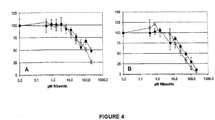
- Ribavirin recovered from acid phosphatase cleavage of Hb-ribavirin conjugate was evaluated for bioactivity in an in vitro cell proliferation assay using the Cell Proliferation ELISA Bromodeoxyuridine (BrdU) kit (Roche, Cat. No. 1 647 229).
- Human hepatoma HepG2 cells and mouse hepatocyte AML12 cells were plated at a density of 4 x 10 4 cells/well, and 1 x 10 4 cells/well, respectively, in flat bottom 96-well plates. The cells were allowed to grow for 24 hours, at which time they were treated in quadruplicate with ribavirin or ribavirin from Hb-ribavirin conjugate for 6 hours.
- HepG2 cells and 5637 bladder carcinoma cells were plated in 12-well plates at 2.5 x 10 6 cells/well, and mouse AM12 hepatocytes at 2 x 10 5 cells/well. The cells were allowed to grow for 48 hours. Media was removed and the cells were washed with HBSS containing 2 mg/ml BSA (HBSS/BSA). Hb or Hb-ribavirin conjugate labelled with fluorescein was complexed with Hp (1:1 molar ratio) in HBSS/BSA, and added to cells to a final concentration of 500 ⁇ g/ml. The labelled complexes were allowed to bind for 2 hr at 4°C.
- ATP was added to 1 mM and receptor-mediated internalization was initiated by incubation at 37°C for various times.
- the cells were washed with HBSS/BSA and surface-bound ligands were stripped from cells by incubation in 0.2 M acetic acid/0.5 M NaCl for 10 minutes.
- the cells were washed with PBS and lysed with 2 M NaOH.
- the solubilized cell extract was transferred to a flat bottom 96 well plate, and fluorescence measured (485 nm excitation/530 nm emission) using a fluorometric plate reader (Packard Fluorocount).
- Hb and Hb-ribavirin, complexed to Hp were taken up by the liver derived cell lines (HepG2 and mouse AM12) and neither was effectively internalized by the non-liver cell line (5637 bladder carcinoma), demonstrating the selective targeting of the Hb-ribavirin complex to cells bearing receptors the Hb-Hp complex ( Figure 5 ).
- a labelled albumin control was not significantly internalized by any of the cell lines, thereby confirming that the level of Hb uptake in the liver cell lines was not due to passive transport of macromolecules.
- Hb-ribavirin hemoglobin-ribavirin conjugate
- haptoglobin a coronavirus that produces fulminant hepatitis in mice.
- the molar ratio of conjugated ribavirin to hemoglobin was approximately 8:1.
- Hp-Hb-Ribavirin haptoglobin-hemoglobin-ribavirin
- mice were divided into 3 treatment groups as follows :
- mice All groups of mice were infected with 100 plaque forming units (PFU) of MHV-3 by intraperitoneal injection. Treatments were given daily by intravenous tail vein injection starting at day-1 and continuing to the end of the experiment. Blood samples were collected daily, prior to daily test article infusion, and analyzed for evidence of hepatitis by liver biochemistry (alanine aminotransferase, bilirubin) disturbances in hematologic parameters (hemoglobin, white blood cell count, platelet count), renal dysfunction (creatinine, blood urea nitrogen). Liver tissues were collected, fixed in formalin and examined by routine histology (hematoxylin and eosin) for hepatic necrosis and by immunohistochemistry for fibrin deposition and necrosis. Viral titers were determined by cytopathic effect assay using snap frozen liver tissue.
- PFU plaque forming units
- Macrophages were isolated from mice after injection of intraperitoneal thioglycollate. Macrophages were pretreated with free ribavirin (200 ⁇ g/ml) or Hp-Hb-ribavirin (1 mg/ml containing approximately 10 ⁇ g conjugated ribavirin/ml) one hr prior to infection with 1000 PFU MHV-3 (m.o.i. 10-3). At intervals, macrophages were harvested and analyzed for viral titers and production of inflammatory mediators, tumor necrosis factor- ⁇ (TNF- ⁇ ) and interferon-y (IFN-y).
- TNF- ⁇ tumor necrosis factor- ⁇
- IFN-y interferon-y
- mice treated with the hemoglobin-ribavirin conjugate of the invention exhibited superior clinical behaviour after infection with MHV-3.
- the infected controls (PBS/MHV-3 alone) at day 2-4 had ruffled fur, were shaking and were inactive.
- the infected mice treated with ribavirin alone had ruffled fur and were lethargic at day 2-5.
- the infected mice treated with the hemoglobin-ribavirin conjugate of the invention exhibited superior clinical behaviour (i.e., were active, had normal respiration and fur texture and no shaking) and behaved like uninfected normal mice.
- a graph of the composite clinical score versus days post-infection for the three test groups is illustrated in Figure 6 .
- MHV-3 infected mice treated with hemoglobin-ribavirin do not develop anemia that is normally caused by ribavirin therapy.
- ribavirin therapy causes does-limiting hemolytic anemia.
- the ribavirin group showed decreased hematocrit and hemoglobin below the normal range consistent with anemia over the 3 days following infection, while the hemoglobin-ribavirin treated animals stayed in the normal range (See Table 1 ).
- day 5 it was noted that the ribavirin treated animal were dehydrated as compared to the hemoglobin-ribavirin treated animals which results in elevating their hematocrit and hemoglobin levels.
- the liver is characterized by widely scattered microfoci of liver cell necrosis. The lesions are very discreet. The immunostain shows sharp localization of fibrin in sinusoids in the areas of necrosis. This is early hepatic necrosis in MHV-3 viral hepatitis. Hepatic changes are variable. The extent of the necrosis is graded as 1+ and is estimated as 5-10%.
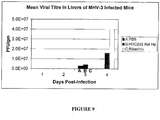
- Livers harvested from MHV-3 infected mice treated with Hp-Hb-RV demonstrated a significantly lower viral titer than mice treated with free ribavirin alone. Results are illustrated in Figure 9 .
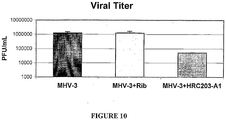
- Macrophages treated with Hp-Hb-RV in vitro had a marked reduction in MHV-3 viral titers ( Figure 10 ) and showed greater inhibition of viral replication ( Figure 11 ) in contrast to macrophages treated with free ribavirin alone.
- TNF ⁇ tumor necrosis factor
- IFN ⁇ interferon
- HRC 203 Hp-Hb-Ribavirin
- HRC 203 treated mice do not develop anemia Group Day 1 Day 2 Day 3 Day 4 Day 5 Hematocrit Normal 41% ⁇ 3% Control 41% N/A 43% ⁇ 2% N/A no animals Ribavirin 35% 33% 33% N/A 42% HRC-203 38% 39% 40% 40% 39% Hemoglobin Normal 139 ⁇ 12 Control 139 N/A 147 ⁇ 7 N/A no animals Ribavirin 119 112 112 N/A 143 HRC-203 129 133 136 136 133
Landscapes
- Health & Medical Sciences (AREA)
- Life Sciences & Earth Sciences (AREA)
- Veterinary Medicine (AREA)
- General Health & Medical Sciences (AREA)
- Proteomics, Peptides & Aminoacids (AREA)
- Chemical & Material Sciences (AREA)
- Bioinformatics & Cheminformatics (AREA)
- Engineering & Computer Science (AREA)
- Medicinal Chemistry (AREA)
- Public Health (AREA)
- Animal Behavior & Ethology (AREA)
- Pharmacology & Pharmacy (AREA)
- Organic Chemistry (AREA)
- Communicable Diseases (AREA)
- Nuclear Medicine, Radiotherapy & Molecular Imaging (AREA)
- Virology (AREA)
- General Chemical & Material Sciences (AREA)
- Chemical Kinetics & Catalysis (AREA)
- Molecular Biology (AREA)
- Oncology (AREA)
- Epidemiology (AREA)
- Pharmaceuticals Containing Other Organic And Inorganic Compounds (AREA)
- Medicines That Contain Protein Lipid Enzymes And Other Medicines (AREA)
Claims (9)
- Conjugué hémoglobine-analogue nucléosidique pour utilisation dans le traitement d'un état pathologique inflammatoire ou viral, où le conjugué dirige la libération de l'analogue nucléosidique dans un macrophage, où l'analogue nucléosidique est la ribavirine.
- Conjugué hémoglobine-analogue nucléosidique pour utilisation selon la revendication 1, où l'état pathologique est une infection virale qui est choisie dans le groupe constitué par les suivantes : hépatite C, VIH, SRAS, coronavirus et VRS.
- Conjugué hémoglobine-analogue nucléosidique pour utilisation selon la revendication 1 ou la revendication 2 qui, lors de son utilisation, module la réponse immunitaire et/ou la réponse inflammatoire du macrophage.
- Conjugué hémoglobine-analogue nucléosidique pour utilisation selon la revendication 3 qui, lors de son utilisation, module le profil et/ou la production de cytokines du macrophage.
- Conjugué hémoglobine-analogue nucléosidique pour utilisation selon la revendication 4, où les cytokines sont TNF-α ou IFN-γ.
- Conjugué hémoglobine-analogue nucléosidique pour utilisation selon l'une quelconque des revendications précédentes, qui est utilisé en conjonction avec IFN ou PEG-IFN.
- Conjugué hémoglobine-analogue nucléosidique pour utilisation selon l'une quelconque des revendications précédentes, où le rapport molaire hémoglobine:ribavirine est de 1:5-1:20.
- Conjugué hémoglobine-analogue nucléosidique pour utilisation selon l'une quelconque des revendications précédentes, qui est un conjugué hémoglobine-phosphoramidate-ribavirine.
- Conjugué hémoglobine-analogue nucléosidique pour utilisation selon l'une quelconque des revendications précédentes, où l'hémoglobine est non réticulée au niveau intramoléculaire.
Applications Claiming Priority (3)
| Application Number | Priority Date | Filing Date | Title |
|---|---|---|---|
| US47044503P | 2003-05-15 | 2003-05-15 | |
| US51357503P | 2003-10-24 | 2003-10-24 | |
| PCT/CA2004/000741 WO2004100995A1 (fr) | 2003-05-15 | 2004-05-17 | Administration ciblee de composes antiviraux au moyen de bioconjugues a base d'hemoglobine |
Publications (2)
| Publication Number | Publication Date |
|---|---|
| EP1660133A1 EP1660133A1 (fr) | 2006-05-31 |
| EP1660133B1 true EP1660133B1 (fr) | 2018-04-18 |
Family
ID=33457186
Family Applications (1)
| Application Number | Title | Priority Date | Filing Date |
|---|---|---|---|
| EP04733284.6A Expired - Lifetime EP1660133B1 (fr) | 2003-05-15 | 2004-05-17 | Administration ciblée de composés antiviraux au moyen de bioconjugués a base d'hémoglobine |
Country Status (3)
| Country | Link |
|---|---|
| EP (1) | EP1660133B1 (fr) |
| CA (1) | CA2566874C (fr) |
| WO (1) | WO2004100995A1 (fr) |
Families Citing this family (3)
| Publication number | Priority date | Publication date | Assignee | Title |
|---|---|---|---|---|
| US8497292B2 (en) | 2005-12-28 | 2013-07-30 | Translational Therapeutics, Inc. | Translational dysfunction based therapeutics |
| WO2007123579A2 (fr) * | 2005-12-28 | 2007-11-01 | Translational Therapeutics | Thérapeutique reposant sur une perturbation de traduction |
| GB0917044D0 (en) * | 2009-09-29 | 2009-11-18 | Cytoguide As | Agents, uses and methods |
Family Cites Families (7)
| Publication number | Priority date | Publication date | Assignee | Title |
|---|---|---|---|---|
| US5439882A (en) * | 1989-12-29 | 1995-08-08 | Texas Tech University Health Sciences Center | Blood substitute |
| ATE173273T1 (de) * | 1991-02-12 | 1998-11-15 | Univ Texas Tech | Verbesserter blutersatz |
| US5399671A (en) * | 1992-11-18 | 1995-03-21 | Kluger; Ronald | Specifically crosslinked hemoglobin with free functionality |
| TW381022B (en) * | 1993-08-16 | 2000-02-01 | Hsia Jen Chang | Compositions and methods utilizing nitroxides to avoid oxygen toxicity, particularly in stabilized, polymerized, conjugated, or encapsulated hemoglobin used as a red cell substitute |
| CA2236344A1 (fr) * | 1998-04-30 | 1999-10-30 | Hemosol Inc. | Complexes hemoglobine-haptoglobine |
| EP1367393A1 (fr) * | 2002-05-27 | 2003-12-03 | MacroZyme B.V. | Procédé d'utilisation de la voie CD 163 pour la modulation d'une réponse Immunitaire |
| WO2003100419A1 (fr) * | 2002-05-27 | 2003-12-04 | Bioceros B.V. | Procedes d'utilisation de la voie de cd163 pour moduler une reponse immunitaire |
-
2004
- 2004-05-17 CA CA2566874A patent/CA2566874C/fr not_active Expired - Fee Related
- 2004-05-17 EP EP04733284.6A patent/EP1660133B1/fr not_active Expired - Lifetime
- 2004-05-17 WO PCT/CA2004/000741 patent/WO2004100995A1/fr not_active Ceased
Non-Patent Citations (1)
| Title |
|---|
| HEUVEL VAN DEN M M ET AL: "REGULATION OF CD163 ON HUMAN MACROPHAGES: CROSS-LINKING OF CD163 INDUCES SIGNALING AND ACTIVATION", JOURNAL OF LEUKOCYTE BIOLOGY, vol. 66, no. 5, November 1999 (1999-11-01), pages 858 - 866, XP002943525, ISSN: 0741-5400 * |
Also Published As
| Publication number | Publication date |
|---|---|
| EP1660133A1 (fr) | 2006-05-31 |
| WO2004100995B1 (fr) | 2005-01-20 |
| CA2566874A1 (fr) | 2004-11-25 |
| CA2566874C (fr) | 2014-07-08 |
| WO2004100995A1 (fr) | 2004-11-25 |
Similar Documents
| Publication | Publication Date | Title |
|---|---|---|
| US20120213732A1 (en) | Targeted delivery of antiviral compounds through hemoglobin bioconjugates | |
| AU656212B2 (en) | Asialoglycoprotein-conjugated medicinal agent | |
| JP5179521B2 (ja) | ペグ‐インターフェロンアルファ接合体および凍結保護剤としてラフィノースを含む組成物 | |
| US7147849B2 (en) | Pharmaceutical formulation | |
| CZ20003315A3 (cs) | Prostředky pro ochranu PEG-interferon alfa konjugátu | |
| CN103228792A (zh) | PEG-干扰素λ1结合物 | |
| Fiume et al. | Targeting of antiviral drugs to the liver using glycoprotein carriers | |
| US20090275732A1 (en) | Agent for improving circulatory disorder | |
| Brookes et al. | Synthesis and characterization of a hemoglobin− ribavirin conjugate for targeted drug delivery | |
| CA2566874C (fr) | Administration ciblee de composes antiviraux au moyen de bioconjugues a base d'hemoglobine | |
| WO1995018636A2 (fr) | Conjugues de medicaments a ciblage hepatocytaire | |
| MXPA05002617A (es) | Eritropoyetinas de accion prolongada que mantienen la actividad protectora de tejidos de la eritropoyetina endogena. | |
| RU2222345C2 (ru) | Фармацевтическая композиция цитокинового и иммуномодулирующего действия | |
| AU2006301186B2 (en) | Method for treating or preventing ischemia reperfusion injury or multi-organ failure | |
| US20070218117A1 (en) | Supra molecular construct for delivery of interferon to a mammal | |
| KR20080042045A (ko) | 포유동물로의 인터페론 전달용 지질 구조물 | |
| US20100129428A1 (en) | Supra molecular construct for delivery of interferon to a mammal | |
| Johns et al. | Pharmacokinetics, tissue distribution, and cell localization of [35S] methionine-labeled recombinant human and murine α interferons in mice | |
| JPH0633320B2 (ja) | ラクトサミン化ヒトアルブミンとアデニン―9―β―D―アラビノフラノシド5′モノホスフェートの結合体の製造方法 | |
| Fiume et al. | Hepatocyte targeting of antiviral drugs coupled to galactosyl-terminating glycoproteins | |
| RU2311930C2 (ru) | Пэгилированный интерферон для борьбы с вирусной инфекцией | |
| US20150030564A1 (en) | Inhibitory agent for body cavity fluid accumulation | |
| JP2001516725A (ja) | 慢性C型肝炎症の処置のためのIFN−αとアマンタジンの使用 | |
| JPH11514326A (ja) | 液体蘇生用医薬物 | |
| JPH03215499A (ja) | ヘモグロビン複合体 |
Legal Events
| Date | Code | Title | Description |
|---|---|---|---|
| PUAI | Public reference made under article 153(3) epc to a published international application that has entered the european phase |
Free format text: ORIGINAL CODE: 0009012 |
|
| 17P | Request for examination filed |
Effective date: 20060324 |
|
| AK | Designated contracting states |
Kind code of ref document: A1 Designated state(s): AT BE BG CH CY CZ DE DK EE ES FI FR GB GR HU IE IT LI LU MC NL PL PT RO SE SI SK TR |
|
| DAX | Request for extension of the european patent (deleted) | ||
| RAP1 | Party data changed (applicant data changed or rights of an application transferred) |
Owner name: THERAPURE BIOPHARMA INC. |
|
| 17Q | First examination report despatched |
Effective date: 20110329 |
|
| REG | Reference to a national code |
Ref country code: DE Ref legal event code: R079 Ref document number: 602004052608 Country of ref document: DE Free format text: PREVIOUS MAIN CLASS: A61K0047480000 Ipc: A61K0047640000 |
|
| GRAP | Despatch of communication of intention to grant a patent |
Free format text: ORIGINAL CODE: EPIDOSNIGR1 |
|
| STAA | Information on the status of an ep patent application or granted ep patent |
Free format text: STATUS: GRANT OF PATENT IS INTENDED |
|
| RIC1 | Information provided on ipc code assigned before grant |
Ipc: A61P 31/12 20060101ALI20170425BHEP Ipc: A61K 47/64 20170101AFI20170425BHEP Ipc: A61K 31/7056 20060101ALI20170425BHEP |
|
| INTG | Intention to grant announced |
Effective date: 20170515 |
|
| GRAJ | Information related to disapproval of communication of intention to grant by the applicant or resumption of examination proceedings by the epo deleted |
Free format text: ORIGINAL CODE: EPIDOSDIGR1 |
|
| STAA | Information on the status of an ep patent application or granted ep patent |
Free format text: STATUS: EXAMINATION IS IN PROGRESS |
|
| INTC | Intention to grant announced (deleted) | ||
| GRAR | Information related to intention to grant a patent recorded |
Free format text: ORIGINAL CODE: EPIDOSNIGR71 |
|
| GRAS | Grant fee paid |
Free format text: ORIGINAL CODE: EPIDOSNIGR3 |
|
| STAA | Information on the status of an ep patent application or granted ep patent |
Free format text: STATUS: GRANT OF PATENT IS INTENDED |
|
| GRAA | (expected) grant |
Free format text: ORIGINAL CODE: 0009210 |
|
| STAA | Information on the status of an ep patent application or granted ep patent |
Free format text: STATUS: THE PATENT HAS BEEN GRANTED |
|
| INTG | Intention to grant announced |
Effective date: 20180307 |
|
| AK | Designated contracting states |
Kind code of ref document: B1 Designated state(s): AT BE BG CH CY CZ DE DK EE ES FI FR GB GR HU IE IT LI LU MC NL PL PT RO SE SI SK TR |
|
| REG | Reference to a national code |
Ref country code: GB Ref legal event code: FG4D |
|
| REG | Reference to a national code |
Ref country code: CH Ref legal event code: EP |
|
| REG | Reference to a national code |
Ref country code: AT Ref legal event code: REF Ref document number: 989743 Country of ref document: AT Kind code of ref document: T Effective date: 20180515 |
|
| REG | Reference to a national code |
Ref country code: IE Ref legal event code: FG4D |
|
| REG | Reference to a national code |
Ref country code: DE Ref legal event code: R096 Ref document number: 602004052608 Country of ref document: DE |
|
| REG | Reference to a national code |
Ref country code: FR Ref legal event code: PLFP Year of fee payment: 15 |
|
| REG | Reference to a national code |
Ref country code: NL Ref legal event code: MP Effective date: 20180418 |
|
| PG25 | Lapsed in a contracting state [announced via postgrant information from national office to epo] |
Ref country code: NL Free format text: LAPSE BECAUSE OF FAILURE TO SUBMIT A TRANSLATION OF THE DESCRIPTION OR TO PAY THE FEE WITHIN THE PRESCRIBED TIME-LIMIT Effective date: 20180418 |
|
| PG25 | Lapsed in a contracting state [announced via postgrant information from national office to epo] |
Ref country code: SE Free format text: LAPSE BECAUSE OF FAILURE TO SUBMIT A TRANSLATION OF THE DESCRIPTION OR TO PAY THE FEE WITHIN THE PRESCRIBED TIME-LIMIT Effective date: 20180418 Ref country code: ES Free format text: LAPSE BECAUSE OF FAILURE TO SUBMIT A TRANSLATION OF THE DESCRIPTION OR TO PAY THE FEE WITHIN THE PRESCRIBED TIME-LIMIT Effective date: 20180418 Ref country code: PL Free format text: LAPSE BECAUSE OF FAILURE TO SUBMIT A TRANSLATION OF THE DESCRIPTION OR TO PAY THE FEE WITHIN THE PRESCRIBED TIME-LIMIT Effective date: 20180418 Ref country code: BG Free format text: LAPSE BECAUSE OF FAILURE TO SUBMIT A TRANSLATION OF THE DESCRIPTION OR TO PAY THE FEE WITHIN THE PRESCRIBED TIME-LIMIT Effective date: 20180718 Ref country code: FI Free format text: LAPSE BECAUSE OF FAILURE TO SUBMIT A TRANSLATION OF THE DESCRIPTION OR TO PAY THE FEE WITHIN THE PRESCRIBED TIME-LIMIT Effective date: 20180418 |
|
| PG25 | Lapsed in a contracting state [announced via postgrant information from national office to epo] |
Ref country code: GR Free format text: LAPSE BECAUSE OF FAILURE TO SUBMIT A TRANSLATION OF THE DESCRIPTION OR TO PAY THE FEE WITHIN THE PRESCRIBED TIME-LIMIT Effective date: 20180719 |
|
| REG | Reference to a national code |
Ref country code: CH Ref legal event code: PL |
|
| REG | Reference to a national code |
Ref country code: AT Ref legal event code: MK05 Ref document number: 989743 Country of ref document: AT Kind code of ref document: T Effective date: 20180418 |
|
| PG25 | Lapsed in a contracting state [announced via postgrant information from national office to epo] |
Ref country code: PT Free format text: LAPSE BECAUSE OF FAILURE TO SUBMIT A TRANSLATION OF THE DESCRIPTION OR TO PAY THE FEE WITHIN THE PRESCRIBED TIME-LIMIT Effective date: 20180820 |
|
| REG | Reference to a national code |
Ref country code: DE Ref legal event code: R097 Ref document number: 602004052608 Country of ref document: DE |
|
| REG | Reference to a national code |
Ref country code: BE Ref legal event code: MM Effective date: 20180531 |
|
| PG25 | Lapsed in a contracting state [announced via postgrant information from national office to epo] |
Ref country code: MC Free format text: LAPSE BECAUSE OF FAILURE TO SUBMIT A TRANSLATION OF THE DESCRIPTION OR TO PAY THE FEE WITHIN THE PRESCRIBED TIME-LIMIT Effective date: 20180418 Ref country code: AT Free format text: LAPSE BECAUSE OF FAILURE TO SUBMIT A TRANSLATION OF THE DESCRIPTION OR TO PAY THE FEE WITHIN THE PRESCRIBED TIME-LIMIT Effective date: 20180418 Ref country code: DK Free format text: LAPSE BECAUSE OF FAILURE TO SUBMIT A TRANSLATION OF THE DESCRIPTION OR TO PAY THE FEE WITHIN THE PRESCRIBED TIME-LIMIT Effective date: 20180418 Ref country code: EE Free format text: LAPSE BECAUSE OF FAILURE TO SUBMIT A TRANSLATION OF THE DESCRIPTION OR TO PAY THE FEE WITHIN THE PRESCRIBED TIME-LIMIT Effective date: 20180418 Ref country code: SK Free format text: LAPSE BECAUSE OF FAILURE TO SUBMIT A TRANSLATION OF THE DESCRIPTION OR TO PAY THE FEE WITHIN THE PRESCRIBED TIME-LIMIT Effective date: 20180418 Ref country code: RO Free format text: LAPSE BECAUSE OF FAILURE TO SUBMIT A TRANSLATION OF THE DESCRIPTION OR TO PAY THE FEE WITHIN THE PRESCRIBED TIME-LIMIT Effective date: 20180418 Ref country code: CZ Free format text: LAPSE BECAUSE OF FAILURE TO SUBMIT A TRANSLATION OF THE DESCRIPTION OR TO PAY THE FEE WITHIN THE PRESCRIBED TIME-LIMIT Effective date: 20180418 |
|
| REG | Reference to a national code |
Ref country code: IE Ref legal event code: MM4A |
|
| PLBE | No opposition filed within time limit |
Free format text: ORIGINAL CODE: 0009261 |
|
| STAA | Information on the status of an ep patent application or granted ep patent |
Free format text: STATUS: NO OPPOSITION FILED WITHIN TIME LIMIT |
|
| PG25 | Lapsed in a contracting state [announced via postgrant information from national office to epo] |
Ref country code: CH Free format text: LAPSE BECAUSE OF NON-PAYMENT OF DUE FEES Effective date: 20180531 Ref country code: IT Free format text: LAPSE BECAUSE OF FAILURE TO SUBMIT A TRANSLATION OF THE DESCRIPTION OR TO PAY THE FEE WITHIN THE PRESCRIBED TIME-LIMIT Effective date: 20180418 Ref country code: LI Free format text: LAPSE BECAUSE OF NON-PAYMENT OF DUE FEES Effective date: 20180531 |
|
| 26N | No opposition filed |
Effective date: 20190121 |
|
| PG25 | Lapsed in a contracting state [announced via postgrant information from national office to epo] |
Ref country code: LU Free format text: LAPSE BECAUSE OF NON-PAYMENT OF DUE FEES Effective date: 20180517 |
|
| PG25 | Lapsed in a contracting state [announced via postgrant information from national office to epo] |
Ref country code: IE Free format text: LAPSE BECAUSE OF NON-PAYMENT OF DUE FEES Effective date: 20180517 |
|
| PG25 | Lapsed in a contracting state [announced via postgrant information from national office to epo] |
Ref country code: BE Free format text: LAPSE BECAUSE OF NON-PAYMENT OF DUE FEES Effective date: 20180531 Ref country code: SI Free format text: LAPSE BECAUSE OF FAILURE TO SUBMIT A TRANSLATION OF THE DESCRIPTION OR TO PAY THE FEE WITHIN THE PRESCRIBED TIME-LIMIT Effective date: 20180418 |
|
| PGFP | Annual fee paid to national office [announced via postgrant information from national office to epo] |
Ref country code: DE Payment date: 20190604 Year of fee payment: 16 |
|
| PGFP | Annual fee paid to national office [announced via postgrant information from national office to epo] |
Ref country code: FR Payment date: 20190603 Year of fee payment: 16 |
|
| PGFP | Annual fee paid to national office [announced via postgrant information from national office to epo] |
Ref country code: GB Payment date: 20190531 Year of fee payment: 16 |
|
| PG25 | Lapsed in a contracting state [announced via postgrant information from national office to epo] |
Ref country code: TR Free format text: LAPSE BECAUSE OF FAILURE TO SUBMIT A TRANSLATION OF THE DESCRIPTION OR TO PAY THE FEE WITHIN THE PRESCRIBED TIME-LIMIT Effective date: 20180418 |
|
| PG25 | Lapsed in a contracting state [announced via postgrant information from national office to epo] |
Ref country code: HU Free format text: LAPSE BECAUSE OF FAILURE TO SUBMIT A TRANSLATION OF THE DESCRIPTION OR TO PAY THE FEE WITHIN THE PRESCRIBED TIME-LIMIT; INVALID AB INITIO Effective date: 20040517 |
|
| PG25 | Lapsed in a contracting state [announced via postgrant information from national office to epo] |
Ref country code: CY Free format text: LAPSE BECAUSE OF FAILURE TO SUBMIT A TRANSLATION OF THE DESCRIPTION OR TO PAY THE FEE WITHIN THE PRESCRIBED TIME-LIMIT Effective date: 20180418 |
|
| REG | Reference to a national code |
Ref country code: DE Ref legal event code: R119 Ref document number: 602004052608 Country of ref document: DE |
|
| GBPC | Gb: european patent ceased through non-payment of renewal fee |
Effective date: 20200517 |
|
| PG25 | Lapsed in a contracting state [announced via postgrant information from national office to epo] |
Ref country code: FR Free format text: LAPSE BECAUSE OF NON-PAYMENT OF DUE FEES Effective date: 20200531 Ref country code: GB Free format text: LAPSE BECAUSE OF NON-PAYMENT OF DUE FEES Effective date: 20200517 |
|
| PG25 | Lapsed in a contracting state [announced via postgrant information from national office to epo] |
Ref country code: DE Free format text: LAPSE BECAUSE OF NON-PAYMENT OF DUE FEES Effective date: 20201201 |