EP1663401B1 - Produit en baton extrude et procede de fabrication - Google Patents
Produit en baton extrude et procede de fabrication Download PDFInfo
- Publication number
- EP1663401B1 EP1663401B1 EP04776263A EP04776263A EP1663401B1 EP 1663401 B1 EP1663401 B1 EP 1663401B1 EP 04776263 A EP04776263 A EP 04776263A EP 04776263 A EP04776263 A EP 04776263A EP 1663401 B1 EP1663401 B1 EP 1663401B1
- Authority
- EP
- European Patent Office
- Prior art keywords
- weight
- antiperspirant
- particulate
- mixing
- product
- Prior art date
- Legal status (The legal status is an assumption and is not a legal conclusion. Google has not performed a legal analysis and makes no representation as to the accuracy of the status listed.)
- Expired - Lifetime
Links
Images
Classifications
-
- A—HUMAN NECESSITIES
- A61—MEDICAL OR VETERINARY SCIENCE; HYGIENE
- A61K—PREPARATIONS FOR MEDICAL, DENTAL OR TOILETRY PURPOSES
- A61K8/00—Cosmetics or similar toiletry preparations
- A61K8/18—Cosmetics or similar toiletry preparations characterised by the composition
- A61K8/72—Cosmetics or similar toiletry preparations characterised by the composition containing organic macromolecular compounds
- A61K8/84—Cosmetics or similar toiletry preparations characterised by the composition containing organic macromolecular compounds obtained by reactions otherwise than those involving only carbon-carbon unsaturated bonds
- A61K8/89—Polysiloxanes
- A61K8/891—Polysiloxanes saturated, e.g. dimethicone, phenyl trimethicone, C24-C28 methicone or stearyl dimethicone
- A61K8/892—Polysiloxanes saturated, e.g. dimethicone, phenyl trimethicone, C24-C28 methicone or stearyl dimethicone modified by a hydroxy group, e.g. dimethiconol
-
- A—HUMAN NECESSITIES
- A45—HAND OR TRAVELLING ARTICLES
- A45D—HAIRDRESSING OR SHAVING EQUIPMENT; EQUIPMENT FOR COSMETICS OR COSMETIC TREATMENTS, e.g. FOR MANICURING OR PEDICURING
- A45D40/00—Casings or accessories specially adapted for storing or handling solid or pasty toiletry or cosmetic substances, e.g. shaving soaps or lipsticks
- A45D40/16—Refill sticks; Moulding devices for producing sticks
-
- A—HUMAN NECESSITIES
- A61—MEDICAL OR VETERINARY SCIENCE; HYGIENE
- A61K—PREPARATIONS FOR MEDICAL, DENTAL OR TOILETRY PURPOSES
- A61K8/00—Cosmetics or similar toiletry preparations
- A61K8/02—Cosmetics or similar toiletry preparations characterised by special physical form
- A61K8/0216—Solid or semisolid forms
- A61K8/0229—Sticks
-
- A—HUMAN NECESSITIES
- A61—MEDICAL OR VETERINARY SCIENCE; HYGIENE
- A61K—PREPARATIONS FOR MEDICAL, DENTAL OR TOILETRY PURPOSES
- A61K8/00—Cosmetics or similar toiletry preparations
- A61K8/18—Cosmetics or similar toiletry preparations characterised by the composition
- A61K8/19—Cosmetics or similar toiletry preparations characterised by the composition containing inorganic ingredients
- A61K8/26—Aluminium; Compounds thereof
-
- A—HUMAN NECESSITIES
- A61—MEDICAL OR VETERINARY SCIENCE; HYGIENE
- A61K—PREPARATIONS FOR MEDICAL, DENTAL OR TOILETRY PURPOSES
- A61K8/00—Cosmetics or similar toiletry preparations
- A61K8/18—Cosmetics or similar toiletry preparations characterised by the composition
- A61K8/19—Cosmetics or similar toiletry preparations characterised by the composition containing inorganic ingredients
- A61K8/28—Zirconium; Compounds thereof
-
- A—HUMAN NECESSITIES
- A61—MEDICAL OR VETERINARY SCIENCE; HYGIENE
- A61K—PREPARATIONS FOR MEDICAL, DENTAL OR TOILETRY PURPOSES
- A61K8/00—Cosmetics or similar toiletry preparations
- A61K8/18—Cosmetics or similar toiletry preparations characterised by the composition
- A61K8/30—Cosmetics or similar toiletry preparations characterised by the composition containing organic compounds
- A61K8/33—Cosmetics or similar toiletry preparations characterised by the composition containing organic compounds containing oxygen
- A61K8/34—Alcohols
- A61K8/342—Alcohols having more than seven atoms in an unbroken chain
-
- A—HUMAN NECESSITIES
- A61—MEDICAL OR VETERINARY SCIENCE; HYGIENE
- A61K—PREPARATIONS FOR MEDICAL, DENTAL OR TOILETRY PURPOSES
- A61K8/00—Cosmetics or similar toiletry preparations
- A61K8/18—Cosmetics or similar toiletry preparations characterised by the composition
- A61K8/30—Cosmetics or similar toiletry preparations characterised by the composition containing organic compounds
- A61K8/33—Cosmetics or similar toiletry preparations characterised by the composition containing organic compounds containing oxygen
- A61K8/36—Carboxylic acids; Salts or anhydrides thereof
- A61K8/361—Carboxylic acids having more than seven carbon atoms in an unbroken chain; Salts or anhydrides thereof
-
- A—HUMAN NECESSITIES
- A61—MEDICAL OR VETERINARY SCIENCE; HYGIENE
- A61K—PREPARATIONS FOR MEDICAL, DENTAL OR TOILETRY PURPOSES
- A61K8/00—Cosmetics or similar toiletry preparations
- A61K8/18—Cosmetics or similar toiletry preparations characterised by the composition
- A61K8/30—Cosmetics or similar toiletry preparations characterised by the composition containing organic compounds
- A61K8/58—Cosmetics or similar toiletry preparations characterised by the composition containing organic compounds containing atoms other than carbon, hydrogen, halogen, oxygen, nitrogen, sulfur or phosphorus
- A61K8/585—Organosilicon compounds
-
- A—HUMAN NECESSITIES
- A61—MEDICAL OR VETERINARY SCIENCE; HYGIENE
- A61K—PREPARATIONS FOR MEDICAL, DENTAL OR TOILETRY PURPOSES
- A61K8/00—Cosmetics or similar toiletry preparations
- A61K8/18—Cosmetics or similar toiletry preparations characterised by the composition
- A61K8/72—Cosmetics or similar toiletry preparations characterised by the composition containing organic macromolecular compounds
- A61K8/81—Cosmetics or similar toiletry preparations characterised by the composition containing organic macromolecular compounds obtained by reactions involving only carbon-to-carbon unsaturated bonds
- A61K8/8105—Compositions of homopolymers or copolymers of unsaturated aliphatic hydrocarbons having only one carbon-to-carbon double bond; Compositions of derivatives of such polymers
- A61K8/8111—Homopolymers or copolymers of aliphatic olefines, e.g. polyethylene, polyisobutene; Compositions of derivatives of such polymers
-
- A—HUMAN NECESSITIES
- A61—MEDICAL OR VETERINARY SCIENCE; HYGIENE
- A61K—PREPARATIONS FOR MEDICAL, DENTAL OR TOILETRY PURPOSES
- A61K8/00—Cosmetics or similar toiletry preparations
- A61K8/18—Cosmetics or similar toiletry preparations characterised by the composition
- A61K8/72—Cosmetics or similar toiletry preparations characterised by the composition containing organic macromolecular compounds
- A61K8/84—Cosmetics or similar toiletry preparations characterised by the composition containing organic macromolecular compounds obtained by reactions otherwise than those involving only carbon-carbon unsaturated bonds
- A61K8/89—Polysiloxanes
- A61K8/891—Polysiloxanes saturated, e.g. dimethicone, phenyl trimethicone, C24-C28 methicone or stearyl dimethicone
-
- A—HUMAN NECESSITIES
- A61—MEDICAL OR VETERINARY SCIENCE; HYGIENE
- A61K—PREPARATIONS FOR MEDICAL, DENTAL OR TOILETRY PURPOSES
- A61K8/00—Cosmetics or similar toiletry preparations
- A61K8/18—Cosmetics or similar toiletry preparations characterised by the composition
- A61K8/92—Oils, fats or waxes; Derivatives thereof, e.g. hydrogenation products thereof
- A61K8/922—Oils, fats or waxes; Derivatives thereof, e.g. hydrogenation products thereof of vegetable origin
-
- A—HUMAN NECESSITIES
- A61—MEDICAL OR VETERINARY SCIENCE; HYGIENE
- A61Q—SPECIFIC USE OF COSMETICS OR SIMILAR TOILETRY PREPARATIONS
- A61Q15/00—Anti-perspirants or body deodorants
-
- A—HUMAN NECESSITIES
- A61—MEDICAL OR VETERINARY SCIENCE; HYGIENE
- A61K—PREPARATIONS FOR MEDICAL, DENTAL OR TOILETRY PURPOSES
- A61K2800/00—Properties of cosmetic compositions or active ingredients thereof or formulation aids used therein and process related aspects
- A61K2800/40—Chemical, physico-chemical or functional or structural properties of particular ingredients
- A61K2800/41—Particular ingredients further characterized by their size
- A61K2800/412—Microsized, i.e. having sizes between 0.1 and 100 microns
Definitions
- This invention relates to a new extrusion method and an improved stick product resulting therefrom for making a cosmetic product such as an antiperspirant and/or deodorant product, sunscreens, or bug repellants at lower temperatures than traditionally used.
- a cosmetic product such as an antiperspirant and/or deodorant product, sunscreens, or bug repellants at lower temperatures than traditionally used.
- the product may be formed without requiring a package thereby having environmental advantages.
- U.S. Patent Number 6,261,579 to Roulier et al for L'Oreal describes the use of compression and extrusion in a twin screw extruder for the formation of a cosmetic hydrating gel.
- the gel is composed of 20% or more water soluble or hydrophilic gelling agents in the presence of water.
- U.S. Patent Number 6,045,814 to Roulier et al for L'Oreal describes rigid gels containing at least 20% of one or more hydrophilic gelling agents.
- the gels are obtained in the presence of water by mixing, blending, compression and extrusion in a twin-screw extruder.
- This reference includes pigment in the composition later removed in 6,261,579.
- U.S. Patent Number 5,490,979 to Kasat et al for Colgate Palmolive describes composition and method of manufacture of a clear stick antiperspirant. This reference describes a method which uses a twin screw extruder to create separate mixing chambers where temperatures can be controlled and prevent degradation of heat sensitive ingredients.
- WO-00/19861 to Allan et al for Malawistan Lever Ltd. describes a compartmented progressive pitched screw which acts as mucer/delivery/temperatare controller, and delivers a uniform product to be filled into standard AP containers at temperatures between 0 and 3 °C below the melt point of the composition. Benefits are uniformity of active content obtained by eliminating sedimentation, and an ability to add temperature sensitive ingredients late in the process.
- U.S. Patent Number 4,688,609 to Diaz for Fluid Packaging Co. describes a system for injecting molten product into deodorant stick containers with automatically dispensing metered amounts of viscous product in assembly line fashion into a series of containers.
- WO-01/76409 to Allan et a1 for Malawistan Lever Ltd. describes the application of the filling apparatus in WO-00/19861 , to the production and filling of soft s olid product formulations via batch or continuous means, with screw extrusion filling under pressure.
- U.S. Patent 6,338,840 to Allan, et al for Unilever describes a process and apparatus for the production of an antiperspirant and/or deodorant product by a continuous process involving injection molding.
- Patent Number 5,316,712 to Ono et al discloses an extrusion/injection molding of an oil and powder mixture into a mold to form a cosmetic.
- U.S. Patent Number 4,688,609 to Diaz discloses a device for filling sticks using a piston and air actuated plunger to control flow and fill weight of molten material.
- U.S. Patent Number 4,897,236 to Rabiger et al discloses a process and apparatus that can be used for extruding rubber.
- references of interest include U.S. Patent Number 5,316,712 to Ono et al for JO Cosmetics which describes an injection molding method for making cosmetics using a piston to force a molten composition into a die and cooling it there, then discharging the product from the die for packaging; and U.S. Patent Number 4,897,236 to Rabiger et al for Herman Berstorff Maschinenbau which describes a method and apparatus for the continuous manufacture of rubber or polymer based mixtures containing additives. The ingredients for the mixture are fed into a twin screw extruder and masticated and homogenized therein. Recycling is described.
- the objects of the invention include having the ability to extrude the stick formula ingredients at temperatures well below the melting point of the formula, and being able to create solid sticks without requiring a package form to shape the product.
- Further advantages of the invention include (1) greater flexibility in packaging the final product; (2) increased uniformity in product since solid products are less likely to have the individual ingredients settle out during the process; (3) reduction or elimination of voids and cavities, shrinkage and cracking since relatively little cooling takes place; (4) increased ability to use volatile products that would otherwise be lost because of heat; and (5) greater ability to use temperature sensitive materials that might otherwise degrade because of exposure to elevated temperatures (for example, fragrances).
- Yet another advantage of the invention is (6) the ability to make antiperspirants and/or deodorants which have colored striations, or other aesthetics not possible in other conventional manufacturing routes for molten sticks.
- This invention utilizes mechanical means of mixing, homogenizing and extruding a stick formulation at temperatures well below the melting point of the formula. In general no heat is added (except that created by mechanical energy transferred to the product, and possible warming of the extrusion barrel for some formulas) and the ingredients are blended or homogenized into a single mixture.
- the resulting sticks are in solid form and do not require a package or other molding device to shape the solid product.
- the resulting sticks can be inserted into a rigid plastic container, a film wrapper, or a refill unit for a specialized refill package, for dispensing.
- This ability to form a solid stick without a mold or package also allows alternative packaging forms which are less expensive and more environmentally friendly such as wrapper (which could be used in developing markets to reduce packaging costs which typically run 40-60% of total product cost); or refill packs, where a convenient refill unit can be inserted into a reusable refill dispenser to reduce purchase cost.
- wrapper which could be used in developing markets to reduce packaging costs which typically run 40-60% of total product cost
- refill packs where a convenient refill unit can be inserted into a reusable refill dispenser to reduce purchase cost.
- This invention provides a process as defined in claim 1.
- Said solid stick is made of blends of material that; are worked to uniformity by mechanical means for mixing, homogenizing and extruding the stick formula ingredients at temperatures well below the melting point of the formula.
- the ability to make products such as antiperspirants and/or deodorants that have a burden of assimilating solids added as particulates is a very useful feature of the invention.
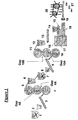
- FIGURE 1 shows a diagram of how the process equipment is arranged.
- a first amalgamator 1 which is a horizontal mixing unit (preferably made from 304/316 stainless steel such as is available from Mazzoni Co., Milan Italy) which combines the organic and plastic structuring agents as powdered and flaked materials into a well mixed blend of solids.
- the blended materials from the first amalgamator 1 goes into a first surge hopper 2 (also made from 304/316 stainless steel) which controls the flow of the product onto a first flighted belt 3 .
- the first belt 3 feeds the blend into a first roll mill 4 between rollers that result in the blend being homogenized and then moved to the top of the roll mill.
- the blend is removed from the top roll of the first roll mill 4 by a first scraper 5 .
- the scraping action results in the blend being dropped into a second surge hopper 6 .
- the second surge hopper 6 feeds the blend into a second amalgamator 7 wherein other ingredients are added, both liquid and solid/powders, as well as fragrance.
- the blend from the second amalgamator 7 is then dropped into a third surge hopper 8 which controls the flow of the blend onto a second flighted belt 9 and feeds the blend into a second roll mill 10, again for homogenization purposes.
- the blend is removed from the top roll of the second roll mill 10 by a second scraper 11.
- the scraping action results in the blend being dropped into a fourth surge hopper 12 which feeds the blend onto a third flighted belt 13 and downward into an extruder assembly.
- the extruder assembly comprises a feed hopper 14 which feeds an inwardly moving worm 15 which forces the blend through a perforated plate or mesh screen (particularly 10 mesh) 16, an extruder chamber 17 and an outwardly moving progressively flighted worm 18.
- the extruder assembly can be a multiple stage single or double screw extruder.
- a compression orifice plate 19 which defines the shape of the extruded product.
- a cutting means 20 to form the products 21 as discrete units also called billets.
- the products may be cut to any length desired to fit into packaging or to be wrapped separately.
- the billets may be used as is or subjected to further steps.
- the billets may be compressed or microwaved to improve the properties.
- an embosser (not shown) may be used to imprint a design on the units with compression, or to attach them to a package part required to make them refill units for use with refill packages. Note the characters 4A and 10A for gaps.
- Both of the roll mills are a series of 3-5 tightly spaced rollers being spaced approximately 0.5-3.0 mm apart with the usual orientation of having the spaces being of decreasing size as the product moves upward between the rollers.
- the temperature gradient allows transfer of the blended materials to occur from one roller to the next in the assembly. Speeds of the rollers are adjusted so that little or no heat is transferred. In one embodiment, no heating or cooling is used at all.
- the blended materials are homogenized, pelletized, mixed, or subjected to refining plodding.
- one or all of the roll mills can be replaced by a modified extruder assembly comprising elements 14-18, with a perforated plate replacing the orifice plate 19.
- a perforated plate replacing the orifice plate 19.
- a post extrusion treatment option may also be used in which the product may be subjected to a one of the following heating steps.
- First option - cut billets from the process are subjected to a thermal environment sufficient to create a smoother surface.
- Second option - Extruded product either before or after cutting is subjected to microwave treatment sufficient to smooth the surface and/or modify the texture of the product.
- microwave treatment may be used to modify the texture and/or unit structure; and improve cup retention, payout and application aesthetics.
- the final form of the unit can be packaged as is in a conventional plastic container, or wrapped for consumer use, or affixed to a mechanism that would allow it to become a refill for a package having an appropriate shape for the unit.
- the invention comprises a process for forming a free standing antiperspirant or deodorant solid stick product using particulate and fluid materials that are combined by means of amalgamation, homogenization, compaction and extrusion below the melting temperature of said product and extruded by mechanically working the particulate and fluid materials comprising the steps of:
- Optional additional steps include:
- the current invention relies on mechanical working of the ingredients to achieve a formed stick at the outlet of the extruder without need for a mold/die to act as a form while solidifying a melt.
- the process of the current invention uses physical mixing and compression via a plodder, or similar device, to achieve the intimate contact and structure required to produce the final stick.
- the basic process involves combining all the organics (waxes, alcohols, and other plastic ingredients) by means of a roll mill, or other ribbon, or pelletizing devices. This step is repeated two or more times to insure that all of these ingredients are uniformly well mixed and fully plasticized.
- the resulting material is then combined with all of the fillers and liquids that make up the formulation, including fragrance.
- the mixture is then amalgamated, homogenized by either pelletizing or passing through a roll mill, to create a mixture that can be plodded.
- the resulting ribbons, pellets, or amorphous mass must be free flowing enough to feed the hopper of the plodder so the worm can transfer this material without bridging.
- the material may require some mechanical assistance to feed the worm without bridging in the feed hopper 14.
- the plodder can be a single worm or a multiple worm unit.
- Various screens or plates (for example, 10 mesh) can be inserted to change the compression generated by the individual plodder stages.
- the fomulation plays a key role in determining what compression and other processing is required to produce a stick with appropriate consumer use characteristics.
- the volatile silicones may be selected from linear and cyclic types.
- Linear volatile methyl siloxanes (“VMS") have the formula (CH 3 ) 3 SiO ⁇ (CH 3 ) 2 SiO ⁇ y Si(CH 3 ) 3 .
- the value of y is 0-5.
- Cyclic VMS have the formula ⁇ (CH 3 ) 2 SiO ⁇ z .
- the value of z is 3-6.
- these volatile methyl siloxanes have boiling points less than 250 °C. and viscosities of about 0.65-5.0 centistokes (mm 2 /s).
- Representative linear volatile methyl siloxanes (I) are hexamethyldisiloxane (MM) with a boiling point of 100 °C., viscosity of 0.65 mm 2 /s, and formula Me 3 SiOSiMe 3 ; octamethyltrisiloxane (MDM) with a boiling point of 152 °C., viscosity of 1.04 mm 2 /s, and formula Me 3 SiOMe 2 SiOSiMe 3 ; decamethyltetrasiloxane (MD 2 M) with a boiling point of 194 °C., viscosity of 1.53 mm 2 /s, and formula Me 3 SiO(Me 2 SiO) 2 SiMe 3 ; dodecamethylpentasiloxane (MD 3 M) with a boiling point of 229 °C., viscosity of 2.06 mm 2 /s, and formula Me 3 SiO(Me 2 SiO) 3 SiMe 3 ; tetrade
- Representative cyclic volatile methyl siloxanes (II) are hexamethylcyclotrisiloxane (D 3 ) a solid with a boiling point of 134 °C. and formula ⁇ (Me 2 )SiO ⁇ 3 ; octamethylcyclotetrasiloxane (D 4 ) with a boiling point of 176 °C., viscosity of 2.3 mm 2 /s, and formula ⁇ (Me 2 )SiO ⁇ 4 ; decamethylcyclopentasiloxame (D 5 ) with a boiling point of 210 °C., viscosity of 3.87 mm 2 /s, and formula ⁇ (Me 2 )SiO ⁇ 5 ; and dodecamethylcyclohexasiloxane (D 6 ) with a boiling point of 245 °C., viscosity of 6.62 mm 2 /s, and formula ⁇ (Me 2 )SiO ⁇ 6
- Non-volatile silicones may be selected from the group consisting of PEG/PPG-18/18, cyclopentasiloxane and/or cyclopentasiloxane crosslinked, and polydimethylsiloxane liquid at a viscosity between 20-12,500 mm 2 /s (cst). This is true for this invention since these are nonvolatiles as compared to cyclomethicones. The cyclopentasiloxanes and polymers are nonvolatile even though when filled with cyclomethicone they become more volatile.
- One particular silicone ingredient includes 0-5 weight % of a fluidizer (Fluid AP from Dow Coming) a volatile silicone.
- antiperspirant active materials can be utilized according to the present invention. These include conventional aluminum and aluminum/zirconium salts, as well as aluminum/zirconium salts complexed with a neutral amino acid such as glycine, as known in the art. See each of European Patent Application Number. 512,770 A1 and PCT case WO 92/19221 , for disclosure of antiperspirant active materials.
- the antiperspirant active materials disclosed therein, including the acidic antiperspirant materials can be incorporated in the compositions of the present invention if they are soluble in the active phase.
- Suitable materials include (but are not limited to) aluminum chlorides (various types including, for example, anhydrous form, hydrated form, etc.), zirconyl hydroxychlorides, zirconyl oxychlorides, basic aluminum chlorides, basic aluminum chlorides combined with zirconyl oxychlorides and hydroxychlorides, and organic complexes of each of basic aluminum chlorides with or without zirconyl oxychlorides and hydroxychlorides and mixtures of any of the foregoing.
- aluminum chlorides various types including, for example, anhydrous form, hydrated form, etc.
- zirconyl hydroxychlorides zirconyl oxychlorides
- basic aluminum chlorides basic aluminum chlorides combined with zirconyl oxychlorides and hydroxychlorides
- aluminum chlorohydrate aluminum chloride; aluminum sesquichlorohydrate, aluminum chlorohydrol-propylene glycol complex, zirconyl hydroxychloride, aluminum-zirconium glycine complex (for example, aluminum zirconium trichlorohydrex gly, aluminum zirconium pentachlorohydrex gly, aluminum zirconium tetrachlorohydrex gly and aluminum zirconium octochlorohydrex gly), aluminum dichlorohydrate, aluminum chlorohydrex PG, aluminum chlorohydrex PEG, aluminum dichlorohydrex PG, aluminum dichlorohydrex PEG, aluminum zirconium trichlorohydrex gly propylene glycol complex, aluminum zirconium trichlorohydrex gly dipropylene glycol complex, aluminum zirconium tetrachlorohydrex gly propylene glycol complex, aluminum zircon
- antiperspirant actives include aluminum zirconium trichlorohydrex and aluminum zirconium tetrachlorohydrex either with or without glycine.
- a particular antiperspirant active is aluminum trichlorohydrex gly such as AZZ-902 SUF (from Reheis Inc., Berkley Heights, NJ) which has 98% of the particles less than 10 microns in size.
- Antiperspirant actives can be incorporated into compositions according to the present invention in amounts in the range of 0.1 - 25% of the final composition, but the amount used will depend on the formulation of the composition. For example, at amounts in the lower end of the broader range (for example, 0.1 - 10% on an actives basis), a deodorant effect may be observed. At lower levels the antiperspirant active material will not substantially reduce the flow of perspiration, but will reduce malodor, for example, by acting as an antimicrobial material. At amounts of 10-25% (on an actives basis) such as 15 - 25%, by weight, of the total weight of the composition, an antiperspirant effect may be observed. In particular, salts with low metal to chloride ratio such 0.1-25 weight % of an antiperspirant active having a low metal to chloride ratio in the range of 0.9-1.3 may be used.
- the foregoing metal antiperspirant active materials are antiperspirant active metal salts.
- such compositions need not include aluminum-containing metal salts, and can include other antiperspirant active materials, including other antiperspirant active metal salts.
- Category I active antiperspirant ingredients listed in the Food and Drug Administration's Monograph on antiperspirant drugs for over-the-counter human use can be used.
- any new drug such as tin or titanium salts used alone or in combination with aluminum compounds (for example, aluminum-stannous chlorohydrates), aluminum nitratohydrate and its combination with zirconyl hydroxychlorides and nitrates, can be incorporated as an antiperspirant active ingredient in antiperspirant compositions according to the present invention.
- aluminum compounds for example, aluminum-stannous chlorohydrates
- Preferred antiperspirant actives that can be incorporated in the compositions of the present invention include the enhanced efficacy aluminum salts and the enhanced efficacy aluminum/ zirconium salt-glycine materials, having enhanced efficacy due to improved molecular distribution, known in the art and discussed, for example, in PCT No. WO92/19221 , the contents of which are incorporated by reference in their entirety herein.
- Particular actives include Westchlor A2Z 4105 aluminum zirconium tetrachlorohydrex gly propylene glycol complex, (from Westwood Chemical Corporation, Middletown, NY); Westchlor ZR 35B aluminum zirconium tetrachlorohydrex gly, and Rezal 36 GP and AZP 902 aluminum zirconium tetrachlorohydrex gly both from Reheis, Berkeley Heights, NJ as well as Rezal AZZ 908 from Reheis.
- the metal:chloride mole ratio is in the range of 2.1-0.9:1 for such salts.
- an aluminum zirconium tetra salt with glycine wherein aluminum zirconium tetrachlorohydrex glycine salt having a metal to chloride ratio in the range of 0.9-1.2:1 (especially in the range of 0.9-1.1:1 and, more particularly in the range of 0.9-1.0:1); and a glycine:zirconium mole ratio greater than 1.3:1, particularly greater than 1.4:1.
- This type of salt may be made in a variety of ways such as the following.
- Mixtures of actives can also be used, provided a suitable amount of low RI material is used to achieve a satisfactory product.
- Antiperspirant actives can be incorporated into compositions according to the present invention in amounts in the range of 7-25% (on an anhydrous solids basis), preferably 7-20%, by weight, of the total weight of the composition.
- the amount used will depend on the formulation of the composition. At amounts at the higher end of the range (especially in a range of 9 -20% or 9-25%, a good antiperspirant effect can be expected.
- the active is preferably included in the compositions of the invention by premixing the active with water and possibly small amount of propylene glycol.
- surfactants may be included in the compositions of the invention.
- such surfactants include alkanolamides (such as N-alkyl pyrrolidone), ethoxylated amides (for example, the polyethylene glycol amide of tallow acid that conforms generally to the formula RC(O)-NH-(CH 2 CH 2 O) n H where RCO- represents the fatty acids derived from tallow and n has an average value of 50 (also called PEG-50 tallow amide)); amine oxides (for example, cocamidopropylamine oxide); ethoxylated fatty acids (for example, the polyethylene glycol diester of stearic acid that conforms generally to the formula_CH 3 (CH 2 ) 16 C(O)-(OCH 2 CH 2 ) n O-C(O)(CH 2 ) 16 CH 3 (also called PEG-8 distearate)); ethoxylated glycerides (for example, a polyethylene glycolamides (
- anionic for example, sodium lauroyl laurate which is the sodium salt of the lauric acid ester of lauric acid
- ingredients used have multifunctional properties in terms of being structuring agents, texturizers, emollients or moisturizing agents.
- petrolatum falls into at least three categories (moisturizer, fluidizer and texturizer).
- a texturizer is a material that provides the necessary product application aesthetics expected by the consumer, for example, soft/smooth feel as the stick is applied, good glide characteristics in use, etc.
- a fluidizer facilitates ease of blending and uniformity of the organic and powdered phases when combined in the process, efficiently producing a homogenous blend of these formula components during processing.
- Moisturizers are compounds that provide the necessary skin conditioning and protection from dryness during product use. Essentially they form a coating on the skin to hinder moisture loss from the application surface and thus minimize resulting dryness.
- one embodiment of the invention comprises a cold process for making stick products comprising combining the following three components:
- Silicones of the type represented by DC 245 and DC 345 are volatile silicones which are cyclomethicones.
- these cyclomethicones are part of the composition of elastomers which can be used in these formulations with great benefit.
- elastomers are both volatile and non-volatile silicones. Due to their "solid" form and this dual nature of volatility, they represent a separate class of materials that may be used in the category of particulate matter.
- Silicone elastomers such as
- Suitable elastomers are SFE 167, a cetearyl dimethicone/vinyl dimethicone crosspolymer from GB Silicones (Waterford, N.Y.); SFE168, a cyclomethicone (and) dimethicone/vinyl dimethicone crosspolymer from GE Silicones; vinyl dimethicone crosspolymers such as those available from Shin Etsu Silicones of America (Akron, Ohio) under trade names KSG-15 (cyclomethicone (and) dimethicone/vinyl dimethicone crosspolymer), KSG-16 (dimethicone (and) dimethicone/vinyl dimethicone crosspolymer), KSG-17 (cyclomethicone (and) dimethicone/vinyl dimethicone crosspolymer), KSG-18 (phenyl trimethicone (and) dimethicone/phenyl vinyl dimethicone crosspolymer
- the process of the invention is carried out at temperatures that are well below the melt point of the formulation and, more particularly, do not exceed 60 °C.
- the mechanical energy supplied by the mixing, homogenization and extrusion units provides some mechanical heat as well as mixing and compression. This heat serves to plasticize or weld the various components in the formula together.
- milling or other mechanical means are used to homogenize the organic portion of the formula. This is followed by mechanical mixing with the other formula ingredients, and then followed by further mixing, using milling or other mechanical means.
- the resulting mixture is then extruded/plodded through an orifice plate to create the desired shape for the final antiperspirant or deodorant stick.
- the extrusion is cut to length for the final cosmetic stick.
- Mixing is effected that can be performed equally well by an Amalgamator, Sigma mixer, A gi, L ee, H obart, Ross, and Ribbon mixer, or any other mixer of this type/class of mixers provided that the mixer is capable of handling somewhat sticky ingredients but one that can work powders and liquids into a relatively homogeneous mass, while emptying the ingredients almost completely from the mixer once the mixture is completed.
- Milling also referred to as "working the mixture” can be performed equally well by a roll mill, a twin screw extruder, a single screw extruder, extruders of both types with or without screens, with or without perforated plates, or any other type/class of equipment that works mixtures of solids and semi solids.
- Effective homogenization can be identified when a small sample (1.0 gram) is representative of the entire formulation that was fed to the homogenizing unit has a uniform texture (except for any striations that are desired.
- Extrusion of the milled mixture can be performed equally well by a twin screw extruder, a single screw extruder, extruders of both types with or without screens, with or without perforated plates, or a Warner & Fleighterer refining system, or any other type/class of equipment that works mixtures of solids and semi-solids.
- the unit must have sufficient compression to form a continuous extrusion that does not have physical cracks or fissures caused by starting and stopping the extrusion screws.
- striations or other post-added aesthetics When striations or other post-added aesthetics are desired they can be incorporated into the extruded stick by an injection stream of color that uses glycerin, propylene glycol or other delivery vehicles that can solubilize or suspend a pigment or dye in it to provide the desired color stripes or aesthetics.
- the carrier should have limited ability to permeate the stick, as this would tend to diffuse the color evenly throughout the stick over time. If this were to happen the stick would become a uniform color over time and differentiation of striations would not be visible.
- An alternative method for creating striations is to form the complete base formula and then color portions of it before feeding it to the extruder/plodder. This method decreases the possibility of diffusion of the color after the stick is made.
Landscapes
- Health & Medical Sciences (AREA)
- Life Sciences & Earth Sciences (AREA)
- Animal Behavior & Ethology (AREA)
- General Health & Medical Sciences (AREA)
- Public Health (AREA)
- Veterinary Medicine (AREA)
- Birds (AREA)
- Epidemiology (AREA)
- Chemical & Material Sciences (AREA)
- Emergency Medicine (AREA)
- Inorganic Chemistry (AREA)
- Oil, Petroleum & Natural Gas (AREA)
- Cosmetics (AREA)
- Solid-Sorbent Or Filter-Aiding Compositions (AREA)
- Disinfection, Sterilisation Or Deodorisation Of Air (AREA)
- Detergent Compositions (AREA)
- Extrusion Moulding Of Plastics Or The Like (AREA)
- Glanulating (AREA)
- Inks, Pencil-Leads, Or Crayons (AREA)
Abstract
Claims (6)
- Procédé pour élaborer un produit sous la forme d'un bâton solide anti-transpirant ou déodorant, autostable, en utilisant des matériaux particulaires et fluides qui sont combinés par amalgamation, par homogénéisation, par compactage et par extrusion à une température inférieure à la température de fusion dudit produit et qui sont extrudés par le biais d'un travail mécanique des matériaux particulaires et fluides, le procédé en question comprenant les étapes consistant à :- (A) choisir un mélange de matériaux particulaires et fluides comme suit :- (a) 16 à 35 % en poids d'une silicone volatile et non volatile, à condition que la composition contienne au moins 16 % en poids de silicone volatile ;- (b) 10 à 30 % en poids d'au moins deux agents structurants ayant un point de fusion ≤ 80 °C, choisis parmi le groupe constitué des alcools gras C16-C20 ; des acides gras C16-C22 avec ou sans substitution hydroxyle ; des éthers gras C16-C22 ; des cires présentant un point de fusion ≤ 80 °C ; des paraffines ayant un point de fusion inférieur à 80 °C : de la glycérine ; des huiles végétales ; des huiles hydrogénées ; les au moins deux agents structurants étant suffisants, lorsqu'ils sont mélangés, pour former un produit sous la forme d'un bâton présentant une dureté de 50 à 90 unités de dureté de Dietert Green, sur une échelle B;- (c) 8 à 30 % en poids d'un matériau particulaire ayant une taille particulaire inférieure à 10 µm (micromètres) et choisi dans le groupe constitué, en type et en quantité, de 8 à 20 % en poids de talc ; de 8 à 20 % en poids d'argiles ; de 8 à 20 % en poids de zéolites ; de 1 à 12 % en poids d'un agent superabsorbant ayant un faible pouvoir collant, voire aucun pouvoir collant, lors du mouillage, de 1 à 8 % en poids de polyéthylène à bas point de fusion ; et leurs mélanges ,- (d) une quantité efficace d'un principe actif anti-transpirant suffisante pour produire un déodorant et/ou un produit anti-transpirant ; et- (e) éventuellement, 2,5 à 5 % en poids de cire du Japon ; et- (B) mettre en oeuvre un procédé comprenant les étapes consistant à :- (a) mélanger et combiner les agents structurants sous la forme d'un mélange de solides bien homogénéisé ;- (b) acheminer le mélange dans un premier moyen d'homogénéisation ;- (c) homogénéiser le mélange ;- (d) mélanger la masse homogénéisée au matériau particulaire obtenu au point A(c), au principe actif anti-transpirant obtenu au point A(d), à un parfum et à n'importe quel autre ingrédient restant, dans un second moyen de mélange ;- (e) homogénéiser le mélange obtenu au point (d) en utilisant un second moyen d'homogénéisation ;- (f) extruder le mélange complet de manière à obtenir un extrudat uniforme, solide et cohésif ; et- (g) découper l'extrudat en billettes de longueur choisie ; et- (h) former des produits unitaires.
- Procédé selon la revendication 1, comprenant une ou plusieurs étapes supplémentaires choisies dans le groupe constitué des étapes suivantes :- (i) la compression de la billette sous une forme présélectionnée ;- (j) le gaufrage de la billette par compression ; et- (k) le traitement de la billette avec des micro-ondes avant et après la formation de produits unitaires finaux.
- Procédé selon la revendication 1, comprenant la mise en place du produit sous forme de bâton dans un récipient rechargeable.
- Procédé selon la revendication 1, dans lequel chaque moyen d'homogénéisation est un laminoir ou une boudineuse affineuse à vis unique ou une boudineuse affineuse à deux vis ou un dispositif affineur.
- Procédé selon la revendication 1, dans lequel les ingrédients sont séparés dans le procédé de mélange de sorte que les matériaux cireux soient mélangés et broyés en premier et ensuite ajoutés aux matériaux particulaires et fluides, après quoi on procède aux étapes de mélange, de broyage et d'extrusion du produit en forme de bâton.
- Procédé selon la revendication 1, dans lequel la température ne dépasse pas 60 °C.
Priority Applications (1)
| Application Number | Priority Date | Filing Date | Title |
|---|---|---|---|
| PL04776263T PL1663401T3 (pl) | 2003-06-04 | 2004-06-03 | Wytłaczany produkt w postaci sztyftu i sposób jego wytwarzania |
Applications Claiming Priority (2)
| Application Number | Priority Date | Filing Date | Title |
|---|---|---|---|
| US10/454,018 US7128901B2 (en) | 2003-06-04 | 2003-06-04 | Extruded stick product and method for making same |
| PCT/US2004/017562 WO2004110397A1 (fr) | 2003-06-04 | 2004-06-03 | Produit en baton extrude et procede de fabrication |
Publications (2)
| Publication Number | Publication Date |
|---|---|
| EP1663401A1 EP1663401A1 (fr) | 2006-06-07 |
| EP1663401B1 true EP1663401B1 (fr) | 2010-08-18 |
Family
ID=33489641
Family Applications (1)
| Application Number | Title | Priority Date | Filing Date |
|---|---|---|---|
| EP04776263A Expired - Lifetime EP1663401B1 (fr) | 2003-06-04 | 2004-06-03 | Produit en baton extrude et procede de fabrication |
Country Status (16)
| Country | Link |
|---|---|
| US (1) | US7128901B2 (fr) |
| EP (1) | EP1663401B1 (fr) |
| AR (1) | AR044481A1 (fr) |
| AT (1) | ATE477788T1 (fr) |
| AU (1) | AU2004247087C1 (fr) |
| BR (1) | BRPI0410611B1 (fr) |
| CA (1) | CA2526168C (fr) |
| CO (1) | CO5630020A2 (fr) |
| DE (1) | DE602004028740D1 (fr) |
| ES (1) | ES2350183T3 (fr) |
| GT (1) | GT200400115A (fr) |
| MX (1) | MXPA05013008A (fr) |
| PL (1) | PL1663401T3 (fr) |
| RU (1) | RU2329785C2 (fr) |
| WO (1) | WO2004110397A1 (fr) |
| ZA (1) | ZA200509748B (fr) |
Families Citing this family (23)
| Publication number | Priority date | Publication date | Assignee | Title |
|---|---|---|---|---|
| US20040180020A1 (en) * | 2003-03-15 | 2004-09-16 | Manelski Jean Marie | Cosmetic compositions |
| AU2006290444B2 (en) * | 2005-09-16 | 2013-02-28 | Reckitt Benckiser (Uk) Limited | Improvements in or relating to cosmetic compositions |
| AR068600A1 (es) * | 2007-10-01 | 2009-11-18 | Tom S Of Maine Inc | Desodorante basado en propilenglicol / glicerina |
| ES2388111T3 (es) * | 2007-12-17 | 2012-10-09 | Colgate-Palmolive Company | Barras de limpieza |
| CA2772709C (fr) * | 2009-09-30 | 2015-07-21 | Colgate-Palmolive Company | Composition antitranspirante/deodorante |
| MX344017B (es) * | 2009-09-30 | 2016-12-02 | Colgate-Palmolive Company * | Composicion antitranspirante/desodorante. |
| AR078677A1 (es) * | 2009-10-20 | 2011-11-23 | Colgate Palmolive Co | Composicion antitranspirante que reduce o elimina la decoloracion amarilla en las prendas de vestir |
| US9423801B2 (en) | 2010-12-22 | 2016-08-23 | Colgate-Palmolive Company | Continuous manufacturing system |
| WO2012109543A1 (fr) * | 2011-02-11 | 2012-08-16 | E. I. Du Pont De Nemours And Company | Procédé de formation et d'extraction de pastilles solides comprenant des microbes contenant des huiles |
| MX360992B (es) | 2012-09-14 | 2018-11-23 | Procter & Gamble | Composiciones antitranspirantes en aerosol, productos y metodos. |
| US20160074294A1 (en) * | 2013-03-08 | 2016-03-17 | Manus Bernard Monroe | Chemical Formulations and Their Use in Neutralizing or Eliminating Odors |
| MX375074B (es) | 2013-11-07 | 2025-03-06 | Colgate Palmolive Co | Dispositivo dispensador de liquido rellenable. |
| US9579265B2 (en) | 2014-03-13 | 2017-02-28 | The Procter & Gamble Company | Aerosol antiperspirant compositions, products and methods |
| US9662285B2 (en) | 2014-03-13 | 2017-05-30 | The Procter & Gamble Company | Aerosol antiperspirant compositions, products and methods |
| JP5732165B1 (ja) | 2014-05-14 | 2015-06-10 | 株式会社 資生堂 | うるおい補給用スティック状化粧料 |
| US10285920B2 (en) | 2016-01-07 | 2019-05-14 | Avon Products, Inc. | Extended release fragrance compositions |
| HK1258228A1 (zh) * | 2016-01-07 | 2019-11-08 | 雅芳产品公司 | 延长释放型芳香剂组合物 |
| WO2018111705A1 (fr) | 2016-12-14 | 2018-06-21 | Colgate-Palmolive Company | Compositions anti-transpirantes/déodorantes exempt d'aluminium |
| CA3037562A1 (fr) | 2016-12-14 | 2018-06-21 | Colgate-Palmolive Company | Compositions anti-transpirantes/deodorantes exempt d'aluminium |
| US20190321276A1 (en) * | 2016-12-27 | 2019-10-24 | Colgate-Palmolive Company | Extruded Antiperspirant Composition for Improved Efficacy |
| MX380728B (es) | 2017-06-30 | 2025-03-12 | Procter & Gamble | Composiciones antitranspirantes y desodorantes |
| US10543164B2 (en) * | 2017-06-30 | 2020-01-28 | The Procter & Gamble Company | Deodorant compositions |
| US11851857B2 (en) * | 2021-09-13 | 2023-12-26 | Robert Laws | Coupling device and self-sealing valve assemblies for connecting and disconnecting a hose to a fire hydrant |
Family Cites Families (20)
| Publication number | Priority date | Publication date | Assignee | Title |
|---|---|---|---|---|
| FR2194113A5 (en) | 1972-07-25 | 1974-02-22 | Chamoux Jean | Moulding pastes into self supporting sticks - using pressure to fill a porous mould more quickly than a fusion cycle |
| FR2414331A1 (fr) * | 1978-01-13 | 1979-08-10 | Unilever Nv | Produits desodorisants pour traitement de la peau |
| US4688609A (en) * | 1982-09-23 | 1987-08-25 | Fluid Packaging Company | System including nozzle for injecting molten product into deodorant stick containers |
| EP0305692B1 (fr) * | 1987-09-02 | 1992-05-06 | HERMANN BERSTORFF Maschinenbau GmbH | Procédé de fabrication en continu de mélanges du caoutchouc et de mélanges contenant des additifs à base des polymères |
| CA2064179C (fr) | 1991-05-03 | 2006-01-03 | Anthony J. Benfatto | Produits de beaute sous forme de gelee transparente et mode de preparation |
| DE69201304T2 (de) | 1991-05-06 | 1995-07-20 | Procter & Gamble | Gegen saüre beständige schweisshemmende gelstifte und herstellungsverfahren. |
| RU2056833C1 (ru) * | 1992-02-06 | 1996-03-27 | Людмила Максимовна Козлова | Витаминизированный дезодорант |
| JP3151576B2 (ja) * | 1992-04-03 | 2001-04-03 | ジェイオーコスメティックス株式会社 | 固形状化粧料の製造方法 |
| US5490979A (en) * | 1994-01-07 | 1996-02-13 | The Mennen Company | Clear antiperspirant stick gelled with dibenzylidene sorbitol and containing a guanidine compound as gel stabilizer, and process of making same |
| FR2740678B1 (fr) * | 1995-11-06 | 1999-05-14 | Oreal | Utilisation en cosmetique d'une composition solide ayant une matrice gelifiee et compositions cosmetiques ou dermatologiques mises en oeuvre |
| US5885559A (en) * | 1996-09-06 | 1999-03-23 | Colgate Palmolive Company | Solid cosmetic composition containing hexanediol-behenyl beeswax as gelling agent |
| EP0896182B1 (fr) * | 1997-07-17 | 2002-04-10 | Interlemo Holding S.A. | Système connecteur |
| DE19734220C2 (de) | 1997-08-07 | 2000-01-13 | Pulsion Verwaltungs Gmbh & Co | Kathetersystem mit einem Einführungsdraht |
| GB9821778D0 (en) | 1998-10-06 | 1998-12-02 | Unilever Plc | Process and apparatus for the production of a deodorant or antiperspirant composition |
| DK1141948T3 (da) | 1999-01-07 | 2007-08-13 | Tellabs Operations Inc | Fremgangsmåde og apparat til adaptiv undertrykkelse af stöj |
| SE514744C2 (sv) | 1999-07-06 | 2001-04-09 | Samba Sensors Ab | Förfarande och anordning vid optiska mätsystem |
| GB0008392D0 (en) | 2000-04-05 | 2000-05-24 | Unilever Plc | Process for the production of a deodorant or antiperspirant product |
| RU2275420C2 (ru) | 2000-12-29 | 2006-04-27 | Унилевер Нв | Способ получения твердых рецептур |
| US20020085983A1 (en) | 2000-12-29 | 2002-07-04 | Fleissman Leona G. | Segmented composition and a method and a system for making same |
| US6979438B2 (en) * | 2002-01-25 | 2005-12-27 | The Procter & Gamble Company | Antiperspirant compositions containing petrolatum |
-
2003
- 2003-06-04 US US10/454,018 patent/US7128901B2/en not_active Expired - Lifetime
-
2004
- 2004-06-03 AT AT04776263T patent/ATE477788T1/de not_active IP Right Cessation
- 2004-06-03 ES ES04776263T patent/ES2350183T3/es not_active Expired - Lifetime
- 2004-06-03 PL PL04776263T patent/PL1663401T3/pl unknown
- 2004-06-03 RU RU2005141436/15A patent/RU2329785C2/ru not_active IP Right Cessation
- 2004-06-03 GT GT200400115A patent/GT200400115A/es unknown
- 2004-06-03 AR ARP040101926A patent/AR044481A1/es active IP Right Grant
- 2004-06-03 EP EP04776263A patent/EP1663401B1/fr not_active Expired - Lifetime
- 2004-06-03 CA CA2526168A patent/CA2526168C/fr not_active Expired - Fee Related
- 2004-06-03 WO PCT/US2004/017562 patent/WO2004110397A1/fr not_active Ceased
- 2004-06-03 BR BRPI0410611-3A patent/BRPI0410611B1/pt not_active IP Right Cessation
- 2004-06-03 AU AU2004247087A patent/AU2004247087C1/en not_active Ceased
- 2004-06-03 DE DE602004028740T patent/DE602004028740D1/de not_active Expired - Lifetime
- 2004-06-03 MX MXPA05013008A patent/MXPA05013008A/es active IP Right Grant
-
2005
- 2005-12-01 ZA ZA200509748A patent/ZA200509748B/en unknown
- 2005-12-21 CO CO05128613A patent/CO5630020A2/es active IP Right Grant
Also Published As
| Publication number | Publication date |
|---|---|
| US20040247545A1 (en) | 2004-12-09 |
| AU2004247087C1 (en) | 2009-07-02 |
| RU2329785C2 (ru) | 2008-07-27 |
| WO2004110397A1 (fr) | 2004-12-23 |
| CA2526168A1 (fr) | 2004-12-23 |
| AR044481A1 (es) | 2005-09-14 |
| CA2526168C (fr) | 2012-04-24 |
| GT200400115A (es) | 2006-04-25 |
| RU2005141436A (ru) | 2006-05-27 |
| CO5630020A2 (es) | 2006-04-28 |
| US7128901B2 (en) | 2006-10-31 |
| BRPI0410611A (pt) | 2006-06-20 |
| BRPI0410611B1 (pt) | 2014-10-07 |
| MXPA05013008A (es) | 2006-03-02 |
| AU2004247087A1 (en) | 2004-12-23 |
| EP1663401A1 (fr) | 2006-06-07 |
| PL1663401T3 (pl) | 2011-03-31 |
| ZA200509748B (en) | 2007-02-28 |
| ES2350183T3 (es) | 2011-01-19 |
| ATE477788T1 (de) | 2010-09-15 |
| DE602004028740D1 (de) | 2010-09-30 |
Similar Documents
| Publication | Publication Date | Title |
|---|---|---|
| EP1663401B1 (fr) | Produit en baton extrude et procede de fabrication | |
| AU2004247087B2 (en) | Extruded stick product and method for making same | |
| US6703005B2 (en) | Process for the production of a deodorant or antiperspirant product | |
| EP0909162B1 (fr) | Composition de creme cosmetique contenant une matiere au silicone en gel | |
| AU694508B2 (en) | Low residue antiperspirant solid stick composition | |
| US4822603A (en) | Antiperspirant stick composition and process for preparing the same | |
| US5225188A (en) | Underarm formulations containing alkylmethylsiloxanes | |
| US5922308A (en) | Underarm compositions | |
| EP2387387B1 (fr) | Composition de bâton antitranspiration | |
| EP0312270A2 (fr) | Crèmes contre la transpiration et leur procédé de préparation | |
| CN1443062A (zh) | 除臭剂和/或防汗剂组合物 | |
| JPH10500431A (ja) | エステル官能基を含有するシリコーンワックスの油状媒体を増粘させるための用途 | |
| US7504091B2 (en) | Antiperspirant compositions | |
| US7011822B2 (en) | Effective soft solid personal care product | |
| WO2002053109A2 (fr) | Procede dde fabrication de compositions solides | |
| HUP9902881A2 (hu) | Szilikon gélanyagot tartalmazó kozmetikai krémkészítmény | |
| ZA200304992B (en) | Process for the manufacture of solid formulations. |
Legal Events
| Date | Code | Title | Description |
|---|---|---|---|
| PUAI | Public reference made under article 153(3) epc to a published international application that has entered the european phase |
Free format text: ORIGINAL CODE: 0009012 |
|
| 17P | Request for examination filed |
Effective date: 20051128 |
|
| AK | Designated contracting states |
Kind code of ref document: A1 Designated state(s): AT BE BG CH CY CZ DE DK EE ES FI FR GB GR HU IE IT LI LU MC NL PL PT RO SE SI SK TR |
|
| DAX | Request for extension of the european patent (deleted) | ||
| 17Q | First examination report despatched |
Effective date: 20060926 |
|
| 17Q | First examination report despatched |
Effective date: 20060926 |
|
| RIC1 | Information provided on ipc code assigned before grant |
Ipc: A61K 8/28 20060101ALI20100225BHEP Ipc: A61K 8/26 20060101ALI20100225BHEP Ipc: A61K 8/34 20060101ALI20100225BHEP Ipc: A61K 8/81 20060101ALI20100225BHEP Ipc: A45D 40/16 20060101ALI20100225BHEP Ipc: A61K 8/36 20060101ALI20100225BHEP Ipc: A61K 8/891 20060101ALI20100225BHEP Ipc: A61K 8/92 20060101ALI20100225BHEP Ipc: A61K 8/892 20060101AFI20100225BHEP Ipc: A61K 8/58 20060101ALI20100225BHEP |
|
| GRAP | Despatch of communication of intention to grant a patent |
Free format text: ORIGINAL CODE: EPIDOSNIGR1 |
|
| GRAS | Grant fee paid |
Free format text: ORIGINAL CODE: EPIDOSNIGR3 |
|
| GRAA | (expected) grant |
Free format text: ORIGINAL CODE: 0009210 |
|
| AK | Designated contracting states |
Kind code of ref document: B1 Designated state(s): AT BE BG CH CY CZ DE DK EE ES FI FR GB GR HU IE IT LI LU MC NL PL PT RO SE SI SK TR |
|
| REG | Reference to a national code |
Ref country code: GB Ref legal event code: FG4D |
|
| REG | Reference to a national code |
Ref country code: CH Ref legal event code: EP |
|
| REG | Reference to a national code |
Ref country code: IE Ref legal event code: FG4D |
|
| REF | Corresponds to: |
Ref document number: 602004028740 Country of ref document: DE Date of ref document: 20100930 Kind code of ref document: P |
|
| REG | Reference to a national code |
Ref country code: RO Ref legal event code: EPE |
|
| REG | Reference to a national code |
Ref country code: NL Ref legal event code: VDEP Effective date: 20100818 |
|
| REG | Reference to a national code |
Ref country code: ES Ref legal event code: FG2A Effective date: 20110107 |
|
| PG25 | Lapsed in a contracting state [announced via postgrant information from national office to epo] |
Ref country code: FI Free format text: LAPSE BECAUSE OF FAILURE TO SUBMIT A TRANSLATION OF THE DESCRIPTION OR TO PAY THE FEE WITHIN THE PRESCRIBED TIME-LIMIT Effective date: 20100818 Ref country code: AT Free format text: LAPSE BECAUSE OF FAILURE TO SUBMIT A TRANSLATION OF THE DESCRIPTION OR TO PAY THE FEE WITHIN THE PRESCRIBED TIME-LIMIT Effective date: 20100818 |
|
| PG25 | Lapsed in a contracting state [announced via postgrant information from national office to epo] |
Ref country code: PT Free format text: LAPSE BECAUSE OF FAILURE TO SUBMIT A TRANSLATION OF THE DESCRIPTION OR TO PAY THE FEE WITHIN THE PRESCRIBED TIME-LIMIT Effective date: 20101220 Ref country code: SI Free format text: LAPSE BECAUSE OF FAILURE TO SUBMIT A TRANSLATION OF THE DESCRIPTION OR TO PAY THE FEE WITHIN THE PRESCRIBED TIME-LIMIT Effective date: 20100818 Ref country code: CY Free format text: LAPSE BECAUSE OF FAILURE TO SUBMIT A TRANSLATION OF THE DESCRIPTION OR TO PAY THE FEE WITHIN THE PRESCRIBED TIME-LIMIT Effective date: 20100818 |
|
| REG | Reference to a national code |
Ref country code: HU Ref legal event code: AG4A Ref document number: E009110 Country of ref document: HU |
|
| PG25 | Lapsed in a contracting state [announced via postgrant information from national office to epo] |
Ref country code: SE Free format text: LAPSE BECAUSE OF FAILURE TO SUBMIT A TRANSLATION OF THE DESCRIPTION OR TO PAY THE FEE WITHIN THE PRESCRIBED TIME-LIMIT Effective date: 20100818 Ref country code: GR Free format text: LAPSE BECAUSE OF FAILURE TO SUBMIT A TRANSLATION OF THE DESCRIPTION OR TO PAY THE FEE WITHIN THE PRESCRIBED TIME-LIMIT Effective date: 20101119 Ref country code: BE Free format text: LAPSE BECAUSE OF FAILURE TO SUBMIT A TRANSLATION OF THE DESCRIPTION OR TO PAY THE FEE WITHIN THE PRESCRIBED TIME-LIMIT Effective date: 20100818 Ref country code: NL Free format text: LAPSE BECAUSE OF FAILURE TO SUBMIT A TRANSLATION OF THE DESCRIPTION OR TO PAY THE FEE WITHIN THE PRESCRIBED TIME-LIMIT Effective date: 20100818 |
|
| REG | Reference to a national code |
Ref country code: PL Ref legal event code: T3 |
|
| PG25 | Lapsed in a contracting state [announced via postgrant information from national office to epo] |
Ref country code: DK Free format text: LAPSE BECAUSE OF FAILURE TO SUBMIT A TRANSLATION OF THE DESCRIPTION OR TO PAY THE FEE WITHIN THE PRESCRIBED TIME-LIMIT Effective date: 20100818 |
|
| PG25 | Lapsed in a contracting state [announced via postgrant information from national office to epo] |
Ref country code: SK Free format text: LAPSE BECAUSE OF FAILURE TO SUBMIT A TRANSLATION OF THE DESCRIPTION OR TO PAY THE FEE WITHIN THE PRESCRIBED TIME-LIMIT Effective date: 20100818 Ref country code: EE Free format text: LAPSE BECAUSE OF FAILURE TO SUBMIT A TRANSLATION OF THE DESCRIPTION OR TO PAY THE FEE WITHIN THE PRESCRIBED TIME-LIMIT Effective date: 20100818 |
|
| PLBE | No opposition filed within time limit |
Free format text: ORIGINAL CODE: 0009261 |
|
| STAA | Information on the status of an ep patent application or granted ep patent |
Free format text: STATUS: NO OPPOSITION FILED WITHIN TIME LIMIT |
|
| 26N | No opposition filed |
Effective date: 20110519 |
|
| REG | Reference to a national code |
Ref country code: DE Ref legal event code: R097 Ref document number: 602004028740 Country of ref document: DE Effective date: 20110519 |
|
| REG | Reference to a national code |
Ref country code: CH Ref legal event code: PL |
|
| REG | Reference to a national code |
Ref country code: IE Ref legal event code: MM4A |
|
| PG25 | Lapsed in a contracting state [announced via postgrant information from national office to epo] |
Ref country code: IE Free format text: LAPSE BECAUSE OF NON-PAYMENT OF DUE FEES Effective date: 20110603 Ref country code: CH Free format text: LAPSE BECAUSE OF NON-PAYMENT OF DUE FEES Effective date: 20110630 Ref country code: LI Free format text: LAPSE BECAUSE OF NON-PAYMENT OF DUE FEES Effective date: 20110630 |
|
| PG25 | Lapsed in a contracting state [announced via postgrant information from national office to epo] |
Ref country code: MC Free format text: LAPSE BECAUSE OF NON-PAYMENT OF DUE FEES Effective date: 20110630 |
|
| PG25 | Lapsed in a contracting state [announced via postgrant information from national office to epo] |
Ref country code: LU Free format text: LAPSE BECAUSE OF NON-PAYMENT OF DUE FEES Effective date: 20110603 |
|
| PG25 | Lapsed in a contracting state [announced via postgrant information from national office to epo] |
Ref country code: TR Free format text: LAPSE BECAUSE OF FAILURE TO SUBMIT A TRANSLATION OF THE DESCRIPTION OR TO PAY THE FEE WITHIN THE PRESCRIBED TIME-LIMIT Effective date: 20100818 |
|
| PGFP | Annual fee paid to national office [announced via postgrant information from national office to epo] |
Ref country code: BG Payment date: 20140328 Year of fee payment: 11 |
|
| PGFP | Annual fee paid to national office [announced via postgrant information from national office to epo] |
Ref country code: CZ Payment date: 20140526 Year of fee payment: 11 Ref country code: IT Payment date: 20140625 Year of fee payment: 11 Ref country code: RO Payment date: 20140530 Year of fee payment: 11 |
|
| PGFP | Annual fee paid to national office [announced via postgrant information from national office to epo] |
Ref country code: PL Payment date: 20140515 Year of fee payment: 11 Ref country code: HU Payment date: 20140602 Year of fee payment: 11 |
|
| PGFP | Annual fee paid to national office [announced via postgrant information from national office to epo] |
Ref country code: DE Payment date: 20140630 Year of fee payment: 11 |
|
| REG | Reference to a national code |
Ref country code: DE Ref legal event code: R119 Ref document number: 602004028740 Country of ref document: DE |
|
| PG25 | Lapsed in a contracting state [announced via postgrant information from national office to epo] |
Ref country code: IT Free format text: LAPSE BECAUSE OF NON-PAYMENT OF DUE FEES Effective date: 20150603 |
|
| PG25 | Lapsed in a contracting state [announced via postgrant information from national office to epo] |
Ref country code: CZ Free format text: LAPSE BECAUSE OF NON-PAYMENT OF DUE FEES Effective date: 20150603 Ref country code: RO Free format text: LAPSE BECAUSE OF NON-PAYMENT OF DUE FEES Effective date: 20150603 |
|
| PG25 | Lapsed in a contracting state [announced via postgrant information from national office to epo] |
Ref country code: BG Free format text: LAPSE BECAUSE OF NON-PAYMENT OF DUE FEES Effective date: 20160331 Ref country code: DE Free format text: LAPSE BECAUSE OF NON-PAYMENT OF DUE FEES Effective date: 20160101 |
|
| PG25 | Lapsed in a contracting state [announced via postgrant information from national office to epo] |
Ref country code: HU Free format text: LAPSE BECAUSE OF NON-PAYMENT OF DUE FEES Effective date: 20150604 |
|
| REG | Reference to a national code |
Ref country code: FR Ref legal event code: PLFP Year of fee payment: 13 |
|
| PGFP | Annual fee paid to national office [announced via postgrant information from national office to epo] |
Ref country code: ES Payment date: 20160627 Year of fee payment: 13 |
|
| PG25 | Lapsed in a contracting state [announced via postgrant information from national office to epo] |
Ref country code: PL Free format text: LAPSE BECAUSE OF NON-PAYMENT OF DUE FEES Effective date: 20150603 |
|
| REG | Reference to a national code |
Ref country code: FR Ref legal event code: PLFP Year of fee payment: 14 |
|
| PGFP | Annual fee paid to national office [announced via postgrant information from national office to epo] |
Ref country code: FR Payment date: 20170627 Year of fee payment: 14 Ref country code: GB Payment date: 20170627 Year of fee payment: 14 |
|
| REG | Reference to a national code |
Ref country code: ES Ref legal event code: FD2A Effective date: 20181114 |
|
| GBPC | Gb: european patent ceased through non-payment of renewal fee |
Effective date: 20180603 |
|
| PG25 | Lapsed in a contracting state [announced via postgrant information from national office to epo] |
Ref country code: ES Free format text: LAPSE BECAUSE OF NON-PAYMENT OF DUE FEES Effective date: 20170604 |
|
| PG25 | Lapsed in a contracting state [announced via postgrant information from national office to epo] |
Ref country code: FR Free format text: LAPSE BECAUSE OF NON-PAYMENT OF DUE FEES Effective date: 20180630 Ref country code: GB Free format text: LAPSE BECAUSE OF NON-PAYMENT OF DUE FEES Effective date: 20180603 |