EP1689170A2 - Vorrichtung und Verfahren zum Ausdrücken von Kamerabewegung - Google Patents
Vorrichtung und Verfahren zum Ausdrücken von Kamerabewegung Download PDFInfo
- Publication number
- EP1689170A2 EP1689170A2 EP06250558A EP06250558A EP1689170A2 EP 1689170 A2 EP1689170 A2 EP 1689170A2 EP 06250558 A EP06250558 A EP 06250558A EP 06250558 A EP06250558 A EP 06250558A EP 1689170 A2 EP1689170 A2 EP 1689170A2
- Authority
- EP
- European Patent Office
- Prior art keywords
- motion
- camera motion
- camera
- amount
- unit
- Prior art date
- Legal status (The legal status is an assumption and is not a legal conclusion. Google has not performed a legal analysis and makes no representation as to the accuracy of the status listed.)
- Ceased
Links
Images





Classifications
-
- H—ELECTRICITY
- H04—ELECTRIC COMMUNICATION TECHNIQUE
- H04N—PICTORIAL COMMUNICATION, e.g. TELEVISION
- H04N23/00—Cameras or camera modules comprising electronic image sensors; Control thereof
- H04N23/60—Control of cameras or camera modules
- H04N23/68—Control of cameras or camera modules for stable pick-up of the scene, e.g. compensating for camera body vibrations
-
- G—PHYSICS
- G06—COMPUTING OR CALCULATING; COUNTING
- G06Q—INFORMATION AND COMMUNICATION TECHNOLOGY [ICT] SPECIALLY ADAPTED FOR ADMINISTRATIVE, COMMERCIAL, FINANCIAL, MANAGERIAL OR SUPERVISORY PURPOSES; SYSTEMS OR METHODS SPECIALLY ADAPTED FOR ADMINISTRATIVE, COMMERCIAL, FINANCIAL, MANAGERIAL OR SUPERVISORY PURPOSES, NOT OTHERWISE PROVIDED FOR
- G06Q50/00—Information and communication technology [ICT] specially adapted for implementation of business processes of specific business sectors, e.g. utilities or tourism
- G06Q50/10—Services
-
- G—PHYSICS
- G09—EDUCATION; CRYPTOGRAPHY; DISPLAY; ADVERTISING; SEALS
- G09F—DISPLAYING; ADVERTISING; SIGNS; LABELS OR NAME-PLATES; SEALS
- G09F27/00—Combined visual and audible advertising or displaying, e.g. for public address
-
- H—ELECTRICITY
- H04—ELECTRIC COMMUNICATION TECHNIQUE
- H04N—PICTORIAL COMMUNICATION, e.g. TELEVISION
- H04N23/00—Cameras or camera modules comprising electronic image sensors; Control thereof
- H04N23/60—Control of cameras or camera modules
- H04N23/63—Control of cameras or camera modules by using electronic viewfinders
- H04N23/633—Control of cameras or camera modules by using electronic viewfinders for displaying additional information relating to control or operation of the camera
-
- H—ELECTRICITY
- H04—ELECTRIC COMMUNICATION TECHNIQUE
- H04W—WIRELESS COMMUNICATION NETWORKS
- H04W88/00—Devices specially adapted for wireless communication networks, e.g. terminals, base stations or access point devices
- H04W88/02—Terminal devices
Definitions
- the present invention relates to a method and apparatus for preventing image blur due to camera motion, and more particularly, to a method and apparatus for sensing camera motion, calculating an amount of the camera motion based on the sensed camera motion, and expressing the calculated amount of the camera motion so that a user can take steps to prevent image blur.
- a motion such as the tremble or movement of the hand or the body, is transmitted to the camera, and the transmitted motion causes image blur.
- the first type concerns vertically moving on a lens axis of the camera
- the second type concerns horizontally moving on the lens axis of the camera.
- the first type is a vertical motion referred to as pitching
- the second type is a horizontal motion referred to as yawing.
- FIG. 1 illustrates a camera when a beam of light from an object A to be photographed reaches a surface of a film 20 after passing through a lens 10 of the camera.
- the beam of light from the object A is accurately focused on a point B of the surface of the film 20.
- the camera pitches as shown in FIG. 1 B the beam of light from the object A is focused on a point B' of the surface of the film 20.
- a shutter of the camera is open, the beam of light from the object A moves between the points B and B'.
- An aspect of the present invention provides a method of sensing the motion of a camera, calculating an amount of the motion of the camera, and expressing the motion of the camera based on the calculated amount of the motion of the camera.
- An aspect of the present invention also provides an apparatus for sensing the motion of a camera, calculating an amount of the motion of the camera, and expressing the motion of the camera based on the calculated amount of the motion of the camera.
- An aspect of the present invention also provides a method of continuously photographing images a predetermined number of times, comparing amounts of the motion of the camera for the photographed images, and displaying the photographed images based on the comparison result.
- An aspect of the present invention also provides an apparatus for continuously photographing images a predetermined number of times, comparing amounts of the motion of the camera for the photographed images, and displaying the photographed images based on the comparison result.
- a method of expressing camera motion includes: sensing the camera motion; calculating an amount of the camera motion based on the sensed camera motion; and expressing the calculated amount of the camera motion.
- the method may further include opening a shutter when the calculated amount of the camera motion does not exceed a first threshold value and photographing an image.
- the first threshold value may be set in any one of a default setting mode, a manual setting mode, and an automatic setting mode.
- the method may further include displaying the images continuously photographed.
- the displaying of the images may include: comparing the amounts of the camera motion corresponding to the images continuously photographed; and displaying the images continuously photographed in an order of the amount of the camera motion based on the comparison result.
- an apparatus for expressing camera motion including: a motion sensing unit sensing the camera motion; a motion calculation unit calculating an amount of the camera motion based on the sensed camera motion; and a motion expression unit expressing the amount of the camera motion calculated by the motion calculation unit.
- the apparatus may further include a photographing unit opening a shutter when the amount of the camera motion expressed by the motion expression unit does not exceed a first threshold value and photographing an image.
- the first threshold value may be automatically set based on at least one of a shutter speed, a focal distance, an angle of view, a motion frequency, an amount of motion, a threshold value of a number of blurred pixels, and a degree of openness of an aperture.
- the apparatus may further include a continuous photographing control unit controlling the photographing unit to continuously photograph images a predetermined number of times, and the display unit may display the images continuously photographed.
- the apparatus may further include a comparison unit comparing the amounts of the camera motion corresponding to the images continuously photographed.
- a method of displaying images photographed by a camera includes: continuously photograph the images a predetermined number of times; sensing camera motion when the images are continuously photographed and calculating an amount of the camera motion based on the sensed camera motion; comparing the amounts of the camera motion corresponding to the images continuously photographed; and displaying the images based on the comparison result.
- an apparatus for displaying images photographed by a camera includes: a continuous photographing control unit controlling a photographing unit to continuously photograph the images a predetermined number of times; a motion sensing unit sensing camera motion when the images are continuously photographed; a motion calculation unit calculating an amount of the camera motion based on the sensed camera motion; a comparison unit comparing the amounts of the camera motion corresponding to the images continuously photographed; and a display unit displaying the images based on the comparison result.
- FIG. 2 is a block diagram of an apparatus for expressing camera motion according to an embodiment of the present invention.
- the apparatus includes a motion sensing unit 210, a motion calculation unit 220, a motion expression unit 230, and a photographing unit 240.
- the motion sensing unit 210 senses a camera motion and generates an electrical signal corresponding to the sensed camera motion.
- the motion sensing unit 210 may be an accelerometer, an angular velocity sensor, an angular accelerometer, and an impact sensor for measuring the acceleration, angular velocity, and angular acceleration of the camera.
- the motion sensing unit 210 may sense the camera motion with respect to one, two, or three axes of a lens of the camera.
- the motion calculation unit 220 calculates an amount of the camera motion based on the camera motion sensed by the motion sensing unit 210. Specifically, the motion calculation unit 220 calculates the amount of the camera motion using at least one of a standard deviation, variance, mean, maximum value, minimum value, and norm of a signal indicating the sensed camera motion with respect to at least one of the first through third axes for a predetermined period of time.
- the motion calculation unit 220 differentiates or integrates the signal indicating the sensed camera motion at least once and calculates the amount of the camera motion using at least one of the standard deviation, variance, mean, maximum value, minimum value, and norm of the differentiated or integrated signal.
- the motion expression unit 230 expresses the amount of the camera motion calculated by the motion calculation unit 220.
- the motion expression unit 230 expresses the amount of the camera motion using at least one of numerical information, diagrams, icons, changes in color, intensity of sound or different types of sound, intensity of vibration, on/off frequency of light, and intensity of light.
- the motion expression unit 230 may express the amount of the camera motion calculated by the motion calculation unit 220 using numbers or diagrams such as bars.
- the motion expression unit 230 may include a sound generator (not shown), which increases the intensity or frequency of sound according to the calculated amount of the camera motion.
- the motion expression unit 230 may include a light emitter (not shown), which may increase the intensity or frequency of light or change the color of light according to the calculated amount of the camera motion.
- the motion expression unit 230 may express whether the camera has moved according to whether the calculated amount of the camera motion exceeds a first threshold value. If the calculated amount of the camera motion exceeds the first threshold value and thus it is impossible to take a photograph, the motion expression unit 230 may express this state using a red finger-shaped icon. If the calculated amount of the camera motion does not exceed the first threshold value, the motion expression unit 230 may express this state using a blue finger-shaped icon.
- the motion expression unit 230 expresses the amount of camera motion to a photographer. In another embodiment of the present invention, the motion expression unit 230 expresses the amount of the camera motion to a subject to be photographed. In another embodiment of the present invention, the motion expression unit 230 expresses the amount of the camera motion to both the photographer and the subject.
- the photographing unit 240 opens a shutter when the amount of the camera motion does not exceed the first threshold value and photographs an image. Specifically, the photographing unit 240 opens the shutter for a predetermined period of time when the amount of the camera motion does not exceed the first threshold value expressed by the motion expression unit 230 and photographs an image.
- the first threshold value may be set to a default value (hereinafter referred to as a default setting mode) or may be set manually by a user (hereinafter referred to as a manual setting mode).
- the first threshold value may be automatically set based on at least one of a shutter speed, focal distance, angle of view, motion frequency, amount of motion, threshold value of the number of blurred pixels, and the degree of openness of an aperture (hereinafter referred to as an automatic setting mode).
- the first threshold value is automatically set to a value in consideration of at least one of a shutter speed, focal distance, angle of view, motion frequency, amount of motion, threshold value of the number of blurred pixels, and the degree of openness of the aperture.
- the threshold value of the number of blurred pixels may be automatically set to a default value or manually set by the user.
- the threshold value of the number of the blurred pixels may be set to a value obtained after calculating an average motion of the camera for a predetermined period of time.
- the threshold value of the number of the blurred pixels may be set according to an amount of hand trembles of the user for a predetermined period of time.
- the boundary of an actual image is clear, the boundary of the image enlarged on a monitor after being photographed is blurred. It is assumed that the user is satisfied with an image photographed by a 5 mega-pixel camera when 5 or fewer pixels are blurred.
- the threshold value of the number of blurred pixels refers to a maximum number of blurred pixels that the user can allow.
- the first threshold value is also set low. If the threshold value of the number of blurred pixels is set high, the first threshold value is also set high. Therefore, when the user's hand trembles badly, the user may set the threshold value of the number of blurred pixels high and then take a photograph.
- FIG. 3 is a block diagram of an apparatus for expressing camera motion according to another embodiment of the present invention.
- the apparatus includes a motion sensing unit 310, a motion calculation unit 320, a continuous photographing control unit 330, a photographing unit 340, and a display unit 350.
- the motion sensing unit 310 and the motion calculation unit 320 are respectively identical to the motion sensing unit 210 and the motion calculation unit 220 illustrated in FIG. 2, and thus their descriptions will be omitted.
- the continuous photographing control unit 330 controls the photographing unit 340 to continuously photograph images a predetermined number of times when the amount of the camera motion calculated by the motion calculation unit 320 does not exceed a first threshold value. Specifically, when the amount of the camera motion calculated by the motion calculation unit 320 does not exceed the first threshold value, the continuous photographing control unit 330 activates the photographing unit 340 the predetermined number of times to continuously photograph images and controls the motion calculation unit 320 to provide to the display unit 350 the amount of the camera motion calculated by the motion calculation unit 320 when the images are photographed.
- the display unit 350 displays the images photographed continuously.
- the display unit 350 may display the amounts of the camera motion for the images calculated by the motion calculation unit 320, together with the images photographed continuously.
- FIG. 4 is a block diagram of an apparatus for expressing camera motion according to another embodiment of the present invention.
- the apparatus includes a motion sensing unit 410, a motion calculation unit 420, a continuous photographing control unit 430, a photographing unit 440, a comparison unit 450, a selection unit 460, and a display unit 470.
- the motion sensing unit 410, the motion calculation unit 420, the continuous photographing control unit 430, and the photographing unit 440 are respectively identical to the motion sensing unit 310, the motion calculation unit 320, the continuous photographing control unit 330 and the photographing unit 340 illustrated in FIG. 3, and thus their descriptions will be omitted.
- the comparison unit 450 compares the amounts of the camera motion for the images continuously photographed under the control of the continuous photographing control unit 430. Based on the amounts of the camera motion for the images compared by the comparison unit 450, the selection unit 460 selects an image having the least amount of camera motion. The display unit 470 displays the image selected by the selection unit 460.
- the display unit 470 may display the images continuously photographed in order of the amounts of the camera motion for the images compared by the comparison unit 450. In an embodiment of the present invention, the display unit 470 may display the amounts of the motion of the camera for the images continuously photographed, together with the images, in order of the amounts of the camera motion for the images compared by the comparison unit 450.
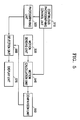
- FIG. 5 is a block diagram of an apparatus for displaying an image based on amounts of camera motion corresponding to images continuously photographed according to an embodiment of the present invention.
- the apparatus includes a continuous photographing control unit 510, a photographing unit 520, a motion sensing unit 530, a motion calculation unit 540, a comparison unit 550, a selection unit 560, and a display unit 570.
- the continuous photographing control unit 510 controls the photographing unit 520 to continuously photograph the image a predetermined number of times. Then, the continuous photographing control unit 510 controls the photographing unit 520 to open the shutter and photograph the image.
- the user command may be input through a key panel, voice or motion of the user, etc.
- the motion sensing unit 530 senses the motion of the camera, such as the acceleration, angular velocity, angular acceleration, and impact of the camera, and generates an electrical signal corresponding to the sensed motion of the camera.
- the comparison unit 550 compares the amount of the camera motion for each image calculated by the motion calculation unit 520. Based on the comparison result of the comparison unit 550, the selection unit 560 selects an image having the least amount of camera motion. The selection unit 560 may select a predetermined number of images having the least amount of camera motion, based on the comparison result of the comparison unit 550. The display unit 570 displays the image selected by the selection unit 560.
- the display unit 570 may display the images continuously photographed in order of the amounts of the motion of the camera for the images compared by the comparison unit 550.
- the display unit 570 may display the amounts of the motion of the camera for the images continuously photographed, together with the images, in order of the amounts of the motion of the camera for the images compared by the comparison unit 550, which is within the scope of the present invention.
- FIG. 6 is a flowchart illustrating a method of expressing camera motion according to an embodiment of the present invention.
- the camera motion is sensed and an electrical signal corresponding to the sensed camera motion is generated (operation 610).
- the camera motion may be the acceleration, angular velocity, and angular acceleration of the camera.
- the camera motion with respect to one, two, or three axes of a lens of the camera may be sensed.
- the amount of the camera motion is calculated (operation 620).
- the amount of the camera motion is calculated using at least one of a standard deviation, variance, mean, maximum value, minimum value, and norm of a signal indicating the sensed camera motion with respect to at least one of the first through third axes for a predetermined period of time.
- the signal indicating the sensed camera motion is differentiated or integrated at least once, and the amount of the camera motion is calculated using at least one of the standard deviation, variance, mean, maximum value, minimum value, and norm of the differentiated or integrated signal.
- FIGS. 7A - 7C illustrate the calculated amount of the camera motion according to an embodiment of the present invention.
- FIG. 7A shows the calculated amount of the camera motion illustrated using a bar according to an embodiment of the present invention.
- a portion C of the bar indicates a motion amount corresponding to the first threshold value required to photograph a clear image
- a portion D of the bar indicates the amount of camera motion in the present embodiment.
- FIG. 7B illustrates the calculated amount of the camera motion expressed using a bar and a number according to an embodiment of the present invention.
- FIG. 7C illustrates an amount E of camera motion using a circular graph according to an embodiment of the present invention.
- the shutter is opened and an image is photographed (operation 640). Specifically, when the amount of the camera motion does not exceed the first threshold value, the shutter is opened for a predetermined period of time and an image can be photographed.
- the first threshold value is automatically set based on at least one of a shutter speed, focal distance, angle of view, motion frequency, amount of motion, and threshold value of the number of blurred pixels.
- FIG. 8 is a flowchart illustrating a method of expressing camera motion according to another embodiment of the present invention.
- the camera motion is sensed (operation 810) and the amount of the camera motion is calculated based on the sensed camera motion (operation 820).
- the calculated amount of the camera motion is displayed on a display unit (not shown) (operation 830). If the amount of the camera motion displayed on the display unit does not exceed a first threshold value, images are continuously photographed a predetermined number of times (operation 840).
- the amounts of the camera motion for the images continuously photographed are compared (operation 850), and an image having the least amount of camera motion is selected based on the comparison result (operation 860). The selected image is then displayed (operation 870).
- the images continuously photographed may be displayed in order of the amounts of the camera motion based on the comparison result.
- the amounts of the camera motion for the images continuously photographed may be displayed together with the images photographed in order of the amounts of the camera motion based on the comparison result.
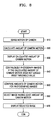
- FIG. 9 is a flowchart illustrating a method of displaying an image based on the amounts of camera motion corresponding to images continuously photographed according to an embodiment of the present invention.
- operation 910 when a user command for photographing an image is input, the image is continuously photographed a predetermined number of times (operation 910).
- the camera motion such as the acceleration, angular velocity, angular acceleration, and impact of the camera, is sensed and the amount of the camera motion is calculated based on the sensed camera motion (operation 920).
- the calculated amounts of the camera motion corresponding to the images are compared (operation 930), and an image having the least amount of camera motion is selected based on the comparison result (operation 940).
- a predetermined number of images having the least amount of camera motion may be selected based on the comparison result.
- the selected image is displayed (operation 950).
- the images continuously photographed may be displayed in order of the amounts of the camera motion corresponding to the images based on the comparison result.
- the amounts of the camera motion corresponding to the images continuously photographed may be displayed together with the images photographed in order of the amounts of the camera motion based on the comparison result.
- an amount of the camera motion is expressed so that a user can recognize the amount of the camera motion.
- a shutter is opened and an image can be photographed.
- the amount of the camera motion is expressed so that the user can estimate the time when the amount of the camera motion does not exceed the first threshold value.
- Embodiments of the present invention can also be implemented as computer-readable code on a computer-readable recording medium.
- the computer-readable recording medium is any data storage device that can store data which can be thereafter read by a computer system.
- Examples of the computer-readable recording medium include magnetic storage mediums (such as read-only memory (ROM), floppy disks, and hard disks), optical reading mediums (such as CD-ROMs and DVDs), and carrier waves (such as data transmission through the Internet).
Landscapes
- Engineering & Computer Science (AREA)
- Signal Processing (AREA)
- Multimedia (AREA)
- Business, Economics & Management (AREA)
- Physics & Mathematics (AREA)
- Tourism & Hospitality (AREA)
- Theoretical Computer Science (AREA)
- General Physics & Mathematics (AREA)
- Health & Medical Sciences (AREA)
- Marketing (AREA)
- Primary Health Care (AREA)
- Strategic Management (AREA)
- Human Resources & Organizations (AREA)
- General Business, Economics & Management (AREA)
- General Health & Medical Sciences (AREA)
- Economics (AREA)
- Computer Networks & Wireless Communication (AREA)
- Studio Devices (AREA)
- Indication In Cameras, And Counting Of Exposures (AREA)
- Adjustment Of Camera Lenses (AREA)
Applications Claiming Priority (1)
| Application Number | Priority Date | Filing Date | Title |
|---|---|---|---|
| KR1020050010858A KR100718124B1 (ko) | 2005-02-04 | 2005-02-04 | 카메라의 움직임을 표현하는 방법 및 장치 |
Publications (2)
| Publication Number | Publication Date |
|---|---|
| EP1689170A2 true EP1689170A2 (de) | 2006-08-09 |
| EP1689170A3 EP1689170A3 (de) | 2009-04-22 |
Family
ID=36371003
Family Applications (1)
| Application Number | Title | Priority Date | Filing Date |
|---|---|---|---|
| EP06250558A Ceased EP1689170A3 (de) | 2005-02-04 | 2006-02-01 | Vorrichtung und Verfahren zum Ausdrücken von Kamerabewegung |
Country Status (5)
| Country | Link |
|---|---|
| US (1) | US7856171B2 (de) |
| EP (1) | EP1689170A3 (de) |
| JP (2) | JP2006215571A (de) |
| KR (1) | KR100718124B1 (de) |
| CN (1) | CN1815297B (de) |
Cited By (2)
| Publication number | Priority date | Publication date | Assignee | Title |
|---|---|---|---|---|
| EP1993280A3 (de) * | 2007-05-17 | 2011-08-10 | FUJIFILM Corporation | Vorrichtung und Verfahren zur Bildaufnahme sowie Computerprogrammprodukt |
| EP2704424A1 (de) * | 2012-08-27 | 2014-03-05 | Samsung Electronics Co., Ltd | Digitale Fotografiervorrichtung, Steuerungsverfahren dafür und computerlesbares Aufzeichnungsmedium |
Families Citing this family (20)
| Publication number | Priority date | Publication date | Assignee | Title |
|---|---|---|---|---|
| JP4484806B2 (ja) * | 2005-11-30 | 2010-06-16 | キヤノン株式会社 | 記録システム、記録方法、ホスト装置、プログラム、及び、コンピュータ可読媒体 |
| US8031775B2 (en) * | 2006-02-03 | 2011-10-04 | Eastman Kodak Company | Analyzing camera captured video for key frames |
| JP4197019B2 (ja) * | 2006-08-02 | 2008-12-17 | ソニー株式会社 | 撮像装置および表情評価装置 |
| KR100835377B1 (ko) * | 2007-02-28 | 2008-06-04 | 삼성전자주식회사 | 카메라 기능을 구비한 휴대 단말기의 연속 촬영 방법 및 장치 |
| JP4600435B2 (ja) | 2007-06-13 | 2010-12-15 | ソニー株式会社 | 画像撮影装置及び画像撮影方法、並びにコンピュータ・プログラム |
| JP4614143B2 (ja) | 2008-01-18 | 2011-01-19 | カシオ計算機株式会社 | 撮像装置及びそのプログラム |
| JP5179398B2 (ja) * | 2009-02-13 | 2013-04-10 | オリンパス株式会社 | 画像処理装置、画像処理方法、画像処理プログラム |
| JP5396483B2 (ja) * | 2009-10-07 | 2014-01-22 | パナソニック株式会社 | 撮影装置、方法、プログラムおよび回路 |
| JP2011135563A (ja) * | 2009-11-30 | 2011-07-07 | Canon Inc | 撮像装置および画像処理方法 |
| CN103365063B (zh) * | 2012-03-31 | 2018-05-22 | 北京三星通信技术研究有限公司 | 三维图像拍摄方法和设备 |
| CN103209292A (zh) * | 2012-09-26 | 2013-07-17 | 顾红波 | 一种获取稳定成像的智能拍照系统和方法 |
| US9232137B2 (en) * | 2013-04-24 | 2016-01-05 | Microsoft Technology Licensing, Llc | Motion blur avoidance |
| CN104427233B (zh) * | 2013-09-02 | 2018-12-14 | 联想(北京)有限公司 | 信息处理方法和信息处理设备 |
| JP6341875B2 (ja) * | 2015-03-18 | 2018-06-13 | 株式会社クボタ | 作業車 |
| US10170157B2 (en) | 2015-06-07 | 2019-01-01 | Apple Inc. | Method and apparatus for finding and using video portions that are relevant to adjacent still images |
| CN105812663B (zh) * | 2016-03-21 | 2019-01-04 | 广东欧珀移动通信有限公司 | 控制方法、控制装置及电子装置 |
| CN105915791B (zh) * | 2016-05-03 | 2019-02-05 | Oppo广东移动通信有限公司 | 电子装置控制方法及装置、电子装置 |
| CN107566713B (zh) * | 2016-06-30 | 2020-05-26 | 深圳市福云明网络科技有限公司 | 提高相机在用户行走中定时拍照质量的拍照方法与装置 |
| CN112333387A (zh) * | 2020-10-30 | 2021-02-05 | 维沃移动通信有限公司 | 拍摄方法、装置、电子设备及存储介质 |
| KR20220141663A (ko) * | 2021-04-13 | 2022-10-20 | 삼성전자주식회사 | 영상을 처리하는 방법 및 이를 수행하는 전자 장치 |
Citations (4)
| Publication number | Priority date | Publication date | Assignee | Title |
|---|---|---|---|---|
| US5576788A (en) * | 1993-04-21 | 1996-11-19 | Olympus Optical Co., Ltd. | Camera shake amount display apparatus for camera |
| US20020051634A1 (en) | 2000-11-02 | 2002-05-02 | Tatsuya Sato | Camera having a blur notifying function |
| US20030193610A1 (en) | 1998-08-21 | 2003-10-16 | Hirotake Nozaki | Electronic camera |
| US20040119875A1 (en) | 2002-09-20 | 2004-06-24 | Ikuo Hayaishi | Selection of image data for output |
Family Cites Families (23)
| Publication number | Priority date | Publication date | Assignee | Title |
|---|---|---|---|---|
| JPS5870217A (ja) * | 1981-10-23 | 1983-04-26 | Fuji Photo Film Co Ltd | カメラブレ検出装置 |
| JPH02126251A (ja) * | 1988-11-07 | 1990-05-15 | Canon Inc | カメラ用手振れ表示装置 |
| JP2870772B2 (ja) | 1988-12-26 | 1999-03-17 | カシオ計算機株式会社 | 電子スチルカメラ |
| JPH03243070A (ja) * | 1990-02-21 | 1991-10-30 | Konica Corp | カメラ |
| JP3144037B2 (ja) * | 1992-04-09 | 2001-03-07 | 株式会社ニコン | 手振れ表示装置 |
| JPH0682870A (ja) * | 1992-09-04 | 1994-03-25 | Nikon Corp | 手ブレ警告装置 |
| KR0129780B1 (ko) * | 1992-12-07 | 1998-04-08 | 이대원 | 줌 카메라의 손떨림 감소장치 및 그 실현방법 |
| JPH08304866A (ja) | 1995-05-09 | 1996-11-22 | Nikon Corp | ボケ警告カメラ |
| US5835798A (en) * | 1995-05-23 | 1998-11-10 | Nikon Corporation | Camera having motion compensation device which controls a centering operation of a vibration reduction lens |
| JPH09152642A (ja) * | 1995-11-29 | 1997-06-10 | Olympus Optical Co Ltd | カメラのぶれ警告装置 |
| JP4123586B2 (ja) * | 1997-08-26 | 2008-07-23 | 株式会社ニコン | 電子カメラ |
| JP2000235205A (ja) | 1999-02-16 | 2000-08-29 | Canon Inc | 振れ状態報知装置、光学機器及びカメラ |
| JP2001066657A (ja) * | 1999-08-27 | 2001-03-16 | Olympus Optical Co Ltd | ブレ軽減機能付きカメラ |
| JP2001290187A (ja) * | 2000-04-10 | 2001-10-19 | Olympus Optical Co Ltd | カメラ |
| JP2002094839A (ja) | 2000-09-20 | 2002-03-29 | Matsushita Electric Ind Co Ltd | 電子スチルカメラ |
| JP3521867B2 (ja) * | 2000-10-30 | 2004-04-26 | 株式会社ニコン | 手振れ表示装置 |
| JP2002139762A (ja) * | 2000-11-02 | 2002-05-17 | Olympus Optical Co Ltd | ぶれレベル表示機能付きカメラ |
| JP2002300435A (ja) * | 2001-04-02 | 2002-10-11 | Canon Inc | 撮像装置 |
| JP4564684B2 (ja) | 2001-06-06 | 2010-10-20 | キヤノン株式会社 | 撮像装置およびその制御方法 |
| JP2003134389A (ja) * | 2001-10-29 | 2003-05-09 | Fuji Photo Film Co Ltd | デジタルスチルカメラ |
| US6922524B2 (en) * | 2002-11-27 | 2005-07-26 | Olympus Corporation | Camera having blur detecting function |
| JP2004264827A (ja) * | 2003-02-10 | 2004-09-24 | Chinon Ind Inc | 焦点距離検出方法及び合焦装置 |
| JP2004004925A (ja) | 2003-07-18 | 2004-01-08 | Nikon Corp | 手振れ表示装置 |
-
2005
- 2005-02-04 KR KR1020050010858A patent/KR100718124B1/ko not_active Expired - Lifetime
-
2006
- 2006-02-01 EP EP06250558A patent/EP1689170A3/de not_active Ceased
- 2006-02-03 US US11/346,274 patent/US7856171B2/en not_active Expired - Fee Related
- 2006-02-05 CN CN2006100033072A patent/CN1815297B/zh not_active Expired - Fee Related
- 2006-02-06 JP JP2006028327A patent/JP2006215571A/ja active Pending
-
2010
- 2010-11-08 JP JP2010249952A patent/JP5351128B2/ja not_active Expired - Fee Related
Patent Citations (5)
| Publication number | Priority date | Publication date | Assignee | Title |
|---|---|---|---|---|
| US5576788A (en) * | 1993-04-21 | 1996-11-19 | Olympus Optical Co., Ltd. | Camera shake amount display apparatus for camera |
| US20030193610A1 (en) | 1998-08-21 | 2003-10-16 | Hirotake Nozaki | Electronic camera |
| US20020051634A1 (en) | 2000-11-02 | 2002-05-02 | Tatsuya Sato | Camera having a blur notifying function |
| JP2002139761A (ja) * | 2000-11-02 | 2002-05-17 | Olympus Optical Co Ltd | ぶれ告知機能を有するカメラ |
| US20040119875A1 (en) | 2002-09-20 | 2004-06-24 | Ikuo Hayaishi | Selection of image data for output |
Cited By (3)
| Publication number | Priority date | Publication date | Assignee | Title |
|---|---|---|---|---|
| EP1993280A3 (de) * | 2007-05-17 | 2011-08-10 | FUJIFILM Corporation | Vorrichtung und Verfahren zur Bildaufnahme sowie Computerprogrammprodukt |
| EP2704424A1 (de) * | 2012-08-27 | 2014-03-05 | Samsung Electronics Co., Ltd | Digitale Fotografiervorrichtung, Steuerungsverfahren dafür und computerlesbares Aufzeichnungsmedium |
| KR20140027816A (ko) * | 2012-08-27 | 2014-03-07 | 삼성전자주식회사 | 촬영 장치, 그 제어 방법, 및 컴퓨터 판독가능 기록매체 |
Also Published As
| Publication number | Publication date |
|---|---|
| KR20060090029A (ko) | 2006-08-10 |
| KR100718124B1 (ko) | 2007-05-15 |
| JP2006215571A (ja) | 2006-08-17 |
| EP1689170A3 (de) | 2009-04-22 |
| JP5351128B2 (ja) | 2013-11-27 |
| US7856171B2 (en) | 2010-12-21 |
| US20060177207A1 (en) | 2006-08-10 |
| CN1815297B (zh) | 2010-05-12 |
| CN1815297A (zh) | 2006-08-09 |
| JP2011083003A (ja) | 2011-04-21 |
Similar Documents
| Publication | Publication Date | Title |
|---|---|---|
| US7856171B2 (en) | Method and apparatus for expressing amount of camera motion | |
| JP5771913B2 (ja) | 焦点調節装置、およびカメラ | |
| US8068639B2 (en) | Image pickup apparatus, control method therefor, and computer program for detecting image blur according to movement speed and change in size of face area | |
| US6970646B2 (en) | Focus control apparatus, image sensor, program and storage medium | |
| KR101063678B1 (ko) | 촬상 장치 및 촬상 방법 | |
| EP1564988A2 (de) | Bildaufnahmevorrichtung, Fokusierverfahren, Fokusiersteuerverfahren und Aufzeichnungsmedium zum Speichern eines Programms zur Durchführung eines solchen Verfahrens | |
| KR20080027443A (ko) | 촬상장치 및 촬상장치 제어방법과, 컴퓨터 프로그램 | |
| US6388707B1 (en) | Image pickup apparatus having means for appointing an arbitrary position on the display frame and performing a predetermined signal process thereon | |
| CN101221341A (zh) | 景深构图设定方法 | |
| US20190304122A1 (en) | Image processing device, image processing method, recording medium storing image processing program and image pickup apparatus | |
| US20010038748A1 (en) | Image recording/reproducing system, image recording apparatus, and image reproducing apparatus | |
| JP2008009340A (ja) | オートフォーカス装置、撮像装置及びオートフォーカス方法 | |
| EP2136234B1 (de) | Mikroskop-Abbildungssystem, Speichermedium und Verfahren zur Belichtungseinstellung | |
| US6278489B1 (en) | Image pickup apparatus for changing a position of a detection area | |
| JP6070778B2 (ja) | 焦点調節装置、およびカメラ | |
| JP2977979B2 (ja) | 自動焦点調節装置 | |
| US7519285B2 (en) | Imaging apparatus, imaging method, imaging program, and storage medium | |
| US11265454B2 (en) | Control apparatus, image pickup apparatus, control method and memory medium | |
| JP2007133301A (ja) | オートフォーカスカメラ | |
| JP3265615B2 (ja) | カメラの流し撮り装置 | |
| JP2925172B2 (ja) | 自動追尾装置 | |
| JP4443990B2 (ja) | 電子機器 | |
| JP4033169B2 (ja) | 撮像装置及びそのピント表示方法 | |
| KR100982425B1 (ko) | 카메라의 움직임을 표현하는 방법 및 장치 | |
| JP2014068280A (ja) | 撮像装置 |
Legal Events
| Date | Code | Title | Description |
|---|---|---|---|
| PUAI | Public reference made under article 153(3) epc to a published international application that has entered the european phase |
Free format text: ORIGINAL CODE: 0009012 |
|
| 17P | Request for examination filed |
Effective date: 20060215 |
|
| AK | Designated contracting states |
Kind code of ref document: A2 Designated state(s): AT BE BG CH CY CZ DE DK EE ES FI FR GB GR HU IE IS IT LI LT LU LV MC NL PL PT RO SE SI SK TR |
|
| AX | Request for extension of the european patent |
Extension state: AL BA HR MK YU |
|
| PUAL | Search report despatched |
Free format text: ORIGINAL CODE: 0009013 |
|
| AK | Designated contracting states |
Kind code of ref document: A3 Designated state(s): AT BE BG CH CY CZ DE DK EE ES FI FR GB GR HU IE IS IT LI LT LU LV MC NL PL PT RO SE SI SK TR |
|
| AX | Request for extension of the european patent |
Extension state: AL BA HR MK YU |
|
| 17Q | First examination report despatched |
Effective date: 20091201 |
|
| AKX | Designation fees paid |
Designated state(s): DE FR GB |
|
| RAP1 | Party data changed (applicant data changed or rights of an application transferred) |
Owner name: SAMSUNG ELECTRONICS CO., LTD. |
|
| STAA | Information on the status of an ep patent application or granted ep patent |
Free format text: STATUS: THE APPLICATION HAS BEEN REFUSED |
|
| 18R | Application refused |
Effective date: 20160729 |