EP1704870A1 - Utilisation des composés de fer comme agent sensibilisateur - Google Patents
Utilisation des composés de fer comme agent sensibilisateur Download PDFInfo
- Publication number
- EP1704870A1 EP1704870A1 EP06001402A EP06001402A EP1704870A1 EP 1704870 A1 EP1704870 A1 EP 1704870A1 EP 06001402 A EP06001402 A EP 06001402A EP 06001402 A EP06001402 A EP 06001402A EP 1704870 A1 EP1704870 A1 EP 1704870A1
- Authority
- EP
- European Patent Office
- Prior art keywords
- iron
- porphyrin
- radiosensitizer
- compound
- complex
- Prior art date
- Legal status (The legal status is an assumption and is not a legal conclusion. Google has not performed a legal analysis and makes no representation as to the accuracy of the status listed.)
- Withdrawn
Links
- UBMBCDFRVPGSSQ-UHFFFAOYSA-N CC1(CCCCC1)C(C)=O Chemical compound CC1(CCCCC1)C(C)=O UBMBCDFRVPGSSQ-UHFFFAOYSA-N 0.000 description 1
- WUYVKOSYXDNDOW-UHFFFAOYSA-N CC1(CCCCC1)[NH+](C)[O-] Chemical compound CC1(CCCCC1)[NH+](C)[O-] WUYVKOSYXDNDOW-UHFFFAOYSA-N 0.000 description 1
- 0 CC1I(C)C(C)(C)*(CCCCCCCO)C=C1 Chemical compound CC1I(C)C(C)(C)*(CCCCCCCO)C=C1 0.000 description 1
Images


Classifications
-
- A—HUMAN NECESSITIES
- A61—MEDICAL OR VETERINARY SCIENCE; HYGIENE
- A61K—PREPARATIONS FOR MEDICAL, DENTAL OR TOILETRY PURPOSES
- A61K31/00—Medicinal preparations containing organic active ingredients
- A61K31/33—Heterocyclic compounds
- A61K31/395—Heterocyclic compounds having nitrogen as a ring hetero atom, e.g. guanethidine or rifamycins
- A61K31/40—Heterocyclic compounds having nitrogen as a ring hetero atom, e.g. guanethidine or rifamycins having five-membered rings with one nitrogen as the only ring hetero atom, e.g. sulpiride, succinimide, tolmetin, buflomedil
- A61K31/409—Heterocyclic compounds having nitrogen as a ring hetero atom, e.g. guanethidine or rifamycins having five-membered rings with one nitrogen as the only ring hetero atom, e.g. sulpiride, succinimide, tolmetin, buflomedil having four such rings, e.g. porphine derivatives, bilirubin, biliverdine
-
- A—HUMAN NECESSITIES
- A61—MEDICAL OR VETERINARY SCIENCE; HYGIENE
- A61K—PREPARATIONS FOR MEDICAL, DENTAL OR TOILETRY PURPOSES
- A61K41/00—Medicinal preparations obtained by treating materials with wave energy or particle radiation ; Therapies using these preparations
- A61K41/0038—Radiosensitizing, i.e. administration of pharmaceutical agents that enhance the effect of radiotherapy
-
- A—HUMAN NECESSITIES
- A61—MEDICAL OR VETERINARY SCIENCE; HYGIENE
- A61P—SPECIFIC THERAPEUTIC ACTIVITY OF CHEMICAL COMPOUNDS OR MEDICINAL PREPARATIONS
- A61P35/00—Antineoplastic agents
Definitions
- the present invention relates to a radiosensitizer for improving a response rate of radiation therapy for malignant tumors.
- radiotherapy achieves a high local control rate in many types of malignant tumors and is now used as an effective therapeutic method.
- an agent to enhance an effect of radiation has come to be used concomitantly for a treatment of a radioresistant tumor.
- the presence of a cell having a resistance to radiation deteriorates a response rate of radiation therapy and causes cancer recurrence.
- Radiotherapy is highly dependent on selection of an agent to synergistically increase a biological effect of radiation, and many reports on developments of radiosensitizers have been made in recent years.
- texaphyrins as a radiosensitizer (Patent Document 1), a radiosensitizer containing a chlorin e6 (Patent Document 2), a radiosensitizer containing a nitro-5-deazaflavin derivative (Patent Document 3), a hypoxic cell radiosensitizer containing 2-nitroimidazole derivative as an active ingredient (Patent Document 4), radiosensitizers containing boronated metaroporphyrins (Patent Document 5) and the like.
- a hypoxic cancer cell which is generated from a cancer cell in which the rate of tumor proliferation becomes higher than that of blood vessel growth, has a resistance to radiation twice to three-times as high as that of a normal pressure oxygen cancer cell, which causes a decrease in a cure rate or recurrence. It is desired to develop a cell radiosensitizer that synergistically increases a biological effect of radiation, has no side effects such as expression of neurotoxicity due to accumulation, and is infinitely safe.
- the inventors of the present invention have made studies on an agent having a strong effect to increase sensitivity to radiation, that is, having a radiosensitizing effect on a cancer cell. As a result, they have surprisingly found out that a heme compound (ferroporphyrin or ferroheme, ferriporphyrin or ferriheme) has a high affinity to a cancer cell and has a radiosensitizing effect. In addition, they have found out that a compound having an iron element in its molecule has a radiosensitizing effect. The inventors of the present invention have made various studies based on these findings and as a result have completed the present invention.
- the present invention relates to:
- the radiosensitizer of the present invention is infinitely safe, has an excellent effect to enhance radiosensitivity of a hypoxic cancer cell that is resistant to radiotherapy, and is useful as a radiosensitizer in radiotherapy for various malignant tumors.
- the radiosensitizer of the present invention is an excellent agent because it has high affinity to an electron and also has high affinity to a cancer cell.
- a radiosensitizer generally enhancesradiosensitivity at cell level but has no anticancer function in itself, so that the agent itself is not referred to as an anticancer agent.
- iron compound to be used as the radiosensitizer of the present invention examples include an inorganic or organic compound having an iron ion (Fe(II) or Fe(III)) in its molecule.
- Examples of the inorganic compound containing an iron ion include iron chloride, iron bromide, iron iodide, iron oxide, iron hydroxide, iron sulfate, iron nitrate, yellow iron oxide, yellow iron sesquioxide, black iron oxide, iron sesquioxide, and a chelate compound of a complex ion (for example, halogeno, cyano, thiocyanate, oxalato, etc.) with an iron ion.
- a complex ion for example, halogeno, cyano, thiocyanate, oxalato, etc.
- Examples of the organic compound having an iron (Fe) ion in its molecule include saccharated ferric oxide, iron citrate, iron acetate, iron gluconate, chondroitin sulfate/iron colloid, cideferron, ferrotrenine, iron fumarate, iron pyrophosphate, a porphyrin-iron complex, and an albumin incorporating porphyrin-iron complex.
- saccharated ferric oxide, chondroitin sulfate/iron colloid, a porphyrin-iron complex, and an albumin incorporating porphyrin-iron complex are preferable.
- An albumin incorporating porphyrin-iron complex is particularly preferable.
- the porphyrin of the porphyrin-iron complex and albumin incorporating porphyrin-iron complex is preferably a non-boronated porphyrin.
- a macrocyclic tetrapyrrole ring which is a basic skeleton of a porphyrin, is represented by the following formula (with numbering).
- Porphyrin is a macrocyclic compound in which four pyrrole rings are alternately linked with four methine groups at the ⁇ -positions or a derivative thereof.
- porphyrin-iron complex examples include a compound having the general formula (1): wherein R 1 represents a 1-(saturated chain-hydrocarbon residue)-1-alicyclic group such as a 1-methyl-l-cyclohexyl group, R 2 represents a substituent, M represents a Fe ion, X - represents ahalogenion, and the number of X - is a number calculated by subtracting 2 from the valence of the Fe ion.
- the compound having the general formula (1) above is preferably a compound having the general formula (2): wherein the symbols in the formula have the same meanings as defined above.
- R 2 represents a group having the general formula (3): wherein R 3 represents a C 1 -C 18 alkyl group, or a group having the general formula (4): wherein R 4 represents a group that does not inhibit coordination of imidazole linked therewith to the central metal iron, and R 5 represents an alkylene group.
- R 4 is preferably hydrogen or a C 1 -C 3 alkyl group
- R 5 is preferably a C 1 -C 10 alkylene group.
- tetraphenylporphyrin-iron complexes having the general formula (1) preferable is a complex in which Fe that is the central metal (M) is in a divalent state and one base is coordinated.
- the complex has the general formula (5) or the general formula (6).
- L represents a base, e.g., a nitrogen axial ligand of an imidazole derivative, and the other symbols have the same meanings as defined above
- porphyrin-iron complex a tetraphenylporphyrin-iron complex having the general formula (7) is particularly preferable.
- porphyrin-iron complexes having the general formula (7) above particularly preferable is a 2-[8-(2-methyl-1-imidazolyl)octanoyloxymethyl]-5,10,15,20-tetrakis ⁇ [ ⁇ , ⁇ , ⁇ , ⁇ -o-(1-methylcyclohexanoylamino)]phenyl ⁇ -porphinatoiron complex having the formula (8).
- porphyrin-iron complexes having the formula (8): wherein M represents an iron ion; and the formula (9): ,known porphyrin derivatives present in animals and plants, for example, etioporphyrin, mesoporphyrin, protoporphyrin, deuteroporphyrin, hematoporphyrin, coproporphyrin, uroporphyrin, tetrabenzoporphyrin, dibenzo[b,1]porphyrin, cyclopenta[at]porphyrin, an iron complex with 3H-benzo[at]porphyrin or the like, a porphyrin-iron complex described in JP 2004-277329A , a porphyrin-iron complex described in JP 2004-10495A , and a porphyrin-iron complex described in JP 06-271577A .
- the porphyrin-iron complex albumin inclusion compound that is, an inclusion compound of the above-described porphyrin-iron complex with albumin is made of a porphyrin-iron complex embedded/fixed/included in an internal hydrophobic region formed by albumin.
- the number of the porphyrin-iron complex (es) to be linked with one mol of albumin is generally about 1 to 8.
- the number of the porphyrin-iron complex (es) included in/linked with one mol of albumin may be determined by creating a Scatchard plot (see C. J. Halfman, T. Nishida, Biochemistry vol. 11, pp.3493 (1972 )) or the like.
- the porphyrin-iron complex to be used in the present invention can be easily produced by a known method or a method known per se, for example, production methods described in JP 06-271577A , JP 2004-277329A , JP 2004-10495A , or the like.
- the tetraphenylporphyrin-iron complex having the general formula (1) can be produced in a manner similar to a production method of a 2-[8-(2-methyl-l-imidazolyl)-octanoyloxymethyl]-5,10,15,20-tetrakis ⁇ [ ⁇ , ⁇ , ⁇ , ⁇ -o-(1-methyl-cyclohexanoylamino)]phenyl ⁇ porphinatoiron complex having the formula (8) ( T. Komatsu et al., Bioconjugate Chemistry vol.13, pp.397-402 (2002) ).
- the inclusion compound of a porphyrin-iron complex with albumin can be produced by a known method ( T. Komotsu et al., Bioconjugate Chemistry vol.13, pp.397-402 (2002) ) or a method known per se. Moreover, the inclusion compound can be produced by, for example, the following method.
- a porphyrin-iron complex is dissolved in a solvent, (e.g., ethanol), and an aqueous solution (as a solvent, e.g., water, phosphate buffer (pH 5 to 9), physiological saline, Krebs-Ringer's solution and so on) of albumin, for example, human serum albumin, is added thereto, followed by mild shaking.
- a solvent e.g., water, phosphate buffer (pH 5 to 9), physiological saline, Krebs-Ringer's solution and so on
- albumin for example, human serum albumin
- a solvent e.g., water, phosphate buffer (pH 5 to 9), physiological saline, Krebs-Ringer's solution and so on is added again to the resultant, followed by concentration by ultrafiltration.
- concentration by ultrafiltration The process of adding a solvent, followed by concentration by ultrafiltration is repeated until the ethanol concentration in the dispersion liquid is not more than 100 ppm, to thereby yield an albumin incorporating porphyrin-iron complex.
- the dispersion liquid causes no precipitation, aggregation and so on, even after preservation for several months at 4 to 35°C and is very stable.
- the central iron can be reduced from trivalent to divalent by a conventional method such as by addition of a reducing agent (e.g., an aqueous solution of sodium dithionite, ascorbic acid and so on).
- a reducing agent e.g., an aqueous solution of sodium dithionite, ascorbic acid and so on.
- the reduction reaction can be performed not only by addition of a reducing agent but also by using palladium carbon/hydrogen gas.
- the central iron can be reduced by: dissolving a porphyrin-iron (III) complex in dry dichloromethane, benzene, toluene, or the like; adding a small amount of palladium carbon: and then thoroughly blowing hydrogen gas therethrough at room temperature. After the reduction reaction, palladium carbon is separated and removed by filtration, and the thus-obtained filtrate is dried under vacuum to be subjected to the further reactions.
- the above-described reduction is preferably performed before an inclusion reaction of albumin.
- the albumin to be used in the present invention may be human serum albumin, recombinant human serum albumin, bovine serum albumin, or the like, and its origin is not limited.
- human serum albumin or human serum albumin produced by a gene recombination technique hereinafter, referred to as recombinant human serum albumin
- recombinant human serum albumin is preferable and, particularly, recombinant human serum albumin is more preferable.
- a porphyrin-iron complex-recombinant human serum albumin inclusion compound which is formed by inclusion of a substituted porphyrin-iron complex in the recombinant human serum albumin, may be provided as a total synthesis system, so that it is relatively easily produced on an industrial scale.
- DNA of a cancer cell is damaged not only by radiation directly but also by generation of reactive oxygen species such as hydroxy radicals.
- Iron catalyzes a Fenton reaction to generate hydroxy radicals, so that the catalytic effect provides an excellent radiosensitizing effect.
- the iron compound to be used in a preparation of the present invention may be formed into various dosage forms by a general method, such as an injection, suppository, tablet, powder, granule, capsule, pill, ointment, liquid, patch, cataplasm, and aerosol.
- a general method such as an injection, suppository, tablet, powder, granule, capsule, pill, ointment, liquid, patch, cataplasm, and aerosol.
- an appropriate solvent and, if necessary, a pH regulator,buffer,stabilizer,suspension,solubilizer,carrier, or the like are added to prepare an injection by the conventional method.
- Examples of the stabilizer to be used include sodium sulfite and sodiummetasulfite.
- Examples of the suspension to be used include methylcellulose, polysorbate 80, and gum arabic.
- Examples of the solubilizer include polyoxyethylene hardened castor oil, nicotinamide, and polyoxyethylene sorbitan monolaurate.
- An injection can be produced by, for example: preliminarily dissolving, dispersing, or emulsifying an iron compound in an aqueous carrier such as saline for injection; or forming an iron compound into powder for injection and dissolving, dispersing, or emulsifying the powder before use.
- the compound may be used after being dispersed in a physiologically acceptable aqueous medium, for example, saline, such as phosphate buffered saline.
- a physiologically acceptable aqueous medium for example, saline, such as phosphate buffered saline.
- Examples of an administration method for an injection include intravenous administration, intra-arterial administration, intraportal administration, intramuscular administration, intraperitoneal administration, subcutaneous administration, and direct intralesional administration.
- a solid preparation such as a tablet, powder, granule, capsule, pill, or suppository, and a liquid preparation such as syrup can be produced by adding a filler, binder, disintegrator, lubricant, colorant, seasoning, flavor, extender, or coating agent to an iron compound according to a conventional method.
- a filler, binder, disintegrator, lubricant, colorant, seasoning, flavor, extender, or coating agent to an iron compound according to a conventional method.
- the compound may be formulated into the tablet, powder, granule, capsule, pill or syrup according to a conventional method, and may be administered orally.
- the ointment, liquid, patch, cataplasm, or aerosol can be produced from an iron compound and an appropriate carrier by a conventional method and may be directly applied as an external preparation to a lesion site.
- the radiosensitizers of the present invention may be used singly or in a combination of two or more.
- Radiosensitizers of the present invention may be in a kit combined with chemotherapeutic agents.
- chemotherapeutic preparations and radiosensitizers contained in the kit may be for parenteral administration, or one of them may be for parenteral administration, and the other may be for oral administration, or both may be for oral administration.
- carcinostatic(anticancer)agents which are generally used for cancer treatment include, for example, antitumor allkylating agents such as cyclophosphamide, ifosfamide and melphalan; antitumor antimetabollites such as methotrexate, gemcitabine and 5-fluorouracil(5-FU); antitumor antibiotics such as actinomycin D (dactinomycin), doxorubicin(adriamycin), daunorubicin (daunomycin) and epirubicin; plant-derived antitumor agents such as vincristine, etoposide, docetaxel and paclitaxel; camptothecin derivatives such as camptothecin; platinum-complex compounds such ascisplatin,carboplatin and oxaliplatin;antitumor tyrosine kinase inhibitors such as gefitinib; and biological response modifiers such as krestin and
- anti-tumor agents may be administered according to known methods.
- the anti-tumor agents such as gemcitabine, carboplatin and paclitaxel show radiosensitizing effect and therefore, they can be used in a less dosage of the radiosensitizer of the present invention.
- the dose of the radiosensitizer of the present invention varies depending on the age, weight, and sex of a patient, the administration method, and symptoms. In general, it is appropriate that the radiosensitizer is parenterally administered in an amount of 1 to 150 mg or orally administered in an amount of 10 to 250 mg as iron per day per adult. A patient may receive radiation generally within twelve hours, and desirably within one hour after the administration.
- the LD 50 value in the case of single intravenous administration of chondroitin sulfate/iron colloid for intravenous injection to mice is 250 mg/kg or more as iron ( Fujimoto et al., Yakugaku Zasshi vol.87, pp.677-681 (1967) ), and the safety margin is wide.
- an albumin incorporating porphyrin-iron complex, saccharated ferric oxide and chondroitin sulfate/iron colloid are intraarterialy administered at a concentration of 1.7 mg/kg as iron to study a radiosensitizing effect.
- rHSA-FecycP an albumin incorporating porphyrin-iron complex
- the rHSA-FecycP was oxygenated by light-irradiation for 20 minutes using a 500W halogen lump under aeration with oxygen gas (100%), and the resultant was used in Example 1.
- Tumor cells (Ascites hepatoma LY80) that had been subcultured in the abdominal cavity of a Donryu rat were implanted subfascially at the right thigh of the same strain rat in an amount of about 1.0 x 10 6 cells.
- rHSA solution 15% (w/v%, hereinafter abbreviated as %) rHSA solution, 2 rHSA-FecycP solution, a solution of saccharated ferric oxide, or 3a solution of chondroitin sulfate/iron colloid was administered to the common iliac artery of the rats at a concentration of 10 mL/kg (6 rats per group for 1 to 3, and 3 rats per group for4).
- the solution of rHSA-FecycP, the solution of saccharated ferric oxide, and the solution of chondroitin sulfate/iron colloid each were prepared to have a concentration of 3 mM as iron.
- 20 Gy of X-rays were immediately irradiated to each tumor-implanted site.
- a non-treatment group and a rHSA-FecycP administration group both to which X-rays were not irradiated were provided (6 rats per group) .
- the day of the tumor implantation was defined as day 0, and the life and death were observed up to 60 days after the implantation.
- the survival time of each group is shown by a box-and-whisker plot, and the logrank test (significance level of 5%) was performed as a significance test.
- Tumor weight ( g ) major axis ( mm ) ⁇ ⁇ minor axis ( mm ) > 2 ⁇ 2 ⁇ 1 , 000
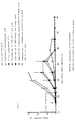
- the tumor weight of each group is shown as mean ⁇ standard deviation, and the Tukey-Kramer multiple comparison test (significance level of 5%) was performed as a significance test. The obtained results are shown in Fig. 2.
- the median of the survival time of the non-treatment group was found to be 21.5 days. Compared to the non-treatment group, the survival time of the rHSA-FecycP administration group (no irradiation) was not extended, but the survival times of all the groups to which X-rays had been irradiated were significantly extended. Meanwhile, compared to the irradiation group, the survival time of the rHSA administration + irradiation group was not extended, but the survival times of the rHSA-FecycP administration + irradiation group, the saccharated ferric oxide administration + irradiation group, and chondroitin sulfate/iron colloid administration + irradiation group were further significantly extended. Note that in the rHSA-FecycP administration + irradiation group and the saccharated ferric oxide administration + irradiation group, one case and two cases survived, respectively, even 60 days after the implantation.
- the tumor weight of the non-treatment group increased with each passing day, while the weight of the rHSA-FecycP administration group (no irradiation) was also changed in the same way as the non-treatment group. Meanwhile, the weights of the groups to which X-rays had been irradiated were significantly decreased compared to the non-treatment group, respectively.
- the rHSA-FecycP was oxygenated by light-irradiation for 20 minutes using a 500W halogen lamp under aeration with oxygen gas (100%) and then incubated at 37°C for about 5 days, followed by autoxidation, to thereby yield met-oxidized (Fe 2+ ⁇ Fe 3+ , see Emil L. Smith et al., Principles of Biochemistry-Mammalian Biochemistry, seventh edition pp.668-689, Hirokawa Publishing Co., Tokyo (1990 )) rHSA-FecycP (hereinafter abbreviated as Met-rHSA-FecycP). Note that the met-oxidation of the rHSA-FecycP was confirmed by reduction of the absorbance at ⁇ max 539.0 nm.
- Tumor cells (Ascites hepatoma LY80) that had been subcultured in the abdominal cavity of a Donryu rat were implanted subfascially at the right thigh of the same strain rat in an amount of about 1.0 ⁇ 10 6 cells.
- 5% rHSA or Met-rHSA-FecycP was administered to the common iliac artery of the rats at a concentration of 10 mL/kg (6 rats per group) .
- the Met-rHSA-FecycP was prepared to have a concentration of 3 mM as an iron.
- 20 Gy of X-rays were immediately irradiated to each tumor-implanted site. Meanwhile, for comparison, a non-treatment group and a Met-rHSA-FecycP group both to which X-rays were not irradiated were provided (6 rats per group).
- the day of the tumor implantation was defined as day 0, and the major axes and minor axes of tumors were measured on 6, 7, 9, 12, 15, 20, 25, 32, 39, 46, 53, and 60 days after the tumor implantation and the tumor weights were calculated according to the following equation.
- Tumor weight ( g ) major axis ( mm ) ⁇ ⁇ minor axis ( mm ) > 2 ⁇ 2 ⁇ 1 , 000
- the tumor weight of each group is shown as mean ⁇ standard deviation, and the Tukey-Kramer multiple comparison test (significance level of 5%) was performed as a significance test. The obtained results are shown in Fig. 3.
- the tumor weight of the non-treatment group increased with each passing day, while the tumor weight of the Met-rHSA-FecycP administration group (no irradiation) was also changed in the same way as the non-treatment group. Meanwhile, the tumor weights of the groups to which X-rays had been irradiated were significantly decreased. Compared to the rHSA administration + irradiation group, the tumor weight of the Met-rHSA-FecycP administration + irradiation group was significantly decreased. Note that in the Met-rHSA-FecycP administration + irradiation group, one case survived even 60 days after the implantation. In the case, the tumor disappeared 15 days after the implantation. Therefore, it became clear that the Met-rHSA-FecycP enhances tumor-growth delay effects by irradiation of X-rays to tumor tissues.
- the radiosensitizer of the present invention has a high radiosensitizing effect, low toxicity, and is stable. Thus, the radiosensitizer of the present invention is useful as a radiosensitizer in chemotherapy for cancer.
Landscapes
- Health & Medical Sciences (AREA)
- Life Sciences & Earth Sciences (AREA)
- Chemical & Material Sciences (AREA)
- Veterinary Medicine (AREA)
- Medicinal Chemistry (AREA)
- Animal Behavior & Ethology (AREA)
- General Health & Medical Sciences (AREA)
- Pharmacology & Pharmacy (AREA)
- Public Health (AREA)
- Epidemiology (AREA)
- Gastroenterology & Hepatology (AREA)
- Chemical Kinetics & Catalysis (AREA)
- Organic Chemistry (AREA)
- Nuclear Medicine, Radiotherapy & Molecular Imaging (AREA)
- General Chemical & Material Sciences (AREA)
- Pharmaceuticals Containing Other Organic And Inorganic Compounds (AREA)
Applications Claiming Priority (1)
| Application Number | Priority Date | Filing Date | Title |
|---|---|---|---|
| JP2005089865 | 2005-03-25 |
Publications (1)
| Publication Number | Publication Date |
|---|---|
| EP1704870A1 true EP1704870A1 (fr) | 2006-09-27 |
Family
ID=35871047
Family Applications (1)
| Application Number | Title | Priority Date | Filing Date |
|---|---|---|---|
| EP06001402A Withdrawn EP1704870A1 (fr) | 2005-03-25 | 2006-01-24 | Utilisation des composés de fer comme agent sensibilisateur |
Country Status (2)
| Country | Link |
|---|---|
| US (1) | US20060217291A1 (fr) |
| EP (1) | EP1704870A1 (fr) |
Cited By (2)
| Publication number | Priority date | Publication date | Assignee | Title |
|---|---|---|---|---|
| WO2010121368A1 (fr) * | 2009-04-24 | 2010-10-28 | Socpra - Sciences Santé Et Humaines | Compositions comprenant un radiosensibilisant et un agent anticancéreux et leurs procédés d'utilisation |
| CN105682677A (zh) * | 2013-10-16 | 2016-06-15 | 株式会社Jinis | 使用电磁波用于癌症的热疗法的增敏组合物,以及使用其的癌症疗法 |
Families Citing this family (3)
| Publication number | Priority date | Publication date | Assignee | Title |
|---|---|---|---|---|
| US8536106B2 (en) | 2010-04-14 | 2013-09-17 | Ecolab Usa Inc. | Ferric hydroxycarboxylate as a builder |
| WO2013190411A2 (fr) * | 2012-06-19 | 2013-12-27 | Empire Technology Development Llc | Désoxygénant recyclable et réutilisable |
| WO2015129535A1 (fr) * | 2014-02-25 | 2015-09-03 | 学校法人産業医科大学 | Composition destinée à induire une immunité tumorale |
Citations (14)
| Publication number | Priority date | Publication date | Assignee | Title |
|---|---|---|---|---|
| US4727068A (en) * | 1985-10-23 | 1988-02-23 | Johnson Matthey, Inc. | Radiosensitization by cobalt and Fe(III) complexes |
| JPH05194268A (ja) | 1992-01-20 | 1993-08-03 | Tama Seikagaku Kk | 放射線増感剤 |
| JPH06298739A (ja) | 1993-04-20 | 1994-10-25 | Pola Chem Ind Inc | 低酸素性細胞放射線増感剤 |
| WO1995010307A1 (fr) | 1993-10-12 | 1995-04-20 | Board Of Regents, The University Of Texas System | Sensibilisation aux rayonnements utilisant des texaphyrines |
| US5776925A (en) | 1996-01-25 | 1998-07-07 | Pharmacyclics, Inc. | Methods for cancer chemosensitization |
| JP2000212087A (ja) | 1999-01-20 | 2000-08-02 | Fujimoto Brothers:Kk | ニトロ―5―デアザフラビン誘導体を有効成分とする放射線増感剤。 |
| US6375634B1 (en) | 1997-11-19 | 2002-04-23 | Oncology Innovations, Inc. | Apparatus and method to encapsulate, kill and remove malignancies, including selectively increasing absorption of x-rays and increasing free-radical damage to residual tumors targeted by ionizing and non-ionizing radiation therapy |
| WO2002098417A1 (fr) | 2001-06-06 | 2002-12-12 | Brookhaven Science Associates | Nouvelles metalloporphyrines et leurs utilisations comme radiosensibilisateurs en radiotherapie |
| US20030083494A1 (en) | 2001-06-06 | 2003-05-01 | Michiko Miura | Novel metalloporphyrins and their uses as radiosensitizers for radiation therapy |
| WO2003048168A2 (fr) | 2001-12-06 | 2003-06-12 | Ufc Limited | Derives de trioxane |
| EP1433482A1 (fr) | 2002-12-27 | 2004-06-30 | Nipro Corporation | Préparation aqueuse de colloide de chondroitine sulfate de fer, de requin |
| EP1512399A1 (fr) | 2002-06-03 | 2005-03-09 | Nipro Corporation | Preparation d'infusion d'oxygene de porphyrine permettant d'accroitre la concentration en oxygene dans un tissu tumoral |
| EP1538151A1 (fr) | 2003-08-28 | 2005-06-08 | Nipro Corporation | Support d' oxygène artificiel et son procédé de fabrication |
| EP1604673A1 (fr) | 2003-01-31 | 2005-12-14 | Otsuka Pharmaceutical Factory, Inc. | Agent auxiliaire destine a etre utilise dans le traitement de cancer par chauffage dielectrique et procede de traitement du cancer |
Family Cites Families (3)
| Publication number | Priority date | Publication date | Assignee | Title |
|---|---|---|---|---|
| CA2195630A1 (fr) * | 1994-07-22 | 1996-02-08 | Joseph Bonaventura | Complexes de serumalbumine humaine-porphyrine pouvant fixer l'oxygene et leurs utilisations therapeutiques |
| JP3428225B2 (ja) * | 1995-04-28 | 2003-07-22 | 三菱ウェルファーマ株式会社 | ポルフィリン金属錯体−アルブミン包接化合物及び酸素運搬体 |
| JP3945428B2 (ja) * | 2003-03-14 | 2007-07-18 | ニプロ株式会社 | ポルフィリン化合物、そのアルブミン包接化合物および人工酸素運搬体 |
-
2006
- 2006-01-24 EP EP06001402A patent/EP1704870A1/fr not_active Withdrawn
- 2006-01-24 US US11/337,557 patent/US20060217291A1/en not_active Abandoned
Patent Citations (14)
| Publication number | Priority date | Publication date | Assignee | Title |
|---|---|---|---|---|
| US4727068A (en) * | 1985-10-23 | 1988-02-23 | Johnson Matthey, Inc. | Radiosensitization by cobalt and Fe(III) complexes |
| JPH05194268A (ja) | 1992-01-20 | 1993-08-03 | Tama Seikagaku Kk | 放射線増感剤 |
| JPH06298739A (ja) | 1993-04-20 | 1994-10-25 | Pola Chem Ind Inc | 低酸素性細胞放射線増感剤 |
| WO1995010307A1 (fr) | 1993-10-12 | 1995-04-20 | Board Of Regents, The University Of Texas System | Sensibilisation aux rayonnements utilisant des texaphyrines |
| US5776925A (en) | 1996-01-25 | 1998-07-07 | Pharmacyclics, Inc. | Methods for cancer chemosensitization |
| US6375634B1 (en) | 1997-11-19 | 2002-04-23 | Oncology Innovations, Inc. | Apparatus and method to encapsulate, kill and remove malignancies, including selectively increasing absorption of x-rays and increasing free-radical damage to residual tumors targeted by ionizing and non-ionizing radiation therapy |
| JP2000212087A (ja) | 1999-01-20 | 2000-08-02 | Fujimoto Brothers:Kk | ニトロ―5―デアザフラビン誘導体を有効成分とする放射線増感剤。 |
| WO2002098417A1 (fr) | 2001-06-06 | 2002-12-12 | Brookhaven Science Associates | Nouvelles metalloporphyrines et leurs utilisations comme radiosensibilisateurs en radiotherapie |
| US20030083494A1 (en) | 2001-06-06 | 2003-05-01 | Michiko Miura | Novel metalloporphyrins and their uses as radiosensitizers for radiation therapy |
| WO2003048168A2 (fr) | 2001-12-06 | 2003-06-12 | Ufc Limited | Derives de trioxane |
| EP1512399A1 (fr) | 2002-06-03 | 2005-03-09 | Nipro Corporation | Preparation d'infusion d'oxygene de porphyrine permettant d'accroitre la concentration en oxygene dans un tissu tumoral |
| EP1433482A1 (fr) | 2002-12-27 | 2004-06-30 | Nipro Corporation | Préparation aqueuse de colloide de chondroitine sulfate de fer, de requin |
| EP1604673A1 (fr) | 2003-01-31 | 2005-12-14 | Otsuka Pharmaceutical Factory, Inc. | Agent auxiliaire destine a etre utilise dans le traitement de cancer par chauffage dielectrique et procede de traitement du cancer |
| EP1538151A1 (fr) | 2003-08-28 | 2005-06-08 | Nipro Corporation | Support d' oxygène artificiel et son procédé de fabrication |
Non-Patent Citations (13)
| Title |
|---|
| BRITISH JOURNAL OF CANCER. DEC 1996, vol. 74, no. 11, December 1996 (1996-12-01), pages 1734 - 1742, ISSN: 0007-0920 * |
| DATABASE BIOSIS [online] BIOSCIENCES INFORMATION SERVICE, PHILADELPHIA, PA, US; 1980, DOUPLE E B ET AL: "POTENTIATION OF CELLULAR RADIO SENSITIVITY BY NITROPRUSSIDE AND VITAMIN B-12", XP002370388, Database accession no. PREV198172075102 * |
| DATABASE MEDLINE [online] US NATIONAL LIBRARY OF MEDICINE (NLM), BETHESDA, MD, US; December 1996 (1996-12-01), VEROVSKI V N ET AL: "Intrinsic radiosensitivity of human pancreatic tumour cells and the radiosensitising potency of the nitric oxide donor sodium nitroprusside.", XP002370389, Database accession no. NLM8956786 * |
| DOUPLE ET AL., INTERNATIONAL JOURNAL OF RADIATION ONCOLOGY, BIOLOGY, PHYSICS, vol. 6, 1980, pages 1545 - 1550 |
| FUJIMOTO ET AL., YAKUGAKU ZASSHI, vol. 87, 1967, pages 677 - 681 |
| INTERNATIONAL JOURNAL OF RADIATION ONCOLOGY, BIOLOGY, PHYSICS, vol. 6, no. 11, 1980, pages 1545 - 1550, ISSN: 0360-3016 * |
| JOY A M ET AL: "High efficiency of ferricenium salts as radiosensitizers of V79 cells in vitro and the KHT tumor in vivo.", INTERNATIONAL JOURNAL OF RADIATION ONCOLOGY, BIOLOGY, PHYSICS. APR 1989, vol. 16, no. 4, April 1989 (1989-04-01), pages 1053 - 1056, XP008061010, ISSN: 0360-3016 * |
| JOY ET AL., INTERNATIONAL JOURNAL OF RADIATION ONCOLOGY, BIOLOGY, PHYSICS, vol. 16, 1989, pages 1053 - 1056 |
| K. KOBAYASHI ET AL., THERAPEUTIC APHERESIS, vol. 2, no. 4, 1998, pages 257 - 262 |
| T. KOMATSU ET AL., BIOCONJ UGATE CHEMISTRY, vol. 13, 2002, pages 397 - 402 |
| TEICHER B A ET AL: "Some complexes of cobalt(III) and iron(III) are radiosensitizers of hypoxic EMT6 cells.", RADIATION RESEARCH. JAN 1987, vol. 109, no. 1, January 1987 (1987-01-01), pages 36 - 46, XP008060964, ISSN: 0033-7587 * |
| TEICHER ET AL., RADIATION RESEARCH, vol. 109, 1987, pages 36 - 46 |
| VEROVSKI ET AL., BRITISH JOURNAL OF CANCER, vol. 70, 1996, pages 1734 - 1742 |
Cited By (5)
| Publication number | Priority date | Publication date | Assignee | Title |
|---|---|---|---|---|
| WO2010121368A1 (fr) * | 2009-04-24 | 2010-10-28 | Socpra - Sciences Santé Et Humaines | Compositions comprenant un radiosensibilisant et un agent anticancéreux et leurs procédés d'utilisation |
| US9302003B2 (en) | 2009-04-24 | 2016-04-05 | Socpra—Sciences Santé´Et Humaines | Compositions comprising a radiosensitizer and an anti-cancer agent and methods of uses thereof |
| CN105682677A (zh) * | 2013-10-16 | 2016-06-15 | 株式会社Jinis | 使用电磁波用于癌症的热疗法的增敏组合物,以及使用其的癌症疗法 |
| EP3058949A4 (fr) * | 2013-10-16 | 2017-08-02 | Jinis Co., Ltd. | Composition de sensibilisation utilisant des ondes électromagnétiques pour la thérapie thermique de cancers, et cancérothérapie l'utilisant |
| US11752210B2 (en) | 2013-10-16 | 2023-09-12 | Jinis Co., Ltd. | Sensitizing composition using electromagnetic waves for thermal therapy of cancers, and cancer therapy using same |
Also Published As
| Publication number | Publication date |
|---|---|
| US20060217291A1 (en) | 2006-09-28 |
Similar Documents
| Publication | Publication Date | Title |
|---|---|---|
| Wu et al. | Recent advances in noble metal complex based photodynamic therapy | |
| Xu et al. | Manganese porphyrin-based metal-organic framework for synergistic sonodynamic therapy and ferroptosis in hypoxic tumors | |
| Wu et al. | Recent progress in the augmentation of reactive species with nanoplatforms for cancer therapy | |
| Yu et al. | Recent advances in reprogramming strategy of tumor microenvironment for rejuvenating photosensitizers‐mediated photodynamic therapy | |
| Gonzales et al. | Photoactive metal carbonyl complexes as potential agents for targeted CO delivery | |
| Shaili | Platinum anticancer drugs and photochemotherapeutic agents: recent advances and future developments | |
| EP3247397B1 (fr) | Complexes de métalloglycoprotéines et leur utilisation comme composés chimiothérapeutiques | |
| Gandosio et al. | Recent approaches towards the development of Ru (II) polypyridyl complexes for anticancer photodynamic therapy | |
| EP0786253B1 (fr) | Composition antitumorale contenant de l'acide ascorbique et des complexes metalliques de (na)phthalocyanines | |
| US20120039987A1 (en) | Niosome having metal porphyrin complex embedded therein, process for producing the same and drug with the use thereof | |
| Cannon | Pharmaceutics and drug delivery aspects of heme and porphyrin therapy | |
| CN113521098B (zh) | 铂(Ⅳ)及cRGD修饰的GA/Fe纳米颗粒搭载多柔比星及其靶向治疗肿瘤的方法 | |
| Swavey et al. | Porphyrin and phthalocyanine photosensitizers as PDT agents: a new modality for the treatment of melanoma | |
| Tian et al. | A nuclear permeable Ru (ii)-based photoactivated chemotherapeutic agent towards a series of cancer cells: in vitro and in vivo studies | |
| Kelson et al. | 1, 2, 4-Benzotriazine 1, 4-dioxides. An important class of hypoxic cytotoxins with antitumor activity | |
| He et al. | Platinum-AIEgen coordination complex for imaging-guided annihilation of cisplatin-resistant cancer cells | |
| US20050064388A1 (en) | Methods and compositions for treating atheroma, tumors and other neoplastic tissue | |
| Deng et al. | Current status and prospects of MOFs loaded with H 2 O 2-related substances for ferroptosis therapy | |
| Matlou et al. | Effect of symmetry and metal nanoparticles on the photophysicochemical and photodynamic therapy properties of cinnamic acid zinc phthalocyanine | |
| Bortnevskaya et al. | The ‘click’synthesis of new cytotoxic conjugate based on meso-arylporphyrin and Erlotinib | |
| US20060217291A1 (en) | Radiosensitizer | |
| WO2023155688A1 (fr) | Promédicament anticancéreux à base de pt (iv) oral contenant axialement un ligand d'acide 3-bromopyruvique | |
| JP4972929B2 (ja) | 放射線増感剤 | |
| Vol’pin et al. | pH-dependent organocobalt sources for active radical species: a new type of anticancer agents | |
| CN115925617B (zh) | 一种氘代钌配合物及其制备方法和在光催化抗肿瘤中的应用 |
Legal Events
| Date | Code | Title | Description |
|---|---|---|---|
| PUAI | Public reference made under article 153(3) epc to a published international application that has entered the european phase |
Free format text: ORIGINAL CODE: 0009012 |
|
| AK | Designated contracting states |
Kind code of ref document: A1 Designated state(s): AT BE BG CH CY CZ DE DK EE ES FI FR GB GR HU IE IS IT LI LT LU LV MC NL PL PT RO SE SI SK TR |
|
| AX | Request for extension of the european patent |
Extension state: AL BA HR MK YU |
|
| 17P | Request for examination filed |
Effective date: 20060922 |
|
| 17Q | First examination report despatched |
Effective date: 20061108 |
|
| AKX | Designation fees paid |
Designated state(s): AT BE BG CH CY CZ DE DK EE ES FI FR GB GR HU IE IS IT LI LT LU LV MC NL PL PT RO SE SI SK TR |
|
| GRAP | Despatch of communication of intention to grant a patent |
Free format text: ORIGINAL CODE: EPIDOSNIGR1 |
|
| STAA | Information on the status of an ep patent application or granted ep patent |
Free format text: STATUS: THE APPLICATION IS DEEMED TO BE WITHDRAWN |
|
| 18D | Application deemed to be withdrawn |
Effective date: 20090505 |