EP1710321A2 - Verfahren zur Analyse der DNA-Methylierung mit hoher Durchsatzrate - Google Patents
Verfahren zur Analyse der DNA-Methylierung mit hoher Durchsatzrate Download PDFInfo
- Publication number
- EP1710321A2 EP1710321A2 EP06011777A EP06011777A EP1710321A2 EP 1710321 A2 EP1710321 A2 EP 1710321A2 EP 06011777 A EP06011777 A EP 06011777A EP 06011777 A EP06011777 A EP 06011777A EP 1710321 A2 EP1710321 A2 EP 1710321A2
- Authority
- EP
- European Patent Office
- Prior art keywords
- nucleic acid
- probe
- methylated
- cpg
- amplification
- Prior art date
- Legal status (The legal status is an assumption and is not a legal conclusion. Google has not performed a legal analysis and makes no representation as to the accuracy of the status listed.)
- Granted
Links
Images


Classifications
-
- C—CHEMISTRY; METALLURGY
- C12—BIOCHEMISTRY; BEER; SPIRITS; WINE; VINEGAR; MICROBIOLOGY; ENZYMOLOGY; MUTATION OR GENETIC ENGINEERING
- C12Q—MEASURING OR TESTING PROCESSES INVOLVING ENZYMES, NUCLEIC ACIDS OR MICROORGANISMS; COMPOSITIONS OR TEST PAPERS THEREFOR; PROCESSES OF PREPARING SUCH COMPOSITIONS; CONDITION-RESPONSIVE CONTROL IN MICROBIOLOGICAL OR ENZYMOLOGICAL PROCESSES
- C12Q1/00—Measuring or testing processes involving enzymes, nucleic acids or microorganisms; Compositions therefor; Processes of preparing such compositions
- C12Q1/68—Measuring or testing processes involving enzymes, nucleic acids or microorganisms; Compositions therefor; Processes of preparing such compositions involving nucleic acids
- C12Q1/6844—Nucleic acid amplification reactions
- C12Q1/6858—Allele-specific amplification
Definitions
- the present invention provides an improved high-throughput and quantitative process for determining methylation patterns in genomic DNA samples. Specifically, the inventive process provides for treating genomic DNA samples with sodium bisulfite to create methylation-dependent sequence differences, followed by detection with fluorescence-based quantitative PCR techniques.
- DNA is methylated only at cytosines located 5' to guanosine in the CpG dinucleotide. This modification has important regulatory effects on gene expression predominantly when it involves CpG rich areas (CpG islands) located in the promoter region of a gene sequence. Extensive methylation of CpG islands has been associated with transcriptional inactivation of selected imprinted genes and genes on the inactive X chromosome of females. Aberrant methylation of normally unmethylated CpG islands has been described as a frequent event in immortalized and transformed cells and has been frequently associated with transcriptional inactivation of tumor suppressor genes in human cancers.
- DNA methylases transfer methyl groups from a universal methyl donor, such as Sadenosyl methionine, to specific sites on the DNA.
- a universal methyl donor such as Sadenosyl methionine
- One biological function of DNA methylation in bacteria is protection of the DNA from digestion by cognate restriction enzymes.
- Mammalian cells possess methylases that methylate cytosine residues on DNA that are 5'neighborsof guanine (CpG). This methylation may play a role in gene inactivation, cell differentiation, tumorigenesis, X-chromosome inactivation, and genomic imprinting. CpG islands remain unmethylated in normal cells, except during X-chromosome inactivation and parental specific imprinting where methylation of 5'regulatory regions can lead to transcriptional repression.
- CpG 5'neighborsof guanine
- DNA methylation is also a mechanism for changing the base sequence of DNA without altering its coding function.
- DNA methylation is a heritable, reversible and epigenetic change. Yet, DNA methylation has the potential to alter gene expression, which has profound developmental and genetic consequences.
- the methylation reaction involves flipping a target cytosine out of an intact double helix to allow the transfer of a methyl group from S-adenosyl methionine in a cleft of the enzyme DNA(cystosine-5)-methyltransferase ( Klimasauskas et al., Cell 76: 357-369, 1994 ) to form 5-methylcytosine (5-mCyt).
- This enzymatic conversion is the only epigenetic modification of DNA known to exist in vertebrates and is essential for normal embryonic development ( Bird, Cell 70: 5-8, 1992 ; Laird and Jaenisch, Human Mol. Genet.
- CpG island regions comprise about 1% of vertebrate genomes and also account for about 15% of the total number of CpG dinucleotides ( Bird, Nature 321: 209-213, 1986 ).
- CpG islands are typically between 0.2 to about 1 kb in length and are located upstream of many housekeeping and tissue-specific genes, but may also extend into gene coding regions. Therefore, it is the methylation of cytosine residues within CpG islands in somatic tissues, which is believed to affect gene function by altering transcription ( Cedar, Cell 53: 3-4, 1988 ).
- Methylation of cytosine residues contained within CpG islands of certain genes has been inversely correlated with gene activity. This could lead to decreased gene expression by a variety of mechanisms including, for example, disruption of local chromatin structure, inhibition of transcription factor-DNA binding, or by recruitment of proteins which interact specifically with methylated sequences indirectly preventing transcription factor binding. In other words, there are several theories as to how methylation affects mRNA transcription and gene expression, but the exact mechanism of action is not well understood. Some studies have demonstrated an inverse correlation between methylation of CpG islands and gene expression, however, most CpG islands on autosomal genes remain unmethylated in the germline and methylation of these islands is usually independent of gene expression.
- Tissue-specific genes are usually unmethylated in the receptive target organs but are methylated in the germline and in non-expressing adult tissues.
- CpG islands of constitutively-expressed housekeeping genes are normally unmethylated in the germline and in somatic tissues.
- Abnormal methylation of CpG islands associated with tumor suppressor genes may also cause decreased gene expression. Increased methylation of such regions may lead to progressive reduction of normal gene expression resulting in the selection of a population of cells having a selective growth advantage (i.e., a malignancy).
- the digestion Southern method is a straightforward method but it has inherent disadvantages in that it requires a large amount of high molecular weight DNA (at least or greater than 5pg) and has a limited scope for analysis of CpG sites (as determined by the presence of recognition sites for methylation-sensitive restriction enzymes).
- Another method for analyzing changes in methylation patterns involves a PCR-based process that involves digestion of genomic DNA with methylation-sensitive restriction enzymes prior to PCR amplification ( Singer-Sam et al., Nucl. Acids Res. 18: 687, 1990 ). However, this method has not been shown effective because of a high degree of false positive signals (methylation present) due to inefficient enzyme digestion or over-amplification in a subsequent PCR reaction.
- Genomic sequencing has been simplified for analysis of DNA methylation patterns and 5-methylcytosine distribution by using bisulfite treatment ( Frommer et al., Proc. Natl. Acad. Sci. USA 89: 1827-1831, 1992 ).
- Bisulfite treatment of DNA distinguishes methylated from unmethylated cytosines, but original bisulfite genomic sequencing requires large-scale sequencing of multiple plasmid clones to determine overall methylation patterns, which prevents this technique from being commercially useful for determining methylation patterns in any type of a routine diagnostic assay.
- MSP methylation-specific PCR
- Sadri and Hornsby, Nucl. Acids Res. 24: 5058-5059, 1996 ; and Xiong and Laird, Nucl. Acids Res. 25: 2532-2534, 1997 include methylation-specific PCR (MSP) ( Herman et al. Proc. Natl. Acad. Sci. USA 93: 9821-9826, 1992 ); and restriction enzyme digestion of PCR products amplified from bisulfite-converted DNA. Sadri and Hornsby, Nucl. Acids Res. 24: 5058-5059, 1996 ; and Xiong and Laird, Nucl. Acids Res. 25: 2532-2534, 1997 ).
- MSP methylation-specific PCR
- PCR techniques have been developed for detection of gene mutations ( Kuppuswamy et al., Proc. Natl. Acad. Sci. USA 88: 1143-1147, 1991 ) and quantitation of allelic-specific expression ( Szabo and Mann, Genes Dev. 9: 3097-3108, 1995 ; and Singer-Sam et al., PCR Methods Appl. 1: 160-163, 1992 ).
- Such techniques use internal primers, which anneal to a PCR-generated template and terminate immediately 5'of the single nucleotide to be assayed.
- allelic-specific expression technique has not been tried within the context of assaying for DNA methylation patterns.
- the indirect methods for DNA methylation pattern determinations at specific loci that have been developed rely on techniques that alter the genomic DNA in a methylation dependent manner before the amplification event.
- the first is digestion by a restriction enzyme that is affected in its activity by 5-methylcytosine in a CpG sequence context. The cleavage, or lack of it, can subsequently be revealed by Southern blotting or by PCR.
- the other technique that has received recent widespread use is the treatment of genomic DNA with sodium bisulfite. Sodium bisulfite treatment converts all unmethylated cytosines in the DNA to uracil by deamination, but leaves the methylated cytosine residues intact.
- Subsequent PCR amplification replaces the uracil residues with thymines and the 5 methylcytosine residues with cytosines.
- the resulting sequence difference has been detected using standard DNA sequence detection techniques, primarily PCR
- the PCR primers can amplify the sequence in between the two primers, regardless of the DNA methylation status of that sequence in the original genomic DNA. This results in a pool of different PCR products, all with the same length and differing in their sequence only at the sites of potential DNA methylation at CpGs located in between the two primers.
- the difference between these methods of processing the bisulfite-converted sequence is that in MSP, the methylation information is derived from the occurrence or lack of occurrence of a PCR product, whereas in the other techniques a mix of products is always generated and the mixture is subsequently analyzed to yield quantitative information on the relative occurrence of the different methylation states.
- the present invention provides a method for detecting a methylated CpG island within a genomic sample of DNA comprising:
- the invention provides a method for detecting a methylated CpG-containing nucleic acid comprising:
- the present invention further provides a method for detecting a methylated CpG containing nucleic acid comprising:
- the present invention further provides a methylation detection kit useful for the detection of a methylated CpG-containing nucleic acid comprising a carrier means being compartmentalized to receive in close confinement therein one or more containers comprising:
- the present invention provides a rapid, sensitive, reproducible high-throughput method for detecting methylation patterns in samples of nucleic acid.
- the invention provides for methylation-dependent modification of the nucleic acid, and then uses processes of nucleic acid amplification, detection, or both to distinguish between methylated and unmethylated residues present in the original sample of nucleic acid.
- the invention provides for determining the methylation status of CpG islands within samples of genomic DNA.
- amplification and detection occur simultaneously as measured by fluorescence-based real-time quantitative PCR ("RT-PCR") using specific, dual-labeled TaqMan® oligonucleotide probes.
- RT-PCR fluorescence-based real-time quantitative PCR
- the displaceable probes can be specifically designed to distinguish between methylated and unmethylated CpG sites present in the original, unmodified nucleic acid sample.
- the present invention provides for significant advantages over previous PCR-based and other methods (e.g., Southern analyses) used for determining methylation patterns.
- the present invention is substantially more sensitive than Southern analysis, and facilitates the detection of a low number (percentage) of methylated alleles in very small nucleic acid samples, as well as paraffin-embedded samples.
- genomic DNA analysis is not limited to DNA sequences recognized by methylation-sensitive restriction endonucleases, thus allowing for fine mapping of methylation patterns across broader CpG-rich regions.
- the present invention also eliminates the any false-positive results, due to incomplete digestion by methylation-sensitive restriction enzymes, inherent in previous PCR-based methylation methods.
- the present invention also offers significant advantages over MSP technology. It can be applied as a quantitative process for measuring methylation amounts, and is substantially more rapid.
- MSP technology One important advance over MSP technology is that the gel electrophoresis is not only a time-consuming manual task that limits high throughput capabilities, but the manipulation and opening of the PCR reaction tubes increases the chance of sample misidentification and it greatly increases the chance of contaminating future PCR reactions with trace PCR products.
- the standard method of avoiding PCR contamination by uracil incorporation and the use of Uracil DNA Glycosylase (AmpErase) is incompatible with bisulfite technology, due to the presence of uracil in bisulfite-treated DNA.
- the present invention does not require any post-PCR manipulation or processing. This not only greatly reduces the amount of labor involved in the analysis of bisulfite-treated DNA, but it also provides a means to avoid handling of PCR products that could contaminate future reactions.
- MSP methylation information is derived from the comparison of two separate PCR reactions (the methylated and the unmethylated versions).
- MSP amplification is provided for by means of particular CpG-specific oligonucleotides; that is, by biased primers.
- the DNA sequence covered by such primers contains more than one CpG dinucleotide with the consequence that the sequence amplified will represent only one of multiple potential sequence variants present, depending on the DNA methylation pattern in the original genomic DNA.
- the forward primer is a 24-mer oligonucleotide that covers 3 CpGs
- 23 8 different theoretical sequence permutations could arise in the genomic DNA following bisulfite conversion within this 24-nucleotide sequence. If only a fully methylated and a fully unmethylated reaction is run, then only 2 out of the 8 possible methylation states are analyzed.
- the MSP patent explicitly describes a non-quantitative technique based on the occurrence or nonoccurrence of a PCR product in the fully methylated, versus fully unmethylated reaction, rather than a comparison of the kinetics of the two reactions.
- one embodiment of the present invention provides for the unbiased amplification of all possible methylation states using primers that do not cover any CpG sequences in the original, unmodified DNA sequence.
- quantitative information about DNA methylation patterns can then be distilled from the resulting PCR pool by any technique capable of detecting sequence differences (e.g., by fluorescence-based PCR).
- MSP relies on the occurrence or non-occurrence of a PCR product in the methylated, versus unmethylated reaction to determine the methylation status of a CpG sequence covered by a primer.
- this requires performing agarose or polyacrylamide gel electrophoretic analysis (see US Patent 5,786,146 , FIGs 2A-2E, and 3A-3E).
- determining the methylation status of any CpG sites within a given MSP amplified region would require additional analyses such as: (a) restriction endonuclease analysis either before, or after (e.g., COBRA analysis; Xiong and Laird, Nucleic Acids Res.
- nucleic acid modification and amplification provided that either the unmodified sequence region of interest contains methylation-sensitive sites, or that modification (e.g., bisulfite) results in creating or destroying restriction sites; (b) single nucleotide primer extension reactions (MS-SNuPE; Gonzalo and Jones, Nucleic Acids Res 25: 2529-2531, 1997 ); or (c) DNA sequencing of the amplification products.
- modification e.g., bisulfite
- MS-SNuPE single nucleotide primer extension reactions
- Gonzalo and Jones Nucleic Acids Res 25: 2529-2531, 1997
- DNA sequencing of the amplification products are not only subject to error (incomplete restriction enzyme digestion), but also add substantial time and expense to the process of determining the CpG methylation status of, for example, samples of genomic DNA.
- amplification and detection occur simultaneously as measured by fluorescence-based real-time quantitative PCR using specific, dual-labeled oligonucleotide probes.
- the methylation status at any probe-specific sequence within an amplified region can be determined contemporaneously with amplification, with no requirement for subsequent manipulation or analysis.
- the present invention provides, in fact, a method for the partial direct sequencing of modified CpG sites within a known (previously sequenced) region of genomic DNA.
- a series of CpG-specific TaqMan® probes each corresponding to a particular methylation site in a given amplified DNA region, are constructed.
- This series of probes are then utilized in parallel amplification reactions, using aliquots of a single, modified DNA sample, to simultaneously determine the complete methylation pattern present in the original unmodified sample of genomic DNA. This is accomplished in a fraction of the time and expense required for direct sequencing of the sample of genomic DNA, and are substantially more sensitive.
- one embodiment of the present invention provides for a quantitative assessment of such a methylation pattern.
- the present invention has identified four process techniques and associated diagnostic kits, utilizing a methylation-dependent nucleic acid modifying agent (e. g., bisulfite), to both qualitatively and quantitatively determine CpG methylation status in nucleic acid samples (e.g., genomic DNA samples).
- a methylation-dependent nucleic acid modifying agent e. g., bisulfite
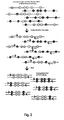
- the four processes are outlined in Figure 3 and labeled at the bottom with the letters A through D.
- methylated-CpG sequence discrimination is designed to occur at the level of amplification, probe hybridization or at both levels.
- applications C and D utilize "biased" primers that distinguish between modified unmethylated and methylated nucleic acid and provide methylated-CpG sequence discrimination at the PCR amplification level.
- Process B uses "unbiased" primers (that do not cover CpG methylation sites), to provide for unbiased amplification of modified nucleic acid, but rather utilize probes that distinguish between modified unmethylated and methylated nucleic acid to provide for quantitative methylated-CpG sequence discrimination at the detection level (e.g., at the fluorescent (or luminescent) probe hybridization level only).
- Process A does not, in itself, provide for methylated-CpG sequence discrimination at either the amplification or detection levels, but supports and validates the other three applications by providing control reactions for input DNA.
- the invention provides a method for qualitatively detecting a methylated CpG-containing nucleic acid, the method including:
- modifies means the conversion of an unmethylated cytosine to another nucleotide by the modifying agent, said conversion distinguishing unmethylated from methylated cytosine in the original nucleic acid sample.
- the agent modifies unmethylated cytosine to uracil.
- the agent used for modifying unmethylated cytosine is sodium bisulfite, however, other equivalent modifying agents that selectively modify unmethylated cytosine, but not methylated cytosine, can be substituted in the method of the invention.
- Sodium-bisulfite readily reacts with the 5, 6-double bond of cytosine, but not with methylated cytosine, to produce a sulfonated cytosine intermediate that undergoes deamination under alkaline conditions to produce uracil (Example 1). Because Taq polymerase recognizes uracil as thymine and 5-methylcytidine (m5C) as cytidine, the sequential combination of sodium bisulfite treatment and PCR amplification results in the ultimate conversion of unmethylated cytosine residues to thymine(C ⁇ U ⁇ T) and methylated cytosine residues ("mC") to cytosine (mC ⁇ mC ⁇ C).
- sodium-bisulfite treatment of genomic DNA creates methylation-dependent sequence differences by converting unmethylated cytosines to uracil, and upon PCR the resultant product contains cytosine only at positions where methylated cytosine occurs in the unmodified nucleic acid.
- Oligonucleotide “primers,” as used herein, means linear, single-stranded, oligomeric deoxyribonucleic or ribonucleic acid molecules capable of sequence-specific hybridization (annealing) with complementary strands of modified or unmodified nucleic acid.
- the specific primers are preferably DNA.
- the primers of the invention embrace oligonucleotides of appropriate sequence and sufficient length so as to provide for specific and efficient initiation of polymerization (primer extension) during the amplification process.
- oligonucleotide primers typically contain 12-30 nucleotides or more, although may contain fewer nucleotides. Preferably, the primers contain from 18-30 nucleotides.
- primers are single-stranded although double-stranded primers may be used if the strands are first separated.
- Primers may be prepared using any suitable method, such as conventional phosphotriester and phosphodiester methods or automated embodiments which are commonly known in the art.
- the specific primers are preferably designed to be substantially complementary to each strand of the genomic locus of interest.
- one primer is complementary to the negative (-) strand of the locus (the "lower” strand of a horizontally situated double-stranded DNA molecule) and the other is complementary to the positive (+) strand ("upper” strand).
- the primers are preferably designed to overlap potential sites of DNA methylation (CpG nucleotides) and specifically distinguish modified unmethylated from methylated DNA. Preferably, this sequence discrimination is based upon the differential annealing temperatures of perfectly matched, versus mismatched oligonucleotides.
- primers are typically designed to overlap from one to several CpG sequences. Preferably, they are designed to overlap from 1 to 5 CpG sequences, and most preferably from 1 to 4 CpG sequences. By contrast, in a quantitative embodiment of the invention, the primers do not overlap any CpG sequences.
- the anti-sense primers contain adenosine residues ("As") in place of guanosine residues ("Gs") in the corresponding (-) strand sequence.
- As adenosine residues
- Gs guanosine residues
- Us and Ts uracil and thymidine residues
- the sense primers are preferably designed to be complementary to anti-sense primer extension products, and contain Ts in place of unmethylated Cs in the corresponding (+) strand sequence. These substituted Ts in the sense primer will be complementary to the As, incorporated in the antisense primer extension products at positions complementary to modified Cs (Us) in the original (+) strand.
- the anti-sense primers will not contain As in place of Gs in the corresponding (-) strand sequence that are complementary to methylated Cs (i.e., mCpG sequences) in the original (+) strand.
- the sense primers in this case will not contain Ts in place of methylated Cs in the corresponding (+) strand mCpG sequences.
- Cs that are not in CpG sequences in regions covered by the fully-methylated primers, and are not methylated will be represented in the fully-methylated primer set as described above for unmethylated primers.
- the amplification process provides for amplifying bisulfite converted nucleic acid by means of two oligonucleotide primers in the presence of a specific oligonucleotide hybridization probe. Both the primers and probe distinguish between modified unmethylated and methylated nucleic acid. Moreover, detecting the "methylated" nucleic acid is based upon amplification-mediated probe fluorescence. In one embodiment, the fluorescence is generated by probe degradation by 5' to 3' exonuclease activity of the polymerase enzyme. In another embodiment, the fluorescence is generated by fluorescence energy transfer effects between two adjacent hybridizing probes (Lightcycler® technology) or between a hybridizing probe and a primer.
- the fluorescence is generated by the primer itself (Sunrise® technology).
- the amplification process is an enzymatic chain reaction that uses the oligonucleotide primers to produce exponential quantities of amplification product, from a target locus, relative to the number of reaction steps involved.
- one member of a primer set is complementary to the (-) strand, while the other is complementary to the (+) strand.
- the primers are chosen to bracket the area of interest to be amplified; that is, the "amplicon.”
- the DNA polymerase is Taq polymerase, as commonly used in the art.
- the product of the chain reaction is a discrete nucleic acid duplex, corresponding to the amplicon sequence, with termini defined by the ends of the specific primers employed.
- the amplification method used is that of PCR ( Mullis et al., Cold Spring Harb. Symp. Quant. Biol. 51: 263-273 ; Gibbs, Anal. Chem. 62: 1202-1214, 1990 ), or more preferably, automated embodiments thereof which are commonly known in the art.
- methylation-dependent sequence differences are detected by methods based on fluorescence-based quantitative PCR (real-time quantitative PCR, Heid et al., Genome Res. 6: 986-994, 1996 ; Gibson et al., Genome Res. 6: 995-1001, 1996 ) (e.g., "TaqMan®,” “Lightcycler®, " and “Sunrise®” technologies).
- fluorescence-based quantitative PCR real-time quantitative PCR, Heid et al., Genome Res. 6: 986-994, 1996 ; Gibson et al., Genome Res. 6: 995-1001, 1996
- sequence discrimination can occur at either or both of two steps: (1) the amplification step, or (2) the fluorescence detection step.
- the amplification and fluorescent steps are the same.
- the amplification process is that of fluorescence-based Real Time Quantitative PCR ( Heid et al., Genome Res. 6: 986-994, 1996 ) employing a dual-labeled fluorescent oligonucleotide probe(TaqMan® PCR, using an ABI Prism 7700 Sequence Detection System, Perkin Elmer Applied Biosystems, Foster City, California).
- the "TaqMan®” PCR reaction uses a pair of amplification primers along with a non-extendible interrogating oligonucleotide, called a TaqMan® probe, that is designed to hybridize to a GC-rich sequence located between the forward and reverse (i.e., sense and antisense) primers.
- the TaqMan® probe further comprises a fluorescent "reporter moiety” and a "quencher moiety” covalently bound to linker moieties (e.g., phosphoramidites) attached to nucleotides of the TaqMan® oligonucleotide.
- reporter and quencher molecules examples include: the 5' fluorescent reporter dyes 6FAM ("FAM"; 2,7 dimethoxy-4,5-dichloro-6 carboxy-fluorescein), and TET and the 3' quencher dye TAMRA (6-carboxytetramethylrhodamine) ( Livak et al., PCR Methods Appl. 4: 357-362, 1995 ; Gibson et al., Genome Res. 6: 995-1001 ; and 1996; Heid et al., Genome Res. 6:986-994, 1996 ).
- 6FAM fluorescent reporter dye
- TAMRA 6-carboxytetramethylrhodamine
- One process for designing appropriate TaqMan® probes involves utilizing a software facilitating tool, such as "Primer Express” that can determine the variables of CpG island location within GC-rich sequences to provide for at least a 10°C melting temperature difference (relative to the primer melting temperatures) due to either specific sequence (tighter bonding of GC, relative to AT base pairs), or to primer length.
- a software facilitating tool such as "Primer Express” that can determine the variables of CpG island location within GC-rich sequences to provide for at least a 10°C melting temperature difference (relative to the primer melting temperatures) due to either specific sequence (tighter bonding of GC, relative to AT base pairs), or to primer length.
- the TaqMan® probe may or may not cover known CpG methylation sites, depending on the particular inventive process used.
- the TaqMan® probe is designed to distinguish between modified unmethylated and methylated nucleic acid by overlapping from 1 to 5 CpG sequences.
- TaqMan® probes may be designed to be complementary to either unmodified nucleic acid, or, by appropriate base substitutions, to bisulfite-modified sequences that were either fully unmethylated or fully methylated in the original, unmodified nucleic acid sample.
- Detection of methylation in the embodiment of Application D is based on amplification-mediated displacement of the probe.
- the process of probe displacement might be designed to leave the probe intact, or to result in probe digestion.
- displacement of the probe occurs by digestion of the probe during amplification.
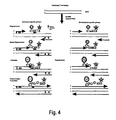
- the fluorescent hybridization probe is cleaved by the 5' to 3'nucleolytic activity of the DNA polymerase. On cleavage of the probe, the reporter moiety emission is no longer transferred efficiently to the quenching moiety, resulting in an increase of the reporter moiety fluorescent-emission spectrum at 518 nm.
- the fluorescent intensity of the quenching moiety (e.g., TAMRA), changes very little over the course of the PCR amplification.
- TAMRA quenching moiety
- factors my influence the efficiency of TaqMan® PCR reactions including: magnesium and salt concentrations; reaction conditions (time and temperature); primer sequences; and PCR target size (i.e., amplicon size) and composition. Optimization of these factors to produce the optimum fluorescence intensity for a given genomic locus is obvious to one skilled in the art of PCR, and preferred conditions are further illustrated in the "Examples” herein.
- the amplicon may range in size from 50 to 8, 000 base pairs, or larger, but may be smaller. Typically, the amplicon is from 100 to 1000 base pairs, and preferably is from 100 to 500 base pairs.
- the reactions are monitored in real time by performing PCR amplification using 96-well optical trays and caps, and using a sequence detector (ABI Prism) to allow measurement of the fluorescent spectra of all 96 wells of the thermal cycler continuously during the PCR amplification.
- process D is run in combination with the process A ( Figure 3) to provide controls for the amount of input nucleic acid, and to normalize data from tray to tray.
- the inventive process can be modified to avoid sequence discrimination at the PCR product detection level.
- the primers are designed to cover CpG dinucleotides, and sequence discrimination occurs solely at the level of amplification.
- the probe used in this embodiment is still a TaqMan® probe, but is designed so as not to overlap any CpG sequences present in the original, unmodified nucleic acid.
- the embodiment of Application C represents a high-throughput, fluorescence-based real-time version of MSP technology, wherein a substantial improvement has been attained by reducing the time required for detection of methylated CpG sequences.
- the reactions are monitored in real time by performing PCR amplification using 96-well optical trays and caps, and using a sequence detector (ABI Prism) to allow measurement of the fluorescent spectra of all 96 wells of the thermal cycler continuously during the PCR amplification.
- process C is run in combination with process A to provide controls for the amount of input nucleic acid, and to normalize data from tray to tray.
- the inventive process can be also be modified to avoid sequence discrimination at the PCR amplification level ( Figure 3, A and B).
- Figure 3, Application B just the probe is designed to cover CpG dinucleotides, and sequence discrimination occurs solely at the level of probe hybridization.
- TaqMan® probes are used.
- sequence variants resulting from the bisulfite conversion step are amplified with equal efficiency; as long as there is no inherent amplification bias ( Warnecke et al., Nucleic Acids Res. 25: 4422-4426, 1997 ). Design of separate probes for each of the different sequence variants associated with a particular methylation pattern (e.
- the reactions are monitored in real time by performing PCR amplification using 96-well optical trays and caps, and using a sequence detector (ABI Prism) to allow measurement of the fluorescent spectra of all 96 wells of the thermal cycler continuously during the PCR amplification.
- process B is run in combination with process A to provide controls for the amount of input nucleic acid, and to normalize data from tray to tray.
- process A not only lacks CpG dinucleotides in the primers and probe(s), but also does not contain any CpGs within the amplicon at all to avoid any differential effects of the bisulfite treatment on the amplification process.
- the amplicon for process A is a region of DNA that is not frequently subject to copy number alterations, such as gene amplification or deletion.
- Results obtained with the qualitative version of the technology are described in the examples below. Dozens ofhuman tumor samples have been analyzed using this technology with excellent results. High-throughput using a TaqManB machine allowed performance of 1100 analyses in three days with one TaqMan® machine.
- genomic DNA was isolated from human sperm or HCT116 cells by the standard method of proteinase K digestion and phenol-chloroform extraction ( Wolf et al., Am. J. Hum. Genet. 51 :478-485, 1992 ).
- the DNA was then treated with sodium bisulfite by initially denaturing in 0.2 M NaOH, followed by addition of sodium bisulfite and hydroquinone (to final concentrations of 3.1 M, and 0.5M, respectively), incubation for 16 h at 55°C, desalting (DNA Clean-Up System; Promega), desulfonation by 0.3M NaOH, and final ethanol precipitation.
- DNA Clean-Up System Promega
- ESR1 and APC genes were analyzed using COBRA (Combined Bisulfite Restriction Analysis).
- COBRA analysis methylation-dependent sequence differences were introduced into the genomic DNA by standard bisulfite treatment according to the procedure described by Frommer et al (Proc. Natl. Acad. Sci. USA 89: 1827 1831, 1992 ) (lug of salmon sperm DNA was added as a carrier before the genomic DNA was treated with sodium bisulfite).
- PCR amplification of the bisulfite converted DNA was performed using primers specific for the interested CpG islands, followed by restriction endonuclease digestion, gel electrophoresis, and detection using specific, labeled hybridization probes.
- the forward and reverse primer sets used for the ESR1 and APC genes are: TCCTAAAACTACACTTACTCC [SEQ ID NO. 35], GGTTATTTGGAAAAAGAGTATAG [SEQ ID NO. 36] (ESR1 promoter); and AGAGAGAAGTAGTTGTGTTAAT [SEQ ID NO. 37], ACTACACCAATACAACCACAT [SEQ ID NO. 38] (APC promoter), respectively.
- PCR products of ESR1 were digested by restriction endonucleases TaqI and BstUI, while the products from APC were digested by TaqI and SfaNI, to measure methylation of 3 CpG sites for APC and 4 CpG sites for ESR1.
- the digested PCR products were electrophoresed on denaturing polyacrylamide gel and transferred to nylon membrane (Zetabind; American Bioanalytical) by electroblotting.
- the membranes were hybridized by a 5'-end labeled oligonucleotide to visualize both digested and undigested DNA fragments of interest.
- the probes used are as follows: ESR1, AAACCAAAACTC [SEQ ID NO.
- MLH1 and CDKN2A were analyzed using MsSNuPE (Methylation-sensitive Single Nucleotide Primer Extension Assay), performed as described by Gonzalgo and Jones (Nucleic Acids Res. 25:2529-2531 ).
- PCR amplification of the bisulfite converted DNA was performed using primers specific for the interested CpG islands, and detection was performed using additional specific primers (extension probes).
- the forward and reverse primer sets used for the MLHI and CDKN2A genes are: GGAGGTTATAAGAGTAGGGTTAA [SEQ ID NO.41], CCAACCAATAAAAACAAAAATACC [SEQ ID NO. 42] (MLHI promoter); GTAGGTGGGGAGGAGTTTAGTT [SEQ ID NO.
- Ms-SNuPE extension probes are located immediately 5'of the CpG to be analyzed, and the sequences are: TTTAGTAGAGGTATATAAGTT [SEQ ID NO. 47], TAAGGGGAGAGGAGGAGTTTGAGAAG [SEQ ID NO. 48] (MLHI promoter sites1 and 2, respectively); TTTGAGGGATAGGGT [SEQ ID NO.
- Inventive methylation analysis Bisulfite-converted genomic DNA was amplified using locus-specific PCR primers flanking an oligonucleotide probe with a 5'fluorescent reporter dye (6FAM) and a 3'quencher dye (TAMRA) ( Livak et al., PCR Methods Appl. 4:357-362, 1995 ) (primers and probes used for the methylation analyses are listed under "Genes, MethyLight Primers and Probe Sequences" herein, infra).
- 6FAM 5'fluorescent reporter dye
- TAMRA 3'quencher dye
- the forward and reverse primers and the corresponding fluorogenic probes were designed to discriminate between either fully methylated or fully unmethylated molecules of bisulfite-converted DNA (see discussion of primer design under "Detailed Description of the Invention, Process D" herein).
- Primers and a probe were also designed for a stretch of the MYODI gene (Myogenic Differentiation Gene), completely devoid of CpG dinucleotides as a control reaction for the amount of input DNA.
- Parallel reactions were performed using the inventive process with the methylated and unmethylated (D), or control oligos (A) on the bisulfite-treated sperm and HCT116 DNA samples. The values obtained for the methylated and unmethylated reactions were normalized to the values for the MYOD1 control reactions to give the ratios shown in Table1 (below).
- the 5'to 3'nuclease activity of Taq DNA polymerase cleaved the probe and released the reporter, whose fluorescence was detected by the laser detector of the ABI Prism 7700 Sequence Detection System (Perkin-Elmer, Foster City, CA). After crossing a fluorescence detection threshold, the PCR amplification resulted in a fluorescent signal proportional to the amount of PCR product generated.
- Initial template quantity can be derived from the cycle number at which the fluorescent signal crosses a threshold in the exponential phase of the PCR reaction.
- Several reference samples were included on each assay plate to verify plate-to-plate consistency. Plates were normalized to each other using these reference samples.
- the PCR amplification was performed using a 96-well optical tray and caps with a final reaction mixture of 25 ul consisting of 600 nM each primer, 200 nM probe, 200 uM eachdATP, dCTP, dGTP, 400 uM dUTP, 5.5 mM MgCl 2 , 1 X TaqMan® Buffer A containing a reference dye, and bisulfite-converted DNA or unconverted DNA at the following conditions: 50°C for 2 min, 95°C for 10 min, followed by 40 cycles at 95°C for 15 s and 60°C for 1 min.
- APC adenomatous polyposiscoli
- ESR1 estrogen receptor
- CDKN2A(p16) Ahuja, Cancer Res. 57: 3370-3374, 1997
- hMLH1 mismatch repair
- the human ESR gene contains a CpG island at its 5'end, which becomes increasingly methylated in colorectal mucosa with age and is heavily methylated in all human colorectal tumors analyzed (Issa et al., supra). Hypermethylation of promoter-associated CpG islands of the CDKN2A (p 16) gene has been found in 60% of colorectal cancers showing microsatellite instability (MI) due to defects in one of several base mismatch repair genes (Ahuja et al., supra).
- MI microsatellite instability
- the mismatch repair gene MLH1 plays a pivotal role in the development of sporadic cases of mismatch repair-deficient colorectal tumors ( Thibodeau et al., Science 260: 816-819, 1993 ). It has been reported that MLH1 can become transcriptionally silenced by DNA hypermethylation of its promoter region, leading to microsatellite instability (MSI) ( Kane et al., Cancer Res. 57: 808-811, 1997 ;Ahuja et al., supra; Cunningham et al., Cancer Res. 58: 3455-3460, 1998 ; Herman et al., supra; Veigl et al., supra).
- MSI microsatellite instability
- PCR primers and probes designed specifically for bisulfite converted DNA sequences, were used: (1) a set representing fully methylated and fully unmethylated DNA for the7 gene; (2) a fully methylated set for the MLH1 gene; (3) a fully methylated and fully unmethylated set for the APC gene; and (4) a fully methylated and fully unmethylated set for the CDKN2A (p16) gene; and (5) an internal reference set for the MYOD1 gene to control for input DNA.
- the methylated and unmethylated primers and corresponding probes were designed to overlap 1 to 5 potential CpG dinucleotides sites.
- the MYOD1 internal reference primers and probe were designed to cover a region of the MYOD1 gene completely devoid of any CpG dinucleotides to allow for unbiased PCR amplification of the genomic DNA, regardless of methylation status.
- parallel TaqMan® PCR reactions were performed with primers specific for the bisulfite-converted methylated and/or unmethylated gene sequences and with the MYOD1 reference primers.
- the primer and probe sequences are listed below. In all cases, the first primer listed is the forward PCR primer, the second is the TaqMan® probe, and the third is the reverse PCR primer.
- ESR1 methylated (GGCGTTCGTTTTGGGATTG[SEQ ID NO.1], 6FAM 5'-CGATAAAACCGAACGACCCGACGA-3'TAMRA [SEQ ID NO. 2], GCCGACACGCGAACTCTAA [SEQ ID NO. 3]); ESR1 unmethylated (ACACATATCCCACCAACACACAA [SEQ ID NO. 4], 6FAM 5' CAACCCTACCCCAAAAACCTACAAATCCAA-3'TAMRA [SEQ ID NO. 5], AGGAGTTGGTGGAGGGTGTTT [SEQ ID NO. 6]); MLH1 methylated (CTATCGCCGCCTCATCGT [SEQ ID NO.
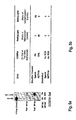
- Tables 1 and 2 shows the results of the analysis of human sperm and HCT116 DNAs for methylation status of the CpG islands within the four genes; APC, ESR1, CDKN2A (p16), and hMLH 1. The results are expressed as ratios between the methylated and unmethylated reactions and a control reaction (MYOD1). Table 1 shows that sperm DNA yielded a positive ratio only with the "unmethylated" primers and probe; consistent with the known unmethylated status of sperm DNA, and consistent with the percent methylation values determined by COBRA analysis.
- Table 2 shows the results of an analysis of HCT116 DNA for methylation status of the CpG islands within the four genes; APC, ESR1, CDKN2A (p19), and hMLH1. The results are expressed as ratios between the methylation-specific reactions and a control reaction (MYOD1).
- ESR ESR gene
- CDKN2A CDKN2A gene
- HCT 116 DNA yielded positive ratios with both the "methylated” and “unmethylated” primers and probe; consistent with the known methylated status ofHCT116 DNA, and with the COBRA analysis that indicates only partial methylation of this region of the gene.
- the APC gene gave positive results only with the unmethylated reaction.
- this is entirely consistent with the COBRA analysis, and indicates that this APC gene region is unmethylated in HCT116 DNA. This may indicate that the methylation state of this particular APC gene regulatory region in the DNA from the HCT116 cell line is more like that of normal colonic mucosa or premalignant adenomas rather than that of colon carcinomas (known to be distinctly more methylated).
- This example is a comparison of the inventive process (A and D in Figure 3) with an independent COBRA method (See “Methods", above) to determine the methylation status of a CpG island associated with the estrogen receptor (ESR1) gene in the human colorectal cell line HCT116 and in human sperm DNA.
- This CpG island has been reported to be highly methylated in HCT116 and unmethylated in human sperm DNA (Xiong and Laird, supra; Issa et al., supra).
- the COBRA analysis is described above. Two TaqI sites within this CpG island confirmed this, showing a lack of methylation in the sperm DNA and nearly complete methylation inHCT116 DNA ( Figure 5A). Additionally, results using bisulfite-treated and untreated DNA were compared.
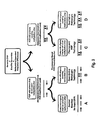
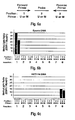
- FIG. 6 shows a test of all possible combinations of primers and probes to further examine the specificity of the methylated and unmethylated oligonucleotides on DNAs of known methylation status.
- Eight different combinations of the ESR1 "methylated” and “unmethylated” forward and reverse primers and probe (as described above in “Example 1") were tested in different combinations in inventive assays on sperm and HCT116 DNA in duplicate. The assays were performed as described above in Example 1.
- Panel A Figure 6) shows the nomenclature used for the combinations of the ESR1 oligos.
- U refers to the oligo sequence that anneals with bisulfite-converted unmethylated DNA
- M refers to the methylated version.
- Position 1 indicates the forward PCR primer, position 2 the probe, and position 3 the reverse primer. The combinations used for the eight reactions are shown below each pair of bars, representing duplicate experiments. The results are expressed as ratios between the ESR1 values and theMYOD1 control values.
- Panel B represents an analysis of human sperm DNA.
- Panel C represents an analysis of DNA obtained from the human colorectal cancer cell lineHCT116.
- reaction 1 Only the fully unmethylated (reaction 1) or fully methylated combinations (reaction 8) resulted in a positive reaction for the sperm and HCT116, respectively.
- the other combinations were negative, indicating that the PCR conditions do not allow for weak annealing of the mismatched oligonucleotides.
- This selectivity indicates that the inventive process can discriminate between fully methylated or unmethylated alleles with a high degree of specificity.
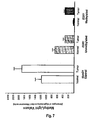
- FIG. 7 illustrates an analysis of the methylation status of theESR1 locus in DNA samples derived from a primary colorectal adenocarcinoma and matched normal mucosa derived from the same patient (samples 1 ON and1 OT in Figure 8) in order to study a heterogeneous population of methylated and unmethylated alleles.
- the colorectal tissue samples were collected as described in Example 5, below.
- the reproducibility of the inventive process was tested by performing eight independent reactions for each assay.
- the results for the ESR1 reactions and for the MYOD1 control reaction represent raw absolute values obtained for these reactions, rather than ratios, so that the standard errors of the individual reactions can be evaluated.
- the values have been plate-normalized, but not corrected for input DNA.
- the bars indicate the mean values obtained for the eight separate reactions.
- the error bars represent the standard error of the mean.
- Figure 7 shows that the mean value for the methylated reaction was higher in the tumor compared to the normal tissue whereas the unmethylated reaction showed the opposite result.
- the standard errors observed for the eight independent measurements were relatively modest and were comparable to those reported for other studies utilizing TaqMan® technology ( Fink et al., Nature Med. 4: 1329-1333, 1998 ).
- Some of the variability of the inventive process may have been a result of stochastic PCR amplification (PCR bias), which can occur at low template concentrations ( Warnecke et al., Nucleic Acids Res. 25: 4422-4426, 1997 ).
- PCR bias stochastic PCR amplification
- This example shows a comparison of MLHI Expression, microsatellite instability and MLH1 promoter methylation in 25 matched-paired human colorectal samples.
- the main benefit of the inventive process is the ability to rapidly screen human tumors for the methylation state of a particular locus.
- the analysis of DNA methylation as a surrogate marker for gene expression is a novel way to obtain clinically useful information about tumors.
- We tested the utility of the inventive process by interrogating the methylation status of the MLH1 promoter.
- the mismatch repair gene MLH1 plays a pivotal role in the development of sporadic cases of mismatch repair-deficient colorectal tumors ( Thibodeau et al., Science 260: 816-819, 1993 ).
- Example I Application D 50 samples consisting of 25 matched pairs of human colorectal adenocarcinomas and normal mucosa were analyzed for the methylation status of the MLH1 CpG island. Quantitative RT PCR (TaqMan®) analyses of the expression levels of MLH1 normalized to ACTB ( ⁇ -actin) was investigated. Furthermore, the microsatellite instability (MSI) status of each sample was analyzed by PCR of the BAT25 and BAT26 loci ( Parsons et al., Cancer Res. 55: 5548-5550, 1995 ).
- MSI microsatellite instability
- the twenty-five paired tumor and normal mucosal tissue samples were obtained from 25 patients with primary colorectal adenocarcinoma.
- the patients comprised 16 males and 9 females, ranging in age from 39-88 years, with a mean age of 68.8.
- the mucosal distance from tumor to normal specimens was between 10 and 20 cm.
- Approximately 2 grams of the surgically removed tissue was immediately frozen in liquid nitrogen and stored at -80°C until RNA and DNA isolation.
- Quantitative RT-PCR and Microsatellite Instability Analysis The quantitation of mRNA levels was carried out using real-time fluorescence detection. The TaqMan® reactions were performed as described above for the assay, but with the addition of 1U AmpErase uracil N-glycosylase). After RNA isolation, cDNA was prepared from each sample as previously described ( Bender et al., Cancer Res 58: 95-101, 1998 ).
- RNA samples were reverse-transcribed using random hexamers, deoxynucleotide triphosphates, and Superscript II® reverse transcriptase (Life Technologies, Inc., Palo Alto, CA). The resulting cDNA was then amplified with primers specific for MLH1 and ACTB.
- ACTB TGAGCGCGGCTACAGCTT [SEQ ID NO. 25], 6FAM5'-ACCACCACGGCCGAGCGG-3'TAMRA [SEQ ID NO. 26], CCTTAATGTCACACACGATT [SEQ ID NO. 27]); and MLH1 (GTTCTCCGGGAGATGTTGCATA [SEQ ID NO. 28], 6-FAM5CCTCAGTGGGCCTTGGCACAGC-3'TAMRA [SEQ ID NO. 29], TGGTGGTGTTGAGAAGGTATAACTTG [SEQ ID NO. 30]).
- Microsatellite instability(MSI) was determined by PCR and sequence analysis of the BAT25 (25-base pair pA tract from an intron of the c-kit oncogene) and BAT26 (26-base pair pA tract from an intron of the mismatch repair genehMSH2) loci as previously described ( Parsons et al., Cancer Res 55: 5548-5550, 1995 ).
- BAT25 and BAT26 loci were amplified for 30 cycles using one32P-labeled primer and one unlabeled primer for each locus. Reactions were resolved on urea-formamide gels and exposed to film.
- the forward and reverse primers that were used for the amplification of BAT25 and BAT26 were: BAT25 (TCGCCTCCAAGAATGTAAGT [SEQ ID NO. 31], TCTGCATTTTAACTATGGCTC [SEQ ID NO. 32]); and BAT26 (TGACTACTTTTGACTTCAGCC [SEQ ID NO. 33], AACCATTCAACATTTTTAACCC [SEQ ID NO. 34]).
- Figure 8 shows the correlation between MLH1 gene expression, MSI status and promoter methylation of MLHI, as determined by the inventive process.
- the upper chart shows the MLH1 expression levels measured by quantitative, real time RT-PCR (TaqMan®) in matched normal (hatched bars) and tumor (solid black bars) colorectal samples. The expression levels are displayed as a ratio between MLH1 and ACTB measurements.
- Microsatellite instability status (MSI) is indicated by the circles located between
- Microsatellite instability status is indicated by the circles located between the two charts.
- a black circle denotes MSI positivity, while an open circle indicates that the sample is MSI negative, as determined by analysis of the BAT25 and BAT26 loci.
- the lower chart shows the methylation status of the MLH1 locus as determined by inventive process.
- the methylation levels are represented as the ratio between the MLH1 methylated reaction and the MYOD1 reaction.
- Tumor 17 was the only sample that was both MSI positive (black circle) and showed transcriptional silencing of MLH1.
- the remaining methylated tumors expressed MLH1 at modest levels and were MSI negative (white circle).
- MLH1 was biallelically methylated in tumor 17, resulting in epigenetic silencing and consequent microsatellite instability, whereas the other tumors showed lesser degrees of MLH1 promoter hypermethylation and could have just one methylated allele, allowing expression from the unaltered allele.
- the inventive process was capable of rapidly generating significant biological information, such as promoter CpG island hypermethylation in human tumors, which is associated with the transcriptional silencing of genes relevant to the cancer process.
Landscapes
- Chemical & Material Sciences (AREA)
- Life Sciences & Earth Sciences (AREA)
- Organic Chemistry (AREA)
- Engineering & Computer Science (AREA)
- Zoology (AREA)
- Wood Science & Technology (AREA)
- Proteomics, Peptides & Aminoacids (AREA)
- Health & Medical Sciences (AREA)
- Molecular Biology (AREA)
- Chemical Kinetics & Catalysis (AREA)
- Immunology (AREA)
- Microbiology (AREA)
- Biophysics (AREA)
- Analytical Chemistry (AREA)
- Physics & Mathematics (AREA)
- Biotechnology (AREA)
- Biochemistry (AREA)
- Bioinformatics & Cheminformatics (AREA)
- General Engineering & Computer Science (AREA)
- General Health & Medical Sciences (AREA)
- Genetics & Genomics (AREA)
- Measuring Or Testing Involving Enzymes Or Micro-Organisms (AREA)
- Investigating Or Analysing Biological Materials (AREA)
- Investigating Or Analysing Materials By The Use Of Chemical Reactions (AREA)
Applications Claiming Priority (2)
| Application Number | Priority Date | Filing Date | Title |
|---|---|---|---|
| US09/311,912 US6331393B1 (en) | 1999-05-14 | 1999-05-14 | Process for high-throughput DNA methylation analysis |
| EP00928969.5A EP1185695B2 (de) | 1999-05-14 | 2000-05-12 | Verfahren zur analyse der dna-methylierung mit hoher durchsatzrate |
Related Parent Applications (2)
| Application Number | Title | Priority Date | Filing Date |
|---|---|---|---|
| EP00928969.5A Division-Into EP1185695B2 (de) | 1999-05-14 | 2000-05-12 | Verfahren zur analyse der dna-methylierung mit hoher durchsatzrate |
| EP00928969.5A Division EP1185695B2 (de) | 1999-05-14 | 2000-05-12 | Verfahren zur analyse der dna-methylierung mit hoher durchsatzrate |
Publications (3)
| Publication Number | Publication Date |
|---|---|
| EP1710321A2 true EP1710321A2 (de) | 2006-10-11 |
| EP1710321A3 EP1710321A3 (de) | 2007-04-04 |
| EP1710321B1 EP1710321B1 (de) | 2015-12-09 |
Family
ID=23209034
Family Applications (2)
| Application Number | Title | Priority Date | Filing Date |
|---|---|---|---|
| EP00928969.5A Expired - Lifetime EP1185695B2 (de) | 1999-05-14 | 2000-05-12 | Verfahren zur analyse der dna-methylierung mit hoher durchsatzrate |
| EP06011777.7A Expired - Lifetime EP1710321B1 (de) | 1999-05-14 | 2000-05-12 | Verfahren zur Analyse der DNA-Methylierung mit hoher Durchsatzrate |
Family Applications Before (1)
| Application Number | Title | Priority Date | Filing Date |
|---|---|---|---|
| EP00928969.5A Expired - Lifetime EP1185695B2 (de) | 1999-05-14 | 2000-05-12 | Verfahren zur analyse der dna-methylierung mit hoher durchsatzrate |
Country Status (11)
| Country | Link |
|---|---|
| US (4) | US6331393B1 (de) |
| EP (2) | EP1185695B2 (de) |
| JP (2) | JP4044290B2 (de) |
| AT (1) | ATE332980T2 (de) |
| AU (2) | AU775798B2 (de) |
| CA (1) | CA2372665C (de) |
| CY (1) | CY1118000T1 (de) |
| DE (1) | DE60029323T3 (de) |
| DK (2) | DK1710321T3 (de) |
| ES (2) | ES2267535T5 (de) |
| WO (1) | WO2000070090A1 (de) |
Families Citing this family (270)
| Publication number | Priority date | Publication date | Assignee | Title |
|---|---|---|---|---|
| US6331393B1 (en) | 1999-05-14 | 2001-12-18 | University Of Southern California | Process for high-throughput DNA methylation analysis |
| US7582420B2 (en) | 2001-07-12 | 2009-09-01 | Illumina, Inc. | Multiplex nucleic acid reactions |
| US8076063B2 (en) | 2000-02-07 | 2011-12-13 | Illumina, Inc. | Multiplexed methylation detection methods |
| US7611869B2 (en) * | 2000-02-07 | 2009-11-03 | Illumina, Inc. | Multiplexed methylation detection methods |
| US7955794B2 (en) | 2000-09-21 | 2011-06-07 | Illumina, Inc. | Multiplex nucleic acid reactions |
| US20040170977A1 (en) * | 2000-03-31 | 2004-09-02 | Peter Laird | Epigenetic sequences for esophageal adenocarcinoma |
| AU2001275663A1 (en) * | 2000-04-06 | 2001-10-23 | Epigenomics Ag | Diagnosis of diseases associated with DNA replication by assessing DNA methylation |
| DE60125065T2 (de) * | 2000-08-25 | 2007-06-28 | Lovelace Respiratory Research Institute, Albuquerque | Verfahren zur krebsdetektion mittels verschachtelter ("nested") methylierungsspezifischer pcr |
| US20020058265A1 (en) * | 2000-09-15 | 2002-05-16 | Promega Corporation | Detection of microsatellite instability and its use in diagnosis of tumors |
| US6844152B1 (en) | 2000-09-15 | 2005-01-18 | Promega Corporation | Detection of microsatellite instability and its use in diagnosis of tumors |
| JP2004512050A (ja) * | 2000-10-23 | 2004-04-22 | キャンサー・リサーチ・テクノロジー・リミテッド | 核酸の増幅およびプロファイリングに関連する物質および方法 |
| GB0025913D0 (en) | 2000-10-23 | 2000-12-06 | Guldberg Per | Materials and methods relating to nucleic acid amplification and profiling |
| US20030188326A1 (en) | 2000-11-03 | 2003-10-02 | Dana Farber Cancer Institute | Methods and compositions for the diagnosis of cancer susceptibilities and defective DNA repair mechanisms and treatment thereof |
| DE10056802B4 (de) * | 2000-11-14 | 2005-06-16 | Epigenomics Ag | Verfahren zur Detektion von Methylierungszuständen zur toxikologischen Diagnostik |
| DE10104937B4 (de) * | 2001-01-29 | 2005-03-17 | Epigenomics Ag | Fluoreszenzpolarisation 2 |
| US6893820B1 (en) * | 2001-01-31 | 2005-05-17 | The Ohio State University Research Foundation | Detection of methylated CpG rich sequences diagnostic for malignant cells |
| DE60232059D1 (de) * | 2001-03-01 | 2009-06-04 | Epigenomics Ag | Verfahren zur entwicklung von gensätzen zu diagnostischen und therapeutischen zwecken auf grundlage des expressions- und methylierungsstatus der gene |
| DE60211324T2 (de) * | 2001-03-01 | 2007-02-08 | Epigenomics Ag | Verfahren und rechnerprogrammprodukte zur erfassung der biologischen wirkung und/oder aktivität von arzneimitteln, chemischen substanzen und/oder pharmazeuitschen verbindungen auf der basis ihrer effekte auf den methylierungszustand der dna |
| DE10112515B4 (de) * | 2001-03-09 | 2004-02-12 | Epigenomics Ag | Verfahren zum Nachweis von Cytosin-Methylierungsmustern mit hoher Sensitivität |
| WO2002101353A2 (en) * | 2001-06-08 | 2002-12-19 | U.S. Genomics, Inc. | Methods and products for analyzing nucleic acids based on methylation status |
| DE10128509A1 (de) * | 2001-06-14 | 2003-01-02 | Epigenomics Ag | Verfahren und Nukleinsäuren für die Differenzierung von Prostata- und Nierenkarzinomen |
| DE10128508A1 (de) * | 2001-06-14 | 2003-02-06 | Epigenomics Ag | Verfahren und Nukleinsäuren für die Differenzierung von Prostata-Tumoren |
| DE10130800B4 (de) * | 2001-06-22 | 2005-06-23 | Epigenomics Ag | Verfahren zum Nachweis von Cytosin-Methylierung mit hoher Sensitivität |
| DE10132211A1 (de) * | 2001-06-27 | 2003-01-16 | Epigenomics Ag | Nachweis spezifischer Dinukleotide in DNA-Proben durch Fluoreszenzresonanzenergietransfer (FRET) |
| CA2454147C (en) | 2001-07-31 | 2013-05-21 | The State Of Oregon Acting By And Through The State Board Of Higher Education On Behalf Of The University Of Oregon | Inhibitor of dna methylation |
| DE10139283A1 (de) | 2001-08-09 | 2003-03-13 | Epigenomics Ag | Verfahren und Nukleinsäuren zur Analyse von Colon-Krebs |
| US6927028B2 (en) * | 2001-08-31 | 2005-08-09 | Chinese University Of Hong Kong | Non-invasive methods for detecting non-host DNA in a host using epigenetic differences between the host and non-host DNA |
| DE10154317B4 (de) | 2001-10-26 | 2005-06-09 | Epigenomics Ag | Verfahren zum Nachweis von Cytosin-Methylierungen in immobilisierten DNA Proben |
| EP1456413B1 (de) * | 2001-11-16 | 2008-04-23 | The Johns Hopkins University School Of Medicine | Verfahren zum nachweis von prostatakrebs |
| US20110151438A9 (en) * | 2001-11-19 | 2011-06-23 | Affymetrix, Inc. | Methods of Analysis of Methylation |
| EP1461458A4 (de) * | 2001-12-03 | 2005-10-26 | Illumina Inc | Multiplex-methylierungsnachweisverfahren |
| AU2003212878A1 (en) * | 2002-01-30 | 2003-09-02 | Epigenomics Ag | Identification of cell differentiation states based on methylation patterns |
| US6960436B2 (en) * | 2002-02-06 | 2005-11-01 | Epigenomics Ag | Quantitative methylation detection in DNA samples |
| WO2003068788A1 (en) * | 2002-02-13 | 2003-08-21 | Medimolecular Pty. Ltd. | Method of isolating nucleic acids from stool samples |
| KR100470221B1 (ko) * | 2002-02-20 | 2005-02-05 | 굿젠 주식회사 | 유전자 프로모터 CpG 아일랜드의 메틸화 여부를분석하는 염기서열분석형 올리고뉴클레오타이드칩, 이의제조방법 및 이를 이용한 암 검색방법 |
| EP1340818A1 (de) * | 2002-02-27 | 2003-09-03 | Epigenomics AG | Verfahren und Nukleinsäuren zur Analyse von Kolonkrebszellen |
| DK1342794T3 (da) * | 2002-03-05 | 2006-04-24 | Epigenomics Ag | Fremgangsmåde og anordning til at bestemme vævsspecificitet af fritflydende DNA i legemsvæsker |
| AU2003223041A1 (en) * | 2002-04-09 | 2003-10-20 | Epigenomics Ag | Method for analysis of methylated nucleic acids |
| US7124516B2 (en) * | 2002-06-21 | 2006-10-24 | Yoshinori Shiraishi | Device for removing water drops from an umbrella and foundation promotion system of the device |
| CA2489360C (en) * | 2002-06-26 | 2013-01-29 | Cold Spring Harbor Laboratory | Methods and compositions for determining methylation profiles |
| ES2215957T3 (es) * | 2002-08-01 | 2004-10-16 | Mtm Laboratories Ag | Metodo para diagnostico basado en una solucion. |
| DE10236406C1 (de) * | 2002-08-02 | 2003-12-24 | Epigenomics Ag | Verfahren zur Amplifikation von Nukleinsäuren mit geringer Komplexität |
| WO2004013284A2 (en) * | 2002-08-02 | 2004-02-12 | Tufts University | A method to assess genomic dna methylation using high-performance liquid chromatography-electospray ionization mass spectrometry |
| US9394332B2 (en) * | 2002-08-29 | 2016-07-19 | Epigenomics Ag | Method for bisulfite treatment |
| CA2499360A1 (en) * | 2002-09-19 | 2004-04-01 | Applera Corporation | Methods and compositions for detecting targets |
| JP4649331B2 (ja) | 2002-10-01 | 2011-03-09 | エピゲノミクス アーゲー | 乳房細胞増殖障害の改良治療方法および核酸 |
| US7238518B2 (en) | 2002-10-04 | 2007-07-03 | Nisshinbo Industries, Inc. | Oligonucleotide-immobilized substrate for detecting methylation |
| US8039218B2 (en) * | 2002-11-14 | 2011-10-18 | John Wayne Cancer Institute | Detection of cancer cells in body fluids |
| DK1572105T3 (da) * | 2002-11-14 | 2011-10-17 | Wayne John Cancer Inst | Detektion af mikrometastase af melamoner og brystcancer i paraffinindlejret tumor drænende lymfeknuder ved hjælp af kvantitativ multimaker RT-PCR |
| US20040101843A1 (en) * | 2002-11-22 | 2004-05-27 | Gerald Zon | Detection of methylated DNA sites |
| EP1567669B1 (de) * | 2002-12-02 | 2010-03-24 | Illumina Cambridge Limited | Bestimmung der methylierung von nukleinsäuresequenzen |
| AU2003900368A0 (en) * | 2003-01-24 | 2003-02-13 | Human Genetic Signatures Pty Ltd | Assay for nucleic acid molecules |
| ES2294462T5 (es) * | 2003-01-29 | 2015-05-06 | Epigenomics Ag | Método mejorado para el tratamiento de bisulfito |
| DE10304219B3 (de) * | 2003-01-30 | 2004-08-19 | Epigenomics Ag | Verfahren zum Nachweis von Cytosin-Methylierungsmustern mit hoher Sensitivität |
| US20090305294A1 (en) * | 2003-02-13 | 2009-12-10 | Medimolecular Pty Ltd | Method of isolating nucleic acids from stool samples |
| WO2004087957A2 (en) * | 2003-04-03 | 2004-10-14 | Oncomethylome Sciences S.A. | Hypermethylated genes and cervical cancer |
| US20060024676A1 (en) * | 2003-04-14 | 2006-02-02 | Karen Uhlmann | Method of detecting epigenetic biomarkers by quantitative methyISNP analysis |
| US7288373B2 (en) * | 2003-05-02 | 2007-10-30 | Human Genetic Signatures Pty Ltd. | Treatment of methylated nucleic acid |
| US20050009059A1 (en) * | 2003-05-07 | 2005-01-13 | Affymetrix, Inc. | Analysis of methylation status using oligonucleotide arrays |
| WO2004110246A2 (en) * | 2003-05-15 | 2004-12-23 | Illumina, Inc. | Methods and compositions for diagnosing conditions associated with specific dna methylation patterns |
| US8150626B2 (en) * | 2003-05-15 | 2012-04-03 | Illumina, Inc. | Methods and compositions for diagnosing lung cancer with specific DNA methylation patterns |
| US8150627B2 (en) | 2003-05-15 | 2012-04-03 | Illumina, Inc. | Methods and compositions for diagnosing lung cancer with specific DNA methylation patterns |
| EP1641936B1 (de) * | 2003-06-17 | 2010-08-04 | Human Genetic Signatures PTY Ltd. | Verfahren zur genomamplifikation |
| EP1636381B1 (de) * | 2003-06-23 | 2011-01-05 | Epigenomics AG | Verfahren und nukleinsäuren zur analyse von störungen der proliferation von kolonzellen |
| JP4955385B2 (ja) | 2003-06-23 | 2012-06-20 | エピゲノミクス アクチェンゲゼルシャフト | 結腸直腸細胞増殖障害の分析のための方法及び核酸 |
| ES2546644T3 (es) | 2003-06-23 | 2015-09-25 | Epigenomics Ag | Métodos y ácidos nucleicos para el análisis de trastornos proliferativos de células colorrectales |
| US20040265833A1 (en) * | 2003-06-23 | 2004-12-30 | Cathy Lofton-Day | Methods and nucleic acids for the analysis of colorectal cell proliferative disorders |
| US20070117093A1 (en) * | 2003-06-24 | 2007-05-24 | Reimo Tetzner | Heavymethyl assay for the methylation analysis of the gstpi gene |
| GB0318110D0 (en) * | 2003-08-01 | 2003-09-03 | Isaeo Ltd | Methods and kits for detecting an enzyme capable of modifying a nucleic acid |
| US20050123944A1 (en) * | 2003-08-01 | 2005-06-09 | U.S. Genomics, Inc. | Methods and compositions related to the use of sequence-specific endonucleases for analyzing nucleic acids under non-cleaving conditions |
| DE10338308B4 (de) * | 2003-08-15 | 2006-10-19 | Epigenomics Ag | Verfahren zum Nachweis von Cytosin-Methylierungen in DNA |
| US7262013B2 (en) * | 2003-08-29 | 2007-08-28 | Applera Corporation | Bisulfite method |
| US20050048498A1 (en) * | 2003-08-29 | 2005-03-03 | Applera Corporation | Compositions, methods, and kits for assembling probes |
| US7368239B2 (en) | 2003-08-29 | 2008-05-06 | Applera Corporation | Method and materials for polyamine catalyzed bisulfite conversion of cytosine to uracil |
| US20050069895A1 (en) * | 2003-08-29 | 2005-03-31 | Applera Corporation | Compositions, methods, and kits for fabricating coded molecular tags |
| US7198900B2 (en) * | 2003-08-29 | 2007-04-03 | Applera Corporation | Multiplex detection compositions, methods, and kits |
| US7371526B2 (en) | 2003-08-29 | 2008-05-13 | Applera Corporation | Method and materials for bisulfite conversion of cytosine to uracil |
| US7534873B2 (en) * | 2003-08-29 | 2009-05-19 | Applied Biosystems, Llc | Method and materials for quaternary amine catalyzed bisulfite conversion of cytosine to uracil |
| ATE419394T1 (de) * | 2003-09-04 | 2009-01-15 | Human Genetic Signatures Pty | Nukleinsäurenachweistest |
| JP2007508017A (ja) * | 2003-10-08 | 2007-04-05 | ザ トラスティーズ オブ ボストン ユニバーシティ | 染色体異常の出生前診断のための方法 |
| JP4571643B2 (ja) | 2003-10-09 | 2010-10-27 | エピゲノミクス アーゲー | 改良された重亜硫酸塩によるdnaの変換 |
| WO2005040399A2 (en) | 2003-10-21 | 2005-05-06 | Orion Genomics Llc | Methods for quantitative determination of methylation density in a dna locus |
| WO2005054517A2 (en) | 2003-12-01 | 2005-06-16 | Epigenomics Ag | Methods and nucleic acids for the analysis of gene expression associated with the development of prostate cell proliferative disorders |
| CA2547743C (en) | 2003-12-02 | 2011-06-28 | F. Hoffmann-La Roche Ag | Improved method for bisulfite treatment |
| EP1561821B1 (de) | 2003-12-11 | 2011-02-16 | Epigenomics AG | Marker zur Prognose der Reaktion auf Therapie bzw. der Überlebensrate von Brustkrebspatienten |
| CA2487578A1 (en) * | 2003-12-11 | 2005-06-11 | Epigenomics Ag | Prognostic markers for prediction of treatment response and/or survival of breast cell proliferative disorder patients |
| US7358048B2 (en) * | 2004-02-10 | 2008-04-15 | Cornell Research Foundation, Inc. | Method for detection of promoter methylation status |
| US7459274B2 (en) * | 2004-03-02 | 2008-12-02 | Orion Genomics Llc | Differential enzymatic fragmentation by whole genome amplification |
| WO2005098040A2 (en) * | 2004-03-24 | 2005-10-20 | Applera Corporation | Ligation and amplification reactions for determining target molecules |
| US20050287553A1 (en) * | 2004-04-06 | 2005-12-29 | Epigenomics Ag | Method for the quantification of methylated DNA |
| EP1655377A1 (de) * | 2004-04-06 | 2006-05-10 | Epigenomics AG | Verfahren zur Quantifizierung methylierter DNA |
| US20050233340A1 (en) * | 2004-04-20 | 2005-10-20 | Barrett Michael T | Methods and compositions for assessing CpG methylation |
| US8168777B2 (en) | 2004-04-29 | 2012-05-01 | Human Genetic Signatures Pty. Ltd. | Bisulphite reagent treatment of nucleic acid |
| US7364855B2 (en) * | 2004-04-30 | 2008-04-29 | Applera Corporation | Methods and kits for methylation detection |
| WO2006076017A2 (en) * | 2004-04-30 | 2006-07-20 | Applera Corporation | Methods and kits for identifying target nucleotides in mixed populations |
| JPWO2005116254A1 (ja) * | 2004-05-25 | 2008-04-03 | 財団法人ヒューマンサイエンス振興財団 | Dnaのメチル化を定量的に評価する方法 |
| EP1778865A1 (de) * | 2004-06-23 | 2007-05-02 | Epigenomics AG | Verfahren und nukleinsäuren zum nachweis der metastasierung proliferativer kolonzellerkrankungen |
| ATE491041T1 (de) * | 2004-06-23 | 2010-12-15 | Epigenomics Ag | Verfahren zur quantifizierung von methylierter dns |
| US20060234252A1 (en) * | 2004-07-02 | 2006-10-19 | Applera Corporation | Methods and kits for methylation detection |
| EP1769087B1 (de) * | 2004-07-16 | 2008-09-10 | Oncomethylome Sciences SA | Esr1 und gebärmutterhalskrebs |
| WO2006008128A2 (en) | 2004-07-18 | 2006-01-26 | Epigenomics Ag | Epigenetic methods and nucleic acids for the detection of breast cell proliferative disorders |
| EP1632578A1 (de) | 2004-09-03 | 2006-03-08 | Roche Diagnostics GmbH | Methode zur Dekontamination der DNA |
| WO2006026828A1 (en) * | 2004-09-10 | 2006-03-16 | Human Genetic Signatures Pty Ltd | Amplification blocker comprising intercalating nucleic acids (tna) containing intercalating pseudonucleotides (ipn) |
| WO2006034009A2 (en) * | 2004-09-20 | 2006-03-30 | Sigma-Aldrich Co. | Purification of biomolecules from contaminating intact nucleic acids |
| EP1812589A2 (de) * | 2004-09-30 | 2007-08-01 | Epigenomics AG | Epigenetische verfahren und nukleinsäuren zum nachweis von lungenzellproliferationsstörungen |
| US7658288B2 (en) * | 2004-11-08 | 2010-02-09 | Applied Biosystems, Llc | Bisulfite conversion reagent |
| US8642263B2 (en) | 2004-11-10 | 2014-02-04 | University Of Southern California | High throughput methods comprising analysis of repetitive element DNA methylation |
| JP5745202B2 (ja) | 2004-12-02 | 2015-07-08 | エピゲノミックス アクチェンゲゼルシャフト | 前立腺細胞増殖障害の予後に関連する遺伝子発現分析のための方法および核酸 |
| NZ555620A (en) * | 2004-12-03 | 2008-08-29 | Human Genetic Signatures Pty | Methods for simplifying microbial nucleic acids by chemical modification of cytosines |
| US20080118926A1 (en) | 2004-12-13 | 2008-05-22 | National University Corporation Okayama University | Method For Detecting Methylation In Genes And Method For Examining Neoplasm Through Detecting Methylation In Genes |
| US20060134650A1 (en) * | 2004-12-21 | 2006-06-22 | Illumina, Inc. | Methylation-sensitive restriction enzyme endonuclease method of whole genome methylation analysis |
| WO2006066353A1 (en) * | 2004-12-23 | 2006-06-29 | Human Genetic Signatures Pty Ltd | Detection of human papilloma virus |
| CA2599055C (en) * | 2005-02-14 | 2016-01-12 | The Johns Hopkins University | Neoplasia screening compositions and methods of use |
| US20060188910A1 (en) * | 2005-02-18 | 2006-08-24 | Applera Corporation | Compositions, methods, and kits for analyzing DNA methylation |
| US8129107B2 (en) | 2005-04-01 | 2012-03-06 | Epigenomics Ag | Bisulfite conversion of DNA |
| CN107663538B (zh) * | 2005-04-15 | 2022-03-18 | Epi基因组股份公司 | 分析细胞增殖性病症的方法和核酸 |
| WO2006119434A2 (en) | 2005-05-02 | 2006-11-09 | University Of Southern California | DNA METHYLATION MARKERS ASSOCIATED WITH THE CpG ISLAND METHYLATOR PHENOTYPE (CIMP) IN HUMAN COLORECTAL CANCER |
| KR100673811B1 (ko) | 2005-05-11 | 2007-01-24 | 한국표준과학연구원 | 유전자 내 메틸 시토신의 정량 분석방법 및 이의 사용용도 |
| EP1883707B1 (de) * | 2005-05-26 | 2014-04-09 | Human Genetic Signatures PTY Ltd | Isothermische strangverdrängungsamplifikation unter verwendung von eine nichtreguläre base enthaltenden primern |
| WO2006131391A1 (en) * | 2005-06-10 | 2006-12-14 | Epigenomics Ag | Prognostic assay for prediction of treatment response and/or survival of breast cell proliferative disorder patients |
| US20070037184A1 (en) * | 2005-06-16 | 2007-02-15 | Applera Corporation | Methods and kits for evaluating dna methylation |
| US20070087360A1 (en) * | 2005-06-20 | 2007-04-19 | Boyd Victoria L | Methods and compositions for detecting nucleotides |
| US20060292585A1 (en) * | 2005-06-24 | 2006-12-28 | Affymetrix, Inc. | Analysis of methylation using nucleic acid arrays |
| US20090005268A1 (en) * | 2005-07-18 | 2009-01-01 | Epigenomics Ag | Compositions and Methods for Cancer Diagnostics Comprising Pan-Cancer Markers |
| ATE452993T1 (de) * | 2005-07-21 | 2010-01-15 | Epigenomics Ag | Verfahren zur quantifizierung methylierter dna |
| WO2007030882A1 (en) * | 2005-09-14 | 2007-03-22 | Human Genetic Signatures Pty Ltd | Assay for a health state |
| EP1945806B1 (de) | 2005-09-21 | 2013-02-27 | Epigenomics AG | Marker zur vorhersage des ausgangs einer anthracyclin-behandlung |
| EP2298932A1 (de) | 2005-09-29 | 2011-03-23 | Epigenomics AG | Verfahren und DNS zur Analyse der Genexpression, insbesondere die Methylierung von KAAG1, für die Klassifizierung von Zellen und Gewebe |
| EP1943356B1 (de) * | 2005-10-03 | 2014-05-14 | Epigenomics AG | Verfahren und nukleinsäuren zur analyse der genexpression in zusammenhang mit der prognose von zellproliferationsstörungen |
| US20090042195A1 (en) * | 2005-10-07 | 2009-02-12 | Bradford Coffee | Methods and systems for screening for and diagnosing dna methylation associated abnormalities and sex chromosome aneuploidies |
| WO2007042041A1 (en) * | 2005-10-12 | 2007-04-19 | Scanvaegt International A/S | Device for transfer of items |
| US20070087358A1 (en) * | 2005-10-19 | 2007-04-19 | Melanie Ehrlich | Methods for diagnosing cancer based on DNA methylation status in NBL2 |
| JP2009514555A (ja) | 2005-11-08 | 2009-04-09 | ユークリッド ダイアグノスティックス リミテッド ライアビリティー カンパニー | 癌評価の遺伝子関連CpGアイランドのメチル化アッセイのための材料と方法 |
| EP1969139A1 (de) | 2005-11-17 | 2008-09-17 | Epigenomics AG | Verfahren zur bestimmung des dna-methylierungsniveaus einer cpg-position in identischen zellen in einer gewebeprobe |
| WO2007068437A1 (en) * | 2005-12-14 | 2007-06-21 | Roche Diagnostics Gmbh | New method for bisulfite treatment |
| US20080299566A1 (en) * | 2005-12-16 | 2008-12-04 | Meltzer Stephen J | Methylation of Gene Promoters as a Predictor of Effectiveness of Therapy |
| DE102006001161A1 (de) | 2006-01-06 | 2007-07-12 | Qiagen Gmbh | Verfahren zum Nachweis von Cytosin-Methylierungen |
| WO2007088744A1 (ja) * | 2006-02-03 | 2007-08-09 | The University Of Tokyo | ゲノムdnaのメチル化状況に基づく細胞の同定方法 |
| US7820385B2 (en) * | 2006-03-22 | 2010-10-26 | The United States Of America As Represented By The Department Of Health And Human Services, Centers For Disease Control And Prevention | Method for retaining methylation pattern in globally amplified DNA |
| EP1840224A1 (de) | 2006-03-29 | 2007-10-03 | Pangaea Biotech, S.A. | Verfahren zur Vorhersage des Überlebens einer chemotherapeutischen Behandlung bei Patienten mit Nichtkleinzelligem Lungenkrebs |
| US20090111120A1 (en) * | 2006-03-30 | 2009-04-30 | University Of Maryland, Baltimore | Methylation of genes as a predictor of polyp formation and recurrence |
| US7901882B2 (en) | 2006-03-31 | 2011-03-08 | Affymetrix, Inc. | Analysis of methylation using nucleic acid arrays |
| ES2587068T3 (es) | 2006-04-17 | 2016-10-20 | Epigenomics Ag | Métodos y ácidos nucleicos para la detección de desórdenes celulares proliferativos colorrectales |
| US20090317810A1 (en) * | 2006-04-17 | 2009-12-24 | Epigenomics Ag | Methods and nucleic acids for the detection of colorectal cell proliferative disorders |
| US20080003609A1 (en) * | 2006-05-10 | 2008-01-03 | The Cleveland Clinic Foundation | Method of detecting bladder urothelial carcinoma |
| KR100761031B1 (ko) | 2006-05-27 | 2007-10-04 | 김연수 | 디엔에이 메틸화 현상을 이용한 암 진단용 키트 |
| US20080050738A1 (en) * | 2006-05-31 | 2008-02-28 | Human Genetic Signatures Pty Ltd. | Detection of target nucleic acid |
| JP2009543862A (ja) | 2006-07-14 | 2009-12-10 | ザ リージェンツ オブ ザ ユニバーシティ オブ カリフォルニア | ガンのバイオマーカーおよびその使用方法 |
| EP2634265B1 (de) | 2006-07-21 | 2016-09-14 | Epigenomics AG | Mit dem Gen GLI3 assozierte Verfahren für die Detektion von kolorektalem Karzinom |
| EP2049681B1 (de) * | 2006-07-21 | 2016-09-21 | Epigenomics AG | Verfahren für die analyse von zellulären proliferativen krankheiten |
| EP2049684B1 (de) * | 2006-08-08 | 2015-05-06 | Epigenomics AG | Verfahren zur methylierungsanalyse von nukleinsäure |
| US20080124735A1 (en) * | 2006-10-16 | 2008-05-29 | Matthias Schuster | Method for detection of one or more CpG positions |
| WO2008047234A1 (en) | 2006-10-18 | 2008-04-24 | Epigenomics Ag | A molecule for providing a standard for the quantitative analysis of the methylation status of a nucleic acid |
| WO2008061801A1 (en) | 2006-11-24 | 2008-05-29 | Epigenomics Ag | Methods and nucleic acids for the analysis of gene expression associated with the development of prostate cell proliferative disorders |
| JP2008136404A (ja) * | 2006-11-30 | 2008-06-19 | Sysmex Corp | Dnaメチル化検出における非メチル化シトシン変換処理後のdna量の確認方法 |
| US20090203011A1 (en) * | 2007-01-19 | 2009-08-13 | Epigenomics Ag | Methods and nucleic acids for analyses of cell proliferative disorders |
| ES2486190T3 (es) | 2007-01-19 | 2014-08-18 | Epigenomics Ag | Métodos y ácidos nucleicos para análisis de trastornos proliferativos celulares |
| US8206927B2 (en) * | 2007-01-23 | 2012-06-26 | Sequenom, Inc. | Method for accurate assessment of DNA quality after bisulfite treatment |
| WO2008096146A1 (en) | 2007-02-07 | 2008-08-14 | Solexa Limited | Preparation of templates for methylation analysis |
| US20080213870A1 (en) * | 2007-03-01 | 2008-09-04 | Sean Wuxiong Cao | Methods for obtaining modified DNA from a biological specimen |
| CN101680033A (zh) * | 2007-03-16 | 2010-03-24 | 人类遗传标记控股有限公司 | 基因表达的测定方法 |
| US9290803B2 (en) * | 2007-04-12 | 2016-03-22 | University Of Southern California | DNA methylation analysis by digital bisulfite genomic sequencing and digital methylight |
| CL2008001332A1 (es) | 2007-05-08 | 2009-01-02 | Merck Sharp & Dohme | Uso de temozolomida para preparar un medicamento util para el tratamiento de un desorden proliferativo. |
| WO2009006543A1 (en) | 2007-07-02 | 2009-01-08 | Euclid Diagnostics Llc | Methods for evaluating the methylation status of a polynucleotide |
| US20090042290A1 (en) * | 2007-08-06 | 2009-02-12 | Christopher Steele | Method of modifying a macromolecule without prior extraction from a sample |
| CA2699856C (en) * | 2007-09-17 | 2019-08-20 | Oncomethylome Sciences Sa | Improved methylation detection |
| WO2009059327A2 (en) * | 2007-11-02 | 2009-05-07 | University Of Southern California (Usc) | Compositions and methods comprising biomarkers of sperm quality, semen quality and fertility |
| AU2008329549B2 (en) * | 2007-11-27 | 2013-08-22 | Human Genetic Signatures Pty Ltd | Enzymes for amplification and copying bisulphite modified nucleic acids |
| EP2302069A1 (de) | 2007-12-11 | 2011-03-30 | Epigenomics AG | Verfahren und Nukleinsäuren für Analysen von Zellwucher-Störungen |
| JP2011505845A (ja) * | 2007-12-20 | 2011-03-03 | ヒューマン ジェネティック シグネチャーズ ピーティーワイ リミテッド | 核酸増幅に伴う汚染物質の排除 |
| DE102008008313A1 (de) | 2008-02-07 | 2009-08-13 | Qiagen Gmbh | Amplifikation von bisulfitierten Nukleinsäuren |
| AU2009246180B2 (en) | 2008-05-14 | 2015-11-05 | Dermtech International | Diagnosis of melanoma and solar lentigo by nucleic acid analysis |
| WO2009153667A2 (en) | 2008-06-17 | 2009-12-23 | Occure Gmbh | Method for the detection of ovarian cancer |
| US20100021902A1 (en) * | 2008-06-27 | 2010-01-28 | Dimo Dietrich | Method for methylation-selective amplification |
| WO2010003153A2 (en) * | 2008-07-03 | 2010-01-07 | Life Technologies Corporation | Methylation analysis of mate pairs |
| US8361746B2 (en) | 2008-07-24 | 2013-01-29 | Brookhaven Science Associates, Llc | Methods for detection of methyl-CpG dinucleotides |
| WO2010048337A2 (en) | 2008-10-22 | 2010-04-29 | Illumina, Inc. | Preservation of information related to genomic dna methylation |
| US8346485B2 (en) | 2008-11-25 | 2013-01-01 | Quest Diagnostics Investments Incorporated | Methods and apparatuses for estimating initial target nucleic acid concentration in a sample by modeling background signal and cycle-dependent amplification efficiency of a polymerase chain reaction |
| EP2352852A4 (de) * | 2008-12-02 | 2012-10-24 | Bio Rad Laboratories | Chromatinstrukturerkennung |
| US8497066B2 (en) * | 2008-12-04 | 2013-07-30 | Rush University Medical Center | DNA methylation based test for monitoring efficacy of treatment |
| WO2010083046A2 (en) * | 2009-01-15 | 2010-07-22 | The Salk Institute For Biological Studies | Methods for using next generation sequencing to identify 5-methyl cytosines in the genome |
| EP2966181B1 (de) | 2009-06-26 | 2018-02-14 | Epigenomics AG | Verfahren und nukleinsäuren zur analyse des blasenkarzinom |
| EP2309005B1 (de) | 2009-08-03 | 2015-03-04 | Epigenomics AG | Verfahren zur Konservierung von genomischer DNA-Sequenzkomplexität |
| EP2287335A1 (de) * | 2009-08-05 | 2011-02-23 | DiaSorin S.p.A. | Hoch empfindliches schnelles isothermisches Verfahren zur Erkennung von Methylierungsstrukturen |
| US20110046009A1 (en) * | 2009-08-24 | 2011-02-24 | Perkinelmer Health Sciences, Inc. | Methods for detecting dna methylation using encoded particles |
| WO2011051414A1 (en) | 2009-10-28 | 2011-05-05 | Signature Diagnostics Ag | Method for the prognosis of ovarian carcinoma |
| US20110104695A1 (en) | 2009-11-05 | 2011-05-05 | Epigenomics Ag | Methods of predicting therapeutic efficacy of cancer therapy |
| US8568984B2 (en) * | 2010-02-19 | 2013-10-29 | Philadelphia Health & Education Corporation | Methods of diagnosing non-urinary tract diseases by detecting aberrant methylation |
| WO2011139721A1 (en) | 2010-04-27 | 2011-11-10 | The Regents Of The University Of California | Cancer biomarkers and methods of use thereof |
| ES2581594T3 (es) * | 2010-05-25 | 2016-09-06 | The Johns Hopkins University | Composiciones y métodos para detectar una neoplasia |
| US9273347B2 (en) | 2010-09-10 | 2016-03-01 | Bio-Rad Laboratories, Inc. | Detection of RNA-interacting regions in DNA |
| EP3034628B1 (de) | 2010-09-13 | 2018-10-24 | Clinical Genomics Pty Ltd | Krebsdiagnose mit hilfe von methylierungsmarkern |
| US10428390B2 (en) * | 2010-12-16 | 2019-10-01 | Genomictree, Inc. | Method for detecting methylation of colorectal cancer specific methylation marker gene for colorectal cancer diagnosis |
| JP2014506465A (ja) | 2011-02-09 | 2014-03-17 | バイオ−ラド ラボラトリーズ,インコーポレイティド | 核酸の分析 |
| EP2675913B1 (de) | 2011-02-15 | 2016-12-14 | Bio-Rad Laboratories, Inc. | Erkennung von methylierung in einer subpopulation von genomischer dna |
| WO2012162139A1 (en) | 2011-05-20 | 2012-11-29 | The Regents Of The University Of California | Method to estimate age of individual based on epigenetic markers in biological sample |
| CN108048573A (zh) | 2011-07-08 | 2018-05-18 | 表观基因组股份有限公司 | 用于确定癌症对象之预后的方法和核酸 |
| CN107400711A (zh) | 2011-08-03 | 2017-11-28 | 伯乐实验室公司 | 使用透化处理的细胞过滤小核酸 |
| CN104024427B (zh) | 2011-08-25 | 2018-01-02 | 临床基因组学私人有限公司 | 结直肠和乳腺癌诊断方法中的dna甲基化 |
| KR20140057356A (ko) | 2011-08-31 | 2014-05-12 | 제넨테크, 인크. | 진단 마커 |
| MX350658B (es) | 2011-09-07 | 2017-09-13 | Human Genetic Signatures Pty Ltd | Ensayo de detección molecular. |
| EP2761025A1 (de) | 2011-09-30 | 2014-08-06 | Genentech, Inc. | Diagnostische methylierungsmarker vom epithelialen oder mesenchymalen phenotyp und reaktion auf egfr-kinaseinhibitor bei tumoren oder tumorzellen |
| US10131953B2 (en) | 2011-11-03 | 2018-11-20 | Wisconsin Alumni Research Foundation | Unbiased DNA methylation markers define an extensive field defect in histologically normal prostate tissues associated with prostate cancer: new biomarkers for men with prostate cancer |
| WO2013084075A2 (en) | 2011-12-06 | 2013-06-13 | Mdxhealth Sa | Methods of detecting mutations and epigenetic changes |
| WO2013096661A1 (en) | 2011-12-22 | 2013-06-27 | Illumina, Inc. | Methylation biomarkers for ovarian cancer |
| EP3524693A1 (de) | 2012-04-30 | 2019-08-14 | Raindance Technologies, Inc. | Digitale analytanalyse |
| WO2013170191A1 (en) | 2012-05-11 | 2013-11-14 | Genentech, Inc. | Methods of using antagonists of nad biosynthesis from nicotinamide |
| EP2847355B1 (de) | 2012-05-11 | 2019-07-10 | Clinical Genomics Pty Ltd | Diagnostisches genmarkerpaneel für kolorektalkarzinom |
| US10941449B2 (en) | 2012-05-18 | 2021-03-09 | Clinical Genomics Pty. Ltd. | Method of screening for colorectal cancer |
| AU2012380717B2 (en) | 2012-05-24 | 2018-08-16 | Fundacio Institucio Catalana De Recerca I Estudis Avancats | Method for the identification of the origin of a cancer of unknown primary origin by methylation analysis |
| JP2015528286A (ja) * | 2012-08-28 | 2015-09-28 | 日祥医事管理▲顧▼▲問▼股▲ふん▼有限公司Istat Biomedical Co.,Ltd. | 癌スクリーニングの検証キット |
| US10865446B2 (en) | 2012-11-02 | 2020-12-15 | The Johns Hopkins University | DNA methylation biomarkers of post-partum depression risk |
| US9427737B2 (en) | 2012-12-14 | 2016-08-30 | Bio-Rad Laboratories, Inc. | Methods and compositions for using oils for analysis and detection of molecules |
| US20140242583A1 (en) * | 2013-02-28 | 2014-08-28 | Jim Z. Lu | Assays, methods and compositions for diagnosing cancer |
| US9701999B2 (en) | 2013-03-14 | 2017-07-11 | Abbott Molecular, Inc. | Multiplex methylation-specific amplification systems and methods |
| US20140274757A1 (en) | 2013-03-14 | 2014-09-18 | Marie K. Kirby | Differential Methylation Level of CpG Loci That Are Determinative of a Biochemical Reoccurrence of Prostate Cancer |
| EP2971149B1 (de) | 2013-03-15 | 2018-05-09 | Baylor Research Institute | Marker für mit colitis ulcerosa (uc) assoziierten kolorektalen neoplasien |
| WO2014160829A2 (en) | 2013-03-28 | 2014-10-02 | Wisconsin Alumni Research Foundation | Unbiased dna methylation markers define an extensive field defect in histologically normal porstate tissues associated with prostate cancer: new biomarkers for men with prostate cancer |
| WO2014172288A2 (en) | 2013-04-19 | 2014-10-23 | Raindance Technologies, Inc. | Digital analyte analysis |
| CN104250663B (zh) * | 2013-06-27 | 2017-09-15 | 北京大学 | 甲基化CpG岛的高通量测序检测方法 |
| AU2014287090B2 (en) | 2013-07-11 | 2020-02-06 | The Johns Hopkins University | A DNA methylation and genotype specific biomarker of suicide attempt and/or suicide ideation |
| GB201402644D0 (en) * | 2014-02-14 | 2014-04-02 | Base4 Innovation Ltd | Methylation detection method |
| CR20160513A (es) | 2014-05-02 | 2017-05-16 | Malaysian Palm Oil Board | Deteccion de fenotipo de cobertor en palma |
| EP2942400A1 (de) | 2014-05-09 | 2015-11-11 | Lifecodexx AG | Multiplex-Nachweis von DNA, die aus einem spezifischen Zelltyp herrührt |
| EP2942401A1 (de) | 2014-05-09 | 2015-11-11 | Lifecodexx AG | Nachweis von aus einem spezifischen Zelltyp stammender DNA |
| EP3521454A1 (de) | 2014-05-09 | 2019-08-07 | LifeCodexx AG | Nachweis von aus einem spezifischen zelltyp stammender dna und zugehörige verfahren |
| WO2015181804A2 (en) * | 2014-05-30 | 2015-12-03 | Pontificia Universidad Católica De Chile | Method and assay for the non-invasive detection of early gastric cancer by the combined use of methylated reprimo cell-free dna and pepsinogen i/ii |
| DK3152332T3 (da) * | 2014-06-05 | 2021-03-29 | Clinical Genomics Pty Ltd | Fremgangsmåde til at analysere methylering |
| US11072828B2 (en) | 2014-10-06 | 2021-07-27 | The Johns Hopkins University | DNA methylation and genotype specific biomarker for predicting post-traumatic stress disorder |
| CN113564250B (zh) | 2014-10-17 | 2024-09-24 | 科罗拉多大学董事会法人团体 | 头颈部癌症的生物标志物及其使用方法 |
| US11543411B2 (en) | 2014-12-05 | 2023-01-03 | Prelude Corporation | DCIS recurrence and invasive breast cancer |
| US9984201B2 (en) | 2015-01-18 | 2018-05-29 | Youhealth Biotech, Limited | Method and system for determining cancer status |
| HUE050491T2 (hu) | 2015-11-10 | 2020-12-28 | Eurofins Lifecodexx Gmbh | Magzati kromoszomális aneuploidiák kimutatása olyan DNS régiókat alkalmazva, amelyek különbözõképpen vannak metilezve a magzat és a terhes nõstény között |
| WO2017088012A1 (en) | 2015-11-27 | 2017-06-01 | Cartherics Pty. Ltd. | Genetically modified cells and uses thereof |
| US11319593B2 (en) | 2015-12-17 | 2022-05-03 | Illumina, Inc. | Distinguishing methylation levels in complex biological samples |
| WO2017136482A1 (en) | 2016-02-01 | 2017-08-10 | The Board Of Regents Of The University Of Nebraska | Method of identifying important methylome features and use thereof |
| WO2017210341A1 (en) | 2016-05-31 | 2017-12-07 | The Regents Of The University Of California | Methods for evaluating, monitoring, and modulating aging process |
| WO2018009696A1 (en) | 2016-07-06 | 2018-01-11 | Youhealth Biotech, Limited | Colon cancer methylation markers and uses thereof |
| US10093986B2 (en) | 2016-07-06 | 2018-10-09 | Youhealth Biotech, Limited | Leukemia methylation markers and uses thereof |
| US11396678B2 (en) | 2016-07-06 | 2022-07-26 | The Regent Of The University Of California | Breast and ovarian cancer methylation markers and uses thereof |
| WO2018009707A1 (en) | 2016-07-06 | 2018-01-11 | Youhealth Biotech, Limited | Solid tumor methylation markers and uses thereof |
| WO2018009705A1 (en) | 2016-07-06 | 2018-01-11 | Youhealth Biotech, Limited | Liver cancer methylation markers and uses thereof |
| US11130998B2 (en) | 2016-11-14 | 2021-09-28 | Wisconsin Alumni Research Foundation | Unbiased DNA methylation markers define an extensive field defect in histologically normal prostate tissues associated with prostate cancer: new biomarkers for men with prostate cancer |
| DK3336197T3 (da) | 2016-12-16 | 2022-07-11 | Eurofins Genomics Europe Sequencing GmbH | Epigenetiske markører og relaterede fremgangsmåder og midler til detektion og behandling af ovariekræft |
| WO2018161031A1 (en) | 2017-03-02 | 2018-09-07 | Youhealth Biotech, Limited | Methylation markers for diagnosing hepatocellular carcinoma and lung cancer |
| US11433074B2 (en) | 2017-06-22 | 2022-09-06 | Triact Therapeutics, Inc. | Methods of treating glioblastoma |
| WO2019067991A1 (en) | 2017-09-29 | 2019-04-04 | Triact Therapeutics, Inc. | INIPARIB FORMULATIONS AND USES THEREOF |
| US20200277677A1 (en) | 2017-10-06 | 2020-09-03 | Youhealth Oncotech, Limited | Methylation markers for diagnosing cancer |
| WO2019143845A1 (en) | 2018-01-17 | 2019-07-25 | The Regents Of The University Of California | Phenotypic age and dna methylation based biomarkers for life expectancy and morbidity |
| EP3752645A4 (de) | 2018-02-14 | 2022-04-13 | Dermtech, Inc. | Neue gen-klassifikatoren und deren verwendung bei nicht-melanom-hautkrebs |
| AU2019339508B2 (en) | 2018-09-14 | 2025-12-18 | Prelude Corporation | Method of selection for treatment of subjects at risk of invasive breast cancer |
| EP3864177B1 (de) | 2018-10-10 | 2026-02-25 | The Regents of the University of California | Auf dna-methylierung basierende biomarker für lebenserwartung und morbidität |
| WO2020077409A1 (en) | 2018-10-17 | 2020-04-23 | The University Of Queensland | Epigenetic biomarker and uses therefor |
| US20220090200A1 (en) | 2019-01-18 | 2022-03-24 | The Regents Of The University Of California | Dna methylation measurement for mammals based on conserved loci |
| AU2020247911A1 (en) | 2019-03-26 | 2021-11-11 | Dermtech, Llc | Novel gene classifiers and uses thereof in skin cancers |
| US11542548B2 (en) | 2019-06-11 | 2023-01-03 | Wisconsin Alumni Research Foundation; | Blood DNA methylation biomarker diagnostic test for anxiety and depressive disorders |
| EP4004021B1 (de) | 2019-07-22 | 2025-09-03 | Oneskin, Inc. | Polypeptide mit antiseneszenten wirkungen und ihre verwendung |
| JP7757291B2 (ja) * | 2020-02-06 | 2025-10-21 | オンコホスト リミテッド | 治療法応答の機械学習予測 |
| CN112662761A (zh) * | 2020-03-05 | 2021-04-16 | 博尔诚(北京)科技有限公司 | 一种检测3种实质性器官肿瘤的探针组合物 |
| EP4467663A3 (de) | 2020-05-22 | 2025-02-26 | Wisconsin Alumni Research Foundation | Epigenetische modifikation ausgewählter gene als marker für hypersomnolenz |
| EP4359568A4 (de) | 2021-06-25 | 2025-09-03 | Univ California | Epigenetische uhren |
| IL311764A (en) | 2021-09-30 | 2024-05-01 | Tivenix Sa | A method for diagnosing and predicting the progression of neurodegenerative diseases or disorders |
| EP4170661A1 (de) | 2021-10-19 | 2023-04-26 | Institut National de la Santé et de la Recherche Médicale (INSERM) | Methylierungsprofilanalyse mittels glättungsverfahren |
| WO2023066972A1 (en) | 2021-10-19 | 2023-04-27 | INSERM (Institut National de la Santé et de la Recherche Médicale) | Dna methylation signature for diagnosing hepatocellular carcinoma |
| WO2023175019A1 (en) | 2022-03-15 | 2023-09-21 | Genknowme S.A. | Method determining the difference between the biological age and the chronological age of a subject |
| US20260078447A1 (en) | 2022-08-22 | 2026-03-19 | University Of Virginia Patent Foundation | Dna methylation biomarkers of premenstrual dysphoric disorder and perimenopausal depression |
| WO2024059649A1 (en) | 2022-09-13 | 2024-03-21 | The Saban Research Institute; Children's Hospital Los Angeles | Dna methylation signature of retinoblastoma |
| WO2024256726A1 (en) | 2023-06-15 | 2024-12-19 | Genknowme S.A. | Computer implemented method determining a value of allostatic load of a human being |
| WO2026022118A1 (en) * | 2024-07-23 | 2026-01-29 | Qiagen Gmbh | Method of detecting methylated nucleic acids |
| CN119491038A (zh) * | 2024-11-27 | 2025-02-21 | 上海市第十人民医院 | 一种基于三维荧光光谱的一锅式高维多靶标检测方法 |
Family Cites Families (17)
| Publication number | Priority date | Publication date | Assignee | Title |
|---|---|---|---|---|
| US5210015A (en) * | 1990-08-06 | 1993-05-11 | Hoffman-La Roche Inc. | Homogeneous assay system using the nuclease activity of a nucleic acid polymerase |
| US5538848A (en) * | 1994-11-16 | 1996-07-23 | Applied Biosystems Division, Perkin-Elmer Corp. | Method for detecting nucleic acid amplification using self-quenching fluorescence probe |
| US5788146A (en) * | 1996-02-13 | 1998-08-04 | Bradford Company | Parent welding partition assembly |
| GB9609441D0 (en) * | 1996-05-04 | 1996-07-10 | Zeneca Ltd | Process |
| US6017704A (en) * | 1996-06-03 | 2000-01-25 | The Johns Hopkins University School Of Medicine | Method of detection of methylated nucleic acid using agents which modify unmethylated cytosine and distinguishing modified methylated and non-methylated nucleic acids |
| US5786146A (en) * | 1996-06-03 | 1998-07-28 | The Johns Hopkins University School Of Medicine | Method of detection of methylated nucleic acid using agents which modify unmethylated cytosine and distinguishing modified methylated and non-methylated nucleic acids |
| EP1033411B1 (de) | 1996-06-04 | 2006-02-22 | University of Utah Research Foundation | Fluoreszenz-Donor-Akzeptor Paar |
| US5736333A (en) * | 1996-06-04 | 1998-04-07 | The Perkin-Elmer Corporation | Passive internal references for the detection of nucleic acid amplification products |
| US5866336A (en) * | 1996-07-16 | 1999-02-02 | Oncor, Inc. | Nucleic acid amplification oligonucleotides with molecular energy transfer labels and methods based thereon |
| US6117635A (en) | 1996-07-16 | 2000-09-12 | Intergen Company | Nucleic acid amplification oligonucleotides with molecular energy transfer labels and methods based thereon |
| AUPP312998A0 (en) | 1998-04-23 | 1998-05-14 | Commonwealth Scientific And Industrial Research Organisation | Diagnostic assay |
| US6140054A (en) * | 1998-09-30 | 2000-10-31 | University Of Utah Research Foundation | Multiplex genotyping using fluorescent hybridization probes |
| US6331393B1 (en) * | 1999-05-14 | 2001-12-18 | University Of Southern California | Process for high-throughput DNA methylation analysis |
| US6472156B1 (en) * | 1999-08-30 | 2002-10-29 | The University Of Utah | Homogeneous multiplex hybridization analysis by color and Tm |
| CA2487578A1 (en) | 2003-12-11 | 2005-06-11 | Epigenomics Ag | Prognostic markers for prediction of treatment response and/or survival of breast cell proliferative disorder patients |
| US20050287553A1 (en) | 2004-04-06 | 2005-12-29 | Epigenomics Ag | Method for the quantification of methylated DNA |
| JP5745202B2 (ja) | 2004-12-02 | 2015-07-08 | エピゲノミックス アクチェンゲゼルシャフト | 前立腺細胞増殖障害の予後に関連する遺伝子発現分析のための方法および核酸 |
-
1999
- 1999-05-14 US US09/311,912 patent/US6331393B1/en not_active Expired - Lifetime
-
2000
- 2000-05-12 EP EP00928969.5A patent/EP1185695B2/de not_active Expired - Lifetime
- 2000-05-12 CA CA002372665A patent/CA2372665C/en not_active Expired - Lifetime
- 2000-05-12 DK DK06011777.7T patent/DK1710321T3/en active
- 2000-05-12 DK DK00928969.5T patent/DK1185695T4/da active
- 2000-05-12 EP EP06011777.7A patent/EP1710321B1/de not_active Expired - Lifetime
- 2000-05-12 ES ES00928969.5T patent/ES2267535T5/es not_active Expired - Lifetime
- 2000-05-12 AT AT00928969T patent/ATE332980T2/de active
- 2000-05-12 AU AU47122/00A patent/AU775798B2/en not_active Expired
- 2000-05-12 JP JP2000618495A patent/JP4044290B2/ja not_active Expired - Lifetime
- 2000-05-12 ES ES06011777.7T patent/ES2564048T3/es not_active Expired - Lifetime
- 2000-05-12 WO PCT/US2000/013029 patent/WO2000070090A1/en not_active Ceased
- 2000-05-12 DE DE60029323.8T patent/DE60029323T3/de not_active Expired - Lifetime
-
2001
- 2001-12-10 US US10/016,505 patent/US7112404B2/en not_active Expired - Lifetime
-
2004
- 2004-11-17 AU AU2004229115A patent/AU2004229115B2/en not_active Expired
-
2006
- 2006-09-08 US US11/518,353 patent/US7553627B2/en not_active Expired - Fee Related
- 2006-10-25 JP JP2006290479A patent/JP2007068539A/ja active Pending
-
2009
- 2009-06-02 US US12/476,981 patent/US8323890B2/en not_active Expired - Fee Related
-
2016
- 2016-03-03 CY CY20161100185T patent/CY1118000T1/el unknown
Also Published As
Similar Documents
| Publication | Publication Date | Title |
|---|---|---|
| EP1710321B1 (de) | Verfahren zur Analyse der DNA-Methylierung mit hoher Durchsatzrate | |
| US8911937B2 (en) | Method for detecting methylation status by using methylation-independent primers | |
| US7144701B2 (en) | High-throughput methods for detecting DNA methylation | |
| EP1071811B8 (de) | Verfahren zur charakterisierung von nukleinsäuremolekulen, das die erzeugung von verlängerbaren aufwärtsgelegenen dns-fragmenten, die durch spaltung der nukleinsäure an einer abasischen stelle entsteht, umfasst | |
| US6251594B1 (en) | Cancer diagnostic method based upon DNA methylation differences | |
| EP2049684B1 (de) | Verfahren zur methylierungsanalyse von nukleinsäure | |
| US20100297641A1 (en) | Methylation altered dna sequences as markers associated with human cancer | |
| CA2396301A1 (en) | Method for concurrent amplification and real time detection of polymorphic nucleic acid sequences | |
| US20100143893A1 (en) | Method for detection of cytosine methylation | |
| AU2001297759A1 (en) | Detection of aberrant DNA methylation as marker for huiman cancer |
Legal Events
| Date | Code | Title | Description |
|---|---|---|---|
| PUAI | Public reference made under article 153(3) epc to a published international application that has entered the european phase |
Free format text: ORIGINAL CODE: 0009012 |
|
| 17P | Request for examination filed |
Effective date: 20060607 |
|
| AC | Divisional application: reference to earlier application |
Ref document number: 1185695 Country of ref document: EP Kind code of ref document: P |
|
| AK | Designated contracting states |
Kind code of ref document: A2 Designated state(s): AT BE CH CY DE DK ES FI FR GB GR IE IT LI LU MC NL PT SE |
|
| RIN1 | Information on inventor provided before grant (corrected) |
Inventor name: DANENBERG, KATHLEEN D. Inventor name: LAIRD, PETER W. Inventor name: CARROLL, CINDY A. |
|
| PUAL | Search report despatched |
Free format text: ORIGINAL CODE: 0009013 |
|
| AK | Designated contracting states |
Kind code of ref document: A3 Designated state(s): AT BE CH CY DE DK ES FI FR GB GR IE IT LI LU MC NL PT SE |
|
| 17Q | First examination report despatched |
Effective date: 20070727 |
|
| AKX | Designation fees paid |
Designated state(s): AT BE CH CY DE DK ES FI FR GB GR IE IT LI LU MC NL PT SE |
|
| GRAP | Despatch of communication of intention to grant a patent |
Free format text: ORIGINAL CODE: EPIDOSNIGR1 |
|
| INTG | Intention to grant announced |
Effective date: 20150623 |
|
| GRAS | Grant fee paid |
Free format text: ORIGINAL CODE: EPIDOSNIGR3 |
|
| GRAA | (expected) grant |
Free format text: ORIGINAL CODE: 0009210 |
|
| AC | Divisional application: reference to earlier application |
Ref document number: 1185695 Country of ref document: EP Kind code of ref document: P |
|
| AK | Designated contracting states |
Kind code of ref document: B1 Designated state(s): AT BE CH CY DE DK ES FI FR GB GR IE IT LI LU MC NL PT SE |
|
| REG | Reference to a national code |
Ref country code: GB Ref legal event code: FG4D |
|
| REG | Reference to a national code |
Ref country code: AT Ref legal event code: REF Ref document number: 764601 Country of ref document: AT Kind code of ref document: T Effective date: 20151215 Ref country code: CH Ref legal event code: EP |
|
| REG | Reference to a national code |
Ref country code: IE Ref legal event code: FG4D |
|
| REG | Reference to a national code |
Ref country code: DE Ref legal event code: R096 Ref document number: 60049147 Country of ref document: DE |
|
| REG | Reference to a national code |
Ref country code: DK Ref legal event code: T3 Effective date: 20160303 |
|
| REG | Reference to a national code |
Ref country code: ES Ref legal event code: FG2A Ref document number: 2564048 Country of ref document: ES Kind code of ref document: T3 Effective date: 20160317 |
|
| REG | Reference to a national code |
Ref country code: SE Ref legal event code: TRGR |
|
| REG | Reference to a national code |
Ref country code: CH Ref legal event code: NV Representative=s name: MICHELI AND CIE SA, CH |
|
| REG | Reference to a national code |
Ref country code: PT Ref legal event code: SC4A Free format text: AVAILABILITY OF NATIONAL TRANSLATION Effective date: 20160225 Ref country code: NL Ref legal event code: FP |
|
| REG | Reference to a national code |
Ref country code: FR Ref legal event code: PLFP Year of fee payment: 17 |
|
| REG | Reference to a national code |
Ref country code: GR Ref legal event code: EP Ref document number: 20160400451 Country of ref document: GR Effective date: 20160505 |
|
| REG | Reference to a national code |
Ref country code: DE Ref legal event code: R097 Ref document number: 60049147 Country of ref document: DE |
|
| PLBE | No opposition filed within time limit |
Free format text: ORIGINAL CODE: 0009261 |
|
| STAA | Information on the status of an ep patent application or granted ep patent |
Free format text: STATUS: NO OPPOSITION FILED WITHIN TIME LIMIT |
|
| 26N | No opposition filed |
Effective date: 20160912 |
|
| REG | Reference to a national code |
Ref country code: FR Ref legal event code: PLFP Year of fee payment: 18 |
|
| REG | Reference to a national code |
Ref country code: FR Ref legal event code: PLFP Year of fee payment: 19 |
|
| REG | Reference to a national code |
Ref country code: AT Ref legal event code: UEP Ref document number: 764601 Country of ref document: AT Kind code of ref document: T Effective date: 20151209 |
|
| PGFP | Annual fee paid to national office [announced via postgrant information from national office to epo] |
Ref country code: NL Payment date: 20190521 Year of fee payment: 20 Ref country code: LU Payment date: 20190521 Year of fee payment: 20 |
|
| PGFP | Annual fee paid to national office [announced via postgrant information from national office to epo] |
Ref country code: DE Payment date: 20190529 Year of fee payment: 20 Ref country code: DK Payment date: 20190523 Year of fee payment: 20 Ref country code: IT Payment date: 20190521 Year of fee payment: 20 Ref country code: IE Payment date: 20190520 Year of fee payment: 20 Ref country code: MC Payment date: 20190520 Year of fee payment: 20 Ref country code: PT Payment date: 20190503 Year of fee payment: 20 Ref country code: CY Payment date: 20190510 Year of fee payment: 20 Ref country code: FI Payment date: 20190517 Year of fee payment: 20 Ref country code: ES Payment date: 20190619 Year of fee payment: 20 |
|
| PGFP | Annual fee paid to national office [announced via postgrant information from national office to epo] |
Ref country code: FR Payment date: 20190521 Year of fee payment: 20 Ref country code: BE Payment date: 20190521 Year of fee payment: 20 Ref country code: GR Payment date: 20190521 Year of fee payment: 20 Ref country code: SE Payment date: 20190523 Year of fee payment: 20 |
|
| PGFP | Annual fee paid to national office [announced via postgrant information from national office to epo] |
Ref country code: CH Payment date: 20190523 Year of fee payment: 20 |
|
| PGFP | Annual fee paid to national office [announced via postgrant information from national office to epo] |
Ref country code: AT Payment date: 20190517 Year of fee payment: 20 Ref country code: GB Payment date: 20190523 Year of fee payment: 20 |
|
| REG | Reference to a national code |
Ref country code: DE Ref legal event code: R082 Ref document number: 60049147 Country of ref document: DE Representative=s name: ZWICKER SCHNAPPAUF & PARTNER PATENTANWAELTE PA, DE |
|
| REG | Reference to a national code |
Ref country code: DE Ref legal event code: R071 Ref document number: 60049147 Country of ref document: DE |
|
| REG | Reference to a national code |
Ref country code: NL Ref legal event code: MK Effective date: 20200511 |
|
| REG | Reference to a national code |
Ref country code: DK Ref legal event code: EUP Expiry date: 20200512 |
|
| REG | Reference to a national code |
Ref country code: CH Ref legal event code: PL |
|
| REG | Reference to a national code |
Ref country code: GB Ref legal event code: PE20 Expiry date: 20200511 |
|
| REG | Reference to a national code |
Ref country code: FI Ref legal event code: MAE |
|
| REG | Reference to a national code |
Ref country code: SE Ref legal event code: EUG |
|
| PG25 | Lapsed in a contracting state [announced via postgrant information from national office to epo] |
Ref country code: PT Free format text: LAPSE BECAUSE OF EXPIRATION OF PROTECTION Effective date: 20200521 Ref country code: IE Free format text: LAPSE BECAUSE OF EXPIRATION OF PROTECTION Effective date: 20200512 |
|
| REG | Reference to a national code |
Ref country code: BE Ref legal event code: MK Effective date: 20200512 |
|
| REG | Reference to a national code |
Ref country code: AT Ref legal event code: MK07 Ref document number: 764601 Country of ref document: AT Kind code of ref document: T Effective date: 20200512 |
|
| REG | Reference to a national code |
Ref country code: ES Ref legal event code: FD2A Effective date: 20200826 |
|
| PG25 | Lapsed in a contracting state [announced via postgrant information from national office to epo] |
Ref country code: GB Free format text: LAPSE BECAUSE OF EXPIRATION OF PROTECTION Effective date: 20200511 |
|
| PG25 | Lapsed in a contracting state [announced via postgrant information from national office to epo] |
Ref country code: ES Free format text: LAPSE BECAUSE OF EXPIRATION OF PROTECTION Effective date: 20200513 |