EP1721987A1 - Procédès de traitement de cancers et d'infections par pathogenes au moyen de cellules presentatrice d'antigenes chargées d'ARN - Google Patents
Procédès de traitement de cancers et d'infections par pathogenes au moyen de cellules presentatrice d'antigenes chargées d'ARN Download PDFInfo
- Publication number
- EP1721987A1 EP1721987A1 EP20060015438 EP06015438A EP1721987A1 EP 1721987 A1 EP1721987 A1 EP 1721987A1 EP 20060015438 EP20060015438 EP 20060015438 EP 06015438 A EP06015438 A EP 06015438A EP 1721987 A1 EP1721987 A1 EP 1721987A1
- Authority
- EP
- European Patent Office
- Prior art keywords
- rna
- tumor
- pathogen
- antigen
- cell
- Prior art date
- Legal status (The legal status is an assumption and is not a legal conclusion. Google has not performed a legal analysis and makes no representation as to the accuracy of the status listed.)
- Granted
Links
Images



Classifications
-
- C—CHEMISTRY; METALLURGY
- C12—BIOCHEMISTRY; BEER; SPIRITS; WINE; VINEGAR; MICROBIOLOGY; ENZYMOLOGY; MUTATION OR GENETIC ENGINEERING
- C12N—MICROORGANISMS OR ENZYMES; COMPOSITIONS THEREOF; PROPAGATING, PRESERVING, OR MAINTAINING MICROORGANISMS; MUTATION OR GENETIC ENGINEERING; CULTURE MEDIA
- C12N15/00—Mutation or genetic engineering; DNA or RNA concerning genetic engineering, vectors, e.g. plasmids, or their isolation, preparation or purification; Use of hosts therefor
- C12N15/09—Recombinant DNA-technology
- C12N15/11—DNA or RNA fragments; Modified forms thereof; Non-coding nucleic acids having a biological activity
- C12N15/62—DNA sequences coding for fusion proteins
- C12N15/625—DNA sequences coding for fusion proteins containing a sequence coding for a signal sequence
-
- A—HUMAN NECESSITIES
- A61—MEDICAL OR VETERINARY SCIENCE; HYGIENE
- A61K—PREPARATIONS FOR MEDICAL, DENTAL OR TOILETRY PURPOSES
- A61K40/00—Cellular immunotherapy
- A61K40/10—Cellular immunotherapy characterised by the cell type used
- A61K40/19—Dendritic cells
-
- A—HUMAN NECESSITIES
- A61—MEDICAL OR VETERINARY SCIENCE; HYGIENE
- A61K—PREPARATIONS FOR MEDICAL, DENTAL OR TOILETRY PURPOSES
- A61K40/00—Cellular immunotherapy
- A61K40/20—Cellular immunotherapy characterised by the effect or the function of the cells
- A61K40/24—Antigen-presenting cells [APC]
-
- A—HUMAN NECESSITIES
- A61—MEDICAL OR VETERINARY SCIENCE; HYGIENE
- A61K—PREPARATIONS FOR MEDICAL, DENTAL OR TOILETRY PURPOSES
- A61K40/00—Cellular immunotherapy
- A61K40/40—Cellular immunotherapy characterised by antigens that are targeted or presented by cells of the immune system
- A61K40/41—Vertebrate antigens
- A61K40/42—Cancer antigens
-
- A—HUMAN NECESSITIES
- A61—MEDICAL OR VETERINARY SCIENCE; HYGIENE
- A61P—SPECIFIC THERAPEUTIC ACTIVITY OF CHEMICAL COMPOUNDS OR MEDICINAL PREPARATIONS
- A61P31/00—Antiinfectives, i.e. antibiotics, antiseptics, chemotherapeutics
-
- A—HUMAN NECESSITIES
- A61—MEDICAL OR VETERINARY SCIENCE; HYGIENE
- A61P—SPECIFIC THERAPEUTIC ACTIVITY OF CHEMICAL COMPOUNDS OR MEDICINAL PREPARATIONS
- A61P31/00—Antiinfectives, i.e. antibiotics, antiseptics, chemotherapeutics
- A61P31/04—Antibacterial agents
-
- A—HUMAN NECESSITIES
- A61—MEDICAL OR VETERINARY SCIENCE; HYGIENE
- A61P—SPECIFIC THERAPEUTIC ACTIVITY OF CHEMICAL COMPOUNDS OR MEDICINAL PREPARATIONS
- A61P31/00—Antiinfectives, i.e. antibiotics, antiseptics, chemotherapeutics
- A61P31/12—Antivirals
-
- A—HUMAN NECESSITIES
- A61—MEDICAL OR VETERINARY SCIENCE; HYGIENE
- A61P—SPECIFIC THERAPEUTIC ACTIVITY OF CHEMICAL COMPOUNDS OR MEDICINAL PREPARATIONS
- A61P35/00—Antineoplastic agents
-
- C—CHEMISTRY; METALLURGY
- C07—ORGANIC CHEMISTRY
- C07K—PEPTIDES
- C07K14/00—Peptides having more than 20 amino acids; Gastrins; Somatostatins; Melanotropins; Derivatives thereof
- C07K14/435—Peptides having more than 20 amino acids; Gastrins; Somatostatins; Melanotropins; Derivatives thereof from animals; from humans
- C07K14/46—Peptides having more than 20 amino acids; Gastrins; Somatostatins; Melanotropins; Derivatives thereof from animals; from humans from vertebrates
- C07K14/47—Peptides having more than 20 amino acids; Gastrins; Somatostatins; Melanotropins; Derivatives thereof from animals; from humans from vertebrates from mammals
- C07K14/4701—Peptides having more than 20 amino acids; Gastrins; Somatostatins; Melanotropins; Derivatives thereof from animals; from humans from vertebrates from mammals not used
- C07K14/4748—Tumour specific antigens; Tumour rejection antigen precursors [TRAP], e.g. MAGE
-
- C—CHEMISTRY; METALLURGY
- C07—ORGANIC CHEMISTRY
- C07K—PEPTIDES
- C07K14/00—Peptides having more than 20 amino acids; Gastrins; Somatostatins; Melanotropins; Derivatives thereof
- C07K14/435—Peptides having more than 20 amino acids; Gastrins; Somatostatins; Melanotropins; Derivatives thereof from animals; from humans
- C07K14/705—Receptors; Cell surface antigens; Cell surface determinants
-
- C—CHEMISTRY; METALLURGY
- C07—ORGANIC CHEMISTRY
- C07K—PEPTIDES
- C07K14/00—Peptides having more than 20 amino acids; Gastrins; Somatostatins; Melanotropins; Derivatives thereof
- C07K14/435—Peptides having more than 20 amino acids; Gastrins; Somatostatins; Melanotropins; Derivatives thereof from animals; from humans
- C07K14/76—Albumins
- C07K14/77—Ovalbumin
-
- C—CHEMISTRY; METALLURGY
- C12—BIOCHEMISTRY; BEER; SPIRITS; WINE; VINEGAR; MICROBIOLOGY; ENZYMOLOGY; MUTATION OR GENETIC ENGINEERING
- C12N—MICROORGANISMS OR ENZYMES; COMPOSITIONS THEREOF; PROPAGATING, PRESERVING, OR MAINTAINING MICROORGANISMS; MUTATION OR GENETIC ENGINEERING; CULTURE MEDIA
- C12N15/00—Mutation or genetic engineering; DNA or RNA concerning genetic engineering, vectors, e.g. plasmids, or their isolation, preparation or purification; Use of hosts therefor
- C12N15/09—Recombinant DNA-technology
- C12N15/87—Introduction of foreign genetic material using processes not otherwise provided for, e.g. co-transformation
-
- C—CHEMISTRY; METALLURGY
- C12—BIOCHEMISTRY; BEER; SPIRITS; WINE; VINEGAR; MICROBIOLOGY; ENZYMOLOGY; MUTATION OR GENETIC ENGINEERING
- C12N—MICROORGANISMS OR ENZYMES; COMPOSITIONS THEREOF; PROPAGATING, PRESERVING, OR MAINTAINING MICROORGANISMS; MUTATION OR GENETIC ENGINEERING; CULTURE MEDIA
- C12N5/00—Undifferentiated human, animal or plant cells, e.g. cell lines; Tissues; Cultivation or maintenance thereof; Culture media therefor
- C12N5/06—Animal cells or tissues; Human cells or tissues
- C12N5/0602—Vertebrate cells
- C12N5/0634—Cells from the blood or the immune system
-
- G—PHYSICS
- G01—MEASURING; TESTING
- G01N—INVESTIGATING OR ANALYSING MATERIALS BY DETERMINING THEIR CHEMICAL OR PHYSICAL PROPERTIES
- G01N33/00—Investigating or analysing materials by specific methods not covered by groups G01N1/00 - G01N31/00
- G01N33/48—Biological material, e.g. blood, urine; Haemocytometers
- G01N33/50—Chemical analysis of biological material, e.g. blood, urine; Testing involving biospecific ligand binding methods; Immunological testing
- G01N33/5005—Chemical analysis of biological material, e.g. blood, urine; Testing involving biospecific ligand binding methods; Immunological testing involving human or animal cells
- G01N33/5008—Chemical analysis of biological material, e.g. blood, urine; Testing involving biospecific ligand binding methods; Immunological testing involving human or animal cells for testing or evaluating the effect of chemical or biological compounds, e.g. drugs, cosmetics
- G01N33/5044—Chemical analysis of biological material, e.g. blood, urine; Testing involving biospecific ligand binding methods; Immunological testing involving human or animal cells for testing or evaluating the effect of chemical or biological compounds, e.g. drugs, cosmetics involving specific cell types
- G01N33/5047—Cells of the immune system
- G01N33/505—Cells of the immune system involving T-cells
-
- A—HUMAN NECESSITIES
- A61—MEDICAL OR VETERINARY SCIENCE; HYGIENE
- A61K—PREPARATIONS FOR MEDICAL, DENTAL OR TOILETRY PURPOSES
- A61K39/00—Medicinal preparations containing antigens or antibodies
- A61K2039/51—Medicinal preparations containing antigens or antibodies comprising whole cells, viruses or DNA/RNA
- A61K2039/53—DNA (RNA) vaccination
-
- C—CHEMISTRY; METALLURGY
- C07—ORGANIC CHEMISTRY
- C07K—PEPTIDES
- C07K2319/00—Fusion polypeptide
- C07K2319/01—Fusion polypeptide containing a localisation/targetting motif
- C07K2319/035—Fusion polypeptide containing a localisation/targetting motif containing a signal for targeting to the external surface of a cell, e.g. to the outer membrane of Gram negative bacteria, GPI- anchored eukaryote proteins
-
- C—CHEMISTRY; METALLURGY
- C07—ORGANIC CHEMISTRY
- C07K—PEPTIDES
- C07K2319/00—Fusion polypeptide
- C07K2319/01—Fusion polypeptide containing a localisation/targetting motif
- C07K2319/036—Fusion polypeptide containing a localisation/targetting motif targeting to the medium outside of the cell, e.g. type III secretion
-
- C—CHEMISTRY; METALLURGY
- C07—ORGANIC CHEMISTRY
- C07K—PEPTIDES
- C07K2319/00—Fusion polypeptide
- C07K2319/70—Fusion polypeptide containing domain for protein-protein interaction
- C07K2319/74—Fusion polypeptide containing domain for protein-protein interaction containing a fusion for binding to a cell surface receptor
- C07K2319/75—Fusion polypeptide containing domain for protein-protein interaction containing a fusion for binding to a cell surface receptor containing a fusion for activation of a cell surface receptor, e.g. thrombopoeitin, NPY and other peptide hormones
-
- C—CHEMISTRY; METALLURGY
- C12—BIOCHEMISTRY; BEER; SPIRITS; WINE; VINEGAR; MICROBIOLOGY; ENZYMOLOGY; MUTATION OR GENETIC ENGINEERING
- C12N—MICROORGANISMS OR ENZYMES; COMPOSITIONS THEREOF; PROPAGATING, PRESERVING, OR MAINTAINING MICROORGANISMS; MUTATION OR GENETIC ENGINEERING; CULTURE MEDIA
- C12N2510/00—Genetically modified cells
-
- Y—GENERAL TAGGING OF NEW TECHNOLOGICAL DEVELOPMENTS; GENERAL TAGGING OF CROSS-SECTIONAL TECHNOLOGIES SPANNING OVER SEVERAL SECTIONS OF THE IPC; TECHNICAL SUBJECTS COVERED BY FORMER USPC CROSS-REFERENCE ART COLLECTIONS [XRACs] AND DIGESTS
- Y02—TECHNOLOGIES OR APPLICATIONS FOR MITIGATION OR ADAPTATION AGAINST CLIMATE CHANGE
- Y02A—TECHNOLOGIES FOR ADAPTATION TO CLIMATE CHANGE
- Y02A50/00—TECHNOLOGIES FOR ADAPTATION TO CLIMATE CHANGE in human health protection, e.g. against extreme weather
- Y02A50/30—Against vector-borne diseases, e.g. mosquito-borne, fly-borne, tick-borne or waterborne diseases whose impact is exacerbated by climate change
Definitions
- This invention relates to methods for treating or preventing tumor formation or pathogen infection in a patient.
- Previously-described methods for treating cancers include the use of chemotherapeutics, radiation therapy, and selective surgery.
- the identification of a few tumor antigens has led to the development of cell-based therapies. These methods rely on first identifying a tumor antigen (i.e., a polypeptide that is expressed preferentially in tumor cells, relative to non-tumor cells).
- a tumor antigen i.e., a polypeptide that is expressed preferentially in tumor cells, relative to non-tumor cells.
- Several human tumor antigens have been isolated from melanoma patients, and identified and characterized ( Boon and van der Bruggen, 1996, J. Exp. Med. 183: 725-729 ). These polypeptide antigens can be loaded onto antigen-presenting cells, and then be administered to patients in a method of immunotherapy (i.e., as a vaccine).
- the polypeptide-loaded antigen-presenting cells can be used to stimulate CTL proliferation ex vivo. The stimulated C
- a variety of methods have been described for treating infections with intracellular pathogens such as viruses and bacteria.
- antibiotics are commonly used to treat bacterial infections.
- Preparations of killed pathogens can also serve as vaccines.
- CTL-based therapies have been described for treating such infections.
- RNA-enriched tumor preparation can be used in lieu of purified RNA.
- the invention thus circumvents the need purify RNA or isolate and identify a tumor antigen.
- pathogen infection in a patient can be treated or prevented.
- the RNA-loaded antigen-presenting cells can be used to stimulate CTL proliferation ex vivo or in vivo.
- the ex vivo expanded CTL can be administered to a patient in a method of adoptive immunotherapy.
- the invention features a method for producing an RNA-loaded antigen-presenting cell (APC); the method involves introducing into an APC in vitro (i) tumor-derived RNA that includes tumor-specific RNA which encodes a cell-surface tumor antigenic epitope which induces T cell proliferation or (ii) pathogen-derived RNA that includes pathogen-specific RNA which encodes a pathogen antigenic epitope that induces T cell proliferation.
- RNA i.e., "loading" the APC with RNA
- the RNA is translated within the APC, and the resulting protein is processed by the MHC class I or class II processing and presentation pathways. Presentation of RNA-encoded peptides begins the chain of events in which the immune system mounts a response to the presented peptides.
- the APC is a professional APC such as a dendritic cell or a macrophage.
- any APC can be used.
- endothelial cells and artificially generated APC can be used.
- the RNA that is loaded onto the APC can be provided to the APC as purified RNA, or as a, fractionated preparation of a tumor or pathogen.
- the RNA can include poly A + RNA, which can be isolated by using conventional methods (e.g., use of poly dT chromatography). Both cytoplasmic and nuclear RNA are useful in the invention.
- RNA encoding defined tumor or pathogen antigens or epitopes and RNA "minigenes" (i.e., RNA sequences encoding defined epitopes).
- tumor-specific or pathogen-specific RNA can be used; such RNA can be prepared using art-known techniques such as subtractive hybridization against RNA from non-tumor cells or against related, but non-pathogenic, bacteria or viruses.
- RNA that is loaded onto APC can be isolated from a cell, or it can be produced by employing conventional molecular biology techniques.
- RNA can be extracted from tumor cells, reverse transcribed into cDNA, which can be amplified by PCR, and the cDNA then is transcribed into RNA to be used in the invention.
- the cDNA can be cloned into a plasmid before it is used as a template for RNA synthesis.
- RNA that is synthesized in vitro can, of course, be synthesized partially or entirely with ribonucleotide analogues or derivatives. Such analogues and derivatives are well known in the art and can be used, for example, to produce nuclease-resistant RNAs.
- the use of RNA amplification techniques allows one to obtain large amounts of the RNA antigen from a small number of cells.
- RNA is isolated from a frozen or fixed tissue.
- Tumor specimens commonly are isolated from cancer patients and then stored, for example, as cryostat or formalin fixed, paraffin-embedded tissue sections. Because cancer patients often have few tumor cells, the isolation of RNA from fixed tissues is particularly advantageous in producing the APCs of the invention because the method can utilize a small tissue sample. Microdissection techniques can be used to separate tumor cells from normal cells. RNA can then be isolated from the tumor cells and amplified in vitro (e.g., by PCR or reverse transcription PCR (RT-PCR)). The resulting, amplified RNA then can be used to produce the RNA-loaded APCs described herein.
- RT-PCR reverse transcription PCR
- RNA encoding an immunomodulator can also be introduced into the APC loaded with tumor-derived or pathogen-derived RNA.
- the RNA-encoded immunomodulator is expressed in the APC and enhances the therapeutic effect (e.g., as a vaccines) of the RNA-loaded APCs.
- the immunomodulator is a cytokine or costimulatory factor (e.g., an interleukin, such as IL-1, IL-2, IL-3, IL-4, IL-5, IL-6, IL-7, IL-8, IL-9, IL-10, IL-11, IL-12, or IL-15, or GM-CSF).
- RNA into an APC may be contacted with the tumor- or pathogen-derived RNA in the presence of a cationic lipid, such as DOTAP or 1:1 (w/w) DOTMA:DOPE (i.e., LIPOFECTIN).
- a cationic lipid such as DOTAP or 1:1 (w/w) DOTMA:DOPE (i.e., LIPOFECTIN).
- DOTAP DOTAP
- 1:1 (w/w) DOTMA:DOPE i.e., LIPOFECTIN
- naked RNA can be introduced into the cells.
- Other art-known transfection methods also can be used to introduce the RNA into the APC.
- the RNA that is introduced into the APC can be engineered such that it encodes a cell trafficking signal sequence in addition to a tumor antigen or pathogen antigen.
- Such an engineered RNA can be thought of as containing two RNA sequences that are covalently linked and which direct expression of a chimeric polypeptide.
- One RNA sequence encodes the tumor or pathogen antigen, while the other RNA sequence encodes the cell trafficking sequence, thus forming a chimeric polypeptide.
- the chimeric polypeptides that contain an antigen linked to a trafficking sequence are channeled into the MHC class II antigen presentation pathway. Examples of suitable trafficking sequences are provided below.
- RNA derived from essentially any type of tumor or pathogen is useful.
- the invention is applicable, but not limited, to the development of therapeutics for treating melanomas, bladder cancers, breast cancers, pancreatic cancers, prostate cancers, colon cancers, and ovarian cancers.
- the invention can treat or prevent infections with pathogens such as Salmonella, Shigella, Enterobacter, human immunodeficiency virus, Herpes virus, influenza virus, poliomyelitis virus, measles virus, mumps virus, or rubella virus.
- the antigen-presenting cells produced in accordance with the invention can be used to induce CTL responses in vivo and ex vivo.
- the invention includes methods for treating or preventing tumor formation in a patient by administering to the patient a therapeutically effective amount of APC loaded with tumor-derived RNA.
- the tumor-derived RNA can be derived from the patient, e.g., as an RNA-enriched tumor preparation.
- the tumor-derived RNA used in such a treatment regimen can be derived from another patient afflicted with the same, or a similar, type of cancer.
- APC loaded with pathogen-derived RNA can be used to treat or prevent a pathogen infection in a patient.
- cytotoxic T lymphocyte includes methods for producing a cytotoxic T lymphocyte.
- a CTL can be produced by contacting a T lymphocyte in vitro with an antigen-presenting cell that is loaded with tumor-derived or pathogen-derived RNA, and maintaining the T lymphocyte under conditions conducive to CTL proliferation, thereby producing a CTL.
- the resulting CTL show remarkable specificity for the pathogen or the cells of the tumor from which the loaded RNA is derived.
- Such CTL can be administered to a patient in a variation of conventional adoptive immunotherapy methods.
- one can assay for sensitization (i.e., activation) of the CTL.
- any of the art-known assays such as cytotoxicity assays, can be used.
- the cytotoxicity assay can include detecting killing of an RNA-loaded cell(s) (e.g., fibroblasts or dendritic cells produced as described herein (i.e., an RNA-loaded cell) that presents on its surface a tumor antigenic epitope or pathogen antigenic epitope encoded by the RNA).
- an RNA-loaded cell(s) e.g., fibroblasts or dendritic cells produced as described herein (i.e., an RNA-loaded cell) that presents on its surface a tumor antigenic epitope or pathogen antigenic epitope encoded by the RNA.
- Another suitable method for detecting CTL sensitization is by detecting an increase in cytokine secretion, relative to the level of cytokine secretion (e.g., TNF- ⁇ or ⁇ -interferon) obtained prior to contacting the CTL (e.g., in an in situ immunoassay, such as an ELISPOT assay).
- the invention provides a method for generating a tumor-specific (or pathogen-specific) CTL response. Because most cancer patients naturally display a non-detectable or poor tumor-specific CTL response, this method is particularly useful since it provides a method for producing a CTL response using antigens obtained from any patient.
- a CTL response is generated, one can use conventional methods to identify the antigens that induce the CTL response. For example, antigens in tumor extracts can be fractionated (e.g., by HPLC), and the fractions can be assayed to determine which fraction contains an antigen that is recognized by the tumor-specific CTL produced in accordance with the invention.
- the method of the invention thus serves as a platform for antigen discovery. The method entails:
- the invention also includes methods for treating or preventing tumor formation in a patient by administering to the patient a therapeutically effective amount of APC loaded with tumor-derived RNA.
- the invention provides methods for treating pathogen infection in a patient by administering to the patient a therapeutically effective amount of APC loaded with pathogen-derived RNA.
- the T lymphocytes that are used in these various therapeutic methods can be derived from the patient to be treated, or haplotype-matched CTL from a donor can be used.
- the RNA used in these methods can be derived from the patient to be treated, or RNA from a donor can be used.
- RNA-loaded or "RNA-pulsed” antigen-presenting cell is meant an APC (e.g., a macrophage or dendritic cell) that was incubated or transfected with RNA, e.g., RNA derived from a tumor or pathogen.
- RNA can be loaded onto the APC by using conventional nucleic acid transfection methods, such as lipid-mediated transfection, electroporation, and calcium phosphate transfection.
- RNA can be introduced into APC by incubating the APC with the RNA (or extract) for 1 to 24 hours (e.g., 2 hours) at 37°C, preferably in the presence of a cationic lipid.
- tumor-derived RNA is meant a sample of RNA that has its origin in a tumor cell, and which includes RNA corresponding to a tumor antigen(s). Included is RNA that encodes all or a portion a previously identified tumor antigen.
- pathogen-derived RNA is a sample of RNA that has its origin in an pathogen (e.g., a bacterium or virus, including intracellular pathogens). Such RNA can be " in vitro transcribed,” e.g., reverse transcribed to produce cDNA that can be amplified by PCR and subsequently be transcribed in vitro, with or without cloning the cDNA. Also included is RNA that is provided as a fractionated preparation of tumor cell or pathogen.
- RNA preparation e.g., total RNA or total poly A+ RNA
- the preparation is fractionated with respect to a non-RNA component(s) of the cell in order to decrease the concentration of a non-RNA component, such as protein, lipid, and/or DNA and enrich the preparation for RNA.
- a non-RNA component such as protein, lipid, and/or DNA
- the preparation can be further fractionated with respect to the RNA (e.g., by subtractive hybridization) such that "tumor-specific" or "pathogen-specific" RNA is produced.
- tumor-specific RNA an RNA sample that, relative to unfractionated tumor-derived RNA, has a high content of RNA that is preferentially present in a tumor cell compared with a non-tumor cell.
- tumor-specific RNA includes RNA that is present in a tumor cell, but not present in a non-tumor cell.
- an RNA sample that includes RNA that is present both in tumor and non-tumor cells, but is present at a higher level in tumor cells than in non-tumor cells.
- RNA that encodes a previously identified tumor antigen and which is produced in vitro e.g., from a plasmid or by PCR.
- tumor-specific RNA can be prepared by fractionating an RNA sample such that the percentage of RNA corresponding to a tumor antigen is increased, relative to unfractionated tumor-derived RNA.
- tumor-specific RNA can be prepared by fractionating tumor-derived RNA using conventional subtractive hybridization techniques against RNA from non-tumor cells.
- pathogen-specific RNA refers to an RNA sample that, relative to unfractionated pathogen-derived RNA, has a high content of RNA that is preferentially present in the pathogen compared with a non-pathogenic strain of bacteria or virus.
- trafficking sequence is meant an amino acid sequence (or an RNA encoding an amino acid sequence) that functions to control intracellular trafficking (e.g., directed movement from organelle to organelle or to the cell surface) of a polypeptide to which it is attached.
- the invention offers several advantages. Vaccinations performed in accordance with the invention circumvent the need to identify specific tumor rejection antigens or pathogen antigens, because the correct antigen(s) is automatically selected from the tumor- or pathogen-derived RNA when unfractionated RNA is used. If desired, the risk of generating an autoimmune response can be diminished by using tumor-specific RNA. In addition, vaccination with cells loaded with unfractionated tumor-derived RNA likely elicits immune responses to several tumor antigens, reducing the likelihood of "escape mutants.” The invention also extends the use of active immunotherapy to treating cancers for which specific tumor antigens have not yet been identified, which is the vast majority of cancers. Furthermore, the RNA to be introduced into APCs can be derived from fixed tissue samples.
- RNA from such samples does not require subjecting a patient to an additional invasive procedure.
- the methods of the invention that involve isolation and amplification of RNA from fixed tumor tissues are particularly valuable.
- the invention can be used efficaciously even if the tumor itself displays poor immunogenicity.
- the invention is useful for reducing the size of preexisting tumors, including metastases even after removal of the primary tumor.
- the invention offers the advantage that antigen-presenting cells that are loaded with in vitro transcribed RNA can be more potent vaccines than are antigen-presenting cells that are loaded with peptide antigens.
- RNA sample i.e., the fractionated tumor preparation or IVT RNA sample
- the RNA sample is at least 50%, more preferably 75%, 90%, or even 99% RNA (wt/vol).
- antigen-presenting cells preferably professional APC such as dendritic cells and macrophage, are used. Such cells can be isolated according to previously-described procedures.
- RNA-containing tumor preparations can be produced by sonicating tumor cells in a mammalian cell culture medium such as Opti-MEM or a buffer such as phosphate buffered saline.
- pathogen-derived RNA can be produced by sonicating pathogenic bacteria or cells containing a pathogenic virus.
- Other methods for disrupting cells also are suitable, provided that the method does not completely degrade the tumor- or pathogen-derived RNA.
- the RNA preparation has 10 6 to 10 8 cells/ml; most preferably 10 7 cells/ml.
- the tumor- or pathogen-derived RNA can be prepared by employing conventional RNA purification methods such as guanidinium isothiocyanate methods and/or oligo dT chromatography methods for isolating poly A + RNA.
- IVT RNA synthesized according to conventional methods, can be used in lieu of RNA in tumor preparations.
- RNA from a tumor or pathogen can be reverse transcribed into cDNA, which then is amplified by conventional PCR techniques to provide an essentially unlimited supply of cDNA corresponding to the tumor or pathogen RNA antigen.
- Conventional in vitro transcription techniques and bacterial polymerases then are used to produce the IVT RNA.
- the IVT RNA can be synthesized from a cloned DNA sequence encoding a tumor or pathogen polypeptide antigen. Methods for identifying such antigens are known in the art; for example, several melanoma peptide antigens have been identified. RNA transcribed in vitro from cDNA encoding identified peptide antigens can serve as tumor- or pathogen-specific RNA in the invention. As an alternative, RNA can be transcribed from "minigenes" consisting of a portion of the tumor antigen cDNA that encodes an epitope. Tumor- or pathogen-specific RNA can also be produced by employing conventional techniques for subtractive hybridization. For example, an RNA sample from tumor cells and non-tumor cells can be used in the subtractive hybridization method to obtain tumor-specific RNA.
- the tumor-derived or pathogen-derived RNA can be prepared from frozen or fixed tissues.
- the tissue sample can be enriched for tumor-specific RNA.
- Microdissection techniques that are suitable for separating tumor cells from non-tumor cells have been described ( Zhuang et al., 1995, Cancer Res. 55:467-471 ; Luqmani et al., 1992, Analy. Biochem. 200:291-295 ; Luqmani et al., 1994, Analy. Biochem. 222:102-109 ; Turbett et al., 1996, BioTech. 20:846-853 ).
- tumor-derived RNA can be isolated from the tumor cells using art-known,techniques.
- tumor-derived poly-A + RNA can be isolated by hybridizing the RNA to a solid phase, such as oligo(dT) linked to paramagnetic beads (see, e.g., Raineri et al., 1991, Nucl. Acids. Res. 19:4010).
- the first cDNA strand then is synthesized by reverse transcription, the RNA is removed, and the second strand is synthesized (e.g., with DNA polymerase).
- Conventional in vitro transcription methods then can be used to synthesize the RNA.
- Other art-known methods for amplifying RNA from a small number of cells, or even a single cell also can be used in the invention.
- RNA molecule that encodes a tumor or pathogen antigenic epitope can, if desired, be engineered such that it also encodes a cell trafficking signal sequence.
- a chimeric RNA molecule can be produced using conventional molecular biology techniques.
- the chimeric RNA that is introduced into an APC encodes a chimeric polypeptide, which contains an antigen linked to a trafficking sequence that directs the chimeric polypeptide into the MHC class II antigen presentation pathway.
- the trafficking sequences employed in this embodiment of the invention may direct trafficking of the polypeptide to the endoplasmic reticulum (ER), a lysosome, or an endosome, and include signal peptides (the amino terminal sequences that direct proteins into the ER during translation), ER retention peptides such as KDEL (SEQ ID NO: 1); and lysosome-targeting peptides such as KFERQ (SEQ ID NO: 2), QREK (SEQ ID NO: 3), and other pentapeptides having Q flanked on one side by four residues selected from K, R, D, E, F, I, V, and L.
- signal peptides the amino terminal sequences that direct proteins into the ER during translation
- ER retention peptides such as KDEL (SEQ ID NO: 1
- lysosome-targeting peptides such as KFERQ (SEQ ID NO: 2), QREK (SEQ ID NO: 3), and other pentapeptide
- a preferred signal peptide that can be used in the invention is the LAMP-1 sorting signal ( Wu et al., 1995, Proc. Natl. Acad. Sci. 92:11671-11675 ; Lin et al., 1996, Cancer Research 56: 21-26 ).
- Another example of a signal peptide that is useful in the invention is a signal peptide substantially identical to that of an MHC subunit such as class II ⁇ or ⁇ ; e.g., the signal peptide of MHC class II ⁇ is contained in the sequence MAISGVPVLGFFIIAVLMSAQESWA (SEQ ID NO: 4).
- the signal peptide encoded by the RNA of the invention may include only a portion (typically at least ten amino acid residues) of the specified 25 residue sequence, provided that portion causes trafficking of the polypeptide to the ER.
- RNA in 500 ⁇ l of Opti-MEM can be mixed with a cationic lipid at a concentration of 10 to 100 ⁇ g, and incubated at room temperature for 20 to 30 minutes.
- lipids include LIPOFECTINTM (1:1 (w/w) DOTMA:DOPE), LIPOFECTAMINETM (3:1 (w/w) DOSPA:DOPE), DODAC:DOPE (1:1), CHOL:DOPE (1:1), DMEDA, CHOL, DDAB, DMEDA, DODAC, DOPE, DORI, DORIE, DOSPA, DOTAP, and DOTMA.
- LIPOFECTINTM (1:1 (w/w) DOTMA:DOPE
- LIPOFECTAMINETM 3:1 (w/w) DOSPA:DOPE
- DODAC:DOPE DOPE
- DOTMA DOTMA
- the resulting RNA-lipid complex is then added to 1-3 x 10 6 cells, preferably 2 x 10 6 , antigen-presenting cells in
- the RNA can be introduced into the antigen presenting cells by employing conventional techniques, such as electroporation or calcium phosphate transfection with 1-5 x 10 6 cells and 5 to 50 ⁇ g of RNA. Typically, 5-20 ⁇ g of poly A + RNA or 25-50 ⁇ g of total RNA is used.
- the preparation When the RNA is provided as a tumor or pathogen preparation, the preparation typically is fractionated or otherwise treated to decrease the concentration of proteins, lipids, and/or DNA in the preparation, and enrich the preparation for RNA.
- art-known RNA purification methods can be used to at least partially purify the RNA from the tumor cell or pathogen. It is also acceptable to treat the RNA preparation with proteases or RNase-free DNases.
- the RNA can be synthesized using art-known nuclease-resistant analogues or derivatives in order to render the RNA less susceptible to ribonucleases.
- RNA encoding an immunomodulator such as a cytokine or a co-stimulatory factor
- the RNA encoding the immunomodulator may be introduced into the APC prior to, simultaneously with, or subsequent to introduction of the tumor- or pathogen-derived RNA.
- the methods described herein for introducing the tumor-derived or pathogen-derived RNA into the APC also are suitable for introducing into the APC RNA encoding an immunomodulator (e.g., a cytokine or costimulatory factor). Sequences encoding numerous proteins are known in the art and can be used in the invention.
- RNA encoding two or more immunomodulators can be introduced into the APC. Typically, 5-20 ⁇ g of each RNA is introduced into the APC, as is described above for tumor- and pathogen-derived RNA.
- RNA-loaded antigen-presenting cells of the invention can be used to stimulate CTL proliferation in vivo or ex vivo.
- the ability of RNA-loaded antigen-presenting cells to stimulate a CTL response can be measured or detected by measuring or detecting T-cell activation, for example, in a conventional cytotoxicity assay.
- the cytotoxicity assay entails assaying the ability of the effector cells to lyse target cells.
- the target cells can be RNA-loaded APCs produced in accordance with the invention (i.e., APCs that present an RNA-encoded cell-surface tumor or pathogen antigenic epitope that induces T cell proliferation).
- APCs that present an RNA-encoded cell-surface tumor or pathogen antigenic epitope that induces T cell proliferation.
- the commonly-used europium release assay can be used to assay CTL sensitization.
- 5-10 x 10 6 target cells are labeled with europium diethylenetriamine pentaacetate for 20 minutes at 4°C.
- an increase in cytokine secretion by the CTL is detected, relative to the level of cytokine secretion prior to contacting the CTL with an RNA-loaded APC.
- In situ hybridization assays such as ELISPOT assays, can be used to detect secretion of cytokines such as TNF- ⁇ and/or ⁇ -interferon.
- H-2 b Seven to eight weeks old and retired breeder female C57BL/6 mice (H-2 b ) were obtained from the Jackson Laboratory (Bar Harbor, ME).
- F10.9 clone of the B16 melanoma of C57BL/6 origin is a highly metastatic, poorly immunogenic, and low class I expressing cell line.
- F10.9/K1 is a poorly metastatic and highly immunogenic cell line derived by transfecting F10.9 cells with class I molecule, H-2K b cDNA.
- RMA and RMA-S cells are derived from the Rauscher leukemia virus-induced T cell lymphoma RBL-5 of C57BL/6 (H-2 b ) origin.
- E.G7-OVA EL4 cells transfected with the cDNA of chicken ovalbumin (OVA), A20(H-2 d B cell lymphoma) and L929 (H-2 k fibroblasts).
- Cells were maintained in DMEM supplemented with 10% fetal calf serum (FCS), 25 mM Hepes, 2 mM L-glutamine and 1 mM sodium pyruvate.
- E.G7-OVA cells were maintained in medium supplemented with 400 ⁇ g/ml G418 (GIBCO, Grand Island, NY) and F10.9/K1 cells were maintained in medium containing 800 ⁇ g/ml G418.
- Splenocytes obtained from naive C57BL/6 female retired breeders were treated with ammonium chloride Tris buffer for 3 minutes at 37°C to deplete red blood cells.
- Splenocytes (3 ml) at 2 x 10 7 cells/ml were layered over a 2 ml metrizamide gradient column (Nycomed Pharma AS, Oslo, Norway; analytical grade, 14.5 g added to 100 ml PBS, pH 7.0) and centrifuged at 600 g for 10 minutes. The dendritic cell-enriched fraction from the interface was further enriched by adherence for 90 minutes.
- Adherent cells mostly dendritic cells (DC) and a few contaminating macrophage (M ⁇ ) were retrieved by gentle scraping, and subjected to a second round of adherence at 37°C for 90 minutes to deplete the contaminating M ⁇ .
- Non-adherent cells were pooled as splenic DC and FACS analysis showed approximately 80% - 85% DC (mAb 33D1), 1-2% M ⁇ (mAb F4/80), 10% T cells, and ⁇ 5% B Cells (data not shown).
- the pellet was resuspended and enriched for M ⁇ by two rounds of adherence at 37°C for 90 minutes each. More than 80% of the adherent population was identified as M ⁇ by FACS analysis, with 5% lymphocytes and ⁇ 55% DC.
- B cells were separated from the non-adherent population (B and T cells) by panning on anti-Ig coated plates.
- the separated cell population which was comprised of >80% T lymphocytes by FACS analysis was used as responder T cells.
- GT guanidinium isothiocyanate
- RNA was again precipitated in isopropanol at -20°C. Following centrifugation, the pellets were washed with 70% ethanol, then air dried and resuspended in sterile water. Total RNA was quantitated by measuring the optical density (OD) at 260 and 280 nm. The OD 260/280 ratios were typically 1.65-2.0. The RNA was stored at -70°C.
- Poly A + RNA was isolated either from total RNA using an OLIGOTEXTM poly A + purification kit (Qiagen), or directly from tissue culture cells using the Messenger RNA Isolation kit (Stratagene) as per the manufacturer's protocols. If desired, alternative, conventional methods can be used to prepare poly A + RNA.
- Transcription was carried out at 37°C for 3-4 hours using the MEGAscript In Vitro Transcription Kit TM (Ambion) according to the manufacturer's protocol and adjusting the GTP concentration to 1.5 mM and including 6 mM m 7 G(5 1 )ppp(5 1 )G cap analog (Ambion).
- Other, conventional in vitro transcription methods also are suitable.
- Template DNA was digested with RNase-free DNase 1, and RNA was recovered by phenol:chloroform and chloroform extraction, followed by isopropanol precipitation. RNA was pelleted by microcentrifugation, and the pellet was washed once with 70% ethanol. The pellet was air-dried and resuspended in sterile water.
- the capped, polyadenylated RNA was recovered by phenol:chloroform and chloroform extraction followed by isopropanol precipitation.
- Oligodeoxynucleotide directed cleavage of OVA mRNA by RNase H
- RNA samples were washed twice in Opti-MEM medium (GIBCO, Grand Island, NY). Cells were resuspended in Opti-MEM medium at 2-5 x 10 6 cells/ml, and added to 15 ml polypropylene tubes (Falcon).
- the cationic lipid DOTAP (Boehringer Mannheim Biochemicals, Indianapolis, IN) was used to deliver RNA into cells ( Walker et al., 1992, Proc. Natl. Acad. Sci. USA 89: 7915-7918 ).
- RNA in 250-500 ⁇ l Opti-MEM medium
- DOTAP in 250-500 ⁇ l Opti-MEM medium
- the complex was added to the APC (2-5 x 10 6 cells) in a total volume of 2 ml and incubated at 37°C in a water-bath with occasional agitation for 2 hours. The cells were washed and used as stimulators for primary CTL induction in vitro .
- the peptide had unblocked (free) amino and carboxyl ends (Research Genetics, Birmingham, AL). Peptides were dissolved in serum-free IMDM and stored at -20°C.
- T cells (5 x 10 6 cells/ml) and RNA or peptide pulsed APC (2.5 x 10 5 cells/ml) were cultured in IMDM with 10% FCS, 1 mM sodium pyruvate, 100 IU/ml penicillin, 100 mg/ml streptomycin, and 5 x 10 -5 M ⁇ -mercaptoethanol in 96 well U-bottom plates to give an R/S ratio of 20:1. After 5 days, cells were used as effectors in a standard 4 hours europium release assay.
- E.G7-OVA model C57BL/6 mice were immunized once with irradiated, RNA-pulsed APC (2 x 10 6 cells/mouse) or 5 x 10 6 E.G7-OVA or EL4 cells. At 10-14 days post-immunization, mice were challenged with 2 x 10 7 live E.G7-OVA cells injected sub-cutaneously in the flank region. Mice were monitored on a regular basis for tumor growth and size. Mice with tumor sizes >3.5 cm were sacrificed. All survivors were sacrificed at 40 days post-challenge.
- F10.9-B16 melanoma model Mice were received by intrafootpad injection 2 x 10 5 F10.9 cells. The post-surgical protocol was essentially as described previously ( Porgador et al., 1995, Cancer Res. 55: 4941-4949 ). The legs of the mice were amputated when the local tumor in the footpad was 5.5 - 7.5 mm in diameter. Post-amputation mortality was less than 5%. At two days post-amputation, the mice were immunized intraperitoneally, followed by weekly vaccinations twice, for a total of three vaccinations. The mice were sacrificed based on the metastatic death in the non-immunized or control groups (at 28-32 days post-amputation). The metastatic loads were assayed by weighing the lungs and by counting the number of metastatic nodules.
- RNA pulsed splenic dendritic cells derived from C57BL/6 (H-2K b ) mice to induce a primary CTL response in vitro was demonstrated in the E.G7-OVA tumor system.
- E.G7-OVA cells were derived from the EL4 tumor cell line (H-2K b haplotype) by transfection with the chicken ovalbumin cDNA ( Moore et al., 1988, Cell 54: 777-785 ).
- the chicken ovalbumin encodes a single dominant epitope (aa 257-264) in C57BL/6 mice ( Rotzschke et al., 1991, Euro. Journal Immunology, 21: 2891-2891 ).
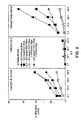
- Dendritic cells pulsed with the OVA peptide (aa 257-264) incubated with T cells from naive mice induce a potent CTL response in vitro (Fig. 1).
- This example demonstrates that RNA can be used as a source of antigen to sensitize DC to present antigen to CD8 + T cells.
- Splenic DC were isolated from C57BL/6 mice and pulsed with OVA peptide or incubated with RNA synthesized in vitro (OVA IVT RNA) from a plasmid encoding the chicken ovalbumin cDNA, and used to stimulate an OVA-specific primary CTL response in vitro.
- OVA IVT RNA RNA synthesized in vitro
- RNA pulsed DC were capable of inducing an OVA specific primary CTL response (Fig. 1).
- RNA pulsed DC were consistently more effective stimulators than peptide pulsed DC.
- total RNA or poly A + RNA was isolated from E.G7-OVA or EL4 cells and incubated with DC.
- DC pulsed with unfractionated RNA, total or poly A + were as potent inducers of a primary CTL response as DC pulsed with the OVA peptide encoding a defined CTL epitope.
- Stimulation of a CTL response by (total or poly A + ) EL4 RNA pulsed DC was only marginally above background and statistically not significant (Compare to lysis of EL4 targets by CTL stimulated with OVA peptide or OVA IVT RNA pulsed DC), reflecting the immunodominance of the OVA epitope and the relative weakness of the EL4 encoded antigens.
- RNA isolated from E.G7-OVA cells is capable of sensitizing DC to stimulate a primary CTL response.
- poly A + RNA from E.G7-OVA cells was incubated with either an antisense oligonucleotide spanning the sequence encoding the single CTL epitope present in the chicken ovalbumin gene or with a control oligodeoxynucleotide, and then treated with RNase H to remove any RNA sequence to which the oligodeoxynucleotide probe has hybridized.
- FIG. 2 also shows that cells expressing the complete ovalbumin gene, E.G7-OVA cells, and RMA-S cells pulsed with the 8 amino acid long OVA peptide encoding the single dominant CTL epitope are lysed to a similar extent following stimulation with total or poly A + E.G7-OVA RNA pulsed DC. This indicates, therefore, that the majority of epitopes presented by E.G7-OVA RNA pulsed DC correspond to the previously defined single dominant CTL epitope encoded in the chicken ovalbumin gene.
- mice with OVA RNA pulsed DC provided protection against a challenge with E.G7-OVA tumor cells.
- Mice were immunized once with 2 x 10 6 RNA pulsed DC or with 5 x 10 6 irradiated E.G7-OVA cells.
- mice were challenged with a tumorigenic dose of E.G7-OVA cells. Appearance and size of the tumor were determined on a regular basis.
- Fig. 3 shows the size of the tumors at 37 days post-tumor implantation.
- mice immunized with irradiated EL4 cells were 25 cm, while the average tumor size in animals immunized with the OVA expressing EL4 cells (E.G7-OVA) was only 7.03 cm. This difference is a reflection of the high immunogenicity of the chicken OVA antigen expressed in EL4 cells and the poor immunogenicity of the parental, EL4, tumor cell line.
- Vaccination with DC pulsed with RNA (total or poly A + fraction) derived from E.G7-OVA cells was as effective as vaccination with the .highly immunogenic E.G7-OVA cells (average tumor size 7 cm).
- Vaccination with DC incubated with total or poly A + RNA derived from EL4 tumor cells had a slight protective effect (average tumor size: 22 cm and 19.5 cm, respectively) which was not statistically significant, consistent with poor to undetectable immunogenicity of EL4-derived antigens. Consistent with the primary CTL induction data (Fig. 1), vaccination of mice with OVA IVT RNA pulsed DC provided the most effective anti- tumor response (average tumor size: 3.9 cm), while vaccination with the control antisense OVA IVT RNA did not elicit a significant protective response.
- the potency of DC pulsed with tumor-derived RNA was further evaluated in the B16/F10.9 (H-2 b ) melanoma metastasis model.
- the B16/F10.9 melanoma tumor is poorly immunogenic, expresses low levels of MHC class I molecules, and is highly metastatic in both experimental and spontaneous metastasis assay systems ( Porgador et al., 1996, J. Immunology 156: 1772-1780 ). Porgador et al.
- mice were immunized with irradiated B16/F10.9 cells, irradiated B16/F10.9 cells transduced with the H-2K b gene (F10.9K1), or with RNA pulsed DC preparations (Fig. 4). The mice received a total of three vaccinations given at weekly intervals. The average lung weight of a normal mouse is 0.18-0.22 g.
- mice treated with PBS were overwhelmed with inetastases.
- the mean lung weight of mice in this treatment group was 0.81 g; approximately three-quarters of the weight was contributed by the metastases, which were too many to count (>100 nodules).
- a similar metastatic load was seen when mice were treated with irradiated B16/10.9 cells (data not shown), which confirms numerous previous observations that treatment with irradiated B16/F10.9 tumor cells alone has no therapeutic benefit in this tumor model.
- immunization with H-2K b expressing B16/F10.9 cells F10.9K1, as a positive control
- had a modest therapeutic benefit as indicated by a statistically significant decrease in the average lung weight of the animals in this treatment group.
- mice treated with DC that were pulsed with total RNA derived from F10.9 cells in accordance with the invention The mean lung weight of mice in this treatment group was 0.37 g.
- RNA-mediated stimulation of CTL occurs via translation of the input RNA and generation of the predicted class I restricted epitopes, in this case a single dominant epitope encoded in the chicken OVA peptide.
- the invention can be used to treat or prevent tumor formation in a patient (e.g., melanoma tumors, bladder tumors, breast cancer tumors, colon cancer tumors, prostate cancer tumors, and ovarian cancer tumors).
- a pathogen such as a bacterium (e.g., Salmonella, Shigella, or Enterobacter) or a virus (e.g., a human immunodeficiency virus, a Herpes virus, an influenza virus, a poliomyelitis virus, a measles virus, a mumps virus, or a rubella virus).
- a pathogen such as a bacterium (e.g., Salmonella, Shigella, or Enterobacter) or a virus (e.g., a human immunodeficiency virus, a Herpes virus, an influenza virus, a poliomyelitis virus, a measles virus, a mumps virus, or a rubella virus).
- the cell(s) that is administered to the patient be derived from that patient.
- the antigen-presenting cell can be obtained from a matched donor, or from a culture of cells grown in vitro . Methods for matching haplotypes are known in the art.
- RNA from a donor can be used.
- the invention is suitable for use even after a tumor has formed, as the invention can cause a regression of the tumor.
- the optimal dosage of the vaccine or cells depends on factors such as the weight of the mammal, the severity of the cancer or infection, and the strength of the CTL epitope.
- a dosage of 10 5 to 10 8 RNA-loaded antigen-presenting cells/kg weight, preferably 10 6 to 10 7 cells/kg body weight, should be administered in a pharmaceutically acceptable excipient to the patient.
- the cells can be administered by using infusion techniques that are commonly used in cancer therapy (see, e.g., Rosenberg et al., New Eng. J. of Med. 319:1676, 1988).
- the optimal dosage and treatment regime for a particular patient can readily be determined by one skilled in the art of medicine by monitoring the patient for signs of disease and adjusting the treatment accordingly.
- the resulting effector CTLs can subsequently be administered to a mammal in a CTL-based method of therapy (see, e.g., PCT/US91/06441 ).
- CTL produced in vitro with the antigen-presenting cells of the invention can be administered in a pharmaceutically acceptable excipient to a mammal by employing conventional infusion methods (see, e.g., Rosenberg et al., supra ).
- 10 9 - 10 10 cells are administered over the course of 30 minutes, with treatment repeated as necessary.
- Such a CTL-based method of therapy may be combined with other methods, such as direct administration of the antigen-presenting cells of the invention.
- the CTL and antigen-presenting cells may be autologous or heterologous to the patient undergoing therapy.
- the treatment may also include administration of mitogens (e.g., phyto-hemagglutinin) or lymphokines (e.g., IL-2 or IL-4) to enhance CTL proliferation.
- mitogens e.g., phyto-hemagglutinin
- lymphokines e.g., IL-2 or IL-4
Landscapes
- Health & Medical Sciences (AREA)
- Life Sciences & Earth Sciences (AREA)
- Chemical & Material Sciences (AREA)
- Engineering & Computer Science (AREA)
- Genetics & Genomics (AREA)
- Organic Chemistry (AREA)
- General Health & Medical Sciences (AREA)
- Biomedical Technology (AREA)
- Zoology (AREA)
- Immunology (AREA)
- Molecular Biology (AREA)
- Biotechnology (AREA)
- Bioinformatics & Cheminformatics (AREA)
- Biochemistry (AREA)
- Wood Science & Technology (AREA)
- Medicinal Chemistry (AREA)
- General Engineering & Computer Science (AREA)
- Cell Biology (AREA)
- Biophysics (AREA)
- Animal Behavior & Ethology (AREA)
- Public Health (AREA)
- Veterinary Medicine (AREA)
- Microbiology (AREA)
- Toxicology (AREA)
- Physics & Mathematics (AREA)
- Proteomics, Peptides & Aminoacids (AREA)
- Hematology (AREA)
- Gastroenterology & Hepatology (AREA)
- Epidemiology (AREA)
- Plant Pathology (AREA)
- Urology & Nephrology (AREA)
- Pharmacology & Pharmacy (AREA)
- Nuclear Medicine, Radiotherapy & Molecular Imaging (AREA)
- General Chemical & Material Sciences (AREA)
- Chemical Kinetics & Catalysis (AREA)
- Oncology (AREA)
- Communicable Diseases (AREA)
- Tropical Medicine & Parasitology (AREA)
- Food Science & Technology (AREA)
- Analytical Chemistry (AREA)
Priority Applications (1)
| Application Number | Priority Date | Filing Date | Title |
|---|---|---|---|
| EP10010076A EP2298927A3 (fr) | 1996-04-30 | 1997-04-30 | Procédés de traitement de cancers et d'infections par pathogènes au moyen de cellules présentatrice d'antigènes chargées d'ARN |
Applications Claiming Priority (2)
| Application Number | Priority Date | Filing Date | Title |
|---|---|---|---|
| US08/640,444 US5853719A (en) | 1996-04-30 | 1996-04-30 | Methods for treating cancers and pathogen infections using antigen-presenting cells loaded with RNA |
| EP97922581A EP0918848B1 (fr) | 1996-04-30 | 1997-04-30 | Procedes de traitement de cancers et d'infections par pathogenes au moyen de cellules presentatrice d'antigenes chargees d'arn |
Related Parent Applications (1)
| Application Number | Title | Priority Date | Filing Date |
|---|---|---|---|
| EP97922581A Division EP0918848B1 (fr) | 1996-04-30 | 1997-04-30 | Procedes de traitement de cancers et d'infections par pathogenes au moyen de cellules presentatrice d'antigenes chargees d'arn |
Related Child Applications (1)
| Application Number | Title | Priority Date | Filing Date |
|---|---|---|---|
| EP10010076A Division-Into EP2298927A3 (fr) | 1996-04-30 | 1997-04-30 | Procédés de traitement de cancers et d'infections par pathogènes au moyen de cellules présentatrice d'antigènes chargées d'ARN |
Publications (2)
| Publication Number | Publication Date |
|---|---|
| EP1721987A1 true EP1721987A1 (fr) | 2006-11-15 |
| EP1721987B1 EP1721987B1 (fr) | 2015-11-11 |
Family
ID=42676767
Family Applications (3)
| Application Number | Title | Priority Date | Filing Date |
|---|---|---|---|
| EP06015438.2A Expired - Lifetime EP1721987B1 (fr) | 1996-04-30 | 1997-04-30 | Procédès de traitement de cancers et d'infections par pathogènes au moyen de cellules dendritiques chargées d'ARN |
| EP10010076A Withdrawn EP2298927A3 (fr) | 1996-04-30 | 1997-04-30 | Procédés de traitement de cancers et d'infections par pathogènes au moyen de cellules présentatrice d'antigènes chargées d'ARN |
| EP97922581A Expired - Lifetime EP0918848B1 (fr) | 1996-04-30 | 1997-04-30 | Procedes de traitement de cancers et d'infections par pathogenes au moyen de cellules presentatrice d'antigenes chargees d'arn |
Family Applications After (2)
| Application Number | Title | Priority Date | Filing Date |
|---|---|---|---|
| EP10010076A Withdrawn EP2298927A3 (fr) | 1996-04-30 | 1997-04-30 | Procédés de traitement de cancers et d'infections par pathogènes au moyen de cellules présentatrice d'antigènes chargées d'ARN |
| EP97922581A Expired - Lifetime EP0918848B1 (fr) | 1996-04-30 | 1997-04-30 | Procedes de traitement de cancers et d'infections par pathogenes au moyen de cellules presentatrice d'antigenes chargees d'arn |
Country Status (11)
| Country | Link |
|---|---|
| US (9) | US5853719A (fr) |
| EP (3) | EP1721987B1 (fr) |
| JP (2) | JP3836151B2 (fr) |
| AT (1) | ATE346912T1 (fr) |
| AU (1) | AU724267B2 (fr) |
| CA (1) | CA2253632C (fr) |
| DE (1) | DE69737023T2 (fr) |
| DK (1) | DK0918848T3 (fr) |
| ES (1) | ES2277675T3 (fr) |
| PT (1) | PT918848E (fr) |
| WO (1) | WO1997041210A1 (fr) |
Families Citing this family (129)
| Publication number | Priority date | Publication date | Assignee | Title |
|---|---|---|---|---|
| US5853719A (en) * | 1996-04-30 | 1998-12-29 | Duke University | Methods for treating cancers and pathogen infections using antigen-presenting cells loaded with RNA |
| US7585622B1 (en) | 1996-10-01 | 2009-09-08 | Geron Corporation | Increasing the proliferative capacity of cells using telomerase reverse transcriptase |
| US6475789B1 (en) * | 1996-10-01 | 2002-11-05 | University Technology Corporation | Human telomerase catalytic subunit: diagnostic and therapeutic methods |
| IL129222A0 (en) | 1996-10-01 | 2000-02-17 | Geron Corp | Telomerase reverse transcriptase |
| US6977073B1 (en) | 1997-02-07 | 2005-12-20 | Cem Cezayirli | Method for stimulating an immune response |
| US6251665B1 (en) | 1997-02-07 | 2001-06-26 | Cem Cezayirli | Directed maturation of stem cells and production of programmable antigen presenting dentritic cells therefrom |
| US6228640B1 (en) | 1997-02-07 | 2001-05-08 | Cem Cezayirli | Programmable antigen presenting cell of CD34 lineage |
| US20020041868A1 (en) * | 1997-04-15 | 2002-04-11 | Charles Nicolette | Cell fusions and methods of making and using the same |
| US20050169898A1 (en) * | 1997-04-15 | 2005-08-04 | Jianlin Gong | Cell fusions and methods of making and using the same |
| US7413864B2 (en) * | 1997-04-18 | 2008-08-19 | Geron Corporation | Treating cancer using a telomerase vaccine |
| US7622549B2 (en) * | 1997-04-18 | 2009-11-24 | Geron Corporation | Human telomerase reverse transcriptase polypeptides |
| US6977074B2 (en) | 1997-07-10 | 2005-12-20 | Mannkind Corporation | Method of inducing a CTL response |
| US6337200B1 (en) * | 1998-03-31 | 2002-01-08 | Geron Corporation | Human telomerase catalytic subunit variants |
| US7402307B2 (en) * | 1998-03-31 | 2008-07-22 | Geron Corporation | Method for identifying and killing cancer cells |
| EP1068296B1 (fr) | 1998-03-31 | 2011-08-10 | Geron Corporation | Compositions permettant de faire apparaitre une reponse immunitaire a un antigene de telomerase |
| US20030022854A1 (en) * | 1998-06-25 | 2003-01-30 | Dow Steven W. | Vaccines using nucleic acid-lipid complexes |
| US20040247662A1 (en) * | 1998-06-25 | 2004-12-09 | Dow Steven W. | Systemic immune activation method using nucleic acid-lipid complexes |
| FR2785542B1 (fr) * | 1998-11-06 | 2001-02-09 | Pf Medicament | UTILISATION D'UNE PROTEINE OmpA D'ENTEROBACTERIE, POUR LE CIBLAGE SPECIFIQUE D'UNE SUBSTANCE BIOLOGIQUEMENT ACTIVE QUI LUI EST ASSOCIEE VERS LES CELLULES PRESENTATRICES D'ANTIGENES TELLES QUE LES CELLULES DENDRITIQUES HUMAINES |
| US7713739B1 (en) * | 2000-11-17 | 2010-05-11 | Novartis Vaccines And Diagnostics, Inc. | Microparticle-based transfection and activation of dendritic cells |
| US7015204B1 (en) | 1999-10-07 | 2006-03-21 | Cornell Research Foundation, Inc. | Protective immunity or immunological tolerance induced with RNA particularly total cellular RNA |
| US7541184B2 (en) | 2000-02-24 | 2009-06-02 | Invitrogen Corporation | Activation and expansion of cells |
| US7572631B2 (en) | 2000-02-24 | 2009-08-11 | Invitrogen Corporation | Activation and expansion of T cells |
| US6783939B2 (en) * | 2000-07-07 | 2004-08-31 | Alphavax, Inc. | Alphavirus vectors and virosomes with modified HIV genes for use in vaccines |
| US20020192681A1 (en) * | 2000-10-24 | 2002-12-19 | Whitehead Institute For Biomedical Research | Response of dendritic cells to a diverse set of pathogens |
| WO2002061389A2 (fr) * | 2001-02-01 | 2002-08-08 | Tanox, Inc. | Procedes de production et d'identification d'anticorps monoclonaux diriges contre un grand nombre d'antigenes humains |
| DE10112851C1 (de) | 2001-03-16 | 2002-10-10 | Gsf Forschungszentrum Umwelt | Semi-allogene Antitumor-Vakzine mit HLA-haplo-identischen Antigen-präsentierenden Zellen |
| US20030082806A1 (en) * | 2001-04-27 | 2003-05-01 | Xcyte Therapies, Inc. | Maturation of antigen-presenting cells using activated T cells |
| GB0111015D0 (en) * | 2001-05-04 | 2001-06-27 | Norsk Hydro As | Genetic material |
| ES2340499T3 (es) | 2001-06-05 | 2010-06-04 | Curevac Gmbh | Arnm de antigeno tumoral estabilizado con un contenido de g/c aumentado. |
| ES2330202T5 (es) * | 2001-09-06 | 2014-01-20 | Alphavax, Inc. | Sistemas vectores basados en replicones de alfavirus |
| EP1442125A4 (fr) * | 2001-10-04 | 2004-12-08 | Carlos Estuard Aguilar-Cordova | Vecteurs viraux chimeres destines a une therapie genique |
| DE10162480A1 (de) | 2001-12-19 | 2003-08-07 | Ingmar Hoerr | Die Applikation von mRNA für den Einsatz als Therapeutikum gegen Tumorerkrankungen |
| KR20050047518A (ko) * | 2002-07-05 | 2005-05-20 | 듀크 유니버시티 | 혈관 면역요법 |
| US20040161417A1 (en) * | 2002-08-14 | 2004-08-19 | Eli Gilboa | Method of enhancing CD4+ T cell responses |
| DE60327786D1 (de) | 2002-09-12 | 2009-07-09 | Oncotherapy Science Inc | Kdr-peptide und diese enthaltende impfstoffe |
| AU2003296439B2 (en) * | 2002-12-10 | 2009-05-07 | Argos Therapeutics, Inc. | In situ maturation of dendritic cells |
| US7078218B2 (en) * | 2002-12-13 | 2006-07-18 | Alphavax, Inc. | Alphavirus particles and methods for preparation |
| US20040208848A1 (en) * | 2002-12-13 | 2004-10-21 | Smith Jonathan F. | Multi-antigenic alphavirus replicon particles and methods |
| US20060134067A1 (en) * | 2003-02-18 | 2006-06-22 | Maxcyte, Inc. | Loading of cells with antigens by electroporation |
| WO2004074451A2 (fr) * | 2003-02-18 | 2004-09-02 | Maxcyte, Inc. | Introduction d'antigenes dans des cellules par electroporation |
| WO2004073641A2 (fr) | 2003-02-18 | 2004-09-02 | Kevin Slawin | Activation induite dans des cellules dendritiques |
| US7442381B2 (en) * | 2003-03-20 | 2008-10-28 | Alphavax, Inc. | Alphavirus replicons and helper constructs |
| DE602004021260D1 (de) * | 2003-07-11 | 2009-07-09 | Alphavax Inc | Cytomegalovirusimpfstoffe, die auf dem alphavirus basieren |
| DE10335833A1 (de) * | 2003-08-05 | 2005-03-03 | Curevac Gmbh | Transfektion von Blutzellen mit mRNA zur Immunstimulation und Gentherapie |
| CA2546378A1 (fr) * | 2003-11-25 | 2005-06-09 | Argos Therapeutics, Inc. | Cellules presentatrices d'antigene transfectees avec de l'arnm |
| US20050181035A1 (en) * | 2004-02-17 | 2005-08-18 | Dow Steven W. | Systemic immune activation method using non CpG nucleic acids |
| AU2005218638A1 (en) * | 2004-03-02 | 2005-09-15 | Donald W. Kufe | Methods and compositions for hybrid cell vaccines for the treatment and prevention of cancer |
| CN1989250B (zh) | 2004-05-18 | 2013-11-20 | 阿尔法瓦克斯公司 | Tc-83衍生的甲病毒属载体、颗粒和方法 |
| US20080293581A1 (en) * | 2004-05-24 | 2008-11-27 | Rogler Charles E | Rna Expression Microarrays |
| CA2504451A1 (fr) * | 2004-08-10 | 2006-02-10 | Geron Corporation | Vaccins a cellules dendritiques faits de cellules souches embryonnaires pour le traitement du cancer |
| ES2610781T3 (es) | 2004-09-14 | 2017-05-03 | Argos Therapeutics, Inc. | Amplificación de patógenos independiente de la cepa y vacunas para estos |
| US20060216269A1 (en) * | 2004-09-17 | 2006-09-28 | Kenichiro Hasumi | Dendritic cell tumor injection (DCTI) therapy |
| US8076132B2 (en) | 2004-09-17 | 2011-12-13 | Hasumi International Research Foundation | Dendritic cell tumor injection (DCTI) therapy |
| GB0501129D0 (en) * | 2005-01-19 | 2005-02-23 | Ribostem Ltd | Method of treatment by administration of RNA |
| ES2364670T3 (es) | 2005-02-25 | 2011-09-12 | Oncotherapy Science, Inc. | Vacunas de péptidos para cánceres de pulmón que expresan polipéptidos ttk. |
| DK2095822T3 (da) | 2005-02-28 | 2014-01-13 | Oncotherapy Science Inc | Epitoppeptider afledt af karendothelvækstfaktorreceptor-1 samt vacciner indeholdende disse peptider |
| JP5020935B2 (ja) | 2005-04-08 | 2012-09-05 | アルゴス セラピューティクス,インコーポレイティド | 樹状細胞組成物および方法 |
| HUE027330T2 (en) | 2005-07-27 | 2016-09-28 | Oncotherapy Science Inc | Colon cancer related gene tom34 |
| EP1951281B1 (fr) | 2005-10-17 | 2015-04-15 | Sloan Kettering Institute For Cancer Research | Peptides de liaison wt1 hla de classe ii, compositions et methodes associees comprenant ces peptides |
| WO2007120673A2 (fr) | 2006-04-10 | 2007-10-25 | Sloan Kettering Institute For Cancer Research | Peptides wt1 immunogènes et leurs méthodes d'utilisation |
| EP2010659B1 (fr) | 2006-04-14 | 2014-06-18 | CellScript, Inc. | Kits et procédés pour la génération d'ARN coiffé en 5' |
| JP5570808B2 (ja) | 2006-08-18 | 2014-08-13 | アルゴス・セラピューティクス・インコーポレーテッド | 併用療法におけるcd83の使用 |
| KR101543622B1 (ko) | 2006-10-17 | 2015-08-11 | 온코세라피 사이언스 가부시키가이샤 | Mphosph1 또는 depdc1 폴리펩티드를 발현하는 암에 대한 펩티드 백신 |
| CA3058450A1 (fr) * | 2006-10-19 | 2008-04-24 | Baylor College Of Medicine | Generation d'une reponse immunitaire en induisant cd40 et des recepteursde reconnaissance de motif |
| WO2008055354A1 (fr) * | 2006-11-10 | 2008-05-15 | Université de Montréal | Compositions de cellules dendritiques chargées en arn pour déclencher l'aide des lymphocytes t cd4+ et procédés apparentés |
| TWI596109B (zh) | 2007-02-21 | 2017-08-21 | 腫瘤療法 科學股份有限公司 | 表現腫瘤相關抗原之癌症的胜肽疫苗 |
| TW201425333A (zh) | 2007-04-11 | 2014-07-01 | Oncotherapy Science Inc | 腫瘤血管內皮標誌8胜肽及包含此胜肽之疫苗 |
| US8460913B2 (en) | 2007-06-21 | 2013-06-11 | Alpha Vax, Inc. | Promoterless cassettes for expression of alpha virus structural proteins |
| US8569244B2 (en) | 2007-08-20 | 2013-10-29 | Oncotherapy Science, Inc. | FOXM1 peptide and medicinal agent comprising the same |
| EP2254998B1 (fr) | 2008-02-28 | 2015-12-23 | Argos Therapeutics, Inc. | Expression transitoire de polypeptides immunomodulateurs dans la prévention et le traitement des maladies auto-immunes, l allergie et le rejet de greffe |
| EP3156069B8 (fr) | 2008-06-20 | 2020-10-21 | Duke University | Compositions, procédés et kits permettant de provoquer une réponse immunitaire |
| CA2738031C (fr) * | 2008-09-22 | 2022-11-29 | Baylor College Of Medicine | Procedes et compositions permettant la generation d'une reponse immunitaire par l'induction de cd40 et adaptateur de recepteurs de reconnaissance de motifs |
| DK2352756T3 (da) | 2008-11-24 | 2012-12-03 | Helmholtz Zentrum Muenchen | Højaffin T-cellereceptor og anvendelse af denne |
| TWI539160B (zh) | 2008-12-05 | 2016-06-21 | 腫瘤療法 科學股份有限公司 | Wdrpuh抗原決定位胜肽以及含此胜肽之疫苗 |
| US8728806B2 (en) | 2008-12-06 | 2014-05-20 | The Board Of Regents, The University Of Texas System | Methods and compositions related to Th-1 dendritic cells |
| TWI469791B (zh) | 2009-02-18 | 2015-01-21 | Oncotherapy Science Inc | Foxm1胜肽以及含此胜肽之疫苗 |
| US9841426B2 (en) * | 2009-03-11 | 2017-12-12 | Marker Gene Technologies, Inc | Intracellular organelle peptide targeted enzyme substrates |
| ES2617434T3 (es) | 2009-03-18 | 2017-06-19 | Oncotherapy Science, Inc. | Péptidos NEIL3 y vacunas que incluyen los mismos |
| TWI507204B (zh) | 2009-05-26 | 2015-11-11 | Oncotherapy Science Inc | Cdc45l胜肽與含此胜肽之疫苗 |
| TW201136604A (en) | 2009-12-14 | 2011-11-01 | Oncotherapy Science Inc | TMEM22 peptides and vaccines including the same |
| CN105601727B (zh) | 2010-03-11 | 2020-01-10 | 肿瘤疗法科学股份有限公司 | Hjurp肽及包含它们的疫苗 |
| TWI538685B (zh) | 2010-04-02 | 2016-06-21 | 腫瘤療法 科學股份有限公司 | Ect2胜肽及含此胜肽之疫苗 |
| US9089520B2 (en) | 2010-05-21 | 2015-07-28 | Baylor College Of Medicine | Methods for inducing selective apoptosis |
| WO2012019168A2 (fr) | 2010-08-06 | 2012-02-09 | Moderna Therapeutics, Inc. | Acides nucléiques modifiés et leurs procédés d'utilisation |
| EP2625189B1 (fr) | 2010-10-01 | 2018-06-27 | ModernaTX, Inc. | Synthèse d'acides nucléiques et méthodes d'utilisation associées |
| AU2012236099A1 (en) | 2011-03-31 | 2013-10-03 | Moderna Therapeutics, Inc. | Delivery and formulation of engineered nucleic acids |
| EP2557089A2 (fr) | 2011-07-15 | 2013-02-13 | Fundació Institut d'Investigació Biomèdica de Bellvitge (IDIBELL) | Compositions et procédés d'immunomodulation |
| JP5564730B2 (ja) | 2011-08-12 | 2014-08-06 | オンコセラピー・サイエンス株式会社 | Mphosph1ペプチドおよびそれを含むワクチン |
| US9464124B2 (en) | 2011-09-12 | 2016-10-11 | Moderna Therapeutics, Inc. | Engineered nucleic acids and methods of use thereof |
| DE19216461T1 (de) | 2011-10-03 | 2021-10-07 | Modernatx, Inc. | Modifizierte nukleoside, nukleotide und nukleinsäuren und verwendungen davon |
| CN104066746B (zh) | 2011-10-28 | 2017-12-05 | 肿瘤疗法科学股份有限公司 | Topk肽及包含它们的疫苗 |
| CA3018046A1 (fr) | 2011-12-16 | 2013-06-20 | Moderna Therapeutics, Inc. | Nucleoside, nucleotide, et compositions d'acide nucleique modifies |
| AU2013207669C1 (en) | 2012-01-13 | 2018-05-31 | Memorial Sloan Kettering Cancer Center | Immunogenic WT-1 peptides and methods of use thereof |
| US9254311B2 (en) | 2012-04-02 | 2016-02-09 | Moderna Therapeutics, Inc. | Modified polynucleotides for the production of proteins |
| US9572897B2 (en) | 2012-04-02 | 2017-02-21 | Modernatx, Inc. | Modified polynucleotides for the production of cytoplasmic and cytoskeletal proteins |
| WO2013151665A2 (fr) | 2012-04-02 | 2013-10-10 | modeRNA Therapeutics | Polynucléotides modifiés destinés à la production de protéines associées à une maladie humaine |
| US9283287B2 (en) | 2012-04-02 | 2016-03-15 | Moderna Therapeutics, Inc. | Modified polynucleotides for the production of nuclear proteins |
| JP6259983B2 (ja) | 2012-07-10 | 2018-01-17 | オンコセラピー・サイエンス株式会社 | Th1細胞のKIF20Aエピトープペプチドおよびこれを含有するワクチン |
| PL2922554T3 (pl) | 2012-11-26 | 2022-06-20 | Modernatx, Inc. | Na zmodyfikowany na końcach |
| US10815273B2 (en) | 2013-01-15 | 2020-10-27 | Memorial Sloan Kettering Cancer Center | Immunogenic WT-1 peptides and methods of use thereof |
| RS61173B1 (sr) | 2013-01-15 | 2021-01-29 | Memorial Sloan Kettering Cancer Center | Imunogeni wt-1 peptidi i postupci za njihovu upotrebu |
| US9434935B2 (en) | 2013-03-10 | 2016-09-06 | Bellicum Pharmaceuticals, Inc. | Modified caspase polypeptides and uses thereof |
| TWI658049B (zh) | 2013-03-12 | 2019-05-01 | 腫瘤療法 科學股份有限公司 | Kntc2胜肽及含此胜肽之疫苗 |
| CA2905352A1 (fr) | 2013-03-14 | 2014-09-25 | Bellicum Pharmaceuticals, Inc. | Procedes de regulation de la proliferation cellulaire |
| US8980864B2 (en) | 2013-03-15 | 2015-03-17 | Moderna Therapeutics, Inc. | Compositions and methods of altering cholesterol levels |
| ES2791598T3 (es) | 2013-06-05 | 2020-11-05 | Bellicum Pharmaceuticals Inc | Métodos para inducir apoptosis parcial utilizando polipéptidos de caspasa |
| EP3049092A4 (fr) | 2013-09-24 | 2017-09-06 | Duke University | Compositions, procédés et kits pour déclencher une réponse immunitaire |
| WO2015048744A2 (fr) | 2013-09-30 | 2015-04-02 | Moderna Therapeutics, Inc. | Polynucléotides codant des polypeptides de modulation immunitaire |
| EP3052521A1 (fr) | 2013-10-03 | 2016-08-10 | Moderna Therapeutics, Inc. | Polynucléotides codant pour un récepteur de lipoprotéines de faible densité |
| WO2015062738A1 (fr) | 2013-11-01 | 2015-05-07 | Curevac Gmbh | Arn modifié à propriétés immunostimulantes réduites |
| US10934346B2 (en) | 2014-02-14 | 2021-03-02 | Bellicum Pharmaceuticals, Inc. | Modified T cell comprising a polynucleotide encoding an inducible stimulating molecule comprising MyD88, CD40 and FKBP12 |
| US12214038B2 (en) * | 2014-07-22 | 2025-02-04 | The Trustees Of The University Of Pennsylvania | Compositions and methods for cancer immunotherapy |
| EP3981416B1 (fr) | 2014-08-04 | 2024-03-20 | OncoTherapy Science, Inc. | Peptide dérivé de koc1 et vaccin le comportant |
| JP6700512B2 (ja) | 2014-08-04 | 2020-05-27 | オンコセラピー・サイエンス株式会社 | Cdca1由来ペプチドおよびそれを含むワクチン |
| SG11201700838VA (en) | 2014-08-04 | 2017-03-30 | Oncotherapy Science Inc | Urlc10-derived peptide and vaccine containing same |
| AU2015312117A1 (en) | 2014-09-02 | 2017-03-02 | Bellicum Pharmaceuticals, Inc. | Costimulation of chimeric antigen receptors by Myd88 and CD40 polypeptides |
| CA3017170C (fr) * | 2014-09-17 | 2021-03-23 | The Johns Hopkins University | Reactifs et methodes d'identification, d'enrichissement, et/ou d'expansion de cellules t specifiques d'antigenes |
| HK1243631A1 (zh) | 2014-10-27 | 2018-07-20 | Fred Hutchinson Cancer Research Center | 用於提高过继细胞免疫疗法效力的组合物和方法 |
| JP6718444B2 (ja) | 2014-11-03 | 2020-07-08 | アカデミッシュ ザイケンホイス レイデン (エイチ.オー.ディー.エヌ. エルユーエムシー) | Bob1に対して指向されるT細胞レセプターおよびその使用 |
| JP2018090491A (ja) * | 2015-04-01 | 2018-06-14 | 株式会社細胞治療技術研究所 | 癌ワクチンの製造方法、及び癌ワクチン |
| US11090332B2 (en) * | 2015-05-21 | 2021-08-17 | Regen BioPharma, Inc. | Antigen specific mRNA cellular cancer vaccines |
| JP6666094B2 (ja) * | 2015-09-15 | 2020-03-13 | 株式会社東芝 | 吸着支持装置、および物品把持装置 |
| BR112018005581A2 (pt) | 2015-10-08 | 2018-10-16 | Oncotherapy Science, Inc. | peptídeo derivado de foxm1 e vacina incluindo o mesmo |
| US11780934B2 (en) | 2016-02-05 | 2023-10-10 | Institut Pasteur | Use of inhibitors of ADAM12 as adjuvants in tumor therapies |
| EP3452082A1 (fr) | 2016-05-04 | 2019-03-13 | Fred Hutchinson Cancer Research Center | Vaccins à base de néoantigènes à base cellulaire et leurs utilisations |
| US11331343B2 (en) | 2016-06-29 | 2022-05-17 | Duke University | Compositions and methods for activating antigen presenting cells with chimeric poliovirus |
| WO2019135701A1 (fr) | 2018-01-05 | 2019-07-11 | Nilsson Rolf Jonas Andreas | Arn circulaire dérivé d'une tumeur endogène et protéines associées destinées à être utilisées comme vaccin |
| TW202023581A (zh) | 2018-08-02 | 2020-07-01 | 日商腫瘤療法 科學股份有限公司 | 來自cdca1的胜肽及含有此的疫苗 |
| US20250144143A1 (en) * | 2023-11-06 | 2025-05-08 | Immunitybio, Inc. | Virally Educated T cells |
Citations (1)
| Publication number | Priority date | Publication date | Assignee | Title |
|---|---|---|---|---|
| WO1995034638A1 (fr) * | 1994-06-14 | 1995-12-21 | The Board Of Trustees Of Leland Stanford Junior University | Procedes pour l'activation de lymphocytes t in vivo par des cellules dendritiques a impulsions antigeniques |
Family Cites Families (14)
| Publication number | Priority date | Publication date | Assignee | Title |
|---|---|---|---|---|
| US4918164A (en) * | 1987-09-10 | 1990-04-17 | Oncogen | Tumor immunotherapy using anti-idiotypic antibodies |
| US5256536A (en) | 1990-11-09 | 1993-10-26 | Syntex (U.S.A.) Inc. | Nucleotide probe for Neisseria gonrrhoeae |
| US5662907A (en) * | 1992-08-07 | 1997-09-02 | Cytel Corporation | Induction of anti-tumor cytotoxic T lymphocytes in humans using synthetic peptide epitopes |
| US6696061B1 (en) * | 1992-08-11 | 2004-02-24 | President And Fellows Of Harvard College | Immunomodulatory peptides |
| JPH08502244A (ja) | 1992-08-11 | 1996-03-12 | プレジデント アンド フェローズ オブ ハーバード カレッジ | 免疫調節ペプチド |
| DE4233430A1 (de) * | 1992-10-05 | 1994-04-07 | Basf Ag | Verfahren zur Herstellung von 4-Hydroxymethyltetrahydropyran |
| US5830877A (en) | 1993-08-26 | 1998-11-03 | The Regents Of The University Of California | Method, compositions and devices for administration of naked polynucleotides which encode antigens and immunostimulatory |
| US5827642A (en) * | 1994-08-31 | 1998-10-27 | Fred Hutchinson Cancer Research Center | Rapid expansion method ("REM") for in vitro propagation of T lymphocytes |
| CA2230195A1 (fr) | 1995-08-21 | 1997-02-27 | Duke University | Procede pour accroitre la densite d'un antigene sur une cellule presentant un antigene |
| US5853719A (en) | 1996-04-30 | 1998-12-29 | Duke University | Methods for treating cancers and pathogen infections using antigen-presenting cells loaded with RNA |
| US6130087A (en) * | 1996-10-07 | 2000-10-10 | Fordham University | Methods for generating cytotoxic T cells in vitro |
| US6228640B1 (en) * | 1997-02-07 | 2001-05-08 | Cem Cezayirli | Programmable antigen presenting cell of CD34 lineage |
| US6831068B2 (en) * | 2002-02-13 | 2004-12-14 | Abbott Laboratories | Macrolide antibacterial compounds |
| DE102004055330A1 (de) | 2004-11-16 | 2006-05-24 | Bosch Rexroth Aktiengesellschaft | Verfahren und Vorrichtung zum Betreiben eines Netzwerkes |
-
1996
- 1996-04-30 US US08/640,444 patent/US5853719A/en not_active Expired - Lifetime
-
1997
- 1997-04-30 DK DK97922581T patent/DK0918848T3/da active
- 1997-04-30 US US09/171,916 patent/US7105157B1/en not_active Expired - Fee Related
- 1997-04-30 AT AT97922581T patent/ATE346912T1/de active
- 1997-04-30 DE DE69737023T patent/DE69737023T2/de not_active Expired - Lifetime
- 1997-04-30 ES ES97922581T patent/ES2277675T3/es not_active Expired - Lifetime
- 1997-04-30 PT PT97922581T patent/PT918848E/pt unknown
- 1997-04-30 JP JP53921097A patent/JP3836151B2/ja not_active Expired - Lifetime
- 1997-04-30 CA CA002253632A patent/CA2253632C/fr not_active Expired - Lifetime
- 1997-04-30 AU AU28213/97A patent/AU724267B2/en not_active Expired
- 1997-04-30 EP EP06015438.2A patent/EP1721987B1/fr not_active Expired - Lifetime
- 1997-04-30 WO PCT/US1997/007317 patent/WO1997041210A1/fr not_active Ceased
- 1997-04-30 EP EP10010076A patent/EP2298927A3/fr not_active Withdrawn
- 1997-04-30 EP EP97922581A patent/EP0918848B1/fr not_active Expired - Lifetime
-
1998
- 1998-05-06 US US09/073,819 patent/US6306388B1/en not_active Expired - Lifetime
-
1999
- 1999-04-30 US US09/302,329 patent/US6387701B1/en not_active Expired - Lifetime
-
2000
- 2000-09-22 US US09/667,319 patent/US6670186B1/en not_active Expired - Lifetime
-
2001
- 2001-06-07 US US09/875,264 patent/US7101705B2/en not_active Expired - Lifetime
-
2005
- 2005-10-17 US US11/250,546 patent/US7601343B2/en not_active Expired - Fee Related
-
2006
- 2006-05-08 JP JP2006129005A patent/JP3955311B2/ja not_active Expired - Lifetime
-
2009
- 2009-09-01 US US12/585,028 patent/US8263066B2/en not_active Expired - Fee Related
-
2012
- 2012-07-20 US US13/554,938 patent/US9115360B2/en not_active Expired - Lifetime
Patent Citations (1)
| Publication number | Priority date | Publication date | Assignee | Title |
|---|---|---|---|---|
| WO1995034638A1 (fr) * | 1994-06-14 | 1995-12-21 | The Board Of Trustees Of Leland Stanford Junior University | Procedes pour l'activation de lymphocytes t in vivo par des cellules dendritiques a impulsions antigeniques |
Non-Patent Citations (4)
| Title |
|---|
| BOCZKOWSKI D ET AL: "DENDRITIC CELLS PULSED WITH RNA ARE POTENT ANTIGEN-PRESENTING CELLSIN VITRO AND IN VIVO", JOURNAL OF EXPERIMENTAL MEDICINE, TOKYO, JP, vol. 184, no. 2, August 1996 (1996-08-01), pages 465 - 472, XP002921123, ISSN: 0022-1007 * |
| CHRISTINA M CELLUZZI ET AL: "Peptide-pulsed Dendritic Cells Induce Antigen-specific, CTL-mediated Protective Tumor Immunity", JOURNAL OF EXPERIMENTAL MEDICINE, TOKYO, JP, vol. 183, January 1996 (1996-01-01), pages 283 - 287, XP002900614, ISSN: 0022-1007 * |
| NAIR S K ET AL: "CELLS TREATED WITH TAP-2 ANTISENSE OLIGONUCLEOTIDES ARE POTENT ANTIGEN-PRESENTING CELLS IN VITRO AND IN VIVO", JOURNAL OF IMMUNOLOGY, THE WILLIAMS AND WILKINS CO. BALTIMORE, US, 1996, pages 1772 - 1780, XP000941413, ISSN: 0022-1767 * |
| ROUSE R J D ET AL: "INDUCTION IN VITRO OF PRIMARY CYTOTOXIC T-LYMPHOCYTE RESPONSES WITH DNA ENCODING HERPES SIMPLEX VIRUS PROTEINS", JOURNAL OF VIROLOGY, THE AMERICAN SOCIETY FOR MICROBIOLOGY, US, vol. 68, no. 9, 1 September 1994 (1994-09-01), pages 5685 - 5689, XP000645186, ISSN: 0022-538X * |
Also Published As
Similar Documents
| Publication | Publication Date | Title |
|---|---|---|
| EP1721987B1 (fr) | Procédès de traitement de cancers et d'infections par pathogènes au moyen de cellules dendritiques chargées d'ARN | |
| Boczkowski et al. | Dendritic cells pulsed with RNA are potent antigen-presenting cells in vitro and in vivo. | |
| Porgador et al. | Induction of antitumor immunity using bone marrow-generated dendritic cells | |
| US5831068A (en) | Method to increase the density of antigen on antigen presenting cells | |
| CA2347067C (fr) | Vaccin a base de cellule dendritique contenant de la transcriptase inverse de la telomarase pour le traitement du cancer | |
| EP1210430B1 (fr) | Peptides derives de muc-1 | |
| CN103570818A (zh) | 肿瘤抗原性多肽及其作为肿瘤疫苗的用途 | |
| Hermans et al. | Tumor-peptide-pulsed dendritic cells isolated from spleen or cultured in vitro from bone marrow precursors can provide protection against tumor challenge | |
| CN103570821A (zh) | 粘蛋白-1抗原性多肽及其作为肿瘤疫苗的用途 | |
| HK1154631A (en) | Methods for treating cancers and pathogen infections using antigen-presenting cells loaded with rna | |
| US20030044394A1 (en) | Method for identifying and killing cancer cells | |
| Tüting et al. | DNA vaccines targeting dendritic cells for the immunotherapy of cancer | |
| CN101168064B (zh) | 重组人胰腺癌黏液蛋白核心肽dna疫苗 |
Legal Events
| Date | Code | Title | Description |
|---|---|---|---|
| PUAI | Public reference made under article 153(3) epc to a published international application that has entered the european phase |
Free format text: ORIGINAL CODE: 0009012 |
|
| AC | Divisional application: reference to earlier application |
Ref document number: 0918848 Country of ref document: EP Kind code of ref document: P |
|
| AK | Designated contracting states |
Kind code of ref document: A1 Designated state(s): AT BE CH DE DK ES FI FR GB GR IE IT LI LU MC NL PT SE |
|
| RIN1 | Information on inventor provided before grant (corrected) |
Inventor name: NAIR, SMITA K. Inventor name: GILBOA, ELI Inventor name: BOCZKOWSKI, DAVID J. |
|
| 17P | Request for examination filed |
Effective date: 20070510 |
|
| AKX | Designation fees paid |
Designated state(s): AT BE CH DE DK ES FI FR GB GR IE IT LI LU MC NL PT SE |
|
| 17Q | First examination report despatched |
Effective date: 20080709 |
|
| GRAP | Despatch of communication of intention to grant a patent |
Free format text: ORIGINAL CODE: EPIDOSNIGR1 |
|
| INTG | Intention to grant announced |
Effective date: 20150529 |
|
| GRAS | Grant fee paid |
Free format text: ORIGINAL CODE: EPIDOSNIGR3 |
|
| GRAA | (expected) grant |
Free format text: ORIGINAL CODE: 0009210 |
|
| AC | Divisional application: reference to earlier application |
Ref document number: 0918848 Country of ref document: EP Kind code of ref document: P |
|
| AK | Designated contracting states |
Kind code of ref document: B1 Designated state(s): AT BE CH DE DK ES FI FR GB GR IE IT LI LU MC NL PT SE |
|
| REG | Reference to a national code |
Ref country code: GB Ref legal event code: FG4D |
|
| REG | Reference to a national code |
Ref country code: CH Ref legal event code: EP |
|
| REG | Reference to a national code |
Ref country code: IE Ref legal event code: FG4D |
|
| REG | Reference to a national code |
Ref country code: AT Ref legal event code: REF Ref document number: 760497 Country of ref document: AT Kind code of ref document: T Effective date: 20151215 |
|
| REG | Reference to a national code |
Ref country code: DE Ref legal event code: R096 Ref document number: 69740816 Country of ref document: DE |
|
| REG | Reference to a national code |
Ref country code: NL Ref legal event code: MP Effective date: 20160211 |
|
| REG | Reference to a national code |
Ref country code: AT Ref legal event code: MK05 Ref document number: 760497 Country of ref document: AT Kind code of ref document: T Effective date: 20151111 |
|
| REG | Reference to a national code |
Ref country code: FR Ref legal event code: PLFP Year of fee payment: 20 |
|
| PG25 | Lapsed in a contracting state [announced via postgrant information from national office to epo] |
Ref country code: NL Free format text: LAPSE BECAUSE OF FAILURE TO SUBMIT A TRANSLATION OF THE DESCRIPTION OR TO PAY THE FEE WITHIN THE PRESCRIBED TIME-LIMIT Effective date: 20151111 Ref country code: ES Free format text: LAPSE BECAUSE OF FAILURE TO SUBMIT A TRANSLATION OF THE DESCRIPTION OR TO PAY THE FEE WITHIN THE PRESCRIBED TIME-LIMIT Effective date: 20151111 Ref country code: IT Free format text: LAPSE BECAUSE OF FAILURE TO SUBMIT A TRANSLATION OF THE DESCRIPTION OR TO PAY THE FEE WITHIN THE PRESCRIBED TIME-LIMIT Effective date: 20151111 |
|
| PG25 | Lapsed in a contracting state [announced via postgrant information from national office to epo] |
Ref country code: FI Free format text: LAPSE BECAUSE OF FAILURE TO SUBMIT A TRANSLATION OF THE DESCRIPTION OR TO PAY THE FEE WITHIN THE PRESCRIBED TIME-LIMIT Effective date: 20151111 Ref country code: SE Free format text: LAPSE BECAUSE OF FAILURE TO SUBMIT A TRANSLATION OF THE DESCRIPTION OR TO PAY THE FEE WITHIN THE PRESCRIBED TIME-LIMIT Effective date: 20151111 Ref country code: AT Free format text: LAPSE BECAUSE OF FAILURE TO SUBMIT A TRANSLATION OF THE DESCRIPTION OR TO PAY THE FEE WITHIN THE PRESCRIBED TIME-LIMIT Effective date: 20151111 Ref country code: PT Free format text: LAPSE BECAUSE OF FAILURE TO SUBMIT A TRANSLATION OF THE DESCRIPTION OR TO PAY THE FEE WITHIN THE PRESCRIBED TIME-LIMIT Effective date: 20160311 Ref country code: GR Free format text: LAPSE BECAUSE OF FAILURE TO SUBMIT A TRANSLATION OF THE DESCRIPTION OR TO PAY THE FEE WITHIN THE PRESCRIBED TIME-LIMIT Effective date: 20160212 |
|
| PGFP | Annual fee paid to national office [announced via postgrant information from national office to epo] |
Ref country code: GB Payment date: 20160427 Year of fee payment: 20 Ref country code: DE Payment date: 20160427 Year of fee payment: 20 |
|
| REG | Reference to a national code |
Ref country code: DE Ref legal event code: R097 Ref document number: 69740816 Country of ref document: DE |
|
| PG25 | Lapsed in a contracting state [announced via postgrant information from national office to epo] |
Ref country code: BE Free format text: LAPSE BECAUSE OF NON-PAYMENT OF DUE FEES Effective date: 20160430 Ref country code: DK Free format text: LAPSE BECAUSE OF FAILURE TO SUBMIT A TRANSLATION OF THE DESCRIPTION OR TO PAY THE FEE WITHIN THE PRESCRIBED TIME-LIMIT Effective date: 20151111 |
|
| PGFP | Annual fee paid to national office [announced via postgrant information from national office to epo] |
Ref country code: FR Payment date: 20160425 Year of fee payment: 20 |
|
| PLBE | No opposition filed within time limit |
Free format text: ORIGINAL CODE: 0009261 |
|
| STAA | Information on the status of an ep patent application or granted ep patent |
Free format text: STATUS: NO OPPOSITION FILED WITHIN TIME LIMIT |
|
| 26N | No opposition filed |
Effective date: 20160812 |
|
| REG | Reference to a national code |
Ref country code: CH Ref legal event code: PL |
|
| PG25 | Lapsed in a contracting state [announced via postgrant information from national office to epo] |
Ref country code: BE Free format text: LAPSE BECAUSE OF FAILURE TO SUBMIT A TRANSLATION OF THE DESCRIPTION OR TO PAY THE FEE WITHIN THE PRESCRIBED TIME-LIMIT Effective date: 20151111 Ref country code: LU Free format text: LAPSE BECAUSE OF FAILURE TO SUBMIT A TRANSLATION OF THE DESCRIPTION OR TO PAY THE FEE WITHIN THE PRESCRIBED TIME-LIMIT Effective date: 20160430 |
|
| REG | Reference to a national code |
Ref country code: IE Ref legal event code: MM4A |
|
| PG25 | Lapsed in a contracting state [announced via postgrant information from national office to epo] |
Ref country code: CH Free format text: LAPSE BECAUSE OF NON-PAYMENT OF DUE FEES Effective date: 20160430 Ref country code: LI Free format text: LAPSE BECAUSE OF NON-PAYMENT OF DUE FEES Effective date: 20160430 |
|
| REG | Reference to a national code |
Ref country code: DE Ref legal event code: R071 Ref document number: 69740816 Country of ref document: DE |
|
| REG | Reference to a national code |
Ref country code: GB Ref legal event code: PE20 Expiry date: 20170429 |
|
| PG25 | Lapsed in a contracting state [announced via postgrant information from national office to epo] |
Ref country code: IE Free format text: LAPSE BECAUSE OF NON-PAYMENT OF DUE FEES Effective date: 20160430 |
|
| PG25 | Lapsed in a contracting state [announced via postgrant information from national office to epo] |
Ref country code: GB Free format text: LAPSE BECAUSE OF EXPIRATION OF PROTECTION Effective date: 20170429 |
|
| PG25 | Lapsed in a contracting state [announced via postgrant information from national office to epo] |
Ref country code: MC Free format text: LAPSE BECAUSE OF FAILURE TO SUBMIT A TRANSLATION OF THE DESCRIPTION OR TO PAY THE FEE WITHIN THE PRESCRIBED TIME-LIMIT Effective date: 20151111 |