EP1761723B1 - Hybridschlauchverstärkungen - Google Patents
Hybridschlauchverstärkungen Download PDFInfo
- Publication number
- EP1761723B1 EP1761723B1 EP05708250.5A EP05708250A EP1761723B1 EP 1761723 B1 EP1761723 B1 EP 1761723B1 EP 05708250 A EP05708250 A EP 05708250A EP 1761723 B1 EP1761723 B1 EP 1761723B1
- Authority
- EP
- European Patent Office
- Prior art keywords
- hose
- cord
- plies
- polyester
- aramid
- Prior art date
- Legal status (The legal status is an assumption and is not a legal conclusion. Google has not performed a legal analysis and makes no representation as to the accuracy of the status listed.)
- Expired - Lifetime
Links
- 230000002787 reinforcement Effects 0.000 title description 2
- 229920000728 polyester Polymers 0.000 claims description 26
- 229920003235 aromatic polyamide Polymers 0.000 claims description 23
- 230000003014 reinforcing effect Effects 0.000 claims description 23
- 239000004744 fabric Substances 0.000 claims description 22
- 239000004760 aramid Substances 0.000 claims description 19
- 229920000297 Rayon Polymers 0.000 description 16
- 239000002964 rayon Substances 0.000 description 16
- 239000000463 material Substances 0.000 description 10
- 238000010399 three-hybrid screening Methods 0.000 description 8
- 239000004677 Nylon Substances 0.000 description 7
- 229920001778 nylon Polymers 0.000 description 7
- 230000000704 physical effect Effects 0.000 description 6
- 239000000203 mixture Substances 0.000 description 5
- 238000005452 bending Methods 0.000 description 3
- 230000000717 retained effect Effects 0.000 description 3
- 239000000523 sample Substances 0.000 description 3
- 229920000561 Twaron Polymers 0.000 description 2
- 239000013068 control sample Substances 0.000 description 2
- 239000004762 twaron Substances 0.000 description 2
- 230000015556 catabolic process Effects 0.000 description 1
- 238000010073 coating (rubber) Methods 0.000 description 1
- 230000006835 compression Effects 0.000 description 1
- 238000007906 compression Methods 0.000 description 1
- 238000010276 construction Methods 0.000 description 1
- 238000006731 degradation reaction Methods 0.000 description 1
- 238000000034 method Methods 0.000 description 1
- 239000004753 textile Substances 0.000 description 1
- 239000002759 woven fabric Substances 0.000 description 1
Images
Classifications
-
- F—MECHANICAL ENGINEERING; LIGHTING; HEATING; WEAPONS; BLASTING
- F16—ENGINEERING ELEMENTS AND UNITS; GENERAL MEASURES FOR PRODUCING AND MAINTAINING EFFECTIVE FUNCTIONING OF MACHINES OR INSTALLATIONS; THERMAL INSULATION IN GENERAL
- F16L—PIPES; JOINTS OR FITTINGS FOR PIPES; SUPPORTS FOR PIPES, CABLES OR PROTECTIVE TUBING; MEANS FOR THERMAL INSULATION IN GENERAL
- F16L11/00—Hoses, i.e. flexible pipes
- F16L11/04—Hoses, i.e. flexible pipes made of rubber or flexible plastics
-
- B—PERFORMING OPERATIONS; TRANSPORTING
- B32—LAYERED PRODUCTS
- B32B—LAYERED PRODUCTS, i.e. PRODUCTS BUILT-UP OF STRATA OF FLAT OR NON-FLAT, e.g. CELLULAR OR HONEYCOMB, FORM
- B32B1/00—Layered products having a non-planar shape
- B32B1/08—Tubular products
-
- B—PERFORMING OPERATIONS; TRANSPORTING
- B32—LAYERED PRODUCTS
- B32B—LAYERED PRODUCTS, i.e. PRODUCTS BUILT-UP OF STRATA OF FLAT OR NON-FLAT, e.g. CELLULAR OR HONEYCOMB, FORM
- B32B5/00—Layered products characterised by the non- homogeneity or physical structure, i.e. comprising a fibrous, filamentary, particulate or foam layer; Layered products characterised by having a layer differing constitutionally or physically in different parts
- B32B5/22—Layered products characterised by the non- homogeneity or physical structure, i.e. comprising a fibrous, filamentary, particulate or foam layer; Layered products characterised by having a layer differing constitutionally or physically in different parts characterised by the presence of two or more layers which are next to each other and are fibrous, filamentary, formed of particles or foamed
- B32B5/24—Layered products characterised by the non- homogeneity or physical structure, i.e. comprising a fibrous, filamentary, particulate or foam layer; Layered products characterised by having a layer differing constitutionally or physically in different parts characterised by the presence of two or more layers which are next to each other and are fibrous, filamentary, formed of particles or foamed one layer being a fibrous or filamentary layer
- B32B5/26—Layered products characterised by the non- homogeneity or physical structure, i.e. comprising a fibrous, filamentary, particulate or foam layer; Layered products characterised by having a layer differing constitutionally or physically in different parts characterised by the presence of two or more layers which are next to each other and are fibrous, filamentary, formed of particles or foamed one layer being a fibrous or filamentary layer another layer next to it also being fibrous or filamentary
-
- B—PERFORMING OPERATIONS; TRANSPORTING
- B32—LAYERED PRODUCTS
- B32B—LAYERED PRODUCTS, i.e. PRODUCTS BUILT-UP OF STRATA OF FLAT OR NON-FLAT, e.g. CELLULAR OR HONEYCOMB, FORM
- B32B5/00—Layered products characterised by the non- homogeneity or physical structure, i.e. comprising a fibrous, filamentary, particulate or foam layer; Layered products characterised by having a layer differing constitutionally or physically in different parts
- B32B5/22—Layered products characterised by the non- homogeneity or physical structure, i.e. comprising a fibrous, filamentary, particulate or foam layer; Layered products characterised by having a layer differing constitutionally or physically in different parts characterised by the presence of two or more layers which are next to each other and are fibrous, filamentary, formed of particles or foamed
- B32B5/24—Layered products characterised by the non- homogeneity or physical structure, i.e. comprising a fibrous, filamentary, particulate or foam layer; Layered products characterised by having a layer differing constitutionally or physically in different parts characterised by the presence of two or more layers which are next to each other and are fibrous, filamentary, formed of particles or foamed one layer being a fibrous or filamentary layer
- B32B5/28—Layered products characterised by the non- homogeneity or physical structure, i.e. comprising a fibrous, filamentary, particulate or foam layer; Layered products characterised by having a layer differing constitutionally or physically in different parts characterised by the presence of two or more layers which are next to each other and are fibrous, filamentary, formed of particles or foamed one layer being a fibrous or filamentary layer impregnated with or embedded in a plastic substance
-
- D—TEXTILES; PAPER
- D02—YARNS; MECHANICAL FINISHING OF YARNS OR ROPES; WARPING OR BEAMING
- D02G—CRIMPING OR CURLING FIBRES, FILAMENTS, THREADS, OR YARNS; YARNS OR THREADS
- D02G3/00—Yarns or threads, e.g. fancy yarns; Processes or apparatus for the production thereof, not otherwise provided for
- D02G3/02—Yarns or threads characterised by the material or by the materials from which they are made
- D02G3/04—Blended or other yarns or threads containing components made from different materials
- D02G3/047—Blended or other yarns or threads containing components made from different materials including aramid fibres
-
- D—TEXTILES; PAPER
- D02—YARNS; MECHANICAL FINISHING OF YARNS OR ROPES; WARPING OR BEAMING
- D02G—CRIMPING OR CURLING FIBRES, FILAMENTS, THREADS, OR YARNS; YARNS OR THREADS
- D02G3/00—Yarns or threads, e.g. fancy yarns; Processes or apparatus for the production thereof, not otherwise provided for
- D02G3/22—Yarns or threads characterised by constructional features, e.g. blending, filament/fibre
- D02G3/26—Yarns or threads characterised by constructional features, e.g. blending, filament/fibre with characteristics dependent on the amount or direction of twist
- D02G3/28—Doubled, plied, or cabled threads
-
- D—TEXTILES; PAPER
- D02—YARNS; MECHANICAL FINISHING OF YARNS OR ROPES; WARPING OR BEAMING
- D02G—CRIMPING OR CURLING FIBRES, FILAMENTS, THREADS, OR YARNS; YARNS OR THREADS
- D02G3/00—Yarns or threads, e.g. fancy yarns; Processes or apparatus for the production thereof, not otherwise provided for
- D02G3/44—Yarns or threads characterised by the purpose for which they are designed
- D02G3/447—Yarns or threads for specific use in general industrial applications, e.g. as filters or reinforcement
-
- F—MECHANICAL ENGINEERING; LIGHTING; HEATING; WEAPONS; BLASTING
- F16—ENGINEERING ELEMENTS AND UNITS; GENERAL MEASURES FOR PRODUCING AND MAINTAINING EFFECTIVE FUNCTIONING OF MACHINES OR INSTALLATIONS; THERMAL INSULATION IN GENERAL
- F16L—PIPES; JOINTS OR FITTINGS FOR PIPES; SUPPORTS FOR PIPES, CABLES OR PROTECTIVE TUBING; MEANS FOR THERMAL INSULATION IN GENERAL
- F16L11/00—Hoses, i.e. flexible pipes
- F16L11/04—Hoses, i.e. flexible pipes made of rubber or flexible plastics
- F16L11/08—Hoses, i.e. flexible pipes made of rubber or flexible plastics with reinforcements embedded in the wall
- F16L11/088—Hoses, i.e. flexible pipes made of rubber or flexible plastics with reinforcements embedded in the wall comprising a combination of one or more layers of a helically wound cord or wire with one or more braided layers
-
- D—TEXTILES; PAPER
- D10—INDEXING SCHEME ASSOCIATED WITH SUBLASSES OF SECTION D, RELATING TO TEXTILES
- D10B—INDEXING SCHEME ASSOCIATED WITH SUBLASSES OF SECTION D, RELATING TO TEXTILES
- D10B2331/00—Fibres made from polymers obtained otherwise than by reactions only involving carbon-to-carbon unsaturated bonds, e.g. polycondensation products
- D10B2331/02—Fibres made from polymers obtained otherwise than by reactions only involving carbon-to-carbon unsaturated bonds, e.g. polycondensation products polyamides
- D10B2331/021—Fibres made from polymers obtained otherwise than by reactions only involving carbon-to-carbon unsaturated bonds, e.g. polycondensation products polyamides aromatic polyamides, e.g. aramides
-
- D—TEXTILES; PAPER
- D10—INDEXING SCHEME ASSOCIATED WITH SUBLASSES OF SECTION D, RELATING TO TEXTILES
- D10B—INDEXING SCHEME ASSOCIATED WITH SUBLASSES OF SECTION D, RELATING TO TEXTILES
- D10B2331/00—Fibres made from polymers obtained otherwise than by reactions only involving carbon-to-carbon unsaturated bonds, e.g. polycondensation products
- D10B2331/04—Fibres made from polymers obtained otherwise than by reactions only involving carbon-to-carbon unsaturated bonds, e.g. polycondensation products polyesters, e.g. polyethylene terephthalate [PET]
-
- Y—GENERAL TAGGING OF NEW TECHNOLOGICAL DEVELOPMENTS; GENERAL TAGGING OF CROSS-SECTIONAL TECHNOLOGIES SPANNING OVER SEVERAL SECTIONS OF THE IPC; TECHNICAL SUBJECTS COVERED BY FORMER USPC CROSS-REFERENCE ART COLLECTIONS [XRACs] AND DIGESTS
- Y10—TECHNICAL SUBJECTS COVERED BY FORMER USPC
- Y10T—TECHNICAL SUBJECTS COVERED BY FORMER US CLASSIFICATION
- Y10T428/00—Stock material or miscellaneous articles
- Y10T428/13—Hollow or container type article [e.g., tube, vase, etc.]
- Y10T428/1352—Polymer or resin containing [i.e., natural or synthetic]
- Y10T428/139—Open-ended, self-supporting conduit, cylinder, or tube-type article
- Y10T428/1393—Multilayer [continuous layer]
Definitions
- the present invention relates to hoses, and in particular to reinforcing layers in large bore crush resistant hoses.
- Large bore hoses are used, for example, for transporting large volumes of oil, such as in the loading and unloading of oil tankers.
- the hoses are exposed to arduous conditions and subjected to high loads.
- Large bore crush resistant hoses are therefore made up of a number of layers, typically including an inner lining, a reinforcing carcass, crush resistant wires and a cover layer. Each of these layers can be made up of a number of separate sub-layers.
- the reinforcing layer is typically made up of cord or yarn that is either simply wound round the hose or woven into a fabric.
- the properties of the cord need to be selected to give the hose its required physical strength.
- these materials have varying physical properties with their own advantages and disadvantages and do not always provide the best properties required.
- Large bore crush resistant hoses such as those described are used in dynamic applications and it is therefore essential that the material is able to withstand fatigue.
- It is known to make the fabric or cord from monofilament yarn, staple filament yarn or a combination of any of these.
- the physical properties of these known fabrics do not display the level of resistance to fatigue that is required for a crush resistant hose used in dynamic applications.
- US4155394 discoses a rubber reinforcing cord, esp. for rubber tyre reinforcement and comprises plies of individual textile yarns helically cabled together, the plies comprising 1-6 plies of an aramid yarn and 1-12 plies of nylon and/or polyester yarn. The ratio of total nylon and polyester yarns to total aramid yarns is 1-4:1.
- the cord can also be used for reinforcing V-belts, industrial rubber belt or hoses.
- the present invention provides a crush resistant hose comprising a plurality of layers, one of the layers comprising a reinforcing carcass formed from a cord, the cord comprising a plurality of plies twisted together, at least one of the plies being formed from three multifilament yarns of aramid twisted together, and at least one of the plies being formed from three multifilament yarns of polyester twisted together, wherein the cord comprises a higher number of plies of aramid than of polyester.
- Using such a hybrid material allows the best physical properties of each material to be selected and combined, allowing the construction of a significantly lighter and stronger hose.
- the use of only multifilament yarn provides a material that is both flexible and strong and displays optimal fatigue properties.
- the multifilament yarns preferably have at least 100 filaments in each yarn. Each filament preferably has a length of the same order as the yarn, preferably of substantially the same length of the yarn.
- the mixture of fibres comprise a higher proportion of aramid than of polyester.
- the mixture comprises a ratio of 2 plies of aramid to one ply of polyester.
- it may comprise a ratio of between 1:1 and 4:1, preferably between 1.5:1 and 3:1.
- This mixture of polyester and aramid fibres increases the strength of the reinforcing layer.
- the reinforcing layer is formed from cord comprising a plurality of the fibres.
- the cords are woven into fabric and may be coated with rubber before being applied to the hose.
- the cords may lie at an angle ⁇ to the longitudinal axis of the hose.
- the angle ⁇ may be between 30° and 55° with the lower limit more preferably being 35° and the upper limit more preferably 50°, still more preferably 45°, and is most preferably approximately 40°.
- the woven fabric creates a reinforcing layer capable of withstanding the arduous conditions and high loads experienced by the hose.
- the cord may be wound around the hose without being woven into a fabric.
- the cord may comprise 2 plies of aramid and 1 ply of polyester twisted together.
- the plies are twisted at approximately 190 turns per metre.
- Each aramid ply may comprise 3 plies of yarn, which may be twisted together at approximately 190 turns per metre.
- Each polyester ply may also comprise 3 plies of yarn, which again may be twisted at about 190 turns per metre.
- each ply may comprise a mixture of plies of different materials, for example two of aramid yarn and one of polyester yarn. Again, other ratios may be used, for example 3:1, 3:2, 4:1, or 4:3.
- any suitable aramids and polyesters may be used.
- the most preferable aramid is TwaronTM 1008 and the most preferable polyester is DiolenTM 164S.
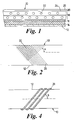
- a crush resistant hose 10 comprises a number of layers. Starting from the inside of the hose and working outwards, these layers include a lining 12, an inner reinforcing layer 14, an outer reinforcing layer 16, a crush resistant layer 18, and a cover 20.
- the crush resistant layer 18 comprises one or more separate layers of crush resistant wire 22, in this case two, and the cover 20 comprises two cover layers 24, 26. All of the layers apart from the reinforcing layers are conventional and can be produced so as to be suitable for any specific application.
- the reinforcing layers 14, 16 are formed from a mixture of polyester and aramid multifilament fibres.
- the inner reinforcing layer is made from cords 28 woven into a fabric 30. Although the cords 28 are shown spaced apart in a loose weave for clarity, they are in practice woven closely together to form the fabric.
- the fabric 30 is coated in rubber before being applied to the hose.
- the cords 28 of the fabric lie at an angle ⁇ to the longitudinal axis of the hose 10, an angle of approximately 40° in this embodiment.
- the angle ⁇ controls the physical properties of the hose and is chosen so as to satisfy as many of the design requirements as possible.
- the angle ⁇ will vary for different hose designs and generally lies in the range 35° to 55°.
- each cord 28 is made up of 2 plies of the aramid TwaronTM 1008 and one ply of polyester DiolenTM 164S. The three plies are twisted together at approximately 190 turns per metre to form the cord 28. This cord 28 typically has a thickness of approximately 1.55mm.
- Each TwaronTM ply is made up of three plies of multifilament 1680 decitex yarn twisted at approximately 190 turns per metre.
- Each Polyester ply is made up of three plies of multifilament 1670 decitex yarn, also twisted at approximately 190 turns per metre.
- the use of multifilament yarn instead of monofilament yarn, staple filament yarn or a combination of these has been found to produce a material that displays improved resistance to fatigue.
- Multifilament yarns comprise hundreds of continuous individual filaments together in one yarn.
- a typical 1670 decitex TwaronTM yarn comprises approximately 1000 filaments each with a diameter of 12 microns.
- Multifilament yarns are very flexible and strong and display optimal bending fatigue and tensile fatigue properties compared to monofilaments, which are much stiffer and display poor fatigue properties.
- Staple filament yarn comprises short lengths of filament wrapped around each other, transferring load along the filament through the friction between the filaments. Staple filament yarn therefore lacks the strength found in continuous multifilament yarn.
- the linear density also varies between the three hybrid samples, the values being approximately 17679 dtex, 18430 dtex and 17740 dtex respectively. These values are similar to the linear density of 17670 dtex for the TwaronTM control sample but are much greater than the value of 8250 dtex for the rayon control and smaller than the value of 25380 dtex for the nylon control.
- the breaking strength (N) of each of these hybrids is considerably greater than that of the rayon control and is also greater than the nylon control.
- the breaking strengths of the three hybrids are 1845N, 1620N and 1894N respectively compared to a breaking strength of 293.8N for the rayon control. Only the 100% TwaronTM sample has a greater breaking strength of 2822N.
- the breaking tenacity of the hybrids is also much greater that of the rayon control.
- the hybrids have a breaking tenacity of 1087mN/tex, 932mN/tex and 1115mN/tex respectively compared to a breaking tenacity of 372mN/tex for the rayon control. Again, it is only the 100% TwaronTM sample that has a greater breaking tenacity of 1664mN/tex.
- elongation at breaking point Another of the properties tested was the elongation at breaking point. This elongation was found to be 7.5%, 7.7% and 6.6% respectively for the 3 hybrids. These compare to a lower value of 5.4% for the TwaronTM control sample and the considerably higher values of 16.6% and 29.1% for the rayon and nylon control samples.
- the chord modulus also differs between the three hybrids and the TwaronTM, being 16.7GPa, 15.4GPa and 19.4GPa for the hybrids and a much higher value of 31.8GPa for the TwaronTM.
- the greater elongation at breaking point of the hybrid compared to the TwaronTM control, along with its lower modulus, is one of the key advantages of the hybrid over the TwaronTM. It enables the hybrid to load share better than the 100% TwaronTM, an important factor when constructing thick hoses.
- the hybrid fabric may also be coated in rubber before being applied to the hose 10.
- the rubber coating further increases the strength of the fabric and therefore the durability of the hose 10 when exposed to high loads.
- the strap peel force a standard adhesion test, was measured for two different types of rubber applied to each of the three hybrids.
- the values of the strap peel force for the hybrids are 258N/cm 2 , 258N/cm 2 and 241N/cm 2 respectively, which are very similar to 255N/cm 2 for the TwaronTM and 240N/cm 2 for the rayon.
- the strap peel force values are 165N/cm 2 , 123N/cm 2 and 185N/cm 2 for each of the hybrids, which are again similar to the value of 176N/cm 2 for the TwaronTM and 169N/cm 2 for the rayon.
- the T-adhesion was also measured for each of the samples. This is a method of assessing the adhesion between rubber and cords and is the test used by cord manufacturers.
- Several cords are moulded into a block of rubber, the block being approximately 10cm long and having a square section of approximately 1cm.
- the block is built up in layers and the cords are laid onto the rubber at right angles to the block length as it is built up.
- the sample is then cured.
- the cords are pulled individually from the block and the force required to do this is measured. Cords project at one side to allow them to be pulled, and by 1 or 2mm from the other edge of the block to ensure that they extend right through the block giving a pull length of 10mm.
- the values for each of the three hybrids are 870N, 670N and 740N respectively, which compare to a value of 770N for the TwaronTM control and which are greater than the value of 284N for the rayon control.
- the values using 5320 rubber are less than those obtained for the r838 rubber. This gave values of 1110N, 1160N and 1140N for the three hybrids, 1200N for the TwaronTM and 262N for the rayon.
- the strength retained after fatigue is another important property of the materials. This is measured using the Akzo Nobel Flex Fatigue (AFF) test.
- AFF Akzo Nobel Flex Fatigue
- a rubber strip approximately 25mm wide is flexed around a spindle at a specific load.
- the rubber strip comprises two cord layers, the upper layer containing a material of very high modulus such as TwaronTM and the lower cord layer containing the cords to be tested.
- the TwaronTM layer carries almost the full tensile load because of its comparatively high stiffness.
- the test cords of the bottom layer experience bending, deformation due to axial compression, and pressure from the upper cord layer. Bending and deformation in the presence of this lateral pressure causes degradation of the cord.
- the cords are carefully removed from the strip and the retained strength is determined using capstan clamps.
- r838 rubber was used and the values were measured both in Newtons and as a percentage. The percentage is the ratio of the retained strength to the strength of the unflexed strip.
- the values obtained are 46%, 73% and 32% and 850N, 1190N and 620N respectively for the three hybrids and are 32% and 910N for the TwaronTM and 12.7% and 37N for the rayon.
- the strength of the fabric made with the hybrid cord is approximately 4 times greater than the strength of the rayon fabric previously used.
- the 3 hybrid samples have a fabric strength of 962 kN/m, 822 kN/m and 988 kN/m respectively compared to a fabric strength of 235 kN/m for the rayon. Four layers of this rayon fabric can therefore be replaced with one layer of the fabric woven from the hybrid cord.
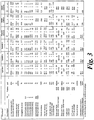
- the reinforcing layer 14 is formed from cords 28 that are wound round the lining layer 12. Although the cords are shown spaced apart for clarity, they are in practice closely wound so as to form a substantially continuous reinforcing layer 14.
- the cord 28 is wound at an angle ⁇ relative to the longitudinal axis of the hose 10 to provide the hose with the required properties.
- the value of the angle ⁇ determines the physical properties of the hose and is therefore chosen to satisfy most of the design requirements.
- the cord is formed from two plies of the aramid TwaronTM 1008 and one ply of polyester DiolenTM 164S twisted together.
- the Twaron ply is again made from three plies of multifilament 1680 decitex yarn and the polyester is made from three plies of multifilament 1670 decitex yarn.
- the combination and proportions of fibres used can be selected to obtain the required properties of the cord since different combinations will provide different properties.
Landscapes
- Engineering & Computer Science (AREA)
- Mechanical Engineering (AREA)
- General Engineering & Computer Science (AREA)
- Textile Engineering (AREA)
- Rigid Pipes And Flexible Pipes (AREA)
- Laminated Bodies (AREA)
- Yarns And Mechanical Finishing Of Yarns Or Ropes (AREA)
Claims (13)
- Knick- und quetschbeständiger Schlauch (10), umfassend eine Mehrzahl von Schichten (12, 14, 16, 18, 20), wobei eine der Schichten (12, 14, 16, 18, 20) eine aus einer Schnur (28) gebildete Verstärkungsstruktur (14) umfasst, wobei die Schnur (28) eine Mehrzahl von miteinander verdrehten Lagen umfasst, wobei mindestens eine der Lagen aus drei miteinander verdrehten Multifilament-Garnen aus Aramid gebildet ist und mindestens eine der Lagen aus drei miteinander verdrehten Multifilament-Garnen aus Polyester gebildet ist, wobei die Schnur (28) eine höhere Anzahl von Lagen aus Aramid als aus Polyester umfasst.
- Schlauch (10) nach Anspruch 1, wobei die Schnur (28) ein Verhältnis von 1:1 bis 4:1 von Aramid zu Polyester umfasst.
- Schlauch (10) nach Anspruch 2, wobei die Schnur (28) ein Verhältnis von 1,5:1 bis 3:1 von Aramid zu Polyester umfasst.
- Schlauch (10) nach Anspruch 3, wobei die Schnur (28) ein Verhältnis von 2 Lagen Aramid zu 1 Lage Polyester umfasst.
- Schlauch (10) nach Anspruch 1, wobei die Verstärkungsstruktur (14) ein aus den Schnüren (28) gewebtes Gewebe umfasst.
- Schlauch (10) nach Anspruch 5, wobei die Schnüre (28) des Gewebes in einem Winkel von 30° bis 55° zur Längsachse des Schlauchs liegen.
- Schlauch (10) nach Anspruch 6, wobei die Schnüre (28) des Gewebes in einem Winkel von ungefähr 43° zur Längsachse des Schlauchs (10) liegen.
- Schlauch (10) nach einem der Ansprüche 1 bis 4, wobei die Verstärkungsschicht (14) eine Auskleidung umfasst und die Schnur (28) um eine Auskleidung gewunden ist, um eine im Wesentlichen durchgängige Schicht zu bilden.
- Schlauch (10) nach einem vorhergehenden Anspruch, wobei die Schnur (28) 2 Lagen Aramid und 1 Lage Polyester, die miteinander verdreht sind, umfasst.
- Schlauch (10) nach Anspruch 1 oder 9, wobei jede Lage 160 bis 200 Windungen pro Meter umfasst.
- Schlauch (10) nach einem vorhergehenden Anspruch, wobei die Verstärkungsschicht (14) mit Gummi beschichtet ist.
- Schlauch (10) nach einem vorhergehenden Anspruch, wobei die Reißfestigkeit der Schnur (28) 800 mN/tex bis 1300 mN/tex beträgt.
- Schlauch (10) nach einem vorhergehenden Anspruch, wobei die Bruchdehnung der Schnur (28) 5,5 % bis 13 % beträgt.
Priority Applications (2)
| Application Number | Priority Date | Filing Date | Title |
|---|---|---|---|
| PL05708250T PL1761723T3 (pl) | 2004-06-23 | 2005-02-08 | Hybrydowe wzmocnienia węży technicznych |
| SI200532257T SI1761723T1 (sl) | 2004-06-23 | 2005-02-08 | Hibridne ojačitve gibkih cevi |
Applications Claiming Priority (2)
| Application Number | Priority Date | Filing Date | Title |
|---|---|---|---|
| GBGB0414022.4A GB0414022D0 (en) | 2004-06-23 | 2004-06-23 | Hybrid hose reinforcements |
| PCT/GB2005/000420 WO2006000735A1 (en) | 2004-06-23 | 2005-02-08 | Hybrid hose reinforcements |
Publications (3)
| Publication Number | Publication Date |
|---|---|
| EP1761723A1 EP1761723A1 (de) | 2007-03-14 |
| EP1761723B1 true EP1761723B1 (de) | 2019-06-05 |
| EP1761723B8 EP1761723B8 (de) | 2019-07-10 |
Family
ID=32800000
Family Applications (1)
| Application Number | Title | Priority Date | Filing Date |
|---|---|---|---|
| EP05708250.5A Expired - Lifetime EP1761723B8 (de) | 2004-06-23 | 2005-02-08 | Hybridschlauchverstärkungen |
Country Status (13)
| Country | Link |
|---|---|
| US (2) | US8746288B2 (de) |
| EP (1) | EP1761723B8 (de) |
| JP (2) | JP5555405B2 (de) |
| BR (1) | BRPI0512531B1 (de) |
| DK (1) | DK1761723T3 (de) |
| ES (1) | ES2738989T3 (de) |
| GB (1) | GB0414022D0 (de) |
| HU (1) | HUE043723T2 (de) |
| LT (1) | LT1761723T (de) |
| PL (1) | PL1761723T3 (de) |
| SI (1) | SI1761723T1 (de) |
| TR (1) | TR201909182T4 (de) |
| WO (1) | WO2006000735A1 (de) |
Families Citing this family (12)
| Publication number | Priority date | Publication date | Assignee | Title |
|---|---|---|---|---|
| GB0414022D0 (en) * | 2004-06-23 | 2004-07-28 | Dunlop Oil & Marine Ltd | Hybrid hose reinforcements |
| US7572745B2 (en) * | 2006-09-26 | 2009-08-11 | The Gates Corporation | Fluid transfer hose reinforced with hybrid yarn |
| EP2103590A4 (de) | 2006-12-01 | 2013-10-16 | Nippon Catalytic Chem Ind | Verfahren zur herstellung einer acrolein und glycerin enthaltenden zusammensetzung |
| JP5069977B2 (ja) * | 2007-08-30 | 2012-11-07 | 株式会社日本触媒 | グリセリンからのアクロレインの製造方法 |
| FR2918390A1 (fr) * | 2007-07-05 | 2009-01-09 | Schappe Sa Sa | Fil hybride destine au renforcement de plaques |
| US7694695B2 (en) * | 2008-02-26 | 2010-04-13 | The Gates Corporation | Controlled expansion hose |
| WO2010121383A1 (en) * | 2009-04-20 | 2010-10-28 | Flexpipe Systems Inc. | Metal cord reinforced flexible pipe |
| DE202011005577U1 (de) * | 2011-04-21 | 2012-07-24 | Rehau Ag + Co | Schlauch zur Führung von Fluiden |
| WO2013071449A1 (en) | 2011-11-16 | 2013-05-23 | Flexpipe Systems Inc. | Flexible reinforced pipe and reinforcement tape |
| EP2780619B1 (de) | 2011-11-16 | 2018-09-05 | Shawcor Ltd. | Rohrverbindungsanordnung und verfahren |
| CA2864762C (en) | 2012-02-17 | 2019-06-04 | 8193053 Canada Ltd. | Pipe, pipe connection and pipeline system |
| US10066766B1 (en) | 2017-05-23 | 2018-09-04 | Contitech Usa, Inc. | Hose inner layer formed of ECO blended with NBR/PVC |
Family Cites Families (66)
| Publication number | Priority date | Publication date | Assignee | Title |
|---|---|---|---|---|
| US2598022A (en) * | 1946-05-10 | 1952-05-27 | Wingfoot Corp | Fire hose |
| US3056429A (en) * | 1958-06-24 | 1962-10-02 | Celanese Corp | Laminated fabrics |
| US3905398A (en) * | 1974-04-23 | 1975-09-16 | Moore & Co Samuel | Composite reinforced hose wherein the reinforcing material is braided aromatic polyamide filaments |
| FR2318956A1 (fr) * | 1975-07-25 | 1977-02-18 | Du Pont | Fils fantaisies a torsion nulle et procede pour leur production |
| JPS52120034A (en) * | 1976-03-31 | 1977-10-08 | Nippon Carbon Co Ltd | Gut for racket |
| US4111237A (en) * | 1976-07-12 | 1978-09-05 | General Motors Corporation | Braid reinforced flexible brake hose |
| US4155394A (en) * | 1977-08-29 | 1979-05-22 | The Goodyear Tire & Rubber Company | Tire cord composite and pneumatic tire |
| US4142554A (en) * | 1977-10-28 | 1979-03-06 | Parker-Hannifin Corporation | Hose construction |
| US4259991A (en) * | 1979-09-20 | 1981-04-07 | Automation Industries, Inc. | High pressure hose construction and method of and apparatus for making the same |
| US4308895A (en) * | 1980-01-25 | 1982-01-05 | Parker-Hannifin Corporation | Flame bonded hose |
| JPS5777336A (en) * | 1980-10-27 | 1982-05-14 | Hitachi Ltd | Composite fiber product |
| US4384595A (en) * | 1981-09-14 | 1983-05-24 | Parker-Hannifin Corporation | Hose construction |
| GB2149048B (en) | 1983-10-28 | 1987-01-14 | Angus Fire Armour Ltd | Lay-flat hose |
| CA1238205A (en) * | 1985-04-26 | 1988-06-21 | Cerminco Inc. | Structural rod for reinforcing concrete material |
| JPS629940A (ja) * | 1985-07-05 | 1987-01-17 | Shimizu Constr Co Ltd | 繊維強化樹脂製棒状体 |
| US5673235A (en) | 1987-07-30 | 1997-09-30 | The United States Of America As Represented By The Secretary Of The Navy | Sock shaped internal strength member for towed arrays |
| JPS6445841A (en) * | 1987-08-13 | 1989-02-20 | Nitto Boseki Co Ltd | Fabric for fiber reinforced thermoplastic resin laminate material |
| JP2647464B2 (ja) * | 1988-10-28 | 1997-08-27 | 横浜ゴム株式会社 | ホース |
| US5346731A (en) * | 1990-07-12 | 1994-09-13 | Bando Chemical Industries, Ltd. | Fiber-reinforced rubber |
| FR2664621B1 (fr) * | 1990-07-13 | 1994-08-26 | Schappe Sa | Fil hybride pour materiaux composites a matrice thermoplastique et procede pour son obtention. |
| JPH0544622A (ja) | 1991-08-12 | 1993-02-23 | Nippondenso Co Ltd | 多気筒内燃機関の点火装置 |
| EP0553686B1 (de) * | 1992-01-29 | 1997-10-22 | The Yokohama Rubber Co., Ltd. | Druckfester Schlauch |
| DE4212448A1 (de) * | 1992-04-14 | 1993-10-28 | Basf Ag | Verwendung von Hybridgarnen zur Herstellung konischer Faserverbundrohre |
| DE4215756A1 (de) | 1992-05-13 | 1993-11-18 | Basf Ag | Verfahren zur Herstellung von Hohlkörpern |
| JP3253399B2 (ja) | 1993-02-09 | 2002-02-04 | 株式会社ブリヂストン | 輸送物漏出検知構造ホース |
| JPH0724961A (ja) * | 1993-07-09 | 1995-01-27 | Nippon Zeon Co Ltd | オイル系ホ−ス |
| US5744206A (en) * | 1994-04-06 | 1998-04-28 | Vitrica, S.A. De C.V. | Braided sleeving with rib strands |
| DE69604856T2 (de) * | 1995-04-28 | 2000-04-13 | The Yokohama Rubber Co., Ltd. | Verstärkter Druckschlauch |
| JP3113592B2 (ja) * | 1996-02-15 | 2000-12-04 | 住友ゴム工業株式会社 | 空気入りラジアルタイヤ |
| JP3603109B2 (ja) | 1996-07-10 | 2004-12-22 | 株式会社吉野工業所 | 液体注出容器 |
| JPH10204355A (ja) | 1997-01-20 | 1998-08-04 | Fuji Photo Film Co Ltd | インクジェット用油性インク組成物 |
| DE19718655C2 (de) * | 1997-05-02 | 1999-06-10 | Braun Karl Otto Kg | Schlauchförmiges Auskleidungsmaterial, daraus hergestellte Rohrauskleidung und Verfahren zur Herstellung derselben |
| JPH11202747A (ja) | 1998-01-16 | 1999-07-30 | Matsushita Electric Ind Co Ltd | 合成ホログラムとその製造方法と光学標識装置 |
| JPH11222775A (ja) | 1998-02-05 | 1999-08-17 | Toray Ind Inc | ゴム補強用コード |
| JPH11311377A (ja) | 1998-04-28 | 1999-11-09 | Toyoda Gosei Co Ltd | ホース |
| US6109306A (en) | 1998-06-29 | 2000-08-29 | Parker Hannifin Gmbh | Kink-resistant, high pressure hose construction having a composite, spiral wound innermost reinforcement layer |
| JP2000018444A (ja) * | 1998-07-03 | 2000-01-18 | Bridgestone Corp | 媒体輸送用ホース |
| FR2786037B1 (fr) | 1998-11-16 | 2001-01-26 | Alstom Technology | Barre de conduction electrique de type blinde pour poste electrique haute tension |
| JP4363700B2 (ja) * | 1999-05-21 | 2009-11-11 | 東レ株式会社 | 複合紡績糸およびそれを用いてなる布帛 |
| JP2000356214A (ja) | 1999-06-16 | 2000-12-26 | Minoru Kida | ノートパソコン等に使用されるヒンジ装置のプラスチックスプリング並びにプラスチックスプリング圧力受け装置 |
| FR2796005A1 (fr) | 1999-07-07 | 2001-01-12 | Michelin Soc Tech | Pneumatique a performance de bruit de roulement amelioree |
| JP2001032174A (ja) * | 1999-07-16 | 2001-02-06 | Kuraray Co Ltd | ホース補強材の製造方法 |
| DE19941669C2 (de) * | 1999-09-01 | 2001-10-25 | Raedlinger Maschinen Und Anlag | Gewebeschlauch für Hochdruckfluidleitungen sowie Verfahren zur Erhöhung der Nenndruckstufe von Altfluidleitungen |
| US6601378B1 (en) * | 1999-09-08 | 2003-08-05 | Honeywell International Inc. | Hybrid cabled cord and a method to make it |
| JP2001336583A (ja) * | 2000-05-26 | 2001-12-07 | Mitsuboshi Belting Ltd | 高負荷伝動ベルト |
| JP2002156076A (ja) | 2000-11-22 | 2002-05-31 | Toyoda Gosei Co Ltd | 補強複層ホース |
| US6528557B2 (en) | 2001-02-02 | 2003-03-04 | Xerox Corporation | Inks comprising linear Asbs‘A’ block copolymers of alkylene oxide and siloxane |
| JP4433626B2 (ja) * | 2001-03-01 | 2010-03-17 | 横浜ゴム株式会社 | マリンホース |
| JP2002338891A (ja) | 2001-05-16 | 2002-11-27 | Jsr Corp | アルミニウム膜の形成方法およびアルミニウム膜形成用組成物 |
| JP3846236B2 (ja) * | 2001-07-24 | 2006-11-15 | 帝人テクノプロダクツ株式会社 | ハイブリッドコード及びゴム補強物 |
| JP2003176880A (ja) * | 2001-12-11 | 2003-06-27 | Toyo Tire & Rubber Co Ltd | ゴム可とう管及びその製造方法 |
| CN1625618A (zh) * | 2002-01-30 | 2005-06-08 | 泰盛电梯资金股份有限公司 | 升降机用的合成纤维绳索 |
| JP3864820B2 (ja) * | 2002-03-22 | 2007-01-10 | 日本板硝子株式会社 | ゴム補強用ハイブリッドコード及びゴム製品 |
| US6800367B2 (en) * | 2002-04-25 | 2004-10-05 | Chapman Thermal Products, Inc. | Fire retardant and heat resistant yarns and fabrics incorporating metallic or other high strength filaments |
| JP2004144180A (ja) | 2002-10-24 | 2004-05-20 | Bridgestone Corp | 耐キンク性ホース |
| FR2846345B1 (fr) | 2002-10-29 | 2004-12-10 | Chomarat Composites | Ruban de renforcement comportant une nappe de fils longitudinaux de haute tenacite |
| JP4458742B2 (ja) * | 2002-11-05 | 2010-04-28 | 株式会社ブリヂストン | 高圧ホース |
| JP4324901B2 (ja) | 2002-11-22 | 2009-09-02 | 東レ・テキスタイル株式会社 | アラミド混繊糸 |
| US7147904B1 (en) * | 2003-08-05 | 2006-12-12 | Evelyn Florence, Llc | Expandable tubular fabric |
| BRPI0414954B1 (pt) * | 2003-10-31 | 2016-11-29 | Nkt Flexibles Is | tubo flexível e método de fabricar um tubo flexível |
| GB0414022D0 (en) * | 2004-06-23 | 2004-07-28 | Dunlop Oil & Marine Ltd | Hybrid hose reinforcements |
| US7214425B2 (en) * | 2005-02-10 | 2007-05-08 | Supreme Elastic Corporation | High performance fiber blend and products made therefrom |
| US7572745B2 (en) * | 2006-09-26 | 2009-08-11 | The Gates Corporation | Fluid transfer hose reinforced with hybrid yarn |
| US7358203B1 (en) * | 2006-10-10 | 2008-04-15 | E.I. Du Pont De Nemours And Company | Stain-masking cut resistant fabrics and articles and processes for making same |
| US7690180B2 (en) * | 2007-09-18 | 2010-04-06 | Liberty Properties Management, Llc | Sewable fire resistant thread |
| DE102011116936A1 (de) * | 2010-11-29 | 2012-05-31 | Amann & Söhne GmbH & Co. KG | Garn, insbesondere Näh- oder Stickgarn sowie Verfahren zur Herstellung eines derartigen Garnes |
-
2004
- 2004-06-23 GB GBGB0414022.4A patent/GB0414022D0/en not_active Ceased
-
2005
- 2005-02-08 HU HUE05708250A patent/HUE043723T2/hu unknown
- 2005-02-08 LT LTEP05708250.5T patent/LT1761723T/lt unknown
- 2005-02-08 JP JP2007517389A patent/JP5555405B2/ja not_active Expired - Fee Related
- 2005-02-08 EP EP05708250.5A patent/EP1761723B8/de not_active Expired - Lifetime
- 2005-02-08 DK DK05708250.5T patent/DK1761723T3/da active
- 2005-02-08 BR BRPI0512531-6A patent/BRPI0512531B1/pt not_active IP Right Cessation
- 2005-02-08 ES ES05708250T patent/ES2738989T3/es not_active Expired - Lifetime
- 2005-02-08 US US11/630,871 patent/US8746288B2/en active Active
- 2005-02-08 WO PCT/GB2005/000420 patent/WO2006000735A1/en not_active Ceased
- 2005-02-08 SI SI200532257T patent/SI1761723T1/sl unknown
- 2005-02-08 PL PL05708250T patent/PL1761723T3/pl unknown
- 2005-02-08 TR TR2019/09182T patent/TR201909182T4/tr unknown
-
2012
- 2012-04-05 JP JP2012086339A patent/JP5620939B2/ja not_active Expired - Fee Related
-
2014
- 2014-04-29 US US14/264,931 patent/US9464738B2/en not_active Expired - Fee Related
Non-Patent Citations (1)
| Title |
|---|
| None * |
Also Published As
| Publication number | Publication date |
|---|---|
| BRPI0512531B1 (pt) | 2019-05-14 |
| US9464738B2 (en) | 2016-10-11 |
| ES2738989T3 (es) | 2020-01-28 |
| GB0414022D0 (en) | 2004-07-28 |
| LT1761723T (lt) | 2019-07-10 |
| US8746288B2 (en) | 2014-06-10 |
| WO2006000735A1 (en) | 2006-01-05 |
| EP1761723B8 (de) | 2019-07-10 |
| JP2012154487A (ja) | 2012-08-16 |
| DK1761723T3 (da) | 2019-06-24 |
| JP5555405B2 (ja) | 2014-07-23 |
| US20140230947A1 (en) | 2014-08-21 |
| HUE043723T2 (hu) | 2019-09-30 |
| JP5620939B2 (ja) | 2014-11-05 |
| US20070277895A1 (en) | 2007-12-06 |
| JP2008503699A (ja) | 2008-02-07 |
| EP1761723A1 (de) | 2007-03-14 |
| BRPI0512531A (pt) | 2008-03-25 |
| TR201909182T4 (tr) | 2019-07-22 |
| SI1761723T1 (sl) | 2019-08-30 |
| PL1761723T3 (pl) | 2019-09-30 |
Similar Documents
| Publication | Publication Date | Title |
|---|---|---|
| US9464738B2 (en) | Hybrid hose reinforcements | |
| AU2008248467B2 (en) | Subsea flexible pipe for transporting oil and gas and including a reinforcing layer | |
| US5807194A (en) | Toothed belt | |
| CA2695680C (en) | Hybrid fiber constructions to mitigate creep in composites | |
| US6109306A (en) | Kink-resistant, high pressure hose construction having a composite, spiral wound innermost reinforcement layer | |
| JP4705302B2 (ja) | タイヤカーカス用多層スチールケーブル | |
| US6165586A (en) | Flat strip, in particular for the reinforcing ducts, method for making same, and ducts reinforced therewith | |
| KR20130131400A (ko) | 고 강인성 및 고 파단신율을 갖는 하이브리드 코드 | |
| JP4332682B2 (ja) | 繊維強化成形体 | |
| TW201020131A (en) | Non-load bearing cut resistant tire side-wall component, tire containing said component, and processes for making same | |
| WO2002018158A2 (en) | Tire anti-puncture product | |
| EP0969236A2 (de) | Knickbeständiger Hochdruckschlauch | |
| EP0443459B1 (de) | Faserverstärkter Gummi | |
| NZ209973A (en) | Lay flat hose reinforcement with multi-filament yarns and mono-filaments twisted together | |
| JPH06300085A (ja) | コンベアベルト | |
| EP3910221B1 (de) | Hochdruckschlauch mit verbesserter flexibilität | |
| AU2012247031A1 (en) | Hybrid fiber construction to mitigate creep in composites | |
| JPH09257161A (ja) | ホース | |
| MXPA97008367A (es) | Banda dentada |
Legal Events
| Date | Code | Title | Description |
|---|---|---|---|
| PUAI | Public reference made under article 153(3) epc to a published international application that has entered the european phase |
Free format text: ORIGINAL CODE: 0009012 |
|
| 17P | Request for examination filed |
Effective date: 20070113 |
|
| AK | Designated contracting states |
Kind code of ref document: A1 Designated state(s): AT BE BG CH CY CZ DE DK EE ES FI FR GB GR HU IE IS IT LI LT LU MC NL PL PT RO SE SI SK TR |
|
| DAX | Request for extension of the european patent (deleted) | ||
| 17Q | First examination report despatched |
Effective date: 20101209 |
|
| STAA | Information on the status of an ep patent application or granted ep patent |
Free format text: STATUS: EXAMINATION IS IN PROGRESS |
|
| GRAP | Despatch of communication of intention to grant a patent |
Free format text: ORIGINAL CODE: EPIDOSNIGR1 |
|
| STAA | Information on the status of an ep patent application or granted ep patent |
Free format text: STATUS: GRANT OF PATENT IS INTENDED |
|
| INTG | Intention to grant announced |
Effective date: 20190215 |
|
| GRAS | Grant fee paid |
Free format text: ORIGINAL CODE: EPIDOSNIGR3 |
|
| GRAA | (expected) grant |
Free format text: ORIGINAL CODE: 0009210 |
|
| STAA | Information on the status of an ep patent application or granted ep patent |
Free format text: STATUS: THE PATENT HAS BEEN GRANTED |
|
| AK | Designated contracting states |
Kind code of ref document: B1 Designated state(s): AT BE BG CH CY CZ DE DK EE ES FI FR GB GR HU IE IS IT LI LT LU MC NL PL PT RO SE SI SK TR |
|
| REG | Reference to a national code |
Ref country code: GB Ref legal event code: FG4D |
|
| REG | Reference to a national code |
Ref country code: CH Ref legal event code: PK Free format text: BERICHTIGUNG B8 Ref country code: CH Ref legal event code: EP |
|
| REG | Reference to a national code |
Ref country code: AT Ref legal event code: REF Ref document number: 1140348 Country of ref document: AT Kind code of ref document: T Effective date: 20190615 |
|
| REG | Reference to a national code |
Ref country code: DK Ref legal event code: T3 Effective date: 20190621 Ref country code: RO Ref legal event code: EPE |
|
| RAP2 | Party data changed (patent owner data changed or rights of a patent transferred) |
Owner name: DUNLOP OIL & MARINE LIMITED |
|
| REG | Reference to a national code |
Ref country code: IE Ref legal event code: FG4D |
|
| REG | Reference to a national code |
Ref country code: DE Ref legal event code: R096 Ref document number: 602005055874 Country of ref document: DE |
|
| REG | Reference to a national code |
Ref country code: NL Ref legal event code: FP |
|
| REG | Reference to a national code |
Ref country code: HU Ref legal event code: AG4A Ref document number: E043723 Country of ref document: HU |
|
| REG | Reference to a national code |
Ref country code: SK Ref legal event code: T3 Ref document number: E 31547 Country of ref document: SK |
|
| PG25 | Lapsed in a contracting state [announced via postgrant information from national office to epo] |
Ref country code: SE Free format text: LAPSE BECAUSE OF FAILURE TO SUBMIT A TRANSLATION OF THE DESCRIPTION OR TO PAY THE FEE WITHIN THE PRESCRIBED TIME-LIMIT Effective date: 20190605 Ref country code: FI Free format text: LAPSE BECAUSE OF FAILURE TO SUBMIT A TRANSLATION OF THE DESCRIPTION OR TO PAY THE FEE WITHIN THE PRESCRIBED TIME-LIMIT Effective date: 20190605 |
|
| PG25 | Lapsed in a contracting state [announced via postgrant information from national office to epo] |
Ref country code: GR Free format text: LAPSE BECAUSE OF FAILURE TO SUBMIT A TRANSLATION OF THE DESCRIPTION OR TO PAY THE FEE WITHIN THE PRESCRIBED TIME-LIMIT Effective date: 20190906 |
|
| REG | Reference to a national code |
Ref country code: AT Ref legal event code: MK05 Ref document number: 1140348 Country of ref document: AT Kind code of ref document: T Effective date: 20190605 |
|
| REG | Reference to a national code |
Ref country code: ES Ref legal event code: FG2A Ref document number: 2738989 Country of ref document: ES Kind code of ref document: T3 Effective date: 20200128 |
|
| PG25 | Lapsed in a contracting state [announced via postgrant information from national office to epo] |
Ref country code: EE Free format text: LAPSE BECAUSE OF FAILURE TO SUBMIT A TRANSLATION OF THE DESCRIPTION OR TO PAY THE FEE WITHIN THE PRESCRIBED TIME-LIMIT Effective date: 20190605 Ref country code: AT Free format text: LAPSE BECAUSE OF FAILURE TO SUBMIT A TRANSLATION OF THE DESCRIPTION OR TO PAY THE FEE WITHIN THE PRESCRIBED TIME-LIMIT Effective date: 20190605 Ref country code: PT Free format text: LAPSE BECAUSE OF FAILURE TO SUBMIT A TRANSLATION OF THE DESCRIPTION OR TO PAY THE FEE WITHIN THE PRESCRIBED TIME-LIMIT Effective date: 20191007 |
|
| PG25 | Lapsed in a contracting state [announced via postgrant information from national office to epo] |
Ref country code: IS Free format text: LAPSE BECAUSE OF FAILURE TO SUBMIT A TRANSLATION OF THE DESCRIPTION OR TO PAY THE FEE WITHIN THE PRESCRIBED TIME-LIMIT Effective date: 20191005 |
|
| REG | Reference to a national code |
Ref country code: DE Ref legal event code: R097 Ref document number: 602005055874 Country of ref document: DE |
|
| PLBE | No opposition filed within time limit |
Free format text: ORIGINAL CODE: 0009261 |
|
| STAA | Information on the status of an ep patent application or granted ep patent |
Free format text: STATUS: NO OPPOSITION FILED WITHIN TIME LIMIT |
|
| PGFP | Annual fee paid to national office [announced via postgrant information from national office to epo] |
Ref country code: MC Payment date: 20200213 Year of fee payment: 16 Ref country code: ES Payment date: 20200322 Year of fee payment: 16 Ref country code: BG Payment date: 20200224 Year of fee payment: 16 Ref country code: LT Payment date: 20200124 Year of fee payment: 16 Ref country code: IE Payment date: 20200219 Year of fee payment: 16 Ref country code: RO Payment date: 20200131 Year of fee payment: 16 Ref country code: GB Payment date: 20200219 Year of fee payment: 16 Ref country code: DE Payment date: 20200229 Year of fee payment: 16 Ref country code: NL Payment date: 20200219 Year of fee payment: 16 Ref country code: PL Payment date: 20200122 Year of fee payment: 16 Ref country code: DK Payment date: 20200224 Year of fee payment: 16 Ref country code: HU Payment date: 20200217 Year of fee payment: 16 |
|
| 26N | No opposition filed |
Effective date: 20200306 |
|
| PGFP | Annual fee paid to national office [announced via postgrant information from national office to epo] |
Ref country code: SI Payment date: 20200122 Year of fee payment: 16 Ref country code: CZ Payment date: 20200206 Year of fee payment: 16 Ref country code: SK Payment date: 20200205 Year of fee payment: 16 |
|
| PGFP | Annual fee paid to national office [announced via postgrant information from national office to epo] |
Ref country code: TR Payment date: 20200206 Year of fee payment: 16 |
|
| REG | Reference to a national code |
Ref country code: CH Ref legal event code: PL |
|
| REG | Reference to a national code |
Ref country code: BE Ref legal event code: MM Effective date: 20200229 |
|
| PG25 | Lapsed in a contracting state [announced via postgrant information from national office to epo] |
Ref country code: LU Free format text: LAPSE BECAUSE OF NON-PAYMENT OF DUE FEES Effective date: 20200208 |
|
| PG25 | Lapsed in a contracting state [announced via postgrant information from national office to epo] |
Ref country code: CH Free format text: LAPSE BECAUSE OF NON-PAYMENT OF DUE FEES Effective date: 20200229 Ref country code: LI Free format text: LAPSE BECAUSE OF NON-PAYMENT OF DUE FEES Effective date: 20200229 |
|
| PG25 | Lapsed in a contracting state [announced via postgrant information from national office to epo] |
Ref country code: BE Free format text: LAPSE BECAUSE OF NON-PAYMENT OF DUE FEES Effective date: 20200229 |
|
| REG | Reference to a national code |
Ref country code: DE Ref legal event code: R119 Ref document number: 602005055874 Country of ref document: DE |
|
| REG | Reference to a national code |
Ref country code: DK Ref legal event code: EBP Effective date: 20210228 |
|
| PG25 | Lapsed in a contracting state [announced via postgrant information from national office to epo] |
Ref country code: MC Free format text: LAPSE BECAUSE OF NON-PAYMENT OF DUE FEES Effective date: 20210301 |
|
| REG | Reference to a national code |
Ref country code: LT Ref legal event code: MM4D Effective date: 20210208 |
|
| GBPC | Gb: european patent ceased through non-payment of renewal fee |
Effective date: 20210208 |
|
| REG | Reference to a national code |
Ref country code: SK Ref legal event code: MM4A Ref document number: E 31547 Country of ref document: SK Effective date: 20210208 |
|
| PG25 | Lapsed in a contracting state [announced via postgrant information from national office to epo] |
Ref country code: CZ Free format text: LAPSE BECAUSE OF NON-PAYMENT OF DUE FEES Effective date: 20210208 Ref country code: HU Free format text: LAPSE BECAUSE OF NON-PAYMENT OF DUE FEES Effective date: 20210209 Ref country code: BG Free format text: LAPSE BECAUSE OF NON-PAYMENT OF DUE FEES Effective date: 20210831 |
|
| PG25 | Lapsed in a contracting state [announced via postgrant information from national office to epo] |
Ref country code: RO Free format text: LAPSE BECAUSE OF NON-PAYMENT OF DUE FEES Effective date: 20210208 Ref country code: SK Free format text: LAPSE BECAUSE OF NON-PAYMENT OF DUE FEES Effective date: 20210208 |
|
| REG | Reference to a national code |
Ref country code: NL Ref legal event code: MM Effective date: 20210301 |
|
| PG25 | Lapsed in a contracting state [announced via postgrant information from national office to epo] |
Ref country code: NL Free format text: LAPSE BECAUSE OF NON-PAYMENT OF DUE FEES Effective date: 20210301 |
|
| PG25 | Lapsed in a contracting state [announced via postgrant information from national office to epo] |
Ref country code: IE Free format text: LAPSE BECAUSE OF NON-PAYMENT OF DUE FEES Effective date: 20210208 Ref country code: GB Free format text: LAPSE BECAUSE OF NON-PAYMENT OF DUE FEES Effective date: 20210208 Ref country code: DK Free format text: LAPSE BECAUSE OF NON-PAYMENT OF DUE FEES Effective date: 20210228 Ref country code: DE Free format text: LAPSE BECAUSE OF NON-PAYMENT OF DUE FEES Effective date: 20210901 Ref country code: LT Free format text: LAPSE BECAUSE OF NON-PAYMENT OF DUE FEES Effective date: 20210208 |
|
| REG | Reference to a national code |
Ref country code: SI Ref legal event code: KO00 Effective date: 20211202 |
|
| PG25 | Lapsed in a contracting state [announced via postgrant information from national office to epo] |
Ref country code: SI Free format text: LAPSE BECAUSE OF NON-PAYMENT OF DUE FEES Effective date: 20210209 |
|
| REG | Reference to a national code |
Ref country code: ES Ref legal event code: FD2A Effective date: 20220510 |
|
| PG25 | Lapsed in a contracting state [announced via postgrant information from national office to epo] |
Ref country code: CY Free format text: LAPSE BECAUSE OF FAILURE TO SUBMIT A TRANSLATION OF THE DESCRIPTION OR TO PAY THE FEE WITHIN THE PRESCRIBED TIME-LIMIT Effective date: 20190605 |
|
| PGFP | Annual fee paid to national office [announced via postgrant information from national office to epo] |
Ref country code: IT Payment date: 20220218 Year of fee payment: 18 Ref country code: FR Payment date: 20220216 Year of fee payment: 18 |
|
| PG25 | Lapsed in a contracting state [announced via postgrant information from national office to epo] |
Ref country code: ES Free format text: LAPSE BECAUSE OF NON-PAYMENT OF DUE FEES Effective date: 20210209 |
|
| PG25 | Lapsed in a contracting state [announced via postgrant information from national office to epo] |
Ref country code: PL Free format text: LAPSE BECAUSE OF NON-PAYMENT OF DUE FEES Effective date: 20210208 |
|
| PG25 | Lapsed in a contracting state [announced via postgrant information from national office to epo] |
Ref country code: IT Free format text: LAPSE BECAUSE OF NON-PAYMENT OF DUE FEES Effective date: 20230208 Ref country code: FR Free format text: LAPSE BECAUSE OF NON-PAYMENT OF DUE FEES Effective date: 20230228 |