EP1820501B1 - Agent therapeutique pour la depletion d'une population de protéines indésirables à partir du plasma - Google Patents
Agent therapeutique pour la depletion d'une population de protéines indésirables à partir du plasma Download PDFInfo
- Publication number
- EP1820501B1 EP1820501B1 EP07075314A EP07075314A EP1820501B1 EP 1820501 B1 EP1820501 B1 EP 1820501B1 EP 07075314 A EP07075314 A EP 07075314A EP 07075314 A EP07075314 A EP 07075314A EP 1820501 B1 EP1820501 B1 EP 1820501B1
- Authority
- EP
- European Patent Office
- Prior art keywords
- sap
- oxo
- carboxy
- pyrrolidin
- carboxylic acid
- Prior art date
- Legal status (The legal status is an assumption and is not a legal conclusion. Google has not performed a legal analysis and makes no representation as to the accuracy of the status listed.)
- Expired - Lifetime
Links
Images



Classifications
-
- A—HUMAN NECESSITIES
- A61—MEDICAL OR VETERINARY SCIENCE; HYGIENE
- A61K—PREPARATIONS FOR MEDICAL, DENTAL OR TOILETRY PURPOSES
- A61K31/00—Medicinal preparations containing organic active ingredients
- A61K31/33—Heterocyclic compounds
- A61K31/395—Heterocyclic compounds having nitrogen as a ring hetero atom, e.g. guanethidine or rifamycins
- A61K31/40—Heterocyclic compounds having nitrogen as a ring hetero atom, e.g. guanethidine or rifamycins having five-membered rings with one nitrogen as the only ring hetero atom, e.g. sulpiride, succinimide, tolmetin, buflomedil
- A61K31/4025—Heterocyclic compounds having nitrogen as a ring hetero atom, e.g. guanethidine or rifamycins having five-membered rings with one nitrogen as the only ring hetero atom, e.g. sulpiride, succinimide, tolmetin, buflomedil not condensed and containing further heterocyclic rings, e.g. cromakalim
-
- A—HUMAN NECESSITIES
- A61—MEDICAL OR VETERINARY SCIENCE; HYGIENE
- A61K—PREPARATIONS FOR MEDICAL, DENTAL OR TOILETRY PURPOSES
- A61K47/00—Medicinal preparations characterised by the non-active ingredients used, e.g. carriers or inert additives; Targeting or modifying agents chemically bound to the active ingredient
- A61K47/50—Medicinal preparations characterised by the non-active ingredients used, e.g. carriers or inert additives; Targeting or modifying agents chemically bound to the active ingredient the non-active ingredient being chemically bound to the active ingredient, e.g. polymer-drug conjugates
-
- A—HUMAN NECESSITIES
- A61—MEDICAL OR VETERINARY SCIENCE; HYGIENE
- A61P—SPECIFIC THERAPEUTIC ACTIVITY OF CHEMICAL COMPOUNDS OR MEDICINAL PREPARATIONS
- A61P25/00—Drugs for disorders of the nervous system
- A61P25/28—Drugs for disorders of the nervous system for treating neurodegenerative disorders of the central nervous system, e.g. nootropic agents, cognition enhancers, drugs for treating Alzheimer's disease or other forms of dementia
-
- A—HUMAN NECESSITIES
- A61—MEDICAL OR VETERINARY SCIENCE; HYGIENE
- A61P—SPECIFIC THERAPEUTIC ACTIVITY OF CHEMICAL COMPOUNDS OR MEDICINAL PREPARATIONS
- A61P7/00—Drugs for disorders of the blood or the extracellular fluid
Definitions
- the present invention relates to an agent for the depletion of an unwanted protein population from the plasma of a subject, and to a method of treating a subject with such an agent.
- Proteins in the blood plasma, in the extracellular matrix of the tissues, and in cells are essential for all vital physiological functions.
- many different proteins also contribute to disease.
- the underlying pathogenetic mechanisms include overproduction of normal proteins with corresponding excessive effects, the production of abnormal proteins with damaging effects, and the incidental subversion of normal protein function leading to damaging effects during intercurrent pathological processes, such as inflammation and microbial infection.
- Plasma proteins that contribute to pathogenesis of disease include cytokines, lipoproteins, autoantibodies, components of the complement and coagulation pathways, amyloidogenic proteins including monoclonal immunoglobulin light chains, transthyretin, lysozyme and ⁇ 2 -microglobulin, acute phase proteins in particular serum amyloid A protein (SAA), and pentraxins such as serum amyloid P component (SAP). All these different proteins, produced by different cells, are potentially attractive targets for therapeutic elimination in various diseases. However, there are few effective methods for selectively lowering the circulating concentration of specific proteins and those approaches that are available, or have been attempted, are complex, difficult and subject to many extremely challenging problems.
- Cytokines are protein hormones produced by and acting on a variety of different cell types, and are critically important mediators of host defence, immunological and inflammatory responses, but their overproduction in some diseases contributes to serious pathology, morbidity and mortality.
- Antibodies and recombinant binding proteins have lately been used successfully for targeting one particular cytokine, tumor necrosis factor (TNF), and TNF blockade is therapeutically beneficial in rheumatoid arthritis and Crohn's disease, but there are few effective methods for reducing damaging high levels of other cytokines.
- TNF tumor necrosis factor
- Another approach has been to remove damaging proteins by extracorporeal absorption, passing blood over more or less selective solid phase media to remove the target protein. This can make a useful contribution to removal of the high concentrations of pro-atherogenic low density lipoprotein in familial hypercholesterolaemia. It has also been attempted, so far unsuccessfully, for removal of two different amyloidogenic proteins: ⁇ 2 -microglobulin in patients on chronic haemodialysis for end stage renal failure, and variant transthyretin in patients with familial amyloid polyneuropathy.
- SAP low molecular weight ligands
- M O ⁇ DG methyl 4,6- O -(1-carboxyethylidene)- ⁇ -D-galactopyranoside
- the present invention provides use of an agent for the preparation of a composition for the treatment of a subject having a disorder caused by a pathogenic protein by therapeutic depletion of the pathogenic protein from the plasma of the subject; wherein the treatment comprises administering to the subject a dosage of the agent sufficient for the therapeutic depletion; wherein the agent comprises a plurality of ligands covalently co-linked so as to form a complex with a plurality of the proteins in the presence thereof; wherein at least two of the ligands are the same or different and are capable of being bound by ligand binding sites present on the proteins; and wherein
- the pathogenic protein is serum amyloid P component (SAP) and the agent is a D-proline of the formula wherein
- agents according to the present invention are dramatically potent in vivo in depleting the target protein from the circulation by causing it to be rapidly cleared.
- the present invention provides drug molecules that are specifically bound by individual target proteins and then engage the normal, extraordinarly sensitive, capacity of the body to recognise and destroy autologous proteins that have undergone changes in conformation or assembly.
- each protein depends critically on its appropriate molecular conformation and/or assembly, and the body has powerful mechanisms to detect and destroy proteins that are damaged, aggregated or misfolded.
- the purpose of the present invention is to specifically target individual proteins and cause them to be identified by the body's own physiological mechanisms as requiring prompt clearance and destruction.
- the invention advantageously uses palindromic agents that aggregate the proteins as dimers or higher order aggregates.
- the affinity of each individual ligand-protein binding site interaction does not need to be particularly high provided that the ligand is specific for each target protein. It is possible that a dissociation constant of up to 10 millimolar would suffice. However, it is preferred that the dissociation constant is no more than 1 millimolar, more preferably less than 100 micromolar, most preferably less than 10 micromolar.
- the affinity is preferably about micromolar or higher. Micromolar affinity has been found to be sufficient in the case of SAP, although the highest possible affinity is clearly desirable.
- the ligands may be directly linked together by a covalent bond
- the ligands are preferably covalently co-linked by a linker. This enables the ligands to be sufficiently spatially separated whereby a plurality of target proteins may be bound to the agent without one protein hindering the binding of the other protein or proteins.
- the linker is typically linear; a preferred general structure is ligand-linker-ligand. This is conveniently denoted a "palindrome" for the purposes of the present application.
- one class of agents comprises the D-prolines of formula set out above, preferably (R)-1-[6-(R)-2-Carboxy-pyrrolidin-1-yl]-6-oxo-hexanoyl] pyrrolidine-2-carboxylic acid or a pharmaceutically acceptable salt or mono- or diester thereof.
- the agent may be used to deplete unwanted protein populations from the plasma of human or animal subjects. At appropriate molar ratios of agent to target protein, the agent cross links pairs of protein molecules to produce complexes that are recognised in the body as abnormal and are then promptly cleared and catabolised. This leads to substantial or complete depletion of the target protein and confers therapeutic benefit.
- compositions may be formulated comprising an agent according to the present invention optionally incorporating a pharmaceutically-acceptable excipient, diluent or carrier.
- the pharmaceutical compositions may be in the form of a prodrug comprising the agent or a derivative thereof which becomes active only when metabolised by the recipient.
- the exact nature and quantities of the components of such pharmaceutical compositions may be determined empirically and will depend in part upon the route of administration of the composition. Routes of administration to recipients include oral, buccal, sublingual, by inhalation, topical (including ophthalmic), rectal, vaginal, nasal and parenteral (including intravenous, initra-arterial, intra-muscular, subcutaneous and intra-articular).
- dosages according to the present invention are preferably administered orally but this will depend on the actual drug and its bioavailability.
- a typical dosage will be 50 to 500 mg per day orally or by continuous intravenous infusion, or intermittent subcutaneous injection, for example of (R)-1-[6-(R)-2-Carboxy-pyrrolidin-1-yl]-6-oxo-hexanoyl]pyrrolidine-2-carboxylic acid.
- SAP serum amyloid P component
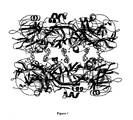
- SAP is a pentamer with 5 identical non-covalently associated protomers each bearing a single calcium dependent ligand binding site on one planar face, the binding (B) face, of the molecule (9).
- human SAP forms stable decameric dimers, probably via A-face to A-face interactions (11).
- isolated human SAP rapidly aggregates and precipitates, as a result of molecular lattice formation due to binding of the exposed carboxylate of the Glu167 residue on one SAP molecule by the calcium dependent ligand binding site of another SAP molecule (12,13). This autoaggregation of SAP is inhibited by other ligands to which SAP binds, and all the present inhibitors of SAP binding to amyloid fibrils were active in this respect.
- C-reactive protein is a pentraxin closely related to SAP.
- Samples of isolated pure human SAP or CRP were mixed with (R)-1-[6-(R)-2-Carboxy-pyrrolidin-1-yl]-6-oxo-hexanoyl]pyrrolidine-2-carboxylic acid at the molar ratios shown, with respect to pentraxin protomer, in physiological ionic strength Tris buffered saline pH 8.0, and analysed by size exclusion chromatography precisely as described previously (14).
- the mixtures and the column eluants contained either no calcium ions or 2 mM calcium, and the concentrations of drug appropriate to maintain the molar ratios indicated above.
- purified human SAP In the absence of a specific ligand to which it can bind, purified human SAP is insoluble in the presence of calcium and elutes as high molecular weight aggregates in the void volume of the column (14). However in the absence of calcium and ligand, isolated SAP alone forms stable decamers, providing an excellent marker for the elution volume of this molecular assembly (14). Human CRP is a stable pentamer either in the presence or absence of calcium and thus provides a robust marker for the elution position of that molecular form (14).
- SAP-(R)-1-[6-(R)-2-Carboxy-pyrrolidin-1-yl]-6-oxo-hexanoyl]pyrrolidine-2-carboxylic acid complex is evidently recognised as abnormal in vivo and swiftly removed from the circulation, but is apparently formed and/or cleared less efficiently in vivo with mouse SAP compared to human SAP.
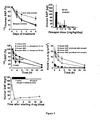
- the human SAP transgenic animals do not have any circulating mouse SAP, but neither oral administration, nor intermittent injection or continuous infusion, of (R)-1-[6-(R)-2-Carboxy-pyrrolidin-1-yl]-6-oxo-hexanoyl]pyrrolidine-2-carboxylic acid to normal wild type mice, caused depletion of their circulating SAP.
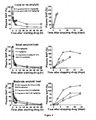
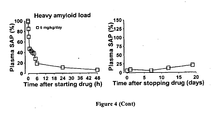
- the plasma SAP concentration rapidly returned to normal in the individuals with little or no amyloid, whereas this recovery was markedly delayed in subjects with significant amyloidosis.
- the plasma SAP concentration remained below 25% of its initial value 20 days after the infusion. Most of the daily production of SAP, which is about 50-100 mg per day (15), was evidently distributing into the amyloid deposits before becoming available to replete the plasma pool.
- SAP autoaggregates and elutes entirely as high molecular weight polymers in the void volume of the column.
- isolated human SAP insoluble in the presence of calcium (14).
- SAP forms stable decamers, providing an excellent marker for the elution volume of this molecular assembly (14).
- Human CRP is a stable pentamer either in the presence or absence of calcium and thus provides a robust marker for the elution position of that molecular form (14). Even at an equimolar concentration of the drug, some of the SAP was solubilised as stable drug-decamer complexes, and at 100 fold molar excess of drug, all the SAP was in this form.
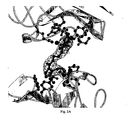
- (R)-1-[6-(R)-2-Carboxy-pyrrolidin-1-yl]-6-oxo-hexanoyl]pyrrolidine-2-carboxylic acid specifically targets SAP in vivo, through the specific ligand binding capacity of SAP, but additionally, as a consequence of the drug's palindromic structure, according to the present invention, it causes aggregation of native pentameric SAP molecules into decameric drug SAP complexes that are then promptly cleared by the liver.
Landscapes
- Health & Medical Sciences (AREA)
- Life Sciences & Earth Sciences (AREA)
- Veterinary Medicine (AREA)
- Chemical & Material Sciences (AREA)
- Public Health (AREA)
- Medicinal Chemistry (AREA)
- General Health & Medical Sciences (AREA)
- Animal Behavior & Ethology (AREA)
- Pharmacology & Pharmacy (AREA)
- Engineering & Computer Science (AREA)
- Bioinformatics & Cheminformatics (AREA)
- Epidemiology (AREA)
- Chemical Kinetics & Catalysis (AREA)
- Neurology (AREA)
- Nuclear Medicine, Radiotherapy & Molecular Imaging (AREA)
- General Chemical & Material Sciences (AREA)
- Organic Chemistry (AREA)
- Biomedical Technology (AREA)
- Neurosurgery (AREA)
- Hematology (AREA)
- Hospice & Palliative Care (AREA)
- Psychiatry (AREA)
- Diabetes (AREA)
- Pharmaceuticals Containing Other Organic And Inorganic Compounds (AREA)
- Heterocyclic Carbon Compounds Containing A Hetero Ring Having Nitrogen And Oxygen As The Only Ring Hetero Atoms (AREA)
- Plural Heterocyclic Compounds (AREA)
Claims (4)
- Utilisation d'un agent pour la préparation d'une composition destinée au traitement d'un patient présentant un trouble provoqué par une protéine pathogène via une déplétion thérapeutique de la protéine pathogène dans le plasma du patient ; dans laquelle le traitement comprend l'administration à un patient d'une dose de l'agent en quantité suffisante pour provoquer la délétion thérapeutique ; dans laquelle l'agent comprend une pluralité de ligands liés conjointement par covalence de manière à former un complexe avec une pluralité des protéines en présence de celles-ci ; dans laquelle au moins deux des ligands sont identiques ou différents et sont capables de se lier par le biais de sites de liaison de ligands présents sur les protéines ; et dans laquelle :la protéine pathogène est le composant d'amyloïde P sérique (SAP) et l'agent est une D-proline de formule suivante :ou un sel acceptable au plan pharmaceutique ou un mono-ou un diester de celui-ci.
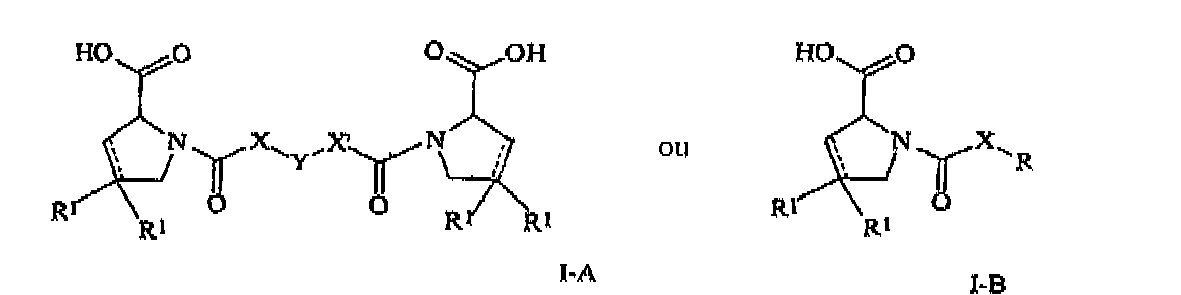
 R1 représente l'hydrogène ou un halogène ;X représente -(CH2)n- ; -CH(R2)(CH2)n- ; -CH2O(CH2)n- ; -CH2NH- ; benzyle, -C(R2)=CH- ; -CH2CH(OH)- ; ou thiazol-2,5-diyle ;Y représente -S-S- ; -(CH2)n - ; -O- ; -NH- ; -N(R2)- ; -CH=CH- ; -NHC(O)NH- ; -N(R2)C(O)N(R2)- ; -N[CH2C6H3(OCH3)2]- ; -N(CH2C6H5)- ; -N(CH2C6H5)C(O)N(CH2C6H5)-, -N(alkoxyalkyle)- ; N(cycloalkylméthyle)- ; 2,6-pyridyle ; 2,5-furanyle ; 2,5-thiényle ; 1,2-cyclohexyle ; 1,3-cyclohexyle ; 1,4-cyclohexyle ; 1,2-naphtyle ; 1,4-naphtyle ; 1,5-naphtyle ; 1,6-naphtyle ; biphénylène ; ou 1,2-phénylène, 1,3-phénylène et 1,4-phénylène, où les groupements phénylène sont éventuellement substitués par 1 à 4 substituants choisis parmi un halogène, un groupement alkyle inférieur, alcoxy inférieur, hydroxyle, carbonyle, -COO-alkyle inférieur, nitrilo, 5-tétrazole, (acide 2-carboxylique-pyrrolidin-1-yl)-2-oxo-éthoxy, N-hydroxycarbamimidoyle, 5-oxo[1,2,4]oxadiazolyle, 2-oxo-[1,2,3,5]oxathiadiazolyle, 5-thioxo[1,2,4]oxadiazolyle et 5-tert-butylsulfanyl-[1,2,4]oxadiazolyle ;X' représente -(CH2)n- -(CH2)nCH(R2)- ; -(CH2)nOCH2- ; -NHCH2- ; benzyle ; -CH=C(R2)- ; -CH(OH)CH2 ; ou thiazol-2,5-diyle ;R2 représente un alkyle inférieur, un alcoxy inférieur ou un benzyle ; etn vaut 0 à 3,
 - Utilisation selon la revendication 1, dans laquelle chaque ligand est choisi pour être lié par la protéine avec une constante de dissociation qui n'est pas supérieure à un 1 millimolaire.
- Utilisation selon la revendication 1, dans laquelle la D-proline est l'acide (R)-1-[6-(R)-2-carboxy-pyrrolidin-1-yl]-6-oxo-hexanoyl]pyrrolidine-2-carboxylique ou un sel acceptable au plan pharmaceutique ou un mono- ou un diester de celui-ci.
- Utilisation selon l'une quelconque des revendications 1 à 3, dans laquelle la dose se situe dans la plage de 0,1 à 6 mg/kg par patient/jour.
Applications Claiming Priority (3)
| Application Number | Priority Date | Filing Date | Title |
|---|---|---|---|
| GBGB0119370.5A GB0119370D0 (en) | 2001-08-08 | 2001-08-08 | Therapeutic agent |
| US09/985,699 US7045499B2 (en) | 2001-08-08 | 2001-11-05 | Therapeutic agent |
| EP02751356A EP1418905B1 (fr) | 2001-08-08 | 2002-07-29 | Agent therapeutique pour la depletion plasmatique d'une population de proteines indesirables |
Related Parent Applications (2)
| Application Number | Title | Priority Date | Filing Date |
|---|---|---|---|
| EP02751356.3 Division | 2002-07-29 | ||
| EP02751356A Division EP1418905B1 (fr) | 2001-08-08 | 2002-07-29 | Agent therapeutique pour la depletion plasmatique d'une population de proteines indesirables |
Publications (2)
| Publication Number | Publication Date |
|---|---|
| EP1820501A1 EP1820501A1 (fr) | 2007-08-22 |
| EP1820501B1 true EP1820501B1 (fr) | 2011-09-14 |
Family
ID=9920048
Family Applications (1)
| Application Number | Title | Priority Date | Filing Date |
|---|---|---|---|
| EP07075314A Expired - Lifetime EP1820501B1 (fr) | 2001-08-08 | 2002-07-29 | Agent therapeutique pour la depletion d'une population de protéines indésirables à partir du plasma |
Country Status (5)
| Country | Link |
|---|---|
| US (1) | US7045499B2 (fr) |
| EP (1) | EP1820501B1 (fr) |
| CY (1) | CY1107680T1 (fr) |
| GB (1) | GB0119370D0 (fr) |
| PT (1) | PT1418905E (fr) |
Families Citing this family (4)
| Publication number | Priority date | Publication date | Assignee | Title |
|---|---|---|---|---|
| JP4472333B2 (ja) * | 2001-08-08 | 2010-06-02 | ペントラキシン セラピューティクス リミテッド | 好ましくないタンパク質群を患者の血漿から除去するための薬剤 |
| GB0313386D0 (en) * | 2003-06-10 | 2003-07-16 | Univ London | Treatment of disease |
| WO2020128816A2 (fr) | 2018-12-20 | 2020-06-25 | Pfizer Inc. | Compositions pharmaceutiques et méthodes comprenant une combinaison d'un stabilisateur de transthyrétine benzoxazole et d'un agent thérapeutique supplémentaire |
| WO2022112919A1 (fr) | 2020-11-25 | 2022-06-02 | Pfizer Inc. | Composés de pyrazole substitués par (aza)benzothiazolyle |
Family Cites Families (6)
| Publication number | Priority date | Publication date | Assignee | Title |
|---|---|---|---|---|
| JPS62277352A (ja) * | 1986-01-30 | 1987-12-02 | Ono Pharmaceut Co Ltd | 新規な6−ケト−プロスタグランジンe1誘導体、それらの製造方法およびそれらを有効成分として含有する細胞障害治療剤 |
| US4895872A (en) * | 1989-03-15 | 1990-01-23 | Cetus Corporation | Immunosupressive analogues and derivatives of succinylacetone |
| US6172045B1 (en) | 1994-12-07 | 2001-01-09 | Neorx Corporation | Cluster clearing agents |
| NZ500620A (en) * | 1997-05-02 | 2000-10-27 | Akzo Nobel Nv | Synthetic peptides which inhibit serine proteases, specifically thrombin, factor VIIa tissue factor and factor Xa |
| US6365570B1 (en) * | 1997-10-10 | 2002-04-02 | Universiteit Utrecht | Pharmaceutical and diagnostic use of Serum Amyloid P component |
| DK0915088T3 (da) | 1997-10-31 | 2003-01-27 | Hoffmann La Roche | D-prolinderivater |
-
2001
- 2001-08-08 GB GBGB0119370.5A patent/GB0119370D0/en not_active Ceased
- 2001-11-05 US US09/985,699 patent/US7045499B2/en not_active Expired - Lifetime
-
2002
- 2002-07-29 PT PT02751356T patent/PT1418905E/pt unknown
- 2002-07-29 EP EP07075314A patent/EP1820501B1/fr not_active Expired - Lifetime
-
2007
- 2007-06-21 CY CY20071100819T patent/CY1107680T1/el unknown
Also Published As
| Publication number | Publication date |
|---|---|
| GB0119370D0 (en) | 2001-10-03 |
| EP1820501A1 (fr) | 2007-08-22 |
| US20060014665A1 (en) | 2006-01-19 |
| US7045499B2 (en) | 2006-05-16 |
| CY1107680T1 (el) | 2013-04-18 |
| PT1418905E (pt) | 2007-05-31 |
Similar Documents
| Publication | Publication Date | Title |
|---|---|---|
| US8173694B2 (en) | Therapeutic agent | |
| US10806735B2 (en) | Use of neutrophil elastase inhibitors in liver disease | |
| JP2003501488A (ja) | 骨髄抑制のための高投与量放射性核種錯体 | |
| JPH10509143A (ja) | 2,2′−ジチオ−ビス(エタンスルホネート)(ジメスナ)と組み合わせたシスプラチン組成物 | |
| JPH10504574A (ja) | 静脈内注入用アレンドロナート組成物 | |
| EP1820501B1 (fr) | Agent therapeutique pour la depletion d'une population de protéines indésirables à partir du plasma | |
| RU2396952C2 (ru) | Комбинация, включающая комбретастатин и противораковые средства | |
| JP2003504395A (ja) | 腎臓に有害な可能性のある分子の腎臓取り込みの阻害 | |
| JP2025015727A (ja) | p-ボロノフェニルアラニンを含有する注射液剤 | |
| JP3219402B2 (ja) | 多発性骨髄腫の骨病変治療用医薬組成物 | |
| Hoover | Etanercept therapy for severe plaque psoriasis in a patient who underwent a liver transplant | |
| Allen et al. | Antimitotic effects of dehydroretronecine pyrrole | |
| Molina et al. | Efficacy of treatment with the iron (III) complex of diethylenetriamine pentaacetic acid in mice and primates inoculated with live lethal dose 100 Escherichia coli. | |
| AU2005326226B2 (en) | Immunopotentiating agent | |
| JP2002513379A (ja) | Mtp抑制因子を用いる、高ldlの必要を持つ腫瘍の治療法 | |
| Varini | Ifosfamide in tumor therapy | |
| US8268888B2 (en) | Therapy of malignant neoplasias | |
| WO2023239903A1 (fr) | Compositions et méthodes pour empêcher la rétention d'une thérapie ciblée sur psma | |
| JP2654518B2 (ja) | 肝細胞増殖促進剤 | |
| CHIBA et al. | Pharmacokinetic Aspects of the Interaction of Sulfonamides with Ibuprofen or Mepirizole in Dogs | |
| Zülch | Effects of Chemotherapy | |
| MARQUET et al. | interferon zyxwvutsrqponmlkji | |
| JPH09169668A (ja) | 治療剤 | |
| AU3512701A (en) | Method for inhibiting the expression of FAS |
Legal Events
| Date | Code | Title | Description |
|---|---|---|---|
| PUAI | Public reference made under article 153(3) epc to a published international application that has entered the european phase |
Free format text: ORIGINAL CODE: 0009012 |
|
| AC | Divisional application: reference to earlier application |
Ref document number: 1418905 Country of ref document: EP Kind code of ref document: P |
|
| AK | Designated contracting states |
Kind code of ref document: A1 Designated state(s): AT BE BG CH CY CZ DE DK EE ES FI FR GB GR IE IT LI LU MC NL PT SE SK TR |
|
| 17P | Request for examination filed |
Effective date: 20080221 |
|
| AKX | Designation fees paid |
Designated state(s): AT BE BG CH CY CZ DE DK EE ES FI FR GB GR IE IT LI LU MC NL PT SE SK TR |
|
| 17Q | First examination report despatched |
Effective date: 20080429 |
|
| RBV | Designated contracting states (corrected) |
Designated state(s): IT |
|
| REG | Reference to a national code |
Ref country code: DE Ref legal event code: 8566 |
|
| GRAP | Despatch of communication of intention to grant a patent |
Free format text: ORIGINAL CODE: EPIDOSNIGR1 |
|
| GRAS | Grant fee paid |
Free format text: ORIGINAL CODE: EPIDOSNIGR3 |
|
| GRAA | (expected) grant |
Free format text: ORIGINAL CODE: 0009210 |
|
| AC | Divisional application: reference to earlier application |
Ref document number: 1418905 Country of ref document: EP Kind code of ref document: P |
|
| AK | Designated contracting states |
Kind code of ref document: B1 Designated state(s): IT |
|
| RAP2 | Party data changed (patent owner data changed or rights of a patent transferred) |
Owner name: PENTRAXIN THERAPEUTICS LIMITED |
|
| PLBE | No opposition filed within time limit |
Free format text: ORIGINAL CODE: 0009261 |
|
| STAA | Information on the status of an ep patent application or granted ep patent |
Free format text: STATUS: NO OPPOSITION FILED WITHIN TIME LIMIT |
|
| 26N | No opposition filed |
Effective date: 20120615 |
|
| PGFP | Annual fee paid to national office [announced via postgrant information from national office to epo] |
Ref country code: IT Payment date: 20180720 Year of fee payment: 17 |
|
| PG25 | Lapsed in a contracting state [announced via postgrant information from national office to epo] |
Ref country code: IT Free format text: LAPSE BECAUSE OF NON-PAYMENT OF DUE FEES Effective date: 20190729 |