EP1834367B1 - Oberflächenbehandelte mikroporöse membran und dadurch hergestellte elektrochemische einrichtung - Google Patents
Oberflächenbehandelte mikroporöse membran und dadurch hergestellte elektrochemische einrichtung Download PDFInfo
- Publication number
- EP1834367B1 EP1834367B1 EP05821422.2A EP05821422A EP1834367B1 EP 1834367 B1 EP1834367 B1 EP 1834367B1 EP 05821422 A EP05821422 A EP 05821422A EP 1834367 B1 EP1834367 B1 EP 1834367B1
- Authority
- EP
- European Patent Office
- Prior art keywords
- inorganic particles
- group
- styrene
- porous film
- lithium
- Prior art date
- Legal status (The legal status is an assumption and is not a legal conclusion. Google has not performed a legal analysis and makes no representation as to the accuracy of the status listed.)
- Expired - Lifetime
Links
Images
Classifications
-
- H—ELECTRICITY
- H01—ELECTRIC ELEMENTS
- H01M—PROCESSES OR MEANS, e.g. BATTERIES, FOR THE DIRECT CONVERSION OF CHEMICAL ENERGY INTO ELECTRICAL ENERGY
- H01M50/00—Constructional details or processes of manufacture of the non-active parts of electrochemical cells other than fuel cells, e.g. hybrid cells
- H01M50/40—Separators; Membranes; Diaphragms; Spacing elements inside cells
- H01M50/409—Separators, membranes or diaphragms characterised by the material
- H01M50/449—Separators, membranes or diaphragms characterised by the material having a layered structure
-
- H—ELECTRICITY
- H01—ELECTRIC ELEMENTS
- H01M—PROCESSES OR MEANS, e.g. BATTERIES, FOR THE DIRECT CONVERSION OF CHEMICAL ENERGY INTO ELECTRICAL ENERGY
- H01M50/00—Constructional details or processes of manufacture of the non-active parts of electrochemical cells other than fuel cells, e.g. hybrid cells
- H01M50/40—Separators; Membranes; Diaphragms; Spacing elements inside cells
- H01M50/409—Separators, membranes or diaphragms characterised by the material
- H01M50/446—Composite material consisting of a mixture of organic and inorganic materials
-
- H—ELECTRICITY
- H01—ELECTRIC ELEMENTS
- H01M—PROCESSES OR MEANS, e.g. BATTERIES, FOR THE DIRECT CONVERSION OF CHEMICAL ENERGY INTO ELECTRICAL ENERGY
- H01M50/00—Constructional details or processes of manufacture of the non-active parts of electrochemical cells other than fuel cells, e.g. hybrid cells
- H01M50/40—Separators; Membranes; Diaphragms; Spacing elements inside cells
- H01M50/409—Separators, membranes or diaphragms characterised by the material
- H01M50/411—Organic material
- H01M50/414—Synthetic resins, e.g. thermoplastics or thermosetting resins
-
- H—ELECTRICITY
- H01—ELECTRIC ELEMENTS
- H01M—PROCESSES OR MEANS, e.g. BATTERIES, FOR THE DIRECT CONVERSION OF CHEMICAL ENERGY INTO ELECTRICAL ENERGY
- H01M50/00—Constructional details or processes of manufacture of the non-active parts of electrochemical cells other than fuel cells, e.g. hybrid cells
- H01M50/40—Separators; Membranes; Diaphragms; Spacing elements inside cells
- H01M50/409—Separators, membranes or diaphragms characterised by the material
- H01M50/431—Inorganic material
-
- H—ELECTRICITY
- H01—ELECTRIC ELEMENTS
- H01M—PROCESSES OR MEANS, e.g. BATTERIES, FOR THE DIRECT CONVERSION OF CHEMICAL ENERGY INTO ELECTRICAL ENERGY
- H01M50/00—Constructional details or processes of manufacture of the non-active parts of electrochemical cells other than fuel cells, e.g. hybrid cells
- H01M50/40—Separators; Membranes; Diaphragms; Spacing elements inside cells
- H01M50/409—Separators, membranes or diaphragms characterised by the material
- H01M50/443—Particulate material
-
- H—ELECTRICITY
- H01—ELECTRIC ELEMENTS
- H01M—PROCESSES OR MEANS, e.g. BATTERIES, FOR THE DIRECT CONVERSION OF CHEMICAL ENERGY INTO ELECTRICAL ENERGY
- H01M50/00—Constructional details or processes of manufacture of the non-active parts of electrochemical cells other than fuel cells, e.g. hybrid cells
- H01M50/40—Separators; Membranes; Diaphragms; Spacing elements inside cells
- H01M50/489—Separators, membranes, diaphragms or spacing elements inside the cells, characterised by their physical properties, e.g. swelling degree, hydrophilicity or shut down properties
-
- H—ELECTRICITY
- H01—ELECTRIC ELEMENTS
- H01M—PROCESSES OR MEANS, e.g. BATTERIES, FOR THE DIRECT CONVERSION OF CHEMICAL ENERGY INTO ELECTRICAL ENERGY
- H01M50/00—Constructional details or processes of manufacture of the non-active parts of electrochemical cells other than fuel cells, e.g. hybrid cells
- H01M50/40—Separators; Membranes; Diaphragms; Spacing elements inside cells
- H01M50/489—Separators, membranes, diaphragms or spacing elements inside the cells, characterised by their physical properties, e.g. swelling degree, hydrophilicity or shut down properties
- H01M50/491—Porosity
-
- H—ELECTRICITY
- H01—ELECTRIC ELEMENTS
- H01M—PROCESSES OR MEANS, e.g. BATTERIES, FOR THE DIRECT CONVERSION OF CHEMICAL ENERGY INTO ELECTRICAL ENERGY
- H01M10/00—Secondary cells; Manufacture thereof
- H01M10/05—Accumulators with non-aqueous electrolyte
- H01M10/052—Li-accumulators
- H01M10/0525—Rocking-chair batteries, i.e. batteries with lithium insertion or intercalation in both electrodes; Lithium-ion batteries
-
- H—ELECTRICITY
- H01—ELECTRIC ELEMENTS
- H01M—PROCESSES OR MEANS, e.g. BATTERIES, FOR THE DIRECT CONVERSION OF CHEMICAL ENERGY INTO ELECTRICAL ENERGY
- H01M50/00—Constructional details or processes of manufacture of the non-active parts of electrochemical cells other than fuel cells, e.g. hybrid cells
- H01M50/40—Separators; Membranes; Diaphragms; Spacing elements inside cells
- H01M50/409—Separators, membranes or diaphragms characterised by the material
- H01M50/44—Fibrous material
-
- H—ELECTRICITY
- H01—ELECTRIC ELEMENTS
- H01M—PROCESSES OR MEANS, e.g. BATTERIES, FOR THE DIRECT CONVERSION OF CHEMICAL ENERGY INTO ELECTRICAL ENERGY
- H01M50/00—Constructional details or processes of manufacture of the non-active parts of electrochemical cells other than fuel cells, e.g. hybrid cells
- H01M50/40—Separators; Membranes; Diaphragms; Spacing elements inside cells
- H01M50/46—Separators, membranes or diaphragms characterised by their combination with electrodes
- H01M50/461—Separators, membranes or diaphragms characterised by their combination with electrodes with adhesive layers between electrodes and separators
-
- Y—GENERAL TAGGING OF NEW TECHNOLOGICAL DEVELOPMENTS; GENERAL TAGGING OF CROSS-SECTIONAL TECHNOLOGIES SPANNING OVER SEVERAL SECTIONS OF THE IPC; TECHNICAL SUBJECTS COVERED BY FORMER USPC CROSS-REFERENCE ART COLLECTIONS [XRACs] AND DIGESTS
- Y02—TECHNOLOGIES OR APPLICATIONS FOR MITIGATION OR ADAPTATION AGAINST CLIMATE CHANGE
- Y02E—REDUCTION OF GREENHOUSE GAS [GHG] EMISSIONS, RELATED TO ENERGY GENERATION, TRANSMISSION OR DISTRIBUTION
- Y02E60/00—Enabling technologies; Technologies with a potential or indirect contribution to GHG emissions mitigation
- Y02E60/10—Energy storage using batteries
Definitions
- the present invention relates to a porous film, surfaced-treated with a polymer capable of improving adhesion to other substrates, scratch resistance and wear resistance.
- the present invention also relates to an electrochemical device comprising the above porous film as a separator.
- lithium secondary batteries developed in the early 1990's, have a drive voltage and energy density higher than those of conventional batteries using aqueous electrolytes (such as Ni-MH batteries, Ni-Cd batteries and H 2 SO 4 -Pb batteries).
- aqueous electrolytes such as Ni-MH batteries, Ni-Cd batteries and H 2 SO 4 -Pb batteries.
- Lithium secondary batteries have been spotlighted due to the above-mentioned advantages.
- a lithium secondary battery is manufactured by forming an assembly of an anode, a cathode, and a separator interposed between both electrodes.
- the separator interposed between both electrodes of the battery is a member that serves to prevent an internal short circuit caused by direct contact between the cathode and anode.
- the separator serves as an ion flow path in the battery, and contributes to the improvement of battery safety.
- conventional batteries manufactured in the same manner as described above by using a polyolefin-based separator, frequently cause the problems of poor adhesion and separation between a separator and electrodes, and inefficient lithium ion transfer through the pores of the separator, resulting in degradation in the quality of a battery.
- conventional separators are formed from a chemically stable material, which is not decomposed and does not allow any reaction upon exposure to the oxidative or reductive atmosphere inside a battery, such as polyolefin or fluoropolymer.
- such materials provide insufficient mechanical strength, and thus cause the problems of peel-off or breakage of a separator during the assemblage of a battery, resulting in a drop in the battery safety, caused by an internal short circuit of the battery.
- separators for electrochemical cells which comprise at least one microporous pseudo-boehmite layer and at least one protective coating layer comprising a polymer.
- WO03/065481 describes a separation membrane including a supporting body (polyvinylidene fluoride-based polymer), a polymer membrane formed on the supporting body, and a polymer binder membrane formed on the polymer membrane.
- the present invention has been made in view of the above-mentioned problems.
- the present inventors have found that when a separator is overcoated with styrene-butadiene rubber (SBR) that imparts excellent adhesion and mechanical strength, on a surface of the separator, or on a part of pores present in the separator, the separator shows improved adhesion to other substrates, preferably to electrodes, and is prevented from peeling-off and breaking during the assemblage of an electrochemical device, so that an electrochemical device using the same separator can provide improved safety and can be prevented from degradation in the quality.
- SBR styrene-butadiene rubber
- the porous film according to the present invention is characterized in that the surface of the porous substrate and/or a part of the pores present in the substrate is coated with styrene-butadiene rubber.
- Such coated porous film can improve the safety of a battery and prevent degradation in the quality of a battery by virtue of the physical properties of styrene-butadiene rubber.
- a separator using the porous film according to the present invention can be prevented from peeling-off and breaking. Hence, it is possible to increase the processability during the assemblage of a battery.
- the coating materials for the porous film according to the present invention include styrene-butadiene rubber having a glass transition temperature (Tg) of room temperature (25°C) or less.
- Styrene-butadiene rubber can be controlled in terms of physical properties so as to be present in a glassy state or rubbery state by adjusting the mixing ratio of a styrene group-containing monomer and a butadiene group-containing monomer, and thus helps to improve the scratch resistance of a separator and safety of a battery.
- SBR may comprise various kinds and amounts of monomers having hydrophilic functional groups that can form hydrogen bonds with other substrates (e.g. electrodes) to increase the adhesion. Therefore, SBR can provide improved adhesion to an electrode.
- SBR used in the present invention has at least one hydrophilic functional group that may be selected from the group consisting of maleic acid, acrylic acid, acrylate, carboxylate, nitrile, hydroxy, mercapto, ether, ester, amide, amine and acetate groups, and halogen atoms.
- Styrene-butadiene rubber that may be used in the present invention includes, but is not limited to, SBR obtained by polymerizing: (a) a butadiene group-containing monomer and a styrene group-containing monomer; or (b) a butadiene group-containing monomer, a styrene group-containing monomer and a hydrophilic group-containing monomer known to one skilled in the art, in a conventional manner currently used in the art.
- hydrophilic group-containing monomer there is no particular limitation in the hydrophilic group-containing monomer, and non-limiting examples thereof include monomers containing at least one hydrophilic functional group selected from the group consisting of maleic acid, acrylic acid, acrylate, carboxylic acid, nitrile, hydroxyl and acetate groups.
- the mixing ratio of the styrene group-containing monomer to the butadiene group-containing monomer ranges from 1:99 to 99:1, but is not limited thereto.
- the styrene-butadiene rubber has a styrene group content of 50 wt% or less.
- SBR styrene-butadiene rubber
- SBR rubber is present preferably in the form of an emulsion obtained by solution copolymerization. Because SBR may be used directly in the form of an emulsion or after dispersing it into water, an additional organic solvent and an additional step for removing the same are not required.
- the SBR coating layer formed on the porous film preferably has a thickness of 0.001 ⁇ 10 micrometers, but is not limited thereto. If the thickness is less than 0.001 ⁇ m, it is not possible to improve the adhesion and mechanical strength sufficiently. On the other hand, if the thickness is greater than 10 ⁇ m, the SBR coating layer may serve as a resistance layer, resulting in degradation in the quality of a battery.
- the coating layer formed on the porous film according to the present invention may further comprise other additives known to one skilled in the art, in addition to SBR.
- additives include a thickening agent or a silane coupling agent that can enhance the binding force.
- the substrate to be coated with SBR according to the present invention includes any porous substrate as long as it serves as a lithium ion flow path and as a space for receiving an electrolyte, regardless of the constitutional elements and composition of the substrate.
- the porous substrate is selected from the group consisting of types (b) and (c).
- Type (b) is an organic/inorganic composite porous film, which comprises a porous film having pores, coated with a coating layer comprising a mixture of inorganic particles with a binder polymer, on the surface of the porous substrate and/or on a part of the pores present in the porous substrate.
- Type (c) is an organic/inorganic composite porous film comprising inorganic particles and a binder polymer coating layer partially or totally formed on the surface of the inorganic particles. Combinations of the above types of separators may be used.
- the inorganic/organic composite porous films (b) and (c) comprise the inorganic particles linked and fixed among themselves by the binder polymer, and have a pore structure formed by interstitial volumes of the inorganic particles.
- Porous films of type (b) or (c) have little possibility of a complete short circuit between both electrode due to the presence of the inorganic particles, even if the styrene-butadiene surface coating layer is partially or totally broken in a battery by the external or internal factors. Even if any short circuit is generated, the short circuit zone is inhibited from being extended by the inorganic particles, resulting in improvement of the safety of a battery.
- non-limiting examples of the porous substrate include polyethylene terephthalate, polybutylene terephthalate, polyester, polyacetal, polyamide, polycarbonate, polyimide, polyetherether ketone, polyether sulfone, polyphenylene oxide, polyphenylene sulfidro, polyethylene naphthalene, polyvinylidene fluoride, polyethylene oxide, polyacrylonitrile, polyvinylidene fluoride-hexafluoropropylene copolymer, polyethylene, polypropylene, or combinations thereof.
- other polyolefin-based substrates known to one skilled in the art may be used.
- the porous substrate used in the organic/inorganic composite porous film (b) may take the form of a membrane or fiber.
- the porous substrate may be a nonwoven web forming a porous web (preferably, spunbond type web comprising long fibers or melt blown type web).
- the porous substrate preferably has a thickness of between 1 ⁇ m and 100 ⁇ m, more preferably of between 5 ⁇ m and 50 ⁇ m.
- the porous substrate preferably has a porosity of between 5% and 99%.
- the pore size (diameter) preferably ranges from 0.01 ⁇ m to 50 ⁇ m, more preferably from 0.1 ⁇ m to 20 ⁇ m.
- the organic/inorganic composite porous film (b) comprises a porous substrate having pores, coated with a mixture of inorganic particles with a binder polymer, while the organic/inorganic composite porous film (c) is a free standing film comprising inorganic particles and a binder polymer.
- these types of porous substrates permit interstitial volumes to be formed among the inorganic particles, thereby serving to form micropores and to maintain the physical shape as a spacer.
- the binder polymer serves to fix the inorganic particles and link the inorganic particles among themselves.
- the inorganic particles there is no particular limitation in selection of the inorganic particles, as long as they are electrochemically stable. In other words, there is no particular limitation in the inorganic particles that may be used in the present invention, as long as they are not subjected to oxidation and/or reduction at the range of drive voltages (for example, 0-5 V based on Li/Li + ) of a battery, to which they are applied. Particularly, it is preferable to use inorganic particles having ion conductivity as high as possible, because such inorganic particles can improve the quality of an electrochemical device by increasing the ion conductivity in an electrochemical device.
- inorganic particles having a high density are used, they are not readily dispersed during a coating step and may increase the weight of a battery to be manufactured. Therefore, it is preferable to use inorganic particles having a density as low as possible. Further, when inorganic particles having a high dielectric constant are used, they can contribute to increase the dissociation degree of an electrolyte salt in a liquid electrolyte, such as a lithium salt, thereby improving the ion conductivity of the electrolyte. Further, because the inorganic particles are characterized by their physical properties that are not changed even at a high temperature of 200°C or higher, the organic/inorganic composite porous film using the inorganic particles can have excellent heat resistance.
- the inorganic particles that may be used in the organic/inorganic composite porous films (b) and (c) are selected from conventional the inorganic particles having a high dielectric constant of 5 or more, preferably of 10 or more, inorganic particles having lithium conductivity, or mixtures thereof. This is because such inorganic particles can improve the safety of a battery and can prevent degradation in the battery quality due to their heat resistance and conductivity.
- inorganic particles having a dielectric constant of 5 or more include BaTiO 3 , Pb(Zr,Ti)O 3 (PZT), Pb 1-x La x Zr 1-y Ti y O 3 (PLZT), PB(Mg 3 Nb 2/3 )O 3 -PbTiO 3 (PMN-PT), hafnia (HfO 2 ), SrTiO 3 , SnO 2 , CeO 2 , MgO, NiO, CaO, ZnO, ZrO 2 , Y 2 O 3 , Al 2 O 3 , TiO 2 , SiC, or mixtures thereof.
- inorganic particles having lithium ion conductivity refer to inorganic particles containing lithium elements and having a capability of conducting lithium ions without storing lithium. Inorganic particles having lithium ion conductivity can conduct and transfer lithium ions due to defects present in their structure, and thus can improve lithium ion conductivity and contribute to improve the quality of a battery.
- Non-limiting examples of such inorganic particles having lithium ion conductivity include: lithium phosphate (Li 3 PO 4 ); lithium titanium phosphate (Li x Ti y (PO 4 ) 3 , 0 ⁇ x ⁇ 2, 0 ⁇ y ⁇ 3); lithium aluminum titanium phosphate (Li x Al y Ti z (PO 4 ) 3 , 0 ⁇ x ⁇ 2, 0 ⁇ y ⁇ 1, 0 ⁇ z ⁇ 3); (LiAlTiP) x O y type glass (0 ⁇ x ⁇ 4, 0 ⁇ y ⁇ 13) such as 14Li 2 O-9Al 2 O 3 -38TiO 2 -39P 2 O 5 ; lithium lanthanum titanate (Li x La y TiO 3 , 0 ⁇ x ⁇ 2, 0 ⁇ y ⁇ 3); lithium germanium thiophosphate (Li x Ge y P z S w , 0 ⁇ x ⁇ 4, 0 ⁇ y ⁇ 1, 0 ⁇ z ⁇ 1, 0 ⁇ w ⁇ 5), such as Li 3.25 Ge
- the above-described inorganic particles for example Pb(Zr,Ti)O 3 (PZT), Pb 1-x La x Zr 1-y TiyO 3 (PLZT), Pb (Mg 3 Nb 2/3 )O 3 -PbTiO 3 (PMN-PT), hafnia (HfO 2 ), etc., have a high dielectric constant of 100 or more.
- the inorganic particles also have piezoelectricity, so that an electric potential can be generated between both surfaces by the charge formation, when they are drawn or compressed under the application of a certain pressure. Therefore, the inorganic particles can prevent an internal short circuit between both electrodes, thereby contributing to improve the safety of a battery. Additionally, when such inorganic particles having a high dielectric constant are combined with inorganic particles having lithium ion conductivity, synergic effects can be obtained.
- the organic/inorganic composite porous film according to the present invention can form pores having a size of several micrometers by controlling the size of inorganic particles, content of inorganic particles and the mixing ratio of inorganic particles and binder polymer. It is also possible to control the pore size and porosity.
- inorganic particles preferably have a size of 0.01-10 ⁇ m. Also, there is no particular limitation in the content of the inorganic particles. However, the inorganic particles are present in the mixture of the inorganic particles with binder polymer forming the organic/inorganic composite porous film, preferably in an amount of 50-99 wt%, more particularly in an amount of 60-95 wt% based on 100 wt% of the total weight of the mixture.
- the binder polymer that may be used in the organic/inorganic composite porous films (b) and (c) includes a polymer currently used in the art. It is preferable to use a polymer having a solubility parameter of between 15 and 45 MPa 1/2 , depending on the particular electrolyte to be used in a battery. More preferably, a polymer that is swellable in an electrolyte and having a solubility parameter of between 18.0 and 30 [J 1/2 /cm 3/2 ] is used.
- the binder polymer causes the inorganic particles to be linked among them and to be fixed stably. Thus the binder polymer contributes to prevent degradation in the mechanical properties of a final organic/inorganic composite porous film and to increase the infiltration ratio of electrolyte, thereby improving the quality of a battery.
- Non-limiting examples of the binder polymer that may be used in the present invention include polyvinylidene fluoride-co-hexafluoropropylene, poly vinylidene fluoride-co-trichloroethylene, polymethyl methacrylate, polyacrylonitrile, polyvinylpyrrolidone, polyvinyl acetate, polyethylene-co-vinyl acetate, polyethylene oxide, cellulose acetate, cellulose acetate butyrate, cellulose acetate propionate, cyanoethyl pullulan, cyanoethyl polyvinylalcohol, cyanoethyl cellulose, cyanoethylsucrose, pullulan, carboxymetyl cellulose, or mixtures thereof.
- the organic/inorganic composite porous film (b) may be manufactured by a conventional process known to one skilled in the art.
- One embodiment of the method comprises the steps of: (a) dissolving a polymer into a solvent to form a polymer solution; (b) adding inorganic particles to the polymer solution obtained from step (a) and mixing them; and (c) coating the mixture of inorganic particles with binder polymer obtained from step (b) on a substrate, followed by drying, and optionally removing the substrate.
- the organic/inorganic composite porous film obtained as described above may be provided in the types (b) and (c).
- the organic/inorganic composite porous film (c) obtained by using a mixture of inorganic particles with a binder alone, has a micrometer sized pore structure due to the interstitial volumes present among the inorganic particles that function not only as supports but also as spacers.
- the organic/inorganic composite porous film (b) formed by coating the above mixture on a porous substrate comprises pores provided by the porous substrate itself and has pore structures on the substrate as well as on the active layer due to the interstitial volumes present among the inorganic particles on the substrate.
- the porous film preferably has a porosity of 10 ⁇ 99% and a pore size (diameter) of 0.001 ⁇ 10 ⁇ m. If the finished porous film has a pore size of less than 0.001 ⁇ m and a porosity of less than 10%, an electrolyte cannot move smoothly through the porous film, resulting in degradation in the quality of a battery.
- the finished porous film has a pore size of greater than 10 ⁇ m and a porosity of greater than 99%, the porous film cannot maintain physical properties, and thus causes possibility of an internal short circuit between a cathode and anode.
- the porous film preferably has a thickness of 1 ⁇ 100 ⁇ m, more preferably of 5 ⁇ 50 ⁇ m. If the porous film has a thickness of less than 1 ⁇ m, it cannot maintain physical properties. On the other hand, if the porous film has a thickness of greater than 100 ⁇ m, it may function as a resistance layer.
- a porous substrate having pores is coated with styrene-butadiene rubber, and then the coated substrate is dried.
- styrene-butadiene rubber may be used in the form of an emulsion.
- styrene-butadiene rubber may be dispersed into a solvent having a solubility parameter similar to the solubility parameter of the rubber and a low boiling point, preferably into water, and then used.
- any methods known to one skilled in the art may be used. It is possible to use various processes including dip coating, die coating, roll coating, comma coating or combinations thereof. Additionally, when the mixture containing inorganic particles and polymer is coated on the porous substrate, either or both surfaces of the porous substrate may be coated. The drying step may be performed in a manner generally known to one skilled in the art.
- porous film according to the present invention obtained as described above, is used as a separator in an electrochemical device.
- the present invention provides an electrochemical device comprising a cathode; an anode; the porous film coated with styrene-butadiene rubber according to the present invention; and an electrolyte.
- Such electrochemical devices include any devices in which electrochemical reactions occur, and particular examples thereof include all kinds of primary batteries, secondary batteries, fuel cells, solar cells or capacitors.
- the electrochemical device is a lithium secondary battery including a secondary lithium metal battery, secondary lithium ion battery, secondary lithium polymer battery, or a secondary lithium ion polymer battery.
- the electrochemical device using the porous film according to the present invention may be manufactured by a conventional method known to one skilled in the art.
- the electrochemical device is assembled by interposing the porous film coated with styrene-butadiene rubber between a cathode and anode to form an assembly, and an electrolyte is injected into the assembly.
- adhesion of the porous film according to the present invention to other substrates largely depends on the physical properties of styrene-butadiene rubber used for forming a coating layer. In fact, excellent adhesion can be obtained through high polarity or low glass transition temperature of styrene-butadiene rubber.
- the porous film according to the present invention is useful for various processes requiring adhesion between an electrode and a separator, including a winding process, lamination or stacking process and a folding process. Therefore, electrochemical devices can be manufactured by way of various types of processes.
- the electrode used in the electrochemical device according to the present invention may be formed by applying an electrode active material on a current collector according to a method known to one skilled in the art.
- cathode active materials may include any conventional cathode active materials currently used in a cathode of a conventional electrochemical device.
- the cathode active material include lithium intercalation materials such as lithium manganese oxides, lithium cobalt oxides, lithium nickel oxides, lithium iron oxides or composite oxides thereof.
- anode active materials may include any conventional anode active materials currently used in an anode of a conventional electrochemical device.
- the anode active material include lithium intercalation materials such as lithium metal, lithium alloys, carbon, petroleum coke, activated carbon, graphite or other carbonaceous materials.
- Non-limiting examples of a cathode current collector include foil formed of aluminum, nickel or a combination thereof.
- Non-limiting examples of an anode current collector include foil formed of copper, gold, nickel, copper alloys or a combination thereof.
- the electrolyte that may be used in the present invention includes a salt represented by the formula of A + B - , wherein A + represents an alkali metal cation selected from the group consisting of Li + , Na + , K + and combinations thereof, and B - represents an anion selected from the group consisting of PF 6 - , BF 4 - , Cl - , Br - , I - , ClO 4 - , AsF 6 - , CH 3 CO 2 - , CF 3 SO 3 - , N(CF 3 SO 2 ) 2 - , C(CF 2 SO 2 ) 3 - and combinations thereof, the salt being dissolved or dissociated in an organic solvent selected from the group consisting of propylene carbonate (PC), ethylene carbonate (EC), diethyl carbonate (DEC), dimethyl carbonate (DMC), dipropyl carbonate (DPC), dimethyl sulfoxide, acetonitrile, dimethoxyethane, dieth
- the electrolyte may be injected in a suitable step during the manufacturing process of an electrochemical device, according to the particular manufacturing process to be used and desired properties of a final product.
- electrolyte may be injected, before an electrochemical device is assembled or in a final step during the assemblage of an electrochemical device.
- the electrochemical device may be a cylindrical, prismatic, pouch-type or coin-type electrochemical device.
- PVdF-HFP copolymer polyvinylidene fluoride-hexafluoropropylene copolymer
- THF tetrahydrofuran
- barium titanate (BaTiO 3 ) powder was added to the concentration of 20 wt% on the solid content basis, so as to be dispersed in the polymer solution.
- the mixed solution obtained as described above was coated on a porous polyethylene terephthalate substrate (porosity: 80%) having a thickness of about 20 ⁇ m by using a dip coating process to a coating layer thickness of about 2 ⁇ m.
- the active layer infiltrated into and coated on the porous polyethylene terephthalate substrate had a pore size of 0.4 ⁇ m and a porosity of 58%.
- the organic/inorganic composite porous film obtained as described above was coated with a solution containing 5 wt% of styrene-butadiene rubber (LG Chem., Ltd.) dispersed therein, by way of dip coating, and then dried.
- the styrene-butadiene rubber was comprised of styrene (23%), butadiene (67%), nitrile groups (5%) and carboxyl groups (5%).
- NMP N-methyl-2-pyrrolidone
- 94 wt% of lithium cobalt composite oxide (LiCoO 2 ) as a cathode active material 43wt% of carbon black as a conductive agent and 3 wt% of PVDF (polyvinylidene fluoride) as a binder were added to form slurry for a cathode.
- the slurry was coated on Al foil having a thickness of 20 ⁇ m as a cathode collector and dried to form a cathode.
- NMP N-methyl-2-pyrrolidone
- 96 wt% of carbon powder as an anode active material 3 wt% of PVDF (polyvinylidene fluoride) as a binder and 1 wt% of carbon black as a conductive agent were added to form mixed slurry for an anode.
- the slurry was coated on Cu foil having a thickness of 10 ⁇ m as an anode collector and dried to form an anode.
- EC ethylene carbonate
- PC propylene carbonate
- DMC diethyl carbonate
- Example 1 was repeated to provide an organic/inorganic composite porous film and a lithium secondary battery, except that the organic/inorganic composite porous film (BaTiO 3 /PVdF-HFP) was not coated with a solution containing styrene-butadiene rubber dispersed therein.
- the organic/inorganic composite porous film BaTiO 3 /PVdF-HFP
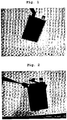
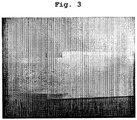
- Each of the organic/inorganic composite porous films according to Example 1 and Comparative Example 1 was laminated with an electrode, and adhesion between the film and the electrode was evaluated.
- the organic/inorganic composite porous film coated with styrene-butadiene rubber according to the present invention showed excellent adhesion to an electrode (see FIG. 1 ), while the organic/inorganic composite porous film according to Comparative Example 1 showed poor adhesion (see FIG. 2 ).
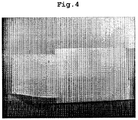
- Example 1 Each of the organic/inorganic composite porous films according to Example 1 and Comparative Example 1 was used as a sample. To perform a peeling test, a tape available from 3M Company was attached to each film sample, and then detached therefrom.
- the porous film coated with styrene-butadiene rubber according to the present invention showed significantly improved binding capability among inorganic particles as well as between the polyester substrate and the film (see FIG. 3 ).
- the non-coated organic/inorganic composite porous film according to Comparative Example 1 showed poor binding capability (see FIG. 4 ).
- the organic/inorganic composite porous film coated with styrene-butadiene rubber according to the present invention can provide significantly improved binding capability and adhesion.
- the organic/inorganic composite porous film coated with styrene-butadiene rubber, which imparts excellent adhesion and mechanical strength, according to the present invention can provide improved scratch resistance and adhesion to other substrates. Therefore, when the porous film is used in an electrochemical device as a separator, it is possible to improve the safety of the electrochemical device and to prevent degradation in the quality of the electrochemical device.
Landscapes
- Chemical & Material Sciences (AREA)
- Chemical Kinetics & Catalysis (AREA)
- General Chemical & Material Sciences (AREA)
- Electrochemistry (AREA)
- Engineering & Computer Science (AREA)
- Inorganic Chemistry (AREA)
- Materials Engineering (AREA)
- Composite Materials (AREA)
- Manufacturing & Machinery (AREA)
- Cell Separators (AREA)
- Laminated Bodies (AREA)
- Manufacture Of Porous Articles, And Recovery And Treatment Of Waste Products (AREA)
- Electric Double-Layer Capacitors Or The Like (AREA)
Claims (15)
- Poröse Folie, welche ein Separator einer elektrochemischen Vorrichtung ist, wobei die poröse Folie umfasst:(a) ein poröses Substrat, welches Poren aufweist; und(b) eine Beschichtungsschicht, welche ausgebildet ist an mindestens einer Region ausgewählt aus der Gruppe bestehend aus einer Fläche des Substrats und einem Teil der in dem Substrat vorliegenden Poren, wobei die Beschichtungsschicht Styrol-Butadien-Kautschuk umfasst, dadurch gekennzeichnet, dass das poröse Substrat, welches Poren aufweist, ausgewählt ist aus der Gruppe bestehend aus:(i) eine poröse Organisch/Anorganisch-Verbund-Folie umfassend: eine poröse Folie, welche Poren aufweist, beschichtet mit einer Beschichtungsschicht, umfassend eine Mischung aus anorganischen Partikeln mit einem Bindemittel-Polymer, an einer Fläche der porösen Folie und/oder an einem Teil der in der porösen Folie vorliegenden Poren; und(ii) poröse Organisch/Anorganisch-Verbund-Folie vom freistehenden Typ, umfassend: anorganische Partikel und eine Bindemittel-Polymer-Beschichtungsschicht, teilweise oder vollständig ausgebildet an der Fläche der anorganischen Partikel;wobei die porösen Organisch/Anorganisch-Verbund-Folien (i) und (ii) die anorganischen Partikel miteinander verbunden und fixiert durch das Bindemittel-Polymer umfassen und eine Porenstruktur aufweisen, welche durch Zwischenraumvolumen der anorganischen Partikel ausgebildet ist; dadurch gekennzeichnet, dass- der Styrol-Butadien-Kautschuk eine Glasübergangstemperatur (Tg) von 25 °C oder weniger aufweist, und- der Styrol-Butadien-Kautschuk eine hydrophile funktionelle Gruppe aufweist.
- Folie nach Anspruch 1, wobei die hydrophile funktionelle Gruppe des Styrol-Butadien-Kautschuks ausgewählt ist aus der Gruppe bestehend aus Maleinsäure, Acrylsäure, Acrylat, Carbonsäure, Nitril, Hydroxyl, Acetat, Mercapto, Ether, Ester, Amid, Amingruppen und Halogenatomen.
- Folie nach Anspruch 1, wobei der Styrol-Butadien-Kautschuk erhalten wird durch Polymerisation von einem eine Butadiengruppe enthaltenden Monomer, einem eine Styrolgruppe enthaltenden Monomer und einem eine hydrophile Gruppe enthaltenden Monomer, welches mindestens eine hydrophile funktionelle Gruppe aufweist, welche ausgewählt ist aus der Gruppe bestehend aus Maleinsäure, Acrylsäure, Acrylat, Carbonsäure, Nitril, Hydroxyl, Acetat, Mercapto, Ether, Ester, Amid, Amingruppen und Halogenatomen.
- Folie nach Anspruch 3, wobei das eine Styrolgruppe enthaltende Monomer und das eine Butadiengruppe enthaltende Monomer in einem Gewichtsprozentverhältnis von 1:99-99:1 verwendet werden.
- Folie nach Anspruch 1, wobei der Styrol-Butadien-Kautschuk ein mittleres Molekulargewicht von 10000 bis 1000000 aufweist.
- Folie nach Anspruch 1, wobei die Beschichtungsschicht, welche Styrol-Butadien-Kautschuk umfasst, eine Dicke von 0,001-10 µm aufweist.
- Folie nach Anspruch 1, wobei das poröse Substrat mindestens ein Material aufweist, welches ausgewählt ist aus der Gruppe bestehend aus Polyethylenterephthalat, Polybutylenterephthalat, Polyester, Polyacetal, Polyamid, Polycarbonat, Polyimid, Polyetheretherketon, Polyethersulfon, Polyphenylenoxid, polyphenylene sulfidro, Polyethylennaphthalin, Polyethylen, Polypropylen und Polyolefin.
- Folie nach Anspruch 1, wobei das anorganische Partikel ist mindestens ein Partikel, welches ausgewählt ist aus der Gruppe bestehend aus: (a) anorganische Partikel, welche eine Dielektrizitätskonstante von 5 oder mehr aufweisen; und (b) anorganische Partikel, welche eine Lithium-Ionen-Leitfähigkeit aufweisen.
- Folie nach Anspruch 8, wobei das anorganische Partikel, welches eine Dielektrizitätskonstante von 5 oder mehr aufweist BaTiO3, Pb(Zr,Ti)O3 (PZT), (PLZT), Pb(Mg3Nb2z3)O3-PbTiO3 (PMN-PT), Hafnium(IV)-oxid (HfO2) SrTiO3, SnO2, CeO2, MgO, NiO, CaO, ZnO, ZrO2, Y2O3, Al2O3 oder TiO2 ist; und das anorganische Partikel, welches eine Lithium-Ionen-Leitfähigkeit aufweist, mindestens ein Partikel ist, welches ausgewählt ist aus der Gruppe bestehend aus: Lithiumphosphat (Li3PO4); Lithiumtitanphosphat (LixTiy(PO4)3, 0<x<2, 0<y<3); Lithiumaluminiumtitanphosphat (LixAlyTiz(PO4)3, 0<x<2, 0<y<1, 0<z<3); Glas vom (LiAlTiP)xOy (0<x<4, 0<y<13) -Typ; Lithium-Lanthan-Titanat (LixLayTiO3, 0<x<2, 0<y<3); Lithium-Germaniumthiophosphat (LixGeyPzSw, 0<x<4, 0<y<1, 0<z<1, 0<w<5); Lithiumnitride (LixNy, 0<x<4, 0<y<2); Glas vom SiS2 -Typ (LixSiySz, 0<x<3, 0<y<2, 0<z<4); und Glas vom P2S5-Typ (LixPySz, 0 <x<3, 0<y<3, 0<z<7).
- Folie nach Anspruch 1, wobei das Bindemittel-Polymer einen Löslichkeitsparameter zwischen 15 und 45 MPa1/2 aufweist.
- Folie nach Anspruch 1, wobei das Bindemittel-Polymer mindestens eines ist, welches ausgewählt ist aus der Gruppe bestehend aus Polyvinylidenfluorid-co-hexafluorpropylen, Polyvinyfidenfluorid-co-trichlorethylen, Polymethylmethacrylat, Polyacrylnitril, Polyvinylpyrrolidon, Polyvinylacetat, Polyethylen-co-vinylacetat, Polyethylenoxid, Celluloseacetat, Celluloseacetatbutyrat, Celluloseacetatpropionat, Cyanoethylpullulan, Cyanoethylpolyvinylalkohol, Cyanoethylcellulose, Cyanoethylsaccharose, Pullulan und Carboxymetylcellulose.
- Folie nach Anspruch 1, wobei die anorganischen Partikel verwendet werden in einer Menge von 50-99 Gewichtsprozent basierend auf 100 Gewichtsprozent der Mischung der anorganischen Partikel und des Bindemittel-Polymers.
- Folie nach Anspruch 1, welche eine Porengröße zwischen 0,001 und 10 µm und eine Porosität von 10-99% aufweist.
- Elektrochemische Vorrichtung, umfassend eine Katode, eine Anode, einen Separator und ein Elektrolyt, wobei der Separator ein poröser Film ist, wie er in einem der Ansprüche 1 bis 8 und 10 bis 13 definiert ist.
- Elektrochemische Vorrichtung nach Anspruch 14, welche eine Lithium-Sekundärbatterie ist.
Priority Applications (1)
| Application Number | Priority Date | Filing Date | Title |
|---|---|---|---|
| EP12182787.7A EP2544260B1 (de) | 2004-12-07 | 2005-12-07 | Oberflächenbehandelte mikroporöse Verbundstoffmembran und damit hergestellte elektrochemische Vorrichtung |
Applications Claiming Priority (2)
| Application Number | Priority Date | Filing Date | Title |
|---|---|---|---|
| KR20040102535 | 2004-12-07 | ||
| PCT/KR2005/004174 WO2006062349A1 (en) | 2004-12-07 | 2005-12-07 | Surface-treated microporous membrane and electrochemical device prepared thereby |
Related Child Applications (2)
| Application Number | Title | Priority Date | Filing Date |
|---|---|---|---|
| EP12182787.7A Division-Into EP2544260B1 (de) | 2004-12-07 | 2005-12-07 | Oberflächenbehandelte mikroporöse Verbundstoffmembran und damit hergestellte elektrochemische Vorrichtung |
| EP12182787.7A Division EP2544260B1 (de) | 2004-12-07 | 2005-12-07 | Oberflächenbehandelte mikroporöse Verbundstoffmembran und damit hergestellte elektrochemische Vorrichtung |
Publications (3)
| Publication Number | Publication Date |
|---|---|
| EP1834367A1 EP1834367A1 (de) | 2007-09-19 |
| EP1834367A4 EP1834367A4 (de) | 2010-03-24 |
| EP1834367B1 true EP1834367B1 (de) | 2017-09-27 |
Family
ID=36578135
Family Applications (2)
| Application Number | Title | Priority Date | Filing Date |
|---|---|---|---|
| EP05821422.2A Expired - Lifetime EP1834367B1 (de) | 2004-12-07 | 2005-12-07 | Oberflächenbehandelte mikroporöse membran und dadurch hergestellte elektrochemische einrichtung |
| EP12182787.7A Expired - Lifetime EP2544260B1 (de) | 2004-12-07 | 2005-12-07 | Oberflächenbehandelte mikroporöse Verbundstoffmembran und damit hergestellte elektrochemische Vorrichtung |
Family Applications After (1)
| Application Number | Title | Priority Date | Filing Date |
|---|---|---|---|
| EP12182787.7A Expired - Lifetime EP2544260B1 (de) | 2004-12-07 | 2005-12-07 | Oberflächenbehandelte mikroporöse Verbundstoffmembran und damit hergestellte elektrochemische Vorrichtung |
Country Status (10)
| Country | Link |
|---|---|
| US (1) | US8841031B2 (de) |
| EP (2) | EP1834367B1 (de) |
| JP (1) | JP4885144B2 (de) |
| KR (1) | KR100758482B1 (de) |
| CN (1) | CN100524896C (de) |
| BR (1) | BRPI0517156B1 (de) |
| CA (1) | CA2589104C (de) |
| RU (1) | RU2339120C1 (de) |
| TW (1) | TWI310253B (de) |
| WO (1) | WO2006062349A1 (de) |
Families Citing this family (80)
| Publication number | Priority date | Publication date | Assignee | Title |
|---|---|---|---|---|
| JP4960702B2 (ja) | 2003-09-18 | 2012-06-27 | コモンウェルス サイエンティフィック アンド インダストリアル リサーチ オーガニゼイション | 高性能エネルギー蓄積装置 |
| EP3322000A1 (de) | 2004-09-02 | 2018-05-16 | Lg Chem, Ltd. | Organischer/anorganischer poröser verbundfilm und dadurch hergestellte elektrochemische vorrichtung |
| KR100775310B1 (ko) * | 2004-12-22 | 2007-11-08 | 주식회사 엘지화학 | 유/무기 복합 다공성 분리막 및 이를 이용한 전기 화학소자 |
| KR100893227B1 (ko) | 2006-07-28 | 2009-04-16 | 주식회사 엘지화학 | 고온 저장 성능을 개선하는 음극 및 이를 포함하는 리튬이차 전지 |
| CN101542794A (zh) * | 2006-11-16 | 2009-09-23 | 株式会社新王材料 | 燃料电池用隔板及其制造方法 |
| AR064292A1 (es) | 2006-12-12 | 2009-03-25 | Commw Scient Ind Res Org | Dispositivo mejorado para almacenamiento de energia |
| KR100754746B1 (ko) * | 2007-03-07 | 2007-09-03 | 주식회사 엘지화학 | 다공성 활성층이 코팅된 유기/무기 복합 분리막 및 이를구비한 전기화학소자 |
| AR067238A1 (es) | 2007-03-20 | 2009-10-07 | Commw Scient Ind Res Org | Dispositivos optimizados para el almacenamiento de energia |
| KR100966024B1 (ko) | 2007-04-24 | 2010-06-24 | 주식회사 엘지화학 | 이종의 세퍼레이터를 구비한 전기화학소자 |
| PL2927993T3 (pl) | 2008-01-30 | 2019-01-31 | Lg Chem, Ltd. | Separator dla urządzeń elektrochemicznych |
| HUE042537T2 (hu) * | 2008-03-31 | 2019-07-29 | Zeon Corp | Porózus film és másodlagos akkumulátor elektróda |
| KR20110038115A (ko) * | 2008-08-05 | 2011-04-13 | 제온 코포레이션 | 리튬 이온 이차 전지용 전극 |
| KR20110063437A (ko) * | 2008-08-29 | 2011-06-10 | 제온 코포레이션 | 다공막, 2 차 전지 전극 및 리튬 이온 2 차 전지 |
| EP2424011A4 (de) | 2009-04-23 | 2014-01-15 | Furukawa Battery Co Ltd | Verfahren zur herstellung einer negativen platte für einen bleiakkumulator und bleiakkumulator |
| JP5711483B2 (ja) | 2009-08-27 | 2015-04-30 | 古河電池株式会社 | 鉛蓄電池用複合キャパシタ負極板の製造法及び鉛蓄電池 |
| JP5715630B2 (ja) | 2009-08-27 | 2015-05-07 | コモンウェルス サイエンティフィック アンド インダストリアル リサーチ オーガナイゼーション | 蓄電装置及びその電極 |
| JP5797384B2 (ja) | 2009-08-27 | 2015-10-21 | 古河電池株式会社 | 鉛蓄電池用複合キャパシタ負極板及び鉛蓄電池 |
| EP4398405A3 (de) | 2009-09-29 | 2025-05-07 | LG Energy Solution, Ltd. | Separator und elektrochemische vorrichtung damit |
| JP5462016B2 (ja) * | 2010-02-08 | 2014-04-02 | 日本エイアンドエル株式会社 | 二次電池耐熱保護層用バインダーおよび耐熱保護層用組成物 |
| KR101187767B1 (ko) * | 2010-03-17 | 2012-10-05 | 주식회사 엘지화학 | 세퍼레이터 및 이를 구비한 전기화학소자 |
| DE102010030197A1 (de) * | 2010-06-17 | 2011-12-22 | Sb Limotive Company Ltd. | Lithium-Ionen-Zelle |
| TWI491096B (zh) | 2010-12-06 | 2015-07-01 | Ind Tech Res Inst | 多層電池隔離膜及其製造方法 |
| JP2012133959A (ja) | 2010-12-21 | 2012-07-12 | Furukawa Battery Co Ltd:The | 鉛蓄電池用複合キャパシタ負極板及び鉛蓄電池 |
| KR101254693B1 (ko) | 2011-02-15 | 2013-04-15 | 주식회사 엘지화학 | 세퍼레이터, 그 제조방법 및 이를 구비한 전기화학소자 |
| EP2677590B1 (de) * | 2011-02-15 | 2019-04-03 | LG Chem, Ltd. | Separator, herstellungsverfahren dafür und elektrochemische vorrichtung damit |
| JP5790088B2 (ja) * | 2011-03-31 | 2015-10-07 | 日産自動車株式会社 | 燃料電池セル |
| US8916283B2 (en) * | 2011-04-05 | 2014-12-23 | Shin-Etsu Chemical Co., Ltd. | Binder for separator of non-aqueous electrolyte battery comprising 2-cyanoethyl group-containing polymer and separator and battery using the same |
| KR101281037B1 (ko) * | 2011-04-06 | 2013-07-09 | 주식회사 엘지화학 | 세퍼레이터 및 이를 구비하는 전기화학소자 |
| US9276247B2 (en) | 2011-04-06 | 2016-03-01 | Lg Chem, Ltd. | Separator and electrochemical device comprising the same |
| CN102280605B (zh) * | 2011-04-18 | 2013-10-30 | 成都中科来方能源科技有限公司 | 具有热胀融合关闭效应的锂离子电池隔膜及其制备方法 |
| KR101358761B1 (ko) * | 2011-05-03 | 2014-02-07 | 주식회사 엘지화학 | 다공성 코팅층을 구비한 세퍼레이터 및 이를 구비한 전기화학소자 |
| KR101297866B1 (ko) | 2011-06-09 | 2013-08-19 | 주식회사 엘지화학 | 전극조립체 및 이를 포함하는 리튬 이차전지 |
| CN102251267B (zh) * | 2011-07-04 | 2013-01-23 | 西北有色金属研究院 | 一种NiO多孔薄膜的制备方法 |
| JP2013051180A (ja) * | 2011-08-31 | 2013-03-14 | Dexerials Corp | 電池用セパレータシート及び電池 |
| WO2013047856A1 (ja) * | 2011-09-26 | 2013-04-04 | 住友化学株式会社 | 二次電池用接着樹脂組成物 |
| KR20130048843A (ko) | 2011-11-03 | 2013-05-13 | 에스케이이노베이션 주식회사 | 내열성 및 안정성이 우수한 폴리올레핀계 복합 미세다공막 및 이를 제조하는 방법 |
| KR101369326B1 (ko) * | 2011-12-27 | 2014-03-04 | 주식회사 엘지화학 | 세퍼레이터의 제조방법 및 이에 따라 제조된 세퍼레이터를 구비한 전기화학소자 |
| CN102544576A (zh) * | 2012-02-21 | 2012-07-04 | 东莞新能源科技有限公司 | 一种锂离子电池 |
| KR101488917B1 (ko) * | 2012-02-29 | 2015-02-03 | 제일모직 주식회사 | 유기 및 무기 혼합물 코팅층을 포함하는 분리막 및 이를 이용한 전지 |
| KR101488918B1 (ko) * | 2012-02-29 | 2015-02-03 | 제일모직 주식회사 | 밀도가 조절된 코팅층을 포함하는 분리막 및 이를 이용한 전지 |
| EP2903055B1 (de) * | 2012-09-28 | 2017-08-30 | Zeon Corporation | Poröser membranseparator für sekundärbatterien, verfahren zur herstellung davon und sekundärbatterie |
| KR101535199B1 (ko) | 2012-11-30 | 2015-07-09 | 주식회사 엘지화학 | 개선된 분산성을 갖는 슬러리 및 그의 용도 |
| KR101674917B1 (ko) * | 2012-12-03 | 2016-11-10 | 주식회사 엘지화학 | 다공성 폴리올레핀 분리막의 제조방법, 다공성 폴리올레핀 분리막 및 이를 포함하는 리튬 이차전지 |
| CN103078076B (zh) * | 2013-01-11 | 2015-08-26 | 宁波晶一新材料科技有限公司 | 复合隔离膜及使用此隔离膜的锂离子电池 |
| DE102013200707A1 (de) * | 2013-01-18 | 2014-07-24 | Robert Bosch Gmbh | Galvanisches Element mit verbessertem Sicherheitseigenschaften |
| DE102013200848A1 (de) * | 2013-01-21 | 2014-07-24 | Robert Bosch Gmbh | Sicherheitsverbessertes galvanisches Element |
| TWI520403B (zh) | 2013-02-15 | 2016-02-01 | Lg化學股份有限公司 | 電極組及包含其之聚合物二次電池單元與製造電極組之方法 |
| CN104541399B (zh) | 2013-02-15 | 2017-11-24 | 株式会社Lg 化学 | 电极组件及电极组件的制造方法 |
| TWI520404B (zh) | 2013-02-15 | 2016-02-01 | Lg化學股份有限公司 | 電極組及包含其之高分子二次電池單元 |
| KR102210881B1 (ko) * | 2013-04-16 | 2021-02-03 | 삼성에스디아이 주식회사 | 세퍼레이터 및 이를 채용한 리튬전지 |
| KR102209823B1 (ko) * | 2013-04-16 | 2021-01-29 | 삼성에스디아이 주식회사 | 세퍼레이터 및 이를 채용한 리튬전지 |
| KR20150001148A (ko) * | 2013-06-26 | 2015-01-06 | 제일모직주식회사 | 코팅층을 포함하는 분리막 및 상기 분리막을 이용한 전지 |
| KR101621410B1 (ko) | 2013-09-11 | 2016-05-16 | 주식회사 엘지화학 | 리튬 전극 및 그를 포함하는 리튬 이차전지 |
| DE102013016560A1 (de) * | 2013-09-27 | 2015-04-02 | Heide Biollaz | Wiederaufladbare elektrochemische Batteriezelle |
| KR102154327B1 (ko) * | 2013-12-16 | 2020-09-09 | 삼성에스디아이 주식회사 | 이차전지용 전극 조립체 최외각 테이프 및 이를 포함하는 이차전지 |
| KR101707193B1 (ko) * | 2014-04-01 | 2017-02-27 | 주식회사 엘지화학 | 세퍼레이터의 제조방법, 이로부터 형성된 세퍼레이터 및 이를 포함하는 전기화학소자 |
| CN106663769B (zh) * | 2014-05-13 | 2020-06-19 | 赛尔格有限责任公司 | 功能化的多孔膜及其制造和使用方法 |
| KR102246767B1 (ko) | 2014-08-13 | 2021-04-30 | 삼성에스디아이 주식회사 | 리튬이차전지용 세퍼레이터, 이를 채용한 리튬이차전지 및 그 제조방법 |
| KR101674988B1 (ko) * | 2014-10-23 | 2016-11-11 | 삼성에스디아이 주식회사 | 분리막의 제조 방법과 그 분리막 및 이를 이용한 전지 |
| KR101715229B1 (ko) * | 2014-12-24 | 2017-03-22 | 국민대학교산학협력단 | 친수성 분리막의 소수성화 표면 개질 방법 및 이를 통하여 제조되는 소수성 분리막 |
| KR101601168B1 (ko) | 2015-03-06 | 2016-03-09 | 주식회사 아모그린텍 | 셧다운 기능을 갖는 복합 다공성 분리막 및 이를 이용한 이차전지 |
| KR20160120509A (ko) * | 2015-04-08 | 2016-10-18 | 주식회사 엘지화학 | 안전성이 향상된 스택-폴딩형 전극조립체 및 이를 포함하는 리튬이차전지 |
| CN105932196A (zh) * | 2016-05-04 | 2016-09-07 | 合肥国轩高科动力能源有限公司 | 一种使用丁苯橡胶涂覆的锂离子电池陶瓷隔膜的制备方法及陶瓷隔膜 |
| EP3367466B1 (de) * | 2016-06-08 | 2021-08-11 | LG Chem, Ltd. | Separator und elektrochemische vorrichtung damit |
| WO2018022859A1 (en) * | 2016-07-27 | 2018-02-01 | University Of Tennessee Research Foundation | Anion exchange membrane with hydrophilic moieties |
| CN107272261A (zh) * | 2017-07-28 | 2017-10-20 | 张家港康得新光电材料有限公司 | 一种扩散膜及其制备方法 |
| CN116526071A (zh) | 2017-10-20 | 2023-08-01 | 株式会社Lg新能源 | 隔板以及包括该隔板的电化学装置 |
| KR102898407B1 (ko) * | 2017-11-21 | 2025-12-11 | 아사히 가세이 가부시키가이샤 | 전기 저장 장치용 분리기 |
| CN110785871B (zh) | 2018-01-04 | 2022-06-24 | 株式会社Lg化学 | 包含设置有绝缘涂层的电极极耳的二次电池 |
| RU186905U1 (ru) * | 2018-05-30 | 2019-02-08 | Федеральное государственное бюджетное образовательное учреждение высшего образования "Саратовский национальный исследовательский государственный университет имени Н.Г. Чернышевского" | Герметичный свинцово-кислотный аккумулятор |
| CN111697184B (zh) * | 2019-03-15 | 2022-05-31 | 华为技术有限公司 | 一种锂离子电池隔膜及其制备方法和锂离子电池 |
| CN110444719A (zh) * | 2019-08-13 | 2019-11-12 | 四川轻化工大学 | 一种高强度复合锂离子电池隔膜 |
| CN112448023B (zh) * | 2019-08-28 | 2022-02-18 | 宁德时代新能源科技股份有限公司 | 固态电解质膜片及固态锂金属电池 |
| KR102764920B1 (ko) * | 2019-10-18 | 2025-02-06 | 주식회사 엘지에너지솔루션 | 전기화학소자용 분리막, 상기 분리막을 포함하는 전기화학소자 및 상기 분리막의 제조방법 |
| CN111422944A (zh) * | 2020-05-19 | 2020-07-17 | 佛山科学技术学院 | 一种多层薄膜材料 |
| CN112038544B (zh) * | 2020-09-28 | 2022-03-11 | 合肥国轩高科动力能源有限公司 | 一种锂离子电池隔膜及其制备方法 |
| RU2756355C1 (ru) * | 2020-11-05 | 2021-09-29 | Федеральное государственное унитарное предприятие «Всероссийский научно-исследовательский институт автоматики им.Н.Л.Духова» (ФГУП «ВНИИА») | Способ нанесения тонкопленочного покрытия на основе полиакрилонитрила |
| CN113728504B (zh) * | 2020-12-09 | 2024-02-27 | 宁德新能源科技有限公司 | 聚合物粘结剂、叠层多孔膜、电池及电子装置 |
| TWI872298B (zh) * | 2021-12-06 | 2025-02-11 | 亞福儲能股份有限公司 | 集流體保護膠 |
| EP4641805A4 (de) * | 2023-02-13 | 2026-02-25 | Contemporary Amperex Technology Hong Kong Ltd | Separator, herstellungsverfahren dafür und sekundärbatterie und elektrische vorrichtung im zusammenhang damit |
Citations (1)
| Publication number | Priority date | Publication date | Assignee | Title |
|---|---|---|---|---|
| KR20010095623A (ko) * | 2000-04-11 | 2001-11-07 | 김순택 | 리튬 2차 전지의 세퍼레이타 및 그 제조방법 |
Family Cites Families (27)
| Publication number | Priority date | Publication date | Assignee | Title |
|---|---|---|---|---|
| US3767607A (en) * | 1971-08-31 | 1973-10-23 | Continental Can Co | Rubber sealant composition |
| SU942191A1 (ru) * | 1979-02-26 | 1982-07-07 | Предприятие П/Я А-3170 | Способ изготовлени ребристых сепараторов |
| RU2025001C1 (ru) * | 1992-07-08 | 1994-12-15 | Опытный завод Научно-исследовательского проектно-конструкторского и технологического института химических источников тока | Способ изготовления термочувствительного сепаратора для литьевого химического источника тока |
| RU2107360C1 (ru) * | 1993-03-04 | 1998-03-20 | Асахи Касеи Когио Кабусики Кайся | Аккумуляторная батарея |
| US6287720B1 (en) * | 1995-08-28 | 2001-09-11 | Asahi Kasei Kabushiki Kaisha | Nonaqueous battery having porous separator and production method thereof |
| US5728482B1 (en) * | 1995-12-22 | 1999-11-09 | Canon Kk | Secondary battery and method for manufacturing the same |
| JPH1180395A (ja) | 1997-09-09 | 1999-03-26 | Nitto Denko Corp | 多孔質膜および非水電解液電池用セパレータ |
| US6277514B1 (en) * | 1998-12-17 | 2001-08-21 | Moltech Corporation | Protective coating for separators for electrochemical cells |
| JP2000208123A (ja) * | 1999-01-19 | 2000-07-28 | Nippon Muki Co Ltd | 非水電解液電池用セパレ―タ |
| TW439309B (en) * | 1999-01-22 | 2001-06-07 | Toshiba Corp | Nonaquous electrolyte secondary battery |
| JP4177929B2 (ja) * | 1999-03-04 | 2008-11-05 | 日東電工株式会社 | 多孔質フィルム及びその製造方法 |
| WO2000079618A1 (fr) | 1999-06-22 | 2000-12-28 | Mitsubishi Denki Kabushiki Kaisha | Separateur de cellule, cellule, et procede de production dudit separateur |
| US6432586B1 (en) * | 2000-04-10 | 2002-08-13 | Celgard Inc. | Separator for a high energy rechargeable lithium battery |
| KR100406690B1 (ko) * | 2001-03-05 | 2003-11-21 | 주식회사 엘지화학 | 다성분계 복합 필름을 이용한 전기화학소자 |
| JP4365098B2 (ja) | 2001-03-27 | 2009-11-18 | シャープ株式会社 | リチウムポリマー二次電池およびその製造方法 |
| TW499775B (en) | 2001-04-18 | 2002-08-21 | E One Moli Energy Corp | Secondary lithium battery device |
| KR20030034427A (ko) * | 2001-10-23 | 2003-05-09 | 삼성에스디아이 주식회사 | 극판, 이를 채용한 리튬전지 및 극판 제조방법 |
| US6998193B2 (en) * | 2001-12-28 | 2006-02-14 | Policell Technologies, Inc. | Microporous membrane and its uses thereof |
| KR20030065074A (ko) * | 2002-01-29 | 2003-08-06 | 주식회사 뉴턴에너지 | 전기화학셀 및 이의 제조방법 |
| KR20030065089A (ko) * | 2002-01-29 | 2003-08-06 | 주식회사 뉴턴에너지 | 섬유상의 격리막 및 이를 포함하는 에너지 저장 장치 |
| DE10255121B4 (de) * | 2002-11-26 | 2017-09-14 | Evonik Degussa Gmbh | Separator mit asymmetrischem Porengefüge für eine elektrochemische Zelle |
| JP3983656B2 (ja) | 2002-12-12 | 2007-09-26 | 日東電工株式会社 | 非水電解液電池用セパレータ |
| JP4792688B2 (ja) * | 2003-01-24 | 2011-10-12 | 住友化学株式会社 | 非水電解液二次電池用セパレータの製造方法 |
| JP2004273282A (ja) | 2003-03-10 | 2004-09-30 | Mitsubishi Electric Corp | 電池の製造方法 |
| KR100542213B1 (ko) * | 2003-10-31 | 2006-01-10 | 삼성에스디아이 주식회사 | 리튬 금속 전지용 음극 및 이를 포함하는 리튬 금속 전지 |
| KR100958651B1 (ko) * | 2004-01-17 | 2010-05-20 | 삼성에스디아이 주식회사 | 리튬이차전지용 애노드 및 이를 이용한 리튬이차전지 |
| EP1659650A4 (de) * | 2004-03-30 | 2008-12-24 | Panasonic Corp | Sekundärbatterie mit wasserfreiem elektrolyt |
-
2005
- 2005-12-06 KR KR1020050118233A patent/KR100758482B1/ko not_active Expired - Lifetime
- 2005-12-07 WO PCT/KR2005/004174 patent/WO2006062349A1/en not_active Ceased
- 2005-12-07 BR BRPI0517156-3A patent/BRPI0517156B1/pt active IP Right Grant
- 2005-12-07 US US11/721,020 patent/US8841031B2/en not_active Expired - Lifetime
- 2005-12-07 EP EP05821422.2A patent/EP1834367B1/de not_active Expired - Lifetime
- 2005-12-07 CN CNB2005800420562A patent/CN100524896C/zh not_active Expired - Lifetime
- 2005-12-07 TW TW094143156A patent/TWI310253B/zh not_active IP Right Cessation
- 2005-12-07 RU RU2007125641/09A patent/RU2339120C1/ru active
- 2005-12-07 JP JP2007542926A patent/JP4885144B2/ja not_active Expired - Lifetime
- 2005-12-07 EP EP12182787.7A patent/EP2544260B1/de not_active Expired - Lifetime
- 2005-12-07 CA CA2589104A patent/CA2589104C/en not_active Expired - Lifetime
Patent Citations (1)
| Publication number | Priority date | Publication date | Assignee | Title |
|---|---|---|---|---|
| KR20010095623A (ko) * | 2000-04-11 | 2001-11-07 | 김순택 | 리튬 2차 전지의 세퍼레이타 및 그 제조방법 |
Also Published As
| Publication number | Publication date |
|---|---|
| CN101073169A (zh) | 2007-11-14 |
| TWI310253B (en) | 2009-05-21 |
| KR100758482B1 (ko) | 2007-09-12 |
| TW200635106A (en) | 2006-10-01 |
| CN100524896C (zh) | 2009-08-05 |
| EP2544260A2 (de) | 2013-01-09 |
| CA2589104C (en) | 2011-09-13 |
| BRPI0517156B1 (pt) | 2019-08-06 |
| JP2008521964A (ja) | 2008-06-26 |
| BRPI0517156A8 (pt) | 2017-10-31 |
| CA2589104A1 (en) | 2006-06-15 |
| KR20060063751A (ko) | 2006-06-12 |
| EP2544260A3 (de) | 2013-10-09 |
| US20090291360A1 (en) | 2009-11-26 |
| WO2006062349A1 (en) | 2006-06-15 |
| RU2339120C1 (ru) | 2008-11-20 |
| JP4885144B2 (ja) | 2012-02-29 |
| EP1834367A4 (de) | 2010-03-24 |
| US8841031B2 (en) | 2014-09-23 |
| EP2544260B1 (de) | 2017-08-16 |
| BRPI0517156A (pt) | 2008-09-30 |
| EP1834367A1 (de) | 2007-09-19 |
Similar Documents
| Publication | Publication Date | Title |
|---|---|---|
| EP2544260B1 (de) | Oberflächenbehandelte mikroporöse Verbundstoffmembran und damit hergestellte elektrochemische Vorrichtung | |
| US12294112B2 (en) | Organic/inorganic composite porous film and electrochemical device prepared thereby | |
| US20130209861A1 (en) | Lithium secondary battery | |
| US7709152B2 (en) | Organic/inorganic composite separator having porous active coating layer and electrochemical device containing the same | |
| EP1782489B1 (de) | Organischer/anorganischer verbundseparator und dieser enthaltende elektrochemisches bauelement. | |
| CA2591941C (en) | Organic/inorganic composite microporous membrane and electrochemical device prepared thereby | |
| EP2248209B1 (de) | Separator aufweisend eine verbesserte haftung an eine elektrode und eine elektrochemische zelle damit | |
| EP4203130B1 (de) | Separator und elektrochemische vorrichtung damit | |
| KR20130075672A (ko) | 세퍼레이터의 제조방법 및 이에 따라 제조된 세퍼레이터를 구비한 전기화학소자 | |
| KR102830174B1 (ko) | 전기화학소자용 분리막 및 이를 포함하는 전기화학소자 | |
| CN114730960A (zh) | 用于电化学装置的复合隔板和包括其的电化学装置 | |
| CN115769431B (zh) | 电池电芯 | |
| CN120019541A (zh) | 电化学装置用分隔件、包括其的电化学装置及其制造方法 |
Legal Events
| Date | Code | Title | Description |
|---|---|---|---|
| PUAI | Public reference made under article 153(3) epc to a published international application that has entered the european phase |
Free format text: ORIGINAL CODE: 0009012 |
|
| 17P | Request for examination filed |
Effective date: 20070705 |
|
| AK | Designated contracting states |
Kind code of ref document: A1 Designated state(s): AT BE BG CH CY CZ DE DK EE ES FI FR GB GR HU IE IS IT LI LT LU LV MC NL PL PT RO SE SI SK TR |
|
| DAX | Request for extension of the european patent (deleted) | ||
| A4 | Supplementary search report drawn up and despatched |
Effective date: 20100219 |
|
| 17Q | First examination report despatched |
Effective date: 20100823 |
|
| RAP1 | Party data changed (applicant data changed or rights of an application transferred) |
Owner name: LG CHEMICAL CO. LTD Owner name: TORAY BATTERY SEPARATOR FILM CO., LTD. |
|
| GRAJ | Information related to disapproval of communication of intention to grant by the applicant or resumption of examination proceedings by the epo deleted |
Free format text: ORIGINAL CODE: EPIDOSDIGR1 |
|
| STAA | Information on the status of an ep patent application or granted ep patent |
Free format text: STATUS: GRANT OF PATENT IS INTENDED |
|
| GRAP | Despatch of communication of intention to grant a patent |
Free format text: ORIGINAL CODE: EPIDOSNIGR1 |
|
| INTG | Intention to grant announced |
Effective date: 20170310 |
|
| RIN1 | Information on inventor provided before grant (corrected) |
Inventor name: KIM, SEOK-KOO Inventor name: YONG, HYUN-HANG Inventor name: SUK, JUNG-DON, 101-1504, HANBIT APART. Inventor name: LEE, SANG-YOUNG Inventor name: AHN, SOON-HO |
|
| GRAS | Grant fee paid |
Free format text: ORIGINAL CODE: EPIDOSNIGR3 |
|
| GRAJ | Information related to disapproval of communication of intention to grant by the applicant or resumption of examination proceedings by the epo deleted |
Free format text: ORIGINAL CODE: EPIDOSDIGR1 |
|
| GRAL | Information related to payment of fee for publishing/printing deleted |
Free format text: ORIGINAL CODE: EPIDOSDIGR3 |
|
| STAA | Information on the status of an ep patent application or granted ep patent |
Free format text: STATUS: EXAMINATION IS IN PROGRESS |
|
| INTC | Intention to grant announced (deleted) | ||
| GRAR | Information related to intention to grant a patent recorded |
Free format text: ORIGINAL CODE: EPIDOSNIGR71 |
|
| STAA | Information on the status of an ep patent application or granted ep patent |
Free format text: STATUS: GRANT OF PATENT IS INTENDED |
|
| GRAA | (expected) grant |
Free format text: ORIGINAL CODE: 0009210 |
|
| STAA | Information on the status of an ep patent application or granted ep patent |
Free format text: STATUS: THE PATENT HAS BEEN GRANTED |
|
| AK | Designated contracting states |
Kind code of ref document: B1 Designated state(s): AT BE BG CH CY CZ DE DK EE ES FI FR GB GR HU IE IS IT LI LT LU LV MC NL PL PT RO SE SI SK TR |
|
| INTG | Intention to grant announced |
Effective date: 20170821 |
|
| REG | Reference to a national code |
Ref country code: GB Ref legal event code: FG4D |
|
| REG | Reference to a national code |
Ref country code: DE Ref legal event code: R081 Ref document number: 602005052817 Country of ref document: DE Owner name: LG CHEMICAL CO. LTD, KR Free format text: FORMER OWNER: LG CHEMICAL CO., LTD., SEOUL/SOUL, KR Ref country code: DE Ref legal event code: R081 Ref document number: 602005052817 Country of ref document: DE Owner name: TORAY INDUSTRIES, INC., JP Free format text: FORMER OWNER: LG CHEMICAL CO., LTD., SEOUL/SOUL, KR |
|
| REG | Reference to a national code |
Ref country code: CH Ref legal event code: EP |
|
| REG | Reference to a national code |
Ref country code: AT Ref legal event code: REF Ref document number: 932772 Country of ref document: AT Kind code of ref document: T Effective date: 20171015 |
|
| REG | Reference to a national code |
Ref country code: IE Ref legal event code: FG4D |
|
| REG | Reference to a national code |
Ref country code: DE Ref legal event code: R096 Ref document number: 602005052817 Country of ref document: DE |
|
| REG | Reference to a national code |
Ref country code: FR Ref legal event code: PLFP Year of fee payment: 13 |
|
| RAP2 | Party data changed (patent owner data changed or rights of a patent transferred) |
Owner name: LG CHEMICAL CO. LTD Owner name: TORAY INDUSTRIES, INC. |
|
| PG25 | Lapsed in a contracting state [announced via postgrant information from national office to epo] |
Ref country code: SE Free format text: LAPSE BECAUSE OF FAILURE TO SUBMIT A TRANSLATION OF THE DESCRIPTION OR TO PAY THE FEE WITHIN THE PRESCRIBED TIME-LIMIT Effective date: 20170927 Ref country code: FI Free format text: LAPSE BECAUSE OF FAILURE TO SUBMIT A TRANSLATION OF THE DESCRIPTION OR TO PAY THE FEE WITHIN THE PRESCRIBED TIME-LIMIT Effective date: 20170927 Ref country code: LT Free format text: LAPSE BECAUSE OF FAILURE TO SUBMIT A TRANSLATION OF THE DESCRIPTION OR TO PAY THE FEE WITHIN THE PRESCRIBED TIME-LIMIT Effective date: 20170927 |
|
| REG | Reference to a national code |
Ref country code: NL Ref legal event code: MP Effective date: 20170927 |
|
| REG | Reference to a national code |
Ref country code: LT Ref legal event code: MG4D |
|
| REG | Reference to a national code |
Ref country code: AT Ref legal event code: MK05 Ref document number: 932772 Country of ref document: AT Kind code of ref document: T Effective date: 20170927 |
|
| PG25 | Lapsed in a contracting state [announced via postgrant information from national office to epo] |
Ref country code: BG Free format text: LAPSE BECAUSE OF FAILURE TO SUBMIT A TRANSLATION OF THE DESCRIPTION OR TO PAY THE FEE WITHIN THE PRESCRIBED TIME-LIMIT Effective date: 20171227 Ref country code: LV Free format text: LAPSE BECAUSE OF FAILURE TO SUBMIT A TRANSLATION OF THE DESCRIPTION OR TO PAY THE FEE WITHIN THE PRESCRIBED TIME-LIMIT Effective date: 20170927 Ref country code: GR Free format text: LAPSE BECAUSE OF FAILURE TO SUBMIT A TRANSLATION OF THE DESCRIPTION OR TO PAY THE FEE WITHIN THE PRESCRIBED TIME-LIMIT Effective date: 20171228 |
|
| PG25 | Lapsed in a contracting state [announced via postgrant information from national office to epo] |
Ref country code: NL Free format text: LAPSE BECAUSE OF FAILURE TO SUBMIT A TRANSLATION OF THE DESCRIPTION OR TO PAY THE FEE WITHIN THE PRESCRIBED TIME-LIMIT Effective date: 20170927 |
|
| PG25 | Lapsed in a contracting state [announced via postgrant information from national office to epo] |
Ref country code: ES Free format text: LAPSE BECAUSE OF FAILURE TO SUBMIT A TRANSLATION OF THE DESCRIPTION OR TO PAY THE FEE WITHIN THE PRESCRIBED TIME-LIMIT Effective date: 20170927 Ref country code: RO Free format text: LAPSE BECAUSE OF FAILURE TO SUBMIT A TRANSLATION OF THE DESCRIPTION OR TO PAY THE FEE WITHIN THE PRESCRIBED TIME-LIMIT Effective date: 20170927 Ref country code: CZ Free format text: LAPSE BECAUSE OF FAILURE TO SUBMIT A TRANSLATION OF THE DESCRIPTION OR TO PAY THE FEE WITHIN THE PRESCRIBED TIME-LIMIT Effective date: 20170927 |
|
| PG25 | Lapsed in a contracting state [announced via postgrant information from national office to epo] |
Ref country code: AT Free format text: LAPSE BECAUSE OF FAILURE TO SUBMIT A TRANSLATION OF THE DESCRIPTION OR TO PAY THE FEE WITHIN THE PRESCRIBED TIME-LIMIT Effective date: 20170927 Ref country code: SK Free format text: LAPSE BECAUSE OF FAILURE TO SUBMIT A TRANSLATION OF THE DESCRIPTION OR TO PAY THE FEE WITHIN THE PRESCRIBED TIME-LIMIT Effective date: 20170927 Ref country code: EE Free format text: LAPSE BECAUSE OF FAILURE TO SUBMIT A TRANSLATION OF THE DESCRIPTION OR TO PAY THE FEE WITHIN THE PRESCRIBED TIME-LIMIT Effective date: 20170927 Ref country code: IS Free format text: LAPSE BECAUSE OF FAILURE TO SUBMIT A TRANSLATION OF THE DESCRIPTION OR TO PAY THE FEE WITHIN THE PRESCRIBED TIME-LIMIT Effective date: 20180127 Ref country code: IT Free format text: LAPSE BECAUSE OF FAILURE TO SUBMIT A TRANSLATION OF THE DESCRIPTION OR TO PAY THE FEE WITHIN THE PRESCRIBED TIME-LIMIT Effective date: 20170927 |
|
| REG | Reference to a national code |
Ref country code: DE Ref legal event code: R097 Ref document number: 602005052817 Country of ref document: DE |
|
| REG | Reference to a national code |
Ref country code: DE Ref legal event code: R081 Ref document number: 602005052817 Country of ref document: DE Owner name: LG CHEMICAL CO. LTD, KR Free format text: FORMER OWNERS: LG CHEMICAL CO. LTD, SEOUL, KR; TORAY BATTERY SEPARATOR FILM CO., LTD., NASUSHIOBARA-SHI, TOCHIGI, JP Ref country code: DE Ref legal event code: R081 Ref document number: 602005052817 Country of ref document: DE Owner name: TORAY INDUSTRIES, INC., JP Free format text: FORMER OWNERS: LG CHEMICAL CO. LTD, SEOUL, KR; TORAY BATTERY SEPARATOR FILM CO., LTD., NASUSHIOBARA-SHI, TOCHIGI, JP |
|
| PG25 | Lapsed in a contracting state [announced via postgrant information from national office to epo] |
Ref country code: DK Free format text: LAPSE BECAUSE OF FAILURE TO SUBMIT A TRANSLATION OF THE DESCRIPTION OR TO PAY THE FEE WITHIN THE PRESCRIBED TIME-LIMIT Effective date: 20170927 |
|
| REG | Reference to a national code |
Ref country code: CH Ref legal event code: PL |
|
| PLBE | No opposition filed within time limit |
Free format text: ORIGINAL CODE: 0009261 |
|
| STAA | Information on the status of an ep patent application or granted ep patent |
Free format text: STATUS: NO OPPOSITION FILED WITHIN TIME LIMIT |
|
| PG25 | Lapsed in a contracting state [announced via postgrant information from national office to epo] |
Ref country code: PL Free format text: LAPSE BECAUSE OF FAILURE TO SUBMIT A TRANSLATION OF THE DESCRIPTION OR TO PAY THE FEE WITHIN THE PRESCRIBED TIME-LIMIT Effective date: 20170927 |
|
| 26N | No opposition filed |
Effective date: 20180628 |
|
| REG | Reference to a national code |
Ref country code: IE Ref legal event code: MM4A |
|
| PG25 | Lapsed in a contracting state [announced via postgrant information from national office to epo] |
Ref country code: LU Free format text: LAPSE BECAUSE OF NON-PAYMENT OF DUE FEES Effective date: 20171207 |
|
| REG | Reference to a national code |
Ref country code: BE Ref legal event code: MM Effective date: 20171231 |
|
| PG25 | Lapsed in a contracting state [announced via postgrant information from national office to epo] |
Ref country code: IE Free format text: LAPSE BECAUSE OF NON-PAYMENT OF DUE FEES Effective date: 20171207 |
|
| PG25 | Lapsed in a contracting state [announced via postgrant information from national office to epo] |
Ref country code: BE Free format text: LAPSE BECAUSE OF NON-PAYMENT OF DUE FEES Effective date: 20171231 Ref country code: SI Free format text: LAPSE BECAUSE OF FAILURE TO SUBMIT A TRANSLATION OF THE DESCRIPTION OR TO PAY THE FEE WITHIN THE PRESCRIBED TIME-LIMIT Effective date: 20170927 Ref country code: CH Free format text: LAPSE BECAUSE OF NON-PAYMENT OF DUE FEES Effective date: 20171231 Ref country code: LI Free format text: LAPSE BECAUSE OF NON-PAYMENT OF DUE FEES Effective date: 20171231 |
|
| PG25 | Lapsed in a contracting state [announced via postgrant information from national office to epo] |
Ref country code: HU Free format text: LAPSE BECAUSE OF FAILURE TO SUBMIT A TRANSLATION OF THE DESCRIPTION OR TO PAY THE FEE WITHIN THE PRESCRIBED TIME-LIMIT; INVALID AB INITIO Effective date: 20051207 Ref country code: MC Free format text: LAPSE BECAUSE OF FAILURE TO SUBMIT A TRANSLATION OF THE DESCRIPTION OR TO PAY THE FEE WITHIN THE PRESCRIBED TIME-LIMIT Effective date: 20170927 |
|
| REG | Reference to a national code |
Ref country code: GB Ref legal event code: 732E Free format text: REGISTERED BETWEEN 20190704 AND 20190710 |
|
| PG25 | Lapsed in a contracting state [announced via postgrant information from national office to epo] |
Ref country code: CY Free format text: LAPSE BECAUSE OF NON-PAYMENT OF DUE FEES Effective date: 20170927 |
|
| PG25 | Lapsed in a contracting state [announced via postgrant information from national office to epo] |
Ref country code: TR Free format text: LAPSE BECAUSE OF FAILURE TO SUBMIT A TRANSLATION OF THE DESCRIPTION OR TO PAY THE FEE WITHIN THE PRESCRIBED TIME-LIMIT Effective date: 20170927 |
|
| PG25 | Lapsed in a contracting state [announced via postgrant information from national office to epo] |
Ref country code: PT Free format text: LAPSE BECAUSE OF FAILURE TO SUBMIT A TRANSLATION OF THE DESCRIPTION OR TO PAY THE FEE WITHIN THE PRESCRIBED TIME-LIMIT Effective date: 20170927 |
|
| REG | Reference to a national code |
Ref country code: DE Ref legal event code: R079 Ref document number: 602005052817 Country of ref document: DE Free format text: PREVIOUS MAIN CLASS: H01M0002160000 Ipc: H01M0050409000 |
|
| P01 | Opt-out of the competence of the unified patent court (upc) registered |
Effective date: 20230412 |
|
| REG | Reference to a national code |
Ref country code: GB Ref legal event code: 732E Free format text: REGISTERED BETWEEN 20230921 AND 20230927 |
|
| REG | Reference to a national code |
Ref country code: DE Ref legal event code: R081 Ref document number: 602005052817 Country of ref document: DE Owner name: TORAY INDUSTRIES, INC., JP Free format text: FORMER OWNERS: LG CHEMICAL CO. LTD, SEOUL, KR; TORAY INDUSTRIES, INC., TOKYO, JP Ref country code: DE Ref legal event code: R081 Ref document number: 602005052817 Country of ref document: DE Owner name: LG ENERGY SOLUTION, LTD., KR Free format text: FORMER OWNERS: LG CHEMICAL CO. LTD, SEOUL, KR; TORAY INDUSTRIES, INC., TOKYO, JP |
|
| PGFP | Annual fee paid to national office [announced via postgrant information from national office to epo] |
Ref country code: DE Payment date: 20241121 Year of fee payment: 20 |
|
| PGFP | Annual fee paid to national office [announced via postgrant information from national office to epo] |
Ref country code: GB Payment date: 20241121 Year of fee payment: 20 |
|
| PGFP | Annual fee paid to national office [announced via postgrant information from national office to epo] |
Ref country code: FR Payment date: 20241121 Year of fee payment: 20 |
|
| REG | Reference to a national code |
Ref country code: DE Ref legal event code: R071 Ref document number: 602005052817 Country of ref document: DE |
|
| REG | Reference to a national code |
Ref country code: GB Ref legal event code: PE20 Expiry date: 20251206 |