EP1866438B2 - Polynukleotidprimer - Google Patents
Polynukleotidprimer Download PDFInfo
- Publication number
- EP1866438B2 EP1866438B2 EP06726631.2A EP06726631A EP1866438B2 EP 1866438 B2 EP1866438 B2 EP 1866438B2 EP 06726631 A EP06726631 A EP 06726631A EP 1866438 B2 EP1866438 B2 EP 1866438B2
- Authority
- EP
- European Patent Office
- Prior art keywords
- polynucleotide
- egfr
- primer
- sequence
- seq
- Prior art date
- Legal status (The legal status is an assumption and is not a legal conclusion. Google has not performed a legal analysis and makes no representation as to the accuracy of the status listed.)
- Expired - Lifetime
Links
Images




Classifications
-
- C—CHEMISTRY; METALLURGY
- C12—BIOCHEMISTRY; BEER; SPIRITS; WINE; VINEGAR; MICROBIOLOGY; ENZYMOLOGY; MUTATION OR GENETIC ENGINEERING
- C12Q—MEASURING OR TESTING PROCESSES INVOLVING ENZYMES, NUCLEIC ACIDS OR MICROORGANISMS; COMPOSITIONS OR TEST PAPERS THEREFOR; PROCESSES OF PREPARING SUCH COMPOSITIONS; CONDITION-RESPONSIVE CONTROL IN MICROBIOLOGICAL OR ENZYMOLOGICAL PROCESSES
- C12Q1/00—Measuring or testing processes involving enzymes, nucleic acids or microorganisms; Compositions therefor; Processes of preparing such compositions
- C12Q1/68—Measuring or testing processes involving enzymes, nucleic acids or microorganisms; Compositions therefor; Processes of preparing such compositions involving nucleic acids
- C12Q1/6876—Nucleic acid products used in the analysis of nucleic acids, e.g. primers or probes
- C12Q1/6883—Nucleic acid products used in the analysis of nucleic acids, e.g. primers or probes for diseases caused by alterations of genetic material
- C12Q1/6886—Nucleic acid products used in the analysis of nucleic acids, e.g. primers or probes for diseases caused by alterations of genetic material for cancer
-
- C—CHEMISTRY; METALLURGY
- C12—BIOCHEMISTRY; BEER; SPIRITS; WINE; VINEGAR; MICROBIOLOGY; ENZYMOLOGY; MUTATION OR GENETIC ENGINEERING
- C12Q—MEASURING OR TESTING PROCESSES INVOLVING ENZYMES, NUCLEIC ACIDS OR MICROORGANISMS; COMPOSITIONS OR TEST PAPERS THEREFOR; PROCESSES OF PREPARING SUCH COMPOSITIONS; CONDITION-RESPONSIVE CONTROL IN MICROBIOLOGICAL OR ENZYMOLOGICAL PROCESSES
- C12Q1/00—Measuring or testing processes involving enzymes, nucleic acids or microorganisms; Compositions therefor; Processes of preparing such compositions
- C12Q1/68—Measuring or testing processes involving enzymes, nucleic acids or microorganisms; Compositions therefor; Processes of preparing such compositions involving nucleic acids
- C12Q1/6844—Nucleic acid amplification reactions
- C12Q1/6851—Quantitative amplification
-
- C—CHEMISTRY; METALLURGY
- C12—BIOCHEMISTRY; BEER; SPIRITS; WINE; VINEGAR; MICROBIOLOGY; ENZYMOLOGY; MUTATION OR GENETIC ENGINEERING
- C12Q—MEASURING OR TESTING PROCESSES INVOLVING ENZYMES, NUCLEIC ACIDS OR MICROORGANISMS; COMPOSITIONS OR TEST PAPERS THEREFOR; PROCESSES OF PREPARING SUCH COMPOSITIONS; CONDITION-RESPONSIVE CONTROL IN MICROBIOLOGICAL OR ENZYMOLOGICAL PROCESSES
- C12Q1/00—Measuring or testing processes involving enzymes, nucleic acids or microorganisms; Compositions therefor; Processes of preparing such compositions
- C12Q1/68—Measuring or testing processes involving enzymes, nucleic acids or microorganisms; Compositions therefor; Processes of preparing such compositions involving nucleic acids
- C12Q1/6876—Nucleic acid products used in the analysis of nucleic acids, e.g. primers or probes
- C12Q1/6883—Nucleic acid products used in the analysis of nucleic acids, e.g. primers or probes for diseases caused by alterations of genetic material
-
- C—CHEMISTRY; METALLURGY
- C12—BIOCHEMISTRY; BEER; SPIRITS; WINE; VINEGAR; MICROBIOLOGY; ENZYMOLOGY; MUTATION OR GENETIC ENGINEERING
- C12Q—MEASURING OR TESTING PROCESSES INVOLVING ENZYMES, NUCLEIC ACIDS OR MICROORGANISMS; COMPOSITIONS OR TEST PAPERS THEREFOR; PROCESSES OF PREPARING SUCH COMPOSITIONS; CONDITION-RESPONSIVE CONTROL IN MICROBIOLOGICAL OR ENZYMOLOGICAL PROCESSES
- C12Q2600/00—Oligonucleotides characterized by their use
- C12Q2600/156—Polymorphic or mutational markers
-
- C—CHEMISTRY; METALLURGY
- C12—BIOCHEMISTRY; BEER; SPIRITS; WINE; VINEGAR; MICROBIOLOGY; ENZYMOLOGY; MUTATION OR GENETIC ENGINEERING
- C12Q—MEASURING OR TESTING PROCESSES INVOLVING ENZYMES, NUCLEIC ACIDS OR MICROORGANISMS; COMPOSITIONS OR TEST PAPERS THEREFOR; PROCESSES OF PREPARING SUCH COMPOSITIONS; CONDITION-RESPONSIVE CONTROL IN MICROBIOLOGICAL OR ENZYMOLOGICAL PROCESSES
- C12Q2600/00—Oligonucleotides characterized by their use
- C12Q2600/16—Primer sets for multiplex assays
Definitions
- the present invention relates to a polynucleotide, a kit comprising a polynucleotide and a method for detecting the presence or absence of mutations in a gene.
- Epidermal Growth Factor and its corresponding receptor (EGFR) are responsible for modulating growth of many classes of cells. Mutations of EGFR have been implicated in uncontrolled cell proliferation and tumour growth.
- nucleic acid changes having potential as tumour markers their value as clinical tools in cancer diagnosis, staging or even screening, needs to be demonstrated and two important criteria must be met. Firstly, nucleic acids of adequate yield and quality must be extracted from the clinical material; secondly, robust and accurate methods of analysis are required. For reliable tumour genotyping to be useful in disease staging any test has to be adequately validated and there should be demonstrable benefits over current methods.
- tumours are notoriously heterogeneous in their genetic makeup and as little as 10% of the tumour cells may contain any particular genetic change. In total therefore as little as 1 % of a tumour sample for genetic analysis may contain the specific variation of interest.
- the detection limits for sequencing are of the order of 15-25%; that is sequencing can detect the rarer allele at levels no worse than 1 in 4 to 1 in 6.
- the prevalence of the mutation in a given tumour sample may be significantly below such levels.
- Current approaches require that a degree of sample enrichment be performed, namely an attempt to excise selectively the tumour material from a paraffin-embedded tissue section. This is expensive, time consuming and lacks sensitivity.
- WO 2004/011625 describes compositions and methods to determine such genetic polymorphisms that are present in a predetermined region of the gene of interest, e.g. by using labelled probes.
- ARMS is a simple and accurate method and has several benefits over other PCR- based mutation detection systems. Specifically, the technique does not require the use of radioisotopes nor the multiple probing of immobilised PCR amplicons nor the cloning of PCR amplicons.
- ARMS avoids the need for DNA sequencing of single-strand conformation polymorphism products, a procedure that could be expected to be constrained by sequence under-representation as discussed above. Similarly, under-represented mutant sequences could go undetected using PCR in conjunction with restriction fragment length polymorphism which is limited to low cycle numbers for the PCR to avoid false positive results. Previously generated amplicons therefore have the potential to cause carry-over contamination when PCR is resumed. ARMS can be performed under conditions in which carry-over contamination is avoided, as in the present invention, allowing the use of high PCR cycle numbers and resulting in exceptionally high detection sensitivity.
- the present disclosure relates to a diagnostic method for the detection of EGFR mutations in cancer, particularly lung cancer, using the amplification refractory mutation system (ARMS).
- the disclosure also relates to mutation specific primers suitable for use in the method and to diagnostic kits containing these primers.
- a polynucleotide as defined in claim 1 Suitable for detecting EGFR nutations, the polynucleotide comprising the following primer sequence , or a sequence complementary thereto: SEQ. ID NOS. 1, wherein the polynucleotide is less than 100 nucleotides long
- the polynucleotide further comprises a quencher group and a fluorophore group.
- Fluorophore groups are those groups which are capable of absorbing light at a first wavelength and in response emitting light at a second wavelength.
- a “quencher group” is a group which, when in sufficiently close proximity to a fluorophore group, is capable of preventing, or “quenching", the emission of light from the fluorophore group. Typically, a particular type of quencher group will only work with respect to certain types of fluorophore group.
- the polynucleotide is less than 80 nucleotides long, more preferably less than 60 nucleotides long, more preferably less than 40 nucleotides, more preferably less than 30 nucleotides long.
- the quencher group and the fluorophore group are separated by a nucleotide tail sequence comprising first and second regions, the nucleotides of the first region being complementary to but in reverse order from the nucleotides of the second region, such that hybridisation of the first region to the second group results in the quencher group to be sufficiently close to the fluorophore group to quench the fluorophore group.
- the tail sequence further comprises a third region having a sequence complementary to a region of the EGFR gene.
- the quencher group comprises black hole quencher 1 (BHQ1) and the fluorophore group comprises FAM.
- the quencher group comprises black hole quencher 2 (BHQ2) and the fluorophore comprises Cal Red.
- a blocking moiety is provided between the primer sequence and the tail sequence to prevent polymerase mediated chain extension of the tail sequence.
- a preferred blocking moiety is a hexethylene glycol (HEG) monomer.
- kits comprising at least first and second polynucleotides wherein the first polynucleotide comprising the following primer sequence or a sequence complementary thereto. SEQ ID No.1 and wherein the first polynucleotide is a polynucleotide according to the invention, and wherein the second polynucleotide comprises SEQ ID No. 15 or a sequence complementary thereto
- the first and second polynucleotides comprise a first polynucleotide consisting of SEQ ID NO.1 and a second polynucleotide consisting of SEQ ID NO. 15.
- kits comprising at least first, second and third polynucleotides each the first and second polynucleotides each comprises the following primer sequence , respectively, or a sequence complementary there to SEQ ID No. 1, wherein the first and second polynucleotides are each polynucleotides according to the invention, and wherein the third polynucleotide comprises SEQ ID No.15 or a sequence complementary there to.
- the first, second and third polynucleotides comprise a first polynucleotide consisting of SEQ ID NO. 1, a second polynucleotide consisting of SEQ IS NO. 10 and a third polynucleotide consisting of of SEQ ID NO. 15.
- the kit further comprises nucleotide triphosphates, a polymerisation enzyme and/or a buffer solution.
- a polynucleotide of the invention or a kit of the invention or sequences complementary thereto for detecting a mutation in a nucleic acid sample containing at least a fragment of the EGFR gene.
- the fragment of the EGFR gene in the nucleic acid sample is at least 10 nucleotides long, preferably 20 nucleotide long, more preferably 30 nucleotides long and more preferably 40 nucleotides long.
- a method of detecting the presence or absence of a mutation in the EGFR gene comprising the steps of:
- step a) further comprises mixing a polynucleotide according to the invention and comprising SEQ ID NO. 10 or a sequence complementary thereto, with the nucleic acid sample; wherein detection of an extension a mutation
- the method further comprises the step of prior to step a), amplifying the number of copies of the fragment of the EGFR gene using thermal cycling nucleic acid amplification, preferably PCR.
- the method step) c) comprises the step of mixing the nucleic acid sample and the polynucleotide with a primer which corresponds to a region of the fragment of the EGFR sequence downstream of the region to which the polynucleotide is complementary and carrying out PCR on the mixture, wherein the primer is a polynucleotide comprising SEQ ID NO. 15 or a sequence complementary thereto.
- the nucleic acid sample comprises wild-type sequences and mutated sequences and further comprising step d) wherein the number of amplification cycles required to amplify the wild-type sequences to a predetermined quantity is compared with the number of amplification cycles required to amplify the mutated sequences to the predetermined quantity thereby providing an indication of the ratio of the wild type sequences to mutated sequences in the sample.
- the nucleic acid sample comprises a portion of tumourous tissue and a portion of non-tumourous tissue and wherein step d) further comprises the step determining the ratio of tumourous tissue to non-tumourous tissue in the sample.
- the method further comprises the step of, prior to step a), enriching the nucleic acid sample to increase the ratio of tumourous tissue to non-tumourous tissue in the sample.
- step c) comprises detecting if amplification of at least a portion of the EGFR gene occurs.
- the polynucleotide comprises a quencher group and a fluorophore group and step b) comprises exposing the mixture to light of a wavelength to which the fluorophore is responsive in the absence of the quencher group and detecting light at the wavelength emitted by the fluorophore group in the absence of the quencher group.
- reference to "EGFR” is to the human EGFR gene available as accession number NC_000007 in Homo sapiens chromosome 7, region 55054219..55242525 as on 30 March 2006. In some other embodiments, reference is to the sequence as on 4 March 2005. Both sequences are incorporated herein by reference. In some embodiments, the EGFR gene is not identical to these sequences but is at least 90% identical to either or both of the sequences.
- a reference in this specification is made to a percentage of a polynucleotide compared with a reference poly-nucleotide, this can be determined by algorithms known in the art.
- the percentage identity between two sequences can be determined using the BLASTP algorithm version 2.2.2 ( Altschul, Stephen F., Thomas L. Madden, Alejandro A. Schulffer, Jinghui Zhang, Zheng Zhang, Webb Miller, and David J. Lipman (1997), "Gapped BLAST and PSI-BLAST: a new generation of protein database search programs", Nucleic Acids Res. 25:3389-3402 ) using default parameters.
- the present invention provides a diagnostic method as defined in the claims. There is disclosed herein a primer SEQ. ID No:1 which can be used in the method of the invention. Further primers are also disclosed as comparative examples (SEQ ID NOS: 2 to 9, 21, 22 and 75).
- diagnostic primers that detect the presence or absence of one of the following EGFR mutations:
- Mutations 1) to 8) confer sensitivity of an individual to gefinitib whereas mutation 9) confers resistance to gefinitib.
- the test sample of nucleic acid is conveniently a sample of blood, faeces, sputum, colonic lavage, bronchial lavage or other body fluid, or tissue obtained from an individual.
- the individual is conveniently human, preferably Homo sapiens.
- the test sample may equally be a nucleic acid sequence corresponding to the sequence in the test sample. That is to say that all or a part of the region in the sample nucleic acid may firstly be amplified using any convenient technique such as PCR or whole genome amplification (WGA) before use in the method of the invention.
- WGA whole genome amplification
- Any convenient enzyme for polymerisation may be used provided that it does not affect the ability of the DNA polymerase to discriminate between normal and mutant template sequences to any significant extent.
- convenient enzymes include thermostable enzymes which have no significant 3'-5' exonuclease activity, for example Taq DNA polymerase, particularly "Ampli Taq Gold”TM DNA polymerase (PE Applied Biosystems), Stoffel fragment, or other appropriately N-terminal deleted modifications of Taq or Tth (Thermus thermophilus) DNA polymerases.
- primers for the above EGFR point mutations which have been shown to detect the specific mutations reliably and robustly. Therefore in an spect of the invention we provide a diagnostic primer less than 100 nucleotides long and suitable for detection EGFR mutations comprising SEQ. ID NO: 1 and wherein the remaining nucleotides are optionally varied without significantly affecting the properties of the diagnostic primer. Conveniently, the sequence of the diagnostic primer is exactly as shown in SEQ. ID NO: 1.
- diagnostic primers comprising SEQ ID NO: 2 to 9, 21, 22, 25 to 34 or 75 and derivatives thereof wherein 6-8 of the nucleotides at the 3' end are identical to the sequences and wherein up to 10, such as up to 8, 6, 4, 2, 1, of the remaining nucleotides are optionally varied without significantly affecting the properties of the diagnostic primer.
- the sequence of the diagnostic primer may be exactly as shown in any one of SEQ. ID NOS: 2 to 9, 21, 22, 25 to 34 or 75.
- the primers comprise 6-8 nucleotides from the 3' end of any one of SEQ. ID NOS. 11 to 14, 23 or 74. Also, primers specific for the wild type sequences present the corresponding section of the complementary DNA strand are used (SEQ. ID NOS. 35 to 40).
- a diagnostic primer of the invention with a further amplification primer in one or more cycles of PCR amplification.
- a convenient example of this aspect is set out European patent number EP-A-1-0332435 .
- the further amplification primer is either a forward or a reverse common primer.
- An example of such a common primer is SEQ. ID NO: 15.
- Comparative examples of such common primers are SEQ ID NOS: 16 to 18, 24 and 76 and, to be used in conjunction with the primers for the complementary strand, SEQ. ID NOS: 41 to 45.
- Control primers from an unrelated region of the genome, namely part of the human albumen gene, are used herein.
- the diagnostic methods of the invention as outlined above are conveniently effected in one or more reaction vessels in some embodiments.
- the diagnostic primer and corresponding amplification primer
- the reactions are multiplexed, that is to say that all the diagnostic primers and amplification primers are in one tube (see EP-A-1-0332435 ) in other embodiments.
- a variety of methods in according with the invention may be used to detect the presence or absence of diagnostic primer extension products and/or amplification products. These will be apparent to the person skilled in the art of nucleic aid detection procedures. Preferred methods avoid the need for radio-labelled reagents. Particular detection methods include “TaqMan”TM product detection, for example as described in patent numbers US-A-5487972 & US-A-5210015 ; Scorpions ( WO-A-99/066071 ), which has particular benefits because specific diagnostic primers may be linked to a specific detector fluorophore, allowing the detection of multiple mutation targets from the same region of the genome.
- real-time detection is employed which allows the quantitation of the mutation(s) within the sample. More specifically, the number of cycles required to amplify a DNA sample to a predetermined level using primers specific for the wild-type sequences is compared with the number of cycles required using primers specific for a mutant sequence. By the use of this comparison and by reference to control amplifications containing standardised proportions of mutant target, the ratio of the amount of DNA in the sample containing the mutation relative to the amount of wild type DNA is quantified. Of course this only relates to the sample as presented and does not compensate for low tumour representation within the sample. For this reason, it is preferred to combine this quantitative allele specific approach with a method to estimate the level of tumour within the sample. Alternatively, the quantitative allele specific approach is combined with a method to enrich the sample by specifically excising the tumour material from the overall sample.
- the diagnostic primer of the invention is conveniently packaged with instructions for use in the method of the invention and appropriate packaging and sold as a kit.
- the kits conveniently include one or more of the following: appropriate nucleotide triphosphates, for example dATP, dCTP, dGTP, dTTP, a suitable polymerase as previously described, and a buffer solution.
- the two overlapping 1 ⁇ 2-amplicons were mixed in equimolar concentrations in the presence of polymerase, buffer and dNTPs.
- the primer mix was then incubated for 25 cycles of 1 minute each with an increment of 1°C per cycle from 50°C to 75°C.
- Synthetic templates were subsequently diluted 1 in 1 million into genomic DNA for use as controls in PCR reactions.
- Reactions were performed in 0.2ml vessels (single tubes, strips or plates). Reactions (25 ⁇ l) typically contained:
- YO-PRO-1 (Molecular Probes) was included at a final concentration of 1 ⁇ M. This dye binds double-stranded DNA and fluoresces with high efficiency, enabling a general detection of PCR product in a reaction.
- Scorpions a molecule that combines a primer and fluorogenic probe, which offers specific detection of target amplicons.
- Table 3 Allele Specific primers (1) Test WILD TYPE PRIMERS MUTANT PRIMERS COMMON PRIMERS NAME SEQ ID NO. SEQUENCE NAME SEQ ID NO. SEQUENCE NAME SEQID ID . NO.
- PCRs were performed in Real Time PCR cyclers (Mx4000 and Mx3000P from Stratagene), using standard conditions:
- the anneal/extend step was modified to 60°C, for 60 s.
- the amount of DNA extracted from each tumour sample was measured by real time amplification of a control locus. Standard curves for this reaction were generated using known concentrations of high quality DNA extracted from cell lines (ECACC, Wiltshire, UK).
- Sequencing was performed on amplicons generated from exon specific primers, by standard cycle sequencing, using big dye terminators. Reactions were separated using an ABI 3100 capillary sequencing instrument, according to the manufacturer's instructions.
- Reactions included the fluorescent DNA binding dye YO-PRO-1 and were monitored in real time. In such reactions, the point at which amplification becomes visible above baseline (known as the Ct) is an indicator of the quantity of target.
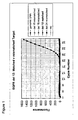
- the mutation specific primer EGFR Del 12 was tested against matched synthetic target and three mismatched mutant synthetic targets (del 15 (1), del 18 and del 24), as well as normal DNA and a water control. The results are shown in Figure 1 .
- the primer shows absolute specificity for its own target and does not detect wild type sequences nor any of the other deletion mutations found in the same genomic region.
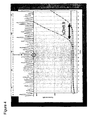
- Figure 2 shows a typical negative result for a batch of 8 samples tested with the del S752-I759 specific primers. It is clear that the wild type specific reactions perform efficiently while the mutation specific primers (SEQ. ID NO: 5) do not amplify indicating the absence of this mutation in these samples.
- Figure 3 shows the L858R analysis for 8 positive samples.
- the reaction using the mutation primers (SEQ. ID NO: 6) is positive as is the wild type reaction.
- the fact that the mutant reaction appears several cycles later than the corresponding wild type reaction indicates that the mutation is not the majority sequence in the samples.
- Figure 4 shows more detailed analysis of the allele specific PCR analysis, combined with sequencing of the same exon from this sample.
- the sequencing approach would have failed to detect the mutation that was clearly identified by the ARMS approach (no peak is visible at the circled position).
- Figure 5 shows more detailed analysis of the allele specific PCR analysis, combined with sequencing of the same exon from this sample.
- the sequencing approach could have detected the mutation that was clearly identified by the ARMS approach (a very weak peak is visible at the circled position).
- the differential ( ⁇ Ct) between the wild type and mutant specific reactions was smaller in this sample, indicating that the mutation was relatively more prevalent than in the sample whose analysis is shown in Figure 4 .
- Figure 6 shows the results of PCR amplification of samples containing DNA with, and without the T790M mutation.
- Five DNA samples were provided, each comprising 0%, 1%, 10%, 50% or 100% DNA with the T790M mutation.
- the samples were amplified using the mutant primer of SEQ. ID NO. 75 and the reverse Scorpion primer of SEQ. ID NOS. 76 and 77.
- the results show that the mutant primer was specific for DNA having the T780M mutation because the sample without any DNA having the mutation showed no amplification.
- detection was shown to be quantitative in that the Ct (threshold cycle) was related directly to the relative amount of matched target, even in the presence of excess unmatched target.
- Figure 7 shows the results of a control assay carried out on the samples which were tested and reported in Figure 6 .
- PCR amplification was carried out using control primers.
- Figure 7 confirms that each sample had the same total amount of target since the threshold cycles for each sample were the same in this control amplification.
Landscapes
- Chemical & Material Sciences (AREA)
- Life Sciences & Earth Sciences (AREA)
- Health & Medical Sciences (AREA)
- Organic Chemistry (AREA)
- Proteomics, Peptides & Aminoacids (AREA)
- Engineering & Computer Science (AREA)
- Zoology (AREA)
- Wood Science & Technology (AREA)
- Analytical Chemistry (AREA)
- Genetics & Genomics (AREA)
- Immunology (AREA)
- Pathology (AREA)
- Physics & Mathematics (AREA)
- Biotechnology (AREA)
- Microbiology (AREA)
- Molecular Biology (AREA)
- Biophysics (AREA)
- Biochemistry (AREA)
- Bioinformatics & Cheminformatics (AREA)
- General Engineering & Computer Science (AREA)
- General Health & Medical Sciences (AREA)
- Hospice & Palliative Care (AREA)
- Oncology (AREA)
- Chemical Kinetics & Catalysis (AREA)
- Measuring Or Testing Involving Enzymes Or Micro-Organisms (AREA)
Claims (20)
- Polynukleotid, das zum Nachweis von EGFR-Mutationen geeignet ist, wobei das Polynukleotid die folgende Primer-Sequenz oder eine Sequenz, die komplementär dazu ist, umfasst: SEQ ID NO. 1, wobei das Polynukleotid weniger als 100 Nukleotide lang ist.
- Polynukleotid nach Anspruch 1, wobei das Polynukleotid bevorzugt weniger als 80 Nukleotide lang ist, stärker bevorzugt weniger als 60 Nukleotide lang, stärker bevorzugt weniger als 40 Nukleotide, stärker bevorzugt weniger als 30 Nukleotide lang.
- Polynukleotid nach einem der vorhergehenden Ansprüche, das ferner eine Quenchergruppe und eine Fluorophorgruppe umfassend.
- Polynukleotid nach einem der vorhergehenden Ansprüche, wobei die Quenchergruppe und die Fluorophorgruppe durch eine Nukleotidanhangssequenz getrennt sind, die eine erste und eine zweite Region umfasst, wobei die Nukleotide der ersten Region komplementär zu den Nukleotiden der zweiten Region sind, jedoch in umgekehrter Reihenfolge vorliegen, sodass die Hybridisierung der ersten Region an die zweite Gruppe dazu führt, dass die Quenchergruppe der Fluorophorgruppe ausreichend nahe kommt, um die Fluorophorgruppe zu quenchen.
- Polynukleotid nach Anspruch 4, wobei die Anhangssequenz ferner eine dritte Region umfasst, die eine Sequenz aufweist, welche zu einer Region des EGFR-Gens komplementär ist.
- Polynukleotid nach einem der Ansprüche 3-5, wobei die Quenchergruppe den Black-Hole-Quencher 1 (BHQ1) umfasst und die Fluorophorgruppe FAM umfasst.
- Polynukleotid nach einem der Ansprüche 3-5, wobei die Quenchergruppe den Black-Hole-Quencher 2 (BHQ2) umfasst und die Fluorophorgruppe Cal Red umfasst.
- Kit, der mindestens ein erstes und ein zweites Polynukleotid umfasst, wobei das erste Polynukleotid die folgende Primer-Sequenz oder eine Sequenz, die komplementär dazu ist, umfasst: SEQ ID NO. 1, und wobei das erste Polynukleotid ein Polynukleotid nach einem der Ansprüche 1 bis 7 ist, und wobei das zweite Polynukleotid SEQ ID NO. 15 oder eine Sequenz, die komplementär dazu ist, umfasst.
- Kit nach Anspruch 8, das ferner Nukleotidtriphosphate, ein Polymerisationsenzym und/oder eine Pufferlösung umfasst.
- Verwendung eines Polynukleotids, das die letzten sechs Nukleotide am 3'-Ende der folgenden Primer-Sequenz oder einer Sequenz, die komplementär dazu ist, umfasst: SEQ ID NO. 1, und wobei das Polynukleotid ferner mindestens 75% der zehn Nukleotide am 3'-Ende der folgenden Primer-Sequenz oder einer Sequenz, die komplementär dazu ist, umfasst: SEQ ID NO. 1, wobei das Polynukleotid weniger als 100 Nukleotide lang ist, oder eines Kits nach Anspruch 9 zum Nachweis einer Mutation in einer Nukleinsäureprobe, die mindestens ein Fragment des EGFR-Gens umfasst.
- Verwendung nach Anspruch 10, wobei das Fragment des EGFR-Gens in der Nukleinsäureprobe mindestens 20 Nukleotide lang ist, bevorzugt 30 Nukleotide lang, und stärker bevorzugt 40 Nukleotide lang.
- Verfahren zum Nachweis des Vorliegens oder der Abwesenheit einer Mutation im EGFR-Gen, bei dem man:a) eine Nukleinsäureprobe, die mindestens ein Fragment des EGFR-Gens umfasst, mit einem Polynukleotid mischt, das komplementär zu einer Region des Fragments des EGFR-Gens ist, wobei das Polynukleotid weniger als 100 Nukleotide lang ist und die letzten sechs Nukleotide am 3'-Ende der folgenden Primer-Sequenz oder einer Sequenz, die komplementär dazu ist, umfasst: SEQ ID NO. 1, und wobei das Polynukleotid ferner mindestens 75% der zehn Nukleotide am 3'-Ende von SEQ ID NO. 1 oder einer Sequenz, die komplementär dazu ist, umfasst;b) das Polynukleotid an die Nukleinsäureprobe hybridisiert; undc) eine DNA-Polymerisation unter Verwendung des Polynukleotids als Primer durchführt, wobei der Nachweis eines Extensionsprodukts das Vorliegen einer Mutation anzeigt.
- Verfahren nach Anspruch 12, wobei Schritt a) ferner Folgendes umfasst:das Mischen eines Polynukleotids, welches SEQ ID NO. 10 oder eine Sequenz, die komplementär dazu ist, umfasst, wobei das Polynukleotid weniger als 100 Nukleotide lang ist,mit der Nukleinsäureprobe; wobei der Nachweis eines Extensionsprodukts das Vorliegen oder die Abwesenheit einer Mutation anzeigt.
- Verfahren nach Anspruch 12, bei dem man ferner, vor Schritt a), die Anzahl von Kopien des Fragments des EGFR-Gens unter Verwendung einer thermalen, zyklischen Nukleinsäureamplifikation, vorzugsweise einer PCR, amplifiziert.
- Verfahren nach einem der Ansprüche 12 bis 14, wobei man in Schritt c) die Nukleinsäureprobe und das Polynukleotid mit einem Primer mischt, der einer Region des Fragments der EGFR-Sequenz stromabwärts von der Region entspricht, zu der das Polynukleotid komplementär ist, und eine PCR mit der Mischung durchführt, wobei der Primer ein Polynukleotid ist, das SEQ ID NO. 15 oder eine Sequenz, die komplementär dazu ist, umfasst.
- Verfahren nach Anspruch 13, wobei die Nukleinsäureprobe Wild-Typ-Sequenzen und mutierte Sequenzen umfasst, und das ferner einen Schritt d) umfasst, bei dem man die Anzahl von Amplifikationszyklen, die zur Amplifikation der Wild-Typ-Sequenzen auf eine vorbestimmte Menge erforderlich ist, mit der Anzahl von Amplifikationszyklen vergleicht, die zur Amplifikation der mutierten Sequenzen auf die vorbestimmte Menge erforderlich sind, wodurch ein Hinweis auf das Verhältnis der Wild-Typ-Sequenzen zu mutierten Sequenzen in der Probe bereitgestellt wird.
- Verfahren nach Anspruch 16, wobei die Nukleinsäureprobe einen Anteil von Tumorgewebe und einen Anteil von Nicht-Tumorgewebe umfasst, und wobei man in Schritt d) ferner das Verhältnis von Tumorgewebe zu Nicht-Tumorgewebe in der Probe bestimmt.
- Verfahren nach Anspruch 16 oder 17, bei dem man ferner, vor Schritt a), die Nukleinsäureprobe anreichert, um das Verhältnis von Tumorgewebe zu Nicht-Tumorgewebe in der Probe zu erhöhen.
- Verfahren nach einem der Ansprüche 15 bis 18, bei dem man in Schritt c) nachweist, ob eine Amplifikation von mindestens einem Teil des EGFR-Gens erfolgt.
- Verfahren nach einem der Ansprüche 12 bis 19, wobei das Polynukleotid eine Quenchergruppe und eine Fluorophorgruppe umfasst, und wobei man in Schritt b) die Mischung Licht einer Wellenlänge aussetzt, auf die das Fluorophor in Abwesenheit der Quenchergruppe anspricht, und Licht bei der Wellenlänge, die durch die Fluorophorgruppe in Abwesenheit der Quenchergruppe emittiert wird, nachweist.
Priority Applications (1)
| Application Number | Priority Date | Filing Date | Title |
|---|---|---|---|
| EP10075695.6A EP2314717B1 (de) | 2005-04-04 | 2006-04-04 | Polynukleotidprimer zum Nachweis von EGFR Mutationen |
Applications Claiming Priority (2)
| Application Number | Priority Date | Filing Date | Title |
|---|---|---|---|
| GB0506807A GB2424886A (en) | 2005-04-04 | 2005-04-04 | Polynucleotide primers against epidermal growth factor receptor and method of detecting gene mutations |
| PCT/GB2006/001227 WO2006106316A2 (en) | 2005-04-04 | 2006-04-04 | Polynucleotide primers |
Related Child Applications (3)
| Application Number | Title | Priority Date | Filing Date |
|---|---|---|---|
| EP10075695.6A Division EP2314717B1 (de) | 2005-04-04 | 2006-04-04 | Polynukleotidprimer zum Nachweis von EGFR Mutationen |
| EP10075695.6A Division-Into EP2314717B1 (de) | 2005-04-04 | 2006-04-04 | Polynukleotidprimer zum Nachweis von EGFR Mutationen |
| EP10075695.6 Division-Into | 2010-10-01 |
Publications (3)
| Publication Number | Publication Date |
|---|---|
| EP1866438A2 EP1866438A2 (de) | 2007-12-19 |
| EP1866438B1 EP1866438B1 (de) | 2012-01-18 |
| EP1866438B2 true EP1866438B2 (de) | 2015-12-23 |
Family
ID=34586669
Family Applications (2)
| Application Number | Title | Priority Date | Filing Date |
|---|---|---|---|
| EP06726631.2A Expired - Lifetime EP1866438B2 (de) | 2005-04-04 | 2006-04-04 | Polynukleotidprimer |
| EP10075695.6A Expired - Lifetime EP2314717B1 (de) | 2005-04-04 | 2006-04-04 | Polynukleotidprimer zum Nachweis von EGFR Mutationen |
Family Applications After (1)
| Application Number | Title | Priority Date | Filing Date |
|---|---|---|---|
| EP10075695.6A Expired - Lifetime EP2314717B1 (de) | 2005-04-04 | 2006-04-04 | Polynukleotidprimer zum Nachweis von EGFR Mutationen |
Country Status (6)
| Country | Link |
|---|---|
| US (3) | US9029084B2 (de) |
| EP (2) | EP1866438B2 (de) |
| JP (1) | JP5761891B2 (de) |
| AT (1) | ATE541944T1 (de) |
| GB (1) | GB2424886A (de) |
| WO (1) | WO2006106316A2 (de) |
Families Citing this family (13)
| Publication number | Priority date | Publication date | Assignee | Title |
|---|---|---|---|---|
| CN101351563A (zh) * | 2005-10-05 | 2009-01-21 | 阿斯利康(英国)有限公司 | 用于预测或监测病人对于ErbB受体药物的响应的方法 |
| US8999634B2 (en) | 2007-04-27 | 2015-04-07 | Quest Diagnostics Investments Incorporated | Nucleic acid detection combining amplification with fragmentation |
| GB2453173A (en) * | 2007-09-28 | 2009-04-01 | Dxs Ltd | Polynucleotide primers |
| JP2010279264A (ja) * | 2009-06-03 | 2010-12-16 | Tottori Univ | Egfr遺伝子変異検出プライマーセット、それを含むegfr遺伝子変異検出キット、およびそれを用いてegfr遺伝子変異検出を行うための核酸増幅装置 |
| CN102234683B (zh) * | 2010-04-23 | 2013-07-17 | 广州益善生物技术有限公司 | 一种egfr基因突变检测液相芯片 |
| JP5860667B2 (ja) | 2010-10-29 | 2016-02-16 | アークレイ株式会社 | Egfrエクソン21l858r遺伝子多型検出用プライマーセット及びその用途 |
| JP5859274B2 (ja) * | 2010-10-29 | 2016-02-10 | アークレイ株式会社 | Egfr遺伝子の多型検出用プローブ、増幅用プライマーおよびその用途 |
| US20120164641A1 (en) | 2010-12-22 | 2012-06-28 | Roche Molecular Systems, Inc. | Methods and Compositions for Detecting Mutation in the Human Epidermal Growth Factor Receptor Gene |
| WO2012157684A1 (ja) * | 2011-05-16 | 2012-11-22 | 地方独立行政法人 大阪府立病院機構 | 血中dnaの定量的検出による悪性新生物の病勢の進行を評価する方法 |
| CN103184274A (zh) * | 2011-12-27 | 2013-07-03 | 上海复星医学科技发展有限公司 | 一种ldr技术的egfr突变检测试剂盒 |
| CN102747157B (zh) * | 2012-07-16 | 2014-01-22 | 武汉海吉力生物科技有限公司 | 用于检测人类egfr基因突变的引物、探针、试剂盒及检测方法 |
| US20140341884A1 (en) * | 2012-12-04 | 2014-11-20 | Roche Molecular Systems, Inc. | Novel Complex Mutations in the Epidermal Growth Factor Receptor Kinase Domain |
| CN106795567B (zh) * | 2014-10-09 | 2021-07-30 | 豪夫迈·罗氏有限公司 | 在表皮生长因子受体激酶结构域中的突变 |
Citations (1)
| Publication number | Priority date | Publication date | Assignee | Title |
|---|---|---|---|---|
| WO2004011625A2 (en) † | 2002-07-31 | 2004-02-05 | University Of Southern California | Polymorphisms for predicting disease and treatment outcome |
Family Cites Families (37)
| Publication number | Priority date | Publication date | Assignee | Title |
|---|---|---|---|---|
| US5830713A (en) * | 1986-11-04 | 1998-11-03 | Protein Polymer Technologies, Inc. | Methods for preparing synthetic repetitive DNA |
| FR2628027B1 (fr) | 1988-03-03 | 1990-07-20 | Hutchinson | Procede de fabrication de pieces de carrosserie d'automobile, notamment d'aileron ou becquet arriere, et pieces obtenues par mise en oeuvre de ce procede |
| IE61148B1 (en) | 1988-03-10 | 1994-10-05 | Ici Plc | Method of detecting nucleotide sequences |
| US5993813A (en) * | 1988-10-19 | 1999-11-30 | The Dow Chemical Company | Family of high affinity, modified antibodies for cancer treatment |
| DE69025946T2 (de) * | 1989-09-08 | 1996-10-17 | Univ Duke | Modifikationen der struktur des egf-rezeptor-gens in menschlichen glioma |
| US5210015A (en) | 1990-08-06 | 1993-05-11 | Hoffman-La Roche Inc. | Homogeneous assay system using the nuclease activity of a nucleic acid polymerase |
| US6582908B2 (en) * | 1990-12-06 | 2003-06-24 | Affymetrix, Inc. | Oligonucleotides |
| US5474796A (en) * | 1991-09-04 | 1995-12-12 | Protogene Laboratories, Inc. | Method and apparatus for conducting an array of chemical reactions on a support surface |
| AU5098393A (en) * | 1992-08-14 | 1994-03-15 | Government Of The United States Of America, As Represented By The Secretary Of The Department Of Health And Human Services, The | Recombinant toxin with increased half-life |
| PT706799E (pt) * | 1994-09-16 | 2002-05-31 | Merck Patent Gmbh | Imunoconjugados ii |
| US5725493A (en) * | 1994-12-12 | 1998-03-10 | Avery; Robert Logan | Intravitreal medicine delivery |
| US6057156A (en) * | 1997-01-31 | 2000-05-02 | Robozyme Pharmaceuticals, Inc. | Enzymatic nucleic acid treatment of diseases or conditions related to levels of epidermal growth factor receptors |
| US20030032090A1 (en) * | 1997-05-07 | 2003-02-13 | Schering Corporation, A New Jersey Corporation | Human receptor proteins; related reagents and methods |
| US6617438B1 (en) * | 1997-11-05 | 2003-09-09 | Sirna Therapeutics, Inc. | Oligoribonucleotides with enzymatic activity |
| US6528640B1 (en) * | 1997-11-05 | 2003-03-04 | Ribozyme Pharmaceuticals, Incorporated | Synthetic ribonucleic acids with RNAse activity |
| DE19813317A1 (de) * | 1998-03-26 | 1999-09-30 | Roche Diagnostics Gmbh | Verbessertes Verfahren zur Primer Extension Präamplifikations-PCR |
| GB9812768D0 (en) | 1998-06-13 | 1998-08-12 | Zeneca Ltd | Methods |
| US6037130A (en) * | 1998-07-28 | 2000-03-14 | The Public Health Institute Of The City Of New York, Inc. | Wavelength-shifting probes and primers and their use in assays and kits |
| US7294482B2 (en) * | 1998-11-19 | 2007-11-13 | Millennium Pharmaceuticals, Inc. | EGF-like nucleic acids |
| AU4232700A (en) | 1999-04-12 | 2000-11-14 | Ribozyme Pharmaceuticals, Inc. | Regulation of repressor genes using nucleic acid molecules |
| US20020032319A1 (en) * | 2000-03-07 | 2002-03-14 | Whitehead Institute For Biomedical Research | Human single nucleotide polymorphisms |
| US6365355B1 (en) * | 2000-03-28 | 2002-04-02 | The Regents Of The University Of California | Chimeric proteins for detection and quantitation of DNA mutations, DNA sequence variations, DNA damage and DNA mismatches |
| AUPQ909100A0 (en) * | 2000-07-28 | 2000-08-24 | Ludwig Institute For Cancer Research | A method for diagnosis and treatment |
| US6444465B1 (en) * | 2000-09-29 | 2002-09-03 | Isis Pharmaceuticals, Inc. | Antinsense modulation of Her-1 expression |
| US7563946B2 (en) * | 2000-11-13 | 2009-07-21 | Cropdesign, N.V. | Plant development regulating gene and its uses |
| AU2002225772A1 (en) * | 2000-11-27 | 2002-06-03 | Praecis Pharmaceuticals Inc. | Therapeutic agents and methods of use thereof for treating an amyloidogenic disease |
| CA2437958C (en) * | 2001-03-09 | 2018-10-30 | University Of Chicago | Polymeric immunoglobulin fusion proteins that target low-affinity fc.gamma.receptors |
| WO2003070912A2 (en) * | 2001-06-06 | 2003-08-28 | Sirna Therapeutics, Inc. | RNA INTERFERENCE MEDIATED INHIBITION OF EPIDERMAL GROWTH FACTOR RECEPTOR GENE EXPRESSION USING SHORT INTERFERING NUCLEIC ACID (siNA) |
| ATE335850T1 (de) * | 2001-08-31 | 2006-09-15 | Univ Utah Res Found | Echtzeit-quantifizierung mit internen standards |
| EP1472375B1 (de) * | 2002-01-08 | 2009-04-01 | Novartis Vaccines and Diagnostics, Inc. | In kanzerösen mammazellen differentiell exprimierte genprodukte und ihre verwendungsverfahren |
| EP1403379A1 (de) * | 2002-09-24 | 2004-03-31 | QIAGEN GmbH | Verbesserte Koamplifikation von Nukleinsäuren |
| AU2003283966A1 (en) | 2002-09-25 | 2004-04-23 | Pharmacia Corporation | Antisense modulation of farnesoid x receptor expression |
| AU2003271050A1 (en) * | 2002-10-23 | 2004-06-07 | Hubit Genomix, Inc. | Genetic morphisms relating to periodontal diseases |
| ATE522620T1 (de) * | 2002-11-14 | 2011-09-15 | Wayne John Cancer Inst | Nachweis von micrometastasierung von melanomen und brustkrebs an in paraffin eingegbetteten, von tumoren abführenden lymphknoten mittels quantitativer multimaker rt-pcr |
| EP2439284B1 (de) * | 2004-03-31 | 2019-05-08 | The General Hospital Corporation | Verfahren zur Bestimmung des Ansprechens von Krebs auf den epidermalen Wachstumsfaktorrezeptor gerichtete Behandlungen |
| JP5422120B2 (ja) * | 2004-05-27 | 2014-02-19 | ザ リージェンツ オブ ザ ユニバーシティ オブ コロラド,ア ボディー コーポレイト | 癌患者による上皮成長因子受容体阻害薬に対する臨床転帰の予測方法 |
| AU2005250484B2 (en) | 2004-06-04 | 2011-08-11 | Genentech, Inc. | EGFR mutations |
-
2005
- 2005-04-04 GB GB0506807A patent/GB2424886A/en not_active Withdrawn
-
2006
- 2006-04-04 US US11/910,511 patent/US9029084B2/en active Active
- 2006-04-04 JP JP2008504838A patent/JP5761891B2/ja not_active Expired - Lifetime
- 2006-04-04 AT AT06726631T patent/ATE541944T1/de active
- 2006-04-04 EP EP06726631.2A patent/EP1866438B2/de not_active Expired - Lifetime
- 2006-04-04 EP EP10075695.6A patent/EP2314717B1/de not_active Expired - Lifetime
- 2006-04-04 WO PCT/GB2006/001227 patent/WO2006106316A2/en not_active Ceased
-
2013
- 2013-03-12 US US13/796,766 patent/US20130323736A1/en not_active Abandoned
-
2015
- 2015-04-09 US US14/682,620 patent/US20150211076A1/en not_active Abandoned
Patent Citations (1)
| Publication number | Priority date | Publication date | Assignee | Title |
|---|---|---|---|---|
| WO2004011625A2 (en) † | 2002-07-31 | 2004-02-05 | University Of Southern California | Polymorphisms for predicting disease and treatment outcome |
Also Published As
| Publication number | Publication date |
|---|---|
| ATE541944T1 (de) | 2012-02-15 |
| EP2314717B1 (de) | 2016-08-31 |
| WO2006106316A3 (en) | 2007-02-15 |
| US20080261219A1 (en) | 2008-10-23 |
| JP2008534025A (ja) | 2008-08-28 |
| JP5761891B2 (ja) | 2015-08-12 |
| EP2314717A1 (de) | 2011-04-27 |
| GB0506807D0 (en) | 2005-05-11 |
| US20150211076A1 (en) | 2015-07-30 |
| WO2006106316A2 (en) | 2006-10-12 |
| US9029084B2 (en) | 2015-05-12 |
| US20130323736A1 (en) | 2013-12-05 |
| GB2424886A (en) | 2006-10-11 |
| EP1866438A2 (de) | 2007-12-19 |
| EP1866438B1 (de) | 2012-01-18 |
Similar Documents
| Publication | Publication Date | Title |
|---|---|---|
| US20150211076A1 (en) | Polynucleotide primers | |
| US10196692B2 (en) | Polynucleotide primers for detecting PIK3CA mutations | |
| CN105331733B (zh) | Egfr基因的多态性检测用探针、扩增用引物及其应用 | |
| CN110438223B (zh) | 检测Kras基因点突变的引物、探针及其试剂盒与检测方法 | |
| JP6158189B2 (ja) | Jak2の突然変異解析 | |
| US11414698B2 (en) | Method of quantifying mutant allele burden of target gene | |
| CN105734136B (zh) | 一种检测人braf基因突变的探针法及检测试剂盒 | |
| CN104818340B (zh) | 检测jak2基因v617f位点多态性的引物、试剂盒及其pcr方法 | |
| JPWO2011052755A1 (ja) | Mpl遺伝子多型検出用プローブおよびその用途 | |
| CN115261463A (zh) | 检测人idh基因和tert基因启动子突变的试剂盒、引物探针组合物、引物组合物 | |
| CN109136367B (zh) | 提高braf基因v600e突变的诊断效率的方法 | |
| JP7241634B2 (ja) | ヒトbrafのv600変異検出用プローブ及びヒトbrafのv600変異の検出方法 | |
| KR102126031B1 (ko) | 유전적 변이를 함유하는 핵산 검출 방법 | |
| JPWO2011077990A1 (ja) | c−kit遺伝子の多型検出用プローブおよびその用途 | |
| JP2023036344A (ja) | SARS-CoV-2の型を判定する方法、前記方法に用いるプローブセット及び前記方法に用いるプライマープローブセット | |
| CN115820862B (zh) | 一种检测人egfr基因多突变位点的数字pcr试剂盒 | |
| US9169518B2 (en) | Primer set for detecting EGFR exon 21 polymorphism and application thereof | |
| US20050164229A1 (en) | Methods for in vitro detection of cancers by highlighting allelic imbalances in insertion-deletion markers | |
| JPWO2011052754A1 (ja) | Egfr遺伝子多型検出用プローブおよびその用途 | |
| JP2019062833A (ja) | ヒトegfrのc797s(t2389a)変異検出用プローブ、ヒトegfrのc797s(t2389a)変異検出用キット、及びヒトegfrのc797s(t2389a)変異の検出方法 | |
| JP2019062834A (ja) | ヒトegfrのc797s(g2390c)変異検出用プローブ、ヒトegfrのc797s(g2390c)変異検出用キット、及びヒトegfrのc797s(g2390c)変異の検出方法 | |
| AU2003229840A1 (en) | Method for in vitro detection of cancers by highlighting allelic imbalances in insertion/deletion markers |
Legal Events
| Date | Code | Title | Description |
|---|---|---|---|
| PUAI | Public reference made under article 153(3) epc to a published international application that has entered the european phase |
Free format text: ORIGINAL CODE: 0009012 |
|
| 17P | Request for examination filed |
Effective date: 20071002 |
|
| AK | Designated contracting states |
Kind code of ref document: A2 Designated state(s): AT BE BG CH CY CZ DE DK EE ES FI FR GB GR HU IE IS IT LI LT LU LV MC NL PL PT RO SE SI SK TR |
|
| 17Q | First examination report despatched |
Effective date: 20080221 |
|
| DAX | Request for extension of the european patent (deleted) | ||
| RAP1 | Party data changed (applicant data changed or rights of an application transferred) |
Owner name: QIAGEN MANCHESTER LIMITED |
|
| RAP1 | Party data changed (applicant data changed or rights of an application transferred) |
Owner name: QIAGEN MANCHESTER LIMITED |
|
| GRAP | Despatch of communication of intention to grant a patent |
Free format text: ORIGINAL CODE: EPIDOSNIGR1 |
|
| GRAS | Grant fee paid |
Free format text: ORIGINAL CODE: EPIDOSNIGR3 |
|
| GRAA | (expected) grant |
Free format text: ORIGINAL CODE: 0009210 |
|
| AK | Designated contracting states |
Kind code of ref document: B1 Designated state(s): AT BE BG CH CY CZ DE DK EE ES FI FR GB GR HU IE IS IT LI LT LU LV MC NL PL PT RO SE SI SK TR |
|
| REG | Reference to a national code |
Ref country code: GB Ref legal event code: FG4D |
|
| REG | Reference to a national code |
Ref country code: CH Ref legal event code: EP |
|
| REG | Reference to a national code |
Ref country code: AT Ref legal event code: REF Ref document number: 541944 Country of ref document: AT Kind code of ref document: T Effective date: 20120215 Ref country code: IE Ref legal event code: FG4D |
|
| REG | Reference to a national code |
Ref country code: DE Ref legal event code: R096 Ref document number: 602006027163 Country of ref document: DE Effective date: 20120315 |
|
| REG | Reference to a national code |
Ref country code: NL Ref legal event code: VDEP Effective date: 20120118 |
|
| LTIE | Lt: invalidation of european patent or patent extension |
Effective date: 20120118 |
|
| PG25 | Lapsed in a contracting state [announced via postgrant information from national office to epo] |
Ref country code: BG Free format text: LAPSE BECAUSE OF FAILURE TO SUBMIT A TRANSLATION OF THE DESCRIPTION OR TO PAY THE FEE WITHIN THE PRESCRIBED TIME-LIMIT Effective date: 20120418 Ref country code: NL Free format text: LAPSE BECAUSE OF FAILURE TO SUBMIT A TRANSLATION OF THE DESCRIPTION OR TO PAY THE FEE WITHIN THE PRESCRIBED TIME-LIMIT Effective date: 20120118 Ref country code: IS Free format text: LAPSE BECAUSE OF FAILURE TO SUBMIT A TRANSLATION OF THE DESCRIPTION OR TO PAY THE FEE WITHIN THE PRESCRIBED TIME-LIMIT Effective date: 20120518 Ref country code: LT Free format text: LAPSE BECAUSE OF FAILURE TO SUBMIT A TRANSLATION OF THE DESCRIPTION OR TO PAY THE FEE WITHIN THE PRESCRIBED TIME-LIMIT Effective date: 20120118 Ref country code: BE Free format text: LAPSE BECAUSE OF FAILURE TO SUBMIT A TRANSLATION OF THE DESCRIPTION OR TO PAY THE FEE WITHIN THE PRESCRIBED TIME-LIMIT Effective date: 20120118 |
|
| PG25 | Lapsed in a contracting state [announced via postgrant information from national office to epo] |
Ref country code: LV Free format text: LAPSE BECAUSE OF FAILURE TO SUBMIT A TRANSLATION OF THE DESCRIPTION OR TO PAY THE FEE WITHIN THE PRESCRIBED TIME-LIMIT Effective date: 20120118 Ref country code: PT Free format text: LAPSE BECAUSE OF FAILURE TO SUBMIT A TRANSLATION OF THE DESCRIPTION OR TO PAY THE FEE WITHIN THE PRESCRIBED TIME-LIMIT Effective date: 20120518 Ref country code: FI Free format text: LAPSE BECAUSE OF FAILURE TO SUBMIT A TRANSLATION OF THE DESCRIPTION OR TO PAY THE FEE WITHIN THE PRESCRIBED TIME-LIMIT Effective date: 20120118 Ref country code: PL Free format text: LAPSE BECAUSE OF FAILURE TO SUBMIT A TRANSLATION OF THE DESCRIPTION OR TO PAY THE FEE WITHIN THE PRESCRIBED TIME-LIMIT Effective date: 20120118 Ref country code: GR Free format text: LAPSE BECAUSE OF FAILURE TO SUBMIT A TRANSLATION OF THE DESCRIPTION OR TO PAY THE FEE WITHIN THE PRESCRIBED TIME-LIMIT Effective date: 20120419 |
|
| REG | Reference to a national code |
Ref country code: AT Ref legal event code: MK05 Ref document number: 541944 Country of ref document: AT Kind code of ref document: T Effective date: 20120118 |
|
| PG25 | Lapsed in a contracting state [announced via postgrant information from national office to epo] |
Ref country code: CY Free format text: LAPSE BECAUSE OF FAILURE TO SUBMIT A TRANSLATION OF THE DESCRIPTION OR TO PAY THE FEE WITHIN THE PRESCRIBED TIME-LIMIT Effective date: 20120118 |
|
| PLBI | Opposition filed |
Free format text: ORIGINAL CODE: 0009260 |
|
| PG25 | Lapsed in a contracting state [announced via postgrant information from national office to epo] |
Ref country code: CZ Free format text: LAPSE BECAUSE OF FAILURE TO SUBMIT A TRANSLATION OF THE DESCRIPTION OR TO PAY THE FEE WITHIN THE PRESCRIBED TIME-LIMIT Effective date: 20120118 Ref country code: SI Free format text: LAPSE BECAUSE OF FAILURE TO SUBMIT A TRANSLATION OF THE DESCRIPTION OR TO PAY THE FEE WITHIN THE PRESCRIBED TIME-LIMIT Effective date: 20120118 Ref country code: SE Free format text: LAPSE BECAUSE OF FAILURE TO SUBMIT A TRANSLATION OF THE DESCRIPTION OR TO PAY THE FEE WITHIN THE PRESCRIBED TIME-LIMIT Effective date: 20120118 Ref country code: DK Free format text: LAPSE BECAUSE OF FAILURE TO SUBMIT A TRANSLATION OF THE DESCRIPTION OR TO PAY THE FEE WITHIN THE PRESCRIBED TIME-LIMIT Effective date: 20120118 Ref country code: EE Free format text: LAPSE BECAUSE OF FAILURE TO SUBMIT A TRANSLATION OF THE DESCRIPTION OR TO PAY THE FEE WITHIN THE PRESCRIBED TIME-LIMIT Effective date: 20120118 Ref country code: RO Free format text: LAPSE BECAUSE OF FAILURE TO SUBMIT A TRANSLATION OF THE DESCRIPTION OR TO PAY THE FEE WITHIN THE PRESCRIBED TIME-LIMIT Effective date: 20120118 |
|
| PLAX | Notice of opposition and request to file observation + time limit sent |
Free format text: ORIGINAL CODE: EPIDOSNOBS2 |
|
| 26 | Opposition filed |
Opponent name: ROCHE DIAGNOSTICS GMBH Effective date: 20121017 |
|
| PG25 | Lapsed in a contracting state [announced via postgrant information from national office to epo] |
Ref country code: MC Free format text: LAPSE BECAUSE OF NON-PAYMENT OF DUE FEES Effective date: 20120430 Ref country code: SK Free format text: LAPSE BECAUSE OF FAILURE TO SUBMIT A TRANSLATION OF THE DESCRIPTION OR TO PAY THE FEE WITHIN THE PRESCRIBED TIME-LIMIT Effective date: 20120118 |
|
| REG | Reference to a national code |
Ref country code: IE Ref legal event code: MM4A |
|
| REG | Reference to a national code |
Ref country code: DE Ref legal event code: R026 Ref document number: 602006027163 Country of ref document: DE Effective date: 20121017 |
|
| PG25 | Lapsed in a contracting state [announced via postgrant information from national office to epo] |
Ref country code: AT Free format text: LAPSE BECAUSE OF FAILURE TO SUBMIT A TRANSLATION OF THE DESCRIPTION OR TO PAY THE FEE WITHIN THE PRESCRIBED TIME-LIMIT Effective date: 20120118 Ref country code: IE Free format text: LAPSE BECAUSE OF NON-PAYMENT OF DUE FEES Effective date: 20120404 |
|
| PLAF | Information modified related to communication of a notice of opposition and request to file observations + time limit |
Free format text: ORIGINAL CODE: EPIDOSCOBS2 |
|
| PG25 | Lapsed in a contracting state [announced via postgrant information from national office to epo] |
Ref country code: ES Free format text: LAPSE BECAUSE OF FAILURE TO SUBMIT A TRANSLATION OF THE DESCRIPTION OR TO PAY THE FEE WITHIN THE PRESCRIBED TIME-LIMIT Effective date: 20120429 |
|
| PLBB | Reply of patent proprietor to notice(s) of opposition received |
Free format text: ORIGINAL CODE: EPIDOSNOBS3 |
|
| PG25 | Lapsed in a contracting state [announced via postgrant information from national office to epo] |
Ref country code: TR Free format text: LAPSE BECAUSE OF FAILURE TO SUBMIT A TRANSLATION OF THE DESCRIPTION OR TO PAY THE FEE WITHIN THE PRESCRIBED TIME-LIMIT Effective date: 20120118 |
|
| PG25 | Lapsed in a contracting state [announced via postgrant information from national office to epo] |
Ref country code: LU Free format text: LAPSE BECAUSE OF NON-PAYMENT OF DUE FEES Effective date: 20120404 |
|
| PG25 | Lapsed in a contracting state [announced via postgrant information from national office to epo] |
Ref country code: HU Free format text: LAPSE BECAUSE OF FAILURE TO SUBMIT A TRANSLATION OF THE DESCRIPTION OR TO PAY THE FEE WITHIN THE PRESCRIBED TIME-LIMIT Effective date: 20060404 |
|
| REG | Reference to a national code |
Ref country code: FR Ref legal event code: PLFP Year of fee payment: 10 |
|
| PUAH | Patent maintained in amended form |
Free format text: ORIGINAL CODE: 0009272 |
|
| STAA | Information on the status of an ep patent application or granted ep patent |
Free format text: STATUS: PATENT MAINTAINED AS AMENDED |
|
| 27A | Patent maintained in amended form |
Effective date: 20151223 |
|
| AK | Designated contracting states |
Kind code of ref document: B2 Designated state(s): AT BE BG CH CY CZ DE DK EE ES FI FR GB GR HU IE IS IT LI LT LU LV MC NL PL PT RO SE SI SK TR |
|
| REG | Reference to a national code |
Ref country code: DE Ref legal event code: R102 Ref document number: 602006027163 Country of ref document: DE |
|
| REG | Reference to a national code |
Ref country code: CH Ref legal event code: AELC |
|
| REG | Reference to a national code |
Ref country code: FR Ref legal event code: PLFP Year of fee payment: 11 |
|
| REG | Reference to a national code |
Ref country code: FR Ref legal event code: PLFP Year of fee payment: 12 |
|
| REG | Reference to a national code |
Ref country code: FR Ref legal event code: PLFP Year of fee payment: 13 |
|
| PGFP | Annual fee paid to national office [announced via postgrant information from national office to epo] |
Ref country code: DE Payment date: 20250422 Year of fee payment: 20 |
|
| PGFP | Annual fee paid to national office [announced via postgrant information from national office to epo] |
Ref country code: GB Payment date: 20250418 Year of fee payment: 20 |
|
| PGFP | Annual fee paid to national office [announced via postgrant information from national office to epo] |
Ref country code: IT Payment date: 20250424 Year of fee payment: 20 |
|
| PGFP | Annual fee paid to national office [announced via postgrant information from national office to epo] |
Ref country code: FR Payment date: 20250423 Year of fee payment: 20 |
|
| PGFP | Annual fee paid to national office [announced via postgrant information from national office to epo] |
Ref country code: CH Payment date: 20250501 Year of fee payment: 20 |
|
| REG | Reference to a national code |
Ref country code: CH Ref legal event code: H14 Free format text: ST27 STATUS EVENT CODE: U-0-0-H10-H14 (AS PROVIDED BY THE NATIONAL OFFICE) Effective date: 20260404 Ref country code: DE Ref legal event code: R071 Ref document number: 602006027163 Country of ref document: DE |
|
| REG | Reference to a national code |
Ref country code: GB Ref legal event code: PE20 Expiry date: 20260403 |
|
| PG25 | Lapsed in a contracting state [announced via postgrant information from national office to epo] |
Ref country code: GB Free format text: LAPSE BECAUSE OF EXPIRATION OF PROTECTION Effective date: 20260403 |