EP1896592B1 - Procédés destinés à générer des plantes manifestant une conductance plasmodesmatale modifiée - Google Patents
Procédés destinés à générer des plantes manifestant une conductance plasmodesmatale modifiée Download PDFInfo
- Publication number
- EP1896592B1 EP1896592B1 EP06745162A EP06745162A EP1896592B1 EP 1896592 B1 EP1896592 B1 EP 1896592B1 EP 06745162 A EP06745162 A EP 06745162A EP 06745162 A EP06745162 A EP 06745162A EP 1896592 B1 EP1896592 B1 EP 1896592B1
- Authority
- EP
- European Patent Office
- Prior art keywords
- plant
- gfp
- cell
- protein
- cells
- Prior art date
- Legal status (The legal status is an assumption and is not a legal conclusion. Google has not performed a legal analysis and makes no representation as to the accuracy of the status listed.)
- Expired - Lifetime
Links
Images





Classifications
-
- C—CHEMISTRY; METALLURGY
- C07—ORGANIC CHEMISTRY
- C07K—PEPTIDES
- C07K14/00—Peptides having more than 20 amino acids; Gastrins; Somatostatins; Melanotropins; Derivatives thereof
- C07K14/415—Peptides having more than 20 amino acids; Gastrins; Somatostatins; Melanotropins; Derivatives thereof from plants
-
- C—CHEMISTRY; METALLURGY
- C12—BIOCHEMISTRY; BEER; SPIRITS; WINE; VINEGAR; MICROBIOLOGY; ENZYMOLOGY; MUTATION OR GENETIC ENGINEERING
- C12N—MICROORGANISMS OR ENZYMES; COMPOSITIONS THEREOF; PROPAGATING, PRESERVING, OR MAINTAINING MICROORGANISMS; MUTATION OR GENETIC ENGINEERING; CULTURE MEDIA
- C12N15/00—Mutation or genetic engineering; DNA or RNA concerning genetic engineering, vectors, e.g. plasmids, or their isolation, preparation or purification; Use of hosts therefor
- C12N15/09—Recombinant DNA-technology
- C12N15/63—Introduction of foreign genetic material using vectors; Vectors; Use of hosts therefor; Regulation of expression
- C12N15/79—Vectors or expression systems specially adapted for eukaryotic hosts
- C12N15/82—Vectors or expression systems specially adapted for eukaryotic hosts for plant cells, e.g. plant artificial chromosomes (PACs)
- C12N15/8241—Phenotypically and genetically modified plants via recombinant DNA technology
- C12N15/8261—Phenotypically and genetically modified plants via recombinant DNA technology with agronomic (input) traits, e.g. crop yield
- C12N15/8262—Phenotypically and genetically modified plants via recombinant DNA technology with agronomic (input) traits, e.g. crop yield involving plant development
-
- C—CHEMISTRY; METALLURGY
- C12—BIOCHEMISTRY; BEER; SPIRITS; WINE; VINEGAR; MICROBIOLOGY; ENZYMOLOGY; MUTATION OR GENETIC ENGINEERING
- C12N—MICROORGANISMS OR ENZYMES; COMPOSITIONS THEREOF; PROPAGATING, PRESERVING, OR MAINTAINING MICROORGANISMS; MUTATION OR GENETIC ENGINEERING; CULTURE MEDIA
- C12N15/00—Mutation or genetic engineering; DNA or RNA concerning genetic engineering, vectors, e.g. plasmids, or their isolation, preparation or purification; Use of hosts therefor
- C12N15/09—Recombinant DNA-technology
- C12N15/63—Introduction of foreign genetic material using vectors; Vectors; Use of hosts therefor; Regulation of expression
- C12N15/79—Vectors or expression systems specially adapted for eukaryotic hosts
- C12N15/82—Vectors or expression systems specially adapted for eukaryotic hosts for plant cells, e.g. plant artificial chromosomes (PACs)
- C12N15/8241—Phenotypically and genetically modified plants via recombinant DNA technology
- C12N15/8261—Phenotypically and genetically modified plants via recombinant DNA technology with agronomic (input) traits, e.g. crop yield
- C12N15/8271—Phenotypically and genetically modified plants via recombinant DNA technology with agronomic (input) traits, e.g. crop yield for stress resistance, e.g. heavy metal resistance
- C12N15/8279—Phenotypically and genetically modified plants via recombinant DNA technology with agronomic (input) traits, e.g. crop yield for stress resistance, e.g. heavy metal resistance for biotic stress resistance, pathogen resistance, disease resistance
- C12N15/8283—Phenotypically and genetically modified plants via recombinant DNA technology with agronomic (input) traits, e.g. crop yield for stress resistance, e.g. heavy metal resistance for biotic stress resistance, pathogen resistance, disease resistance for virus resistance
Definitions
- the present invention relates to a method of decreasing the ability of plasmodesmata to transport molecules or viruses in a plant tissue according to claim 1, a method of generating plant tissue resistant according to claim 2.
- the present invention relates to plants exhibiting altered plasmodesmatal conductance and to constructs and methods utilizable for generating such plants.
- Plasmodesmata (plasmodesma singular) are specialized membranous tunnels thai interconnect neighboring plant cells and facilitate direct cytoplasmic cell-to-cell transport through the cell walls. Transport through Pd mediates many processes, among them, information transfer to allow the coordination of development, movement of photosynthesis products from mature to developing tissues, responses to pathogen attacks, systemic gene silencing, etc. (reviewed by Ding et al., 1999; Zambryski and Crawford, 2000; Haywood et al., 2002; Heinlein, 2002; Heinlein and Epel, 2004).
- Pd may be mono-coaxial tunnels, termed simple Pd, or they may be branched, forming a network of interconnected coaxial tunnels, (Ehlers and Kollmann, 2001).
- simple Pd In young (sink) leaves, most Pd are simple, whereas in mature (source) leaves there are both simple and branched Pd (Oparka et al., 1999).
- the outer boundary of a plasmodesma is delineated by a membrane continuous with the plasma membranes (PMs) of the two adjoining cells. Concentric with the outer plasma membrane is a second membrane termed desmotubule that is derived from and continuous with the ER membranes of the two cells.
- RGPs Reversibly Glycosylated Polypeptides
- the method of decreasing the ability of plasmodesmata to transport molecules or viruses in a plant tissue is defined in claim 1 of the present invention
- the method of generating plant tissue resistant is defined in claim 2 of the present invention.
- a plant cell comprising a heterologous polynucleotide sequence being capable of directing overexpression of a reversibly glycosylated polypeptide or a functional portion thereof.
- a genetically modified plant tissue resistant to spread of a plant virus comprising cells over expressing a reversibly glycosylated polypeptide or a functional portion thereof is provided
- a method of altering plasmodesmatal conductance in plant tissue comprising regulating an expression level of a reversibly glycosylated polypeptide or a functional portion thereof in cells of the plant tissue thereby altering plasmodesmatal conductance in the plant tissue.
- a method of generating plant tissue resistant to spread of a plant virus comprising overexpressing in cells of the plant tissue a reversibly glycosylated polypeptide (pfam 03 214) thereby generating the plant tissue resistant to spread of the plant virus.
- the heterologous polynucleotide is a transcriptional regulator and the reversibly glycosylated polypeptide is an endogenous reversibly glycosylated polypeptide (pfam 03 214)
- the reversibly glycosylated polypeptide is encoded by a sequence selected from the group consisting of SEQ ID NOs: 8, 13 and 25-28.
- the functional portion is amino acids 270-end of SEQ ID NOS: 19-24.
- the plant cell/tissue forms a part of a plant tissue or a whole plant.
- a plant cell/tissue further comprising an additional heterologous polynucleotide encodes a molecule selected from the group consisting of a reporter molecule, an antiviral molecule, a viral moiety, a herbicide resistance molecule, a biotic or abiotic stress tolerance molecule, a pharmaceutical molecule, a growth inducing molecule and a growth inhibiting molecule.
- altering plasmodesmatal conductance is decreasing plasmodesmatal conductance.
- decreasing plasmodesmatal conductance is effected by upregulating the expression level of said reversibly glycosylated polypeptide in the cells.
- upregulating is effected by expressing in the plant tissue a heterologous polynucleotide encoding said reversibly glycosylated polypeptide fused to a bulking polypeptide.
- the plant is selected from the group consisting of tomato, potato, cucumber, rice, maize, wheat, oats, barley, rye, soybean, canola, rape and cotton.
- the over expressing is effected by introducing into the cells a nucleic acid construct encoding said reversibly glycosylated polypeptide or the functional portion thereof.
- the genetically modified plant is selected from the group consisting of tomato, potato, cucumber, rice, maize, wheat, oats, barley, rye, soybean, canola, rape and cotton.
- Also disclosed is a method of generating a plant having a dwarf phenotype comprising overexpressing in cells of a plant a reversibly glycosylated polypeptide thereby generating the plant having the dwarf phenotype.
- Also disclosed is a method of preventing spread of a viral construct to a specific tissue of a plant comprising overexpressing in the specific tissue of a plant a reversibly glycosylated polypeptide thereby preventing spread of the viral construct to the specific tissue of a plant.
- a viral construct is a viral expression construct expressing a molecule.
- Said molecule is selected from the group consisting of a reporter molecule, an antiviral molecule, a viral moiety, a herbicide resistance molecule, a biotic or abiotic stress tolerance molecule, a pharmaceutical molecule, a growth inducing molecule and a growth inhibiting molecule.
- the overexpressing in the specific tissue of the plant the reversibly glycosylated polypeptide is effected such that the molecule is capable of accumulating in the specific plant tissue.
- an expression construct comprising a first polynucleotide sequence encoding at least a functional portion of a reversibly glycosylated polypeptide.
- the expression construct further comprises a promoter sequence capable of directing expression of the first polynucleotide sequence in plant cells.
- said expression construct further comprises a second polynucleotide sequence being in translational fusion with the first polynucleotide sequence.
- the second polynucleotide sequence encodes a polypeptide selected from the group consisting of GUS, tdTomato (reviewed in Wei Wen Su 2005) and a GUS-tdTomato fusion.
- Plasmodesmata interconnect neighboring plant cells and facilitate direct cytoplasmic cell-to-cell transport of molecules through the cell walls.
- viruses utilize plasmodemata as a conduit for cell to cell spread.
- the present inventors While investigating plasmodesmatal biochemistry, the present inventors have uncovered a 41kDa protein (Epel et al., 1996) which is associated with the membranous portion of the plasmodesmata. As is shown by the Examples set forth herein, the present inventors have demonstrated that this protein belongs to the Reversibly Glycosylated Polypeptides (RGPs) protein family, and that members of this family of proteins are capable of altering plasmodesmatal conductance.
- RGPs Reversibly Glycosylated Polypeptides
- altering plasmodesmatal conductance refers to increasing or decreasing the ability of plasmodesmata to transport molecules or viruses therethrough. As is further described hereinunder the present inventors envisage several approaches for altering plasmodesmatal conductance.
- the method is effected by regulating an expression level of a reversibly glycosylated polypeptide (RGP) or a functional portion thereof in cells of the plant tissue.
- RGP reversibly glycosylated polypeptide
- plant tissue refers to isolated plant tissue (e.g. leaves, roots, flowers, stems or portions thereof etc) or to plant tissue which forms a part of a whole plant.
- plants which are suitable for use with the present invention include, but are not limited to, tomato, potato, cucumber, rice, maize, wheat, oats, barley, rye, soybean, canola, rape and cotton.
- Regulation of an expression level of a reversibly glycosylated polypeptide can be utilized to decrease plasmodesmatal conductance.
- Generation of plant tissue or whole plants which exhibit decreased plasmodesmatal conductance can be effected by a method of upregulating an expression level of an RGP in the plant cell.
- Such upregulation can be achieved by upregulating an expression of an endogenous RGP or by expressing an exogenous RGP or a functional portion thereof in plant cells.
- Upregulation of expression of an endogenous RGP can be effected via gene knock-in approaches. By introducing a strong promoter upstream of the endogenous RGP gene, one can induce over-expression of the coded RGP.
- Gene Knock-in techniques in plant cells are reviewed by Tzfira and White (2005).
- RGP In-plant expression of an exogenous RGP or a functional portion thereof is presently preferred.
- the RGP expressed can be for example, AtRGP1 (AF013627; SEQ ID NO:13), AtRGP2 (AF013628; SEQ ID NO:8), AtRGP3 (AF034255; SEQ ID NO:25), AtRGP4 (AF329280; SEQ ID NO:26), PsRGP1 (U31565; SEQ ID NO:27) and SE-WAP41 (U89897; SEQ ID NO:28), additional RGPs are listed in Table 1 below.
- the functional portion of an RGP is included within a C-terminal portion of an RGP, for example, amino acids 270-end (C-terminal amino acid) of SEQ ID NOs: 19-24.
- the expressed RGP (or a functional portion thereof) is linked to a bulking polypeptide (polypeptide sequence which add bulk, examples given below).
- a bulking polypeptide polypeptide sequence which add bulk, examples given below.
- RGP fused to Gus, td-tomato, td-tomato:GUS can be used to progressively decrease the conductivity of the cytoplasmic sleeve (which is approximately 10 nm in diameter) to allow transport of only small molecules such as simple carbohydrates.
- Expression of an exogenous RGP or a portion thereof can also be used to decrease plasmodesmatal conductance to a point which supports selective conductance, e.g., allowing transport of molecules up to a known size or Stokes radius.
- plasmodesmatal targeting of a bulking polypeptide via any plasmodesmata targeting moiety can be used to effectively decrease plasmodesmatal conductance.
- RGP reversibly glycosylated polypeptide
- AtRGP1 [reversibly glycosylated polypeptide-1] Arabidops is thaliana AF013628, AAC50001 2317730, 2317731 AtRGP2 [reversibly glycosylated polypeptide-2] Arabidopsis thaliana AF034255, NP_187502, AAF07834 11863237, 30680679, 6403494 AtRGP3 [reversibly glycosylated polypeptide-3 (RGP3)] Arabidopsis thaliana AF329280, AA050727 14326033, 28827766 AtRGP4 [putative UDP-glucose] Arabidopsis thaliana BAD93611 62149103 [hypothetical protein] Cucumis melo CAC83750 18077708 [reversibly glycosylated polypeptide] Gossypium
- Downregulation of an expression level of an endogenous RGP can be effected on the genomic and/or the transcript level using a variety of molecules that interfere with transcription and/or translation (e.g., antisense, siRNA, Ribozyme, or DNAzyme), or on the protein level using, e.g., antibodies, enzymes that cleave the polypeptide, and the like.
- a variety of molecules that interfere with transcription and/or translation e.g., antisense, siRNA, Ribozyme, or DNAzyme
- proteins e.g., antibodies, enzymes that cleave the polypeptide, and the like.
- an agent capable of downregulating an endogenous RGP is an antibody or antibody fragment capable of specifically binding an epitope of the RGP.
- epitope refers to any antigenic determinant on an antigen to which the paratope of an antibody binds.
- Epitopic determinants usually consist of chemically active surface groupings of molecules such as amino acids or carbohydrate side chains and usually have specific three-dimensional structural characteristics, as well as specific charge characteristics.
- Antibody fragments according to the present invention can be prepared by in-plant expression of DNA encoding the fragment.
- F v fragments comprise an association of variable heavy (VH) and variable light (VL) chains. This association may be noncovalent, as described in Inbar et al. (1972). Alternatively, the variable chains can be linked by an intermolecular disulfide bond or cross-linked by chemicals such as glutaraldehyde. Preferably, the Fv fragments comprise VH and VL chains connected by a peptide linker.
- These single-chain antigen binding proteins (sFv) are prepared by constructing a structural gene comprising DNA sequences encoding the VH and VL domains connected by an oligonucleotide. The structural gene is inserted into an expression vector, which is subsequently introduced into the plant cell (further description of plant expressible constructs is provided hereinbelow).
- CDR peptides (“minimal recognition units") can be obtained by constructing genes encoding the CDR of an antibody of interest. Such genes are prepared, for example, by using the polymerase chain reaction to synthesize the variable region from RNA of antibody-producing cells. See, for example, Larrick and Fry (1991).
- RNAi small interfering RNA
- dsRNA input double-stranded
- nt small interfering RNAs
- Dicer a member of the RNase III family of dsRNA-specific ribonucleases, which processes (cleaves) dsRNA (introduced directly or by means of a transgene or a virus) in an ATP-dependent manner.
- Successive cleavage events degrade the RNA to 19- to 21-bp duplexes (the siRNA), each with 2-nucleotide 3' overhangs (Hutvagner and Zamore, 2002; and Bernstein, 2001).
- the siRNA duplexes bind to a nuclease complex to form the RNA-induced silencing complex (RISC).
- RISC RNA-induced silencing complex
- An ATP-dependent unwinding of the siRNA duplex is required for activation of the RISC.
- the active RISC targets the homologous transcript by base-pairing interactions and cleaves the RNA into 12-nucleotide fragments from the 3' terminus of the siRNA (Hutvagner and Zamore, 2002; Hammond et al., 2001; Sharp, 2001).
- RISC RNA-induced silencing complex
- RNAi RNAi RNAi RNAi RNAi amplification step within the RNAi pathway has been suggested. Amplification could occur by copying of the input dsRNAs to generate more siRNAs, or by replication of the siRNAs formed. Alternatively or additionally, amplification could be effected by multiple turnover events of the RISC (Hammond et al., 2001, Sharp, 2001; and Hutvagner and Zamore, 2002). For more information on RNAi, see the following reviews: Tuschl (2001); Cullen, (2002); and Brantl, S. (2002).
- RNAi molecules suitable for use with the present invention can be effected as follows. First, the RGP mRNA sequence is scanned downstream of the AUG start codon for AA-dinucleotide sequences. Occurrence of each AA and the 19 3'-adjacent nucleotides is recorded as a potential siRNA target site.
- siRNA target sites are selected from the open reading frame (ORF), as untranslated regions (UTRs) are richer in regulatory protein binding sites. UTR-binding proteins and/or translation initiation complexes may interfere with binding of the siRNA endonuclease complex (Tuschl, 2001).
- siRNAs directed at untranslated regions may also be effective, as demonstrated for GAPDH, wherein siRNA directed at the 5' UTR mediated about a 90% decrease in cellular GAPDH mRNA and completely abolished protein levels (www.ambion.com/techlib/tn/91/912.html).
- potential target sites are compared to an appropriate genomic database (e.g., Arabidopsis, human, mouse, rat, etc.) using any sequence alignment software, such as the BlastN software available from the NCBI server (www.ncbi.nlm.nih.gov/BLAST/). Putative target sites that exhibit significant homology to other coding sequences are filtered out.
- an appropriate genomic database e.g., Arabidopsis, human, mouse, rat, etc.
- sequence alignment software available from the NCBI server (www.ncbi.nlm.nih.gov/BLAST/).
- Qualifying target sequences are selected as templates for siRNA synthesis.
- Preferred sequences are those including low G/C content, as these have proven to be more effective in mediating gene silencing as compared with sequences including G/C content higher than 55%.
- Several target sites are preferably selected along the length of the target gene for evaluation.
- a negative control is preferably used in conjunction.
- Negative-control siRNAs preferably include the same nucleotide composition as the siRNAs but lack significant homology to the genome. Thus, a scrambled nucleotide sequence of the siRNA is preferably used, provided it does not display any significant homology to any other gene.
- Suitable RGP-directed siRNA are exemplified by SEQ ID NOs: 32-33.
- DNAzyme molecule Another agent capable of downregulating a plant endogenous RGP is a DNAzyme molecule, which is capable of specifically cleaving an mRNA transcript or a DNA sequence of the RGP.
- DNAzymes are single-stranded polynucleotides that are capable of cleaving both single- and double-stranded target sequences (Breaker and Joyce, 1995; Santoro and Joyce, 1997).
- a general model (the "10-23" model) for the DNAzyme has been proposed.
- "10-23" DNAzymes have a catalytic domain of 15 deoxyribonucleotides, flanked by two substrate-recognition domains of seven to nine deoxyribonucleotides each. This type of DNAzyme can effectively cleave its substrate RNA at purine:pyrimidine junctions (Santoro and Joyce, 1997); for review of DNAzymes, see: Khachigian, (2002).
- DNAzymes complementary to bcr-ab1 oncogenes were successful in inhibiting the oncogene's expression in leukemia cells, and in reducing relapse rates in autologous bone marrow transplants in cases of Chronic Myelogenous Leukemia (CML) and Acute Lymphoblastic Leukemia (ALL).
- CML Chronic Myelogenous Leukemia
- ALL Acute Lymphoblastic Leukemia
- Downregulation of a plant endogenous RGP can also be effected by using an antisense polynucleotide capable of specifically hybridizing with an mRNA transcript encoding the RGP.
- the first aspect is delivery of the oligonucleotide into the cytoplasm of the appropriate cells, while the second aspect is design of an oligonucleotide that specifically binds the designated mRNA within plant cells in a manner inhibiting the translation thereof.
- Algorithms are available for identifying those sequences with the highest predicted binding affinity for their target mRNA based on a thermodynamic cycle that accounts for the energetics of structural alterations in both the target mRNA and the oligonucleotide (see, for example, Walton et al., 1999).
- a suitable antisense oligonucleotide targeted against the RGP mRNA is exemplified by SEQ ID NOs:34-35.
- Ribozyme molecule capable of specifically cleaving an mRNA transcript encoding an RGP.
- Ribozymes increasingly are being used for the sequence-specific inhibition of gene expression by the cleavage of mRNAs encoding proteins of interest (Welch, P. J. et al. (1998).
- the possibility of designing ribozymes to cleave any specific target RNA has rendered them valuable tools in both basic research and commercial applications (Lutzelberger and Kjems 2006).
- a non-functional analogue of at least a catalytic or Pd-association portion of an RGP can be also used as an agent which downregulates the expression levels of an endogenous RGP, via a dominant negative effect.
- Each of the upregulating or downregulating agents described hereinabove can be expressed from a nucleic acid construct which is introduced into the plant cell using one of several known approaches. It will be appreciated however, that some of these agents (e.g. antibodies) can also be directly introduced into the plant cells via, for example, injection.
- the nucleic acid construct utilized to express the upregulating or downregulating agents of the present invention can be any plant-capable expression construct.
- Suitable expression vectors include, but are not limited to, pCAMBIA vectors (available from CAMBIA) and Gateway vectors (available from Invitrogen).
- the plant promoter employed by the constructs of the present invention can be a constitutive promoter, a tissue specific promoter, an inducible promoter or a chimeric promoter.
- constitutive plant promoters include, without being limited to, CaMV35S and CaMV19S promoters, FMV34S promoter, sugarcane bacilliform badnavirus promoter, CsVMV promoter, Arabidopsis ACT2/ACT8 actin promoter, Arabidopsis ubiquitin UBQ1 promoter, barley leaf thionin BTH6 promoter, and rice actin promoter.
- tissue specific promoters include, without being limited to, bean phaseolin storage protein promoter, DLEC promoter, PHS promoter, zein storage protein promoter, conglutin gamma promoter from soybean, AT2S1 gene promoter, ACT11 actin promoter from Arabidopsis, napA promoter from Brassica napus and potato patatin gene promoter.
- the inducible promoter is a promoter induced by a specific stimuli such as pathogenic stress, include, without being limited to, the hsr203J and str246C active in pathogenic stress.
- the promoter utilized by the present invention is a strong constitutive promoter such that over expression of the construct inserts is effected following plant transformation.
- nucleic acid constructs into both monocotyledonous and dicotyledenous plants (Potrykus, I. 1991; Shimamoto et al., 1989). Such methods rely on either stable integration of the nucleic acid construct or a portion thereof into the genome of the plant, or on transient expression of the nucleic acid construct in which case these sequences are not inherited by a progeny of the plant.
- nucleic acid construct can be directly introduced into the DNA of a DNA containing organelle such as a chloroplast.
- the Agrobacterium system includes the use of plasmid vectors that contain defined DNA segments that integrate into the plant genomic DNA. Methods of inoculation of the plant tissue vary depending upon the plant species and the Agrobacterium delivery system. A widely used approach is the leaf disc procedure which can be performed with any tissue explant that provides a good source for initiation of whole plant differentiation. Horsch et al. 1988. A supplementary approach employs the Agrobacterium delivery system in combination with vacuum infiltration. The Agrobacterium system is especially viable in the creation of transgenic dicotyledenous plants.
- DNA transfer into plant cells There are various methods of direct DNA transfer into plant cells. In electroporation, protoplasts are briefly exposed to a strong electric field. In microinjection, the DNA is mechanically injected directly into the cells using very small micropipettes. In microparticle bombardment, the DNA is adsorbed on microprojectiles such as magnesium sulfate crystals, tungsten particles or gold particles, and the microprojectiles are physically accelerated into cells or plant tissues.
- microprojectiles such as magnesium sulfate crystals, tungsten particles or gold particles
- Viruses that have been shown to be useful for the transformation of plant hosts include CaMV, TMV and BV. Transformation of plants using plant viruses is described in U.S. Pat. No. 4,855,237 (BGV), EP-A 67,553 (TMV), Japanese Published Application No. 63-14693 (TMV), EPA 194,809 (BV), EPA 278,667 (BV); and Gluzman, Y. et al., Communications in Molecular Biology: Viral Vectors, Cold Spring Harbor Laboratory, New York, pp. 172-189 (1988 ). Pseudovirus particles for use in expressing foreign DNA in many hosts, including plants, is described in WO 87/06261 .
- the constructions can be made to the virus itself.
- the virus can first be cloned into a bacterial plasmid for ease of constructing the desired viral vector with the foreign DNA. The virus can then be excised from the plasmid. If the virus is a DNA virus, a bacterial origin of replication can be attached to the viral DNA, which is then replicated by the bacteria. Transcription and translation of this DNA will produce the coat protein which will encapsidate the viral DNA.
- the virus is an RNA virus, the virus is generally cloned as a cDNA and inserted into a plasmid. The plasmid is then used to make all of the constructions. The RNA virus is then produced by transcribing the viral sequence of the plasmid and translation of the viral genes to produce the coat protein(s) which encapsidate the viral RNA.
- a plant viral nucleic acid in which the native coat protein coding sequence has been deleted from a viral nucleic acid, a non-native plant viral coat protein coding sequence and a non-native promoter, preferably the subgenomic promoter of the non-native coat protein coding sequence, capable of expression in the plant host, packaging of the recombinant plant viral nucleic acid, and ensuring a systemic infection of the host by the recombinant plant viral nucleic acid, has been inserted.
- the coat protein gene may be inactivated by insertion of the non-native nucleic acid sequence within it, such that a protein is produced.
- the recombinant plant viral nucleic acid may contain one or more additional non-native subgenomic promoters.
- Each non-native subgenomic promoter is capable of transcribing or expressing adjacent genes or nucleic acid sequences in the plant host and incapable of recombination with each other and with native subgenomic promoters.
- Non-native (foreign) nucleic acid sequences may be inserted adjacent the native plant viral subgenomic promoter or the native and a non-native plant viral subgenomic promoters if more than one nucleic acid sequence is included.
- the non-native nucleic acid sequences are transcribed or expressed in the host plant under control of the subgenomic promoter to produce the desired products.
- a recombinant plant viral nucleic acid is provided as in the first embodiment except that the native coat protein coding sequence is placed adjacent one of the non-native coat protein subgenomic promoters instead of a non-native coat protein coding sequence.
- a recombinant plant viral nucleic acid in which the native coat protein gene is adjacent its subgenomic promoter and one or more non-native subgenomic promoters have been inserted into the viral nucleic acid.
- the inserted non-native subgenomic promoters are capable of transcribing or expressing adjacent genes in a plant host and are incapable of recombination with each other and with native subgenomic promoters.
- Non-native nucleic acid sequences may be inserted adjacent the non-native subgenomic plant viral promoters such that said sequences are transcribed or expressed in the host plant under control of the subgenomic promoters to produce the desired product.
- a recombinant plant viral nucleic acid is provided as in the third embodiment except that the native coat protein coding sequence is replaced by a non-native coat protein coding sequence.
- the viral vectors are encapsidated by the coat proteins encoded by the recombinant plant viral nucleic acid to produce a recombinant plant virus.
- the recombinant plant viral nucleic acid or recombinant plant virus is used to infect appropriate host plants.
- the recombinant plant viral nucleic acid is capable of replication in the host, systemic spread in the host, and transcription or expression of foreign gene(s) (isolated nucleic acid) in the host to produce the desired protein.
- the present invention provides methods which can be utilized to generate plants exhibiting altered plasmodesmatal conductance.
- Plasmidal conductance of plant cells can be utilized for the following:
- Class 1 Reversibly Glycosylated Polypeptides (C1)RGPs) modify plasmodesmatal conductance
- Zea mays L. cv. Jublee (Roger Bros. Co., Idaho Falls, USA) seeds were imbibed overnight and grown in moist vermiculite in the dark, for 5 days at 25°C. Nicotiana tabacum cv. Samson and cv. Xanthi plants were grown in 10 cm pots on a mix of equal volumes of soil and vermiculite (Pecka Hipper Gan, Rehovot, Israel) at 25°C under long day conditions (16-h-light/8-h-dark cycles).
- the cell wall fraction (CW) was prepared from the first upper cm of mesocotyl of etiolated Z. mays seedlings as previously described (Epel et al., 1996). CW from 40gr of fresh tissue were incubated overnight at 4°C in 50ml of SE-buffer (3M NaCl, 5.6% 17 -mercaptoethanol, 50mM Hepes pH 7.4) and the salt-extracted (SE) proteins were separated from the CW by centrifuging at 12,000RPM for five minutes.
- SE-buffer 3M NaCl, 5.6% 17 -mercaptoethanol, 50mM Hepes pH 7.4
- the pelleted walls were than washed with equal volume (50ml) of extraction buffer without the NaCl, the walls were removed by centrifugation as above and the supernatants were combined. Following desalting and concentration by ultrafiltration with a 100kDa transfer cut off (Amicon, Millipore, Billerica, USA), the proteins were separated by SDS-PAGE as previously described (Epel et al., 1996). The 41kDa band, containing approximately 11 ⁇ g protein, was cut from the gel. Following trypsin digestion in-gel, the peptides were extracted from the gel, separated by RF-HPLC and micro-sequenced by automated Edman degradation by Eurosequence, Netherlands.
- the S-41 antiserum employed was first purified on a Protein A column, and then on a Sepharose 4B column linked to total bacterial proteins (Harlow and Lane, 1988).
- Hybridisation groups were determined on nitrocellulose filters containing plaques of all isolated clones by hybridization at high stringency conditions with cDNA of an arbitrarily selected clone radioactively 18 labeled by a Random Primed DNA labeling kit (Boehringer Mannheim, Mannheim, Germany).
- the cDNA was PCR amplified employing the forward primer 5'-CGAATTCATATGGCGGGCACGGTGACG-3' (SEQ ID NO:3) and the reverse primer 5'-CCGGATCCTACTTTGGCCTTGCCATTTGC-3' (SEQ ID NO:4) which contained flanking NdeI and BamHI sites respectively and the PCR product was cloned into corresponding sites of pET16 (Novagen, Darmstadt, Germany) in fusion to the polyHis (His 10 SEQ ID NO:5).
- the resulting plasmid pET16:SE-WAP41 was transformed to BL21(DE3) cells and expression of His 10 :SE-WAP41 was induced by 2mM IPTG in log phase cultures for four hours.
- the fusion protein was affinity-purified on Ni- NTA-Agarose beads (Qiagen, Hilden, Germany), released with imidazole and then rechromatographed, and the bound protein cleaved in column from the His tag by Factor Xa (Sigma).
- the purified protein was mixed with complete Freund's adjuvant (Difco Laboratories, Detroit MI, U.S.A) and the mixture was injected into 10-20 sites on the backs of one-month old female New Zealand rabbits. The subsequent four booster injections, spaced at four-weeks interval, were prepared with incomplete Freund's adjuvant.
- Cell extracts were prepared and fractionated as previously described (Yahalom et al., 1991) with modifications: the filtrates from first homogenization and after nitrogen disruption bomb were combined and centrifuged for 1 hour at 90,000xg at 4°. The 19 supernatant was collected for analysis of soluble proteins. The pellet was resuspended in buffer HM/7.5 (20mM Tris-HCl pH 7.5, 0.25M sucrose, 10mM EGTA, 2mM EDTA and 1mM phenyl methyl sulphonyl fluoride [PMSF]), repelleted under the same conditions and used to extract membranal proteins.
- buffer HM/7.5 (20mM Tris-HCl pH 7.5, 0.25M sucrose, 10mM EGTA, 2mM EDTA and 1mM phenyl methyl sulphonyl fluoride [PMSF]
- Hybridisation was performed with random primed 32P-labelled probes at 65°C for SE-WAP41 containing the whole cDNA including 3' and 5' noncoding sequence and for maize 26S-rRNA and at 55°C for actin from soybean in a solution containing 0.26M phosphate buffer pH 7.2, 7% SDS, 1 mM EDTA, 1% BSA. Filters were washed at 61 °C, first in 0.26M phosphate buffer pH 7.2, containing 1% SDS, then in 2xSSC, 0.1% SDS, and finally in 1XSSC, 0.1%SDS. The 26S-rRNA gene was used as a loading control. Scanning was done with a Fuji BAS 1000 phosphoimager (Fuji, Japan).
- the AtRGP2 gene (SEQ ID NO:8), was amplified without it's stop codon, by PCR performed with a 5'-TCTAGAATTCATGGTTGAGCCGGCGAATACTG-3' (SEQ ID NO:9) 20 forward primer containing XbaI and EcoRI sites and a 5'-TCTAGATACTGCTCTCAAGCTTTTGCCACTG-3' (SEQ ID NO:10) reverse primer containing an XbaI site and cloned into a unique XbaI site present in pBinGFP or pBinCFP respectively between the omega enhancer sequence and the sGFP/ECFP start codon.
- Plasmid pBinAtRGP3:GFP was constructed in the same way using a 5'-TCTAGAATTCATGGCGCAATTGTATTCTTCCGTG-3' (SEQ ID NO: 11) forward primer and a 5'- TCTAGAATTTTTGCCTTTTGGTGCCTCAGC-3' (SEQ ID NO: 12) reverse primer.
- pBinAtRGP1:GFP was identical, except AtRGP1 (SEQ ID NO: 13), was amplified with a 5'-CCTAGGAATTCATGGTTGAGCCGGCGAACAC-3' (SEQ ID NO:14) forward primer containing AvrII and EcoRI sites and a 5'-CCTAGGAGCTTTAGTGGGTGGGTTAAGCTC-3' (SEQ ID NO:15) reverse primer containing an AvrII site and AvrII-AtRGP1-AvrII fragment was cloned into the unique XbaI site in pBinGFP.
- Plasmid pBinAtRGP4:GFP was constructed in the same way as pBinAtRGP1:GFP using a 5'-CCTAGGAATTCATGGCGGGCTACAACCTCGAAGCTATC-3' (SEQ ID NO:16) forward primer and a 5'-CCTAGGCTTGGCCTTGACATCTTTGCCATGGCTC-3' (SEQ ID NO: 17) reverse primer.
- Transient expression was induced using Agrobacterium leaf injection (Lavy et al., 2002).
- the lower face of N. tabacum cv. Samson or cv. Xanthi leaves was injected with Agrobacterium tumefacienes strain GV3101 harboring the indicated plasmids, using a 1ml syringe without a needle.
- Observation of transient expression was limited to epidermal cells at the lower face of the leaves.
- GFP fluorescence was examined 24 to 48 h after injection.
- DsRed1 fluorescence was examined ⁇ 72 h after injection.
- AtRGP2:GFP or GONST1:YFP expressing transgenic plants wild-type N. tabacum cv. Samson were transformed by Agrobacterium tumefacienes strain GV3101 harboring pBinAtRGP2:GFP or pBinGONST1:YFP plasmids accordingly, using a modified leaf disk method (Gallois and Marinho, 1995).
- Leaf disks were incubated in Agrobacterium for 30 minutes, washed and placed for co-cultivation in Murashugy Skoog medium containing 2 ⁇ g/ml kinetin and 0.8 ⁇ g/ml IAA.
- the rooting medium contrary to Gallois and Marinho, did not contain hormones. Analysis was performed on leaves of T0 plants.
- Co-localization was viewed with a DMRBE fluorescence light microscope (Leica); aniline blue-stained callose fluorescence was viewed with a BP 340 - 380 nm excitation filter, a RKP 400 dichromatic mirror and a LP 425 nm emission filter; AtRGP2:GFP fluorescence was viewed with a BP 450 - 490 nm excitation filter, a RKP 510 dichromatic mirror and a BP 515 - 560 nm emission filter.
- GFP and aniline blue monochrome photographs were converted to magenta and yellow respectively using Zeiss LSM 5 image browser and color images were inverted using Adobe Photoshop 7.0 ME to obtain green and blue images respectively on white background.
- Leaves stably expressing either AtRGP2:GFP or MPTMV:GFP were plasmolyzed by incubation in 30% glycerol.
- Leaf sections were mounted on microscope slides in the plasmolysis solution.
- DsRed 1 was transiently expressed in the leaves by Agrobacterium leaf injection ⁇ 72 h before they were plasmolyzed.
- AtRGP2:GFP During transient expression of AtRGP2:GFP, at ⁇ 22 hours post Agrobacterium injection, the abaxial side of tobacco leaves was injected with 50 ⁇ g/ml BFA in 0.1% DMSO on one side of the major vein while the opposite side of the major vein was mock injected with 0.1% DMSO. Injections were performed using 1ml syringes without a needle, so that the intercellular spaces beneath the epidermis were completely filled. Leaf segments located at equal distances to either side of the major vein and at the same area along the baso-petal axis were cut and examined by confocal microscopy.
- Optical sections 0.9 ⁇ m thick through leaf epidermal cells were scanned by CLSM 2 to 5 hours post injection of BFA/DMSO (24 to 27 hours post Agrobacterium injection). Photographed cells did not include large cells at the base of trichomes nor small cells adjacent to stomatal guard cells. The experiment was repeated twice, with a total of 4 leaves from 4 plants. Fluorescently labeled Pd were counted in 10 BFA treated cells and 10 mock treated cells. In each cell the total number of fluorescently labeled Pd was counted in five consecutive optical sections representing the approximate middle layer of the cell.
- Fluorescent confocal microscopy was carried out using a Zeiss R510 confocal laser scanning microscope.
- GFP excitation was perforated with an argon laser set to 488nm and emission was detected with a 525nm ⁇ 20nm BP-filter combination.
- CFP excitation was performed with an argon laser set to 458nm and emission was detected with a 500nm ⁇ 25nm BP-filter.
- YFP was used with CFP
- YFP excitation was performed with an argon laser set to 514nm and emission was detected with a 550nm ⁇ 20nm BP-filter combination.
- YFP excitation was performed with an argon laser set to 488nm and emission was detected with a 525nm ⁇ 20nm BP-filter combination.
- the different YFP conditions were used to prevent bleed-through between fluorescent channels.
- DsRed1 excitation was performed with a Helium-Neon laser set to 543nm, and emission was detected with a 587.5nm ⁇ 27.5nm BP filter.
- leaves were torn by hand so that the epidermis at the lower face of leaf sections was peeled off. Image analysis was performed with Zeiss LSM-5 image browser.
- SE-WAP41 is all RGP Protein
- S-41 immunolabeled Pd and Golgi (Epel et al., 1996). Since this antiserum was generated against a protein band from a SDS-PAGE gel, it may recognize more than one protein that could be present in the band. Furthermore, this antiserum cross-reacted with two additional proteins.
- a combination of experimental methods was used in order to molecularly characterize the protein or proteins recognized by S-41, which targets to Pd.
- S-41 was utilized to screen an expression library generated using mRNA obtained from meristematic tissues of 5 days old maize seedlings. Screening approximately 4.3x10⁵ plaque forming units yielded 40 clones recognized by S-41.
- Hybridization experiments revealed that the isolated clones represent two hybridization groups termed H1 and H2, containing 19 and 21 clones respectively, indicating that S-41 identified two distinct proteins from the expression library.
- purified SE-WAP41 a salt extractable 41kDa Wall Associated Protein, that was recognized by S-41 (Epel et al., 1996) was micro-sequenced yielding a 25 amino acids long sequence: NLDFLGMWRPFFQPYHLIIVQDGDP (SEQ ID NO:18). Based on this sequence, a degenerative primer was synthesized to allow identification of isolated clones encoding the SE-WAP41 internal sequence.
- the degenerative primer was used in combination with a reverse primer from the library's vector sequence in a PCR reaction to identify clones previously isolated employing the S-41 antiserum and which encode a protein that contains the sequenced peptide. Seven clones were identified, all belonging to the H1 hybridization group, establishing that this hybridization group encodes the SE-WAP41 protein.
- the insert lengths of the various clones belonging to H1 were determined by an additional PCR reaction with primers complementary to vector sequences on both sides of the insert and the clone that had the longest insert was sequenced.
- the open reading frame of the insert encodes a protein containing 364 amino acids with a calculated mass of 41,038 Daltons, matching the size of the 41 kDa wall-associated protein.
- the predicted gene product contained the internal sequence previously obtained by SE-WAP41 micro-sequencing, conforming that the clone encoded SE- WAP41.
- the sequence of the maize gene encoding SE-WAP41 protein was deposited in EMBL and NCBI data libraries (accession U89897). High sequence homology of 6 SE-WAP41 to members of the RGP protein family (pfam 03214) resulted in SE- WAP41 annotation as an RGP protein.
- a representative of the H2 hybridization group was sequenced and found to encode an aldolase protein (data not shown).
- Antiserum Raised against Recombinant SE-WAP41 Uniquely Identifies a 41kDa Protein that is Highly Enriched in the Wall Fraction.
- SE-WAP41 expressed in E. coli as a his-tag fusion was used to immunize rabbits.
- the antiserum obtained from one rabbit termed SR-41
- SR-41 exhibited good immunogenic activity to the purified recombinant protein in western blots.
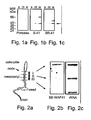
- Western analysis with SR-41 of proteins from the soluble, the membranal and the wall fractions demonstrated that SE-WAP41 is highly enriched in the wall fraction, compared to the membranal and soluble fractions ( Figures 1a-c ), The membrane and soluble fractions are more weakly labeled, suggesting lower levels of SE-WAP41 association with these fractions.
- This western analysis also verified that SR-41 antiserum recognizes the 41kDa protein ( figure 1b ), without recognizing the other major bands labeled by S-41 ( Figure 1c ).
- SE-WAP41 mRNA Expression Levels are Highest in Meristematic and Elongating Tissues
- SE-WAP41 is a Pd associated protein, it is expected that in etiolated maize seedlings its expression should be highest in the mesocotyl node, which is a meristem tissue and in a one to two centimeter region just below the node, a region in which cells are undergoing extensive elongation.
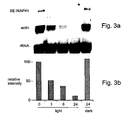
- SE-WAP41 mRNA expression levels were compared in segments, each 1 cm in length, along the mesocotyl developmental gradient.
- AtRGP GFPs Associate with Pd and Golgi Vesicles.
- AtRGP1, AtRGP2, AtRGP3 and AtRGP4 SEQ ID NOs:19-21 respectively
- C1 RGPs class 1 reversibly glycosylated proteins
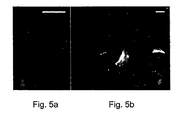
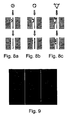
- the AtRGP2 coding sequence was fused to a GFP coding sequence and the AtRGP2:GFP chimera was transiently expressed in tobacco leaf epidermal cells using Agrobacterium leaf injection. Confocal microscopy revealed fluorescence in several distinct sites inside epidermal cells. Punctate paired fluorescent foci were detected on opposite sides of the cell wall - a pattern consistent with AtRGP2 being a plasmodesmal-associated protein ( Figures 5a-b ). Fluorescence was also observed as small fluorescence foci throughout the cell cytoplasm ( Figure 5b ), which moved rapidly throughout the cytoplasm and along cytoplasmic strands through the vacuole, in a manner characteristic of Golgi vesicles ( Figure 9 ).
- PsRGP1 a C1RGPs that shares high sequence identity with SE_WAP41 and AtRGP proteins ( Figure 4 ) immunolocalizes to the trans Golgi apparatus (Dhugga et al., 1997): this supports the supposition that AtRGP2:GFP mobile foci represent Golgi bodies.
- Golgi Nucleotide Sugar Transporter 1 GenBank Accession number NM_179621 Fused to Yellow Fluorescence protein (GONST1:YFP) which has been shown to label Golgi bodies (Baldwin et al., 2001) was employed.
- AtRGP2 when fused to Cyan Fluorescence Protein (AtRGP2:CFP) and co-expressed with GONST1:YFP clearly co-localize with GONST1:YFP ( Figures 15a-c ). Fluorescence could also be seen in large amorphous areas inside cells, apparently representing inclusion bodies resulting from the massive quantities of AtRGP2:GFP produced inside the cells during transient expression and in a small area inside cell nuclei (data not shown). In order to examine whether plasmodesmal association is a general characteristic of C1RGPs, AtRGP1:GFP, AtRGP3:GFP and AtRGP4:GFP were constructed and transiently expressed in tobacco leaf epidermal cells.
- fusion proteins displayed fluorescence patterns identical to that presented by AtRGP2:GFP in all respects (data not shown), except that AtRGP1:GFP fluorescence levels were considerably lower. These fluorescence patterns are consistent with AtRGP1, AtRGP3 and AtRGP4 being plasmodesmal-associated proteins. The observation that all four Arabidopsis RGP proteins examined appear to be plasmodesmal-associated indicates that plasmodesmal association is a general characteristic of members of C1RGPs.
- GFP is Plasmodesmal-Associated
- Transgenic tobacco plants constitutively expressing the AtRGP2:GFP fusion under the control of the 35S promoter of the Cauliflower mosaic virus were generated.
- AtRGP2:GFP fluorescence was localized in punctate fluorescence foci inside cell walls ( Figure 6a ).
- This pattern is similar to that presented by transgenic tobacco plants constitutively expressing a GFP fusion of a known Pd marker, the movement protein of Tobacco Mosaic Virus (MPTMV:GFP) ( Figure 6b ).
- the cell wall at the base of a trichome is especially rich in Pd.
- Transgenic MPTMV:GFP expressing tobacco plants exhibit a characteristic dense punctate pattern where these Pd are fluorescently marked ( Figure 6c ).
- AtRGP2:GFP expressing plants ( Figure 6d ) supporting the conclusion that AtRGP2 localizes to Pd.
- AtRGP2:GFP fluorescence was seen only in wall areas that contain Pd, where two cells are in contact, whereas wall areas devoid of Pd were unlabeled, as demonstrated by trichome cells and spongy mesophyll cells.
- Tobacco trichomes are hair-like structures, protruding from the epidermis surface, consisting of a single file of several cells ( Figure 6e ). Therefore, tobacco trichome cells have both Pd containing walls, those walls separating two cells, and lateral walls that are only in contact with the air surrounding the trichome, which are devoid of Pd.
- Spongy mesophyll cells ( Figure 6g ), likewise have regions with no cell-cell contact, where walls face an inter-cellular space and are devoid of Pd, and regions with cell-cell contact, where walls contain Pd. Fluorescence was detected only within cell wall regions where there is cell-cell contact, in both trichome cells ( Figure 6f ), and spongy mesophyll cells ( Figure 6h ). This differentiating labeling of walls further indicates that AtRGP2 is associated with Pd, or with the wall sheath surrounding Pd. In order to verify that the punctate fluorescence foci inside cell walls indeed represent Pd, callose staining by aniline blue was employed.
- Callose has been widely used as a plasmodesmal marker (Baluska et al., 1999; Gorshkova et al., 2003 and Bayer et al., 2004).
- AtRGP2:GFP When leaves of AtRGP2:GFP expressing transgenic tobacco were stained by aniline blue, AtRGP2:GFP clearly co-localized with the aniline blue - stained callose ( Figures 16a-c ) present around Pd. Wild type tobacco, not expressing GFP, when stained by aniline blue and photographed with GFP conditions displayed no fluorescently labeled Pd (Data not shown).
- transgenic AtRGP2:GFP expressing transgenic tobacco not stained by aniline blue but photographed with aniline blue conditions also displayed no fluorescently labeled Pd (Data not shown).
- Plasmolysis of cells in leaves causes shrinkage of the cell protoplast and retraction of the plasma membrane from the wall with Pd remaining embedded in the cell wall (Turner et al., 1994). Plasmolysis was induced in leaves of the transgenic AtRGP2:GFP expressing tobacco plants in order to learn about the association of AtRGP2 with Pd.
- the fluorescent dye DsRed1 a cytoplasmic marker, was used to allow better visualization of the receding cytoplasm and plasma membrane during plasmolysis.
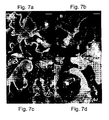
- DsRed1 was transiently expressed in leaf epidermal cells of transgenic tobacco plants stably expressing AtRGP2:GFP, before they were plasmolyzed, thus marking the cytoplasm of these cells ( Figure 7a ).
- AtRGP2:GFP fluorescence clearly remained inside cell walls, in regions where the cytoplasm became disassociated from both sides of the cell wall ( Figure 7b ).
- This result demonstrates that the punctate sites are not within the cortical cytoplasm nor PM associated, but are embedded in the cell wall.
- This is similar to the result obtained in plasmolyzed transgenic tobacco plants stably expressing MPTMV:GFP ( Figure 7c ).
- GONST1:YFP expressing transgenic tobacco plants were generated. When these plants were plasmolyzed no fluorescence remained in cell walls ( Figure 7d ).
- AtRGPs GFP fusions led the present inventors to hypothesize that CI RGPs are delivered to Pd via the Golgi apparatus.
- Brefeldin A (BFA), a disruptor of the Golgi apparatus (reviewed by Maubuch et al., 2002) was used to examine this hypothesis.
- Epidermal cells of tobacco leaves treated with BFA during transient expression of AtRGP2:GFP were compared with cells not treated with BFA.
- BFA treated cells displayed a decrease in the numbers of fluorescently labeled Golgi bodies ( Figures 17a-b ).
- Fluorescently labeled foci containing labeled plasmodesma or clusters of plasmodesma in pit fields which are too close together to resolve individually, were counted in five consecutive confocal sections representing the middle layer of each cell.
- BFA treated cells presented 24.4 ⁇ 2.95 fluorescently labeled Pd
- mock treated cells presented 77.3 ⁇ 10.85 fluorescently labeled Pd.
- BFA treated cells displayed a decrease of approximately 3 fold in the average number of fluorescently labeled Pd when compared to cells not treated with BFA. Paired-sample T-test showed results to be significantly different at P ⁇ 0.001.
- Class 1 Reversibly Glycosylated Polypeptides ((C1)RGPs) of Arabidopsis thaliana are plasmodesmal-associated proteins which are delivered to plasmodesmata (Pd) via the Golgi apparatus (Sagi et al., 2005).
- the inventors have also presented and analyzed various data that indicates that the protein is an outer Golgi peripherally-associated membrane which targets to the inner plasmodesmal plasma membrane (Sagi et al., 2005).
- TMV Tobacco mosaic virus
- N. tabacum cv Xanthi (NN) plants both WT and two independent transgenic lines (homozygous for 35S::AtRGP2:GFP), were grown and inoculated with Tobacco mosaic virus (TMV) under the same physical conditions: T ⁇ 23°C, short day external (greenhouse) light conditions, daily watered. Due to a certain developmental delay of Transgenic lines, WT and transgenic plants were inoculated at the same physiological age (4-5 pairs of leaves) ( Figure 1 ). WT plants were inoculated at age 2 months and transgenic plants at age 2.5 months after germination. Homozygous transgenic plants exhibited a dwarfed morphology.
- TMV Tobacco mosaic virus
- Inoculation procedure was as follows: carborundum (320 Grit) was powdered uniformly onto the entire adaxial leaf surface and then 150 ⁇ l drop of TMV inoculum (10ng/ml) was placed along the midrib, rubbed over the leaf surface and after 30-60sec the leaf was briefly rinsed with tap-water. Control (mock) inoculation was made with the same volume of sodium phosphate buffer alone. Four days after inoculation, leaves were harvested and stored in 4°C. Leaves were photographed and the number of necrotic lesions counted. The diameter of lesions on WT and transgenic lines was also measured and photographed under a stereoscopic microscope.
- WT (13) and transgenic plants (8 from each line) were inoculated with TMV.
- dpi days post inoculation
- necrotic lesions were clearly seen both on WT and transgenic plants.
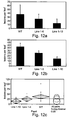
- the number of lesions per leaf on WT were higher than on transgenic plants over-expressing AtRGP2:GFP ( Figures 11a-c and 12a-c ).
- the variability in lesions number could be due to uneven covering of the leaf surface by carborundum and/or unequal pressure on the leaf during inoculation.
- the shape and size of necrotic lesions are obviously different between WT and transgenic plants.
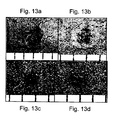
- WT plants have characteristically big and round shaped lesions with clear margins, and their three distinct regions could be recognized ( Figure 13a-b ).
- the lesions on both transgenic lines are smaller in size, have irregular shapes, not round as on WT and with unclear diffuse margins ( Figure 13c-d ).
- the lesions on the second pair of leaves of WT plants are larger in diameter and higher in number than on the third pair ( Figure 14a-c ). This is because the second leaf is more developed and is bigger than the third. Therefore, only the third pair of leafs, which approximately are of the same size for both WT and transgenic plants could be compared ( Figure 12a-c and 14a-c ).
- the present study discloses the cloning and sequencing of a gene encoding a protein belonging to the RGP protein family pfam 03214 [The conserveed Domain Architecture Retrieval Tool (CDART)].
- the RGP pfam 03214 is a family of highly conserved plant-specific proteins that are present in both monocotyledones (Gupta et al., 2000; Langeveld et al., 2002) and dicotyledones (Dhugga et al., 1997; Delgado et al., 1998; Bocca et al., 1999; Zhao and Liu, 2002).
- C1RGP and C2RGP have been subdivided into two classes termed herein as C1RGP and C2RGP.
- Members of C2RGP have been suggested to be similar to processive - glycotransferases which contain two conserved domains, designated domains A and B (Langeveld et al., 2002).
- domains A and B Two conserved domains
- members of C1RGPs, to which SE-WAP41 belongs have been suggested to be non- processive -glycotransferases as they possess domain A but lack domain B characteristic of processive - glycotransferases (Saxena and Brown, 1999).
- AtRGP2:GFP expressing tobacco confocal microscopy of trichomes and spongy mesophyll cells showed that fluorescence foci were only present inside Pd containing cell walls and were absent from walls devoid of Pd.
- Colocalization of aniline blue-stained callose present around Pd with AtRGP2:GFP fluorescence foci inside cell walls demonstrates that these AtRGP2:GFP foci represent Pd.
- GONST1:YFP another Golgi-localized fluorescent fusion protein
- GONST1:YFP another Golgi-localized fluorescent fusion protein
- AtRGP2:GFP The marked difference between the levels of AtRGP2:GFP in the Golgi and in Pd are probably due to permanent accumulation of AtRGP2:GFP in Pd, while in the Golgi, the protein is in transit, being shuttled by the Golgi network from the site of synthesis to its final destination in Pd.
- the cells ectopically produce very large quantities of AtRGP2:GFP in a very short time, enabling it's detection as fluorescence associated with the Golgi apparatus.
- Western blots of different cell fractions detected C1RGPs not only in membranes and wall fractions but also in the soluble fraction. Immunogold electron microscopy, however, detect almost no cytosolic RGP other than that associated with Golgi (Epel et al., 1996; Dhugga et al., 1997).
- Golgi associated proteins can either reside in the Golgi lumen, have a trans-membrane region crossing the Golgi membrane, or be peripherally attached to the cytosolic side of Golgi membranes.
- Golgi vesicles fuse with the plasma membrane, their lumen spills outwards to the cell wall, while their cytosolic side faces the cytosol.
- a protein residing in the Golgi lumen would be exported to the cell wall surrounding the plasmodesma ( Figure 8a ), while a protein with a trans-membrane region would become an integral Pd plasma- membrane protein with Golgi-lumen facing domains exposed to the apoplast ( Figure 8b ) and a protein peripherally associated with the cytosolic side of the Golgi membrane would reach the inner-side of the plasma membrane facing the cytoplasmic sleeve of the plasmodesma ( Figure 8c ).
- C1RPGs The function of C1RPGs in plants, and in particular in plasmodesmata, was examined using a viral spread model and phenotypic observations.
- a virus For hypersensitive response to occur, a virus must replicate and spread to a minimal number of cells after initial replication in an infected plant cell.
- the decreased number of necrotic lesions and the decreased size of the lesions in the transgenic plants of the present invention indicates that C1RPGs alter plasmodesmatal conductance thereby inhibiting initial spread of virus particles through the plasmodesmata.
- transgenic plants of the present invention are also phenotypically distinguishable from WT plants in both height and internode length.
- transgenic plants which are capable of localizing viral infection as well as having a commercially valuable phenotype.
Landscapes
- Health & Medical Sciences (AREA)
- Genetics & Genomics (AREA)
- Life Sciences & Earth Sciences (AREA)
- Chemical & Material Sciences (AREA)
- Organic Chemistry (AREA)
- Engineering & Computer Science (AREA)
- Molecular Biology (AREA)
- Biomedical Technology (AREA)
- Wood Science & Technology (AREA)
- Bioinformatics & Cheminformatics (AREA)
- General Engineering & Computer Science (AREA)
- Biotechnology (AREA)
- Zoology (AREA)
- Biochemistry (AREA)
- Biophysics (AREA)
- General Health & Medical Sciences (AREA)
- Physics & Mathematics (AREA)
- Cell Biology (AREA)
- Plant Pathology (AREA)
- Microbiology (AREA)
- Proteomics, Peptides & Aminoacids (AREA)
- Medicinal Chemistry (AREA)
- Gastroenterology & Hepatology (AREA)
- Botany (AREA)
- Virology (AREA)
- Breeding Of Plants And Reproduction By Means Of Culturing (AREA)
- Micro-Organisms Or Cultivation Processes Thereof (AREA)
- Agricultural Chemicals And Associated Chemicals (AREA)
- Fertilizers (AREA)
Claims (4)
- Procédé de diminution de la capacité manifestée par des plasmodesmes à transporter des molécules ou des virus dans un tissu végétal, comprenant le fait d'introduire dans des cellules du tissu végétal le produit de recombinaison d'acide nucléique encodant un polypeptide glycosylé de manière réversible, pfam 03214, pour ainsi diminuer la capacité manifestée par des plasmodesmes à transporter des molécules ou des virus dans le tissu végétal.
- Procédé de génération de tissu végétal résistant à la propagation d'un virus végétal comprenant le fait d'introduire dans des cellules du tissu végétal le produit de recombinaison d'acide nucléique encodant un polypeptide glycosylé de manière réversible, pfam 03214, pour ainsi générer le tissu végétal résistant à la propagation du virus végétal.
- Procédé selon la revendication 1 ou 2, dans lequel ledit polypeptide glycosylé de manière réversible est encodé par une séquence choisie parmi le groupe constitué par les SEQ ID NO: 8, 13 et 25-28.
- Procédé selon la revendication 1 ou 2, dans lequel ledit polypeptide glycosylé de manière réversible, pfam 03214, comprend les acides aminés de 270 à la fin des SEQ ID NO: 19-24.
Applications Claiming Priority (2)
| Application Number | Priority Date | Filing Date | Title |
|---|---|---|---|
| US69224005P | 2005-06-21 | 2005-06-21 | |
| PCT/IL2006/000723 WO2006137064A2 (fr) | 2005-06-21 | 2006-06-21 | Structures et procedes destines a generer des plantes manifestant une conductance plasmodesmatale modifiee |
Publications (2)
| Publication Number | Publication Date |
|---|---|
| EP1896592A2 EP1896592A2 (fr) | 2008-03-12 |
| EP1896592B1 true EP1896592B1 (fr) | 2010-03-17 |
Family
ID=37189012
Family Applications (1)
| Application Number | Title | Priority Date | Filing Date |
|---|---|---|---|
| EP06745162A Expired - Lifetime EP1896592B1 (fr) | 2005-06-21 | 2006-06-21 | Procédés destinés à générer des plantes manifestant une conductance plasmodesmatale modifiée |
Country Status (6)
| Country | Link |
|---|---|
| US (1) | US20090222949A1 (fr) |
| EP (1) | EP1896592B1 (fr) |
| CN (1) | CN101283097A (fr) |
| AT (1) | ATE461288T1 (fr) |
| DE (1) | DE602006012973D1 (fr) |
| WO (1) | WO2006137064A2 (fr) |
Families Citing this family (2)
| Publication number | Priority date | Publication date | Assignee | Title |
|---|---|---|---|---|
| UA116097C2 (uk) | 2011-12-11 | 2018-02-12 | Зе Стейт Оф Ізраел, Міністрі Оф Агрікалче Енд Руерал Девелопмент, Агрікалчерал Рісьоч Організейшн, (А.Р.О.), Волкані Сентре | Спосіб модуляції провідності устячка рослини |
| CN110760523B (zh) * | 2019-09-26 | 2021-09-07 | 西南大学 | 编码胞间连丝定位蛋白的GhPDLP6-3基因及其用途 |
Family Cites Families (4)
| Publication number | Priority date | Publication date | Assignee | Title |
|---|---|---|---|---|
| GB9218185D0 (en) * | 1992-08-26 | 1992-10-14 | Ici Plc | Novel plants and processes for obtaining them |
| AU1145397A (en) * | 1995-12-04 | 1997-06-27 | Regents Of The University Of California, The | Regulation of plant development and physiology through plasmodesmatal macromolecular transport of proteins and oligonucleotides |
| AU4260999A (en) * | 1998-05-13 | 1999-11-29 | Max-Planck-Gesellschaft Zur Forderung Der Wissenschaften E.V. | Method for producing plants having an increased tolerance against drought and/orfungal attack and/or increased salt concentrations and/or extreme temperature b y the expression of plasmodesmata-localized proteins |
| US6194638B1 (en) * | 1998-06-23 | 2001-02-27 | Pioneer Hi-Bred International, Inc. | Alteration of hemicellulose concentration in plants |
-
2006
- 2006-06-21 AT AT06745162T patent/ATE461288T1/de not_active IP Right Cessation
- 2006-06-21 CN CNA2006800304195A patent/CN101283097A/zh active Pending
- 2006-06-21 EP EP06745162A patent/EP1896592B1/fr not_active Expired - Lifetime
- 2006-06-21 WO PCT/IL2006/000723 patent/WO2006137064A2/fr not_active Ceased
- 2006-06-21 US US11/922,511 patent/US20090222949A1/en not_active Abandoned
- 2006-06-21 DE DE602006012973T patent/DE602006012973D1/de not_active Expired - Fee Related
Also Published As
| Publication number | Publication date |
|---|---|
| CN101283097A (zh) | 2008-10-08 |
| WO2006137064A3 (fr) | 2007-02-15 |
| DE602006012973D1 (de) | 2010-04-29 |
| US20090222949A1 (en) | 2009-09-03 |
| WO2006137064A2 (fr) | 2006-12-28 |
| ATE461288T1 (de) | 2010-04-15 |
| EP1896592A2 (fr) | 2008-03-12 |
Similar Documents
| Publication | Publication Date | Title |
|---|---|---|
| Nishimura et al. | Over-expression of tobacco knotted 1-type class1 homeobox genes alters various leaf morphology | |
| US20060260002A1 (en) | Nucleotide sequences for regulating gene expression in plant trichomes and constructs and methods utilizing same | |
| US10119148B2 (en) | RNAs from pathogens inhibit plant immunity | |
| CN103387993B (zh) | 调控水稻花粉败育的生长素应答因子编码基因及其应用 | |
| KR20160104074A (ko) | 식물에서의 증가된 단백질 발현 | |
| US20120096590A1 (en) | Methods for increasing plant cell proliferation by functionally inhibiting a plant cyclin inhibitor gene | |
| BRPI0706368A2 (pt) | composição, vetor, método para fornecer resistência ao cisto nematódeo a uma planta, proteìna de fusão, método para inibir atividade biológica, ácido nucléico isolado | |
| US11408011B2 (en) | Plant tolerance to stress through the control of chloroplast stability | |
| Dinkins et al. | Overexpression of the Arabidopsis thaliana MinD1 gene alters chloroplast size and number in transgenic tobacco plants | |
| JP6827491B2 (ja) | 植物における自家不和合性の操作 | |
| CN110627887B (zh) | SlTLFP8蛋白及其相关生物材料在调控番茄抗旱性中的应用 | |
| CN103421801B (zh) | 一种调控稻类结实率的基因及其应用 | |
| CN110862975B (zh) | 柑橘果胶乙酰酯酶CsPAE及其编码基因和应用 | |
| US20260103721A1 (en) | Genes controlling barrier formation in roots | |
| US20090222949A1 (en) | Constructs and Methods for Generating Plants Exhibiting Altered Plasmodesmatal Conductance | |
| CA2272788A1 (fr) | Moyens et methodes pour transformer les mitochondries des vegetaux | |
| CN118127030A (zh) | 热胁迫抗性相关蛋白OsALKBHL1或调控其表达的物质的应用 | |
| US8129514B2 (en) | Nucleotide sequences for regulating gene expression in plant trichomes and constructs and methods utilizing same | |
| EP1169463B1 (fr) | Methode pour transmettre la resistance au bnyvv aux bettraves a sucre | |
| KR101457958B1 (ko) | 다종 바이러스 저항성을 갖는 형질전환 감자 식물체의 제조방법 및 이를 이용하여 제조된 감자 식물체 | |
| KR101360542B1 (ko) | 벼 유래의 OsSERK1 유전자 및 그에 의해서 형질전환된 벼 | |
| WO2007028979A1 (fr) | Transformation de plantes | |
| CN120758555A (zh) | 基因OsRGA2提高水稻对病虫害抗性的用途 | |
| CN113150072A (zh) | 一种调节蛋白在细胞器中精确定位的信号肽及其编码序列和应用 | |
| US20060168677A1 (en) | Transcriptional termination of transgene expression using host genomic terminators |
Legal Events
| Date | Code | Title | Description |
|---|---|---|---|
| PUAI | Public reference made under article 153(3) epc to a published international application that has entered the european phase |
Free format text: ORIGINAL CODE: 0009012 |
|
| 17P | Request for examination filed |
Effective date: 20080114 |
|
| AK | Designated contracting states |
Kind code of ref document: A2 Designated state(s): AT BE BG CH CY CZ DE DK EE ES FI FR GB GR HU IE IS IT LI LT LU LV MC NL PL PT RO SE SI SK TR |
|
| DAX | Request for extension of the european patent (deleted) | ||
| 17Q | First examination report despatched |
Effective date: 20080425 |
|
| DAX | Request for extension of the european patent (deleted) | ||
| RTI1 | Title (correction) |
Free format text: METHODS FOR GENERATING PLANTS EXHIBITING ALTERED PLASMODESMATAL CONDUCTANCE |
|
| GRAP | Despatch of communication of intention to grant a patent |
Free format text: ORIGINAL CODE: EPIDOSNIGR1 |
|
| GRAS | Grant fee paid |
Free format text: ORIGINAL CODE: EPIDOSNIGR3 |
|
| GRAA | (expected) grant |
Free format text: ORIGINAL CODE: 0009210 |
|
| AK | Designated contracting states |
Kind code of ref document: B1 Designated state(s): AT BE BG CH CY CZ DE DK EE ES FI FR GB GR HU IE IS IT LI LT LU LV MC NL PL PT RO SE SI SK TR |
|
| REG | Reference to a national code |
Ref country code: GB Ref legal event code: FG4D |
|
| REG | Reference to a national code |
Ref country code: CH Ref legal event code: EP |
|
| REG | Reference to a national code |
Ref country code: IE Ref legal event code: FG4D |
|
| REF | Corresponds to: |
Ref document number: 602006012973 Country of ref document: DE Date of ref document: 20100429 Kind code of ref document: P |
|
| REG | Reference to a national code |
Ref country code: NL Ref legal event code: VDEP Effective date: 20100317 |
|
| PG25 | Lapsed in a contracting state [announced via postgrant information from national office to epo] |
Ref country code: LT Free format text: LAPSE BECAUSE OF FAILURE TO SUBMIT A TRANSLATION OF THE DESCRIPTION OR TO PAY THE FEE WITHIN THE PRESCRIBED TIME-LIMIT Effective date: 20100317 |
|
| LTIE | Lt: invalidation of european patent or patent extension |
Effective date: 20100317 |
|
| PG25 | Lapsed in a contracting state [announced via postgrant information from national office to epo] |
Ref country code: LV Free format text: LAPSE BECAUSE OF FAILURE TO SUBMIT A TRANSLATION OF THE DESCRIPTION OR TO PAY THE FEE WITHIN THE PRESCRIBED TIME-LIMIT Effective date: 20100317 Ref country code: SI Free format text: LAPSE BECAUSE OF FAILURE TO SUBMIT A TRANSLATION OF THE DESCRIPTION OR TO PAY THE FEE WITHIN THE PRESCRIBED TIME-LIMIT Effective date: 20100317 Ref country code: PL Free format text: LAPSE BECAUSE OF FAILURE TO SUBMIT A TRANSLATION OF THE DESCRIPTION OR TO PAY THE FEE WITHIN THE PRESCRIBED TIME-LIMIT Effective date: 20100317 Ref country code: FI Free format text: LAPSE BECAUSE OF FAILURE TO SUBMIT A TRANSLATION OF THE DESCRIPTION OR TO PAY THE FEE WITHIN THE PRESCRIBED TIME-LIMIT Effective date: 20100317 Ref country code: AT Free format text: LAPSE BECAUSE OF FAILURE TO SUBMIT A TRANSLATION OF THE DESCRIPTION OR TO PAY THE FEE WITHIN THE PRESCRIBED TIME-LIMIT Effective date: 20100317 |
|
| PG25 | Lapsed in a contracting state [announced via postgrant information from national office to epo] |
Ref country code: BE Free format text: LAPSE BECAUSE OF FAILURE TO SUBMIT A TRANSLATION OF THE DESCRIPTION OR TO PAY THE FEE WITHIN THE PRESCRIBED TIME-LIMIT Effective date: 20100317 Ref country code: CY Free format text: LAPSE BECAUSE OF FAILURE TO SUBMIT A TRANSLATION OF THE DESCRIPTION OR TO PAY THE FEE WITHIN THE PRESCRIBED TIME-LIMIT Effective date: 20100317 Ref country code: EE Free format text: LAPSE BECAUSE OF FAILURE TO SUBMIT A TRANSLATION OF THE DESCRIPTION OR TO PAY THE FEE WITHIN THE PRESCRIBED TIME-LIMIT Effective date: 20100317 Ref country code: ES Free format text: LAPSE BECAUSE OF FAILURE TO SUBMIT A TRANSLATION OF THE DESCRIPTION OR TO PAY THE FEE WITHIN THE PRESCRIBED TIME-LIMIT Effective date: 20100628 Ref country code: GR Free format text: LAPSE BECAUSE OF FAILURE TO SUBMIT A TRANSLATION OF THE DESCRIPTION OR TO PAY THE FEE WITHIN THE PRESCRIBED TIME-LIMIT Effective date: 20100618 Ref country code: NL Free format text: LAPSE BECAUSE OF FAILURE TO SUBMIT A TRANSLATION OF THE DESCRIPTION OR TO PAY THE FEE WITHIN THE PRESCRIBED TIME-LIMIT Effective date: 20100317 Ref country code: RO Free format text: LAPSE BECAUSE OF FAILURE TO SUBMIT A TRANSLATION OF THE DESCRIPTION OR TO PAY THE FEE WITHIN THE PRESCRIBED TIME-LIMIT Effective date: 20100317 Ref country code: SE Free format text: LAPSE BECAUSE OF FAILURE TO SUBMIT A TRANSLATION OF THE DESCRIPTION OR TO PAY THE FEE WITHIN THE PRESCRIBED TIME-LIMIT Effective date: 20100317 |
|
| PG25 | Lapsed in a contracting state [announced via postgrant information from national office to epo] |
Ref country code: IS Free format text: LAPSE BECAUSE OF FAILURE TO SUBMIT A TRANSLATION OF THE DESCRIPTION OR TO PAY THE FEE WITHIN THE PRESCRIBED TIME-LIMIT Effective date: 20100717 Ref country code: CZ Free format text: LAPSE BECAUSE OF FAILURE TO SUBMIT A TRANSLATION OF THE DESCRIPTION OR TO PAY THE FEE WITHIN THE PRESCRIBED TIME-LIMIT Effective date: 20100317 Ref country code: BG Free format text: LAPSE BECAUSE OF FAILURE TO SUBMIT A TRANSLATION OF THE DESCRIPTION OR TO PAY THE FEE WITHIN THE PRESCRIBED TIME-LIMIT Effective date: 20100617 Ref country code: SK Free format text: LAPSE BECAUSE OF FAILURE TO SUBMIT A TRANSLATION OF THE DESCRIPTION OR TO PAY THE FEE WITHIN THE PRESCRIBED TIME-LIMIT Effective date: 20100317 |
|
| PLBE | No opposition filed within time limit |
Free format text: ORIGINAL CODE: 0009261 |
|
| STAA | Information on the status of an ep patent application or granted ep patent |
Free format text: STATUS: NO OPPOSITION FILED WITHIN TIME LIMIT |
|
| PG25 | Lapsed in a contracting state [announced via postgrant information from national office to epo] |
Ref country code: DK Free format text: LAPSE BECAUSE OF FAILURE TO SUBMIT A TRANSLATION OF THE DESCRIPTION OR TO PAY THE FEE WITHIN THE PRESCRIBED TIME-LIMIT Effective date: 20100317 Ref country code: PT Free format text: LAPSE BECAUSE OF FAILURE TO SUBMIT A TRANSLATION OF THE DESCRIPTION OR TO PAY THE FEE WITHIN THE PRESCRIBED TIME-LIMIT Effective date: 20100719 Ref country code: MC Free format text: LAPSE BECAUSE OF NON-PAYMENT OF DUE FEES Effective date: 20100630 |
|
| REG | Reference to a national code |
Ref country code: CH Ref legal event code: PL |
|
| 26N | No opposition filed |
Effective date: 20101220 |
|
| GBPC | Gb: european patent ceased through non-payment of renewal fee |
Effective date: 20100621 |
|
| REG | Reference to a national code |
Ref country code: FR Ref legal event code: ST Effective date: 20110228 |
|
| PG25 | Lapsed in a contracting state [announced via postgrant information from national office to epo] |
Ref country code: IT Free format text: LAPSE BECAUSE OF FAILURE TO SUBMIT A TRANSLATION OF THE DESCRIPTION OR TO PAY THE FEE WITHIN THE PRESCRIBED TIME-LIMIT Effective date: 20100317 |
|
| PG25 | Lapsed in a contracting state [announced via postgrant information from national office to epo] |
Ref country code: IE Free format text: LAPSE BECAUSE OF NON-PAYMENT OF DUE FEES Effective date: 20100621 Ref country code: DE Free format text: LAPSE BECAUSE OF NON-PAYMENT OF DUE FEES Effective date: 20110101 Ref country code: CH Free format text: LAPSE BECAUSE OF NON-PAYMENT OF DUE FEES Effective date: 20100630 Ref country code: LI Free format text: LAPSE BECAUSE OF NON-PAYMENT OF DUE FEES Effective date: 20100630 |
|
| PG25 | Lapsed in a contracting state [announced via postgrant information from national office to epo] |
Ref country code: FR Free format text: LAPSE BECAUSE OF NON-PAYMENT OF DUE FEES Effective date: 20100630 |
|
| PG25 | Lapsed in a contracting state [announced via postgrant information from national office to epo] |
Ref country code: GB Free format text: LAPSE BECAUSE OF NON-PAYMENT OF DUE FEES Effective date: 20100621 |
|
| PG25 | Lapsed in a contracting state [announced via postgrant information from national office to epo] |
Ref country code: LU Free format text: LAPSE BECAUSE OF NON-PAYMENT OF DUE FEES Effective date: 20100621 Ref country code: HU Free format text: LAPSE BECAUSE OF FAILURE TO SUBMIT A TRANSLATION OF THE DESCRIPTION OR TO PAY THE FEE WITHIN THE PRESCRIBED TIME-LIMIT Effective date: 20100918 |
|
| PG25 | Lapsed in a contracting state [announced via postgrant information from national office to epo] |
Ref country code: TR Free format text: LAPSE BECAUSE OF FAILURE TO SUBMIT A TRANSLATION OF THE DESCRIPTION OR TO PAY THE FEE WITHIN THE PRESCRIBED TIME-LIMIT Effective date: 20100317 |