EP1897771A2 - Système et procédé pour augmenter la puissance d'une sortie de couple d'un ensemble de transmission - Google Patents
Système et procédé pour augmenter la puissance d'une sortie de couple d'un ensemble de transmission Download PDFInfo
- Publication number
- EP1897771A2 EP1897771A2 EP20070115160 EP07115160A EP1897771A2 EP 1897771 A2 EP1897771 A2 EP 1897771A2 EP 20070115160 EP20070115160 EP 20070115160 EP 07115160 A EP07115160 A EP 07115160A EP 1897771 A2 EP1897771 A2 EP 1897771A2
- Authority
- EP
- European Patent Office
- Prior art keywords
- engine speed
- torque
- curve
- speed
- electric motor
- Prior art date
- Legal status (The legal status is an assumption and is not a legal conclusion. Google has not performed a legal analysis and makes no representation as to the accuracy of the status listed.)
- Withdrawn
Links
Images





Classifications
-
- B—PERFORMING OPERATIONS; TRANSPORTING
- B60—VEHICLES IN GENERAL
- B60K—ARRANGEMENT OR MOUNTING OF PROPULSION UNITS OR OF TRANSMISSIONS IN VEHICLES; ARRANGEMENT OR MOUNTING OF PLURAL DIVERSE PRIME-MOVERS IN VEHICLES; AUXILIARY DRIVES FOR VEHICLES; INSTRUMENTATION OR DASHBOARDS FOR VEHICLES; ARRANGEMENTS IN CONNECTION WITH COOLING, AIR INTAKE, GAS EXHAUST OR FUEL SUPPLY OF PROPULSION UNITS IN VEHICLES
- B60K6/00—Arrangement or mounting of plural diverse prime-movers for mutual or common propulsion, e.g. hybrid propulsion systems comprising electric motors and internal combustion engines
- B60K6/20—Arrangement or mounting of plural diverse prime-movers for mutual or common propulsion, e.g. hybrid propulsion systems comprising electric motors and internal combustion engines the prime-movers consisting of electric motors and internal combustion engines, e.g. HEVs
- B60K6/42—Arrangement or mounting of plural diverse prime-movers for mutual or common propulsion, e.g. hybrid propulsion systems comprising electric motors and internal combustion engines the prime-movers consisting of electric motors and internal combustion engines, e.g. HEVs characterised by the architecture of the hybrid electric vehicle
- B60K6/48—Parallel type
-
- B—PERFORMING OPERATIONS; TRANSPORTING
- B60—VEHICLES IN GENERAL
- B60W—CONJOINT CONTROL OF VEHICLE SUB-UNITS OF DIFFERENT TYPE OR DIFFERENT FUNCTION; CONTROL SYSTEMS SPECIALLY ADAPTED FOR HYBRID VEHICLES; ROAD VEHICLE DRIVE CONTROL SYSTEMS FOR PURPOSES NOT RELATED TO THE CONTROL OF A PARTICULAR SUB-UNIT
- B60W20/00—Control systems specially adapted for hybrid vehicles
- B60W20/10—Controlling the power contribution of each of the prime movers to meet required power demand
- B60W20/15—Control strategies specially adapted for achieving a particular effect
-
- B—PERFORMING OPERATIONS; TRANSPORTING
- B60—VEHICLES IN GENERAL
- B60L—PROPULSION OF ELECTRICALLY-PROPELLED VEHICLES; SUPPLYING ELECTRIC POWER FOR AUXILIARY EQUIPMENT OF ELECTRICALLY-PROPELLED VEHICLES; ELECTRODYNAMIC BRAKE SYSTEMS FOR VEHICLES IN GENERAL; MAGNETIC SUSPENSION OR LEVITATION FOR VEHICLES; MONITORING OPERATING VARIABLES OF ELECTRICALLY-PROPELLED VEHICLES; ELECTRIC SAFETY DEVICES FOR ELECTRICALLY-PROPELLED VEHICLES
- B60L50/00—Electric propulsion with power supplied within the vehicle
- B60L50/10—Electric propulsion with power supplied within the vehicle using propulsion power supplied by engine-driven generators, e.g. generators driven by combustion engines
- B60L50/16—Electric propulsion with power supplied within the vehicle using propulsion power supplied by engine-driven generators, e.g. generators driven by combustion engines with provision for separate direct mechanical propulsion
-
- B—PERFORMING OPERATIONS; TRANSPORTING
- B60—VEHICLES IN GENERAL
- B60W—CONJOINT CONTROL OF VEHICLE SUB-UNITS OF DIFFERENT TYPE OR DIFFERENT FUNCTION; CONTROL SYSTEMS SPECIALLY ADAPTED FOR HYBRID VEHICLES; ROAD VEHICLE DRIVE CONTROL SYSTEMS FOR PURPOSES NOT RELATED TO THE CONTROL OF A PARTICULAR SUB-UNIT
- B60W10/00—Conjoint control of vehicle sub-units of different type or different function
- B60W10/04—Conjoint control of vehicle sub-units of different type or different function including control of propulsion units
- B60W10/06—Conjoint control of vehicle sub-units of different type or different function including control of propulsion units including control of combustion engines
-
- B—PERFORMING OPERATIONS; TRANSPORTING
- B60—VEHICLES IN GENERAL
- B60W—CONJOINT CONTROL OF VEHICLE SUB-UNITS OF DIFFERENT TYPE OR DIFFERENT FUNCTION; CONTROL SYSTEMS SPECIALLY ADAPTED FOR HYBRID VEHICLES; ROAD VEHICLE DRIVE CONTROL SYSTEMS FOR PURPOSES NOT RELATED TO THE CONTROL OF A PARTICULAR SUB-UNIT
- B60W10/00—Conjoint control of vehicle sub-units of different type or different function
- B60W10/04—Conjoint control of vehicle sub-units of different type or different function including control of propulsion units
- B60W10/08—Conjoint control of vehicle sub-units of different type or different function including control of propulsion units including control of electric propulsion units, e.g. motors or generators
-
- B—PERFORMING OPERATIONS; TRANSPORTING
- B60—VEHICLES IN GENERAL
- B60W—CONJOINT CONTROL OF VEHICLE SUB-UNITS OF DIFFERENT TYPE OR DIFFERENT FUNCTION; CONTROL SYSTEMS SPECIALLY ADAPTED FOR HYBRID VEHICLES; ROAD VEHICLE DRIVE CONTROL SYSTEMS FOR PURPOSES NOT RELATED TO THE CONTROL OF A PARTICULAR SUB-UNIT
- B60W10/00—Conjoint control of vehicle sub-units of different type or different function
- B60W10/24—Conjoint control of vehicle sub-units of different type or different function including control of energy storage means
- B60W10/26—Conjoint control of vehicle sub-units of different type or different function including control of energy storage means for electrical energy, e.g. batteries or capacitors
-
- B—PERFORMING OPERATIONS; TRANSPORTING
- B60—VEHICLES IN GENERAL
- B60W—CONJOINT CONTROL OF VEHICLE SUB-UNITS OF DIFFERENT TYPE OR DIFFERENT FUNCTION; CONTROL SYSTEMS SPECIALLY ADAPTED FOR HYBRID VEHICLES; ROAD VEHICLE DRIVE CONTROL SYSTEMS FOR PURPOSES NOT RELATED TO THE CONTROL OF A PARTICULAR SUB-UNIT
- B60W30/00—Purposes of road vehicle drive control systems not related to the control of a particular sub-unit, e.g. of systems using conjoint control of vehicle sub-units
- B60W30/18—Propelling the vehicle
- B60W30/188—Controlling power parameters of the driveline, e.g. determining the required power
- B60W30/1882—Controlling power parameters of the driveline, e.g. determining the required power characterised by the working point of the engine, e.g. by using engine output chart
-
- B—PERFORMING OPERATIONS; TRANSPORTING
- B60—VEHICLES IN GENERAL
- B60L—PROPULSION OF ELECTRICALLY-PROPELLED VEHICLES; SUPPLYING ELECTRIC POWER FOR AUXILIARY EQUIPMENT OF ELECTRICALLY-PROPELLED VEHICLES; ELECTRODYNAMIC BRAKE SYSTEMS FOR VEHICLES IN GENERAL; MAGNETIC SUSPENSION OR LEVITATION FOR VEHICLES; MONITORING OPERATING VARIABLES OF ELECTRICALLY-PROPELLED VEHICLES; ELECTRIC SAFETY DEVICES FOR ELECTRICALLY-PROPELLED VEHICLES
- B60L2240/00—Control parameters of input or output; Target parameters
- B60L2240/40—Drive Train control parameters
- B60L2240/42—Drive Train control parameters related to electric machines
- B60L2240/421—Speed
-
- B—PERFORMING OPERATIONS; TRANSPORTING
- B60—VEHICLES IN GENERAL
- B60L—PROPULSION OF ELECTRICALLY-PROPELLED VEHICLES; SUPPLYING ELECTRIC POWER FOR AUXILIARY EQUIPMENT OF ELECTRICALLY-PROPELLED VEHICLES; ELECTRODYNAMIC BRAKE SYSTEMS FOR VEHICLES IN GENERAL; MAGNETIC SUSPENSION OR LEVITATION FOR VEHICLES; MONITORING OPERATING VARIABLES OF ELECTRICALLY-PROPELLED VEHICLES; ELECTRIC SAFETY DEVICES FOR ELECTRICALLY-PROPELLED VEHICLES
- B60L2240/00—Control parameters of input or output; Target parameters
- B60L2240/40—Drive Train control parameters
- B60L2240/42—Drive Train control parameters related to electric machines
- B60L2240/423—Torque
-
- B—PERFORMING OPERATIONS; TRANSPORTING
- B60—VEHICLES IN GENERAL
- B60L—PROPULSION OF ELECTRICALLY-PROPELLED VEHICLES; SUPPLYING ELECTRIC POWER FOR AUXILIARY EQUIPMENT OF ELECTRICALLY-PROPELLED VEHICLES; ELECTRODYNAMIC BRAKE SYSTEMS FOR VEHICLES IN GENERAL; MAGNETIC SUSPENSION OR LEVITATION FOR VEHICLES; MONITORING OPERATING VARIABLES OF ELECTRICALLY-PROPELLED VEHICLES; ELECTRIC SAFETY DEVICES FOR ELECTRICALLY-PROPELLED VEHICLES
- B60L2240/00—Control parameters of input or output; Target parameters
- B60L2240/40—Drive Train control parameters
- B60L2240/44—Drive Train control parameters related to combustion engines
- B60L2240/441—Speed
-
- B—PERFORMING OPERATIONS; TRANSPORTING
- B60—VEHICLES IN GENERAL
- B60W—CONJOINT CONTROL OF VEHICLE SUB-UNITS OF DIFFERENT TYPE OR DIFFERENT FUNCTION; CONTROL SYSTEMS SPECIALLY ADAPTED FOR HYBRID VEHICLES; ROAD VEHICLE DRIVE CONTROL SYSTEMS FOR PURPOSES NOT RELATED TO THE CONTROL OF A PARTICULAR SUB-UNIT
- B60W20/00—Control systems specially adapted for hybrid vehicles
-
- B—PERFORMING OPERATIONS; TRANSPORTING
- B60—VEHICLES IN GENERAL
- B60W—CONJOINT CONTROL OF VEHICLE SUB-UNITS OF DIFFERENT TYPE OR DIFFERENT FUNCTION; CONTROL SYSTEMS SPECIALLY ADAPTED FOR HYBRID VEHICLES; ROAD VEHICLE DRIVE CONTROL SYSTEMS FOR PURPOSES NOT RELATED TO THE CONTROL OF A PARTICULAR SUB-UNIT
- B60W2510/00—Input parameters relating to a particular sub-units
- B60W2510/06—Combustion engines, Gas turbines
- B60W2510/0638—Engine speed
-
- B—PERFORMING OPERATIONS; TRANSPORTING
- B60—VEHICLES IN GENERAL
- B60W—CONJOINT CONTROL OF VEHICLE SUB-UNITS OF DIFFERENT TYPE OR DIFFERENT FUNCTION; CONTROL SYSTEMS SPECIALLY ADAPTED FOR HYBRID VEHICLES; ROAD VEHICLE DRIVE CONTROL SYSTEMS FOR PURPOSES NOT RELATED TO THE CONTROL OF A PARTICULAR SUB-UNIT
- B60W2710/00—Output or target parameters relating to a particular sub-units
- B60W2710/08—Electric propulsion units
- B60W2710/081—Speed
-
- B—PERFORMING OPERATIONS; TRANSPORTING
- B60—VEHICLES IN GENERAL
- B60W—CONJOINT CONTROL OF VEHICLE SUB-UNITS OF DIFFERENT TYPE OR DIFFERENT FUNCTION; CONTROL SYSTEMS SPECIALLY ADAPTED FOR HYBRID VEHICLES; ROAD VEHICLE DRIVE CONTROL SYSTEMS FOR PURPOSES NOT RELATED TO THE CONTROL OF A PARTICULAR SUB-UNIT
- B60W2710/00—Output or target parameters relating to a particular sub-units
- B60W2710/08—Electric propulsion units
- B60W2710/083—Torque
-
- Y—GENERAL TAGGING OF NEW TECHNOLOGICAL DEVELOPMENTS; GENERAL TAGGING OF CROSS-SECTIONAL TECHNOLOGIES SPANNING OVER SEVERAL SECTIONS OF THE IPC; TECHNICAL SUBJECTS COVERED BY FORMER USPC CROSS-REFERENCE ART COLLECTIONS [XRACs] AND DIGESTS
- Y02—TECHNOLOGIES OR APPLICATIONS FOR MITIGATION OR ADAPTATION AGAINST CLIMATE CHANGE
- Y02T—CLIMATE CHANGE MITIGATION TECHNOLOGIES RELATED TO TRANSPORTATION
- Y02T10/00—Road transport of goods or passengers
- Y02T10/60—Other road transportation technologies with climate change mitigation effect
- Y02T10/62—Hybrid vehicles
Definitions
- This invention relates to a system and method for boosting torque output of a drive train, such as an internal combustion engine.
- the system for boosting a torque output of a drive train comprises an engine speed detector for detecting an engine speed of an engine having a baseline torque versus engine speed curve, a data processor for determining if the detected engine speed is within a first speed range of engine speeds, and a motor controller for activating an electric motor.
- the problem to be solved is to provide a system as described above which enables rapid or responsive boosting of torque of a drive train.
- a system for boosting a torque output of a drive train as described above comprises an engine speed detector for detecting an engine speed of an engine having a baseline torque versus engine speed curve.
- a data processor determines if the detected engine speed is within a first speed range. If the detected engine speed is within the first range, the electric motor is activated to rotate substantially synchronously with the engine speed within the first speed range in an electric propulsion mode in accordance with a supplemental torque versus engine speed curve.
- the supplemental torque versus engine speed curve intercepts the baseline torque versus engine speed curve at a lower engine speed point and a higher engine speed point.
- FIG. 1 is a block diagram of one embodiment of system for boosting torque output of a drive train.
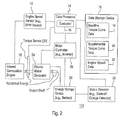
- FIG. 2 is a block diagram of another embodiment of a system for boosting torque output of a drive train.
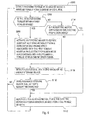
- FIG. 3 is a flow chart of a first embodiment of a method for boosting torque output of a drive train.
- FIG. 4 is a flow chart of a second embodiment of a method for boosting torque output of a drive train.
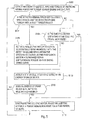
- FIG. 5 is a flow chart of a third embodiment of a method for boosting torque output of a drive train.
- FIG. 6 is a flow chart of a fourth embodiment of a method for boosting torque output of a drive train.
- FIG. 7 is a flow chart of a fifth embodiment of a method for boosting torque output of a drive train.
- FIG. 8 is a flow chart of a sixth embodiment of a method for boosting torque output of a drive train.
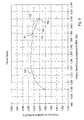
- FIG. 9 is a diagram of a baseline torque curve and a supplemental torque curve.
- FIG. 10 is a diagram of a baseline torque curve and group of supplemental torque curves.
- FIG. 1 illustrates a system 11 for boosting torque output of a drive train.
- the system 11 comprises an internal combustion engine 10 mechanically coupled to an electric motor/generator 24.
- the output (e.g., output shaft) of the electric motor/generator 24 provides rotational energy for propelling the vehicle, operating implements, or both.
- the electric motor/generator 24 is coupled electrically, directly or indirectly, to the energy storage device 26, the motor controller 28, or both.
- the motor controller 28 is coupled to the energy storage device 26.
- An engine speed sensor 12 (e.g., revolution per minute (RPM) sensor) is associated with the internal combustion engine 10.
- the output of the engine speed sensor 12 is provided directly or indirectly to the data processor 14. If the engine speed sensor 12 provides an analog output signal, an analog-to-digital (A/D) converter may be interposed between the engine speed sensor 12 and the data processor 14.
- RPM revolution per minute
- A/D analog-to-digital
- the data processor 14 communicates with one or more of the following devices: a data storage device 16, the engine speed sensor 12, the motor controller 28, and the status detector 32.
- the lines interconnecting the foregoing devices with the data processor 14 may represent one or more logical data paths, physical data paths, or both. For example, the interconnections may be realized as a databus.
- the data storage device 16 facilitates storage and retrieval of data, such as base torque curve data 18, supplemental torque curve data 20, and engine speed data 22.
- the data processor 14 comprises an evaluator 15 for determining if the engine is operating with a defined speed range (e.g., a first speed range), a defined torque range, or both, among other things.
- the internal combustion engine 10 may comprise any engine, regardless of whether it is naturally aspirated, turbocharged, or supercharged.
- the engine speed sensor 12 may be associated with an output shaft (e.g., crankshaft) of the engine 10 for detecting a rotational velocity or speed in revolutions per unit time (e.g., revolutions per minute).
- the engine speed sensor 12 may comprise an electromagnetic sensor (e.g., magnetostrictive transducer, magnetoresistive sensor, or Hall Effect sensor) to detect a magnetic field of a magnet or other magnetic structure associated with or rotating with the output shaft.
- the electric motor/generator 24 may operate in at least two modes: an electric propulsion mode and a power generation mode.
- the electric motor/generator 24 acts as a motor.
- the electric motor/generator 24 may drive or rotate the output shaft of the engine 10.
- the electric propulsion mode may comprise any mode in which the vehicle is propelled by the electric motor/generator 24, or another electric motor, either alone or together with the engine 10. Where both an electric motor and the engine 10 are active and propel the vehicle, the electric propulsion mode may be referred to as an electrically assisted mode.
- the moving internal components of the engine 10 may present a load (e.g., a dynamic load) to the electric motor/generator 24.
- the motor torque of the electric motor e.g., electric motor/generator 24
- the motor torque of the electric motor may meet or exceed the engine torque of the engine 10 in the electrically assisted mode.
- the electric motor/ generator 24 acts as a generator.
- the engine 10 may drive the electric motor/ generator 24.
- the vehicle may not be propelled by the electric/motor generator 24, but could be propelled by another electric motor other than the electric motor/generator 24, the engine 10, or both.
- the electric motor/generator 24 may be associated with or integrated into the flywheel assembly of the internal combustion engine 10.
- the rotor of the electric motor/generator 24 may be coupled to the output shaft of the engine 10 for rotation therewith, whereas the stator is axially or radially separated from the rotor. Because the rotor rotates at substantially the same speed as the output shaft of the engine 10, the transition between the engine propulsion mode and electrically assisted mode does not necessarily require any clutch assembly or transmission to couple the output shaft of the engine 10 and the output shaft of the electric motor/generator 24.
- such a clutch assembly may be used where the electric motor/generator 24 is not integrated into the flywheel assembly or to facilitate matching the engine torque of the output shaft of the engine 10 to the motor torque of the output shaft of the electric motor/generator 24.
- the electric motor/generator 24 may comprise a direct current (DC) motor and a direct current (DC) generator.
- the electric motor/generator 24 may comprise an alternating current (AC) motor/alternator that consumes and generates alternating current. If the electric motor/generator 24 or generator produces alternating current, a rectifier (e.g., full wave bridge rectifier or diode circuit) may be positioned between the electric motor/generator 24 and the energy storage device 26.
- AC alternating current
- a rectifier e.g., full wave bridge rectifier or diode circuit
- the motor controller 28 (e.g., inverter or variable voltage source) is capable of providing a motor control signal to the electric motor/generator 24.
- the motor control signal may be used to control any of the following: motor rotational speed, motor torque, motor rotational direction, motor active or inactive status, and motor duty cycle.
- the motor controller 28 may comprise an inverter that converts direct current electric energy from the energy storage device 26 into alternating current.
- the inverter may comprise a chopper circuit, a switching circuit, or a variable frequency oscillator for controlling the frequency, phase, or pulse duration of the motor control signal to regulate or adjust an electric motor speed of the electric motor/generator 24.
- the motor controller 28 may comprise a variable voltage source.
- the variable voltage source controls the voltage level or current level of the control signal to regulate or adjust an electric motor speed of the electric motor/generator 24.
- the energy storage device 26 may comprise a battery, an ultra-capacitor, a network of capacitors, a combination of the foregoing devices, or another storage device.
- the energy storage device 26 receives and stores electrical energy generated by the electric motor/generator 24 in a power generation mode.
- the energy storage device 26 supplies stored electrical energy to the motor controller 28, the electric motor/generator 24, or both in an electric propulsion mode or an electrically assisted mode.
- the data processor 14 may comprise a microcontroller, a microprocessor, a digital signal processor, a programmable logic array, a logic device, or another device for processing data (e.g., sensor data provided by the engine speed sensor 12, the status detector 32, or the torque sensor 30).
- the data processor 14 may be associated with data storage and retrieval software or instructions for retrieving or accessing reference data stored in the data storage device 16.
- the data processor 14 comprises an evaluator 15 for evaluating or comparing engine speed data, engine torque data, energy storage status data (e.g., state-of-charge data), or other sensor data to reference data stored in the data storage device 16.
- the reference data may comprise baseline torque curve data 18, supplemental torque curve data 20, and engine speed data 22, for example.
- the status detector 32 comprises a system for monitoring the energy storage status or state of charge (SOC) of the energy storage device 26 (e.g., battery).
- the status detector 32 may comprise one or more of the following components: a data processing device (e.g., microcontroller) or logic device, an ammeter or current meter, a volt meter, a thermometer, and a clock.
- the SOC represents the remaining capacity of a battery or electrical storage device in a charge/discharge cycle.
- the SOC may be expressed as the ratio of the remaining capacity to the full charge capacity of a cycle-aged battery.
- the SOC of the electrical storage device may be estimated by measuring current drain and voltage levels at regular time intervals.
- the SOC may be based on a battery model that takes into account one or more of the following: charging voltage, charging time, charging temperature, discharge rate, discharge temperature, charge recovery, cycle aging, electrochemical composition factors, and an electrical equivalent circuit.
- the state-of-charge data may be time-stamped or associated with a temporal indicator.
- the system 111 of FIG. 2 is similar to the system 11 of FIG. 1, except the system 11 of FIG. 2 further includes a torque sensor 30 that communicates with the data processor 14.
- the torque sensor 30 measures a torque associated with an output shaft of the internal combustion engine 10.
- the torque sensor 30 comprises a torque transducer, a strain gauge, a piezoelectric sensor, a piezoresistive sensor, or another transducer or device for converting mechanical force (e.g., torsion) into electrical energy, mechanical force into electrical resistance, or mechanical force into another electrical property that varies with the applied mechanical force.
- the torque sensor 30 may comprise an in-line rotary torque transducer that senses torque within a desired range for the internal combustion engine 10. For example, for a combine the transducer may be capable of sensing torque from approximately 1,000 Newton meters to approximately 3000 Newton meters, although the actual range will depend upon the particular application and the torque output of the internal combustion engine 10.
- the torque sensor output may represent a sensed torque reading versus time, which is continuously or periodically sent from the torque sensor 30 to the data processor 14 for processing.
- an analog-to-digital (A/D) converter may be interposed between the torque sensor 30 and the data processor 14.
- the analog-to-digital (A/D) converter converts the analog signal (of the torque sensor output) to a digital signal suitable for processing by the data processor 14.
- FIG. 3 illustrates a method for boosting the torque of an engine 10 in accordance with the invention. The method of FIG. 3 begins in step S100.
- an engine speed sensor 12 detects an engine speed (e.g., revolutions per unit time or revolutions per minute (RPM)) of an output shaft (e.g., crankshaft) of an engine 10 having a baseline torque versus engine speed curve.
- the baseline torque versus engine speed curve may represent that of a naturally aspirated engine, a turbocharged engine, a supercharged engine, or another engine that operates without any assistance of an electric motor (e.g., the electric motor/generator 24 is inactive).
- step S102 the data processor 14 determines whether the detected engine speed is within a first speed range. If the detected engine speed is within the first speed range, the method continues with step S106. However, if the detected engine speed is not within the first speed range, the method continues with step S104.
- step S104 the data processor 14 or motor controller 28 indicates whether the electric motor/generator 24 is operating in the electric propulsion mode (e.g., electrically assisted mode). If the electric motor/generator 24 is operating in the electric propulsion mode, the method continues with step S112.
- the electric propulsion mode may comprise any mode in which the vehicle is propelled by an electric motor (e.g., electric motor/generator 24), alone or together with the engine 10. However, if the electric motor is not operating in the electric propulsion mode, the method continues with step S108.
- step S106 the data processor 14, the motor controller 28, or both activate an electric motor/generator 24 to rotate substantially synchronously with the detected engine speed within the first speed range in an electric propulsion mode (e.g., an electrically assisted mode) in accordance with a supplemental torque versus engine speed curve (e.g., a first supplemental torque versus engine speed curve 702 of FIG. 9).
- an electric propulsion mode e.g., an electrically assisted mode
- a supplemental torque versus engine speed curve e.g., a first supplemental torque versus engine speed curve 702 of FIG. 9.
- the supplemental torque versus engine speed curve is produced when the electric motor/generator 24 assists the engine by providing a motor speed that substantially matches the engine speed and a motor torque that meets or exceeds the engine torque.
- the supplemental torque versus engine speed curve may be carried out in accordance with various techniques that may be applied alternatively or cumulatively.
- the supplemental torque versus engine speed curve may be generally parabolic and has an enhanced peak torque between a lower engine speed point (e.g., lower speed point) and a higher engine speed point (e.g., higher speed point) that intercept the baseline torque versus engine speed curve.
- the supplemental torque versus engine speed curve intercepts the baseline torque versus engine speed curve at a lower engine speed point and a higher engine speed point.
- the motor controller 28 makes a generally smooth transition between the baseline torque curve and the supplemental torque curve at the lower engine speed point, the upper engine speed point, or both.
- the motor controller 28, the data processor 14, or both may prohibit transitions between the baseline torque curve and the supplemental torque curve other than at the lower engine speed point and the higher engine speed point to prevent material mismatches in torque and/or speed between the electric motor/generator 24 and the engine 10.
- the supplemental torque versus engine speed curve may exceed the baseline torque at any engine speed between a lower engine speed point and an upper engine speed point.
- the supplement torque versus engine speed curve may comprise multiple supplemental torque versus engine speed curves that are positioned in an overlapping series or non-overlapping series along the baseline torque curve.
- Each of the supplemental torque versus engine speed curves may intercept the baseline torque curve at a distinct lower engine speed point and an upper engine speed point.
- the lower and higher speed points may be separated by regular intervals along the baseline torque curve, for instance.
- a status detector 32 detects an energy storage status (e.g., state-of-charge (SOC)) of the energy storage device 26. For example, when the status detector 32 may determine if the energy storage device 26 is fully charged, discharged, or in an intermediate state of charge. The intermediate state of charge may require recharging if it falls below a certain threshold ratio or percentage of a full charge.
- SOC state-of-charge
- step S110 the data processor 14 of the status detector 32 determines whether or not an energy storage device 26 (e.g., battery) requires recharging based on the detected energy storage status (e.g., SOC). For example, the energy storage device 26 may require recharging if it falls below a certain threshold ratio or percentage of a full charge. If the energy storage device 26 requires recharging, the method continues with step S112. However, if the energy storage device 26 does not require recharging, the method returns to step S100.
- an energy storage device 26 e.g., battery
- the energy storage device 26 may require recharging if it falls below a certain threshold ratio or percentage of a full charge.
- step S112 the motor controller 28 or the data processor 14 deactivates the electric motor of the electric motor/generator 24, places the electric motor of the electric motor/generator 24 in a power generation mode for a time period, or both.
- the motor controller 28 or the data processor 14 (a) deactivates electric propulsion mode or the electrically assisted mode, or (b) places the generator of the electric/motor generator 24 into a power generation mode.
- the electric motor/generator 24 may be deactivated to prevent further discharging of the energy storage device 26, for example.
- the generator of the electric motor/generator 24 is active and converts mechanical rotational energy into electrical energy. In general, the electric motor/generator 24 may not generate electrical energy at the same time it functions as an electric motor.
- the method of FIG. 4 is similar to the method of FIG. 3, except the method of FIG. 4 focuses on torque detection, as opposed to speed detection. Further, the method of FIG. 4 replaces step S100, step S102, and step S106, with step S200, S202, and S206, respectively.
- Like reference numbers in FIG. 3 and FIG. 4 indicate like steps or procedures.
- a torque sensor 30 detects an engine torque of an engine 10 having a baseline torque versus engine speed curve.
- the torque sensor 30 measures engine torque when the electric motor/generator 24 or evaluator 15 is not active as an electric motor. Accordingly, the data processor 14 or motor controller 28 may deactivate (e.g., switch off) the electric motor of the electric motor/generator 24 in preparation for torque sensor measurements of the torque sensor 30 to ensure accurate measurement of engine torque for the internal combustion propulsion mode.
- the torque sensor 30 measures engine torque when the electric motor/generator 24 or evaluator 15 is active as an electric motor in the electrically assisted propulsion mode to eliminate any disruption of the torque boost attendant with the electrically assisted propulsion mode. Accordingly, rather than deactivate the electric motor of the electric motor/ generator 24, the torque sensor 30 or the data processor 14 subtracts the torque gain from the electric motor/ generator 24 at the applicable operating point (e.g., speed point and corresponding torque point associated with a torque curve). For example, the data processor 14 may subtract the torque difference between the supplemental torque curve data and the baseline torque curve data at the applicable operating point to determine the engine torque of the engine 10.
- the applicable operating point e.g., speed point and corresponding torque point associated with a torque curve
- step S202 the data processor 14 determines whether the detected engine torque is within a first torque range. If the detected engine torque is within a first torque range, the method continues with step S206. However, if the detected engine torque is not within the first range, the method continues with step S104.
- step S104 the data processor 14 or motor controller 28 indicates whether the electric motor/ generator 24 is operating in the electric propulsion mode. If the electric motor/ generator 24 is operating in the electric propulsion mode, the method continues with step S112. However, if the electric motor/ generator 24 is not operating in the electric propulsion mode, the method continues with step S108.
- a data processor 14 or motor controller 28 activates the electric motor/ generator 24 to rotate substantially synchronously with a corresponding engine speed associated with the detected engine torque within the first torque range in an electric propulsion mode in accordance with a supplemental torque versus engine speed curve (e.g., a first supplemental torque versus engine speed curve 702 of FIG. 9).
- a supplemental torque versus engine speed curve e.g., a first supplemental torque versus engine speed curve 702 of FIG. 9).
- a status detector 32 detects a status (e.g., state-of-charge (SOC)) of the energy storage device 26. For example, when the status detector 32 may determine if the energy storage device 26 is fully charged, discharged, or in an intermediate state of charge. The intermediate state of charge may require recharging if it falls below a certain threshold ratio or percentage of a full charge.
- SOC state-of-charge
- step S110 the data processor 14 of the status detector 32 determines whether or not an energy storage device 26 (e.g., battery) requires recharging. For example, the energy storage device 26 may require recharging if it falls below a certain threshold ratio or percentage of a full charge. If the energy storage device 26 requires recharging, the method continues with step S112. However, if the energy storage device 26 does not require recharging, the method returns to step S100.
- an energy storage device 26 e.g., battery
- step S112 the motor controller 28 or the data processor 14 deactivates the electric motor of the electric motor/generator 24, places the electric motor of the electric motor/generator 24 in a power generation mode for a time period, or both.
- the motor controller 28 or the data processor 14 (a) deactivates electric propulsion mode or the electrically assisted mode, or (b) places the generator of the electric/motor generator 24 into a power generation mode.
- the electric motor/generator 24 may be deactivated to prevent further discharging of the energy storage device 26, for example.
- the generator of the electric motor/generator 24 is active and converts mechanical rotational energy into electrical energy. In general, the electric motor/generator 24 may not generate electrical energy at the same time it functions as an electric motor.
- step S300 an engine speed sensor 12 detects an engine speed (e.g., revolutions per unit time or RPM) and torque sensor 30 detects an engine torque of an engine 10 having a baseline torque versus engine speed curve.
- the engine speed and the torque may be detected substantially simultaneously and associated with one or more points or regions of the baseline torque versus engine speed curve.
- the torque sensor 30 detects the engine torque when the vehicle is not operating in an electrically assisted propulsion mode or when the electric motor is in an inactive state. Otherwise, the torque sensor 30 might be affected by torque contributions of the electric motor to the aggregate torque output of certain hybrid configurations.
- the torque sensor 30 detects the engine torque when the vehicle is operating in an electrically assisted propulsion mode, and the data processor 14 or torque sensor 30 compensates for the added torque associated with any applicable supplemental torque versus engine speed curve at the relevant operating point.
- step S302 the data processor 14 or motor controller 28 determines if the detected engine speed of the engine 10 is within a first speed range and if the detected engine torque (e.g., torque contribution to aggregate torque of the engine 10 plus the electric motor/ generator 24) of the engine 10 is within a first torque range. If the detected engine speed is within a first speed range and if the detected engine torque is within a first torque range, the method continues with step S106. However, if the detected engine speed is not within a first range or if the detected engine torque is not within a first torque range, the method continues with step S104.
- the detected engine speed is within a first speed range and if the detected engine torque (e.g., torque contribution to aggregate torque of the engine 10 plus the electric motor/ generator 24) of the engine 10 is within a first torque range. If the detected engine speed is within a first speed range and if the detected engine torque is within a first torque range, the method continues with step S106. However, if the detected engine speed is not within a first range or
- step S104 the data processor 14 or motor controller 28 indicates whether the electric motor (of the electric/motor generator 24) is operating in the electric propulsion mode (e.g., electrically assisted propulsion mode). If the electric motor (of the electric/motor generator 24) is operating in the electric propulsion mode, the method continues with step S112. However, if the electric motor (of the electric/motor generator 24) is not operating in the electric propulsion mode (e.g., electrically assisted propulsion mode), the method continues with step S108.
- the electric propulsion mode e.g., electrically assisted propulsion mode
- step S106 the data processor 14, the motor controller 28, or both activate an electric motor (of the electric motor/generator 24) to rotate substantially synchronously with the detected engine speed within the speed range in an electric propulsion mode in accordance with a supplemental torque versus engine speed curve.
- a status detector 32 detects a status (e.g., state-of-charge (SOC)) of the energy storage device 26. For example, when the status detector 32 may determine if the energy storage device 26 is fully charged, discharged, or in an intermediate state of charge. The intermediate state of charge may require recharging if it falls below a certain threshold ratio or percentage of a full charge.
- SOC state-of-charge
- step S110 the data processor 14 of the status detector 32 determines whether or not an energy storage device 26 (e.g., battery) requires recharging. For example, the energy storage device 26 may require recharging if it falls below a certain threshold ratio or percentage of a full charge. If the energy storage device 26 requires recharging, the method continues with step S112. However, if the energy storage device 26 does not require recharging, the method returns to step S100.
- an energy storage device 26 e.g., battery
- step S112 the motor controller 28 or the data processor 14 deactivates the electric motor of the electric motor/generator 24, places the electric motor of the electric motor/generator 24 in a power generation mode for a time period, or both.
- the motor controller 28 or the data processor 14 (a) deactivates electric propulsion mode or the electrically assisted mode, or (b) places the generator of the electric/motor generator 24 into a power generation mode.
- the electric motor/generator 24 may be deactivated to prevent further discharging of the energy storage device 26, for example.
- the generator of the electric motor/generator 24 is active and converts mechanical rotational energy into electrical energy. In general, the electric motor/generator 24 may not generate electrical energy at the same time it functions as an electric motor.
- the method of FIG. 6 is similar to the method of FIG. 5, except the method of FIG. 6 further includes step S500 and step S502.
- step S500 and step S502.
- step S502 Like reference numbers in FIG. 5 and FIG. 6 indicate like elements or procedures.
- Step S500 may follow step S302, if the detected engine speed is not within a first range or if the detected torque is not within a first range.
- the data processor 14 or evaluator 15 determines if the detected engine speed is within a second speed range and if the detected engine torque is within a second torque range. If the detected engine speed is within the second speed range and if the detected engine torque is within the second torque range, the method continues with step S502. However, if the detected engine speed is not within the second speed range or if the detected engine torque is not within the second torque range, the method continues with step S104.
- step S502 the motor controller 28, the data processor 14 or both activates an electric motor (e.g., the electric motor/generator 24) to rotate substantially synchronously with the detected engine speed within the second speed range in accordance with a second supplemental torque versus engine speed curve.
- an electric motor e.g., the electric motor/generator 24
- the method of FIG. 7 is similar to the method of FIG. 3, except the method of FIG. 7 considers multiple speed ranges, whereas the method of FIG. 3 only considers a first speed range.
- Like reference numbers in FIG. 3 and FIG. 7 indicate like steps or procedures.
- an engine speed sensor 12 detects an engine speed (e.g., revolutions per unit time) of an engine 10 having a baseline torque versus engine speed curve (e.g., baseline torque curve).
- an engine speed e.g., revolutions per unit time
- a baseline torque versus engine speed curve e.g., baseline torque curve
- step S102 the data processor 14 determines whether the detected engine speed of the engine 10 is within a first speed range. If the detected engine speed is within the first speed range, the method continues with step S604. However, if the detected engine speed is not within the first speed range, the method continues with step S600.
- step S604 the data processor 14, the motor controller 28, or both activate an electric motor of the electric motor/generator 24 to rotate substantially synchronously with the detected engine speed within the first speed range in an electric propulsion mode in accordance with a first supplemental torque versus engine speed curve (e.g., first supplemental curve 803 of FIG. 10).
- a first supplemental torque versus engine speed curve e.g., first supplemental curve 803 of FIG. 10
- the data processor 14 or the motor controller 28 only permits transitions between the baseline torque curve and the first supplemental torque versus engine speed curve at two or more discrete operating points (torque versus speed points.)
- the data processor 14 or the motor controller 28 permits transitions between the baseline torque curve and the first supplemental torque versus engine speed curve a first lower speed point and a first higher speed point. Accordingly, the transitions may be matched for speed alignment, torque alignment, or both between the engine 10 and the electric motor/ generator 24 to reduce thermal and mechanical stress.
- step S600 the data processor 14 determines if the detected engine speed of the engine 10 is within a second speed range. If the detected engine speed is within a second speed range, the method continues with step S602. However, if the detected engine speed is not within the second speed range, the method continues with step S104.
- step S602 the data processor 14, the motor controller 28, or both activate an electric motor of the electric motor/generator 24 to rotate substantially synchronously with the detected engine speed within the second speed range in an electric propulsion mode in accordance with a second supplemental torque versus engine speed curve (e.g., second supplemental curve 804 of FIG. 10).
- a second supplemental torque versus engine speed curve e.g., second supplemental curve 804 of FIG. 10
- the data processor 14 or the motor controller 28 only permits transitions between the baseline torque curve and the second supplemental torque versus engine speed curve at two or more discrete operating points (torque versus speed points).
- the data processor 14 or the motor controller 28 permits transitions between the baseline torque curve and the second supplemental torque versus engine speed curve a second lower speed point and a second higher speed point, which are distinct from the first lower speed point and the first higher speed point. Accordingly, the transitions may be matched for speed alignment, torque alignment, or both between the engine 10 and the electric motor/ generator 24 to reduce thermal and mechanical stress.
- Step S104 may follow step S600, as indicate above.
- the data processor 14 or motor controller 28 indicates whether the electric motor of the electric motor/ generator 24 is operating in the electric propulsion mode. If the electric motor is operating in the electric propulsion mode, the method continues with step S112. However, if the electric motor/generator 24 is not operating in the electric propulsion mode, the method continues with step S108.
- Step S108 follows after step S604, and may follow after step S104 or S602, depending upon whether certain conditions are satisfied, as previously noted. For example, when the status detector 32 may determine if the energy storage device 26 is fully charged, discharged, or in an intermediate state of charge. In step S108, a status detector 32 (e.g., state-of-charge detector) detects a status (e.g., state-of-charge (SOC)) of the energy storage device 26.
- SOC state-of-charge
- step S110 the data processor 14 of the status detector 32 determines whether or not an energy storage device 26 (e.g., battery) requires recharging. For example, the energy storage device 26 may require recharging if it falls below a certain threshold ratio or percentage of a full charge. If the energy storage device 26 requires recharging, the method continues with step S112. However, if the energy storage device 26 does not require recharging, the method returns to step S100.
- an energy storage device 26 e.g., battery
- step S112 the motor controller 28 or the data processor 14 deactivates the electric motor of the electric motor/generator 24, places the electric motor of the electric motor/generator 24 in a power generation mode for a time period, or both.
- the motor controller 28 or the data processor 14 (a) deactivates electric propulsion mode or the electrically assisted mode, or (b) places the generator of the electric/motor generator 24 into a power generation mode.
- the electric motor/generator 24 may be deactivated to prevent further discharging of the energy storage device 26, for example.
- the generator of the electric motor/generator 24 is active and converts mechanical rotational energy into electrical energy. In general, the electric motor/generator 24 may not generate electrical energy at the same time it functions as an electric motor.
- any number of supplemental torque versus engine speed curves may be used in practice to supplement the baseline torque versus engine speed curve over a certain range.
- FIG. 8 The method of FIG. 8 is similar to that of FIG. 7, except torque measurements are used rather than speed measurements to control the boosting of torque.
- torque measurements are used rather than speed measurements to control the boosting of torque.
- Like reference numbers in FIG. 8 and any other drawings indicate like elements.
- a torque sensor 30 detects an engine torque of an engine 10 having a baseline torque versus engine speed curve (e.g., baseline torque curve).
- step S202 the data processor 14 determines whether the detected engine torque of the engine 10 is within a first torque range. If the detected engine torque is within the first torque range, the method continues with step S610. However, if the detected torque speed is not within the first torque range, the method continues with step S606.
- step S610 the data processor 14, the motor controller 28, or both activate an electric motor of the electric motor/generator 24 to rotate substantially synchronously with a corresponding engine speed associated with the detected engine torque within the first torque range in an electric propulsion mode in accordance with a first supplemental torque versus engine speed curve (e.g., first supplemental curve 803 of FIG. 10).
- a first supplemental torque versus engine speed curve e.g., first supplemental curve 803 of FIG. 10
- the data processor 14 or the motor controller 28 only permits transitions between the baseline torque curve and the first supplemental torque versus engine speed curve at two or more discrete operating points (torque versus speed points.)
- the data processor 14 or the motor controller 28 permits transitions between the baseline torque curve and the first supplemental torque versus engine speed curve a first lower speed point and a first higher speed point. Accordingly, the transitions may be matched for speed alignment, torque alignment, or both between the engine 10 and the electric motor/ generator 24 to reduce thermal and mechanical stress.
- step S606 the data processor 14 determines if the detected engine torque of the engine 10 is within a second torque range. If the detected engine torque is within a second torque range, the method continues with step S608. However, if the detected engine torque is not within the second torque range, the method continues with step S104.
- step S608 the data processor 14, the motor controller 28, or both activate an electric motor of the electric motor/generator 24 to rotate substantially synchronously with a corresponding engine speed associated with the detected engine torque within the second torque range in an electric propulsion mode in accordance with a second supplemental torque versus engine speed curve (e.g., second supplemental curve 804 of FIG. 10).
- a second supplemental torque versus engine speed curve e.g., second supplemental curve 804 of FIG. 10
- the data processor 14 or the motor controller 28 only permits transitions between the baseline torque curve and the second supplemental torque versus engine speed curve at two or more discrete operating points (torque versus speed points).
- the data processor 14 or the motor controller 28 permits transitions between the baseline torque curve and the second supplemental torque versus engine speed curve a second lower speed point and a second higher speed point, which are distinct from the first lower speed point and the first higher speed point. Accordingly, the transitions may be matched for speed alignment, torque alignment, or both between the engine 10 and the electric motor/ generator 24 to reduce thermal and mechanical stress.
- Step S108 follows after step S604, and may follow after step S104 or S602, depending upon whether certain conditions are satisfied, as previously noted. For example, when the status detector 32 may determine if the energy storage device 26 is fully charged, discharged, or in an intermediate state of charge. In step S108, a status detector 32 (e.g., state-of-charge detector) detects a status (e.g., state-of-charge (SOC)) of the energy storage device 26.
- SOC state-of-charge
- step S110 the data processor 14 of the status detector 32 determines whether or not an energy storage device 26 (e.g., battery) requires recharging. For example, the energy storage device 26 may require recharging if it falls below a certain threshold ratio or percentage of a full charge. If the energy storage device 26 requires recharging, the method continues with step S112. However, if the energy storage device 26 does not require recharging, the method returns to step S100.
- an energy storage device 26 e.g., battery
- step S112 the motor controller 28 or the data processor 14 deactivates the electric motor of the electric motor/generator 24, places the electric motor of the electric motor/generator 24 in a power generation mode for a time period, or both.
- the motor controller 28 or the data processor 14 (a) deactivates electric propulsion mode or the electrically assisted mode, or (b) places the generator of the electric/motor generator 24 into a power generation mode.
- the electric motor/generator 24 may be deactivated to prevent further discharging of the energy storage device 26, for example.
- the generator of the electric motor/generator 24 is active and converts mechanical rotational energy into electrical energy. In general, the electric motor/generator 24 may not generate electrical energy at the same time it functions as an electric motor.
- any number of supplemental torque versus engine speed curves may be used in practice to supplement the baseline torque versus engine speed curve over a certain range.
- FIG. 9 is an illustrative graph of torque versus engine speed associated with any system (11 or 111) or method disclosed herein.
- the torque versus engine speed curve comprises a baseline torque versus engine speed curve (hereinafter “baseline curve”) 700 and a supplemental torque versus engine speed curve 702 (hereinafter “supplemental curve”).
- the baseline curve 700 is shown as a solid line, whereas the supplemental curve 702 is shown as a dashed line.
- the vertical axis 705 of FIG. 9 represents torque (e.g., expressed in Newton-meters (NM)).
- the horizontal axis 706 represents engine speed (e.g., expressed in revolutions per minute (RPM)).
- NM Newton-meters
- RPM revolutions per minute
- the baseline curve 700 features an inflection point 701, which pertains to a certain engine speed (e.g., 1900 RPM) and indicates a boundary of a declining or decreased torque region 703.
- the declining or decreased torque region 703 pertains to the torque of the engine 10 without any assistance or propulsion from the electric motor/generator 24.
- the electric motor/ generator 24 enhances or increases the torque over the decreased torque region 703 to the supplemental curve 702 via electric propulsion or electrically assisted propulsion.
- the supplemental curve 702 represents the aggregate or cumulative torque of the engine 10 and the electric motor of the electric motor/generator 24 assisting propulsion.
- the supplemental curve 702 intersects the baseline curve 700 (or the decreased torque region 703 of the baseline curve 700) at a lower speed point 704 (or lower speed point) and an higher speed point 705 (or higher speed point).
- the transition between the internal combustion propulsion mode and the electrically assisted internal combustion mode may be made at the lower speed point 704 or the higher speed point 705.
- the data processor 14 may restrict transitions between the internal combustion propulsion mode and the electrically assisted combustion mode to the lower speed point 704 and the higher speed point 705 to facilitate matching of engine speed (of the engine 10) to motor speed (of the electric motor/ generator 24) and alignment of engine torque (of the engine 10) to motor torque (of the electric motor/generator 24).
- Thermal loss and stress in the electric motor/generator 24 from the potential speed misalignment (between engine speed and motor control speed) and/or potential torque misalignment (between engine torque and motor torque) are reduced by restricting transitions between the internal combustion propulsion mode and the electrically assisted combustion mode to the lower speed point 704 and the higher speed point 705, where the torque/speed operating point parameters are generally known.
- FIG. 10 is an illustrative graph of torque versus engine speed associated with any system (11 or 111) or method disclosed herein.
- the torque versus engine speed curve is an illustrate graph of a baseline torque versus engine speed curve (hereinafter "baseline curve") 700 and supplemental torque versus engine speed curves (803, 804) (hereinafter "supplemental curve”).
- the baseline curve 700 is shown as a solid line.
- a first supplemental curve 803 is illustrated by a dashed line.
- a second supplemental curve 804 is illustrated by a dotted line,
- the vertical axis 705 of FIG. 10 represents torque (e.g., expressed in Newton-meters (NM)), whereas the horizontal axis 706 represents engine speed (e.g., expressed in revolutions per minute (RPM)).
- the baseline curve 700 is represented by the solid line and features an inflection point 701, which pertains to a certain engine speed (e.g., 1900 RPM) and indicates a boundary of a declining or decreased torque region 703.
- the declining or decreased torque region 703 pertains to the torque of the engine 10 without any assistance or propulsion from the electric motor/generator 24.
- the electric motor/ generator 24 enhances or increases the torque over the decreased torque region 703 to the first supplemental curve 803, the second supplemental curve 804, or both via electric propulsion or electrically assisted propulsion.
- a first supplemental curve 803 enhances or increases the torque over a portion of the decreased torque region 703 via electric propulsion.
- the first supplemental curve 803 intersects the baseline curve 700 (or the decreased torque region 703 of the baseline curve 700) at a lower speed point 704 and an higher speed point 705.
- the transition between the internal combustion propulsion mode of the baseline curve 700 and the electrically assisted internal combustion mode of the first supplemental curve 803 may be made at a first lower speed point 805 or the first higher speed point 702, for example.
- a second supplemental curve 804 enhances or increases the torque over a portion of the decreased torque region 703 via electric propulsion.
- the second supplemental curve 804 intersects the baseline curve 700 (or the decreased torque region 703 of the baseline curve 700) at a second lower speed point 807 and a second higher speed point 808.
- the transition between the internal combustion propulsion mode of the baseline curve 700 and the electrically assisted internal combustion mode of the second supplemental curve 804 may be made at a second lower speed point 807 or the second higher speed point 808, for example.
- the data processor 14 may restrict transitions between the internal combustion propulsion mode and the electrically assisted combustion mode to the first lower speed point 805, the first higher speed point 806, the second lower speed point 807 and the second higher speed point 808 to facilitate matching of engine speed (of the engine 10) to motor speed (of the electric motor/ generator 24) and alignment of engine torque (of the engine 10) to motor torque (of the electric motor/ generator 24).
- Thermal loss and stress in the electric motor/ generator 24 from the potential speed misalignment (between engine speed and motor control speed) and/or potential torque misalignment (between engine torque and motor torque) are reduced by restricting transitions between the internal combustion propulsion mode and the electrically assisted combustion mode to the first lower speed point 805, the first higher speed point 806, the second lower speed point 807 and the second higher speed point 808, where the torque/speed operating point parameters are generally known.
Landscapes
- Engineering & Computer Science (AREA)
- Chemical & Material Sciences (AREA)
- Combustion & Propulsion (AREA)
- Transportation (AREA)
- Mechanical Engineering (AREA)
- Automation & Control Theory (AREA)
- Power Engineering (AREA)
- Control Of Vehicle Engines Or Engines For Specific Uses (AREA)
- Hybrid Electric Vehicles (AREA)
Applications Claiming Priority (4)
| Application Number | Priority Date | Filing Date | Title |
|---|---|---|---|
| US84335306P | 2006-09-08 | 2006-09-08 | |
| US11/672,374 US7276806B1 (en) | 2006-09-08 | 2007-02-07 | System and method for boosting torque output of a drive train |
| US11/672,333 US7801653B2 (en) | 2006-09-08 | 2007-02-07 | System and method for boosting torque output of a drive train |
| US11/672,303 US7949442B2 (en) | 2006-09-08 | 2007-02-07 | System and method for boosting torque output of a drive train |
Publications (2)
| Publication Number | Publication Date |
|---|---|
| EP1897771A2 true EP1897771A2 (fr) | 2008-03-12 |
| EP1897771A3 EP1897771A3 (fr) | 2009-05-20 |
Family
ID=38829676
Family Applications (1)
| Application Number | Title | Priority Date | Filing Date |
|---|---|---|---|
| EP20070115160 Withdrawn EP1897771A3 (fr) | 2006-09-08 | 2007-08-29 | Système et procédé pour augmenter la puissance d'une sortie de couple d'un ensemble de transmission |
Country Status (1)
| Country | Link |
|---|---|
| EP (1) | EP1897771A3 (fr) |
Cited By (3)
| Publication number | Priority date | Publication date | Assignee | Title |
|---|---|---|---|---|
| US7779616B2 (en) | 2008-06-03 | 2010-08-24 | Deere & Company | Vehicle with electric hybrid powering of external loads and engine-off capability |
| WO2013000534A1 (fr) * | 2011-06-28 | 2013-01-03 | Audi Ag | Procédé de commande d'un dispositif d'augmentation de l'autonomie et dispositif d'augmentation de l'autonomie |
| EP3541675A4 (fr) * | 2016-11-15 | 2020-06-24 | TVS Motor Company Limited | Système de commande pour assister un moteur à combustion interne |
Families Citing this family (2)
| Publication number | Priority date | Publication date | Assignee | Title |
|---|---|---|---|---|
| CN106042976B (zh) * | 2016-06-24 | 2018-02-09 | 清华大学 | 一种分布式驱动电动汽车在线实时转矩优化分配控制方法 |
| CN106004523B (zh) * | 2016-07-22 | 2018-07-03 | 清华大学 | 一种分布式驱动电动汽车实时转矩优化控制的方法 |
Family Cites Families (6)
| Publication number | Priority date | Publication date | Assignee | Title |
|---|---|---|---|---|
| JP3661071B2 (ja) * | 1996-04-10 | 2005-06-15 | 本田技研工業株式会社 | ハイブリッド車両の制御装置 |
| JP3409701B2 (ja) * | 1998-07-03 | 2003-05-26 | 日産自動車株式会社 | ハイブリッド車両の制御装置 |
| US6338391B1 (en) * | 1999-03-01 | 2002-01-15 | Paice Corporation | Hybrid vehicles incorporating turbochargers |
| JP3542938B2 (ja) * | 1999-10-29 | 2004-07-14 | 本田技研工業株式会社 | ハイブリッド車両の制御装置 |
| KR101063280B1 (ko) * | 2003-01-04 | 2011-09-07 | 포드 글로벌 테크놀로지스, 엘엘씨 | 수소 연료 왕복 내연 기관의 흡입 시스템에서 발생하는 역화를 감지하여 반응하는 방법 |
| DE102004007837A1 (de) * | 2004-02-17 | 2005-09-01 | Claas Selbstfahrende Erntemaschinen Gmbh | Landwirtschaftliche Arbeitsmaschine |
-
2007
- 2007-08-29 EP EP20070115160 patent/EP1897771A3/fr not_active Withdrawn
Non-Patent Citations (1)
| Title |
|---|
| None |
Cited By (3)
| Publication number | Priority date | Publication date | Assignee | Title |
|---|---|---|---|---|
| US7779616B2 (en) | 2008-06-03 | 2010-08-24 | Deere & Company | Vehicle with electric hybrid powering of external loads and engine-off capability |
| WO2013000534A1 (fr) * | 2011-06-28 | 2013-01-03 | Audi Ag | Procédé de commande d'un dispositif d'augmentation de l'autonomie et dispositif d'augmentation de l'autonomie |
| EP3541675A4 (fr) * | 2016-11-15 | 2020-06-24 | TVS Motor Company Limited | Système de commande pour assister un moteur à combustion interne |
Also Published As
| Publication number | Publication date |
|---|---|
| EP1897771A3 (fr) | 2009-05-20 |
Similar Documents
| Publication | Publication Date | Title |
|---|---|---|
| US7276806B1 (en) | System and method for boosting torque output of a drive train | |
| US7801653B2 (en) | System and method for boosting torque output of a drive train | |
| US7949442B2 (en) | System and method for boosting torque output of a drive train | |
| JP4771176B2 (ja) | バッテリの充放電制御装置 | |
| US8912761B2 (en) | Upper-limit of state-of-charge estimating device and upper-limit of state-of-charge estimating method | |
| US7573219B2 (en) | Drive belt slip detection | |
| US8368354B2 (en) | Charge control device for vehicle and electric powered vehicle provided with same | |
| CN1998130B (zh) | 用于同步机控制的相位角控制设备 | |
| JP4930482B2 (ja) | バッテリの充放電制御装置 | |
| US10668812B2 (en) | Power supply system | |
| RU2660170C2 (ru) | Аккумуляторный электрический гибридный привод для уборочного комбайна | |
| US8922228B2 (en) | Control method and a control apparatus in a hybrid type construction apparatus | |
| JPH0525008B2 (fr) | ||
| JPH0525007B2 (fr) | ||
| EP1848084A1 (fr) | Régulation de puissance électrique pour turbogénérateur et générateur associé à un moteur à combustion interne | |
| JPH065020B2 (ja) | 回転電機付タ−ボチャ−ジャの制御装置 | |
| CN103079897A (zh) | 车辆用控制装置及车辆用控制方法 | |
| US20110000421A1 (en) | Method and apparatus to estimate automotive alternator belt slip | |
| KR101307911B1 (ko) | 플러그인 하이브리드 차량용 오일펌프 제어장치 | |
| JP2003180001A (ja) | 電気自動車のモーターの劣化を対策するための装置、及びその方法 | |
| JP2006020401A (ja) | ハイブリッド車のバッテリ管理システム | |
| JP2504096B2 (ja) | 回転電機付タ―ボチャ―ジャの制御装置 | |
| JP2903696B2 (ja) | 回転電機付ターボチャージャの制御装置 | |
| US20240253614A1 (en) | Method for controlling a hybrid drive, hybrid drive, control unit, vehicle | |
| JP2921216B2 (ja) | 回転電機付きターボチャージャの制御装置 |
Legal Events
| Date | Code | Title | Description |
|---|---|---|---|
| PUAI | Public reference made under article 153(3) epc to a published international application that has entered the european phase |
Free format text: ORIGINAL CODE: 0009012 |
|
| AK | Designated contracting states |
Kind code of ref document: A2 Designated state(s): AT BE BG CH CY CZ DE DK EE ES FI FR GB GR HU IE IS IT LI LT LU LV MC MT NL PL PT RO SE SI SK TR |
|
| AX | Request for extension of the european patent |
Extension state: AL BA HR MK YU |
|
| PUAL | Search report despatched |
Free format text: ORIGINAL CODE: 0009013 |
|
| AK | Designated contracting states |
Kind code of ref document: A3 Designated state(s): AT BE BG CH CY CZ DE DK EE ES FI FR GB GR HU IE IS IT LI LT LU LV MC MT NL PL PT RO SE SI SK TR |
|
| AX | Request for extension of the european patent |
Extension state: AL BA HR MK RS |
|
| 17P | Request for examination filed |
Effective date: 20091120 |
|
| AKX | Designation fees paid |
Designated state(s): DE GB |
|
| 17Q | First examination report despatched |
Effective date: 20100113 |
|
| STAA | Information on the status of an ep patent application or granted ep patent |
Free format text: STATUS: THE APPLICATION HAS BEEN WITHDRAWN |
|
| 18W | Application withdrawn |
Effective date: 20150709 |