EP1898020A2 - Vorrichtung zum Rauch- und Wärmeabzug von Räumen - Google Patents
Vorrichtung zum Rauch- und Wärmeabzug von Räumen Download PDFInfo
- Publication number
- EP1898020A2 EP1898020A2 EP07015865A EP07015865A EP1898020A2 EP 1898020 A2 EP1898020 A2 EP 1898020A2 EP 07015865 A EP07015865 A EP 07015865A EP 07015865 A EP07015865 A EP 07015865A EP 1898020 A2 EP1898020 A2 EP 1898020A2
- Authority
- EP
- European Patent Office
- Prior art keywords
- flap
- frame
- smoke
- opening
- room
- Prior art date
- Legal status (The legal status is an assumption and is not a legal conclusion. Google has not performed a legal analysis and makes no representation as to the accuracy of the status listed.)
- Granted
Links
- 239000000779 smoke Substances 0.000 title claims 6
- 238000000605 extraction Methods 0.000 claims 2
- 238000009423 ventilation Methods 0.000 claims 2
- 238000013022 venting Methods 0.000 claims 1
- 230000000903 blocking effect Effects 0.000 abstract 1
Images


Classifications
-
- E—FIXED CONSTRUCTIONS
- E04—BUILDING
- E04D—ROOF COVERINGS; SKY-LIGHTS; GUTTERS; ROOF-WORKING TOOLS
- E04D13/00—Special arrangements or devices in connection with roof coverings; Protection against birds; Roof drainage ; Sky-lights
- E04D13/03—Sky-lights; Domes; Ventilating sky-lights
- E04D13/035—Sky-lights; Domes; Ventilating sky-lights characterised by having movable parts
- E04D13/0351—Sky-lights; Domes; Ventilating sky-lights characterised by having movable parts the parts pivoting about a fixed axis
- E04D13/0354—Sky-lights; Domes; Ventilating sky-lights characterised by having movable parts the parts pivoting about a fixed axis the parts being flat
-
- E—FIXED CONSTRUCTIONS
- E04—BUILDING
- E04D—ROOF COVERINGS; SKY-LIGHTS; GUTTERS; ROOF-WORKING TOOLS
- E04D13/00—Special arrangements or devices in connection with roof coverings; Protection against birds; Roof drainage ; Sky-lights
- E04D13/03—Sky-lights; Domes; Ventilating sky-lights
- E04D13/0305—Supports or connecting means for sky-lights of flat or domed shape
- E04D13/0315—Supports or connecting means for sky-lights of flat or domed shape characterised by a curb frame
-
- F—MECHANICAL ENGINEERING; LIGHTING; HEATING; WEAPONS; BLASTING
- F24—HEATING; RANGES; VENTILATING
- F24F—AIR-CONDITIONING; AIR-HUMIDIFICATION; VENTILATION; USE OF AIR CURRENTS FOR SCREENING
- F24F7/00—Ventilation
- F24F7/02—Roof ventilation
-
- E—FIXED CONSTRUCTIONS
- E05—LOCKS; KEYS; WINDOW OR DOOR FITTINGS; SAFES
- E05D—HINGES OR SUSPENSION DEVICES FOR DOORS, WINDOWS OR WINGS
- E05D3/00—Hinges with pins
- E05D3/06—Hinges with pins with two or more pins
- E05D3/12—Hinges with pins with two or more pins with two parallel pins and one arm
-
- E—FIXED CONSTRUCTIONS
- E05—LOCKS; KEYS; WINDOW OR DOOR FITTINGS; SAFES
- E05Y—INDEXING SCHEME ASSOCIATED WITH SUBCLASSES E05D AND E05F, RELATING TO CONSTRUCTION ELEMENTS, ELECTRIC CONTROL, POWER SUPPLY, POWER SIGNAL OR TRANSMISSION, USER INTERFACES, MOUNTING OR COUPLING, DETAILS, ACCESSORIES, AUXILIARY OPERATIONS NOT OTHERWISE PROVIDED FOR, APPLICATION THEREOF
- E05Y2900/00—Application of doors, windows, wings or fittings thereof
- E05Y2900/10—Application of doors, windows, wings or fittings thereof for buildings or parts thereof
- E05Y2900/13—Type of wing
- E05Y2900/148—Windows
- E05Y2900/152—Roof windows
Definitions
- the present invention relates to a device for smoke and heat exhaust ventilation and for ventilation of rooms.
- Such devices are also known, for example, as light elements with a frame surrounding a roof opening on which a hinge is pivotally mounted by means of a hinge and is arranged lockable on the opposite side of the frame.
- the opening of the flap by means of lifting element to the outside.
- Such light elements may e.g. Skylight domes or roof skylight integrated light flaps, which are installed in openings of flat or slightly inclined roofs.
- Such flaps generally serve the required and mandatory smoke and heat extraction, especially in case of disaster, in which they are opened by remote release either with an automatic thermal release or manually by means of a lifting element.
- U1 From the DE 297 06 030 U1 is a smoke and heat exhaust system is known, which has a ventilation opening at the top of a staircase.
- the ventilation opening is closed by means of a hinged flap.
- opening means serves a rack motor whose rack opens the flap to the outside. Smoke or warm air can escape from the stairwell into the environment via the open flap.
- the cited smoke and heat exhaust systems called RWA can lose their functionality in certain weather conditions. If, as in the winter of 2005/2006, the snow masses on the roofs of buildings are unusually high, the RWAs are covered by the snow. The mechanical opening devices are no longer able to move the upwardly and outwardly opening flaps against the snow load. In the event of a fire, this means that the RWA can no longer discharge the smoke and heat to the outside due to the lack of opening possibilities. A smoke of the rooms, or the building is the result and a rescue or a controlled fire attack are no longer possible. In addition, due to the lack of heat dissipation, the temperature in the burning building increases faster than was considered in the design of the building, so that adverse effects on the static of the structures are unavoidable and can lead to failure of the structures.
- the known RWA can therefore no longer ensure their function in certain weather conditions, so that In these cases, high personal injury and property damage may result.
- the present invention is therefore based on the object to provide a device for ventilation of rooms, which does not have the disadvantages of the prior art, and ensures the withdrawal of smoke and heat even at high snow loads on their installation locations ,
- the advantages of the device according to the invention are in the high reliability and in the prevention or at least reduce high personal injury and property damage in case of fire.
- a device for smoke and heat exhaust ventilation and ventilation of rooms in which a flap, is mounted on a roof opening bounding a frame such that the roof opening with the help of the flap to open and close, the frame and the flap are formed so that at least one opening of the flap is possible inwardly towards the room, wherein it is particularly advantageous if the flap is parallel to the frame inwardly to open towards the room.
- an apparatus for smoke and heat extraction and for ventilation of rooms is advantageous if a flap is pivotally mounted on a roof opening bounding a frame by means of at least one hinge and lockable on the hinge opposite side, and if the hinge is designed so that it at least opening the flap inward towards the room.
- the flap is surrounded by an at least two-part frame in such a manner, wherein a main frame and an auxiliary frame is formed, so that the flap can be opened by means of the auxiliary frame inwardly toward the room.
- the flap is framed by an at least two-part frame such that a main frame and an auxiliary frame is formed, and when the flap by means of the main frame to the outside and / or by means of the auxiliary Frame opens inward towards the room.
- auxiliary frame is an integral part of the flap.
- a device of the type mentioned is particularly advantageous when the locking and unlocking of the flap takes place by means of temperature-sensitive element.
- a flap if it has a translucent disc or a translucent dome.
- a device is also advantageous if the flap is an integral part of a light band.
- the flap can also be an integrated component of a multi-flap smoke extraction device or an integrated component of a light and / or smoke dome.
- a device is particularly advantageous when the auxiliary frame is an integral part of a light and / or smoke dome.
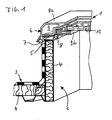
- a smoke and heat exhaust system 1 shown schematically in Figure 1 is located in an opening 2 of a roof 3.
- the roof 3 is provided with an insulation 4, which is also in the interior of the opening 2 of the roof 3.
- the opening 2 in the roof 3 is bounded by a frame 5.
- a flap 6 of the smoke and heat suit 1 is attached to a not shown and therefore not designated hinge hinged.
- the flap 6 of the smoke and heat exhaust system 1 is located on the frame 5.
- sealing elements 7 and 8 are provided, which are located between the frame 5 and a frame 9 which surrounds the flap 6 and corresponds to the frame 5.
- the frame 9 is formed in two parts and consists of a main frame 9a and an auxiliary frame 9b.
- the auxiliary frame 9b receives a disk 10, through which light into the opening 2 of the roof 3 passes.
- the main frame 9a receives the auxiliary frame 9b together with the disk 10.
- FIG. 3 shows the special situation in the special emergency.
- a snow load S is stored on the smoke and heat exhaust system 1 and in its environment and prevents it from opening to the outside.
- the conventional solutions do not allow an opening to the outside, since the movement space of the smoke and heat exhaust system 1 is blocked by snow and ice masses S.
- the flap 6 is already opened in accordance with the invention inside and the snow load S is already slid inward in the region of the released opening, so that the area is shown above the opening 2 without snow load.
- the function of the conventional smoke and heat exhaust systems 1 based on the fact that correspondingly large opening areas in the described type of skylights or other mechanically outwardly opening smoke and heat exhaust flaps by means of control and movement elements moves up and be opened to the outside. The warm or hot smoke and fire gases are thereby discharged into the open air.
- the flaps In the case of larger amounts of snow S on the roof 3 of the building, the flaps must raise and displace overlapping snow masses during the opening process. A small portion of the snow masses will slip off the smoke and heat extraction system through the opening process and fall through the resulting opening into the interior of the room. The larger proportion is compressed at corresponding snow masses during the unfolding process and block the further opening of the smoke and heat exhaust system. It should also be taken into account that the forces to be applied for opening rise sharply, since the transition edges around the opening have ice layers which additionally have to be broken up. The function of the smoke and heat exhaust system is therefore no longer guaranteed when resting large amounts of snow.
- the snow and ice masses support by their own weight, the tendency of the flap 6, to open down.
- various locking and unlocking mechanisms offer.
- a known per se thermal locking and unlocking can be provided.
- additional opening energy may not be required.
- pneumatic, hydraulic, mechanical and / or electromechanical devices Such a solution always ensures a reliable opening to the inside when a predetermined temperature is reached in the room.
- the triggering of the opening can also be done via a known per se smoke detectors or other triggering elements.
- retaining elements ensures that the flap 6 when opening can not fall down into the room. This measure prevents additional injury hazards.
- retaining elements are not the subject of the invention, they may be formed as chains, telescopic rods or the like.
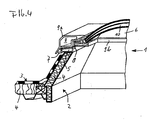
- FIG. 4 shows a further exemplary embodiment in the form of a dome light.
- a smoke and heat exhaust system 1 covers an opening 2 in a roof 3, which is provided with an insulation 4.
- a frame 5 encloses the opening 2 at its upper periphery.
- On the frame 5 is a frame 9 a flap 6, which is open and serves as a smoke and heat exhaust.
- the frame 9 carries a translucent dome 10, which allows an exposure of the room.
- the dome 10 is open by means of the frame 9. It consists of the frame 9 - as in the previous embodiment - consists of two parts, the main frame 9a and the auxiliary frame 9b.
- the flap 6 is moved with the dome 10 by means of the entire frame 9 upwards.
- Serve opening mechanisms as they are well known from the prior art. This is not shown here for this reason and need not be explained in detail.
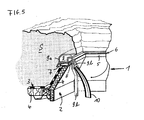
- the frame 9 is formed in two parts and consists essentially of a main frame 9a and a subframe 9b. With the help of the main frame 9a, the flap 6 can be opened to the outside and with the help of the subframe 9b, the flap 6 can be opened inwards towards the room, which is advantageous in the event of a disaster. Due to a high snow load S, the flap 6 with the dome 10 can not be opened to the outside in case of disaster. However, the two-part frame 9 still allows the maintenance of the smoke and heat dissipating function of the smoke and heat exhaust system by the flap 6 with the dome 10 by means of the subframe 9b can be opened inwardly towards the room.
- FIG. 6 shows a smoke and heat exhaust system 1, in which the auxiliary frame 9b is an integral part of the flap 6 in a particularly advantageous manner.
- This embodiment can provide manufacturing advantages.
- the other components correspond mutatis mutandis to the examples described above and are shown as highly schematic in all drawings.
Landscapes
- Engineering & Computer Science (AREA)
- Architecture (AREA)
- Civil Engineering (AREA)
- Structural Engineering (AREA)
- Mechanical Engineering (AREA)
- Combustion & Propulsion (AREA)
- Chemical & Material Sciences (AREA)
- General Engineering & Computer Science (AREA)
- Building Environments (AREA)
- Power-Operated Mechanisms For Wings (AREA)
- Door And Window Frames Mounted To Openings (AREA)
- Roof Covering Using Slabs Or Stiff Sheets (AREA)
- Specific Sealing Or Ventilating Devices For Doors And Windows (AREA)
Abstract
Description
- Die vorliegende Erfindung bezieht sich auf eine Vorrichtung zum Rauch- und Wärmeabzug sowie zum Be-und Entlüften von Räumen.
- Aus der Praxis sind Vorrichtungen bekannt, bei denen große und schwere Klappen z.B. mittels Zahnstangenantrieben, parallel zur jeweiligen Dachöffnung angehoben werden können.
- Bekannt sind derartige Vorrichtungen beispielsweise auch als Lichtelemente mit einer eine Dachöffnung umgrenzenden Zarge an welcher mittels Scharnier eine Klappe schwenkbar gelagert und an der gegenüber liegenden Zargenseite verriegelbar angeordnet ist. Die Öffnung der Klappe erfolgt mittels Hubelement nach außen.
- Solche Lichtelemente können z.B. Lichtkuppeln oder in Dachoberlichtbändern integrierte Lichtklappen sein, die in Öffnungen von flachen oder leicht geneigten Dächern eingebaut sind. Derartige Klappen dienen allgemein dem erforderlichen und vorgeschriebenen Rauch- und Wärmeabzug, vor allem im Katastrophenfall, bei dem sie durch Fernauslösung entweder mit einem selbsttätigen Thermo-Auslöser oder von Hand mit Hilfe eines Hubelements aufgeklappt werden.
- In der
DE 33 38 092 C3 ist der spezielle Antrieb und der Hebelmechanismus zum Öffnen einer derartigen Klappe nach außen gezeigt und beschrieben. Die Klappe kann demnach über einen Winkel von bis zu 170° geöffnet werden. - Aus der
DE 297 06 030 U1 ist eine Rauch- und Wärmeabzugsanlage bekannt, die an der oberen Stelle eines Treppenhauses eine Lüftungsöffnung aufweist. Die Lüftungsöffnung ist mittels einer schwenkbaren Klappe verschlossen. Als Öffnungsmittel dient ein Zahnstangenmotor, dessen Zahnstange die Klappe nach außen hin öffnet. Über die geöffnete Klappe kann Rauch oder warme Luft aus dem Treppenhaus in die Umgebung entweichen. - Eine weitere Vorrichtung zum Rauch- und Wärmeabzug ist aus der
DE 94 11 812 U1 bekannt. Dort wird u. a. auf die Problematik der Aerodynamik bei derartigen Abzügen eingegangen und vorgeschlagen, dass zur Entlüftung im Firstbereich eines Gebäudes auf jeder Firstseite eine schwenkbare Klappe angeordnet ist, wobei die Klappen in Längsrichtung des Firstes zueinander versetzt sind. Die Klappen öffnen sich auch bei diesem Vorschlag nach außen. - Die aufgeführten Beispiele sollen die Vielfalt der Möglichkeiten darstellen, dabei ließe sich die Liste der technischen Lösungen ohne weiteres verlängern.
- Die zitierten Rauch- und Wärmeabzugsanlagen kurz RWA genannt können jedoch bei bestimmten Wetter-Verhältnissen ihre Funktionsfähigkeit verlieren. Wenn - wie im Winter 2005/2006 - die Schneemassen auf den Dächern von Gebäuden ungewöhnlich hoch sind, werden die RWA vom Schnee überdeckt. Die mechanischen Öffnungseinrichtungen sind nicht mehr in der Lage, die nach oben und außen öffnenden Klappen gegenüber der Schneelast zu bewegen. Im Brandfall hat dies zur Folge, dass die RWA wegen der fehlenden Öffnungsmöglichkeit den Rauch und die Wärme nicht mehr ins Freie ableiten können. Eine Verrauchung der Räume, bzw. der Gebäude ist die Folge und eine Rettung oder ein kontrollierter Löschangriff sind nicht mehr möglich. Darüber hinaus steigt wegen der fehlenden Wärmeableitung die Temperatur im brennenden Gebäude schneller an, als bei der Konzeption des Baus berücksichtigt wurde, so dass negative Auswirkungen auf die Statik der Tragwerke unvermeidbar sind und zum Versagen der Tragwerke führen können.
- Die bekannten RWA können demnach bei gewissen Wetter-Verhältnissen ihre Funktion nicht mehr gewährleisten, so dass in diesen Fällen hohe Personen- und Sachschäden die Folge sein können.
- Der vorliegenden Erfindung liegt daher die Aufgabe zu Grunde, eine Vorrichtung zum Be- und Entlüften von Räumen zu schaffen, die die Nachteile des Standes der Technik nicht aufweist, und die auch bei großen Schneelasten auf ihren Einbauorten den Abzug von Rauch und Wärme gewährleistet beziehungsweise ermöglicht.
- Diese Aufgabe wird mit einer Vorrichtung gelöst, welche die Merkmale des Anspruchs 1 oder 12 aufweist.
- Die Vorteile der erfindungsgemäßen Vorrichtung liegen in der hohen Betriebssicherheit und in der Vermeidung oder zumindest Verminderung hoher Personen- und Sachschäden im Brandfall.
- Weitere Vorteile sind den abhängigen Ansprüchen zu entnehmen und im Folgenden kurz aufgelistet:
- Vorteilhaft ist eine Vorrichtung zum Rauch- und Wärmeabzug sowie zum Be-und Entlüften von Räumen, bei der eine Klappe, an einer eine Dachöffnung umgrenzenden Zarge derart gelagert ist, dass die Dachöffnung mit Hilfe der Klappe zu öffnen und zu schließen ist, wobei die Zarge und die Klappe so ausgebildet sind, dass zumindest eine Öffnung der Klappe nach innen zum Raum hin möglich ist, wobei es besonders vorteilhaft ist, wenn die Klappe parallel zur Zarge nach innen zum Raum hin zu öffnen ist.
- Des weiteren ist eine Vorrichtung zum Rauch- und Wärmeabzug sowie zum Be-und Entlüften von Räumen von Vorteil, wenn eine Klappe an einer eine Dachöffnung umgrenzenden Zarge mittels wenigstens einem Scharnier schwenkbar gelagert und an der dem Scharnier gegen-überliegenden Seite verriegelbar ausgebildet ist, und wenn das Scharnier so ausgebildet ist, dass es zumindest eine Öffnung der Klappe nach innen zum Raum hin ermöglicht.
- Darüber hinaus ist es von Vorteil, wenn die Klappe von einem wenigstens zweigeteilten Rahmen derart umsäumt ist, wobei ein Haupt-Rahmen und ein Hilfs-Rahmen gebildet wird, so dass sich die Klappe mittels des Hilfs-Rahmens nach innen zum Raum hin öffnen lässt.
- Vorteilhaft ist es außerdem, wenn die Klappe von einem wenigstens zweigeteilten Rahmen derart umsäumt ist, dass ein Haupt-Rahmen und ein Hilfs-Rahmen gebildet wird, und wenn sich die Klappe mittels des Haupt-Rahmens nach außen ins Freie und/oder mittels des Hilfs-Rahmens nach innen zum Raum hin öffnen lässt.
- Ferner ist eine Vorrichtung vorteilhaft, bei der Hilfs-Rahmen integrierter Bestandteil der Klappe ist.
- Eine Vorrichtung der genannten Art ist dann besonders vorteilhaft, wenn die Ver- und,Entriegelung der Klappe mittels temperaturempfindlichem Element erfolgt.
- Außerdem kann es vorteilhaft sein, die Ver- und Entriegelung der Klappe mittels rauchempfindlichem Element zu steuern.
- Günstig ist eine Klappe, wenn sie eine Lichtdurchlässige Scheibe oder eine Lichtdurchlässige Kuppel aufweist.
- Eine Vorrichtung ist auch dann vorteilhaft, wenn die Klappe integrierter Bestandteil eines Lichtbandes ist.
- Die Klappe kann in vorteilhafter Ausgestaltung auch integrierter Bestandteil einer mehrklappigen Rauchabzugseinrichtung oder integrierter Bestandteil einer Licht- und/oder Rauchkuppel sein.
- Eine Vorrichtung ist dann besonders vorteilhaft, wenn der Hilfs-Rahmen integrierter Bestandteil einer Licht- und/oder Rauchkuppel ist.
- Mit Hilfe von Ausführungsbeispielen wird die Erfindung anhand der Zeichnungen noch näher erläutert.
- Es zeigt
- Figur 1 eine Rauch- und Wärmeabzugsanlage im perspektivischen Teilschnitt;
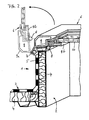
- Figur 2 die Rauch- und Wärmeabzugsanlage aus Figur 1 mit nach außen geöffnetem Rahmen;
- Figur 3 die Rauch- und Wärmeabzugsanlage aus Figur 1 mit unter Schneelast nach innen geöffnetem Rahmen;
- Figur 4 eine Rauch- und Wärmeabzugsanlage in Form einer Lichtkuppel;
- Figur 5 die Rauch- und Wärmeabzugsanlage gemäß Figur 4 unter Schneelast nach innen geöffnet und
- Figur 6 eine weitere Variante einer Rauch- und Wärmeabzugsanlage.
- Eine in Figur 1 schematisch dargestellte Rauch- und Wärmeabzugsanlage 1 befindet sich in einer Öffnung 2 eines Daches 3. Das Dach 3 ist mit einer Isolierung 4 versehen, welche sich auch in den Innenbereichen der Öffnung 2 des Daches 3 befindet. Die Öffnung 2 im Dach 3 wird von einer Zarge 5 umgrenzt. An der Zarge 5 ist an einem nicht dargestellten und deshalb auch nicht bezeichneten Scharnier eine Klappe 6 der Rauch- und Wärmeanzugsanlage 1 klappbar befestigt. Im dargestellten Bereich liegt die Klappe 6 der Rauch- und Wärmeabzugsanlage 1 auf der Zarge 5 auf. Zur Abdichtung der Klappe 6 gegenüber der Zarge 5 sind Dichtelemente 7 und 8 vorgesehen, die sich zwischen der Zarge 5 und einem Rahmen 9 befinden, welcher die Klappe 6 umgibt und mit der Zarge 5 korrespondiert. Der Rahmen 9 ist' zweiteilig ausgebildet und besteht aus einem Haupt-Rahmen 9a und einem Hilfs-Rahmen 9b. Der Hilfs-Rahmen 9b nimmt eine Scheibe 10 auf, durch welche Licht in die Öffnung 2 des Daches 3 gelangt. Der Haupt-Rahmen 9a nimmt den Hilfs-Rahmen 9b zusammen mit der Scheibe 10 auf.
- Im Normalfall - welcher in Figur 2 dargestellt ist - kann die Klappe 6 mit Hilfe ihres Rahmens 9 und des nicht dargestellten Scharniers komplett, d.h. zusammen mit dem Haupt-Rahmen 9a, dem Hilfs-Rahmen 9b und der Scheibe 10 nach außen hin geöffnet werden und erlaubt so das Lüften des darunter befindlichen Raums. Diese Normal-Funktion ist in der Figur 2 durch eine aufgestellte Klappe 6 gezeigt, wobei die Variante mit aufgeklappter Klappe 6 in dünneren Linien dargestellt ist. Die Bezugszeichen für gleiche, gleichartige oder gleichwirkende Elemente sind die gleichen wie in Figur 1, was auch bei der Beschreibung der weiteren Figuren gilt. Die in dünneren Linien dargestellte Variante stellt insofern den Normalfall dar, als dieser sowohl das normale Öffnen nach außen hin zum Zwecke der normalen Lüftung umfasst, als auch das Öffnen im Notfall, wenn keine Schnee- und/oder Eislasten das Öffnen nach außen verhindern.
- In Figur 3 ist die besondere Situation im speziellen Notfall gezeigt. Eine Schneelast S lagert auf der Rauch- und Wärmeabzugsanlage 1 sowie in deren Umfeld und verhindert das Öffnen nach außen. Die herkömmlichen Lösungen lassen ein Öffnen nach außen nicht zu, da der Bewegungsraum der Rauch- und Wärmeabzugsanlage 1 durch Schnee- und Eismassen S blockiert ist. In der Darstellung von Figur 3 ist allerdings die Klappe 6 bereits in erfindungsgemäßer Weise nach innen geöffnet und die Schneelast S ist im Bereich der freigegeben Öffnung bereits nach innen abgerutscht, so dass der Bereich über der Öffnung 2 ohne Schneelast dargestellt ist.
- Die Funktion der herkömmlichen Rauch- und Wärmeabzugsanlagen 1 beruht darauf, dass entsprechend grosse Öffnungsflächen in der beschriebenen Art von Lichtkuppeln oder auch anderen mechanisch nach außen öffnenden Rauch- und Wärmeabzugsklappen mittels Steuer- und Bewegungselementen nach oben bewegt und ins Freie geöffnet werden. Die warmen bzw. heißen Rauch- und Brandgase werden dadurch ins Freie abgeleitet. Im Falle von größeren Schneemassen S auf dem Dach 3 des Gebäudes müssen die Klappen beim Öffnungsvorgang aufliegende Schneemassen anheben und verdrängen. Ein geringer Teil der Schneemassen wird durch den Öffnungsvorgang von der Rauch- und Wärmeabzugsanlage abrutschen und durch die entstehende Öffnung in das Innere des Raumes fallen. Der größere Anteil wird bei entsprechenden Schneemassen beim Aufklappvorgang verdichtet und die weitere Öffnung der Rauch- und Wärmeabzugsanlage blockieren. Zu berücksichtigen ist auch noch, dass die zum Öffnen aufzubringenden Kräfte stark ansteigen, da die Übergangskanten rund um die Öffnung Eisschichten aufweisen, welche zusätzlich aufgebrochen werden müssen. Die Funktion der Rauch- und Wärmeabzugsanlage ist demgemäß beim Aufliegen großer Schneemassen nicht mehr gewährleistet.
- Hier setzt die Erfindung ein. Durch die besondere Ausbildung des Rahmens 9 mit einem Haupt-Rahmen 9a und einem Hilfs-Rahmen 9b wird eine Öffnung der Klappe 6 nach innen in den Raum hinein ermöglicht. Dazu verbleibt der Haupt-Rahmen 9a in seiner Lage auf der Zarge 5, aber der Hilfs-Rahmen 9b wird nach innen geklappt und gibt eine Öffnung 2 zum Abzug der Wärme und der Rauchgase frei. Dies kann mit Hilfe eines nicht dargestellten und daher nicht näher bezeichneten Scharniers geschehen, wobei die Ausbildung des Scharniers nicht Gegenstand der Erfindung sein soll. Diese Lösung mit einem Doppelrahmen 9a, 9b ermöglicht es, bei den erfindungsgemäßen Rauch- und Wärmeabzugsanlagen 1 eine Klappe 6 auch unter aufliegender Last zu öffnen, und zwar nach innen zum Raum hin. Schnee und Eis fallen dann zwar im den Innenraum, aber der Rauch- und Wärmeabzug kann ungehindert erfolgen, weil die entsprechende Öffnung 2 zum Rauch- und Wärmeabzug freigegeben ist.
- Die durch das Öffnen der Klappe 6 nach innen herunterfallenden Schnee- und Eisreste stellen zwar eine gewisse potentielle Gefahr für zufällig darunter vorbeilaufende Flüchtende und Hilfskräfte dar, in Bezug auf die Gefahren eines nicht funktionierenden Rauch- und Wärmeabzugs sind diese Gefahren allerdings zu vernachlässigen.
- Die Schnee- und Eismassen unterstützen durch ihr Eigengewicht die Tendenz der Klappe 6, sich nach unten zu öffnen. Für die Klappe 6 bieten sich verschiedene Ver- und Entriegelungsmechanismen an. Beispielsweise kann eine an sich bekannte thermische Ver- und Entriegelung vorgesehen sein. In diesem Fall kann durch die Abstimmung mit dem Eigengewicht der Klappe 6 zusätzliche Öffnungsenergie nicht erforderlich sein. Dennoch kann es vorteilhaft sein, die Absenkung der Klappe durch pneumatische, hydraulische, mechanische und/oder elektromechanische Geräte zu unterstützen. Eine derartige Lösung gewährleistet immer eine zuverlässige Öffnung nach innen, wenn im Raum eine vorbestimmte Temperatur erreicht ist. Die Auslösung der Öffnung kann aber auch über einen an sich bekannten Rauchmelder oder andere Auslöseelemente erfolgen.
- Durch an sich ebenfalls bekannte Halteelemente wird sicher gestellt, dass die Klappe 6 beim Öffnen nicht nach unten in den Raum fallen kann. Diese Maßnahme verhindert zusätzliche Verletzungsgefahren. Derartige Halteelemente sind jedoch nicht Gegenstand der Erfindung, sie können als Ketten, Teleskopstäbe oder dergleichen ausgebildet sein. (Scharnier)
- In Figur 4 wird ein weiteres Ausführungsbeispiel in Form einer Lichtkuppel dargestellt. Ein Rauch- und Wärmeabzugsanlage 1 deckt eine Öffnung 2 in einem Dach 3 ab, welches mit einer Isolierung 4 versehen ist. Eine Zarge 5 umschließt die Öffnung 2 an ihren oberen Umfang. Auf der Zarge 5 liegt ein Rahmen 9 einer Klappe 6 auf, die zu öffnen ist und als Rauch- und Wärmeabzug dient. Ferner kann mittels der zu öffnenden Klappe 6 der darunter befindliche Raum belüftet werden, wobei der Rahmen 9 eine lichtdurchlässige Kuppel 10 trägt, welche eine Belichtung des Raumes ermöglicht. Die Kuppel 10 ist mittels des Rahmens 9 zu öffnen. Dabei besteht der Rahmen 9 - wie im vorherigen Ausführungsbeispiel - aus zwei Teilen, dem Haupt-Rahmen 9a und dem Hilfs-Rahmen 9b. Bei der normalen Belüftung des Raumes wird die Klappe 6 mit der Kuppel 10 mit Hilfe des gesamten Rahmens 9 nach oben bewegt. Dazu dienen Öffnungsmechanismen, wie sie aus dem Stand der Technik hinreichend bekannt sind. Dies ist aus diesem Grund hier auch nicht gezeigt und braucht auch nicht näher erläutert zu werden.
- In Figur 5 wird eine andere Situation gezeigt. Der Rahmen 9 ist zweiteilig ausgebildet und besteht im Wesentlichen aus einem Hauptrahmen 9a und einem Hilfsrahmen 9b. Mit Hilfe des Hauptrahmens 9a lässt sich die Klappe 6 nach außen öffnen und mit Hilfe des Hilfsrahmens 9b lässt sich die Klappe 6 nach innen zum Raum hin öffnen, was im Katastrophenfall vorteilhaft ist. Aufgrund einer hohen Schneelast S kann im Katastrophenfall die Klappe 6 mit der Kuppel 10 nicht nach außen hin geöffnet werden. Der zweiteilige Rahmen 9 ermöglicht aber dennoch die Aufrechterhaltung der Rauch und Wärme ableitenden Funktion der Rauch- und Wärmeabzugsanlage, indem die Klappe 6 mit der Kuppel 10 mit Hilfe des Hilfsrahmens 9b nach innen zum Raum hin geöffnet werden kann. Bei der Darstellung wurde berücksichtigt, dass sich die Klappe 6 bereits nach innen zum Raum hin geöffnet hat, so dass in dieser Situation oberhalb der Klappe 6 keine Schneelast S mehr befindet. Diese ist bereits in den darunter befindlichen Raum abgerutscht. Zu diesem Ausführungsbeispiel gelten uneingeschränkt die Aussagen, die bereits zum vorstehenden Ausführungsbeispiel gemäß der Figuren 1 bis 3 gemacht wurden.
- In Figur 6 ist eine Rauch- und Wärmeabzugsanlage 1 dargestellt, bei der in besonders vorteilhafter Weise der Hilfs-Rahmen 9b integraler Bestandteil der Klappe 6 ist. Dieses Ausführungsbeispiel kann fertigungstechnische Vorteile bieten. Die sonstigen Bauelemente entsprechen sinngemäß den vorbeschriebenen Beispielen und sind wie diese in allen Zeichnungen stark schematisiert dargestellt.
-
- 1
- Rauch- und Wärmeabzugsanlage
- 2
- Öffnung
- 3
- Dach
- 4
- Isolierung
- 5
- Zarge
- 6
- Klappe
- 7
- Dichtung
- 8
- Dichtung
- 9
- Rahmen
- 9a
- Hauptrahmen
- 9b
- Hilfsrahmen
- 10
- Scheibe, Lichtkuppel
Claims (14)
- Vorrichtung zum Rauch- und Wärmeabzug sowie zum Be-und Entlüften von Räumen, bei der eine Klappe, an einer eine Dachöffnung umgrenzenden Zarge mittels wenigstens einem Scharnier schwenkbar gelagert und an der dem Scharnier gegen-überliegenden Seite verriegelbar ausgebildet ist, dadurch gekennzeichnet, dass das Scharnier so ausgebildet ist, dass es zumindest eine Öffnung der Klappe (6) nach innen zum Raum hin ermöglicht.
- Vorrichtung nach Anspruch 1, dadurch gekennzeichnet, dass die Klappe (6) von einem wenigstens zweigeteilten Rahmen (9) derart umsäumt ist, dass ein Haupt-Rahmen (9a) und ein Hilfs-Rahmen (9b) gebildet wird, wobei das wenigstens eine Scharnier so ausgebildet und am Rahmen (9) angeordnet ist, dass sich die Klappe (6) mittels des Hilfs-Rahmens (9b) nach innen zum Raum hin öffnen lässt.
- Vorrichtung nach Anspruch 1, dadurch gekennzeichnet, dass die Klappe (6) von einem wenigstens zweigeteilten Rahmen (9) derart umsäumt ist, dass ein Haupt-Rahmen (9a) und ein Hilfs-Rahmen (9b) gebildet wird, wobei das wenigstens eine Scharnier so ausgebildet und am Rahmen (9) angeordnet ist, dass sich die Klappe (6) mittels des Haupt-Rahmens (9a) nach außen ins Freie und/oder mittels des Hilfs-Rahmens (9b) nach innen zum Raum hin öffnen lässt.
- Vorrichtung nach einem der vorstehenden Ansprüche, dadurch gekennzeichnet, dass der Hilfs-Rahmen (9b) integrierter Bestandteil der Klappe (6) ist.
- Vorrichtung nach einem der vorstehenden Ansprüche, dadurch gekennzeichnet, dass die Ver- und Entriegelung der Klappe (6) mittels temperaturempfindlichem Element erfolgt.
- Vorrichtung nach einem der vorstehenden Ansprüche, dadurch gekennzeichnet, dass die Ver- und Entriegelung der Klappe (6) mittels rauchempfindlichem Element erfolgt.
- Vorrichtung nach Anspruch 1, dadurch gekennzeichnet, dass die Klappe (6) eine Lichtdurchlässige Scheibe (10) aufweist.
- Vorrichtung nach Anspruch 1, dadurch gekennzeichnet, dass die Klappe (6) eine Lichtdurchlässige Kuppel (10) aufweist.
- Vorrichtung nach Anspruch 1, dadurch gekennzeichnet, dass die Klappe (6) integrierter Bestandteil eines Lichtbandes ist.
- Vorrichtung nach Anspruch 1, dadurch gekennzeichnet, dass die Klappe (6) integrierter Bestandteil einer mehrklappigen Rauchabzugseinrichtung ist.
- Vorrichtung nach Anspruch 1, dadurch gekennzeichnet, dass die Klappe (6) integrierter Bestandteil einer Licht- und/oder Rauchkuppel (10) ist.
- Vorrichtung nach Anspruch 1, dadurch gekennzeichnet, dass der Hilfs-Rahmen (9b) integrierter Bestandteil einer Licht- und/oder Rauchkuppel (10) ist.
- Vorrichtung zum Rauch- und Wärmeabzug sowie zum Be-und Entlüften von Räumen, bei der eine Klappe, an einer eine Dachöffnung umgrenzenden Zarge derart gelagert ist, dass die Dachöffnung mit Hilfe der Klappe zu öffnen und zu schließen ist, dadurch gekennzeichnet, dass die Zarge und die Klappe so ausgebildet sind, dass zumindest eine Öffnung der Klappe nach innen zum Raum hin möglich ist.
- Vorrichtung nach Anspruch 12, dadurch gekennzeichnet, dass die Klappe parallel zur Zarge nach innen zum Raum hin zu öffnen ist.
Applications Claiming Priority (1)
| Application Number | Priority Date | Filing Date | Title |
|---|---|---|---|
| DE102006038009A DE102006038009B4 (de) | 2006-08-14 | 2006-08-14 | Vorrichtung zum Rauch- und Wärmeabzug von Räumen |
Publications (3)
| Publication Number | Publication Date |
|---|---|
| EP1898020A2 true EP1898020A2 (de) | 2008-03-12 |
| EP1898020A3 EP1898020A3 (de) | 2010-06-02 |
| EP1898020B1 EP1898020B1 (de) | 2011-10-19 |
Family
ID=38954721
Family Applications (1)
| Application Number | Title | Priority Date | Filing Date |
|---|---|---|---|
| EP07015865A Not-in-force EP1898020B1 (de) | 2006-08-14 | 2007-08-13 | Vorrichtung zum Rauch- und Wärmeabzug von Räumen |
Country Status (3)
| Country | Link |
|---|---|
| EP (1) | EP1898020B1 (de) |
| AT (1) | ATE529585T1 (de) |
| DE (1) | DE102006038009B4 (de) |
Citations (5)
| Publication number | Priority date | Publication date | Assignee | Title |
|---|---|---|---|---|
| DE2516098A1 (de) | 1974-04-23 | 1975-11-13 | Svenska Icopalfabriken Ab | Entlueftungseinrichtung, insbesondere rauch- und brandentlueftungseinrichtung |
| DE3345185A1 (de) | 1983-12-14 | 1985-06-27 | Resopal Werk H. Römmler GmbH, 6800 Mannheim | Dachflaechenfenster |
| DE3338092C2 (de) | 1983-10-20 | 1994-08-04 | Fa. J. Eberspaecher, 7300 Esslingen, De | |
| DE9411812U1 (de) | 1994-07-21 | 1994-09-15 | E.M.B. Metallbau und Brandschutztechnik GmbH, 46446 Emmerich | Doppelklappenlüfter als Klappenanordnung im Firstbereich eines Daches oder eines Satteloberlichtbandes |
| DE29706030U1 (de) | 1997-01-08 | 1997-08-21 | Engelhardt, Walter, 39179 Ebendorf | Rauch- und Wärmeabzugsanlage |
Family Cites Families (9)
| Publication number | Priority date | Publication date | Assignee | Title |
|---|---|---|---|---|
| DE2634565A1 (de) * | 1976-07-31 | 1978-02-02 | Iva Ingenieurgesellschaft Mbh | Einrichtung zum oeffnen einer kombinierten lueftungs-rauch- und waermeabzugsklappe |
| DE2914475A1 (de) * | 1979-04-10 | 1980-10-30 | Eberspaecher J | Einrichtung zur entlueftung und zum rauch- und waermeabzug an gebaeuden |
| FR2481353A1 (fr) * | 1980-04-29 | 1981-10-30 | Yves Fourtane | Bloc de fixation d'un vantail de porte va-et-vient |
| JPS5761168A (en) * | 1980-09-30 | 1982-04-13 | Nippon Air Brake Co | Skylight operator |
| DD223491A1 (de) * | 1984-04-13 | 1985-06-12 | Berlin Baumechanisierung | Universaler einsatzfluegel fuer erdgeschoss- und grossverglasungen |
| US4663905A (en) * | 1986-09-02 | 1987-05-12 | Kenneth Schulz | Skylight assembly |
| DE19534614A1 (de) * | 1995-09-18 | 1997-03-20 | Winkhaus Fa August | Sicherheitssperreinrichtung für eine Betätigungsvorrichtung zum Öffnen und Schließen eines Flügels eines Fensters, einer Tür, einer Lüftungsklappe oder dergleichen |
| DE102004016458B3 (de) * | 2004-03-31 | 2005-03-03 | Wolfgang Stief | Antriebsvorrichtung für einen Öffnungsmechanismus zum Betätigen von Türen, Fenstern oder dergleichen |
| DE202005012111U1 (de) * | 2005-08-02 | 2005-12-15 | PARAT Automotive Schönenbach GmbH + Co. KG | Blendrahmen |
-
2006
- 2006-08-14 DE DE102006038009A patent/DE102006038009B4/de not_active Expired - Fee Related
-
2007
- 2007-08-13 EP EP07015865A patent/EP1898020B1/de not_active Not-in-force
- 2007-08-13 AT AT07015865T patent/ATE529585T1/de active
Patent Citations (5)
| Publication number | Priority date | Publication date | Assignee | Title |
|---|---|---|---|---|
| DE2516098A1 (de) | 1974-04-23 | 1975-11-13 | Svenska Icopalfabriken Ab | Entlueftungseinrichtung, insbesondere rauch- und brandentlueftungseinrichtung |
| DE3338092C2 (de) | 1983-10-20 | 1994-08-04 | Fa. J. Eberspaecher, 7300 Esslingen, De | |
| DE3345185A1 (de) | 1983-12-14 | 1985-06-27 | Resopal Werk H. Römmler GmbH, 6800 Mannheim | Dachflaechenfenster |
| DE9411812U1 (de) | 1994-07-21 | 1994-09-15 | E.M.B. Metallbau und Brandschutztechnik GmbH, 46446 Emmerich | Doppelklappenlüfter als Klappenanordnung im Firstbereich eines Daches oder eines Satteloberlichtbandes |
| DE29706030U1 (de) | 1997-01-08 | 1997-08-21 | Engelhardt, Walter, 39179 Ebendorf | Rauch- und Wärmeabzugsanlage |
Also Published As
| Publication number | Publication date |
|---|---|
| EP1898020A3 (de) | 2010-06-02 |
| EP1898020B1 (de) | 2011-10-19 |
| DE102006038009B4 (de) | 2011-04-28 |
| ATE529585T1 (de) | 2011-11-15 |
| DE102006038009A1 (de) | 2008-02-21 |
Similar Documents
| Publication | Publication Date | Title |
|---|---|---|
| DE2239438C3 (de) | Zweischaliges Fassadenelement für Gebäude | |
| DE102014115452B4 (de) | Verschlussanordnung an einer Lüftungsöffnung in einer Decke eines Aufzugsschachtes | |
| EP1703066A2 (de) | Feuer- und Rauchschutztür | |
| EP3643849B1 (de) | Dach-, decken- oder fassadenöffnung | |
| DE102007010261B4 (de) | Vorrichtung zum selbsttätigen Schließen eines Fensterkippflügels zum Schutz vor eindringendem Wasser | |
| DE9409176U1 (de) | Rauchschutzeinrichtung für einen geschlossenen Treppenraum | |
| EP1898020B1 (de) | Vorrichtung zum Rauch- und Wärmeabzug von Räumen | |
| AT521543B1 (de) | Schutzvorrichtung für Roll- und Sektionaltore | |
| EP3853425B1 (de) | Mehrgeschossiges gebäude mit sicheren zugangs- und fluchtwegen im brandfall | |
| DE202006012471U1 (de) | Vorrichtung zu Rauch- und Wärmeabzug von Räumen | |
| EP4423341A1 (de) | Folientunnel für fahrbahnen | |
| DE202020003790U1 (de) | Dachfensteranordnung | |
| EP4237649B1 (de) | Schliessung mit ventilvorrichtung | |
| EP0656451A1 (de) | Lüftungsvorrichtung für Gebäudedächer | |
| DE29821814U1 (de) | Rauchabzug mit Insektenschutz | |
| AT522398B1 (de) | Klappschott | |
| DE202012100137U1 (de) | Satteldachkonstruktion | |
| EP3587696B1 (de) | Öffenbare raumabschlusseinrichtung sowie verfahren zu deren öffnung | |
| DE2458497A1 (de) | Schalt- oder umspannstation | |
| DE29614941U1 (de) | Brandschutzeinrichtung für eine Lüftungsrohrleitung | |
| DE2438547A1 (de) | Anordnung zum oeffnen von rauch- und waermeabzugseinrichtungen | |
| DE2150453A1 (de) | Arbeitsbuehne zum durchfuehren von arbeiten an hochbauten | |
| DE102005040824B4 (de) | Dachgaupe | |
| DE202009012206U1 (de) | Dach für eine Konstruktion im Innenbereich eines Gebäudes | |
| DE2612453A1 (de) | Rauch- und waermeabzugshaube |
Legal Events
| Date | Code | Title | Description |
|---|---|---|---|
| PUAI | Public reference made under article 153(3) epc to a published international application that has entered the european phase |
Free format text: ORIGINAL CODE: 0009012 |
|
| AK | Designated contracting states |
Kind code of ref document: A2 Designated state(s): AT BE BG CH CY CZ DE DK EE ES FI FR GB GR HU IE IS IT LI LT LU LV MC MT NL PL PT RO SE SI SK TR |
|
| AX | Request for extension of the european patent |
Extension state: AL BA HR MK YU |
|
| PUAL | Search report despatched |
Free format text: ORIGINAL CODE: 0009013 |
|
| AK | Designated contracting states |
Kind code of ref document: A3 Designated state(s): AT BE BG CH CY CZ DE DK EE ES FI FR GB GR HU IE IS IT LI LT LU LV MC MT NL PL PT RO SE SI SK TR |
|
| AX | Request for extension of the european patent |
Extension state: AL BA HR MK RS |
|
| 17P | Request for examination filed |
Effective date: 20101129 |
|
| AKX | Designation fees paid |
Designated state(s): AT BE BG CH CY CZ DE DK EE ES FI FR GB GR HU IE IS IT LI LT LU LV MC MT NL PL PT RO SE SI SK TR |
|
| GRAP | Despatch of communication of intention to grant a patent |
Free format text: ORIGINAL CODE: EPIDOSNIGR1 |
|
| RIC1 | Information provided on ipc code assigned before grant |
Ipc: E04D 13/03 20060101AFI20110315BHEP Ipc: F24F 7/02 20060101ALI20110315BHEP |
|
| GRAS | Grant fee paid |
Free format text: ORIGINAL CODE: EPIDOSNIGR3 |
|
| GRAA | (expected) grant |
Free format text: ORIGINAL CODE: 0009210 |
|
| AK | Designated contracting states |
Kind code of ref document: B1 Designated state(s): AT BE BG CH CY CZ DE DK EE ES FI FR GB GR HU IE IS IT LI LT LU LV MC MT NL PL PT RO SE SI SK TR |
|
| REG | Reference to a national code |
Ref country code: GB Ref legal event code: FG4D Free format text: NOT ENGLISH |
|
| REG | Reference to a national code |
Ref country code: CH Ref legal event code: EP |
|
| REG | Reference to a national code |
Ref country code: IE Ref legal event code: FG4D |
|
| REG | Reference to a national code |
Ref country code: DE Ref legal event code: R096 Ref document number: 502007008406 Country of ref document: DE Effective date: 20111215 |
|
| REG | Reference to a national code |
Ref country code: NL Ref legal event code: VDEP Effective date: 20111019 |
|
| LTIE | Lt: invalidation of european patent or patent extension |
Effective date: 20111019 |
|
| PG25 | Lapsed in a contracting state [announced via postgrant information from national office to epo] |
Ref country code: LT Free format text: LAPSE BECAUSE OF FAILURE TO SUBMIT A TRANSLATION OF THE DESCRIPTION OR TO PAY THE FEE WITHIN THE PRESCRIBED TIME-LIMIT Effective date: 20111019 Ref country code: IS Free format text: LAPSE BECAUSE OF FAILURE TO SUBMIT A TRANSLATION OF THE DESCRIPTION OR TO PAY THE FEE WITHIN THE PRESCRIBED TIME-LIMIT Effective date: 20120219 |
|
| REG | Reference to a national code |
Ref country code: IE Ref legal event code: FD4D |
|
| PG25 | Lapsed in a contracting state [announced via postgrant information from national office to epo] |
Ref country code: LV Free format text: LAPSE BECAUSE OF FAILURE TO SUBMIT A TRANSLATION OF THE DESCRIPTION OR TO PAY THE FEE WITHIN THE PRESCRIBED TIME-LIMIT Effective date: 20111019 Ref country code: SI Free format text: LAPSE BECAUSE OF FAILURE TO SUBMIT A TRANSLATION OF THE DESCRIPTION OR TO PAY THE FEE WITHIN THE PRESCRIBED TIME-LIMIT Effective date: 20111019 Ref country code: GR Free format text: LAPSE BECAUSE OF FAILURE TO SUBMIT A TRANSLATION OF THE DESCRIPTION OR TO PAY THE FEE WITHIN THE PRESCRIBED TIME-LIMIT Effective date: 20120120 Ref country code: SE Free format text: LAPSE BECAUSE OF FAILURE TO SUBMIT A TRANSLATION OF THE DESCRIPTION OR TO PAY THE FEE WITHIN THE PRESCRIBED TIME-LIMIT Effective date: 20111019 Ref country code: PT Free format text: LAPSE BECAUSE OF FAILURE TO SUBMIT A TRANSLATION OF THE DESCRIPTION OR TO PAY THE FEE WITHIN THE PRESCRIBED TIME-LIMIT Effective date: 20120220 Ref country code: NL Free format text: LAPSE BECAUSE OF FAILURE TO SUBMIT A TRANSLATION OF THE DESCRIPTION OR TO PAY THE FEE WITHIN THE PRESCRIBED TIME-LIMIT Effective date: 20111019 |
|
| PG25 | Lapsed in a contracting state [announced via postgrant information from national office to epo] |
Ref country code: CY Free format text: LAPSE BECAUSE OF FAILURE TO SUBMIT A TRANSLATION OF THE DESCRIPTION OR TO PAY THE FEE WITHIN THE PRESCRIBED TIME-LIMIT Effective date: 20111019 |
|
| PG25 | Lapsed in a contracting state [announced via postgrant information from national office to epo] |
Ref country code: DK Free format text: LAPSE BECAUSE OF FAILURE TO SUBMIT A TRANSLATION OF THE DESCRIPTION OR TO PAY THE FEE WITHIN THE PRESCRIBED TIME-LIMIT Effective date: 20111019 Ref country code: CZ Free format text: LAPSE BECAUSE OF FAILURE TO SUBMIT A TRANSLATION OF THE DESCRIPTION OR TO PAY THE FEE WITHIN THE PRESCRIBED TIME-LIMIT Effective date: 20111019 Ref country code: BG Free format text: LAPSE BECAUSE OF FAILURE TO SUBMIT A TRANSLATION OF THE DESCRIPTION OR TO PAY THE FEE WITHIN THE PRESCRIBED TIME-LIMIT Effective date: 20120119 Ref country code: IE Free format text: LAPSE BECAUSE OF FAILURE TO SUBMIT A TRANSLATION OF THE DESCRIPTION OR TO PAY THE FEE WITHIN THE PRESCRIBED TIME-LIMIT Effective date: 20111019 Ref country code: EE Free format text: LAPSE BECAUSE OF FAILURE TO SUBMIT A TRANSLATION OF THE DESCRIPTION OR TO PAY THE FEE WITHIN THE PRESCRIBED TIME-LIMIT Effective date: 20111019 Ref country code: SK Free format text: LAPSE BECAUSE OF FAILURE TO SUBMIT A TRANSLATION OF THE DESCRIPTION OR TO PAY THE FEE WITHIN THE PRESCRIBED TIME-LIMIT Effective date: 20111019 |
|
| PLBE | No opposition filed within time limit |
Free format text: ORIGINAL CODE: 0009261 |
|
| STAA | Information on the status of an ep patent application or granted ep patent |
Free format text: STATUS: NO OPPOSITION FILED WITHIN TIME LIMIT |
|
| PG25 | Lapsed in a contracting state [announced via postgrant information from national office to epo] |
Ref country code: RO Free format text: LAPSE BECAUSE OF FAILURE TO SUBMIT A TRANSLATION OF THE DESCRIPTION OR TO PAY THE FEE WITHIN THE PRESCRIBED TIME-LIMIT Effective date: 20111019 Ref country code: IT Free format text: LAPSE BECAUSE OF FAILURE TO SUBMIT A TRANSLATION OF THE DESCRIPTION OR TO PAY THE FEE WITHIN THE PRESCRIBED TIME-LIMIT Effective date: 20111019 Ref country code: PL Free format text: LAPSE BECAUSE OF FAILURE TO SUBMIT A TRANSLATION OF THE DESCRIPTION OR TO PAY THE FEE WITHIN THE PRESCRIBED TIME-LIMIT Effective date: 20111019 |
|
| 26N | No opposition filed |
Effective date: 20120720 |
|
| REG | Reference to a national code |
Ref country code: DE Ref legal event code: R097 Ref document number: 502007008406 Country of ref document: DE Effective date: 20120720 |
|
| BERE | Be: lapsed |
Owner name: HEWENER, HERMANN Effective date: 20120831 |
|
| REG | Reference to a national code |
Ref country code: CH Ref legal event code: PL |
|
| PG25 | Lapsed in a contracting state [announced via postgrant information from national office to epo] |
Ref country code: MC Free format text: LAPSE BECAUSE OF NON-PAYMENT OF DUE FEES Effective date: 20120831 |
|
| GBPC | Gb: european patent ceased through non-payment of renewal fee |
Effective date: 20120813 |
|
| PG25 | Lapsed in a contracting state [announced via postgrant information from national office to epo] |
Ref country code: CH Free format text: LAPSE BECAUSE OF NON-PAYMENT OF DUE FEES Effective date: 20120831 Ref country code: LI Free format text: LAPSE BECAUSE OF NON-PAYMENT OF DUE FEES Effective date: 20120831 |
|
| REG | Reference to a national code |
Ref country code: FR Ref legal event code: ST Effective date: 20130430 |
|
| PG25 | Lapsed in a contracting state [announced via postgrant information from national office to epo] |
Ref country code: BE Free format text: LAPSE BECAUSE OF NON-PAYMENT OF DUE FEES Effective date: 20120831 |
|
| PG25 | Lapsed in a contracting state [announced via postgrant information from national office to epo] |
Ref country code: FI Free format text: LAPSE BECAUSE OF FAILURE TO SUBMIT A TRANSLATION OF THE DESCRIPTION OR TO PAY THE FEE WITHIN THE PRESCRIBED TIME-LIMIT Effective date: 20111019 |
|
| PG25 | Lapsed in a contracting state [announced via postgrant information from national office to epo] |
Ref country code: GB Free format text: LAPSE BECAUSE OF NON-PAYMENT OF DUE FEES Effective date: 20120813 Ref country code: DE Free format text: LAPSE BECAUSE OF NON-PAYMENT OF DUE FEES Effective date: 20130301 |
|
| PG25 | Lapsed in a contracting state [announced via postgrant information from national office to epo] |
Ref country code: FR Free format text: LAPSE BECAUSE OF NON-PAYMENT OF DUE FEES Effective date: 20120831 |
|
| REG | Reference to a national code |
Ref country code: DE Ref legal event code: R119 Ref document number: 502007008406 Country of ref document: DE Effective date: 20130301 |
|
| REG | Reference to a national code |
Ref country code: AT Ref legal event code: MM01 Ref document number: 529585 Country of ref document: AT Kind code of ref document: T Effective date: 20120831 |
|
| PG25 | Lapsed in a contracting state [announced via postgrant information from national office to epo] |
Ref country code: AT Free format text: LAPSE BECAUSE OF NON-PAYMENT OF DUE FEES Effective date: 20120831 Ref country code: ES Free format text: LAPSE BECAUSE OF FAILURE TO SUBMIT A TRANSLATION OF THE DESCRIPTION OR TO PAY THE FEE WITHIN THE PRESCRIBED TIME-LIMIT Effective date: 20120130 |
|
| PG25 | Lapsed in a contracting state [announced via postgrant information from national office to epo] |
Ref country code: MT Free format text: LAPSE BECAUSE OF FAILURE TO SUBMIT A TRANSLATION OF THE DESCRIPTION OR TO PAY THE FEE WITHIN THE PRESCRIBED TIME-LIMIT Effective date: 20111019 |
|
| PG25 | Lapsed in a contracting state [announced via postgrant information from national office to epo] |
Ref country code: TR Free format text: LAPSE BECAUSE OF FAILURE TO SUBMIT A TRANSLATION OF THE DESCRIPTION OR TO PAY THE FEE WITHIN THE PRESCRIBED TIME-LIMIT Effective date: 20111019 |
|
| PG25 | Lapsed in a contracting state [announced via postgrant information from national office to epo] |
Ref country code: LU Free format text: LAPSE BECAUSE OF NON-PAYMENT OF DUE FEES Effective date: 20120813 |
|
| PG25 | Lapsed in a contracting state [announced via postgrant information from national office to epo] |
Ref country code: HU Free format text: LAPSE BECAUSE OF FAILURE TO SUBMIT A TRANSLATION OF THE DESCRIPTION OR TO PAY THE FEE WITHIN THE PRESCRIBED TIME-LIMIT Effective date: 20070813 |