EP1900695B1 - Procédé et dispositif pour couper des feuilles de verre - Google Patents
Procédé et dispositif pour couper des feuilles de verre Download PDFInfo
- Publication number
- EP1900695B1 EP1900695B1 EP06119062A EP06119062A EP1900695B1 EP 1900695 B1 EP1900695 B1 EP 1900695B1 EP 06119062 A EP06119062 A EP 06119062A EP 06119062 A EP06119062 A EP 06119062A EP 1900695 B1 EP1900695 B1 EP 1900695B1
- Authority
- EP
- European Patent Office
- Prior art keywords
- glass
- cutting
- optimised
- processing
- blanks
- Prior art date
- Legal status (The legal status is an assumption and is not a legal conclusion. Google has not performed a legal analysis and makes no representation as to the accuracy of the status listed.)
- Active
Links
Images


Classifications
-
- G—PHYSICS
- G06—COMPUTING OR CALCULATING; COUNTING
- G06Q—INFORMATION AND COMMUNICATION TECHNOLOGY [ICT] SPECIALLY ADAPTED FOR ADMINISTRATIVE, COMMERCIAL, FINANCIAL, MANAGERIAL OR SUPERVISORY PURPOSES; SYSTEMS OR METHODS SPECIALLY ADAPTED FOR ADMINISTRATIVE, COMMERCIAL, FINANCIAL, MANAGERIAL OR SUPERVISORY PURPOSES, NOT OTHERWISE PROVIDED FOR
- G06Q10/00—Administration; Management
- G06Q10/04—Forecasting or optimisation specially adapted for administrative or management purposes, e.g. linear programming or "cutting stock problem"
- G06Q10/043—Optimisation of two dimensional placement, e.g. cutting of clothes or wood
-
- B—PERFORMING OPERATIONS; TRANSPORTING
- B65—CONVEYING; PACKING; STORING; HANDLING THIN OR FILAMENTARY MATERIAL
- B65G—TRANSPORT OR STORAGE DEVICES, e.g. CONVEYORS FOR LOADING OR TIPPING, SHOP CONVEYOR SYSTEMS OR PNEUMATIC TUBE CONVEYORS
- B65G49/00—Conveying systems characterised by their application for specified purposes not otherwise provided for
- B65G49/05—Conveying systems characterised by their application for specified purposes not otherwise provided for for fragile or damageable materials or articles
- B65G49/06—Conveying systems characterised by their application for specified purposes not otherwise provided for for fragile or damageable materials or articles for fragile sheets, e.g. glass
- B65G49/068—Stacking or destacking devices; Means for preventing damage to stacked sheets, e.g. spaces
-
- C—CHEMISTRY; METALLURGY
- C03—GLASS; MINERAL OR SLAG WOOL
- C03B—MANUFACTURE, SHAPING, OR SUPPLEMENTARY PROCESSES
- C03B33/00—Severing cooled glass
- C03B33/02—Cutting or splitting sheet glass or ribbons; Apparatus or machines therefor
- C03B33/0207—Cutting or splitting sheet glass or ribbons; Apparatus or machines therefor the sheet being in a substantially vertical plane
-
- C—CHEMISTRY; METALLURGY
- C03—GLASS; MINERAL OR SLAG WOOL
- C03B—MANUFACTURE, SHAPING, OR SUPPLEMENTARY PROCESSES
- C03B33/00—Severing cooled glass
- C03B33/02—Cutting or splitting sheet glass or ribbons; Apparatus or machines therefor
- C03B33/023—Cutting or splitting sheet glass or ribbons; Apparatus or machines therefor the sheet or ribbon being in a horizontal position
- C03B33/037—Controlling or regulating
Definitions
- the invention relates to a method and an apparatus for cutting raw glass plates into a plurality of glass blanks.
- the bearing dimension receives a cross section and a longitudinal section (zero cuts), which serve as a reference straight line. Then the cutting plan is cut in a short way.
- the plan itself is initially divided by x-sections traversal.
- the resulting transverse stripes (traverses) are in turn divided by y-cuts. Between two y-cuts can then still z-sections are. So-called w-sections can theoretically occur, but generally do not lead to a further improvement in the waste rates and are therefore often not even generated in the cutting optimization.
- the distribution shown here has the advantage that automatic breaking can be performed relatively easily.
- the cut (better: scratched) glass panel is completely transported on a series of Brecht tables.
- the first Brecht table has the task to break up the x-section.
- the entire glass panel is either put on rollers under tension, so that the x-section is broken in the pass, or by a crushed from below against the glass crushing bar.
- the glass must be stopped in the right place at short notice.
- the correct place results from the advancement of the glass panel.
- the removal of the discs takes place in both methods at a higher speed than the forward transport, so that a distance between the traverses arises.
- On the last bearing plate of an optimization run a large residual plate is created, which must be removed via another tilting table or manually, partly with the help of the gantry crane.
- Another table deflects the glass flow at right angles. Breaking up the y-cuts is done again as described for the x-cuts automatically or manually. Subsequently, a further deflection of the glass flux by 90 degrees and finally the z-cut is broken, again either automatically or manually. For single models, breaking is usually done manually.
- the fixed dimensions are ready. They must then be manually or automatically brought upright again and can then be sorted either manually on fixed or movable A-frames or in compartment cars, automatically or manually.
- Fixed A-frames are then placed on mobile A-frames in reverse production order.
- the trestles or trolleys are sent for further processing (e.g., insulating glass production, tempered glass production, grinding, drilling, etc.).
- the unloading of the slices takes place manually or automatically.
- the removal sequence corresponds to an optimal production sequence of the subsequent process.
- the US 2005/0182506 A1 describes a glass cutting line in which a continuous optimization of the glass blanks takes place.
- the present invention is therefore based on the object to propose a method and apparatus for cutting raw glass plates in a variety of glass blanks, which allows a low waste rate even when processing several different types of glass.
- the object is achieved by a method for cutting raw glass plates into a plurality of glass blanks comprising the steps of detecting the supply of uncut and partially cut raw glass plates, continuously detecting the receipt of new blank orders and processing blank orders, continuously determining an optimized processing order and optimized Raw sheet blank pattern based on the collected values, machining the blank jobs according to the particular optimized machining order and optimized cutting patterns, and storing the glass blanks in dedicated bins of a cache.
- the endless process according to the invention can drastically reduce the waste rates, significantly reduce the space required for the sorting of glass, greatly reduce throughput times, react flexibly to faults, eg breakage and rush jobs, and greatly simplify the remainder handling.
- a device for cutting raw glass plates into a plurality of glass blanks comprising a raw glass plate bearing for storing uncut and partially cut raw glass plates, a detection device for detecting the supply of uncut and partially cut raw glass plates and for the continuous detection of the receipt of new blank orders and released for processing cutting orders, a calculation device for continuously determining an optimized processing sequence and optimized raw glass plate blank pattern by a real-time optimization of all captured by the detection device current cutting orders, comprising the new blank orders and the recorded recorded on the recorded by the detection device supply of uncut and partially cut glass plates, a processing device for cutting the Rohglasplatten in the glass blanks, a control device for controlling the processing device according to the particular optimized processing sequence and optimized cutting patterns, and an intermediate storage with multiple compartments for by a calculation device in dependence the optimized processing sequence controlled dynamic storage and buffering of the processed glass blanks, wherein the compartments of the buffer are adapted to be filled simultaneously with glass blanks and emptied.
- the optimized processing sequence can be determined based on a further processing sequence required for a subsequent further processing or shipment of the glass blanks.
- the respective compartment of the temporary storage can be selected so that the travel paths required for storage and retrieval in the intermediate storage are minimized.
- the continuous determination of the optimized processing sequence and optimized raw glass plate blank pattern several different types of glass are taken into account, which can be processed in a freely selectable sequence.
- both manually inserted or ejected individual glass panes as well as special express orders can be considered in the optimization and processing control.
- the damage of a raw glass plate or a glass blank during processing is detected and taken into account in the continuous determination of the optimized processing sequence and optimized Rohglasplatten-blank pattern.
- the processing is interrupted, preferably the instantaneous detection and determination results of the method are automatically stored.
- the determination of the optimized machining order and the optimized blank glass blank pattern can be set in favor of a higher productivity in the form of glass blanks machined per unit time or in favor of a minimized material blending.
- the compartments of the buffer can be filled and emptied simultaneously with glass blanks.
- the current processing state of the process including any damage of raw glass plates or glass blanks is displayed on a display device to constantly inform the operating team about the current processing status.
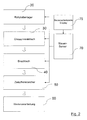
- Fig. 2 schematically shows the essential components of an embodiment of the glass cutting device according to the invention and Fig. 3 the method steps of the associated inventive method.
- a first method step S2 the uncut and partially cut raw glass plates 21 located in the raw plate storage 20 are detected by the control server 70 in order to determine the raw glass stock at the beginning of the processing.
- the control server 70 acquires, on the one hand, new incoming blanket orders and, on the other hand, blanket orders released for processing.
- the control server 70 carries out in process step S8 a continuous optimization calculation of the cutting patterns as well as the processing sequence of the entire current order book, which as a rule comprises different types and thicknesses of glass.
- a processing sequence which is necessary or desirable for further processing in a subsequent processing line or for shipping (for example the timely cutting of the two associated glass panes of different thicknesses of an insulating glass pane) can be input to the control server as a constraint, as can very urgent orders or individual orders that have been manually inserted.
- the blank orders released by the control server 70 are then executed in method step S10 and the finished glass blank is then stored temporarily in the designated compartment of the intermediate memory 50 (method step S12).
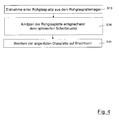
- the raw glass plate passes in a process step S13 ( Fig. 4 ) under the control of the control server 70 by means of a gantry crane or the like (not shown) to the glass cutting table 30 on which the raw glass plate is scribed in accordance with the cutting pattern determined by the optimization calculation (step S14).
- the scored plate is then broken in step S15 in order to obtain the desired glass blank, which is then stored in a designated compartment of the buffer 50 for reasons of space, preferably in a vertical position.
- the glass blank is then available for further processing in a processing line 60 or for shipping.
- An essential aspect of the method according to the invention is that under the control of the control server 70 the cutting of this order backlog does not take place until the end. Before physical cutting reaches the above-mentioned problem areas towards the end of optimization, some time has passed and new orders have been merged into production lots and released. The skilled worker, eg the cutter, can now either insert the new production lot - depending on the urgency - as quickly as possible into the cutting process or attach it to the existing process. In both cases, there is a new task for cutting optimization, which can also include the re-cutting of broken glass. The control server 70 recognizes this situation and initiates a corresponding re-optimization of the disks, which have not yet been sent to the cutting table 30, as required.
- the interaction between the control server and the optimization is in each case coordinated such that the buffer 50 stored in the sequence after cutting and breaking can always be used optimally under the circumstances of the subsequent processes.
- the optimization is designed in such a way that, depending on the cost aspect, it can also prefer simpler, slightly lower yield patterns in favor of higher cutting productivity. Overall, this results in a process in which, similar to a naturally occurring steady-state equilibrium, different aspects are kept in balance at the same time.
- the actual buffering is done by a relatively small dynamic sequencer 50 into which the slices are queued.
- this sequencer 50 is used to buffer discs which are not yet needed directly (except for the sequence required for the subsequent processes) at short notice.
- slices that do not lead directly into the automated follow-up process are ejected here.
- special discs eg tempered safety glass, laminated safety glass or ornamental glass
- the control server 70 is always aware of the contents of the sequencer and determines directly and immediately the necessary measures in the respective situation such as determination of the next input or output tray, direct response to messages from the controller such as breakage or fault messages, if necessary planning of occupancy under the constraint of optimal throughput.
- the buffer or sequencer 50 can be realized, for example, by dynamically filling two magazines which can be displaced relative to one another and simultaneously emptying them again dynamically.
- An alternative implementation of the sequencer 50 is in Fig. 5 schematically and consists of an immobile magazine 50, which is filled from one side with a movable loading system 51 with handling means 53 for the glass blanks 25 and on the same or the other side with a corresponding removal device 52 with handling means 53 dynamically in a separate independent Order can be emptied.
- the task of the glass cutting optimization or the system of control server and optimization is not only to provide the best possible cut rates, but also to create such sequences in the cutting, which allows using the dynamics of the sequencer optimal supply of the subsequent processes.
- the control server it is also possible to temporarily store needed discs in cheaper positions of the sequencer.
- control server first calculates and manages the required memory positions at the moment of saving on the basis of the current situation.
- control server can control the sequencer so that in case of failure or stoppages in the follow-up process more slices are stored as necessary to avoid a stop of the cutting system in this case. Thereby a direct coupling of the blank to subsequent processes with variable, adjustable time buffer is possible.
- the real-time system also has a suitable interface 75 to the operators.
- a Brechsent- and information display communicating directly with the control server for the workers at the break table possible, for example, information on the removal of slices, which should not be driven through the intermediate buffer and information on the slipping of slices from other sources are displayed
- a display 75 is used to indicate the current state of the optimizations and the output side of dynamic intermediate buffer 50.
- the display 75 it can be recognized early on by the user that a residual plate will be created for one type of glass if no further orders are made available. An employee in the higher-level planning system can use this information to search for corresponding orders and make them available to the system. Through this interaction, it is possible to use the dynamics of the system itself in the work preparation.
- the method according to the invention leads to significantly improved waste rates, makes costly and expensive sorting systems superfluous, considerably reduces the space requirement in the cutting and breaking area, greatly reduces the throughput times, ensures the security of supply of successor processes, and even makes direct coupling possible , reacts flexibly to short-term disturbances, breaks and quick shoots, greatly simplifies the remainder handling and replaces the waste optimization with a further cost optimization of the overall process, taking into account the different cost of glass types and balancing productivity and yield considerations.
Landscapes
- Engineering & Computer Science (AREA)
- Business, Economics & Management (AREA)
- Chemical & Material Sciences (AREA)
- Human Resources & Organizations (AREA)
- Strategic Management (AREA)
- Materials Engineering (AREA)
- Organic Chemistry (AREA)
- Economics (AREA)
- Entrepreneurship & Innovation (AREA)
- Game Theory and Decision Science (AREA)
- Development Economics (AREA)
- Marketing (AREA)
- Operations Research (AREA)
- Quality & Reliability (AREA)
- Tourism & Hospitality (AREA)
- Physics & Mathematics (AREA)
- General Business, Economics & Management (AREA)
- General Physics & Mathematics (AREA)
- Theoretical Computer Science (AREA)
- Re-Forming, After-Treatment, Cutting And Transporting Of Glass Products (AREA)
Claims (27)
- Procédé de coupe de feuilles de verre brut (21) en une pluralité de découpes de verre (25), comprenant les étapes suivantes :(a) saisie du stock de feuilles de verre brut non coupées et en partie coupées (21),(b) saisie en continu de l'arrivée de nouvelles commandes de découpe,(c) saisie en continu des commandes de découpe validées pour le façonnage,(d) détermination en continu d'une séquence de façonnage optimisée et de schémas de découpe des feuilles de verre brut optimisés par une optimisation en temps réel de toutes les commandes de découpe en cours, comprenant les nouvelles commandes de découpe saisies à l'étape (b) et les commandes de découpe validées pour le façonnage saisies à l'étape (c), en fonction du stock de feuilles de verre brut (21) non coupées et en partie coupées saisi à l'étape (a),(e) traitement des commandes de découpe suivant la séquence de façonnage optimisée et les schémas de découpe optimisés ainsi déterminés,(f) en fonction de la séquence de façonnage optimisée déterminée à l'étape (d), entreposage et calage pilotés par un dispositif de calcul (70) des découpes de verre (25) dans des casiers affectés dynamiquement (55) d'un stockage intermédiaire (50), et(g) sortie séquencée des découpes de verre (25) du stockage intermédiaire (50), les casiers (55) du stockage intermédiaire (50) étant en même temps remplis et vidés de découpes de verre (25).
- Procédé selon la revendication 1, dans lequel la séquence de façonnage optimisée est déterminée d'après une séquence de finition requise pour une finition des découpes de verre (25) effectuée ensuite.
- Procédé selon la revendication 1 ou la revendication 2, dans lequel le casier concerné du stockage intermédiaire (50) est choisi de manière à minimiser les déplacements nécessaires pour la mise en casiers et le retrait du stockage intermédiaire (50).
- Procédé selon l'une des revendications 1 à 3, dans lequel la détermination en continu de la séquence de façonnage optimisée et des schémas de découpe des feuilles de verre brut optimisés à l'étape (d) tient compte de plusieurs types de verres différents qui peuvent être façonnés dans un ordre choisi librement.
- Procédé selon l'une des revendications 1 à 4, comprenant en outre la saisie de plaques de verre individuelles entrées ou sorties manuellement.
- Procédé selon l'une des revendications 1 à 5, comprenant en outre la prise en compte de commandes urgentes particulières.
- Procédé selon l'une des revendications 1 à 6, comprenant la saisie d'une détérioration d'une feuille de verre brut (21) ou d'une découpe de verre (25) en cours de façonnage et sa prise en compte dans la détermination en continu de la séquence de façonnage optimisée et des schémas de découpe des feuilles de verre brut optimisés dans l'étape de procédé (d).
- Procédé selon l'une des revendications 1 à 7, dans lequel les résultats temporaires de la saisie et de la détermination dans les étapes de procédé (a) à (d) sont automatiquement sauvegardés en cas d'interruption du façonnage.
- Procédé selon l'une des revendications 1 à 8, dans lequel la détermination de la séquence de façonnage optimisée et des schémas de découpe des feuilles de verre brut optimisés dans l'étape de procédé (d) peut être ajustée dans le sens d'une plus grande productivité en termes de nombre de découpes de verre (25) réalisées par unité de temps ou dans le sens d'une perte de matière minimisée.
- Procédé selon l'une des revendications 1 à 9, dans lequel le stockage intermédiaire (50) sert de stockage tampon pour la finition des découpes de verre (25).
- Procédé selon l'une des revendications 1 à 9, dans lequel le stockage intermédiaire (50) sert de stockage tampon pour l'expédition des découpes de verre (25) et les découpes de verre (25) sont déposées dans les casiers (55) du stockage tampon selon une séquence prévue pour l'expédition.
- Procédé selon la revendication 11, dans lequel la séquence d'expédition des découpes de verre (25) est prédéfinie par une entreprise de finition destinataire de la livraison.
- Procédé selon l'une des revendications 1 à 12, dans lequel l'état de façonnage en cours du procédé, y compris les éventuelles détériorations de feuilles de verre brut (21) ou de découpes de verre (25), est affiché sur un dispositif d'affichage (75).
- Procédé selon l'une des revendications 1 à 13, dans lequel l'étape de procédé (f) comprend le rainurage des feuilles de verre brut (21) suivi de leur rupture sur une table de rupture (40).
- Procédé selon l'une des revendications 1 à 13, dans lequel l'étape de procédé (f) comprend la découpe des feuilles de verre brut (21) au moyen d'un laser ou d'outils de découpage au jet d'eau.
- Dispositif pour couper des feuilles de verre brut (21) en une pluralité de découpes de verre (25), comprenant :- un magasin de feuilles de verre brut (20) pour stocker des feuilles de verre brut non coupées et en partie coupées (21),- un dispositif de saisie pour saisir le stock de feuilles de verre brut non coupées et en partie coupées (21) et pour saisir en continu l'arrivée de nouvelles commandes de découpe et de commandes de découpe validées pour le façonnage,- un dispositif de calcul (70) pour déterminer en continu une séquence de façonnage optimisée et des schémas de découpe des feuilles de verre brut optimisés par une optimisation en temps réel de toutes les commandes de découpe en cours saisies au moyen du dispositif de saisie, comprenant les nouvelles commandes de découpe saisies et les commandes de découpe validées pour le façonnage saisies, en fonction du stock de feuilles de verre brut non coupées et en partie coupées saisi au moyen du dispositif de saisie,- un dispositif de façonnage (30, 40) pour couper les feuilles de verre brut (21) en découpes de verre (25),- un dispositif de commande (70) pour piloter le dispositif de façonnage (30, 40) conformément à la séquence de façonnage optimisée et aux schémas de découpe optimisés déterminés, et- un magasin intermédiaire (50) à plusieurs casiers (55) pour entreposer et caler de manière dynamique, piloté par un dispositif de calcul (70), les découpes de verre (25) façonnées en fonction de la séquence de façonnage optimisée, les casiers (55) dudit stockage intermédiaire (50) étant configurés pour être en même temps remplis et vidés de découpes de verre (25).
- Dispositif selon la revendication 16, dans lequel le dispositif de calcul (70) est configuré pour déterminer la séquence de façonnage optimisée en tenant compte de la séquence de finition requise pour la finition des découpes de verre (25).
- Dispositif selon la revendication 16 ou la revendication 17, comprenant un dispositif de saisie (75) pour la saisie de plaques de verre introduites ou sorties manuellement.
- Dispositif selon la revendication 18, dans lequel le dispositif de saisie (75) est configuré pour déterminer des commandes urgentes particulières.
- Dispositif selon l'une des revendications 16 à 19, comprenant un dispositif de surveillance pour détecter la détérioration d'une feuille de verre brut (21) ou d'une découpe de verre (25) en cours de façonnage.
- Dispositif selon la revendication 20, dans lequel le dispositif de calcul (70) est configuré pour tenir compte d'une détérioration d'une feuille de verre brut (21) ou d'une découpe de verre (25) détectée par le dispositif de surveillance dans la détermination en continu de la séquence de façonnage optimisée et des schémas de découpe des feuilles de verre brut optimisés.
- Dispositif selon l'une des revendications 16 à 21, dans lequel le stockage intermédiaire (50) est réalisé sous la forme de chariots à casiers comprenant une pluralité de casiers (55) pour le stockage vertical des découpes de verre (25).
- Dispositif selon l'une des revendications 16 à 22, dans lequel le stockage intermédiaire (50) présente deux magasins mobiles l'un par rapport à l'autre avec des casiers (55) pour le stockage vertical des découpes de verre (25).
- Dispositif selon l'une des revendications 16 à 22, dans lequel le stockage intermédiaire (50) présente un magasin fixe avec des casiers (55) pour le stockage vertical des découpes de verre (25) et des dispositifs de chargement et prélèvement mobiles indépendamment les uns des autres (51, 52).
- Dispositif selon l'une des revendications 16 à 24, comprenant un dispositif d'affichage (75) pour indiquer l'état actuel du façonnage des découpes de verre (25).
- Dispositif selon l'une des revendications 16 à 25, comprenant un dispositif (30) de rainurage des feuilles de verre brut et une table de rupture (40) pour rompre ensuite les feuilles de verre brut (21) rainurées.
- Dispositif selon l'une des revendications 16 à 25, comprenant un dispositif de coupe pour couper les feuilles de verre brut au moyen d'un laser ou d'un jet d'eau.
Priority Applications (5)
| Application Number | Priority Date | Filing Date | Title |
|---|---|---|---|
| PL06119062T PL1900695T3 (pl) | 2006-08-17 | 2006-08-17 | Sposób i urządzenie do przycinania płyt ze szkła surowego |
| AT06119062T ATE537126T1 (de) | 2006-08-17 | 2006-08-17 | Verfahren und vorrichtung zum zuschneiden von rohglasplatten |
| EP06119062A EP1900695B1 (fr) | 2006-08-17 | 2006-08-17 | Procédé et dispositif pour couper des feuilles de verre |
| US12/377,449 US8655477B2 (en) | 2006-08-17 | 2007-08-13 | Method and device for cutting of raw glass slabs |
| PCT/EP2007/058358 WO2008020005A1 (fr) | 2006-08-17 | 2007-08-13 | Procédé et dispositif de coupe à dimension de plaques de verre brut |
Applications Claiming Priority (1)
| Application Number | Priority Date | Filing Date | Title |
|---|---|---|---|
| EP06119062A EP1900695B1 (fr) | 2006-08-17 | 2006-08-17 | Procédé et dispositif pour couper des feuilles de verre |
Publications (2)
| Publication Number | Publication Date |
|---|---|
| EP1900695A1 EP1900695A1 (fr) | 2008-03-19 |
| EP1900695B1 true EP1900695B1 (fr) | 2011-12-14 |
Family
ID=37497936
Family Applications (1)
| Application Number | Title | Priority Date | Filing Date |
|---|---|---|---|
| EP06119062A Active EP1900695B1 (fr) | 2006-08-17 | 2006-08-17 | Procédé et dispositif pour couper des feuilles de verre |
Country Status (5)
| Country | Link |
|---|---|
| US (1) | US8655477B2 (fr) |
| EP (1) | EP1900695B1 (fr) |
| AT (1) | ATE537126T1 (fr) |
| PL (1) | PL1900695T3 (fr) |
| WO (1) | WO2008020005A1 (fr) |
Cited By (1)
| Publication number | Priority date | Publication date | Assignee | Title |
|---|---|---|---|---|
| WO2014142771A1 (fr) | 2013-03-14 | 2014-09-18 | Metre Tasarim Ahşap Mobi̇lya Sanayi̇ Ve Diş Ti̇caret Li̇mi̇ted Şi̇rketi̇ | Procédé de traitement du verre mettant une valeur artistique au premier plan grâce à des modèles et à des motifs offrant une qualité visuelle élevée |
Families Citing this family (21)
| Publication number | Priority date | Publication date | Assignee | Title |
|---|---|---|---|---|
| US8401689B1 (en) * | 2008-07-15 | 2013-03-19 | Hp3 Software, Inc. | Dynamic global scheduler system for a glass production line |
| CH699748B1 (de) * | 2008-10-17 | 2013-02-28 | Mipec Ag | Verfahren und Vorrichtung zur Erhöhung der Ausbeute beim Abtrennen von Flachglas-Platten von Glasband. |
| AT509220B1 (de) | 2010-06-07 | 2011-07-15 | Hermann Sonnleitner | Manipulationsvorrichtung für ein flachglaslager |
| CN102323787B (zh) * | 2011-07-05 | 2012-12-26 | 中国新型建筑材料工业杭州设计研究院 | 一种浮法玻璃冷端主线控制方法 |
| EP3812982A1 (fr) | 2011-12-14 | 2021-04-28 | Outback Software Pty Ltd. | Systèmes et procédés permettant de minimiser un nombre total de découpes pour séparer des instances multimédia imagé sur une feuille support |
| ITTO20120149A1 (it) * | 2012-02-21 | 2012-05-22 | Forvet S R L | Isola automatica per la produzione di forme di vetro piano monolitico mediante incisione e troncaggio di una lastra intera o parte di essa, e relativo procedimento di produzione. |
| DE102012023266B4 (de) * | 2012-11-29 | 2017-03-30 | Glaswerke Arnold Gmbh & Co. Kg | Verfahren zum Herstellen von Flachglasscheiben und Flachglasscheibenfertigungsanlage |
| CN103197610B (zh) * | 2013-04-03 | 2016-03-16 | 达瑞建筑机械(上海)有限公司 | 具有结合工厂管理系统功能的数控金属材料裁剪设备 |
| FR3014858B1 (fr) * | 2013-12-16 | 2016-07-29 | Cinetic Automation | Procede et installation de gestion d'un flux d'articles au niveau d'une zone tampon |
| CN104876429A (zh) * | 2015-04-20 | 2015-09-02 | 广东工业大学 | 一种兼顾玻璃原片下料率与钢化炉装载率的集成优化方法 |
| FR3055718B1 (fr) * | 2016-09-07 | 2025-07-18 | Saint Gobain | Procede et dispositif d'optimisation d'un plan de decoupe par guillotine de pieces de verre |
| JP6325625B2 (ja) * | 2016-10-14 | 2018-05-16 | ファナック株式会社 | プログラム最適化システム |
| NL2019094B1 (en) * | 2017-06-19 | 2018-12-27 | Airborne Int B V | Device and method for sorting plies |
| CN110550852A (zh) * | 2019-09-16 | 2019-12-10 | 宿州市天艺钢化玻璃有限公司 | 一种便于切割玻璃小部位的切割装置 |
| EP3964487A1 (fr) | 2020-09-05 | 2022-03-09 | GET Glass Engineering & Technologies GmbH | Fabrication de verre flotté à surface ajustée |
| DE102021120566A1 (de) | 2020-09-05 | 2022-03-10 | GET Glass Engineering & Technologies GmbH | Herstellung von Floatglas mit flächenangepasstem Bandmaß |
| ES2991313T3 (es) | 2021-05-04 | 2024-12-03 | Hubert Haselsteiner | Método y sistema para cargar una unidad de tratamiento térmico |
| US12502806B2 (en) * | 2023-09-19 | 2025-12-23 | Poseidon Industries, Inc. | Machine for bevel (“miter”) cutting a slab with finished face down and related method |
| WO2025238078A1 (fr) | 2024-05-17 | 2025-11-20 | Lisec Austria Gmbh | Procédé et dispositif pour fournir un lot d'éléments en verre isolant |
| DE102024118567A1 (de) * | 2024-07-01 | 2026-01-08 | TRUMPF Werkzeugmaschinen SE + Co. KG | Verfahren zum Schneiden von Bauteilen aus tafelförmigen Werkstücken |
| CN120338216B (zh) * | 2025-06-20 | 2025-10-31 | 杭州聚玻科技有限公司 | 一种玻璃优化切裁提升方法及系统 |
Family Cites Families (15)
| Publication number | Priority date | Publication date | Assignee | Title |
|---|---|---|---|---|
| LU52576A1 (fr) * | 1966-12-13 | 1968-08-16 | ||
| CH626596A5 (en) * | 1978-04-05 | 1981-11-30 | Bystronic Masch | Installation for cutting glass plates |
| DE3162520D1 (en) | 1980-09-24 | 1984-04-12 | Bystronic Masch | Apparatus for sorting unsorted glass plates of a glass-cutting installation |
| US4709483A (en) * | 1984-03-14 | 1987-12-01 | Wing Aero | Glass cutting device |
| JPS63138412A (ja) * | 1986-11-29 | 1988-06-10 | Yoshiki Kogyo Kk | 無停電電源装置 |
| DE3805093C1 (fr) * | 1988-02-18 | 1989-03-09 | Siebler Verpackungstechnik Gmbh & Co Kg, 7537 Remchingen, De | |
| JPH06166530A (ja) * | 1992-11-26 | 1994-06-14 | Asahi Glass Co Ltd | 板状材のソーティングシステム |
| AT401172B (de) * | 1995-01-24 | 1996-07-25 | Lisec Peter | Verfahren zum teilen von glastafeln in zuschnitte |
| US5757647A (en) * | 1995-08-25 | 1998-05-26 | Demichele; Don W. | Computer assisted, manual workstation |
| DE10139715B4 (de) * | 2001-08-13 | 2005-02-03 | Hegla Fahrzeug- Und Maschinenbau Gmbh & Co Kg | Verfahren und Vorrichtung zum Bearbeiten von Glastafeln |
| DE10161813A1 (de) * | 2001-12-14 | 2003-06-26 | Albat & Wirsam Software Vertri | Verfahren und Vorrichtung zum Teilen von Glasplatten in Zuschnitte |
| US6879873B2 (en) * | 2002-04-10 | 2005-04-12 | Billco Manufacturing Inc. | CNC glass cutting line with dynamic continuous production control system |
| JP3739333B2 (ja) * | 2002-04-16 | 2006-01-25 | 川崎重工業株式会社 | 板ガラスの割断システム |
| EP1431215A1 (fr) * | 2002-12-19 | 2004-06-23 | Bystronic Maschinen AG | Procédé et appareil pour alimenter une station de travail de feuilles de verre |
| US7167767B2 (en) * | 2003-08-22 | 2007-01-23 | Ged Integrated Solutions, Inc. | Glass production sequencing |
-
2006
- 2006-08-17 EP EP06119062A patent/EP1900695B1/fr active Active
- 2006-08-17 PL PL06119062T patent/PL1900695T3/pl unknown
- 2006-08-17 AT AT06119062T patent/ATE537126T1/de active
-
2007
- 2007-08-13 US US12/377,449 patent/US8655477B2/en active Active
- 2007-08-13 WO PCT/EP2007/058358 patent/WO2008020005A1/fr not_active Ceased
Cited By (1)
| Publication number | Priority date | Publication date | Assignee | Title |
|---|---|---|---|---|
| WO2014142771A1 (fr) | 2013-03-14 | 2014-09-18 | Metre Tasarim Ahşap Mobi̇lya Sanayi̇ Ve Diş Ti̇caret Li̇mi̇ted Şi̇rketi̇ | Procédé de traitement du verre mettant une valeur artistique au premier plan grâce à des modèles et à des motifs offrant une qualité visuelle élevée |
Also Published As
| Publication number | Publication date |
|---|---|
| US8655477B2 (en) | 2014-02-18 |
| US20100070066A1 (en) | 2010-03-18 |
| EP1900695A1 (fr) | 2008-03-19 |
| PL1900695T3 (pl) | 2012-05-31 |
| ATE537126T1 (de) | 2011-12-15 |
| WO2008020005A1 (fr) | 2008-02-21 |
Similar Documents
| Publication | Publication Date | Title |
|---|---|---|
| EP1900695B1 (fr) | Procédé et dispositif pour couper des feuilles de verre | |
| EP1319634B1 (fr) | Procédé et appareil de découpe des feuilles de verre en plaques individuelles | |
| EP2969869B1 (fr) | Installation d'usinage de panneaux | |
| EP3116672B1 (fr) | Procédé servant à faire fonctionner une installation d'usinage de panneaux | |
| EP3378616B1 (fr) | Traitement des produits alimentaires | |
| DE60215610T2 (de) | Verfahrem zum schneiden der ränder eines glasbandes sowie vorrichtung zur durchführung des verfahrens | |
| EP3867203B1 (fr) | Dispositif de découpe de verre feuilleté et procédé pour découper des panneaux de verre feuilleté | |
| EP1165295B1 (fr) | Procede et dispositif pour decouper des produits alimentaires | |
| EP2450166B1 (fr) | Procédé de coupe d'un tronçon d'aliments en tranches | |
| AT401172B (de) | Verfahren zum teilen von glastafeln in zuschnitte | |
| EP3867717B1 (fr) | Procédé d'affichage de représentations de pièces à usiner pour faciliter une opération de tri | |
| DE4305826A1 (de) | Verfahren und Vorrichtung zum Zerteilen von Glastafeln in Zuschnitte | |
| EP1284229B3 (fr) | Procédé et appareil de manipulation des feuilles de verre | |
| EP1754676B1 (fr) | Procédé pour le stockage de rouleaux de matériau | |
| DE10157833B4 (de) | Vorrichtung zum Aufteilen einer Verbundglastafel in einzelne Verbundglasscheiben und Verfahren zum Positionieren einer Verbundglastafel auf einer Verbundglasschneidanlage | |
| AT509220B1 (de) | Manipulationsvorrichtung für ein flachglaslager | |
| EP0262442A2 (fr) | Dispositif pour le triage et le transport de pièces découpées en tôle | |
| EP4729257A1 (fr) | Procédé de fonctionnement d'une installation de découpage de panneaux et installation pour la découpe de panneaux | |
| DE20220733U1 (de) | Vorrichtung zum Bearbeiten von Glastafeln | |
| DE20220732U1 (de) | Vorrichtung zum Aufteilen von Verbundglastafeln | |
| WO2016113200A1 (fr) | Table d'usinage permettant d'usiner des plaques de verre | |
| DE29622058U1 (de) | Vorrichtung zum Schneiden und Brechen von Flachglas |
Legal Events
| Date | Code | Title | Description |
|---|---|---|---|
| PUAI | Public reference made under article 153(3) epc to a published international application that has entered the european phase |
Free format text: ORIGINAL CODE: 0009012 |
|
| 17P | Request for examination filed |
Effective date: 20070510 |
|
| AK | Designated contracting states |
Kind code of ref document: A1 Designated state(s): AT BE BG CH CY CZ DE DK EE ES FI FR GB GR HU IE IS IT LI LT LU LV MC NL PL PT RO SE SI SK TR |
|
| AX | Request for extension of the european patent |
Extension state: AL BA HR MK YU |
|
| AKX | Designation fees paid |
Designated state(s): AT BE BG CH CY CZ DE DK EE ES FI FR GB GR HU IE IS IT LI LT LU LV MC NL PL PT RO SE SI SK TR |
|
| GRAP | Despatch of communication of intention to grant a patent |
Free format text: ORIGINAL CODE: EPIDOSNIGR1 |
|
| GRAS | Grant fee paid |
Free format text: ORIGINAL CODE: EPIDOSNIGR3 |
|
| GRAA | (expected) grant |
Free format text: ORIGINAL CODE: 0009210 |
|
| AK | Designated contracting states |
Kind code of ref document: B1 Designated state(s): AT BE BG CH CY CZ DE DK EE ES FI FR GB GR HU IE IS IT LI LT LU LV MC NL PL PT RO SE SI SK TR |
|
| REG | Reference to a national code |
Ref country code: GB Ref legal event code: FG4D Free format text: NOT ENGLISH |
|
| REG | Reference to a national code |
Ref country code: CH Ref legal event code: EP |
|
| REG | Reference to a national code |
Ref country code: IE Ref legal event code: FG4D |
|
| REG | Reference to a national code |
Ref country code: DE Ref legal event code: R096 Ref document number: 502006010710 Country of ref document: DE Effective date: 20120209 |
|
| REG | Reference to a national code |
Ref country code: NL Ref legal event code: T3 |
|
| REG | Reference to a national code |
Ref country code: CH Ref legal event code: NV Representative=s name: RENTSCH PARTNER AG |
|
| PG25 | Lapsed in a contracting state [announced via postgrant information from national office to epo] |
Ref country code: LT Free format text: LAPSE BECAUSE OF FAILURE TO SUBMIT A TRANSLATION OF THE DESCRIPTION OR TO PAY THE FEE WITHIN THE PRESCRIBED TIME-LIMIT Effective date: 20111214 |
|
| LTIE | Lt: invalidation of european patent or patent extension |
Effective date: 20111214 |
|
| PG25 | Lapsed in a contracting state [announced via postgrant information from national office to epo] |
Ref country code: GR Free format text: LAPSE BECAUSE OF FAILURE TO SUBMIT A TRANSLATION OF THE DESCRIPTION OR TO PAY THE FEE WITHIN THE PRESCRIBED TIME-LIMIT Effective date: 20120315 Ref country code: SE Free format text: LAPSE BECAUSE OF FAILURE TO SUBMIT A TRANSLATION OF THE DESCRIPTION OR TO PAY THE FEE WITHIN THE PRESCRIBED TIME-LIMIT Effective date: 20111214 Ref country code: SI Free format text: LAPSE BECAUSE OF FAILURE TO SUBMIT A TRANSLATION OF THE DESCRIPTION OR TO PAY THE FEE WITHIN THE PRESCRIBED TIME-LIMIT Effective date: 20111214 Ref country code: LV Free format text: LAPSE BECAUSE OF FAILURE TO SUBMIT A TRANSLATION OF THE DESCRIPTION OR TO PAY THE FEE WITHIN THE PRESCRIBED TIME-LIMIT Effective date: 20111214 |
|
| REG | Reference to a national code |
Ref country code: PL Ref legal event code: T3 |
|
| PG25 | Lapsed in a contracting state [announced via postgrant information from national office to epo] |
Ref country code: CY Free format text: LAPSE BECAUSE OF FAILURE TO SUBMIT A TRANSLATION OF THE DESCRIPTION OR TO PAY THE FEE WITHIN THE PRESCRIBED TIME-LIMIT Effective date: 20111214 |
|
| REG | Reference to a national code |
Ref country code: IE Ref legal event code: FD4D |
|
| PG25 | Lapsed in a contracting state [announced via postgrant information from national office to epo] |
Ref country code: BG Free format text: LAPSE BECAUSE OF FAILURE TO SUBMIT A TRANSLATION OF THE DESCRIPTION OR TO PAY THE FEE WITHIN THE PRESCRIBED TIME-LIMIT Effective date: 20120314 Ref country code: SK Free format text: LAPSE BECAUSE OF FAILURE TO SUBMIT A TRANSLATION OF THE DESCRIPTION OR TO PAY THE FEE WITHIN THE PRESCRIBED TIME-LIMIT Effective date: 20111214 Ref country code: CZ Free format text: LAPSE BECAUSE OF FAILURE TO SUBMIT A TRANSLATION OF THE DESCRIPTION OR TO PAY THE FEE WITHIN THE PRESCRIBED TIME-LIMIT Effective date: 20111214 Ref country code: EE Free format text: LAPSE BECAUSE OF FAILURE TO SUBMIT A TRANSLATION OF THE DESCRIPTION OR TO PAY THE FEE WITHIN THE PRESCRIBED TIME-LIMIT Effective date: 20111214 Ref country code: IE Free format text: LAPSE BECAUSE OF FAILURE TO SUBMIT A TRANSLATION OF THE DESCRIPTION OR TO PAY THE FEE WITHIN THE PRESCRIBED TIME-LIMIT Effective date: 20111214 Ref country code: IS Free format text: LAPSE BECAUSE OF FAILURE TO SUBMIT A TRANSLATION OF THE DESCRIPTION OR TO PAY THE FEE WITHIN THE PRESCRIBED TIME-LIMIT Effective date: 20120414 |
|
| PG25 | Lapsed in a contracting state [announced via postgrant information from national office to epo] |
Ref country code: PT Free format text: LAPSE BECAUSE OF FAILURE TO SUBMIT A TRANSLATION OF THE DESCRIPTION OR TO PAY THE FEE WITHIN THE PRESCRIBED TIME-LIMIT Effective date: 20120416 Ref country code: RO Free format text: LAPSE BECAUSE OF FAILURE TO SUBMIT A TRANSLATION OF THE DESCRIPTION OR TO PAY THE FEE WITHIN THE PRESCRIBED TIME-LIMIT Effective date: 20111214 |
|
| PLBE | No opposition filed within time limit |
Free format text: ORIGINAL CODE: 0009261 |
|
| STAA | Information on the status of an ep patent application or granted ep patent |
Free format text: STATUS: NO OPPOSITION FILED WITHIN TIME LIMIT |
|
| PG25 | Lapsed in a contracting state [announced via postgrant information from national office to epo] |
Ref country code: DK Free format text: LAPSE BECAUSE OF FAILURE TO SUBMIT A TRANSLATION OF THE DESCRIPTION OR TO PAY THE FEE WITHIN THE PRESCRIBED TIME-LIMIT Effective date: 20111214 |
|
| 26N | No opposition filed |
Effective date: 20120917 |
|
| REG | Reference to a national code |
Ref country code: DE Ref legal event code: R097 Ref document number: 502006010710 Country of ref document: DE Effective date: 20120917 |
|
| PG25 | Lapsed in a contracting state [announced via postgrant information from national office to epo] |
Ref country code: MC Free format text: LAPSE BECAUSE OF NON-PAYMENT OF DUE FEES Effective date: 20120831 |
|
| PG25 | Lapsed in a contracting state [announced via postgrant information from national office to epo] |
Ref country code: ES Free format text: LAPSE BECAUSE OF FAILURE TO SUBMIT A TRANSLATION OF THE DESCRIPTION OR TO PAY THE FEE WITHIN THE PRESCRIBED TIME-LIMIT Effective date: 20120325 |
|
| PG25 | Lapsed in a contracting state [announced via postgrant information from national office to epo] |
Ref country code: FI Free format text: LAPSE BECAUSE OF FAILURE TO SUBMIT A TRANSLATION OF THE DESCRIPTION OR TO PAY THE FEE WITHIN THE PRESCRIBED TIME-LIMIT Effective date: 20111214 |
|
| PGFP | Annual fee paid to national office [announced via postgrant information from national office to epo] |
Ref country code: TR Payment date: 20130806 Year of fee payment: 8 |
|
| PG25 | Lapsed in a contracting state [announced via postgrant information from national office to epo] |
Ref country code: LU Free format text: LAPSE BECAUSE OF NON-PAYMENT OF DUE FEES Effective date: 20120817 |
|
| PG25 | Lapsed in a contracting state [announced via postgrant information from national office to epo] |
Ref country code: HU Free format text: LAPSE BECAUSE OF FAILURE TO SUBMIT A TRANSLATION OF THE DESCRIPTION OR TO PAY THE FEE WITHIN THE PRESCRIBED TIME-LIMIT Effective date: 20060817 |
|
| PGFP | Annual fee paid to national office [announced via postgrant information from national office to epo] |
Ref country code: NL Payment date: 20140821 Year of fee payment: 9 |
|
| PGFP | Annual fee paid to national office [announced via postgrant information from national office to epo] |
Ref country code: PL Payment date: 20140714 Year of fee payment: 9 Ref country code: GB Payment date: 20140821 Year of fee payment: 9 |
|
| GBPC | Gb: european patent ceased through non-payment of renewal fee |
Effective date: 20150817 |
|
| REG | Reference to a national code |
Ref country code: NL Ref legal event code: MM Effective date: 20150901 |
|
| PG25 | Lapsed in a contracting state [announced via postgrant information from national office to epo] |
Ref country code: NL Free format text: LAPSE BECAUSE OF NON-PAYMENT OF DUE FEES Effective date: 20150901 |
|
| PG25 | Lapsed in a contracting state [announced via postgrant information from national office to epo] |
Ref country code: GB Free format text: LAPSE BECAUSE OF NON-PAYMENT OF DUE FEES Effective date: 20150817 |
|
| REG | Reference to a national code |
Ref country code: FR Ref legal event code: PLFP Year of fee payment: 11 |
|
| PG25 | Lapsed in a contracting state [announced via postgrant information from national office to epo] |
Ref country code: PL Free format text: LAPSE BECAUSE OF NON-PAYMENT OF DUE FEES Effective date: 20150817 |
|
| REG | Reference to a national code |
Ref country code: FR Ref legal event code: PLFP Year of fee payment: 12 |
|
| PG25 | Lapsed in a contracting state [announced via postgrant information from national office to epo] |
Ref country code: TR Free format text: LAPSE BECAUSE OF NON-PAYMENT OF DUE FEES Effective date: 20150817 |
|
| REG | Reference to a national code |
Ref country code: CH Ref legal event code: PCAR Free format text: NEW ADDRESS: BELLERIVESTRASSE 203 POSTFACH, 8034 ZUERICH (CH) |
|
| REG | Reference to a national code |
Ref country code: FR Ref legal event code: PLFP Year of fee payment: 13 |
|
| P01 | Opt-out of the competence of the unified patent court (upc) registered |
Effective date: 20230522 |
|
| REG | Reference to a national code |
Ref country code: DE Ref legal event code: R082 Ref document number: 502006010710 Country of ref document: DE Representative=s name: ALTMANN STOESSEL DICK PATENTANWAELTE PARTG MBB, DE |
|
| PGFP | Annual fee paid to national office [announced via postgrant information from national office to epo] |
Ref country code: DE Payment date: 20250828 Year of fee payment: 20 |
|
| PGFP | Annual fee paid to national office [announced via postgrant information from national office to epo] |
Ref country code: IT Payment date: 20250827 Year of fee payment: 20 |
|
| PGFP | Annual fee paid to national office [announced via postgrant information from national office to epo] |
Ref country code: BE Payment date: 20250822 Year of fee payment: 20 |
|
| PGFP | Annual fee paid to national office [announced via postgrant information from national office to epo] |
Ref country code: FR Payment date: 20250826 Year of fee payment: 20 Ref country code: AT Payment date: 20250822 Year of fee payment: 20 |
|
| PGFP | Annual fee paid to national office [announced via postgrant information from national office to epo] |
Ref country code: CH Payment date: 20250901 Year of fee payment: 20 |