EP1904854B9 - Methode d'identification d'inhibiteurs de pliage de proteines - Google Patents
Methode d'identification d'inhibiteurs de pliage de proteines Download PDFInfo
- Publication number
- EP1904854B9 EP1904854B9 EP20060762655 EP06762655A EP1904854B9 EP 1904854 B9 EP1904854 B9 EP 1904854B9 EP 20060762655 EP20060762655 EP 20060762655 EP 06762655 A EP06762655 A EP 06762655A EP 1904854 B9 EP1904854 B9 EP 1904854B9
- Authority
- EP
- European Patent Office
- Prior art keywords
- protein
- peptide
- peptides
- folding
- proteins
- Prior art date
- Legal status (The legal status is an assumption and is not a legal conclusion. Google has not performed a legal analysis and makes no representation as to the accuracy of the status listed.)
- Not-in-force
Links
- 108090000623 proteins and genes Proteins 0.000 title claims abstract description 121
- 102000004169 proteins and genes Human genes 0.000 title claims abstract description 121
- 238000000034 method Methods 0.000 title claims abstract description 44
- 239000003112 inhibitor Substances 0.000 title claims abstract description 33
- 108090000765 processed proteins & peptides Proteins 0.000 claims abstract description 108
- 150000001413 amino acids Chemical class 0.000 claims description 64
- 102000004196 processed proteins & peptides Human genes 0.000 claims description 56
- 230000002401 inhibitory effect Effects 0.000 claims description 20
- 238000004088 simulation Methods 0.000 claims description 7
- 238000012360 testing method Methods 0.000 claims description 5
- 238000003556 assay Methods 0.000 claims description 4
- 238000010561 standard procedure Methods 0.000 claims description 3
- 238000005481 NMR spectroscopy Methods 0.000 claims description 2
- 238000002983 circular dichroism Methods 0.000 claims description 2
- 238000005520 cutting process Methods 0.000 claims description 2
- 108091005763 multidomain proteins Proteins 0.000 claims description 2
- 238000004062 sedimentation Methods 0.000 claims description 2
- 238000004590 computer program Methods 0.000 claims 1
- 230000002194 synthesizing effect Effects 0.000 claims 1
- 230000035772 mutation Effects 0.000 abstract description 35
- 102000004190 Enzymes Human genes 0.000 abstract description 9
- 108090000790 Enzymes Proteins 0.000 abstract description 9
- 230000008827 biological function Effects 0.000 abstract description 3
- 230000003612 virological effect Effects 0.000 abstract 1
- 239000000178 monomer Substances 0.000 description 12
- 229940088598 enzyme Drugs 0.000 description 8
- 230000008569 process Effects 0.000 description 8
- 230000015572 biosynthetic process Effects 0.000 description 7
- 239000012634 fragment Substances 0.000 description 7
- 230000000694 effects Effects 0.000 description 6
- 108020001580 protein domains Proteins 0.000 description 6
- 125000003275 alpha amino acid group Chemical group 0.000 description 5
- 238000013461 design Methods 0.000 description 5
- 239000003814 drug Substances 0.000 description 5
- 230000002209 hydrophobic effect Effects 0.000 description 5
- 238000003032 molecular docking Methods 0.000 description 5
- 206010028980 Neoplasm Diseases 0.000 description 4
- 229940079593 drug Drugs 0.000 description 4
- 238000012821 model calculation Methods 0.000 description 4
- 230000004048 modification Effects 0.000 description 4
- 238000012986 modification Methods 0.000 description 4
- 108091005804 Peptidases Proteins 0.000 description 3
- 239000004365 Protease Substances 0.000 description 3
- 102100037486 Reverse transcriptase/ribonuclease H Human genes 0.000 description 3
- 102000000395 SH3 domains Human genes 0.000 description 3
- 108050008861 SH3 domains Proteins 0.000 description 3
- 229910052799 carbon Inorganic materials 0.000 description 3
- 230000008859 change Effects 0.000 description 3
- 238000009826 distribution Methods 0.000 description 3
- 230000000670 limiting effect Effects 0.000 description 3
- 229910052757 nitrogen Inorganic materials 0.000 description 3
- 239000007787 solid Substances 0.000 description 3
- 239000002904 solvent Substances 0.000 description 3
- 239000000758 substrate Substances 0.000 description 3
- IJGRMHOSHXDMSA-UHFFFAOYSA-N Atomic nitrogen Chemical compound N#N IJGRMHOSHXDMSA-UHFFFAOYSA-N 0.000 description 2
- FAPWRFPIFSIZLT-UHFFFAOYSA-M Sodium chloride Chemical compound [Na+].[Cl-] FAPWRFPIFSIZLT-UHFFFAOYSA-M 0.000 description 2
- 238000002835 absorbance Methods 0.000 description 2
- 230000009471 action Effects 0.000 description 2
- 238000013459 approach Methods 0.000 description 2
- 230000004888 barrier function Effects 0.000 description 2
- 230000008901 benefit Effects 0.000 description 2
- 230000004071 biological effect Effects 0.000 description 2
- 238000004364 calculation method Methods 0.000 description 2
- 239000003054 catalyst Substances 0.000 description 2
- 230000000295 complement effect Effects 0.000 description 2
- 238000004925 denaturation Methods 0.000 description 2
- 230000036425 denaturation Effects 0.000 description 2
- 230000000368 destabilizing effect Effects 0.000 description 2
- 201000010099 disease Diseases 0.000 description 2
- 208000037265 diseases, disorders, signs and symptoms Diseases 0.000 description 2
- 238000002474 experimental method Methods 0.000 description 2
- 230000006870 function Effects 0.000 description 2
- 239000000710 homodimer Substances 0.000 description 2
- 230000003993 interaction Effects 0.000 description 2
- 239000003446 ligand Substances 0.000 description 2
- 239000000463 material Substances 0.000 description 2
- 230000006641 stabilisation Effects 0.000 description 2
- 238000011105 stabilization Methods 0.000 description 2
- 230000009897 systematic effect Effects 0.000 description 2
- 208000014644 Brain disease Diseases 0.000 description 1
- OKTJSMMVPCPJKN-UHFFFAOYSA-N Carbon Chemical compound [C] OKTJSMMVPCPJKN-UHFFFAOYSA-N 0.000 description 1
- 208000010859 Creutzfeldt-Jakob disease Diseases 0.000 description 1
- 150000008574 D-amino acids Chemical class 0.000 description 1
- KCXVZYZYPLLWCC-UHFFFAOYSA-N EDTA Chemical compound OC(=O)CN(CC(O)=O)CCN(CC(O)=O)CC(O)=O KCXVZYZYPLLWCC-UHFFFAOYSA-N 0.000 description 1
- 208000032274 Encephalopathy Diseases 0.000 description 1
- 108010016183 Human immunodeficiency virus 1 p16 protease Proteins 0.000 description 1
- 206010020751 Hypersensitivity Diseases 0.000 description 1
- 150000008575 L-amino acids Chemical class 0.000 description 1
- 101100396751 Neurospora crassa (strain ATCC 24698 / 74-OR23-1A / CBS 708.71 / DSM 1257 / FGSC 987) ilv-2 gene Proteins 0.000 description 1
- 201000011252 Phenylketonuria Diseases 0.000 description 1
- SAQSTQBVENFSKT-UHFFFAOYSA-M TCA-sodium Chemical compound [Na+].[O-]C(=O)C(Cl)(Cl)Cl SAQSTQBVENFSKT-UHFFFAOYSA-M 0.000 description 1
- 108010067390 Viral Proteins Proteins 0.000 description 1
- 241000700605 Viruses Species 0.000 description 1
- 238000010521 absorption reaction Methods 0.000 description 1
- 239000013543 active substance Substances 0.000 description 1
- 230000002776 aggregation Effects 0.000 description 1
- 238000004220 aggregation Methods 0.000 description 1
- 230000007815 allergy Effects 0.000 description 1
- 230000008850 allosteric inhibition Effects 0.000 description 1
- 206010002022 amyloidosis Diseases 0.000 description 1
- 238000004458 analytical method Methods 0.000 description 1
- 125000004429 atom Chemical group 0.000 description 1
- 230000000903 blocking effect Effects 0.000 description 1
- 238000004422 calculation algorithm Methods 0.000 description 1
- 230000003197 catalytic effect Effects 0.000 description 1
- 238000006243 chemical reaction Methods 0.000 description 1
- 239000003593 chromogenic compound Substances 0.000 description 1
- 230000006957 competitive inhibition Effects 0.000 description 1
- 238000005094 computer simulation Methods 0.000 description 1
- 238000007796 conventional method Methods 0.000 description 1
- 230000007423 decrease Effects 0.000 description 1
- 238000011161 development Methods 0.000 description 1
- 239000000539 dimer Substances 0.000 description 1
- 230000002255 enzymatic effect Effects 0.000 description 1
- 102000034238 globular proteins Human genes 0.000 description 1
- 108091005896 globular proteins Proteins 0.000 description 1
- 239000001963 growth medium Substances 0.000 description 1
- 230000001771 impaired effect Effects 0.000 description 1
- 230000001939 inductive effect Effects 0.000 description 1
- 239000012678 infectious agent Substances 0.000 description 1
- 231100001231 less toxic Toxicity 0.000 description 1
- 230000007246 mechanism Effects 0.000 description 1
- 230000037353 metabolic pathway Effects 0.000 description 1
- 201000006938 muscular dystrophy Diseases 0.000 description 1
- 230000036961 partial effect Effects 0.000 description 1
- 239000008363 phosphate buffer Substances 0.000 description 1
- 229920000642 polymer Polymers 0.000 description 1
- 229920001184 polypeptide Polymers 0.000 description 1
- 239000002244 precipitate Substances 0.000 description 1
- 230000004853 protein function Effects 0.000 description 1
- 229940121649 protein inhibitor Drugs 0.000 description 1
- 239000012268 protein inhibitor Substances 0.000 description 1
- 230000029983 protein stabilization Effects 0.000 description 1
- 238000005070 sampling Methods 0.000 description 1
- 238000004904 shortening Methods 0.000 description 1
- 239000011780 sodium chloride Substances 0.000 description 1
- 238000010532 solid phase synthesis reaction Methods 0.000 description 1
- 238000007811 spectroscopic assay Methods 0.000 description 1
- 238000003786 synthesis reaction Methods 0.000 description 1
- 229940124597 therapeutic agent Drugs 0.000 description 1
- 231100000331 toxic Toxicity 0.000 description 1
- 230000002588 toxic effect Effects 0.000 description 1
- 231100000419 toxicity Toxicity 0.000 description 1
- 230000001988 toxicity Effects 0.000 description 1
- XLYOFNOQVPJJNP-UHFFFAOYSA-N water Substances O XLYOFNOQVPJJNP-UHFFFAOYSA-N 0.000 description 1
Images





Classifications
-
- G—PHYSICS
- G01—MEASURING; TESTING
- G01N—INVESTIGATING OR ANALYSING MATERIALS BY DETERMINING THEIR CHEMICAL OR PHYSICAL PROPERTIES
- G01N33/00—Investigating or analysing materials by specific methods not covered by groups G01N1/00 - G01N31/00
- G01N33/48—Biological material, e.g. blood, urine; Haemocytometers
- G01N33/50—Chemical analysis of biological material, e.g. blood, urine; Testing involving biospecific ligand binding methods; Immunological testing
- G01N33/68—Chemical analysis of biological material, e.g. blood, urine; Testing involving biospecific ligand binding methods; Immunological testing involving proteins, peptides or amino acids
- G01N33/6803—General methods of protein analysis not limited to specific proteins or families of proteins
- G01N33/6845—Methods of identifying protein-protein interactions in protein mixtures
-
- A—HUMAN NECESSITIES
- A61—MEDICAL OR VETERINARY SCIENCE; HYGIENE
- A61P—SPECIFIC THERAPEUTIC ACTIVITY OF CHEMICAL COMPOUNDS OR MEDICINAL PREPARATIONS
- A61P21/00—Drugs for disorders of the muscular or neuromuscular system
- A61P21/04—Drugs for disorders of the muscular or neuromuscular system for myasthenia gravis
-
- A—HUMAN NECESSITIES
- A61—MEDICAL OR VETERINARY SCIENCE; HYGIENE
- A61P—SPECIFIC THERAPEUTIC ACTIVITY OF CHEMICAL COMPOUNDS OR MEDICINAL PREPARATIONS
- A61P3/00—Drugs for disorders of the metabolism
-
- A—HUMAN NECESSITIES
- A61—MEDICAL OR VETERINARY SCIENCE; HYGIENE
- A61P—SPECIFIC THERAPEUTIC ACTIVITY OF CHEMICAL COMPOUNDS OR MEDICINAL PREPARATIONS
- A61P31/00—Antiinfectives, i.e. antibiotics, antiseptics, chemotherapeutics
-
- A—HUMAN NECESSITIES
- A61—MEDICAL OR VETERINARY SCIENCE; HYGIENE
- A61P—SPECIFIC THERAPEUTIC ACTIVITY OF CHEMICAL COMPOUNDS OR MEDICINAL PREPARATIONS
- A61P31/00—Antiinfectives, i.e. antibiotics, antiseptics, chemotherapeutics
- A61P31/12—Antivirals
- A61P31/14—Antivirals for RNA viruses
- A61P31/18—Antivirals for RNA viruses for HIV
-
- A—HUMAN NECESSITIES
- A61—MEDICAL OR VETERINARY SCIENCE; HYGIENE
- A61P—SPECIFIC THERAPEUTIC ACTIVITY OF CHEMICAL COMPOUNDS OR MEDICINAL PREPARATIONS
- A61P35/00—Antineoplastic agents
-
- A—HUMAN NECESSITIES
- A61—MEDICAL OR VETERINARY SCIENCE; HYGIENE
- A61P—SPECIFIC THERAPEUTIC ACTIVITY OF CHEMICAL COMPOUNDS OR MEDICINAL PREPARATIONS
- A61P43/00—Drugs for specific purposes, not provided for in groups A61P1/00-A61P41/00
-
- G—PHYSICS
- G01—MEASURING; TESTING
- G01N—INVESTIGATING OR ANALYSING MATERIALS BY DETERMINING THEIR CHEMICAL OR PHYSICAL PROPERTIES
- G01N33/00—Investigating or analysing materials by specific methods not covered by groups G01N1/00 - G01N31/00
- G01N33/48—Biological material, e.g. blood, urine; Haemocytometers
- G01N33/50—Chemical analysis of biological material, e.g. blood, urine; Testing involving biospecific ligand binding methods; Immunological testing
- G01N33/68—Chemical analysis of biological material, e.g. blood, urine; Testing involving biospecific ligand binding methods; Immunological testing involving proteins, peptides or amino acids
Definitions
- the present invention relates to a method for the identification of inhibitors of the folding and thus of the biological function(s) of proteins and, more in particular, of peptidic inhibitors of the folding of proteins which are highly selective and which do not create resistance.
- proteins play a primary physiological role is well known in the art. Many efforts have been taken to employ proteins as therapeutic agents, as catalysts and also as suitable materials possessing specific properties.
- proteins that cause them to loose functionality.
- the catalytic activity exerted by proteins may be impaired thus resulting in an altered metabolic pathway (e.g., phenylketonuria).
- structural properties of the proteins themselves may be affected so as to lead to a loss of physical functionality (e.g., muscular dystrophy).
- Creutzfeld-Jakob disease and other transmissible encephalopathies may result from structural modifications of proteins changing their shape and forming polymers [1].
- diseases may also result from amyloidosis in which proteins gradually convert into long chains of polymerized beta-sheets and precipitate to form fibrils [2].
- Enzymes and receptors are the usual targets of drugs, either to restore function or to destroy infectious agents or cancers.
- the ultimate goal of protein science is to be able to predict both the structure and activity of proteins from their amino acid sequence (the so-called "folding problem") as well as to inhibit this activity [4,5].
- the main properties these drugs may display are specificity (i.e., not be toxic) and efficiency. Conventionally, this may be achieved by either capping the active site of the enzyme (competitive inhibition) or through binding onto some other regions/parts of the protein, thus provoking structural changes that make the enzyme unsuitable for binding to the substrate (allosteric inhibition).
- Model calculations [11,12] have shown that the folding of small, monomeric, single domain proteins proceed, starting from an unfolded conformation, following a hierarchical succession of events: 1) formation of few (2-4) local elementary structures (commonly referred to as LES) containing on the whole from about 20% to about 30% of the protein's amino acids (and thus between 5% and 15% of the protein's amino acids each), stabilized by few highly conserved, strongly-interacting ("hot") hydrophobic amino acids ( ⁇ 10% of the protein's amino acids) lying close along the polypeptide chain; 2) docking of the LES in the (postcritical) folding nucleus [13], that is formation of the minimum set of native contacts which brings the system over the major free energy barrier of the whole folding process; 3) relaxation of the remaining amino acids onto the native structure shortly after the formation of the folding nucleus.
- LES local elementary structures
- the "hot" sites which stabilize the LES are found to be very sensitive to (non-conservative) point mutations. Since most of the protein stabilization energy is concentrated in these sites, the possibility of mutating one or two of them has a high probability of destabilizing the folded conformation. It is natural to identify the folding domains of the previous paragraph with the LES of model calculations.
- escape mutants must contain mutations on those "hot" amino acids which are essential for the stabilization and docking of LES.
- Such mutations lead, as a rule, to protein denaturation.
- structural mutations which do not prevent the protein from folding to its native, biologically active state do not prevent neither the docking of the local elementary structures into the folding nucleus, nor the inhibitor action of the p-LES.
- Mutations which prevent the formation of the folding nucleus, either by destabilizing LES or their docking may, in principle, avoid the action of the p-LES, but will not be expressed because of the inability of the mutated protein to fold.
- the invention relates to a simple, economic and (essentially) error-free method to individuate the LES of globular, single-domain proteins (typical length of these proteins being from 60 to 150). Consequently, it relates to the individualization of highly-specific, strongly efficient inhibitors of the folding of these proteins (p-LES peptides) which are unlikely to create resistance.
- globular, multi-domain proteins are, as a rule, constructed as a combination of sequence units (domains, blocks [17-24], or modules [25,26]) of characteristic length of about 125 amino acids for eukariotes and about 150 amino acids for prokariotes [27,28]), sequence units which fold as single domain proteins do, the invention relates also to the method for identifying peptide inhibitors of the folding of proteins regardless of their size or modularity, as well as to each of the monomers of three-state multimers [29,30].
- the present invention therefore refers to a method for the identification of peptidic inhibitors of the folding, and thus of the specific biological activity [4], of proteins without inducing escape mutants.
- the method of the present invention is particularly advantageous as it enables to identify in a reliable and rather simple way the peptide, among the M peptides purposely designed and prepared, that possesses an inhibitory activity, or even the highest inhibitory activity, towards the protein under consideration.
- peptide(s) short peptidic chain(s) comprising, typically, of the order of ten amino acids.
- the peptide comprises L amino acids with L varying from about 4 to about 20.
- sequence of the "peptide(s)" coincides with a segment of equal length of the protein.
- peptidic-inhibitor we intend a peptide which blocks the folding of the target protein and, hence, its specific biological function. This is to say that the inhibitor has a sequence essentially identical to that of a LES of the protein, and can thus be also called a p-LES [14].
- LES Large Elementary Structure
- M peptides of length L may be thus designed displaying a sequence identical to a segment of the protein under consideration.
- the values of M and L are chosen so as to cover the entire amino acid sequence of the protein also allowing for some amount of overlap.
- L is 10 amino acids (corresponding, for single-domain proteins of length N, to approximately one tenth of the total number of amino acids N, that is, L ⁇ N/10) and, preferably, varies from about 4 to about 20. Consequently, M ranges from about 5 to about 50, typically being about 20.
- the present methods may provide for the identification of peptides possessing inhibitory activity towards a protein, e.g. comprising 120 amino acids, by designing 19 peptides (i.e. M equal to 19) each having an amino acid chain length of 12 amino acids.
- step (a) of the present method may provide for systematically designing the given M peptides by starting from amino acid number one and following, so as to progressively cover the entire protein (hence allowing for about 50% to about 70% of overlapping between the different peptides; see following Example 4).
- the said M peptides may be designed by starting from those regions corresponding to the protein segments close to the nitrogen and the carbon terminals as well as to the centre of the protein, allowing again for overlapping among the different peptides.
- Step (b) comprises preparing the M peptides according to methods well known in the art.
- the said methods may include, as an example, any known synthetic approach for the synthesis of the peptides or, alternatively, the possibility of taking them directly from the protein, by cutting it at the appropriate sites, as per known methods.
- Step (c) is carried out by dissolving any of the peptides being prepared in step (b) together with the target protein in any suitable solvent.
- the molar ratio between the peptide and the protein may be properly varied in the range from 1:1 to 10:1 (peptide/protein); preferably, the relative concentration peptide/protein is 3 to 1.
- steps b) and c) can be substituted by computer simulations where use is made of simplified models of proteins (e.g., all-atom G o model, C ⁇ G o -model, etc. [33]) coupled with thermodynamical sampling or simulated dynamics (e.g., Monte Carlo algorithm, Newton Dynamics, etc.) to simulate the evolution of the protein in the presence of each type of peptide (starting from either unfolded or from the folded conformations of the protein) and thus determine the degree of unfolding of the protein itself in the presence of these peptides.
- simplified models of proteins e.g., all-atom G o model, C ⁇ G o -model, etc. [33]
- thermodynamical sampling or simulated dynamics e.g., Monte Carlo algorithm, Newton Dynamics, etc.
- the iteration process can always be carried out by calculating the ⁇ -values associated with the different amino acids of the target protein, making use of an appropriate software (see following Example 1). Once the new inhibitors have been designed, it is also possible to test their efficiency through the assays as per step (d) above.
- the inhibitory efficiency of the peptide or the degree of unfolding or both, in the above solutions may be carried out according to conventional methods.
- spectrophotometric assays, sedimentation equilibrium tests, circular dichroism or nuclear magnetic resonance techniques may be all employed and performed to determine the above inhibitory effect.
- the method of the invention may be applied to identify the optimal peptide endowed with the highest inhibitory activity, among all of those M peptide being prepared and so tested.
- step (c) can be tested in any order and the entire method stopped once a peptide having the desired inhibitory activity is found, without the need of testing and hence preparing all of the solutions.
- step (a) may comprise designing a single peptide of length varying from 4 to 20; step (b) may comprise preparing the said peptide; step (c) may comprise preparing a solution of the protein with that same peptide; step (d) may comprise assessing the inhibitory activity of the peptide. If the inhibitory efficiency of the said peptide is found as satisfactory, the method can be terminated as it easily allowed to identify the proper peptide inhibitor. On the contrary, if not satisfactory or anyway the peptide is devoid of any significant inhibitory efficiency, steps from (a) to (d) may be repeated with another peptide up to the identification of the optimal one.
- p-LES are also expected to be efficient, specific, perdurably effective inhibitors of the protein functions.
- the p-LES should be tested for solubility in the culture medium, and can be modified to reduce their hydrophobicity, if needed.
- Modification may for instance occur through: 1) addition of a polar and/or charged amino acids; 2) shortening the chain, that is loosing one or two hydrophobic amino acids at either C or N terminals, or both; 3) conservative mutations, that is by replacing an hydrophobic amino acid by another somewhat less hydrophobic amino acid.
- p-LES are peptides, they may be also digested by the cells and/or create allergies.
- p-LES can be used as leads of folding inhibitors corresponding to their mimetic molecules or eventually peptides of the same amino acid sequence synthetized making use of D-amino acids, as per known methods.
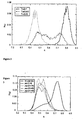
- This domain displays five anti-parallel beta-sheets and an alpha-helix and is composed of 60 residues (see Fig. 1 ).
- the HIV-1-PR is a homodimer formed by chains containing 99 aa each ( Fig. 9 ).
- Peptides displaying a sequence identical to the segments 83-93 (S 8 ) and to the segments 9-19 and 61-70 of the wild-type HIV-1-PR monomer were obtained by solid-phase synthesis.
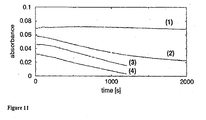
- Each solution was prepared adding 0.8 mM NaCl, 1nM EDTA and 1mM dithiothritol to a 20 mM phosphate buffer (pH 6), further adding 2.78 ⁇ g of HIV-1 Protease and 5.4 ⁇ M peptide (i.e., the concentration of each of the different peptides is 3 times that of the protease).
- Spectroscopic assays were performed making use of a chromogenic substrate [34], measuring its change in absorbance with respect to time at 310 nm [36]. Some of the corresponding results are reported in Fig. 11 . It is seen that peptide 83-93 decreases consistently the activity of the protease and can thus be used as inhibitor. This sequence can thus be interpreted as giving rise to a LES of the HIV-1-PR. As observed from Fig. 9 , this LES is well structured, containing a number of internal native contacts (which stabilize an alpha-helix turn). It thus qualifies as a particularly specific peptide inhibitor. It is worth noting that mutations observed in this fragment [35] or in its complementary fragment (i.e.
- Peptide #1 1 coincides with the segment starting with amino acid 1 and ending with amino acid L
- the maximum number of peptides to be produced is i m +1.
- the quantity z controls the overlap allowed between two consecutive peptides.
- the recommended values of z 2,3 leading to 50% and 67% overlap.
- i m 27 and 67% overlap.
- the number corresponding to the first and the last amino acid of each of the 28 possible peptides are collected in Table 2.
- Table 2 An example of division of the sequence of HIV-1-PR into peptides.
- the columns indicate, respectively, the identification number of the peptide, the index i (see text), the corresponding fragment in the HIV-1-PR sequence, and (in roman numbers) an example of a non-sequential inhibitory test, starting from the centre of the protein and the C and N terminal ends essentially simultaneously. In this case the search is concluded after twelve steps when the peptide #26 is tested.
Landscapes
- Health & Medical Sciences (AREA)
- Life Sciences & Earth Sciences (AREA)
- Engineering & Computer Science (AREA)
- Chemical & Material Sciences (AREA)
- Molecular Biology (AREA)
- Medicinal Chemistry (AREA)
- General Health & Medical Sciences (AREA)
- Hematology (AREA)
- Urology & Nephrology (AREA)
- Immunology (AREA)
- Biomedical Technology (AREA)
- Chemical Kinetics & Catalysis (AREA)
- Organic Chemistry (AREA)
- Animal Behavior & Ethology (AREA)
- Nuclear Medicine, Radiotherapy & Molecular Imaging (AREA)
- Public Health (AREA)
- Veterinary Medicine (AREA)
- General Chemical & Material Sciences (AREA)
- Pharmacology & Pharmacy (AREA)
- Physics & Mathematics (AREA)
- Bioinformatics & Cheminformatics (AREA)
- Proteomics, Peptides & Aminoacids (AREA)
- Cell Biology (AREA)
- Food Science & Technology (AREA)
- Pathology (AREA)
- Analytical Chemistry (AREA)
- Microbiology (AREA)
- General Physics & Mathematics (AREA)
- Biochemistry (AREA)
- Biotechnology (AREA)
- Bioinformatics & Computational Biology (AREA)
- Oncology (AREA)
- Biophysics (AREA)
- Communicable Diseases (AREA)
- Virology (AREA)
- Diabetes (AREA)
- Tropical Medicine & Parasitology (AREA)
- Obesity (AREA)
- AIDS & HIV (AREA)
- Neurology (AREA)
Claims (10)
- Procédé pour identifier des inhibiteurs peptidiques du repliement d'une protéine contenant N acides aminés, lequel procédé consiste à :a) concevoir des peptides M d'une longueur L typiquement de l'ordre de 10 et, en général, comprise entre environ 4 et environ 20, chacun présentant une séquence identique à un segment de la protéine considérée de sorte à couvrir toute la longueur de la protéine avec un certain degré de chevauchement, où M est un nombre entier qui varie typiquement entre 5 et 50 ;b) préparer les peptides M conçus, soit de manière individuelle ou en groupes ;c) préparer des solutions M, chacune contenant la protéine considérée et un des peptides selon un ratio molaire approprié, et incuber chacune des solutions à 37 °C ;d) évaluer l'efficacité inhibitrice du peptide dans les solutions ci-dessus ou le degré de non repliement, ou les deux, au moyen de techniques standard, de sorte à identifier le peptide possédant une activité inhibitrice envers la protéine.
- Procédé selon la revendication 1, où N est compris entre 60 et 150.
- Procédé selon la revendication 1, où la longueur L du peptide est comprise entre 4 et 20.
- Procédé selon la revendication 1, où la longueur du peptide correspond à L = N/10.
- Procédé selon la revendication 1, où l'étape (b) est réalisée en synthétisant les peptides M ou en coupant convenablement la protéine cible, selon des procédés standard.
- Procédé selon la revendication 1, où le ratio molaire peptide/protéine peut varier de 1:1 à 10:1.
- Procédé selon la revendication 5, où le ratio molaire peptide/protéine est de 3 pour 1.
- Procédé selon la revendication 1, où les étapes (b) et (c) peuvent être remplacées par des simulations à l'aide de programmes informatiques.
- Procédé selon la revendication 1, où les étapes (b) et (c) sont réalisées par l'intermédiaire d'essais spectrophotométriques, de tests d'équilibre de sédimentation, de techniques de dichroïsme circulaire ou de résonance magnétique nucléaire.
- Procédé selon la revendication 1, appliqué à chaque domaine de protéines à domaines multiples.
Priority Applications (1)
| Application Number | Priority Date | Filing Date | Title |
|---|---|---|---|
| EP20060762655 EP1904854B9 (fr) | 2005-07-19 | 2006-07-17 | Methode d'identification d'inhibiteurs de pliage de proteines |
Applications Claiming Priority (3)
| Application Number | Priority Date | Filing Date | Title |
|---|---|---|---|
| EP20050015597 EP1746422A1 (fr) | 2005-07-19 | 2005-07-19 | Procédé d'identification d'inhibiteurs de pliage de protéine |
| PCT/EP2006/007018 WO2007009727A1 (fr) | 2005-07-19 | 2006-07-17 | Methode d'identification d'inhibiteurs de pliage de proteines |
| EP20060762655 EP1904854B9 (fr) | 2005-07-19 | 2006-07-17 | Methode d'identification d'inhibiteurs de pliage de proteines |
Publications (3)
| Publication Number | Publication Date |
|---|---|
| EP1904854A1 EP1904854A1 (fr) | 2008-04-02 |
| EP1904854B1 EP1904854B1 (fr) | 2009-03-25 |
| EP1904854B9 true EP1904854B9 (fr) | 2009-12-16 |
Family
ID=34937871
Family Applications (2)
| Application Number | Title | Priority Date | Filing Date |
|---|---|---|---|
| EP20050015597 Withdrawn EP1746422A1 (fr) | 2005-07-19 | 2005-07-19 | Procédé d'identification d'inhibiteurs de pliage de protéine |
| EP20060762655 Not-in-force EP1904854B9 (fr) | 2005-07-19 | 2006-07-17 | Methode d'identification d'inhibiteurs de pliage de proteines |
Family Applications Before (1)
| Application Number | Title | Priority Date | Filing Date |
|---|---|---|---|
| EP20050015597 Withdrawn EP1746422A1 (fr) | 2005-07-19 | 2005-07-19 | Procédé d'identification d'inhibiteurs de pliage de protéine |
Country Status (12)
| Country | Link |
|---|---|
| US (1) | US20080199965A1 (fr) |
| EP (2) | EP1746422A1 (fr) |
| JP (1) | JP5280202B2 (fr) |
| CN (1) | CN101228443B (fr) |
| AT (1) | ATE426817T1 (fr) |
| BR (1) | BRPI0613417A2 (fr) |
| CA (1) | CA2614236A1 (fr) |
| DE (1) | DE602006005932D1 (fr) |
| ES (1) | ES2323654T3 (fr) |
| PT (1) | PT1904854E (fr) |
| WO (1) | WO2007009727A1 (fr) |
| ZA (1) | ZA200800267B (fr) |
Family Cites Families (3)
| Publication number | Priority date | Publication date | Assignee | Title |
|---|---|---|---|---|
| WO1999040435A1 (fr) * | 1998-02-09 | 1999-08-12 | Netzer William J | Inhibiteurs de proteines |
| WO2001034631A2 (fr) * | 1999-11-05 | 2001-05-17 | Axonyx, Inc. | ANALOGUES ET MIMETIQUES PEPTIDIQUES POUVANT ETRE UTILISES IN VIVO POUR TRAITER DES MALADIES ASSOCIEES AU REPLI ANORMAL PROTEIQUE EN DEPOTS AMYLOIDES OU PSEUDO-AMYLOIDES OU LEUR PRECURSEUR PATHOLOGIQUE RICHE EN β-FEUILLE |
| US6689753B1 (en) * | 1999-11-05 | 2004-02-10 | Axonyx, Inc. | β sheet breaker peptide analogs that inhibit β pleated sheet formation in amyloid β-peptide |
-
2005
- 2005-07-19 EP EP20050015597 patent/EP1746422A1/fr not_active Withdrawn
-
2006
- 2006-07-17 JP JP2008521864A patent/JP5280202B2/ja not_active Expired - Fee Related
- 2006-07-17 BR BRPI0613417-3A patent/BRPI0613417A2/pt not_active IP Right Cessation
- 2006-07-17 US US11/995,820 patent/US20080199965A1/en not_active Abandoned
- 2006-07-17 PT PT06762655T patent/PT1904854E/pt unknown
- 2006-07-17 CN CN2006800265608A patent/CN101228443B/zh not_active Expired - Fee Related
- 2006-07-17 CA CA 2614236 patent/CA2614236A1/fr not_active Abandoned
- 2006-07-17 ES ES06762655T patent/ES2323654T3/es active Active
- 2006-07-17 EP EP20060762655 patent/EP1904854B9/fr not_active Not-in-force
- 2006-07-17 ZA ZA200800267A patent/ZA200800267B/xx unknown
- 2006-07-17 WO PCT/EP2006/007018 patent/WO2007009727A1/fr not_active Ceased
- 2006-07-17 DE DE200660005932 patent/DE602006005932D1/de active Active
- 2006-07-17 AT AT06762655T patent/ATE426817T1/de not_active IP Right Cessation
Also Published As
| Publication number | Publication date |
|---|---|
| CN101228443A (zh) | 2008-07-23 |
| CN101228443B (zh) | 2013-03-27 |
| PT1904854E (pt) | 2009-07-01 |
| JP2009501535A (ja) | 2009-01-22 |
| EP1904854A1 (fr) | 2008-04-02 |
| HK1115918A1 (en) | 2008-12-12 |
| EP1746422A1 (fr) | 2007-01-24 |
| ZA200800267B (en) | 2009-04-29 |
| CA2614236A1 (fr) | 2007-01-25 |
| DE602006005932D1 (de) | 2009-05-07 |
| WO2007009727A1 (fr) | 2007-01-25 |
| JP5280202B2 (ja) | 2013-09-04 |
| ATE426817T1 (de) | 2009-04-15 |
| EP1904854B1 (fr) | 2009-03-25 |
| BRPI0613417A2 (pt) | 2011-01-11 |
| ES2323654T3 (es) | 2009-07-22 |
| US20080199965A1 (en) | 2008-08-21 |
Similar Documents
| Publication | Publication Date | Title |
|---|---|---|
| Wagner | Characterization of the distribution of internal motions in the basic pancreatic trypsin inhibitor using a large number of internal NMR probes | |
| Weinstein et al. | Ca2+-binding and structural dynamics in the functions of calmodulin | |
| Hansen et al. | Solution structure of the amino-terminal fragment of urokinase-type plasminogen activator | |
| Ashcroft | Mass spectrometry and the amyloid problem—how far can we go in the gas phase? | |
| Tsui et al. | NMR and molecular dynamics studies of the hydration of a zinc finger-DNA complex | |
| Bernadó et al. | Structural characterization of the active and inactive states of Src kinase in solution by small-angle X-ray scattering | |
| Xie et al. | Photoinduced fibrils formation of chicken egg white lysozyme under native conditions | |
| Hayashi et al. | Nef of HIV‐1 interacts directly with calcium‐bound calmodulin | |
| Kit et al. | The role of solvation on the conformational landscape of α-synuclein | |
| Forcada-Nadal et al. | The PipX protein, when not bound to its targets, has its signaling C-terminal helix in a flexed conformation | |
| Haidar et al. | Effects of hydrogen/deuterium exchange on protein stability in solution and in the gas phase | |
| Fitzkee et al. | Measuring rapid hydrogen exchange in the homodimeric 36 kDa HIV‐1 integrase catalytic core domain | |
| EP1904854B9 (fr) | Methode d'identification d'inhibiteurs de pliage de proteines | |
| Miller et al. | Targeting the CRD F‐face of human galectin‐3 and allosterically modulating glycan binding by angiostatic PTX008 and a structurally optimized derivative | |
| Chance | Mass spectrometry analysis for protein-protein interactions and dynamics | |
| Pérez et al. | Structural Study of a New HIV‐1 Entry Inhibitor and Interaction with the HIV‐1 Fusion Peptide in Dodecylphosphocholine Micelles | |
| HK1115918B (en) | Method for the identification of proteins folding inhibitors | |
| Clare | HIV protease: structure-based design | |
| Pellegrini et al. | Structure-based optimization of peptide inhibitors of mammalian ribonucleotide reductase | |
| Munari et al. | Identification of primary and secondary UBA footprints on the surface of ubiquitin in cell‐mimicking crowded solution | |
| Entazul Huque et al. | Carbon-13 NMR studies of the lysine side chains of calmodulin and its proteolytic fragments | |
| Digambaranath et al. | An accurate model of polyglutamine | |
| Beriashvili et al. | Ubiquitin's Conformational Heterogeneity as Discerned by Nuclear Magnetic Resonance Spectroscopy | |
| Blandl et al. | Binding of cations to individual gamma‐carboxyglutamate residues of conantokin‐G and conantokin‐T | |
| CN121606581B (zh) | 一种抑制armc10磷酸化的化合物在制备拮抗锡诱导神经系统损伤的药物中的应用 |
Legal Events
| Date | Code | Title | Description |
|---|---|---|---|
| PUAI | Public reference made under article 153(3) epc to a published international application that has entered the european phase |
Free format text: ORIGINAL CODE: 0009012 |
|
| 17P | Request for examination filed |
Effective date: 20071227 |
|
| AK | Designated contracting states |
Kind code of ref document: A1 Designated state(s): AT BE BG CH CY CZ DE DK EE ES FI FR GB GR HU IE IS IT LI LT LU LV MC NL PL PT RO SE SI SK TR |
|
| DAX | Request for extension of the european patent (deleted) | ||
| 17Q | First examination report despatched |
Effective date: 20080602 |
|
| GRAP | Despatch of communication of intention to grant a patent |
Free format text: ORIGINAL CODE: EPIDOSNIGR1 |
|
| REG | Reference to a national code |
Ref country code: HK Ref legal event code: DE Ref document number: 1115918 Country of ref document: HK |
|
| GRAS | Grant fee paid |
Free format text: ORIGINAL CODE: EPIDOSNIGR3 |
|
| GRAA | (expected) grant |
Free format text: ORIGINAL CODE: 0009210 |
|
| DAX | Request for extension of the european patent (deleted) | ||
| AK | Designated contracting states |
Kind code of ref document: B1 Designated state(s): AT BE BG CH CY CZ DE DK EE ES FI FR GB GR HU IE IS IT LI LT LU LV MC NL PL PT RO SE SI SK TR |
|
| REG | Reference to a national code |
Ref country code: GB Ref legal event code: FG4D |
|
| REG | Reference to a national code |
Ref country code: CH Ref legal event code: EP |
|
| REG | Reference to a national code |
Ref country code: IE Ref legal event code: FG4D |
|
| REF | Corresponds to: |
Ref document number: 602006005932 Country of ref document: DE Date of ref document: 20090507 Kind code of ref document: P |
|
| REG | Reference to a national code |
Ref country code: CH Ref legal event code: NV Representative=s name: JACOBACCI & PARTNERS S.P.A. |
|
| REG | Reference to a national code |
Ref country code: HK Ref legal event code: GR Ref document number: 1115918 Country of ref document: HK |
|
| REG | Reference to a national code |
Ref country code: SE Ref legal event code: TRGR |
|
| REG | Reference to a national code |
Ref country code: PT Ref legal event code: SC4A Free format text: AVAILABILITY OF NATIONAL TRANSLATION Effective date: 20090624 |
|
| REG | Reference to a national code |
Ref country code: ES Ref legal event code: FG2A Ref document number: 2323654 Country of ref document: ES Kind code of ref document: T3 |
|
| PG25 | Lapsed in a contracting state [announced via postgrant information from national office to epo] |
Ref country code: SI Free format text: LAPSE BECAUSE OF FAILURE TO SUBMIT A TRANSLATION OF THE DESCRIPTION OR TO PAY THE FEE WITHIN THE PRESCRIBED TIME-LIMIT Effective date: 20090325 Ref country code: FI Free format text: LAPSE BECAUSE OF FAILURE TO SUBMIT A TRANSLATION OF THE DESCRIPTION OR TO PAY THE FEE WITHIN THE PRESCRIBED TIME-LIMIT Effective date: 20090325 Ref country code: LT Free format text: LAPSE BECAUSE OF FAILURE TO SUBMIT A TRANSLATION OF THE DESCRIPTION OR TO PAY THE FEE WITHIN THE PRESCRIBED TIME-LIMIT Effective date: 20090325 |
|
| PG25 | Lapsed in a contracting state [announced via postgrant information from national office to epo] |
Ref country code: AT Free format text: LAPSE BECAUSE OF FAILURE TO SUBMIT A TRANSLATION OF THE DESCRIPTION OR TO PAY THE FEE WITHIN THE PRESCRIBED TIME-LIMIT Effective date: 20090325 Ref country code: PL Free format text: LAPSE BECAUSE OF FAILURE TO SUBMIT A TRANSLATION OF THE DESCRIPTION OR TO PAY THE FEE WITHIN THE PRESCRIBED TIME-LIMIT Effective date: 20090325 Ref country code: LV Free format text: LAPSE BECAUSE OF FAILURE TO SUBMIT A TRANSLATION OF THE DESCRIPTION OR TO PAY THE FEE WITHIN THE PRESCRIBED TIME-LIMIT Effective date: 20090325 |
|
| NLV1 | Nl: lapsed or annulled due to failure to fulfill the requirements of art. 29p and 29m of the patents act | ||
| PG25 | Lapsed in a contracting state [announced via postgrant information from national office to epo] |
Ref country code: BE Free format text: LAPSE BECAUSE OF FAILURE TO SUBMIT A TRANSLATION OF THE DESCRIPTION OR TO PAY THE FEE WITHIN THE PRESCRIBED TIME-LIMIT Effective date: 20090325 |
|
| PG25 | Lapsed in a contracting state [announced via postgrant information from national office to epo] |
Ref country code: EE Free format text: LAPSE BECAUSE OF FAILURE TO SUBMIT A TRANSLATION OF THE DESCRIPTION OR TO PAY THE FEE WITHIN THE PRESCRIBED TIME-LIMIT Effective date: 20090325 Ref country code: CZ Free format text: LAPSE BECAUSE OF FAILURE TO SUBMIT A TRANSLATION OF THE DESCRIPTION OR TO PAY THE FEE WITHIN THE PRESCRIBED TIME-LIMIT Effective date: 20090325 |
|
| PG25 | Lapsed in a contracting state [announced via postgrant information from national office to epo] |
Ref country code: NL Free format text: LAPSE BECAUSE OF FAILURE TO SUBMIT A TRANSLATION OF THE DESCRIPTION OR TO PAY THE FEE WITHIN THE PRESCRIBED TIME-LIMIT Effective date: 20090325 Ref country code: IS Free format text: LAPSE BECAUSE OF FAILURE TO SUBMIT A TRANSLATION OF THE DESCRIPTION OR TO PAY THE FEE WITHIN THE PRESCRIBED TIME-LIMIT Effective date: 20090725 Ref country code: RO Free format text: LAPSE BECAUSE OF FAILURE TO SUBMIT A TRANSLATION OF THE DESCRIPTION OR TO PAY THE FEE WITHIN THE PRESCRIBED TIME-LIMIT Effective date: 20090325 Ref country code: SK Free format text: LAPSE BECAUSE OF FAILURE TO SUBMIT A TRANSLATION OF THE DESCRIPTION OR TO PAY THE FEE WITHIN THE PRESCRIBED TIME-LIMIT Effective date: 20090325 |
|
| PG25 | Lapsed in a contracting state [announced via postgrant information from national office to epo] |
Ref country code: BG Free format text: LAPSE BECAUSE OF FAILURE TO SUBMIT A TRANSLATION OF THE DESCRIPTION OR TO PAY THE FEE WITHIN THE PRESCRIBED TIME-LIMIT Effective date: 20090625 Ref country code: DK Free format text: LAPSE BECAUSE OF FAILURE TO SUBMIT A TRANSLATION OF THE DESCRIPTION OR TO PAY THE FEE WITHIN THE PRESCRIBED TIME-LIMIT Effective date: 20090325 |
|
| PLBE | No opposition filed within time limit |
Free format text: ORIGINAL CODE: 0009261 |
|
| STAA | Information on the status of an ep patent application or granted ep patent |
Free format text: STATUS: NO OPPOSITION FILED WITHIN TIME LIMIT |
|
| PG25 | Lapsed in a contracting state [announced via postgrant information from national office to epo] |
Ref country code: MC Free format text: LAPSE BECAUSE OF NON-PAYMENT OF DUE FEES Effective date: 20090731 |
|
| 26N | No opposition filed |
Effective date: 20091229 |
|
| PG25 | Lapsed in a contracting state [announced via postgrant information from national office to epo] |
Ref country code: IE Free format text: LAPSE BECAUSE OF NON-PAYMENT OF DUE FEES Effective date: 20090717 |
|
| PG25 | Lapsed in a contracting state [announced via postgrant information from national office to epo] |
Ref country code: GR Free format text: LAPSE BECAUSE OF FAILURE TO SUBMIT A TRANSLATION OF THE DESCRIPTION OR TO PAY THE FEE WITHIN THE PRESCRIBED TIME-LIMIT Effective date: 20090626 |
|
| PG25 | Lapsed in a contracting state [announced via postgrant information from national office to epo] |
Ref country code: LU Free format text: LAPSE BECAUSE OF NON-PAYMENT OF DUE FEES Effective date: 20090717 |
|
| PG25 | Lapsed in a contracting state [announced via postgrant information from national office to epo] |
Ref country code: HU Free format text: LAPSE BECAUSE OF FAILURE TO SUBMIT A TRANSLATION OF THE DESCRIPTION OR TO PAY THE FEE WITHIN THE PRESCRIBED TIME-LIMIT Effective date: 20090926 |
|
| PG25 | Lapsed in a contracting state [announced via postgrant information from national office to epo] |
Ref country code: TR Free format text: LAPSE BECAUSE OF FAILURE TO SUBMIT A TRANSLATION OF THE DESCRIPTION OR TO PAY THE FEE WITHIN THE PRESCRIBED TIME-LIMIT Effective date: 20090325 |
|
| PG25 | Lapsed in a contracting state [announced via postgrant information from national office to epo] |
Ref country code: CY Free format text: LAPSE BECAUSE OF FAILURE TO SUBMIT A TRANSLATION OF THE DESCRIPTION OR TO PAY THE FEE WITHIN THE PRESCRIBED TIME-LIMIT Effective date: 20090325 |
|
| PGFP | Annual fee paid to national office [announced via postgrant information from national office to epo] |
Ref country code: CH Payment date: 20120529 Year of fee payment: 7 |
|
| PGFP | Annual fee paid to national office [announced via postgrant information from national office to epo] |
Ref country code: GB Payment date: 20120719 Year of fee payment: 7 Ref country code: SE Payment date: 20120723 Year of fee payment: 7 |
|
| PGFP | Annual fee paid to national office [announced via postgrant information from national office to epo] |
Ref country code: IT Payment date: 20120716 Year of fee payment: 7 Ref country code: ES Payment date: 20120530 Year of fee payment: 7 Ref country code: FR Payment date: 20120816 Year of fee payment: 7 |
|
| PGFP | Annual fee paid to national office [announced via postgrant information from national office to epo] |
Ref country code: DE Payment date: 20121001 Year of fee payment: 7 Ref country code: PT Payment date: 20120118 Year of fee payment: 7 |
|
| REG | Reference to a national code |
Ref country code: PT Ref legal event code: MM4A Free format text: LAPSE DUE TO NON-PAYMENT OF FEES Effective date: 20140117 |
|
| REG | Reference to a national code |
Ref country code: CH Ref legal event code: PL |
|
| REG | Reference to a national code |
Ref country code: SE Ref legal event code: EUG |
|
| GBPC | Gb: european patent ceased through non-payment of renewal fee |
Effective date: 20130717 |
|
| REG | Reference to a national code |
Ref country code: DE Ref legal event code: R119 Ref document number: 602006005932 Country of ref document: DE Effective date: 20140201 |
|
| REG | Reference to a national code |
Ref country code: FR Ref legal event code: ST Effective date: 20140331 |
|
| PG25 | Lapsed in a contracting state [announced via postgrant information from national office to epo] |
Ref country code: SE Free format text: LAPSE BECAUSE OF NON-PAYMENT OF DUE FEES Effective date: 20130718 Ref country code: LI Free format text: LAPSE BECAUSE OF NON-PAYMENT OF DUE FEES Effective date: 20130731 Ref country code: DE Free format text: LAPSE BECAUSE OF NON-PAYMENT OF DUE FEES Effective date: 20140201 Ref country code: GB Free format text: LAPSE BECAUSE OF NON-PAYMENT OF DUE FEES Effective date: 20130717 Ref country code: CH Free format text: LAPSE BECAUSE OF NON-PAYMENT OF DUE FEES Effective date: 20130731 |
|
| PG25 | Lapsed in a contracting state [announced via postgrant information from national office to epo] |
Ref country code: FR Free format text: LAPSE BECAUSE OF NON-PAYMENT OF DUE FEES Effective date: 20130731 Ref country code: IT Free format text: LAPSE BECAUSE OF NON-PAYMENT OF DUE FEES Effective date: 20130717 |
|
| PG25 | Lapsed in a contracting state [announced via postgrant information from national office to epo] |
Ref country code: PT Free format text: LAPSE BECAUSE OF NON-PAYMENT OF DUE FEES Effective date: 20140117 |
|
| REG | Reference to a national code |
Ref country code: ES Ref legal event code: FD2A Effective date: 20140807 |
|
| PG25 | Lapsed in a contracting state [announced via postgrant information from national office to epo] |
Ref country code: ES Free format text: LAPSE BECAUSE OF NON-PAYMENT OF DUE FEES Effective date: 20130718 |