EP1905833A2 - Polypeptide, die an der Biosynthese von Spiramycinen beteiligt sind, Nukleotidsequenzen, die diese Polypetide kodieren, und ihre Anwendungen - Google Patents
Polypeptide, die an der Biosynthese von Spiramycinen beteiligt sind, Nukleotidsequenzen, die diese Polypetide kodieren, und ihre Anwendungen Download PDFInfo
- Publication number
- EP1905833A2 EP1905833A2 EP07019306A EP07019306A EP1905833A2 EP 1905833 A2 EP1905833 A2 EP 1905833A2 EP 07019306 A EP07019306 A EP 07019306A EP 07019306 A EP07019306 A EP 07019306A EP 1905833 A2 EP1905833 A2 EP 1905833A2
- Authority
- EP
- European Patent Office
- Prior art keywords
- gene
- seq
- microorganism
- sequence
- polypeptide
- Prior art date
- Legal status (The legal status is an assumption and is not a legal conclusion. Google has not performed a legal analysis and makes no representation as to the accuracy of the status listed.)
- Granted
Links
- 0 CC(*C(C(C)C1C)OC(C(*)C(CBO*CC=CC=C2)OC)C(C*)CC(C)C2=*)C1O Chemical compound CC(*C(C(C)C1C)OC(C(*)C(CBO*CC=CC=C2)OC)C(C*)CC(C)C2=*)C1O 0.000 description 2
- IPHDCGUDXMNRFB-UHFFFAOYSA-N CC(CC1)OC(C)C1N(C)C#N Chemical compound CC(CC1)OC(C)C1N(C)C#N IPHDCGUDXMNRFB-UHFFFAOYSA-N 0.000 description 1
- WGJLPYLYWKMMTL-UHFFFAOYSA-N CC(CC1)OCC1N(C)C Chemical compound CC(CC1)OCC1N(C)C WGJLPYLYWKMMTL-UHFFFAOYSA-N 0.000 description 1
Images

















Classifications
-
- C—CHEMISTRY; METALLURGY
- C07—ORGANIC CHEMISTRY
- C07K—PEPTIDES
- C07K14/00—Peptides having more than 20 amino acids; Gastrins; Somatostatins; Melanotropins; Derivatives thereof
- C07K14/195—Peptides having more than 20 amino acids; Gastrins; Somatostatins; Melanotropins; Derivatives thereof from bacteria
- C07K14/36—Peptides having more than 20 amino acids; Gastrins; Somatostatins; Melanotropins; Derivatives thereof from bacteria from Actinomyces; from Streptomyces (G)
-
- C—CHEMISTRY; METALLURGY
- C12—BIOCHEMISTRY; BEER; SPIRITS; WINE; VINEGAR; MICROBIOLOGY; ENZYMOLOGY; MUTATION OR GENETIC ENGINEERING
- C12N—MICROORGANISMS OR ENZYMES; COMPOSITIONS THEREOF; PROPAGATING, PRESERVING, OR MAINTAINING MICROORGANISMS; MUTATION OR GENETIC ENGINEERING; CULTURE MEDIA
- C12N1/00—Microorganisms; Compositions thereof; Processes of propagating, maintaining or preserving microorganisms or compositions thereof; Processes of preparing or isolating a composition containing a microorganism; Culture media therefor
- C12N1/20—Bacteria; Culture media therefor
- C12N1/205—Bacterial isolates
-
- C—CHEMISTRY; METALLURGY
- C12—BIOCHEMISTRY; BEER; SPIRITS; WINE; VINEGAR; MICROBIOLOGY; ENZYMOLOGY; MUTATION OR GENETIC ENGINEERING
- C12N—MICROORGANISMS OR ENZYMES; COMPOSITIONS THEREOF; PROPAGATING, PRESERVING, OR MAINTAINING MICROORGANISMS; MUTATION OR GENETIC ENGINEERING; CULTURE MEDIA
- C12N15/00—Mutation or genetic engineering; DNA or RNA concerning genetic engineering, vectors, e.g. plasmids, or their isolation, preparation or purification; Use of hosts therefor
- C12N15/09—Recombinant DNA-technology
- C12N15/11—DNA or RNA fragments; Modified forms thereof; Non-coding nucleic acids having a biological activity
- C12N15/52—Genes encoding for enzymes or proenzymes
-
- C—CHEMISTRY; METALLURGY
- C12—BIOCHEMISTRY; BEER; SPIRITS; WINE; VINEGAR; MICROBIOLOGY; ENZYMOLOGY; MUTATION OR GENETIC ENGINEERING
- C12N—MICROORGANISMS OR ENZYMES; COMPOSITIONS THEREOF; PROPAGATING, PRESERVING, OR MAINTAINING MICROORGANISMS; MUTATION OR GENETIC ENGINEERING; CULTURE MEDIA
- C12N9/00—Enzymes; Proenzymes; Compositions thereof; Processes for preparing, activating, inhibiting, separating or purifying enzymes
-
- C—CHEMISTRY; METALLURGY
- C12—BIOCHEMISTRY; BEER; SPIRITS; WINE; VINEGAR; MICROBIOLOGY; ENZYMOLOGY; MUTATION OR GENETIC ENGINEERING
- C12P—FERMENTATION OR ENZYME-USING PROCESSES TO SYNTHESISE A DESIRED CHEMICAL COMPOUND OR COMPOSITION OR TO SEPARATE OPTICAL ISOMERS FROM A RACEMIC MIXTURE
- C12P19/00—Preparation of compounds containing saccharide radicals
- C12P19/44—Preparation of O-glycosides, e.g. glucosides
- C12P19/60—Preparation of O-glycosides, e.g. glucosides having an oxygen of the saccharide radical directly bound to a non-saccharide heterocyclic ring or a condensed ring system containing a non-saccharide heterocyclic ring, e.g. coumermycin, novobiocin
- C12P19/62—Preparation of O-glycosides, e.g. glucosides having an oxygen of the saccharide radical directly bound to a non-saccharide heterocyclic ring or a condensed ring system containing a non-saccharide heterocyclic ring, e.g. coumermycin, novobiocin the hetero ring having eight or more ring members and only oxygen as ring hetero atoms, e.g. erythromycin, spiramycin, nystatin
-
- C—CHEMISTRY; METALLURGY
- C12—BIOCHEMISTRY; BEER; SPIRITS; WINE; VINEGAR; MICROBIOLOGY; ENZYMOLOGY; MUTATION OR GENETIC ENGINEERING
- C12R—INDEXING SCHEME ASSOCIATED WITH SUBCLASSES C12C - C12Q, RELATING TO MICROORGANISMS
- C12R2001/00—Microorganisms ; Processes using microorganisms
- C12R2001/01—Bacteria or Actinomycetales ; using bacteria or Actinomycetales
- C12R2001/465—Streptomyces
Definitions
- the present invention relates to the isolation and identification of novel genes of the biosynthetic pathway of spiramycins and novel polypeptides involved in this biosynthesis. It also relates to the use of these genes in order to increase production rates and the purity of spiramycin produced.
- the invention also relates to the use of these genes for the construction of mutants which can lead to the synthesis of new antibiotics or forms derived from spiramycins.
- the invention also relates to the molecules produced by the expression of these genes and finally pharmacologically active compositions of a molecule produced by the expression of such genes.
- Streptomyces are Gram positive filamentous soil bacteria. They play an important role in the decomposition and mineralization of organic matter thanks to the great diversity of the degradative enzymes that they secrete. They present phenomena of morphological differentiation unique in prokaryotes accompanied by a metabolic differentiation characterized by the production of secondary metabolites with an extraordinary diversity of chemical structures and biological activities. These metabolites include spiramycins naturally produced by the bacterium Streptomyces ambofaciens .
- Spiramycin is a macrolide antibiotic useful in both veterinary medicine and human medicine. Macrolides are characterized by the presence of a lactone ring on which are grafted one or more sugars. Streptomyces ambofaciens naturally produces spiramycin I, II and III (see Figure 1), however the antibiotic activity of spiramycin I is significantly higher than that of Spiramycins II and III (Liu et al ., 1999).
- the spiramycin I molecule consists of a lactone macrocycle called platenolide and three sugars: forosamine, mycaminosis and mycarose (see Figure 1).
- the antibiotic activity of spiramycins is due to an inhibition of protein synthesis in prokaryotes by a mechanism involving the binding of the antibiotic to the bacterial ribosome.
- Spiramycins belong to the broad class of polyketides which groups complex molecules particularly abundant in microorganisms of the soil. These molecules are grouped together not by analogy of structure but by a certain similarity in the steps of their biosynthetic pathway. Indeed, polyketides are produced by a complex series of reactions but have in common to have in their path of biosynthesis a series of reactions catalyzed by one or more enzymes called "polyketide synthases" (PKS).
- PPS polyketide synthases
- the biosynthetic pathway of spiramycins is a complex process and it would be desirable to identify and suppress the spurious reactions that may occur during this process.
- the purpose of such manipulation is to obtain a purer antibiotic and / or an improvement in productivity.
- Streptomyces ambofaciens naturally produces spiramycin I, II and III (see Figure 1), however the antibiotic activity of spiramycin I is significantly higher than spiramycin II and III. (Liu et al ., 1999). It would therefore be desirable to have strains producing only spiramycin I.
- the present invention results from the cloning of genes whose product is involved in the biosynthesis of spiramycins.
- the invention firstly relates to novel genes of the spiramycin biosynthetic pathway and novel polypeptides involved in this biosynthesis.
- isolated in the sense of the present invention means a biological material (nucleic acid or protein) that has been removed from its original environment (the environment in which it is naturally located).
- a polynucleotide naturally occurring in a plant or animal is not isolated.
- the same polynucleotide separated from the adjacent nucleic acids in which it is naturally inserted into the genome of the plant or animal is considered “isolated”.
- Such a polynucleotide may be included in a vector and / or such a polynucleotide may be included in a composition and still remain in the isolated state because the vector or composition does not constitute its natural environment.
- purified does not require that the material be present in a form of absolute purity, exclusive of the presence of other compounds, rather it is a relative definition.
- a polynucleotide is in the "purified" state after purification of the starting material or natural material of at least one order of magnitude, preferably 2 or 3 and preferably 4 or 5 orders of magnitude.
- ORF Open Reading Frame
- nucleotide sequence may be used to denote either a polynucleotide or a nucleic acid.
- nucleotide sequence encompasses the genetic material itself and is therefore not restricted to information about its sequence.
- nucleic acid includes RNA sequences, DNA sequences, cDNA sequences or hybrid RNA / DNA sequences of more than one nucleotide, regardless of in the simple chain form or in the form of duplex.
- nucleotide refers to both naturally occurring nucleotides (A, T, G, C) as well as modified nucleotides that include at least one modification such as (1) a purine analogue, (2) an analogue of a purine, a pyrimidine, or (3) a similar sugar, examples of such modified nucleotides being described for example in the application PCT No. WO 95/04 064 .
- a first polynucleotide is considered to be "complementary" to a second polynucleotide when each base of the first polynucleotide is matched to the complementary base of the second polynucleotide whose orientation is reversed.
- the complementary bases are A and T (or A and U), or C and G.
- genes of the spiramycin biosynthetic pathway also includes regulatory genes and genes conferring resistance to producing microorganisms.
- fragment of a reference nucleic acid according to the invention, a nucleotide sequence of reduced length relative to the reference nucleic acid and comprising, on the common part, a nucleotide sequence identical to the acid reference nuclei.
- Such a “fragment” of nucleic acid according to the invention may optionally be included in a larger polynucleotide of which it is constitutive.
- Such fragments comprise or alternatively consist of polynucleotides of length ranging from 8, 10, 12, 15, 18, 20 to 25, 30, 40, 50, 60, 70, 80, 90, 100, 150, 200, 250. , 300, 350, 400, 450, 500, 550, 600, 650, 700, 750, 800, 850, 900, 950, 1000, 1050, 1100, 1150, 1200, 1250, 1300, 1350, 1400, 1450, 1500 , 1550, 1600, 1650, 1700, 1750, 1800, 1850 or 1900 consecutive nucleotides of a nucleic acid according to the invention.
- Such fragments may, where appropriate, be included within a larger polypeptide of which they are part.
- Such fragments of a polypeptide according to the invention may have a length of 10, 15, 20, 30 to 40, 50, 60, 70, 80, 90, 100, 120, 140, 160, 180, 200, 220, 240, 260, 280, 300, 320, 340, 360, 380, 400, 420, 440, 460, 480, 500, 520, 540, 560, 580, 600, 620 or 640 amino acids.
- Highly stringent hybridization conditions within the meaning of the present invention will be understood to mean hybridization conditions that discriminate against the hybridization of non-homologous nucleic acid strands.
- Highly stringent hybridization conditions can be described, for example, as hybridization conditions in the buffer described by Church & Gilbert (Church & Gilbert, 1984) at a temperature between 55 ° C and 65 ° C, preferably the hyridation temperature is 55 ° C, even more preferably the hybridization temperature is 60 ° C and most preferably the hybridization temperature is 65 ° C, followed by one or more washes performed in 2X SSC buffer (1X SSC buffer corresponds to a 0.15M aqueous NaCl solution, 15 mM sodium citrate) at a temperature between 55 ° C and 65 ° C, preferably this temperature is 55 ° C, even more preferably this temperature is 60 ° C and quite preferably this temperature is 65 ° C, followed by one or more washes in 0.5X SSC buffer at a temperature between 55 °
- hybridization conditions described above can be adapted as a function of the length of the nucleic acid whose hybridization is sought or of the type of marking chosen, according to techniques known to those skilled in the art. . Suitable hybridization conditions may for example be adapted according to the work of F. Ausubel et al (2002).
- variant of a nucleic acid is meant a nucleic acid which differs from one or more bases relative to the reference polynucleotide.
- a variant nucleic acid may be of natural origin, such as a naturally occurring allelic variant, or may also be a non-natural variant obtained for example by mutagenesis techniques.
- the differences between the reference nucleic acid and the variant nucleic acid are reduced so that the nucleotide sequences of the reference nucleic acid and the variant nucleic acid are very close and, in many regions , identical.
- the nucleotide modifications present in a variant nucleic acid can be silent, which means that they do not alter the amino acid sequences encoded by said variant nucleic acid.
- nucleotide changes in a variant nucleic acid may also result from substitutions, additions, deletions in the polypeptide encoded by the variant nucleic acid relative to the peptides encoded by the reference nucleic acid.
- nucleotide modifications in the coding regions may produce conservative or non-conservative substitutions in the amino acid sequence.
- the variant nucleic acids according to the invention encode polypeptides which retain substantially the same function or biological activity as the polypeptide of the reference nucleic acid or the capacity to be recognized by antibodies directed against the polypeptides encoded by the initial nucleic acid.
- nucleic acids will thus encode mutated forms of the polypeptides, the systematic study of which will make it possible to deduce the structure-activity relationships of the proteins in question.
- variant of a polypeptide according to the invention is meant mainly a polypeptide whose amino acid sequence contains one or more substitutions, additions or deletions of at least one amino acid residue, with respect to the sequence of amino acids of the reference polypeptide, it being understood that the amino acid substitutions may be indifferently conservative or non-conservative.
- the variant polypeptides according to the invention retain substantially the same function or biological activity as the reference polypeptide or the ability to be recognized by antibodies directed against the initial polypeptides.
- polypeptide having "similar activity" to a reference polypeptide within the meaning of the invention is meant a polypeptide having a biological activity close to, but not necessarily identical to, that of the reference polypeptide as measured in a biological assay suitable for measuring the biological activity of the reference polypeptide.
- hybrid antibiotic within the meaning of the invention is meant a compound generated by the construction of an artificial biosynthetic pathway using recombinant DNA technology.
- the present invention more particularly relates to new genes of the biosynthetic pathway of spiramycins and new polypeptides involved in this biosynthesis as presented in the detailed description below.
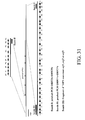
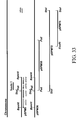
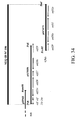
- the 34 open reading frames of this type occupying a region of approximately 41.7 kb (see SEQ ID No. 1 having a first region of 31 kb containing 25 ORFs and SEQ ID No. 140 having a region of about 12.1 kb including 1.4 kb overlap the previous sequence (SEQ ID No. 1) and about 10.7 kb correspond to the rest of the sequence, the latter part of about 10.7 kb containing 9 additional ORFs (of which a partial sequence ORF, see also FIGS. 3 and 37 and below), have been identified upstream of the 5 genes coding for PKS and occupying a region of approximately 11.1 kb (SEQ ID No. 2 and Figure 3) have been identified downstream of the PKS genes.
- the 10 genes located downstream of the 5 PKS genes have been named orf1 * c, orf2 * c, orf3 * c, orf4 * c, orf5 *, orf6 *, orf7 * c, orf8 *, orf9 *, orf10 * (SEQ ID Nos. 3, 5, 7, 9, 11, 13, 15, 17, 19 and 21).
- the "c” added in the name of the gene signifying for the ORF in question that the coding sequence is in the reverse orientation (the coding strand is therefore the complementary strand of the sequence given in SEQ ID No. 2 for these genes) .
- the 34 ORFs upstream of the PKS genes have been named orf1, orf2, orf3, orf4, orf5, orf6, orf7, orf8, orf9c, orf10, orf11c, orf12, orf13c, orf14, orf15c, orf16 , orf17, orf18, orf19, orj20, orf21c, orj22c, orf23c, orf24c, orf25c, orf26, orf27, orf28c, orf29, orf30c, orf31, orf32c, orf33 and orf34c (SEQ ID NO: 23, 25, 28, 30, 34, 36, 40, 43, 45, 47, 49, 53, 60, 62, 64, 66, 68, 70, 72, 74, 76, 78, 80, 82, 84, 107, 109, 111, 113, 115, 118, 120, 141, 143, 145,
- FIG. 3 A schematic representation of the organization of the region is presented in FIG. 3.
- genes identified downstream of the genes encoding PKS 9 appear to be involved in spiramycin biosynthesis or resistance. These are the following 9 genes: orf1 * c, orf2 * c, orf3 * c, orf4 * c, orf5 *, orf6 *, orf7 * c, orf8 * and orf9 *.
- the "c” added in the name of the gene indicates that the coding sequence is in the reverse orientation (the coding strand is therefore the complementary strand of the sequence given in SEQ ID No. 2 for these genes).
- the methods used consist in performing a gene replacement.
- the target gene to be interrupted is replaced by a copy of this gene interrupted by a cassette conferring resistance to an antibiotic (for example apramycin, geneticin or hygromycin).
- the cassettes used are bordered on both sides by translation termination codons in all the reading phases and by active transcription terminators in Streptomyces.
- the insertion of the cassette into the target gene may or may not be accompanied by a deletion in this target gene.
- the size of the regions flanking the cassette can range from a few hundred to several thousand base pairs.
- a second type of cassette can be used for the inactivation of genes: cassettes called "excisable cassettes".
- cassettes have the advantage of being excised in Streptomyces by a specific site recombination event after being introduced into the genome of S. ambofaciens .
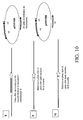
- the goal is to inactivate certain genes in Streptomyces strains without leaving in the final strain of selection markers or large DNA sequences not belonging to the strain. After excision there remains only a short sequence of about thirty base pairs (called “scarred” site) in the genome of the strain (see Figure 10).
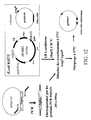
- the implementation of this system consists, first of all, in the replacement of the wild-type copy of the target gene (by virtue of two homologous recombination events, see FIG. 9) by a construction in which an excisable cassette has been inserted in this system. target gene.
- the insertion of this cassette is accompanied by a deletion in the target gene (see Figure 9).
- the excision of the excisable cassette of the genome of the strain is caused.
- the excisable cassette operates by means of a site-specific recombination system and has the advantage of allowing the production of mutants of Streptomyces not ultimately carrying a resistance gene. It also avoids possible polar effects on the expression of genes located downstream of the inactivated gene (s) (see Figure 10).
- the strains thus constructed were tested for their production in spiramycins.
- the orf1 * c gene encodes a protein having an identity of 66% (determined by the BLAST program) with the tylMI gene encoded protein which encodes an N-methyltransferase involved in the tylosin biosynthesis and catalyzing 3-N-methylation during mycaminosis production in Streptomyces fradiae (Gandecha, AR et al ., 1997; GenBank accession number: CAA57473; BLAST score: 287).
- the orf2 * c gene encodes a protein having a relatively high similarity (35% identity) with a protein encoded by the tylMIII gene encoding a NDP hexose 3,4 isomerase involved in the biosynthesis of tylosin in Streptomyces fradiae (Gandecha, AR , et al ., 1997; GenBank Access Number: CAA57471; BMAST Score: 130).
- the orf3 * c gene encodes a protein with relatively high similarity (59% identity) with a protein encoded by the tylMII gene encoding a glycosyltransferase involved in the biosynthesis of tylosin in Streptomyces fradiae (Gandecha, AR et al., 1997).
- GenBank Accession Number: CAA57472; BLAST Score: 4478 This similarity to a protein involved in the biosynthetic pathway of another proximal antibiotic strongly suggests that the orf * 3c gene encodes a glycosyltransferase.
- the protein encoded by the orf3 * c gene has a strong similarity with other proteins of similar function in other organisms (see Table 4).
- the orf4 * c gene encodes a protein with relatively strong similarity to several crotonyl-CoA reductases.
- the protein encoded by orf4 * c has a significant similarity to a crotonyl CoA reductase from Streptomyces coelicolor (Redenbach, M et al ., 1996; GenBank Accession Number: NP_630556; BLAST: 772).
- This similarity to a protein involved in the biosynthetic pathway of another nearby antibiotic strongly suggests that the orf4 * c gene also encodes a crotonyl-CoA reductase.
- the orf6 * gene has some similarity to the mdmB gene present in Streptomyces mycarofaciens (Hara and Hutchisnson, 1992, GenBank accession number: A42719, BLAST score: 489) producing macrolide antibiotic. In this producer, the gene is involved in the acylation of the lactone ring. The orf6 * gene therefore encodes an acyltransferase. This hypothesis is supported by the fact that the protein encoded by the orf6 * gene shows strong similarity with other proteins of similar function in other organisms (see Table 6).
- the orf5 * gene encodes a protein with relatively strong similarity to several O-methyltransferases.
- the protein encoded by orf5 * has a significant similarity with an O-methyltransferase (EC 2.1.1.-) MdmC of Streptomyces mycarofaciens (Hara & Hutchinson, 1992, GenBank accession number: B42719, BLAST score: 355).
- This similarity to a protein involved in the biosynthetic pathway of another antibiotic strongly suggests that the orf5 * gene also encodes an O-methyltransferase.
- the orf5 * gene would be involved in the formation of precursors incorporated into the lactone ring.
- the product of the orf5 * gene is also relatively close to FkbG which is responsible for the methylation of hydroxymalonyl-ACP according to (Wu et al., 2000, Hoffmeister et al . , 2000, GenBank Access Number: AAF86386, BLAST Score: 247) (see Figure 8).
- FkbG which is responsible for the methylation of hydroxymalonyl-ACP according to
- the orf5 * gene encodes a protein with relatively strong similarity to several O-methyltransferases.
- the orf5 * gene would be an O-methyl transferase involved either directly in the synthesis of platenolide, or in the synthesis of a methylated precursor (methoxymalonyl, see Figure 8) incorporated into platenolide by PKS.
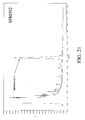
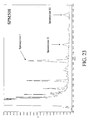
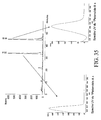
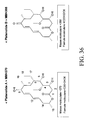
- LC / MS and NMR analysis experiments were conducted on a strain of S. ambofaciens genotype: orf6 * :: att1 ⁇ hyg +. In this strain the orf5 * gene is not expressed because of the polar effect of the insertion into the orf6 * gene of the cassette which contains transcription terminators (see Example 27).
- the product corresponding to spiramycin without the methyl group has a very low microbological activity (lower by a factor of 10) compared to the unmodified spiramycin, when tested on the microorganism Micrococcus luteus.
- the orf7 * c gene encodes a protein with relatively strong similarity to a protein encoded by the mdmA gene of Streptomyces mycarofaciens , the latter encoding a protein involved in midecamycin resistance in this producing organism (Hara et al ., 1990; GenBank: A60725; BLAST Score: 380).
- This similarity to a protein involved in the biosynthetic pathway of another antibiotic strongly suggests that the orf7 * c gene also encodes a protein involved in spiramycin resistance.
- the enzyme encoded by the orf7 * c gene has methyltransferase activity and is involved in spiramycin resistance in Streptomyces ambofaciens .
- the orf8 * gene encodes a protein with relatively strong similarity to an ABC transporter protein in Streptomyces griseus (Campelo, 2002, GenBank Accession Number: CAC22119, BLAST Score: 191). This similarity with an ABC carrier protein strongly suggests that the orf8 * gene also encodes an ABC transporter-like protein that may be involved in spiramycin resistance. This hypothesis is supported by the fact that the protein encoded by the orf8 * gene has a strong similarity with other proteins of similar function in other organisms (see Table 9).
- the orf9 * gene encodes a protein with relatively strong similarity to an ABC transporter protein in Streptomyces griseus (Campelo, 2002, GenBank Accession Number: CAC22118, BLAST Score: 269). This similarity with an ABC carrier protein strongly suggests that the orf9 * gene also encodes an ABC transporter-like protein that may be involved in spiramycin resistance. This hypothesis is supported by the fact that the protein encoded by the orf8 * gene has a strong similarity with other proteins of similar function in other organisms (see Table 10). Table 10 Protein with significant similarity GenBank Access Number BLAST score * Reported function Probable ABC-type protein transport, ATP-binding component ( S.
- the orf10 * gene encodes a protein with relatively strong similarity to a protein of unknown function.
- genes similar to orf10 * are found in the middle of several groups of genes involved in the biosynthesis of antibiotics.
- a gene similar to orf10 * is found in S. coelicolor (Redenbach et al., 1996, GenBank accession number: NP_627432, BLAST score: 109).
- a close gene ( CouY ) is also found in S. rishiriensis (Wang et al., 2000, GenBank accession number: AAG29779, BLAST score 97).
- FIG. 3 A schematic representation of the organization of the region is presented in Figure 3 and 37.
- the 34 identified genes have been named: orf1, orf2, orf3, orf4, orf5, orf6, orf7, orf8, orf9c, orf10, orf11c, orf12, orf13c, orf14, orf15c, orf16, orf17, orf18, orf19, orf20, orf21c, orf22c, orf23c, orf24c, orf25c, orf26, orf27, orf28c, orf29, orf30c, orf31, orf32c, orf33 and orf34c.
- Table 11 Gene 1 Position in the sequence SEQ ID N 1 DNA sequence Polypeptide sequence (s) 2 orf1 658 to 1869 SEQ ID N 23 SEQ ID N 24 orf2 1866 to 2405 SEQ ID N 25 SEQ ID N 26 and 27 orf3 2402 to 3568 SEQ ID N 28 SEQ ID N 29 orf4 3565 to 4473 SEQ ID N 30 SEQ ID N 31, 32 and 33 orf5 4457 to 5494 SEQ ID N 34 SEQ ID N 35 orf6 5491 to 6294 SEQ ID N 36 SEQ ID N 37, 38 and 39 orf7 6296 to 7705 SEQ ID N 40 SEQ ID N 41 and 42 orf8 8011 to 9258 SEQ ID N 43 SEQ ID N 44 orf9c 10081 to 9362 SEQ ID N 45 SEQ ID N 46 orf10 10656 to 12623 SEQ ID N 47 SEQ ID N 48 orf11c
- the methods used consist in performing a gene replacement.
- the target gene to be interrupted is replaced by a copy of this gene interrupted by a cassette conferring resistance to an antibiotic (for example apramycin or hygromycin).
- the cassettes used are bordered on both sides by translation termination codons in all the reading phases and by active transcription terminators in Streptomyces.
- the insertion of the cassette into the target gene may or may not be accompanied by a deletion in this target gene.
- the size of the regions flanking the cassette can range from a few hundred to several thousand base pairs.
- a second type of cassette can be used for the inactivation of genes: cassettes called "excisable cassettes" (see above). The strains thus constructed were tested for their production in spiramycins.
- the orf1 gene encodes a protein with relatively strong similarity to several cytochrome P450s.
- the orf1- encoded protein has a significant similarity to the protein encoded by the tylI gene involved in tylosin biosynthesis in Streptomyces fradiae (Merson-Davies, LA et al ., 1994; GenBank Accession Number: S49051; BLAST Score). : 530).
- This similarity to a protein involved in the biosynthetic pathway of another nearby antibiotic strongly suggests that the orf1 gene also encodes a cytochrome P450. This hypothesis is supported by the fact that the protein encoded by the orf1 gene shows strong similarity with other proteins of similar function in other organisms (see Table 13).
- the orf2 gene encodes a protein with relatively strong similarity to a dTDP-6-deoxy-3,4-keto-hexulose isomerase of Aneurinibacillus thermoaerophilus (Pfoestl, A. et al ., 2003, GenBank Accession Number: AA006351; BLAST: 118).
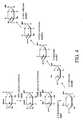
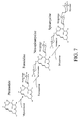
- This similarity strongly suggests that the orf2 gene encodes an isomerase responsible for the isomerization reaction necessary for the biosynthesis of one of the sugars present in the spiramycin molecule, this sugar possibly being mycarose (see FIG. 5). Inactivation of the orf2 gene was performed. It could be shown that the resulting strain no longer produces spiramycins. This confirms that the orf2 gene is well involved in the biosynthesis of spiramycins.
- the orf3 gene encodes a protein with relatively strong similarity to several aminotransferases.
- the orf3 encoded protein has a significant similarity to an aminotransferase of Streptomyces antibioticus involved in the biosynthesis of oleandomycin (Draeger, G., et al ., 1999; GenBank Accession Number: AAF59939; BLAST Score: 431) .
- This similarity with a protein involved in the biosynthetic pathway of another nearby antibiotic strongly suggests that the orf3 gene encodes a 3- aminotransferase responsible for the transamination reaction necessary for the biosynthesis of one of the amino sugars of spiramycins (cf. Figure 5).
- the orf4 gene encodes a protein with relatively strong similarity to several NDP-glucose synthetases.
- the orf4- encoded protein has a significant similarity to Streptomyces venezuelae alpha-D-glucose-1-phosphate thymidylyltransferase (Xue Y et al ., 1998; GenBank Accession Number: AAC68682; BLAST 404 Score).
- the orf5 gene encodes a protein with relatively strong similarity to several glucose dehydratases.
- the orf5 encoded protein has a significant similarity to Streptomyces tenebrarius dTDP-glucose 4,6-dehydratase (Li, TB et al ., 2001; GenBank Accession Number: AAG18457, BLAST Score: 476).
- This similarity with a protein involved in the biosynthetic pathway of another nearby antibiotic strongly suggests that the orf5 gene encodes an NDP glucose dehydratase necessary for the biosynthesis of the three atypical sugars incorporated in the spiramycin molecule (see Figure 4, 5 and 5). 6).
- the orf6 gene encodes a protein with relatively strong similarity to several thioesterases.
- the orf6 encoded protein has a significant similarity to Streptomyces avermitilis thioesterase (Omura, S. et al., 2001, GenBank Accession Number: BAB69315, BLAST Score: 234).
- This similarity to a protein involved in the biosynthetic pathway of another nearby antibiotic strongly suggests that the orf6 gene also encodes a thioesterase.
- This hypothesis is supported by the fact that the protein encoded by the orf6 gene has a strong similarity with other proteins of similar function in other organisms (see Table 18).
- the orf7 gene encodes a protein with relatively strong similarity to several hexose dehydratases.
- the orf7 encoded protein has a significant similarity to a dNTP hexose 2,3-dehydratase (encoded by the TylCVI gene) of Streptomyces fradiae involved in the biosynthesis of tylosin (Merson-Davies, LA et al ., 1994; GenBank: AAF29379; BLAST Score: 461).
- the orf8 gene encodes a protein with relatively strong similarity to several aminotransferases.
- the protein encoded by orf8 has a significant similarity with an aminotransferase probably involved in the biosynthesis of forosamine in Saccharopolyspora spinosa (Waldron, C. et al ., 2001 GenBank accession number: AAG23279, BLAST score: 465).
- This similarity with a protein involved in the biosynthetic pathway of another nearby antibiotic strongly suggests that the orf8 gene encodes a 4-amino transferase responsible for the transamination reaction necessary for the biosynthesis of forosamine (see Figure 6).
- the orf9c gene has already been identified in Streptomyces ambofaciens and has been designated srmX by Geistlich et al . (Geistlich, M., et al ., 1992).
- the similarity of the protein encoded by this gene to several methyltransferases involved in the biosynthetic pathway of other closely related antibiotics strongly suggests that the or9c gene encodes a methyltransferase responsible for the methylation reaction required for the biosynthesis of mycaminosis or forosamine (cf. Figure 5 and 6). This hypothesis is supported by the fact that the protein encoded by the orf9c gene has a strong similarity with other proteins of similar function in other organisms (see Table 21).
- the orf10 gene has already been identified in Streptomyces ambofaciens and has been designated srmR by Geistlich et al . (Geistlich, M., et al ., 1992).
- the protein encoded by this gene is involved in the regulation of the spiramycin biosynthetic pathway in Streptomyces ambofaciens. Inactivation of the orf10 gene was performed. It could thus be shown that the resulting strain no longer produces spiramycins. This confirms that the orf10 gene is well involved in the biosynthesis of spiramycins.
- the protein encoded by this gene is therefore essential for the biosynthesis of spiramycins.
- the starting point of the translation of orf 10 has been determined and it has been shown that the overexpression of this gene leads to an improvement in spiramycin production.
- the translation start site corresponds to an ATG located upstream of the ATG proposed by Geistlich et al. (Geistlich, M., et al ., 1992). It has furthermore been demonstrated that this 5 'end is essential to the function of Orf10 since a truncated 5' messenger is inactive (see Example 17). To obtain the desired effect on spiramycin production, it is therefore essential that the overexpression of orf10 be performed taking care not to express a truncated 5 ' messenger of orf10 .
- the orf11c gene has already been identified in Streptomyces ambofaciens and has been designated srmB by Geistlich et al . (Geistlich, M. et al. , 1992) and Schoner et al. (Schoner B et al. , 1992).
- the protein encoded by this gene is involved in spiramycin resistance in Streptomyces ambofaciens and is an ABC transporter.
- the orf12 gene encodes a protein with relatively strong similarity to several hexose dehydratases.
- the protein encoded by orf12 has a significant similarity with a NDP-hexose 3,4-dehydratase encoded by the UrdQ gene of Streptomyces fradiae and involved in the biosynthesis of urdamycin (Hoffmeister, D. et al ., 2000; GenBank: AAF72550; BLAST Score: 634).
- This similarity with a protein involved in the biosynthetic pathway of another nearby antibiotic strongly suggests that the orf12 gene encodes a 3,4 dehydratase responsible for the dehydration reaction necessary for the biosynthesis of forosamine (see Figure 6).
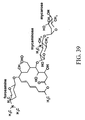
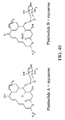
- This mutant also produces a compound of structure shown in FIG. 38.
- the latter compound comprises two sugars, mycaminosis and mycarose, but does not contain forosamine.
- this compound contains the mycarose sugar in the expected place of forosamine.
- the orf13c gene encodes a protein with relatively strong similarity to a protein of unknown function in Streptomyces coelicolor. This protein was named SC4H2.17 (GeneBank accession number: T35116, BLAST score: 619). The protein encoded by the orf13c gene is also highly similar to other proteins of other organisms (see Table 23).
- the orf14 gene encodes a protein with relatively strong similarity to a putative reductase (Redenbach, M, et al., 1996, Bentley et al., 2002, GenBank accession number: CAB90862, BLAST score: 147).
- the orf15c gene encodes a protein with relatively strong similarity to several ketoreductases.
- the protein encoded by orf15c has a significant similarity with a 3-ketoreductase in Streptomyces antibioticus (GenBak accession number: T51102, BLAST score: 285).
- This similarity strongly suggests that the orf15c gene encodes a 3-keto reductase responsible for the reduction reaction necessary for the biosynthesis of forosamine (see Figure 6).
- This hypothesis is supported by the fact that the protein encoded by the orf15c gene shows strong similarity with other proteins of similar function in other organisms (see Table 24).
- the orf16 gene encodes a protein with relatively strong similarity to several isomerases.
- the protein encoded by orf16 has a significant similarity with a NDP hexose 3,4 isomerase in Streptomyces fradiae (Gandecha et al., 1997; GenBak Accession Number: CAA57471, BLAST Score: 209).
- This similarity strongly suggests that the orf16 gene encodes a protein involved in the biosynthesis of one of the spiramycin sugars (see Figure 5 and 6). This hypothesis is supported by the fact that the protein encoded by the orf16 gene shows strong similarity with other proteins of similar function in other organisms (see Table 25).
- the orf17 gene encodes a protein with relatively strong similarity to several glycosyl transferases.
- the protein encoded by orf17 possesses an important similarity with a glycosyl transferase of Streptomyces venezuelae (Xue, Y. et al ., 1998; GenBank Accession Number: AAC68677; BLAST score: 400).
- the similarity of the protein encoded by the orf17 gene with several glycosyl transferases involved in the biosynthetic pathway of other nearby antibiotics strongly suggests that this gene also encodes a glycosyl transferase.
- the orf18 gene encodes a protein with relatively strong similarity to several glycosyl transferases.
- the orf18 encoded protein has a significant similarity to a Streptomyces rishiriensis glycosyl transferase (Wang et al ., 2000; GenBank Accession Number: AAG29785; BLAST score: 185).
- the similarity of the protein encoded by the orf18 gene with several glycosyl transferases involved in the biosynthetic pathway of other nearby antibiotics strongly suggests that this gene also encodes a glycosyl transferase. This hypothesis is supported by the fact that the protein encoded by the orf18 gene shows strong similarity with other proteins of similar function in other organisms (see Table 27).
- the orf19 gene encodes a protein with relatively strong similarity to several ketoreductases.
- the protein encoded by orf19 has a significant similarity with a NDP-hexose 4-ketoreductase (TylCIV) of Streptomyces fradiae (Bate et al ., 2000; GenBank accession number: AAD41822, BLAST score: 266).
- TylCIV NDP-hexose 4-ketoreductase
- the similarity of the protein encoded by the orf19 gene with this ketoreductase involved in the biosynthetic pathway of a nearby antibiotic strongly suggests that this gene also encodes a 4-ketoreductase responsible for the reduction reaction necessary for mycarose biosynthesis (cf. Figure 4).
- the orf20 gene encodes a protein with relatively strong similarity to several hexose reductases.
- the protein encoded by orf20 has a significant similarity to the Sac EryBII gene (charopolyspora erythraea which encodes a dTDP-4-keto-L-6-deoxy-hexose 2,3-reductase (Summers, RG, et al . 1997), GenBank Access Number: AAB84068, BLAST Score: 491).
- the orf21c gene encodes a protein with relatively strong similarity to several hexose methyltransferases.
- the orf21c- encoded protein has a significant similarity to the Streptomyces fradiae TylCIII gene that encodes an NDP-hexose 3-C-methyltransferase (Bate, N et al., 2000; GenBank Accession Number: AAD41823; BLAST Score: 669).
- the orf22c gene encodes a protein with relatively high similarity to the protein encoded by the fkbH gene of Streptomyces hygroscopicus var. ascomyceticus that encodes an enzyme involved in the biosynthesis of methoxymalonyl (Wu, K et al ., 2000; GenBank Accession Number: AAF86387; BLAST Score: 463).
- the similarity of the protein encoded by the orf22c gene with this protein involved in the biosynthetic pathway of another nearby macrolide strongly suggests that this gene also encodes an enzyme involved in the biosynthesis of methoxymalonyl in Streptomyces ambofaciens (see Figure 8 ).
- the orf23c gene encodes a protein with relatively strong similarity to the protein encoded by the fkbI gene of Streptomyces hygroscopicus var. ascomyceticus which encodes an acyl CoA dehydrogenase involved in the biosynthesis of methoxymalonyl (Wu, K et al ., 2000; GenBank Accession Number: AAF86388; BLAST Score 387).
- the similarity of the protein encoded by the orf23c gene with several acyl CoA dehydrogenases involved in the biosynthetic pathway of other nearby antibiotics strongly suggests that this gene encodes an acyl CoA dehydrogenase involved in the biosynthesis of methoxymalonyl (see Figure 8).
- the orf24c gene encodes a protein with relatively strong similarity to the protein encoded by the fkbJ gene of Streptomyces hygroscopicus var. ascomyceticus that would encode the acyl-binding protein (Acyl Carrier Protein (ACP)) involved in the biosynthesis of methoxymalonyl (Wu, K., et al ., 2000; GenBank Accession Number: AAF86389; BLAST Score: 87).
- ACP Acyl Carrier Protein
- the orf25c gene encodes a protein with relatively high similarity to the protein encoded by the fkbK gene of Streptomyces hygroscopicus var. ascomyceticus which encodes an acyl CoA dehydrogenase involved in the biosynthesis of methoxymalonyl (Wu, K., et al ., 2000; GenBank Accession Number: AAF86390; BLAST score: 268).
- the orf26 gene encodes a protein having an identity of 65% (determined by the BLAST program) with the protein encoded by the tylCV gene which encodes a mycarosyl transferase involved in tylosin biosynthesis in Streptomyces fradiae (Bate, N. et al . 2000, GenBank Access Number: AAD41824, BLAST Score: 471). More particularly, TylCV is a glycosyl transferase binding the mycarose molecule during the synthesis of tylosin. This similarity with a protein involved in the biosynthetic pathway of another relatively close antibiotic and more particularly in the transfer of mycarose, suggests that the orf26 gene encodes a glycosyl transferase.
- the orf27 gene encodes a 70% identity protein (determined by the BLAST program) with the protein encoded by the tylCVII gene which encodes an NDP-hexose 3,5- (or 5-) epimerase involved in tylosin biosynthesis at Streptomyces fradiae (Bate, N .; et al ., 2000; GenBank Accession Number: AAD41825, BLAST Score: 243). More particularly, TylCVII is a hexose 3,5- (or 5-) epimerase involved in the biosynthesis of mycarosis.
- orf28c was first partially determined, since the sequence of a region of about 450 base pairs was determined only after resequencing (this region is symbolized by "N” in the incomplete sequence SEQ ID No. 106).
- the partial sequence of this ORF (SEQ ID No. 111) has nevertheless been used for the analysis with the various computer programs as explained above. It has thus been possible to determine that the orf28c gene encodes a protein having an identity of 64% on the determined sequence (SEQ ID No. 112, which is the partial sequence of the Orf28c protein) (determined by means of the BLAST program) with the protein.
- acyB2 gene which encodes a regulatory protein involved in carbomycin biosynthesis in Streptomyces thermotolerans (Arisawa, A., et al ., 1993; GenBank Accession Number: JC2032, BLAST Score: 329).
- This similarity with a protein involved in the biosynthetic pathway of a relatively close antibiotic suggests that the orf28c gene encodes a regulatory protein involved in the biosynthesis of spiramycins.
- the orf28c gene could be amplified by means of oligonucleotides located on either side of the undetermined sequence and subcloned into an expression vector. It has thus been demonstrated that the overexpression of the orf28c gene significantly increases the spiramycin production of the strain OSC2 (see Example 24). This demonstrates that the overexpression of orf28c leads to an increase in spiramycin production and confirms its role as a regulator of the spiramycin biosynthetic pathway.
- the partial sequence of orf28c was subsequently completed and the missing region of approximately 450 base pairs was determined (see SEQ ID No. 140 and SEQ ID No. 141).
- the complete sequence of this ORF (SEQ ID No. 141) was used for analysis with the various computer programs as explained above. It has thus been possible to determine that the orf28c gene encodes a protein having an identity of 69% on the determined sequence (SEQ ID No. 142, which is the complete sequence of the Orf28c protein) (determined by means of the BLAST program) with the protein.
- the orf29 gene encodes a protein having an identity of 31% (determined by the BLAST program) with a probable glycosyl hydrolase localized in the group of genes involved in the biosynthesis of soraphen A (a polyketide class antifungal) in Sorangium cellulosum ( Ligon, J., et al ., 2002; GenBank Access Number: AAK19890, BLAST Score: 139).
- soraphen A a polyketide class antifungal
- Sorangium cellulosum Ligon, J., et al ., 2002; GenBank Access Number: AAK19890, BLAST Score: 139.
- This similarity to a protein involved in the biosynthetic pathway of a relatively close molecule suggests that the orf29 gene encodes a protein with glycosyl hydrolase activity. This hypothesis is supported by the fact that the protein encoded by the orf29 gene shows strong similarity with other proteins of similar function in other organisms (see Table 35).
- the orf30c gene encodes a 31% identity protein (determined by the BLAST program) with a Corynebacterium glutamicum sugar-nucleoside-diphosphate epimerase (GenBank Accession Number: NP_600590, BLAST Score: 89). This similarity suggests that the orf30c gene encodes an epimerase. This hypothesis is supported by the fact that a sequence analysis using the CD-search program (see above) also suggests that the orf30c gene encodes an epimerase.
- Orf30c has two possible initiation codons (see SEQ ID No. 115) which give two possible proteins of 345 and 282 amino acids respectively (SEQ ID Nos. 116 and 117).
- SEQ ID No. 115 the use of codons is typical of Streptomyces only from the second most ATG, the protein sequence deduced from the sequence between the first ATG and the second does not align with the identified close sequences, whereas the protein sequence the shortest (from the 2nd ATG: SEQ ID No. 144) aligns well with the beginning of these proteins. It can therefore be deduced that the second ATG is the correct initiation codon and that the sequence of this orf is therefore that presented in SEQ ID No. 143 which once translated corespond to the protein of sequence SEQ ID No. 144.
- the orf31 gene encodes a protein having an identity of 52% (determined by the BLAST program) with an oxidoreductase in Streptomyces coelicolor (GenBank Accession Number: NP_631148, BLAST Score: 261). This similarity suggests that the orf31 gene encodes a reductase. This hypothesis is supported by the fact that a sequence analysis using the CD-search program (see above) also suggests that the orf31 gene encodes a reductase. This hypothesis is also supported by the fact that The protein encoded by the orf31 gene shows strong similarity with other proteins of similar function in other organisms (see Table 36).
- the orf32c sequence was first partially determined (see Example 19), since the 5 'coding sequence was only determined in a second step.
- the partial sequence of this orf (SEQ ID No. 120) has nevertheless been used for the analysis with the various computer programs as explained above. It has thus been possible to determine that the orf32c gene encodes a protein having an identity of 47% on the determined sequence (SEQ ID No. 121, which is the partial sequence of the Orf32c protein) (determined by means of the BLAST program) with a protein. regulator of the GntR family in Streptomyces coelicolor (GenBank accession number: NP_625576, BLAST score: 229). This similarity suggests that the orf32c gene encodes a transcriptional regulator of the GntR family. This assumption is supported by the fact that The protein encoded by the orf32c gene has a strong similarity with other proteins of similar function in other organisms.
- the partial sequence of orj32c was subsequently completed and the missing region was determined (see SEQ ID No. 140 and SEQ ID No. 145).
- the complete sequence of this orf encodes a protein having an identity of 44% (determined by the BLAST program) with a GntR family regulatory protein in Streptomyces avermitilis (GenBank Accession Number: NP_824604, BLAST Score: 282).
- This similarity suggests that the orf32c gene encodes a transcriptional regulator of the GntR family. This hypothesis is supported by the fact that the protein encoded by the orf32c gene shows strong similarity with other proteins of similar function in other organisms (see Table 37).
- the inactivation of the orf32c gene was performed in order to study the function of this gene in the spiramycin biosynthetic pathway in Streptomyces ambofaciens . It has been shown that the resulting strain produces spiramycins. This indicates that the orf32c gene is not essential for the biosynthesis of spiramycins and is not essential for the survival of the bacterium.
- the orf33 gene encodes a protein having an identity of 49% (determined by the BLAST program) with a hypothetical protein of Xanthomonas campestris (GenBank Accession Number: NP_635564, BLAST Score: 54).
- the sequence of orf34c is partial. Indeed, the comparisons made between the product of this orf and the data banks suggest that the C-terminal part of this protein is not in the product deduced from the nucleotide sequence and therefore that this orf would be longer and continue in outside the sequenced region.
- the partial sequence of this ORF was nevertheless used for the analysis with the different computer programs as explained above. It has thus been possible to determine that the orf34c gene encodes a protein having an identity of 91% on the determined sequence (SEQ ID No. 150, which is the partial sequence of the Orf34c protein) (determined by means of the BLAST program) with an arabinofuranosidase.
- the subject of the present invention is also polynucleotides hybridizing under high-stringency hybridization conditions to at least one of the polynucleotides of sequence SEQ ID NO: 3, 5, 7, 9, 11, 13, 15, 17 , 19, 21, 23, 25, 28, 30, 34, 36, 40, 43, 45, 47, 49, 53, 60, 62, 64, 66, 68, 70, 72, 74, 76, 78, 80 , 82, 84, 107, 109, 111, 113, 115, 118, 120, 141, 143, 145, 147 and 149, or one of its variants or one of sequences derived from these because of the degeneracy of the genetic code.
- these polynucleotides are isolated from a bacterium of the genus Streptomyces, more preferably, these polynucleotides encode proteins involved in the biosynthesis of a macrolide and even more preferably, these polynucleotides encode a protein having a similar activity to the encoded protein. by the polynucleotides with which they hybridize.
- High stringency hybridization conditions can be defined as hybridization conditions that discriminate against the hybridization of non-homologous nucleic acid strands.
- Highly stringent hybridization conditions can be described, for example, as hybridization conditions in the buffer described by Church & Gilbert (Church & Gilbert, 1984) at a temperature between 55 ° C and 65 ° C, preferably the hyridation temperature is 55 ° C, even more preferably the hybridization temperature is 60 ° C and most preferably the hybridization temperature is 65 ° C, followed by one or more washes carried out in 2X SSC buffer at a temperature between 55 ° C and 65 ° C, preferably this temperature is 55 ° C, even more preferably this temperature is 60 ° C and very preferably this the temperature is 65 ° C., followed by one or more washes in 0.5 ⁇ SSC buffer at a temperature of between 55 ° C.
- this temperature is 55 ° C., more preferably still this temperature. is 60 C., and most preferably this temperature is 65 ° C.
- the hybridization conditions described above may be adapted depending on the length of the nucleic acid whose hybridization is sought or the type of marking chosen, according to techniques known to those skilled in the art. Suitable hybridization conditions may for example be adapted according to the work of F.Ausubel et al ., 2002.
- the invention also relates to a polynucleotide having at least 70%, more preferably 80%, more preferably 85%, more preferably 90%, more preferably 95% and most preferably 98%.
- % nucleotide identity with a polynucleotide comprising at least 10, 12, 15, 18, 20 to 25, 30, 40, 50, 60, 70, 80, 90, 100, 150, 200, 250, 300, 350, 400, 450, 500, 550, 600, 650, 700, 750, 800, 850, 900, 950, 1000, 1050, 1100, 1150, 1200, 1250, 1300, 1350, 1400, 1450, 1500, 1550, 1600, 1650, 1700, 1750, 1800, 1850 or 1900 consecutive nucleotides of a polynucleotide selected from the group consisting of nucleotide sequences SEQ ID NO: 3, 5, 7, 9, 11, 13, 15, 17, 19, 21, 23, 25, 28, 30, 34, 36, 40, 43 , 45, 47, 49, 53, 60
- said polynucleotides are isolated from a bacterium of the genus Streptomyces, more preferably these polynucleotides encode proteins involved in the biosynthesis of a macrolide, and even more preferentially, these polynucleotides encode proteins having activities similar to the encoded proteins. by the polynucleotides with which they present the identity.
- a polynucleotide according to the invention is selected from the group consisting of the nucleotide sequences SEQ ID NO: 3, 5, 7, 9, 11, 13, 15, 17, 19, 21, 23, 25, 28, 30, 34, 36, 40, 43, 45, 47, 49, 53, 60, 62, 64, 66, 68, 70, 72, 74, 76, 78, 80, 82, 84, 107, 109, 111, 113, 115, 118, 120, 141, 143, 145, 147 and 149, or a polynucleotide of complementary sequence.
- the optimal alignment of the sequences for comparison can be performed in a computer manner using known algorithms, for example those of the FASTA package (Pearson W. R & DJ Lipman, 1988) and (Pearson WR, 1990), accessible especially at the INFOBIOGEN resource center, Evry, France.
- the percentage of sequence identity can be determined using LFASTA software (Chao K.-M. et al ., 1992) or LALIGN (Huang X. and Miller W., 1991).
- the LFASTA and LALIGN programs are part of the FASTA package. LALIGN returns the optimal local alignments: this program is more rigorous, but also slower than LFASTA.
- polypeptides resulting from the expression of a nucleic acid sequence as defined above.
- the polypeptides according to the invention have at least 70%, more preferably 80%, of more preferably 85%, even more preferably 90%, even more preferably 95% and most preferably 98% amino acid identity with a polypeptide comprising at least 10, 15, 20, 30 to 40, 50, 60, 70, 80, 90, 100, 120, 140, 160, 180, 200, 220, 240, 260, 280, 300, 320, 340, 360, 380, 400, 420, 440, 460, 480, 500, 520, 540, 560, 580, 600, 620 or 640 consecutive amino acids of a polypeptide selected from SEQ ID NO: 4, 6, 8, 10, 12, 14, 16, 18, 20, 22, 24, 26, 27, 29, 31, 32, 33, 35, 37, 38, 39, 41, 42, 44, 46, 48, 50, 51, 52, 54, 55, 56, 57, 58, 59,
- the polypeptides according to the invention are expressed in the natural state by a bacterium of the genus Streptomyces, more preferentially, these polypeptides are involved in the biosynthesis of a macrolide and even more preferentially, these polypeptides have an activity similar to that of the polypeptide. with whom he shares the identity.
- a polypeptide according to the invention is chosen from the group consisting of the polypeptide sequences SEQ ID NO: 4, 6, 8, 10, 12, 14, 16, 18, 20, 22, 24, 26, 27, 29 , 31, 32, 33, 35, 37, 38, 39, 41, 42, 44, 46, 48, 50, 51, 52, 54, 55, 56, 57, 58, 59, 61, 63, 65, 67 , 69, 71, 73, 75, 77, 79, 81, 83, 85, 108, 110, 112, 114, 116, 117, 119, 121, 142, 144, 146, 148 and 150, or one of these sequences except that throughout said sequence one or more amino acids have been substituted, inserted or deleted without affecting the functional properties or one of the variant of these sequences.
- a polypeptide according to the invention is selected from the group consisting of the polypeptide sequences SEQ ID NO: 4, 6, 8, 10, 12, 14, 16, 18, 20, 22, 24, 26, 27, 29, 31, 32, 33, 35, 37, 38, 39, 41, 42, 44, 46, 48, 50, 51, 52, 54, 55, 56, 57, 58, 59, 61, 63, 65, 67, 69, 71, 73, 75, 77, 79, 81, 83, 85, 108, 110, 112, 114, 116, 117, 119, 121, 142, 144, 146, 148 and 150.
- the optimal alignment of the sequences for comparison can be performed in a computer manner using known algorithms, for example those of the package. FASTA (Pearson W. R & DJ Lipman, 1988) and (Pearson WR, 1990), available in particular from the INFOBIOGEN resource center, Evry, France.
- FASTA Pearson W. R & DJ Lipman, 1988
- Pearson WR, 1990 available in particular from the INFOBIOGEN resource center, Evry, France.
- the percentage of sequence identity can be determined using software LFASTA (Chao K.-M. et al ., 1992) or LALIGN (Huang X. and Miller W., 1991), using the default settings as defined by the INFOBIOGEN Resource Center, Evry, France.
- the LFASTA and LALIGN programs are part of the FASTA package. LALIGN returns the optimal local alignments: this program is more rigorous, but also slower than LFASTA.
- a recombinant DNA comprising at least one polynucleotide as described above.
- this recombinant DNA is a vector.
- the vector is chosen from bacteriophages, plasmids, phagemids, integrative vectors, fosmids, cosmids, shuttle vectors, BACs (Bacterial Artificial Chromosome) or PACs (P1-derived Artificial Chromosome).
- BACs Bacterial Artificial Chromosome
- PACs P1-derived Artificial Chromosome
- coli for example pBR322 and its derivatives, pUC18 and its derivatives, pUC19 and its derivatives, pGB2 and its derivatives (Churchward G. et al ., 1984), pACYC177 (d GenBank Access: X06402) and its derivatives, pACYC184 (GenBank Access Number: X06403) and its derivatives.
- Streptomyces replicating plasmids such as, for example, pIJ101 and its derivatives, pSG5 and its derivatives, SLP1 and its derivatives, SCP2 * and its derivatives can also be mentioned (Kieser et al ., 2000).
- Integrative vectors that may be mentioned by way of illustration include integrative vectors in Streptomyces, for example those derived from SLP1 (Kieser et al. , 2000), those derived from pSAM2 (Kieser et al. , 2000), vectors using integration systems.
- PhiC31 phages (Kieser et al , 2000) (e.g., pSET152 (Bierman et al ., 1992)) or VWB (Van Mellaert L, et al ., 1998), as well as vectors using the integration system of IS117 (Kieser et al., 2000).
- pSET152 Bierman et al ., 1992
- VWB Van Mellaert L, et al ., 1998)
- vectors using the integration system of IS117 (Kieser et al., 2000).
- fosmide pFOS1 (marketed by New England Bioloabs Inc., Beverly, Mass., USA) and its derivatives may be mentioned.
- cosmids the cosmid SuperCos and its derivatives (sold in particular by the company Stratagene (LaJolla, California, USA)), the cosmid pWED15 (Wahl et al ., 1987) and its derivatives are exemplary.
- shuttle vectors the E. coli / Streptomyces shuttle plasmids, for example pIJ903 and its derivatives, the plasmid series pUWL, pCA0106, pWHM3, pOJ446 and their derivatives (Kieser et al. E. coli / Streptomyces as for example those described in the patent application WO 01/40497 .
- BAC Bacterial Artificial Chromosome
- BAC Bacterial Artificial Chromosome
- PAC P1-derived Artificial Chromosome
- a vector according to the invention is selected from among pOS49.1, pOS49.11, pOSC49.12, pOS49.14, pOS49.16, pOS49.28, pOS44.1, pOS44.2, pOS44.
- Another aspect of the invention relates to an expression system comprising an appropriate expression vector and a host cell for the expression of one or more polypeptides as described above in a biological system.
- the expression vectors according to the invention comprise a nucleic acid sequence encoding one or more polypeptides as described above and may be intended for the expression of the various polypeptides according to the invention in various well-known host cells of the invention.
- skilled person By way of example, mention may be made of the systems prokaryotic expression systems, such as E. coli expression systems, eukaryotic expression systems, such as the baculovirus expression system allowing expression in insect cells, expression systems allowing expression in yeast cells, expression systems allowing expression in mammalian cells, especially human cells.
- the expression vectors that can be used in such systems are well known to those skilled in the art, with regard to prokaryotic cells, for example illustrative expression vectors in E. coli, for example, of the pET family. sold by Stratagene (LaJolla, California, USA), the GATEWAY family of vectors marketed by Invitrogen (Carlsbad, California, USA), the pBAD family vectors marketed by Invitrogen (Carlsbad, California, USA) , the vectors of the pMAL family sold by New England Bioloabs Inc.
- the rhamnose-inducible expression vectors cited in the publication Wilms B et al ., 2001 and their derivatives can be used.
- the expression vectors in Streptomyces for example the vectors pIJ4123, pIJ6021, pPM927, pANT849, pANT850, pANT851, pANT1200, pANT1201, pANT1202 and their derivatives (Kieser et al . , 2000).
- the vector pESC marketed by the company Stratagene (LaJolla, California, USA) can be cited by way of illustration.
- baculovirus expression system allowing expression in insect cells
- BacPAK6 vector marketed by BD Biosciences Clontech, (Palo Alto, California, USA).
- mammalian cells mention may be made, for example, of vectors comprising the promoter of the early genes of the CMV (Cytomegalovirus) virus (for example the pCMV vector and its derivatives marketed by Stratagene (LaJolla, California, USA). or the immediate promoter (SV40 early promoter) of simian SV40 vacuolizing virus (for example the vector pSG5 marketed by Stratagene (LaJolla, California, USA).
- CMV Cytomegalovirus
- SV40 early promoter immediate promoter of simian SV40 vacuolizing virus
- a recombinant polypeptide according to the invention may be purified by passage over a suitable series of chromatography columns, according to the methods known to those skilled in the art and described for example in F.Ausubel et al (2002).
- the "Tag-Histidine” technique which consists in adding a short poly-histidine sequence to the polypeptide to be produced, can be cited by way of illustration, which can then be purified on a nickel column.
- a polypeptide according to the invention may also be prepared by in vitro synthesis techniques . As an illustration of such techniques, a polypeptide according to the invention may be prepared using the "rapid translation system (RTS)" system, marketed in particular by Roche Diagnostics France SA, Meylan, France.
- RTS rapid translation system
- Another aspect of the invention relates to host cells into which at least one polynucleotide and / or at least one recombinant DNA and / or at least one expression vector according to the invention has been introduced.
- Another aspect of the invention relates to microorganisms blocked in a step of the biosynthetic pathway of at least one macrolide.
- the interest lies in the study of the function of mutated proteins and in the production of microorganisms producing biosynthesis intermediates.
- These intermediaries can be modified, optionally after separation, either by adding particular components in the production media, or by introducing into the microorganisms thus mutated other genes encoding proteins that may modify the intermediate by using it as a substrate.
- These intermediates can thus be modified chemically, biochemically, enzymatically and / or microbiologically.
- Microorganisms blocked in a step of the macrolide biosynthetic pathway can be obtained by inactivating the function of one or more proteins involved in the biosynthesis of this or these macrolides in microorganisms producing this macrolide.
- the inactivation of this or these proteins can be carried out by any method known to those skilled in the art, for example by mutagenesis in the gene (s) encoding said protein (s) or by the expression of one or more anti-RNA. -following complementary RNA or messenger RNAs encoding said one or more proteins.
- the mutagenesis may, for example, be carried out by irradiation, by mutagenic chemical action, by site-directed mutagenesis, by gene replacement or any other method known to those skilled in the art.
- the suitable conditions for such mutagenesis can, for example, be adapted according to the teaching contained in the works of Kieser, T et al (2000) and Ausubel et al., (2002).
- Mutagenesis can be carried out in vitro or in situ by deletion, substitution, deletion and / or addition of one or more bases in the gene of interest or by gene inactivation. This mutagenesis can be carried out in a gene comprising a sequence as described above.
- the microorganisms blocked in a step of the macrolide biosynthetic pathway are bacteria of the genus Streptomyces. More preferably, the inactivation of the function of one or more proteins involved in the biosynthesis of the macrolide (s) in question is carried out by mutagenesis. Even more preferentially, the macrolide in question is spiramycin and the microorganisms in which the mutagenesis (s) are carried out are strains of S. ambofaciens.
- the mutagenesis is carried out in one or more genes comprising one of the sequences corresponding to one or more of the sequences SEQ ID NO: 3, 5, 7, 9, 11, 13, 15, 17, 19, 21, 23, 25, 28, 30, 34, 36, 40, 43, 45, 47, 49, 53, 60 , 62, 64, 66, 68, 70, 72, 74, 76, 78, 80, 82, 84, 107, 109, 111, 113, 115, 118, 120, 141, 143, 145, 147 and 149.
- the mutagenesis (s) are carried out by gene inactivation.
- the mutagenesis consists in the gene inactivation of a gene comprising a sequence corresponding to the sequence SEQ ID No. 13.
- microorganisms can be cited as examples of such microorganisms: OS49.16 (orf3 :: ⁇ hyg , see example 2), OS49.67 (orf3delection in phase, see example 6 ), OS49.
- Another aspect of the invention relates to a process for preparing a macrolide biosynthesis intermediate using the microorganisms blocked in a step of the macrolide biosynthetic pathway as described above.
- the method comprises culturing, in a suitable culture medium, a microorganism blocked in a step of the macrolide biosynthetic pathway, as described above, recovering the conditioned culture medium or a cell extract, for example by sonication or by osmotic shock, separate and purify from said culture medium or from the cell extract obtained in the preceding step, said biosynthesis intermediate.
- the culture conditions of such microorganisms may be determined according to techniques well known to those skilled in the art.
- the culture medium may for example be MP5 medium or SL11 medium for Streptomyces and in particular for Streptomyces ambofaciens (Pernodet et al ., 1993). Those skilled in the art may in particular refer to the work of Kieser et al . (2000) with regard to culture Streptomyces.
- the product intermediate can be recovered by any techniques known to those skilled in the art. The skilled person may refer, for example, to the techniques taught in the US patent US 3,000,785 and more particularly the spiramycin extraction methods described in this patent.
- Another object of the invention relates to a process for preparing a molecule derived from a macrolide using the microorganisms blocked in a step of the biosynthetic pathway of this macrolide, as described above.
- the process consists of obtaining a biosynthesis intermediate according to the above process and modifying the intermediate thus produced, possibly after separation from the culture medium.
- the culture conditions of such microorganisms may be determined according to techniques well known to those skilled in the art.
- the culture medium may for example be MP5 medium or SL11 medium for Streptomyces and in particular for Streptomyces ambofaciens (Pernodet et al ., 1993). Those skilled in the art may in particular refer to the work of Kieser et al.
- the intermediates produced can be modified, optionally after separation, either by adding appropriate components to the production media, or by introducing into the microorganisms other genes encoding proteins capable of modifying the intermediate by using it as a substrate.
- These intermediates can thus be modified chemically, biochemically, enzymatically and / or microbiologically.
- the macrolide in question is spiramycin and the microorganisms in which the mutagenesis (s) are carried out are strains of S. ambofaciens.
- the invention also relates to a microorganism producing spiramycin I but not producing spiramycin II and III.
- This microorganism comprises all the genes necessary for the biosynthesis of spiramycin I but does not produce spiramycin II and III because the gene comprising the sequence corresponding to SEQ ID No. 13 or one of its variants or one of the sequences derived therefrom due to degeneracy of the genetic code and encoding a polypeptide of sequence SEQ ID No. 14 or one of its variants is not expressed or has been rendered inactive.
- Inactivation of this protein can be carried out by any known method of those skilled in the art, for example by mutagenesis in the gene encoding said protein or by the expression of an antisense RNA complementary to the messenger RNA encoding said protein, it being understood that if the expression of orf5 * is affected by this manipulation, it will be necessary to make another modification so that the orf5 * gene is correctly expressed.
- Mutagenesis may be performed in the coding sequence or in a non-coding sequence so as to render the encoded protein inactive or to prevent its expression or translation. Mutagenesis can be performed by site-directed mutagenesis, gene replacement or any other method known to those skilled in the art.
- the suitable conditions for such mutagenesis can, for example, be adapted according to the teaching contained in the works of Kieser, T et al (2000) and Ausubel et al., 2002.
- Mutagenesis can be performed in vitro or in situ , by deletion, substitution, deletion and / or addition of one or more bases in the gene of interest or by gene inactivation.
- the microorganism can also be obtained by expressing the genes of the spiramycin biosynthetic pathway without these comprising the gene comprising the sequence SEQ ID No. 13 or one of its variants or one of the sequences derived from these because of the degeneracy of the genetic code and encoding a polypeptide of sequence SEQ ID No. 14 or one of its variants.
- the microorganism is a bacterium of the genus Streptomyces. More preferably, the microorganism producing spiramycin I but not producing spiramycin II and III is obtained from a starting microorganism producing spiramycin I, II and III. Even more preferentially, the microorganism is obtained by mutagenesis in a gene comprising the sequence corresponding to SEQ ID No. 13 or one of its variants or one of the sequences derived from these because of the degeneracy of the genetic code and encoding a polypeptide of sequence SEQ ID No. 14 or one of its variants having the same function. Even more preferentially, this mutagenesis is carried out by gene inactivation.
- the microorganism is obtained from a strain of S. ambofaciens producing spiramycins I, II and III in which gene inactivation of the gene comprising the sequence corresponding to SEQ ID No. 13 or one of the sequences is carried out. derived from it because of the degeneracy of the genetic code.
- the gene inactivation is carried out by deletion in phase of the gene or a part of the gene comprising the sequence corresponding to SEQ ID No. 13 or one of the sequences derived therefrom because of the degeneration of the genetic code.
- the strain SPM502 (orf6 * :: att1, cf example 14) can be cited as a microorganism producing spiramycin I but not producing spiramycin II and III.
- the invention also relates to a microorganism producing spiramycin I but not producing spiramycin II and III as described above, characterized in that it also overexpresses the coding sequence gene SEQ ID No. 47 or a coding sequence derived therefrom due to the degeneracy of the genetic code.
- this microorganism is characterized in that it is the SPM502 strain pSPM525 deposited with the National Collection of Cultures of Microorganisms (CNCM) Institut Pasteur, 25, rue du Dondel Roux 75724 Paris Cedex 15, France, on the 26th February 2003 under the registration number I-2977.
- the invention also relates to a process for the production of spiramycin I, the process consists in cultivating in a suitable culture medium a microorganism producing spiramycin I but not producing spiramycin II and III as described above, recovering the conditioned culture medium or a cell extract, separating and purifying from said culture medium or from the cell extract obtained in the preceding step spiramycin I.
- the culture conditions for such a microorganism may be determined according to techniques well known to those skilled in the art.
- the culture medium may for example be MP5 medium or SL11 medium for Streptomyces and in particular for Streptomyces ambofaciens (Pernodet et al ., 1993).
- the skilled person may in particular refer to the work of Kieser et al. 2000 with regard to the cultivation of Streptomyces.
- the spiramycin I produced can be recovered by any techniques known to those skilled in the art.
- the skilled person may refer, for example, to the techniques taught in the US patent US 3,000,785 and more particularly the spiramycin extraction methods described in this patent.
- the invention relates to a macrolide-producing mutant microorganism characterized in that it has a genetic modification in at least one gene comprising a sequence as defined above and / or that it overexpresses at least one gene comprising a sequence as defined above.
- the genetic modification may consist of the deletion, substitution, deletion and / or addition of one or more bases in the gene (s) considered for the purpose of expressing one or more proteins having a higher activity or expressing a higher level of this or these proteins.
- Overexpression of the gene of interest can be achieved by increasing the copy number of this gene and / or placing a more active promoter than the wild-type promoter.
- the active ptrc promoter in Streptomyces ambofaciens (Amann, E. et al ., 1988) and the ermE * promoter (Bibb et al ., 1985) (Bibb et al ., 1994) can be cited as an example.
- the overexpression of the gene in question can be obtained by supplying a microorganism producing the macrolide considered a recombinant DNA construct according to the invention, allowing the overexpression of this gene.
- these mutant microorganisms improved for their production in macrolides are bacteria of the genus Streptomyces . More preferably, the macrolide in question is spiramycin and the microorganisms in which the mutagenesis (s) are carried out are strains of S. ambofaciens.
- the genetic modification is carried out in one or more genes comprising one of the sequences corresponding to one or more of the sequences SEQ ID NO: 3, 5, 7, 9, 11, 13, 15, 17, 19, 21, 23, 25, 28, 30, 34, 36, 40, 43, 45, 47, 49, 53, 60, 62, 64, 66, 68, 70, 72, 74, 76, 78, 80, 82, 84, 107, 109, 111, 113, 115, 118, 120, 141, 143, 145, 147 and 149, or one of its variants or one of the sequences derived therefrom due to the degeneracy of the genetic code.
- the microorganism overexpresses one or more genes comprising one of the sequences corresponding to one or more of SEQ ID NO: 3, 5, 7, 9, 11, 13, 15, 17, 19, 21, 23, 25, 28, 30, 34, 36, 40, 43, 45, 47, 49, 53, 60, 62, 64, 66, 68, 70, 72, 74, 76, 78, 80, 82, 84, 107, 109, 111, 113, 115, 118, 120, 141, 143, 145, 147 and 149, or one of its variants or one of the sequences derived therefrom due to the degeneracy of the genetic code.
- the microorganism overexpresses the gene comprising a sequence corresponding to SEQ ID No. 111 or 141, or one of its variants or one of the sequences derived from them because of the degeneracy of the genetic code.
- the sequence given in SEQ ID No. 111 is partial, however the person skilled in the art can easily complete it, in particular by using the teaching presented in example 24.
- the sequence unknown in SEQ ID No. 111 was determined in a second time and the complete sequence of this orf ( orf28c ) is given in SEQ ID No. 141.
- the protein translation of this coding sequence is given in SEQ ID No. 142.
- example 24 a method for cloning the orf28c gene and to make an expression vector allowing the expression of orf28c. It is also shown in this example that the overexpression of the orf28c gene in the OSC2 strain leads to the improvement of the spiramycin production of this strain. Overexpression of the orf28c gene can be achieved by increasing the copy number of this gene and / or placing a more active promoter than the wild-type promoter. Preferably, the overexpression of the orf28c gene is obtained by providing a recombinant DNA construct in the microorganism, allowing the overexpression of this gene.
- this recombinant DNA construct increases the number of copies of the orf28c gene and makes it possible to obtain overexpression of the orf28c gene.
- the orf28c coding sequence can be placed under the control of a more active promoter than the wild-type promoter.
- the ptrc promoter active in Streptomyces ambofaciens (Amann, E. et al ., 1988) and the ermE * promoter can be cited.
- the copy or copies of the orf28c gene provided are placed under the control of the ermE * promoter as is the case in the pSPM75 construct (see Example 24).
- Another aspect of the invention relates to a process for producing macrolides using the microorganisms described in the preceding paragraph.
- This method consists of cultivating in a suitable culture medium a microorganism defined in the preceding paragraph, recovering the conditioned culture medium or a cell extract, separating and purifying from said culture medium or from the cell extract obtained at the previous step the macrolide (s) produced.
- the culture conditions of such microorganisms may be determined according to techniques well known to those skilled in the art.
- the culture medium may for example be MP5 medium or SL11 medium for Streptomyces and in particular for Streptomyces ambofaciens (Pernodet et al., 1993).
- the macrolide (s) produced can be recovered by any technique known to those skilled in the art.
- the skilled person may refer, for example, to the techniques taught in the US patent US 3,000,785 and more particularly the spiramycin extraction methods described in this patent.
- the microorganisms used in such a process are bacteria of the genus Streptomyces.
- the macrolide in question is spiramycin and the mutant microorganisms improved for their production in spiramycins are strains of S. ambofaciens .
- Another aspect of the invention relates to the use of a sequence and / or a vector according to the invention for the preparation of hybrid antibiotics.
- the polynucleotides according to the invention can be used to obtain microorganisms expressing one or more mutant proteins giving rise to a modification in the specificity of the substrate or to be expressed in multiple antibiotic-producing microorganisms in order to generate hybrid antibiotics.
- the polynucleotides according to the invention can make it possible, by gene transfer between producer microorganisms, to produce hybrid antibiotics having pharmacologically interesting properties (Hopwood et al ., 1985a, Hopwood et al ., 1985b, Hutchinson et al ., 1989). .
- the invention also relates to the use of at least one polynucleotide and / or at least one recombinant DNA and / or at least one expression vector and / or at least one polypeptide and / or at least one host cell according to the invention.
- invention for performing one or more bioconversions.
- the invention makes it possible to construct bacterial or fungal strains in which one or more proteins according to the invention are expressed under the control of appropriate expression signals. Such strains can then be used to carry out one or more bioconversions. These bioconversions can be done either with whole cells or with acellular extracts of said cells. These bioconversions can make it possible to transform a molecule into a derived form, with an enzyme of a biosynthetic pathway.
- Carreras et al describes the use of Saccharopolyspora erythraea strain and Streptomyces coelicolor strain for the production of new erithromycin derivatives (Carreras et al ., 2002).
- Walczar et al describes the use of Streptomyces P450 monooxygenase for the bioconversion of deacetyladriamycin (an anthracycline analogue) to novel anthracyclines (Walczar et al., 2001). Olonao et al .
- the recombinant polypeptide thus produced can be purified by passage over a suitable series of chromatography columns, according to methods known to those skilled in the art and described for example in F. Ausubel et al (2002).
- the "Tag-Histidine” technique which consists in adding a short poly-histidine sequence to the polypeptide to be produced, can be cited by way of illustration, which can then be purified on a nickel column.
- This polypeptide can also be prepared by in vitro synthesis techniques . As an illustration of such techniques, the polypeptide may be prepared using the "rapid translation system (RTS)" system, marketed in particular by Roche Diagnostics France SA, Meylan, France.
- RTS rapid translation system
- Another aspect of the invention relates to a process for producing spiramycin (s) using the microorganisms described in the preceding paragraph.
- This method consists of cultivating in a suitable culture medium a microorganism defined in the preceding paragraph, recovering the conditioned culture medium or a cell extract, separating and purifying from said culture medium or from the cell extract obtained at the preceding step or the spiramycins produced.
- the culture conditions of such microorganisms may be determined according to techniques well known to those skilled in the art.
- the culture medium may for example be MP5 medium or SL11 medium for Streptomyces and in particular for Streptomyces ambofaciens (Pernodet et al., 1993).
- spiramycin (s) produced can be recovered by any technique known to those skilled in the art.
- the skilled person may refer, for example, to the techniques taught in the US patent US 3,000,785 and more particularly the spiramycin extraction methods described in this patent.
- the microorganisms used in such a process are bacteria of the genus Streptomyces. More preferably, the microorganisms are strains of S. ambofaciens .
- Another aspect of the invention relates to an expression vector characterized in that the polynucleotide of sequence SEQ ID No. 47 or a polynucleotide derived therefrom due to the degeneracy of the genetic code is placed under the control of a promoter allowing the expression of the protein encoded by said polynucleotide in Streptomyces ambofaciens.
- Examples of expression vectors that can be used in Streptomyces have been given above.
- such an expression vector is characterized in that it is the plasmid pSPM524 or pSPM525.
- Another aspect of the invention relates to a strain of Streptomyces ambofaciens transformed by a vector defined in the preceding paragraph.
- Another aspect of the invention relates to an expression vector for the expression of a polypeptide as defined in the preceding paragraph in Streptomyces ambofaciens .
- Examples of expression vectors that can be used in Streptomyces have been given above.
- the expression vector in question is the plasmid pSPM75.
- the genes of the spiramycin biosynthetic pathway were isolated from a genomic library of Streptomyces ambofaciens .
- This library was obtained by partial digestion of the genomic DNA of Streptomyces ambofaciens by the Bam HI restriction enzyme. Large DNA fragments, averaging 35-45 kb, were cloned into cosmid pWED1 (Gourmelen et al ., 1998) derived from cosmid pWED15 (Wahl et al ., 1987). These cosmids were introduced into E. coli by means of phage particles. The library thus obtained was hybridized with a probe (of sequence SEQ ID No.
- This gene was named orf3 (SEQ ID NO: 28) and was inactivated in S. ambofaciens . It has been shown that inactivated clones in the orf3 gene no longer produce spiramycins. This shows the implication of the orf3 gene or genes located downstream in the biosynthesis of spiramycins.
- the latter corresponds to a 1.8 kb DNA fragment containing the srmD gene .
- the srmD gene is an isolated gene of S. ambofaciens capable of conferring resistance to spiramycin. Indeed, previous work had allowed the cloning of several resistance determinants of S. ambofaciens, conferring resistance to spiramycin to a strain of S. griseofuscus (spiramycin-sensitive strain) (Pernodet et al., 1993) (Pernodet et al., 1999). For the isolation of resistance genes, a cosmid library of genomic DNA of the S.
- ambofaciens strain was made in the cosmid pKC505 (Richardson MA et al., 1987). This cosmid pool had been introduced into S. griseofuscus, naturally sensitive to spiramycin. Five cosmids capable of conferring resistance to apramycin and spiramycin in S. griseofuscus had thus been obtained.
- pOS44.1 has in its insert the srmD gene which encodes a protein having a certain similarity with the protein encoded by the mdmA gene of Streptomyces mycarofaciens and involved in resistance to midecamycin in this producing organism ( Hara et al., 1990, Genbank accession number: A60725) ( Figure 26).
- the third probe used to locate the spiramycin biosynthetic genes was an insert of approximately 1.8 kb including the srmD gene.
- each of these inserts included a fragment of the sequence of one of the genes encoding an enzyme called "polyketide synthase” (PKS).
- PKS polyketide synthase
- This region is the Downstream region of the PKS genes (downstream and upstream are defined by the orientation of the PKS genes all oriented in the same direction) (see Figures 2 and 3).
- EXAMPLE 1 Construction of a genomic DNA library of Streptomyces ambofaciens strain ATCC23877 in E. coli
- the ligation mixture was then packaged in vitro in lambda phage particles using the "Packagene® Lambda DNA packaging system" system marketed by Promega following the manufacturer's recommendations.
- the phage particles obtained were used to infect the strain SURE® E. coli marketed by the company Stratagene (LaJolla, California, USA).
- the selection of the clones was carried out on LB medium + ampicillin (50 ⁇ g / ml) since the cosmid pWED1 confers resistance to ampicillin.
- the probe used for the hybridization is a DNA Nae I -Nae I fragment (SEQ ID NO: 86) comprising part of the tylB gene of Streptomyces fradiae .
- This fragment corresponds to nucleotides 2663 to 3702 of the DNA fragment described by Merson-Davies, LA & Cundliffe E. (Merson-Davies, LA & Cundliffe E., 1994, GenBank accession number: U08223), in which the sequence coding of the tylB gene corresponds to nucleotides 2677 to 3843.
- the DNA fragment Nae I -Nae I carrying part of the tylB gene of Streptomyces fradiae (SEQ ID No. 86) was labeled with 32 P by the "random priming" technique (Kit marketed by Roche) and used as probe for the hybridization of the 2000 clones of the bank, transferred to filter.
- the membranes used are Hybond N nylon membranes marketed by Amersham (Amersham Biosciences, Orsay, France) and the hybridization was carried out at 55 ° C. in the buffer described by Church & Gilbert (Church & Gilbert, 1984).
- the digests were separated on agarose gel, transferred to nylon membrane and hybridized with the Nae I- Nae I fragment of DNA containing part of the tylB gene of Streptomyces fradiae (see above) in the same conditions as above.
- the four cosmids could be validated and one of these cosmids was more particularly retained and was named pOS49.1.
- cosmid insert pOS49.1 Several fragments of the cosmid insert pOS49.1 were subcloned and their sequences determined.
- the cosmid pOS49.1 was digested with the enzyme Sac I and it was shown by Southern blotting, under the conditions previously described, that a fragment of 3.3 kb contains the region hybridizing with the tylB probe. This 3.3 kb fragment was isolated by electroelution from a 0.8% agarose gel and then cloned into the pUC19 vector (GenBank accession number M77789) and sequenced. The plasmid thus obtained was named pOS49.11.
- the orf3 gene (SEQ ID No. 28) was involved in spiramycin biosynthesis in S. ambofaciens .
- this gene was interrupted by a ⁇ hyg cassette (Blondelet-Rouault MH et al. ., 1997, GenBank Access Number: X99315).
- the plasmid pOS49.11 was digested with the enzyme Xho I and the fragment containing the four open reading frames (two complete and two truncated, including orf3 in its entirety) was subcloned at the Xho I site.
- pBC SK + vector marketed by Stratagene (LaJolla, Califormie, USA).
- the plasmid thus obtained was named pOS49.12.
- a fragment Pml I- BstE II internal to orf3 has been replaced by the cassette ⁇ hyg by free-end cloning in this last plasmid.
- the plasmid pOS49.12 was digested with the enzymes Pml I and BstE II whose unique site is in the coding sequence of the orf3 gene .
- the ends of the fragment corresponding to the vector were blunted by treatment with the Klenow enzyme (large fragment of DNA polymerase I).
- the ⁇ hyg cassette was obtained by digestion with the Bam HI enzyme of the plasmid pHP45 ⁇ hyg (Blondelet-Rouault et al ., 1997, GenBank accession number: X99315).
- the fragment corresponding to the ⁇ hyg cassette was recovered on agarose gel and its ends were made blunt by treatment with the Klenow enzyme.
- the two free ends fragments thus obtained (the ⁇ hyg cassette and the plasmid pOS49.12) were ligated and the ligation product was used for the transformation of E. coli bacteria.
- the plasmid thus obtained was named pOS49.14 and contains the orf3 gene interrupted by the ⁇ hyg cassette.
- Plasmid pOS49.14 in the form of an Xho I- Xho I fragment whose ends were made non-cohesive by treatment with the Klenow enzyme, was cloned at the Eco RV site of the plasmid pOJ260 (plasmid pOJ260 is a conjugative plasmid capable of replicating in E. coli but unable to replicate in S. ambofaciens (Bierman M et al ., 1992) This plasmid confers resistance to apramycin in E. coli and Streptomyces).
- the resulting plasmid (plasmid insert pOS49.14 cloned into plasmid pOJ260) was named pOS49.16.
- the latter was transferred to S. ambofaciens strain ATCC23877 by conjugation using the E. coli S17-1 conjugate strain, as described by Mazodier et al . (Mazodier et al ., 1989).
- E. coli strain S17-1 is derived from E. coli strain 294 (Simon et al ., 1983) (Simon, et al ., 1986).
- Transconjugant clones possessing the hygromycin resistance marker carried by the ⁇ hyg cassette and having lost the apramycin resistance marker carried by the vector pOJ260 could be obtained.
- the clones are selected for their resistance to hygromycin.
- the hygromycin-resistant clones are then transplanted respectively on medium with hygromycin (antibiotic B) and on medium with apramycin (antibiotic A) (see FIG. 9).
- the hygromycin-resistant (HygR) and apramycin-sensitive (ApraS) resistant clones are in principle those where a double recombination event has occurred and which therefore have the orf3 gene interrupted by the ⁇ hyg cassette.
- Replacing the wild copy of orf3 with the interrupted copy was verified by two successive hybridizations.
- the total DNA of the clones obtained was digested with various enzymes, separated on agarose gel, transferred to the membrane and hybridized with a probe corresponding to the ⁇ hyg cassette (see above) to verify the presence of the cassette in the genomic DNA of the clones obtained.
- a second hybridization was carried out using as probe the Xho I- Xho I insert of the plasmid pOS49.11 containing the four open reading phases (two complete and two truncated, including orf3 in full).
- Verification of the genotype can also be carried out by any method known to those skilled in the art and in particular by PCR using the appropriate oligonucleotides and sequencing of the PCR product.
- a plasmid was selected for its ability to confer spiramycin resistance in S. griseofuscus strain DSM 10191 (Rao RN et al ., 1987), naturally sensitive to spiramycin (see above).
- the plasmid pool corresponding to the Sau3A I fragments of pOS44.1 ligated into the pIJ486 vector was introduced by transformation of protoplasts in strain DSM 10191 and the transformants were selected for their resistance.
- thiostrepton due to the tsr gene carried by pIJ486). Clones growing on medium containing thiostrepton were transferred to medium containing spiramycin. Several thiostrepton resistant clones also grew on spiramycin-containing medium and plasmids from these colonies were extracted.
- a plasmid conferring resistance and containing an insert of about 1.8 kb was selected and named pOS44.2.
- This 1.8kb insert can be easily removed thanks to a Hind III site and an EcoRI site present in the vector on either side of the insert.
- This 1.8kb Hind III- Eco RI insert was sequenced and the resistance gene it contains was named srmD.
- This fragment containing the srmD gene could thus easily be subcloned into the vector pUC19 (accession number GenBank M77789) opened by Eco RI- Hind III, the plasmid obtained was named pOS44.4.
- the 1.8kb Hind III- Eco RI insert, containing the srmD gene, of this plasmid was used as a probe to locate the spiramycin biosynthesis genes (see below).
- the three probes described above were labeled with 32 P by the technique of "random priming" (Kit commercialized by Roche) and used for the hybridization of the 2000 clones of the bank, transferred to filter. Hybridization was performed at 65 ° C in the buffer described by Church & Gilbert (Church & Gilbert, 1984). Washing was carried out in 2X SSC at 65 ° C for 15 minutes and two successive washes were then carried out in 0.5X SSC at 65 ° C, lasting 15 minutes each. Under these hybridization and washing conditions, 16 of the hybridized 2000 clones had a strong hybridization signal with at least one of the probes. However, no cosmid hybridized with the three probes.
- the 16 cosmids were extracted and digested with Bam HI restriction enzyme. The comparison of the restriction profiles of these different cosmids between them led to the choice of two cosmids likely to contain the longest inserts of the region and having no common bands. Thus two cosmids one named pSPM5 and the other pSPM7 were chosen.
- the cosmid pSPM5 hybridized with probes orf1 to orf4 and probe orf8 , but did not hybridize with the srmD probe .
- pSPM7 hybridized only with the srmD probe and not with the other two probes.
- a sequence of 30943 nucleotides starting 5 'from an EcoRI site located in the first PKS gene and going to a 3' Bam HI site is presented in SEQ ID No. 1. This sequence corresponds to the upstream region of the genes of the PKS (see Figure 2 and 3).
- genes of the upstream region have been named orf1, orf2, orf3, orf4, orf5, orf6, orf7, orf8, orf9c, orf10, orf11c, orf12, orf13c, orf14, orf15c, orf16, orf17, orf18, orf19, orf20, orf21c , orf22c, orf23c, orf24c and orf25c (SEQ ID NO: 23, 25, 28, 30, 34, 36, 40, 43, 45, 47, 49, 53, 60, 62, 64, 66, 68, 70, 72 , 74, 76, 78, 80, 82 and 84).
- genes of the downstream region have been named orf1 * c, orf2 * c, orf3 * c, orf4 * c, orf5 *, orf6 *, orf7 * c, orf8 *, orf9 *, orf10 * (SEQ ID NO: 3, 5, 7, 9, 11, 13, 15, 17, 19 and 21).
- the "c” added in the name of the gene that means for the ORF in question that the coding sequence is in the reverse orientation (the coding strand is therefore the complementary strand of the sequence given in SEQ ID No. 1 or SEQ ID No. ° 2 for these genes) (see Figure 3).
- the methods used consist in performing a gene replacement.
- the target gene to be interrupted is replaced by a copy of this gene interrupted by a cassette conferring resistance to an antibiotic (for example apramycin or hygromycin), as illustrated in FIG. 9.
- the cassettes used are lined on the and other by translation termination codons in all reading phases and by active transcription terminators in Streptomyces.
- the insertion of the cassette into the target gene may or may not be accompanied by a deletion in this target gene.
- the size of the regions flanking the cassette can range from a few hundred to several thousand base pairs.
- the constructs necessary for inactivation of the gene by the cassette were obtained from E. coli , a reference organism for obtaining recombinant DNA constructs.
- the interrupted gene was obtained in a replicating plasmid in E. coli but can not replicate in Streptomyces.
- the cassettes were introduced into the target gene either by cloning using restriction sites present in the target gene, or by recombination between short identical sequences as described for example by Chaveroche et al (Chaveroche MK et al ., 2000).
- the plasmid carrying the gene interrupted by the cassette can then be introduced into Streptomyces ambofaciens , for example by conjugation between E. coli and Streptomyces (Mazodier P, et al ., 1989).
- This technique was used in the case where the base vector is the vector pOJ260.
- a second technique can be used: the technique of protoplast transformation after denaturation by alkaline treatment of DNA (Kieser, T et al ., 2000), to increase the recombination frequency as described for example by Oh & Chater (Oh & Chater, 1997). This technique was used in the case where the base vector is pOJ260 or pOSK1205 (see below).
- the transformants are then selected with the antibiotic corresponding to the cassette present in the target gene (see FIG. 9, antibiotic B).
- antibiotic B A mixture of clones from which there has been integration by one or two recombination events is thus selected.
- a second step we look for the clones sensitive to the antibiotic for which the resistance gene is present in the vector (outside the recombination cassette) (see FIG. 9, antibiotic A). Clones for which there have been in principle two recombination events leading to the replacement of the wild-type gene by the copy interrupted by the cassette can thus be selected.
- cassettes can be used for the interruption of target genes.
- the orf 3 gene was interrupted by the ⁇ hyg cassette (see example 2.2) and it could be demonstrated that an orf3 :: ⁇ hyg strain no longer produces spiramycin, confirming the involvement of one or more genes from the region. cloned into the biosynthesis of spiramycins (see Example 2.2). Given their orientation, a cotranscription of ORFs 1 to 7 is likely (see Figure 3) and the observed phenotype (non-producer of spiramycins) may be due to the inactivation of one or more genes co-transcribed with orf3 .
- the insert of pOS49.67 thus consists of an S. ambofaciens DNA fragment containing the genes orf1, orf2, orf3 with the in-phase deletion, orf4 and part of orf5.
- the vector in which this insert was subcloned is pOJ260, the plasmid pOS49.67 thus confers resistance to apramycin and was introduced by transformation of protoplasts in strain OS49.16 (see Example 2).
- the OS49.16 strain being hygromycin resistant, hygR and apraR transformants were obtained. After two passages of such clones on nonselective medium, the clones sensitive to apramycin and hygromycin (apraS and hygS) were searched.
- Plasmid pOS49.88 is derived from plasmid pUC19 (GenBank accession number M77789) by insertion of a 3.7 kb fragment ( Pst I- Eco RI fragment obtained from cosmid pSPM5), containing the end of orf7, orf8 and the start of orf9 , cloned into the Pst I- Eco RI sites of pUC 19.
- the ⁇ hyg cassette (in the form of a Bam HI fragment, made blunt by treatment with the Klenow enzyme) was cloned at the of the unique pOS49.88 Sal I site located in orf8 after all extremities were made blunt by Klenow enzyme treatment.
- plasmids As the cloning was blunt, two types of plasmids were obtained according to the insertion direction of the cassette: pOS49.106 in which the genes hyg and orf8 are in the same orientation and pOS49.120 in which the genes hyg and orf8 are in opposite directions.
- the insert of plasmid pOS49.106 was then subcloned into plasmid pOJ260 to give pOS49.107.
- the plasmid pOS49.106 was digested with the enzyme Asp 718I and the ends were made blunt by treatment with the Klenow enzyme, this digestion product was redigested by the enzyme Pst I and the fragment containing the orf8 gene in which the ⁇ hyg cassette was inserted, was cloned into the vector pOJ260 (see above).
- the vector pOJ260 was digested with the enzymes Eco RV and Pst I and used for ligation. This manipulation therefore makes it possible to obtain an oriented ligation since each of the two fragments is frank on one side and Pst I on the other.
- the resulting plasmid was named pOS49.107.
- Plasmid pOS49.107 was introduced into S. ambofaciens strain ATCC23877 by protoplast transformation (Kieser, T et al ., 2000). After transformation of the protoplasts, the clones are selected for their resistance to hygromycin. The hygromycin-resistant clones are then transplanted respectively on medium with hygromycin (antibiotic B) and on medium with apramycin (antibiotic A) (see FIG. 9).
- the hygromycin-resistant (HygR) and apramycin-sensitive (ApraS) -resistant clones are in principle those in which a double crossing-over event has occurred and which have the orf8 gene interrupted by the ⁇ hyg cassette.
- the replacement of the wild copy of orf8 by the copy interrupted by the ⁇ hyg cassette has been verified by Southern Blot.
- the total DNA of the clones obtained was digested with several enzymes, separated on agarose gel, transferred to the membrane and hybridized with a probe corresponding to the ⁇ hyg cassette to check the presence of the cassette in the genomic DNA of the clones obtained.
- a second hybridization was carried out using as probe the Pst I- Eco RI insert containing the end of orf7 , orf8 and the beginning of orf9 with a size of about 3.7 kb of the plasmid pOS49.88.
- Verification of the genotype can be performed by any method known to those skilled in the art and in particular by PCR using the appropriate oligonucleotides and sequencing of the PCR product.
- OS49.107 An orf8 :: ⁇ hyg clone was chosen and named OS49.107.
- a sample of strain OS49.107 has been deposited with the National Collection of Cultures of Microorganisms (CNCM) Pasteur Institute, 25, rue du Dondel Roux 75724 Paris Cedex 15, France, July 10, 2002 under the registration number I -2917.
- CNCM National Collection of Cultures of Microorganisms
- EXAMPLE 8 Construction of a Strain of Streptomyces Ambofaciens Interrupted in the Orf10 Gene
- a clone presenting the expected characteristics ( orf10 :: ⁇ hyg ) was more particularly selected and named OS49.50. It could indeed be verified by means of the two hybridizations that the ⁇ hyg cassette was indeed present in the genome of this clone and that the expected digestion profile is obtained in the case of a replacement, following a double recombination event of the wild-type gene by the copy interrupted by the ⁇ hyg cassette in the genome of this clone. Verification of the genotype can also be carried out by any method known to those skilled in the art and in particular by PCR using the appropriate oligonucleotides and sequencing of the PCR product.
- cassettes called "excisable cassettes". These cassettes have the advantage of being excised in Streptomyces by a site-specific recombination event after being introduced into the S. ambofaciens genome . The goal is to inactivate certain genes in Streptomyces strains without leaving in the final strain of selection markers or large DNA sequences not belonging to the strain. After excision there remains only a short sequence of about thirty base pairs (called “scarred” site) in the genome of the strain (see Figure 10).
- the implementation of this system consists, first of all, in the replacement of the wild-type copy of the target gene (by virtue of two homologous recombination events, see FIG. 9) by a construction in which an excisable cassette has been inserted in this system. target gene.
- the insertion of this cassette is accompanied by a deletion in the target gene (see Figure 9).
- the excision of the excisable cassette of the genome of the strain is caused.
- the excisable cassette operates by means of a site-specific recombination system and has the advantage of allowing the production of mutants of Streptomyces not ultimately carrying a resistance gene. It also avoids possible polar effects on the expression of genes located downstream of the inactivated gene (s) (see Figure 10).
- excisable cassettes have been described and used in many organisms including mammalian, yeast and E. coli cells (Bayley et al ., 1992, Brunelli and Pall, 1993, Camilli et al ., 1994; and Ow, 1991, Russell et al ., 1992, Lakso et al ., 1992). These excisable cassettes all use the Cre site-specific recombinase acting on the lox sites. This recombination system comes from bacteriophage P1.
- the site-specific recombination system described for the Streptomyces ambofaciens mobile genetic element pSAM2 was used (Boccard et al ., 1989a and b).
- the implemented system consists first of all in constructing a recombinant vector comprising the gene to be interrupted into which an excisable cassette is inserted. Insertion into the target gene of the excisable cassette is accompanied by a deletion in the target gene. It can be performed by cloning using restriction sites present in the target gene or by recombination between short identical sequences as described for example by Chaveroche et al (Chaveroche MK et al ., 2000).
- the excisable cassette can be constructed using, for example, the ⁇ hyg cassette (Blondelet Rouault et al ., 1997). This cassette was bordered by attR and attL sequences that normally flank the integrated copy of pSAM2 (see Figure 15). The attL and attR sequences contain all the sites necessary for site-specific recombination allowing the excision of pSAM2 or any DNA fragment located between these two regions (Sezonov et al ., 1997, Raynal et al ., 1998).
- cassettes of resistors can serve as a basis for the construction of this cassette (for example the tape ⁇ aac or ⁇ vph (Blondelet Rouault et al ., 1997)).
- the Streptomyces strain is transformed with the recombinant plasmid.
- the transformants are then selected with the antibiotic corresponding to the cassette present in the target gene (see FIG. 9, antibiotic B, it is for example a selection by hygromycin if the excisable cassette derives from the cassette ⁇ hyg ).
- antibiotic B it is for example a selection by hygromycin if the excisable cassette derives from the cassette ⁇ hyg ).
- a mixture of clones from which there has been integration by one or two recombination events is thus selected.
- the antibiotic-sensitive clones for which the resistance gene is present in the vector are sought (see FIG. 9, antibiotic A).
- the strain selected above is transformed by a plasmid allowing the expression of the xis and int genes which are both necessary for site-specific recombination between the attR and attL sites .
- This recombination leads to the departure of the excisable cassette from the genome of the strain, thanks to a recombination event (see FIG. 10) (Raynal et al ., 1998).
- It is interesting to choose the vector carrying the genes xis and int among the relatively unstable vectors in Streptomyces for example derived from the vector Streptomyces pWHM3, (Vara et al ., 1989)
- this makes it possible to obtain a strain having lost the latter. vector after a few cycles of sporulation in the absence of selection pressure.
- the plasmid pOSV508 is derived from the plasmid pWHM3 (Vara J et al ., 1989) (see FIG. 13) in which the xis and int genes of pSAM2 (Boccard F. et al ., 1989b) placed under the control of ptrc promoter (Amann, E. et al ., 1988).
- the xis and int genes placed under the control of the ptrc promoter were subcloned in the plasmid pWHM3 from the plasmid pOSint3 (Raynal et al ., 1998) (see FIG. 14).
- the introduction into the mutant strain of plasmid pOSV508 carrying the xis and int genes of pSAM2 will allow efficient excision by site-specific recombination of the excisable cassette between the attL and attR sites flanking this cassette (Raynal A. et al . 1998) ( Figure 10).
- transformants selected for their thiostrepton resistance due to the tsr gene carried by pOSV508 those which have become sensitive to the antibiotic to which the presence of the cassette confers resistance (see FIG. 10) are chosen. Excision is effective and it has been observed that more than 90% of the transformants are of this type. After one or more cycles of growth and sporulation on a solid medium devoid of thiostrepton, clones having lost the plasmid pOSV508 are obtained. These clones are detectable by their sensitivity at the thiostrepton. The sequence of the deleted target gene can be verified by PCR and sequencing of the PCR product.
- the resulting strain carries at the level of the inactivated gene (internal deletion, for example) a "scar" att site corresponding to the minimal attB site (Raynal et al ., 1998), resulting from the recombination between the attR and attL sites.
- This remaining minimal attB site is similar to that found naturally in strains of Streptomyces ambofaciens, Streptomyces pristinaespiralis and Streptomyces lividans (Sezonov et al ., 1997).
- the gene that one wants to inactivate can be cotranscribed with other genes located downstream. To prevent the inactivation of one gene from having a polar effect on downstream gene expression in the operon, it is important to obtain a phase deletion after excision of the cassette.
- the system of excisable cassettes as described above makes it possible to meet such a requirement. Those skilled in the art may, in fact, easily construct three distinct excisable cassettes, these leaving after excision a sequence of 33, 34 or 35 nucleotides respectively, without a stop codon whatever the reading phase. Knowing the sequence of the target gene and the size of the deletion associated with the insertion of the cassette, it is possible to choose between these three excisable cassettes so that the excision leads to an in-phase deletion. Of the 33, 34 or 35 nucleotides added, 26 correspond to the minimal attB sequence (see Figure 27).
- strain OSC2 differs from strain ATCC23877 in that it lost the mobile genetic element pSAM2 (Boccard et al., 1989a and b). This mobile element can be lost spontaneously during protoplastization (action of lysozyme to digest the bacterial wall and fragment mycelium (Kieser et al ., 2000)) and regeneration of protoplasts of strain ATCC23877.
- pWHM3Hyg the unstable vector derived from the plasmid pWHM3 ( Vara et al., 1989) in which the tsr gene has been replaced by the hyg gene (conferring resistance to hygromycin).
- the plasmid thus obtained was named pOSV510.
- the strain ATCC23877 was transformed after protoplastisation with the plasmid pOSV510.
- the Pra promoter is a promoter repressed by the KorSA repressor, the gene encoding the latter being located within the mobile element pSAM2 (Sezonov G. et al ., 2000). After transformation with the plasmid pOSV510, the transformed bacteria are selected for their resistance to kanamycin (due to the aph gene carried by pOSV510). Clones having lost the integrative element pSAM2 lost the KorSA repressor and the Pra promoter is no longer repressed and allows the expression of the kanamycin resistance gene aph .
- kanamycin after transformation with the plasmid pOSV510 thus makes it possible to select the clones having lost the integrative element pSAM2 (and thus KorSA) and possessing the plasmid pOSV510.
- Plasmid pOSV510 being unstable, after a few antibiotic-free sporulation cycles, isolated clones are subcultured on medium with kanamycin, on medium with hygromycin and on medium without antibiotic. Clones sensitive to kanamycin and hygromycin lost pOSV510. The loss of the pSAM2 element was verified by hybridization and PCR. A clone with the desired characteristics was selected and was named OSC2.
- the inactivation of the orf2 gene was carried out using the technique of excisable cassettes (see above and FIG. 10). For this, a 4.5 kb insert whose sequence starts from the EcoRI site located in position 1 to the Bam HI site located at position 4521 (SEQ ID No. 1) was subcloned at the Eco RI sites and Bam HI plasmid pUC 19 (GenBank accession number M77789) from the cosmid pSPM5. The plasmid thus obtained was named pOS49.99.
- This plasmid was introduced into the E. coli strain KS272 which already contained the plasmid pKOBEG (Chaveroche et al ., 2000) (see FIG. 12).
- the excisable cassette att3 ⁇ aac- (SEQ ID No. 92, see above) was amplified by PCR using as template the plasmid pOSK1102 (pOSK1102
- the plasmid is a plasmid derived from the vector pGP704Not (Chaveroche et al., 2000 (Miller VL & Mekalanos JJ, 1988) in which the att3 ⁇ aac- cassette was cloned as an Eco RV fragment into the unique Eco RV site of pGP704Not) and using the following primers:
- the 40 deoxy nucleotides located at the 5 'end of these oligonucleotides have a sequence corresponding to a sequence in the target gene ( orf2 in this case) and the 3' most deoxy-nucleotides (shown in bold). above) correspond to the sequence of one of the ends of the att3 ⁇ aac- excisable cassette (see FIG. 11).
- the PCR product thus obtained was used to transform the E. coli strain containing plasmids pKOBEG and pOS49.99 as described (Chaveroche et al ., 2000) (see Figure 12). Thus, the bacteria were transformed by electroporation and selected for their resistance to apramycin.
- the plasmids of the clones obtained were extracted and digested with several restriction enzymes, in order to verify that the digestion profile obtained corresponds to the expected profile if there was insertion of the cassette (att3 ⁇ aac-) into the target gene ( orf2 ), ie if there was indeed homologous recombination between the ends of the PCR product and the target gene (Chaveroche et al., 2000). Verification of the construction can also be carried out by any method known to those skilled in the art and in particular by PCR using the appropriate oligonucleotides and sequencing of the PCR product. A clone whose plasmid has the expected profile was selected and the corresponding plasmid was named pSPM17.
- This plasmid derives from pOS49.99 in which orf2 is interrupted by the apramycin cassette (see FIG.
- the insertion of the cassette is accompanied by a deletion in orf2 between nucleotides 211 and 492 of the coding part of orf2 .
- the plasmid pSPM17 was digested with the enzyme EcoRI and then the ends were made blunt by treatment with Klenow enzyme, this digestion product was then digested with the enzyme Xba I and the insert containing the gene orf2 deleted was cloned into the vector pOSK1205 (see above).
- the vector pOSK1205 was digested with the enzyme Bam HI and then the ends were made blunt by treatment with the Klenow enzyme, this product was then digested with the enzyme Xba I, and used for ligation. with the insert obtained from pSPM17 as above.
- This manipulation therefore makes it possible to obtain an oriented ligation since each of the two fragments is frank on one side and Xba I on the other.
- the plasmid thus obtained was named pSPM21, it carries a hygromycin resistance gene (vector part) and an insert in which the deleted orf2 gene is replaced by the att3 ⁇ aac- cassette.
- the vector pSPM21 was introduced into the strain Streptomyces ambofaciens OSC2 (see above) by protoplast transformation (Kieser, T et al ., 2000). After transformation, the clones are selected for their resistance to apramycin The apramycin-resistant clones are then subcultured respectively on medium with apramycin (antibiotic B) and on medium with hygromycin (antibiotic A) (see FIG. 9).
- the apramycin-resistant (ApraR) and hygromycin-sensitive (HygS) -resistant clones are in principle those where a double crossing-over event has occurred and which have the orf2 gene interrupted by the att3 ⁇ aac- cassette .
- a clone with the expected characteristics was selected and named SPM21. It could be verified by means of PCR and hybridization that the att3 ⁇ aac- cassette was indeed present in the genome of this clone and that the expected digestion profile is obtained in the case of a replacement, at the following a double recombination event, the wild-type gene by the copy interrupted by the cassette att3 ⁇ aac- in the genome of this clone.
- This clone thus has the genotype : orf2 :: att3 ⁇ aac- .
- plasmid pSPM504 For the inactivation of orf12, orf13c and orf14 a same starting plasmid (pSPM504) was used to introduce at different positions an "excisable cassette" type cassette.
- This plasmid has a 15.1 kb insert which corresponds to the region from orf7 to orf17 .
- a 15.1 kb Bgl II fragment from the digestion of the cosmid pSPM7 was cloned into the plasmid pMBL18 (Nakano et al ., 1995) digested with Bam HI.
- the entire pSPM502 insert was then subcloned (as a Hind III / Nhe I fragment ) into the plasmid pOSK1205 (digested with Hind III / Nhe I), which made it possible to obtain the plasmid pSPM504. .
- This plasmid was introduced into the E. coli strain KS272 which already contained the plasmid pKOBEG (Chaveroche et al ., 2000) (see FIG. 12).
- the att3 ⁇ aac- excisable cassette was amplified by PCR using the plasmid pOSK1102 as a template (the plasmid pOSK1102 is a plasmid derived from the pGP704Not vector (Chaveroche et al ., 2000) (Miller VL & Mekalanos JJ, 1988) in which the att3 ⁇ aac cassette was cloned as an EcoRV fragment in the unique EcoRV site of pGP704Not), the primers used are as follows:
- the 40 (only 39 for EDR8) deoxy-nucleotides located at the 5 'end of these oligonucleotides have a sequence corresponding to a sequence in the gene target ( orf12 in this case) and the 3 'most deoxy-nucleotides (shown in bold above) correspond to the sequence of one of the ends of the att3 ⁇ aac- excisable cassette (see FIG. 11).
- the PCR product thus obtained was used to transform E. coli strain KS272 containing plasmids pKOBEG and pSPM504 (see above), as described by Chaveroche et al. (Chaveroche et al., 2000) (see Figure 12 for the principle, the plasmid pOS49.99 must be replaced by the plasmid pSPM504 and the plasmid obtained is no longer pSPM17 but pSPM507).
- the bacteria were transformed by electroporation with this PCR product and the clones were selected for their resistance to apramycin.
- the plasmids of the clones obtained were extracted and digested with several restriction enzymes, in order to verify that the digestion profile obtained corresponds to the expected profile if there was insertion of the cassette ( att3 ⁇ aac- ) into the target gene ( orf12 ), ie if there was indeed homologous recombination between the ends of the PCR product and the target gene (Chaveroche et al ., 2000). Verification of the construction can also be carried out by any method known to those skilled in the art and in particular by PCR using the appropriate oligonucleotides and sequencing of the PCR product. A clone whose plasmid has the expected profile was selected and the corresponding plasmid was named pSPM507.
- This plasmid derives from pSPM504 in which orf12 is interrupted by the att3 ⁇ aac- cassette (see FIG. 12).
- the insertion of the cassette is accompanied by a deletion in the orf12 gene , the interruption begins at the thirtieth codon of orf12. There remains after the cassette the last 46 codons of orf12.
- the vector pSPM507 was introduced into the strain Streptomyces ambofaciens OSC2 (see above) by protoplast transformation (Kieser, T et al., 2000). After transformation, the clones are selected for their resistance to apramycin. The apramycin-resistant clones are then subcultured respectively on medium with apramycin (antibiotic B) and on medium with hygromycin (antibiotic A) (see FIG. 9).
- the apramycin-resistant (ApraR) and hygromycin-sensitive (HygS) -resistant clones are in principle those where a double crossing-over event has occurred and which have the orf12 gene interrupted by the att3 ⁇ aac- cassette.
- Verification of the genotype can also be carried out by any method known to those skilled in the art and in particular by PCR using the appropriate oligonucleotides and sequencing of the PCR product.
- a clone exhibiting the expected characteristics ( orf12 :: att3 ⁇ aac- ) was more particularly selected and named SPM507. It has indeed been possible to verify by means of the two hybridizations that the att3 ⁇ aac- cassette was indeed present in the genome of this clone and that the expected digestion profile is obtained in the case of a replacement, as a result of a double recombination event of the wild-type gene by the copy interrupted by the att3 ⁇ aac- cassette in the genome of this clone.
- This clone therefore has the genotype: orf12 :: att3 ⁇ aac- and has been named SPM507.
- the excisable cassette att3 ⁇ aac- was amplified by PCR using as template the plasmid pOSK1102 (see above) using the following primers:
- the 40 deoxy nucleotides located at the 5 'end of these oligonucleotides comprise a sequence corresponding to a sequence in the target gene ( orf13c in the present case) and the 3' most deoxy-nucleotides (shown in bold). above) correspond to the sequence of one of the ends of the att3 ⁇ aac- excisable cassette (see FIG. 11).
- the PCR product thus obtained was used to transform E. coli strain KS272 containing plasmids pKOBEG and pSPM504 (see above), as described by Chaveroche et al . (Chaveroche et al ., 2000) (see Figure 12 for the principle, the plasmid pOS49.99 must be replaced by the plasmid pSPM504 and the plasmid obtained is no longer pSPM17 but pSPM508).
- the bacteria were transformed by electroporation with the PCR product and the clones were selected for their resistance to apramycin.
- the plasmids of the clones obtained were extracted and digested with several restriction enzymes, in order to verify that the digestion profile obtained corresponds to the expected profile if there was insertion of the cassette ( att3 ⁇ aac- ) into the target gene ( orf13c ), that is to say whether there has been homologous recombination between the ends of the PCR product and the target gene (Chaveroche et al., 2000). Verification of the construction can also be carried out by any method known to those skilled in the art and in particular by PCR using the appropriate oligonucleotides and sequencing of the PCR product. A clone whose plasmid has the expected profile was selected and the corresponding plasmid was named pSPM508.
- This plasmid derives from pSPM504 wherein orf13c is interrupted by the apramycin cassette (see Figure 12).
- the insertion of the cassette is accompanied by a deletion in the orf13c gene, the interruption begins at the sixth codon of orf13c . There remains after the cassette the last 3 codons of orf13c .
- the vector pSPM508 was introduced into the strain Streptomyces ambofaciens OSC2 (see above) by protoplast transformation (Kieser, T et al ., 2000). After transformation, the clones are selected for their resistance to apramycin. The apramycin-resistant clones are then subcultured respectively on medium with apramycin (antibiotic B) and on medium with hygromycin (antibiotic A) (see FIG. 9).
- the apramycin-resistant (ApraR) and hygromycin-sensitive (HygS) -resistant clones are in principle those where a double crossing-over event has occurred and which have the orf13c gene interrupted by the att3 ⁇ aac- cassette .
- clones were more particularly selected and the replacement of the wild copy of orf13c by the copy interrupted by the cassette was verified by hybridization.
- the total DNA of the clones obtained was digested with several enzymes, separated on agarose gel, transferred to the membrane and hybridized with a probe corresponding to the cassette att3 ⁇ aac- to check the presence of the cassette in the genomic DNA.
- a second hybridization was carried out using as probe a PCR product corresponding to a sequence overflowing a hundred base pairs upstream and downstream of the coding sequence of orf13c . Verification of the genotype can also be carried out by any method known to those skilled in the art and in particular by PCR using the appropriate oligonucleotides and sequencing of the PCR product.
- a clone with the expected characteristics ( orf13c :: att3 ⁇ aac- ) was more particularly selected and named SPM508. It has indeed been possible to verify by means of the two hybridizations that the att3 ⁇ aac- cassette was indeed present in the genome of this clone and that the expected digestion profile is obtained in the case of a replacement, as a result of a double recombination event of the wild-type gene by the copy interrupted by the att3 ⁇ aac- cassette in the genome of this clone.
- This clone thus has the genotype: orf13c :: att3 ⁇ aac- and was named SPM508.
- the excisable cassette att3 ⁇ aac- was amplified by PCR using as template the plasmid pOSK1102 (see above) using the following primers:
- the 40 deoxy nucleotides located at the 5 'end of these oligonucleotides have a sequence corresponding to a sequence in the target gene ( orf14 in this case) and the 3' most deoxy-nucleotides (shown in bold). above) correspond to the sequence of one of the ends of the att3 ⁇ aac- excisable cassette (see FIG. 11).
- the PCR product thus obtained was used to transform E. coli strain KS272 containing plasmids pKOBEG and pSPM504 (see above), as described by Chaveroche et al . (Chaveroche et al ., 2000) (see Figure 12 for the principle, the plasmid pOS49.99 must be replaced by the plasmid pSPM504 and the plasmid obtained is no longer pSPM17 but pSPM509).
- the bacteria were transformed by electroporation with the PCR product and the clones were selected for their resistance to apramycin.
- the plasmids of the clones obtained were extracted and digested with several restriction enzymes, in order to verify that the digestion profile obtained corresponds to the expected profile if there was insertion of the cassette ( att3 ⁇ aac- ) into the target gene ( orf14 ), ie if there was indeed homologous recombination between the ends of the PCR product and the target gene (Chaveroche et al ., 2000). Verification of the construction can also be carried out by any method known to those skilled in the art and in particular by PCR using the appropriate oligonucleotides and sequencing of the PCR product. A clone whose plasmid has the expected profile was selected and the corresponding plasmid was named pSPM509.
- This plasmid derives from pSPM504 in which orf14 is interrupted by the apramycin cassette (see FIG.
- the insertion of the cassette is accompanied by a deletion in the orf14 gene , the interruption begins at the fourth codon of orf14. There remains after the cassette the last codon of orf14.
- the vector pSPM509 was introduced into the strain Streptomyces ambofaciens OSC2 (see above) by protoplast transformation (Kieser, T et al ., 2000). After transformation, the clones are selected for their resistance to apramycin. The apramycin-resistant clones are then subcultured respectively on medium with apramycin (antibiotic B) and on medium with hygromycin (antibiotic A) (see FIG. 9).
- the apramycin-resistant (ApraR) and hygromycin-sensitive (HygS) -resistant clones are in principle those where a double crossing-over event has occurred and which have the orf14 gene interrupted by the att3 ⁇ aac- cassette .
- clones were more particularly selected and the replacement of the wild copy of orf14 by the copy interrupted by the cassette was verified by hybridization.
- the total DNA of the clones obtained was digested with several enzymes, separated on agarose gel, transferred to the membrane and hybridized with a probe corresponding to the cassette att3 ⁇ aac- to check the presence of the cassette in the genomic DNA.
- a second hybridization was carried out using a PCR product as probe corresponding to a sequence overflowing a hundred base pairs upstream and downstream of the coding sequence of orf14 . Verification of the genotype can also be carried out by any method known to those skilled in the art and in particular by PCR using the appropriate oligonucleotides and sequencing of the PCR product.
- a clone presenting the expected characteristics ( orf4 :: att3 ⁇ aac- ) was more particularly selected and named SPM509. It has indeed been possible to verify by means of the two hybridizations that the att3 ⁇ aac- cassette was indeed present in the genome of this clone and that the expected digestion profile is obtained in the case of a replacement, as a result of a double recombination event of the wild-type gene by the copy interrupted by the att3 ⁇ aac- cassette in the genome of this clone.
- This clone thus has the genotype: orf14 :: att3 ⁇ aac- and was named SPM509.
- EXAMPLE 14 Construction of a Strain of Streptomyces Ambofaciens Interrupted in the Orf6 Gene
- the inactivation of the orf6 * gene was performed using the excisable cassettes technique (see above and FIG. 10).
- the cosmid pSPM7 was used as a template to amplify a fragment of the orf6 * gene with the following oligonucleotides:
- the deoxy nucleotides located at the 3 'end of these oligonucleotides correspond to a sequence located in the coding part of the orf6 * gene (SEQ ID No. 13) and the 6 most deoxy-nucleotides located in 5' correspond to the sequence of a Pst I site to facilitate cloning later.
- the amplified DNA fragment is about 1.11 kb in size.
- This PCR product is cloned into the vector pGEM-T Easy (marketed by the company Promega (Madison, Wisconcin, USA)) which made it possible to obtain the plasmid named pBXL1111 (see FIG. 16).
- the att1 ⁇ hyg + excisable cassette was then introduced into the coding sequence of the orf6 * gene .
- the plasmid pBXL1111 was digested with the restriction enzymes Sma I and Asp 718I and the digestion product was treated with Klenow enzyme. This manipulation makes it possible to carry out an internal deletion of 120 bp in the coding sequence of the orf6 * gene (see FIG. In addition, on either side of the restriction sites, 511 bp and 485 bp of the orf6 * sequence remain, which will allow homologous recombination for the inactivation of the orf6 * gene.
- the att1 ⁇ hyg + excisable cassette was prepared from the plasmid patt1 ⁇ hyg + (see above) by digestion of this plasmid with EcoRV. The latter was then subcloned into the vector pBXL1111 previously prepared as described above ( Sma I and Asp 718I digestion followed by Klenow enzyme treatment). The resulting plasmid was named pBXL1112 (see Figure 17).
- the orf6 * gene has a deletion of 120pb and is interrupted by the att1 ⁇ hyg + cassette.
- the plasmid pBXL1112 was then digested with the enzyme Pst I (site bordering the cassette since present in the PCR oligonucleotides) and the 3.7 kb Pst I insert comprising a portion of orf6 * interrupted by the cassette att1 ⁇ hyg + was then cloned at level of the Pst I site of the plasmid pOJ260 (see above).
- the plasmid thus obtained was named pBXL1113.
- the vector pBXL1113 was introduced into the strain Streptomyces ambofaciens OSC2 (see above) by protoplast transformation (Kieser, T et al ., 2000). After transformation, the clones are selected for their resistance to hygromycin. The hygromycin-resistant clones are then transplanted respectively on medium with hygromycin (antibiotic B) and on medium with apramycin (antibiotic A) (see FIG. 9).
- the hygromycin-resistant (HygR) and apramycin-sensitive (ApraS) resistant clones are in principle those in which a double crossing over event has occurred and which have the orf6 * gene interrupted by the att1 ⁇ hyg + cassette.
- a clone presenting the expected characteristics ( orf6 * :: att1 ⁇ hyg +) was more particularly selected and named SPM501. It could indeed be verified by means of the two hybridizations that the att1 ⁇ hyg + cassette was indeed present in the genome of this clone and that the expected digestion profile is obtained in the case of a replacement, following a double recombination event of the wild-type gene by the copy interrupted by the cassette att1 ⁇ hyg + in the genome of this clone.
- This clone thus has the genotype: orf6 * :: att1 ⁇ hyg + and has been named SPM501.
- a sample of strain SPM501 has been deposited with the National Collection of Cultures of Microorganisms (CNCM) Pasteur Institute, 25, rue du Dondel Roux 75724 Paris Cedex 15, France, July 10, 2002 under the registration number I-2909 .
- Plasmid pOSV508 is derived from the plasmid pWHM3 (Vara J et al ., 1989) (see FIG. 13) in which the xis and int genes of pSAM2 (Boccard F. et al ., 1989b) placed under the control of the ptrc promoter ( Amann, E. et al ., 1988) have been added (see Figure 14).
- the plasmid pOSV508 is unstable and after two successive passages on medium without antibiotic isolated clones are subcultured on medium with thiostrepton and medium without thiostrepton. Thiostrepton-sensitive clones lost pOSV508. It was verified that the excision of the cassette did occur in the orf6 * gene by PCR and sequencing of the PCR product. The disruption begins at the 158th codon, 40 codons are deleted (120pb) and the excision of the cassette leaves a "scarring" sequence att1 characteristic of 33bp: 5 'ATCGCGCGCTTCGTTCGGGACGAAGAGGTAGAT 3' (SEQ ID NO: 104).
- strain SPM502 has been deposited with the National Collection of Cultures of Microorganisms (CNCM) Pasteur Institute, 25, rue du Dondel Roux 75724 Paris Cedex 15, France, July 10, 2002 under the registration number I-2910 .
- the strain of Micrococcus luteus used is a strain derived from the strain DSM1790 naturally sensitive to spiramycin (this strain is available in particular from the German Collection of Microorganisms and Cell Cultures (Deutsche Sammlung von Mikro-organismen und Zellkulturen GmbH, DSMZ), ( Braunschweig, Germany), under the number DSM1790), the strain used in this test differs from the strain DSM1790 in that it is resistant to congocidin.
- This strain is a spontaneous mutant obtained by selection on medium containing increasing doses of congocidine.
- Such a strain has been selected because Streptomyces ambofaciens produces both spiramycin and congocidin.
- the aim is to measure the spiramycin production of the various strains obtained by means of a microbiological test based on the sensitivity of a strain of Micrococcus luteus, it is necessary to have a strain resistant to congocidine.
- the different Streptomyces strains to be tested were cultured in 500 ml baffled Erlenmeyer flasks (500 ml Erlenmeyer flasks) containing 70 ml of MP5 medium (Pernodet et al., 1993).
- the quenched Erlenmeyer flasks were inoculated at an initial concentration of 2.5 10 6 spores / ml of the different strains of S. ambofaciens and grown at 27 ° C with orbital shaking of 250 rpm.
- Samples of 2 ml of suspensions were made after 48, 72 and 96 hours of culture and centrifuged. The various supernatants were then frozen at -20 ° C. A tenth dilution of these supernatants in sterile culture medium is used for the test (see Figure 18).
- the co-endocidin-resistant but spiramycin-resistant Micrococcus luteus indicator strain was cultured in 2TY medium (Sambrook et al., 1989) containing congocidine at 5 ⁇ g / ml for 48 h at 37 ° C.
- the optical density (OD) of the culture is measured and this culture is diluted so as to adjust the optical density to 4.
- 0.4 ml of this preculture is diluted in 40 ml of DAM5 medium (Difco Antibiotic Medium 5, marketed by the company Difco), previously brought to a temperature of about 45 ° C. This medium is then poured into a square box 12x12 cm and left to rest at room temperature.
- Whatman AA paper discs (see Gourmelen A. et al., 1998) 12 mm in diameter were impregnated with 70 ⁇ l of the one tenth dilution of each supernatant and deposited on the surface. of the box. Disks imbibed with a solution of spiramycin of different concentrations (2-4-8 ⁇ g / ml in MP5 culture medium) are used as a standard range. The dishes are left at 4 ° C. for 2 hours so as to allow the antibiotics to diffuse into the agar and are then incubated at 37 ° C. for 24 to 48 hours.
- the disc contains spiramycin, it diffuses into the agar and inhibits the growth of the indicator strain of Micrococcus luteus. This inhibition creates a "halo" around the disc, this halo reflecting the area where the strain of Micrococcus luteus did not grow. The presence of this halo is therefore an indication of the presence of spiramycin and makes it possible to determine whether the S. ambofaciens strain corresponding to the disc in question is producing or not producing spiramycin. A comparison with the diameters of inhibition obtained for the standard range makes it possible to obtain an indication of the amount of spiramycin produced by this strain.
- the orf8 and orf10 genes encode proteins essential for the biosynthesis of spiramycin since strains OS49.107 and OS49.50 have a nonproductive phenotype. Moreover, in these last two strains, it is the inactivation of the corresponding gene which is responsible for this non-producing phenotype, since in view of the orientation of the various orfs (see FIG. can have polar effect.
- the study of strains possessing an excisable cassette also makes it possible to draw a number of conclusions regarding the function of the interrupted genes.
- the SPM507 strain has the genotype: orf12 :: att3 ⁇ aac- . There is no need to excise the cassette for the study of the effect of orf12 inactivation, given the orientation of the genes (see Figure 3). The fact that orf13c is oriented in the opposite direction to orf12 shows that these genes are not co-transcribed. Using an excisable cassette, however, allows you to get rid of the selection marker at any time. The phenotype of the SPM507 strain is nonproductive, so it can be concluded that the orf12 gene is a gene essential for the biosynthesis of spiramycin in S. ambofaciens .
- the SPM508 strain has the genotype: orf13c :: att3 ⁇ aac- . There is no need to excise the cassette for the study of the effect of the inactivation of orf13c, given the orientation of the genes (see Figure 3). The fact that orf14 is oriented in the opposite direction to orf13c shows that these genes are not co-transcribed. Using an excisable cassette, however, allows you to get rid of the selection marker at any time. The phenotype of strain SPM508 is a producer, one can therefore conclude that the orf13c gene is not a gene essential for the biosynthesis of spiramycin in S. ambofaciens.
- the SPM509 strain has the genotype: orf14 :: att3 ⁇ aac-. There is no need to excise the cassette for the study of the effect of the inactivation of orf14, given the orientation of the genes (see Figure 3), the fact that orf15c is oriented in the opposite direction. opposite to orf14 shows that these genes are not co-transcribed. Using an excisable cassette, however, allows you to get rid of the selection marker at any time. The phenotype of the SPM509 strain is nonproductive, so it can be concluded that the orf14 gene is a gene essential for the biosynthesis of spiramycin in S. ambofaciens.
- the SPM21 strain has the genotype: orf2 :: att3 ⁇ aac-.
- the phenotype of this strain is non-producer of spiramycins.
- the orientation of the orf1 to orf8 genes suggests that these genes are cotranscribed.
- the phenotype observed may be due to a polar effect of the cassette introduced into orf2 on the expression of genes located downstream in the operon.
- the strain SPM22 has the genotype orf2 :: att3 and was obtained after excision in the introduced cassette. Excision of the cassette leaves only a characteristic "cicatricial" sequence (see Example 10).
- the orf2 gene is a gene essential for the biosynthesis of spiramycin in S. ambofaciens . Here, only the effect due to the inactivation of orf2 is observed.
- the SPM501 strain has the genotype: orf6 * :: att1 ⁇ hyg + .
- the phenotype of this strain is non-producer of spiramycins.
- the orf5 * and orf6 * genes have the same orientation, the observed phenotype may be due to a polar effect of the cassette introduced into orf6 * on the expression of orf5 * .
- the arrangement of these genes suggests that they can be cotranscribed.
- strain SPM502 was obtained after phase excision of the introduced cassette. In this strain, only the effect of the inactivation of orf6 * is observed .
- This strain has the genotype orf6 * :: att1 (see example 14).
- the different strains to be tested were each cultured in 7 500 ml baffled erlenmeyers containing 70 ml of MP5 medium (Pernodet et al., 1993).
- the erlens were inoculated with 2.5 ⁇ 10 6 spores / ml of the different strains of S. ambofaciens and grown at 27 ° C. with orbital shaking at 250 rpm for 72 hours.
- the cultures corresponding to the same clone are pooled, possibly filtered on a pleated filter, and centrifuged for 15 min at 7000 rpm.
- the various supernatants were then stored at -30 ° C.
- Assays were performed by high performance liquid chromatography (HPLC) by ion pairing.
- HPLC high performance liquid chromatography
- the HPLC analysis of the culture medium makes it possible to precisely determine the concentration of the three forms of spiramycin.
- the column used (Macherey-Nagel) is filled with a Nucleosil phase of octyl grafted silica. The particle size is 5 ⁇ m and the pore size 100 ⁇ . The internal diameter of the column is 4.6mm and its length 25cm.
- the mobile phase is a mixture of buffer H 3 PO 4 (pH2.2) and acetonitrile 70/30 (v / v) containing 6.25 g / l of NaClO 4 perchlorate.
- the analysis is carried out under isocratic conditions with a flow rate set at 1 ml / min.
- the column is thermoregulated at 23 ° C. Detection is provided by UV spectrophotometry at 238 nm.
- the sample is refrigerated at + 10 ° C and quantification is determined from the peak area (by external calibration). Under these conditions, the retention times of spiramycin I, II and III are respectively about 17; 21 and 30 minutes, as it could be verified through a commercial sample comprising all three forms of spiramycin.
- the OSC2 strain has a spiramycin-producing phenotype. This is the parental strain used to obtain strains possessing an excisable cassette (see Example 15). This strain was therefore used as a positive control of production of the three forms of spiramycin. This strain produces all three spiramycin forms as verified by HPLC (see Figure 19).
- the study of strains possessing an excisable cassette makes it possible to draw a number of conclusions regarding the function of the interrupted genes.
- the SPM507 strain has the genotype: orf12 :: att3 ⁇ aac- .
- the phenotype of the SPM507 strain is non-producer (see Example 15), it can therefore be concluded that the orf12 gene is a gene essential for the biosynthesis of spiramycin in S. ambofaciens .
- This strain no longer produces spiramycins as verified by HPLC (see Figure 22). This result confirms the essential character of the orf12 gene in the biosynthesis of spiramycin.
- the SPM508 strain has the genotype: orf13c :: att3 ⁇ aac- .
- the phenotype of the SPM508 strain produces spiramycin (see Example 15), it can therefore be concluded that the orf13c gene is not a gene essential for the biosynthesis of spiramycin in S. ambofaciens .
- This strain produces spiramycin I, II and III as verified by HPLC (see Figure 23). This result confirms that the orf13c gene is not a gene essential to the biosynthesis of spiramycin I, II and III S tasks. ambofaciens .
- the SPM509 strain has the genotype: orf14 :: att3 ⁇ aac- .
- the phenotype of strain SPM509 is nonproductive, so it can be concluded that the orf14 gene is a essential gene for the biosynthesis of spiramycin in S. ambofaciens .
- This strain no longer produces spiramycins as verified by HPLC (see Figure 24). This result confirms the essentiality of the orf14 gene in the biosynthesis of spiramycin.
- the SPM501 strain has the genotype: orf6 * :: att1 ⁇ hyg + .
- the phenotype of this strain is non-producer of spiramycins. This strain no longer produces spiramycins as verified by HPLC (see Figure 20).
- the orf5 * and orf6 * genes have the same orientation, the observed phenotype may be due to a polar effect of the cassette introduced into orf6 * on the expression of orf5 * in the operon. This suggests that these genes are cotranscribed.
- strain SPM502 was obtained by excision of the introduced cassette, producing a phase deletion in the or6 * gene and restoring the expression of orf5 *.
- This strain has the genotype orf6 * :: att1 (see example 14 and 15). Excision of the cassette leaves only a "cicatricial" att sequence in phase (see Example 14).
- the strain SPM502 has a phenotype producing spiramycin. However, as proved by HPLC, this strain produces only spiramycin I and does not produce spiramycin II and III (see Figure 21). It can be concluded from these results that the orf5 * gene is a gene essential for the biosynthesis of spiramycin in S. ambofaciens , since its indirect inactivation in the SPM501 strain leads to a non-spiramycin-producing phenotype (see Figure 20).
- the orf6 * gene is not an essential gene for the biosynthesis of spiramycin I in S. ambofaciens , since the inactivation of this gene leads to a spiramycin I-producing phenotype (see Figure 21). However, orf6 * is essential for the production of spiramycin II and III (see Example 16)). The orf6 * gene therefore encodes an acyl transferase responsible for the modification of platenolide at position 3 (see FIG.
- the orf10 gene has been identified in Streptomyces ambofaciens and has been designated srmR by Geistlich et al. (Geistlich, M., et al ., 1992). Inactivation of the orf10 gene was performed (see Example 8). It was thus possible to show that the resulting strain no longer produces spiramycins (see Example 15). This confirms that the orf10 gene is well implicated in the biosynthesis of spiramycins. The protein encoded by this gene is therefore essential for the biosynthesis of spiramycins. However, the analysis of the sequence shows that two ATG codons located in the same reading phase can be used for the translation of orf10 (see Figure 28).
- One of the two possible codons (the most upstream codon) starts at the position 10656 of the sequence given in SEQ ID No. 1, while the other possible codon located downstream starts at the position 10809 (see SEQ ID No. 1).
- the start point of the translation Before testing a possible effect of srmR overexpression on spiramycin production, it is important to first determine the start point of the translation.
- the primer pair EDR39-EDR42 allows the amplification of a fragment of orf10 comprising the most 3 'ATG (position 10809 in the sequence given in SEQ ID No. 1) (see FIG. 28).
- the fragment obtained has a size of about 2 kb and will be called thereafter " orf10 short", it does not contain the orf10 promoter.
- This 2kb fragment was cloned into the pGEM-T easy vector to give rise to plasmid pSPM520.
- the second pair used for the amplification corresponds to the following oligonucleotides:
- the primer pair EDR40-EDR42 allows the amplification of a fragment of orf10 comprising the most 5 'ATG (position 10656 in the sequence given in SEQ ID No. 1) (see FIG. 28).
- This 2.2 kb fragment hereinafter referred to as " orf10 long" was cloned into the vector pGEM-T easy to give rise to the plasmid pSPM521, this plasmid does not contain the orf10 promoter.
- the third pair used for the amplification corresponds to the following oligonucleotides:
- the primer pair EDR41-EDR42 allows amplification of the orf10 gene with both ATGs , as well as its own promoter (see Figure 28).
- This fragment of 2.8 kb hereinafter referred to as "orf10 pro” was cloned into the pGEM-T easy vector to give rise to plasmid pSPM522.
- the " orf10 pro” fragment was obtained using as template the chromosomal DNA of the OSC2 strain.
- the fragments "short orf10 " and " orf10 long” were obtained by using as template the DNA of the fragment " orf10 pro” previously purified.
- the Hind III- Bam HI inserts of the plasmids pSPM520, pSPM521 and pSPM522 were then subcloned into the vector pUWL201 (plasmid derived from the plasmid pUWL199 (Wehmeier UF, 1995) in which the Kpn I- Bam HI fragment of the promoter region of ermE (see Bibb et al., 1985, especially Figure 2) carrying a mutation increasing the strength of the promoter (ermE * promoter) (Bibb et al ., 1994) was introduced (see Doumith et al ., 2000). ) previously digested with Hind III- Bam HI enzymes.
- pSPM523 (derived from pUWL201 with the form “short orf10 " as insert)
- pSPM524 derived from pUWL201 with the form “ orf10 long” as insert
- pSPM525 derived from pUWL201 with the form “ orf10 pro "
- the strain OS49.50 (strain interrupted in the orf10 gene, see Example 8) was transformed independently by protoplast transformation (Kieser, T et al ., 2000) with each of the plasmids pSPM523, pSPM524 and pSPM525.
- a negative control was also carried out by transforming the strain OS49.50 by the plasmid pUWL201 without insert.
- the clones are selected for thiostrepton resistance. The transformation of the clones by each of the plasmids is verified by extraction of these plasmids.
- the spiramycin production of each of these four strains was tested by HPLC.
- the different Streptomyces strains to be tested were cultured in 500 ml baffled Erlenmeyer flasks (500 ml Erlenmeyer flasks) containing 70 ml of MP5 medium (Pernodet et al ., 1993).
- the strain contains the plasmid pUWL201 or one of its derivatives, 5 ⁇ g / ml of thiostrepton is added.
- the quenched Erlenmeyer flasks were inoculated at an initial concentration of 2.5-10 6 spores / ml of the different strains of S.
- the negative control (strain OS49.50 transformed with plasmid pUWL201) does not produce spiramycin.
- the plasmid pSPM523 (which contains the form "short orf10 ") is introduced into the strain OS49.50, no production of spiramycin is observed.
- the presence of plasmid pSPM524 (which contains the " long orf10 " form) and plasmid pSPM525 (which contains the "orf10 pro” form) restores the production of spiramycin in the OS49.50 host strain.
- the orf10 fragments containing the most upstream ATG make it possible to restore spiramycin synthesis.
- the plasmid pSPM521 (plasmid pGEM-T easy containing the form "long orf10 ”) was digested with the restriction enzyme Xho I (this enzyme has a unique site in this plasmid, located between the two ATGs (see Figure 28)). The Xho I ends were then blunted by treatment with Klenow enzyme. The plasmid was then closed on itself by the action of T4 DNA ligase to give rise to the plasmid pSPM527. If the most upstream ATG (position 10656 in the sequence given in SEQ ID No.
- this treatment will cause a shift of the reading frame at the Xho I site and will result in the production of a protein with no activating activity.
- this treatment should have little or no effect on the expression of Orf10 (considering the location of the start point of transcription) and no effect on the protein produced.
- plasmid pSPM528 The BamHI I- Hind III insert of pSPM527 was then subcloned into the pUWL201 vector to give plasmid pSPM528.
- This plasmid was introduced into the strain OS49.50 and a clone possessing the desired plasmid was more particularly selected. Spiramycin production of the strain The resultant was then tested by HPLC (see Example 16 and above). In contrast to the plasmid pSPM524 (see Table 39), the presence of plasmid pSPM528 in strain OS49.50 does not restore spiramycin production. This confirms that the start of the translation of the orf10 gene is the most downstream ATG (ATG 1 see Figure 28).
- the plasmids pSPM523, pSPM524, pSPM525 and pSPM528 were introduced into the strain OSC2.
- protoplasts of strain OSC2 were transformed (Kieser, T et al ., 2000) independently by each of the plasmids pSPM523, pSPM524, pSPM525 and pSPM528.
- a negative control was also carried out by transforming the strain OSC2 by the plasmid pUWL201 without insert. After transformation of the protoplasts, the clones are selected for thiostrepton resistance.
- the OSC2 pUWL201 strain resulting from the transformation by the plasmid pUWL201 without insert
- the spiramycin production of these strains was then analyzed by HPLC (in the same manner as in Example 17.2).
- Plasmids pSPM525 and pUWL201 were likewise introduced into strain SPM502 (see Example 14). Thus two new strains were obtained: the strain SPM502 pUWL201, resulting from the transformation with the plasmid pUWL201 without insert, and the strain SPM502 pSPM525, resulting from the transformation with the plasmid pSPM525.
- EXAMPLE 18 Construction of a genomic DNA library of Streptomyces ambofaciens strain OSC2 in E. coli in the cosmid pWED2.
- a cosmid bearing the oriT sequence of plasmid RK2 (which allows its introduction by conjugation into Streptomyces from a suitable strain of E. coli) and also carrying a gene of resistance to an antibiotic conferring a detectable phenotype in Streptomyces, was constructed.
- Such a cosmid containing large genomic DNA inserts of Streptomyces ambofaciens can be used in gene inactivation experiments.
- pac-oriT cassette EcoRV fragment
- pWED1 Gourmelen et al ., 1998), derived from the cosmid pWED15 (Wahl et al ., 1987), at the unique Hpa I site.
- the pac-oriT cassette was obtained by PCR.
- the pac gene was amplified by PCR from the plasmid pVF 10.4 (Vara et al ., 1985, Lacalle et al ., 1989) using as primer the primer A (of sequence 5'-CCAGTA GATATC CCGCCAACCCGGAGCTGCAC -3 '(SEQ ID NO: 126), the EcoRV restriction site was underlined and the 20 nucleotide fat sequence corresponds to a region upstream of the pac gene promoter) and as the second primer, primer B ( of sequence 5'- GAAAAGATCCGT CATGGGGTCGTGCGCTCCTT-3 ' (SEQ ID NO: 127), which comprises at its 5' end a sequence of 12 nucleotides corresponding to the beginning of the oriT sequence (double underlined) and a sequence of 20 nucleotides (in bold ) corresponding to the end of the pac gene ( Figure 29, 1 st PCR).
- primer A of sequence 5'-CCAGTA GATATC CCGCCA
- the oriT gene was in turn amplified by PCR from plasmid pPM803 (Mazodier, P. et al. , 1989) using, as first primer, primer C (sequence 5'- CACGACCCCATG ACGGATCTTTTCCGCTGCAT -3 '(SEQ ID No.
- the primer D (of sequence 5'-GAGCCG GATATCATCGGTCTTGCCTTGCTCGT -3 '(SEQ ID NO: 129)) which comprises the restriction site EcoRV (underlined simple) and a 20 nucleotide sequence corresponding to the end of the ori sequence (double underline) (see Figure 29, 2 nd PCR).
- the amplification product obtained with primers A and B and that obtained with primers C and D have at one end a common sequence of 24 nucleotides.
- a third PCR was performed by mixing the two amplification products obtained above and using, as primers, the primers A and D (see Figure 29, 3rd PCR). This made it possible to obtain an amplification product corresponding to the pac + oriT set .
- This pac-oriT fragment was then cloned into the pGEM-T Easy vector (marketed by Promega (Madison, Wisconcin, USA)), which made it possible to obtain the plasmid pGEM-T- pac-oriT .
- this plasmid was then subcloned into cosmid pWED1.
- the plasmid pGEM- pac-oriT was digested with the enzyme EcoRV and the EcoRV insert containing the pac + oriT complex was inserted into the cosmid pWED1 previously opened with the enzyme Hpa I.
- the cosmid thus obtained has been named pWED2 (see Figure 30).
- This cosmid makes it easier to inactivate genes in Streptomyces . Indeed, it carries the oriT sequence (which allows its introduction by conjugation into Streptomyces from a suitable strain of E. coli) but also an antibiotic resistance gene conferring a detectable phenotype in Streptomyces. Such a cosmid containing large genomic DNA inserts of Streptomyces ambofaciens can be used in gene inactivation experiments.
- a cosmid derived from pWED2 containing the target gene may, for example, be introduced into the E. coli strain KS272 containing the plasmid pKOBEG (see Chaveroche et al., 2000) and a cassette will be introduced into the target gene according to the technique described by Chaveroche et al. 2000.
- the cosmid obtained by this technic can then be introduced into an E. coli strain such as strain S17.1 or any other strain which makes it possible to transfer, by conjugation, plasmids containing the oriT sequence to Streptomyces.
- Streptomyces clones in which the wild-type copy of the target gene has been replaced by the copy interrupted may be obtained as described in Example 2.
- the resistance gene expressed in Streptomyces present on this new cosmid is the pac gene of Streptomyces alboniger (Vara, J et al ., 1985, Lacalle et al ., 1989) which encodes puromycin N-acetyltransferase and which confers resistance to puromycin.
- Vara J et al .
- puromycin N-acetyltransferase which confers resistance to puromycin.
- the genomic DNA of Streptomyces ambofaciens strain OSC2 was partially digested with Bam HI restriction enzyme to obtain DNA fragments between about 35 and 45 kb in size. These fragments were then cloned into cosmid pWED2, the latter having been digested beforehand with Bam HI and then treated with alkaline phosphatase.
- the ligation mixture was then packaged in vitro in lambda phage particles using the "Packagene® Lambda DNA packaging system" system marketed by Promega (Madison, Wisconcin, USA) according to the manufacturer's recommendations.
- the phage particles obtained were used to infect the strain SURE® E.
- EXAMPLE 19 Isolation of cosmids from the new library covering the region of the spiramycin biosynthetic pathway Subcloning and sequencing fragments of these cosmids.
- Example 18.2 About 2000 clones of the library obtained in Example 18.2 were transferred to a colony hybridization filter according to standard techniques (Sambrook et al ., 1989).
- the first probe (see figure 31, probe I) was labeled with 32 P by the technique of "random priming" (Kit marketed by the company Roche) and used for hybridization on 2000 clones from the library, after transfer to filtered. Hybridization was performed at 65 ° C in the buffer described by Church & Gilbert (Church & Gilbert, 1984). Two washes were performed in 2x SSC, 0.1% SDS at 65 ° C, the first for 10 minutes and the second for 20 minutes and a third wash of 30 minutes duration was then performed in 0.2X SSC, 0.1% SDS at 65 ° C. Under these hybridization and washing conditions, 20 of the 2000 hybridized clones showed a strong hybridization signal with the first probe.
- the 2000 clones of the Streptomyces ambofaciens OSC2 library were hybridized with the second probe corresponding to the PCR product: ORF1 * c-ORF2 * c (cf. Figure 31, probe II).
- This hybridization made it possible to isolate cosmids whose insert is located in the region from orf1 * c to orf10 * c .
- 16 of the 2000 hybridized clones showed a strong hybridization signal with this second probe.
- the 2000 clones of the Streptomyces ambofaciens OSC2 library were also hybridized with the third probe corresponding to the EcoR I- BamH I DNA fragment of the plasmid pOS49.99 (see FIG. 31 probe III).
- This hybridization made it possible to isolate the cosmids containing the region from orf1 to orj3 and likely to contain either a large part of the PKS genes, or a large part of the genes orf1 to orf25c of the biosynthetic pathway. spiramycin. Under these hybridization conditions, 35 of the hybridized 2000 clones showed a strong hybridization signal with the third probe.
- PCR amplification experiments using different primers corresponding to different genes already identified in the orf1 to orf25c region made it possible to verify that these cosmids contained inserts from the orf1 to orf25c region and to position the inserts of these cosmid with respect to each other and with respect to the region orf1 to orf25c already known (see Figure 32).
- probe I The probe of about 0.8 kb obtained by PCR with primers ORF23c and ORF25c (see above and Figure 31, probe I) was also used in Southern blot experiments on the total DNA of S. OST2 ambofaciens digested with the Pst I enzyme. Under the hybridization conditions described above, this probe reveals a single PstI fragment of approximately 6 kb when hybridized to the total DNA of S. ambofaciens OSC2 digested with Pst I. There is a Pst I site at orf23c (see SEQ ID No. 80) but no other Pst I site up to the end ( Bam HI site) of the known sequence (see SEQ ID NO. ID No. 1).
- This Pst I- Bam HI fragment has a size of about 1.4 kb.
- the 6 kb PstI fragment hybridized to the total DNA of S. ambofaciens digested with the enzyme Pst I thus contains a region of approximately 4.6 kb located upstream of orf25c . This region is likely to contain other genes whose products are involved in the spiramycin biosynthetic pathway. It was verified by digestion that the cosmid pSPM36 did indeed contain this 6 kb Pst I fragment. This fragment was isolated from pSPM36, in order to determine the sequence further upstream of orf25c . For this, the cosmid pSPM36 was digested with Pst I.
- the restriction enzyme PstI PstI fragment I having a size of about 6 kb was isolated by electroelution from a 0.8% agarose gel and then cloned into the vector pBK-CMV (4512bp) (marketed by Stratagene (La Jolla, California, USA)).
- the plasmid thus obtained was named pSPM58 (see FIG. 33) and the sequence of its insert was determined.
- the sequence of this insert is presented in SEQ ID No. 134. However, the entire sequence was not determined and it subsite a hole of about 450 nucleotides, the part of the undetermined sequence was noted by a succession of "N" in the corresponding sequence.
- probe I The probe of about 0.8 kb obtained by PCR with the primers ORF23c and ORF25c (see above and FIG. 31, probe I) was also used in Southern blot experiments on the total DNA of the OSC2 strain. digested with the enzyme Stu I. Under the hybridization conditions described above for this probe, this probe reveals a single Stu I fragment of about 10 kb when hybridized to the total DNA of the OSC2 strain digested with enzyme Stu I. given the presence of a Stu I site in the orf23c (see SEQ ID No.
- this 10 kb fragment includes the entire of the Pst I fragment previously studied (insert of pSPM58) and makes it possible to have access to an untested region of about 4 kb. (see Figure 33). It was verified by digestion that the cosmid pSPM36 contained this Stu I fragment of 10 kb. This fragment was isolated from the cosmid pSPM36, in order to determine the end sequence of orf29 and other genes further upstream of orf29 . For this, the cosmid pSPM36 was digested with Stu I restriction enzyme.
- the Stu I- Stu I fragment of a size of about 10 kb was isolated by electroelution from a 0.8% agarose gel. then cloned into the pBK-CMV vector (4512bp) (marketed by Stratagene (La Jolla, California, USA)). The plasmid thus obtained was named pSPM72 (see Figure 33). The latter was then digested with Eco RI ( EcoRI site in the insert of pSPM58) and Hind III ( Hind III site in the multiple cloning site of the vector, immediately after the Stu I site of the end of the insert). (see Figure 33).
- the Eco RI- HindIII DNA fragment thus obtained corresponds to a fragment of the insert of the plasmid pSPM72 (see FIG. 33) and was subcloned into the vector pBC-SK + (marketed by the company Stratagene (La Jolla, California, USA)) previously digested with Eco RI and Hin dIII.
- the plasmid thus obtained was named pSPM73 and the sequence of its insert was determined.
- the sequence of this insert is presented in SEQ ID No. 135.
- An assembly of the sequences of the inserts of pSPM58 and pSPM73 is presented in SEQ ID No. 106. This sequence starts from the Pst I site at the level of the orf23c (see SEQ ID No.
- the partial sequence of the cosmid insert pSPM73 obtained was analyzed using the FramePlot program (Ishikawa J & Hotta K. 1999). This made it possible to identify, among the open reading phases, the open reading stages with typical codon usage of Streptomyces. This analysis determined that this insert has 4 ORFs, one incomplete and three complete (see Figure 34).
- the incomplete ORF corresponds to the 3 'part of the orf29 coding sequence which made it possible to complete the sequence of this gene by means of the partial sequence of this same orf obtained during the sequencing of the insert of the plasmid pSPM58 (cf. example 19.2 and 19.3), all of the two sequences thus made it possible to obtain the complete sequence of orf29 .
- the 4 genes have been named orf29 (SEQ ID No. 113), orf30c (SEQ ID No. 115), orf31 (SEQ ID No. 118) and orf32c (SEQ ID No. 120).
- the "c" added in the name of the gene for the particular ORF in question indicates that the coding sequence is in the reverse orientation (see Figure 34).
- a probe (0.8 kb DNA fragment) corresponding to an internal sequence at orf32c was obtained by PCR using as template the total DNA of the Streptomyces ambofaciens strain and the following primers.
- the PCR product thus obtained represents an internal sequence of orf32c .
- This probe was used in Southern Blot experiments on the chromosomal DNA of the OSC2 strain and on the cosmid DNA pSPM36 digested with the Pst I enzyme. Using the same hybridization conditions as those described above. (See Example 19.1), this probe reveals two Pst I fragments of approximately 3.4 kb and 2.5 kb when hybridized to the total DNA of the OSC2 strain and to the cosmid DNA pSPM36 digested with the Pst I enzyme. Given the presence of a Pst I site in the probe used, these results can be explained.
- the first DNA fragment which has a size of approximately 3.4 kb is a fragment whose sequence is already known in its entirety.
- the sequence of the 2.5 kb fragment is only partially known, over a region of 700 bp.
- This fragment. was isolated from the cosmid pSPM36 in order to determine the sequence of the end of orf32c and other genes upstream of the latter.
- the cosmid pSPM36 was digested with Pst I.
- the restriction enzyme PstI PstI fragment I having a size of approximately 2.5 kb was isolated by purification from an agarose gel 0.8 % and then cloned into the vector pBK-CMV (4518bp) (marketed by the company Stratagene (La Jolla, California, USA)).
- the plasmid thus obtained was named pSPM79 (see Figure 41) and the sequence of its insert was determined.
- orf28c (SEQ ID No. 111) was not complete (see Example 19.3). In fact, a region of about 450 nucleotides could not be determined, these 450 nucleotides appear in the form of a "N" strain in the sequence SEQ ID No. 106. The sequence of the entire region missing was determined by resequencing of this region. The sequence of the inserts of pSPM58 and pSPM73 was therefore determined in its entirety. The complete sequence of the coding part of orf28c is presented in SEQ ID No. 141 and the protein deduced from this sequence in SEQ ID No. 142. The sequence of the insert of plasmid pSPM79 is presented in SEQ ID No. 161 .
- SEQ ID No. 140 An assembly of the sequences of the inserts of pSPM58, pSPM73 and pSPM79 is presented in SEQ ID No. 140 (see FIG. This sequence starts from the Pst I site at the level of the orf23c (see SEQ ID No. 80) and goes to the Pst I site at the orf34c level (see FIG.
- the first incomplete ORF corresponds to the 5 'portion of the coding sequence of orf32c. This made it possible to complete the sequence of this gene by means of the partial sequence of this same orf obtained during the sequencing of the insert of the plasmid pSPM73 (see examples 19.4 and 19.5), the combination of the two sequences thus allowed to get the complete sequence of orf32c . (SEQ ID NO: 145).
- the "c" added in the name of the gene means for the ORF in question that the coding sequence is in the reverse orientation (see Figure 41).
- the complete orf has been named orf33 (SEQ ID NO: 147).
- the third ORF has been named orf34c (SEQ ID No. 149).
- the different strains to be tested were each cultured in 7 500 ml baffled Erlenmeyer flasks containing 70 ml of MP5 medium (Pernodet et al., 1993).
- the erlens were inoculated with 2.5 ⁇ 10 6 spores / ml of the different strains of S. ambofaciens and grown at 27 ° C with orbital shaking at 250 rpm for 96 hours.
- the cultures corresponding to the same clone are pooled, optionally filtered on a pleated filter, and centrifuged for 15 min at 7000 rpm.
- the pH of the must is then adjusted to 9 with sodium hydroxide and the supernatant is extracted with methyl iso-butyryl ketone (MIBK).
- MIBK methyl iso-butyryl ketone
- the organic phase (MIBK) is then recovered and evaporated.
- the dry extract is then taken up in 1 ml of acetonitrile, then diluted 1/10 (100 ⁇ l qs 1 ml with water) before being used for analyzes in liquid chromatography coupled to mass spectrometry (LC / MS ).
- the samples were analyzed in LC / MS in order to determine the mass of the different products synthesized by the strains to be tested.
- the high performance liquid chromatography column used is a Kromasil C8 column 150 * 4.6mmm, 5mmm, 100 ⁇ .
- the mobile phase is a gradient consisting of a mixture of acetonitrile and an aqueous solution of trifluoroacetic acid at 0.05%, the flow rate is set at 1 ml / min.
- the temperature of the column oven is maintained at 30 ° C.
- the UV detection at the outlet of the column was carried out at two different wavelengths: 238 nm and 280 nm.
- the mass spectrometer coupled to the chromatography column is a Simple Quadripole device marketed by Agilent, with cone voltages at 30 and 70V.
- Strain OS49.67 in which the orf3 gene is inactivated by a phase deletion does not produce spiramycins (see Examples 6 and 15).
- Figure 35 shows the superposition of the HPLC chromatograms made at 238 and 280 nm (high) as well as the UV spectra of the eluted molecules at 33.4 minutes and 44.8 minutes (low).
- the analysis conditions in coupled mass spectrometry were as follows: the scanning is done in scan mode, covering a mass range between 100 and 1000 Da.
- the gain of the electro-multiplier was 1V.
- the nebulizing gas pressure was 35 psig
- the drying gas flow rate was 12.0 1.min -1
- the drying gas temperature was 350 ° C
- the capillary tension was raised to +/- 3000 V.
- the mobile phase is a mixture of an aqueous solution of 0.05% trifluoroacetic acid and 70/30 acetonitrile (v / v).
- the chromatography is carried out in isocratic regime with a fixed flow rate of 1 ml / min. Under these conditions, the retention times of the two products are respectively 8 and 13.3 minutes.
- the sample prepared (see paragraph 20.1) is not diluted in water before the 10 ⁇ l injection.
- strain OS49.67 produced in addition to platenolide A and B a derivative of these two compounds. It is platenolide A + mycaorse and platenolide B + mycarose (the structure of these two compounds is shown in Figure 40).
- the results of the wort analysis of strain OS49.67 are presented in Table 42. Table 42.
- the strain SPM509 in which the orf14 gene is inactivated does not produce spiramycins (see Example 13, 15 and 16).
- a sample was prepared according to the method described above (see section 20.1) and analyzed by LC / MS as described above (see sections 20.2 and 20.3). Analysis of the biosynthesis intermediates present in the culture supernatant of the strain SPM509 grown in MP5 medium showed that this strain only produced the B form of platenolide ("platenolide B", see FIG. 36) but not the A form. ("Platenolide A”, see Figure 36).
- EXAMPLE 21 Interruption of the orf14 gene in a strain interrupted in the orf3 gene (OS49.67)
- the orf14 gene product is essential for the biosynthesis of spiramycins (see Example 13, 15 and 16: the SPM509 strain in which this gene is interrupted no longer produces spiramycins). Analysis of the biosynthesis intermediates present in the culture supernatant of the strain SPM509 grown in MP5 medium showed that this strain produced only the B form of platenolide but not the A form (see Example 20).
- One of the hypotheses that may explain this observation is that the product of orf14 is involved in the conversion of form B of platenolide to form A by an enzymatic reduction step. To test this hypothesis, the orf14 gene was inactivated in a mutant no longer producing spiramycin, but producing platenolide forms A and B.
- Apramycin-resistant clones are then transplanted respectively on medium with apramycin and on medium with hygromycin.
- the apramycin-resistant (ApraR) and hygromycin-sensitive (HygS) -resistant clones are in principle those where a double crossing-over event has occurred and in which the orf14 gene has been replaced by a copy of orf14 interrupted by the cassette att3 ⁇ aac -. These clones were more particularly selected and the replacement of the wild copy of orf14 by the copy interrupted by the cassette was verified by hybridization.
- the total DNA of the clones obtained was digested with several enzymes, separated on agarose gel, transferred to membrane and hybridized with a probe corresponding to the cassette att3 ⁇ aac- to verify that the gene replacement had indeed taken place. Verification of the genotype can also be carried out by any method known to those skilled in the art and in particular by PCR using the appropriate oligonucleotides and sequencing of the PCR product.
- a clone presenting the expected characteristics ( ⁇ orf3 , orf14 :: att3 ⁇ aac -) was more particularly selected and named SPM510. It has indeed been possible to verify by means of the two hybridizations that the att3 ⁇ aac- cassette was indeed present in the genome of this clone and that the expected digestion profile is obtained in the case of a replacement, as a result of a double recombination event of the wild-type orf14 gene by the copy interrupted by the att3 ⁇ aac- cassette in the genome of this clone.
- the orf14 gene was amplified by PCR using the following pair of oligonucleotides: EDR31: 5 'CCCAAGCTTCTGCGCCCGCGGGCGTGAA 3' (SEQ ID NO: 136) and EDR37: 5 'GCTCTAGAACCGTGTAGCCGCGCCCCGG 3' (SEQ ID NO: 137) and as a template. Chromosomal DNA of the OSC2 strain.
- the oligonucleotides EDR31 and EDR37 respectively carry the restriction site Hind III and Xba I (sequence in bold).
- the 1.2 kb fragment thus obtained was cloned into the vector pGEM-T easy (marketed by Promega (Madison, Wisconcin, USA)) to give rise to plasmid pSPM515.
- This plasmid was then digested with the restriction enzymes Hind III and Xba I.
- the Hind III / Xba I insert of 1.2 kb obtained was cloned into the vector pUWL201 (see Example 17.1) previously digested with the same enzymes. .
- the plasmid thus obtained was named pSPM519.
- Plasmid pSPM519 was introduced into strains SPM509 (see Example 13) and SPM510 (see Example 17) by protoplast transformation (Kieser, T et al ., 2000). After transformation, the clones are selected for thiostrepton resistance. The clones are then subcultured on a medium containing thiostrepton.
- the SPM509 strain is a strain which does not produce spiramycins (see Example 13, 15 and 16 and FIG.
- the spiramycin production of the SPM509 strain transformed with the vector pSPM519 was analyzed by cultivating this strain in MP5 medium in the presence of thiostrepton.
- the culture supernatants were then analyzed by HPLC (see Examples 16 and 17).
- the results of this analysis are shown in Table 43, the data are expressed in mg per liter of supernatant. The results correspond to the total production of spiramycins (obtained by adding spiramycin I, II and III production).
- the SPM510 strain transformed with the plasmid pSPM519 was named SPM510 pSPM509.
- the plasmid pOS49.52 corresponds to a plasmid allowing the expression of the TylB protein in S. ambofaciens.
- the coding sequence of the tylB gene of S. fradiae (Merson-Davies & Cundliffe, 1994, GenBank accession number: U08223 (sequence of the region), SFU08223 (DNA sequence) and AAA21342 (protein sequence)) was introduced into the plasmid pKC1218 (Bierman et al ., 1992 , Kieser et al ., 2000, an E.
- coli strain containing this plasmid is accessible in particular from the ARS (NRRL) Agricultural Research Service Culture Collection (Peoria, Illinois, USA), under number B-14790).
- this coding sequence has been placed under the control of the ermE * promoter (see above, in particular Example 17.1, Bibb et al ., 1985, Bibb et al., 1994).
- Strain OS49.67 in which the orf3 gene is inactivated by a phase deletion does not produce spiramycins (see Examples 6 and 15).
- Plasmid pOS49.52 was introduced into strain OS49.67 by protoplast transformation (Kieser, T et al ., 2000). After transformation, the clones are selected for their resistance to apramycin. The clones are then subcultured on a medium containing apramycin. A clone was particularly selected and was named OS49.67 pOS49.52.
- strain OS49.67 does not produce spiramycins (see Examples 6 and 15).
- the spiramycin production of the strain OS49.67 transformed by the vector pOS49.52 was analyzed by the technique described in Example 15. It could thus be demonstrated that this strain has a phenotype. producer of spiramycins.
- the TylB protein allows the functional complementation of the interruption of the orf 3 gene.
- EXAMPLE 24 Improvement of spiramycin production by overexpression of the orf28c gene
- Plasmid pSPM75 was introduced into OSC2 strains by protoplast transformation (Kieser, T et al ., 2000). After transformation of the protoplasts, the clones are selected for thiostrepton resistance. The clones are then subcultured on a thiostrepton-containing medium and transformation by the plasmid is verified by plasmid extraction. Two clones were more particularly selected and named OSC2 / pSPM75 (1) and OSC2 / pSPM75 (2).
- Strain OS49.107 in which the orf8 gene is inactivated by insertion of the ⁇ hyg cassette, does not produce spiramycins (see Examples 7 and 15).
- the orf8 gene encodes a protein with relatively strong similarity to several aminotransferases and strongly suggests that the orf8 gene encodes a 4-amino transferase responsible for the transamination reaction required for forosamine biosynthesis (see Figure 6). The biosynthesis of spiramycins is therefore expected to be blocked at the forocidin stage (see Figure 7).
- the strain OS49.107 which is not producing spiramycin should therefore produce forocidin.
- a supernatant sample of strain OS49.107 was prepared according to the method described above (see Example 16, without extraction with MIBK) and was analyzed by LC / MS as described above (see section 20.2). and 20.3). In SIM mode, the molecular ion mass 558 of forocidin was selected and several peaks were detected. The presence of 558 mass compounds is consistent with the hypothesis of the role of orf8 in forosamine synthesis.
- the SPM507 strain in which the orf12 gene is inactivated, does not produce spiramycins (see Examples 11 and 15).
- the orf12 gene would encode a 3,4 dehydratase responsible for the dehydration reaction necessary for the biosynthesis of forosamine (see Figure 6).
- the biosynthesis of spiramycins is therefore expected to be blocked at the forocidin stage (see Figure 7).
- the SPM507 strain that does not produce spiramycin should therefore produce forocidin.
- a supernatant sample of the strain SPM507 was prepared according to the method described above (see Example 16, without extraction with MIBK) and was analyzed by LC / MS as described above (see section 20.2 and 20.3). ). Under these conditions, the retention time of forocidin is approximately 12.9 minutes. In SIM mode, the mass 558 relative to the [M + H] + molecular ion of forocidin was selected and a peak was detected. The presence of a compound at 558 makes it possible to validate the hypothesis of the role of the product of orf12 in the biosynthesis of spiramycins.
- the aforementioned products were isolated and purified under the conditions described previously (see section 20.1)).
- the organic phase (MIBK) is then recovered and evaporated.
- the dry extract is taken up with water and extracted with heptane.
- the aqueous solution is then extracted by attachment to an Oasis HLB 1 g cartridge (Waters SAS, St. Quentin en-Yvelines, France).
- the compound is recovered by elution with a water / acetonitrile 30/70 mixture. This solution is then injected (100 ⁇ L) on the analytical column and the fractions recovered on Oasis cartridge HLB 1 cc 30mg (Waters).
- the Oasis HLB cartridges 1 cc 30mg (Waters) are conditioned sequentially with acetonitrile, then a mixture / acetonitrile (20v / 80v) and a mixture of water / acetonitrile 80/20.
- the Oasis HLB cartridge 1 cc 30mg (Waters) is then washed successively with 1 ml of water / acetonitrile (95/5), 1ml of water / deuterated acetonitrile (95/5) and then eluted with 600 ⁇ l of water / acetonitrile deuterated 40/60.
- the recovered solution is then directly analyzed by NMR.
- the strain SPM501 has the genotype orf6 * :: att1 ⁇ hyg + . Thanks to the polar effect of the insertion of the cassette att1 ⁇ hyg + in orf 6 * gene, it could be determined that the gene orf 5 * is essential to spiramycin biosynthesis pathway. In fact, the insertion of the excisable cassette into the coding part of the orf 6 * gene entails a total halt in spiramycin production by polar effect on the expression of the orf5 * gene. However, once the inserted cassette has been excised (and thus when only the orf6 * gene is inactivated, see Examples 14 and 15), spiramycin I production is restored. This demonstrates that the orf 5 * gene is essential for spiramycin biosynthesis since its inactivation leads to a total cessation of spiramycin production.
- the orf5 * gene encodes a protein with relatively high similarity to several O-methyltransferases.
- the ORF5 gene is an O-methyltransferase involved in the biosynthesis of platenolide.
- LC / MS and NMR analysis experiments were conducted on a strain of S. ambofaciens genotype orf6 * :: att1 ⁇ hyg + obtained from a strain that overproduces spiramycins.
- a sample of the supernatant of this strain was prepared according to the method described above (see Example 16, without extraction with MIBK) and was analyzed by LC / MS as described above (see section 20.2 and 20.3).
- the column used is an X-Terra column (SAS Waters, St-Quentin en-Yvelines, France), and the cone voltage of the spectrometer is set to 380V to obtain the fragmentation of the analyzed compound. Under these conditions, a product whose retention time is about 13.1 minutes is observed.
- the mass spectrum of this compound has a similar appearance to that of spiramycin I but the molecular ion is 829. The difference in mass of 14 relative to the mass of spiramycin can be explained by the absence of grouping.
- New excisable cassettes were built. These cassettes are very similar to the excisable cassettes already described in Example 9. The main difference between old and new cassettes is the absence in the latter. sequences corresponding to the ends of the ⁇ interposon, which sequences contain a transcription terminator from phage T4.
- the gene that confers resistance to an antibiotic is flanked by attR and attL sequences allowing excision.
- the resistance gene is the aac (3) IV gene that encodes an acetyltransferase that confers resistance to apramycin.
- This gene is present in the ⁇ aac cassette (GenBank accession number: X99313, Blondelet-Rouault, MH et al ., 1997) and was amplified by PCR using the plasmid pOSK1102 (see above) as a template and as primers the oligonucleotides KF42 and KF43 each containing the Hind III restriction site (in bold) (AAGCTT) 5 '.
- the resulting PCR product of about 1 kb was cloned into the E. coli pGEMT Easy vector giving rise to plasmid pSPM83.
- the vector pSPM83 was digested with restriction enzyme Hind III.
- the Hind III- Hind III fragment of the insert was isolated by purification from a 0.8% agarose gel and then cloned into the Hind III site located between the att L and att R sequences of the different plasmids bearing the various excisable cassettes possible (see Example 9 and Figure 27) so as to replace the Hind III fragment corresponding to ⁇ acc by the Hind III fragment corresponding to the aac gene alone. This made it possible to obtain the cassettes att1aac, att2aac and att3aac (according to the desired phase, cf example 9).
- the excisable cassette att3aac + was amplified by PCR using the plasmid pSPM101 as template (The plasmid pSPM101 is a plasmid derived from the pGP704Not vector (Chaveroche et al ., 2000) (Miller VL & Mekalanos JJ, 1988) wherein the att3aac + cassette was cloned as an Eco RV fragment into the unique EcoRV site of pGP704Not) and using the following primers:
- the 39 nucleotides located at the 5 'end of these oligonucleotides comprise a sequence corresponding to a sequence in the orf28c gene and the 26 most 3' nucleotides (in bold and underlined above) correspond to the sequence of one end of the excisable cassette att3aac +
- the PCR product thus obtained was used to transform the hyper-recombinant E. coli strain DY330 (Yu et al ., 2000) (this strain contains the exo, bet and gam genes of lambda phage integrated into its chromosome, these genes are expressed at 42 ° C, it was used in place of E.
- coli strain KS272 (Chaveroche et al ., 2000)) containing cosmid pSPM36.
- the bacteria were transformed by electroporation with this PCR product and the clones were selected for their resistance to apramycin.
- the cosmids of the clones obtained were extracted and digested with the BamHI restriction enzyme, in order to verify that the digestion profile obtained corresponded to the expected profile if there was insertion of the cassette (att3aac +) into the gene. orf28c , that is to say if there had been homologous recombination between the ends of the PCR product and the gene target.
- Verification of the construction can also be carried out by any method known to those skilled in the art and in particular by PCR using the appropriate oligonucleotides and sequencing of the PCR product.
- a clone whose cosmid has the expected profile was selected and the corresponding cosmid was named pSPM107.
- This cosmid is a derivative of pSPM36 in which orf28c is interrupted by the att3aac + cassette .
- the insertion of the cassette is accompanied by a deletion in the orf28c gene, the interruption begins at the 28th codon of orf28c There remains after the cassette the last 137 codons of orf28c.
- the cosmid pSPM107 was first introduced into the E. coli DH5 ⁇ strain and then into the strain Streptomyces ambofaciens OSC2 by protoplast transformation. After transformation, the clones are selected for their resistance to apramycin. The apramycin-resistant clones are then subcultured respectively on medium with apramycin (antibiotic B) and on medium with puromycin (antibiotic A) (see FIG. 9).
- the apramycin-resistant (ApraR) and puromycin-sensitive (PuroS) -resistant clones are in principle those where a double crossing-over event has occurred and which have the orf28c gene interrupted by the att3aac + cassette .
- clones were more particularly selected and the replacement of the wild copy of orf28c by the copy interrupted by the cassette was verified by hybridization.
- the total DNA of the clones obtained was digested with several enzymes, separated on agarose gel, transferred to the membrane and hybridized with a probe corresponding to the att3aac + cassette to check the presence of the cassette at the expected locus in the Genomic DNA of the clones obtained.
- Verification of the genotype can also be carried out by any method known to those skilled in the art and in particular by PCR using the appropriate oligonucleotides and sequencing of the PCR product.
- a clone with the expected characteristics ( orf28c :: att3aac + ) was more particularly selected and named SPM107.
- This clone thus has the genotype: orf28c :: att3aac + and was named SPM107.
- the use of an excisable cassette makes it possible, on the other hand, to be able to get rid of the selection marker at any time, in particular by transformation with the plasmid pOSV508.
- the spiramycin production of the SPM107 strain was tested by the technique described in Example 15. It could thus be demonstrated that this strain possesses a phenotype that does not produce spiramycins. This demonstrates that the orf28c gene is a gene essential for the biosynthesis of spiramycin in S. ambofaciens.
- EXAMPLE 30 Construction of an interrupted S. ambofaciens strain in the orf31 gene
- the inactivation of the orf31 gene was performed using the excisable cassettes technique.
- the att3aac + excisable cassette was amplified by PCR using as template the plasmid pSPM101 and the oligonucleotides EDR71 and EDR72.
- the 39 nucleotides located at the 5 'end of these oligonucleotides comprise a sequence corresponding to a sequence in the orf31 gene and the 26 most 3' nucleotides (represented in bold and underlined above) correspond to the sequence of one end of the excisable cassette att3aac + .
- the PCR product thus obtained was used to transform E. coli strain KS272 containing plasmid pKOBEG and cosmid pSPM36, as described by Chaveroche et al. (Chaveroche et al., 2000) (see Figure 12 for the principle, the plasmid pOS49.99 must be replaced by the cosmid pSPM36 and the plasmid obtained is no longer pSPM17 but pSPM543).
- the bacteria were transformed by electroporation with this PCR product and the clones were selected for their resistance to apramycin.
- the cosmids of the clones obtained were extracted and digested with several restriction enzymes, in order to verify that the digestion profile obtained corresponds to the expected profile if there was insertion of the cassette ( att3aac + ) into the orf31 gene. This is to say whether there has been homologous recombination between the ends of the PCR product and the target gene. Verification of the construction can also be carried out by any method known to those skilled in the art and in particular by PCR using the appropriate oligonucleotides and sequencing of the PCR product. A clone whose cosmid has the expected profile was selected and the corresponding cosmid was named pSPM543.
- This cosmid is a derivative of pSPM36 in which orf31 is interrupted by the cassette att3aac + (see Figure 12). Insertion of the cassette is accompanied by a deletion in the gene orf31, interruption begins at the thirty sixth codon of orf31. There remains after the cassette the last 33 codons of orf31.
- the cosmid pSPM543 was introduced into the strain Streptomyces ambofaciens OSC2 (see above) by protoplast transformation (Kieser, T et al., 2000). After transformation, the clones are selected for their resistance to apramycin. The apramycin-resistant clones are then subcultured respectively on medium with apramycin (antibiotic B) and on medium with puromycin (antibiotic A) (see FIG. 9).
- the apramycin-resistant (ApraR) and puromycin-sensitive (PuroS) -resistant clones are in principle those where a double crossing-over event has occurred and which have the orf31 gene interrupted by the att3aac + cassette .
- Verification of the genotype can also be carried out by any method known to those skilled in the art and in particular by PCR using the appropriate oligonucleotides and sequencing of the PCR product.
- a clone with the expected characteristics ( orf31 :: att3aac + ) was more particularly selected and named SPM543. It could indeed be verified by means of the two hybridizations that the att3aac + cassette was indeed present in the genome of this clone and that the expected digestion profile is obtained in the case of a replacement, following a double recombination event of the wild-type gene by the copy interrupted by the att3aac + cassette in the genome of this clone. This clone therefore has the genotype : orf31 :: att3aac + and has been named SPM543.
- the 40 nucleotides located at the 5 'end of these oligonucleotides comprise a sequence corresponding to a sequence in the orf32c gene and the 26 most 3' nucleotides (in bold and underlined above) correspond to the sequence of one end of the excisable cassette att3aac + .
- the PCR product thus obtained was used to transform the hyper-recombinant E. coli strain DY330 (Yu et al ., 2000) containing cosmid pSPM36.
- the bacteria were transformed by electroporation with this PCR product and the clones were selected for their resistance to apramycin.
- the cosmids of the clones obtained were extracted and digested with the BamH I restriction enzyme, in order to verify that the digestion profile obtained corresponds to the expected profile if there was insertion of the cassette ( att3aac + ) into the gene. orf32c , that is to say if there has been homologous recombination between the ends of the PCR product and the target gene.
- Verification of the construction can also be carried out by any method known to those skilled in the art and in particular by PCR using the appropriate oligonucleotides and sequencing of the PCR product.
- a clone whose cosmid has the expected profile was selected and the corresponding cosmid was named pSPM106.
- This cosmid is a derivative of pSPM36 in which orf32c is interrupted by the att3aac + cassette .
- the insertion of the cassette is accompanied by a deletion in the orf32c gene, the interruption begins at the 112th codon of orf32c. There remains after the cassette the last 91 codons of orf32c.
- the cosmid pSPM106 was first introduced into the E. coli DH5 ⁇ strain and then into the strain Streptomyces ambofaciens OSC2 by transformation. After transformation, the clones are selected for their resistance to apramycin. The apramycin-resistant clones are then subcultured respectively on medium with apramycin (antibiotic B) and on medium with puromycin (antibiotic A) (see FIG. 9).
- the apramycin-resistant (ApraR) and puromycin-sensitive (PuroS) -resistant clones are in principle those where a double crossing-over event has occurred and which have the orf32c gene interrupted by the att3aac + cassette.
- clones were more particularly selected and the replacement of the wild copy of orf32c by the copy interrupted by the cassette was verified by hybridization.
- the total DNA of the clones obtained was digested with several enzymes, separated on agarose gel, transferred to the membrane and hybridized with a probe corresponding to the att3aac + cassette to verify the presence of the cassette in the genomic DNA of the clones obtained. Verification of the genotype can also be carried out by any method known to those skilled in the art and in particular by PCR using the appropriate oligonucleotides and sequencing of the PCR product.
- a clone presenting the expected characteristics ( orf32c :: att3aac + ) was more particularly selected.
- This clone thus has the genotype : orf32c :: att3aac + and was named SPM106.
- the use of an excisable cassette makes it possible, on the other hand, to be able to get rid of the selection marker at any time, in particular by transformation with the plasmid pOSV508.
- the spiramycin production of the SPM106 strain was tested by the technique described in Example 15. It was thus possible to demonstrate that this strain possesses a phenotype producing spiramycins. This demonstrates that the orf32c gene is not a gene essential for the biosynthesis of spiramycin in S. ambofaciens .
- pOS44.2 Ts Sp Sau3A I fragment of 1.8 kb pOS44.1 in pIJ486
- pOS44.4 Am Insert of pOS44.2 in pUC19
- Example 3 pSPM5 Am pWED1 with S. ambofaciens DNA insert at Bam HI site
- Example 3 pSPM7 Am pWED1 with S.
- Example 3 pOSK1205 Hyg pBK-CMV in which hyg replaces neo
- Example 6 pOS49.88 Am Fragment of 3.7 kb Pst I- EcoRI of pOS49.1 in pUC19
- Example 7 pOS49.106 Am pO49.88 with hyg in orf8 ( hyg and orf8 in the same orientation)
- Example 7 pOS49.120 Am pOS49.88 with hyg in orf8 ( hyg and orf8 in opposite directions)
- Example 7 pOS49.32 Am, Kn Fragment of 1.5 kb internal to orf10 in pCR
Landscapes
- Health & Medical Sciences (AREA)
- Chemical & Material Sciences (AREA)
- Life Sciences & Earth Sciences (AREA)
- Organic Chemistry (AREA)
- Genetics & Genomics (AREA)
- Engineering & Computer Science (AREA)
- Zoology (AREA)
- Wood Science & Technology (AREA)
- Bioinformatics & Cheminformatics (AREA)
- Biotechnology (AREA)
- General Engineering & Computer Science (AREA)
- Biochemistry (AREA)
- General Health & Medical Sciences (AREA)
- Biomedical Technology (AREA)
- Microbiology (AREA)
- Molecular Biology (AREA)
- Medicinal Chemistry (AREA)
- Biophysics (AREA)
- Virology (AREA)
- Proteomics, Peptides & Aminoacids (AREA)
- Tropical Medicine & Parasitology (AREA)
- Gastroenterology & Hepatology (AREA)
- Chemical Kinetics & Catalysis (AREA)
- General Chemical & Material Sciences (AREA)
- Physics & Mathematics (AREA)
- Plant Pathology (AREA)
- Micro-Organisms Or Cultivation Processes Thereof (AREA)
- Preparation Of Compounds By Using Micro-Organisms (AREA)
Applications Claiming Priority (4)
| Application Number | Priority Date | Filing Date | Title |
|---|---|---|---|
| FR0212489A FR2845394A1 (fr) | 2002-10-08 | 2002-10-08 | Polypeptides impliques dans la biosynthese des spiramycines, sequences nucleotidiques codant ces polypeptides et leurs applications |
| FR0302439A FR2851773A1 (fr) | 2003-02-27 | 2003-02-27 | Polypeptides impliques dans la biosynthese des spiramycines, sequences nucleotidiques codant ces polypeptides et leurs applications |
| US49349003P | 2003-08-07 | 2003-08-07 | |
| EP03807883A EP1551975A2 (de) | 2002-10-08 | 2003-10-08 | Polypeptide, die an der biosynthese von spiramycinen beteiligt sind, nukleinsäuren, die diese polypeptide kodieren und ihre verwendungen |
Related Parent Applications (1)
| Application Number | Title | Priority Date | Filing Date |
|---|---|---|---|
| EP03807883A Division EP1551975A2 (de) | 2002-10-08 | 2003-10-08 | Polypeptide, die an der biosynthese von spiramycinen beteiligt sind, nukleinsäuren, die diese polypeptide kodieren und ihre verwendungen |
Publications (3)
| Publication Number | Publication Date |
|---|---|
| EP1905833A2 true EP1905833A2 (de) | 2008-04-02 |
| EP1905833A3 EP1905833A3 (de) | 2008-07-23 |
| EP1905833B1 EP1905833B1 (de) | 2015-08-12 |
Family
ID=39126542
Family Applications (1)
| Application Number | Title | Priority Date | Filing Date |
|---|---|---|---|
| EP07019306.5A Expired - Lifetime EP1905833B1 (de) | 2002-10-08 | 2003-10-08 | Polypeptide, die an der Biosynthese von Spiramycinen beteiligt sind, Nukleotidsequenzen, die diese Polypetide kodieren, und ihre Anwendungen |
Country Status (1)
| Country | Link |
|---|---|
| EP (1) | EP1905833B1 (de) |
Cited By (4)
| Publication number | Priority date | Publication date | Assignee | Title |
|---|---|---|---|---|
| EP2597152A4 (de) * | 2010-07-23 | 2014-04-16 | Shenyang tonglian group co ltd | Gentechnisch manipulierter strang wsj-ia zur herstellung von isovaleryl-spiramycin i. |
| CN111349595A (zh) * | 2018-12-20 | 2020-06-30 | 沈阳福洋医药科技有限公司 | 一种螺旋霉素产生菌、可利霉素产生菌、构建方法、应用及提高产物产量的方法 |
| CN119144593A (zh) * | 2024-11-21 | 2024-12-17 | 百葵锐(天津)生物科技有限公司 | 一种链霉菌来源酰化酶和酰化酶突变体及其应用 |
| CN119912540A (zh) * | 2025-02-18 | 2025-05-02 | 中国农业科学院植物保护研究所 | 一种转运蛋白t6417及其在提高链霉菌天然产物产量中的应用 |
Citations (7)
| Publication number | Priority date | Publication date | Assignee | Title |
|---|---|---|---|---|
| US3000785A (en) | 1953-07-31 | 1961-09-19 | Rhone Poulenc Sa | Spiramycins and their production |
| US4886757A (en) | 1987-04-15 | 1989-12-12 | Eli Lilly And Company | Spiramycin resistance-conferring cloning vectors |
| US5098837A (en) | 1988-06-07 | 1992-03-24 | Eli Lilly And Company | Macrolide biosynthetic genes for use in streptomyces and other organisms |
| WO1995004064A1 (en) | 1993-07-29 | 1995-02-09 | The Regents Of The University Of California | Polynucleotide decoys that ihnibit mhc-ii expression and uses thereof |
| US5514544A (en) | 1991-07-26 | 1996-05-07 | Eli Lilly And Company | Activator gene for macrolide biosynthesis |
| US5945320A (en) | 1996-02-22 | 1999-08-31 | Eli Lilly And Company | Platenolide synthase gene |
| WO2001040497A2 (fr) | 1999-11-29 | 2001-06-07 | Aventis Pharma S.A. | Procede d'obtention d'acides nucleiques a partir d'un echantillon de l'environnement |
Family Cites Families (3)
| Publication number | Priority date | Publication date | Assignee | Title |
|---|---|---|---|---|
| US5068189A (en) * | 1988-05-13 | 1991-11-26 | Eli Lilly And Company | Recombinant dna vectors encoding a 4"-o-isovaleryl acylase derived from a carbomycin biosynthetic gene, designated care, for use in streptomyces and other organisms |
| JP2749616B2 (ja) * | 1988-05-24 | 1998-05-13 | メルシャン株式会社 | マクロライド抗生物質の4”位アシル化酵素をコードする遺伝子 |
| US5322937A (en) * | 1990-06-01 | 1994-06-21 | Mercian Corporation | Genes encoding a 3-acylation enzyme for macrolide antibiotics |
-
2003
- 2003-10-08 EP EP07019306.5A patent/EP1905833B1/de not_active Expired - Lifetime
Patent Citations (7)
| Publication number | Priority date | Publication date | Assignee | Title |
|---|---|---|---|---|
| US3000785A (en) | 1953-07-31 | 1961-09-19 | Rhone Poulenc Sa | Spiramycins and their production |
| US4886757A (en) | 1987-04-15 | 1989-12-12 | Eli Lilly And Company | Spiramycin resistance-conferring cloning vectors |
| US5098837A (en) | 1988-06-07 | 1992-03-24 | Eli Lilly And Company | Macrolide biosynthetic genes for use in streptomyces and other organisms |
| US5514544A (en) | 1991-07-26 | 1996-05-07 | Eli Lilly And Company | Activator gene for macrolide biosynthesis |
| WO1995004064A1 (en) | 1993-07-29 | 1995-02-09 | The Regents Of The University Of California | Polynucleotide decoys that ihnibit mhc-ii expression and uses thereof |
| US5945320A (en) | 1996-02-22 | 1999-08-31 | Eli Lilly And Company | Platenolide synthase gene |
| WO2001040497A2 (fr) | 1999-11-29 | 2001-06-07 | Aventis Pharma S.A. | Procede d'obtention d'acides nucleiques a partir d'un echantillon de l'environnement |
Non-Patent Citations (102)
| Title |
|---|
| "Current Protocols in Molecular Biology", March 2002, JOHN WILEY & SONS INC. CURRENT PROTOCOLS CUSTOMER SERVICE |
| ALTSCHUL SF; GISH W; MILLER W; MYERS EW; LIPMAN DJ: "Basic local alignment search tool", J MOL BIOL., vol. 215, no. 3, 1990, pages 403 - 410 |
| ALTSCHUL SF; MADDEN TL; SCHAFFER AA; ZHANG J; ZHANG Z; MILLER W; LIPMAN DJ: "Gapped BLAST and PSI-BLAST: a new generation ofprotein database search programs", NUCLEIC ACIDS RES., vol. 25, no. 17, 1997, pages 3389 - 402 |
| AMANN,E.; OCHS,B.; ABEL,K.J.: "Tightly regulated tac promoter vectors useful for the expression of unfused and fused proteins in Escherichia coli", GENE, vol. 69, no. 2, 1988, pages 301 - 315 |
| ARISAWA A; KAWAMURA N; TAKEDA K; TSUNEKAWA H; OKAMURA K; OKAMOTO R: "Cloning of the macrolide antibiotic biosynthesis gene acyA, which encodes 3-O-acyltransferase, from Streptomyces thermotolerans and its use for direct fermentative production of a hybrid macrolide antibiotic", APPL ENVIRON MICROBIOL., vol. 60, no. 7, 1994, pages 2657 - 2660 |
| ARISAWA,A.; KAWAMURA,N.; TSUNEKAWA,H.; OKAMURA,K.; TONE,H.; OKAMOTO,R.: "Cloning and nucleotide sequences of two genes involved in the 4''-0-acylation of macrolide antibiotics from Streptomyces thermotolerans", BIOSCI. BIOTECHNOL. BIOCHEM., vol. 57, no. 12, 1993, pages 2020 - 2025 |
| AUGUST,P.R.; TANG,L.; YOON,Y.J.; NING,STREPTOMYCES; MUELLER,R.; YU,T.W.; TAYLOR,M.; HOFFMANN,D.; KIM,C.G.; ZHANG,X.: "Biosynthesis of the ansamycin antibiotic rifamycin: deductions from the molecular analysis of the rif biosynthetic gene cluster of Amycolatopsis mediterranei S699", CHEM. BIOL., vol. 5, no. 2, 1998, pages 69 - 79 |
| BALTZ RH; MCHENNEY MA; CANTWELL CA; QUEENER SW; SOLENBERG PJ: "Applications of transposition mutagenesis in antibiotic producing streptomycetes", ANTONIE VAN LEEUWENHOEK, vol. 71, no. 1-2, 1997, pages 179 - 187 |
| BATE N; BUTLER AR; GANDECHA AR; CUNDLIFFE E: "Multiple regulatory genes in the tylosin biosynthetic cluster of Streptomyces fradiae", CHEM BIOL., vol. 6, no. 9, 1999, pages 617 - 624 |
| BATE,N.; BUTLER,A.R.; SMITH,I.P.; CUNDLIFFE,E.: "The mycarose-biosynthetic genes of Streptomyces fradiae, producer of tylosin", MICROBIOLOGY, vol. 146, 2000, pages 139 - 146 |
| BAYLEY C.; MORGAN, DALE E. C.; OW D. W.: "Exchange of gene activity in transgenic plants catalysed by the Cre-lox site specific system", PLANT MOL. BIOL, vol. 18, 1992, pages 353 - 361 |
| BENTLEY,S.D.; CHATER,K.F.; CERDENO-TARRAGA,A.M.; CHALLIS,G.L.; THOMSON,N.R.; JAMES,K.D.; HARRIS,D.E.; QUAIL,M.A.; KIESER,H.; HARPE: "Complete genome sequence of the model actinomycete Streptomyces coelicolor A3(2", NATURE, vol. 417, no. 6885, 2002, pages 141 - 147 |
| BIBB MJ; FINDLAY PR; JOHNSON MW: "The relationship between base composition and codon usage in bacterial genes and its use for the simple and reliable identification of protein-coding sequences", GENE, vol. 30, no. 1-3, 1984, pages 157 - 166 |
| BIBB MJ; JANSSEN GR; WARD JM: "Cloning and analysis of the promoter region of the erythromycin resistance gene (ermE) of Streptomyces erythraeus", GENE, vol. 38, no. 1-3, 1985, pages 215 - 26 |
| BIBB MJ; WHITE J; WARD JM; JANSSEN GR: "The mRNA for the 23S rRNA methylase encoded by the ermE gene of Saccharopolyspora erythraea is translated in the absence of a conventional ribosome-binding site", MOL MICROBIOL., vol. 14, no. 3, 1994, pages 533 - 45 |
| BIERMAN M; LOGAN R; O'BRIEN K; SENO ET; RAO RN; SCHONER BE: "Plasmid cloning vectors for the conjugal transfer of DNA from Escherichia coli to Streptomyces spp", GENE, vol. 116, no. 1, 1992, pages 43 - 9 |
| BLONDELET-ROUAULT M-H.; WEISER J.; LEBRIHI A.; BRANNY P.; PERNODET J-L.: "Antibiotic resistance gene cassettes derived from the Q interposon for use in E. coli and Streptomyces", GENE, vol. 190, 1997, pages 315 - 317 |
| BOCCARD F.; SMOKVINA T., J.-L.; PERNODET FRIDMANN A.; GUÉRINEAU M.: "Structural analysis of loci involved in pSAM2 site-specific integration in Streptomyces", PLASMID, vol. 21, 1989, pages 59 - 70 |
| BOCCARD F.; SMOKVINA T., J.-L.; PERNODET FRIDMANN A.; GUÉRINEAU M.: "The integrated conjugative plasmpid pSAM2 of Streptomyces ambofaciens is related to temperate bacteriophages", EMBO J., vol. 8, 1989, pages 973 - 980 |
| BRUNELLI J.P.; PALL M.L.: "A series of Yeast/ E. coli lambda expression vectors designed for directional cloning of cDNA and cre/lox mediated plasmid excision", YEAST, vol. 9, 1993, pages 1309 - 1318 |
| CAMILLI A.; BEATTIE D. T.; MEKALANOS J. J.: "Use of genetic recombination as a reporter of gene expression", PROC. NATL. ACAD. SCI. USA, vol. 91, no. 7, 1994, pages 2634 - 2638 |
| CAMPELO,A.B.; GIL,J.A.: "The candicidin gene cluster from Streptomyces griseus IMRU 3570", MICROBIOLOGY, vol. 148, 2002, pages 51 - 59 |
| CARRERAS C; FRYKMAN S; OU S; CADAPAN L; ZAVALA S; WOO E; LEAF T; CARNEY J; BURLINGAME M; PATEL S: "Saccharopolyspora erythraea- catalyzed bioconversion of 6-deoxyerythronolide B analogs for production of novel erythromycins", JBIOTECHNOL., vol. 92, no. 3, 2002, pages 217 - 28 |
| CHAO K.-M.; PEARSON W.R.; MILLER W.: "Aligning two sequences within a specified diagonal band", COMPUT. APPL. BIOSCI., vol. 8, 1992, pages 481 - 487 |
| CHATER K. F.: "The improving prospects for yield increase by genetic engineering in antibiotic-producing Streptomycetes", BIOTECHNOLOGY, vol. 8, no. 2, 1990, pages 115 - 121 |
| CHAVEROCHE MK; GHIGO JM; D'ENFERT C.: "A rapid method for efficient gene replacement in the filamentous fungus Aspergillus nidulans", NUCLEIC ACIDS RES., vol. 28, no. 22, 2000, pages E97 |
| CHURCH GM; GILBERT W.: "Genomic sequencing", PROC NATL ACAD SCI U S A., vol. 81, no. 7, 1984, pages 1991 - 5 |
| CHURCHWARD G; BELIN D; NAGAMINE Y: "A pSC101-derived plasmid which shows no sequence homology to other commonly used cloning vectors", GENE, vol. 31, no. 1-3, 1984, pages 165 - 71 |
| COMSTOCK,L.E.; COYNE,M.J.; TZIANABOS,A.O.; KASPER,D.L: "Interstrain variation of the polysaccharide B biosynthesis locus of Bacteroides fragilis: characterization of the region from strain 638R", J. BACTERIOL., vol. 181, no. 19, 1999, pages 6192 - 6196 |
| COX KL; BALTZ RH: "Restriction of bacteriophage plaque formation in Streptomyces spp", JBACTERIOL., vol. 159, no. 2, 1984, pages 499 - 504 |
| DALE E.C.; OW D.W.: "Gene transfer with subsequent removal of the selection gene from the host genome", PROC. NATL. ACAD. SCI. USA, vol. 88, 1991, pages 10558 - 10562 |
| DOUMITH M; WEINGARTEN P; WEHMEIER UF; SALAH-BEY K; BENHAMOU B; CAPDEVILA C; MICHEL JM; PIEPERSBERG W; RAYNAL MC: "Analysis of genes involved in 6-deoxyhexose biosynthesis and transfer in Saccharopolyspora erythraea", MOL GEN GENET., vol. 264, no. 4, 2000, pages 477 - 485 |
| DRAEGER,G.; PARK,STREPTOMYCES-H.H.; FLOSS,H.G.: "Mechanism of the 2-deoxygenation step in the biosynthesis of the deoxyhexose moieties of the antibiotics granaticin and oleandomycin", J. AM. CHEM. SOC., vol. 121, 1999, pages 2611 - 2612 |
| EPP ET AL., GENE, vol. 85, no. 2, 1989, pages 293 - 301 |
| GANDECHA,A.R.; LARGE,S.L.; CUNDLIFFE,E.: "Analysis of four tylosin biosynthetic genes from the tylLM region of the Streptomyces fradiae genome", GENE, vol. 184, no. 2, 1997, pages 197 - 203 |
| GEISTLICH,M.; LOSICK,R.; TURNER,J.R.; RAO,R.N.: "Characterization of a novel regulatory gene governing the expression of a polyketide synthase gene in Streptomyces ambofaciens", MOL. MICROBIOL., vol. 6, no. 14, 1992, pages 2019 - 2029 |
| GOURMELEN A; BLONDELET-ROUAULT MH; PERNODET JL: "Characterization of a glycosyl transferase inactivating macrolides, encoded by gimA from Streptomyces ambofaciens", ANTIMICROB AGENTS CHEMOTHER., vol. 42, no. 10, 1998, pages 2612 - 9 |
| HARA 0; HUTCHINSON CR: "A macrolide 3-O-acyltransferase gene from the midecamycin-producing species Streptomyces mycarofaciens", J BACTERIOL., vol. 174, no. 15, 1992, pages 5141 - 5144 |
| HARA 0; HUTCHINSON CR: "Cloning of midecamycin(MLS)-resistance genes from Streptomyces mycarofaciens, Streptomyces lividans and Streptomyces coelicolor A3(2", JANTIBIOT (TOKYO, vol. 43, no. 8, 1990, pages 977 - 991 |
| HOFFMEISTER D; ICHINOSE K; DOMANN S; FAUST B; TREFZER A; DRAGER G; KIRSCHNING A; FISCHER C; KUNZEL E; BEARDEN D: "The NDP-sugar co-substrate concentration and the enzyme expression level influence the substrate specificity of glycosyltransferases: cloning and characterization of deoxysugar biosynthetic genes of the urdamycin biosynthetic gene cluster", CHEM BIOL., vol. 7, no. 11, 2000, pages 821 - 831 |
| HOPWOOD D. A.; MALPARTIDA F.; KIESER H. M.; IKEDA H.; DUNCAN J.; FUJII I.; RUDD A. M.; FLOSS H. G.; OMURA S.: "Production of 'hybrid' antibiotics by genetic engineering", NATURE, vol. 314, no. 6012, 1985, pages 642 - 644 |
| HOPWOOD D. A.; MALPARTIDA F.; KIESER H. M.; IKEDA H.; OMURA S.: "Microbiology", 1985, AMERICAN SOCIETYFOR MICROBIOLOGY, pages: 409 - 413 |
| HOPWOOD, D.A.: "Beta-lactam antibiotics", 1981, ACADEMIC PRESS, article "Future possibilities for the discovery of new antibiotics by genetic engineering", pages: 585 - 598 |
| HOUBEN WEYL: "Meuthode der Organischen Chemie", vol. 15-1, 15, 1974 |
| HUANG X.; MILLER W.: "A time-efficient, linear-space local similarity algorithm", ADV. APPL. MATH., vol. 12, 1991, pages 337 - 357 |
| HUTCHINSON C. R.; BORELL C. W.; OTTEN S. L.; STUTZMAN-ENGWALL K. J.; WANG Y.: "Drug discovery and development through the genetic engineering of antibiotic-producing microorganisms", J. MED. CHEM., vol. 32, no. 5, 1989, pages 929 - 937 |
| HUTCHINSON, C.R.: "Prospects for the discovery of new (hybrid) antibiotics by genetic engineering of antibiotic-producing bacteria", MED RES REV., vol. 8, no. 4, 1988, pages 557 - 567 |
| ISHIKAWA J; HOTTA K: "FramePlot: a new implementation of the frame analysis for predicting protein-coding regions in bacterial DNA with a high G + C content", FEMS MICROBIOL LETT., vol. 174, no. 2, 1999, pages 251 - 3 |
| KIESER, T; BIBB, MJ; BUTTNER MJ; CHATER KF; HOPWOOD DA: "Practical Streptomyces Genetics", 2000, THE JOHN INNES FOUNDATION |
| KUHSTOSS ET AL.: "Production of a novel polyketide through the construction of a hybrid polyketide synthase", GENE, vol. 183, no. 1-2, 1996, pages 231 - 236 |
| LACALLE RA; PULIDO D; VARA J; ZALACAIN M; JIMENEZ A: "Molecular analysis of the pac gene encoding a puromycin N-acetyl transferase from Streptomyces alboniger", GENE, vol. 79, no. 2, 1989, pages 375 - 380 |
| LAKSO M; SAUER B; MOSINGER B JR; LEE EJ; MANNING RW; YU SH; MULDER KL; WESTPHAL H: "Targeted oncogene activation by site-specific recombination in transgenic mice", PROC NATL ACAD SCI U S A., vol. 89, no. 14, 1992, pages 6232 - 6 |
| LI,T.B.; SHANG,G.D.; XIA,H.Z.; WANG,Y.G.: "Cloning of the sugar related biosynthesis gene cluster from Streptomyces tenebrarius H6", SHENG WU GONG CHENG XUE BAO, vol. 17, no. 3, 2001, pages 329 - 331 |
| LIGON,J.; HILL,S.; BECK,J.; ZIRKLE,R.; MOLNAR,I.; ZAWODNY,J.; MONEY,S.; SCHUPP,T.: "Characterization of the biosynthetic gene cluster for the antifungal polyketide soraphen A from Sorangium cellulosum So ce26", GENE, vol. 285, no. 1-2, 2002, pages 257 - 267 |
| LIU L; SAEVELS J; LOUIS P; NELIS H; RICO S; DIERICK K; GUYOMARD S; ROETS E; HOOGMARTENS J: "Interlaboratory study comparing the microbiological potency of spiramycins I, II and III", J PHARM BIOMED ANAL., vol. 20, no. 1-2, 1999, pages 217 - 24 |
| MAZODIER P; PETTER R; THOMPSON C: "Intergeneric conjugation between Escherichia coli and Streptomyces species", J BACTERIOL., vol. 171, no. 6, 1989, pages 3583 - 5 |
| MERRIFIELD RB, NATURE, vol. 207, no. 996, 1965, pages 522 - 523 |
| MERRIFIELD RB., SCIENCE, vol. 150, no. 693, 1965, pages 178 - 185 |
| MERSON-DAVIES,L.A.; CUNDLIFFE,E.: "Analysis of five tylosin biosynthetic genes from the tyllBA region of the Streptomyces fradiae genome", MOLECULAR MICROBIOLOGY, vol. 13, no. 2, 1994, pages 349 - 355 |
| MILLER VL; MEKALANOS JJ: "A novel suicide vector and its use in construction of insertion mutations: osmoregulation of outer membrane proteins and virulence determinants in Vibrio cholerae requires toxR", J BACTERIOL., vol. 170, no. 6, 1988, pages 2575 - 83 |
| NAKANO, Y.; YOSHIDA, Y.; YAMASHITA, Y.; KOGA, T.: "Construction of a series of pACYC-derived plasmid vectors", GENE, vol. 162, 1995, pages 157 - 8 |
| NIELSEN H.; ENGELBRECHT J.; BRUNAK S.; VON HEIJNE G.: "Identification of prokaryotic and eukaryotic signal peptides and prediction of their cleavage sites", PROTEIN ENGINEERING, vol. 10, 1997, pages 1 - 6 |
| OH SH; CHATER KF: "Denaturation of circular or linear DNA facilitates targeted integrative transformation of Streptomyces coelicolor A3(2): possible relevance to other organisms", JBACTERIOL., vol. 179, no. 1, 1997, pages 122 - 7 |
| OLANO C; LOMOVSKAYA N; FONSTEIN L; ROLL JT; HUTCHINSON CR: "A two-plasmid system for the glycosylation of polyketide antibiotics: bioconversion of epsilon- rhodomycinone to rhodomycin D", CHEM BIOL., vol. 6, no. 12, 1999, pages 845 - 55 |
| OMURA S; IKEDA H; KITAO C: "Isolation and properties of spiramycin 1 3-hydroxyl acylase from Streptomyces and ambofaciens", J BIOCHEM (TOKYO, vol. 86, no. 6, 1979, pages 1753 - 8 |
| OMURA S; KITAO C; HAMADA H; IKEDA H: "Bioconversion and biosynthesis of 16- membered macrolide antibiotics. X. Final steps in the biosynthesis of spiramycin, using enzyme inhibitor: cerulenin", CHEM PHARM BULL (TOKYO, vol. 27, no. 1, 1979, pages 176 - 82 |
| OMURA,S.; IKEDA,H.; ISHIKAWA,J.; HANAMOTO,A.; TAKAHASHI,C.; SHINOSE,M.; TAKAHASHI,Y.; HORIKAWA,H.; NAKAZAWA,H.; OSONOE,T.: "Genome sequence of an industrial microorganism Streptomyces avermitilis: Deducing the ability of producing secondary metabolites", PROC. NATL. ACAD. SCI. USA., vol. 98, no. 21, 2001, pages 12215 - 12220 |
| PEARSON W. R.: "Rapid and Sensitive Sequence Comparison with FASTP and FASTA", METHODS IN ENZYMOLOGY, vol. 183, 1990, pages 63 - 98 |
| PEARSON W.R.; D. J. LIPMAN: "Improved Tools for Biological Sequence Analysis", PROC. NATL. ACAD. SCI. USA, vol. 85, 1988, pages 2444 - 2448 |
| PERNODET JL; ALEGRE MT; BLONDELET-ROUAULT MH; GUERINEAU M: "Resistance to spiramycin in Streptomyces ambofaciens, the producer organism, involves at least two different mechanisms", J GEN MICROBIOL., vol. 139, 1993, pages 1003 - 11 |
| PERNODET JL; FISH S; BLONDELET-ROUAULT MH; CUNDLIFFE E: "The macrolide- lincosamide-streptogramin B resistance phenotypes characterized by using a specifically deleted, antibiotic-sensitive strain of Streptomyces lividans", ANTIMICROB AGENTS CHEMOTHER., vol. 40, no. 3, 1996, pages 581 - 5 |
| PERNODET JL; GOURMELEN A; BLONDELET-ROUAULT MH; CUNDLIFFE E: "Dispensable ribosomal resistance to spiramycin conferred by srmA in the spiramycin producer Streptomyces ambofaciens", MICROBIOLOGY, vol. 145, 1999, pages 2355 - 64 |
| PERNODET JL; SIMONET JM; GUERINEAU M: "Plasmids in different strains of Streptomyces ambofaciens: free and integrated form of plasmid pSAM2", MOL GEN GENET., vol. 198, no. 1, 1984, pages 35 - 41 |
| PFOESTL,A.; HOFINGER,A.; KOSMA,P.; MESSNER,P.: "Biosynthesis of dTDP-3-acetamido-3,6-dideoxy-alpha-D-galactose in Aneurinibacillus thermoaerophilus L420-91T", J. BIOL. CHEM., vol. 278, no. 29, 2003, pages 26410 - 26417 |
| RAO RN; RICHARDSON MA; KUHSTOSS S: "Cosmid shuttle vectors for cloning and analysis of Streptomyces DNA", METHODS ENZYMOL., vol. 153, 1987, pages 166 - 98 |
| RAYNAL A; TUPHILE K; GERBAUD C; LUTHER T; GUERINEAU M; PERNODET JL: "Structure of the chromosomal insertion site for pSAM2: functional analysis in Escherichia coli", MOLECULAR MICROBIOLOGY, vol. 28, no. 2, 1998, pages 333 - 342 |
| REDENBACH,M.; KIESER,H.M.; DENAPAITE,D.; EICHNER,A.; CULLUM,J.; KINASHI,H.; HOPWOOD,D.A.: "A set of ordered cosmids and a detailed genetic and physical map for the 8 Mb Streptomyces coelicolor A3(2) chromosome", MOL. MICROBIOL., vol. 21, no. 1, 1996, pages 77 - 96 |
| RICHARDSON MA; KUHSTOSS S; SOLENBERG P; SCHAUS NA; RAO RN: "A new shuttle cosmid vector, pKC505, for streptomycetes: its use in the cloning of three different spiramycin-resistance genes from a Streptomyces ambofaciens library", GENE, vol. 61, no. 3, 1987, pages 231 - 41 |
| ROBINSON, J.A.: "Enzymes of Secondary Metabolism in Microorganisms", CHEM SOC REV., vol. 17, 1988, pages 383 - 452 |
| RUSSELL SH; HOOPES JL; ODELL JT: "Directed excision of a transgene from the plant genome", MOL GEN GENET., vol. 234, no. 1, 1992, pages 49 - 59 |
| SAMBROOK J; FRISCH EF; MANIATIS T: "Molecular Cloning : a laboratory manual 2", 1989, COLD SPRING HARBOR LABORATORY PRESS |
| SCHONER B; GEISTLICH M; ROSTECK P JR; RAO RN; SENO E; REYNOLDS P; COX K; BURGETT S; HERSHBERGER C: "Sequence similarity between macrolide-resistance determinants and ATP-binding transport proteins", GENE, vol. 115, no. 1-2, 1992, pages 93 - 96 |
| SEZONOV G.; BLANC V.; BAMAS-JACQUES N.; FRIEDMANN A.; PERNODET J.L.; M. GUERINEAU: "Complete conversion of antibiotic precursor to pristinamycin IIA by over expression of Streptomyces pristinaespiralis biosynthetic genes", NATURE BIOTECHNOLOGY, vol. 15, 1997, pages 349 - 353 |
| SEZONOV G; HAGEGE J; PERNODET JL; FRIEDMANN A; GUERINEAU M: "Characterization of pra, a gene for replication control in pSAM2, the integrating element of Streptomyces ambofaciens", MOL MICROBIOL., vol. 17, no. 3, 1995, pages 533 - 44 |
| SEZONOV G; POSSOZ C; FRIEDMANN A; PERNODET JL; GUERINEAU M: "KorSA from the Streptomyces integrative element pSAM2 is a central transcriptional repressor: target genes and binding sites", J BACTERIOL., vol. 182, no. 5, 2000, pages 1243 - 50 |
| SIMON ET AL.: "Methods in enzymology", vol. 118, 1986, ACADEMIC PRESS, INC., article "Plasmid vectors for the genetic analysis and manipulation of rhizobia and other gram-negative bacteria", pages: 640 - 659 |
| SIMON R.; PRIEFER U; PÜHLER: "A broad host range mobilisation system for in vivo genetic engeneering : transposon mutagenesis in gram negative bacteria", BIO/TECHNOLOGY, vol. 1, 1983, pages 784 - 791 |
| SUMMERS,R.G.; DONADIO,STREPTOMYCES; STAVER,M.J.; WENDT-PIENKOWSKI,E.; HUTCHINSON,C.R.; KATZ,L.: "Sequencing and mutagenesis of genes from the erythromycin biosynthetic gene cluster of Saccharopolyspora erythraea that are involved in L-mycarose and D-desosamine production", MICROBIOLOGY, vol. 143, 1997, pages 3251 - 3262 |
| VAN MELLAERT L; MEI L; LAMMERTYN E; SCHACHT S; ANNE J: "Site-specific integration of bacteriophage VWB genome into Streptomyces venezuelae and construction of a VWB-based integrative vector", MICROBIOLOGY, vol. 144, 1998, pages 3351 - 8 |
| VARA J; LEWANDOWSKA-SKARBEK M; WANG YG; DONADIO S; HUTCHINSON CR: "Cloning of genes governing the deoxysugar portion of the erythromycin biosynthesis pathway in Saccharopolyspora erythraea (Streptomyces erythreus", JBACTERIOL., vol. 171, no. 11, 1989, pages 5872 - 81 |
| VARA J; MALPARTIDA F; HOPWOOD DA; JIMENEZ A: "Cloning and expression of a puromycin N-acetyl transferase gene from Streptomyces alboniger in Streptomyces lividans and Escherichia coli", GENE, vol. 33, no. 2, 1985, pages 197 - 206 |
| WAHL, G. M.; K. A. LEWIS; J. C. RUIZ; B. ROTHENBERG; J. ZHAO; G. A. EVANS: "Cosmid vectors for rapid genomic walking, restriction mapping, and gene transfer", PROC. NATL. ACAD. SCI. USA, vol. 84, 1987, pages 2160 - 2164 |
| WALCZAK RJ; HINES JV; STROHL WR; PRIESTLEY ND: "Bioconversion of the anthracycline analogue desacetyladriamycin by recombinant DoxA, a P450- monooxygenase from Streptomyces sp. strain C5", ORG LETT., vol. 3, no. 15, 2001, pages 2277 - 9 |
| WALDRON,C.; MATSUSHIMA,P.; ROSTECK,P.R.; BROUGHTON,M.C.; TURNER,J.; MADDURI,K.; CRAWFORD,K.P.; MERLO,D.J.; BALTZ,R.H.: "Cloning and analysis of the spinosad biosynthetic gene cluster of Saccharopolyspora spinosa(1", CHEM. BIOL., vol. 8, no. 5, 2001, pages 487 - 499 |
| WANG,Z.X.; LI,S.M.; HEIDE,L.: "Identification of the coumermycin A(1) biosynthetic gene cluster of Streptomyces rishiriensis DSM 40489", ANTIMICROB. AGENTS CHEMOTHER., vol. 44, no. 11, 2000, pages 3040 - 3048 |
| WARD, J.M.; JANSSEN, G.R.; KIESER, T; BIBB, M.J.; BUTTNER, M.J.; BIBB, M.J.: "Construction and characterization of a series of multi-copy promoter-probe plasmid vectors for Streptomyces using the aminoglycoside phosphotransferase from Tn5 as indicator", MOL GEN GENET, vol. 203, 1986, pages 468 - 478 |
| WEHMEIER UF: "New multifunctional Escherichia coli-Streptomyces shuttle vectors allowing blue-white screening on XGal plates", GENE, vol. 165, no. 1, 1995, pages 149 - 150 |
| WILMS B; HAUCK A; REUSS M; SYLDATK C; MATTES R; SIEMANN M; ALTENBUCHNER J: "High-cell-density fermentation for production of L-N-carbamoylase using an expression system based on the Escherichia coli rhaBAD promoter", BIOTECHNOL BIOENG., vol. 73, no. 2, 2001, pages 95 - 103 |
| WORLEY K. C.; WIESE B. A.; SMITH R. F.: "BEAUTY: An enhanced BLAST- based search tool that integrates multiple biological information resources into sequence similarity search results", GENOME RESEARCH, vol. 5, 1995, pages 173 - 184 |
| WU K; CHUNG L; REVILL WP; KATZ L; REEVES CD: "The FK520 gene cluster of Streptomyces hygroscopicus var. ascomyceticus (ATCC 14891) contains genes for biosynthesis ofunusual polyketide extender units", GENE, vol. 251, no. 1, 2000, pages 81 - 90 |
| XUE Y; ZHAO L; LIU HW; SHERMAN DH: "A gene cluster for macrolide antibiotic biosynthesis in Streptomyces venezuelae: architecture of metabolic diversity", PROC NATL ACAD SCI USA., vol. 95, no. 21, 1998, pages 12111 - 12116 |
| YU D; ELLIS HM; LEE EC; JENKINS NA; COPELAND NG; COURT DL: "An efficient recombination system for chromosome engineering in Escherichia coli", PROC NATL ACAD SCI U S A., vol. 97, no. 11, 2000, pages 5978 - 83 |
Cited By (5)
| Publication number | Priority date | Publication date | Assignee | Title |
|---|---|---|---|---|
| EP2597152A4 (de) * | 2010-07-23 | 2014-04-16 | Shenyang tonglian group co ltd | Gentechnisch manipulierter strang wsj-ia zur herstellung von isovaleryl-spiramycin i. |
| CN111349595A (zh) * | 2018-12-20 | 2020-06-30 | 沈阳福洋医药科技有限公司 | 一种螺旋霉素产生菌、可利霉素产生菌、构建方法、应用及提高产物产量的方法 |
| CN119144593A (zh) * | 2024-11-21 | 2024-12-17 | 百葵锐(天津)生物科技有限公司 | 一种链霉菌来源酰化酶和酰化酶突变体及其应用 |
| CN119144593B (zh) * | 2024-11-21 | 2025-02-18 | 百葵锐(天津)生物科技有限公司 | 一种链霉菌来源酰化酶和酰化酶突变体及其应用 |
| CN119912540A (zh) * | 2025-02-18 | 2025-05-02 | 中国农业科学院植物保护研究所 | 一种转运蛋白t6417及其在提高链霉菌天然产物产量中的应用 |
Also Published As
| Publication number | Publication date |
|---|---|
| EP1905833B1 (de) | 2015-08-12 |
| EP1905833A3 (de) | 2008-07-23 |
Similar Documents
| Publication | Publication Date | Title |
|---|---|---|
| KR100588436B1 (ko) | 스피노신 살충제 제조용 생합성 유전자 | |
| Spohn et al. | Overproduction of ristomycin A by activation of a silent gene cluster in Amycolatopsis japonicum MG417-CF17 | |
| Olano et al. | A two-plasmid system for the glycosylation of polyketide antibiotics: bioconversion of ε-rhodomycinone to rhodomycin D | |
| Metsä-Ketelä et al. | Partial activation of a silent angucycline-type gene cluster from a rubromycin β producing Streptomyces sp. PGA64 | |
| KR102776146B1 (ko) | 켈리마이신 생합성 유전자 클러스터 | |
| EP1032679A2 (de) | Gene der biosynthese und des transfers von 6-desoxy-hexosen bei saccharopolyspora erythraea und streptomyces antibioticus, und deren verwendung | |
| EP1905833B1 (de) | Polypeptide, die an der Biosynthese von Spiramycinen beteiligt sind, Nukleotidsequenzen, die diese Polypetide kodieren, und ihre Anwendungen | |
| CA2501445C (fr) | Polypeptides impliques dans la biosynthese des spiramycines, sequences nucleotidiques codant ces polypeptides et leurs applications. | |
| RU2377304C2 (ru) | Полинуклеотид, кодирующий ацилтрансферазу, отвечающую за модификацию платенолида в положении 3 (варианты), полипептид, представляющий собой ацилтрансферазу, отвечающую за модификацию платенолида в положении 3 (варианты), бактериальный экспрессионный вектор (варианты), бактериальная экспрессионная система, бактериальная клетка-хозяин, способ продуцирования полипептида, штамм streptomyces ambofaciens, применение полинуклеотида (варианты), клетка бактерии streptomyces ambofaciens, клетка-хозяин streptomyces ambofaciens и способ получения полипептида | |
| Jnawali et al. | A two-component regulatory system involved in clavulanic acid production | |
| WO2002097082A2 (en) | Engineered biosynthesis of novel polyenes | |
| FR2845394A1 (fr) | Polypeptides impliques dans la biosynthese des spiramycines, sequences nucleotidiques codant ces polypeptides et leurs applications | |
| FR2851773A1 (fr) | Polypeptides impliques dans la biosynthese des spiramycines, sequences nucleotidiques codant ces polypeptides et leurs applications | |
| US7109019B2 (en) | Gene cluster for production of the enediyne antitumor antibiotic C-1027 | |
| US7105491B2 (en) | Biosynthesis of enediyne compounds by manipulation of C-1027 gene pathway | |
| US20030143666A1 (en) | Genetic locus for everninomicin biosynthesis | |
| Caffrey et al. | New Glycosylated Polyene Macrolides: Refining the Ore from Genome Mining. Antibiotics 2022, 11, 334 | |
| HK1122330B (en) | Polypeptides involved in spiramycin biosynthesis, nucleotide sequences encoding said polypeptides and uses thereof | |
| US20040161839A1 (en) | Method to alter sugar moieties | |
| WO2000040596A1 (en) | Gene cluster for production of the enediyne antitumor antibiotic c-1027 | |
| Clustered | Genes for Production of the Enediyne | |
| Acid | Biosynthetic Gene Cluster for the | |
| FR2766496A1 (fr) | Genes de biosynthese et de transfert des 6-desoxyhexoses chez saccharopolyspora erythraea et leur utilisation | |
| HK1082957A (en) | Polypeptides involved in spiramycin biosynthesis, nucleotide sequences encoding said polypeptides and uses thereof |
Legal Events
| Date | Code | Title | Description |
|---|---|---|---|
| PUAI | Public reference made under article 153(3) epc to a published international application that has entered the european phase |
Free format text: ORIGINAL CODE: 0009012 |
|
| AC | Divisional application: reference to earlier application |
Ref document number: 1551975 Country of ref document: EP Kind code of ref document: P |
|
| AK | Designated contracting states |
Kind code of ref document: A2 Designated state(s): AT BE BG CH CY CZ DE DK EE ES FI FR GB GR HU IE IT LI LU MC NL PT RO SE SI SK TR |
|
| PUAL | Search report despatched |
Free format text: ORIGINAL CODE: 0009013 |
|
| AK | Designated contracting states |
Kind code of ref document: A3 Designated state(s): AT BE BG CH CY CZ DE DK EE ES FI FR GB GR HU IE IT LI LU MC NL PT RO SE SI SK TR |
|
| RIN1 | Information on inventor provided before grant (corrected) |
Inventor name: OESTREICHER-MERMET-BOUVIER, NATHALIE Inventor name: PERNODET, JEAN-LUC Inventor name: DOMINGUEZ, HELENE Inventor name: BLONDELET-ROUAULT, MARIE-HELENE Inventor name: DARBON-RONGERE, EMMANUELLE Inventor name: GERBAUD, CLAUDE Inventor name: GONDRAN, ANNE Inventor name: KARRAY, FATMA Inventor name: TUPHILE, KARINE Inventor name: LACROIX, PATRICIA |
|
| 17P | Request for examination filed |
Effective date: 20090123 |
|
| AKX | Designation fees paid |
Designated state(s): AT BE BG CH CY CZ DE DK EE ES FI FR GB GR HU IE IT LI LU MC NL PT RO SE SI SK TR |
|
| 17Q | First examination report despatched |
Effective date: 20090309 |
|
| GRAJ | Information related to disapproval of communication of intention to grant by the applicant or resumption of examination proceedings by the epo deleted |
Free format text: ORIGINAL CODE: EPIDOSDIGR1 |
|
| GRAP | Despatch of communication of intention to grant a patent |
Free format text: ORIGINAL CODE: EPIDOSNIGR1 |
|
| INTG | Intention to grant announced |
Effective date: 20150306 |
|
| GRAS | Grant fee paid |
Free format text: ORIGINAL CODE: EPIDOSNIGR3 |
|
| GRAA | (expected) grant |
Free format text: ORIGINAL CODE: 0009210 |
|
| AC | Divisional application: reference to earlier application |
Ref document number: 1551975 Country of ref document: EP Kind code of ref document: P |
|
| AK | Designated contracting states |
Kind code of ref document: B1 Designated state(s): AT BE BG CH CY CZ DE DK EE ES FI FR GB GR HU IE IT LI LU MC NL PT RO SE SI SK TR |
|
| REG | Reference to a national code |
Ref country code: GB Ref legal event code: FG4D Free format text: NOT ENGLISH |
|
| REG | Reference to a national code |
Ref country code: CH Ref legal event code: EP |
|
| REG | Reference to a national code |
Ref country code: AT Ref legal event code: REF Ref document number: 742197 Country of ref document: AT Kind code of ref document: T Effective date: 20150815 |
|
| REG | Reference to a national code |
Ref country code: IE Ref legal event code: FG4D Free format text: LANGUAGE OF EP DOCUMENT: FRENCH |
|
| REG | Reference to a national code |
Ref country code: DE Ref legal event code: R096 Ref document number: 60347925 Country of ref document: DE |
|
| REG | Reference to a national code |
Ref country code: FR Ref legal event code: PLFP Year of fee payment: 13 |
|
| REG | Reference to a national code |
Ref country code: DK Ref legal event code: T3 Effective date: 20151120 |
|
| REG | Reference to a national code |
Ref country code: ES Ref legal event code: FG2A Ref document number: 2552912 Country of ref document: ES Kind code of ref document: T3 Effective date: 20151203 |
|
| REG | Reference to a national code |
Ref country code: SE Ref legal event code: TRGR |
|
| REG | Reference to a national code |
Ref country code: NL Ref legal event code: FP |
|
| PG25 | Lapsed in a contracting state [announced via postgrant information from national office to epo] |
Ref country code: GR Free format text: LAPSE BECAUSE OF FAILURE TO SUBMIT A TRANSLATION OF THE DESCRIPTION OR TO PAY THE FEE WITHIN THE PRESCRIBED TIME-LIMIT Effective date: 20151113 Ref country code: FI Free format text: LAPSE BECAUSE OF FAILURE TO SUBMIT A TRANSLATION OF THE DESCRIPTION OR TO PAY THE FEE WITHIN THE PRESCRIBED TIME-LIMIT Effective date: 20150812 |
|
| PG25 | Lapsed in a contracting state [announced via postgrant information from national office to epo] |
Ref country code: PT Free format text: LAPSE BECAUSE OF FAILURE TO SUBMIT A TRANSLATION OF THE DESCRIPTION OR TO PAY THE FEE WITHIN THE PRESCRIBED TIME-LIMIT Effective date: 20151214 |
|
| PG25 | Lapsed in a contracting state [announced via postgrant information from national office to epo] |
Ref country code: EE Free format text: LAPSE BECAUSE OF FAILURE TO SUBMIT A TRANSLATION OF THE DESCRIPTION OR TO PAY THE FEE WITHIN THE PRESCRIBED TIME-LIMIT Effective date: 20150812 Ref country code: SK Free format text: LAPSE BECAUSE OF FAILURE TO SUBMIT A TRANSLATION OF THE DESCRIPTION OR TO PAY THE FEE WITHIN THE PRESCRIBED TIME-LIMIT Effective date: 20150812 Ref country code: CZ Free format text: LAPSE BECAUSE OF FAILURE TO SUBMIT A TRANSLATION OF THE DESCRIPTION OR TO PAY THE FEE WITHIN THE PRESCRIBED TIME-LIMIT Effective date: 20150812 |
|
| REG | Reference to a national code |
Ref country code: DE Ref legal event code: R097 Ref document number: 60347925 Country of ref document: DE |
|
| REG | Reference to a national code |
Ref country code: HU Ref legal event code: AG4A Ref document number: E026468 Country of ref document: HU |
|
| PG25 | Lapsed in a contracting state [announced via postgrant information from national office to epo] |
Ref country code: LU Free format text: LAPSE BECAUSE OF FAILURE TO SUBMIT A TRANSLATION OF THE DESCRIPTION OR TO PAY THE FEE WITHIN THE PRESCRIBED TIME-LIMIT Effective date: 20151008 Ref country code: RO Free format text: LAPSE BECAUSE OF FAILURE TO SUBMIT A TRANSLATION OF THE DESCRIPTION OR TO PAY THE FEE WITHIN THE PRESCRIBED TIME-LIMIT Effective date: 20150812 |
|
| PLBE | No opposition filed within time limit |
Free format text: ORIGINAL CODE: 0009261 |
|
| STAA | Information on the status of an ep patent application or granted ep patent |
Free format text: STATUS: NO OPPOSITION FILED WITHIN TIME LIMIT |
|
| PG25 | Lapsed in a contracting state [announced via postgrant information from national office to epo] |
Ref country code: MC Free format text: LAPSE BECAUSE OF FAILURE TO SUBMIT A TRANSLATION OF THE DESCRIPTION OR TO PAY THE FEE WITHIN THE PRESCRIBED TIME-LIMIT Effective date: 20150812 |
|
| 26N | No opposition filed |
Effective date: 20160513 |
|
| PG25 | Lapsed in a contracting state [announced via postgrant information from national office to epo] |
Ref country code: SI Free format text: LAPSE BECAUSE OF FAILURE TO SUBMIT A TRANSLATION OF THE DESCRIPTION OR TO PAY THE FEE WITHIN THE PRESCRIBED TIME-LIMIT Effective date: 20150812 |
|
| REG | Reference to a national code |
Ref country code: FR Ref legal event code: PLFP Year of fee payment: 14 |
|
| PG25 | Lapsed in a contracting state [announced via postgrant information from national office to epo] |
Ref country code: BG Free format text: LAPSE BECAUSE OF FAILURE TO SUBMIT A TRANSLATION OF THE DESCRIPTION OR TO PAY THE FEE WITHIN THE PRESCRIBED TIME-LIMIT Effective date: 20150812 |
|
| PG25 | Lapsed in a contracting state [announced via postgrant information from national office to epo] |
Ref country code: CY Free format text: LAPSE BECAUSE OF FAILURE TO SUBMIT A TRANSLATION OF THE DESCRIPTION OR TO PAY THE FEE WITHIN THE PRESCRIBED TIME-LIMIT Effective date: 20150812 |
|
| PG25 | Lapsed in a contracting state [announced via postgrant information from national office to epo] |
Ref country code: TR Free format text: LAPSE BECAUSE OF FAILURE TO SUBMIT A TRANSLATION OF THE DESCRIPTION OR TO PAY THE FEE WITHIN THE PRESCRIBED TIME-LIMIT Effective date: 20150812 |
|
| REG | Reference to a national code |
Ref country code: FR Ref legal event code: PLFP Year of fee payment: 15 |
|
| REG | Reference to a national code |
Ref country code: AT Ref legal event code: UEP Ref document number: 742197 Country of ref document: AT Kind code of ref document: T Effective date: 20150812 |
|
| REG | Reference to a national code |
Ref country code: FR Ref legal event code: PLFP Year of fee payment: 16 |
|
| PGFP | Annual fee paid to national office [announced via postgrant information from national office to epo] |
Ref country code: SE Payment date: 20220912 Year of fee payment: 20 Ref country code: NL Payment date: 20220916 Year of fee payment: 20 Ref country code: IE Payment date: 20220912 Year of fee payment: 20 Ref country code: GB Payment date: 20220901 Year of fee payment: 20 |
|
| PGFP | Annual fee paid to national office [announced via postgrant information from national office to epo] |
Ref country code: FR Payment date: 20220908 Year of fee payment: 20 Ref country code: BE Payment date: 20220916 Year of fee payment: 20 |
|
| PGFP | Annual fee paid to national office [announced via postgrant information from national office to epo] |
Ref country code: IT Payment date: 20220913 Year of fee payment: 20 Ref country code: ES Payment date: 20221109 Year of fee payment: 20 Ref country code: DK Payment date: 20221011 Year of fee payment: 20 Ref country code: DE Payment date: 20220621 Year of fee payment: 20 Ref country code: AT Payment date: 20220926 Year of fee payment: 20 |
|
| PGFP | Annual fee paid to national office [announced via postgrant information from national office to epo] |
Ref country code: HU Payment date: 20220926 Year of fee payment: 20 Ref country code: CH Payment date: 20221010 Year of fee payment: 20 |
|
| REG | Reference to a national code |
Ref country code: DE Ref legal event code: R071 Ref document number: 60347925 Country of ref document: DE |
|
| REG | Reference to a national code |
Ref country code: DK Ref legal event code: EUP Expiry date: 20231008 |
|
| REG | Reference to a national code |
Ref country code: NL Ref legal event code: MK Effective date: 20231007 |
|
| REG | Reference to a national code |
Ref country code: CH Ref legal event code: PL |
|
| REG | Reference to a national code |
Ref country code: BE Ref legal event code: MK Effective date: 20231008 |
|
| REG | Reference to a national code |
Ref country code: ES Ref legal event code: FD2A Effective date: 20231026 |
|
| REG | Reference to a national code |
Ref country code: GB Ref legal event code: PE20 Expiry date: 20231007 |
|
| REG | Reference to a national code |
Ref country code: AT Ref legal event code: MK07 Ref document number: 742197 Country of ref document: AT Kind code of ref document: T Effective date: 20231008 |
|
| REG | Reference to a national code |
Ref country code: SE Ref legal event code: EUG |
|
| REG | Reference to a national code |
Ref country code: IE Ref legal event code: MK9A |
|
| PG25 | Lapsed in a contracting state [announced via postgrant information from national office to epo] |
Ref country code: GB Free format text: LAPSE BECAUSE OF EXPIRATION OF PROTECTION Effective date: 20231007 |
|
| PG25 | Lapsed in a contracting state [announced via postgrant information from national office to epo] |
Ref country code: ES Free format text: LAPSE BECAUSE OF EXPIRATION OF PROTECTION Effective date: 20231009 |
|
| PG25 | Lapsed in a contracting state [announced via postgrant information from national office to epo] |
Ref country code: IE Free format text: LAPSE BECAUSE OF EXPIRATION OF PROTECTION Effective date: 20231008 Ref country code: GB Free format text: LAPSE BECAUSE OF EXPIRATION OF PROTECTION Effective date: 20231007 Ref country code: ES Free format text: LAPSE BECAUSE OF EXPIRATION OF PROTECTION Effective date: 20231009 |