EP1979511B1 - Procédé pour revêtir les surfaces d'un substrat - Google Patents
Procédé pour revêtir les surfaces d'un substrat Download PDFInfo
- Publication number
- EP1979511B1 EP1979511B1 EP07703047.6A EP07703047A EP1979511B1 EP 1979511 B1 EP1979511 B1 EP 1979511B1 EP 07703047 A EP07703047 A EP 07703047A EP 1979511 B1 EP1979511 B1 EP 1979511B1
- Authority
- EP
- European Patent Office
- Prior art keywords
- electrolyte
- metal
- density
- bath
- coating
- Prior art date
- Legal status (The legal status is an assumption and is not a legal conclusion. Google has not performed a legal analysis and makes no representation as to the accuracy of the status listed.)
- Active
Links
Images

Classifications
-
- C—CHEMISTRY; METALLURGY
- C23—COATING METALLIC MATERIAL; COATING MATERIAL WITH METALLIC MATERIAL; CHEMICAL SURFACE TREATMENT; DIFFUSION TREATMENT OF METALLIC MATERIAL; COATING BY VACUUM EVAPORATION, BY SPUTTERING, BY ION IMPLANTATION OR BY CHEMICAL VAPOUR DEPOSITION, IN GENERAL; INHIBITING CORROSION OF METALLIC MATERIAL OR INCRUSTATION IN GENERAL
- C23C—COATING METALLIC MATERIAL; COATING MATERIAL WITH METALLIC MATERIAL; SURFACE TREATMENT OF METALLIC MATERIAL BY DIFFUSION INTO THE SURFACE, BY CHEMICAL CONVERSION OR SUBSTITUTION; COATING BY VACUUM EVAPORATION, BY SPUTTERING, BY ION IMPLANTATION OR BY CHEMICAL VAPOUR DEPOSITION, IN GENERAL
- C23C18/00—Chemical coating by decomposition of either liquid compounds or solutions of the coating forming compounds, without leaving reaction products of surface material in the coating; Contact plating
- C23C18/16—Chemical coating by decomposition of either liquid compounds or solutions of the coating forming compounds, without leaving reaction products of surface material in the coating; Contact plating by reduction or substitution, e.g. electroless plating
- C23C18/1601—Process or apparatus
- C23C18/1633—Process of electroless plating
- C23C18/1675—Process conditions
- C23C18/1683—Control of electrolyte composition, e.g. measurement, adjustment
-
- C—CHEMISTRY; METALLURGY
- C25—ELECTROLYTIC OR ELECTROPHORETIC PROCESSES; APPARATUS THEREFOR
- C25D—PROCESSES FOR THE ELECTROLYTIC OR ELECTROPHORETIC PRODUCTION OF COATINGS; ELECTROFORMING; APPARATUS THEREFOR
- C25D21/00—Processes for servicing or operating cells for electrolytic coating
- C25D21/12—Process control or regulation
-
- C—CHEMISTRY; METALLURGY
- C23—COATING METALLIC MATERIAL; COATING MATERIAL WITH METALLIC MATERIAL; CHEMICAL SURFACE TREATMENT; DIFFUSION TREATMENT OF METALLIC MATERIAL; COATING BY VACUUM EVAPORATION, BY SPUTTERING, BY ION IMPLANTATION OR BY CHEMICAL VAPOUR DEPOSITION, IN GENERAL; INHIBITING CORROSION OF METALLIC MATERIAL OR INCRUSTATION IN GENERAL
- C23C—COATING METALLIC MATERIAL; COATING MATERIAL WITH METALLIC MATERIAL; SURFACE TREATMENT OF METALLIC MATERIAL BY DIFFUSION INTO THE SURFACE, BY CHEMICAL CONVERSION OR SUBSTITUTION; COATING BY VACUUM EVAPORATION, BY SPUTTERING, BY ION IMPLANTATION OR BY CHEMICAL VAPOUR DEPOSITION, IN GENERAL
- C23C18/00—Chemical coating by decomposition of either liquid compounds or solutions of the coating forming compounds, without leaving reaction products of surface material in the coating; Contact plating
- C23C18/16—Chemical coating by decomposition of either liquid compounds or solutions of the coating forming compounds, without leaving reaction products of surface material in the coating; Contact plating by reduction or substitution, e.g. electroless plating
-
- C—CHEMISTRY; METALLURGY
- C23—COATING METALLIC MATERIAL; COATING MATERIAL WITH METALLIC MATERIAL; CHEMICAL SURFACE TREATMENT; DIFFUSION TREATMENT OF METALLIC MATERIAL; COATING BY VACUUM EVAPORATION, BY SPUTTERING, BY ION IMPLANTATION OR BY CHEMICAL VAPOUR DEPOSITION, IN GENERAL; INHIBITING CORROSION OF METALLIC MATERIAL OR INCRUSTATION IN GENERAL
- C23C—COATING METALLIC MATERIAL; COATING MATERIAL WITH METALLIC MATERIAL; SURFACE TREATMENT OF METALLIC MATERIAL BY DIFFUSION INTO THE SURFACE, BY CHEMICAL CONVERSION OR SUBSTITUTION; COATING BY VACUUM EVAPORATION, BY SPUTTERING, BY ION IMPLANTATION OR BY CHEMICAL VAPOUR DEPOSITION, IN GENERAL
- C23C18/00—Chemical coating by decomposition of either liquid compounds or solutions of the coating forming compounds, without leaving reaction products of surface material in the coating; Contact plating
- C23C18/16—Chemical coating by decomposition of either liquid compounds or solutions of the coating forming compounds, without leaving reaction products of surface material in the coating; Contact plating by reduction or substitution, e.g. electroless plating
- C23C18/1601—Process or apparatus
- C23C18/1617—Purification and regeneration of coating baths
-
- C—CHEMISTRY; METALLURGY
- C23—COATING METALLIC MATERIAL; COATING MATERIAL WITH METALLIC MATERIAL; CHEMICAL SURFACE TREATMENT; DIFFUSION TREATMENT OF METALLIC MATERIAL; COATING BY VACUUM EVAPORATION, BY SPUTTERING, BY ION IMPLANTATION OR BY CHEMICAL VAPOUR DEPOSITION, IN GENERAL; INHIBITING CORROSION OF METALLIC MATERIAL OR INCRUSTATION IN GENERAL
- C23C—COATING METALLIC MATERIAL; COATING MATERIAL WITH METALLIC MATERIAL; SURFACE TREATMENT OF METALLIC MATERIAL BY DIFFUSION INTO THE SURFACE, BY CHEMICAL CONVERSION OR SUBSTITUTION; COATING BY VACUUM EVAPORATION, BY SPUTTERING, BY ION IMPLANTATION OR BY CHEMICAL VAPOUR DEPOSITION, IN GENERAL
- C23C18/00—Chemical coating by decomposition of either liquid compounds or solutions of the coating forming compounds, without leaving reaction products of surface material in the coating; Contact plating
- C23C18/16—Chemical coating by decomposition of either liquid compounds or solutions of the coating forming compounds, without leaving reaction products of surface material in the coating; Contact plating by reduction or substitution, e.g. electroless plating
- C23C18/31—Coating with metals
- C23C18/32—Coating with nickel, cobalt or mixtures thereof with phosphorus or boron
- C23C18/34—Coating with nickel, cobalt or mixtures thereof with phosphorus or boron using reducing agents
- C23C18/36—Coating with nickel, cobalt or mixtures thereof with phosphorus or boron using reducing agents using hypophosphites
-
- C—CHEMISTRY; METALLURGY
- C25—ELECTROLYTIC OR ELECTROPHORETIC PROCESSES; APPARATUS THEREFOR
- C25D—PROCESSES FOR THE ELECTROLYTIC OR ELECTROPHORETIC PRODUCTION OF COATINGS; ELECTROFORMING; APPARATUS THEREFOR
- C25D21/00—Processes for servicing or operating cells for electrolytic coating
- C25D21/12—Process control or regulation
- C25D21/14—Controlled addition of electrolyte components
Definitions
- the present invention relates to a method for coating substrate surfaces with a metallic or oxidic layer in a coating bath.
- a substrate surface is to be provided with a metallic coating
- the substrate to be coated is brought into contact with a treatment solution which contains the metal to be deposited in the form of its cations.
- the cations in solution can be deposited as a metallic layer on the substrate surface.
- the reduction can take place with the aid of a voltage applied between the substrate and a counterelectrode or else by means of reducing agents present in the solution. Accordingly, they are galvanic (electrochemical) or autocatalytic (electroless) coating processes.
- the treatment solutions which are generally referred to as electrolytes, comprise further additives which, in particular, have the properties of the deposited layers, such as, for example, B. influence the compressive residual stress or hardness.
- the said method has in common that the electrolytes used change their composition during the treatment process.
- the electrolyte is depleted by the ions of the metal to be deposited.
- corresponding metal ion releasing components must be added to the electrolyte.
- a measure of the performance of an electrolyte is the number of so-called metal turn-overs (MTO).
- MTO metal turn-overs
- the method comprises the steps of: continuously or intermittently measuring the concentration of at least one consumable constituent of the electroless plating bath and automatically adding a first supplemental composition consisting essentially of the consumable constituent to the plating bath after determining that a certain concentration value has been reached; while continuously or intermittently measuring a physical property of the electroless plating bath to determine the degree of aging of the bath and to automatically discharge a predetermined volume of the plating solution and automatically to the plating bath a second makeup composition containing non-consumable ingredients in an amount substantially, according to the amount discharged, after detecting that the measured value has reached a predetermined value of the physical property.
- Other methods and devices are for example in the US 2002 166 772 A1 . US 376 5436 A . US 536 8716 A . US 627 7180 B1 . US 6361 677 B1 . US 363 7473 A . JP 2001 049448 A . US 435 3933 A and the GB1378458A describe.
- the density of an electrolyte composition is a useful measure of the state of an electrolyte over its lifetime. For example, it has been found that in the autocatalytic deposition of nickel, the best deposition results are obtained in a density range of 1.05 to 1.3 g / cm.sup.-1, and when the density exceeds 1.3 g / cm.sup.-2, no satisfactory deposition results are obtained In the course of the coating process and the tracking of the electrolyte components, the density increases successively.
- this is achieved by determining the density of the electrolyte, comparing the determined density value with a stored nominal density value for an optimum electrolyte composition, ie an electrolyte composition in the equilibrium state, and at least one component of the electrolyte as a function of the deviation of the determined density value from the nominal density value removed and / or supplemented.
- this can be done by continuously withdrawing from the coating bath a tunable amount of the electrolyte composition from the electrolyte, thereby artificially depriving electrolyte.
- the method according to the invention deposits layers while the electrolyte composition remains the same, resulting in consistent coating results and layer properties, such as consistently high compressive residual stress, over the entire period of use of the electrolyte.
- the determination of the density of the electrolyte composition may be continuous or discontinuous during the coating process.
- the determined density value of the coating bath is compared according to the invention with a setpoint density value and the supplementation and / or removal takes place as a function of the deviation of the determined density value from the setpoint density value.
- the setpoint density value can be stored in a data storage unit.
- the setpoint density value can then be compared by means of a computer unit with the determined density value of the coating bath.
- the computer unit determines the deviation of the current density value of the coating bath from the setpoint density value and determines the amount of electrolyte composition to be taken and / or supplemented or at least one component thereof.
- the computer unit controls an electronically controllable removal and / or supplemental device for removing or supplementing the electrolyte composition or at least one component of the electrolyte composition, with the proviso to adjust the density of the coating bath to the stored nominal density value.
- the withdrawn amount of electrolyte or electrolyte component can be collected and fed to a central reprocessing.
- electrolytes can be used in the equilibrium state, which can be held in this by means of the method according to the invention. As a result, the user immediately has an electrolyte available, which immediately, ie without start-up phase, delivers consistent coating results.
- the inventive method can be used for the autocatalytic deposition of metal or metal alloy layers on surfaces of a substrate.
- the method according to the invention can also be used in treatment solutions for forming an oxide layer on the surface of a metallic substrate.
- These treatment solutions can also be optimized by controlling the density of the treatment solution. For example, the anodizing of aluminum surfaces is mentioned here.
- an apparatus for the continuous extraction and / or addition of at least one electrolyte component of an electrolyte for coating substrate surfaces with a metal or oxide layer which is a device for removing and / or adding at least one electrolyte component, means for Determining the density of the electrolyte and a computer unit, wherein the means for removing and / or adding the at least one electrolyte component is controlled by the computer unit, wherein the computer unit compares the determined by the means for determining the density of the electrolyte density value with a stored target density value, with the proviso that the density of the Electrolytes the predetermined and stored in the data storage device setpoint density is adjusted by adding and / or removing at least one component of the electrolyte.
- the means for adding and / or removing may advantageously be a pump or a valve.
- the device for determining the density may be a pycnometer, a spindle, a density balance, a bending vibrator or any other suitable device for density determination.
- the density can be determined indirectly via the calculation index by means of a refractometer.
- the device can have further devices for determining bathing properties such as temperature, conductivity, pH, specific extinction or absorption, turbidity, wherein the values determined by means of this device can also be fed to the computer unit and compared with desired values stored in the storage device can, wherein the computer unit further, the determined bathing properties affecting facilities such as heating and cooling systems, filter systems or regeneration systems can control, with the proviso to adjust the bathing properties to the stored setpoints.
- bathing properties such as temperature, conductivity, pH, specific extinction or absorption, turbidity
- the device can be integrated into existing coating systems.
- the amount of electrolyte removed by the device, or at least one component of the electrolyte, may be collected in suitable equipment and sent for central reprocessing.
- suitable devices may be, for example, reusable containers, tank systems and the like.
- the method according to the invention and the device can be combined with further methods or devices for improving the duration of use of electrolyte compositions.
- inventive method with that of the European patent application EP 1 413 646 A2 combine known methods for electroless deposition of metals, in which metal base salts are used, the anions are volatile.
- the increase in density occurring during the lifetime of an electrolyte is reduced by the escape of the anions from the electrolyte composition, which can be further optimized in combination with the method and the device according to the invention.
- Such an electrolyte for the electroless deposition of metal layers contains a metal-base salt, a reducing agent, a complexing agent, an accelerator and a stabilizer, wherein the electrolyte comprises, as metal-base salt, a metal salt whose anions are volatile, preferably in a concentration of 0.01 to 0.3 mol / l.
- This metal salt whose anions are volatile is preferably at least one salt selected from the group consisting of metal acetate, metal formate, metal nitrate, metal oxalate, metal propionate, metal citrate and metal ascorbate, preferably metal acetate.
- the life of the electrolyte can be extended at high deposition rates and uniformly deposited layers with constant layer properties. At the same time, layers with compressive residual stress are deposited.
- Such an electrolyte is basically composed of one or more metal base salts, preferably metal acetate and a reducing agent, preferably sodium hypophosphite. Furthermore, the electrolyte Various additives, such as complexing agents, accelerators and stabilizers, which are advantageously used in acidic electrolytes for the electroless deposition of nickel added. Since the deposition rate is significantly higher in an acidic medium, an acid is preferably added to the electrolyte as a complexing agent.
- carboxylic acids and / or polycarboxylic acids turns out to be particularly advantageous since, on the one hand, it determines the advantageous solubility of the metal salts and the controlled control of the free metal ions and, on the other hand, prescribes the adjustment of the pH required for the process due to their acid strength . facilitated.
- the pH of the electrolyte is advantageously in the range of 4.0 to 5.2.
- the dissolved metal is particularly advantageously complexed by the use of carboxylic acids and / or polycarboxylic acids whose salts and / or derivatives, preferably hydroxy (poly) carboxylic acids, particularly preferably 2-hydroxypropanoic acid and / or propanedioic acid. At the same time, these compounds serve as activators and as pH buffers and contribute significantly to the stability of the bath by their advantageous properties.
- a sulfur-containing heterocycle is added to the electrolyte as accelerator.
- the sulfur-containing heterocycle used is preferably saccharin, its salts and / or derivatives, particularly preferably sodium saccharin.
- the addition of saccharinate, even in higher concentrations, does not adversely affect the corrosion resistance of the deposited metal layers.
- a stabilizer is added to the electrolyte in order to counteract a spontaneous decomposition of the metallizing bath.
- a stabilizer may be, for example, metals, halogen compounds and / or sulfur compounds, such as thioureas.
- metals such as thioureas.
- the use of metals as stabilizers has proved to be particularly advantageous.
- These salts are preferably one or more of the salts from the group consisting of acetates, formates, nitrates, oxalates, propionates, citrates and ascorbinates, more preferably acetates.
- the metal layers should have, besides phosphorus further components, such as, for example, additional metals, preferably cobalt, and / or finely dispersed particles are incorporated into the layer.
- additional components such as salts, preferably potassium iodide.
- It can be deposited by the method described here uniform metal layers at a consistently high deposition rate in the range of at least 7 to 12 microns / h, with a throughput of at least 14.
- the quality of the metallization bath is improved and the life is considerably extended, up to an unlimited lifetime of the metallization bath.
- This has the advantage that not only high deposition rates are achieved by the use of the method according to the invention, but also that the deposited by the process layers are uniform and high quality, have a very good adhesion and are consistently free of pores and cracks.
- the metallization of the surface is improved, especially by more complex substrates.
- the method proposed by the invention is in a preferred embodiment by the composition of the electrolyte in combination with the addition and / or removal of at least one bath component depending on the density. In this embodiment, therefore, it is advantageously economical and more environmentally friendly than the conventional methods known from the prior art.
- An electrolyte as described above for the preferred implementation of the method according to the invention, may, for example in the case of nickel plating, have essentially the following composition: 4 - 6 g / l nickel ions 25 - 60 g / l reducing agent 25 - 70 g / l complexing 1 - 25 g / l accelerator 0.1-2 mg / l stabilizer 0-3 g / l other ingredients
- metal salts whose anions are volatile are advantageously used as metal receivers.
- metal salts whose anions are volatile one or more salts from the group consisting of metal acetates, metal formates, metal nitrates, metal oxalates, metal propionates, metal citrates and Metallascorbinaten, more preferably exclusively metal acetate are used.
- the electrolyte according to the invention thus operates in a pH range of 4.0 to 5.2 throughout the deposition process, preferably 4.3 to 4.8, without having to be additionally added larger amounts of alkaline media. Due to the extremely advantageous pH self-regulation can be dispensed with during the process on a continuous pH control and alkaline additives.
- the concentration of the metal base salts is based on nickel at 0.04 to 0.16 mol / l, preferably 0.048 to 0.105 mol / l, wherein the content of metal between 0.068 to 0.102 mol / l, preferably 0.085 mol / l.
- the reducing agent used is preferably sodium hypophosphite having a concentration of from 25 to 65 g / l.
- the complexing agents used are carboxylic acids and / or polycarboxylic acids, their salts and / or derivatives, preferably hydroxy (poly) carboxylic acids, particularly preferably 2-hydroxypropanoic acid and / or propanedioic acid.
- the dissolved nickel is particularly advantageously complexed, so that the deposition rate can be maintained in a corresponding interval of 7 to 14 .mu.m / h, preferably 9 to 12 .mu.m / h with continuous addition of such complexing agents.
- the concentration of complexing agents in the base electrolyte is between 25 and 70 g / l, preferably 30 to 65 g / l.
- the concentration of the accelerator preferably using a sulfur-containing heterocycle, more preferably saccharin, its salts and / or derivatives, most preferably sodium saccharin, is from 1 to 25 g / l, preferably from 2.5 to 22 g / l.
- stabilizers halogen compound and / or sulfur compound preferably thiourea can be used.
- metals preferably lead, bismuth, zinc and / or tin, particularly preferably in the form of salts whose anions are volatile: these salts are preferably selected from the group consisting of acetates, formates, nitrates, oxalates, propionates , Citrates and ascorbinates. Very particular preference is given to the nitrates of the metals used as stabilizers.
- the concentrations of the stabilizers are advantageously from 0.1 to 2 mg / l, preferably from 0.3 to 1 mg / l.
- further constituents for example potassium iodide, in a concentration of 0 to 3 g / l may also be added to the base electrolyte.
- this basic electrolyte a variety of substrates are introduced and galvanized. To support the lifetime and the stability of the electrolyte, it can be regenerated during the deposition process by means of electrodialysis and / or ion exchange resins. Likewise, supplemental solutions (as exemplified below) may be added to the electrolyte during the deposition process. These replenisher solutions are specially designed to control the individual contents of the basic components and added to the electrolyte in different amounts.
- a first replenisher solution includes, for example, the following composition: 500 - 580 g / l reducing agent 5 - 15 g / l complexing 50-150 g / l alkaline buffer 11-20 g / l accelerator 0-3 g / l other ingredients
- the same substances as in the base electrolyte are advantageously used. This results in another very important advantage of the method according to the invention. Since the same substances are used continuously and there are almost no impurities and precipitations, even the compounds from the sink can be returned to the electrolyte.
- the process of the invention thus has a decided material cycle, which makes the process thus more economical and environmentally conscious.
- the complexing agent content and the content of alkaline buffer are chosen so that the total content of the complexing agents in the electrolyte is 70 to 90 g / l.
- the content of the accelerator in the electrolyte is controlled so that, for example, in the case of a nickel electrolyte in the use of Sodium saccharinate as accelerator per gram of deposited nickel between 0.100 and 0.200 g, preferably 0.150 g are added.
- the following composition can be used: 10 - 50 g / l complexing 0.68 - 2.283 mol / l Metallrezipient 1 - 25 g / l accelerator 40-80 mg / l stabilizer
- the complexing agent of the second replenisher solution may be the same as in the first replenisher or, if necessary, another.
- a hydroxycarboxylic acid for example 2-hydroxypropanoic acid of 60 g / l
- propanedioic acid with a content of 0.5 g / l
- the content of propanedioic acid is then increased by 0.005 to 0.015 g / g of deposited nickel.
- metal sulfate in addition to the metal base salts described so far, a deposition of adherent metal layers with compressive residual stresses at a throughput of at least 14 MTO guaranteed.
- metal-base salts whose anion has at least one carbon atom and which preferably originate from the group of acetates, formates, oxalates, propionates, citrates and ascorbinates, the lifetime of the electrolyte continues to increase.
- the already mentioned compressive residual stress is an extremely important and very desirable layer property. It positively influences the bending cycle stress and increases the ductility. So z. For example, in the case of nickel, metal layers with a ductility of> 0.5% are deposited. Likewise, the residual compressive stresses have a positive effect on the corrosion resistance of the metal-phosphorus layers.
- additional metals preferably copper
- finely disperse particles such as finely dispersed fluorine-containing thermoset or thermosetting plastic
- composition electrolyte Supplementary solution RA Supplementary solution SA Nickel acetate 4-hydrate (g / l) 12.5 - 25.5 / 200 - 212 Sodium hypophosphite (g / l) 30 - 50 515-565 / Hydroxycarboxylic acid (g / l) 32 - 55 / 25 - 35 Hydroxypolycarboxylic acid (g / l) 0.5-5 / / Sodium saccharin (g / l) 2.5 - 22 12.5 - 15 / Potassium iodide (g / l) 0.1 -2 1 - 2 / Lead acetate (mg / l) 0.3 - 1 / 60 - 65 Ammonia 25% by weight (ml / l) 100-150
- Such an electrolyte has a self-regulating pH range of 4.3 to 4.8 and allows deposition rates of 8 to 12 ⁇ m / hr.
- the internal stress of the deposited layers is -10 to - 40 N / mm 2 .
- the method and apparatus of the present invention may be advantageously combined with electrodialysis methods and apparatus or other means of regenerating coating compositions.
- the electrolyte according to the invention can be regenerated, for example, by means of electrodialytic processes.
- metal salts whose anions are volatile the separation effect of the electrodialysis plant is significantly increased.
- the number of electrolysis cells for the separation of orthophosphite ions can be reduced with the same separation efficiency.
- the withdrawn and collected amounts of electrolyte in the case of a hypophosphite as the reducing agent having electrolyte in a central recycling of a phosphate recovery are supplied.
- the autocatalytic deposition reaction according to the general formula MSO 4 + 6NaH 2 PO 2 ⁇ M + 2H 2 + 2P + 4 NaH 2 PO 3 + Na 2 SO 4 formed orthophosphite recovered as phosphate and be used in a material cycle again for the preparation of new electrolyte compositions.
- the coating bath has at least one component whose concentration changes in the course of the coating process and which must be supplemented or removed in order to maintain the bath quality, wherein the supplementation and / or removal the component is a function of the density of the bath composition and the bath composition comprises a metal base salt, a reducing agent, a complexing agent, an accelerator and a stabilizer, wherein the bath composition comprises as metal base salt a metal salt whose anions are volatile and in an initial concentration of 0.01 to 0.30 mol / l is present.
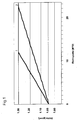
- Fig. 2 is the course of the density of different electrolyte compositions as a function of the operating time of the electrolyte and the removed Amount of electrolyte reflected.
- Curve No. 1 shows the density profile of an electrolyte known from the prior art for the deposition of nickel layers.
- Curve No. 2 shows the density profile of an electrolyte known from the prior art for depositing a nickel layer at a set removal amount of electrolyte of 3.3%.
- Curve No. 3 shows the density profile of an electrolyte, as disclosed in the European patent application EP 1 413 646 is known and in which metal salts are used as the metal base salt of the electrolyte composition, the anions are volatile.
- Curve No. 4 shows the electrolyte described in Curve No. 3 at a 3.3% electrolyte removal set.
- Curve No. 5 shows the electrolyte described for Curve No. 3 at a set removal amount of electrolyte of 10%.
- Fig. 2 No. 6 indicates the optimum operating range for electrolytes. It can be seen here that with a set continuous removal of 3.3% for one of the EP 1 413 646 A2 known electrolyte composition without leaving the optimum working range already 10 MTO's can be achieved. At a set continuous removal of 10%, the upper limit of the density of the optimum working range for one of the EP 1 413 646 A2 known electrolyte is no longer achieved and the electrolyte composition has a theoretically unlimited life.
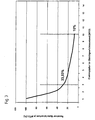
- Fig. 3 shows the relative loss of material in the electrolyte per MTO compared to the electrolyte age in the equilibrium state.
- the left boundary represents a conventional electrolyte system.
- the right boundary corresponds to an electrolyte system according to the EP 1 413 646 A2 ,
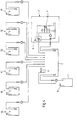
- Fig. 4 shows a process schematic of a device. From the component containers 1A to 1F, the individual components required for the production of the electrolyte are transferred into the electrolyte bath 2 by means of suitable conveying media, such as pumps.
- the electrolyte composition in the electrolyte bath 2 is analyzed either directly in the electrolyte bath or in an external control module 3 supplied with a partial flow from the electrolyte bath with regard to its chemophysical properties such as density, pH, temperature, conductivity or metal content. Becomes a Partial flow of the electrolyte removed from the electrolyte 2, this can optionally be supplied to a heat recovery 5.
- Both the component containers 1A to 1F and the electrolyte bath and the receptacle for removed electrolyte advantageously have fill level sensors which register an exceeding or falling below filling limits and output appropriate messages and / or initiate appropriate process steps to maintain the trouble-free coating operation.
Landscapes
- Chemical & Material Sciences (AREA)
- Engineering & Computer Science (AREA)
- Metallurgy (AREA)
- Chemical Kinetics & Catalysis (AREA)
- Materials Engineering (AREA)
- Organic Chemistry (AREA)
- Electrochemistry (AREA)
- Mechanical Engineering (AREA)
- General Chemical & Material Sciences (AREA)
- Automation & Control Theory (AREA)
- Chemically Coating (AREA)
- Electroplating And Plating Baths Therefor (AREA)
- Electroplating Methods And Accessories (AREA)
- Application Of Or Painting With Fluid Materials (AREA)
Claims (8)
- Procédé de revêtement de surfaces de substrat avec une couche métallique ou oxydante dans un bain de revêtement, où le bain présente au moins une composante dont la concentration se modifie au cours du processus de revêtement et à la suite de quoi, laquelle doit être complétée ou prélevée pour le maintien de la qualité du bain,
caractérisé en ce que
le procédé permet une précipitation de métaux sans courant, dans lequel des sels de bases métalliques sont employés, dont les anions sont volatils, où le sel de base métallique est un sel du groupe constitué d'acétates métalliques, de formiates métalliques, de nitrates métalliques, d'oxalates métalliques, de propionates métalliques, de citrates métalliques et d'ascorbinates métalliques ;
la valeur de pH de l'électrolyte se situe dans la plage de 4,0 à 5,2,
le complément et/ou le prélèvement de la composante a lieu en fonction de la densité de la composition de bain, où- une quantité de la composition d'électrolyte pouvant être déterminée peut être prélevée de manière continue de l'électrolyte à partir du bain de revêtement,- la densité de l'électrolyte est déterminée,- la valeur de densité déterminée du bain de revêtement est comparée avec la valeur de densité souhaitée pour la composition d'électrolyte à l'état d'équilibre, et- le complément et/ou le prélèvement a lieu en fonction de la déviation de la valeur de densité déterminée par rapport à la valeur souhaitée, où on ajoute à l'électrolyte, en fonction de la déviation de la valeur de densité déterminée par rapport à la valeur souhaitée, de la composition d'électrolyte ou au moins une composante de la composition d'électrolyte à l'état d'équilibre de l'électrolyte. - Procédé selon la revendication 1, caractérisé en ce qu'une unité de calcul commande un dispositif de prélèvement et/ou de complément avec la condition d'aligner la densité du bain de revêtement à la valeur souhaitée consignée.
- Procédé selon l'une des revendications précédentes, caractérisé en ce que l'au moins une composante prélevée du bain de revêtement est collectée et est emmenée pour un recyclage.
- Procédé selon l'une des revendications précédentes, caractérisé en ce qu'à partir du début du procédé, des compositions de bains de revêtement, lesquelles présentent une densité correspondant à une valeur de densité souhaitée, sont mises en oeuvre.
- Procédé selon une ou plusieurs des revendications précédentes, caractérisé en ce que, lors du procédé, on emploie un électrolyte pour la précipitation d'une couche de nickel ou d'une couche d'un alliage de nickel sur le substrat.
- Procédé selon l'une ou plusieurs des revendications 1 à 4, caractérisé en ce que, lors du procédé, une couche d'oxyde est formée sur la surface d'un substrat en aluminium.
- Procédé selon l'une des revendications précédentes, caractérisé en ce que le sel de base métallique est un acétate métallique.
- Procédé selon l'une des revendications précédentes, caractérisé en ce que le sel de base métallique contient des ions nickel.
Priority Applications (2)
| Application Number | Priority Date | Filing Date | Title |
|---|---|---|---|
| PL07703047T PL1979511T3 (pl) | 2006-02-02 | 2007-01-26 | Sposób powlekania powierzchni substratu |
| EP07703047.6A EP1979511B1 (fr) | 2006-02-02 | 2007-01-26 | Procédé pour revêtir les surfaces d'un substrat |
Applications Claiming Priority (3)
| Application Number | Priority Date | Filing Date | Title |
|---|---|---|---|
| EP06002099A EP1816237A1 (fr) | 2006-02-02 | 2006-02-02 | Procédé et appareil pour le placage de surfaces d'un substrat |
| PCT/EP2007/000658 WO2007088008A2 (fr) | 2006-02-02 | 2007-01-26 | Procédé et dispositif pour revêtir les surfaces d'un substrat |
| EP07703047.6A EP1979511B1 (fr) | 2006-02-02 | 2007-01-26 | Procédé pour revêtir les surfaces d'un substrat |
Publications (2)
| Publication Number | Publication Date |
|---|---|
| EP1979511A2 EP1979511A2 (fr) | 2008-10-15 |
| EP1979511B1 true EP1979511B1 (fr) | 2018-10-31 |
Family
ID=36576014
Family Applications (2)
| Application Number | Title | Priority Date | Filing Date |
|---|---|---|---|
| EP06002099A Withdrawn EP1816237A1 (fr) | 2006-02-02 | 2006-02-02 | Procédé et appareil pour le placage de surfaces d'un substrat |
| EP07703047.6A Active EP1979511B1 (fr) | 2006-02-02 | 2007-01-26 | Procédé pour revêtir les surfaces d'un substrat |
Family Applications Before (1)
| Application Number | Title | Priority Date | Filing Date |
|---|---|---|---|
| EP06002099A Withdrawn EP1816237A1 (fr) | 2006-02-02 | 2006-02-02 | Procédé et appareil pour le placage de surfaces d'un substrat |
Country Status (8)
| Country | Link |
|---|---|
| US (1) | US20090324804A1 (fr) |
| EP (2) | EP1816237A1 (fr) |
| JP (1) | JP5695295B2 (fr) |
| KR (1) | KR101466995B1 (fr) |
| CN (1) | CN101437986B (fr) |
| ES (1) | ES2706874T3 (fr) |
| PL (1) | PL1979511T3 (fr) |
| WO (1) | WO2007088008A2 (fr) |
Cited By (1)
| Publication number | Priority date | Publication date | Assignee | Title |
|---|---|---|---|---|
| US12595802B2 (en) | 2024-02-29 | 2026-04-07 | Garrett Transportation I Inc. | Wheels including a coating layer and methods for making the same |
Families Citing this family (8)
| Publication number | Priority date | Publication date | Assignee | Title |
|---|---|---|---|---|
| US8962070B2 (en) * | 2009-07-03 | 2015-02-24 | Enthone Inc. | Method for the deposition of a metal layer comprising a beta-amino acid |
| US20130087463A1 (en) * | 2011-10-05 | 2013-04-11 | Globalfoundries Inc. | Method and System for Metal Deposition in Semiconductor Processing |
| KR101502795B1 (ko) * | 2012-03-15 | 2015-03-13 | 김종호 | 포물선의 전체 또는 일부의 굴절경로를 갖는 진주광택 안료 입자 및 이의 제조방법 |
| US9708693B2 (en) * | 2014-06-03 | 2017-07-18 | Macdermid Acumen, Inc. | High phosphorus electroless nickel |
| DE102018008312A1 (de) | 2018-10-22 | 2020-04-23 | RIAG Oberflächentechnik AG | Verfahren zur Beschichtung von Substratoberflächen, Vorrichtung mit Beschichtungsbad, Dichtemesseinrichtung, Entnahmeeinrichtung, Zugabeeinrichtungen und Steuerung |
| CN113755937B (zh) * | 2021-09-09 | 2022-12-09 | 中国航发南方工业有限公司 | 电镀铂槽液的维护方法 |
| CN114351231B (zh) * | 2022-01-04 | 2022-11-25 | 深圳技术大学 | 电解液中金属离子浓度的测量和监控的设备和方法 |
| US20230411222A1 (en) * | 2022-05-24 | 2023-12-21 | Applied Materials, Inc. | Model-based parameter adjustments for deposition processes |
Citations (3)
| Publication number | Priority date | Publication date | Assignee | Title |
|---|---|---|---|---|
| GB1378458A (en) * | 1972-06-29 | 1974-12-27 | Siemens Ag | Currentless plating of solid bodies with nickel |
| US4353933A (en) * | 1979-11-14 | 1982-10-12 | C. Uyemura & Co., Ltd. | Method for controlling electroless plating bath |
| JP2001049448A (ja) * | 1999-08-09 | 2001-02-20 | C Uyemura & Co Ltd | 無電解ニッケルめっき方法 |
Family Cites Families (22)
| Publication number | Priority date | Publication date | Assignee | Title |
|---|---|---|---|---|
| US3035898A (en) * | 1957-12-30 | 1962-05-22 | Int Minerals & Chem Corp | Method for preparing potassium phosphates |
| US3243362A (en) * | 1963-05-02 | 1966-03-29 | Aluminum Co Of America | Method of anodizing aluminum |
| US3637473A (en) * | 1969-07-03 | 1972-01-25 | Engelhard Min & Chem | Method for electroplating gold |
| US3765436A (en) * | 1970-08-22 | 1973-10-16 | Volkswagenwerk Ag | Control device for two metallic salt components in electroplating baths |
| JPS5324897B2 (fr) * | 1972-09-27 | 1978-07-24 | ||
| AT322940B (de) * | 1972-10-31 | 1975-06-10 | Siemens Ag | Bäder zum stromlosen vernickeln von metall, kunststoff und keramik |
| US4152164A (en) * | 1976-04-26 | 1979-05-01 | Michael Gulla | Electroless nickel plating |
| DE2744426C3 (de) * | 1977-10-03 | 1980-07-03 | Siemens Ag, 1000 Berlin Und 8000 Muenchen | Verfahren zum stromlosen Vernickeln von Oberflächen aus Metallen, Kunststoff und Keramik |
| JPS5952700B2 (ja) * | 1979-11-14 | 1984-12-21 | 上村工業株式会社 | 無電解めつき制御方法及びその装置 |
| EP0100203A1 (fr) * | 1982-07-23 | 1984-02-08 | Brent Chemicals International Plc | Appareil et procédé pour le placage sans courant |
| JPS5941488A (ja) * | 1982-09-01 | 1984-03-07 | Sumitomo Metal Ind Ltd | 鉄系電気メツキ浴濃度の自動制御方法 |
| JPS60106970A (ja) * | 1983-11-15 | 1985-06-12 | C Uyemura & Co Ltd | 表面処理液の自動管理方法及びそれに用いる装置 |
| FR2657791B1 (fr) * | 1990-02-02 | 1994-04-01 | Rhone Poulenc Chimie | Compose chimique contenant des alcalins ou des alcalino-terreux catalyseur en contenant et procede de solvolyse utilisant ledit catalyseur. |
| JPH05112897A (ja) * | 1991-10-21 | 1993-05-07 | Kansai Paint Co Ltd | 電着塗料の組成分析方法及び装置並びに組成管理方法及び装置 |
| JP3241227B2 (ja) * | 1995-02-14 | 2001-12-25 | 株式会社東芝 | メッキ液自動管理装置 |
| DE19600857A1 (de) * | 1996-01-12 | 1997-07-17 | Atotech Deutschland Gmbh | Verfahren zur Dosierung von Prozeßbädern |
| JP3627081B2 (ja) * | 1996-06-07 | 2005-03-09 | Jfeスチール株式会社 | 連続電気めっき設備におけるめっき液濃度推定方法 |
| US6277180B1 (en) * | 1999-07-12 | 2001-08-21 | Oliver Sales Company | Method of replacing evaporation losses from colloidal catalyst baths |
| FR2801062B1 (fr) * | 1999-11-12 | 2001-12-28 | Lorraine Laminage | Installation et procede de dissolution electrolytique par oxydation d'un metal |
| EP1243673A1 (fr) * | 2001-03-24 | 2002-09-25 | Enthone Inc. | Maintenance d'un électrolyte |
| DE10246453A1 (de) * | 2002-10-04 | 2004-04-15 | Enthone Inc., West Haven | Verfahren zur stromlosen Abscheidung von Nickel |
| CN1293237C (zh) * | 2004-06-21 | 2007-01-03 | 乐清市帕特尼触头有限公司 | 电触头材料生产方法 |
-
2006
- 2006-02-02 EP EP06002099A patent/EP1816237A1/fr not_active Withdrawn
-
2007
- 2007-01-26 JP JP2008552727A patent/JP5695295B2/ja not_active Expired - Fee Related
- 2007-01-26 ES ES07703047T patent/ES2706874T3/es active Active
- 2007-01-26 EP EP07703047.6A patent/EP1979511B1/fr active Active
- 2007-01-26 KR KR1020087021543A patent/KR101466995B1/ko not_active Expired - Fee Related
- 2007-01-26 CN CN2007800119432A patent/CN101437986B/zh not_active Expired - Fee Related
- 2007-01-26 US US12/278,256 patent/US20090324804A1/en not_active Abandoned
- 2007-01-26 WO PCT/EP2007/000658 patent/WO2007088008A2/fr not_active Ceased
- 2007-01-26 PL PL07703047T patent/PL1979511T3/pl unknown
Patent Citations (3)
| Publication number | Priority date | Publication date | Assignee | Title |
|---|---|---|---|---|
| GB1378458A (en) * | 1972-06-29 | 1974-12-27 | Siemens Ag | Currentless plating of solid bodies with nickel |
| US4353933A (en) * | 1979-11-14 | 1982-10-12 | C. Uyemura & Co., Ltd. | Method for controlling electroless plating bath |
| JP2001049448A (ja) * | 1999-08-09 | 2001-02-20 | C Uyemura & Co Ltd | 無電解ニッケルめっき方法 |
Non-Patent Citations (1)
| Title |
|---|
| DATABASE WPI Week 200137, Derwent World Patents Index; AN 2001-347624 * |
Cited By (1)
| Publication number | Priority date | Publication date | Assignee | Title |
|---|---|---|---|---|
| US12595802B2 (en) | 2024-02-29 | 2026-04-07 | Garrett Transportation I Inc. | Wheels including a coating layer and methods for making the same |
Also Published As
| Publication number | Publication date |
|---|---|
| JP2009525404A (ja) | 2009-07-09 |
| JP5695295B2 (ja) | 2015-04-01 |
| US20090324804A1 (en) | 2009-12-31 |
| WO2007088008A3 (fr) | 2008-04-17 |
| CN101437986B (zh) | 2013-12-11 |
| ES2706874T3 (es) | 2019-04-01 |
| EP1979511A2 (fr) | 2008-10-15 |
| CN101437986A (zh) | 2009-05-20 |
| EP1816237A1 (fr) | 2007-08-08 |
| PL1979511T3 (pl) | 2019-05-31 |
| WO2007088008A2 (fr) | 2007-08-09 |
| KR101466995B1 (ko) | 2014-12-01 |
| KR20080093451A (ko) | 2008-10-21 |
Similar Documents
| Publication | Publication Date | Title |
|---|---|---|
| EP1979511B1 (fr) | Procédé pour revêtir les surfaces d'un substrat | |
| EP1413646B2 (fr) | Procédé de dépot sans courant de métaux | |
| DE102008058086B4 (de) | Verfahren und Vorrichtung zur Reinigung von galvanischen Bädern zur Abscheidung von Metallen | |
| DE2718556B2 (de) | Verfahren zur stromlosen Aufbringung von Metallisierungen mit variierender Zusammensetzung auf Substrate und darin verwendbare wäßrige Auffrischungslösung | |
| EP3070188A2 (fr) | Procede de revetement d'une broche inseree par compression et broche inseree par compression | |
| DE1274418B (de) | Verfahren zur Aufrechterhaltung der Wirksamkeit von Phosphatierungsloesungen | |
| EP2184384B1 (fr) | Bain galvanique et procédé pour la déposition de couches contenant du zinc | |
| US20020166772A1 (en) | Maintenance of an electrolyte | |
| DE102004061255B4 (de) | Verfahren für den kontinuierlichen Betrieb von sauren oder alkalischen Zink- oder Zinklegierungsbädern und Vorrichtung zur Durchführung desselben | |
| WO2001066830A2 (fr) | Procede pour appliquer une couche metallique sur des surfaces de metaux legers | |
| DE2715850C2 (de) | Verfahren zum Betrieb von ohne äußere Stromzufuhr arbeitenden Verkupferungsbädern | |
| DE4391902C2 (de) | Verfahren zur Zubereitung von wäßriger Arbeitsflüssigkeit für die Funkenerodierbearbeitung | |
| DE2032867C3 (de) | Galvanisches Goldbad und Verfahren zur Abscheidung gleichmäßiger, dicker Goldüberzüge | |
| WO2009152915A2 (fr) | Procédé de galvanisation au cuivre et dispositif pour mettre en oeuvre ce procédé | |
| EP2352859B1 (fr) | Procédé et installation de décapage | |
| EP1881090B1 (fr) | Composition électrolytique et procédé pour la déposition d'une couche d'alliage zinc-nickel sur un substrat en fonte ou en acier | |
| EP2039810A2 (fr) | Procédé et dispositifs pour prolonger la durée d'utilisation d'une solution de procédé utilisée dans un processus de revêtement métallique par réduction chimique | |
| DE102008031003A1 (de) | Verfahren zum Erzeugen einer CNT enthaltenen Schicht aus einer ionischen Flüssigkeit | |
| EP4194590B1 (fr) | Procédé et composition destinés à l'anodisation sélective | |
| DE3143225A1 (de) | "stabiles waessriges galvanisches bad zur schnellabscheidung von silberueberzuegen mit spiegelglanz" | |
| DE843785C (de) | Verfahren zur Herstellung harter galvanischer Silberueberzuege | |
| DE3502995C2 (fr) | ||
| DE3215346C2 (fr) | ||
| EP4733452A1 (fr) | Dispositif galvanique et procédé de dépôt d'une couche galvanique ainsi que pièce dotée d'une couche galvanique | |
| DE102010031181A1 (de) | Verfahren und Anordnung zum Abscheiden einer Metallschicht |
Legal Events
| Date | Code | Title | Description |
|---|---|---|---|
| PUAI | Public reference made under article 153(3) epc to a published international application that has entered the european phase |
Free format text: ORIGINAL CODE: 0009012 |
|
| 17P | Request for examination filed |
Effective date: 20080806 |
|
| AK | Designated contracting states |
Kind code of ref document: A2 Designated state(s): AT BE BG CH CY CZ DE DK EE ES FI FR GB GR HU IE IS IT LI LT LU LV MC NL PL PT RO SE SI SK TR |
|
| AX | Request for extension of the european patent |
Extension state: AL BA HR MK RS |
|
| 17Q | First examination report despatched |
Effective date: 20111221 |
|
| DAX | Request for extension of the european patent (deleted) | ||
| STAA | Information on the status of an ep patent application or granted ep patent |
Free format text: STATUS: EXAMINATION IS IN PROGRESS |
|
| RAP1 | Party data changed (applicant data changed or rights of an application transferred) |
Owner name: MACDERMID ENTHONE INC. |
|
| GRAP | Despatch of communication of intention to grant a patent |
Free format text: ORIGINAL CODE: EPIDOSNIGR1 |
|
| STAA | Information on the status of an ep patent application or granted ep patent |
Free format text: STATUS: GRANT OF PATENT IS INTENDED |
|
| INTG | Intention to grant announced |
Effective date: 20180710 |
|
| GRAS | Grant fee paid |
Free format text: ORIGINAL CODE: EPIDOSNIGR3 |
|
| GRAA | (expected) grant |
Free format text: ORIGINAL CODE: 0009210 |
|
| STAA | Information on the status of an ep patent application or granted ep patent |
Free format text: STATUS: THE PATENT HAS BEEN GRANTED |
|
| AK | Designated contracting states |
Kind code of ref document: B1 Designated state(s): AT BE BG CH CY CZ DE DK EE ES FI FR GB GR HU IE IS IT LI LT LU LV MC NL PL PT RO SE SI SK TR |
|
| REG | Reference to a national code |
Ref country code: CH Ref legal event code: EP Ref country code: GB Ref legal event code: FG4D Free format text: NOT ENGLISH |
|
| REG | Reference to a national code |
Ref country code: AT Ref legal event code: REF Ref document number: 1059497 Country of ref document: AT Kind code of ref document: T Effective date: 20181115 |
|
| REG | Reference to a national code |
Ref country code: DE Ref legal event code: R096 Ref document number: 502007016465 Country of ref document: DE |
|
| REG | Reference to a national code |
Ref country code: IE Ref legal event code: FG4D Free format text: LANGUAGE OF EP DOCUMENT: GERMAN |
|
| REG | Reference to a national code |
Ref country code: NL Ref legal event code: FP |
|
| REG | Reference to a national code |
Ref country code: LT Ref legal event code: MG4D |
|
| REG | Reference to a national code |
Ref country code: ES Ref legal event code: FG2A Ref document number: 2706874 Country of ref document: ES Kind code of ref document: T3 Effective date: 20190401 |
|
| PG25 | Lapsed in a contracting state [announced via postgrant information from national office to epo] |
Ref country code: IS Free format text: LAPSE BECAUSE OF FAILURE TO SUBMIT A TRANSLATION OF THE DESCRIPTION OR TO PAY THE FEE WITHIN THE PRESCRIBED TIME-LIMIT Effective date: 20190228 Ref country code: LV Free format text: LAPSE BECAUSE OF FAILURE TO SUBMIT A TRANSLATION OF THE DESCRIPTION OR TO PAY THE FEE WITHIN THE PRESCRIBED TIME-LIMIT Effective date: 20181031 Ref country code: BG Free format text: LAPSE BECAUSE OF FAILURE TO SUBMIT A TRANSLATION OF THE DESCRIPTION OR TO PAY THE FEE WITHIN THE PRESCRIBED TIME-LIMIT Effective date: 20190131 Ref country code: LT Free format text: LAPSE BECAUSE OF FAILURE TO SUBMIT A TRANSLATION OF THE DESCRIPTION OR TO PAY THE FEE WITHIN THE PRESCRIBED TIME-LIMIT Effective date: 20181031 Ref country code: FI Free format text: LAPSE BECAUSE OF FAILURE TO SUBMIT A TRANSLATION OF THE DESCRIPTION OR TO PAY THE FEE WITHIN THE PRESCRIBED TIME-LIMIT Effective date: 20181031 |
|
| PG25 | Lapsed in a contracting state [announced via postgrant information from national office to epo] |
Ref country code: GR Free format text: LAPSE BECAUSE OF FAILURE TO SUBMIT A TRANSLATION OF THE DESCRIPTION OR TO PAY THE FEE WITHIN THE PRESCRIBED TIME-LIMIT Effective date: 20190201 Ref country code: SE Free format text: LAPSE BECAUSE OF FAILURE TO SUBMIT A TRANSLATION OF THE DESCRIPTION OR TO PAY THE FEE WITHIN THE PRESCRIBED TIME-LIMIT Effective date: 20181031 Ref country code: PT Free format text: LAPSE BECAUSE OF FAILURE TO SUBMIT A TRANSLATION OF THE DESCRIPTION OR TO PAY THE FEE WITHIN THE PRESCRIBED TIME-LIMIT Effective date: 20190301 |
|
| PG25 | Lapsed in a contracting state [announced via postgrant information from national office to epo] |
Ref country code: DK Free format text: LAPSE BECAUSE OF FAILURE TO SUBMIT A TRANSLATION OF THE DESCRIPTION OR TO PAY THE FEE WITHIN THE PRESCRIBED TIME-LIMIT Effective date: 20181031 |
|
| REG | Reference to a national code |
Ref country code: DE Ref legal event code: R097 Ref document number: 502007016465 Country of ref document: DE |
|
| PG25 | Lapsed in a contracting state [announced via postgrant information from national office to epo] |
Ref country code: RO Free format text: LAPSE BECAUSE OF FAILURE TO SUBMIT A TRANSLATION OF THE DESCRIPTION OR TO PAY THE FEE WITHIN THE PRESCRIBED TIME-LIMIT Effective date: 20181031 Ref country code: SK Free format text: LAPSE BECAUSE OF FAILURE TO SUBMIT A TRANSLATION OF THE DESCRIPTION OR TO PAY THE FEE WITHIN THE PRESCRIBED TIME-LIMIT Effective date: 20181031 Ref country code: MC Free format text: LAPSE BECAUSE OF FAILURE TO SUBMIT A TRANSLATION OF THE DESCRIPTION OR TO PAY THE FEE WITHIN THE PRESCRIBED TIME-LIMIT Effective date: 20181031 Ref country code: EE Free format text: LAPSE BECAUSE OF FAILURE TO SUBMIT A TRANSLATION OF THE DESCRIPTION OR TO PAY THE FEE WITHIN THE PRESCRIBED TIME-LIMIT Effective date: 20181031 |
|
| PLBE | No opposition filed within time limit |
Free format text: ORIGINAL CODE: 0009261 |
|
| STAA | Information on the status of an ep patent application or granted ep patent |
Free format text: STATUS: NO OPPOSITION FILED WITHIN TIME LIMIT |
|
| PG25 | Lapsed in a contracting state [announced via postgrant information from national office to epo] |
Ref country code: LU Free format text: LAPSE BECAUSE OF NON-PAYMENT OF DUE FEES Effective date: 20190126 |
|
| 26N | No opposition filed |
Effective date: 20190801 |
|
| REG | Reference to a national code |
Ref country code: BE Ref legal event code: MM Effective date: 20190131 |
|
| REG | Reference to a national code |
Ref country code: IE Ref legal event code: MM4A |
|
| PG25 | Lapsed in a contracting state [announced via postgrant information from national office to epo] |
Ref country code: SI Free format text: LAPSE BECAUSE OF FAILURE TO SUBMIT A TRANSLATION OF THE DESCRIPTION OR TO PAY THE FEE WITHIN THE PRESCRIBED TIME-LIMIT Effective date: 20181031 |
|
| PG25 | Lapsed in a contracting state [announced via postgrant information from national office to epo] |
Ref country code: BE Free format text: LAPSE BECAUSE OF NON-PAYMENT OF DUE FEES Effective date: 20190131 |
|
| PG25 | Lapsed in a contracting state [announced via postgrant information from national office to epo] |
Ref country code: IE Free format text: LAPSE BECAUSE OF NON-PAYMENT OF DUE FEES Effective date: 20190126 |
|
| PG25 | Lapsed in a contracting state [announced via postgrant information from national office to epo] |
Ref country code: TR Free format text: LAPSE BECAUSE OF FAILURE TO SUBMIT A TRANSLATION OF THE DESCRIPTION OR TO PAY THE FEE WITHIN THE PRESCRIBED TIME-LIMIT Effective date: 20181031 |
|
| PG25 | Lapsed in a contracting state [announced via postgrant information from national office to epo] |
Ref country code: CY Free format text: LAPSE BECAUSE OF FAILURE TO SUBMIT A TRANSLATION OF THE DESCRIPTION OR TO PAY THE FEE WITHIN THE PRESCRIBED TIME-LIMIT Effective date: 20181031 |
|
| PG25 | Lapsed in a contracting state [announced via postgrant information from national office to epo] |
Ref country code: HU Free format text: LAPSE BECAUSE OF FAILURE TO SUBMIT A TRANSLATION OF THE DESCRIPTION OR TO PAY THE FEE WITHIN THE PRESCRIBED TIME-LIMIT; INVALID AB INITIO Effective date: 20070126 |
|
| P01 | Opt-out of the competence of the unified patent court (upc) registered |
Effective date: 20230524 |
|
| PGFP | Annual fee paid to national office [announced via postgrant information from national office to epo] |
Ref country code: GB Payment date: 20231219 Year of fee payment: 18 |
|
| PGFP | Annual fee paid to national office [announced via postgrant information from national office to epo] |
Ref country code: NL Payment date: 20231219 Year of fee payment: 18 Ref country code: FR Payment date: 20231219 Year of fee payment: 18 Ref country code: CZ Payment date: 20231227 Year of fee payment: 18 |
|
| PGFP | Annual fee paid to national office [announced via postgrant information from national office to epo] |
Ref country code: ES Payment date: 20240202 Year of fee payment: 18 |
|
| PGFP | Annual fee paid to national office [announced via postgrant information from national office to epo] |
Ref country code: AT Payment date: 20231222 Year of fee payment: 18 |
|
| PGFP | Annual fee paid to national office [announced via postgrant information from national office to epo] |
Ref country code: DE Payment date: 20231219 Year of fee payment: 18 Ref country code: CH Payment date: 20240202 Year of fee payment: 18 |
|
| PGFP | Annual fee paid to national office [announced via postgrant information from national office to epo] |
Ref country code: PL Payment date: 20240108 Year of fee payment: 18 Ref country code: IT Payment date: 20240102 Year of fee payment: 18 |
|
| REG | Reference to a national code |
Ref country code: DE Ref legal event code: R119 Ref document number: 502007016465 Country of ref document: DE |
|
| REG | Reference to a national code |
Ref country code: CH Ref legal event code: PL |
|
| REG | Reference to a national code |
Ref country code: NL Ref legal event code: MM Effective date: 20250201 |
|
| REG | Reference to a national code |
Ref country code: AT Ref legal event code: MM01 Ref document number: 1059497 Country of ref document: AT Kind code of ref document: T Effective date: 20250126 |
|
| GBPC | Gb: european patent ceased through non-payment of renewal fee |
Effective date: 20250126 |
|
| PG25 | Lapsed in a contracting state [announced via postgrant information from national office to epo] |
Ref country code: DE Free format text: LAPSE BECAUSE OF NON-PAYMENT OF DUE FEES Effective date: 20250801 |
|
| PG25 | Lapsed in a contracting state [announced via postgrant information from national office to epo] |
Ref country code: NL Free format text: LAPSE BECAUSE OF NON-PAYMENT OF DUE FEES Effective date: 20250201 |
|
| PG25 | Lapsed in a contracting state [announced via postgrant information from national office to epo] |
Ref country code: GB Free format text: LAPSE BECAUSE OF NON-PAYMENT OF DUE FEES Effective date: 20250126 |
|
| PG25 | Lapsed in a contracting state [announced via postgrant information from national office to epo] |
Ref country code: FR Free format text: LAPSE BECAUSE OF NON-PAYMENT OF DUE FEES Effective date: 20250131 Ref country code: AT Free format text: LAPSE BECAUSE OF NON-PAYMENT OF DUE FEES Effective date: 20250126 |
|
| PG25 | Lapsed in a contracting state [announced via postgrant information from national office to epo] |
Ref country code: CH Free format text: LAPSE BECAUSE OF NON-PAYMENT OF DUE FEES Effective date: 20250131 |
|
| PG25 | Lapsed in a contracting state [announced via postgrant information from national office to epo] |
Ref country code: CZ Free format text: LAPSE BECAUSE OF NON-PAYMENT OF DUE FEES Effective date: 20250126 |
|
| PG25 | Lapsed in a contracting state [announced via postgrant information from national office to epo] |
Ref country code: IT Free format text: LAPSE BECAUSE OF NON-PAYMENT OF DUE FEES Effective date: 20250126 |
|
| REG | Reference to a national code |
Ref country code: ES Ref legal event code: FD2A Effective date: 20260302 |
|
| PG25 | Lapsed in a contracting state [announced via postgrant information from national office to epo] |
Ref country code: ES Free format text: LAPSE BECAUSE OF NON-PAYMENT OF DUE FEES Effective date: 20250127 |