EP1989809B1 - Feedback-kanalauslegung für kommunikationssysteme mit mehreren ein- und ausgängen (mimo) - Google Patents
Feedback-kanalauslegung für kommunikationssysteme mit mehreren ein- und ausgängen (mimo) Download PDFInfo
- Publication number
- EP1989809B1 EP1989809B1 EP07757236A EP07757236A EP1989809B1 EP 1989809 B1 EP1989809 B1 EP 1989809B1 EP 07757236 A EP07757236 A EP 07757236A EP 07757236 A EP07757236 A EP 07757236A EP 1989809 B1 EP1989809 B1 EP 1989809B1
- Authority
- EP
- European Patent Office
- Prior art keywords
- mimo
- bts
- forward link
- information
- access terminal
- Prior art date
- Legal status (The legal status is an assumption and is not a legal conclusion. Google has not performed a legal analysis and makes no representation as to the accuracy of the status listed.)
- Not-in-force
Links
- 238000004891 communication Methods 0.000 title claims description 31
- 238000013461 design Methods 0.000 title description 16
- 238000000034 method Methods 0.000 claims description 93
- 230000005540 biological transmission Effects 0.000 claims description 59
- 238000012545 processing Methods 0.000 claims description 3
- 238000004590 computer program Methods 0.000 claims 8
- LCTONWCANYUPML-UHFFFAOYSA-N Pyruvic acid Chemical compound CC(=O)C(O)=O LCTONWCANYUPML-UHFFFAOYSA-N 0.000 claims 4
- 230000001965 increasing effect Effects 0.000 abstract description 6
- 230000010267 cellular communication Effects 0.000 abstract description 4
- 238000012856 packing Methods 0.000 abstract 1
- 239000010410 layer Substances 0.000 description 65
- 230000008569 process Effects 0.000 description 15
- 238000004519 manufacturing process Methods 0.000 description 8
- 239000002356 single layer Substances 0.000 description 8
- 238000003860 storage Methods 0.000 description 6
- 230000001413 cellular effect Effects 0.000 description 5
- 238000001228 spectrum Methods 0.000 description 4
- 230000006870 function Effects 0.000 description 3
- 230000004044 response Effects 0.000 description 3
- 108010003272 Hyaluronate lyase Proteins 0.000 description 2
- 238000012512 characterization method Methods 0.000 description 2
- 239000002131 composite material Substances 0.000 description 2
- 238000005562 fading Methods 0.000 description 2
- 239000002245 particle Substances 0.000 description 2
- 238000005192 partition Methods 0.000 description 2
- 230000011664 signaling Effects 0.000 description 2
- 230000003595 spectral effect Effects 0.000 description 2
- 230000007480 spreading Effects 0.000 description 2
- 238000003892 spreading Methods 0.000 description 2
- 239000013598 vector Substances 0.000 description 2
- 230000006978 adaptation Effects 0.000 description 1
- 238000013459 approach Methods 0.000 description 1
- 125000004122 cyclic group Chemical group 0.000 description 1
- 238000013497 data interchange Methods 0.000 description 1
- 230000001419 dependent effect Effects 0.000 description 1
- 230000000694 effects Effects 0.000 description 1
- 238000005516 engineering process Methods 0.000 description 1
- 230000002708 enhancing effect Effects 0.000 description 1
- 230000008713 feedback mechanism Effects 0.000 description 1
- 230000007246 mechanism Effects 0.000 description 1
- 238000012986 modification Methods 0.000 description 1
- 230000004048 modification Effects 0.000 description 1
- 230000003287 optical effect Effects 0.000 description 1
- 230000000737 periodic effect Effects 0.000 description 1
- 230000008054 signal transmission Effects 0.000 description 1
- 238000012546 transfer Methods 0.000 description 1
Images




Classifications
-
- H—ELECTRICITY
- H04—ELECTRIC COMMUNICATION TECHNIQUE
- H04L—TRANSMISSION OF DIGITAL INFORMATION, e.g. TELEGRAPHIC COMMUNICATION
- H04L5/00—Arrangements affording multiple use of the transmission path
- H04L5/14—Two-way operation using the same type of signal, i.e. duplex
- H04L5/1438—Negotiation of transmission parameters prior to communication
-
- H—ELECTRICITY
- H04—ELECTRIC COMMUNICATION TECHNIQUE
- H04L—TRANSMISSION OF DIGITAL INFORMATION, e.g. TELEGRAPHIC COMMUNICATION
- H04L5/00—Arrangements affording multiple use of the transmission path
- H04L5/0001—Arrangements for dividing the transmission path
- H04L5/0003—Two-dimensional division
- H04L5/0005—Time-frequency
- H04L5/0007—Time-frequency the frequencies being orthogonal, e.g. OFDM(A) or DMT
-
- H—ELECTRICITY
- H04—ELECTRIC COMMUNICATION TECHNIQUE
- H04B—TRANSMISSION
- H04B7/00—Radio transmission systems, i.e. using radiation field
- H04B7/02—Diversity systems; Multi-antenna system, i.e. transmission or reception using multiple antennas
- H04B7/04—Diversity systems; Multi-antenna system, i.e. transmission or reception using multiple antennas using two or more spaced independent antennas
- H04B7/0413—MIMO systems
- H04B7/0452—Multi-user MIMO systems
-
- H—ELECTRICITY
- H04—ELECTRIC COMMUNICATION TECHNIQUE
- H04B—TRANSMISSION
- H04B7/00—Radio transmission systems, i.e. using radiation field
- H04B7/02—Diversity systems; Multi-antenna system, i.e. transmission or reception using multiple antennas
- H04B7/04—Diversity systems; Multi-antenna system, i.e. transmission or reception using multiple antennas using two or more spaced independent antennas
- H04B7/06—Diversity systems; Multi-antenna system, i.e. transmission or reception using multiple antennas using two or more spaced independent antennas at the transmitting station
- H04B7/0613—Diversity systems; Multi-antenna system, i.e. transmission or reception using multiple antennas using two or more spaced independent antennas at the transmitting station using simultaneous transmission
- H04B7/0615—Diversity systems; Multi-antenna system, i.e. transmission or reception using multiple antennas using two or more spaced independent antennas at the transmitting station using simultaneous transmission of weighted versions of same signal
- H04B7/0619—Diversity systems; Multi-antenna system, i.e. transmission or reception using multiple antennas using two or more spaced independent antennas at the transmitting station using simultaneous transmission of weighted versions of same signal using feedback from receiving side
- H04B7/0621—Feedback content
- H04B7/0626—Channel coefficients, e.g. channel state information [CSI]
-
- H—ELECTRICITY
- H04—ELECTRIC COMMUNICATION TECHNIQUE
- H04B—TRANSMISSION
- H04B7/00—Radio transmission systems, i.e. using radiation field
- H04B7/02—Diversity systems; Multi-antenna system, i.e. transmission or reception using multiple antennas
- H04B7/04—Diversity systems; Multi-antenna system, i.e. transmission or reception using multiple antennas using two or more spaced independent antennas
- H04B7/06—Diversity systems; Multi-antenna system, i.e. transmission or reception using multiple antennas using two or more spaced independent antennas at the transmitting station
- H04B7/0613—Diversity systems; Multi-antenna system, i.e. transmission or reception using multiple antennas using two or more spaced independent antennas at the transmitting station using simultaneous transmission
- H04B7/0615—Diversity systems; Multi-antenna system, i.e. transmission or reception using multiple antennas using two or more spaced independent antennas at the transmitting station using simultaneous transmission of weighted versions of same signal
- H04B7/0619—Diversity systems; Multi-antenna system, i.e. transmission or reception using multiple antennas using two or more spaced independent antennas at the transmitting station using simultaneous transmission of weighted versions of same signal using feedback from receiving side
- H04B7/0621—Feedback content
- H04B7/063—Parameters other than those covered in groups H04B7/0623 - H04B7/0634, e.g. channel matrix rank or transmit mode selection
-
- H—ELECTRICITY
- H04—ELECTRIC COMMUNICATION TECHNIQUE
- H04B—TRANSMISSION
- H04B7/00—Radio transmission systems, i.e. using radiation field
- H04B7/02—Diversity systems; Multi-antenna system, i.e. transmission or reception using multiple antennas
- H04B7/04—Diversity systems; Multi-antenna system, i.e. transmission or reception using multiple antennas using two or more spaced independent antennas
- H04B7/06—Diversity systems; Multi-antenna system, i.e. transmission or reception using multiple antennas using two or more spaced independent antennas at the transmitting station
- H04B7/0613—Diversity systems; Multi-antenna system, i.e. transmission or reception using multiple antennas using two or more spaced independent antennas at the transmitting station using simultaneous transmission
- H04B7/0615—Diversity systems; Multi-antenna system, i.e. transmission or reception using multiple antennas using two or more spaced independent antennas at the transmitting station using simultaneous transmission of weighted versions of same signal
- H04B7/0619—Diversity systems; Multi-antenna system, i.e. transmission or reception using multiple antennas using two or more spaced independent antennas at the transmitting station using simultaneous transmission of weighted versions of same signal using feedback from receiving side
- H04B7/0636—Feedback format
- H04B7/0639—Using selective indices, e.g. of a codebook, e.g. pre-distortion matrix index [PMI] or for beam selection
-
- H—ELECTRICITY
- H04—ELECTRIC COMMUNICATION TECHNIQUE
- H04L—TRANSMISSION OF DIGITAL INFORMATION, e.g. TELEGRAPHIC COMMUNICATION
- H04L1/00—Arrangements for detecting or preventing errors in the information received
- H04L1/0001—Systems modifying transmission characteristics according to link quality, e.g. power backoff
- H04L1/0002—Systems modifying transmission characteristics according to link quality, e.g. power backoff by adapting the transmission rate
-
- H—ELECTRICITY
- H04—ELECTRIC COMMUNICATION TECHNIQUE
- H04L—TRANSMISSION OF DIGITAL INFORMATION, e.g. TELEGRAPHIC COMMUNICATION
- H04L1/00—Arrangements for detecting or preventing errors in the information received
- H04L1/0001—Systems modifying transmission characteristics according to link quality, e.g. power backoff
- H04L1/0023—Systems modifying transmission characteristics according to link quality, e.g. power backoff characterised by the signalling
- H04L1/0025—Transmission of mode-switching indication
-
- H—ELECTRICITY
- H04—ELECTRIC COMMUNICATION TECHNIQUE
- H04L—TRANSMISSION OF DIGITAL INFORMATION, e.g. TELEGRAPHIC COMMUNICATION
- H04L1/00—Arrangements for detecting or preventing errors in the information received
- H04L1/0001—Systems modifying transmission characteristics according to link quality, e.g. power backoff
- H04L1/0023—Systems modifying transmission characteristics according to link quality, e.g. power backoff characterised by the signalling
- H04L1/0028—Formatting
-
- H—ELECTRICITY
- H04—ELECTRIC COMMUNICATION TECHNIQUE
- H04L—TRANSMISSION OF DIGITAL INFORMATION, e.g. TELEGRAPHIC COMMUNICATION
- H04L25/00—Baseband systems
- H04L25/02—Details ; arrangements for supplying electrical power along data transmission lines
- H04L25/0202—Channel estimation
- H04L25/0224—Channel estimation using sounding signals
- H04L25/0226—Channel estimation using sounding signals sounding signals per se
-
- H—ELECTRICITY
- H04—ELECTRIC COMMUNICATION TECHNIQUE
- H04L—TRANSMISSION OF DIGITAL INFORMATION, e.g. TELEGRAPHIC COMMUNICATION
- H04L27/00—Modulated-carrier systems
- H04L27/26—Systems using multi-frequency codes
- H04L27/2601—Multicarrier modulation systems
- H04L27/2602—Signal structure
- H04L27/261—Details of reference signals
- H04L27/2613—Structure of the reference signals
-
- H—ELECTRICITY
- H04—ELECTRIC COMMUNICATION TECHNIQUE
- H04L—TRANSMISSION OF DIGITAL INFORMATION, e.g. TELEGRAPHIC COMMUNICATION
- H04L27/00—Modulated-carrier systems
- H04L27/26—Systems using multi-frequency codes
- H04L27/2601—Multicarrier modulation systems
- H04L27/2602—Signal structure
- H04L27/261—Details of reference signals
- H04L27/2613—Structure of the reference signals
- H04L27/26132—Structure of the reference signals using repetition
-
- H—ELECTRICITY
- H04—ELECTRIC COMMUNICATION TECHNIQUE
- H04L—TRANSMISSION OF DIGITAL INFORMATION, e.g. TELEGRAPHIC COMMUNICATION
- H04L5/00—Arrangements affording multiple use of the transmission path
- H04L5/0001—Arrangements for dividing the transmission path
- H04L5/0014—Three-dimensional division
- H04L5/0016—Time-frequency-code
-
- H—ELECTRICITY
- H04—ELECTRIC COMMUNICATION TECHNIQUE
- H04L—TRANSMISSION OF DIGITAL INFORMATION, e.g. TELEGRAPHIC COMMUNICATION
- H04L5/00—Arrangements affording multiple use of the transmission path
- H04L5/0001—Arrangements for dividing the transmission path
- H04L5/0026—Division using four or more dimensions, e.g. beam steering or quasi-co-location [QCL]
-
- H—ELECTRICITY
- H04—ELECTRIC COMMUNICATION TECHNIQUE
- H04L—TRANSMISSION OF DIGITAL INFORMATION, e.g. TELEGRAPHIC COMMUNICATION
- H04L5/00—Arrangements affording multiple use of the transmission path
- H04L5/003—Arrangements for allocating sub-channels of the transmission path
- H04L5/0042—Intra-user or intra-terminal allocation
-
- H—ELECTRICITY
- H04—ELECTRIC COMMUNICATION TECHNIQUE
- H04L—TRANSMISSION OF DIGITAL INFORMATION, e.g. TELEGRAPHIC COMMUNICATION
- H04L5/00—Arrangements affording multiple use of the transmission path
- H04L5/003—Arrangements for allocating sub-channels of the transmission path
- H04L5/0044—Allocation of payload; Allocation of data channels, e.g. PDSCH or PUSCH
-
- H—ELECTRICITY
- H04—ELECTRIC COMMUNICATION TECHNIQUE
- H04L—TRANSMISSION OF DIGITAL INFORMATION, e.g. TELEGRAPHIC COMMUNICATION
- H04L5/00—Arrangements affording multiple use of the transmission path
- H04L5/003—Arrangements for allocating sub-channels of the transmission path
- H04L5/0048—Allocation of pilot signals, i.e. of signals known to the receiver
-
- H—ELECTRICITY
- H04—ELECTRIC COMMUNICATION TECHNIQUE
- H04L—TRANSMISSION OF DIGITAL INFORMATION, e.g. TELEGRAPHIC COMMUNICATION
- H04L5/00—Arrangements affording multiple use of the transmission path
- H04L5/0091—Signalling for the administration of the divided path, e.g. signalling of configuration information
- H04L5/0094—Indication of how sub-channels of the path are allocated
-
- H—ELECTRICITY
- H04—ELECTRIC COMMUNICATION TECHNIQUE
- H04W—WIRELESS COMMUNICATION NETWORKS
- H04W28/00—Network traffic management; Network resource management
- H04W28/02—Traffic management, e.g. flow control or congestion control
- H04W28/06—Optimizing the usage of the radio link, e.g. header compression, information sizing, discarding information
-
- H—ELECTRICITY
- H04—ELECTRIC COMMUNICATION TECHNIQUE
- H04J—MULTIPLEX COMMUNICATION
- H04J13/00—Code division multiplex systems
- H04J13/0007—Code type
- H04J13/004—Orthogonal
- H04J13/0044—OVSF [orthogonal variable spreading factor]
-
- H—ELECTRICITY
- H04—ELECTRIC COMMUNICATION TECHNIQUE
- H04L—TRANSMISSION OF DIGITAL INFORMATION, e.g. TELEGRAPHIC COMMUNICATION
- H04L1/00—Arrangements for detecting or preventing errors in the information received
- H04L1/02—Arrangements for detecting or preventing errors in the information received by diversity reception
- H04L1/06—Arrangements for detecting or preventing errors in the information received by diversity reception using space diversity
-
- H—ELECTRICITY
- H04—ELECTRIC COMMUNICATION TECHNIQUE
- H04L—TRANSMISSION OF DIGITAL INFORMATION, e.g. TELEGRAPHIC COMMUNICATION
- H04L1/00—Arrangements for detecting or preventing errors in the information received
- H04L1/12—Arrangements for detecting or preventing errors in the information received by using return channel
- H04L1/16—Arrangements for detecting or preventing errors in the information received by using return channel in which the return channel carries supervisory signals, e.g. repetition request signals
- H04L1/1607—Details of the supervisory signal
- H04L1/1671—Details of the supervisory signal the supervisory signal being transmitted together with control information
-
- H—ELECTRICITY
- H04—ELECTRIC COMMUNICATION TECHNIQUE
- H04L—TRANSMISSION OF DIGITAL INFORMATION, e.g. TELEGRAPHIC COMMUNICATION
- H04L1/00—Arrangements for detecting or preventing errors in the information received
- H04L1/12—Arrangements for detecting or preventing errors in the information received by using return channel
- H04L1/16—Arrangements for detecting or preventing errors in the information received by using return channel in which the return channel carries supervisory signals, e.g. repetition request signals
- H04L1/18—Automatic repetition systems, e.g. Van Duuren systems
- H04L1/1812—Hybrid protocols; Hybrid automatic repeat request [HARQ]
-
- H—ELECTRICITY
- H04—ELECTRIC COMMUNICATION TECHNIQUE
- H04L—TRANSMISSION OF DIGITAL INFORMATION, e.g. TELEGRAPHIC COMMUNICATION
- H04L25/00—Baseband systems
- H04L25/02—Details ; arrangements for supplying electrical power along data transmission lines
- H04L25/0202—Channel estimation
- H04L25/0204—Channel estimation of multiple channels
-
- H—ELECTRICITY
- H04—ELECTRIC COMMUNICATION TECHNIQUE
- H04L—TRANSMISSION OF DIGITAL INFORMATION, e.g. TELEGRAPHIC COMMUNICATION
- H04L5/00—Arrangements affording multiple use of the transmission path
- H04L5/02—Channels characterised by the type of signal
- H04L5/023—Multiplexing of multicarrier modulation signals, e.g. multi-user orthogonal frequency division multiple access [OFDMA]
-
- H—ELECTRICITY
- H04—ELECTRIC COMMUNICATION TECHNIQUE
- H04W—WIRELESS COMMUNICATION NETWORKS
- H04W28/00—Network traffic management; Network resource management
- H04W28/16—Central resource management; Negotiation of resources or communication parameters, e.g. negotiating bandwidth or QoS [Quality of Service]
- H04W28/18—Negotiating wireless communication parameters
-
- H—ELECTRICITY
- H04—ELECTRIC COMMUNICATION TECHNIQUE
- H04W—WIRELESS COMMUNICATION NETWORKS
- H04W48/00—Access restriction; Network selection; Access point selection
- H04W48/08—Access restriction or access information delivery, e.g. discovery data delivery
-
- Y—GENERAL TAGGING OF NEW TECHNOLOGICAL DEVELOPMENTS; GENERAL TAGGING OF CROSS-SECTIONAL TECHNOLOGIES SPANNING OVER SEVERAL SECTIONS OF THE IPC; TECHNICAL SUBJECTS COVERED BY FORMER USPC CROSS-REFERENCE ART COLLECTIONS [XRACs] AND DIGESTS
- Y02—TECHNOLOGIES OR APPLICATIONS FOR MITIGATION OR ADAPTATION AGAINST CLIMATE CHANGE
- Y02D—CLIMATE CHANGE MITIGATION TECHNOLOGIES IN INFORMATION AND COMMUNICATION TECHNOLOGIES [ICT], I.E. INFORMATION AND COMMUNICATION TECHNOLOGIES AIMING AT THE REDUCTION OF THEIR OWN ENERGY USE
- Y02D30/00—Reducing energy consumption in communication networks
- Y02D30/70—Reducing energy consumption in communication networks in wireless communication networks
Definitions
- the present invention relates generally to telecommunications, and, morse specifically, the invention relates to multiple-input multiple-output (MMO) cellular communication systems.
- MMO multiple-input multiple-output
- a modern communication system is expected to provide reliable data transmission for a variety of applications, such as voice and data applications.
- known communication systems are based on frequency division multiple access (FDMA), time division multiple access (TDMA), code division multiple access (CDMA), and perhaps other multiple access communication schemes.
- FDMA frequency division multiple access
- TDMA time division multiple access
- CDMA code division multiple access
- a CDMA system may be designed to support one or more CDMA standards, such as (1) the "TIA/EIA-95 Mobile Station-Base Station Compatibility Standard for Dual-Mode Wideband Spread Spectrum Cellular System” (this standard with its enhanced revisions A and B may be referred to as the IS-95 standard”), (2) the “TIA/EIA-98-C Recommended Minimum Standard for Dual-Mode Wideband Spread Spectrum Cellular Mobile Station” (the “IS-98 standard”), (3) the standard sponsored by a consortium named “3rd Generation Partnership Project” (3GPP) and embodied in a set of documents known as the "W-CDMA standard,'” (4) the standard sponsored by a consortium named “3rd Generation Partnership Project 2" (3GPP2) and embodied in a set of documents including the "TR-45.5 Physical Layer Standard for cdma2000 Spread Spectrum Systems," the "C.S0005-A Upper Layer (Layer 3) Signaling Standard for cdma2000 Spread Spectrum Systems," and the "TIA/EIA/IS-856
- Data-optimized or "DO" cellular communication systems have been developed to satisfy the constantly increasing demand for wireless data services.
- Data-optimized systems include systems operating under the 1xEV-DO standard mentioned above As the name implies, DO systems are optimized for data transmission (as opposed to voice transmission), and in particular such systems are optimized for downlink data transmission.
- Data-optimized systems need not exclude uplink data transmission, or voice transmission in either direction. It should be noted that voice may also be transmitted as data, for example, in the case of voice over internet protocol (VoIP) transmissions.
- VoIP voice over internet protocol
- a MIMO system employs multiple (N r ) transmit antennae and multiple ( N B ) receive antennae for data transmission.
- a MIMO channel formed by the N r transmit and N R receive antennae may be decomposed into N S independent channels, which are also referred to as spatial channels, where N s ⁇ min ⁇ N T , N R ⁇ .
- Each of the N S independent channels corresponds to a dimension.
- the MIMO system can provide improved performance ( e.g ., higher throughput and/or greater reliability) if the additional dimensions created by the multiple transmit and receive antennae are used
- an independent data stream may be transmitted from each of the N r transmit antennae.
- the transmitted data streams may experience different channel conditions (e.g., different fading and multipath effects) and may achieve different signal to interference and noise ratios (SINRs) for a given amount of transmit power.
- SINRs signal to interference and noise ratios
- successive interference cancellation processing is used at the receiver to recover the transmitted data streams, then different SINRs may be achieved for the data streams depending on the specific order in which the data streams are recovered. Consequently, different data rates may be supported by different data streams depending on their achieved SINRs. Since the channel conditions typically vary with time the data rate supported by each data stream also varies with time.
- US Patent Publication No. 2005/111397 discloses a communication system includes a plurality of access terminals, and an access network.
- the access network selects a multiple access transmission mode from a plurality of multiple access transmission modes, and broadcasts the selected multiple access transmission mode to the access terminals.
- the selected mode may include a mode in which data is code-division-multiplexed during the time interval, and modes in which data is code-division-multiplexed during a first portion of the time interval, and data is either time-division-multiplexed or orthogonal-frequency-division-multiplexed during a second portion of the time interval.
- MIMO transmission techniques allows increased spectral efficiency, an important performance characteristic of wireless systems.
- Embodiments and variants disclosed herein as set out in the appended claims address the above stated needs by providing methods, apparatus, and machine-readable articles of manufacture for inserting forward link MIMO-specific feedback information on a reverse link, and for receiving this information at a radio network.
- a method for sending feedback from an access terminal (AT) to a base transceiver station (BTS) of a radio network configured to communicate with the access terminal using multiple-in multiple-out (MIMO) technique.
- the method includes the following steps: (1) determining MIMO rank information of a first forward link between the BTS and the AT; (2) determining MIMO spatial signature information of the forward link; and (3) simultaneously transmitting (i) the MIMO rank information and the MIMO spatial signature information on an In-Phase signal components of a reverse link between the BTS and the AT, and (ii) data rate control (DRC) information for a forward link on a Quadrature signal component of the reverse link.
- DRC data rate control
- an access terminal is configured to communicate with a base transceiver station (BTS) of a radio network using multiple-in multiple-out (MIMO) technique.
- the access terminal includes: a receiver configured to receive forward link transmissions from the BTS; a transmitter configured to send reverse link transmissions to the BTS; a memory storing program code; and a controller coupled to the receiver, the transmitter, and the memory.
- the controller is configured to execute the program code to cause the AT to perform steps of (1) determining MIMO rank information of a first forward link between the BTS and the AT (2) determining MIMO spatial signature information of the forward link, and (3) simultaneously transmitting (i) the MIMO rank information and the MIMO spatial signature Information on an In-Phase signal component of a reverse link between the BTS and the AT, and (ii) data rate control (DRC) information for a forward link on a Quadrature signal component of the reverse link.
- DRC data rate control
- a machine-readable medium has instructions embedded therein.
- the instructions When the instructions are executed by at least one processor of an access terminal (AT) for communicating with a base transceiver station (BTS) of a radio network configured to communicate with the access terminal using multiple-in multiple-out (MIMO) technique, the instructions cause the AT to perform the following operations: (1) determining MIMO rank information of a first forward link between the BTS and the AT; (2) determining MIMO spatial signature information of the forward link; and (3) simultaneously transmitting (i) the MIMO rank information and the MIMO spatial signature information on an In-Phase signal component of a reverse link between the BTS and the AT, and (ii) data rate control (DRC) information for a forward Link on a Quadrature signal component of the reverse link.
- DRC data rate control
- a method for sending feedback from an access terminal (AT) to a base transceiver station (BTS) of a radio network configured to communicate with the access terminal using multiple-in multiple-out (MIMO) technique.
- the method includes these steps: (1) determining MIMO rank information of a first forward link between the BTS and the AT; (2) determining MIMO spatial signature information of the forward link; and (3) step for simultaneously transmitting to the BTS the MIMO rank information and the MIMO spatial signature on an In-Phase signal component of a reverse link between the BTS and the AT, and data rate control (DRC) information on a Quadrature component of the reverse link,
- DRC data rate control
- a method for receiving feedback from an access terminal (AT) sent to a base transceiver station (BTS) of a radio network configured to communicate with the access terminal using multiple-in multiple-out (MIMO) technique.
- the method includes the following steps: (1) simultaneously receiving (i) MIMO rank information of a forward link between the BTS and the AT and MIMO spatial signature information of the forward link on an In-Phase signal component of a reverse link between the BTS and the AT, and (ii) data rate control (DRC) information, for the forward link on a Quadrature signal component of the reverse link; and (2) configuring the forward link in accordance with the MIMO rank information, MIMO spatial signature information, and the DRC information.
- MIMO rank information of a forward link between the BTS and the AT
- MIMO spatial signature information of the forward link on an In-Phase signal component of a reverse link between the BTS and the AT
- DRC data rate control
- a base transceiver station of a radio network is configured to communicate with an access terminal (AT) using multiple-in multiple-out (MIMO) technique.
- the base transceiver station includes a receiver configured to receive transmissions from the AT on a reverse link, a transmitter configured to send transmissions to the AT on a forward link, a memory storing program code, and a controller coupled to the receiver, transmitter, and the memory.
- the controller is configured to execute the program code to cause the base transceiver stations to perform steps including: (1) receiving from the AT MIMO rank information of the forward link and MIMO spatial signature information of the forward link on an In-Phase signal component of the reverse link, (2) receiving data rate control (DRC) information for the forward link on a Quadrature signal component of the reverse link, and (3) configuring the base transceiver station to transmit to the AT on the forward link in accordance with the MIMO rank information, MIMO spatial signature information, and the DRC information.
- DRC data rate control
- a machine-readable medium includes instructions embedded therein.
- the instructions When the instructions are executed by at least one processor of a base transceiver station (BTS) configured for communicating with an access terminal (AT) using multiple-in multiple-out (MIMO) technique, the instructions cause the BTS to perform operations including: (1) simultaneously receiving (i) MIMO rank information of a forward link between the BTS and the AT and MIMO spatial signature information of the forward link on an In-Phase signal component of a reverse link between the BTS and the AT, and (ii) data rate control (DRC) information for the forward link on a Quadrature signal component of the reverse link; and (2) configuring the forward link in accordance with the MIMO rank information, MIMO spatial signature information, and the DRC information.
- MIMO multiple-in multiple-out
- a method for receiving feedback from an access terminals (AT) sent to a base transceiver station (BTS) of a radio network configured to communicate with the access terminal using multiple-in multiple-out (MIMO) technique.
- the method includes these steps: (1) step for simultaneously receiving (i) MIMO rank information of a forward link between the BTS and the AT and MIMO spatial signature information of the forward link on an In-Phase signal component of a reverse link between the BTS and the AT, and (ii) data rate control (DRC) information for the forward link on a Quadrature signal component of the reverse link; and (2) configuring the forward link in accordance with the MIMO rank information, MIMO spatial signature information, and the DRC information.
- MIMO rank information of a forward link between the BTS and the AT
- MIMO spatial signature information of the forward link on an In-Phase signal component of a reverse link between the BTS and the AT
- DRC data rate control
- a method for sending feedback from an access terminal (AT) to a base transceiver station (BTS) of a radio network configured to communicate with the access terminal using multiple-in multiple-out (MIMO) technique.
- the method includes determining MIMO rank information of a first forward link between the BTS and the AT, determining MIMO spatial signature information of the forward link, and simultaneously transmitting (i) the MIMO spatial signature information on an In-Phase signal component of a reverse link between the BTS and the AT, and (ii) the MIMO rank information and data rate control (DRC) information for a forward link on a Quadrature signal components of the reverse link.
- the MIMO rank information is covered by a first codeword Walsh cover
- the DRC information is covered by a second Codeword Walsh cover
- the second codeword Walsh cover is orthogonal to the first Walsh cover.
- an access terminal is configured to communicate with a base transceiver station (BT) of a radio network using multiple-in multiple-out (MIMO) technique.
- the access terminal includes a receiver configured to receive forward link transmissions from the BTS, a transmitter configured to send reverse link transmissions to the BTS, a memory storing program code, and a controller coupled to the receiver, the transmitter, and the memory.
- the controller is configured to execute the program code to cause the AT to perform steps including these: (1) determining MIMO rank information of a first forward link between the BTS and the AT; (2) determining MIMO spatial signature information of the first forward link; and (3) simultaneously transmitting (i) the MIMO spatial signature Information on an In-Phase signals component of a reverse link between the BTS and the AT, and (ii) the MIMO rank information and data rate control (DRC) information for a forward link on a Quadrature signal component of the reverse link.
- the MIMO rank information is covered by a first codeword Walsh cover
- the DRC information is covered by a second codeword Walsh cover
- the second codeword Walsh cover is orthogonal to the first Walsh cover.
- a machine-readable medium stores instructions embedded therein.
- the instructions When the instructions are executed by at least one processor of an Access terminal (AT) for communicating with a base transceiver station (BTS) of a radio network configured to communicate with the AT using multiple-in multiple-out (MIMO) techniques, the instructions cause the AT to perform the following operations: (1) determining MIMO rank information of a first forward link between the BTS and the AT; (2) determining MIMO spatial signature information of the forward link; and (3) simultaneously transmitting (i) the MIMO spatial signature Information on an In-Phase signal component of a reverse link between the BTS and the AT, and (ii) the MIMO rank Information and data rate control (DRC) information for a forward link on a Quadrature signal component of the reverse link, wherein the MIMO rank information is covered by a first codeword Walsh cover, the DRC information is covered by a second codeword Walsh cover, the second codeword Walsh cover being orthogonal to the first Walsh cover.
- DRC data rate control
- a method for sending feedback from an access terminal (AT) to a base transceiver station (BTS) of a radio network configured to communicate with the AT using multiple-in multiple-out (MIMO) technique.
- the method includes: (1) determining MIMO rank Information of a first forward link between the BTS and the AT; (2) determining MIMO spatial signature Information of the forward link; and (3) step for simultaneously transmitting to the BTS the MIMO spatial signature Information on an In-Phase signal component of a reverse link between the BTS and the AT, and data rate control (DRC) information and the MIMO rank information on a Quadrature signal component of the reverse link.
- the MIMO rank information is covered by a first codeword Walsh cover
- the DRC information is covered by a second codeword Walsh cover
- the second codeword Walsh cover is orthogonal to the first Walsh cover.
- a method for processing feedback sent from an access terminal (AT) to a base transceiver station (BTS) of a radio network configured to communicate with the AT using multiple-in multiple-out (MIMO) technique.
- the method includes (1) simultaneously receiving (i) MIMO rank information and data rate control (DRC) Information of a forward link between the BTS and the AT on a Quadrature signal component of a reverse link between the BTS and the AT, and (ii) MIMO spatial signature information for the forward link on an In-Phase signal component of the reverse link; and (2) configuring the forward link in accordance with the MIMO rank information, MIMO spatial signature information, and the DRC information.
- DRC data rate control
- a base transceiver station of a radio network is configured to communicate with an access terminal (AT) using multiple-in multiple-out (MIMO) technique.
- the base transceiver station includes: a receiver configured to receive transmissions from the AT on a reverse link; a transmitter configured to send transmissions to the AT on a forward link; a memory storing program code; and a controller coupled to the receiver, the transmitters, and the memory.
- the controller is configured to execute the program code to cause the base transceiver station to perform these steps: (1) simultaneously receiving (i) MIMO rank Information and data rate control (DRC) information of the forward link between the BTS and the AT on a Quadrature signal component of the reverse link between the BTS and the AT, and (ii) MIMO spatial signature information for the forward link on an In-Phase signal component of the reverse link; and (2) configuring the forward link in accordance with the MIMO rank information, MIMO spatial signature information, and the DRC information.
- DRC data rate control
- a machine-readable medium includes instructions embedded therein.
- the instructions When the instructions are executed by at least one processor of a base transceiver station (BTS) configured for communicating with an access terminal (AT) using multiple-in multiple-out (MIMO) technique, the instructions cause the BTS to perform operation % including: (1) simultaneously receiving (1) MIMO rank information and data rate control (DRC) information of a forward link between the BTS and the AT on a Quadrature signal component of a reverse link between the BTS and the AT, and (ii) MIMO spatial signature information for the forward link on an In-Phase signal component of the reverse link; and (2) configuring the forward link in accordance with the MIMO rank informations, MIMO spatial signature information, and the DRC information.
- DRC data rate control
- a method for receiving feedback sent from an access terminal (AT) to a base transceiver station (BTS) of a radio network configured to communicate with the access terminal using multiple-in multiple-out (MIMO) technique.
- the method includes the following steps: (1) step for simultaneously receiving (1) MIMO rank information and data rate control (DRC) information of a forward link between the BTS and the AT on a Quadrature signal component of a reverse link between the BTS and the AT, and (ii) MIMO spatial signature information for the forward link on an In-Phase, signal component of the reverse link; and (2) configuring the forward link in accordance with the MIMO rank information MIMO spatial signature information, and the DRC information.
- MIMO rank information and data rate control (DRC) information of a forward link between the BTS and the AT on a Quadrature signal component of a reverse link between the BTS and the AT
- MIMO spatial signature information for the forward link on an In-Phase, signal component of the reverse link
- DRC data rate control
- the MIMO rank information comprises one bit; the MIMO spatial signature information comprises three bits; the DRC information comprises four bits; and the MIMO rank information and the MIMO spatial signature information are transmitted on the In-Phase signal component as a four bit symbol.
- the access terminal is configured to communicate with the radio network using an extension of a data-optimized communication standard.
- the controller is further configured to execute the program code to cause the AT to estimate spatial physical channels between a plurality of transmit antennae of the BTS and a olurality of receive antennae of the AT, to obtain a plurality of estimates of the first forward link, the pluralities of transmit and receive antennae being configured for MIMO communication on the first forward link; the step of determining MIMO rank information s performed based on the plurality of estimates of the first forward link; and the step of determining MIMO spatial signature information is performed based on the plurality of estimates of the first forward link.
- the radio network is configured to provide services to the AT and to at least one non-MIMO capable access terminal.
- the radio network may be configured to provide services to the AT and to at least one non-MIMO capable access terminal, the AT and the at least one other non-MIMO access terminal being in the same sector.
- the radio network may be a data-optimized radio network.
- the radio network may be configured to provide services to non-MIMO capable access terminals.
- the controller is further configured, to execute the program code to cause the base transceiver station, to provide services to at least one non-MIMO capable access terminal.
- the controller may be further configured to execute the program code to cause the base transceiver station to provide services to at least one non-MIMO capable access terminal, the at least one non-MIMO capable access terminal being in the same sector as the AT.
- the radio network may be a data-optimized radio network.
- the radio network may be configured to provide services to non-MIMO capable access terminals.
- the MIMO rank information comprises one bit; the MIMO spatial signature information comprises three bits; and the DRC information comprises four bits.
- a preferred embodiment includes steps of estimating spatiale physical channels between a plurality of transmit antennae of the BTS and a plurality of receive antennae of the AT, the pluralities of transmit and receive antennae being configured for MIMO communication on the first forward link, the step of estimating providing a plurality of estimates of the first forward link; wherein: the step of determining MIMO rank information is performed based on the plurality of estimates of the first forward link; and the step of determining MIMO spatial signature information is performed based on the plurality of estimates of the first forward link.
- the access terminal is configured to communicate with the radio network using an extension of a data-optimized communication standard.
- the controller may be further configured to execute the program code to cause the AT to estimate spatial physical channels between a plurality of transmit antennae of the BTS and a plurality of receive antennae of the AT, to obtain a plurality of estimates of the first forward link, the pluralities of transmit and received antennae being configured for MIMO communication, on the first forward link; the step of determining MIMO rank information is performed based on the plurality of estimates of the first, forward link; and the step of determining MIMO spatial signature information is performed based on the plurality of estimates of the first forward link.
- FIG. 1 illustrates selected components of a CDMA data-optimized cellular communication system configured in accordance with an embodiments of the present invention
- FIG. 2 illustrates selected components of an exemplary antenna system of a base transceiver stations of the system of FIG. 1 ;
- FIG. 3 illustrates selected blocks of a portion of a transmitter configured to encode and modulate spatial signature and rank information for transmission on a reverse link, in accordance with an embodiment of the present invention.
- FIG. 4 illustrates selected blocks of a portion of another transmitter configured to encode and modulate spatial signature and rank information for transmission on a reverse link, in accordance with an embodiment of the present invention
- FIG. 5 illustrates selected steps or an exemplary process performed at an access terminal configured in accordance with the embodiment of PIG. 3;
- FIG. 6 illustrates selected steps of an exemplary process performed at an access terminal configured in accordance with the embodiment of FIG. 4 ;
- FIG. 7 illustrates selected blocks of a base transceiver station for multiple codeword multiple-input multiple-output design
- FIG. 8 illustrates selected blocks of a base transceiver station for single codeword multiple-input multiple-output design with precoding and orthogonal frequency division multiplexing
- FIG. 9 illustrates CDM data-optimized (DO) slot structure
- FIG. 10 illustrates a single-carrier slot structure capable of supporting orthogonal frequency division multiplexing (OFDM) in a DO system
- FIG. 11 illustrates a multi-carder slot structure 400 capable of supporting OFDM in a DO system
- FIGs. 12A-12D illustrate an exemplary pilot transmission scheme for a multi-antenna OFDM system
- FIG. 13 illustrates selected blocks of a four-antenna transmitter with OFDM and reuse of the current DO architecture.
- the words “embodiment,” “variant,” and similar expression are used to refer to particular apparatus, process, or article of manufacture, and not necessarily to the same apparatus, process, or article of manufacture.
- “one embodiment” (or a similar expression) used in one place or context can refer to a particular apparatus, process, or article of manufacture; the same or a similar expression in a different place can refer to a different apparatus, process, or article of manufacture.
- the expression “alternative embodiment and similar phrases are used to indicate one of a number of different possible embodiments. The number of possible embodiments is not necessarily limited to two or any other quantity.
- traffic generally refers to payload or user traffic, such as data other than air interface control information and pilots.
- data traffic is generally generated by an application such a vocoder of a VoIP application,
- a “link” (e.g ., a forward or reverse link) may be a MIMO layer or another type of MIMO channel, as will be better understood after reading this document and reviewing the Figures.
- An access terminal also referred to as AT, subscriber station, user equipment, UE, mobile terminals, or MT, may be mobile or stationary, and may communicate with one or more base transceiver stations.
- An access terminal may be any of a number of types of devices, including but not limited to PC card, external or interval modem, wireless telephone, and personal digital assistant (PDA) with wireless communication capability.
- An access terminal transmits and receives data packets to or from a radio network controller through one or more base transceiver stations.
- Base transceiver stations and base station controllers are parts of a network referred to as radio network, RN, access network, or AN.
- a radio network may be a UTRAN or UMTS Terrestrial Radio Access network.
- the radio network may transport voice and data packets between multiple access terminals.
- the radio network may be further connected to additional networks outside the radio network, such as a corporate intranet, the Internee, a conventional public switched telephone network (PSTN), or another radio network, and may transport data and voice packets between each access terminal and such outside networks.
- a base transceiver station may be referred to by other names, including Node-B, base station system, BSS, and simply base station.
- a base station controller may be referred to by other names, including radio network controller, RNC. mobile switching center, or serving GPRS support node.
- FIG. 1 illustrates selected components of a wireless communication radio network 101 configured to operate in accordance with various embodiments and variants described herein.
- the network 101 may include a radio network controller 110 (or several such devices) coupled to one or more base transceiver stations 120, each with one or more sectors.
- the base transceiver stations 120 receive reverse link wireless communication signals from and transmit forward link wireless communication signals to one or more access terminals 130.
- Each base transceiver station 120 may includes a transmitter chain and a receiver chain, with each chain including a plurality of components associated with signal transmission and reception, respectively, such as processors, modulators, multiplexers, demodulators, demultiplexers, encoders, decoders, interleavers, deinterleavers, and antennae,
- the base transceiver stations 120 communicate with access terminals 130A, 130B, 130C, and 130D through wireless connections 140.
- the radio network controller 110 is coupled to a public switched telephone network 150 through a telephone switch 160, and to a packet switched network 170 through a packet data server node (PDSN) 180.
- PDSN packet data server node
- Data interchange between various network elements such as the radio network controller 1.1.0 and the packet data server node 180, may be implemented using any number of protocols, for example, the Internet Protocol (IP), an asynchronous transfer mode (ATM) protocol, T1, E1, frame relay, and other protocols.
- IP Internet Protocol
- ATM asynchronous transfer mode
- the radio network 101 is a data-optimized cellular CDAMA radio network, for example, a 1xEV-DO 0/A/B radio network.
- the radio network 101 provides both data communication services and cellular telephone (voice) services to the access terminals 130.
- the radio network may provide only data services (including VoIP) and similar packetized data-based voice communications).
- Each access terminal 130 may be in the same cell or site, or each access terminal 130 may be in a separate cell or site.
- a typical access terminal 130 includes receivers circuitry 131, transmitter circuitry 132, encoder 133, decoder 134, equalizer 135, processor 136, and memory device 1.37.
- the receiver circuitry 131 may include multiple receiver elements and receiver chains, to enable simultaneous receipt of signals through two or more antennae.
- the transmitter circuitry 132 may include two or more transmitter elements and chains, to enable simultaneous transmission from two or more antennae.
- the antennae used for transmitting and receiving may be the same or different antennae.
- the received, transmitter, encoder, decoder, and equalizer are configured by the processor executing program code stored in the memory device.
- Each access terminal 130 is configured to communicate data using at least one transmission protocol, such as the wireless packet transmission protocols described in the standards mentioned above, including 1xEV-DO with its revisions.
- at least one of the access terminals 130 is further configured to employ MIMO techniques described throughout this document in the process of communicating with the base transceiver stations 120.
- Each of the base transceiver stations 120 includes one or more wireless receivers (e.g ., receivers 121 of the BTS 120 A), one or more wireless transmitters (e.g ., transmitters 122 of the BTS 120A), radio network controller interface (e.g., interface 123), a memory ( e.g. , memory 124), a processor ( e.g. , processor 125), and encoder/decoder circuitry (e.g ., encoder/decoder circuitry 126).
- the BTS receivers may include multiple receiver elements and chains
- the BTS transmitters may include multiple transmitter elements and chains, thus enabling reception and transmission through multiple antennae of the BTS 120.
- each base transceiver station is configured by the station's processor operating under control of the program code stored in the BTS's memory, to establish forward and reverse links with the access terminals 130, in order to send packets to and receive packets from the access terminals 130.
- the base transceiver stations 120 may receive forward link data packets from the packet switched network 170 through the packet data server node 180 and through the radio network controller 110, and transmit these packets to the access terminals 130.
- the base transceiver stations 120 may receive reverse link data packets that originate at the access terminals 130, and forward these packets to the packet switched network 170 through the radio network controller 110 and the packet data server node 180.
- the base transceiver stations 120 may receive forward link data packets from the telephone network 150 through the telephone switch 160 and through the radio network controller 110, and transmit these packets to the access terminals 130.
- Voice packets originating at the access terminals 130 may be received at the base transceiver stations 120 and forwarded to the telephone network 150 via the radio network controller 110 and the telephone switch 160.
- each BTS may each have separate processors.
- the radio network controller 110 includes an interface 111 to the base transceiver stations 120, an interface 112 to the packet data server node 180, and an interface 113 to the telephone switch 160.
- the interfaces 111, 112, and 113 operate under control of one or more processors 114 executing program code stored in one or more memory devices 115.
- radio network 101 may connect the access terminals 130 to one or more additional communication networks, for example, a second wireless communication network having a number of wireless access terminals.
- the radio network 101 may employ orthogonal frequency division multiplexing (OFDM), which effectively partitions the operating frequency band into a number of ( N T ) frequency sub-channels ( i.e., frequency bins). During each time slot (which is a particular time interval that may be dependent on the bandwidth of the frequency sub-channel), a modulation symbol may be transmitted on each of the N F frequency sub-channels.
- OFDM orthogonal frequency division multiplexing
- the radio network and one or more of the access terminals are configured to employ MIMO techniques described throughout this document in the process of communicating with each other.
- FIG. 2 illustrates selected components of an exemplary antenna system 200 of one or more of the base transceiver stations 120 of the radio network of FIG. 1 .
- the antenna system 200 has three antenna groups.
- the first antenna group includes antennae 205 and 210
- a second antenna group includes antennae 215 and 220
- a third antenna group includes antennae 225 and 230. Only two antennae are shown for each of the antenna groups, but as a person skilled in the art would recognize after perusal of this document, a different number of antennae may be included in each of the antenna groups. Additionally a different number of antenna groups may be present. As shown in FIG.
- the access terminal 130A is in communication with the antennae 225 and 230 over a forward link 255 and a reverse link 260; the access terminal 130B is in communication with antennae 205 and 210 over a forward link 265 and a reverse link 270.
- the links 255 and 260 are parts of one of the wireless connections 140 of FIG. 1 , for example, 140A; the links 265 and 270 are parts of another wireless connection of FIG. 1 , tor example 140B.
- Each antenna group and/or the area in which the group is designated to communicate with the access terminals 130 may be referred to as a "sector" of the corresponding base transceiver station 120.
- the transmitting antennae of the base transceiver station 120 may use, for example, beam-forming techniques in order to improve the signal-to-noise ratio of the forward links for the different access terminals 130.
- a base transceiver station using beam-forming to transmit to access terminals scattered randomly throughout its overage area causes less interference to mobile devices in neighboring cells and sectors than a base transceiver station transmitting through a single antenna to all access terminals in its coverage area. It should be noted, however, that MIMO communications in accordance with some variants are not limited to beam-forming techniques.
- a "spatial signature" for a receiver is given by a channel response vector (for each frequency band) between the N T transmit antennae and each of the N R receive antennae at the particular receiver.
- an access terminal 130 may be a receiver or a transmitter, depending on the direction of the communication; similarly, a base transceiver station may also be a receivers or a transmitter.
- a spatial signature is a radio frequency characterization of the propagation paths between the transmit and receive antennae.
- a "rank” is the number of eigen-modes in the channel with non-zero energy. The rank determines how many data streams or signals can actually be sent from a MIMO system transmitter and separated at the MIMO system receiver. Beam-forming is a special case in which rank is equal to one.
- the access terminals 130 may estimate the various spatial physical channels, derive spatial signatures and ranks from the channel estimates, and report the spatial signatures and ranks to the base transceiver station 120 through, existing control channels on the reverse links.
- the base transceiver station 120 may then process the spatial signatures and ranks received from the access terminals 130 to select access terminals 130 for data transmission, and to derive mutually orthogonal steering vectors for each of the independent data streams to be transmitted to the selected terminals.
- the base transceiver Station 120 may derive the spatial signatures of the different access terminals 130, process these signatures to schedule terminals for data transmission, and further process the transmissions from the scheduled access terminals 130 to demodulate separately each transmission.
- This document describes a structure incorporating in an existing DO system support for the reporting of forward link spatial signature and rank information on the reverse link.
- this document describes enhancements of existing 1xEV-DO systems that allow access terminals to provide MIMO spatial signature and rank components on the reverse link, while preserving compatibility with legacy 1xEV-DOaccess terminals.
- the existing 1xEV-DO reverse link feedback mechanisms are used to transmit the spatial signature and rank components to the base transceiver station 120 of the radio network.
- FIG. 3 illustrates selected blocks of a portion of a transmitter 300 of the access terminal 130 configured to encode and modulate spatial signature and rank information for transmission to the base transceiver station 120 on a reverse link.
- three bits are used for the spatial signature and one bit is used for the rank of forward link MIMO, corresponding to the case of two transmit antennae in the serving sector of the base transceiver station 120.
- the I-Branch 310 includes a Bi-Orthogonal Encoder 312, a Codeword wash Cover W 0 2 component 314, a Signal Point Mapper 316, an SRC and SSC Gain element 318, a Repeater (x8) 320, and a Modulator 322.
- the Q-Branch 330 includes a Bi-Orthogonal Encoder 332, a Codeword Walsh Cover W 0 2 component 334, a Signal Point Mapper 336, a DRC Channel Gain element 338, Modulators 340 and 342, and another Walsh Cover component 344. All component blocks of the 1-Branch 310 and the Q-Branch 330 may be arranged as shown in FIG. 3 .
- the spreading is applied to the physical transmission channels.
- the spreading includes channelization and scrambling.
- Channelization transforms every data symbol into a number of chips, thus increasing the bandwidth of the signal.
- the number of chips per data symbol is called the Spreading Factor or SF.
- a scrambling code is applied to the spread signal.
- data symbols on the I-Branch 310 and the Q-Branch 330 are independently multiplied with an Orthogonal Variable Spreading Factor (OVSF) code.
- OVSF Orthogonal Variable Spreading Factor
- the resulting signals on the I-Branch 310 and the Q-Branch 330 are further multiplied by complex-valued scrambling code, where I and Q denote real and imaginary parts, respectively.
- the structure of the Q-Branch 310 used for data rate control (DRC) feedback on the reverse link may be similar or identical to the corresponding structure of the Ix-EV-DO revision 0.
- DRC data rate control
- the Q-Branch 310 and the I-Branch 330 have now been additionally modified to carry the spatial rank information on the spatial rank channel (SRC) and the spatial signature information on the spatial signature channel (SSC).
- SRC spatial rank channel
- SSC spatial signature information on the spatial signature channel
- one-bit spatial rank channel and three-bit spatial signature channel replace the four-bit DRC at the input to the I-Branch of IxEV-DO system.
- the Bi-Orthogonal Encoder 312 now receives four SSC and SRC bits, instead of the same number of rate control DRC bits. If the replaced DRC bits are needed, for example, for multicarrier operation, they may be transmitted on another long code mask.
- three bits of SSC correspond to eight (or possibly fewer) distinct spatial signatures.
- the distinct spatial signatures may be predefined for the system or for each particular sector.
- spatial signatures may be negotiated during connection setup between the particular access terminal and the particular base transceiver station.
- 5,6, or 7 distinct predefined or negotiated spatial signatures are used.
- the number of the distinct spatial signatures may also be negotiated during connection setup.
- FIG. 4 illustrates selected blocks of a portion of a reverse link transmitter 400 of the access terminal 130 configured to encode and modulate four-bit spatial signature and two-spatial bit rank information for the case of four transmit antennae.
- I-Branch 410 of FIG. 4 may be similar or identical to the I-Branch 310 of FIG. 3 . As illustrated, it includes a Bi-Orthogonal Encoder 412, a Codeword Walsh Cover W 0 2 component 414, a Signal Point Mapper 416, an SSC Gain element 418, a Repeater (x8) 420, and a Modulator 422.
- Q-Branch 430 includes a number of components similar or identical to analogously-numbered components of the Q-branch 330 of FIG.
- the Q-Branch 430 includes a Repeater (x4) 448, a Codeword Walsh Cover W 1 2 component 450, a Signal Point Mapper 452, an SRC (Spatial Rank Channel) Gain element 454, a Repeater (x8) 456, and an adder 458. All component blocks of the I-Branch 410 and the Q-Branch 430 may be arranged in the configuration shown in FIG. 4 .
- a four-bit SSC symbol is input into the I-Branch 410, instead of the four-bit DRC of DO revision B.
- the additional DRC if needed for another forward CDMA channel may be transmitted on another long code mask.
- a two-bit SRC symbol is sent together with a four-bit DRC symbol.
- the SRC and DRC are sent using different orthogonal codeword Walsh covers. For example, the SRC may be sent with the W 1 2 Walsh cover, and the DRC may be sent with the W 0 2 Walsh cover. Since the two Walsh covers are different, the SRC and DRC can be distinguished at the base transceiver station 120. This transmission mechanism is compatible with DO revision B.
- the distinct spatial signatures may be predefined for the system, for each particular sector, or negotiated during connection setup. In some variants, 9, 10, 11, 12, 13, 14, or 15 distinct predefined or negotiated spatial signatures are used. The number of the distinct spatial signatures may also be negotiated during connection setup.
- the Repeater 448 expands the two bits of the SRC to an eight-bit size, by repeating the two bit SRC four times (x4).
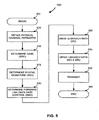
- FIG. 5 illustrates selected steps of an exemplary process 500 performed at an access terminal in accordance with the embodiment of FIG. 3 .
- the access terminal is in MIMO communication with a base transceiver station of a radio network.
- the access terminal estimates the various spatial physical paths between the multiple transmit antennae of the base transceiver station and the multiple receive antennae of the terminal.
- the access terminal determines or selects a one-bit MIMO rank for the forward link, based on the estimates,
- the access terminal determines or selects a three-bit spatial signatures identifier, based on the estimates.
- the access terminal determines, based on the estimates, the appropriate forward link rate control, i.e ., the DRC.
- the access terminal inputs the DRC into the Q-Branch of its transmitter.
- the access terminal inputs a one-bit spatial rank and three-bit spatial signature into the I-Branch of its transmitter.
- the access terminal transmits the active slot with the Q-Branch and IBranch outputs carrying the DRC, rank, and spatial signature information/values.
- the base transceiver station receives the slot transmitted by the access terminal, recovers the DRC information from the Quadrature signal component of the received slot, and recovers the spatial signature and rank information from the In-Phase signal component of the received slot.
- the base transceiver station then configures itself for MIMO transmission in accordance with the received DRC, SRC, and SSC.
- FIG. 6 illustrates selected steps of an exemplary process 600 performed at an access terminal in accordance with the embodiment of FIG. 4 .
- the access terminal is in MIMO communication with a base transceiver station of a radio network.
- the access terminal estimates the various spatial physical paths between the multiple transmit antennae of the base transceiver station and the multiple receive antennae of the terminal.
- the access terminal determines or selects a two-bit MIMO rank for the forward link, based on the estimates.
- the access terminal determines or selects a four-bit spatial signature identifier based on the estimates.
- the access terminal determines the appropriate DRC, based on the estimates.
- the access terminal inputs the DRC and the two-bit spatial rank into the Q-Branch of its transmitter.
- the DRC and the spatial rank are covered by different orthogonal Walsh codes, so that they can be separately decovered and distinguished at the base transceiver station.
- the access terminal inputs a spatial signature into the I-Branch of its transmitter.
- the access terminal transmits the active slot with the Q-Branch and I-Branch outputs carrying the DRC, rank, and spatial signature information/values.
- the base transceiver station receives the slot transmitter by the access terminal, recovers the DRC and rank information (SRC) from the Quadrature signal component of the received slot, and recovers the spatial signature information (SSC) from the In-Phase component of the received slot.
- the base transceiver station then configures itself for MIMO transmission in accordance with the received DRC, SRC, and SSC.
- the DRC transmitted on the Q-Branch may relate to the same or to a different MIMO forward link/channel as the SSC and the SRC transmitted concurrently.
- MIMO design has two modes of operation -single code word (SCW) mode and multiple-code word (MCW) mode.
- SCW single code word
- MCW multiple-code word
- the transmitter may encode the data transmitted on each spatial layer (channel, link) independently, possibly with different rates.
- the receiver may employ a successive interference cancellation (SIC) algorithm, which works as fallows.
- SIC successive interference cancellation
- This "onion-peeling" approach means that each successively decoded layer sees increasing signal-to-noise ratio (SNR) and hence can support higher rates.
- SNR signal-to-noise ratio
- MCW design with SIC achieves greater capacity.
- FIG. 7 shows selected blocks of an exemplary BTS design for MCW MIMO.
- this design one DRC value feedback is provided per spatial layer, and common acknowledgement stream is used, i.e., ACK until all layers decode.
- the transmitter may encode the data transmitted on each spatial layer with "identical data rates.”
- the receiver may employ a low complexity linear receiver design such as a Minimum Mean Square Solution. (MMSE) or Zero Frequency (ZF) receiver design, or non-linear receiver designs such as QRM, for each tone.
- MMSE Minimum Mean Square Solution.
- ZF Zero Frequency
- QRM non-linear receiver designs
- a single packet may be encoded and sent through selected transmit antennae or a number of spatial beams that are determined by the rank, which is provided by the access terminal on the reverse link.
- a single hybrid ARQ state machine and DRC feedback may be used as in DO Revision B.
- MIMO SCW with precoding spatial signatures are sent to the radio network using predefined codebook of unitary matrices.
- the access terminal selects the preferred beam pattern(s) for the forward link based on common spatial pilots and sends an identifier or the pattern to the radio network. (As discussed above, only the number identifying the particular spatial signature then is transmitted to the BTS.)
- precoding with the rank equal to 1 is transmit beamforming. Cyclic delay diversity and antenna selection can be realized through codebook design.
- FIG. 8 shows selected blocks of an exemplary BTS design for SCW MIMO with precoding and OFDM.
- OFDM operation is not a requirement of the invention. It may, however, be desirable to use OFDM and/or single-carrier frequency division multiplexing (SC-FDM) for data sent in the traffic segments of slots.
- OFDM and SC-FDM partition the available bandwidth into multiple orthogonal subcarriers, which are also referred to as tones, bins and by similar interpretations. Each subcarrier may be modulated with data.
- modulation symbols are sent in the frequency domain with OFDM and in the time domain with SC-FDM.
- OFDM and SC-FDM have certain desirable characteristics such as the ability to readily combat intersymbol interference (ISI) caused by frequency selective fading.
- ISI intersymbol interference
- OFDM can also efficiently support MIMO and SDMA, which may be applied independently on each subcarrier and may thus provide good performance in a frequency selective channel.
- OFDM data may be sent in a DO waveform by replacing the CDM data in a given 400-chip tragic segment with one or more OFDM symbols having a total duration of 400 chips or less.
- FIG. 9 illustrates a slot structure that supports CDM on a DO forward link.
- the transmission timeline is partitioned into slots.
- Each slot has duration of 1.667 milliseconds (ms) and spans 2048 chips.
- Each chip has duration of 813.8 nanoseconds (ns) for a chip rate of 1.2288 mega chips/second (Mcps).
- Mcps Mega chips/second
- Each slot is divided into two identical halt-slots.
- Each half-slot includes (1) an overhead segment composed of a pilot segment at the center of the half-slot and two Media Access Control (MAC) segments on both sides of the pilot segment, and (2) two traffic segments on both sides of the overhead segment.
- the traffic segments may also be referred to as traffic channel segments, data segments, data fields, and similar expression.
- the pilot segment carries pilot and has duration of 96 chips.
- Each MAC segment carries signaling (e.g., reverse power control or RPC information) and has duration of 64 chips.
- Each traffic segment carries traffic data (e.g., unicast data for specific terminals, broadcast data, etc.) and has duration of 400 chips.
- CDM data shown in FIG. 9 may be selectively replaced with OFDM symbols, as is described in more detail in U.S. Patent Application entitled Flexible Time-Frequency Multiplexing Structure for Wireless Communication, published as US 2007/0 195 690 , filed on the same date as the present application; see also U.S. Patent Application entitled Spatial Pilot Structure for Multi-Antenna Wireless Communication published as US 2007/0 195 688 , filed on the same date as the present application.
- a traffic segment may carry CDM data for one or more terminals being served by a BTS.
- the traffic data for each terminal may be processed based on coding and modulation parameters determined by channel feedback received from that terminal to generate data symbols.
- the data symbols for the one or more terminals may be demultiplexed and covered with Walsh functions or codes to generate the CDM data for the traffic segment.
- the CDM data is thus generate in the time domain using Walsh functions.
- a CDM traffic segment is a traffic segment carrying CDM data.
- FIG. 10 shows a single-carrier slot structure that supports OFDM in DO. For simplicity, only one half-slot is shown.
- the half-slot includes (1) an overhead segment composed of a 96-chip pilot segment at the center of the half-slot and two 64-chip MAC segments on both sides of the pilot segment, and (2) two traffic segments on both sides of the overhead segment.
- each traffic segment may carry one or more OFDM symbols. As shown in FIG. 10 , each traffic segment carries two OFDM symbols, and each OFDM symbol has duration of 200 chips and is sent in one OFDM symbol period of 200 chips.
- SDMA Space-Division Multiple Access
- ATs spatially-separable users
- Each spatially-separable AT feeds back the beam coefficients (according to a predefined codebook) to be used for forward link transmissions matched to the AT's forward link channel.
- SDMA is similar to MCW, except that different spatial layers may be designated to different ATs.
- the codebook design for multi-antenna operation, including SDM and MIMO, different modes may be supported simultaneously, depending on the terminal channel quality and flow type (enabled by the codebook design).
- the codebook may be segmented into multiple sets, such as precoding transmission set, SDMA transmission set, and sets for different beam patterns.
- An AT and the radio network may negotiate the particular codebook set to be used for the AT's forward link, or the set may be fixed.
- a feedback index may then be used to indicate the desired mode for the AT.
- FIG. 11 illustrates a multi-carrier slot structure 400 that supports OFDM in DO.
- DO Revision. B multiple 1xEV-DO waveforms may be multiplexed in the frequency domain to obtain a multi-carrier DO waveform that fills a given spectral allocation and is transmitted on a first transmit antenna.
- one DO waveform is configured as a legacy channel including the pilot and MAC segments that may be demodulated by all active terminals, whereas the traffic segments may be demodulated by only the terminals being served.
- backward compatibility may be achieved by retaining the pilot and MAC segments. Also shown in FIG.
- 11 are three 1xEV-DO waveforms configured as non-legacy channels, transmitter on respective second, third and fourth transmit antennae, which do not require the overhead segments, because the OFDM symbols include periodic composite pilots (dedicated spatial pilots) embedded in the subbands or tones, In other words, some OFDM tones may be used as the dedicated pilots.
- a MIMO access terminal may receive the composite pilot in the OFDM symbols and is able to derive an estimate of the MIMO channel response.
- FIGs. 12A-12D illustrate an exemplary pilot transmission scheme for a multi-antenna OFDM system.
- the spatial pilot tones may be differently formed according to the number of layers or beams that are formed by the multi-antenna OFDM system.
- FIG. 12A illustrates a single layer transmission across a half-slot of OFDM symbols 1-4. As illustrated for each OFDM symbol (such as OFDM symbol 1), the single layer spatial pilot tone repeats and occupies one tone for every 19 data tones. For a 180 tone OFDM symbol, there would be nine single layer spatial pilot tones.
- the single layer spatial pilot tone is illustrated as beginning at tone one and repeating every 20 tones; and for OFDM symbol 2 and OFDM symbol 4, the single layer spatial pilot tone is illustrated as beginning halfway offset from the adjacent symbols at tone eleven and repeating every 20 tones.
- the single layer spatial pilot tones may be offset from the adjacent symbol's single layer spatial pilot tones. It is also noted that one OFDM symbol can leverage the offset position of an adjacent OFDM symbol's single layer spatial pilot tone for additional channel characterization without relying upon additional dedicated spatial pilot tones.
- FIG. 12B illustrates a two layer transmission across a half-slot of OFDM symbols 1-4.
- the first layer spatial pilot tone repeats and occupies one tone for every 19 data tones; and a second layer spatial tone is offset from the first and also repeats and occupies one tone for every 19 data tones.
- For a 180 tone OFDM symbols there would be 18 first layer and second layer spatial pilot tones.
- the first layer and second layer spatial pilot tones are illustrated as beginning at tone one and repeating every 10 tones and for OFDM symbol 2 and OFDM symbol 4, the first layer and second layer spatial pilot tones are illustrated as beginning halfway offset from the adjacent symbols at tone eleven and repeating every 10 tones.
- the bandwidth overhead for supporting the first layer and second layer spatial pilot tones is one in 10 or 10 percent per OFDM symbol for a two layer transmission.
- FIG. 12C illustrates a three layer transmission across a half-slot of OFDM symbols 1-4.
- the first layer spatial pilot tone repeats and occupies one tone for every 29 data tones
- a second layer spatial pilot tone repeats and occupies one tone for every 29 data tones
- a third layer spatial pilot tone repeats and occupies one tone for every 29 data tones.
- the first layer, second layer, and third layer spatial pilot tones are staggered along the OFDM symbols 1-4 and repeat such that the first layer, second layer, and third layer spatial pilot tones repeat every 10 tones and occupy one tone for every nine data tones.
- For a 180 tone OFDM symbol there would be 18 first layer, second layer, and third layer spatial pilot tones. Accordingly, the bandwidth overhead for supporting the first layer, second layer, and third layer spatial pilot tones is one in 10 or 10 percent per OFDM symbol for a three layer transmission.
- FIG. 12D illustrates a four layer transmission across a half-slot of OFDM symbols 1-4.
- the first layer spatial pilot tone repeats and occupies one tone for every 19 data tones
- a second layer spatial pilot tone repeats and occupies one tone for every 19 data tones
- a third layer spatial pilot tone repeats and occupies one tone for every 19 data tones
- a fourth layer spatial pilot tone repeats and occupies one tone for every 19 data tones.
- the first layer, second layer, third layer, and fourth layer spatial pilot tones are staggered along the OFDM symbols 1-4 and repeat such that the first layer, second layer, third layer, and fourth spatial pilot tones repeat every five tones and occupy one tone for every four data tones.
- the bandwidth overhead for supporting the first layer, second layer, third layer, and fourth layer spatial pilot tones is one in 5 or 20 percent per OFDM symbol for a four layer transmission.
- this staggered pilot scheme allows the MIMO receivers to obtain pilot observations for more than their specific subbands without increasing the number of subbands used for pilot transmission in any one symbol period.
- the MIMO receivers may derive frequency response estimates for the channel based on their received symbols and using various channel estimation techniques.
- FIG. 13 illustrates selected forward link transmit blocks of a four-antenna variant with OFDM and reuse of the current DO architecture (revision A and enhanced Broadcast and Multicast Services) for Ultra High Data Rate (UHDR) DO system.
- the transmit channel at the top includes blocks for inserting pilot and MAC bursts, for compatibility with legacy access terminals.
- DSP digital signal processor
- ASIC application specific integrated circuit
- FPGA field programmable gate array
- a general purpose processor may be a microprocessor, but in the alternative, the processor may be any conventional processor, controller, microcontroller, or state machine.
- a processor may also be implemented as a combination of computing devices, e.g., a combination of a DSP and a microprocessor, a plurality of microprocessors, one or more microprocessors in conjunction with a DSP core, or any other such configuration.
- a software module may reside in RAM memory, flash memory, ROM memory, EPROM memory, EEPROM memory, registers, hard disk, a removable disk, a CD-ROM, or any other form of storage medium known in the art.
- An exemplary storage medium is coupled to the processor such that the processor can rear information from, and write information to, the storage medium.
- the storage medium may be integral to the processor.
- the processor and the storage medium may reside in an ASIC.
- the ASPIC may reside in an access terminal.
- the processor and the storage medium may reside as discrete components in an access terminals.
Landscapes
- Engineering & Computer Science (AREA)
- Signal Processing (AREA)
- Computer Networks & Wireless Communication (AREA)
- Quality & Reliability (AREA)
- Physics & Mathematics (AREA)
- Mathematical Physics (AREA)
- Power Engineering (AREA)
- Mobile Radio Communication Systems (AREA)
- Radio Transmission System (AREA)
- Data Exchanges In Wide-Area Networks (AREA)
- Radio Relay Systems (AREA)
- Communication Control (AREA)
Claims (18)
- Ein Verfahren zum Senden eines Feedbacks von einem Zugriffsendgerät AT (AT = access terminal) an eine Basis-Transceiver-Station BTS eines Funknetzwerks, die konfiguriert ist, um mit dem Zugriffsendgerät unter Verwendung von Mehrfach-Eingangs-Mehrfach-Ausgangs-Technik bzw. MIMO-Technik (MIMO = multiple-input multiple-output) zu kommunizieren, wobei das Verfahren die folgenden Schritte aufweist:Bestimmen der MIMO-Ranginformation einer ersten Vorwärtsverbindung zwischen der BTS und dem AT;Bestimmen von räumlicher MIMO-Signaturinformation der Vorwärtsverbindung; undgleichzeitiges Senden von(1) der MIMO-Ranginformation und der räumlichen MIMO-Signaturinformation auf einer In-Phase-Signalkomponente auf einer Rückwärtsverbindung zwischen der BTS und dem AT; und(2) Datenratensteuerungs- bzw. DRC-Information (DRC = data rate control) auf der Vorwärtsverbindung auf einer Quadratur-Signalkomponente der Rückwärtsverbindung, wobei die MIMO-Ranginformation und die räumliche MIMO-Signatur von einer Codewort-Walsh-Abdeckung abgedeckt sind.
- Verfahren nach Anspruch 1, wobei das Funknetzwerk konfiguriert ist, um das AT und mindestens ein nicht MIMO-fähiges Zugriffsendgerät zu versorgen.
- Verfahren nach Anspruch 1, wobei das Funknetzwerk konfiguriert ist, um das AT und mindestens ein nicht MIMO-fähiges Zugriffsendgerät zu versorgen, wobei sich das AT und das mindestens eine nicht MIMO-fähige Zugriffsendgerät in demselben Sektor befinden.
- Verfahren nach Anspruch 1, wobei das Funknetzwerk ein datenoptimiertes Funknetzwerk ist.
- Verfahren nach Anspruch 1, wobei das Funknetzwerk konfiguriert ist, um nicht MIMO-fähige Zugriffsendgeräte zu versorgen.
- Verfahren nach Anspruch 1, wobei:die MIMO-Ranginformation ein Bit aufweist;die räumliche MIMO-Signaturinformation drei Bits aufweist.
- Verfahren nach Anspruch 1, das weiter Folgendes aufweist:Schätzen der räumlichen physischen Kanäle zwischen einer Vielzahl von Sendeantennen der BTS und einer Vielzahl von Empfangsantennen des AT,wobei die Vielzahlen der Sende- und Empfangsantennen für die MIMO-Kommunikation auf der Vorwärtsverbindung konfiguriert sind, wobei der Schritt des Schätzens eine Vielzahl von Schätzungen der ersten Vorwärtsverbindung liefert; wobei:der Schritt des Bestimmens der MIMO-Ranginformation basierend auf der Vielzahl der Schätzungen der ersten Vorwärtsverbindung durchgeführt wird; undder Schritt des Bestimmens der räumlichen MIMO-Signaturinformation basierend auf der Vielzahl der Schätzungen der ersten Vorwärtsverbindung durchgeführt wird.
- Computerprogrammmedium, das Programminstruktionen gespeichert hat, die, wenn sie auf einem Prozessor ausgeführt werden, das Verfahren nach Anspruch 1 implementieren.
- Ein Zugriffsendgerät AT (130), das konfiguriert ist, um mit einer Basis-Transceiver-Station BTS (120) eines Funknetzwerks (101) unter Verwendung von MIMO-Technik zu kommunizieren, wobei das Zugriffsendgerät (130) Folgendes aufweist:einen Empfänger (131), der konfiguriert ist, um Vorwärtsverbindungssendungen von der BTS (120) zu empfangen;einen Sender (132), der konfiguriert ist, um Rückwärtsverbindungssendungen an die BTS (120) zu senden;einen Speicher (137), der Programmcode des Computerprogrammmediums nach Anspruch 8 speichert; undeinen Controller bzw. eine Steuervorrichtung, die an den Empfänger (131), den Sender (132) und den Speicher (137) gekoppelt ist, wobei der Controller die Programminstruktionen nach Anspruch 8 ausführt.
- Verfahren zum Empfangen von Feedback von einem Zugriffsendgerät AT das an eine Basis-Transceiver-Station BTS eine Funknetzwerkes gesendet wird, die konfiguriert ist, um mit dem Zugriffsendgerät unter Verwendung von MIMO-Technik zu kommunizieren, wobei das Feedback, vom AT an die BTS gemäß dem Verfahren in Anspruch 1 gesendet wird, wobei das Verfahren Folgendes aufweist:gleichzeitiges Empfangen von(1) MIMO-Ranginformation einer Vorwärtsverbindung zwischen der BTS und dem AT und von räumlicher MIMO-Signaturinformation der Vorwärtsverbindung auf einer In-Phase-Signalkomponente einer Rückwärtsverbindung zwischen der BTS und dem AT, und(2) Datenratensteuerungs- bzw. DRC-Information für die Vorwärtsverbindung auf einer Quadratur-Signalkomponente der Rückwärtsverbindung; und Konfigurieren der Vorwärtsverbindung gemäß der MIMO-Ranginformation, der räumlichen MIMO-Signaturinformation und der DRC-Information.
- Computerprogrammmedium, das Programminstruktionen gespeichert hat, die, wenn sie auf einem Prozessor ausgeführt werden, das Verfahren nach Anspruch 10 implementieren.
- Basis-Transceiver-Station (120) eines Funknetzwerks (101), die konfiguriert ist, um mit einem Zugriffsendgerät AT (130) unter Verwendung von MIMO-Technik zu kommunizieren, wobei die Basis-Transceiver-Station Folgendes aufweist:einen Empfänger (121), der konfiguriert ist, um Sendungen vom AT (130) auf einer Rückwärtsverbindung zu empfangen;einen Sender (122), der konfiguriert ist, um Sendungen an das AT (130) auf einer Vorwärtsverbindung zu senden;einen Speicher (124), der Programmcode des Computerprogrammmediums nach Anspruch 11 speichert; undeinen Controller bzw. eine Steuervorrichtung, die an den Empfänger (121), den Sender (122) und den Speicher (124) gekoppelt ist, wobei der Controller die Programminstruktionen nach Anspruch 11 ausführt.
- Ein Verfahren zum Senden von Feedback von einem Zugriffsendgerät AT an eine Basis-Transceiver-Station BTS (120) eines Funknetzwerks, die konfiguriert ist, um mit dem Zugriffsendgerät unter Verwendung von MIMO-Technik zu kommunizieren, wobei das Verfahren die folgenden Schritte aufweist:Bestimmen der MIMO-Ranginformation einer ersten Vorwärtsverbindung zwischen der BTS und dem AT;Bestimmen von räumlicher MIMO-Signaturinformation der Vorwärtsverbindung; undgleichzeitiges Senden von(1) der räumlichen MIMO-Signaturinformation auf einer In-Phase-Signalkomponente einer Rückwärtsverbindung zwischen der BTS und dem AT, und(2) der MIMO-Ranginformation und der Datenratensteuerungs- bzw. DRC-Information (DRC = data rate control) für eine Vorwärtsverbindung auf einer Quadratur-Signalkomponente der Rückwärtsverbindung, wobei die MIMO-Ranginformation von einer erste Codewort-Walsh-Abdeckung abgedeckt ist, die DRC-Information von einer zweiten Codewort-Walsh-Abdeckung abgedeckt ist, wobei die zweite Codewort-Walsh-Abdeckung orthogonal zur ersten Walsh-Abdeckung ist.
- Computerprogrammmedium, das Programminstruktionen gespeichert hat, die, wenn sie auf einem Prozessor ausgeführt werden, das Verfahren nach Anspruch 13 implementieren.
- Zugriffsendgerät AT (130), das konfiguriert ist, um mit einer Basis-Transceiver-Station BTS (120) eines Funknetzwerks (101) unter Verwendung der MIMO-Technik zu kommunizieren, wobei das Zugriffsendgerät (130) Folgendes aufweist:einen Empfänger (131), der konfiguriert ist, um Vorwärtsverbindungssendungen von der BTS (120) zu empfangen;einen Sender (132), der konfiguriert ist, um Rückwärtsverbindungssendungen an die BTS (120) zu senden;einen Speicher (137), der Programmcode des Computerprogrammmediums nach Anspruch 14 speichert; undeinen Controller, der an den Empfänger (131), den Sender (132) und den Speicher (137) gekoppelt ist, wobei der Controller die Programminstruktionen nach Anspruch 14 ausführt.
- Verfahren zum Verarbeiten von Feedback, das von einem Zugriffsendgerät AT an eine Basis-Transceiver-Station BTS eines Funknetzwerks gesendet wird, die konfiguriert ist, um mit dem AT unter Verwendung von MIMO-Technik zu kommunizieren, wobei das Feedback vom AT an die BTS gemäß dem Verfahren nach Anspruch 13 gesendet wird, wobei das Verfahren Folgendes aufweist:gleichzeitiges Empfangen von(1) MIMO-Ranginformation und Datenratensteuerungs- bzw. DRC-Information auf einer Vorwärtsverbindung zwischen der BTS und dem AT auf einer Quadratur-Signalkomponente einer Rückwärtsverbindung zwischen der BTS und dem AT, und(2) räumlicher MIMO-Signaturinformation für die Vorwärtsverbindung auf einer In-Phase-Signalkomponente der Rückwärtsverbindung; undKonfigurieren der Vorwärtsverbindung gemäß der MIMO-Ranginformation, der räumlichen MIMO-Signaturinformation und der DRC-Information.
- Computerprogrammmedium, das Programminstruktionen gespeichert hat, die, wenn sie auf einem Prozessor ausgeführt werden, das Verfahren nach Anspruch 16 implementieren.
- Basis-Transceiver-Station (120) eines Funknetzwerks (101), die konfiguriert ist, um mit einem Zugriffsendgerät AT (130) unter Verwendung von MIMO-Technik zu kommunizieren, wobei die Basis-Transceiver-Station (120) Folgendes aufweist:einen Empfänger (121), der konfiguriert ist, um Sendungen vom AT (130) auf einer Rückwärtsverbindung zu empfangen;einen Sender (122), der konfiguriert ist, um Sendungen an das AT (130) auf einer Vorwärtsverbindung zu senden;einen Speicher (124), der Programmcode des Computerprogrammmediums nach Anspruch 17 speichert; undeinen Controller, der an den Empfänger (121), den Sender (122) und den Speicher (124) gekoppelt ist, wobei der Controller die Programminstruktionen nach Anspruch 17 ausführt.
Applications Claiming Priority (3)
| Application Number | Priority Date | Filing Date | Title |
|---|---|---|---|
| US77569306P | 2006-02-21 | 2006-02-21 | |
| US77544306P | 2006-02-21 | 2006-02-21 | |
| PCT/US2007/062454 WO2007098457A1 (en) | 2006-02-21 | 2007-02-20 | Feedback channel design for multiple-input multiple-output communication systems |
Publications (2)
| Publication Number | Publication Date |
|---|---|
| EP1989809A1 EP1989809A1 (de) | 2008-11-12 |
| EP1989809B1 true EP1989809B1 (de) | 2011-01-12 |
Family
ID=38101754
Family Applications (5)
| Application Number | Title | Priority Date | Filing Date |
|---|---|---|---|
| EP07757235A Withdrawn EP1989848A2 (de) | 2006-02-21 | 2007-02-20 | Raumleitstruktur für drahtlose kommunikation mit mehreren antennen |
| EP07757236A Not-in-force EP1989809B1 (de) | 2006-02-21 | 2007-02-20 | Feedback-kanalauslegung für kommunikationssysteme mit mehreren ein- und ausgängen (mimo) |
| EP07757228A Active EP1987622B1 (de) | 2006-02-21 | 2007-02-20 | Verfahren und vorrichtung zur unterstützung von ofdm- und cdma-schemata |
| EP11159766.2A Withdrawn EP2346203A3 (de) | 2006-02-21 | 2007-02-21 | Flexible Nutzdatensteuerung in Datenoptimierten Kommunikationssystemen |
| EP07757237.8A Active EP1987623B1 (de) | 2006-02-21 | 2007-02-21 | Flexible nutzdatensteuerung in datenoptimierten kommunikationssystemen |
Family Applications Before (1)
| Application Number | Title | Priority Date | Filing Date |
|---|---|---|---|
| EP07757235A Withdrawn EP1989848A2 (de) | 2006-02-21 | 2007-02-20 | Raumleitstruktur für drahtlose kommunikation mit mehreren antennen |
Family Applications After (3)
| Application Number | Title | Priority Date | Filing Date |
|---|---|---|---|
| EP07757228A Active EP1987622B1 (de) | 2006-02-21 | 2007-02-20 | Verfahren und vorrichtung zur unterstützung von ofdm- und cdma-schemata |
| EP11159766.2A Withdrawn EP2346203A3 (de) | 2006-02-21 | 2007-02-21 | Flexible Nutzdatensteuerung in Datenoptimierten Kommunikationssystemen |
| EP07757237.8A Active EP1987623B1 (de) | 2006-02-21 | 2007-02-21 | Flexible nutzdatensteuerung in datenoptimierten kommunikationssystemen |
Country Status (12)
| Country | Link |
|---|---|
| US (4) | US8472424B2 (de) |
| EP (5) | EP1989848A2 (de) |
| JP (5) | JP4824779B2 (de) |
| KR (4) | KR101119455B1 (de) |
| CN (1) | CN105024794B (de) |
| AT (2) | ATE495598T1 (de) |
| BR (2) | BRPI0708089A2 (de) |
| CA (2) | CA2641935C (de) |
| DE (1) | DE602007011900D1 (de) |
| RU (2) | RU2449486C2 (de) |
| TW (6) | TWI363504B (de) |
| WO (4) | WO2007098457A1 (de) |
Families Citing this family (126)
| Publication number | Priority date | Publication date | Assignee | Title |
|---|---|---|---|---|
| US8111763B2 (en) * | 2005-03-30 | 2012-02-07 | Rockstar Bidco, LP | Methods and systems for OFDM using code division multiplexing |
| US8472424B2 (en) * | 2006-02-21 | 2013-06-25 | Qualcomm Incorporated | Method and apparatus for supporting multiple multiplexing schemes for wireless communication |
| US8077595B2 (en) | 2006-02-21 | 2011-12-13 | Qualcomm Incorporated | Flexible time-frequency multiplexing structure for wireless communication |
| US9461736B2 (en) * | 2006-02-21 | 2016-10-04 | Qualcomm Incorporated | Method and apparatus for sub-slot packets in wireless communication |
| US8689025B2 (en) | 2006-02-21 | 2014-04-01 | Qualcomm Incorporated | Reduced terminal power consumption via use of active hold state |
| EP2005687B1 (de) * | 2006-03-24 | 2017-06-28 | LG Electronics Inc. | Verfahren und struktur zum konfigurieren einer präamble zur unterstützung der übertragung eines datensymbols in einem drahtlosen kommunikationssystem |
| JP4903258B2 (ja) * | 2006-03-24 | 2012-03-28 | エルジー エレクトロニクス インコーポレイティド | 異なるチャネル条件と1xEV−DO及びNxEV−DOとの後方互換性のためのOFDMシンボル設計 |
| WO2008013398A1 (en) * | 2006-07-28 | 2008-01-31 | Samsung Electronics Co., Ltd. | Method and apparatus for positioning pilot in an ofdma mobile communication system |
| WO2008084422A2 (en) * | 2007-01-04 | 2008-07-17 | Nokia Corporation | Allocation of time-frequency resources to a control channel |
| US7720164B2 (en) * | 2007-02-26 | 2010-05-18 | Telefonaktiebolaget L M Ericsson (Publ) | Transmission scheme for uplink access in a FDMA system |
| US20080233966A1 (en) * | 2007-03-22 | 2008-09-25 | Comsys Communication & Signal Processing Ltd. | Resource allocation apparatus and method in an orthogonal frequency division multiple access communication system |
| KR101445335B1 (ko) * | 2007-05-28 | 2014-09-29 | 삼성전자주식회사 | 가변적인 데이터 송신율을 가지는 ofdm 심볼을송수신하는 ofdm 송신/수신 장치 및 그 방법 |
| US7649831B2 (en) * | 2007-05-30 | 2010-01-19 | Samsung Electronics Co., Ltd. | Multi-user MIMO feedback and transmission in a wireless communication system |
| US8908632B2 (en) * | 2007-06-08 | 2014-12-09 | Samsung Electronics Co., Ltd. | Methods and apparatus for channel interleaving in OFDM systems |
| US8605687B2 (en) * | 2007-07-05 | 2013-12-10 | Qualcomm Incorporated | Method for channel estimation in a point-to-point communication network |
| US8406179B2 (en) | 2007-08-07 | 2013-03-26 | Samsung Electronics Co., Ltd. | Method and apparatus for performing random access procedure in a mobile communication system |
| KR101542378B1 (ko) * | 2007-09-10 | 2015-08-07 | 엘지전자 주식회사 | 다중 안테나 시스템에서의 파일럿 부반송파 할당 방법 |
| US20100184708A1 (en) * | 2007-09-11 | 2010-07-22 | Dorian Bevec | Use of gly-pro-glu-oh (gpe) as a therapeutic agent |
| KR101407045B1 (ko) * | 2007-10-26 | 2014-06-12 | 삼성전자주식회사 | 파일롯 배치 방법, 기록 매체 및 전송 장치 |
| US9401787B2 (en) * | 2007-11-02 | 2016-07-26 | Nokia Solutions And Networks Oy | Method and apparatus for providing an efficient pilot pattern |
| US9326253B2 (en) | 2007-11-15 | 2016-04-26 | Qualcomm Incorporated | Wireless communication channel blanking |
| US8798665B2 (en) * | 2007-11-15 | 2014-08-05 | Qualcomm Incorporated | Beacon-based control channels |
| US8761032B2 (en) * | 2007-11-16 | 2014-06-24 | Qualcomm Incorporated | Random reuse based control channels |
| CN101442349B (zh) * | 2007-11-21 | 2013-02-20 | 三星电子株式会社 | 多用户mimo码本子集选择方法 |
| KR101533457B1 (ko) * | 2007-11-29 | 2015-07-03 | 엘지전자 주식회사 | 무선통신 시스템에서 제어신호 전송방법 |
| KR101541910B1 (ko) * | 2007-11-29 | 2015-08-04 | 엘지전자 주식회사 | 무선통신 시스템에서 ack/nack 신호 전송방법 |
| KR101467570B1 (ko) * | 2007-11-29 | 2014-12-01 | 엘지전자 주식회사 | 무선통신 시스템에서 무선자원 할당방법 |
| US8098767B2 (en) * | 2007-12-20 | 2012-01-17 | Qualcomm Incorporated | Receiver adjustment between pilot bursts |
| US8363746B2 (en) * | 2008-01-25 | 2013-01-29 | Telefonaktiebolaget Lm Ericsson (Publ) | Method to modify the frequency hopping scheme by extending the validity of the reference signals |
| EP2243225A4 (de) * | 2008-02-01 | 2014-08-20 | Apple Inc | System und verfahren für mehrantennen-broadcast/multicast-übertragung auf der basis des räumlichen multiplexens |
| US9009573B2 (en) * | 2008-02-01 | 2015-04-14 | Qualcomm Incorporated | Method and apparatus for facilitating concatenated codes for beacon channels |
| US8855257B2 (en) | 2008-02-11 | 2014-10-07 | Intel Mobile Communications GmbH | Adaptation techniques in MIMO |
| US8699529B2 (en) * | 2008-03-28 | 2014-04-15 | Qualcomm Incorporated | Broadband pilot channel estimation using a reduced order FFT and a hardware interpolator |
| US8238304B2 (en) * | 2008-03-31 | 2012-08-07 | Qualcomm Incorporated | Apparatus and method for channel resource description |
| US8149936B2 (en) * | 2008-04-01 | 2012-04-03 | Qualcomm Incorporated | Apparatus and methods for tile and assignment processing |
| US8675537B2 (en) * | 2008-04-07 | 2014-03-18 | Qualcomm Incorporated | Method and apparatus for using MBSFN subframes to send unicast information |
| US9107239B2 (en) * | 2008-04-07 | 2015-08-11 | Qualcomm Incorporated | Systems and methods to define control channels using reserved resource blocks |
| US8724718B2 (en) * | 2008-04-10 | 2014-05-13 | Mediatek Inc. | Pilot pattern design for small size resource block in OFDMA systems |
| CN101557371B (zh) * | 2008-04-10 | 2012-12-12 | 上海贝尔阿尔卡特股份有限公司 | 多载波mimo系统的基站中为移动终端确定导频图案的方法 |
| US20090257342A1 (en) * | 2008-04-10 | 2009-10-15 | Media Tek Inc. | Resource block based pilot pattern design for 1/2 - stream mimo ofdma systems |
| US8488694B2 (en) * | 2008-05-06 | 2013-07-16 | Industrial Technology Research Institute | System and method for pilot design |
| CN101640915A (zh) * | 2008-07-30 | 2010-02-03 | 华为技术有限公司 | 一种切换入支持多输入多输出技术系统的方法及装置 |
| EP2313990B1 (de) * | 2008-08-12 | 2018-05-23 | BlackBerry Limited | Transparente downlink-weiterleitung in einem drahtlosen kommunikationsnetz |
| US8331310B2 (en) * | 2008-08-22 | 2012-12-11 | Qualcomm Incorporated | Systems and methods employing multiple input multiple output (MIMO) techniques |
| US8315657B2 (en) * | 2008-09-22 | 2012-11-20 | Futurewei Technologies, Inc. | System and method for enabling coordinated beam switching and scheduling |
| US8693442B2 (en) * | 2008-09-22 | 2014-04-08 | Blackberry Limited | Multi-site MIMO cooperation in cellular network |
| US8619544B2 (en) * | 2008-09-23 | 2013-12-31 | Qualcomm Incorporated | Apparatus and method for facilitating transmit diversity for communications |
| US8428018B2 (en) * | 2008-09-26 | 2013-04-23 | Lg Electronics Inc. | Method of transmitting reference signals in a wireless communication having multiple antennas |
| WO2010048451A2 (en) | 2008-10-22 | 2010-04-29 | Zte (Usa) Inc. | Reverse link acknowledgment signaling |
| US8654715B2 (en) * | 2008-10-24 | 2014-02-18 | Qualcomm Incorporated | Systems and methods providing mobile transmit diversity |
| US8654705B2 (en) * | 2008-10-24 | 2014-02-18 | Qualcomm Incorporated | System and method for supporting multiple reverse link data streams |
| US8670717B2 (en) * | 2008-11-27 | 2014-03-11 | Futurewei Technologies, Inc. | System and method for enabling coordinated beam switching and scheduling |
| US8787186B2 (en) * | 2008-12-12 | 2014-07-22 | Blackberry Limited | Mobility in a distributed antenna system |
| US8175095B2 (en) * | 2008-12-19 | 2012-05-08 | L3 Communications Integrated Systems, L.P. | Systems and methods for sending data packets between multiple FPGA devices |
| KR101534169B1 (ko) | 2008-12-23 | 2015-07-07 | 삼성전자 주식회사 | 주파수 도약 모드로 동작 중인 무선 통신 시스템의 주파수 할당 방법 및 이를 위한 장치 |
| KR101470503B1 (ko) | 2008-12-30 | 2014-12-08 | 삼성전자주식회사 | 다중 입출력 통신 시스템을 위한 채널 정보 피드백 방법 및장치 |
| US8811300B2 (en) | 2008-12-31 | 2014-08-19 | Mediatek Inc. | Physical structure and sequence design of midamble in OFDMA systems |
| US8503420B2 (en) | 2008-12-31 | 2013-08-06 | Mediatek Inc. | Physical structure and design of sounding channel in OFDMA systems |
| KR101598910B1 (ko) * | 2009-01-07 | 2016-03-02 | 엘지전자 주식회사 | 무선 통신 시스템에서 시분할 이중화 방식의 프레임 구조를 이용하여 신호를 송수신하는 방법 및 장치 |
| US9100256B2 (en) | 2009-01-15 | 2015-08-04 | Arndt Mueller | Systems and methods for determining the number of channel estimation symbols based on the channel coherence bandwidth |
| CN101783712B (zh) * | 2009-01-19 | 2014-06-04 | 华为技术有限公司 | Lte版本识别的方法、用户终端和网络节点 |
| US8649456B2 (en) | 2009-03-12 | 2014-02-11 | Futurewei Technologies, Inc. | System and method for channel information feedback in a wireless communications system |
| US8675627B2 (en) * | 2009-03-23 | 2014-03-18 | Futurewei Technologies, Inc. | Adaptive precoding codebooks for wireless communications |
| CN101877689B (zh) * | 2009-04-28 | 2012-10-17 | 华为技术有限公司 | 数据发送处理方法与装置、数据接收处理方法与装置 |
| CN102439931B (zh) * | 2009-04-28 | 2014-11-05 | 华为技术有限公司 | 数据发送处理方法与装置、数据接收处理方法与装置 |
| EP2413556A4 (de) | 2009-04-28 | 2012-04-18 | Huawei Tech Co Ltd | Datensendeverarbeitungsverfahren und vorrichtung, datenempfangsverarbeitungsverfahren und vorrichtung |
| WO2010129963A2 (en) * | 2009-05-08 | 2010-11-11 | Zte (Usa) Inc. | Reverse link signaling techniques for wireless communication systems |
| US20110007721A1 (en) * | 2009-07-10 | 2011-01-13 | Qualcomm Incorporated | Method for directional association |
| US8331483B2 (en) | 2009-08-06 | 2012-12-11 | Lg Electronics Inc. | Method for transmitting feedback information via a spatial rank index (SRI) channel |
| US8532042B2 (en) | 2009-09-02 | 2013-09-10 | Samsung Electronics Co., Ltd. | Codebook for multiple input multiple output communication and communication device using the codebook |
| US9094883B2 (en) | 2009-09-22 | 2015-07-28 | Qualcomm Incorporated | Method and apparatuses for returning the transmission of the uplink to a source cell during a baton handover |
| US20110130144A1 (en) * | 2009-12-01 | 2011-06-02 | Spidercloud Wireless, Inc. | Handoff in a self-configuring communication system |
| US8831077B2 (en) * | 2010-07-01 | 2014-09-09 | Texas Instruments Incorporated | Communication on a pilot wire |
| CN102594739B (zh) * | 2011-01-07 | 2017-03-15 | 上海贝尔股份有限公司 | 信道估计方法、导频信息选择方法、用户设备和基站 |
| GB2491840B (en) * | 2011-06-13 | 2015-09-16 | Neul Ltd | Inter-device communication |
| GB201114079D0 (en) | 2011-06-13 | 2011-09-28 | Neul Ltd | Mobile base station |
| US8665811B2 (en) * | 2011-08-15 | 2014-03-04 | Motorola Mobility Llc | Reference signal for a control channel in wireless communication network |
| US9301266B2 (en) | 2011-08-19 | 2016-03-29 | Qualcomm Incorporated | Beacons for wireless communication |
| EP2639989A1 (de) * | 2012-03-16 | 2013-09-18 | Panasonic Corporation | Suchraum für ePDCCH-Steuerungsinformationen in einem OFDM-basierten mobilen Kommunikationssystem |
| CN102629895A (zh) * | 2012-04-27 | 2012-08-08 | 中国科学技术大学 | 一种改善数据流间公平性的多播酉预编码方法 |
| ES2570352T3 (es) * | 2012-05-09 | 2016-05-18 | ERICSSON TELEFON AB L M (publ) | Canal de control mejorado en un sistema de acceso de paquetes de alta velocidad |
| CN103581869B (zh) * | 2012-08-03 | 2018-11-09 | 中兴通讯股份有限公司 | 控制信息处理方法及装置 |
| WO2014088196A1 (en) | 2012-12-04 | 2014-06-12 | Lg Electronics Inc. | Method for changing pattern of reference signals according to rank variation in wireless communication system, and an apparatus therefor |
| WO2014101058A1 (zh) * | 2012-12-27 | 2014-07-03 | 华为技术有限公司 | 多用户多输入多输出通信的方法和基站 |
| US9871565B2 (en) | 2013-03-01 | 2018-01-16 | Sony Corporation | MIMO communication method, transmitting device, and receiving device |
| US10009209B2 (en) | 2013-03-28 | 2018-06-26 | Huawei Technologies Co., Ltd. | System and method for generalized multi-carrier frequency division multiplexing |
| CN105075161B (zh) * | 2013-04-04 | 2018-04-03 | 富士通株式会社 | 移动站、基站和通信控制方法 |
| US10772092B2 (en) | 2013-12-23 | 2020-09-08 | Qualcomm Incorporated | Mixed numerology OFDM design |
| US10412145B2 (en) * | 2014-06-27 | 2019-09-10 | Agora Lab, Inc. | Systems and methods for optimization of transmission of real-time data via network labeling |
| US9654250B2 (en) * | 2014-11-10 | 2017-05-16 | Futurewei Technologies, Inc. | Adding operations, administration, and maintenance (OAM) information in 66-bit code |
| US9621311B2 (en) * | 2015-05-08 | 2017-04-11 | Newracom, Inc. | Pilot transmission and reception for orthogonal frequency division multiple access |
| US11212147B2 (en) | 2015-10-23 | 2021-12-28 | Huawei Technologies Co., Ltd. | Systems and methods for configuring carriers using overlapping sets of candidate numerologies |
| US10356800B2 (en) | 2016-05-09 | 2019-07-16 | Qualcomm Incorporated | Scalable numerology with symbol boundary alignment for uniform and non-uniform symbol duration in wireless communication |
| EP3455978B1 (de) | 2016-05-13 | 2019-10-23 | Telefonaktiebolaget LM Ericsson (publ) | Multiunterträgerverfahren und vorrichtung mit mehreren numerologien |
| CA3032007A1 (en) * | 2016-07-28 | 2018-02-01 | Guangdong Oppo Mobile Telecommunications Corp., Ltd. | Pilot signal transmission method, terminal equipment, and network equipment |
| US10715392B2 (en) * | 2016-09-29 | 2020-07-14 | Qualcomm Incorporated | Adaptive scalable numerology for high speed train scenarios |
| US20180160405A1 (en) * | 2016-12-02 | 2018-06-07 | Qualcomm Incorporated | Rate matching and signaling |
| CN106941463A (zh) * | 2017-02-28 | 2017-07-11 | 北京交通大学 | 一种单比特量化mimo系统信道估计方法及系统 |
| CN116056234B (zh) | 2017-06-16 | 2025-08-19 | Lg电子株式会社 | 发送和接收物理上行链路控制信道的方法及其装置 |
| US10812216B2 (en) | 2018-11-05 | 2020-10-20 | XCOM Labs, Inc. | Cooperative multiple-input multiple-output downlink scheduling |
| US10756860B2 (en) | 2018-11-05 | 2020-08-25 | XCOM Labs, Inc. | Distributed multiple-input multiple-output downlink configuration |
| US10432272B1 (en) | 2018-11-05 | 2019-10-01 | XCOM Labs, Inc. | Variable multiple-input multiple-output downlink user equipment |
| US10659112B1 (en) | 2018-11-05 | 2020-05-19 | XCOM Labs, Inc. | User equipment assisted multiple-input multiple-output downlink configuration |
| WO2020112840A1 (en) | 2018-11-27 | 2020-06-04 | XCOM Labs, Inc. | Non-coherent cooperative multiple-input multiple-output communications |
| US11063645B2 (en) | 2018-12-18 | 2021-07-13 | XCOM Labs, Inc. | Methods of wirelessly communicating with a group of devices |
| US10756795B2 (en) | 2018-12-18 | 2020-08-25 | XCOM Labs, Inc. | User equipment with cellular link and peer-to-peer link |
| US11330649B2 (en) | 2019-01-25 | 2022-05-10 | XCOM Labs, Inc. | Methods and systems of multi-link peer-to-peer communications |
| US10756767B1 (en) | 2019-02-05 | 2020-08-25 | XCOM Labs, Inc. | User equipment for wirelessly communicating cellular signal with another user equipment |
| US11375408B2 (en) | 2019-03-06 | 2022-06-28 | XCOM Labs, Inc. | Local breakout architecture |
| US10756782B1 (en) | 2019-04-26 | 2020-08-25 | XCOM Labs, Inc. | Uplink active set management for multiple-input multiple-output communications |
| US11032841B2 (en) | 2019-04-26 | 2021-06-08 | XCOM Labs, Inc. | Downlink active set management for multiple-input multiple-output communications |
| US10735057B1 (en) | 2019-04-29 | 2020-08-04 | XCOM Labs, Inc. | Uplink user equipment selection |
| US10686502B1 (en) | 2019-04-29 | 2020-06-16 | XCOM Labs, Inc. | Downlink user equipment selection |
| US11411778B2 (en) | 2019-07-12 | 2022-08-09 | XCOM Labs, Inc. | Time-division duplex multiple input multiple output calibration |
| RU200964U1 (ru) * | 2019-12-17 | 2020-11-20 | Федеральное государственное бюджетное образовательное учреждение высшего образования "Владимирский Государственный Университет имени Александра Григорьевича и Николая Григорьевича Столетовых" (ВлГУ) | Корректор межсимвольных искажений цифровых сигналов |
| US11411779B2 (en) | 2020-03-31 | 2022-08-09 | XCOM Labs, Inc. | Reference signal channel estimation |
| KR20230008750A (ko) | 2020-04-15 | 2023-01-16 | 엑스콤 랩스 인코퍼레이티드 | 무선 네트워크 멀티포인트 연관 및 다양성 |
| CA3178604A1 (en) | 2020-05-26 | 2021-12-02 | XCOM Labs, Inc. | Interference-aware beamforming |
| CA3195885A1 (en) | 2020-10-19 | 2022-04-28 | XCOM Labs, Inc. | Reference signal for wireless communication systems |
| WO2022093988A1 (en) | 2020-10-30 | 2022-05-05 | XCOM Labs, Inc. | Clustering and/or rate selection in multiple-input multiple-output communication systems |
| EP4264852A4 (de) | 2020-12-16 | 2025-02-05 | Xcom Labs, Inc. | Drahtlose kommunikation mit quasi-omni und gerichteten strahlen |
| WO2022241436A1 (en) | 2021-05-14 | 2022-11-17 | XCOM Labs, Inc. | Scrambling identifiers for wireless communication systems |
| US11751170B2 (en) * | 2021-07-19 | 2023-09-05 | Sprint Spectrum Llc | Dynamically reassigning a high-noise frequency segment from a first access node to a second access node |
| US12192790B2 (en) | 2021-10-27 | 2025-01-07 | T-Mobile Usa, Inc. | Predicting an attribute of a wireless telecommunication network, such as a 5G network |
| US11800398B2 (en) | 2021-10-27 | 2023-10-24 | T-Mobile Usa, Inc. | Predicting an attribute of an immature wireless telecommunication network, such as a 5G network |
| US12389313B2 (en) * | 2022-03-24 | 2025-08-12 | Qualcomm Incorporated | Measurements of linear combinations of beams |
Family Cites Families (137)
| Publication number | Priority date | Publication date | Assignee | Title |
|---|---|---|---|---|
| US6282712B1 (en) * | 1995-03-10 | 2001-08-28 | Microsoft Corporation | Automatic software installation on heterogeneous networked computer systems |
| EP2242321B1 (de) * | 1995-09-20 | 2015-07-22 | Ntt Docomo, Inc. | Zugriffsverfahren, Mobilstation und Basisstation für CDMA-Mobilkommunikationssystem |
| US5732076A (en) * | 1995-10-26 | 1998-03-24 | Omnipoint Corporation | Coexisting communication systems |
| US6473419B1 (en) | 1998-03-26 | 2002-10-29 | Nokia Corporation | State apparatus, and associated methods, for controlling packet data communications in a radio communication system |
| KR100303298B1 (ko) | 1998-04-25 | 2001-10-29 | 윤종용 | 이동통신시스템에서 기지국과 단말기간의 송신전력제어방법 |
| KR100601598B1 (ko) * | 1998-06-15 | 2006-07-14 | 삼성전자주식회사 | 기록 방지 정보를 저장하는 기록 매체와 기록 방지 방법 |
| JP2000270024A (ja) | 1999-03-19 | 2000-09-29 | Nippon Telegr & Teleph Corp <Ntt> | インターネット電話におけるフレームパケット化サイズ能力交換方法,インターネット電話利用端末装置,およびインターネット電話のプログラムを記録した記録媒体 |
| GB9910449D0 (en) | 1999-05-07 | 1999-07-07 | Koninkl Philips Electronics Nv | Radio communication system |
| KR100316777B1 (ko) | 1999-08-24 | 2001-12-12 | 윤종용 | 차세대 이동 통신 시스템에서의 폐쇄 루프 전송 안테나 다이버시티 방법 및 이를 위한 기지국 장치 및 이동국 장치 |
| US6980569B1 (en) * | 1999-10-18 | 2005-12-27 | Siemens Communications, Inc. | Apparatus and method for optimizing packet length in ToL networks |
| KR100717394B1 (ko) * | 1999-11-23 | 2007-05-11 | 삼성전자주식회사 | 부호분할다중접속 이동통신시스템의 부가채널 해제 방법 |
| EP1119153A1 (de) * | 2000-01-19 | 2001-07-25 | Lucent Technologies Inc. | Verfahren und Vorrichtung zu einem robusten Reduktion der Datenrate ins Datenkommunikationssystem |
| US6473467B1 (en) * | 2000-03-22 | 2002-10-29 | Qualcomm Incorporated | Method and apparatus for measuring reporting channel state information in a high efficiency, high performance communications system |
| US6912214B2 (en) * | 2000-04-07 | 2005-06-28 | Telefonaktiebolaget Lm Ericsson (Publ) | Optimized packet-resource management |
| US7088701B1 (en) * | 2000-04-14 | 2006-08-08 | Qualcomm, Inc. | Method and apparatus for adaptive transmission control in a high data rate communication system |
| US6694469B1 (en) * | 2000-04-14 | 2004-02-17 | Qualcomm Incorporated | Method and an apparatus for a quick retransmission of signals in a communication system |
| CN1172464C (zh) * | 2000-06-21 | 2004-10-20 | 三星电子株式会社 | 接入网/终端装置及数据控制信道发送/接收法和通信法 |
| AU2001273411A1 (en) | 2000-07-12 | 2002-01-21 | Qualcomm Incorporated | Multiplexing of real time services and non-real time services for ofdm systems |
| US6940785B2 (en) | 2000-08-01 | 2005-09-06 | Hourpower Watches, Llc | Watch |
| US7042869B1 (en) * | 2000-09-01 | 2006-05-09 | Qualcomm, Inc. | Method and apparatus for gated ACK/NAK channel in a communication system |
| US6963534B1 (en) | 2000-10-05 | 2005-11-08 | International Business Machines Corporation | Methodology for improving the performance of asynchronous data traffic over TDD/TDMA wireless networks |
| EP1612969B1 (de) * | 2000-10-24 | 2007-01-24 | Nortel Networks Limited | Geteilte Kanalstruktur, Systeme und Verfahren |
| US7099629B1 (en) * | 2000-11-06 | 2006-08-29 | Qualcomm, Incorporated | Method and apparatus for adaptive transmission control in a high data rate communication system |
| US7209462B2 (en) * | 2001-04-06 | 2007-04-24 | Motorola, Inc. | Apparatus and method for supporting common channel packet data service in a CDMA2000 RAN |
| JP2002320260A (ja) | 2001-04-19 | 2002-10-31 | Toshiba Corp | 移動通信端末 |
| JP3695355B2 (ja) | 2001-06-15 | 2005-09-14 | ソニー株式会社 | 携帯通信機器及びチャネル捕捉方法 |
| CN1547861A (zh) * | 2001-06-27 | 2004-11-17 | ���˹���Ѷ��� | 无线通信系统中控制信息的传递 |
| CA2354285A1 (en) * | 2001-07-27 | 2003-01-27 | Ramesh Mantha | Method, system and apparatus for transmitting interleaved data between stations |
| US20030040315A1 (en) | 2001-08-20 | 2003-02-27 | Farideh Khaleghi | Reduced state transition delay and signaling overhead for mobile station state transitions |
| JP4171261B2 (ja) | 2001-08-27 | 2008-10-22 | 松下電器産業株式会社 | 無線通信装置及び無線通信方法 |
| US7248559B2 (en) | 2001-10-17 | 2007-07-24 | Nortel Networks Limited | Scattered pilot pattern and channel estimation method for MIMO-OFDM systems |
| US6788687B2 (en) * | 2001-10-30 | 2004-09-07 | Qualcomm Incorporated | Method and apparatus for scheduling packet data transmissions in a wireless communication system |
| US7164649B2 (en) | 2001-11-02 | 2007-01-16 | Qualcomm, Incorporated | Adaptive rate control for OFDM communication system |
| US6940894B2 (en) * | 2001-11-08 | 2005-09-06 | Qualcomm Incorporated | Power estimation using weighted sum of pilot and non-pilot symbols |
| US6822952B2 (en) * | 2001-11-26 | 2004-11-23 | Qualcomm Incorporated | Maintaining packet data connectivity in a wireless communications network |
| JP4464138B2 (ja) | 2002-01-08 | 2010-05-19 | モトローラ・インコーポレイテッド | パケットデータサービングノードによって開始される移動通信システムの更新 |
| US6717924B2 (en) * | 2002-01-08 | 2004-04-06 | Qualcomm Incorporated | Control-hold mode |
| KR100465208B1 (ko) | 2002-04-02 | 2005-01-13 | 조광선 | Ad-hoc 네트워크 병용 무선이동통신 시스템,통신장치, 및 통신방법 |
| KR100896682B1 (ko) * | 2002-04-09 | 2009-05-14 | 삼성전자주식회사 | 송/수신 다중 안테나를 포함하는 이동 통신 장치 및 방법 |
| US7170876B2 (en) * | 2002-04-30 | 2007-01-30 | Qualcomm, Inc. | Outer-loop scheduling design for communication systems with channel quality feedback mechanisms |
| DE60312689T2 (de) | 2002-05-10 | 2007-12-06 | Interdigital Technology Corporation, Wilmington | Verfahren und vorrichtung zur verminderung von übertragungsfehlern |
| EP1367760B1 (de) * | 2002-05-27 | 2009-11-18 | Nokia Corporation | Drahtlose Kommunikation mit Sende- und Empfangsdiversität |
| US6987780B2 (en) | 2002-06-10 | 2006-01-17 | Qualcomm, Incorporated | RLP retransmission for CDMA communication systems |
| US7095709B2 (en) * | 2002-06-24 | 2006-08-22 | Qualcomm, Incorporated | Diversity transmission modes for MIMO OFDM communication systems |
| US7551546B2 (en) | 2002-06-27 | 2009-06-23 | Nortel Networks Limited | Dual-mode shared OFDM methods/transmitters, receivers and systems |
| US7283541B2 (en) * | 2002-07-30 | 2007-10-16 | At&T Corp. | Method of sizing packets for routing over a communication network for VoIP calls on a per call basis |
| US7139274B2 (en) * | 2002-08-23 | 2006-11-21 | Qualcomm, Incorporated | Method and system for a data transmission in a communication system |
| AU2003260005A1 (en) * | 2002-08-23 | 2004-03-11 | Qualcomm Incorporated | Method and system for a data transmission in a communication system |
| US7050405B2 (en) | 2002-08-23 | 2006-05-23 | Qualcomm Incorporated | Method and system for a data transmission in a communication system |
| US7881261B2 (en) * | 2002-09-26 | 2011-02-01 | Telefonaktiebolaget Lm Ericsson (Publ) | Method and apparatus for efficient dormant handoff of mobile stations having multiple packet data service instances |
| US7002900B2 (en) * | 2002-10-25 | 2006-02-21 | Qualcomm Incorporated | Transmit diversity processing for a multi-antenna communication system |
| US8208364B2 (en) | 2002-10-25 | 2012-06-26 | Qualcomm Incorporated | MIMO system with multiple spatial multiplexing modes |
| JP2004158901A (ja) * | 2002-11-01 | 2004-06-03 | Kddi Corp | Ofdm及びmc−cdmaを用いる送信装置、システム及び方法 |
| US7062283B2 (en) * | 2002-11-13 | 2006-06-13 | Manageable Networks, Inc. | Cellular telephone system with multiple call paths |
| US8179833B2 (en) | 2002-12-06 | 2012-05-15 | Qualcomm Incorporated | Hybrid TDM/OFDM/CDM reverse link transmission |
| ATE408318T1 (de) | 2002-12-16 | 2008-09-15 | Research In Motion Ltd | Verfahren und vorrichtung zur senkung des energieverbrauches in einem cdma- kommunikationsgerät |
| AU2002368475A1 (en) | 2002-12-19 | 2004-07-14 | Telefonaktiebolaget Lm Ericsson (Publ) | Adaptive control method for operating communications environments |
| US8218573B2 (en) | 2003-01-21 | 2012-07-10 | Qualcomm Incorporated | Power boosting in a wireless communication system |
| US7058367B1 (en) * | 2003-01-31 | 2006-06-06 | At&T Corp. | Rate-adaptive methods for communicating over multiple input/multiple output wireless systems |
| US7466675B2 (en) * | 2003-02-14 | 2008-12-16 | Motorola, Inc. | Method and apparatus for supporting a reduced resource dormant state for packet data |
| WO2004084450A2 (en) | 2003-03-13 | 2004-09-30 | Qualcomm Incorporated | Method and system for a data transmission in a communication system |
| CN101771445B (zh) * | 2003-04-23 | 2013-05-01 | 高通股份有限公司 | 增强无线通信系统性能的方法和设备 |
| US7181666B2 (en) | 2003-04-29 | 2007-02-20 | Qualcomm, Incorporated | Method, apparatus, and system for user-multiplexing in multiple access systems with retransmission |
| US7177297B2 (en) * | 2003-05-12 | 2007-02-13 | Qualcomm Incorporated | Fast frequency hopping with a code division multiplexed pilot in an OFDMA system |
| WO2004114549A1 (en) | 2003-06-13 | 2004-12-29 | Nokia Corporation | Enhanced data only code division multiple access (cdma) system |
| KR100689382B1 (ko) | 2003-06-20 | 2007-03-02 | 삼성전자주식회사 | 직교분할다중화방식을 기반으로 하는이동통신시스템에서의 송신장치 및 방법 |
| US6970437B2 (en) * | 2003-07-15 | 2005-11-29 | Qualcomm Incorporated | Reverse link differentiated services for a multiflow communications system using autonomous allocation |
| US7471932B2 (en) | 2003-08-11 | 2008-12-30 | Nortel Networks Limited | System and method for embedding OFDM in CDMA systems |
| GB2405773B (en) | 2003-09-02 | 2006-11-08 | Siemens Ag | A method of controlling provision of audio communication on a network |
| US20050063298A1 (en) * | 2003-09-02 | 2005-03-24 | Qualcomm Incorporated | Synchronization in a broadcast OFDM system using time division multiplexed pilots |
| US8599764B2 (en) * | 2003-09-02 | 2013-12-03 | Qualcomm Incorporated | Transmission of overhead information for reception of multiple data streams |
| KR100713403B1 (ko) | 2003-09-30 | 2007-05-04 | 삼성전자주식회사 | 통신 시스템에서 채널 상태에 따른 송신 방식 제어 장치및 방법 |
| US8462817B2 (en) * | 2003-10-15 | 2013-06-11 | Qualcomm Incorporated | Method, apparatus, and system for multiplexing protocol data units |
| US8472473B2 (en) * | 2003-10-15 | 2013-06-25 | Qualcomm Incorporated | Wireless LAN protocol stack |
| US8842657B2 (en) * | 2003-10-15 | 2014-09-23 | Qualcomm Incorporated | High speed media access control with legacy system interoperability |
| US8483105B2 (en) * | 2003-10-15 | 2013-07-09 | Qualcomm Incorporated | High speed media access control |
| US8284752B2 (en) * | 2003-10-15 | 2012-10-09 | Qualcomm Incorporated | Method, apparatus, and system for medium access control |
| US7298805B2 (en) * | 2003-11-21 | 2007-11-20 | Qualcomm Incorporated | Multi-antenna transmission for spatial division multiple access |
| US7012913B2 (en) * | 2003-11-25 | 2006-03-14 | Nokia Corporation | Apparatus, and associated method, for facilitating communication of unfragmented packet-formatted data in a radio communication system |
| US7145940B2 (en) * | 2003-12-05 | 2006-12-05 | Qualcomm Incorporated | Pilot transmission schemes for a multi-antenna system |
| EP1542488A1 (de) | 2003-12-12 | 2005-06-15 | Telefonaktiebolaget LM Ericsson (publ) | Verfahren un vorrichtung zur Zuweisung von Kanaladaptierten Pilotsignalen |
| KR100943572B1 (ko) * | 2003-12-23 | 2010-02-24 | 삼성전자주식회사 | 직교 주파수 분할 다중 접속 시스템에서 주파수재사용율을 고려한 적응적 부채널 할당 장치 및 방법 |
| US7450489B2 (en) | 2003-12-30 | 2008-11-11 | Intel Corporation | Multiple-antenna communication systems and methods for communicating in wireless local area networks that include single-antenna communication devices |
| US8433005B2 (en) | 2004-01-28 | 2013-04-30 | Qualcomm Incorporated | Frame synchronization and initial symbol timing acquisition system and method |
| US7072659B2 (en) * | 2004-02-06 | 2006-07-04 | Sbc Knowledge Venturs, L.P. | System for selectively answering a telephone from a remote location |
| KR100584446B1 (ko) | 2004-02-11 | 2006-05-26 | 삼성전자주식회사 | 광대역 무선 접속 통신 시스템에서 단말의 동작 모드 제어방법 |
| US8077691B2 (en) * | 2004-03-05 | 2011-12-13 | Qualcomm Incorporated | Pilot transmission and channel estimation for MISO and MIMO receivers in a multi-antenna system |
| CN1951050B (zh) | 2004-03-15 | 2013-10-30 | 苹果公司 | 用于具有四根发射天线的ofdm系统的导频设计 |
| US8958493B2 (en) * | 2004-03-31 | 2015-02-17 | Infineon Technologies Ag | Operation for backward-compatible transmission |
| KR20050103099A (ko) | 2004-04-24 | 2005-10-27 | 삼성전자주식회사 | 이동통신 시스템에서 방송 서비스 제공 장치 및 방법 |
| US7706346B2 (en) * | 2004-05-10 | 2010-04-27 | Alcatel-Lucent Usa Inc. | Hybrid wireless communications system |
| CN1998211B (zh) | 2004-06-16 | 2010-05-12 | 三星电子株式会社 | 在使用正交频分多路接入方案的移动通信系统中发送/接收数据的方法 |
| KR100605625B1 (ko) * | 2004-06-17 | 2006-07-31 | 엘지전자 주식회사 | 유엠티에스시스템의 세션해제방법 |
| US8027372B2 (en) * | 2004-06-18 | 2011-09-27 | Qualcomm Incorporated | Signal acquisition in a wireless communication system |
| US20060013182A1 (en) * | 2004-07-19 | 2006-01-19 | Telefonaktiebolaget Lm Ericsson | Selective multicarrier CDMA network |
| US9148256B2 (en) * | 2004-07-21 | 2015-09-29 | Qualcomm Incorporated | Performance based rank prediction for MIMO design |
| US7567621B2 (en) | 2004-07-21 | 2009-07-28 | Qualcomm Incorporated | Capacity based rank prediction for MIMO design |
| US7418046B2 (en) | 2004-07-22 | 2008-08-26 | Qualcomm Inc. | Pilot transmission and channel estimation for multiple transmitters |
| US7764981B2 (en) * | 2004-07-30 | 2010-07-27 | Nokia Corporation | System and method for managing a wireless connection to reduce power consumption of a mobile terminal |
| US7382842B2 (en) | 2004-08-02 | 2008-06-03 | Beceem Communications Inc. | Method and system for performing channel estimation in a multiple antenna block transmission system |
| US8325863B2 (en) * | 2004-10-12 | 2012-12-04 | Qualcomm Incorporated | Data detection and decoding with considerations for channel estimation errors due to guard subbands |
| US20060088003A1 (en) | 2004-10-21 | 2006-04-27 | Motorola, Inc. | Method and computer program for selecting an inactivity timeout interval based on last data direction |
| US8661322B2 (en) | 2004-12-22 | 2014-02-25 | Qualcomm Incorporated | Apparatus and method for selective response to incremental redundancy transmissions |
| US7623490B2 (en) * | 2004-12-22 | 2009-11-24 | Qualcomm Incorporated | Systems and methods that utilize a capacity-based signal-to-noise ratio to predict and improve mobile communication |
| US7440399B2 (en) * | 2004-12-22 | 2008-10-21 | Qualcomm Incorporated | Apparatus and method for efficient transmission of acknowledgments |
| EP1832075B1 (de) * | 2004-12-27 | 2016-03-09 | LG Electronics Inc. | Übermittlung eines nichtkohärenten detektierbaren signals in einem breitbandigen drahtlosen zugangssystem |
| US8942713B2 (en) | 2005-02-08 | 2015-01-27 | Qualcomm Incorporated | Method and apparatus for allocating resources in a multicast/broadcast communications system |
| WO2006086878A1 (en) | 2005-02-15 | 2006-08-24 | Nortel Networks Limited | Radio access system and method using ofdm and cdma for broadband data transmission |
| US8130781B2 (en) | 2005-02-28 | 2012-03-06 | Intellectual Ventures I Llc | Method and apparatus for providing dynamic selection of carriers |
| US8126482B2 (en) * | 2005-03-04 | 2012-02-28 | Qualcomm Incorporated | Multiple paging channels for efficient region paging |
| US20060203845A1 (en) * | 2005-03-09 | 2006-09-14 | Pantelis Monogioudis | High-rate wireless communication mehod for packet data |
| US7715847B2 (en) * | 2005-03-09 | 2010-05-11 | Qualcomm Incorporated | Use of decremental assignments |
| US20060203794A1 (en) | 2005-03-10 | 2006-09-14 | Qualcomm Incorporated | Systems and methods for beamforming in multi-input multi-output communication systems |
| US9461859B2 (en) * | 2005-03-17 | 2016-10-04 | Qualcomm Incorporated | Pilot signal transmission for an orthogonal frequency division wireless communication system |
| US20060217124A1 (en) | 2005-03-23 | 2006-09-28 | Lucent Technologies, Inc. | Selecting a carrier channel based on channel capability |
| US7848463B2 (en) * | 2005-04-07 | 2010-12-07 | Qualcomm Incorporated | Adaptive time-filtering for channel estimation in OFDM system |
| US9408220B2 (en) * | 2005-04-19 | 2016-08-02 | Qualcomm Incorporated | Channel quality reporting for adaptive sectorization |
| US9036538B2 (en) * | 2005-04-19 | 2015-05-19 | Qualcomm Incorporated | Frequency hopping design for single carrier FDMA systems |
| US20060240784A1 (en) * | 2005-04-22 | 2006-10-26 | Qualcomm Incorporated | Antenna array calibration for wireless communication systems |
| US7961700B2 (en) | 2005-04-28 | 2011-06-14 | Qualcomm Incorporated | Multi-carrier operation in data transmission systems |
| US7680211B1 (en) * | 2005-05-18 | 2010-03-16 | Urbain A. von der Embse | MIMO maximum-likelihood space-time architecture |
| US7428269B2 (en) * | 2005-06-01 | 2008-09-23 | Qualcomm Incorporated | CQI and rank prediction for list sphere decoding and ML MIMO receivers |
| US8971461B2 (en) * | 2005-06-01 | 2015-03-03 | Qualcomm Incorporated | CQI and rank prediction for list sphere decoding and ML MIMO receivers |
| US9179319B2 (en) * | 2005-06-16 | 2015-11-03 | Qualcomm Incorporated | Adaptive sectorization in cellular systems |
| US7895504B2 (en) | 2005-06-16 | 2011-02-22 | Qualcomm Incorporated | NAK-to-ACK error detection and recovery |
| US8064424B2 (en) | 2005-07-22 | 2011-11-22 | Qualcomm Incorporated | SDMA for WCDMA |
| US20070025345A1 (en) | 2005-07-27 | 2007-02-01 | Bachl Rainer W | Method of increasing the capacity of enhanced data channel on uplink in a wireless communications systems |
| US7486658B2 (en) * | 2005-07-29 | 2009-02-03 | Cisco Technology, Inc. | Method and system for media synchronization in QoS-enabled wireless networks |
| US7936741B2 (en) * | 2005-08-05 | 2011-05-03 | Nokia Corporation | Dynamic uplink control channel gating to increase capacity |
| CN101263679A (zh) * | 2005-08-12 | 2008-09-10 | 诺基亚公司 | 用于在多载波mimo系统中布置导频的方法、系统、装置和计算机程序产品 |
| US8139672B2 (en) | 2005-09-23 | 2012-03-20 | Qualcomm Incorporated | Method and apparatus for pilot communication in a multi-antenna wireless communication system |
| US20070070942A1 (en) * | 2005-09-28 | 2007-03-29 | Motorola, Inc. | Semiactive state for reducing channel establishment delay |
| US8689025B2 (en) * | 2006-02-21 | 2014-04-01 | Qualcomm Incorporated | Reduced terminal power consumption via use of active hold state |
| US8472424B2 (en) * | 2006-02-21 | 2013-06-25 | Qualcomm Incorporated | Method and apparatus for supporting multiple multiplexing schemes for wireless communication |
| US9461736B2 (en) * | 2006-02-21 | 2016-10-04 | Qualcomm Incorporated | Method and apparatus for sub-slot packets in wireless communication |
| US8077595B2 (en) * | 2006-02-21 | 2011-12-13 | Qualcomm Incorporated | Flexible time-frequency multiplexing structure for wireless communication |
| US7720470B2 (en) | 2006-06-19 | 2010-05-18 | Intel Corporation | Reference signals for downlink beamforming validation in wireless multicarrier MIMO channel |
-
2007
- 2007-02-20 US US11/676,952 patent/US8472424B2/en active Active
- 2007-02-20 BR BRPI0708089-1A patent/BRPI0708089A2/pt not_active IP Right Cessation
- 2007-02-20 WO PCT/US2007/062454 patent/WO2007098457A1/en not_active Ceased
- 2007-02-20 JP JP2008556517A patent/JP4824779B2/ja not_active Expired - Fee Related
- 2007-02-20 WO PCT/US2007/062453 patent/WO2007098456A2/en not_active Ceased
- 2007-02-20 RU RU2008137608/07A patent/RU2449486C2/ru not_active IP Right Cessation
- 2007-02-20 CA CA2641935A patent/CA2641935C/en not_active Expired - Fee Related
- 2007-02-20 KR KR1020087022880A patent/KR101119455B1/ko active Active
- 2007-02-20 JP JP2008556514A patent/JP5113085B2/ja active Active
- 2007-02-20 KR KR1020087022987A patent/KR101026976B1/ko not_active Expired - Fee Related
- 2007-02-20 CN CN201510372298.3A patent/CN105024794B/zh active Active
- 2007-02-20 EP EP07757235A patent/EP1989848A2/de not_active Withdrawn
- 2007-02-20 EP EP07757236A patent/EP1989809B1/de not_active Not-in-force
- 2007-02-20 JP JP2008556516A patent/JP2009527997A/ja active Pending
- 2007-02-20 BR BRPI0708106-5A patent/BRPI0708106A2/pt not_active Application Discontinuation
- 2007-02-20 RU RU2008137581/09A patent/RU2437225C2/ru not_active IP Right Cessation
- 2007-02-20 US US11/676,925 patent/US8493958B2/en active Active
- 2007-02-20 WO PCT/US2007/062443 patent/WO2007098450A2/en not_active Ceased
- 2007-02-20 AT AT07757236T patent/ATE495598T1/de not_active IP Right Cessation
- 2007-02-20 KR KR1020087022923A patent/KR101010548B1/ko not_active Expired - Fee Related
- 2007-02-20 CA CA002641934A patent/CA2641934A1/en not_active Abandoned
- 2007-02-20 EP EP07757228A patent/EP1987622B1/de active Active
- 2007-02-20 US US11/676,981 patent/US8396152B2/en not_active Expired - Fee Related
- 2007-02-20 AT AT07757228T patent/ATE553560T1/de active
- 2007-02-20 DE DE602007011900T patent/DE602007011900D1/de active Active
- 2007-02-20 US US11/677,000 patent/US8498192B2/en not_active Expired - Fee Related
- 2007-02-21 KR KR1020087022936A patent/KR101128310B1/ko active Active
- 2007-02-21 EP EP11159766.2A patent/EP2346203A3/de not_active Withdrawn
- 2007-02-21 JP JP2008556518A patent/JP2009527999A/ja not_active Withdrawn
- 2007-02-21 WO PCT/US2007/062455 patent/WO2007098458A2/en not_active Ceased
- 2007-02-21 EP EP07757237.8A patent/EP1987623B1/de active Active
- 2007-02-26 TW TW096106487A patent/TWI363504B/zh not_active IP Right Cessation
- 2007-02-26 TW TW096106551A patent/TWI340567B/zh not_active IP Right Cessation
- 2007-02-26 TW TW096106486A patent/TWI383612B/zh not_active IP Right Cessation
- 2007-02-26 TW TW096106490A patent/TW200742306A/zh unknown
- 2007-02-26 TW TW096106485A patent/TW200803260A/zh unknown
- 2007-02-26 TW TW096106482A patent/TWI355171B/zh active
-
2012
- 2012-07-06 JP JP2012152324A patent/JP5639122B2/ja active Active
Also Published As
Similar Documents
| Publication | Publication Date | Title |
|---|---|---|
| EP1989809B1 (de) | Feedback-kanalauslegung für kommunikationssysteme mit mehreren ein- und ausgängen (mimo) | |
| CN101390324B (zh) | 多输入多输出通信系统的反馈信道设计 | |
| CA2662598C (en) | A method of transmitting using phase shift-based precoding and an apparatus for implementing the same in a wireless communication system | |
| EP3046280B1 (de) | Verfahren und basisstation vorrichtung zur downlink mimo übertragungssteuerung. | |
| EP2899897B1 (de) | Verfahren und Systeme für kombinierte Vorcodierung und zyklische Verzörgerungsdiversität | |
| CN101300749B (zh) | 用于在多天线通信系统中发送数据的装置和方法 | |
| EP2424123A2 (de) | Vorrichtung und verfahren zur übertragung eines referenzsignals in einem funkkommunikationssystem | |
| US20100309868A1 (en) | Mimo ofdma and preamble design |
Legal Events
| Date | Code | Title | Description |
|---|---|---|---|
| PUAI | Public reference made under article 153(3) epc to a published international application that has entered the european phase |
Free format text: ORIGINAL CODE: 0009012 |
|
| 17P | Request for examination filed |
Effective date: 20080915 |
|
| AK | Designated contracting states |
Kind code of ref document: A1 Designated state(s): AT BE BG CH CY CZ DE DK EE ES FI FR GB GR HU IE IS IT LI LT LU LV MC NL PL PT RO SE SI SK TR |
|
| RIN1 | Information on inventor provided before grant (corrected) |
Inventor name: ATTAR, RASHID AHMED AKBAR Inventor name: BHUSHAN, NAGA Inventor name: WEI, YONGBIN Inventor name: FAN, MINGXI. C/O QUALCOMM INC. |
|
| 17Q | First examination report despatched |
Effective date: 20090402 |
|
| GRAP | Despatch of communication of intention to grant a patent |
Free format text: ORIGINAL CODE: EPIDOSNIGR1 |
|
| DAX | Request for extension of the european patent (deleted) | ||
| GRAS | Grant fee paid |
Free format text: ORIGINAL CODE: EPIDOSNIGR3 |
|
| GRAA | (expected) grant |
Free format text: ORIGINAL CODE: 0009210 |
|
| AK | Designated contracting states |
Kind code of ref document: B1 Designated state(s): AT BE BG CH CY CZ DE DK EE ES FI FR GB GR HU IE IS IT LI LT LU LV MC NL PL PT RO SE SI SK TR |
|
| REG | Reference to a national code |
Ref country code: GB Ref legal event code: FG4D |
|
| REG | Reference to a national code |
Ref country code: CH Ref legal event code: EP |
|
| REG | Reference to a national code |
Ref country code: IE Ref legal event code: FG4D |
|
| REF | Corresponds to: |
Ref document number: 602007011900 Country of ref document: DE Date of ref document: 20110224 Kind code of ref document: P |
|
| REG | Reference to a national code |
Ref country code: DE Ref legal event code: R096 Ref document number: 602007011900 Country of ref document: DE Effective date: 20110224 |
|
| REG | Reference to a national code |
Ref country code: SE Ref legal event code: TRGR |
|
| REG | Reference to a national code |
Ref country code: NL Ref legal event code: T3 |
|
| REG | Reference to a national code |
Ref country code: ES Ref legal event code: FG2A Ref document number: 2357161 Country of ref document: ES Kind code of ref document: T3 Effective date: 20110419 |
|
| LTIE | Lt: invalidation of european patent or patent extension |
Effective date: 20110112 |
|
| PG25 | Lapsed in a contracting state [announced via postgrant information from national office to epo] |
Ref country code: LV Free format text: LAPSE BECAUSE OF FAILURE TO SUBMIT A TRANSLATION OF THE DESCRIPTION OR TO PAY THE FEE WITHIN THE PRESCRIBED TIME-LIMIT Effective date: 20110112 Ref country code: IS Free format text: LAPSE BECAUSE OF FAILURE TO SUBMIT A TRANSLATION OF THE DESCRIPTION OR TO PAY THE FEE WITHIN THE PRESCRIBED TIME-LIMIT Effective date: 20110512 Ref country code: PT Free format text: LAPSE BECAUSE OF FAILURE TO SUBMIT A TRANSLATION OF THE DESCRIPTION OR TO PAY THE FEE WITHIN THE PRESCRIBED TIME-LIMIT Effective date: 20110512 Ref country code: GR Free format text: LAPSE BECAUSE OF FAILURE TO SUBMIT A TRANSLATION OF THE DESCRIPTION OR TO PAY THE FEE WITHIN THE PRESCRIBED TIME-LIMIT Effective date: 20110413 Ref country code: LT Free format text: LAPSE BECAUSE OF FAILURE TO SUBMIT A TRANSLATION OF THE DESCRIPTION OR TO PAY THE FEE WITHIN THE PRESCRIBED TIME-LIMIT Effective date: 20110112 |
|
| PG25 | Lapsed in a contracting state [announced via postgrant information from national office to epo] |
Ref country code: BE Free format text: LAPSE BECAUSE OF FAILURE TO SUBMIT A TRANSLATION OF THE DESCRIPTION OR TO PAY THE FEE WITHIN THE PRESCRIBED TIME-LIMIT Effective date: 20110112 Ref country code: CY Free format text: LAPSE BECAUSE OF FAILURE TO SUBMIT A TRANSLATION OF THE DESCRIPTION OR TO PAY THE FEE WITHIN THE PRESCRIBED TIME-LIMIT Effective date: 20110112 Ref country code: SI Free format text: LAPSE BECAUSE OF FAILURE TO SUBMIT A TRANSLATION OF THE DESCRIPTION OR TO PAY THE FEE WITHIN THE PRESCRIBED TIME-LIMIT Effective date: 20110112 Ref country code: PL Free format text: LAPSE BECAUSE OF FAILURE TO SUBMIT A TRANSLATION OF THE DESCRIPTION OR TO PAY THE FEE WITHIN THE PRESCRIBED TIME-LIMIT Effective date: 20110112 Ref country code: BG Free format text: LAPSE BECAUSE OF FAILURE TO SUBMIT A TRANSLATION OF THE DESCRIPTION OR TO PAY THE FEE WITHIN THE PRESCRIBED TIME-LIMIT Effective date: 20110412 Ref country code: AT Free format text: LAPSE BECAUSE OF FAILURE TO SUBMIT A TRANSLATION OF THE DESCRIPTION OR TO PAY THE FEE WITHIN THE PRESCRIBED TIME-LIMIT Effective date: 20110112 |
|
| REG | Reference to a national code |
Ref country code: HU Ref legal event code: AG4A Ref document number: E010967 Country of ref document: HU |
|
| PG25 | Lapsed in a contracting state [announced via postgrant information from national office to epo] |
Ref country code: MC Free format text: LAPSE BECAUSE OF NON-PAYMENT OF DUE FEES Effective date: 20110228 |
|
| REG | Reference to a national code |
Ref country code: CH Ref legal event code: PL |
|
| PG25 | Lapsed in a contracting state [announced via postgrant information from national office to epo] |
Ref country code: EE Free format text: LAPSE BECAUSE OF FAILURE TO SUBMIT A TRANSLATION OF THE DESCRIPTION OR TO PAY THE FEE WITHIN THE PRESCRIBED TIME-LIMIT Effective date: 20110112 Ref country code: LI Free format text: LAPSE BECAUSE OF NON-PAYMENT OF DUE FEES Effective date: 20110228 Ref country code: DK Free format text: LAPSE BECAUSE OF FAILURE TO SUBMIT A TRANSLATION OF THE DESCRIPTION OR TO PAY THE FEE WITHIN THE PRESCRIBED TIME-LIMIT Effective date: 20110112 Ref country code: CH Free format text: LAPSE BECAUSE OF NON-PAYMENT OF DUE FEES Effective date: 20110228 |
|
| PLBE | No opposition filed within time limit |
Free format text: ORIGINAL CODE: 0009261 |
|
| STAA | Information on the status of an ep patent application or granted ep patent |
Free format text: STATUS: NO OPPOSITION FILED WITHIN TIME LIMIT |
|
| REG | Reference to a national code |
Ref country code: IE Ref legal event code: MM4A |
|
| PG25 | Lapsed in a contracting state [announced via postgrant information from national office to epo] |
Ref country code: CZ Free format text: LAPSE BECAUSE OF FAILURE TO SUBMIT A TRANSLATION OF THE DESCRIPTION OR TO PAY THE FEE WITHIN THE PRESCRIBED TIME-LIMIT Effective date: 20110112 Ref country code: SK Free format text: LAPSE BECAUSE OF FAILURE TO SUBMIT A TRANSLATION OF THE DESCRIPTION OR TO PAY THE FEE WITHIN THE PRESCRIBED TIME-LIMIT Effective date: 20110112 Ref country code: RO Free format text: LAPSE BECAUSE OF FAILURE TO SUBMIT A TRANSLATION OF THE DESCRIPTION OR TO PAY THE FEE WITHIN THE PRESCRIBED TIME-LIMIT Effective date: 20110112 |
|
| 26N | No opposition filed |
Effective date: 20111013 |
|
| PG25 | Lapsed in a contracting state [announced via postgrant information from national office to epo] |
Ref country code: IE Free format text: LAPSE BECAUSE OF NON-PAYMENT OF DUE FEES Effective date: 20110220 |
|
| REG | Reference to a national code |
Ref country code: DE Ref legal event code: R097 Ref document number: 602007011900 Country of ref document: DE Effective date: 20111013 |
|
| PG25 | Lapsed in a contracting state [announced via postgrant information from national office to epo] |
Ref country code: HU Free format text: LAPSE BECAUSE OF NON-PAYMENT OF DUE FEES Effective date: 20120221 |
|
| PGRI | Patent reinstated in contracting state [announced from national office to epo] |
Ref country code: HU Effective date: 20121018 |
|
| PG25 | Lapsed in a contracting state [announced via postgrant information from national office to epo] |
Ref country code: LU Free format text: LAPSE BECAUSE OF NON-PAYMENT OF DUE FEES Effective date: 20110220 |
|
| PG25 | Lapsed in a contracting state [announced via postgrant information from national office to epo] |
Ref country code: TR Free format text: LAPSE BECAUSE OF FAILURE TO SUBMIT A TRANSLATION OF THE DESCRIPTION OR TO PAY THE FEE WITHIN THE PRESCRIBED TIME-LIMIT Effective date: 20110112 |
|
| REG | Reference to a national code |
Ref country code: FR Ref legal event code: PLFP Year of fee payment: 10 |
|
| REG | Reference to a national code |
Ref country code: FR Ref legal event code: PLFP Year of fee payment: 11 |
|
| REG | Reference to a national code |
Ref country code: FR Ref legal event code: PLFP Year of fee payment: 12 |
|
| PGFP | Annual fee paid to national office [announced via postgrant information from national office to epo] |
Ref country code: NL Payment date: 20180209 Year of fee payment: 12 |
|
| PGFP | Annual fee paid to national office [announced via postgrant information from national office to epo] |
Ref country code: GB Payment date: 20180125 Year of fee payment: 12 Ref country code: FI Payment date: 20180126 Year of fee payment: 12 Ref country code: DE Payment date: 20180207 Year of fee payment: 12 Ref country code: ES Payment date: 20180302 Year of fee payment: 12 |
|
| PGFP | Annual fee paid to national office [announced via postgrant information from national office to epo] |
Ref country code: FR Payment date: 20180118 Year of fee payment: 12 Ref country code: IT Payment date: 20180215 Year of fee payment: 12 Ref country code: HU Payment date: 20180125 Year of fee payment: 12 Ref country code: SE Payment date: 20180207 Year of fee payment: 12 |
|
| REG | Reference to a national code |
Ref country code: DE Ref legal event code: R119 Ref document number: 602007011900 Country of ref document: DE |
|
| REG | Reference to a national code |
Ref country code: SE Ref legal event code: EUG |
|
| REG | Reference to a national code |
Ref country code: NL Ref legal event code: MM Effective date: 20190301 |
|
| GBPC | Gb: european patent ceased through non-payment of renewal fee |
Effective date: 20190220 |
|
| PG25 | Lapsed in a contracting state [announced via postgrant information from national office to epo] |
Ref country code: FI Free format text: LAPSE BECAUSE OF NON-PAYMENT OF DUE FEES Effective date: 20190220 Ref country code: SE Free format text: LAPSE BECAUSE OF NON-PAYMENT OF DUE FEES Effective date: 20190221 |
|
| PG25 | Lapsed in a contracting state [announced via postgrant information from national office to epo] |
Ref country code: DE Free format text: LAPSE BECAUSE OF NON-PAYMENT OF DUE FEES Effective date: 20190903 Ref country code: GB Free format text: LAPSE BECAUSE OF NON-PAYMENT OF DUE FEES Effective date: 20190220 Ref country code: NL Free format text: LAPSE BECAUSE OF NON-PAYMENT OF DUE FEES Effective date: 20190301 |
|
| PG25 | Lapsed in a contracting state [announced via postgrant information from national office to epo] |
Ref country code: FR Free format text: LAPSE BECAUSE OF NON-PAYMENT OF DUE FEES Effective date: 20190228 Ref country code: IT Free format text: LAPSE BECAUSE OF NON-PAYMENT OF DUE FEES Effective date: 20190220 |
|
| REG | Reference to a national code |
Ref country code: ES Ref legal event code: FD2A Effective date: 20200331 |
|
| PG25 | Lapsed in a contracting state [announced via postgrant information from national office to epo] |
Ref country code: ES Free format text: LAPSE BECAUSE OF NON-PAYMENT OF DUE FEES Effective date: 20190221 |
|
| PG25 | Lapsed in a contracting state [announced via postgrant information from national office to epo] |
Ref country code: HU Free format text: LAPSE BECAUSE OF NON-PAYMENT OF DUE FEES Effective date: 20190220 |