EP1995324A1 - Zellfreie Proteinsynthese deuterierter Proteine für strukturelle und funktionelle Untersuchungen durch NMR-Spektroskopie - Google Patents
Zellfreie Proteinsynthese deuterierter Proteine für strukturelle und funktionelle Untersuchungen durch NMR-Spektroskopie Download PDFInfo
- Publication number
- EP1995324A1 EP1995324A1 EP07010114A EP07010114A EP1995324A1 EP 1995324 A1 EP1995324 A1 EP 1995324A1 EP 07010114 A EP07010114 A EP 07010114A EP 07010114 A EP07010114 A EP 07010114A EP 1995324 A1 EP1995324 A1 EP 1995324A1
- Authority
- EP
- European Patent Office
- Prior art keywords
- cell
- extract
- deuterated
- free
- protein
- Prior art date
- Legal status (The legal status is an assumption and is not a legal conclusion. Google has not performed a legal analysis and makes no representation as to the accuracy of the status listed.)
- Withdrawn
Links
Images


Classifications
-
- C—CHEMISTRY; METALLURGY
- C07—ORGANIC CHEMISTRY
- C07K—PEPTIDES
- C07K1/00—General methods for the preparation of peptides, i.e. processes for the organic chemical preparation of peptides or proteins of any length
- C07K1/13—Labelling of peptides
-
- C—CHEMISTRY; METALLURGY
- C12—BIOCHEMISTRY; BEER; SPIRITS; WINE; VINEGAR; MICROBIOLOGY; ENZYMOLOGY; MUTATION OR GENETIC ENGINEERING
- C12P—FERMENTATION OR ENZYME-USING PROCESSES TO SYNTHESISE A DESIRED CHEMICAL COMPOUND OR COMPOSITION OR TO SEPARATE OPTICAL ISOMERS FROM A RACEMIC MIXTURE
- C12P21/00—Preparation of peptides or proteins
- C12P21/02—Preparation of peptides or proteins having a known sequence of two or more amino acids, e.g. glutathione
Definitions
- the invention pertains to improved methods for cell-free protein synthesis e.g. of large molecular assemblies for NMR studies.
- cell-free protein synthesis can be of interest for the preparation of protein samples with non-uniform isotope labelling for NMR spectroscopy.
- it provides for efficient incorporation of selectively labelled amino acids into polypeptide chains in situations where in vivo protein expression results in isotope scrambling or isotope dilutions (see for example Kigawa, T., Muto, Y., and Yokoyama, S. Cell-free synthesis and amino acid-selective stable isotope labelling of proteins for NMR analysis. J. Biomol. NMR 6, 129-134 (1995 ) or Ozawa, K.
- D-S30 cell extract with the protocol described in this paper also enables production of proteins with selectively isotope-labelled amino acid residues on a perdeuterated background.
- a protocol is described that achieves this goal, as demonstrated with the synthesis of the 800 kDa E. coli chaperonine GroEL, which is an oligomeric protein with 14 identical subunits.
- helper molecules such as chaperones (e.g. GroEL is also a chaperone) or other molecules that enhance the folding properties of the newly synthesized protein. So when talking about a cell extract this also includes cell-extracts obtained from cells that have been manipulated to e.g. overproduce certain biological macromolecules.
- step b) a filter device is used with a specific molecular weight cut off in the range of 5000-25,000 Da.
- the filter device has a molecular weight cut off in the range of 8000-15,000 Da, preferably in the range of 8000-12,000 Da.
- a preferable filter which can be used in this context is the Amicon-Ultra centrifugation filter with a molecular weight cut off (MWCO) of 10'000 Da. Correspondingly therefore, it is preferred to use a centrifugal filter device is used.
- MWCO molecular weight cut off
- the buffer exchange is carried out at least three times, preferably at least five times, even more preferably between 5 and 15 times, e.g. six times.
- step b) the sample from step a) is separated into at least two fractions, preferably at least three fractions, and wherein in step b) these fractions are treated in parallel using corresponding number of filter devices.
- a highly efficient process can be realised if with a sample of 15 mL from step a) 3 fractions are made of 5 mL and these are subsequently exchanged with a D 2 O for a solution six times using three of the above-mentioned filter devices.
- step b) is carried out at a temperature in the range of 4°C.
- centrifugation with less than 5000 g is used, and since going down with centrifugation will lead to longer filtering times and correspondingly increased problems associated with long storage and degradation of activity of the extract, preferably one works in the range of 4000 to 4500 g for the centrifugation step .
- a further preferred embodiment of the present invention is characterised in that in step a) the cell extract is supplemented with purified ribosomes, wherein preferably these ribosomes are based on an E. coli cell culture grown in incomplete rich medium, preferably harvested at OD600 of less than one, even more preferably preferably at OD 600 in the range of 0.7, with subsequent purification based on ultra-centrifugation and e.g. sucrose cushion approach, and wherein preferably these purified ribosomes are added after cell breakage and/or before filtration.
- These supplemented purified ribosomes can make up for partial degradation/removal of ribosomal activity of the cell extract in the filtering step and is thus unexpectedly boosting the overall efficiency of the process specifically in the context of the making of D-S30.
- the amino acids used in step c) are deuterated in non-labile hydrogen-positions preferably in at least the alpha and/or the beta-position.
- the amino acids are fully deuterated. It is possible to have groups of fully deuterated amino acids in combination with groups of not deuterated amino acids, it is possible to have only fully deuterated amino acids in combination with one single type of amino acid which is not deuterated at all or not fully deuterated, or with a limited number of types of amino acids which are not deuterated at all or not fully deuterated.
- the cell-free synthesis in step c) is carried out in batch mode or in continuous mode, wherein in the latter case preferably the ratio of reaction volume and feeding volume is in the range of 5 : 1 to 15 : 1.
- all the substrates for the cell-free synthesis in step c) are prepared in D 2 O, wherein preferably in order to remove residual H 2 O prior to the preparation of the substrates in D 2 O, the corresponding stable salts are produced and incubated before dissolution in D 2 O.
- the E.coli strain BL21 Star is used for the preparation of the S30 in step a).
- the cell extract S30 may also be a e.g. wheat-germ or insect extract.
- the present invention relates to an extract for use in a cell-free synthesis according as described hereinabove, made in a process comprising at least the following steps: a) preparation of a cell extract under essentially non-deuterated conditions; b) exchanging D 2 O into the cell extract in a buffer exchange process to form a deuterated cell extract.
- the present invention relates to a kit for use in a cell-free protein synthesis comprising such an extract.
- a possible cell-free kit based on an extract as given above is possible allowing fast screening of several different conditions within a short period of time, e.g. by adding tailored additives (such as lipids, detergents, salts, ions, or other large or small molecules) to the cell extract prior to the start of the cell-free reaction.
- tailored additives such as lipids, detergents, salts, ions, or other large or small molecules
- Last but not least the present invention relates to the use of the method as described above or an extract as described above or a kit as described above for the preparation of an NMR-sample.
- This preferably for screening of small molecules interacting with large proteins by means of dipolar cross-relaxation, e.g. in a so-called SOS-NMR-approach (see e.g. SOS-NMR: a saturation transfer NMR-based method for determining the structure of protein-ligand complexes, P.J. Hajduk et al. J. Am. Chem. Soc. 2004, 126, 2390-2398 ).
- coli tRNA 240 ⁇ g/ml 66 ⁇ g/ml 20 amino acids Mix 1.5 mM (each) 1.5 mM (each) Creatine kinase 83 ⁇ g/ml Phosphocreatine 84 mM 84 mM ATP 1.27 mM 1.27 mM CTP, GTP, UTP 0.9 mM (each) 0.9 mM (each) cAMP 0.67 mM 0.67 mM Folinic acid 36 mM ⁇ g/ml 36 ⁇ g/ml DTT 2.1 mM 2.1 mM Tris-acetate, pH 8.2 3 mM 3 mM Hepes-KOH pH 7.5 60 mM 60 mM NH4OAc 29 mM 29 mM Magnesium acetate 11.2 mM 11.2 mM Potassium acetate 20 mM 20 mM Potassium glutamate 210 mM 210 mM Polyeth
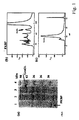
- the relative expression level with deuterated amino acids was about 95% of the yield in cell-free synthesis of GroEL using unlabeled amino acids.
- mass spectroscopy of the protein showed a 0.5% smaller mass than expected for the fully perdeuterated protein, which could be due to the incorporation of non-labelled amino acids present in the S30 extract.
- the protocol used for the preparation of S30 extract was supplemented with an additional size exclusion chromatography step. Absence of residual amino acids in the resulting S30 extract was confirmed by the observation that immune-blotting assays for protein synthesis in reaction mixtures without amino acid supplementation did not show any detectable bands of newly synthesized protein.
- FKBP 110-residue FK506 binding protein
- a reaction volume of 4 ml in a CECF setup produced 6.3 mg of FKBP, resulting in a 1.1 mM NMR sample.
- NMR experiments confirmed the observation of partial back-protonation at the ⁇ - and ⁇ - positions (see Figure 2 ), confirming that it is the exchange of H ⁇ and H ⁇ with bulk water during the polypeptide synthesis in the cell-free system that prevents perdeuteration of the protein.
- Gly, Asp, Asn, Glu and Gln show high back-protonation at the a-position
- Ser, Cys, Ala, Phe, Trp and Tyr are a second group with intermediate back-protonation at the ⁇ -position
- Val, Ile, Leu Lys and Arg have a low degree of back-protonation
- Thr, His and Met show almost no back-protonation.
- Asp, Asn, Gln and Glu have high back-protonation also at the (3-position ( Figure 2 ), whereas Ala, Phe and Tyr showed less extensive (3 back-protonation (see Figure 2 ).
- the resulting extracts were compared with each other by their protein synthesis efficiency as monitored by Western blotting.
- Optimal synthesis efficiency was obtained with a MWCO of 10'000 Da.
- MWCO values below 10'000 resulted in the formation of larger amounts of precipitates, which could not be resuspended, and MWCO values above 10'000 resulted in reduced extract activity.
- the translation efficiency of the D-S3 0 extract thus obtained was about 65% of that of the conventional S30 extract.
- For the transformation of S30 to D-S30 extract we used six filtration cycles with a dilution factor of 2, resulting in a D 2 O level above 98%.
- the D-S30 extract was supplemented with purified ribosomes prior to the filtration step, which further increased the overall efficiency of the synthesis reaction up to about 85% of the efficiency of the conventional S30 extract without ribosome supplementation (see Material and Methods below).
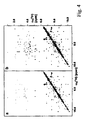
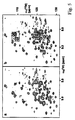
- the figures 3 and 4 show comparisons of 2D [ 1 H, 1 H]-NOESY NMR data of FKBP produced in vitro using either the conventional S30-extract or the new D-S30 extract. All the spectra were recorded on a 600 MHz spectrometer with a mixing time of 100 ms, and processed identically. The protein concentration was adjusted to 800 ⁇ M as determined by UV absorption spectra. The high level of back-protonation in the protein prepared with conventional S30-extract is manifested by the appearance of numerous H N -H ⁇ and H N -H ⁇ cross-peaks ( Figures 3 and 4b ).
- H N -H ⁇ cross-peaks in Figure 4b originate from Asp (see Figure 3a ), Asn, Glu and Gln residues, which also show a high tendency for back-protonation in the ⁇ -position.
- the back-protonation of the Ala methyls is rather striking (see Figure 3b ).
- the reduced back-protonation in the FKBP preparation from the D-S30 extract is reflected by the dramatically reduced peak intensities in the cross sections of Figure 3 , and by the low population of and H N -H ⁇ cross peaks in Figure 4a .
- the new protocol can be adapted for more sophisticated labelling schemes, which may not readily be accessible by other techniques.
- selective incorporation of individual 1 H, 15 N, 13 C-labeled amino acid types into proteins on a uniform 2 H, 14 N, 12 C-labelling background could open new perspectives for studies of active site screening of enzymes.
- the approach used here with E. coil cell extract should in principle also be adaptable to other cell-free systems, for example, using wheat germ or insect cell extract for the production of eukaryotic proteins.
- D-glutamate and D-aspartate are important components of peptidogylcan synthesis and are therefore essential for bacterial cell-wall biosynthesis.
- D-Glu and D-Asp are synthesized from L-Glu and L-Asp, respectively, by specific glutamate- and aspartate racemases.
- D-Glu and D-Asp instead of their L-counterparts in the cell-free protein synthesis setup, and the amount of protein produced with this variant amino acid mixture was monitored by an immunoassay using anti-His antibodies. The results of these experiments did not indicate any significant protein production, and we therefore conclude that other factors than racemase activities in the cell-extract must have a role in the observed back-protonation.
- S30 extract For the preparation of S30 extract, the E. colt strain BL21 Star (DE3; Invitrogen) was used, since the cell extract from this strain showed a better performance than the S30 extract obtained from regular BL21 (DE3) or BL21 (DE3) RIL strains.
- the production of S30 extract was based on previously reported protocols ( Torizawa, T., Shimizu, M., Taoka, M., Miyano, H., and Kainosho, M. Efficient production of isotopically labeled proteins by cell-free synthesis: A practical protocol. J. Biomol. NMR 30, 311 (2004 ); Kigawa, T. et al. Preparation of Escherichia coli cell extract for highly productive cell-free protein expression. J.
- Cell-breakage was carried out with a single passage of cell suspension (0.8 g/ml) in S30 buffer through a French-Press at 15'000 psi, followed by two rounds of centrifugation of the cell-lysate at 30'000g at 4 °C.
- the cell extract thus obtained was supplemented with purified ribosomes that had been isolated from 9 litres of E. coli cell culture grown in incomplete rich medium also harvested at OD 600 of 0.7. Ribosome purification was based on ultra-centrifugation and a sucrose cushion approach. For best efficiency of these added ribosomes in the cell-extract it was found to be optimal to add the additional ribosomes just before the step which is required for the removal of endogenous mRNA (see next paragraph).
- the extract was dialyzed three times against 11 of S30 buffer at 4 °C before an additional overnight dialysis against 21 of S30 buffer at 4 °C using a Spectra/pore membrane with a molecular weight cut off (MWCO) of 3'000 Da.
- MWCO molecular weight cut off
- the S30 extract was divided into three 5 ml fractions and then treated in parallel using three centrifugal filter devices (MWCO 10'000 Da), and buffer exchange against an equal volume of deuterated S30 buffer was repeated six times.
- RNAP T7 RNA polymerase
- pT7-911 vector which is derived from pQE-8 (Qiagen) encoding the T7 RNA polymerase (RNAP) gene with a poly-His 6 purification tag at the N-terminus.
- RNAP was expressed in E. coli cells BL21 (DE3) (Stratagene) using a standard procedure with induction of protein expression by the addition of 1 mM isopropyl (3-D-thiogalactopyranoside (IPTG). Cell breakage was carried out by several passages through a French-Press at 20'000 psi, and protein purification was carried out by affinity chromatography using a Ni-NTA-agarose resin column followed by size exclusion chromatography.
- the analytical cell-free protein syntheses of FKBP and GroEL were carried out in batch mode. Depending on the overall reaction yield and the isotope consumption, the largescale reaction was carried out either in the batch mode or by continuous exchange cell-free proteins synthesis.
- the nutrient compositions for batch and CECF mode are summarized in Table 1 as given above. The ratio of reaction volume and feeding volume in the CECF setup was 10:1. For the production of deuterated proteins, all the substrates for the cell-free protein synthesis reaction were prepared in D 2 O.
- the stable salts (Table 1) were incubated at 200 °C for 2 hours before they were dissolved in D 2 O.
- the reaction mixture was incubated at 30 °C and 450 rpm either for 5 hours (batch mode), or for 17 hours (CECF mode), using a tabletop thermomixer (Eppendorff).
- FKBP FKBP was eluted from the column with a linear gradient of imidazole (0-500 mM, 5 column volumes) in buffer A, together with RNAP.
- RNAP RNA-binding protein
- GE Healthcare Superdex 75 prep grade (GE Healthcare) column equilibrated in NMR buffer (20 mM sodium phosphate, pH 6.2).
- NMR buffer 20 mM sodium phosphate, pH 6.2.
- the fractions containing FKBP were pooled and concentrated to a final volume of 500 ⁇ l.
- protein concentrations of about 500 ⁇ M (5 mg of protein) were obtained from a 4 ml continuous exchange cell-free protein synthesis assay.
- GroEL were concentrated and subjected to size exclusion chromatography, as described for in vivo expressed GroEL.
- the interscan delay was 1 s; 1024 complex points were recorded with an acquisition time of 128 ms, and prior to Fourier transformation the FID was multiplied with a 75°-shifted sine bell and zero-ruled to 2048 complex points.
- ⁇ 1 ( 1 H)-dimension 256 complex points were measured, with a maximal evolution time of 32 ms, and the data was multiplied with a cosine function and zero-filled to 512 complex points before Fourier transformation.
Landscapes
- Chemical & Material Sciences (AREA)
- Organic Chemistry (AREA)
- Life Sciences & Earth Sciences (AREA)
- Health & Medical Sciences (AREA)
- Engineering & Computer Science (AREA)
- Genetics & Genomics (AREA)
- Molecular Biology (AREA)
- General Health & Medical Sciences (AREA)
- Biochemistry (AREA)
- Zoology (AREA)
- Proteomics, Peptides & Aminoacids (AREA)
- Wood Science & Technology (AREA)
- Microbiology (AREA)
- General Chemical & Material Sciences (AREA)
- Bioinformatics & Cheminformatics (AREA)
- General Engineering & Computer Science (AREA)
- Chemical Kinetics & Catalysis (AREA)
- Biotechnology (AREA)
- Analytical Chemistry (AREA)
- Biophysics (AREA)
- Medicinal Chemistry (AREA)
- Preparation Of Compounds By Using Micro-Organisms (AREA)
- Peptides Or Proteins (AREA)
Priority Applications (2)
| Application Number | Priority Date | Filing Date | Title |
|---|---|---|---|
| EP07010114A EP1995324A1 (de) | 2007-05-22 | 2007-05-22 | Zellfreie Proteinsynthese deuterierter Proteine für strukturelle und funktionelle Untersuchungen durch NMR-Spektroskopie |
| PCT/EP2008/004017 WO2008141795A2 (en) | 2007-05-22 | 2008-05-20 | Cell-free protein synthesis of deuterated proteins for structural and functional studies by nmr spectroscopy |
Applications Claiming Priority (1)
| Application Number | Priority Date | Filing Date | Title |
|---|---|---|---|
| EP07010114A EP1995324A1 (de) | 2007-05-22 | 2007-05-22 | Zellfreie Proteinsynthese deuterierter Proteine für strukturelle und funktionelle Untersuchungen durch NMR-Spektroskopie |
Publications (1)
| Publication Number | Publication Date |
|---|---|
| EP1995324A1 true EP1995324A1 (de) | 2008-11-26 |
Family
ID=38514254
Family Applications (1)
| Application Number | Title | Priority Date | Filing Date |
|---|---|---|---|
| EP07010114A Withdrawn EP1995324A1 (de) | 2007-05-22 | 2007-05-22 | Zellfreie Proteinsynthese deuterierter Proteine für strukturelle und funktionelle Untersuchungen durch NMR-Spektroskopie |
Country Status (2)
| Country | Link |
|---|---|
| EP (1) | EP1995324A1 (de) |
| WO (1) | WO2008141795A2 (de) |
Cited By (1)
| Publication number | Priority date | Publication date | Assignee | Title |
|---|---|---|---|---|
| WO2018037097A1 (fr) * | 2016-08-24 | 2018-03-01 | Commissariat A L'energie Atomique Et Aux Energies Alternatives | Méthode de préparation de milieux de culture riches pour le marquage d'acides aminés incorporés dans des protéines |
Families Citing this family (1)
| Publication number | Priority date | Publication date | Assignee | Title |
|---|---|---|---|---|
| CN108169272A (zh) * | 2017-12-18 | 2018-06-15 | 河南工业大学 | 一种利用核磁共振技术检测粮食虫害情况的方法 |
Citations (3)
| Publication number | Priority date | Publication date | Assignee | Title |
|---|---|---|---|---|
| EP1143009A1 (de) * | 1998-12-14 | 2001-10-10 | Riken | Verfahren zur herstellung eines polypetids in zellfreien proteinsynthese-systemen |
| EP1310564A1 (de) * | 2000-07-21 | 2003-05-14 | National Institute of Advanced Industrial Science and Technology | Verfahren zur markierung von proteinen unter verwendung eines zellfreien proteinsynthese systems aus weizenembryo |
| EP1457482A1 (de) * | 2001-12-19 | 2004-09-15 | Japan Science and Technology Agency | Mit stabilen isotopen markierte aminosäure, verfahren zu deren einschleusung in ein zielprotein, verfahren zur nmr-strukturanalyse von protein und verfahren zur herstellung von sich spezifisch anreichernder, mit stabilen isotopen markierter fumarsäure und weinsäure |
-
2007
- 2007-05-22 EP EP07010114A patent/EP1995324A1/de not_active Withdrawn
-
2008
- 2008-05-20 WO PCT/EP2008/004017 patent/WO2008141795A2/en not_active Ceased
Patent Citations (3)
| Publication number | Priority date | Publication date | Assignee | Title |
|---|---|---|---|---|
| EP1143009A1 (de) * | 1998-12-14 | 2001-10-10 | Riken | Verfahren zur herstellung eines polypetids in zellfreien proteinsynthese-systemen |
| EP1310564A1 (de) * | 2000-07-21 | 2003-05-14 | National Institute of Advanced Industrial Science and Technology | Verfahren zur markierung von proteinen unter verwendung eines zellfreien proteinsynthese systems aus weizenembryo |
| EP1457482A1 (de) * | 2001-12-19 | 2004-09-15 | Japan Science and Technology Agency | Mit stabilen isotopen markierte aminosäure, verfahren zu deren einschleusung in ein zielprotein, verfahren zur nmr-strukturanalyse von protein und verfahren zur herstellung von sich spezifisch anreichernder, mit stabilen isotopen markierter fumarsäure und weinsäure |
Non-Patent Citations (5)
| Title |
|---|
| FEENEY J ET AL: "A NOVEL METHOD OF PREPARING TOTALLY ALPHA-DEUTERATED AMINO ACIDS FOR SELECTIVE INCORPORATION INTO PROTEINS APPLICATION TO ASSIGNMENT OF 1H RESONANCES OF VALINE RESIDUES IN DIHYDROFOLATE REDUCTASE", FEBS LETTERS, ELSEVIER, AMSTERDAM, NL, vol. 272, no. 1/2, October 1990 (1990-10-01), pages 197 - 199, XP002948542, ISSN: 0014-5793 * |
| KIGAWA T ET AL: "Cell-free production and stable-isotope labeling of milligram quantities of proteins", FEBS LETTERS, ELSEVIER, AMSTERDAM, NL, vol. 442, no. 1, 8 January 1999 (1999-01-08), pages 15 - 19, XP004258994, ISSN: 0014-5793 * |
| LOEHR FRANK ET AL: "A strategy to obtain backbone resonance assignments of deuterated proteins in the presence of incomplete amide 2H/1H back-exchange.", JOURNAL OF BIOMOLECULAR NMR, KLUWER ACADEMIC PUBLISHERS, DO, vol. 25, no. 4, April 2003 (2003-04-01), pages 291 - 311, XP002453119, ISSN: 0925-2738 * |
| NAKANO H ET AL: "AN INCREASED RATE OF CELL-FREE PROTEIN SYNTHESIS BY CONDENSING WHEAT-GERM EXTRACT WITH ULTRAFILTRATION MEMBRANES", BIOSCIENCE BIOTECHNOLOGY BIOCHEMISTRY, JAPAN SOC. FOR BIOSCIENCE, BIOTECHNOLOGY AND AGROCHEM, TOKYO, JP, vol. 58, no. 4, 1994, pages 631 - 634, XP001055228, ISSN: 0916-8451 * |
| TAKUYA TORIZAWA ET AL: "Efficient production of isotopically labeled proteins by cell-free synthesis: A practical protocol", JOURNAL OF BIOMOLECULAR NMR, KLUWER ACADEMIC PUBLISHERS, DO, vol. 30, no. 3, 1 November 2004 (2004-11-01), pages 311 - 325, XP019249462, ISSN: 1573-5001 * |
Cited By (2)
| Publication number | Priority date | Publication date | Assignee | Title |
|---|---|---|---|---|
| WO2018037097A1 (fr) * | 2016-08-24 | 2018-03-01 | Commissariat A L'energie Atomique Et Aux Energies Alternatives | Méthode de préparation de milieux de culture riches pour le marquage d'acides aminés incorporés dans des protéines |
| FR3055337A1 (fr) * | 2016-08-24 | 2018-03-02 | Commissariat A L'energie Atomique Et Aux Energies Alternatives | Methode de preparation de milieux de culture riches pour le marquage d'acides amines incorpores dans des proteines |
Also Published As
| Publication number | Publication date |
|---|---|
| WO2008141795A3 (en) | 2009-03-05 |
| WO2008141795A2 (en) | 2008-11-27 |
Similar Documents
| Publication | Publication Date | Title |
|---|---|---|
| Goerke et al. | High‐level cell‐free synthesis yields of proteins containing site‐specific non‐natural amino acids | |
| EP1490483B1 (de) | In-vivo-einbau von nicht in der natur vorkommenden aminosäuren | |
| EP0566714B1 (de) | Gekoppelte transkription und translation in zellfreien eukaryoten-extrakten | |
| JPH07506192A (ja) | タンパク質構造決定のための組成物類および方法類 | |
| EP3788149B1 (de) | Verfahren zur optimierung der antikörperexpression | |
| Faggiano et al. | The missing links to link ubiquitin: Methods for the enzymatic production of polyubiquitin chains | |
| Etezady-Esfarjani et al. | Cell-free protein synthesis of perdeuterated proteins for NMR studies | |
| AU2007267950B2 (en) | Genetically encoded fluorescent coumarin amino acids | |
| CN106190983B (zh) | 用于脊椎动物细胞的杂合抑制tRNA | |
| Si et al. | Semi-synthesis of disulfide-linked branched tri-ubiquitin mimics | |
| US20110076718A1 (en) | In vivo incorporation of an unnatural amino acid comprising a 1,2-aminothiol group | |
| Su et al. | Suppression of isotope scrambling in cell-free protein synthesis by broadband inhibition of PLP enymes for selective 15N-labelling and production of perdeuterated proteins in H2O | |
| Levin et al. | E. coli “Stablelabel” S30 lysate for optimized cell-free NMR sample preparation | |
| EP1995324A1 (de) | Zellfreie Proteinsynthese deuterierter Proteine für strukturelle und funktionelle Untersuchungen durch NMR-Spektroskopie | |
| JP3145431B2 (ja) | 安定同位体標識蛋白質の製造法および試薬キット | |
| JPWO2002008443A1 (ja) | コムギ胚芽無細胞タンパク質合成システムを用いるタンパク質の一般的標識手段 | |
| KR20250131790A (ko) | 비천연 아미노산 삽입용 시험관 내 무세포 단백질 합성 시스템, 방법 및 응용 | |
| Jia et al. | Glutarate and N-acetyl-L-glutamate buffers for cell-free synthesis of selectively 15N-labelled proteins | |
| Vida et al. | Bacterial fermentation and isotope labelling optimized for amyloidogenic proteins | |
| US20060216791A1 (en) | Method for synthesizing amino-acid-selectively labeled protein | |
| US20110306751A1 (en) | Independently Inducible System of Gene Expression | |
| Etezady-Esfarjani et al. | In Vitro Protein Synthesis of Perdeuterated Proteins for NMR Studies | |
| JPWO2004104210A1 (ja) | 無細胞タンパク質合成系によるタンパク質の製造方法及びタンパク質合成用試薬キット | |
| Rai et al. | Accessing Structure, Dynamics and Function of Biological Macromolecules by NMR Through Advances in Isotope Labeling | |
| CN121518607A (zh) | 一种用于无细胞蛋白质合成的组合物及其用途 |
Legal Events
| Date | Code | Title | Description |
|---|---|---|---|
| PUAI | Public reference made under article 153(3) epc to a published international application that has entered the european phase |
Free format text: ORIGINAL CODE: 0009012 |
|
| AK | Designated contracting states |
Kind code of ref document: A1 Designated state(s): AT BE BG CH CY CZ DE DK EE ES FI FR GB GR HU IE IS IT LI LT LU LV MC MT NL PL PT RO SE SI SK TR |
|
| AX | Request for extension of the european patent |
Extension state: AL BA HR MK RS |
|
| AKX | Designation fees paid | ||
| REG | Reference to a national code |
Ref country code: DE Ref legal event code: 8566 |
|
| STAA | Information on the status of an ep patent application or granted ep patent |
Free format text: STATUS: THE APPLICATION IS DEEMED TO BE WITHDRAWN |
|
| 18D | Application deemed to be withdrawn |
Effective date: 20090527 |