EP1995697B1 - Système de gestion de la sécurité - Google Patents
Système de gestion de la sécurité Download PDFInfo
- Publication number
- EP1995697B1 EP1995697B1 EP20080155723 EP08155723A EP1995697B1 EP 1995697 B1 EP1995697 B1 EP 1995697B1 EP 20080155723 EP20080155723 EP 20080155723 EP 08155723 A EP08155723 A EP 08155723A EP 1995697 B1 EP1995697 B1 EP 1995697B1
- Authority
- EP
- European Patent Office
- Prior art keywords
- user
- section
- health status
- blood component
- component data
- Prior art date
- Legal status (The legal status is an assumption and is not a legal conclusion. Google has not performed a legal analysis and makes no representation as to the accuracy of the status listed.)
- Not-in-force
Links
Images

Classifications
-
- A—HUMAN NECESSITIES
- A61—MEDICAL OR VETERINARY SCIENCE; HYGIENE
- A61B—DIAGNOSIS; SURGERY; IDENTIFICATION
- A61B5/00—Measuring for diagnostic purposes; Identification of persons
- A61B5/145—Measuring characteristics of blood in vivo, e.g. gas concentration or pH-value ; Measuring characteristics of body fluids or tissues, e.g. interstitial fluid or cerebral tissue
- A61B5/14532—Measuring characteristics of blood in vivo, e.g. gas concentration or pH-value ; Measuring characteristics of body fluids or tissues, e.g. interstitial fluid or cerebral tissue for measuring glucose, e.g. by tissue impedance measurement
-
- A—HUMAN NECESSITIES
- A61—MEDICAL OR VETERINARY SCIENCE; HYGIENE
- A61B—DIAGNOSIS; SURGERY; IDENTIFICATION
- A61B5/00—Measuring for diagnostic purposes; Identification of persons
- A61B5/145—Measuring characteristics of blood in vivo, e.g. gas concentration or pH-value ; Measuring characteristics of body fluids or tissues, e.g. interstitial fluid or cerebral tissue
- A61B5/14546—Measuring characteristics of blood in vivo, e.g. gas concentration or pH-value ; Measuring characteristics of body fluids or tissues, e.g. interstitial fluid or cerebral tissue for measuring analytes not otherwise provided for, e.g. ions, cytochromes
-
- A—HUMAN NECESSITIES
- A61—MEDICAL OR VETERINARY SCIENCE; HYGIENE
- A61B—DIAGNOSIS; SURGERY; IDENTIFICATION
- A61B5/00—Measuring for diagnostic purposes; Identification of persons
- A61B5/145—Measuring characteristics of blood in vivo, e.g. gas concentration or pH-value ; Measuring characteristics of body fluids or tissues, e.g. interstitial fluid or cerebral tissue
- A61B5/1455—Measuring characteristics of blood in vivo, e.g. gas concentration or pH-value ; Measuring characteristics of body fluids or tissues, e.g. interstitial fluid or cerebral tissue using optical sensors, e.g. spectral photometrical oximeters
-
- G—PHYSICS
- G06—COMPUTING OR CALCULATING; COUNTING
- G06V—IMAGE OR VIDEO RECOGNITION OR UNDERSTANDING
- G06V20/00—Scenes; Scene-specific elements
- G06V20/50—Context or environment of the image
- G06V20/59—Context or environment of the image inside of a vehicle, e.g. relating to seat occupancy, driver state or inner lighting conditions
- G06V20/597—Recognising the driver's state or behaviour, e.g. attention or drowsiness
-
- G—PHYSICS
- G06—COMPUTING OR CALCULATING; COUNTING
- G06V—IMAGE OR VIDEO RECOGNITION OR UNDERSTANDING
- G06V40/00—Recognition of biometric, human-related or animal-related patterns in image or video data
- G06V40/10—Human or animal bodies, e.g. vehicle occupants or pedestrians; Body parts, e.g. hands
- G06V40/14—Vascular patterns
-
- G—PHYSICS
- G07—CHECKING-DEVICES
- G07C—TIME OR ATTENDANCE REGISTERS; REGISTERING OR INDICATING THE WORKING OF MACHINES; GENERATING RANDOM NUMBERS; VOTING OR LOTTERY APPARATUS; ARRANGEMENTS, SYSTEMS OR APPARATUS FOR CHECKING NOT PROVIDED FOR ELSEWHERE
- G07C9/00—Individual registration on entry or exit
- G07C9/30—Individual registration on entry or exit not involving the use of a pass
- G07C9/32—Individual registration on entry or exit not involving the use of a pass in combination with an identity check
- G07C9/37—Individual registration on entry or exit not involving the use of a pass in combination with an identity check using biometric data, e.g. fingerprints, iris scans or voice recognition
Definitions
- the present invention relates to a safety management system which prohibits entry by unauthorized persons to a particular facility such as an aircraft control room or reactor control room.
- Japanese Unexamined Patent Application, First Publication No. 2007-23526 discloses that entry to a controlled area of a particular facility from outside is managed according to ID information entered by users, and exit from inside the controlled area to outside the controlled area is managed according to biological information of the user, allowing entry and exit to be managed with a high level of security.
- US 2004/240712 discloses a multispectral biometric sensor, in which an illumination subsystem provides light at discrete wavelenghts to a skin site of an individual. A detection subsystem receives light scattered from the skin site. A computational unit is interfaced with the detection system. The computational unit has instructions for deriving a spatially distributed multispectral image from the received light at the discrete wavelengths. The computational unit also has instructions for comparing the derived multispectral image with a database of multispectral images to identify the individual.
- US 2003/204290 discloses a system and method for detecting an identity of an occupant of a vehicle.
- the system includes a sensor module mounted in a vehicle.
- the sensor module having an occupant sensor for aquitting an image of a member of the vehicle occupant to identify the vehicule occupant.
- the method includes activating a vehicle occupant identification system, acquiring an image of a member of the vehicle occupant, comparing the acquired image of the member with at least one stored image of a member, determining whether the acquired image of the member matches the at least one stored image, and assessing whether the vehicle occupant has been identified.
- WO 2008/019 800 discloses a method to transmit physiological and biometric data of a living being, said method comprising the steps of : sensing biometric characteristic data of an individual ; comparing said biometric characteristic data to characteristic data of predetermined registered individuals and determining whether said individual is registered ; sensing physiological characteristic data of said individual ; comparing said physiological characteristic data with a predetermined range of acceptable values for said physiological characteristic data ; and sensing a parameter characteristic of a security condition ; comparing said parameter characteristic of a security condition with a predetermined range of acceptable values for said parameter ; transmitting a signal if said individual is registered, if said physiological characteristic data is within said predetermined range or not and if said parameter characteristic of a security condition is within said range of acceptable values for said parameter.
- An object of the present invention is to provide a safety management system that prohibits the entry of unauthorized persons to a particular facility, in which the health status of the user is reflected on to permit or prohibit entry to the particular facility.
- the safety management system of the present invention comprises: a user authentication section which authenticates a user of a particular facility and outputs an authentication result; a health status determination section which measures blood component data of a user authenticated by the user authentication section, determines a health status of the user from the blood component data, and outputs a determination result; and an entry regulating section which permits or prohibits entry by the user to the particular facility based on the authentication result and the determination result.
- a legitimate user is authenticated. Furthermore, based on the blood component data of that user it is determined whether or not the health status of a user is favorable, and based on the result entry to the particular facility is permitted or prohibited. Consequently, operation of the equipment inside the particular facility by the user can be permitted or prohibited.
- items of the blood component data measured by the health status determination section include a plasma protein level and a lactic acid level.
- the entry regulating section may permit or prohibit entry to the particular facility according to whether values of each of items of the blood component data are within predetermined ranges.
- the entry regulating section may permit or prohibit entry to the particular facility according to whether values of each of specific items of the items of the blood component data are within predetermined ranges.
- the entry regulating section may permit or prohibit entry to the particular facility according to a number of items within the predetermined ranges of each of the items of the blood component data.
- the user authentication section may authenticate the user based on a vein pattern obtained by irradiating infrared rays onto a body of the user.
- the health status determination section may measure the blood component data based on an absorption spectrum obtained by irradiating infrared rays onto a body of the user.
- a vein pattern used by the user authentication section and an absorption spectrum used by the health status determination section may be detected by the same sensor section.
- the safety management system of the present invention may further comprise an operation regulating section which permits or prohibits operation of equipment inside the particular facility based on the authentication result and the determination result.
- a legitimate user is authenticated, the health status of the user is determined based on blood component data, and entry to the particular facility is permitted or prohibited based on the result (operation of the equipment inside the particular facility is permitted or prohibited).
- the result operation of the equipment inside the particular facility is permitted or prohibited.
- a safety management system S shown in FIG. 1 is used in a particular facility, such as an aircraft control room or reactor control room, where entry to a controlled area is managed.
- the safety management system S performs authentication to determine whether a user is a pre-registered user, and also checks the health status of that user. Based on the results, the safety management system S regulates entry to the particular facility by permitting or prohibiting entry by the user.
- the safety management system S includes a user authentication section 11, a health status determination section 12, and an entry management section 13.
- the user authentication section 11 performs authentication to determine whether or not a user is a legitimate user.
- the health status determination section 12 determines the health status of the user from blood component data of the user.
- the entry management section 13 manages (permits or prohibits) the entry of the user to the particular facility based on the authentication result of the user authentication section 11 and the judgment result of the health status determination section 12.
- the user authentication section 11, the health status determination section 12, and the entry management section 13 are formed inside an electronic control unit which controls the overall operation of the particular facility.
- the user authentication section 11 is a known vein authentication device.
- the user authentication section 11 acquires a vein pattern from, for example, the fingertip of the user, and matches the vein pattern to a pre-registered vein pattern.
- the vein pattern is acquired, for example, in the following manner.
- a user places his or her fingertip Y on a sensor section 14 positioned near the entrance to the particular facility.
- An infrared LED 14a irradiates near-infrared light onto the fingertip Y, and the reflected light is received by an imaging element such as a CCD (charge coupled device).
- a vein pattern processing section 11a of the user authentication section 11 performs predetermined image processing of the signal from the imaging element.
- This vein pattern processing section 11a and a vein pattern sensor 14b of the sensor section 14 constitute a vein pattern capture section 11
- a user information input section 15 is a keyboard or card reader or the like.
- the vein pattern matching section 11b compares the retrieved vein pattern with the vein pattern obtained by the sensor section 14. If the vein pattern matching section 11b determines that the two vein patterns are the same, the user is authenticated as a legitimate user (in which case the "authentication result is OK"). On the other hand, if the vein pattern matching section 11b determines that the two vein patterns are not the same, the user is not authenticated as a legitimate user (in which case the "authentication result is NG"). These authentication results are displayed to the user on a predetermined display section 16 such as an LCD (liquid crystal display). A configuration may also be used in which the user information input section 15 is not provided, and user authentication is performed by automatically comparing the vein pattern acquired by the sensor section 14 with pre-registered vein patterns.
- a predetermined display section 16 such as an LCD (liquid crystal display).
- a configuration may also be used in which the user information input section 15 is not provided, and user authentication is performed by automatically comparing the vein pattern acquired by the sensor section 14 with pre-registered vein patterns.
- the health status determination section 12 analyzes an absorption spectrum obtained from transmitted or reflected light obtained by irradiating near-infrared rays onto the fingertip Y of the user in the sensor section 14. From the results of analyzing this absorption spectrum, the health status determination section 12 acquires data (blood component data) related to the blood components of that user.
- An absorption spectrum analyzing section 12a of the health status determination section 12 analyzes the absorption spectrum.
- This absorption spectrum analyzing section 12a and a blood component sensor 14c of the sensor section 14 constitute a blood component measuring section 12c in the health status determination section 12.
- the blood component measuring section 12c utilizes an infrared spectrophotometer.
- Items of blood components measured by the health status determination section 12 include blood sugar levels, levels of enzymes such as GPT (glutamic pyruvic transaminase), levels of plasma proteins such as albumin, and cholesterol levels and lactic acid levels.
- GPT glutamic pyruvic transaminase
- a blood component comparison section 12b of the health status determination section 12 retrieves blood component data values (the "predetermined ranges” mentioned below) registered in advance for each item of the blood data, which indicate the appropriate health status of the user for operating the equipment inside the particular facility.
- the blood component comparison section 12b compares the retrieved blood component data values with the blood component data obtained by analyzing the absorption spectrum. From the comparison results, the blood component comparison section 12b then determines whether the health status of the user is suitable for operating the equipment inside the particular facility.
- the blood component comparison section 12b pre-designates several items in the blood component data as the specific items.
- the specific items include the plasma protein level and the lactic acid level which indicate the level of tiredness of the user.
- the blood component comparison section 12b determines whether or not the values of the specific items in the measured blood component data are within the value of the retrieved blood component data, that is, the blood component comparison section 12b determines whether the values are within the predetermined ranges for each of the specific items.
- These predetermined ranges are ranges whereby a determination can be made as to whether the health status of the user is appropriate for operating the equipment inside the particular facility. These predetermined ranges can be set appropriately based on the age and gender of the user as well as individual differences. A construction may be employed in which the predetermined ranges are appropriately corrected or updated based on blood component data acquired in the past.
- the blood component comparison section 12b determines that the values of all the specific items are within their predetermined ranges (all items meet the required standard), the health status of the user is determined to be suitable for operating equipment inside the particular facility, that is, the health status of the user is determined to be favorable (in which case the "authentication result is OK").
- the blood component comparison section 12b determines that the value of one or more of the specific items is outside the predetermined range defined for the item (at least one item does not meet the required standard)
- the health status of the user is determined to not be suitable for operating equipment inside the particular facility, that is, the health status of the user is determined not to be favorable (in which case the "authentication result is NG").
- the entry management section 13 controls the entry of users into the particular facility, by such means as locking and unlocking the entry door to the particular facility. Specifically, when the authentication result of the user authentication section 11 and the judgment result of the health status determination section 12 are both OK, the entry management section 13 unlocks the entry door. On the other hand, if at least the authentication result of the user authentication section 11 or the judgment result of the health status determination section 12 is NG, the entry management section 13 leaves the entry door locked.
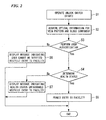
- the process flow starts when a user, before entering, operates the unlock switch located near the entry door (step S1).
- the unlock switch is, for example, a push-button switch, on the top face of which the user places his or her fingertip.
- a pair of infrared LEDs 14a are provided on either side of the unlock switch so as to face each other.
- This unlock switch and the infrared LEDs 14a. constitute the sensor section 14.
- the unlock switch also incorporates a light receiving section. By receiving the light emitted by the LEDs 14a after the light has passed through the fingertip Y of the user, the light receiving section acquires optical information related to the vein pattern of the fingertip Y of the user and the blood component data of the user (step S2).
- the unlock switch incorporates the vein pattern sensor 14b and the blood component sensor 14c of the sensor section 14.
- the vein pattern processing section 11a subjects the optical information acquired by the vein pattern sensor 14b to predetermined image processing.
- the vein pattern matching section 11b matches the image processed optical information to a pre-registered vein pattern.
- the user authentication section 11 compares the vein pattern acquired by the sensor section 14 with a retrieved vein pattern. Based on the results of the comparison, the user authentication section 11 determines whether or not the user is a person who is permitted entry, that is, the user authentication section 11 determines whether or not the user is a legitimate user (step S3).
- step S3 If a determination is made that the user is a person who is permitted entry, that is, if the authentication result is OK (YES in step S3), the processing proceeds to step S4. On the other hand, if a determination is made that the user is a person who is not permitted entry, that is, if the authentication result is NG (NO in step S3), the processing proceeds to step S6. In step S6, a message indicating that the user cannot be verified is displayed on the display section 16, and the entry management section 13 restricts entry by such means as not unlocking the entry door (prohibiting entry to the particular facility).
- step S4 the absorption spectrum analyzing section 12a subjects the optical information acquired by the blood component sensor 14c to predetermined analysis, and the blood component comparison section 12b then compares the results of the analysis with pre-registered blood component data. Specifically, the health status determination section 12 compares the values of blood component data acquired by the sensor section 14 and retrieved blood component data. Based on the comparison results, the health status determination section 12 determines whether or not the health status of the user is suitable for operating equipment inside the particular facility.
- step S4 If a determination is made that the health status of the user is favorable, that is, if the judgment result is OK (YES in step S4), the processing proceeds to step S5. On the other hand, if a determination is made that the health status of the user is not favorable, that is, if the judgment result is NG (NO in step S4), the processing proceeds to step S7. In step S7, a message indicating that the health status of the user is not favorable is displayed on the display section 16, and the entry management section 13 restricts entry in the manner previously described.
- step S5 the entry management section 13 allows the user to enter by such means as unlocking the entry door. As a result, the user is able to operate the equipment inside the particular facility.
- the unlock switch may be a lever or dial instead of a push-button switch.
- a construction may be used in which the unlock switch is rendered operable after the user has been authenticated and a determination has been made as to whether or not the health status of the user is favorable.
- the unlock switch may be rendered operable only when the authentication result of the user authentication section 11 and the judgment result of the health status determination section 12 are both OK (that is, the unlock switch is rendered inoperable when any one of the authentication result and the judgment result are NG).
- the sensor section 14 and the unlock switch may be provided as separate components.
- a construction may also be used in which the user places his or her fingertip Y in a predetermined enclosure to allow the sensor section 14 to capture a vein pattern and acquire blood component data.
- the sensor section 14 may also capture a vein pattern and acquire blood component data of the user using a different part of the body than the fingertip of the user, such as a finger or palm (a part of the body where blood flow can be readily observed).
- the safety management system S prevents unauthorized persons from entering a particular facility.
- the safety management system S includes a user authentication section 11 which authenticates a user of a particular facility and outputs an authentication result, a health status determination section which measures the blood component data of the user authenticated by the user authentication section 11, determines the health status of the user from the blood component data, and outputs a determination result, the entry regulating section 13 which permits or prohibits entry by the user to the particular facility based on the authentication result and the determination result.
- a legitimate user is authenticated. Furthermore based on the blood component data of that user it is determined whether or not the health status of the user is favorable. Based on the results, entry to the particular facility is permitted or prohibited. As a result, operation of the equipment inside the particular facility by the user can be permitted or prohibited. Consequently the likelihood of a user, due to poor health, performing an erroneous operation that leads to an accident can be reduced.
- the user authentication section 11 authenticates users based on a vein pattern obtained by irradiating infrared rays onto the body of the user. Therefore, authentication can be performed with similar accuracy to authentication using fingerprint or iris recognition.
- the health status determination section 12 measures the blood component data of the user based on an absorption spectrum obtained by irradiating infrared rays onto the body of the user. Thus, because the blood component data is measured in a non-invasive manner, the physical and mental stress experienced by the user can be minimized.
- the vein pattern used by the user authentication section 11 and the absorption spectrum used by the health status determination section 12 are detected by a single sensor section 14.
- user authentication and user health status determination can be performed in the same operation, and the structure of the overall system can be simplified.
- the health status determination section 12 may adopt the following configuration. That is to say, the health status determination section 12 assigns a predetermined range as the normal range for each item of the retrieved blood component data including those not designated as the specific items. The health status determination section 12 determines whether the values of all items including the specific items in the measured blood component data are within the predetermined ranges defined for each item in the retrieved blood component data. From the judgment results, the health status determination section 12 determines that the health status of the user is suitable for operating the equipment inside the particular facility when the values of all items are within their predetermined ranges or when the number of items within their predetermined ranges is equal to or greater than a predetermined number.
- the entry management section 13 permits the user entry to the particular facility. As a result, the user is able to operate the equipment inside the particular facility. At this time, a requirement is that the values of all of the specific items are within their predetermined ranges.
- a log creation section may be provided which creates logs of such information as the identity and health status of the user, and the date and time. At this time, some or all of the log information may be displayed on, for example, the screen of the display section 16. Log information may be displayed as numerical data, or in the form of a graph or the like. As a result, the user can monitor his or her health status on a daily basis.
- a detection device for obtaining the data can be incorporated into the safety management system, and entry by the user can be permitted or prohibited in light of this additional data.
- the safety management system S may include an operation regulating section which permit or prohibit operation of the equipment inside the particular facility based on the authentication result of the user authentication section 11 and the judgment result of the health status determination section 12.
- the operation regulating section according to the authentication result and the judgment result, for example, can render the various switches operable or inoperable by such means as operating covers installed on the equipment inside the particular facility.
- This operation regulating section may permit or prohibit the operation of equipment based on whether or not the health status of the user determined when he or she entered the facility was favorable.
- a configuration may be used in which an additional device which measures the blood component data and determines whether or not the health status of the user is favorable, is provided inside the particular facility, and the operation regulating section permits or prohibits operation based on the results.
- the safety management system S includes both the operation regulating section and the entry management section 13, both of which permit or prohibit the operation of equipment.
- the safety management system S is suitable not only for the aircraft control rooms or reactor control rooms mentioned, but also for any facility that requires fast and accurate judgment, such as traffic control rooms or marine control rooms, or the control rooms and instrument rooms of all kinds of large scale industrial plants such as power stations or ironworks.
- the blood component data may also be obtained by collecting a blood sample.
Landscapes
- Health & Medical Sciences (AREA)
- Life Sciences & Earth Sciences (AREA)
- Physics & Mathematics (AREA)
- Engineering & Computer Science (AREA)
- General Health & Medical Sciences (AREA)
- Surgery (AREA)
- Public Health (AREA)
- Veterinary Medicine (AREA)
- Biophysics (AREA)
- Pathology (AREA)
- Biomedical Technology (AREA)
- Heart & Thoracic Surgery (AREA)
- Medical Informatics (AREA)
- Molecular Biology (AREA)
- Animal Behavior & Ethology (AREA)
- Optics & Photonics (AREA)
- General Physics & Mathematics (AREA)
- Human Computer Interaction (AREA)
- Emergency Medicine (AREA)
- Spectroscopy & Molecular Physics (AREA)
- Multimedia (AREA)
- Theoretical Computer Science (AREA)
- Vascular Medicine (AREA)
- Measurement Of The Respiration, Hearing Ability, Form, And Blood Characteristics Of Living Organisms (AREA)
- Lock And Its Accessories (AREA)
- Collating Specific Patterns (AREA)
- Selective Calling Equipment (AREA)
- Medical Treatment And Welfare Office Work (AREA)
Claims (5)
- Système de gestion de sécurité (S) comprenant :une section d'authentification d'utilisateur (11) qui authentifie un utilisateur d'une installation particulière et délivre en sortie un résultat d'authentification ;une section de détermination d'état de santé (12) qui mesure les données de composants du sang d'un utilisateur authentifié par ladite section d'authentification d'utilisateur (11), détermine un état de santé de l'utilisateur à partir des données de composants du sang et délivre en sortie un résultat de détermination de l'état de santé de l'utilisateur ; etune section de régulation d'entrée (13) qui autorise ou interdit l'entrée de l'utilisateur à une installation particulière sur la base du résultat d'authentification et du résultat de détermination,caractérisé en ce quedes objets des données de composants du sang mesurées par la section de détermination d'état de santé (12) comprennent le taux de protéine plasmatique et le taux d'acide lactique,la section de détermination d'état de santé (12) détermine si oui ou non les valeurs du taux de protéine plasmatique et du taux d'acide lactique dans les données de composants du sang mesurées par la section de détermination d'état de santé (12) rentrent à l'intérieur des valeurs de données de composants du sang enregistrées à l'avance, qui indiquent un état de santé approprié de l'utilisateur pour faire fonctionner un équipement à l'intérieur de l'installation particulière, et délivre en sortie le résultat de détermination.
- Système de gestion de sécurité selon la revendication 1, dans lequel ladite section d'authentification d'utilisateur authentifie l'utilisateur sur la base d'un motif veineux obtenu par irradiation de rayons infrarouges sur le corps de l'utilisateur.
- Système de gestion de sécurité selon la revendication 1, dans lequel ladite section de détermination d'état de santé mesure les données de composants du sang sur la base d'un spectre d'absorption obtenu par irradiation de rayons infrarouges sur le corps de l'utilisateur.
- Système de gestion de sécurité selon la revendication 1, dans lequel le motif veineux utilisé par ladite section d'authentification d'utilisateur et le spectre d'absorption utilisé par ladite section de détermination d'état de santé sont détectés par la même section de capteur.
- Système de gestion de sécurité (S) selon la revendication 1, comprenant en outre une section de régulation de fonctionnement qui autorise ou interdit le fonctionnement d'un équipement à l'intérieur de l'installation particulière sur la base du résultat d'authentification et du résultat de détermination.
Applications Claiming Priority (1)
| Application Number | Priority Date | Filing Date | Title |
|---|---|---|---|
| JP2007139197A JP4974761B2 (ja) | 2007-05-25 | 2007-05-25 | 安全管理システム |
Publications (2)
| Publication Number | Publication Date |
|---|---|
| EP1995697A1 EP1995697A1 (fr) | 2008-11-26 |
| EP1995697B1 true EP1995697B1 (fr) | 2010-05-26 |
Family
ID=39708931
Family Applications (1)
| Application Number | Title | Priority Date | Filing Date |
|---|---|---|---|
| EP20080155723 Not-in-force EP1995697B1 (fr) | 2007-05-25 | 2008-05-06 | Système de gestion de la sécurité |
Country Status (7)
| Country | Link |
|---|---|
| US (1) | US8799669B2 (fr) |
| EP (1) | EP1995697B1 (fr) |
| JP (1) | JP4974761B2 (fr) |
| KR (1) | KR101011414B1 (fr) |
| CN (1) | CN101311971A (fr) |
| DE (1) | DE602008001329D1 (fr) |
| TW (1) | TWI369439B (fr) |
Families Citing this family (9)
| Publication number | Priority date | Publication date | Assignee | Title |
|---|---|---|---|---|
| JP2010279651A (ja) * | 2009-06-08 | 2010-12-16 | Tohoku Univ | 手のひらの静脈走行パターンによる生体認証を用いた体調診断装置 |
| KR101682311B1 (ko) * | 2015-08-28 | 2016-12-02 | 이근장 | 얼굴 인식 디지털 도어록 |
| US9727697B1 (en) * | 2016-04-19 | 2017-08-08 | Honeywell International Inc. | System and approach for integration of parameters from wearable cloud connected access control devices |
| US11087010B2 (en) | 2017-05-31 | 2021-08-10 | International Business Machines Corporation | Mental acuity-dependent accessibility |
| CN110827457B (zh) * | 2018-07-23 | 2022-12-09 | 宁波欧依安盾安全科技有限公司 | 一种基于安全胜任力鉴定的虚拟门禁系统 |
| JP6984895B2 (ja) * | 2018-12-27 | 2021-12-22 | バイオニクス株式会社 | 血流認証装置 |
| FR3110024B1 (fr) | 2020-05-07 | 2022-06-10 | Grapheal | Dispositif d’accès portable et mono-usage à une zone à accès restreint, système de génération de clé d’accès et procédé de contrôle d’accès associés |
| SE2030339A1 (en) * | 2020-11-12 | 2022-05-13 | Rths Ab | An access control system for authorized and symptom-free persons |
| KR20220170014A (ko) * | 2021-06-22 | 2022-12-29 | 주식회사 시큐어코리아 | 복합 센서 및 카메라 일체형 안전출입문 |
Citations (1)
| Publication number | Priority date | Publication date | Assignee | Title |
|---|---|---|---|---|
| EP1995107A1 (fr) * | 2007-05-23 | 2008-11-26 | Laurel Precision Machines Co., Ltd. | Système de gestion sécurisé |
Family Cites Families (65)
| Publication number | Priority date | Publication date | Assignee | Title |
|---|---|---|---|---|
| US3508830A (en) * | 1967-11-13 | 1970-04-28 | Shell Oil Co | Apparatus for light scattering measurements |
| US4035083A (en) * | 1972-05-30 | 1977-07-12 | Woodriff Ray A | Background correction in spectro-chemical analysis |
| US5303575A (en) * | 1993-06-01 | 1994-04-19 | Alcotech Research Inc. | Apparatus and method for conducting an unsupervised blood alcohol content level test |
| JPH07128338A (ja) * | 1993-11-02 | 1995-05-19 | Kyoto Daiichi Kagaku:Kk | 簡易血糖計におけるデータ管理方法及び該データ管理方法を使用する簡易血糖計 |
| WO1995026013A1 (fr) * | 1994-03-24 | 1995-09-28 | Minnesota Mining And Manufacturing Company | Systeme d'identification biometrique de personnes |
| US7103460B1 (en) * | 1994-05-09 | 2006-09-05 | Automotive Technologies International, Inc. | System and method for vehicle diagnostics |
| US7313467B2 (en) * | 2000-09-08 | 2007-12-25 | Automotive Technologies International Inc. | System and method for in-vehicle communications |
| US20060284839A1 (en) * | 1999-12-15 | 2006-12-21 | Automotive Technologies International, Inc. | Vehicular Steering Wheel with Input Device |
| US6229908B1 (en) * | 1996-04-26 | 2001-05-08 | Edmonds, Iii Dean Stockett | Driver alcohol ignition interlock |
| US6544193B2 (en) * | 1996-09-04 | 2003-04-08 | Marcio Marc Abreu | Noninvasive measurement of chemical substances |
| GB9700090D0 (en) * | 1997-01-04 | 1997-02-19 | Horne James A | Sleepiness detection for vehicle driver |
| US6628809B1 (en) * | 1999-10-08 | 2003-09-30 | Lumidigm, Inc. | Apparatus and method for identification of individuals by near-infrared spectrum |
| AU5533298A (en) | 1997-12-19 | 1999-07-12 | Northrop Grumman Corporation | Vehicle theft and intoxication lockout and sleep monitor |
| US6097480A (en) * | 1998-01-27 | 2000-08-01 | Kaplan; Milton | Vehicle interlock system |
| WO1999047040A1 (fr) * | 1998-03-17 | 1999-09-23 | The University Of Virginia Patent Foundation | Methode et appareil de diagnostic precoce de maladies subaiguës potentiellement catastrophiques |
| US6748301B1 (en) * | 1999-07-24 | 2004-06-08 | Ryu Jae-Chun | Apparatus and method for prevention of driving of motor vehicle under the influence of alcohol and prevention of vehicle theft |
| AU7346800A (en) * | 1999-09-02 | 2001-03-26 | Automated Business Companies | Communication and proximity authorization systems |
| JP2001258867A (ja) | 2000-03-17 | 2001-09-25 | Sysmex Corp | 無侵襲生体検査用装置 |
| US6726636B2 (en) * | 2000-04-12 | 2004-04-27 | Loran Technologies, Inc. | Breathalyzer with voice recognition |
| AUPQ966600A0 (en) * | 2000-08-25 | 2000-09-21 | Jankov, Vladimir | System for physiological monitoring during sleep |
| JP2002172105A (ja) | 2000-12-07 | 2002-06-18 | Advance Co Ltd | 体液検査システム |
| KR100374708B1 (ko) * | 2001-03-06 | 2003-03-04 | 에버미디어 주식회사 | 회전영상의 보정에 의한 비접촉식 홍채인식방법 |
| US6898451B2 (en) * | 2001-03-21 | 2005-05-24 | Minformed, L.L.C. | Non-invasive blood analyte measuring system and method utilizing optical absorption |
| US20030012374A1 (en) * | 2001-07-16 | 2003-01-16 | Wu Jian Kang | Electronic signing of documents |
| US7496751B2 (en) * | 2001-10-29 | 2009-02-24 | Sun Microsystems, Inc. | Privacy and identification in a data communications network |
| US20030084302A1 (en) * | 2001-10-29 | 2003-05-01 | Sun Microsystems, Inc., A Delaware Corporation | Portability and privacy with data communications network browsing |
| JP4135356B2 (ja) * | 2001-11-14 | 2008-08-20 | 株式会社日立製作所 | 生体状態検出を具備する指認証装置 |
| US6810309B2 (en) * | 2002-04-25 | 2004-10-26 | Visteon Global Technologies, Inc. | Vehicle personalization via biometric identification |
| JP2004077466A (ja) * | 2002-06-17 | 2004-03-11 | Citizen Watch Co Ltd | 濃度測定装置および濃度測定方法 |
| JP4314016B2 (ja) | 2002-11-01 | 2009-08-12 | 株式会社東芝 | 人物認識装置および通行制御装置 |
| KR100519758B1 (ko) * | 2003-01-22 | 2005-10-07 | 삼성전자주식회사 | 용적맥파를 이용한 인체 안정도 평가방법 및 장치 |
| JP3770241B2 (ja) * | 2003-03-04 | 2006-04-26 | 株式会社日立製作所 | 個人認証装置及び個人認証方法 |
| JP4423475B2 (ja) * | 2003-03-17 | 2010-03-03 | アークレイ株式会社 | 穿刺装置 |
| WO2004090786A2 (fr) * | 2003-04-04 | 2004-10-21 | Lumidigm, Inc. | Capteur biometrique multispectral |
| CN1701561B (zh) * | 2003-07-11 | 2010-05-05 | 日本电信电话株式会社 | 基于地址的验证系统及其装置和程序 |
| WO2005028788A1 (fr) | 2003-09-17 | 2005-03-31 | Hiroshi Kamiki | Cle de vehicule |
| US6886653B1 (en) * | 2003-10-22 | 2005-05-03 | Dennis Bellehumeur | System and method for preventing the operation of a motor vehicle by a person who is intoxicated |
| KR100588342B1 (ko) | 2003-11-26 | 2006-06-12 | 주식회사 데크 | 동력전달용 클러치 |
| JP2005202899A (ja) * | 2004-01-13 | 2005-07-28 | Tsuneo Kamiya | オペレーター用健康データ管理システム |
| TW200514715A (en) * | 2004-06-11 | 2005-05-01 | Oriental Inst Technology | Human-carrying vehicle and auxiliary device thereof |
| JP4601380B2 (ja) * | 2004-10-08 | 2010-12-22 | 富士通株式会社 | 生体認証システムの登録方法、生体認証システム及びそのプログラム |
| JP4546169B2 (ja) * | 2004-06-28 | 2010-09-15 | 富士通株式会社 | 手のひら認証用撮像装置 |
| JP4657668B2 (ja) * | 2004-10-08 | 2011-03-23 | 富士通株式会社 | 生体認証方法及び生体認証装置 |
| JP4515850B2 (ja) * | 2004-07-30 | 2010-08-04 | 富士通株式会社 | 生体認証装置の誘導画面制御方法、生体認証装置及びそのプログラム |
| JP4653975B2 (ja) | 2004-06-29 | 2011-03-16 | 日立オートモティブシステムズ株式会社 | 個人識別装置 |
| JP4140582B2 (ja) * | 2004-08-19 | 2008-08-27 | ソニー株式会社 | 認証装置および認証方法 |
| US20060072793A1 (en) * | 2004-10-05 | 2006-04-06 | Honeywell International, Inc. | Security alarm notification using iris detection systems |
| JP2006248254A (ja) | 2005-03-08 | 2006-09-21 | Matsushita Electric Ind Co Ltd | 健康診断ネットワークシステム |
| US7635337B2 (en) * | 2005-03-24 | 2009-12-22 | Ge Healthcare Finland Oy | Determination of clinical stress of a subject in pulse oximetry |
| JP2006291604A (ja) * | 2005-04-12 | 2006-10-26 | Ntt Docomo Inc | ドア開閉制御装置、通信端末、ドア開閉制御システム |
| JP4704129B2 (ja) * | 2005-06-30 | 2011-06-15 | 富士通株式会社 | 生体認証方法、生体認証装置及び血管像読取装置 |
| JP5031204B2 (ja) | 2005-07-13 | 2012-09-19 | 三菱電機株式会社 | 入退室管理装置 |
| DE202005020535U1 (de) * | 2005-09-16 | 2006-04-06 | Kowatsch, Otto | Analysegerät |
| US20070067330A1 (en) * | 2005-09-21 | 2007-03-22 | Hernandez Raymond D | Security method for verifying and tracking service personnel |
| JP2007097820A (ja) | 2005-10-04 | 2007-04-19 | Sumitomo Electric Ind Ltd | 生体検査システムおよび生体検査方法 |
| US20070092924A1 (en) * | 2005-10-25 | 2007-04-26 | Anderson Norman L | Process for treatment of protein samples |
| JP2007117221A (ja) * | 2005-10-25 | 2007-05-17 | Hirato Koji | Ftirを用いた非侵襲血液検査「光人間ドックシステム」 |
| JP4952026B2 (ja) * | 2006-03-31 | 2012-06-13 | 株式会社日立製作所 | 生体情報認証装置および認証方法 |
| EP2004037B1 (fr) * | 2006-04-07 | 2018-09-12 | Löwenstein Medical Technology S.A. | Dispositif pour la determination d'une valeur comparative de données bio ainsi que pour la determination de donnees bio |
| JP4832951B2 (ja) * | 2006-04-28 | 2011-12-07 | 富士通株式会社 | 生体認証装置および生体認証プログラム |
| DE102006038438A1 (de) * | 2006-08-16 | 2008-02-21 | Keppler, Bernhard, Westport | Vorrichtung, multifunktionales System und Verfahren zur Ermittlung medizinischer und/oder biometrischer Daten eines Lebewesens |
| US8280118B2 (en) * | 2006-11-21 | 2012-10-02 | Hitachi, Ltd. | Biometrics authentication device and portable terminal |
| KR100825756B1 (ko) * | 2006-12-05 | 2008-04-29 | 한국전자통신연구원 | 얼굴 특징 추출 방법 및 그 장치 |
| US20080176305A1 (en) * | 2006-12-20 | 2008-07-24 | Kikkoman Corporation | Functional composition |
| WO2008096421A1 (fr) * | 2007-02-07 | 2008-08-14 | Pioneer Corporation | Dispositif de prévention de conduite en état d'ivresse, procédé de prévention de conduite en état d'ivresse, et programme de prévention de conduite en état d'ivresse |
-
2007
- 2007-05-25 JP JP2007139197A patent/JP4974761B2/ja not_active Expired - Fee Related
-
2008
- 2008-05-06 EP EP20080155723 patent/EP1995697B1/fr not_active Not-in-force
- 2008-05-06 DE DE200860001329 patent/DE602008001329D1/de active Active
- 2008-05-07 US US12/149,719 patent/US8799669B2/en not_active Expired - Fee Related
- 2008-05-09 TW TW097117333A patent/TWI369439B/zh not_active IP Right Cessation
- 2008-05-21 KR KR1020080047259A patent/KR101011414B1/ko not_active Expired - Fee Related
- 2008-05-22 CN CNA200810109071XA patent/CN101311971A/zh active Pending
Patent Citations (1)
| Publication number | Priority date | Publication date | Assignee | Title |
|---|---|---|---|---|
| EP1995107A1 (fr) * | 2007-05-23 | 2008-11-26 | Laurel Precision Machines Co., Ltd. | Système de gestion sécurisé |
Also Published As
| Publication number | Publication date |
|---|---|
| CN101311971A (zh) | 2008-11-26 |
| US8799669B2 (en) | 2014-08-05 |
| KR101011414B1 (ko) | 2011-01-28 |
| JP4974761B2 (ja) | 2012-07-11 |
| DE602008001329D1 (de) | 2010-07-08 |
| TWI369439B (en) | 2012-08-01 |
| KR20080103906A (ko) | 2008-11-28 |
| EP1995697A1 (fr) | 2008-11-26 |
| US20080295152A1 (en) | 2008-11-27 |
| JP2008291550A (ja) | 2008-12-04 |
| TW200909655A (en) | 2009-03-01 |
Similar Documents
| Publication | Publication Date | Title |
|---|---|---|
| EP1995697B1 (fr) | Système de gestion de la sécurité | |
| US8297399B2 (en) | Safety management system | |
| US11689525B2 (en) | System and apparatus for biometric identification of a unique user and authorization of the unique user | |
| EP2054840B1 (fr) | Procédé de transmission de données physiologiques et biométriques d'un être vivant | |
| US11244315B2 (en) | Authentication system for controlling access and use based on heartbeat shape | |
| US7135980B2 (en) | Physiomagnetometric inspection and surveillance system and method | |
| EP2080475B1 (fr) | Dispositif de gestion de l'état de santé et système de gestion de l'état de santé | |
| JP2008296051A (ja) | スペクトル光学測定に基づく生体測定の装置および方法 | |
| US20210097790A1 (en) | System and Method for Secured Cockpit Door | |
| CN116457846A (zh) | 基于温度测量进行人员访问控制的方法和装置 | |
| EP4158602B1 (fr) | Système d'immeuble doté d'éléments pour vérifier l'identité et la température corporelle | |
| JP7151830B2 (ja) | 情報処理装置、防犯システム、情報処理方法およびプログラム | |
| US20250022329A1 (en) | Security System for Normally-Open Facility Access by Known Populations | |
| KR20090065716A (ko) | 홍채를 이용한 유비쿼터스형 보안 및 헬스케어 시스템 | |
| US20110067822A1 (en) | System and method for enhancing the safety of electrically operated folding partitions | |
| HK1125213A (en) | Safety management system | |
| JP2006132195A (ja) | 入場管理システム | |
| WO2018214841A1 (fr) | Système de gestion de stockage et son procédé de fonctionnement | |
| HK1124816B (en) | Safety management system | |
| JP2018183404A (ja) | リスク管理システム及びリスク管理システム用プログラム | |
| HK1131371B (en) | Health state management device and health state management system |
Legal Events
| Date | Code | Title | Description |
|---|---|---|---|
| PUAI | Public reference made under article 153(3) epc to a published international application that has entered the european phase |
Free format text: ORIGINAL CODE: 0009012 |
|
| AK | Designated contracting states |
Kind code of ref document: A1 Designated state(s): AT BE BG CH CY CZ DE DK EE ES FI FR GB GR HR HU IE IS IT LI LT LU LV MC MT NL NO PL PT RO SE SI SK TR |
|
| AX | Request for extension of the european patent |
Extension state: AL BA MK RS |
|
| 17P | Request for examination filed |
Effective date: 20090219 |
|
| 17Q | First examination report despatched |
Effective date: 20090320 |
|
| AKX | Designation fees paid |
Designated state(s): DE FR GB |
|
| GRAP | Despatch of communication of intention to grant a patent |
Free format text: ORIGINAL CODE: EPIDOSNIGR1 |
|
| GRAS | Grant fee paid |
Free format text: ORIGINAL CODE: EPIDOSNIGR3 |
|
| GRAA | (expected) grant |
Free format text: ORIGINAL CODE: 0009210 |
|
| AK | Designated contracting states |
Kind code of ref document: B1 Designated state(s): DE FR GB |
|
| REG | Reference to a national code |
Ref country code: GB Ref legal event code: FG4D |
|
| REF | Corresponds to: |
Ref document number: 602008001329 Country of ref document: DE Date of ref document: 20100708 Kind code of ref document: P |
|
| PLBE | No opposition filed within time limit |
Free format text: ORIGINAL CODE: 0009261 |
|
| STAA | Information on the status of an ep patent application or granted ep patent |
Free format text: STATUS: NO OPPOSITION FILED WITHIN TIME LIMIT |
|
| 26N | No opposition filed |
Effective date: 20110301 |
|
| REG | Reference to a national code |
Ref country code: DE Ref legal event code: R097 Ref document number: 602008001329 Country of ref document: DE Effective date: 20110228 |
|
| REG | Reference to a national code |
Ref country code: FR Ref legal event code: PLFP Year of fee payment: 8 |
|
| PGFP | Annual fee paid to national office [announced via postgrant information from national office to epo] |
Ref country code: DE Payment date: 20150508 Year of fee payment: 8 Ref country code: GB Payment date: 20150518 Year of fee payment: 8 |
|
| PGFP | Annual fee paid to national office [announced via postgrant information from national office to epo] |
Ref country code: FR Payment date: 20150601 Year of fee payment: 8 |
|
| REG | Reference to a national code |
Ref country code: DE Ref legal event code: R119 Ref document number: 602008001329 Country of ref document: DE |
|
| GBPC | Gb: european patent ceased through non-payment of renewal fee |
Effective date: 20160506 |
|
| REG | Reference to a national code |
Ref country code: FR Ref legal event code: ST Effective date: 20170131 |
|
| PG25 | Lapsed in a contracting state [announced via postgrant information from national office to epo] |
Ref country code: FR Free format text: LAPSE BECAUSE OF NON-PAYMENT OF DUE FEES Effective date: 20160531 Ref country code: DE Free format text: LAPSE BECAUSE OF NON-PAYMENT OF DUE FEES Effective date: 20161201 |
|
| PG25 | Lapsed in a contracting state [announced via postgrant information from national office to epo] |
Ref country code: GB Free format text: LAPSE BECAUSE OF NON-PAYMENT OF DUE FEES Effective date: 20160506 |