EP2000133A2 - Pharmazeutische Zusammensetzung mit Fenofibrat und Herstellungsverfahren dafür - Google Patents
Pharmazeutische Zusammensetzung mit Fenofibrat und Herstellungsverfahren dafür Download PDFInfo
- Publication number
- EP2000133A2 EP2000133A2 EP08165521A EP08165521A EP2000133A2 EP 2000133 A2 EP2000133 A2 EP 2000133A2 EP 08165521 A EP08165521 A EP 08165521A EP 08165521 A EP08165521 A EP 08165521A EP 2000133 A2 EP2000133 A2 EP 2000133A2
- Authority
- EP
- European Patent Office
- Prior art keywords
- fenofibrate
- composition
- weight
- use according
- anyone
- Prior art date
- Legal status (The legal status is an assumption and is not a legal conclusion. Google has not performed a legal analysis and makes no representation as to the accuracy of the status listed.)
- Withdrawn
Links
- YMTINGFKWWXKFG-UHFFFAOYSA-N fenofibrate Chemical compound C1=CC(OC(C)(C)C(=O)OC(C)C)=CC=C1C(=O)C1=CC=C(Cl)C=C1 YMTINGFKWWXKFG-UHFFFAOYSA-N 0.000 title claims abstract description 210
- 229960002297 fenofibrate Drugs 0.000 title claims abstract description 146
- 238000002360 preparation method Methods 0.000 title claims abstract description 8
- 238000000034 method Methods 0.000 title description 15
- 239000008194 pharmaceutical composition Substances 0.000 title description 12
- 239000000203 mixture Substances 0.000 claims abstract description 120
- 239000004094 surface-active agent Substances 0.000 claims abstract description 38
- 238000004090 dissolution Methods 0.000 claims abstract description 29
- 230000007935 neutral effect Effects 0.000 claims abstract description 29
- 229920002678 cellulose Polymers 0.000 claims abstract description 28
- 239000001913 cellulose Substances 0.000 claims abstract description 28
- DBMJMQXJHONAFJ-UHFFFAOYSA-M Sodium laurylsulphate Chemical compound [Na+].CCCCCCCCCCCCOS([O-])(=O)=O DBMJMQXJHONAFJ-UHFFFAOYSA-M 0.000 claims abstract description 25
- 235000019333 sodium laurylsulphate Nutrition 0.000 claims abstract description 25
- 239000008187 granular material Substances 0.000 claims abstract description 20
- 230000009246 food effect Effects 0.000 claims abstract description 19
- 235000021471 food effect Nutrition 0.000 claims abstract description 18
- XLYOFNOQVPJJNP-UHFFFAOYSA-N water Substances O XLYOFNOQVPJJNP-UHFFFAOYSA-N 0.000 claims abstract description 15
- 239000012738 dissolution medium Substances 0.000 claims abstract description 11
- 239000003814 drug Substances 0.000 claims abstract description 11
- 230000007928 solubilization Effects 0.000 claims abstract description 11
- 238000005063 solubilization Methods 0.000 claims abstract description 11
- 239000012729 immediate-release (IR) formulation Substances 0.000 claims abstract description 10
- 208000035150 Hypercholesterolemia Diseases 0.000 claims abstract description 9
- 208000031226 Hyperlipidaemia Diseases 0.000 claims abstract description 9
- 239000002671 adjuvant Substances 0.000 claims abstract description 9
- 208000006575 hypertriglyceridemia Diseases 0.000 claims abstract description 8
- 239000001866 hydroxypropyl methyl cellulose Substances 0.000 claims description 44
- 235000010979 hydroxypropyl methyl cellulose Nutrition 0.000 claims description 44
- 229920003088 hydroxypropyl methyl cellulose Polymers 0.000 claims description 44
- UFVKGYZPFZQRLF-UHFFFAOYSA-N hydroxypropyl methyl cellulose Chemical compound OC1C(O)C(OC)OC(CO)C1OC1C(O)C(O)C(OC2C(C(O)C(OC3C(C(O)C(O)C(CO)O3)O)C(CO)O2)O)C(CO)O1 UFVKGYZPFZQRLF-UHFFFAOYSA-N 0.000 claims description 44
- 235000012054 meals Nutrition 0.000 claims description 34
- 239000000454 talc Substances 0.000 claims description 22
- 229910052623 talc Inorganic materials 0.000 claims description 22
- 239000000725 suspension Substances 0.000 claims description 17
- 239000011230 binding agent Substances 0.000 claims description 14
- 238000005507 spraying Methods 0.000 claims description 11
- 235000005911 diet Nutrition 0.000 claims description 9
- 230000037213 diet Effects 0.000 claims description 9
- VYPSYNLAJGMNEJ-UHFFFAOYSA-N Silicium dioxide Chemical compound O=[Si]=O VYPSYNLAJGMNEJ-UHFFFAOYSA-N 0.000 claims description 7
- 230000008859 change Effects 0.000 claims description 6
- 239000007900 aqueous suspension Substances 0.000 claims description 5
- 239000000314 lubricant Substances 0.000 claims description 5
- 239000000546 pharmaceutical excipient Substances 0.000 claims description 5
- 230000001225 therapeutic effect Effects 0.000 claims description 5
- GUBGYTABKSRVRQ-QKKXKWKRSA-N Lactose Natural products OC[C@H]1O[C@@H](O[C@H]2[C@H](O)[C@@H](O)C(O)O[C@@H]2CO)[C@H](O)[C@@H](O)[C@H]1O GUBGYTABKSRVRQ-QKKXKWKRSA-N 0.000 claims description 4
- JZZIHCLFHIXETF-UHFFFAOYSA-N dimethylsilicon Chemical group C[Si]C JZZIHCLFHIXETF-UHFFFAOYSA-N 0.000 claims description 4
- 239000008101 lactose Substances 0.000 claims description 4
- 239000002245 particle Substances 0.000 claims description 4
- 229920000053 polysorbate 80 Polymers 0.000 claims description 4
- 239000002518 antifoaming agent Substances 0.000 claims description 3
- 235000012239 silicon dioxide Nutrition 0.000 claims description 3
- 235000000346 sugar Nutrition 0.000 claims description 3
- JNYAEWCLZODPBN-JGWLITMVSA-N (2r,3r,4s)-2-[(1r)-1,2-dihydroxyethyl]oxolane-3,4-diol Chemical compound OC[C@@H](O)[C@H]1OC[C@H](O)[C@H]1O JNYAEWCLZODPBN-JGWLITMVSA-N 0.000 claims description 2
- GUBGYTABKSRVRQ-XLOQQCSPSA-N Alpha-Lactose Chemical compound O[C@@H]1[C@@H](O)[C@@H](O)[C@@H](CO)O[C@H]1O[C@@H]1[C@@H](CO)O[C@H](O)[C@H](O)[C@H]1O GUBGYTABKSRVRQ-XLOQQCSPSA-N 0.000 claims description 2
- FBPFZTCFMRRESA-KVTDHHQDSA-N D-Mannitol Chemical compound OC[C@@H](O)[C@@H](O)[C@H](O)[C@H](O)CO FBPFZTCFMRRESA-KVTDHHQDSA-N 0.000 claims description 2
- 229930195725 Mannitol Natural products 0.000 claims description 2
- 229920002472 Starch Polymers 0.000 claims description 2
- 229930006000 Sucrose Natural products 0.000 claims description 2
- CZMRCDWAGMRECN-UGDNZRGBSA-N Sucrose Chemical compound O[C@H]1[C@H](O)[C@@H](CO)O[C@@]1(CO)O[C@@H]1[C@H](O)[C@@H](O)[C@H](O)[C@@H](CO)O1 CZMRCDWAGMRECN-UGDNZRGBSA-N 0.000 claims description 2
- SZYSLWCAWVWFLT-UTGHZIEOSA-N [(2s,3s,4s,5r)-3,4-dihydroxy-5-(hydroxymethyl)-2-[(2r,3r,4s,5s,6r)-3,4,5-trihydroxy-6-(hydroxymethyl)oxan-2-yl]oxyoxolan-2-yl]methyl octadecanoate Chemical compound O([C@@H]1[C@@H]([C@@H](O)[C@H](O)[C@@H](CO)O1)O)[C@]1(COC(=O)CCCCCCCCCCCCCCCCC)O[C@H](CO)[C@@H](O)[C@@H]1O SZYSLWCAWVWFLT-UTGHZIEOSA-N 0.000 claims description 2
- 229940075614 colloidal silicon dioxide Drugs 0.000 claims description 2
- 239000003085 diluting agent Substances 0.000 claims description 2
- 239000000594 mannitol Substances 0.000 claims description 2
- 235000010355 mannitol Nutrition 0.000 claims description 2
- 239000000377 silicon dioxide Substances 0.000 claims description 2
- 239000008107 starch Substances 0.000 claims description 2
- 235000019698 starch Nutrition 0.000 claims description 2
- 239000005720 sucrose Substances 0.000 claims description 2
- 238000009472 formulation Methods 0.000 description 35
- 229940055755 tricor Drugs 0.000 description 35
- 235000013305 food Nutrition 0.000 description 22
- 239000002775 capsule Substances 0.000 description 19
- 235000019197 fats Nutrition 0.000 description 13
- 239000007903 gelatin capsule Substances 0.000 description 13
- 229960000701 fenofibric acid Drugs 0.000 description 11
- MQOBSOSZFYZQOK-UHFFFAOYSA-N fenofibric acid Chemical compound C1=CC(OC(C)(C)C(O)=O)=CC=C1C(=O)C1=CC=C(Cl)C=C1 MQOBSOSZFYZQOK-UHFFFAOYSA-N 0.000 description 11
- 239000008399 tap water Substances 0.000 description 10
- 235000020679 tap water Nutrition 0.000 description 10
- 238000000338 in vitro Methods 0.000 description 9
- 238000001727 in vivo Methods 0.000 description 8
- 238000010521 absorption reaction Methods 0.000 description 7
- 229920000036 polyvinylpyrrolidone Polymers 0.000 description 7
- 235000013855 polyvinylpyrrolidone Nutrition 0.000 description 7
- 239000001267 polyvinylpyrrolidone Substances 0.000 description 6
- 230000009467 reduction Effects 0.000 description 6
- 239000011248 coating agent Substances 0.000 description 5
- 238000000576 coating method Methods 0.000 description 5
- 229940008099 dimethicone Drugs 0.000 description 5
- 239000004205 dimethyl polysiloxane Substances 0.000 description 5
- 235000013870 dimethyl polysiloxane Nutrition 0.000 description 5
- 239000000839 emulsion Substances 0.000 description 5
- 229920000435 poly(dimethylsiloxane) Polymers 0.000 description 5
- 230000000052 comparative effect Effects 0.000 description 4
- AMTWCFIAVKBGOD-UHFFFAOYSA-N dioxosilane;methoxy-dimethyl-trimethylsilyloxysilane Chemical compound O=[Si]=O.CO[Si](C)(C)O[Si](C)(C)C AMTWCFIAVKBGOD-UHFFFAOYSA-N 0.000 description 4
- 229940079593 drug Drugs 0.000 description 4
- 230000000694 effects Effects 0.000 description 4
- 239000007791 liquid phase Substances 0.000 description 4
- 239000011859 microparticle Substances 0.000 description 4
- 230000036470 plasma concentration Effects 0.000 description 4
- 229940083037 simethicone Drugs 0.000 description 4
- 239000008186 active pharmaceutical agent Substances 0.000 description 3
- 239000007864 aqueous solution Substances 0.000 description 3
- 239000008280 blood Substances 0.000 description 3
- 210000004369 blood Anatomy 0.000 description 3
- 235000014121 butter Nutrition 0.000 description 3
- 229940126534 drug product Drugs 0.000 description 3
- 229940088679 drug related substance Drugs 0.000 description 3
- 230000037406 food intake Effects 0.000 description 3
- 230000002496 gastric effect Effects 0.000 description 3
- 239000000825 pharmaceutical preparation Substances 0.000 description 3
- 235000010482 polyoxyethylene sorbitan monooleate Nutrition 0.000 description 3
- 229920002153 Hydroxypropyl cellulose Polymers 0.000 description 2
- WHNWPMSKXPGLAX-UHFFFAOYSA-N N-Vinyl-2-pyrrolidone Chemical compound C=CN1CCCC1=O WHNWPMSKXPGLAX-UHFFFAOYSA-N 0.000 description 2
- 239000004141 Sodium laurylsulphate Substances 0.000 description 2
- 230000008901 benefit Effects 0.000 description 2
- 150000001720 carbohydrates Chemical class 0.000 description 2
- 235000014633 carbohydrates Nutrition 0.000 description 2
- HVYWMOMLDIMFJA-DPAQBDIFSA-N cholesterol Chemical compound C1C=C2C[C@@H](O)CC[C@]2(C)[C@@H]2[C@@H]1[C@@H]1CC[C@H]([C@H](C)CCCC(C)C)[C@@]1(C)CC2 HVYWMOMLDIMFJA-DPAQBDIFSA-N 0.000 description 2
- 238000007922 dissolution test Methods 0.000 description 2
- 230000008030 elimination Effects 0.000 description 2
- 238000003379 elimination reaction Methods 0.000 description 2
- 235000020937 fasting conditions Nutrition 0.000 description 2
- 210000001035 gastrointestinal tract Anatomy 0.000 description 2
- 229920001477 hydrophilic polymer Polymers 0.000 description 2
- 239000001863 hydroxypropyl cellulose Substances 0.000 description 2
- 235000010977 hydroxypropyl cellulose Nutrition 0.000 description 2
- 239000004531 microgranule Substances 0.000 description 2
- 239000003960 organic solvent Substances 0.000 description 2
- 239000000244 polyoxyethylene sorbitan monooleate Substances 0.000 description 2
- 229920000136 polysorbate Polymers 0.000 description 2
- 229950008882 polysorbate Drugs 0.000 description 2
- 229940068968 polysorbate 80 Drugs 0.000 description 2
- 235000018102 proteins Nutrition 0.000 description 2
- 108090000623 proteins and genes Proteins 0.000 description 2
- 102000004169 proteins and genes Human genes 0.000 description 2
- 239000008213 purified water Substances 0.000 description 2
- 235000020183 skimmed milk Nutrition 0.000 description 2
- 239000007787 solid Substances 0.000 description 2
- 239000002904 solvent Substances 0.000 description 2
- 238000003860 storage Methods 0.000 description 2
- 239000000126 substance Substances 0.000 description 2
- 238000006467 substitution reaction Methods 0.000 description 2
- 229910002012 Aerosil® Inorganic materials 0.000 description 1
- 239000001828 Gelatine Substances 0.000 description 1
- 240000008790 Musa x paradisiaca Species 0.000 description 1
- 235000018290 Musa x paradisiaca Nutrition 0.000 description 1
- 229920003081 Povidone K 30 Polymers 0.000 description 1
- 244000061456 Solanum tuberosum Species 0.000 description 1
- 235000002595 Solanum tuberosum Nutrition 0.000 description 1
- 241000209140 Triticum Species 0.000 description 1
- 235000021307 Triticum Nutrition 0.000 description 1
- 238000004458 analytical method Methods 0.000 description 1
- 238000013459 approach Methods 0.000 description 1
- 235000015241 bacon Nutrition 0.000 description 1
- 210000000941 bile Anatomy 0.000 description 1
- 230000017531 blood circulation Effects 0.000 description 1
- 235000013339 cereals Nutrition 0.000 description 1
- 235000012000 cholesterol Nutrition 0.000 description 1
- 235000020974 cholesterol intake Nutrition 0.000 description 1
- 230000001419 dependent effect Effects 0.000 description 1
- 230000001079 digestive effect Effects 0.000 description 1
- 238000011978 dissolution method Methods 0.000 description 1
- 239000002552 dosage form Substances 0.000 description 1
- 235000013601 eggs Nutrition 0.000 description 1
- 230000008020 evaporation Effects 0.000 description 1
- 238000001704 evaporation Methods 0.000 description 1
- 239000012530 fluid Substances 0.000 description 1
- 230000030136 gastric emptying Effects 0.000 description 1
- 230000036397 gastrointestinal physiology Effects 0.000 description 1
- 229920000159 gelatin Polymers 0.000 description 1
- 235000019322 gelatine Nutrition 0.000 description 1
- 230000002209 hydrophobic effect Effects 0.000 description 1
- 238000010348 incorporation Methods 0.000 description 1
- 239000007788 liquid Substances 0.000 description 1
- 235000004213 low-fat Nutrition 0.000 description 1
- 238000004519 manufacturing process Methods 0.000 description 1
- 235000013310 margarine Nutrition 0.000 description 1
- 239000003264 margarine Substances 0.000 description 1
- 229940126601 medicinal product Drugs 0.000 description 1
- 230000004060 metabolic process Effects 0.000 description 1
- 125000005395 methacrylic acid group Chemical group 0.000 description 1
- 235000015097 nutrients Nutrition 0.000 description 1
- 235000015205 orange juice Nutrition 0.000 description 1
- 230000035699 permeability Effects 0.000 description 1
- 229920001223 polyethylene glycol Polymers 0.000 description 1
- 229920000642 polymer Polymers 0.000 description 1
- 229920006316 polyvinylpyrrolidine Polymers 0.000 description 1
- 235000012015 potatoes Nutrition 0.000 description 1
- 239000000843 powder Substances 0.000 description 1
- 239000010453 quartz Substances 0.000 description 1
- 239000002994 raw material Substances 0.000 description 1
- 235000021003 saturated fats Nutrition 0.000 description 1
- 238000005563 spheronization Methods 0.000 description 1
- 230000004936 stimulating effect Effects 0.000 description 1
- 238000009495 sugar coating Methods 0.000 description 1
- 230000009885 systemic effect Effects 0.000 description 1
- 230000009466 transformation Effects 0.000 description 1
- 238000005550 wet granulation Methods 0.000 description 1
- 235000008939 whole milk Nutrition 0.000 description 1
Images

Classifications
-
- A—HUMAN NECESSITIES
- A61—MEDICAL OR VETERINARY SCIENCE; HYGIENE
- A61K—PREPARATIONS FOR MEDICAL, DENTAL OR TOILETRY PURPOSES
- A61K9/00—Medicinal preparations characterised by special physical form
- A61K9/48—Preparations in capsules, e.g. of gelatin, of chocolate
- A61K9/50—Microcapsules having a gas, liquid or semi-solid filling; Solid microparticles or pellets surrounded by a distinct coating layer, e.g. coated microspheres, coated drug crystals
- A61K9/5073—Microcapsules having a gas, liquid or semi-solid filling; Solid microparticles or pellets surrounded by a distinct coating layer, e.g. coated microspheres, coated drug crystals having two or more different coatings optionally including drug-containing subcoatings
- A61K9/5078—Microcapsules having a gas, liquid or semi-solid filling; Solid microparticles or pellets surrounded by a distinct coating layer, e.g. coated microspheres, coated drug crystals having two or more different coatings optionally including drug-containing subcoatings with drug-free core
-
- A—HUMAN NECESSITIES
- A61—MEDICAL OR VETERINARY SCIENCE; HYGIENE
- A61K—PREPARATIONS FOR MEDICAL, DENTAL OR TOILETRY PURPOSES
- A61K31/00—Medicinal preparations containing organic active ingredients
- A61K31/21—Esters, e.g. nitroglycerine, selenocyanates
- A61K31/215—Esters, e.g. nitroglycerine, selenocyanates of carboxylic acids
- A61K31/216—Esters, e.g. nitroglycerine, selenocyanates of carboxylic acids of acids having aromatic rings, e.g. benactizyne, clofibrate
-
- A—HUMAN NECESSITIES
- A61—MEDICAL OR VETERINARY SCIENCE; HYGIENE
- A61K—PREPARATIONS FOR MEDICAL, DENTAL OR TOILETRY PURPOSES
- A61K9/00—Medicinal preparations characterised by special physical form
- A61K9/14—Particulate form, e.g. powders, Processes for size reducing of pure drugs or the resulting products, Pure drug nanoparticles
- A61K9/16—Agglomerates; Granulates; Microbeadlets ; Microspheres; Pellets; Solid products obtained by spray drying, spray freeze drying, spray congealing,(multiple) emulsion solvent evaporation or extraction
- A61K9/1605—Excipients; Inactive ingredients
- A61K9/1617—Organic compounds, e.g. phospholipids, fats
-
- A—HUMAN NECESSITIES
- A61—MEDICAL OR VETERINARY SCIENCE; HYGIENE
- A61K—PREPARATIONS FOR MEDICAL, DENTAL OR TOILETRY PURPOSES
- A61K9/00—Medicinal preparations characterised by special physical form
- A61K9/14—Particulate form, e.g. powders, Processes for size reducing of pure drugs or the resulting products, Pure drug nanoparticles
- A61K9/16—Agglomerates; Granulates; Microbeadlets ; Microspheres; Pellets; Solid products obtained by spray drying, spray freeze drying, spray congealing,(multiple) emulsion solvent evaporation or extraction
- A61K9/1605—Excipients; Inactive ingredients
- A61K9/1617—Organic compounds, e.g. phospholipids, fats
- A61K9/1623—Sugars or sugar alcohols, e.g. lactose; Derivatives thereof; Homeopathic globules
-
- A—HUMAN NECESSITIES
- A61—MEDICAL OR VETERINARY SCIENCE; HYGIENE
- A61K—PREPARATIONS FOR MEDICAL, DENTAL OR TOILETRY PURPOSES
- A61K9/00—Medicinal preparations characterised by special physical form
- A61K9/14—Particulate form, e.g. powders, Processes for size reducing of pure drugs or the resulting products, Pure drug nanoparticles
- A61K9/16—Agglomerates; Granulates; Microbeadlets ; Microspheres; Pellets; Solid products obtained by spray drying, spray freeze drying, spray congealing,(multiple) emulsion solvent evaporation or extraction
- A61K9/1605—Excipients; Inactive ingredients
- A61K9/1629—Organic macromolecular compounds
- A61K9/1652—Polysaccharides, e.g. alginate, cellulose derivatives; Cyclodextrin
-
- A—HUMAN NECESSITIES
- A61—MEDICAL OR VETERINARY SCIENCE; HYGIENE
- A61K—PREPARATIONS FOR MEDICAL, DENTAL OR TOILETRY PURPOSES
- A61K9/00—Medicinal preparations characterised by special physical form
- A61K9/14—Particulate form, e.g. powders, Processes for size reducing of pure drugs or the resulting products, Pure drug nanoparticles
- A61K9/16—Agglomerates; Granulates; Microbeadlets ; Microspheres; Pellets; Solid products obtained by spray drying, spray freeze drying, spray congealing,(multiple) emulsion solvent evaporation or extraction
- A61K9/167—Agglomerates; Granulates; Microbeadlets ; Microspheres; Pellets; Solid products obtained by spray drying, spray freeze drying, spray congealing,(multiple) emulsion solvent evaporation or extraction with an outer layer or coating comprising drug; with chemically bound drugs or non-active substances on their surface
- A61K9/1676—Agglomerates; Granulates; Microbeadlets ; Microspheres; Pellets; Solid products obtained by spray drying, spray freeze drying, spray congealing,(multiple) emulsion solvent evaporation or extraction with an outer layer or coating comprising drug; with chemically bound drugs or non-active substances on their surface having a drug-free core with discrete complete coating layer containing drug
-
- A—HUMAN NECESSITIES
- A61—MEDICAL OR VETERINARY SCIENCE; HYGIENE
- A61K—PREPARATIONS FOR MEDICAL, DENTAL OR TOILETRY PURPOSES
- A61K9/00—Medicinal preparations characterised by special physical form
- A61K9/48—Preparations in capsules, e.g. of gelatin, of chocolate
- A61K9/50—Microcapsules having a gas, liquid or semi-solid filling; Solid microparticles or pellets surrounded by a distinct coating layer, e.g. coated microspheres, coated drug crystals
-
- A—HUMAN NECESSITIES
- A61—MEDICAL OR VETERINARY SCIENCE; HYGIENE
- A61P—SPECIFIC THERAPEUTIC ACTIVITY OF CHEMICAL COMPOUNDS OR MEDICINAL PREPARATIONS
- A61P3/00—Drugs for disorders of the metabolism
- A61P3/06—Antihyperlipidemics
-
- A—HUMAN NECESSITIES
- A61—MEDICAL OR VETERINARY SCIENCE; HYGIENE
- A61P—SPECIFIC THERAPEUTIC ACTIVITY OF CHEMICAL COMPOUNDS OR MEDICINAL PREPARATIONS
- A61P9/00—Drugs for disorders of the cardiovascular system
- A61P9/10—Drugs for disorders of the cardiovascular system for treating ischaemic or atherosclerotic diseases, e.g. antianginal drugs, coronary vasodilators, drugs for myocardial infarction, retinopathy, cerebrovascula insufficiency, renal arteriosclerosis
-
- A—HUMAN NECESSITIES
- A61—MEDICAL OR VETERINARY SCIENCE; HYGIENE
- A61K—PREPARATIONS FOR MEDICAL, DENTAL OR TOILETRY PURPOSES
- A61K9/00—Medicinal preparations characterised by special physical form
- A61K9/48—Preparations in capsules, e.g. of gelatin, of chocolate
- A61K9/50—Microcapsules having a gas, liquid or semi-solid filling; Solid microparticles or pellets surrounded by a distinct coating layer, e.g. coated microspheres, coated drug crystals
- A61K9/5005—Wall or coating material
- A61K9/501—Inorganic compounds
-
- A—HUMAN NECESSITIES
- A61—MEDICAL OR VETERINARY SCIENCE; HYGIENE
- A61K—PREPARATIONS FOR MEDICAL, DENTAL OR TOILETRY PURPOSES
- A61K9/00—Medicinal preparations characterised by special physical form
- A61K9/48—Preparations in capsules, e.g. of gelatin, of chocolate
- A61K9/50—Microcapsules having a gas, liquid or semi-solid filling; Solid microparticles or pellets surrounded by a distinct coating layer, e.g. coated microspheres, coated drug crystals
- A61K9/5005—Wall or coating material
- A61K9/5021—Organic macromolecular compounds
- A61K9/5036—Polysaccharides, e.g. gums, alginate; Cyclodextrin
- A61K9/5042—Cellulose; Cellulose derivatives, e.g. phthalate or acetate succinate esters of hydroxypropyl methylcellulose
- A61K9/5047—Cellulose ethers containing no ester groups, e.g. hydroxypropyl methylcellulose
Definitions
- the present invention relates to a pharmaceutical composition containing fenofibrate, which is substantially free of food effect.
- Fenofibrate is recommended in the treatment of adult endogenous hyperlipidemias, of hypercholesterolemias and of hypertriglyceridemias.
- a treatment of 300 to 400 mg of fenofibrate per day enables a 20 to 25% reduction of cholesterolemia and a 40 to 50% reduction of triglyceridemia to be obtained.
- the major fenofibrate metabolite in the plasma is fenofibric acid.
- the half-life for elimination of fenofibric acid from the plasma is of the order of 20 hours. Its maximum concentration in the plasma is attained, on average, five hours after ingestion of the medicinal product.
- the mean concentration in the plasma is of the order of 15 micrograms/ml for a dose of 300 mg of fenofibrate per day. This level is stable throughout treatment.
- Fenofibrate is an active principle which is very poorly soluble in water, and the absorption of which in the digestive tract is limited.
- fenofibrate Due to its poor affinity for water and to its hydrophobic nature, fenofibrate is much better absorbed after ingestion of food, than in fasting conditions. This phenomenon called "food effect” is particularly important when comparing fenofibrate absorption in high fat meal conditions versus fasting conditions.
- a way to limit the food effect is to increase the solubility or the rate of solubilization of fenofibrate, thereby leading to a better digestive absorption, whichever the food regimen.
- Patent EP 256 933 describes fenofibrate granules in which the fenofibrate is micronized in order to increase its bioavailability.
- the crystalline fenofibrate microparticles are less than 50 ⁇ m in size.
- the binder used is polyvinylpyrrolidone.
- the document suggests other types of binder, such as methacrylic polymers, cellulose derivatives and polyethylene glycols.
- the granules described in the examples of EP 256 933 are obtained by a method using organic solvents.
- Patent EP 330 532 proposes improving the bioavailability of fenofibrate by comicronizing it with a surfactant, such as sodium lauryl sulfate.
- the comicronizate is then granulated by wet granulation in order to improve the flow capacities of the powder and to facilitate the transformation into gelatin capsules.
- This comicronization allows a significant increase in the bioavailability compared to the use of fenofibrate described in EP 256 933 .
- the granules described in EP 330 532 contain polyvinylpyrrolidone as a binder.
- This patent teaches that the comicronization of fenofibrate with a solid surfactant significantly improves the bioavailability of the fenofibrate compared to the use of a surfactant, of micronization or of the combination of a surfactant and of micronized fenofibrate.
- Patent WO 98/31361 proposes improving the bioavailability of the fenofibrate by attaching to a hydrodispersible inert support micronized fenofibrate, a hydrophilic polymer and, optionally, a surfactant.
- the hydrophilic polymer identified as polyvinylpyrrolidone, represents at least 20% by weight of the composition described above.
- microgranules according to the present invention are prepared by mixing together in a liquid phase the fenofibrate, the surfactant and the binding cellulose derivative before spraying this liquid phase onto neutral cores.
- both cellulose derivative and surfactant are dissolved in the liquid phase in which the microparticles of micronized fenofibrate are in suspension.
- the pharmaceutical composition of the present invention has less food effect than prior art formulations when administered to patient, i.e. the inventive formulation is less dependent on the presence of food in the patient to achieve high bioavailability.
- prior art fenofibrate formulations must be taken with food to achieve high bioavailability.
- the inventors have unexpectedly discovered a fenofibrate composition that achieves high bioavailability almost independent of the presence of food in a patient.
- the present invention also relates to a pharmaceutical composition of fenofibrate that can be administered to provide substantial reduction of an effect of food on the uptake of the fenofibrate, i.e. substantial reduction of the food effect.
- Such a pharmaceutical composition presents the advantage of being almost independent of the food conditions.
- Such a composition substantially reduces or eliminates the difference of.bioavailability observed in function of the nature of the meal and between fed and fasted conditions.
- Food can change the bioavailability of a drug, which can have clinically significant consequences.
- Food can alter bioavailability by various means, including: delaying gastric emptying, stimulating bile flow, changing gastrointestinal (GI) pH, increasing splanchnic blood flow, changing luminal metabolism of a drug substance, and physically or chemically interacting with a dosage form or a drug substance.
- GI gastrointestinal
- Food effects on bioavailability are generally greatest when the drug product is administered shortly after a meal is ingested, such as provided in prior art fenofibrate formulations.
- the nutrient and caloric contents of the meal, the meal volume, and the meal temperature can cause physiological changes in the GI tract in a way that affects drug product transit time, luminal dissolution, drug permeability, and systemic availability.
- meals that are high in total calories and fat content are more likely to affect the GI physiology and thereby result in a larger effect on the bioavailability of a drug substance or drug product.
- fenofibrate is prescribed for cholesterol management to patients who cannot eat high fat foods.
- the present invention unlike prior art fenofibrate formulation, achieves high bioavailability irrespective of the presence of food.
- an outer layer of a hydrosoluble binder results in a novel in vivo profile, with the following limits: less than 10% in 5 minutes and more than 80% in 20 minutes, as measured using the rotating blade method at 75 rpm according to the European Pharmacopoeia, in a dissolution medium constituted by water with 2% by weight polysorbate 80 or in a dissolution medium constituted by water with 0.025M sodium lauryl sulfate.
- the present invention is therefore related to a pharmaceutical composition containing micronized fenofibrate, a surfactant and a binding cellulose derivative, that become intimately associated after the removing of the solvent used in the liquid phase.
- the object of the invention is the use of a composition of fenofibrate containing micronized fenofibrate, a surfactant and a binding cellulose derivative as a solubilization adjuvant, said composition containing an amount of fenofibrate greater than or equal to 60% by weight, for the preparation of a medicament for treating hypertriglyceridemias, hypercholesterolemias or hyperlipidemias while reducing the food effect on the bioavailability of fenofibrate.
- the expression « while reducing the food effect on the bioavailability of fenofibrate » is understood to mean the fact of preventing the bioavailability of fenofibrate after administration of the composition from significantly varying in accordance with the amount of the food taken by the patient, in particular the fact that the effect of the food taken by the patient on the bioavailability of fenofibrate is significantly reduced over that observed with Lipanthyl® or Tricor ®.
- a further object of the invention is the use of a composition of fenofibrate containing micronized fenofibrate, a surfactant and a binding cellulose derivative as a solubilization adjuvant, said composition containing an amount of fenofibrate greater than or equal to 60% by weight, for the preparation of a medicament for treating hypertriglyceridemias, hypercholesterolemias or hyperlipidemias while reducing the food effect on the bioavailability of fenofibrate, characterized in that the bioavailability of fenofibrate is equivalent whether the patient is fed a high fat containing meal or is fasted.
- a further object of the invention is the use of a composition of fenofibrate containing micronized fenofibrate, a surfactant and a binding cellulose derivative as a solubilization adjuvant, said composition containing an amount of fenofibrate greater than or equal to 60% by weight, for the preparation of a medicament for treating hypertriglyceridemias, hypercholesterolemias or hyperlipidemias while reducing the food effect on the bioavailability of fenofibrate, characterized in that bioavailability of fenofibrate is equivalent whether the patient is fed a at least 800-1000 calories 50% of which are from fat or is fasted.
- a further object of the invention is the use of a composition of fenofibrate containing micronized fenofibrate, a surfactant and a binding cellulose derivative as a solubilization adjuvant, said composition containing an amount of fenofibrate greater than or equal to 60% by weight, for the preparation of a medicament for treating hypertriglyceridemias, hypercholesterolemias or hyperlipidemias while reducing the food effect on the bioavailability of fenofibrate, characterized in that the bioavailability of fenofibrate is equivalent whether the patient is fed a therapeutic lifestyle change diet or is fasted.
- composition of the invention is advantageously provided as gelatin capsules containing granules.
- These granules may in particular be prepared by assembly on neutral cores, by spraying an aqueous solution containing the surfactant, the solubilized binding cellulose derivative and the micronized fenofibrate in suspension.
- the pharmaceutical composition of the present invention may include a composition in the form of granules comprising:
- the pharmaceutical composition of the present invention may include an immediate release fenofibrate composition including (a) a neutral core; (b) an active layer, which surrounds the core; and (c) an outer layer; wherein the active layer comprises micronized fenofibrate, a surfactant and a binding cellulose derivative.
- the pharmaceutical composition according to the present invention has a high proportion of fenofibrate; it may therefore be provided in a formulation which is smaller in size than the formulations of the prior art, which makes this composition according to the invention easy to administer. Further, the pharmaceutical composition of the present invention provides comparable bioavailability to prior art formulations at higher dosage strengths of fenofibrate. Thus, the inventive composition provides advantages over prior art formulations. For example, the inventive formulation containing only 130 mg of fenofibrate has comparable bioavailability with a prior art formulation containing 200 mg of fenofibrate under fed or fasted conditions, and with single or multiple dosing.
- the amount of fenofibrate is greater than or equal to 60% by weight, preferably greater than or equal to 70% by weight, even more preferably greater than or equal to 75% by weight, relative to the weight of the composition.
- the fenofibrate is not comicronized with a surfactant. On the contrary, it is micronized alone and then combined with a surfactant and with the binding cellulose derivative, which is a solubilization adjuvant.
- the surfactant is chosen from surfactants which are solid or liquid at room temperature, for example sodium lauryl sulfate, Polysorbate® 80 (polyoxyethylene 20 sorbitan monooleate), Montane® 20 (sorbitan monodecanoate) or sucrose stearate, preferably sodium lauryl sulfate.
- the fenofibrate/HPMC ratio is preferably between 5/1 and 15/1.
- the surfactant represents between about 1 and 10%, preferably between about 3 and 5%, by weight relative to the weight of fenofibrate.
- the binding cellulose derivative represents between about 2 and 20%, preferably between 5 and 12%, by weight of the composition.
- Hydroxypropylmethylcellulose is preferably chosen, the apparent viscosity of which is between 2.4 and 18 cP, and even more preferably between about 2.4 and 3.6 cP, such as for example Pharmacoat 603®.
- the mean size of the fenofibrate particles is less than 15 ⁇ m, preferably 10 ⁇ m, even more preferably less than 8 ⁇ m.
- composition of the invention may also contain at least one excipient such as diluents, for instance lactose, antifoaming agents, for instance Dimethicone® ( ⁇ -(trimethylsilyl)- ⁇ -methylpoly[oxy(dimethylsilylene)]) and Simethicone® (mixture of ⁇ -(trimethylsilyl)- ⁇ -methylpoly[oxy(dimethylsilylene)] with silicon dioxide), or lubricants, for instance talc or colloidal silicon dioxide such as Aerosil®.
- excipient such as diluents, for instance lactose, antifoaming agents, for instance Dimethicone® ( ⁇ -(trimethylsilyl)- ⁇ -methylpoly[oxy(dimethylsilylene)]) and Simethicone® (mixture of ⁇ -(trimethylsilyl)- ⁇ -methylpoly[oxy(dimethylsilylene)] with silicon dioxide
- lubricants for instance talc or
- the antifoaming agent may represent between about 0 and 10%, preferably between about 0.01 and 5%, even more preferably between about 0.1 and 0.7%, by weight of the composition.
- the lubricant may represent between about 0 and 10%, preferably between about 0.1 and 5%, even more preferably between about 0.2 and 0.6%, by weight of the composition.
- the composition of the invention may also include a outer coating or layer of a hydrosoluble binder.
- the hydrosoluble binder of the outer layer represents between about 1 and 15%, preferably between about 1 and 8%, even more preferably between about 2-4 % by weight of the composition.
- the hydrosoluble binder may include hydroxypropylmethylcellulose, polyvinylpyrrolidone, or hydroxypropylcellulose or a mixture thereof.
- one of ordinary skill in the art would understand other substances that may be used as the hydrosoluble binder in the outer layer.
- Hydroxypropylmethylcellulose is preferably chosen, the apparent viscosity of which is between 3 and 15 cP, such as for example Pharmacoat 606®, or a mixture of different grades varying in viscosity.
- the amount of HPMC in the outer layer is inversely proportional to viscosity. It is within the skill in the art to determine the amount of hydrosoluble binder to obtain the claimed properties in the dissolution profile.
- the outer layer may also include one or more excipient such as lubricants, for instance talc.
- lubricants for instance talc.
- the lubricant may represent between about 0 and 10%, preferably between about 1 and 5%, even more preferably between about 1-2%, by weight of the composition.
- the pharmaceutical composition of the invention advantageously consists of granules in an amount equivalent to a dose of fenofibrate of between 50 and 300 mg, preferably between 130 and 200 mg and more preferably equal to 200 mg.
- a further object of the invention is an immediate release fenofibrate composition in the form of granules comprising:
- a further object of the invention is the use of this composition for the manufacture of a medicament for treating hypertriglyceridemias, hypercholesterolemias or hyperlipidemias while reducing the food effect on the bioavailability of fenofibrate
- outer layer means an outer coating which is applied on the neutral core (A) coated with the active layer (B). Said coating may consist of one or several layers.
- the outer layer may comprise a hydrosoluble binder.
- the hydrosoluble binder of the outer layer may include hydroxypropylmethylcellulose, polyvinylpyrrolidone, or hydroxypropylcellulose.
- hydroxypropylmethylcellulose polyvinylpyrrolidone, or hydroxypropylcellulose.
- one of ordinary skill in the art would understand other substances that may be used as the binding cellulose derivative in the outer layer..
- hydroxypropylmethylcellulose is preferably chosen among Hydroxypropylmethylcellulose having an apparent viscosity of 3 cP, such as Pharmacoat 603®, or 6 cP, such as Pharmacoat 606®, or 15 cP such as Pharmacoat 615®.
- the outer layer may further comprise talc.
- the HPMC/talc mass ratio is preferably comprised between 1/1 and 5/1.
- the invention provides a composition comprising fenofibrate having a novel in vivo dissolution profile of less than 10% in 5 minutes and more than 80% in 20 minutes, as measured using the rotating blade method at 75 rpm according to the European Pharmacopoeia, in a dissolution medium constituted by water with 2% by weight polysorbate 80 or in a dissolution medium constituted by water with 0.025M sodium lauryl sulfate.
- composition according to the present invention advantageously has a dissolution profile less than 5% at 5 minutes and more than 90% at 20 minutes, as measured using the rotating blade method at 75rpm according to the European Pharmacopeia in a dissolution medium constituted by water with 0.25M sodium lauryl sulfate.
- the present invention also relates to a method for preparing the granules, the composition of which is described above. This method uses no organic solvent.
- the granules are prepared by assembly on neutral cores.
- the neutral cores have a particle size of between 200 and 1000 microns, preferably between 400 and 600 microns.
- the neutral cores may represent between about 1 and 50%, preferably between about 10 and 20%, even more preferably between about 14-18%, by weight of the composition.
- the assembly is carried out in a sugar-coating pan, in a perforated coating pan or in a fluidized airbed, preferably in a fluidized airbed.
- the assembly on neutral cores is carried out by spraying an aqueous solution containing the surfactant, the solubilized binding cellulose derivative, and the micronized fenofibrate in suspension, and then optionally, by spraying an aqueous solution containing the the hydrosoluble binder.
- microgranules are obtained by spraying an aqueous suspension of micronized fenofibrate onto neutral cores.
- the composition is given in the following table: Formula Amount (percentage by mass) Micronized fenofibrate 64.5 Neutral cores 21 HPMC (Pharmacoat 603®) 11.2 Polysorbate® 80 3.3 Fenofibrate content 645 mg/g
- the in vitro dissolution was determined according to a continuous flow cell method with a flow rate of 8 ml/min of sodium lauryl sulfate at. 0.1 N.
- the percentages of dissolved product as a function of time, in comparison with a formulation of the prior art, 15 Lipanthyl 200 M, are given in the following table. Time (min) 15 30
- Formulation 1A dissolves more rapidly than Lipanthyl 200 M.
- the mean size of the fenofibrate particles is equal to 6.9 ⁇ 0.7 microns.
- microgranules are obtained by spraying an aqueous suspension onto neutral cores.
- the suspension contains micronized fenofibrate, sodium lauryl sulfate and HPMC.
- the assembly is carried out in a Huttlin fluidized airbed (rotoprocess).
- the size of the neutral cores is between 400 and 600 ⁇ m.
- Microgranules having the following composition are prepared: RAW MATERIALS AMOUNT (percentage by mass) Micronized fenofibrate 67.1 Neutral cores 17.2 Phannacoat 603® (HPMC) 11.7 Sodium lauryl sulfate 3.3 35% dimethicone emulsion 0.2 Talc 0.5 Fenofibrate content 671 mg/g according to the method described in paragraph 1A).
- microgranules obtained are distributed into size 1 gelatin capsules, each containing 200 mg of fenofibrate.
- the in vitro dissolution is determined according continuous flow cell method with a flow rate of 8 ml/min of sodium lauryl sulfate at 0.1 N.
- the comparative results with a formulation of the prior art, Lipanthyl 200 M are given in the following table. Time (min) 15 30 Example 1C (% dissolved) 76 100 Lipanthyl 200 M (% dissolved) 47.3 64.7
- Formula 1C dissolves more rapidly than Lipanthyl 200 M.
- the gelatin capsules are conserved for 6 months at 40°C/75% relative humidity.
- the granules are stable under these accelerated storage conditions.
- In vitro dissolution tests (in continuous flow cells with a flow rate of 8 ml/min of sodium lauryl sulfate at 0.1 N) were carried out.
- the percentages of dissolved product as a function of time for gelatin capsules conserved for 1, 3 and 6 months are given in the following table.
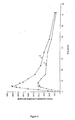
- the in vivo release profile of the gelatin capsules containing the example 1 C granules at a dose of 200 mg of fenofibrate is compared with that of the gelatin capsules marketed under the trademark Lipanthyl 200 M.
- composition according to the present invention has a bioavailability which is greater than that of Lipanthyl 200 M in fasting individuals.
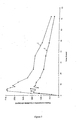
- the in vivo release profile of the gelatin capsules containing the example 1 C granules at a dose of 200 mg of fenofibrate is compared with that of the gelatin capsules marketed under the trademark Lipanthyl 200 M.
- composition according to the present invention is bioequivalent to that of Lipanthyl 200 M in individuals in fed condition.
- the formulation of the invention provided a statically significant increased relative bioavailability of approximately 1.4 times that of the Lipanthyl® as evidenced by a 100% higher mean maximum concentration (C max ) of the drug and approximately 62% higher mean AUC's. This significant difference between the two formulations disappeared under fed condition.
- the formulation according to the invention provides a pharmacokinetic profile in which the effect of ingestion of food on the uptake of the drug is substantially reduced over that observed with Lipanthyl®.
- Comparative example 2 batch ZEF 001
- the in vitro dissolution is determined according to a continuous flow cell method with a flow rate of 8 ml/min of sodium lauryl sulfate at 0.1 N.
- the comparative results with Lipanthyl 200 M are given in 10 the following table. Time(min) 15 30 Example 2 (% dissolved) 24 40 Lipanthyl 200 M (% dissolved) 47.3 64.7
- the dissolution is slower than that observed for Lipanthyl 200 M.
- the in vivo release profile of the gelatin capsules containing the ZEF 001 granules at doses of 200 mg of fenofibrate is compared with that of the gelatin capsules marketed under the trademark Lipanthyl 200 M.
- Example 2 shows that combining the knowledge of the prior art (namely micronization or use of surfactants) does not make it possible to obtain rapid dissolution of fenofibrate. This results in low bioavailability compared with Lipanthyl 200 M.
- compositions prepared according to the present invention show more rapid dissolution than the formula of the prior art and improved bioavailability.
- Example 3 Microgranules coated with an outer layer
- Microgranules were prepared by spraying an aqueous suspension onto neutral cores.
- composition of the suspension is given in the following table: Suspension Amount (percentage by mass) Purified water 78.09 35 % dimethicone emulsion 0.19 30 % simethicone emulsion 0.03 HydroxyPropylMethylCellulose (HPMC) 2910 (Pharmacoat® 603) 3.31 Sodium lauryl sulphate 0.89 Micronzed fenofibrate 17.49 Total 100.00
- composition of the obtained microgranule is given in the following table: Formula of microgranules Amount (kg) Micronized fenofibrate 372.00 Sugar spheres 96.00 HydroxyPropylMethylCellulose (HPMC) 2910 (Pharmacoat® 603) 70.32 Sodium lauryl sulphate 18.96 35 % dimethicone emulsion 4.12 30 % simethicone emulsion 0.67 Talc 2.72 Purified water 1660.80
- Dissolution tests were performed with hand-filled gelatine capsules.
- the mass of microgranules introduced in the capsule was calculated according to the theoretical content of fenofibrate in the formula.
- the equipment was composed of :
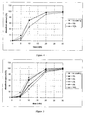
- the dissolution method used was a rotating blade method at 75 rpm according to the European Pharmacopoeia.
- the dissolution medium was composed of water with 0.025 M sodium lauryl sulfate.
- the temperature was set at 37.0°C ⁇ 0.5°C.
- Dissolution profile as a function of the amount of the (HPMC/Talc) suspension applied on the microgranules
- Example 4 Microgranules coated with an outer layer applied by spraying a (HPMC 606/Talc) 4% suspension
- Microgranules are obtained by spraying an aqueous suspension of micronized fenofibrate prepared as described in example 3 onto neutral cores, followed by an outer layer of HPMC and talc, the composition of the micro granules is given in the following table: FORMULA PERCENTAGE BY MASS Neutral cores 16.44 Micronized fenofibrate 63.69 Hydroxypropylmethyl cellulose 3.0 Viscosity cP 12.04 Sodium lauryl sulfate 3.25 Dimethicone 0.25 Simethicone 0.03 Talc 0.63 Outer layer Hydroxypropylmethyl cellulose 6.0 Viscosity cP 2.57 Talc 1.1
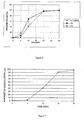
- a dissolution profile for a fenofibrate composition prepared according to example 4 was carried out by rotating blade method at 75 rpm, according to the European Pharmacopoeia.
- the dissolution medium was composed of water with 0.025 M sodium lauryl sulfate.
- the temperature was set at 37°C ⁇ 0.5°C.
- the vessel was filled with 1000 mL sodium lauryl sulfate 0.025 M.
- One hand-filled capsules were added to the vessel.
- the test sample was taken at time intervals of 5 minutes (during 1 hour) and analyzed at a wavelength of 290 nm, through 2 mm quartz cells, against a blank constituted of 0.025 M sodium lauryl sulfate.
- the results obtained are shown graphically in FIG. 7 , on which the percentage of dissolution is shown and in the following table.
- composition according to the invention has a dissolution profile which is less than 10% in five minutes and more than 80% in 20 minutes.
- a test of bioavailability on healthy volunteers was carried out.
- the following compositions were tested: capsules containing microgranules prepared according to example 4 containing 130 mg of fenofibrate and Tricor ® from Abbott Laboratories, containing 200 mg of fenofibrate.
- the study was carried out on 32 healthy volunteers in a randomized, single-dose, open-label (laboratory blinded), 4-way crossover study to determine the relative bioavailability under fasted and fed conditions in healthy adult subjects. The relative bioavailability of each formulation under fasted and fed conditions was also assessed.
- Subjects randomized to Treatment A received a single oral dose of 130 mg fenofibrate prepared according to example 4 taken with 240 mL of tap water following a 10-hour fast.
- Subjects randomized to Treatment B received a single oral dose of the same formulation taken with 240 mL of tap water following a standardized high-fat meal.
- Subjects randomized to Treatment C received a single oral dose of one Tricor ® (fenofibrate) 200 mg micronized capsule taken with 240 mL of tap water following a 10-hour fast.
- Subjects randomized to Treatment D received a single oral dose of one Tricor ® (fenofibrate) 200 mg micronized capsule taken with 240 mL of tap water following a standardized high-fat meal.
- fasted is based on a 10-hour absence of food, however, a skilled artisan would know other methods of preparing fasted conditions. For example, “fasted” may be understood as 10 hour or more absence of food.
- the standardized high-fat meal contains approximately 50 percent of total caloric content of the meal from fat or a calorie content of 800-1000 calories of which 50 percent is from fat.
- An example of the standardized high-fat meal is two eggs fried in butter, two strips of bacon, two slices of toast with butter, four ounces of hash brown potatoes (fired with butter) and eight ounces of whole milk. Substitutions in this test meal can be made as long as the meal provides a similar amount of calories from protein, carbohydrate, and fat and has comparable meal volume and viscosity.
- Table 1 Pharmacokinetic Parameters for Fenofibric Acid Following a Single Dose Under Fasted and Fed (Standard High-Fat FDA Test Meal) Conditions Parameter Treatment A Invention 130 mg (Fasted) Treatment B Invention 130 mg (Fed) Treatment C Tricor ® 200 mg (Fasted) Treatment D Tricor ® 200 mg (Fed) AUC 0-t (ng ⁇ h/mL) 114853 145562 109224 224330 AUC 0-inf (ng ⁇ h/mL) 116134 146843 111235 226004 C max (ng/mL) 4375 9118 3413 12829 T max (h) 4.84 4.89 9.61 5.65 t 1 ⁇ 2 (h) 19.7 18.3 21.0 19.0 Table 2 Fed vs Fasted Ratios for Individual Formulations Parameter B: Invention 130 mg (Fed) vs A: Invention 130 mg (Fasted) D: Tricor ® 200 mg (
- Table 1 shows that the extent of absorption (AUC) of fenofibric acid following administration of 130 mg fenofibrate of the invention is comparable to that of the Tricor ® 200 mg capsule under fasted conditions.
- table 2 shows that the maximum plasma concentration (C max ,) for the invention is lower than Tricor ® , indicating that food effected the rate of bioavailability for the Tricor ® formulation. Specifically, the food effect observed for the invention is approximately 2-fold lower than that observed for the Tricor ® 200 mg capsule. This suggests that the rate of bioavailability for the invention is almost independent of the presence of food. In contrast, the rate of bioavailability for Tricor ® significantly increased with food.
- a test of bioavailability on healthy volunteers was carried out.
- the following compositions were tested: capsules containing microgranules prepared according to example 4 containing 130 mg of fenofibrate and Tricor ® from Abbott Laboratories, containing 200 mg of fenofibrate.
- the study was carried out on 28 healthy volunteers in a randomized, multiple-dose, open-label (laboratory-blinded), 2-way crossover study to determine and compare the bioavailability of the formulation prepared according to example 4 of the invention relative to Tricor ® 200 mg oral capsules immediately following consumption of a TLC diet meal.
- Subjects randomized to Treatment A received a single oral dose of one 130 mg capsule of the invention taken with 240 mL of room temperature tap water daily for 7 days.
- Subjects randomized to Treatment B received a single oral dose of one Tricor ® (fenofibrate) 200 mg micronized capsule taken with 240 mL of room temperature tap water daily for 7 days.
- the TLC diet contains approximately 25-30 percent fat per meal.
- An example of a TLC meals is 1 cup of bran cereal, 1 cup of fat free milk, 8 ounces of orange juice, 1 small banana, 1 slice whole wheat toast, 1 teaspoon of margarine, and coffee, black or with fat free milk. Substitutions in this test meal can be made as long as the meal provides a similar amount of calories from protein, carbohydrate, and fat and has comparable meal volume and viscosity.
- a test of bioavailability on healthy volunteers was carried out.
- the following compositions were tested: capsules containing microgranules prepared according to example 4 containing 130 mg of fenofibrate and Tricor ® from Abbott Laboratories, containing 200 mg of fenofibrate.
- the study was carried out on 32 healthy volunteers in a randomized, single-dose, open-label (laboratory blinded), 4-way crossover study to determine the relative bioavailability of 130 mg of the invention prepared according example 4 to Tricor ® 200 mg oral capsules under fasted and fed conditions in healthy adult subjects. The relative bioavailability of each formulation under fasted and fed conditions was also assessed.
- Subjects randomized to Treatment A received a single oral dose of 130 mg fenofibrate prepared according to example 4 taken with 240 mL tap water under fasted conditions.
- Subjects randomized to Treatment B received a single oral dose of 130 mg fenofibrate prepared according to example 4 formulation taken with 240 mL of room temperature tap water following a TLC meal.
- Subjects randomized to Treatment C received a single oral dose of one Tricor ® 200 mg capsule taken with 240 mL tap water under fasted conditions.
- Subjects randomized to Treatment D received a single oral dose of one Tricor ® 200 mg capsule taken with 240 mL of tap water following a TLC diet meal.
Landscapes
- Health & Medical Sciences (AREA)
- Engineering & Computer Science (AREA)
- Bioinformatics & Cheminformatics (AREA)
- Life Sciences & Earth Sciences (AREA)
- Chemical & Material Sciences (AREA)
- Animal Behavior & Ethology (AREA)
- Veterinary Medicine (AREA)
- Public Health (AREA)
- General Health & Medical Sciences (AREA)
- Pharmacology & Pharmacy (AREA)
- Medicinal Chemistry (AREA)
- Epidemiology (AREA)
- Biophysics (AREA)
- Molecular Biology (AREA)
- Emergency Medicine (AREA)
- Organic Chemistry (AREA)
- General Chemical & Material Sciences (AREA)
- Nuclear Medicine, Radiotherapy & Molecular Imaging (AREA)
- Chemical Kinetics & Catalysis (AREA)
- Cardiology (AREA)
- Hematology (AREA)
- Obesity (AREA)
- Diabetes (AREA)
- Heart & Thoracic Surgery (AREA)
- Vascular Medicine (AREA)
- Urology & Nephrology (AREA)
- Acyclic And Carbocyclic Compounds In Medicinal Compositions (AREA)
- Medicinal Preparation (AREA)
Applications Claiming Priority (2)
| Application Number | Priority Date | Filing Date | Title |
|---|---|---|---|
| US10/677,861 US7863331B2 (en) | 1999-07-09 | 2003-10-03 | Pharmaceutical composition containing fenofibrate and method for the preparation thereof |
| EP04769636A EP1667666B9 (de) | 2003-10-03 | 2004-10-01 | Pharmazeutische zusammensetzung mit fenofibrat und herstellungsverfahren dafür |
Related Parent Applications (1)
| Application Number | Title | Priority Date | Filing Date |
|---|---|---|---|
| EP04769636A Division EP1667666B9 (de) | 2003-10-03 | 2004-10-01 | Pharmazeutische zusammensetzung mit fenofibrat und herstellungsverfahren dafür |
Publications (2)
| Publication Number | Publication Date |
|---|---|
| EP2000133A2 true EP2000133A2 (de) | 2008-12-10 |
| EP2000133A3 EP2000133A3 (de) | 2009-05-13 |
Family
ID=34422141
Family Applications (2)
| Application Number | Title | Priority Date | Filing Date |
|---|---|---|---|
| EP04769636A Expired - Lifetime EP1667666B9 (de) | 2003-10-03 | 2004-10-01 | Pharmazeutische zusammensetzung mit fenofibrat und herstellungsverfahren dafür |
| EP08165521A Withdrawn EP2000133A3 (de) | 2003-10-03 | 2004-10-01 | Pharmazeutische Zusammensetzung mit Fenofibrat und Herstellungsverfahren dafür |
Family Applications Before (1)
| Application Number | Title | Priority Date | Filing Date |
|---|---|---|---|
| EP04769636A Expired - Lifetime EP1667666B9 (de) | 2003-10-03 | 2004-10-01 | Pharmazeutische zusammensetzung mit fenofibrat und herstellungsverfahren dafür |
Country Status (22)
| Country | Link |
|---|---|
| US (2) | US7863331B2 (de) |
| EP (2) | EP1667666B9 (de) |
| JP (1) | JP5490354B2 (de) |
| KR (1) | KR101150235B1 (de) |
| CN (1) | CN100544712C (de) |
| AT (1) | ATE428408T1 (de) |
| AU (1) | AU2004277757B2 (de) |
| BR (1) | BRPI0414860B8 (de) |
| CA (1) | CA2540235C (de) |
| CY (1) | CY1109929T1 (de) |
| DE (1) | DE602004020641D1 (de) |
| DK (1) | DK1667666T3 (de) |
| ES (1) | ES2324670T3 (de) |
| IL (1) | IL174660A (de) |
| MX (1) | MXPA06003656A (de) |
| NO (1) | NO335933B1 (de) |
| NZ (1) | NZ546692A (de) |
| PL (1) | PL1667666T3 (de) |
| PT (1) | PT1667666E (de) |
| SI (1) | SI1667666T1 (de) |
| WO (1) | WO2005032526A1 (de) |
| ZA (1) | ZA200603504B (de) |
Families Citing this family (22)
| Publication number | Priority date | Publication date | Assignee | Title |
|---|---|---|---|---|
| US7863331B2 (en) * | 1999-07-09 | 2011-01-04 | Ethypharm | Pharmaceutical composition containing fenofibrate and method for the preparation thereof |
| FR2795961B1 (fr) * | 1999-07-09 | 2004-05-28 | Ethypharm Lab Prod Ethiques | Composition pharmaceutique contenant du fenofibrate micronise, un tensioactif et un derive cellulosique liant et procede de preparation |
| US20080051411A1 (en) * | 2002-12-17 | 2008-02-28 | Cink Russell D | Salts of Fenofibric Acid and Pharmaceutical Formulations Thereof |
| CN101480384A (zh) * | 2002-12-17 | 2009-07-15 | 阿伯特有限及两合公司 | 包含非诺贝酸、其生理可接受的盐或衍生物的制剂 |
| US8062664B2 (en) * | 2003-11-12 | 2011-11-22 | Abbott Laboratories | Process for preparing formulations of lipid-regulating drugs |
| US8026281B2 (en) * | 2004-10-14 | 2011-09-27 | Lupin Atlantis Holdings, S.A. | Treating metabolic syndrome with fenofibrate |
| KR20070094666A (ko) * | 2005-02-25 | 2007-09-20 | 에프. 호프만-라 로슈 아게 | 약제 물질 분산성이 향상된 정제 |
| BRPI0713533A2 (pt) * | 2006-06-26 | 2012-04-17 | Mutual Pharmaceutical Co | formulações de agente ativo, métodos de fabricação, e métodos de uso |
| JP5186159B2 (ja) * | 2006-08-31 | 2013-04-17 | あすか製薬株式会社 | フェノフィブラート含有組成物 |
| JP2013047282A (ja) * | 2006-08-31 | 2013-03-07 | Aska Pharmaceutical Co Ltd | フェノフィブラート含有組成物 |
| US20100159010A1 (en) * | 2008-12-24 | 2010-06-24 | Mutual Pharmaceutical Company, Inc. | Active Agent Formulations, Methods of Making, and Methods of Use |
| FR2940118B1 (fr) * | 2008-12-24 | 2013-08-09 | Ethypharm Sa | Formulation pharmaceutique de fenofibrate nanonise |
| WO2010078429A1 (en) * | 2008-12-30 | 2010-07-08 | Impax Laboratories, Inc. | Pharmaceutical dosage forms and methods of manufacturing same |
| JPWO2010092925A1 (ja) * | 2009-02-12 | 2012-08-16 | あすか製薬株式会社 | 固体分散体とその医薬組成物、並びにそれらの製造方法 |
| CN101502497B (zh) * | 2009-03-06 | 2010-11-10 | 安徽省药物研究所 | 非诺贝特药物组合物 |
| US20110217369A1 (en) * | 2009-09-03 | 2011-09-08 | Ranbaxy Laboratories Limited | Fenofibrate compositions |
| ES2673870T3 (es) * | 2012-05-07 | 2018-06-26 | Bristol-Myers Squibb Holdings Ireland | Formulación de dosificación oral sólida de [(1S)-1-{[(2S,4R)-4-(7-cloro-4-metoxiisoquinolin-1-iloxi)-2-({(1R,2S)-1-[(ciclopropilsulfonil) carbamoil]-2-etenilciclopropil} carbamoil) pirrolidin-1-il] carbonil}-2,2-dimetil-propil] carbamato de 1,1-dimetiletilo |
| US9439860B2 (en) | 2012-06-25 | 2016-09-13 | Mylan, Inc. | Fenofibrate formulation |
| WO2014003706A1 (en) | 2012-06-25 | 2014-01-03 | Mylan, Inc. | Fenofibrate formulation |
| US8722083B2 (en) | 2012-06-25 | 2014-05-13 | Mylan, Inc. | Fenofibrate formulation |
| WO2014091318A1 (en) | 2012-12-11 | 2014-06-19 | Lupin Atlantis Holdings, S.A. | Reduced dose pharmaceutical compositions of fenofibrate |
| WO2017027806A1 (en) | 2015-08-13 | 2017-02-16 | Coty Inc. | Formulation and method for promoting cutaneous uptake of molecular oxygen by skin |
Citations (3)
| Publication number | Priority date | Publication date | Assignee | Title |
|---|---|---|---|---|
| EP0256933A1 (de) | 1986-08-08 | 1988-02-24 | Ethypharm | Verfahren zur Herstellung eines Arzneimittels auf Fenofibrat-Basis und dadurch erhaltenes Arzneimittel |
| EP0330532A1 (de) | 1988-02-26 | 1989-08-30 | Fournier Industrie Et Sante | Neue galenische Form von Fenofibrat |
| WO1998031361A1 (fr) | 1997-01-17 | 1998-07-23 | Laboratoires Fournier S.A. | Composition pharmaceutique de fenofibrate presentant une biodisponibilite elevee et son procede de preparation |
Family Cites Families (31)
| Publication number | Priority date | Publication date | Assignee | Title |
|---|---|---|---|---|
| US4058552A (en) | 1969-01-31 | 1977-11-15 | Orchimed Sa | Esters of p-carbonylphenoxy-isobutyric acids |
| CH543472A (fr) | 1969-01-31 | 1973-10-31 | Orchimed Sa | Procédé pour la préparation d'acides phénoxyalcoyl-carboxyliques |
| GB1579818A (en) | 1977-06-07 | 1980-11-26 | Yamanouchi Pharma Co Ltd | Nifedipine-containing solid preparation composition |
| EP0012523B2 (de) | 1978-11-20 | 1988-02-03 | American Home Products Corporation | Therapeutische Zusammensetzungen mit gesteigerter Bioverfügbarkeit und Verfahren zu deren Herstellung |
| US4344934A (en) | 1978-11-20 | 1982-08-17 | American Home Products Corporation | Therapeutic compositions with enhanced bioavailability |
| FR2494112B1 (de) | 1980-11-19 | 1986-01-10 | Laruelle Claude | |
| GB8414220D0 (en) | 1984-06-04 | 1984-07-11 | Sterwin Ag | Medicaments in unit dose form |
| GB8414221D0 (en) | 1984-06-04 | 1984-07-11 | Sterwin Ag | Unit dosage form |
| US4752470A (en) | 1986-11-24 | 1988-06-21 | Mehta Atul M | Controlled release indomethacin |
| EP0537139B1 (de) | 1990-07-02 | 1994-05-18 | Roche Diagnostics GmbH | Verfahren zur herstellung geformter, verpresster dosiseinheiten mit retardierter freisetzung und entsprechende dosiseinheit |
| US5145684A (en) | 1991-01-25 | 1992-09-08 | Sterling Drug Inc. | Surface modified drug nanoparticles |
| US5223268A (en) | 1991-05-16 | 1993-06-29 | Sterling Drug, Inc. | Low solubility drug-coated bead compositions |
| DK0519144T3 (da) | 1991-06-21 | 1998-03-23 | Ilsan Ilac Ve Hammaddeleri San | Ny galenisk proces for omeprazol indeholdende pellets |
| SE9402422D0 (sv) | 1994-07-08 | 1994-07-08 | Astra Ab | New beads for controlled release and a pharmaceutical preparation containing the same |
| FR2722984B1 (fr) | 1994-07-26 | 1996-10-18 | Effik Lab | Procede de preparation de formes pharmaceutiques seches et les compositions pharmaceutiques ainsi realisees |
| US5480330A (en) * | 1994-10-04 | 1996-01-02 | Outboard Marine Corporation | Marine propulsion pump with two counter rotating impellers |
| US5545628A (en) * | 1995-01-10 | 1996-08-13 | Galephar P.R. Inc. | Pharmaceutical composition containing fenofibrate |
| US5558879A (en) * | 1995-04-28 | 1996-09-24 | Andrx Pharmaceuticals, Inc. | Controlled release formulation for water soluble drugs in which a passageway is formed in situ |
| DE19608750A1 (de) | 1996-03-06 | 1997-09-11 | Durachemie Gmbh & Co Kg | Verfahren zur Herstellung von Fenofibrat-Präparaten |
| PL330864A1 (en) | 1996-06-28 | 1999-06-07 | Schering Corp | Orally administered composition containing antimycotic compounds of triazole |
| FR2758461A1 (fr) | 1997-01-17 | 1998-07-24 | Pharma Pass | Composition pharmaceutique presentant une biodisponibilite elevee et son procede de preparation |
| EP1021525A1 (de) * | 1997-12-20 | 2000-07-26 | Genencor International, Inc. | In einem wirbelschichtbett hergestelltes matrixgranulat |
| US7101575B2 (en) * | 1998-03-19 | 2006-09-05 | Max-Planck-Gesellschaft Zur Forderung Der Wissenschaften E.V. | Production of nanocapsules and microcapsules by layer-wise polyelectrolyte self-assembly |
| US6368620B2 (en) | 1999-06-11 | 2002-04-09 | Abbott Laboratories | Formulations comprising lipid-regulating agents |
| US7863331B2 (en) * | 1999-07-09 | 2011-01-04 | Ethypharm | Pharmaceutical composition containing fenofibrate and method for the preparation thereof |
| FR2795961B1 (fr) | 1999-07-09 | 2004-05-28 | Ethypharm Lab Prod Ethiques | Composition pharmaceutique contenant du fenofibrate micronise, un tensioactif et un derive cellulosique liant et procede de preparation |
| JP2001089373A (ja) * | 1999-09-24 | 2001-04-03 | Tanabe Seiyaku Co Ltd | 経口投与製剤 |
| US6667064B2 (en) * | 2000-08-30 | 2003-12-23 | Pilot Therapeutics, Inc. | Composition and method for treatment of hypertriglyceridemia |
| ATE367802T1 (de) * | 2000-09-20 | 2007-08-15 | Jagotec Ag | Verfahren zur sprühtrocknung von zusammensetzungen enthaltend fenofibrat |
| US8026281B2 (en) | 2004-10-14 | 2011-09-27 | Lupin Atlantis Holdings, S.A. | Treating metabolic syndrome with fenofibrate |
| EP1848161B1 (de) * | 2006-04-20 | 2008-06-18 | Alcatel Lucent | Verfahren und Vorrichtung für effiziente gewichtete und gerechte Datenüberwachung |
-
2003
- 2003-10-03 US US10/677,861 patent/US7863331B2/en not_active Expired - Lifetime
-
2004
- 2004-10-01 KR KR1020067006492A patent/KR101150235B1/ko not_active Expired - Lifetime
- 2004-10-01 SI SI200431122T patent/SI1667666T1/sl unknown
- 2004-10-01 BR BRPI0414860A patent/BRPI0414860B8/pt not_active IP Right Cessation
- 2004-10-01 DE DE602004020641T patent/DE602004020641D1/de not_active Expired - Lifetime
- 2004-10-01 AT AT04769636T patent/ATE428408T1/de active
- 2004-10-01 JP JP2006530759A patent/JP5490354B2/ja not_active Expired - Lifetime
- 2004-10-01 PL PL04769636T patent/PL1667666T3/pl unknown
- 2004-10-01 CA CA2540235A patent/CA2540235C/en not_active Expired - Lifetime
- 2004-10-01 EP EP04769636A patent/EP1667666B9/de not_active Expired - Lifetime
- 2004-10-01 DK DK04769636T patent/DK1667666T3/da active
- 2004-10-01 ES ES04769636T patent/ES2324670T3/es not_active Expired - Lifetime
- 2004-10-01 EP EP08165521A patent/EP2000133A3/de not_active Withdrawn
- 2004-10-01 CN CNB2004800287311A patent/CN100544712C/zh not_active Expired - Lifetime
- 2004-10-01 PT PT04769636T patent/PT1667666E/pt unknown
- 2004-10-01 MX MXPA06003656A patent/MXPA06003656A/es active IP Right Grant
- 2004-10-01 NZ NZ546692A patent/NZ546692A/en not_active IP Right Cessation
- 2004-10-01 AU AU2004277757A patent/AU2004277757B2/en not_active Expired
- 2004-10-01 WO PCT/IB2004/003354 patent/WO2005032526A1/en not_active Ceased
-
2006
- 2006-03-30 IL IL174660A patent/IL174660A/en active IP Right Grant
- 2006-05-03 NO NO20061960A patent/NO335933B1/no unknown
- 2006-05-03 ZA ZA200603504A patent/ZA200603504B/en unknown
-
2009
- 2009-06-30 CY CY20091100684T patent/CY1109929T1/el unknown
-
2010
- 2010-01-13 US US12/686,574 patent/US8529952B2/en not_active Expired - Fee Related
Patent Citations (3)
| Publication number | Priority date | Publication date | Assignee | Title |
|---|---|---|---|---|
| EP0256933A1 (de) | 1986-08-08 | 1988-02-24 | Ethypharm | Verfahren zur Herstellung eines Arzneimittels auf Fenofibrat-Basis und dadurch erhaltenes Arzneimittel |
| EP0330532A1 (de) | 1988-02-26 | 1989-08-30 | Fournier Industrie Et Sante | Neue galenische Form von Fenofibrat |
| WO1998031361A1 (fr) | 1997-01-17 | 1998-07-23 | Laboratoires Fournier S.A. | Composition pharmaceutique de fenofibrate presentant une biodisponibilite elevee et son procede de preparation |
Also Published As
Similar Documents
| Publication | Publication Date | Title |
|---|---|---|
| US8529952B2 (en) | Pharmaceutical composition containing fenofibrate and method for the preparation thereof | |
| FI79943C (fi) | Foerfarande foer framstaellning av en oralt administrerbar farmaceutisk multipelenhetsberedning. | |
| US8658212B2 (en) | Pharmaceutical composition containing fenofibrate and method for the preparation thereof | |
| US12133917B2 (en) | Pediatric dosage forms, methods of making and using | |
| EP1154762A1 (de) | Kapseln mit loratadin und pseudoephedrin enthaltenen zusammensetzungen | |
| HK1084895B (en) | Pharmaceutical composition containing fenofibrate and method for the preparation thereof |
Legal Events
| Date | Code | Title | Description |
|---|---|---|---|
| PUAI | Public reference made under article 153(3) epc to a published international application that has entered the european phase |
Free format text: ORIGINAL CODE: 0009012 |
|
| 17P | Request for examination filed |
Effective date: 20080930 |
|
| AC | Divisional application: reference to earlier application |
Ref document number: 1667666 Country of ref document: EP Kind code of ref document: P |
|
| AK | Designated contracting states |
Kind code of ref document: A2 Designated state(s): AT BE BG CH CY CZ DE DK EE ES FI FR GB GR HU IE IT LI LU MC NL PL PT RO SE SI SK TR |
|
| AX | Request for extension of the european patent |
Extension state: AL HR LT LV MK |
|
| RIN1 | Information on inventor provided before grant (corrected) |
Inventor name: BOBOTAS, GEORGE Inventor name: ROTENBERG, KEITH S Inventor name: OURY, PASCAL Inventor name: CHENEVIER, PHILIPPE Inventor name: SUPLIE, PASCAL Inventor name: CRIERE, BRUNO |
|
| PUAL | Search report despatched |
Free format text: ORIGINAL CODE: 0009013 |
|
| AK | Designated contracting states |
Kind code of ref document: A3 Designated state(s): AT BE BG CH CY CZ DE DK EE ES FI FR GB GR HU IE IT LI LU MC NL PL PT RO SE SI SK TR |
|
| AX | Request for extension of the european patent |
Extension state: AL HR LT LV MK |
|
| 17Q | First examination report despatched |
Effective date: 20091209 |
|
| AKX | Designation fees paid |
Designated state(s): AT BE BG CH CY CZ DE DK EE ES FI FR GB GR HU IE IT LI LU MC NL PL PT RO SE SI SK TR |
|
| AXX | Extension fees paid |
Extension state: MK Payment date: 20080930 Extension state: LV Payment date: 20080930 Extension state: LT Payment date: 20080930 Extension state: HR Payment date: 20080930 Extension state: AL Payment date: 20080930 |
|
| STAA | Information on the status of an ep patent application or granted ep patent |
Free format text: STATUS: THE APPLICATION IS DEEMED TO BE WITHDRAWN |
|
| 18D | Application deemed to be withdrawn |
Effective date: 20120508 |