EP2003216B1 - Procede de production de tube sans soudure en acier inoxydable biphasique - Google Patents
Procede de production de tube sans soudure en acier inoxydable biphasique Download PDFInfo
- Publication number
- EP2003216B1 EP2003216B1 EP07739461.7A EP07739461A EP2003216B1 EP 2003216 B1 EP2003216 B1 EP 2003216B1 EP 07739461 A EP07739461 A EP 07739461A EP 2003216 B1 EP2003216 B1 EP 2003216B1
- Authority
- EP
- European Patent Office
- Prior art keywords
- less
- mass
- component
- heating
- billet
- Prior art date
- Legal status (The legal status is an assumption and is not a legal conclusion. Google has not performed a legal analysis and makes no representation as to the accuracy of the status listed.)
- Not-in-force
Links
Images
Classifications
-
- B—PERFORMING OPERATIONS; TRANSPORTING
- B21—MECHANICAL METAL-WORKING WITHOUT ESSENTIALLY REMOVING MATERIAL; PUNCHING METAL
- B21B—ROLLING OF METAL
- B21B23/00—Tube-rolling not restricted to methods provided for in only one of groups B21B17/00, B21B19/00, B21B21/00, e.g. combined processes planetary tube rolling, auxiliary arrangements, e.g. lubricating, special tube blanks, continuous casting combined with tube rolling
-
- B—PERFORMING OPERATIONS; TRANSPORTING
- B21—MECHANICAL METAL-WORKING WITHOUT ESSENTIALLY REMOVING MATERIAL; PUNCHING METAL
- B21B—ROLLING OF METAL
- B21B19/00—Tube-rolling by rollers arranged outside the work and having their axes not perpendicular to the axis of the work
- B21B19/02—Tube-rolling by rollers arranged outside the work and having their axes not perpendicular to the axis of the work the axes of the rollers being arranged essentially diagonally to the axis of the work, e.g. "cross" tube-rolling ; Diescher mills, Stiefel disc piercers or Stiefel rotary piercers
- B21B19/04—Rolling basic material of solid, i.e. non-hollow, structure; Piercing, e.g. rotary piercing mills
-
- C—CHEMISTRY; METALLURGY
- C21—METALLURGY OF IRON
- C21D—MODIFYING THE PHYSICAL STRUCTURE OF FERROUS METALS; GENERAL DEVICES FOR HEAT TREATMENT OF FERROUS OR NON-FERROUS METALS OR ALLOYS; MAKING METAL MALLEABLE, e.g. BY DECARBURISATION OR TEMPERING
- C21D1/00—General methods or devices for heat treatment, e.g. annealing, hardening, quenching or tempering
- C21D1/68—Temporary coatings or embedding materials applied before or during heat treatment
- C21D1/70—Temporary coatings or embedding materials applied before or during heat treatment while heating or quenching
-
- C—CHEMISTRY; METALLURGY
- C21—METALLURGY OF IRON
- C21D—MODIFYING THE PHYSICAL STRUCTURE OF FERROUS METALS; GENERAL DEVICES FOR HEAT TREATMENT OF FERROUS OR NON-FERROUS METALS OR ALLOYS; MAKING METAL MALLEABLE, e.g. BY DECARBURISATION OR TEMPERING
- C21D1/00—General methods or devices for heat treatment, e.g. annealing, hardening, quenching or tempering
- C21D1/74—Methods of treatment in inert gas, controlled atmosphere, vacuum or pulverulent material
-
- C—CHEMISTRY; METALLURGY
- C21—METALLURGY OF IRON
- C21D—MODIFYING THE PHYSICAL STRUCTURE OF FERROUS METALS; GENERAL DEVICES FOR HEAT TREATMENT OF FERROUS OR NON-FERROUS METALS OR ALLOYS; MAKING METAL MALLEABLE, e.g. BY DECARBURISATION OR TEMPERING
- C21D9/00—Heat treatment, e.g. annealing, hardening, quenching or tempering, adapted for particular articles; Furnaces therefor
- C21D9/08—Heat treatment, e.g. annealing, hardening, quenching or tempering, adapted for particular articles; Furnaces therefor for tubular bodies or pipes
-
- C—CHEMISTRY; METALLURGY
- C22—METALLURGY; FERROUS OR NON-FERROUS ALLOYS; TREATMENT OF ALLOYS OR NON-FERROUS METALS
- C22C—ALLOYS
- C22C38/00—Ferrous alloys, e.g. steel alloys
- C22C38/001—Ferrous alloys, e.g. steel alloys containing N
-
- C—CHEMISTRY; METALLURGY
- C22—METALLURGY; FERROUS OR NON-FERROUS ALLOYS; TREATMENT OF ALLOYS OR NON-FERROUS METALS
- C22C—ALLOYS
- C22C38/00—Ferrous alloys, e.g. steel alloys
- C22C38/02—Ferrous alloys, e.g. steel alloys containing silicon
-
- C—CHEMISTRY; METALLURGY
- C22—METALLURGY; FERROUS OR NON-FERROUS ALLOYS; TREATMENT OF ALLOYS OR NON-FERROUS METALS
- C22C—ALLOYS
- C22C38/00—Ferrous alloys, e.g. steel alloys
- C22C38/04—Ferrous alloys, e.g. steel alloys containing manganese
-
- C—CHEMISTRY; METALLURGY
- C22—METALLURGY; FERROUS OR NON-FERROUS ALLOYS; TREATMENT OF ALLOYS OR NON-FERROUS METALS
- C22C—ALLOYS
- C22C38/00—Ferrous alloys, e.g. steel alloys
- C22C38/18—Ferrous alloys, e.g. steel alloys containing chromium
- C22C38/40—Ferrous alloys, e.g. steel alloys containing chromium with nickel
- C22C38/44—Ferrous alloys, e.g. steel alloys containing chromium with nickel with molybdenum or tungsten
Definitions
- the present invention relates to a method for producing a duplex stainless steel seamless pipe or tube (hereinafter, referred to as "pipe"). Particularly, the present invention relates to a method for producing a duplex stainless steel seamless pipe comprising a heating method of billets in the steps of hot metal working, which makes it possible to inhibit generation of surface flaw of the seamless pipes.
- a ferrite phase and an austenitic phase are mixed.
- volume of austenitic phase portion increases to the volume of ferrite phase portion within this crystal structure.
- austenitic phase tends to deposit in the boundary with ferrite phase, i.e. crystal grain boundary.
- many cracks and flaws are generated at a time of blooming-rolling and piercing-rolling from the deposition in the grain boundary as a point of origin.
- the flaw caused by deterioration of the high-temperature ductility is generated by micro destruction in the grain boundary between austenitic phase and ferrite phase. This is because, high-temperature strength of austenitic phase is different from that of ferrite phase and also compounds like sulfide which deteriorates hot workability deposits in the grain boundary.
- Patent documents 1 and 2 disclose a method to at least regulate heating temperature to be within a certain temperature range where ferrite ratio becomes appropriate (at a ratio of 30 to 70% without W; 40 to 80% with W). According to these documents, by hot metal working within the temperature range, appropriate hot workability of the material is secured and generation of flaws on the material surface is inhibited.
- these documents propose methods for inhibiting deposition in the grain boundary by reducing P and S, controlling sulfide form of Ca, Mg, and REM, and adding B.
- JP2001-025801A and JP04-036421A disclose measures to avoid surface alterations at heat treatments of stainless steels.
- Document JP2005-014032A discloses a particular duplex stainless steel heat treatment.
- the inventors had intensively studied; as a result, even if the methods of the above related arts are adopted, when billet of the duplex stainless steel is heated in the heating furnace and amount of oxide scale generation becomes larger on the surface thereof, it was found out that outer flaw is generated more than expected. The reason for this is assumed as follows .
- the state of oxide scale develops to grain boundary between austenitic phase and ferrite phase. Then, to the grain boundary in which hot workability is usually not good, the developed oxide scale encourages the generation of flaw by the so-called "notch effect".
- an object of the present invention is to provide a method for producing duplex stainless steel seamless pipe, the method is capable of inhibiting generation of oxide scale on the surface of a duplex stainless steel billet during its heating to prevent generation of outer flaw of the pipe.
- the inventors had discovered the cause of grain boundary oxidation. In other words, if the heating duration of the billet is long in the heating furnace, the grain boundary oxidation increases. Also, the inventors discovered that if sulfur content in the fuel to be burnt in the heating furnace is a large quantity, the grain boundary oxidation is further encouraged.
- the present invention is a method for producing duplex stainless steel seamless pipe comprising the steps of: heating a billet in a heating furnace; and thereafter, performing hot metal working of said billet, wherein, during the step of heating, the billet is heated in the heating furnace for 1.5 hours or more and 4.0 hours or less at 1250°C or more and 1320°C or less while regulating the average concentration of sulfur dioxide (SO 2 ) gas in the atmosphere within the furnace to 0.01 volume % or less.
- SO 2 sulfur dioxide
- sulfur (S) content in a fuel to be used in the heating furnace during the step of heating is preferably regulated to 0.1 mass % or less.
- a duplex stainless steel for the seamless pipe preferably comprises: a billet containing: in mass %, C: 0.03% or less, Si: 0.1 to 2%, Mn: 0.1 to 2%, P: 0.05% or less, S: 0.008% or less, Al: 0.1% or less, Ni: 5 to 11%, Cr: 17 to 30%, Mo: 1 to 6%, N: 0.1 to 0.4%, Ca: 0 to 0.02%, Mg: 0 to 0.02%, REM: 0 to 0.2%, B: 0 to 0.05%, Cu: 0 to 2%, V: 0 to 1.5%, Ti: 0 to 0.5%, and Nb: 0 to 0.5%; and a residue Fe as well as inevitable impurity.
- REM means a rare-earth element which is a combination of: scandium group element such as scandium (Sc), yttrium (Y), lanthanum (La), and actinium (Ac); and lanthanum series element being a generic name of fifteen elements from lanthanum to lutetium in the periodic table.
- the billet as a duplex stainless steel having the above composition preferably further contains, in mass %, over 1.5% and 5% or less of W.
- the production method preferably further comprises the step, prior to the step of heating, of: applying, onto the billet' s surface, a lubricant composition for hot metal working which contains: an inorganic component as a first component; sodium hydroxide as a second component; water-soluble resins and/or water-soluble surfactants as a third component; and water, wherein the lubricant composition for hot metal working, to a total mass of the first component, the second component, and the third component as 100 mass %, contains: 96.5 mass % or more and 99.98 mass % or less of the first component; 0.01 mass % or more and 0.5 mass % or less of the second component; and 0.01 mass % or more and 1.5 mass % or less of the third component, wherein the inorganic component is one or in combination of two or more selected from the group consisting of: Al 2 O 3 , SiO 2 , CaO, B 2 O 3 , K 2 O, and Na 2 O.
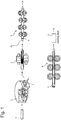
- Fig. 1 is a schematic view showing a method for producing seamless pipe.
- Fig. 1 is a schematic view showing a typical example of method for producing seamless pipe.
- billet 1 is heated in a rotary hearth-type heating furnace 2.
- the billet 1 heated in the rotary hearth-type heating furnace 2 is taken out from the furnace and then is piercing-rolled by a piercing-rolling mill 3 to produce a hollow shell 4.
- a mandrel bar 5a is inserted, and the hollow shell is drawing-rolled by a mandrel mill 5 to have a predetermined dimension, thus a crude pipe is produced.
- the crude pipe is rolled at a fixed-diameter by a sizing mill 6 such as sizer or stretch reducer so as to be a seamless pipe having a predetermined outer diameter.
- the seamless pipe is cooled in the cooling bed 7 and cut into pieces of predetermined length, then, bend thereof is set straight. Still further, the pipe is tested its quality, marking and the like are given thereto, and finally the pipe is shipped as a finished product.
- the present invention is a method for producing duplex stainless steel seamless pipe, the method comprises the steps of: heating a billet in a heating furnace; and thereafter, giving hot metal working to the pipe, wherein during the step of heating, the billet is heated in the heating furnace for 1.5 hours or more and 4.0 hours or less at 1250°C or more and 1320°C or less while regulating the average concentration of sulfur dioxide (SO 2 ) gas in the atmosphere within the furnace to 0.01 volume % or less.
- SO 2 sulfur dioxide
- the method for producing duplex stainless steel seamless pipe of the present invention defines the average concentration of sulfur dioxide (SO 2 ) gas in the atmosphere of heating furnace during the step of heating to be 0.01 volume %.
- the reason for defining the average concentration of sulfur dioxide (SO 2 ) gas in the atmosphere of heating furnace to be 0.01 volume % or less is because if the SO 2 gas concentration in the furnace becomes more than the above, oxidation of the billet surface is encouraged.
- the inventors assume as follows. Namely, when sulfur content in the fuel is high, and average concentration of sulfur dioxide (SO 2 ) gas in the atmosphere of the furnace becomes 0.01% or more, SO 2 infiltrated into the oxidized portion on the billet surface forms low-melting sulfide together with components of Ni or the like existing in the steel. It should be noted that melting point of NiS as a sulfide of Ni is 996°C, melting point of MoS 3 as a sulfide of Mo is 1185°C, melting point of FeS as a sulfide of Fe is 1195°C; these in the heating furnace are assumed to be in a molten state.
- Examples of fuel for the heating furnace include: a fuel oil obtained by fractional distillation of crude oil such as heavy fuel oil, gas oil, kerosene, naphtha, and LPG such as butane/propane; crude oil itself; natural gas; city gas; and C-gas (coke-oven gas) generated in the steelworks.
- a fuel oil obtained by fractional distillation of crude oil such as heavy fuel oil, gas oil, kerosene, naphtha, and LPG such as butane/propane
- crude oil itself natural gas
- city gas city gas
- C-gas (coke-oven gas) generated in the steelworks examples of fuel for the heating furnace
- naphtha, LPG such as butane/propane, natural gas, city gas, and C-gas generated in the steelworks and the like have small sulfur content and these are suitably used as a fuel for the heating furnace in the method for producing duplex stainless steel seamless pipe of the invention; whereby the average concentration of sulfur dioxide (SO 2 ) gas in
- the fuel oil obtained by fractional distillation of crude oil, kerosene, gas oil, and heavy fuel oil in general, contain about 0.01 to 3.0 mass % of sulfur content.
- sulfur content has to be considered before using.
- the sulfur content in the fuel is 0.1 mass %, it is possible to adjust the SO 2 concentration in the heating atmosphere to about 0.01 volume %. Therefore, when any one of these kerosene, gas oil, and heavy fuel oil are used, one of which sulfur content is 0.1 mass % or less should be selected and used.
- low-sulfur crude oil produced in Minas and Daqing can be used with no distillation; however, this case still needs to adjust the sulfur content in the crude oil to 0.1 mass % or less.
- the inventors of the invention selected the fuels for heating furnace as follows:
- the samples tested under high furnace temperature and long furnace holding time show that N portion near the surface layer exhibits higher than ladle analysis values.
- each sample shows reduction of B content in vicinity of the surface layer from ladle analysis values.
- reduction of B content was observed down to the depth of about 1.5 mm from the surface layer.
- cause of generation of the scale-like flaw is assumed to be the nitriding in the vicinity of the outer surface and the deboronation by heating billet.
- B 2 O 3 as an oxide of B is more stable than Cr 2 O 3 as an oxide of Cr, and has a same level of stability with SiO 2 as an oxide of Si; B is preferentially-oxidized at the same time of high-temperature heating thereby B-deficient layer is produced. B is quickly dispersed so that the deficient layer expands up to the mm order. Due to the loss of B originally segregated in the grain boundary, S becomes able to segregate at the grain boundary, and grain boundary embrittles.
- the method for producing the duplex stainless steel seamless pipe of the present invention is carried out by setting the furnace heating duration about a billet to 1.5 hours or more and 4.0 hours or less.
- the upper limit of the heating duration is preferably 3.0 hours.
- the heating duration is less than 1.5 hours, the billet cannot be sufficiently heated; such a billet shows high deformation resistance, and e.g., defect by drawing-rolling is caused in the step of hot metal working after heating.
- the above heating duration may give uneven temperature across the billet, the billet is rolled while keeping the temperature difference therein; defect in uneven thickness, for instance, is caused to the crude pipe in the step of hot metal working after heating.
- the method for producing the duplex stainless steel seamless pipe of the invention is carried out by setting the furnace heating temperature about a billet to 1250°C or more and 1320°C or less.
- the upper limit of the heating temperature is preferably 1290°C.
- the billet to be used in the invention is preferably a duplex stainless steel which contains: C: 0.03% or less, Si: 0.1 to 2%, Mn: 0.1 to 2%, P: 0.05% or less, S: 0.008% or less, Al: 0.1% or less, Ni: 5 to 11%, Cr: 17 to 30%, Mo: 1 to 6%, N: 0.1 to 0.4%, Ca: 0 to 0.02%, Mg: 0 to 0.02%, REM: 0 to 0.2%, B: 0 to 0.05%, Cu: 0 to 2%, V: 0 to 1.5%, Ti: 0 to 0.5%, and Nb: 0 to 0.5% (in mass %); and residue Fe as well as inevitable impurity.
- the above duplex stainless steel preferably contains more than 1.5% and 5% or less in mass % of W.
- duplex stainless steel containing the above individual components and the certain content are preferable.
- C same as N below, is effective for stabilize austenitic phase.
- carbide tends to separate out; thereby corrosion resistance of the steel becomes deteriorated.
- Si is effective as a deoxidant; however, if the content is less than 0.1%, the effect cannot be obtained. On the other hand, when the content is over 2%, brittle ⁇ -phase tends to separate out so that the toughness of the steel is deteriorated.
- Mn is effective as a deoxidant and a desulfurization agent, but also contributes to improve stability of austenitic phase and hot workability. However, if the content is less than 0.1%, the effect cannot be obtained. On the other hand, when the content is over 2%, corrosion resistance of the steel becomes deteriorated.
- P is an impurity element which inevitably mixed into the steel.
- the content is over 0.05%, corrosion resistance and toughness of the steel are seriously deteriorated.
- S is an impurity element which inevitably mixed into the steel, and this seriously deteriorates the steel's hot workability.
- the sulfide thereof becomes a point of origin of pitting corrosion to deteriorate corrosion resistance of the steel. Therefore, content of S is preferably as small as possible; if it is 0.008% or less, it causes substantially no problem, still desirably 0.0005% or less.
- Al is effective as a deoxidant.
- the content is preferably as small as possible, 0.1% or less of Al content will cause substantially no problem.
- Ni is an austenitic phase forming element and contributes to inhibit deposition of ⁇ -ferrite phase.
- amount of ferrite becomes excessive so that features of the duplex stainless steel disappear.
- N's solid solubility in ferrite is small, nitride tends to separate out and corrosion resistance of the steel is deteriorated.
- the content is over 11%, the amount of ferrite becomes excessive, features of the duplex stainless steel disappear and brittle ⁇ -phase tends to separate out; thereby toughness of the steel is deteriorated.
- Cr is an essential component to secure corrosion resistance of the steel.
- the content is less than 17%, essential corrosion resistance cannot be secured.
- the content is over 30%, brittle ⁇ -phase tends to separate out, not only corrosion resistance but also hot workability and weldability of the steel are deteriorated.
- Mo same as Cr, is effective to improve corrosion resistance, particularly, pitting corrosion resistance and gap corrosion resistance.
- the content is less than 1%, the effect cannot be obtained.
- the content exceeds 6%, brittle ⁇ -phase tends to separate out, which deteriorates the hot workability.
- W is an optional additive element.
- W is, different from Mo, effective to improve corrosion resistance, particularly pitting corrosion resistance and gap corrosion resistance without facilitating production of intermetallics like ⁇ -phase, so that it is an element which is capable of securing high corrosion resistance without increasing the contents of the above Cr and Mo as well as below-described N.
- the content should preferably be over 1.5%.
- W is expensive, containing excessive amount of W drives increase of material cost whereby the steel loses its economic efficiency but also lowers melting point of the steel (solidus temperature) to lower the high-temperature ductility. Further, even if over 5% of W is contained, the effect to improve corrosion resistance becomes saturated; thus, the upper limit should preferably be 5%.
- N is an austenitic phase forming element, and it is effective to improve thermal stability and corrosion resistance of steel containing relatively large amount of ferrite-phase-forming element such as Cr, Mo, and W.
- ferrite-phase-forming element such as Cr, Mo, and W.
- the content is less than 0.1%, these effects cannot be obtained.
- the content exceeds 0.4%, melting point (solidus temperature) of the steel becomes lowered, so high-temperature ductility at a high-temperature side of the pipe becomes lowered, and blowhole is produced at the welded part, but also a large amount of nitride is produced at a time of butt-welding for connecting finished pipe products; whereby toughness and corrosion resistance at the welded part is deteriorated.
- each of these elements is capable of inhibiting segregation, in the crystal grain boundary, of S which is inevitably contained as an impurity in the steel, so as to improve workability of the steel.
- These are elements particularly effective to inhibit deterioration of hot workability of outer surface layer of the billet caused by decline of temperature during hot working.
- Ca, Mg, and REM fix S and O (oxygen) solidly dispersed in the steel as the sulfide and oxide thereof and inhibit segregation of S and O in crystal grain boundary to improve hot process.
- B as the size of atom is larger than that of S and O, preferentially segregates in the crystal grain boundary and inhibits segregation of S and O in the crystal grain boundary to improve hot workability.
- one or more of these elements are preferably added to the steel.
- the contents of respective Ca and Mg is preferably 0.0005 to 0.02%
- the content of REM is preferably 0.0005 to 0.2%
- the content of B is preferably 0.0001 to 0.05%.
- Cu has an effect to further improve corrosion resistance under reducing low pH condition, i.e. the condition containing a large amount of sulfuric acid and hydrogen sulfide.
- V which is contained in a composite addition with W, has an effect to further improve gap corrosion resistance. Hence, when these effects are demanded, one or more of the above elements can be added.
- the content of Cu is preferably 0.1 to 2%
- the content of V is preferably 0.05 to 1.5%
- the content of Ti and Nb respectively are preferably 0.01 to 0.5%.
- lubricant composition for hot metal working which contains an inorganic component as a first component, sodium hydroxide as a second component, water-soluble resins and/or water-soluble surfactants as a third component, and water. Because, inhibition of grain boundary oxidation by the composition is effective.
- the lubricant composition for hot metal working to a total mass of the first component, the second component, and the third component as 100 mass %, contains: 96.5 mass % or more and 99.98 mass % or less of the first component; 0.01 mass % or more and 0.5 mass % or less of the second component; and 0.01 mass % or more and 1.5 mass % or less of the third component, wherein the inorganic component is one or more selected from the group consisting of: Al 2 O 3 , SiO 2 , CaO, B 2 O 3 , K 2 O, and Na 2 O.
- the inorganic component is one or more selected from the group consisting of: Al 2 O 3 , SiO 2 , CaO, B 2 O 3 , K 2 O, and Na 2 O.
- the inorganic component as the first component of the lubricant composition for hot metal working is a mixture of a ceramic base material and an inorganic binder.
- ceramic base material means a base material containing aluminum oxide or silicon oxide, or a mixture thereof.
- the ceramic base material is to become a main component, after drying, of the coating layer to be formed on the surface of processed material and it exhibits an effect to secure thermal resistance of the coating layer.
- Content of the first component, to a total mass of the first component, the second component, and the third component as 100 mass %, is preferably 96.5 mass % or more and 99.98 mass % or less.
- the second component of the lubricant composition for hot metal working is sodium hydroxide.
- sodium hydroxide reacts as sodium oxide with silicon oxide, particularly silicon oxide in the first component at high temperature and gradually becomes sodium silicate. So, the behavior of the second component at high temperature is same as that of liquid glass; hence, it works as an adhesive at high temperature in the heating before hot metal working. Further, compared with liquid glass, as water contained in the second component evaporates easily and independently, the second component has an advantage of non-foamability.
- the second component is mixed at a ratio of 0.01 mass % or more and 0.5 mass % or less, to a total mass of the first component, the second component, and the third component as 100 mass %.
- water-soluble resins and a water-soluble surfactant may be added, as required.
- the water-soluble resins act as an adhesive and a spreading agent when the composition is applied on the surface of processed material at room temperature. After drying, the water-soluble resins contribute to improve elasticity of the coating layer and to inhibit cracking of the coating layer.
- the water-soluble surfactant imparts wettability and dispersion to the first component as an inorganic component, and improves lubricity at a time of application at room temperature.
- the water-soluble surfactant also improves homogeneous coating property and surface smoothness when the lubricant composition for hot metal working is applied; it also prevents cracking of coating layer.
- Duplex stainless steel billets having an outer diameter of 225 mm were used.
- the alloy composition thereof (in mass %) comprises: C: 0.011%, Si: 0.28%, Mn: 0.47%, P: 0.018%, S: 0.002%, Al: 0.02%, Ni: 7.05%, Cr: 25.01%, Mo: 3.48%, W: 1.63%, N: 0.241%, Ca: 0.0042%, Mg: 0.0001%, REM: 0.0001, B: 0%, Cu: 0.02%, V: 0.01%, and residue Fe as well as inevitable impurity.
- the lubricant composition for hot metal working is applied, in advance.
- NaOH for the composition
- two types of NaOH i.e. NaOH having concentration of 0.2 mass % and of 2 mass % in the composition, were provided.
- billets, to which the lubricant composition was not applied were prepared.
- Heating furnace condition was varied within the range as below.
- a billet was taken out from the above furnace and worked by using stretching mill such as piercing-rolling mill and mandrel mill as well as sizing mill such as sizer to obtain a seamless pipe having the product dimension in 190 mm in diameter and pipe wall thickness in 11.5 to 15.0 mm.
- stretching mill such as piercing-rolling mill and mandrel mill as well as sizing mill such as sizer to obtain a seamless pipe having the product dimension in 190 mm in diameter and pipe wall thickness in 11.5 to 15.0 mm.
Landscapes
- Chemical & Material Sciences (AREA)
- Engineering & Computer Science (AREA)
- Mechanical Engineering (AREA)
- Materials Engineering (AREA)
- Metallurgy (AREA)
- Organic Chemistry (AREA)
- Physics & Mathematics (AREA)
- Thermal Sciences (AREA)
- Crystallography & Structural Chemistry (AREA)
- Heat Treatment Of Steel (AREA)
Claims (2)
- Procédé pour produire un tuyau sans soudure en acier inoxydable duplex, comprenant les étapes consistant à :appliquer, sur la surface d'une billette, une composition lubrifiante pour usinage de métal à chaud qui contient : un composant inorganique en tant que premier composant ; de l'hydroxyde de sodium en tant que deuxième composant ; des résines solubles dans l'eau et/ou des tensioactifs solubles dans l'eau en tant que troisième composant ; et de l'eau,laquelle composition lubrifiante pour usinage de métal à chaud contient, par rapport à la masse totale dudit premier composant, dudit deuxième composant, et dudit troisième composant qui est de 100 % en masse : 96,5 % en masse ou plus et 99,98 % en masse ou moins dudit premier composant ; 0,01 % en masse ou plus et 0,5 % en masse ou moins dudit deuxième composant ; et 0,01 % en masse ou plus et 1,5 % en masse ou moins dudit troisième composant,lequel composant inorganique est l'un ou une combinaison de deux ou plus choisis dans l'ensemble constitué par : Al2O3, SiO2, CaO, B2O3, K2O, et Na2O,chauffer la billette dans un four de chauffage ;dans lequel, durant l'étape de chauffage, ladite billette est chauffée dans le four de chauffage pendant 1,5 heures ou plus et 4,0 heures ou moins à 1 250 °C ou plus et 1 320 °C ou moins cependant que la concentration moyenne de dioxyde de soufre gazeux (SO2) dans l'atmosphère à l'intérieur du four est régulée à 0,01 % en volume ou moins, et ensuite l'usinage de métal à chaud de ladite billette est effectué ;dans lequel l'acier inoxydable duplex pour ledit tuyau sans soudure comprenant ladite billette contient, en % en masse :C : 0,03 % ou moins,Si : 0,1 à 2 %,Mn : 0,1 à 2 %,P : 0,05 % ou moins,S : 0,008 % ou moins,Al : 0,1 % ou moins,Ni : 5 à 11 %Cr : 17 à 30 %,Mo : 1 à 6 %,N : 0,1 à 0,4 %,Ca : 0 à 0,02 %,Mg : 0 à 0,02 %,REM : 0 à 0,2 %,B : 0 à 0,05 %,Cu : 0 à 2 %,V : 0 à 1,5 %,Ti : 0 à 0,5 %, etNb : 0 à 0,5 % ; etpour le reste, du Fe ainsi que des impuretés inévitables ;et dans lequel ladite billette contient en outre, en % en masse, plus de 1,5 % et 5 % ou moins de W.
- Procédé pour produire un tuyau sans soudure en acier inoxydable duplex selon la revendication 1, dans lequel la teneur en soufre (S) d'un combustible à utiliser dans ledit four de chauffage dans l'étape de chauffage est régulée à 0,1 % en masse ou moins.
Applications Claiming Priority (2)
| Application Number | Priority Date | Filing Date | Title |
|---|---|---|---|
| JP2006097447A JP4915121B2 (ja) | 2006-03-31 | 2006-03-31 | 二相ステンレス鋼継目無管の製造方法 |
| PCT/JP2007/056020 WO2007114077A1 (fr) | 2006-03-31 | 2007-03-23 | Procede de production de tube sans soudure en acier inoxydable biphasique |
Publications (3)
| Publication Number | Publication Date |
|---|---|
| EP2003216A1 EP2003216A1 (fr) | 2008-12-17 |
| EP2003216A4 EP2003216A4 (fr) | 2015-06-24 |
| EP2003216B1 true EP2003216B1 (fr) | 2018-07-04 |
Family
ID=38563346
Family Applications (1)
| Application Number | Title | Priority Date | Filing Date |
|---|---|---|---|
| EP07739461.7A Not-in-force EP2003216B1 (fr) | 2006-03-31 | 2007-03-23 | Procede de production de tube sans soudure en acier inoxydable biphasique |
Country Status (5)
| Country | Link |
|---|---|
| US (1) | US8613817B2 (fr) |
| EP (1) | EP2003216B1 (fr) |
| JP (1) | JP4915121B2 (fr) |
| CN (1) | CN101410537B (fr) |
| WO (1) | WO2007114077A1 (fr) |
Families Citing this family (23)
| Publication number | Priority date | Publication date | Assignee | Title |
|---|---|---|---|---|
| JP5511208B2 (ja) * | 2009-03-25 | 2014-06-04 | 新日鐵住金ステンレス株式会社 | 耐食性の良好な省合金二相ステンレス鋼材とその製造方法 |
| BR112012005005B1 (pt) * | 2009-09-10 | 2023-01-24 | Nippon Steel Corporation | Aço inoxidável dúplex |
| JP5549628B2 (ja) * | 2011-03-25 | 2014-07-16 | 新日鐵住金株式会社 | エルハルト穿孔方法 |
| CN102162074A (zh) * | 2011-03-29 | 2011-08-24 | 陈才金 | 一种原位铸造不锈钢 |
| CN102296249A (zh) * | 2011-08-29 | 2011-12-28 | 江苏九胜特钢制品有限公司 | 以钨代钼的双相不锈钢合金材料及其制备方法 |
| CN102434725B (zh) * | 2011-10-10 | 2016-05-25 | 江西金盈新材料科技股份有限公司 | 一种大口径不锈钢无缝钢管的制造方法 |
| HK1206074A1 (en) * | 2012-02-27 | 2015-12-31 | Tata Steel Nederland Technology Bv | Method for manufacturing a steel product |
| CN102716910B (zh) * | 2012-06-29 | 2015-03-25 | 衡阳华菱钢管有限公司 | 压铸模具用钢管及其制造方法 |
| CN103266281B (zh) * | 2013-05-24 | 2015-02-04 | 无锡鑫常钢管有限责任公司 | 一种超级双相不锈钢管及其生产工艺 |
| CN103361564B (zh) * | 2013-07-16 | 2015-07-15 | 江苏银环精密钢管有限公司 | 一种超级双相不锈钢无缝钢管及其制备方法 |
| CN103469051A (zh) * | 2013-08-16 | 2013-12-25 | 广东华鳌合金新材料有限公司 | 一种双相不锈钢母合金及其制备方法 |
| US10544476B2 (en) | 2014-11-27 | 2020-01-28 | Jfe Steel Corporation | Apparatus line for manufacturing seamless steel pipe and tube and method of manufacturing duplex seamless stainless steel pipe |
| CN104480408B (zh) * | 2014-12-10 | 2016-08-31 | 无锡鑫常钢管有限责任公司 | 一种0Cr18Ni9小直径无缝毛细不锈钢管及生产工艺 |
| US9586793B2 (en) | 2015-02-09 | 2017-03-07 | Michael Prindiville | Multi-port vacuum lifting attachment with remote controlling release |
| JP2016164288A (ja) * | 2015-03-06 | 2016-09-08 | Jfeスチール株式会社 | 油井用高強度ステンレス継目無鋼管の製造方法 |
| JP6578809B2 (ja) * | 2015-08-18 | 2019-09-25 | 日本製鉄株式会社 | 継目無鋼管の製造方法 |
| RU2693718C2 (ru) * | 2017-06-16 | 2019-07-04 | Акционерное общество "Научно-производственное объединение "Центральный научно-исследовательский институт технологии машиностроения" АО "НПО "ЦНИИТМАШ" | Дуплексная нержавеющая сталь для производства запорной и регулирующей арматуры |
| JP6919493B2 (ja) * | 2017-10-18 | 2021-08-18 | 日本製鉄株式会社 | 継目無鋼管の製造方法 |
| JP6762331B2 (ja) * | 2018-03-09 | 2020-09-30 | 三菱重工業株式会社 | 金属成形品の製造方法 |
| CN108570629B (zh) * | 2018-04-27 | 2020-03-20 | 钢铁研究总院 | 一种高强、耐酸腐蚀的双相不锈钢及其制备方法 |
| MX2022016143A (es) * | 2020-07-06 | 2023-02-09 | Jfe Steel Corp | Tubo de acero inoxidable sin soldadura y metodo para fabricar el mismo. |
| CN114101357A (zh) * | 2021-12-01 | 2022-03-01 | 福建三钢闽光股份有限公司 | 一种针对盘条用钢炉生氧化铁皮控制的加热与除鳞方法 |
| CN119259735A (zh) * | 2024-09-12 | 2025-01-07 | 山西太钢不锈钢股份有限公司 | 一种换热器用双相不锈钢无缝钢管生产工艺 |
Family Cites Families (16)
| Publication number | Priority date | Publication date | Assignee | Title |
|---|---|---|---|---|
| GB429402A (en) * | 1934-04-27 | 1935-05-29 | Birmingham Electr Furnaces Ltd | Methods or processes of producing protective or work-enveloping gases for use in theheat-treatment of metals |
| US3540896A (en) * | 1967-01-20 | 1970-11-17 | Aircraft Plating Inc | Ceramic coating composition |
| JPS58224155A (ja) * | 1982-06-19 | 1983-12-26 | Kawasaki Steel Corp | 2相ステンレス継目無鋼管およびその製造方法 |
| JPH01123026A (ja) * | 1987-11-09 | 1989-05-16 | Kawasaki Steel Corp | 二相ステンレス継目無鋼管の製造方法 |
| JPH0436421A (ja) * | 1990-06-01 | 1992-02-06 | Sumitomo Metal Ind Ltd | 継目無管製造用素材の加熱方法 |
| JP3266247B2 (ja) * | 1990-08-01 | 2002-03-18 | 日新製鋼株式会社 | 熱間加工性に優れた二相ステンレス鋼 |
| JPH04165019A (ja) * | 1990-10-26 | 1992-06-10 | Sumitomo Metal Ind Ltd | 高耐食性継目無二相ステンレス鋼管の製造法 |
| EP0554822B1 (fr) * | 1992-02-06 | 1999-12-29 | Timcal Ag | Lubrifiant de mandrin pour la fabrication de tubes sans soudures |
| JP3205069B2 (ja) | 1992-09-07 | 2001-09-04 | 愛知時計電機株式会社 | データ収集装置 |
| JP3127822B2 (ja) | 1996-04-10 | 2001-01-29 | 住友金属工業株式会社 | 二相ステンレス鋼製継目無鋼管の製造方法 |
| JP3787941B2 (ja) * | 1997-03-13 | 2006-06-21 | Jfeスチール株式会社 | 連続鋳造鋳片の加熱方法 |
| JPH11228876A (ja) * | 1998-02-10 | 1999-08-24 | Chobe Taguchi | 酸化・浸炭・窒化防止塗料 |
| JP2001025801A (ja) * | 1999-07-08 | 2001-01-30 | Nkk Corp | 鋼材の表面割れ防止方法 |
| JP4165019B2 (ja) | 2001-02-16 | 2008-10-15 | 株式会社デンソー | ロボットの関節装置及びその組立方法 |
| CN1208143C (zh) * | 2002-11-25 | 2005-06-29 | 宝山钢铁股份有限公司 | 一种高性能无缝钢管的制造方法 |
| JP4453278B2 (ja) * | 2003-06-25 | 2010-04-21 | 住友金属工業株式会社 | 二相ステンレス鋼からなる継目無鋼管の製造方法 |
-
2006
- 2006-03-31 JP JP2006097447A patent/JP4915121B2/ja not_active Expired - Lifetime
-
2007
- 2007-03-23 US US12/225,545 patent/US8613817B2/en active Active
- 2007-03-23 EP EP07739461.7A patent/EP2003216B1/fr not_active Not-in-force
- 2007-03-23 CN CN2007800107740A patent/CN101410537B/zh not_active Expired - Fee Related
- 2007-03-23 WO PCT/JP2007/056020 patent/WO2007114077A1/fr not_active Ceased
Non-Patent Citations (1)
| Title |
|---|
| None * |
Also Published As
| Publication number | Publication date |
|---|---|
| US20090218014A1 (en) | 2009-09-03 |
| CN101410537B (zh) | 2012-02-08 |
| JP2007270265A (ja) | 2007-10-18 |
| US8613817B2 (en) | 2013-12-24 |
| EP2003216A1 (fr) | 2008-12-17 |
| CN101410537A (zh) | 2009-04-15 |
| WO2007114077A1 (fr) | 2007-10-11 |
| JP4915121B2 (ja) | 2012-04-11 |
| EP2003216A4 (fr) | 2015-06-24 |
Similar Documents
| Publication | Publication Date | Title |
|---|---|---|
| US8613817B2 (en) | Method for producing duplex stainless steel seamless pipe | |
| JP4475429B2 (ja) | Ni基合金素管及びその製造方法 | |
| CN110462080B (zh) | 耐酸性管线管用高强度钢板及其制造方法和使用耐酸性管线管用高强度钢板的高强度钢管 | |
| JP4513807B2 (ja) | Fe−Ni合金素管及びその製造方法 | |
| EP1546417B1 (fr) | Tuyau en acier sans soudure a haute resistance, s'agissant notamment de resistance aux craquelures provoquees par l'hydrogene et procede de fabrication | |
| JP4995131B2 (ja) | 溶接熱影響部のクリープ特性に優れたフェライト系耐熱鋼材及び耐熱構造体 | |
| JP2000192196A (ja) | 油井用マルテンサイト系ステンレス鋼 | |
| CN101512032B (zh) | 焊接结构物用马氏体系不锈钢 | |
| EA019610B1 (ru) | Способ изготовления бесшовных труб | |
| EP3006585B1 (fr) | Tube en acier sans soudure destiné à un tube de canalisation utilisé dans un environnement acide | |
| CN110475894B (zh) | 耐酸性管线管用高强度钢板及其制造方法和使用耐酸性管线管用高强度钢板的高强度钢管 | |
| CN114174547A (zh) | 耐酸性管线管用高强度钢板及其制造方法以及使用耐酸性管线管用高强度钢板的高强度钢管 | |
| JP2008214753A (ja) | 溶接熱影響部のクリープ特性に優れたフェライト系耐熱鋼材及び耐熱構造体 | |
| EP3520947A1 (fr) | Structure soudée d'acier résistant à la chaleur à base de ferrite, et procédé de fabrication de celle-ci | |
| JP4126979B2 (ja) | マルテンサイト系ステンレス継目無鋼管とその製造方法 | |
| EP1717328A1 (fr) | Tube en acier inoxydable martensitique | |
| CN111094608B (zh) | 钢管和钢板 | |
| JP2001279392A (ja) | マルテンサイト系ステンレス鋼および製造方法 | |
| JP5326339B2 (ja) | 溶接熱影響部のクリープ特性に優れたフェライト系耐熱鋼材及び耐熱構造体 | |
| JP3879723B2 (ja) | 耐水素誘起割れ性に優れた高強度継目無鋼管およびその製造方法 | |
| JP2006312772A (ja) | 油井用マルテンサイト系ステンレス鋼及び油井用マルテンサイト系ステンレス鋼管の製造方法。 | |
| RU2694391C2 (ru) | Стальной материал и расширяемые трубы, применяемые в нефтяной промышленности | |
| JPH11158551A (ja) | マルテンサイト系ステンレス鋼管の製造方法 | |
| WO2021131460A1 (fr) | Tuyau en acier sans soudure à haute résistance et son procédé de fabrication | |
| JP2002030392A (ja) | 耐食性に優れた高Crマルテンサイトステンレス鋼及びその製造方法 |
Legal Events
| Date | Code | Title | Description |
|---|---|---|---|
| PUAI | Public reference made under article 153(3) epc to a published international application that has entered the european phase |
Free format text: ORIGINAL CODE: 0009012 |
|
| 17P | Request for examination filed |
Effective date: 20080922 |
|
| AK | Designated contracting states |
Kind code of ref document: A1 Designated state(s): AT BE BG CH CY CZ DE DK EE ES FI FR GB GR HU IE IS IT LI LT LU LV MC MT NL PL PT RO SE SI SK TR |
|
| DAX | Request for extension of the european patent (deleted) | ||
| RAP1 | Party data changed (applicant data changed or rights of an application transferred) |
Owner name: NIPPON STEEL & SUMITOMO METAL CORPORATION |
|
| RA4 | Supplementary search report drawn up and despatched (corrected) |
Effective date: 20150526 |
|
| RIC1 | Information provided on ipc code assigned before grant |
Ipc: C21D 1/70 20060101ALI20150519BHEP Ipc: C21D 9/00 20060101AFI20150519BHEP Ipc: C22C 38/58 20060101ALI20150519BHEP Ipc: C22C 38/00 20060101ALI20150519BHEP Ipc: C21D 6/00 20060101ALI20150519BHEP Ipc: B21B 23/00 20060101ALI20150519BHEP Ipc: C21D 8/10 20060101ALI20150519BHEP |
|
| GRAP | Despatch of communication of intention to grant a patent |
Free format text: ORIGINAL CODE: EPIDOSNIGR1 |
|
| STAA | Information on the status of an ep patent application or granted ep patent |
Free format text: STATUS: GRANT OF PATENT IS INTENDED |
|
| INTG | Intention to grant announced |
Effective date: 20180126 |
|
| GRAS | Grant fee paid |
Free format text: ORIGINAL CODE: EPIDOSNIGR3 |
|
| GRAA | (expected) grant |
Free format text: ORIGINAL CODE: 0009210 |
|
| STAA | Information on the status of an ep patent application or granted ep patent |
Free format text: STATUS: THE PATENT HAS BEEN GRANTED |
|
| AK | Designated contracting states |
Kind code of ref document: B1 Designated state(s): AT BE BG CH CY CZ DE DK EE ES FI FR GB GR HU IE IS IT LI LT LU LV MC MT NL PL PT RO SE SI SK TR |
|
| REG | Reference to a national code |
Ref country code: GB Ref legal event code: FG4D |
|
| REG | Reference to a national code |
Ref country code: CH Ref legal event code: EP |
|
| REG | Reference to a national code |
Ref country code: AT Ref legal event code: REF Ref document number: 1014588 Country of ref document: AT Kind code of ref document: T Effective date: 20180715 |
|
| REG | Reference to a national code |
Ref country code: IE Ref legal event code: FG4D |
|
| REG | Reference to a national code |
Ref country code: DE Ref legal event code: R096 Ref document number: 602007055270 Country of ref document: DE |
|
| REG | Reference to a national code |
Ref country code: NL Ref legal event code: MP Effective date: 20180704 |
|
| REG | Reference to a national code |
Ref country code: LT Ref legal event code: MG4D |
|
| REG | Reference to a national code |
Ref country code: AT Ref legal event code: MK05 Ref document number: 1014588 Country of ref document: AT Kind code of ref document: T Effective date: 20180704 |
|
| PG25 | Lapsed in a contracting state [announced via postgrant information from national office to epo] |
Ref country code: NL Free format text: LAPSE BECAUSE OF FAILURE TO SUBMIT A TRANSLATION OF THE DESCRIPTION OR TO PAY THE FEE WITHIN THE PRESCRIBED TIME-LIMIT Effective date: 20180704 |
|
| PG25 | Lapsed in a contracting state [announced via postgrant information from national office to epo] |
Ref country code: BG Free format text: LAPSE BECAUSE OF FAILURE TO SUBMIT A TRANSLATION OF THE DESCRIPTION OR TO PAY THE FEE WITHIN THE PRESCRIBED TIME-LIMIT Effective date: 20181004 Ref country code: AT Free format text: LAPSE BECAUSE OF FAILURE TO SUBMIT A TRANSLATION OF THE DESCRIPTION OR TO PAY THE FEE WITHIN THE PRESCRIBED TIME-LIMIT Effective date: 20180704 Ref country code: SE Free format text: LAPSE BECAUSE OF FAILURE TO SUBMIT A TRANSLATION OF THE DESCRIPTION OR TO PAY THE FEE WITHIN THE PRESCRIBED TIME-LIMIT Effective date: 20180704 Ref country code: LT Free format text: LAPSE BECAUSE OF FAILURE TO SUBMIT A TRANSLATION OF THE DESCRIPTION OR TO PAY THE FEE WITHIN THE PRESCRIBED TIME-LIMIT Effective date: 20180704 Ref country code: GR Free format text: LAPSE BECAUSE OF FAILURE TO SUBMIT A TRANSLATION OF THE DESCRIPTION OR TO PAY THE FEE WITHIN THE PRESCRIBED TIME-LIMIT Effective date: 20181005 Ref country code: PL Free format text: LAPSE BECAUSE OF FAILURE TO SUBMIT A TRANSLATION OF THE DESCRIPTION OR TO PAY THE FEE WITHIN THE PRESCRIBED TIME-LIMIT Effective date: 20180704 Ref country code: CZ Free format text: LAPSE BECAUSE OF FAILURE TO SUBMIT A TRANSLATION OF THE DESCRIPTION OR TO PAY THE FEE WITHIN THE PRESCRIBED TIME-LIMIT Effective date: 20180704 Ref country code: FI Free format text: LAPSE BECAUSE OF FAILURE TO SUBMIT A TRANSLATION OF THE DESCRIPTION OR TO PAY THE FEE WITHIN THE PRESCRIBED TIME-LIMIT Effective date: 20180704 Ref country code: IS Free format text: LAPSE BECAUSE OF FAILURE TO SUBMIT A TRANSLATION OF THE DESCRIPTION OR TO PAY THE FEE WITHIN THE PRESCRIBED TIME-LIMIT Effective date: 20181104 |
|
| PG25 | Lapsed in a contracting state [announced via postgrant information from national office to epo] |
Ref country code: LV Free format text: LAPSE BECAUSE OF FAILURE TO SUBMIT A TRANSLATION OF THE DESCRIPTION OR TO PAY THE FEE WITHIN THE PRESCRIBED TIME-LIMIT Effective date: 20180704 Ref country code: ES Free format text: LAPSE BECAUSE OF FAILURE TO SUBMIT A TRANSLATION OF THE DESCRIPTION OR TO PAY THE FEE WITHIN THE PRESCRIBED TIME-LIMIT Effective date: 20180704 |
|
| REG | Reference to a national code |
Ref country code: DE Ref legal event code: R097 Ref document number: 602007055270 Country of ref document: DE |
|
| PG25 | Lapsed in a contracting state [announced via postgrant information from national office to epo] |
Ref country code: EE Free format text: LAPSE BECAUSE OF FAILURE TO SUBMIT A TRANSLATION OF THE DESCRIPTION OR TO PAY THE FEE WITHIN THE PRESCRIBED TIME-LIMIT Effective date: 20180704 Ref country code: RO Free format text: LAPSE BECAUSE OF FAILURE TO SUBMIT A TRANSLATION OF THE DESCRIPTION OR TO PAY THE FEE WITHIN THE PRESCRIBED TIME-LIMIT Effective date: 20180704 |
|
| PLBE | No opposition filed within time limit |
Free format text: ORIGINAL CODE: 0009261 |
|
| STAA | Information on the status of an ep patent application or granted ep patent |
Free format text: STATUS: NO OPPOSITION FILED WITHIN TIME LIMIT |
|
| PG25 | Lapsed in a contracting state [announced via postgrant information from national office to epo] |
Ref country code: SK Free format text: LAPSE BECAUSE OF FAILURE TO SUBMIT A TRANSLATION OF THE DESCRIPTION OR TO PAY THE FEE WITHIN THE PRESCRIBED TIME-LIMIT Effective date: 20180704 Ref country code: DK Free format text: LAPSE BECAUSE OF FAILURE TO SUBMIT A TRANSLATION OF THE DESCRIPTION OR TO PAY THE FEE WITHIN THE PRESCRIBED TIME-LIMIT Effective date: 20180704 |
|
| 26N | No opposition filed |
Effective date: 20190405 |
|
| PG25 | Lapsed in a contracting state [announced via postgrant information from national office to epo] |
Ref country code: SI Free format text: LAPSE BECAUSE OF FAILURE TO SUBMIT A TRANSLATION OF THE DESCRIPTION OR TO PAY THE FEE WITHIN THE PRESCRIBED TIME-LIMIT Effective date: 20180704 |
|
| REG | Reference to a national code |
Ref country code: DE Ref legal event code: R082 Ref document number: 602007055270 Country of ref document: DE Representative=s name: DOMPATENT VON KREISLER SELTING WERNER - PARTNE, DE Ref country code: DE Ref legal event code: R081 Ref document number: 602007055270 Country of ref document: DE Owner name: NIPPON STEEL CORPORATION, JP Free format text: FORMER OWNER: NIPPON STEEL & SUMITOMO METAL CORPORATION, TOKYO, JP |
|
| PG25 | Lapsed in a contracting state [announced via postgrant information from national office to epo] |
Ref country code: MC Free format text: LAPSE BECAUSE OF FAILURE TO SUBMIT A TRANSLATION OF THE DESCRIPTION OR TO PAY THE FEE WITHIN THE PRESCRIBED TIME-LIMIT Effective date: 20180704 |
|
| REG | Reference to a national code |
Ref country code: CH Ref legal event code: PL |
|
| GBPC | Gb: european patent ceased through non-payment of renewal fee |
Effective date: 20190323 |
|
| PG25 | Lapsed in a contracting state [announced via postgrant information from national office to epo] |
Ref country code: LU Free format text: LAPSE BECAUSE OF NON-PAYMENT OF DUE FEES Effective date: 20190323 |
|
| REG | Reference to a national code |
Ref country code: BE Ref legal event code: MM Effective date: 20190331 |
|
| PG25 | Lapsed in a contracting state [announced via postgrant information from national office to epo] |
Ref country code: GB Free format text: LAPSE BECAUSE OF NON-PAYMENT OF DUE FEES Effective date: 20190323 Ref country code: CH Free format text: LAPSE BECAUSE OF NON-PAYMENT OF DUE FEES Effective date: 20190331 Ref country code: IE Free format text: LAPSE BECAUSE OF NON-PAYMENT OF DUE FEES Effective date: 20190323 Ref country code: LI Free format text: LAPSE BECAUSE OF NON-PAYMENT OF DUE FEES Effective date: 20190331 |
|
| PG25 | Lapsed in a contracting state [announced via postgrant information from national office to epo] |
Ref country code: BE Free format text: LAPSE BECAUSE OF NON-PAYMENT OF DUE FEES Effective date: 20190331 |
|
| PG25 | Lapsed in a contracting state [announced via postgrant information from national office to epo] |
Ref country code: TR Free format text: LAPSE BECAUSE OF FAILURE TO SUBMIT A TRANSLATION OF THE DESCRIPTION OR TO PAY THE FEE WITHIN THE PRESCRIBED TIME-LIMIT Effective date: 20180704 |
|
| PG25 | Lapsed in a contracting state [announced via postgrant information from national office to epo] |
Ref country code: MT Free format text: LAPSE BECAUSE OF NON-PAYMENT OF DUE FEES Effective date: 20190323 Ref country code: PT Free format text: LAPSE BECAUSE OF FAILURE TO SUBMIT A TRANSLATION OF THE DESCRIPTION OR TO PAY THE FEE WITHIN THE PRESCRIBED TIME-LIMIT Effective date: 20181105 |
|
| PG25 | Lapsed in a contracting state [announced via postgrant information from national office to epo] |
Ref country code: CY Free format text: LAPSE BECAUSE OF FAILURE TO SUBMIT A TRANSLATION OF THE DESCRIPTION OR TO PAY THE FEE WITHIN THE PRESCRIBED TIME-LIMIT Effective date: 20180704 |
|
| PG25 | Lapsed in a contracting state [announced via postgrant information from national office to epo] |
Ref country code: HU Free format text: LAPSE BECAUSE OF FAILURE TO SUBMIT A TRANSLATION OF THE DESCRIPTION OR TO PAY THE FEE WITHIN THE PRESCRIBED TIME-LIMIT; INVALID AB INITIO Effective date: 20070323 |
|
| PGFP | Annual fee paid to national office [announced via postgrant information from national office to epo] |
Ref country code: DE Payment date: 20220203 Year of fee payment: 16 |
|
| PGFP | Annual fee paid to national office [announced via postgrant information from national office to epo] |
Ref country code: IT Payment date: 20220210 Year of fee payment: 16 Ref country code: FR Payment date: 20220209 Year of fee payment: 16 |
|
| REG | Reference to a national code |
Ref country code: DE Ref legal event code: R119 Ref document number: 602007055270 Country of ref document: DE |
|
| PG25 | Lapsed in a contracting state [announced via postgrant information from national office to epo] |
Ref country code: FR Free format text: LAPSE BECAUSE OF NON-PAYMENT OF DUE FEES Effective date: 20230331 Ref country code: DE Free format text: LAPSE BECAUSE OF NON-PAYMENT OF DUE FEES Effective date: 20231003 |
|
| PG25 | Lapsed in a contracting state [announced via postgrant information from national office to epo] |
Ref country code: IT Free format text: LAPSE BECAUSE OF NON-PAYMENT OF DUE FEES Effective date: 20230323 |