EP2008532A1 - Verfahren zur herstellung von capsinoidhaltigem getränk/nahrungsmittel - Google Patents
Verfahren zur herstellung von capsinoidhaltigem getränk/nahrungsmittel Download PDFInfo
- Publication number
- EP2008532A1 EP2008532A1 EP07739987A EP07739987A EP2008532A1 EP 2008532 A1 EP2008532 A1 EP 2008532A1 EP 07739987 A EP07739987 A EP 07739987A EP 07739987 A EP07739987 A EP 07739987A EP 2008532 A1 EP2008532 A1 EP 2008532A1
- Authority
- EP
- European Patent Office
- Prior art keywords
- emulsion composition
- capsinoid
- emulsifier
- aqueous
- food
- Prior art date
- Legal status (The legal status is an assumption and is not a legal conclusion. Google has not performed a legal analysis and makes no representation as to the accuracy of the status listed.)
- Withdrawn
Links
Images
Classifications
-
- A—HUMAN NECESSITIES
- A23—FOODS OR FOODSTUFFS; TREATMENT THEREOF, NOT COVERED BY OTHER CLASSES
- A23L—FOODS, FOODSTUFFS OR NON-ALCOHOLIC BEVERAGES, NOT OTHERWISE PROVIDED FOR; PREPARATION OR TREATMENT THEREOF
- A23L2/00—Non-alcoholic beverages; Dry compositions or concentrates therefor; Preparation or treatment thereof
- A23L2/52—Adding ingredients
-
- A—HUMAN NECESSITIES
- A23—FOODS OR FOODSTUFFS; TREATMENT THEREOF, NOT COVERED BY OTHER CLASSES
- A23D—EDIBLE OILS OR FATS, e.g. MARGARINES, SHORTENINGS OR COOKING OILS
- A23D7/00—Edible oil or fat compositions containing an aqueous phase, e.g. margarines
- A23D7/005—Edible oil or fat compositions containing an aqueous phase, e.g. margarines characterised by ingredients other than fatty acid triglycerides
- A23D7/0053—Compositions other than spreads
-
- A—HUMAN NECESSITIES
- A23—FOODS OR FOODSTUFFS; TREATMENT THEREOF, NOT COVERED BY OTHER CLASSES
- A23D—EDIBLE OILS OR FATS, e.g. MARGARINES, SHORTENINGS OR COOKING OILS
- A23D7/00—Edible oil or fat compositions containing an aqueous phase, e.g. margarines
- A23D7/01—Other fatty acid esters, e.g. phosphatides
- A23D7/011—Compositions other than spreads
-
- A—HUMAN NECESSITIES
- A23—FOODS OR FOODSTUFFS; TREATMENT THEREOF, NOT COVERED BY OTHER CLASSES
- A23L—FOODS, FOODSTUFFS OR NON-ALCOHOLIC BEVERAGES, NOT OTHERWISE PROVIDED FOR; PREPARATION OR TREATMENT THEREOF
- A23L27/00—Spices; Flavouring agents or condiments; Artificial sweetening agents; Table salts; Dietetic salt substitutes; Preparation or treatment thereof
- A23L27/10—Natural spices, flavouring agents or condiments; Extracts thereof
-
- A—HUMAN NECESSITIES
- A23—FOODS OR FOODSTUFFS; TREATMENT THEREOF, NOT COVERED BY OTHER CLASSES
- A23L—FOODS, FOODSTUFFS OR NON-ALCOHOLIC BEVERAGES, NOT OTHERWISE PROVIDED FOR; PREPARATION OR TREATMENT THEREOF
- A23L33/00—Modifying nutritive qualities of foods; Dietetic products; Preparation or treatment thereof
- A23L33/10—Modifying nutritive qualities of foods; Dietetic products; Preparation or treatment thereof using additives
- A23L33/105—Plant extracts, their artificial duplicates or their derivatives
-
- A—HUMAN NECESSITIES
- A61—MEDICAL OR VETERINARY SCIENCE; HYGIENE
- A61K—PREPARATIONS FOR MEDICAL, DENTAL OR TOILETRY PURPOSES
- A61K31/00—Medicinal preparations containing organic active ingredients
- A61K31/21—Esters, e.g. nitroglycerine, selenocyanates
- A61K31/215—Esters, e.g. nitroglycerine, selenocyanates of carboxylic acids
- A61K31/22—Esters, e.g. nitroglycerine, selenocyanates of carboxylic acids of acyclic acids, e.g. pravastatin
-
- A—HUMAN NECESSITIES
- A61—MEDICAL OR VETERINARY SCIENCE; HYGIENE
- A61K—PREPARATIONS FOR MEDICAL, DENTAL OR TOILETRY PURPOSES
- A61K9/00—Medicinal preparations characterised by special physical form
- A61K9/0087—Galenical forms not covered by A61K9/02 - A61K9/7023
- A61K9/0095—Drinks; Beverages; Syrups; Compositions for reconstitution thereof, e.g. powders or tablets to be dispersed in a glass of water; Veterinary drenches
-
- A—HUMAN NECESSITIES
- A61—MEDICAL OR VETERINARY SCIENCE; HYGIENE
- A61P—SPECIFIC THERAPEUTIC ACTIVITY OF CHEMICAL COMPOUNDS OR MEDICINAL PREPARATIONS
- A61P3/00—Drugs for disorders of the metabolism
-
- A—HUMAN NECESSITIES
- A61—MEDICAL OR VETERINARY SCIENCE; HYGIENE
- A61P—SPECIFIC THERAPEUTIC ACTIVITY OF CHEMICAL COMPOUNDS OR MEDICINAL PREPARATIONS
- A61P37/00—Drugs for immunological or allergic disorders
- A61P37/02—Immunomodulators
- A61P37/04—Immunostimulants
Definitions
- the present invention relates to a method for producing a capsinoid-containing food/drink article, and more particularly, to a method for producing a water-containing food/drink article by preparing an emulsion composition containing capsinoids and diluting the emulsion composition.
- Non-Patent Document 1 It has been reported that a non-pungent cultivar of Capsicum, named "CH-19 sweet" which was selected and fixed by Yazawa et al. as a low hot pepper contains considerable amounts of new non-pungent capsinoids (see, for example, Non-Patent Document 1).
- capsinoids fatty acid esters of vanillyl alcohol, capsiate, dihydrocapsiate, etc.
- capsinoid compound fatty acid esters of vanillyl alcohol, capsiate, dihydrocapsiate, etc.
- capsaicinoids capsaicin, dihydrocapsaicin, etc.
- Capsinoids are very unstable because the ester linkage formed between a vanilloid group and a fatty acid chain is readily hydrolyzed. Therefore, a technique for solubilizing capsinoids in water with keeping stability has been required in order to add capsinoids into a liquid food product such as beverage (drink). As for such a technique, a technique for emulsifying an oil containing capsinoid with an emulsifier to yield an emulsified composition and solubilizing the latter in water, has been reported (see, for example, Patent Document 2).
- an emulsion composition prepared according to a conventional way is merely diluted with an aqueous component to prepare a water-containing food/drink product such as aqueous beverage
- a water-containing food/drink product such as aqueous beverage
- the capsinoid compounds contained in the aqueous beverage are slowly decomposed during storage compared with a product immediately after production.
- the amount of the components to be incorporated (added) at the time of production is decided (increased) by estimating the amount decomposed during the shelf life.
- a method for increasing stability of capsinoid compounds in an aqueous solution is provided.
- increase of the concentration of an emulsifier may slightly improve the stability upon dilution, but there is a possibility that the presence of a large quantity of emulsifier during emulsification may have a bad influence on an emulsifying action.
- the present inventors worked assiduously to solve the problems as mentioned above and as a result they found that addition of an additional emulsifier and/or a high-molecular component upon dilution of a capsinoid-containing emulsion composition with an aqueous component raises the stability of capsinoid when an oil phase containing the capsinoid compound is incorporated into an aqueous phase in an emulsified state.
- a method for producing a capsinoid-containing food/drink article comprises blending an oil phase containing a capsinoid compound with an aqueous phase and an emulsifier to prepare an emulsion composition; and mixing the emulsion composition with an aqueous diluent component (may be termed "aqueous component” hereinafter), wherein an additional emulsifier and/or a high-molecular component is added to the above-mentioned emulsion composition, aqueous diluent component or a mixture thereof.
- aqueous component aqueous component
- the additional emulsifier and/or high-molecular component may be added in the step in which the above-mentioned emulsion composition is mixed with the aqueous diluent component, or may be added to any one or both of the above-mentioned emulsion composition and the above-mentioned aqueous diluent component before mixing the above-mentioned emulsion composition with the aqueous diluent component.
- the stability of the capsinoid-containing emulsion composition can be increased by further adding an oil thickener to the above-mentioned oil phase.
- the invention provides an emulsion composition with an improved dilution stability of a capsinoid compound wherein an emulsion composition prepared by blending an oil phase containing a capsinoid compound, an aqueous phase and an emulsifier, is further admixed by an additional emulsifier and/or a high molecular component.
- the capsinoid compound contained in the food/drink article prepared by diluting a capsinoid-containing emulsion composition using the aqueous component is improved in its stability, and thus, the improvement is considered to allow an extension of the shelf life of the product and contribute to reduction of the cost of manufacturing.
- capsinoid compounds mean fatty acid esters of vanillyl alcohol; the representative components thereof encompass those confirmed as components contained in capsicum, comprising capsiate, dihydrocapsiate, and nordihydrocapsiate; further comprising fatty acid esters including vanillyl alcohol and a variety of straight or branched chain fatty acids which have approximately the same fatty acid length as capsiate or nordihydrocapsiate such as vanillyl decanoate, vanillyl nonanoate, vanillyl octanoate, and the like.
- CST Capsiate
- DCT dihydrocapsiate
- NDCT nordihydrocapsiate
- Capsinoids are abundant in the plant body belonging to a genus Capsicum (hereinafter referred to "red pepper") and can be prepared by purification and separation from the plant body and/or fruit of red pepper.
- red pepper a genus Capsicum
- a non-pungent variety of red pepper though one derived from a native variety of pungent red pepper exemplified by "Nikko” and “Goshiki” may be used.
- non-pungent varieties such as "CH-19 sweet”, “Man-ganji”, “Fushimi Kancho”, and the like, or green pepper, sweet green pepper, and the like can preferably be employed since they contain much capsinoid compounds.
- a non-pungent variety "CH-19 sweet” is particularly preferred because the content of said components is particularly high.
- CH-19 sweet herein means a variety "CH-19 sweet” and its descendant relatives derived from"CH-19 sweet”.
- Purification and separation of the capsinoid compounds can be carried out in a conventional way well known by a person skilled in the art, for example, extraction with a solvent, a variety of chromatography such as silica gel chromatography, preparative high performance liquid chromatography, etc. alone or in combination thereof, as fit. For example, the method as described in the above-mentioned Patent Document 1 may be used.
- the above-mentioned capsinoid compounds may be synthesized by an ester exchange reaction of the corresponding fatty acid ester and vanillyl alcohol as starting materials, for example, as described in the above-mentioned Patent Document 1. It is also possible to synthesize based on its chemical structure according to other reaction techniques well known by a person skilled in the art. Moreover, capsinoids can readily be prepared by a synthetic process using an enzyme.
- a desired capsinoid compound can readily be obtained by a reverse reaction of lipase using a fatty acid ester corresponding to the desired compound, and/or a compound such as triglyceride containing the fatty acid concerned, and vanillyl alcohol as substrates, according to the method as described in JP-A-2000-312598 or Kobata et al., Biosci. Biotechnol. Biochem., 66(2), 319-327 (2002 ).
- the capsinoid compounds when used in the method of production in the invention, may be any of the above-mentioned extraction products or synthetic products, and they may be a single compound or a mixture of two or more compounds. Further, the capsinoid compounds to be used may contain their decomposition products, i.e., free fatty acids or vanillyl alcohol etc.
- the oil phase containing a capsinoid compound means a fat-soluble material prepared by blending the above-mentioned capsinoid compound with fats and oils.
- fats and oils include, for example, vegetable oils such as soybean oil, coconut oil, rice oil, corn oil, palm oil, safflower oil, rapeseed oil, olive oil, and the like; middle chain saturated fatty acid triglycerides (hereinafter also referred to as "MCT") constituted by glycerin and fatty acids including saturated fatty acids of 6 to 10 carbon atoms (for example, capric acid, caprylic acid, etc.) as major constituents; animal fats and oils such as beef tallow, lard, chicken fat, and fish oil; fatty acids such as oleic acid; and mixtures thereof.
- sucrose acetate isobutyrate (SAIB), various Rosin esters, and Elemi resins may be added as a specific gravity adjuster.
- the oil phase containing a capsinoid compound preferably contains the following oil thickener in addition to the above-mentioned fats and oils.
- an oil thickener used in the invention as far as it shows a thickening effect when dissolved in an oil preparation, including for example fat and oil-solidifying agent such as long chain fatty acid esters.
- long chain fatty acid esters those of 20 or more carbon atoms are preferred.
- the fatty acid esters of 20 or more carbon atoms for example, include esters of arachic acid, behenic acid, etc. with propylene glycol, glycerin, sorbitan, pentaerythritol, diglycerin, etc.
- esters include, but are not limited to, glycerin monobeheniate, glycerin monoarachiate, sorbitan diarachiate, and the like.
- glycerin monobeheniate glycerin monobeheniate
- glycerin monoarachiate glycerin monoarachiate
- sorbitan diarachiate glycerin monoarachiate
- hexaglycerin octastearate, monoglycerin monobeheniate, and their mixture are preferred, and specifically a commercially available "TAISET" (trade name by Taiyo Chemical Co.) is exemplified.
- the amount of the oil thickener to be added is determined as an amount of the thickener by which the viscosity of hydrophobic component before addition of the thickener is improved, for example the amount being in 0.1 - 10% by mass, preferably 0.5 - 5% by mass, more preferably 1 - 3 % by mass for the total of the oil phase.
- the viscosity of the capsinoid-containing oil phase is adjusted preferably to a viscosity of 50 - 350 mPa ⁇ s by addition of the oil thickener.
- the viscosity can be determined by a conventional method well known by a person skilled in the art, for example, using a conventional measuring apparatus such as rotary viscosimeter, capillary viscosimeter, falling sphere viscosimeter, and the like.
- the aqueous phase is used in the invention in preparation of an oil-in-water type emulsion composition based on emulsifying the above-mentioned oil phase.
- saccharides such as sugar, glutinous starch syrup, etc., polyhydric alcohols such as glycerin, sorbitol, propylene glycol, etc.
- organic acids such as citric acid, malic acid, etc.
- salts such as sodium chloride, potassium chloride, calcium chloride, etc.
- anti-oxidant, ⁇ -carotene, pigments such as paprika pigment, etc. may properly be blended.
- the aqueous phase may preferably be adjusted to an acidic range, more preferably pH 2 - 6.
- the acidic material used in adjusting the pH includes, but not particularly limited to, for example, organic acids or their salts such as citric acid, adipic acid, succinic acid, tartaric acid, lactic acid, fumaric acid, DL-malic acid, benzoic acid, gluconic acid, gluconodeltalactone, and the like; salts such as potassium carbonate, sodium bicarbonate, sodium carbonate, sodium dihydrogen pyrophosphate, and the like; inorganic acids and their salts such as phosphoric acid; vitamin C and its salts.
- organic acids or their salts such as citric acid, adipic acid, succinic acid, tartaric acid, lactic acid, fumaric acid, DL-malic acid, benzoic acid, gluconic acid, gluconodeltalactone, and the like
- salts such as potassium carbonate, sodium bicarbonate, sodium carbonate, sodium dihydrogen pyrophosphate, and the like
- inorganic acids and their salts such
- emulsifiers used in preparation of a capsinoid-containing emulsion composition there is no particular limitation in emulsifiers used in preparation of a capsinoid-containing emulsion composition, and a variety of emulsifiers so far used in food and drink can be used.
- monoglycerin fatty acid esters, diglycerin fatty acid esters, triglycerin fatty acid esters, monoglycerin fatty acid ester derivatives, propylene glycol fatty acid esters, sucrose fatty acid esters, polyglycerin fatty acid esters, polyoxyethylene sorbitan fatty acid esters, lecithin, modified starch, sorbitan fatty acid esters, gum arabic, gum ghatti, pectin, carrageenan, octinylsuccinic acid starch and quillai extract are included.
- polyglycerin fatty acid esters are preferred in view of stability of emulsification.
- the amount of these emulsifiers to be used is not strictly limited but they may be properly used in the wide range of amount depending on their sort.
- the emulsifier may be used in an amount of approximately 2 - 30% by mass, preferably approximately 3 - 25% by mass, for the total of an oil phase, aqueous phase and emulsifier.
- a polyglycerin fatty acid ester is used as an emulsifier, it is preferably used within the range of approximately 6 - 10% by mass.
- the ratio of an emulsifier, an oil phase and an aqueous phase to be blended may be determined so that an emulsion composition of oil-in-water type is formed; a person skilled in the art can easily determine it according to the sort of oil and emulsifier chosen.
- an oil phase containing a capsinoid compound preferably an oil phase containing the above-mentioned oil thickener
- an aqueous phase and an emulsifier is blended with an aqueous phase and an emulsifier, and properly emulsified by a conventional emulsifying method for fats and oils to prepare an emulsion composition.
- an oil phase containing a capsinoid compound is first blended with an aqueous phase containing an emulsifier (the above-mentioned emulsifier is dissolved in water with heating), and if required adjusting the resulting emulsion composition at pH 2 - 6 with the above-mentioned acidic material, followed by mixing with a homomixer, colloid mill, high pressure homogenizer, and the like, to prepare an emulsion composition in which the capsinoid compound is highly stable.
- an additional emulsifier and/or a high molecular component may further be added.
- Increase of the concentration of an emulsifier and/or a high molecular component in an emulsion composition is effective in improvement of the stability of the capsinoid compound after dilution as described below.
- the capsinoid-containing food/drink article of the invention (hereinafter referred to as "food and drink product of the invention") is prepared by mixing the above-mentioned emulsion composition with an aqueous diluent component, that is, diluting the emulsion component with an aqueous component, wherein the invention is featured by that an additional emulsifier and/or a high molecular component is further added to the above-mentioned emulsion composition, aqueous component or their mixture at any step of producing the above-mentioned food and drink product.
- the aqueous diluent component is a component constituting food and drink article other than the emulsion component to be added, including for example an aqueous solution, oil-in-water type emulsion, gell-like solution, and the like.
- the aqueous solution is basically the same as the aqueous phase used in preparation of an emulsion composition.
- an aqueous solution containing fruit juice, vitamins, amino acids, perfume, sugars, and the like is preferably added to a capsinoid-containing emulsion composition to form a refreshing drink or a carbonated drink.
- frozen dessert such as ice-cream
- dairy products such as yoghurt or milk
- a variety of emulsified food and drink products such as custard pudding, mousse, bavarois, dressing, and the like
- a gell-like solution as an aqueous diluent component
- a gell-like food product such as jelly can be produced.
- These food and drink products preferably contain at least 10% by mass of moisture.
- the capsinoid-containing emulsion composition blended into these food and drink products may be used in the range of the amount by which oil drops contained in the above-mentioned emulsion composition are maintained, generally in the range of about 0.01 - about 5% by mass for the food and drink product, though it changes depending on the purpose of use, sort of food and drink product, and form.
- an additional emulsifier and/or a high molecular component is added at the step in which the above-mentioned emulsion composition is mixed with an aqueous diluent component.
- it may be added to a capsinoid-containing emulsion composition and/or an aqueous diluent component in advance.
- the above-mentioned emulsifier may be the same as that used in preparation of the emulsion composition, and in particular, polyglycerin fatty acid ester, sorbitan fatty acid ester, sucrose fatty acid ester, organic acid glycerin fatty acid ester, and polyoxyethylene sorbitan fatty acid ester are preferably used.
- emulsifiers may be used alone or in combination of two or more species.
- the amount to be added may properly be optimized depending on the sort or utility of the food and drink product to be produced, with no particular limitation, and it is, for example, 0.01 - 5 % by mass, preferably 0.05 - 1% by mass for the total of the food and drink product.
- the high molecular component includes naturally occurring or synthetic polysaccharides or proteins.
- the polysaccharides include gum arabic, gum ghatti, tragacanth gum, guar gum, karaya gum, xanthan gum, pectin, alginic acid and its salts, carrageenan, cellulose and its derivatives.
- the proteins include soybean protein, gelatin, collagen, casein, casein sodium, and the like, and these may be used alone or in combination of two or more.
- carrageenan, HM pectin (high methoxyl pectin), and carboxymethylcellulose sodium (CMC sodium) are preferred.
- Carrageenan is a naturally occurring high molecular substance of a molecular weight being 100,000 - 500,000, extracted and purified from a sea weed, red algae, mainly composed of galactose and 3,6-anhydrogalactose.
- Pectin is a naturally occurring high molecular polysaccharide mainly composed of galacturonic acid and methylgalacturonic acid; pectin in which methylgalacturonic acid occupies 50% or more to the total galacturonic acid is called HM pectin, while one containing lower than 50% called LM pectin.
- HM pectin having 55% or more of sugar content is readily gelled around pH 3.
- CMC sodium is also called sodium cellulose glycolate and has been used as a thickener in food additives.
- the amount to be added may properly be optimized depending of the sort or utility of aqueous drink products with no particular limitation, and for example, it may be in 0.01 - 5% by mass, preferably 0.1 - 1% by mass for the total of the aqueous drink product.
- the products produced by the method of the invention may be accompanied by a labeling indicating that these water-containing food and drink products activate an immune system, activate energy metabolism, and can be used in improvement of lifestyle related diseases.
- the labeling may be indicated on a package of the product or incorporated into a package as a package insert. In such indication, it is preferable to involve a specification describing a proper does per day and the manner of administration.
- a dihydrocapsiate-containing emulsion composition was prepared. Briefly, decaglycerin monooleate (Nikko Chemical Co.; trade name, Decaglynl-O)(21 g), glycerin (193 g) and water (26 g) were mixed, dissolved under heating at 90-95°C, and cooled to 30°C.
- decaglycerin monooleate Nikko Chemical Co.; trade name, Decaglynl-O
- glycerin (193 g) and water 26 g
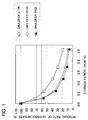
- the composition was diluted into 1000 times with 0.01M citrate buffer (pH 3.5) supplemented with sucrose to which was added 0.014%, 0.114% emulsifier (Nikko Chemical Co.; Decaglyn 1-0) respectively, to prepare emulsion-added (supplemented) samples.
- the resulting samples were sterilized under heating for 20 minutes and stored at 44°C. Every one week or so after storage, the capsinoid content was determined. Analysis of the capsinoid content was performed by high performance liquid chromatography (HPLC) after dilution with an ethyl acetate/methanol (6 : 4) mixture solvent.
- Fig. 1 shows the result. As shown in Fig.
- the result indicates that the storage stability of dihydrocapsinoate is increased with increase of the amount of emulsifier added.
- the rate of residual dihydrocapsiate was 2 times and above more stable than the emulsifier-free case about one month after storage.
- Example 2 Preparation and evaluation of stability of a diluted solution of a capsinoid emulsified preparation to which a variety of emulsifiers are added:
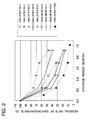
- a dihydrocapsiate-containing emulsion composition was diluted into 1000 times with 0.01M citrate buffer (pH 3.5) supplemented with sucrose and the stability of storage was evaluated.
- 0.01M citrate buffer (pH 3.5) supplemented with sucrose were added, respectively, 8 sorts of emulsifiers so as to be 0.114% in advance, and differences in the stability depending on the emulsifiers added were evaluated.
- Table 1 indicates 8 species of emulsifiers added, and the results of storage are shown in Fig. 2 . From the results of Fig. 2 , it was recognized that even emulsifiers other than Decaglyn 1-0 have the effect for improving the stability of dihydrocapsiate during storage.
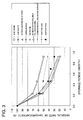
- a dihydrocapsiate-containing emulsion composition was diluted into 500 times with 0.01M citrate buffer (pH 3.5) supplemented with sucrose and the stability of storage was evaluated.
- 0.01M citrate buffer (pH 3.5) supplemented with sucrose were added, respectively, 8 sorts of high-molecular components in advance, and differences in the stability depending on the high-molecular components added were evaluated.
- Table 2 shows the high-molecular component samples evaluated.
- xanthan gum was reduced to 0.1% because it gives high viscosity in a small quantity.
- the amount of high-molecular components added other than xanthan gum was fixed at 0.5%.
- the results of storage are shown in Fig. 3 . Improvement in the storage stability of dihydrocapsiate was recognized in HM pectin (0), carrageenan ( ⁇ ), and carboxymethylcellulose sodium (CMC sodium)(-).
- Example 4 Preparation of a composition in which a capsinoid emulsion composition was mixed with an emulsifier in advance, and evaluation of the stability in a diluted solution:
- Example 2 Into a capsinoid emulsion composition prepared in Example 1 was blended an emulsifier (Nikko Chemical Co., Decaglyn 1-0) at a ratio of 10 to 3 under heating (50 - 70°C) to prepare a composition. The resulting composition was diluted into 230 times with 0.01M citrate buffer (pH 3.5) supplemented with sucrose to prepare a mixture sample of the emulsion composition and the emulsifier.
- emulsifier Nakko Chemical Co., Decaglyn 1-0
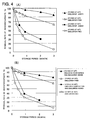
- an additive-free sample was prepared by diluting the capsinoid emulsion composition (prepared in Example 1) into 300 times with the same buffer; and a sample containing an emulsifier was prepared by diluting the capsinoid emulsion composition (prepared in Example 1) into 300 times with 0.01M citrate buffer (pH 3.5) supplemented with sucrose to which was added an emulsifier (Nikko Chemical Co., Decaglyn 1-0) in advance at a rate of 0.10%.
- the concentration of capsinoid after dilution with the buffer correspond to 0.33 % of the initial amount of capsinoid existing in the emulsion composition (preparation).
- Fig. 4 shows the results.
- Fig. 4A indicates, similarly in Example 1, that dilution of the emulsion composition with a buffer to which was added an emulsifier in advance improves the storage stability of dihydrocapsiate.
- Fig. 4B indicates that dilution of the emulsion composition, to which an emulsifier was added in advance, with a buffer containing no emulsifier, also improves the storage stability of dihydrocapsiate, similarly in case of A.
- the method of the invention is utilizable in the fields of food products and cosmetic or the like.
Landscapes
- Health & Medical Sciences (AREA)
- Chemical & Material Sciences (AREA)
- Life Sciences & Earth Sciences (AREA)
- Engineering & Computer Science (AREA)
- Polymers & Plastics (AREA)
- Food Science & Technology (AREA)
- Nutrition Science (AREA)
- Medicinal Chemistry (AREA)
- Pharmacology & Pharmacy (AREA)
- Animal Behavior & Ethology (AREA)
- General Health & Medical Sciences (AREA)
- Public Health (AREA)
- Veterinary Medicine (AREA)
- Epidemiology (AREA)
- Oil, Petroleum & Natural Gas (AREA)
- Immunology (AREA)
- Nuclear Medicine, Radiotherapy & Molecular Imaging (AREA)
- Botany (AREA)
- Mycology (AREA)
- Bioinformatics & Cheminformatics (AREA)
- Emergency Medicine (AREA)
- Organic Chemistry (AREA)
- General Chemical & Material Sciences (AREA)
- Chemical Kinetics & Catalysis (AREA)
- Diabetes (AREA)
- Hematology (AREA)
- Obesity (AREA)
- General Preparation And Processing Of Foods (AREA)
- Coloring Foods And Improving Nutritive Qualities (AREA)
- Cosmetics (AREA)
- Dairy Products (AREA)
- Confectionery (AREA)
- Non-Alcoholic Beverages (AREA)
Applications Claiming Priority (2)
| Application Number | Priority Date | Filing Date | Title |
|---|---|---|---|
| JP2006098623 | 2006-03-31 | ||
| PCT/JP2007/056549 WO2007114128A1 (ja) | 2006-03-31 | 2007-03-28 | カプシノイド含有飲食品の製造方法 |
Publications (2)
| Publication Number | Publication Date |
|---|---|
| EP2008532A1 true EP2008532A1 (de) | 2008-12-31 |
| EP2008532A4 EP2008532A4 (de) | 2013-11-06 |
Family
ID=38563397
Family Applications (1)
| Application Number | Title | Priority Date | Filing Date |
|---|---|---|---|
| EP07739987.1A Withdrawn EP2008532A4 (de) | 2006-03-31 | 2007-03-28 | Verfahren zur herstellung von capsinoidhaltigem getränk/nahrungsmittel |
Country Status (4)
| Country | Link |
|---|---|
| US (1) | US20070264411A1 (de) |
| EP (1) | EP2008532A4 (de) |
| JP (1) | JP5109972B2 (de) |
| WO (1) | WO2007114128A1 (de) |
Cited By (2)
| Publication number | Priority date | Publication date | Assignee | Title |
|---|---|---|---|---|
| EP2438928A4 (de) * | 2009-06-05 | 2014-01-01 | Ajinomoto Kk | Emulsionspräparat |
| US20140370154A1 (en) * | 2011-12-09 | 2014-12-18 | San-Ei Gen F.F.I., Inc. | Emulsion composition, and composition containing same |
Families Citing this family (8)
| Publication number | Priority date | Publication date | Assignee | Title |
|---|---|---|---|---|
| ES2429288T3 (es) * | 2006-04-24 | 2013-11-14 | Ajinomoto Co., Inc. | Agente para la mejora de la disfagia, y composición farmacéutica o alimenticia que comprende el mismo |
| JP2009189335A (ja) * | 2008-02-18 | 2009-08-27 | Sanei Gen Ffi Inc | カロテノイド色素含有乳化組成物及びその製造方法 |
| JP5581689B2 (ja) * | 2009-12-24 | 2014-09-03 | 味の素株式会社 | 乳化組成物 |
| JP6425020B2 (ja) * | 2012-04-04 | 2018-11-21 | 大正製薬株式会社 | 水性液体飲料 |
| JP6183355B2 (ja) * | 2012-04-04 | 2017-08-23 | 大正製薬株式会社 | 水性液体飲料 |
| JP2017509596A (ja) | 2014-01-30 | 2017-04-06 | オムニアクティブ ヘルス テクノロジーズ リミテッド | 辛味がある油性芳香性物質の組成物およびその調製方法 |
| WO2015152199A1 (ja) * | 2014-03-31 | 2015-10-08 | 味の素株式会社 | 水中分散型乳化組成物 |
| KR101762313B1 (ko) * | 2014-11-21 | 2017-07-27 | 롯데제과주식회사 | 취식이 용이한 우유 빙수 및 이의 제조방법 |
Family Cites Families (15)
| Publication number | Priority date | Publication date | Assignee | Title |
|---|---|---|---|---|
| JPS6322142A (ja) * | 1986-03-05 | 1988-01-29 | Fuji Oil Co Ltd | 複合エマルジヨン及びその製造法 |
| JP2537655B2 (ja) * | 1988-04-01 | 1996-09-25 | 雪印乳業株式会社 | 保存中に脂肪分離のない乳類飲料及びその製造法 |
| US4980182A (en) * | 1989-06-21 | 1990-12-25 | Nestec S.A. | Beverages containing a beverage base and milk protein |
| JPH09322735A (ja) * | 1996-06-08 | 1997-12-16 | Ichibiki Kk | 動物性脂肪入り調味料及びその製造方法 |
| JP3345744B2 (ja) * | 1998-03-04 | 2002-11-18 | 森永製菓株式会社 | エステル結合を有する新規なカプサイシノイド様物質 |
| JP2000210047A (ja) * | 1999-01-20 | 2000-08-02 | Nihon Shokken Co Ltd | 冷凍・解凍耐性のある乳化調味組成物 |
| JP3092006B1 (ja) | 1999-04-30 | 2000-09-25 | 森永製菓株式会社 | 新規なカプサイシノイド様物質の合成法 |
| JP2002193790A (ja) * | 2000-12-27 | 2002-07-10 | Lion Corp | 水難溶性薬剤含有水中油型エマルジョン及びその製造方法 |
| JP2003047432A (ja) * | 2001-08-03 | 2003-02-18 | Ogawa & Co Ltd | カプサイシン含有マイクロカプセル |
| JP4060587B2 (ja) * | 2001-12-26 | 2008-03-12 | 長谷川香料株式会社 | カプサイシノイド様物質含有製剤 |
| JP2004161655A (ja) * | 2002-11-12 | 2004-06-10 | Pigeon Corp | セラミド類含有乳化物の製造方法、および乳化物 |
| JPWO2004100942A1 (ja) * | 2003-05-15 | 2006-07-13 | 味の素株式会社 | 体内脂質低下用組成物 |
| ATE525080T1 (de) * | 2003-10-06 | 2011-10-15 | Oryza Oil & Fat Chem | Dietätische zusammensetzung |
| WO2006016685A1 (ja) * | 2004-08-11 | 2006-02-16 | Ajinomoto Co., Inc. | カプシノイド含有マイクロカプセルの製造法 |
| US20060057172A1 (en) * | 2004-09-13 | 2006-03-16 | Anderson David L | Liquid animal repellant containing oils of black pepper and capsicum |
-
2007
- 2007-03-28 EP EP07739987.1A patent/EP2008532A4/de not_active Withdrawn
- 2007-03-28 JP JP2008508546A patent/JP5109972B2/ja not_active Expired - Fee Related
- 2007-03-28 WO PCT/JP2007/056549 patent/WO2007114128A1/ja not_active Ceased
- 2007-04-02 US US11/695,198 patent/US20070264411A1/en not_active Abandoned
Cited By (4)
| Publication number | Priority date | Publication date | Assignee | Title |
|---|---|---|---|---|
| EP2438928A4 (de) * | 2009-06-05 | 2014-01-01 | Ajinomoto Kk | Emulsionspräparat |
| EP2777805A3 (de) * | 2009-06-05 | 2014-09-24 | Ajinomoto Co., Inc. | Emulstionspräparat |
| US20140370154A1 (en) * | 2011-12-09 | 2014-12-18 | San-Ei Gen F.F.I., Inc. | Emulsion composition, and composition containing same |
| EP2789245A4 (de) * | 2011-12-09 | 2015-06-03 | San Ei Gen Ffi Inc | Emulsionszusammensetzung und diese enthaltende zusammensetzung |
Also Published As
| Publication number | Publication date |
|---|---|
| JP5109972B2 (ja) | 2012-12-26 |
| JPWO2007114128A1 (ja) | 2009-08-13 |
| US20070264411A1 (en) | 2007-11-15 |
| EP2008532A4 (de) | 2013-11-06 |
| WO2007114128A1 (ja) | 2007-10-11 |
Similar Documents
| Publication | Publication Date | Title |
|---|---|---|
| EP2008532A1 (de) | Verfahren zur herstellung von capsinoidhaltigem getränk/nahrungsmittel | |
| EP1956928B1 (de) | Stabilisierte emulsion | |
| EP2503904B1 (de) | Bei raumtemperatur aufschlagbare emulsion | |
| CN101330836B (zh) | W1/o/w2型复合乳化调味品及其制造方法 | |
| JP2004091392A (ja) | 水分散用水難溶性成分含有組成物および飲料 | |
| JP4294606B2 (ja) | 乳化香料組成物 | |
| EP1378178B1 (de) | Saure Öl-in-Wasser emulgierte Zusammensetzungen und deren Verwendung | |
| JP4054524B2 (ja) | 酸性水中油型乳化組成物 | |
| CN112218541A (zh) | 饮料、乳化油脂组合物和乳化剂组合物 | |
| JP2002171920A (ja) | 食品用乳化剤および乳化飲食物 | |
| US6015840A (en) | Process for producing emulsifiers, and emulsified compositions | |
| CA2632325A1 (en) | Beverage emulsion | |
| JP2004208555A (ja) | 乳化製剤 | |
| CN102791139A (zh) | 含脂肪的酸性饮料 | |
| JP2007269714A (ja) | カプシノイド含有乳化組成物の製造方法 | |
| JP2015039371A (ja) | 酸性水中油型乳化調味料 | |
| JPS63157934A (ja) | 水中油型乳化組成物 | |
| EP3773002B1 (de) | Emulgierte lebensmittelzusammensetzung | |
| JP2021153512A (ja) | W1/o/w2型乳化物を含む食品の製造方法 | |
| RU2391027C2 (ru) | Пищевая эмульсия с пониженным содержанием жира и холестерина | |
| JP2007195564A (ja) | 酸性水中油型乳化組成物 | |
| JP2007016000A (ja) | チオクト酸含有組成物 | |
| JP4440842B2 (ja) | 酸性水中油型乳化組成物の製造法 | |
| US20240358050A1 (en) | Flavor compositions containing iron compounds and their use | |
| JP2013048569A (ja) | 気泡入り酸性分離液状調味料 |
Legal Events
| Date | Code | Title | Description |
|---|---|---|---|
| PUAI | Public reference made under article 153(3) epc to a published international application that has entered the european phase |
Free format text: ORIGINAL CODE: 0009012 |
|
| 17P | Request for examination filed |
Effective date: 20081015 |
|
| AK | Designated contracting states |
Kind code of ref document: A1 Designated state(s): AT BE BG CH CY CZ DE DK EE ES FI FR GB GR HU IE IS IT LI LT LU LV MC MT NL PL PT RO SE SI SK TR |
|
| AX | Request for extension of the european patent |
Extension state: AL BA HR MK RS |
|
| DAX | Request for extension of the european patent (deleted) | ||
| A4 | Supplementary search report drawn up and despatched |
Effective date: 20131009 |
|
| RIC1 | Information provided on ipc code assigned before grant |
Ipc: A23L 2/52 20060101ALI20131002BHEP Ipc: A61P 37/04 20060101ALI20131002BHEP Ipc: A61K 9/00 20060101ALI20131002BHEP Ipc: A61K 31/22 20060101ALI20131002BHEP Ipc: A23D 7/01 20060101ALI20131002BHEP Ipc: A61K 9/107 20060101ALI20131002BHEP Ipc: A61K 47/36 20060101ALI20131002BHEP Ipc: A61P 3/00 20060101ALI20131002BHEP Ipc: A23D 7/005 20060101ALI20131002BHEP Ipc: A61K 47/38 20060101ALI20131002BHEP Ipc: A61K 36/81 20060101ALI20131002BHEP Ipc: A61K 47/14 20060101ALI20131002BHEP Ipc: A23L 1/30 20060101AFI20131002BHEP Ipc: A23L 1/221 20060101ALI20131002BHEP Ipc: A61K 9/08 20060101ALI20131002BHEP |
|
| 17Q | First examination report despatched |
Effective date: 20140227 |
|
| STAA | Information on the status of an ep patent application or granted ep patent |
Free format text: STATUS: EXAMINATION IS IN PROGRESS |
|
| STAA | Information on the status of an ep patent application or granted ep patent |
Free format text: STATUS: THE APPLICATION IS DEEMED TO BE WITHDRAWN |
|
| 18D | Application deemed to be withdrawn |
Effective date: 20170111 |