EP2028189A2 - Variantes des allergènes du groupe 1 issus de poaceae présentant un effet allergénique réduit et une réactivité aux lymphocytes T conservée - Google Patents
Variantes des allergènes du groupe 1 issus de poaceae présentant un effet allergénique réduit et une réactivité aux lymphocytes T conservée Download PDFInfo
- Publication number
- EP2028189A2 EP2028189A2 EP08014111A EP08014111A EP2028189A2 EP 2028189 A2 EP2028189 A2 EP 2028189A2 EP 08014111 A EP08014111 A EP 08014111A EP 08014111 A EP08014111 A EP 08014111A EP 2028189 A2 EP2028189 A2 EP 2028189A2
- Authority
- EP
- European Patent Office
- Prior art keywords
- phl
- allergen
- nocys
- group
- variants
- Prior art date
- Legal status (The legal status is an assumption and is not a legal conclusion. Google has not performed a legal analysis and makes no representation as to the accuracy of the status listed.)
- Withdrawn
Links
Images





Classifications
-
- C—CHEMISTRY; METALLURGY
- C07—ORGANIC CHEMISTRY
- C07K—PEPTIDES
- C07K14/00—Peptides having more than 20 amino acids; Gastrins; Somatostatins; Melanotropins; Derivatives thereof
- C07K14/415—Peptides having more than 20 amino acids; Gastrins; Somatostatins; Melanotropins; Derivatives thereof from plants
-
- A—HUMAN NECESSITIES
- A61—MEDICAL OR VETERINARY SCIENCE; HYGIENE
- A61P—SPECIFIC THERAPEUTIC ACTIVITY OF CHEMICAL COMPOUNDS OR MEDICINAL PREPARATIONS
- A61P37/00—Drugs for immunological or allergic disorders
-
- A—HUMAN NECESSITIES
- A61—MEDICAL OR VETERINARY SCIENCE; HYGIENE
- A61P—SPECIFIC THERAPEUTIC ACTIVITY OF CHEMICAL COMPOUNDS OR MEDICINAL PREPARATIONS
- A61P37/00—Drugs for immunological or allergic disorders
- A61P37/08—Antiallergic agents
-
- A—HUMAN NECESSITIES
- A61—MEDICAL OR VETERINARY SCIENCE; HYGIENE
- A61K—PREPARATIONS FOR MEDICAL, DENTAL OR TOILETRY PURPOSES
- A61K39/00—Medicinal preparations containing antigens or antibodies
- A61K2039/57—Medicinal preparations containing antigens or antibodies characterised by the type of response, e.g. Th1, Th2
Definitions
- the present invention relates to the production and use of variants of the group 1 allergens of Poaceae (sweet grasses) which are characterized by reduced IgE reactivity compared to the known wild-type allergens and at the same time a largely retained reactivity with T lymphocytes.
- These hypoallergenic allergen variants can be used for the specific immunotherapy (hyposensitization) of patients with grass pollen allergy or for the preventive immunotherapy of grass pollen allergies.
- a preferred embodiment of the invention relates to variants of the main allergen Phl p 1 from the pollen of meadow wattle grass ( Phleum pratense ) .
- Allergies of type 1 have worldwide significance. Up to 20% of the population in industrialized countries suffer from conditions such as allergic rhinitis, conjunctivitis or bronchial asthma. These allergies are caused by airborne allergens (aeroallergens) released from sources of various origins such as plant pollen, mites, cats or dogs. Up to 40% of these type 1 allergy sufferers show specific IgE reactivity with grass pollen allergens ( Freidhoff et al., 1986, J. Allergy Clin. Immunol. 78: 1190-2002 ). The type 1 allergy-causing substances are proteins, glycoproteins or polypeptides.
- Phl p 5 Matthiesen and Lowenstein, 1991, Clin. Exp. Allergy 21: 297-307 ; Petersen et al., 1992, Int. Arch. Allergy Immunol. 98: 105-109 ), Phl p 6 ( Petersen et al., 1995, Int. Arch. Allergy Immunol. 108, 49-54 ).
- Phl p 2/3 Dolecek et al., 1993, FEBS 335 (3), 299-304
- Phl p 4 Haavik et al., 1985, Int. Arch. Allergy Appl. Immunol.
- the dominant major allergens of meadowweed grass are Phl p 1 and Phl p 5. Since the major allergens of the grasses of the family Poaceae are highly homologous to each other and consequently have very similar biochemical and immunological properties, these related proteins are group 1 resp Group 5 allergens summarized.
- the group 1 allergens react with the IgE antibodies of more than 95% of grass pollen allergy sufferers and are thus dominant major allergens of grass pollen.
- the group 1 allergens are glycoproteins with a molecular mass of about 32 kDa and are located in the cytoplasm of the pollen grains.
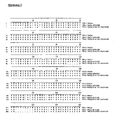
- the group 1 allergens of grasses have a high cross-reactivity with human IgE antibodies due to their homology ( Laffer et al., 1996, Mol. Immunology 33: 417-426 ). This immunological cross-reactivity is based on a very similar amino acid sequence as a sequence comparison of Phl p 1, the group 1 allergen of meadow wattle grass ( Phleum pratense), with group 1 molecules of selected species in illustration 1 shows.
- Homologous sequence regions exist in the remaining group 1 allergens of the Poaceae both for the sequence regions of the deletions of the Phl p 1 amino acid sequence described here in the construction of hypoallergenic variants and for their flanking sequence regions. Furthermore, both the number and the surrounding sequence areas conserved the cysteines of the Poaceae Group 1 allergens. Due to sequence homologies, the group 1 allergens of the Poaceae are assigned to the protein family of ⁇ -expansins ( Cosgrove DJ, 2000 Nature 407: 321-6 ).
- the object underlying the present invention was now to provide novel variants of the group 1 Poaceae allergens at the protein and DNA levels, which are characterized by a reduced IgE activity when the T cell reactivity is largely preserved, and therefore are suitable for curative and preventive specific immunotherapy as well as immunotherapeutic DNA vaccination.
- the present invention thus relates to variants of the group 1 allergens of the Poaceae , which are characterized by a reduced IgE reactivity compared with the known wild-type allergens and a reactivity with T lymphocytes.
- these Group 1 allergens are Phl p 1, Poa p 1, Hol p 1, Lol p 1, Cyn d 1, Ory s 1 and Pha a 1 from Phleum pratense, Lolium perenne, Poa pratensis, Holcus lanatus, Cynodon dactylon , Oryza sativa and Phalaris aquatica. More preferred are Phl p 1, Poa p 1, Hol p 1, Lol p 1 and Pha a 1, and most preferably Phl p 1.
- the starting point for the construction of the hypoallergenic variants of the group 1 allergens is the Phl p 1 wild-type cDNA, which was isolated by means of specific primers by polymerase chain reaction (PCR) from the total cDNA of pollen of Phleum pratense ("GenBank” entry Z27090; NCBI, Bethesda, USA) (SEQ ID NO 1). From the cDNA sequence of the Phl p 1 wild type, the amino acid sequence according to SEQ ID NO 2 was deduced. The naturally glycosylated Phl p 1, which consists of 240 amino acids, is - like all group 1 allergens (see Fig. 1 ) - characterized by the existence of seven cysteines of the mature molecule.
- Phl p 1 could be expressed in E. coli as a non-glycosylated protein.
- the recombinant wild-type protein (rPhl p 1 wt) reacted with grass pollen allergy IgE antibodies that had reactivity with natural purified Phl p 1 (nPhl p 1) ( Petersen et al., 1998, Clin. Exp. Allergy 28: 315-321 ).
- the recombinant variants were tested for the ability to be bound by IgE antibodies from a representative serum pool and IgE antibodies from individual sera of grass pollen allergy sufferers (strip test).
- strip test IgE inhibition test
- the present invention therefore relates in particular to those group 1 allergen variants in which the cysteines of the amino acid positions 41, 57, 69, 72, 77, 83 and 139 corresponding to the mature Phl p 1 protein are removed or replaced by another amino acid.
- Particular preference is given to corresponding variants of Phl p 1, Poa p 1, Hol p 1, Lol p 1 or Pha a 1, in particular of Phl p. 1
- a diminished binding of IgE antibodies is already obtained if at least two of the 7 cysteines are replaced without substitution or replaced with another amino acid. Preferably, however, all 7 cysteines are replaced by serine.
- Phl p 1 NoCys By means of an activation test of basophilic granulocytes from grass pollen allergy sufferers, the effects of the reduced IgE binding ability of Phl p 1 NoCys on the functional action in the Crosslinking of membrane bound IgE of the effector cells and their activation in vitro investigated. Phl p 1 NoCys showed a significantly lower activation of basophilic granulocytes compared to rPhl p 1 wt and thus a functionally reduced allergenicity.
- the different deletion mutants produced on the basis of Phl p 1 NoCys were investigated according to the same procedure with regard to the IgE binding capacity (strip test, EAST) and the functional effect (basophil activation). Surprisingly, the deletion mutants showed particularly strong hypoallergenic properties.
- the present invention furthermore relates to those group 1 allergen variants in which, optionally in addition to the previously described variants with removed or replaced Cys, at least one region or a combination of regions corresponding to amino acids 1-6, 1-30, 92-104, 115-119, 175-185 and 213-220 correspond to the primary sequence of mature Phl p 1 protein, are absent from the wild-type allergen.
- Particularly preferred are the corresponding deletion mutants of the group 1 allergens Phl p 1, Poa p 1, Hol p 1, Lol p 1 and Pha a 1. Very particular preference is given to the corresponding Phl p1 variants.
- Particularly preferred and therefore also subject matter of the invention are those group 1 allergen variants in which only the amino acids 213-220 or simultaneously missing the amino acids 1-6 and 115-119 corresponding to the mature Phl p 1 sequence. More preferred are again the allergens Phl p 1, Poa p 1, Hol p 1, Lol p 1 and Pha a 1, wherein Phl p 1 is very particularly preferred.
- the T-cell reactivity of the hypoallergenic Phl p1 variants underlying the efficacy of the specific immunotherapy was assessed by a proliferation test with Phl p 1 specific T-lymphocytes from grass pollen allergy sufferers checked in vitro .
- the modified allergens showed a largely preserved T-cell reactivity, which allows an immunotherapeutic use of the hypoallergenic Phl p1 variants.
- allergen variants it is advisable to prepare the allergen variants according to the invention, starting from the cloned DNA sequence by means of genetic engineering methods. In principle, however, these may also be chemical modifications of the native allergen extract ( Fiebig, 1995, Allergo J. 4 (7), 377-382 ). By nature, variations on group 1 allergens as described in the present patent application also allow for other changes in other positions, such as to increase hypoallergenicity. These modifications may be, for example, amino acid insertions, deletions, and exchanges, splitting the protein into fragments, and fusions of the protein or its fragments to other proteins or peptides.
- the subject matter is furthermore a DNA molecule coding for an allergen variant described above, a recombinant expression vector containing this DNA molecule and a host organism transformed with said DNA molecule or said expression vector.
- Suitable host organisms may be pro- or eukaryotic, mono- or multicellular organisms such as bacteria or yeasts.
- a preferred host organism according to the invention is E. coli.
- the invention relates to a method for producing an allergen variant according to the invention by cultivating the said host organism and obtaining the corresponding allergen variant from the culture.
- the present invention also relates to the previously described allergen variants, DNA molecules and expression vectors in their capacity as medicaments.
- the subject of the present invention are pharmaceutical preparations containing at least one of these allergen variants or a corresponding DNA molecule or a corresponding expression vector and optionally further active ingredients and / or adjuvants for the treatment of allergies, in whose release group 1 allergens of the Poaceae are involved or for the immunotherapeutic vaccination of patients with allergies, in whose initiation Group 1 allergens of the Poaceae are involved and / or for the prevention of such allergies.
- these preparations of the second type preferably furthermore contain aluminum hydroxide, an immunostimulatory CpG-containing oligonucleotide or a combination of both as adjuvants.
- compositions according to this invention can be used as therapeutics in human or veterinary medicine.
- Suitable carriers are organic or inorganic substances which are suitable for parenteral administration and which do not react with group-1 allergen variants according to the invention.
- parenteral administration in particular solutions, preferably oily or aqueous solutions, furthermore suspensions, emulsions or implants are used.
- the allergen variants according to the invention can also be lyophilized and the lyophilisates obtained can be used, for example, for the production of injection preparations.
- the preparations indicated may be sterilized and / or contain adjuvants such as lubricants, preservatives, stabilizers and / or wetting agents, emulsifiers, salts for influencing the osmotic pressure, buffer substances and / or several further active ingredients.
- adjuvants such as lubricants, preservatives, stabilizers and / or wetting agents, emulsifiers, salts for influencing the osmotic pressure, buffer substances and / or several further active ingredients.
- depot preparations for example by adsorption on aluminum hydroxide, can be obtained by appropriate formulation of the allergen variants according to the invention.
- the present invention relates to the use of at least one allergen variant according to the invention or of a DNA molecule according to the invention or an expression vector according to the invention for the production of a medicament for the treatment of allergies, in the triggering of which group 1 allergens of the Poaceae are involved or for the immunotherapeutic vaccination of Patients with allergies in response to which Poaceae Group 1 allergens are involved and / or for the prevention of such allergies.
- the recombinant proteins were expressed as histidine fusion proteins (expression vector pProExHT; Invitrogen, Carlsbad, USA) in Escherichia coli (strain JM109).
- rPhl p 1 wt and the variants were first prepared by the specific binding of the N-terminal histidine residues to a Ni 2+ chelate matrix (Immobilized Metal Ion Affinity Chromatography, IMAC) and subsequently by preparative gel filtration (size exclusion chromatography). Chromatography, SEC). The purity of the eluted proteins was monitored by SDS-PAGE and analytical SEC ( Fig. 4a ). The identity of the purified proteins was detected by the binding of a Phl p 1-specific monoclonal antibody ( Fig. 4b ).
- a simple test method for determining the IgE reactivity of specific IgE from allergy sera to membrane-bound test proteins is the streak test.
- the test substances are bound in the same concentration and amount side by side to a strip of nitrocellulose membrane under non-denaturing conditions.
- a number of such membrane strips can be incubated in parallel with different types of allergy sera.
- the specifically bound IgE antibodies are visualized on the membrane by a color reaction mediated by an anti-human IgE / alkaline phosphatase conjugate.
- Exemplary of the modified Phl p 1 molecules described here are the results of the strip test for Phl p 1 NoCys, Phl p 1 NoCys ⁇ 213-220 and Phl p 1 NoCys ⁇ 1-6, 115-119, 213-220 using individual grass pollen Allergic sera presented ( Fig. 5 ). Only sera of allergy sufferers with a strong IgE titer against natural Phl p 1 were used. The IgE antibodies of these patients also react with the recombinant equivalent rPhl p 1 wt.
- Phl p 1-specific IgE antibodies of all patient sera bind less to the recombinant variant Phl p 1 NoCys, but not to the wild-type allergen Phl p 1.
- the EAST inhibition test (Enzyme Allergosorbent Test) can be used to investigate allergen / IgE interactions in solution, which means that interfering masking of epitopes of the test substance by immobilization on the membrane can basically be ruled out.
- the EAST inhibition test is carried out as follows. Microtiter plates are coated with allergens, here nPhl p 1. After removal of unbound allergen molecules by washing, the plate is blocked with bovine serum albumin to avoid later nonspecific binding. IgE antibody from allergic persons, as a representative pool of single sera (serum pool) or as a single serum, is incubated in a suitable dilution with the allergen-coated microtiter plates. The amount of allergen-bound IgE antibodies is photometrically quantified via an anti-hlgE / alkaline phosphatase conjugate by the reaction of a substrate to a colored end product.
- the binding of the IgE antibodies is inhibited by a soluble allergen or the substance to be tested (recombinant modified allergen) depending on the concentration substance-specific.
- Examples of the modified Phl p 1 molecules described here are the test results for Phl p 1 NoCys, Phl p 1 NoCys ⁇ 213-220 and Phl p 1 NoCys ⁇ 1-6, 115-119, 213-220 as compared to the reference molecule nPhl p 1.
- the functional reduction of the allergenicity was determined by means of a basophil activation test in vitro .
- Basophil activation test heparinized whole blood from grass pollen allergy sufferers is incubated with various concentrations of the test substances.
- the allergenic substances are specifically bound by the Fc ⁇ RI-bound IgE antibodies of the basophils and lead to a cross-linking of the Fc ⁇ RI molecules.
- This allergen-induced gene-mediated Fc ⁇ RI crosslinking leads to the activation of the basophils.
- Activation is the first step in the allergic response of these effector cells.
- the subsequent Signal transduction results in the degranulation of the effector cells and thus the triggering of the allergic reactions in vivo.
- the allergen-induced activation of basophilic granulocytes can be detected by quantifying the expression of a surface protein (CD203c) linked to signal transduction of IgE receptor crosslinking ( Kahlert et al., 2003, Cli., Exp. Allergy 33: 1266-72 ).
- CD203c surface protein linked to signal transduction of IgE receptor crosslinking
- the number of expressed CD203c proteins on a cell and the percentage of activated cells of a cell pool are measured highly sensitively by the binding of a fluorescently labeled monoclonal antibody to the surface marker and subsequent analysis by fluorescence-activated flow cytometry.
- the purified natural Phl p 1 nPhl p 1 was used here parallel to the test substances.
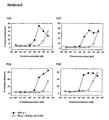
- test results of the variant Phl p 1 NoCys with basophils from four clinically defined allergy sufferers are in Figure 7 shown as curves.
- the reduction of the allergenic activity of the variant Phl p 1 NoCys relative to nPhl p 1 wild type is evident by the shift of the activation curves.
- the test results of variants Phl p 1 NoCys ⁇ 213-220 and Phl p 1 NoCys ⁇ 1-6, 115-119, 213-220 indicate an even greater reduction in relative allergenic potency, consistent with the results of the streak test and the IgE inhibition test , as in Figure 8 and 9 is shown using representative curves.
- Basophil activation can be detected using the modified allergens Phl p 1 NoCys ⁇ 213-220 and Phl p 1 NoCys ⁇ 1-6, 115-119, 213-220.
- the allergenic activity of the variant Phl p 1 NoCys ⁇ 213-220 was, as can be calculated from the A50 values of the curves, ⁇ 100-1000 times and that of the variant Phl p 1 NoCys ⁇ 1-6, 115-119, 213-220 more than 1000 times lower than the reference nPhl p 1 (A50: allergen concentration at 50% of the number of maximally activated basophils).
- T-helper lymphocytes react with peptide fragments of the allergens (about 12-25 amino acids) which are formed by enzymatic degradation in antigen-presenting cells (APC) and after incorporation of the appropriate peptides into the individual MHC class II molecules on the surface of the APC presented to the T cells.
- APC antigen-presenting cells
- This allergen-specific activation of T helper lymphocytes is the prerequisite for proliferation and for functional differentiation (TH1 and TH2). Influencing allergen-specific T lymphocytes by treatment with allergen or an allergen derivative in hyposensitization is considered the key to therapeutic efficacy.
- oligoclonal T cell lines of grass pollen allergies are stimulated with nPhl p 1 or rPhl p 1 wt molecules by conventional methods.
- the different T cell lines were stimulated with the reference allergens nPhl p 1 and rPhl p 1 wt and the modified recombinant Phl p 1 variants.
- the proliferation rate was determined by the incorporation of [ 3 H] thymidine by the usual methods.
- Step 1 Preparation of the N-terminal DNA fragment "Phl p 1 [C41S, C57S, C69S] (bp 1-212)": by amplification of long overlapping oligonucleotides (P 1-63, P 49-111, P 97- 158 and P 144-212) by PCR, a DNA fragment with the mutations C41 S, C57S, C69S was generated.
- Step 2 Preparation of the C-terminal DNA fragment "Phl p 1 [C69S, C72S, C77S, C83S] (bp 193-720)": PCR of the Phl p 1 wt cDNA with primers P 193-261 and P 703 -720 Hind III .
- Step 3 Preparation of DNA encoding "Phl p 1 [C41S, C57S, C69S, C72S, C77S, C83S] (bp 1-720)": PCR of overlapping fragments "Phl p1 [C41S, C57S, C69S] ( bp 1-212) "and” Phl p 1 [C69S, C72S, C77S, C83S] (bp 193-720) "with primers P 1-63 and P 703-720 Hind III.
- Step 4 Preparation of the N-terminal DNA fragment "Phl p 1 [C41S, C57S, C69S, C72S, C77S, C83S, C139S] (bp 1-428)": PCR of the cDNA of "Phl p1 [C41S, C57S, C69S, C72S, C77S, C83S] (bp 1-720) "with primers P 1-63 and P 406-428 as.
- Step 5 Preparation of the C-terminal DNA fragment "Phl p 1 [C139S] (bp 406-720)": PCR of the cDNA of rPhl p 1 wt with the primers P 406-428s and P 703-720 Hind III .
- Step 6 Preparation of the complete DNA coding for Phl p 1 NoCys: PCR of the overlapping fragments "Phl p 1 [C41S, C57S, C69S, C72S, C77S, C83S, C139S] (bp 1-428)" and “Phl p1 [C139S] (bp 406-720) with primers P 1-63 and P 703-720 Hind III ".
- Phl p 1 NoCys The DNA coding for Phl p 1 NoCys were digested with the restriction enzyme Hind III and ligated via the restriction sites Ehel and Hind III into the expression vector pProExHT (Invitrogen, Carlsbad, USA), and then completely sequenced.
- the DNA sequence coding for the deletion variant Phl p 1 NoCys ⁇ 213-220 was determined by PCR of the DNA from Phl p 1 NoCys using the 5 'primer P 1-18 and specifically to the deleting sequence region truncated 3 'primer P 613-720 ( ⁇ 637-660) Hind III.
- the cDNAs were digested with the restriction enzyme Hind III and ligated via the restriction sites Ehe l and Hind III in the expression vector pProExHT (Invitrogen, Carlsbad, USA), and then completely sequenced.
- the DNA sequence coding for the deletion variant Phl p 1 NoCys ⁇ 1-6, 115-119, 213-220 was generated by PCR using oligonucleotides truncated specifically around the sequence region to be deleted in three steps.
- Step 1 Preparation of N-terminal DNA fragment "Phl p 1 NoCys ⁇ 1-6 (bp 1-300)": PCR of Phl p 1 NoCys cDNA with primers P22-63 ( ⁇ 1-18) and P 250- 318th
- Step 2 Preparation of the C-terminal DNA fragment "Phl p 1 NoCys ⁇ 115-119, 213-220 (bp 283-663)": PCR of Phl p 1 NoCys with primers P 301-384 ( ⁇ 343-357) and P 613-720 ( ⁇ 637-660) Hind III.
- the DNA coding for Phl p 1 NoCys ⁇ 1-6, 115-119, 213-220 was digested with the restriction enzyme Hind III and ligated via the restriction sites Ehel and Hind III into the expression vector pProExHT (Invitrogen, Carlsbad, USA), and then completely sequenced.
Landscapes
- Health & Medical Sciences (AREA)
- Chemical & Material Sciences (AREA)
- Life Sciences & Earth Sciences (AREA)
- Organic Chemistry (AREA)
- Medicinal Chemistry (AREA)
- General Health & Medical Sciences (AREA)
- Veterinary Medicine (AREA)
- Biochemistry (AREA)
- Chemical Kinetics & Catalysis (AREA)
- Nuclear Medicine, Radiotherapy & Molecular Imaging (AREA)
- Immunology (AREA)
- Pharmacology & Pharmacy (AREA)
- Bioinformatics & Cheminformatics (AREA)
- Animal Behavior & Ethology (AREA)
- Engineering & Computer Science (AREA)
- Public Health (AREA)
- Proteomics, Peptides & Aminoacids (AREA)
- Botany (AREA)
- Gastroenterology & Hepatology (AREA)
- General Chemical & Material Sciences (AREA)
- Biophysics (AREA)
- Genetics & Genomics (AREA)
- Molecular Biology (AREA)
- Pulmonology (AREA)
- Medicines Containing Antibodies Or Antigens For Use As Internal Diagnostic Agents (AREA)
- Peptides Or Proteins (AREA)
- Medicines That Contain Protein Lipid Enzymes And Other Medicines (AREA)
- Micro-Organisms Or Cultivation Processes Thereof (AREA)
- Preparation Of Compounds By Using Micro-Organisms (AREA)
- Pharmaceuticals Containing Other Organic And Inorganic Compounds (AREA)
- Detergent Compositions (AREA)
- Medicines Containing Plant Substances (AREA)
- Coloring Foods And Improving Nutritive Qualities (AREA)
Applications Claiming Priority (2)
| Application Number | Priority Date | Filing Date | Title |
|---|---|---|---|
| DE102004035337A DE102004035337A1 (de) | 2004-07-21 | 2004-07-21 | Varianten der Gruppe 1-Allergene aus Poaceae mit reduzierter Allergenität und erhaltener T-Zellreaktivität |
| EP05761824A EP1768996B1 (fr) | 2004-07-21 | 2005-07-11 | Variants des allergenes du groupe 1 issus de poaceae presentant un effet allergenique reduit et une reactivite aux lymphocytes t conservee |
Related Parent Applications (1)
| Application Number | Title | Priority Date | Filing Date |
|---|---|---|---|
| EP05761824A Division EP1768996B1 (fr) | 2004-07-21 | 2005-07-11 | Variants des allergenes du groupe 1 issus de poaceae presentant un effet allergenique reduit et une reactivite aux lymphocytes t conservee |
Publications (2)
| Publication Number | Publication Date |
|---|---|
| EP2028189A2 true EP2028189A2 (fr) | 2009-02-25 |
| EP2028189A3 EP2028189A3 (fr) | 2009-07-08 |
Family
ID=35106807
Family Applications (2)
| Application Number | Title | Priority Date | Filing Date |
|---|---|---|---|
| EP08014111A Withdrawn EP2028189A3 (fr) | 2004-07-21 | 2005-07-11 | Variantes des allergènes du groupe 1 issus de poaceae présentant un effet allergénique réduit et une réactivité aux lymphocytes T conservée |
| EP05761824A Expired - Lifetime EP1768996B1 (fr) | 2004-07-21 | 2005-07-11 | Variants des allergenes du groupe 1 issus de poaceae presentant un effet allergenique reduit et une reactivite aux lymphocytes t conservee |
Family Applications After (1)
| Application Number | Title | Priority Date | Filing Date |
|---|---|---|---|
| EP05761824A Expired - Lifetime EP1768996B1 (fr) | 2004-07-21 | 2005-07-11 | Variants des allergenes du groupe 1 issus de poaceae presentant un effet allergenique reduit et une reactivite aux lymphocytes t conservee |
Country Status (13)
| Country | Link |
|---|---|
| US (1) | US8263090B2 (fr) |
| EP (2) | EP2028189A3 (fr) |
| JP (1) | JP5149002B2 (fr) |
| CN (2) | CN103467583A (fr) |
| AT (1) | ATE432944T1 (fr) |
| AU (1) | AU2005263477B2 (fr) |
| BR (1) | BRPI0513504B1 (fr) |
| CA (2) | CA2574449C (fr) |
| DE (2) | DE102004035337A1 (fr) |
| ES (1) | ES2328050T3 (fr) |
| PT (1) | PT1768996E (fr) |
| RU (1) | RU2409589C2 (fr) |
| WO (1) | WO2006008018A1 (fr) |
Families Citing this family (5)
| Publication number | Priority date | Publication date | Assignee | Title |
|---|---|---|---|---|
| AT503690A1 (de) | 2006-06-09 | 2007-12-15 | Biomay Ag | Hypoallergene moleküle |
| HRP20150317T1 (hr) | 2009-02-05 | 2015-04-24 | Circassia Limited | Peptidi trave za cjepivo |
| RU2607373C2 (ru) * | 2010-01-14 | 2017-01-10 | Мерк Патент Гмбх | Модификации аллергенов группы 6 poaceae (мятликовых), имеющих пониженную аллергенность благодаря мутагенезу пролиновых остатков |
| CN108728450B (zh) * | 2018-06-11 | 2021-06-01 | 中国科学院武汉植物园 | 狗牙根中一个受低温显著诱导的基因CdERF1及其应用 |
| WO2025102125A1 (fr) * | 2023-11-17 | 2025-05-22 | Queensland University Of Technology | Allergènes modifiés de pollen de graminées |
Family Cites Families (5)
| Publication number | Priority date | Publication date | Assignee | Title |
|---|---|---|---|---|
| AU4012095A (en) * | 1994-10-25 | 1996-05-15 | United Biomedical Inc. | Synthetic ige membrane anchor peptide immunogens for the treatment of allergy |
| AR020102A1 (es) * | 1998-07-30 | 2002-04-10 | Ucb Sa | Compuesto para la prevencion y/o tratamiento de la alergia; composicion farmaceutica, composicion cosmetica, composicion en forma de bebida, alimento y/oalimento para animales domesticos que lo comprende y uso de dicho compuesto o dicha composicion farmaceutica para la fabricacion de un alimento |
| DE19918682A1 (de) * | 1999-04-23 | 2000-10-26 | Merck Patent Gmbh | DNA-Sequenz und rekombinante Herstellung eines Graminaen-Allergens |
| AUPR779201A0 (en) | 2001-09-20 | 2001-10-11 | University Of Melbourne, The | Immunotherapeutic and immunoprophylactic reagents |
| RU2323942C2 (ru) * | 2002-08-19 | 2008-05-10 | Мерк Патент Гмбх | ВАРИАНТЫ ОСНОВНОГО АЛЛЕРГЕНА Phl p 1 ИЗ ТИМОФЕЕВКИ ЛУГОВОЙ |
-
2004
- 2004-07-21 DE DE102004035337A patent/DE102004035337A1/de not_active Withdrawn
-
2005
- 2005-07-11 WO PCT/EP2005/007481 patent/WO2006008018A1/fr not_active Ceased
- 2005-07-11 EP EP08014111A patent/EP2028189A3/fr not_active Withdrawn
- 2005-07-11 AT AT05761824T patent/ATE432944T1/de active
- 2005-07-11 EP EP05761824A patent/EP1768996B1/fr not_active Expired - Lifetime
- 2005-07-11 JP JP2007521849A patent/JP5149002B2/ja not_active Expired - Fee Related
- 2005-07-11 RU RU2007106170/10A patent/RU2409589C2/ru not_active IP Right Cessation
- 2005-07-11 US US11/572,370 patent/US8263090B2/en not_active Expired - Fee Related
- 2005-07-11 PT PT05761824T patent/PT1768996E/pt unknown
- 2005-07-11 CN CN2013104392657A patent/CN103467583A/zh active Pending
- 2005-07-11 AU AU2005263477A patent/AU2005263477B2/en not_active Ceased
- 2005-07-11 ES ES05761824T patent/ES2328050T3/es not_active Expired - Lifetime
- 2005-07-11 CA CA2574449A patent/CA2574449C/fr not_active Expired - Fee Related
- 2005-07-11 CA CA2903726A patent/CA2903726A1/fr not_active Abandoned
- 2005-07-11 BR BRPI0513504A patent/BRPI0513504B1/pt not_active IP Right Cessation
- 2005-07-11 CN CN200580024464.5A patent/CN1989151B/zh not_active Expired - Fee Related
- 2005-07-11 DE DE502005007428T patent/DE502005007428D1/de not_active Expired - Lifetime
Non-Patent Citations (29)
| Title |
|---|
| BALL ET AL., FASEB J., vol. 13, 1999, pages 1277 - 1290 |
| BOUSQUET ET AL., J. ALLERGY CLIN. IMMUNOL., vol. 102, no. 4, 1998, pages 558 - 562 |
| COSGROVE D.J., NATURE, vol. 407, 2000, pages 321 - 6 |
| DOLECEK ET AL., FEBS, vol. 335, no. 3, 1993, pages 299 - 304 |
| FIEBIG, ALLERGO J., vol. 4, no. 6, 1995, pages 336 - 339 |
| FIEBIG, ALLERGO J., vol. 4, no. 7, 1995, pages 377 - 382 |
| FISCHER ET AL., J. ALLERGY CLIN. IMMUNOL, vol. 98, 1996, pages 189 - 198 |
| FREIDHOFF ET AL., J. ALLERGY CLIN. IMMUNOL., vol. 78, 1986, pages 1190 - 2002 |
| HAAVIK ET AL., INT. ARCH. ALLERGY APPL. IMMUNOL., vol. 78, 1985, pages 260 - 268 |
| HSU ET AL., NATURE MEDICINE, vol. 2, no. 5, 1996, pages 540 - 544 |
| KAHLERT ET AL., CLI., EXP. ALLERGY, vol. 33, 2003, pages 1266 - 72 |
| LAFFER ET AL., J. ALLERGY CLIN. IMMUNOL., vol. 94, 1994, pages 689 - 698 |
| LAFFER ET AL., MOL. IMMUNOLOGY, vol. 33, 1996, pages 417 - 426 |
| MATTHIESEN; LÖWENSTEIN, CLIN. EXP. ALLERGY, vol. 21, 1991, pages 297 - 307 |
| PEREZ ET AL., J. BIOL. CHEM., vol. 265, 1990, pages 16210 - 16250 |
| PETERSEN ET AL., CLIN. EXP. ALLERGY, vol. 28, 1998, pages 315 - 321 |
| PETERSEN ET AL., INT. ARCH. ALLERGY IMMUNOL., vol. 108, 1995, pages 49 - 54 |
| PETERSEN ET AL., INT. ARCH. ALLERGY IMMUNOL., vol. 98, 1992, pages 105 - 109 |
| PETERSEN ET AL., J. ALLERGY CLIN. IMMUNOL, vol. 95, 1995, pages 987 - 994 |
| PETERSEN ET AL., J. ALLERGY CLIN. IMMUNOL., vol. 92, 1993, pages 789 - 796 |
| SCHRAMM ET AL., J. ALLERGY CLIN. IMMUNOL., 1997, pages 781 - 787 |
| SCHRAMM ET AL., J. IMMUNOL., vol. 162, 1999, pages 2406 - 2414 |
| SMITH ET AL., J. ALLERGY CLIN. IMMUNOL., vol. 98, 1996, pages 331 - 343 |
| STURARO U. VIOTTI, NCBI GENBANK, ACC., 1998 |
| SUCK ET AL., CLIN. EXP. ALLERGY, vol. 30, 2000, pages 1395 - 1402 |
| SUCK ET AL., CLIN. EXP. ALLERGY, vol. 30, 2000, pages 324 - 332 |
| SUPHIOGLU ET AL., CLIN. EXP. ALLERGY, vol. 25, 1995, pages 853 - 865 |
| VALENTA ET AL., INT. ARCH. ALLERGY IMMUNOL., vol. 97, 1992, pages 287 - 294 |
| XU ET AL., GENE, vol. 164, 1995, pages 255 - 259 |
Also Published As
| Publication number | Publication date |
|---|---|
| US8263090B2 (en) | 2012-09-11 |
| WO2006008018A1 (fr) | 2006-01-26 |
| DE502005007428D1 (de) | 2009-07-16 |
| CN1989151B (zh) | 2014-08-27 |
| PT1768996E (pt) | 2009-09-07 |
| CN1989151A (zh) | 2007-06-27 |
| BRPI0513504A (pt) | 2008-05-06 |
| DE102004035337A1 (de) | 2006-03-16 |
| EP2028189A3 (fr) | 2009-07-08 |
| CN103467583A (zh) | 2013-12-25 |
| ATE432944T1 (de) | 2009-06-15 |
| RU2007106170A (ru) | 2008-08-27 |
| US20080267985A1 (en) | 2008-10-30 |
| CA2903726A1 (fr) | 2006-01-26 |
| EP1768996B1 (fr) | 2009-06-03 |
| BRPI0513504B1 (pt) | 2016-08-16 |
| EP1768996A1 (fr) | 2007-04-04 |
| ES2328050T3 (es) | 2009-11-06 |
| JP5149002B2 (ja) | 2013-02-20 |
| JP2008507262A (ja) | 2008-03-13 |
| CA2574449C (fr) | 2015-12-01 |
| AU2005263477A1 (en) | 2006-01-26 |
| AU2005263477B2 (en) | 2011-12-08 |
| CA2574449A1 (fr) | 2006-01-26 |
| RU2409589C2 (ru) | 2011-01-20 |
Similar Documents
| Publication | Publication Date | Title |
|---|---|---|
| US9522938B2 (en) | Phl p 5a derivatives having reduced allergeneity and retained T-cell reactivity | |
| EP1768996B1 (fr) | Variants des allergenes du groupe 1 issus de poaceae presentant un effet allergenique reduit et une reactivite aux lymphocytes t conservee | |
| WO2005058936A2 (fr) | Sequence d'adn et production par recombinaison de l'allergene pollen de plante herbacee lol p 4 | |
| DE60115475T2 (de) | VARIANTEN DES DERMATOPHAGOIDES-ALLERGENS DER p 2 | |
| EP1171604B1 (fr) | Sequence d'adn et production par recombinaison d'un allergene de la famille des graminees | |
| EP2392591B1 (fr) | Séquence ADN et fabrication recombinante de l'allergène du pollen de graminée Phl p4 | |
| EP1532169B1 (fr) | Variants de l'allergene majeur phl p 1 provenant de fleole des pres | |
| EP2261337B1 (fr) | Sequence d'adn et production recombinante d'allergenes majeurs du groupe 4 a partir de cereales | |
| AT503296B1 (de) | Protein-allergen-derivat | |
| EP2523684A1 (fr) | Variants des allergènes du groupe 6 des poacées présentant une allergénicité réduite, par mutagenèse de résidus de proline | |
| EP2523685A1 (fr) | Variants des allergènes du groupe 5 des poacées présentant une allergénicité réduite, par mutagenèse de résidus de proline | |
| DE60022069T2 (de) | Nicht-anaphylaktische formen des grasspollenallergens ph1 p 6 und deren verwendung |
Legal Events
| Date | Code | Title | Description |
|---|---|---|---|
| PUAI | Public reference made under article 153(3) epc to a published international application that has entered the european phase |
Free format text: ORIGINAL CODE: 0009012 |
|
| 17P | Request for examination filed |
Effective date: 20080807 |
|
| AC | Divisional application: reference to earlier application |
Ref document number: 1768996 Country of ref document: EP Kind code of ref document: P |
|
| AK | Designated contracting states |
Kind code of ref document: A2 Designated state(s): AT BE BG CH CY CZ DE DK EE ES FI FR GB GR HU IE IS IT LI LT LU LV MC NL PL PT RO SE SI SK TR |
|
| PUAL | Search report despatched |
Free format text: ORIGINAL CODE: 0009013 |
|
| AK | Designated contracting states |
Kind code of ref document: A3 Designated state(s): AT BE BG CH CY CZ DE DK EE ES FI FR GB GR HU IE IS IT LI LT LU LV MC NL PL PT RO SE SI SK TR |
|
| AKX | Designation fees paid |
Designated state(s): AT BE BG CH CY CZ DE DK EE ES FI FR GB GR HU IE IS IT LI LT LU LV MC NL PL PT RO SE SI SK TR |
|
| 17Q | First examination report despatched |
Effective date: 20110429 |
|
| STAA | Information on the status of an ep patent application or granted ep patent |
Free format text: STATUS: THE APPLICATION IS DEEMED TO BE WITHDRAWN |
|
| 18D | Application deemed to be withdrawn |
Effective date: 20110910 |