EP2040539B1 - Solution de conservation d'organes - Google Patents
Solution de conservation d'organes Download PDFInfo
- Publication number
- EP2040539B1 EP2040539B1 EP20070733409 EP07733409A EP2040539B1 EP 2040539 B1 EP2040539 B1 EP 2040539B1 EP 20070733409 EP20070733409 EP 20070733409 EP 07733409 A EP07733409 A EP 07733409A EP 2040539 B1 EP2040539 B1 EP 2040539B1
- Authority
- EP
- European Patent Office
- Prior art keywords
- solution
- organ
- glutathione
- tissue
- nitrosothiol
- Prior art date
- Legal status (The legal status is an assumption and is not a legal conclusion. Google has not performed a legal analysis and makes no representation as to the accuracy of the status listed.)
- Not-in-force
Links
- 239000000162 organ preservation solution Substances 0.000 title claims description 13
- 210000000056 organ Anatomy 0.000 claims abstract description 29
- 238000004321 preservation Methods 0.000 claims abstract description 11
- RWSXRVCMGQZWBV-WDSKDSINSA-N glutathione Chemical compound OC(=O)[C@@H](N)CCC(=O)N[C@@H](CS)C(=O)NCC(O)=O RWSXRVCMGQZWBV-WDSKDSINSA-N 0.000 claims description 108
- 239000000243 solution Substances 0.000 claims description 65
- 229960003180 glutathione Drugs 0.000 claims description 52
- HYHSBSXUHZOYLX-WDSKDSINSA-N S-nitrosoglutathione Chemical compound OC(=O)[C@@H](N)CCC(=O)N[C@@H](CSN=O)C(=O)NCC(O)=O HYHSBSXUHZOYLX-WDSKDSINSA-N 0.000 claims description 45
- IAZDPXIOMUYVGZ-UHFFFAOYSA-N Dimethylsulphoxide Chemical compound CS(C)=O IAZDPXIOMUYVGZ-UHFFFAOYSA-N 0.000 claims description 36
- 108010024636 Glutathione Proteins 0.000 claims description 27
- CSNNHWWHGAXBCP-UHFFFAOYSA-L Magnesium sulfate Chemical compound [Mg+2].[O-][S+2]([O-])([O-])[O-] CSNNHWWHGAXBCP-UHFFFAOYSA-L 0.000 claims description 12
- OIRDTQYFTABQOQ-KQYNXXCUSA-N adenosine Chemical compound C1=NC=2C(N)=NC=NC=2N1[C@@H]1O[C@H](CO)[C@@H](O)[C@H]1O OIRDTQYFTABQOQ-KQYNXXCUSA-N 0.000 claims description 12
- KCXVZYZYPLLWCC-UHFFFAOYSA-N EDTA Chemical compound OC(=O)CN(CC(O)=O)CCN(CC(O)=O)CC(O)=O KCXVZYZYPLLWCC-UHFFFAOYSA-N 0.000 claims description 11
- 239000003963 antioxidant agent Substances 0.000 claims description 10
- NOESYZHRGYRDHS-UHFFFAOYSA-N insulin Chemical compound N1C(=O)C(NC(=O)C(CCC(N)=O)NC(=O)C(CCC(O)=O)NC(=O)C(C(C)C)NC(=O)C(NC(=O)CN)C(C)CC)CSSCC(C(NC(CO)C(=O)NC(CC(C)C)C(=O)NC(CC=2C=CC(O)=CC=2)C(=O)NC(CCC(N)=O)C(=O)NC(CC(C)C)C(=O)NC(CCC(O)=O)C(=O)NC(CC(N)=O)C(=O)NC(CC=2C=CC(O)=CC=2)C(=O)NC(CSSCC(NC(=O)C(C(C)C)NC(=O)C(CC(C)C)NC(=O)C(CC=2C=CC(O)=CC=2)NC(=O)C(CC(C)C)NC(=O)C(C)NC(=O)C(CCC(O)=O)NC(=O)C(C(C)C)NC(=O)C(CC(C)C)NC(=O)C(CC=2NC=NC=2)NC(=O)C(CO)NC(=O)CNC2=O)C(=O)NCC(=O)NC(CCC(O)=O)C(=O)NC(CCCNC(N)=N)C(=O)NCC(=O)NC(CC=3C=CC=CC=3)C(=O)NC(CC=3C=CC=CC=3)C(=O)NC(CC=3C=CC(O)=CC=3)C(=O)NC(C(C)O)C(=O)N3C(CCC3)C(=O)NC(CCCCN)C(=O)NC(C)C(O)=O)C(=O)NC(CC(N)=O)C(O)=O)=O)NC(=O)C(C(C)CC)NC(=O)C(CO)NC(=O)C(C(C)O)NC(=O)C1CSSCC2NC(=O)C(CC(C)C)NC(=O)C(NC(=O)C(CCC(N)=O)NC(=O)C(CC(N)=O)NC(=O)C(NC(=O)C(N)CC=1C=CC=CC=1)C(C)C)CC1=CN=CN1 NOESYZHRGYRDHS-UHFFFAOYSA-N 0.000 claims description 10
- XLYOFNOQVPJJNP-UHFFFAOYSA-N water Substances O XLYOFNOQVPJJNP-UHFFFAOYSA-N 0.000 claims description 10
- ICRHORQIUXBEPA-UHFFFAOYSA-N thionitrous acid Chemical compound SN=O ICRHORQIUXBEPA-UHFFFAOYSA-N 0.000 claims description 9
- 108010001742 S-Nitrosoglutathione Proteins 0.000 claims description 8
- 230000003078 antioxidant effect Effects 0.000 claims description 8
- 150000001875 compounds Chemical class 0.000 claims description 8
- 230000000302 ischemic effect Effects 0.000 claims description 8
- MUPFEKGTMRGPLJ-RMMQSMQOSA-N Raffinose Natural products O(C[C@H]1[C@@H](O)[C@H](O)[C@@H](O)[C@@H](O[C@@]2(CO)[C@H](O)[C@@H](O)[C@@H](CO)O2)O1)[C@@H]1[C@H](O)[C@@H](O)[C@@H](O)[C@@H](CO)O1 MUPFEKGTMRGPLJ-RMMQSMQOSA-N 0.000 claims description 7
- MUPFEKGTMRGPLJ-UHFFFAOYSA-N UNPD196149 Natural products OC1C(O)C(CO)OC1(CO)OC1C(O)C(O)C(O)C(COC2C(C(O)C(O)C(CO)O2)O)O1 MUPFEKGTMRGPLJ-UHFFFAOYSA-N 0.000 claims description 7
- 239000002738 chelating agent Substances 0.000 claims description 7
- 229910052751 metal Inorganic materials 0.000 claims description 7
- 239000002184 metal Substances 0.000 claims description 7
- 238000000034 method Methods 0.000 claims description 7
- 239000003761 preservation solution Substances 0.000 claims description 7
- MUPFEKGTMRGPLJ-ZQSKZDJDSA-N raffinose Chemical compound O[C@H]1[C@H](O)[C@@H](CO)O[C@@]1(CO)O[C@@H]1[C@H](O)[C@@H](O)[C@H](O)[C@@H](CO[C@@H]2[C@@H]([C@@H](O)[C@@H](O)[C@@H](CO)O2)O)O1 MUPFEKGTMRGPLJ-ZQSKZDJDSA-N 0.000 claims description 7
- 239000002126 C01EB10 - Adenosine Substances 0.000 claims description 6
- WQZGKKKJIJFFOK-GASJEMHNSA-N Glucose Natural products OC[C@H]1OC(O)[C@H](O)[C@@H](O)[C@@H]1O WQZGKKKJIJFFOK-GASJEMHNSA-N 0.000 claims description 6
- 229960005305 adenosine Drugs 0.000 claims description 6
- OFCNXPDARWKPPY-UHFFFAOYSA-N allopurinol Chemical compound OC1=NC=NC2=C1C=NN2 OFCNXPDARWKPPY-UHFFFAOYSA-N 0.000 claims description 6
- 229960003459 allopurinol Drugs 0.000 claims description 6
- 239000008103 glucose Substances 0.000 claims description 6
- 229910052943 magnesium sulfate Inorganic materials 0.000 claims description 6
- 239000003223 protective agent Substances 0.000 claims description 6
- LWIHDJKSTIGBAC-UHFFFAOYSA-K tripotassium phosphate Chemical compound [K+].[K+].[K+].[O-]P([O-])([O-])=O LWIHDJKSTIGBAC-UHFFFAOYSA-K 0.000 claims description 6
- 108090001061 Insulin Proteins 0.000 claims description 5
- 102000004877 Insulin Human genes 0.000 claims description 5
- 239000007836 KH2PO4 Substances 0.000 claims description 5
- 229930182555 Penicillin Natural products 0.000 claims description 5
- JGSARLDLIJGVTE-MBNYWOFBSA-N Penicillin G Chemical compound N([C@H]1[C@H]2SC([C@@H](N2C1=O)C(O)=O)(C)C)C(=O)CC1=CC=CC=C1 JGSARLDLIJGVTE-MBNYWOFBSA-N 0.000 claims description 5
- 229940125396 insulin Drugs 0.000 claims description 5
- 239000012528 membrane Substances 0.000 claims description 5
- 229910000402 monopotassium phosphate Inorganic materials 0.000 claims description 5
- 229940049954 penicillin Drugs 0.000 claims description 5
- GNSKLFRGEWLPPA-UHFFFAOYSA-M potassium dihydrogen phosphate Chemical compound [K+].OP(O)([O-])=O GNSKLFRGEWLPPA-UHFFFAOYSA-M 0.000 claims description 5
- DGAQECJNVWCQMB-PUAWFVPOSA-M Ilexoside XXIX Chemical compound C[C@@H]1CC[C@@]2(CC[C@@]3(C(=CC[C@H]4[C@]3(CC[C@@H]5[C@@]4(CC[C@@H](C5(C)C)OS(=O)(=O)[O-])C)C)[C@@H]2[C@]1(C)O)C)C(=O)O[C@H]6[C@@H]([C@H]([C@@H]([C@H](O6)CO)O)O)O.[Na+] DGAQECJNVWCQMB-PUAWFVPOSA-M 0.000 claims description 4
- 230000003110 anti-inflammatory effect Effects 0.000 claims description 4
- 238000000338 in vitro Methods 0.000 claims description 4
- 210000003734 kidney Anatomy 0.000 claims description 4
- 210000004185 liver Anatomy 0.000 claims description 4
- 229910052708 sodium Inorganic materials 0.000 claims description 4
- UOQHWNPVNXSDDO-UHFFFAOYSA-N 3-bromoimidazo[1,2-a]pyridine-6-carbonitrile Chemical compound C1=CC(C#N)=CN2C(Br)=CN=C21 UOQHWNPVNXSDDO-UHFFFAOYSA-N 0.000 claims description 3
- 102000009027 Albumins Human genes 0.000 claims description 3
- 108010088751 Albumins Proteins 0.000 claims description 3
- UXVMQQNJUSDDNG-UHFFFAOYSA-L Calcium chloride Chemical compound [Cl-].[Cl-].[Ca+2] UXVMQQNJUSDDNG-UHFFFAOYSA-L 0.000 claims description 3
- 229920002307 Dextran Polymers 0.000 claims description 3
- 229920001612 Hydroxyethyl starch Polymers 0.000 claims description 3
- HLCFGWHYROZGBI-JJKGCWMISA-M Potassium gluconate Chemical compound [K+].OC[C@@H](O)[C@@H](O)[C@H](O)[C@@H](O)C([O-])=O HLCFGWHYROZGBI-JJKGCWMISA-M 0.000 claims description 3
- 229920002472 Starch Polymers 0.000 claims description 3
- 239000001110 calcium chloride Substances 0.000 claims description 3
- 229910001628 calcium chloride Inorganic materials 0.000 claims description 3
- UREBDLICKHMUKA-CXSFZGCWSA-N dexamethasone Chemical compound C1CC2=CC(=O)C=C[C@]2(C)[C@]2(F)[C@@H]1[C@@H]1C[C@@H](C)[C@@](C(=O)CO)(O)[C@@]1(C)C[C@@H]2O UREBDLICKHMUKA-CXSFZGCWSA-N 0.000 claims description 3
- 229960003957 dexamethasone Drugs 0.000 claims description 3
- 229940050526 hydroxyethylstarch Drugs 0.000 claims description 3
- 229940099584 lactobionate Drugs 0.000 claims description 3
- 229940099563 lactobionic acid Drugs 0.000 claims description 3
- JYTUSYBCFIZPBE-AMTLMPIISA-N lactobionic acid Chemical compound OC(=O)[C@H](O)[C@@H](O)[C@@H]([C@H](O)CO)O[C@@H]1O[C@H](CO)[C@H](O)[C@H](O)[C@H]1O JYTUSYBCFIZPBE-AMTLMPIISA-N 0.000 claims description 3
- 210000004072 lung Anatomy 0.000 claims description 3
- 235000019341 magnesium sulphate Nutrition 0.000 claims description 3
- 210000000496 pancreas Anatomy 0.000 claims description 3
- 239000004224 potassium gluconate Substances 0.000 claims description 3
- 235000013926 potassium gluconate Nutrition 0.000 claims description 3
- 229960003189 potassium gluconate Drugs 0.000 claims description 3
- 229910000160 potassium phosphate Inorganic materials 0.000 claims description 3
- 235000011009 potassium phosphates Nutrition 0.000 claims description 3
- 239000000176 sodium gluconate Substances 0.000 claims description 3
- 235000012207 sodium gluconate Nutrition 0.000 claims description 3
- 229940005574 sodium gluconate Drugs 0.000 claims description 3
- 235000019698 starch Nutrition 0.000 claims description 3
- 239000008107 starch Substances 0.000 claims description 3
- CZMRCDWAGMRECN-UGDNZRGBSA-N Sucrose Chemical compound O[C@H]1[C@H](O)[C@@H](CO)O[C@@]1(CO)O[C@@H]1[C@H](O)[C@@H](O)[C@H](O)[C@@H](CO)O1 CZMRCDWAGMRECN-UGDNZRGBSA-N 0.000 claims description 2
- 229930006000 Sucrose Natural products 0.000 claims description 2
- 239000003242 anti bacterial agent Substances 0.000 claims description 2
- 229940121363 anti-inflammatory agent Drugs 0.000 claims description 2
- 239000002260 anti-inflammatory agent Substances 0.000 claims description 2
- 229940088710 antibiotic agent Drugs 0.000 claims description 2
- WQZGKKKJIJFFOK-VFUOTHLCSA-N beta-D-glucose Chemical compound OC[C@H]1O[C@@H](O)[C@H](O)[C@@H](O)[C@@H]1O WQZGKKKJIJFFOK-VFUOTHLCSA-N 0.000 claims description 2
- 230000003115 biocidal effect Effects 0.000 claims description 2
- 150000001720 carbohydrates Chemical class 0.000 claims description 2
- 235000014633 carbohydrates Nutrition 0.000 claims description 2
- 230000004190 glucose uptake Effects 0.000 claims description 2
- 230000003019 stabilising effect Effects 0.000 claims description 2
- 239000005720 sucrose Substances 0.000 claims description 2
- MWUXSHHQAYIFBG-UHFFFAOYSA-N Nitric oxide Chemical compound O=[N] MWUXSHHQAYIFBG-UHFFFAOYSA-N 0.000 description 36
- 210000001519 tissue Anatomy 0.000 description 29
- 208000028867 ischemia Diseases 0.000 description 21
- 108700042768 University of Wisconsin-lactobionate solution Proteins 0.000 description 17
- 230000008602 contraction Effects 0.000 description 14
- SONNWYBIRXJNDC-VIFPVBQESA-N phenylephrine Chemical compound CNC[C@H](O)C1=CC=CC(O)=C1 SONNWYBIRXJNDC-VIFPVBQESA-N 0.000 description 13
- 229960001802 phenylephrine Drugs 0.000 description 13
- 238000003860 storage Methods 0.000 description 11
- 210000004027 cell Anatomy 0.000 description 9
- 210000002889 endothelial cell Anatomy 0.000 description 9
- JKRODHBGNBKZLE-YUMQZZPRSA-N (2s)-2-amino-5-[[(2r)-1-[(2-ethoxy-2-oxoethyl)amino]-1-oxo-3-sulfanylpropan-2-yl]amino]-5-oxopentanoic acid Chemical compound CCOC(=O)CNC(=O)[C@H](CS)NC(=O)CC[C@H](N)C(O)=O JKRODHBGNBKZLE-YUMQZZPRSA-N 0.000 description 8
- WCUXLLCKKVVCTQ-UHFFFAOYSA-M Potassium chloride Chemical compound [Cl-].[K+] WCUXLLCKKVVCTQ-UHFFFAOYSA-M 0.000 description 8
- 230000001419 dependent effect Effects 0.000 description 8
- 235000006708 antioxidants Nutrition 0.000 description 7
- 230000008901 benefit Effects 0.000 description 7
- 210000003038 endothelium Anatomy 0.000 description 7
- MJVAVZPDRWSRRC-UHFFFAOYSA-N Menadione Chemical compound C1=CC=C2C(=O)C(C)=CC(=O)C2=C1 MJVAVZPDRWSRRC-UHFFFAOYSA-N 0.000 description 6
- 230000004083 survival effect Effects 0.000 description 6
- 239000000082 organ preservation Substances 0.000 description 5
- LRFVTYWOQMYALW-UHFFFAOYSA-N 9H-xanthine Chemical compound O=C1NC(=O)NC2=C1NC=N2 LRFVTYWOQMYALW-UHFFFAOYSA-N 0.000 description 4
- KCWZGJVSDFYRIX-YFKPBYRVSA-N N(gamma)-nitro-L-arginine methyl ester Chemical compound COC(=O)[C@@H](N)CCCN=C(N)N[N+]([O-])=O KCWZGJVSDFYRIX-YFKPBYRVSA-N 0.000 description 4
- 206010063837 Reperfusion injury Diseases 0.000 description 4
- OIPILFWXSMYKGL-UHFFFAOYSA-N acetylcholine Chemical compound CC(=O)OCC[N+](C)(C)C OIPILFWXSMYKGL-UHFFFAOYSA-N 0.000 description 4
- 230000009286 beneficial effect Effects 0.000 description 4
- 230000003833 cell viability Effects 0.000 description 4
- 230000001472 cytotoxic effect Effects 0.000 description 4
- 230000006378 damage Effects 0.000 description 4
- 230000003834 intracellular effect Effects 0.000 description 4
- 230000036542 oxidative stress Effects 0.000 description 4
- 239000001301 oxygen Substances 0.000 description 4
- 229910052760 oxygen Inorganic materials 0.000 description 4
- 239000001103 potassium chloride Substances 0.000 description 4
- 235000011164 potassium chloride Nutrition 0.000 description 4
- 230000010410 reperfusion Effects 0.000 description 4
- 230000004044 response Effects 0.000 description 4
- 230000009469 supplementation Effects 0.000 description 4
- 238000002054 transplantation Methods 0.000 description 4
- 238000011282 treatment Methods 0.000 description 4
- 241001465754 Metazoa Species 0.000 description 3
- OUUQCZGPVNCOIJ-UHFFFAOYSA-M Superoxide Chemical compound [O-][O] OUUQCZGPVNCOIJ-UHFFFAOYSA-M 0.000 description 3
- 229960004373 acetylcholine Drugs 0.000 description 3
- QVGXLLKOCUKJST-UHFFFAOYSA-N atomic oxygen Chemical compound [O] QVGXLLKOCUKJST-UHFFFAOYSA-N 0.000 description 3
- 239000000872 buffer Substances 0.000 description 3
- 231100000433 cytotoxic Toxicity 0.000 description 3
- 238000000354 decomposition reaction Methods 0.000 description 3
- 231100000673 dose–response relationship Toxicity 0.000 description 3
- 230000000694 effects Effects 0.000 description 3
- 230000008753 endothelial function Effects 0.000 description 3
- TUJKJAMUKRIRHC-UHFFFAOYSA-N hydroxyl Chemical compound [OH] TUJKJAMUKRIRHC-UHFFFAOYSA-N 0.000 description 3
- 239000000203 mixture Substances 0.000 description 3
- 230000004768 organ dysfunction Effects 0.000 description 3
- 239000007800 oxidant agent Substances 0.000 description 3
- -1 oxygen free radical Chemical class 0.000 description 3
- 239000002516 radical scavenger Substances 0.000 description 3
- 150000003254 radicals Chemical class 0.000 description 3
- 239000007787 solid Substances 0.000 description 3
- 229940124549 vasodilator Drugs 0.000 description 3
- 239000003071 vasodilator agent Substances 0.000 description 3
- 230000035899 viability Effects 0.000 description 3
- 235000012711 vitamin K3 Nutrition 0.000 description 3
- 239000011652 vitamin K3 Substances 0.000 description 3
- 229940041603 vitamin k 3 Drugs 0.000 description 3
- XKRFYHLGVUSROY-UHFFFAOYSA-N Argon Chemical compound [Ar] XKRFYHLGVUSROY-UHFFFAOYSA-N 0.000 description 2
- 108700027941 Celsior Proteins 0.000 description 2
- 206010048554 Endothelial dysfunction Diseases 0.000 description 2
- 206010021143 Hypoxia Diseases 0.000 description 2
- 102000008299 Nitric Oxide Synthase Human genes 0.000 description 2
- 108010021487 Nitric Oxide Synthase Proteins 0.000 description 2
- ZLMJMSJWJFRBEC-UHFFFAOYSA-N Potassium Chemical compound [K] ZLMJMSJWJFRBEC-UHFFFAOYSA-N 0.000 description 2
- UIIMBOGNXHQVGW-UHFFFAOYSA-M Sodium bicarbonate Chemical compound [Na+].OC([O-])=O UIIMBOGNXHQVGW-UHFFFAOYSA-M 0.000 description 2
- FAPWRFPIFSIZLT-UHFFFAOYSA-M Sodium chloride Chemical compound [Na+].[Cl-] FAPWRFPIFSIZLT-UHFFFAOYSA-M 0.000 description 2
- 206010047141 Vasodilatation Diseases 0.000 description 2
- 208000027418 Wounds and injury Diseases 0.000 description 2
- 108010093894 Xanthine oxidase Proteins 0.000 description 2
- 102100033220 Xanthine oxidase Human genes 0.000 description 2
- 238000002835 absorbance Methods 0.000 description 2
- 230000030833 cell death Effects 0.000 description 2
- 238000003570 cell viability assay Methods 0.000 description 2
- 238000001436 cold ischaemic storage Methods 0.000 description 2
- 230000009989 contractile response Effects 0.000 description 2
- 239000008367 deionised water Substances 0.000 description 2
- 230000000994 depressogenic effect Effects 0.000 description 2
- 230000001627 detrimental effect Effects 0.000 description 2
- LOKCTEFSRHRXRJ-UHFFFAOYSA-I dipotassium trisodium dihydrogen phosphate hydrogen phosphate dichloride Chemical compound P(=O)(O)(O)[O-].[K+].P(=O)(O)([O-])[O-].[Na+].[Na+].[Cl-].[K+].[Cl-].[Na+] LOKCTEFSRHRXRJ-UHFFFAOYSA-I 0.000 description 2
- 239000012153 distilled water Substances 0.000 description 2
- 230000008694 endothelial dysfunction Effects 0.000 description 2
- 238000011067 equilibration Methods 0.000 description 2
- 238000002474 experimental method Methods 0.000 description 2
- 239000011888 foil Substances 0.000 description 2
- 230000006870 function Effects 0.000 description 2
- 238000001727 in vivo Methods 0.000 description 2
- 238000011534 incubation Methods 0.000 description 2
- 239000003112 inhibitor Substances 0.000 description 2
- 208000014674 injury Diseases 0.000 description 2
- 238000004519 manufacturing process Methods 0.000 description 2
- 239000000463 material Substances 0.000 description 2
- 230000001404 mediated effect Effects 0.000 description 2
- 238000001543 one-way ANOVA Methods 0.000 description 2
- 230000004792 oxidative damage Effects 0.000 description 2
- 230000001590 oxidative effect Effects 0.000 description 2
- 230000000803 paradoxical effect Effects 0.000 description 2
- 239000002953 phosphate buffered saline Substances 0.000 description 2
- 229960003975 potassium Drugs 0.000 description 2
- 229910052700 potassium Inorganic materials 0.000 description 2
- 239000011591 potassium Substances 0.000 description 2
- 238000002360 preparation method Methods 0.000 description 2
- 239000002904 solvent Substances 0.000 description 2
- 238000007619 statistical method Methods 0.000 description 2
- 210000003606 umbilical vein Anatomy 0.000 description 2
- 230000024883 vasodilation Effects 0.000 description 2
- 229940075420 xanthine Drugs 0.000 description 2
- YCXQDCDFQROPND-WDSKDSINSA-N (2s)-2-amino-5-[[(2r)-1-(carboxymethylamino)-3-nitrosulfanyl-1-oxopropan-2-yl]amino]-5-oxopentanoic acid Chemical compound OC(=O)[C@@H](N)CCC(=O)N[C@@H](CS[N+]([O-])=O)C(=O)NCC(O)=O YCXQDCDFQROPND-WDSKDSINSA-N 0.000 description 1
- QSSNLQPWTLQYTB-UHFFFAOYSA-N 4-(1-hydroxy-4,4,5,5-tetramethyl-3-oxidoimidazol-3-ium-2-yl)benzoic acid Chemical compound CC1(C)C(C)(C)N(O)C(C=2C=CC(=CC=2)C(O)=O)=[N+]1[O-] QSSNLQPWTLQYTB-UHFFFAOYSA-N 0.000 description 1
- 208000010444 Acidosis Diseases 0.000 description 1
- 239000006144 Dulbecco’s modified Eagle's medium Substances 0.000 description 1
- 102000004190 Enzymes Human genes 0.000 description 1
- 108090000790 Enzymes Proteins 0.000 description 1
- 206010061218 Inflammation Diseases 0.000 description 1
- XUJNEKJLAYXESH-REOHCLBHSA-N L-Cysteine Chemical compound SC[C@H](N)C(O)=O XUJNEKJLAYXESH-REOHCLBHSA-N 0.000 description 1
- PWKSKIMOESPYIA-BYPYZUCNSA-N L-N-acetyl-Cysteine Chemical compound CC(=O)N[C@@H](CS)C(O)=O PWKSKIMOESPYIA-BYPYZUCNSA-N 0.000 description 1
- MRAUNPAHJZDYCK-BYPYZUCNSA-N L-nitroarginine Chemical compound OC(=O)[C@@H](N)CCCNC(=N)N[N+]([O-])=O MRAUNPAHJZDYCK-BYPYZUCNSA-N 0.000 description 1
- 229910019142 PO4 Inorganic materials 0.000 description 1
- 241001026602 Quintana Species 0.000 description 1
- 241000700159 Rattus Species 0.000 description 1
- 241000700157 Rattus norvegicus Species 0.000 description 1
- 108700024319 S-ethyl glutathione Proteins 0.000 description 1
- 108700008425 S-nitroglutathione Proteins 0.000 description 1
- 208000007536 Thrombosis Diseases 0.000 description 1
- GLNADSQYFUSGOU-GPTZEZBUSA-J Trypan blue Chemical compound [Na+].[Na+].[Na+].[Na+].C1=C(S([O-])(=O)=O)C=C2C=C(S([O-])(=O)=O)C(/N=N/C3=CC=C(C=C3C)C=3C=C(C(=CC=3)\N=N\C=3C(=CC4=CC(=CC(N)=C4C=3O)S([O-])(=O)=O)S([O-])(=O)=O)C)=C(O)C2=C1N GLNADSQYFUSGOU-GPTZEZBUSA-J 0.000 description 1
- 239000012840 University of Wisconsin (UW) solution Substances 0.000 description 1
- 206010047139 Vasoconstriction Diseases 0.000 description 1
- 229960004308 acetylcysteine Drugs 0.000 description 1
- 239000002253 acid Substances 0.000 description 1
- 230000007950 acidosis Effects 0.000 description 1
- 208000026545 acidosis disease Diseases 0.000 description 1
- 230000004913 activation Effects 0.000 description 1
- 239000000533 adrenergic alpha-1 receptor agonist Substances 0.000 description 1
- 239000002163 alpha 1-adrenoceptor agonist Substances 0.000 description 1
- 210000001557 animal structure Anatomy 0.000 description 1
- 210000000709 aorta Anatomy 0.000 description 1
- 239000007864 aqueous solution Substances 0.000 description 1
- 229910052786 argon Inorganic materials 0.000 description 1
- 210000001367 artery Anatomy 0.000 description 1
- 238000003556 assay Methods 0.000 description 1
- 230000017531 blood circulation Effects 0.000 description 1
- 210000004204 blood vessel Anatomy 0.000 description 1
- 230000036760 body temperature Effects 0.000 description 1
- 230000005587 bubbling Effects 0.000 description 1
- 239000007853 buffer solution Substances 0.000 description 1
- LLSDKQJKOVVTOJ-UHFFFAOYSA-L calcium chloride dihydrate Chemical compound O.O.[Cl-].[Cl-].[Ca+2] LLSDKQJKOVVTOJ-UHFFFAOYSA-L 0.000 description 1
- 238000004113 cell culture Methods 0.000 description 1
- 230000005779 cell damage Effects 0.000 description 1
- 210000000170 cell membrane Anatomy 0.000 description 1
- 230000008859 change Effects 0.000 description 1
- 230000009920 chelation Effects 0.000 description 1
- 239000003638 chemical reducing agent Substances 0.000 description 1
- 239000003795 chemical substances by application Substances 0.000 description 1
- 210000002808 connective tissue Anatomy 0.000 description 1
- 230000001186 cumulative effect Effects 0.000 description 1
- 229960002433 cysteine Drugs 0.000 description 1
- XUJNEKJLAYXESH-UHFFFAOYSA-N cysteine Natural products SCC(N)C(O)=O XUJNEKJLAYXESH-UHFFFAOYSA-N 0.000 description 1
- 235000018417 cysteine Nutrition 0.000 description 1
- 230000001120 cytoprotective effect Effects 0.000 description 1
- 238000007405 data analysis Methods 0.000 description 1
- 230000006735 deficit Effects 0.000 description 1
- 238000011161 development Methods 0.000 description 1
- 238000004090 dissolution Methods 0.000 description 1
- 230000002900 effect on cell Effects 0.000 description 1
- 230000008030 elimination Effects 0.000 description 1
- 238000003379 elimination reaction Methods 0.000 description 1
- 239000000066 endothelium dependent relaxing factor Substances 0.000 description 1
- 210000003989 endothelium vascular Anatomy 0.000 description 1
- 230000005713 exacerbation Effects 0.000 description 1
- 230000007717 exclusion Effects 0.000 description 1
- 238000009472 formulation Methods 0.000 description 1
- 230000008014 freezing Effects 0.000 description 1
- 238000007710 freezing Methods 0.000 description 1
- 239000007789 gas Substances 0.000 description 1
- YPZRWBKMTBYPTK-BJDJZHNGSA-N glutathione disulfide Chemical compound OC(=O)[C@@H](N)CCC(=O)N[C@H](C(=O)NCC(O)=O)CSSC[C@@H](C(=O)NCC(O)=O)NC(=O)CC[C@H](N)C(O)=O YPZRWBKMTBYPTK-BJDJZHNGSA-N 0.000 description 1
- 229940045883 glutathione disulfide Drugs 0.000 description 1
- 210000002216 heart Anatomy 0.000 description 1
- 230000002440 hepatic effect Effects 0.000 description 1
- 231100000753 hepatic injury Toxicity 0.000 description 1
- 230000002631 hypothermal effect Effects 0.000 description 1
- 230000007954 hypoxia Effects 0.000 description 1
- 230000001146 hypoxic effect Effects 0.000 description 1
- 230000001771 impaired effect Effects 0.000 description 1
- 238000002513 implantation Methods 0.000 description 1
- 230000002779 inactivation Effects 0.000 description 1
- 210000004969 inflammatory cell Anatomy 0.000 description 1
- 230000004054 inflammatory process Effects 0.000 description 1
- 238000002350 laparotomy Methods 0.000 description 1
- 210000000265 leukocyte Anatomy 0.000 description 1
- 230000007774 longterm Effects 0.000 description 1
- WRUGWIBCXHJTDG-UHFFFAOYSA-L magnesium sulfate heptahydrate Chemical compound O.O.O.O.O.O.O.[Mg+2].[O-]S([O-])(=O)=O WRUGWIBCXHJTDG-UHFFFAOYSA-L 0.000 description 1
- 210000001349 mammary artery Anatomy 0.000 description 1
- 238000005259 measurement Methods 0.000 description 1
- 230000007246 mechanism Effects 0.000 description 1
- 239000002609 medium Substances 0.000 description 1
- 229910021645 metal ion Inorganic materials 0.000 description 1
- 230000004089 microcirculation Effects 0.000 description 1
- 230000003278 mimic effect Effects 0.000 description 1
- 238000002156 mixing Methods 0.000 description 1
- 238000012544 monitoring process Methods 0.000 description 1
- 210000001616 monocyte Anatomy 0.000 description 1
- 230000000877 morphologic effect Effects 0.000 description 1
- 230000004220 muscle function Effects 0.000 description 1
- 239000002840 nitric oxide donor Substances 0.000 description 1
- 238000004806 packaging method and process Methods 0.000 description 1
- 230000010412 perfusion Effects 0.000 description 1
- 238000005502 peroxidation Methods 0.000 description 1
- 235000021317 phosphate Nutrition 0.000 description 1
- 150000003904 phospholipids Chemical class 0.000 description 1
- 150000003013 phosphoric acid derivatives Chemical class 0.000 description 1
- 238000010149 post-hoc-test Methods 0.000 description 1
- BIRNWOIQDVFTSP-WWNCWODVSA-M potassium (2R,3R,4R,5R)-2,3,5,6-tetrahydroxy-4-[(2S,3R,4S,5R,6R)-3,4,5-trihydroxy-6-(hydroxymethyl)oxan-2-yl]oxyhexanoate Chemical compound [K+].OC[C@@H](O)[C@@H](O[C@@H]1O[C@H](CO)[C@H](O)[C@H](O)[C@H]1O)[C@H](O)[C@@H](O)C([O-])=O BIRNWOIQDVFTSP-WWNCWODVSA-M 0.000 description 1
- 230000000541 pulsatile effect Effects 0.000 description 1
- 238000004064 recycling Methods 0.000 description 1
- 230000004043 responsiveness Effects 0.000 description 1
- 230000000284 resting effect Effects 0.000 description 1
- 210000003752 saphenous vein Anatomy 0.000 description 1
- 239000002356 single layer Substances 0.000 description 1
- 210000002460 smooth muscle Anatomy 0.000 description 1
- 239000011734 sodium Substances 0.000 description 1
- 229910000030 sodium bicarbonate Inorganic materials 0.000 description 1
- 239000011780 sodium chloride Substances 0.000 description 1
- 241000894007 species Species 0.000 description 1
- 208000010110 spontaneous platelet aggregation Diseases 0.000 description 1
- 229910001220 stainless steel Inorganic materials 0.000 description 1
- 239000010935 stainless steel Substances 0.000 description 1
- 235000000891 standard diet Nutrition 0.000 description 1
- 230000001629 suppression Effects 0.000 description 1
- 230000002459 sustained effect Effects 0.000 description 1
- 230000008961 swelling Effects 0.000 description 1
- 230000001225 therapeutic effect Effects 0.000 description 1
- 231100000331 toxic Toxicity 0.000 description 1
- 230000002588 toxic effect Effects 0.000 description 1
- 229910001428 transition metal ion Inorganic materials 0.000 description 1
- 238000007492 two-way ANOVA Methods 0.000 description 1
- 230000004218 vascular function Effects 0.000 description 1
- 230000025033 vasoconstriction Effects 0.000 description 1
- 230000000304 vasodilatating effect Effects 0.000 description 1
- 230000001196 vasorelaxation Effects 0.000 description 1
- 230000002883 vasorelaxation effect Effects 0.000 description 1
- 210000003462 vein Anatomy 0.000 description 1
- 235000019154 vitamin C Nutrition 0.000 description 1
- 239000011718 vitamin C Substances 0.000 description 1
- 235000019165 vitamin E Nutrition 0.000 description 1
- 239000011709 vitamin E Substances 0.000 description 1
- 238000005303 weighing Methods 0.000 description 1
Images


Classifications
-
- A—HUMAN NECESSITIES
- A01—AGRICULTURE; FORESTRY; ANIMAL HUSBANDRY; HUNTING; TRAPPING; FISHING
- A01N—PRESERVATION OF BODIES OF HUMANS OR ANIMALS OR PLANTS OR PARTS THEREOF; BIOCIDES, e.g. AS DISINFECTANTS, AS PESTICIDES OR AS HERBICIDES; PEST REPELLANTS OR ATTRACTANTS; PLANT GROWTH REGULATORS
- A01N1/00—Preservation of bodies of humans or animals, or parts thereof
- A01N1/10—Preservation of living parts
- A01N1/12—Chemical aspects of preservation
- A01N1/122—Preservation or perfusion media
- A01N1/125—Freeze protecting agents, e.g. cryoprotectants or osmolarity regulators
-
- A—HUMAN NECESSITIES
- A01—AGRICULTURE; FORESTRY; ANIMAL HUSBANDRY; HUNTING; TRAPPING; FISHING
- A01N—PRESERVATION OF BODIES OF HUMANS OR ANIMALS OR PLANTS OR PARTS THEREOF; BIOCIDES, e.g. AS DISINFECTANTS, AS PESTICIDES OR AS HERBICIDES; PEST REPELLANTS OR ATTRACTANTS; PLANT GROWTH REGULATORS
- A01N1/00—Preservation of bodies of humans or animals, or parts thereof
- A01N1/10—Preservation of living parts
- A01N1/12—Chemical aspects of preservation
- A01N1/122—Preservation or perfusion media
- A01N1/126—Physiologically active agents, e.g. antioxidants or nutrients
Definitions
- the invention relates to the field of organ and biological tissue preservation and in particular to solutions for use in preserving organs and/or tissues prior to transplanting into a subject.
- Organ preservation aims to maintain the donor organ in an optimal morphological and biochemical state from the time of retrieval to the time of transplantation.
- Cold organ storage must withstand the insults of initial cold ischaemia and subsequent reperfusion injury on implantation.
- organ preservation Although this method of organ preservation is effective and has increased the safe time for organ preservation, some organs do not function well upon transplant and exhibit primary organ dysfunction 1 .
- Primary organ dysfunction is associated with the duration of cold ischaemia and, possibly, with reperfusion-related injury 2 . Thus, despite the ongoing progress on short- and long-term graft survival, primary organ dysfunction remains a problem and target for therapeutic intervention.
- Endothelial dysfunction is an important mediator in the development of ischaemia-reperfusion injury (IRI) and graft rejection 3,4 .
- IRI ischaemia-reperfusion injury
- graft rejection 3,4 Protection of the vascular endothelium is a critical factor in organ preservation. This monolayer of cells that lines all healthy blood vessels normally releases endothelium-derived relaxing factors to help maintain blood flow in the microcirculation, to help prevent adhesion or inflammatory cells and platelets that predispose to inflammation and thrombosis 5 .
- UW solution University of Wisconsin (UW) solution has revolutionised cold ischaemic preservation of solid organs, permitting safe preservation times of up to 72 hours. It now remains the most widely utilised solution for cold preservation of intrabdominal organs.
- the composition of UW solution was designed to counter the theoretical problems associated with cold ischaemic preservation, namely to minimise hypothermic-induced cell swelling, prevent intracellular acidosis, prevent expansion of interstitial space and prevent oxygen free radical induced injury 6 .
- Glutathione is added to UW organ preservation solution and other preservation solutions, such as Celsior and Belzer MPS solutions on the premise that it protects against oxidative stress during cold ischemia.
- Glutathione is often required to be added immediately prior to use as the preservation solution, as it oxidises during storage.
- GSNO S-nitrosoglutathione
- the present invention is based on studies by the inventors to assess the impact of glutathione (GSH) supplementation of UW solution on endothelial function in a model of cold ischaemia-reperfusion and to establish whether the cell permeant monoethyl ester of GSH (GSH-MEE) or the GSH-related nitric oxide (NO) donor, S-nitrosoglutathione (GSN), might have any beneficial effect on vascular function and endothelial cell survival, in the face of oxidative stress.
- GSH glutathione
- GSN GSN
- a solution for use in organ and/or tissue preservation in vitro comprising a source of a S-nitrosothiol, and further comprising one or more further components, selected from starch; hydroxyethyl starch; lactobionic acid; sodium and/or potassium gluconate; glucose; CaCl 2 ; potassium phosphate; EDTA or other metal chelating agent such as chelex magnesium sulphate; raffinose; dextran; recombinant albumin; protective agents against ischaemic insult, such as adenosine; antioxidants, such as allopurinol and/or pentafraction, with the components being made up in water, with the proviso that the solution is substantially tree of glutathione or glutathione forming compounds.
- glutathione and/or glutathione forming compounds are often added or included in organ reperfusion solutions such as UW.
- the present invention is based in part on the use of solutions which are free or substantially free of glutathione or glutathione forming compounds By substantially free is understood to mean less than 50 ⁇ M levels, glutathione conventionally being used in mM amounts.
- Glutathione forming compounds include N-acetylcysteine, cysteine or glutathione disulphide. It should be noted that prior art organ preservation solutions can be stored free of glutathione prior to use, but that glutathione, or glutathione forming compounds may be added prior to, or just before use. The present invention therefore relates to an organ preservation solution formulated as it is intended to be administered to a subject.
- the S-nitrosothiol is S-nitroglutathione.
- the S-nitrosothiol, such as S-nitrosoglutathione may typically be added in an amount of 1 ⁇ M - 1mM, such as 20 ⁇ M - 500 ⁇ M.
- the organ preservation solution of the present invention will naturally comprise other components known and used in other preservation solutions such as UW (see US 4,798,824 and 4,879,283 , for example), Celsior and Belzer MPS solutions.
- Other components may include acid-base buffers to help maintain the pH of the solution.
- Typical buffers may be based on phosphates, such as KH 2 PO 4 .
- Other components may include, or be selected from starch; hydroxyethyl starch; lactobionic acid; sodium and/or potassium gluconate; glucose; CaCl 2 ; potassium phosphate; EDTA or other metal chelating agent such as chelex magnesium sulphate; raffinose; dextran; recombinant albumin; protective agents against ischaemic insult, such as adenosine; antioxidants, such as allopurinol and/or pentafraction, with the components being made up in water.
- Additional optional components may include antibiotics, such as penicillin; insulin (to aid in glucose uptake) and/or anti-inflammatories such as dexanethasone.
- EDTA or other metal chelating agent may be particularly advantageous, as transition metal ions may have an undesirable effect on S-nitrosoglutathione and their removal/chelation would be desirable.
- the solution may also be desirable to protect the solution from light, during storage.
- the solution may be stored in an opaque or semi-opaque container prior to use.
- the present invention provides a substantially light impermeable package wherein the package contains within a solution according to the present invention.
- light impermeable is understood to mean ambient light as found in conventional environment where such packages would be stored/transported.
- the GSNO may be added or admixed with the other components shortly before or immediately before use to preserve organs and/or tissues (e.g. several hours to minutes before use, e.g. 6 - 2 hours to 10 mins, 5 mins, etc.).
- the GSNO may be added as a solid to a solution comprising the other components, or may itself be in solution, such as dissolved in a suitable stabilising solvent, such as DSMO, optionally dissolved in water in a 1:1 - 4:1 ratio: DMSO/DMF: water or DMF.
- a suitable stabilising solvent such as DSMO
- the solution comprising all necessary components, other than GSNO may be provided in a container such as a bag etc. to which the GSNO may be added.
- the GSNO may be found in a rupturable compartment adjacent or within the container, such that prior to rupturing of a membrane, wall or the like the rupturable compartment, the FSNO is kept separate from the other components, but upon rupturing, the GSNO is able to mix with the other components and become part of the solution.
- GSNO may be stored in DMSO (e.g. 50 - 100% in deionised or distilled water; ⁇ 5ml) in for example a pocket, bubble or syringe device that forms an integral part of a bag or packaging that contains the preservation solution.
- DMSO e.g. 50 - 100% in deionised or distilled water; ⁇ 5ml
- the GSNO will preferably be protected from light whilst in the storage vessel. Under refrigerated conditions, the GSNO in DMSO will form a frozen mass, which is separated from the organ preservation solution by a impermeable membrane or foil.
- the GSN0-containing DMSO solid will be pushed through the membrane or foil, whereupon it will dissolve rapidly in the aqueous solution to give a final concentration of GNSO within the desired range (1 ⁇ M - 1 mM) and a final DMSO concentration generally not exceeding 1% of the final organ preservation solution.
- a particularly preferred formulation is as follows: S-nitrosoglutathione 50 ⁇ M - 200 ⁇ M Lactobionate 50mM - 200mM KH 2 PO 4 10mM - 100mM MgSO 4 1mM - 20mM Carbohydrate source (e.g. raffinose, glucose or sucrose) 2mM - 50mM Metal chelator (e.g.
- EDTA 0.01mM - 1mM protective agent against ischaemic insults, such as adenosine 1mM - 10mM antioxidant, such as allopurinol 100 ⁇ M - 5mM anti-inflammatory, such as dexamethasone 5mg/l - 30mg/l insulin 10u/l-100u/l antibiotic(s), such as penicillin 50mg/l - 250mg/l
- adenosine 1mM - 10mM antioxidant such as allopurinol 100 ⁇ M - 5mM anti-inflammatory, such as dexamethasone 5mg/l - 30mg/l insulin 10u/l-100u/l antibiotic(s), such as penicillin 50mg/l - 250mg/l
- a preferred solution is simply the UW solution without glutathione, but including S-nitrosoglutathione at a concentration of 50 ⁇ M - 200 ⁇ M.
- a preservation solution of the present invention may be prepared by mixing the desired components with an amount of water, such as distilled and/or deionised water and then making up to the appropriate quantity using further water. For example, if the quantity is say 101, then the components may first be dissolved in 7 - 91 and once the compounds have dissolved (the pH may then be adjusted to, for example pH 7.3, by the addition of acid and/or base), and further water can be added in order to make the solution up to 101. As the solutions of the present invention do not include glutathione, it is expected that they will have a relatively long shelf-life of typically over 1 month when refrigerated and the GSNO is not stored as part of the solution.
- water such as distilled and/or deionised water
- the present inventor has observed t hat GSNO decomposes over time when kept refrigerated within a typical organ preservation solution.
- a preserving solvent such as a solution of DMSO
- stability of the GSNO can be maintained over long periods - see Examples Section.
- preservation solutions of the present invention may be used simply to store the organ or tissue requiring to be preserved, and/or the solution may be perfused through the tissue, using procedures and/or machines known in the art. Typically preservation may be conducted at reduced temperature, such as 2 - 10°C and prior to use the organ and/or tissue may be reperfused with a solution at or close to body temperature, such as about 37°C.
- Typical organs and/or tissues which may be preserved using the solutions of the present invention include kidney, liver, heart, lung, pancreas and the like and the organ/tissue may be obtained, although not necessarily so, from a cadaver. It may also include vessels such as veins or arteries which may be grafted to a patient. Typically the subject is a human subject, but other animals may also receive transplants and as such the solution may be used to preserve non-human animal organs/tissue.
- a method of preserving an organ and/or tissue comprising the steps of:
- Solutions based on, or similar in composition are expected to be able to preserve/used to store organs for at least 24 - 48 hrs, as this is how long UW solutions can be used, but have the advantage of not having glutathione present and including S-nitrosoglutathione.
- the EDTA was added in order to help protect GSNO against metal-ion catalysed decompoisition.
- the solution was bubbled with argon gas for 1 hour to mimic hypoxia.
- Oxygen levels were confirmed using an oxygen electrode (Apollo 4000 integrated free radical analyser, World Precision Instruments Inc. USA). Bubbling for 30 minutes depleted >90% of oxygen in solution.
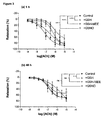
- aorta dissected with clearance of periaortic fat and connective tissue Vessels were divided into 3-5 mm aortic rings with care taken not to stretch or damage the vessels. Aortic rings were subjected to cold ischaemic storage (4°C for 1 or 48 hours) in sealed containers filled with hypoxic control (UW without GSH) solution; UW with GSH (3 mM); UW with glutathione monoethyl ester (GSHMEE; 3 mM) or UW with S-nitrosated glutathione (GSNO; 100 ⁇ M).
- hypoxic control UW without GSH
- GSH GSH
- GSHEE glutathione monoethyl ester
- GSNO S-nitrosated glutathione
- aortic rings were suspended between two stainless steel supports in a myograph (700MO, Danish Myo, Aarhus, Denmark) and reoxygenated in 10 ml organ baths containing Krebs buffer solution (mM): NaCl 118, KCl 4.7, NaHCO 3 25, KH 2 PO 4 1.17, MgSO 4 .7H 2 O 1.2, Glucose 5.5, EDTA 0.03 and CaCl 2 .2H 2 O 1.6 (37°C; pH 7.4). Changes in isometric tension were detected by a transducer and recorded using a MacLab data acquisition system (MacLab 8 with Chart v 3.5; AD Instrument, Hastings, UK) and displayed on a Macintosh Performa 630 computer. Resting tensions of 1.5 g were applied to all rings prior to equilibration (30 minutes).
- Human umbilical vein endothelial cells were seeded in 162 ml flasks (Dulbecco's modified Eagle's medium 37°C, 5%CO 2 ). Cells were cultured to confluence and transferred to 6-well culture dishes containing phosphate buffered saline (control), UW without GSH, UW+GSH (3 mM), UW+GSH-MEE (3 mM) or UW+GSNO for 24 h (37°C) in the absence of any oxidants or in the presence of a hydroxyl radical generator (menadione; 10 ⁇ M), the superoxide generating system, xanthine + xanthine oxidase (5 ⁇ M; 1mU/ml) or the oxidant species H 2 O 2 (100 ⁇ M). Cell viability after 24 h incubations was assessed using a standard trypan blue exclusion assay.
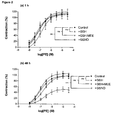
- tissues stored in GSH-free UW displayed significantly greater endothelium-dependent relaxation than any of the tissues stored in GSH analogue supplemented solutions ( Figure 3a ).
- all vessels showed depressed responses to Ach compared to their 1 h counterparts, but tissues stored in UW supplemented with GSH displayed significantly poorer endothelium-dependent relaxation than GSH-free UW.
- There was no significant difference in endothelium dependent relaxation between tissues stored in either GSNO or GSHMEE supplemented UW and GSH-free UW ( Figure 3b ).
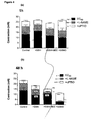
- HUVEC cell viability after 24 h in control phosphate buffered saline medium was >80% ( Figure 5 ).
- the hydroxyl radical generator was highly cytotoxic, with less than 5% of cells surviving the 24 hr treatment period under control conditions.
- GSH and GSH-MEE significantly enhanced cell survival in the presence of menadione whilst GSNO was ineffective.
- the superoxide generating system, X/XO failed to significantly affect cell survival and the pattern of responsiveness to the various treatments was the same as that found under unstressed conditions.
- H 2 O 2 caused substantial cell death, but none of the UW treatments had a significant effect on cell viability.
- Cold ischaemia and ischaemia-reperfusion injury are characterised by oxidative stress, to which endothelial cells are particularly sensitive, not only in terms of cell viability, but also through inactivation of the powerful endothelium-derived protective agent, nitric oxide (NO) by oxygen-centred free radicals.
- NO nitric oxide
- the resulting vasoconstriction, together with increased tendency for platelet aggregation, monocyte adhesion and leukocyte activation are critical limitations to organ preservation 5 .
- Glutathione is a key element in intracellular antioxidant defences, where it can act as an antioxidant in its own right, as a provider of reducing equivalents for antioxidant enzymes and as an endogenous reducing agent for recycling vitamins C and E 9,10 .
- GSH is vital to the protection of endothelial cells from oxidative damage 11 . Delivery of GSH is, therefore, a theoretically beneficial means of increasing the antioxidant capacity of cells and of protecting the integrity and function of endothelial cells in particular. On this basis, it seems logical to fortify organ preservation solutions like UW with GSH, in an effort to help protect against oxidative damage.
- the current data do not support the addition of GSH to UW organ preservation solution; rather than conferring beneficial anti-oxidant properties, it may evoke a paradoxical cytotoxic effect.
- the cell-permeant adduct of GSH, GSH-MEE appeared to have a less detrimental impact on endothelial function, it too was apparently toxic to endothelial cells.
- GSNO did not share the cytotoxic properties of GSH and GSH-MEE, whilst also generating NO for several hours after washout to cause sustained vasodilatation that could help sustain perfusion in the early period following transplantation.
Landscapes
- Life Sciences & Earth Sciences (AREA)
- Health & Medical Sciences (AREA)
- Engineering & Computer Science (AREA)
- Dentistry (AREA)
- General Health & Medical Sciences (AREA)
- Wood Science & Technology (AREA)
- Zoology (AREA)
- Environmental Sciences (AREA)
- Agricultural Chemicals And Associated Chemicals (AREA)
- Biophysics (AREA)
- Physiology (AREA)
Claims (13)
- Solution pour une utilisation dans la conservation d'un organe et/ou d'un tissu in vitro, où la solution comprend une source d'un S-nitrosothiol et comprenant en outre un ou plusieurs composants supplémentaires, choisis parmi l'amidon; l'amidon d'hydroxéthyle; l'acide lactobionique; le gluconate de sodium et/ou de potassium; le glucose; CaCl2; le phosphate de potassium; EDTA ou un autre agent de chélation de métal tel que le sulfate de magnésium chelex; le raffinose; le dextrane; une albumine recombinante; des agents protecteurs contre une attaque ischémique, tels que l'adénosine; des antioxydants, tels que l'allopurinol et/ou la pentafraction, les composants étant préparés dans de l'eau, sous réserve que la solution soit substantiellement exempte de glutathion ou de composés formant du glutathion.
- Solution selon la revendication 1, où la solution comprend du glutathion ou des composés formant du glutathion à des concentrations jusqu'à 50 µM.
- Solution selon l'une ou l'autre des revendications 1 et 2, dans laquelle le S-nitrosothiol est le S-nitrosoglutathion.
- Solution selon l'une quelconque des revendications précédentes, dans laquelle le S-nitrosothiol est présent dans une quantité de 1 µM - 1 mM.
- Solution selon la revendication 1, comprenant en outre un ou plusieurs composants supplémentaires, choisis parmi des antibiotiques, tels que la pénicilline; l'insuline (pour aider à l'absorption de glucose) et/ou des anti-inflammatoires tels que la dexaméthasone.
- Solution selon l'une quelconque des revendications précédentes, comprenant en outre de l'EDTA ou un autre ou des autres agents de chélation de métal.
- Emballage substantiellement imperméable à la lumière, où l'emballage contient une solution selon l'une quelconque des revendications 1-6.
- Emballage selon la revendication 7, dans lequel le S-nitrosothiol est initialement localisé dans un compartiment séparé du reste de la solution, où le compartiment comprend une membrane, une paroi ou équivalent pouvant être rompue, qui à la suite de la rupture permet au S-nitrosothiol de se mélanger avec le reste de la solution.
- Solution ou emballage selon l'une quelconque des revendications précédentes, où le S-nitrosothiol est stocké dans une solution stabilisante, telle que DMSO ou DMF, avant d'être mélangé avec les autres composants de la solution avant usage.
- Solution de conservation d'organes sans glutathion et comprenant, immédiatement avant usage en tant que solution de conservation, du S-nitrosoglutathion 50 µM - 200 µM, du lactobionate 50 mM - 200 mM, KH2PO4 10 mM -100 mM, MgSO4 1 mM - 20 mM, une source d'hydrate de carbone (par ex. raffinose, glucose ou saccharose) 2 mM - 50 mM, un chélateur de métal (par ex. EDTA ou chelex) 0,01 mM - 1 mM, un agent protecteur contre des attaques ischémiques, tel que l'adénosine 1 mM -10 mM, un antioxydant, tel que l'allopurinol 100 µM - 5 mM, un anti-inflammatoire, tel que la dexaméthasone 5 mg/l -30 mg/l, de l'insuline 10 µ/l - 100 u/l, un ou des antibiotiques, tels que la pénicilline 50 mg/l- 250 mg/l.
- Procédé pour la conservation d'un organe et/ou d'un tissu provenant de celui-ci, comprenant les étapes:a) de maintien d'un organe et/ou d'un tissu isolé dans une solution selon l'une quelconque des revendications 1-6 ou 10 et/ou de reperfusion d'une solution selon l'une quelconque des revendications 1-6 ou 10 à travers l'organe et/ou le tissu isolé.
- Procédé selon la revendication 11, dans lequel l'organe et/ou le tissu à conserver est un rein, un foie, un poumon ou un pancréas.
- Solution ou emballage selon l'une quelconque des revendications 1-10 pour une utilisation dans la conservation d'un organe et/ou tissu de rein, de foie, de poumon ou de pancréas.
Applications Claiming Priority (2)
| Application Number | Priority Date | Filing Date | Title |
|---|---|---|---|
| GB0612877A GB0612877D0 (en) | 2006-06-29 | 2006-06-29 | Organ preservation solution |
| PCT/GB2007/002420 WO2008001096A2 (fr) | 2006-06-29 | 2007-06-28 | Solution de conservation d'organes |
Publications (2)
| Publication Number | Publication Date |
|---|---|
| EP2040539A2 EP2040539A2 (fr) | 2009-04-01 |
| EP2040539B1 true EP2040539B1 (fr) | 2011-07-27 |
Family
ID=36888274
Family Applications (1)
| Application Number | Title | Priority Date | Filing Date |
|---|---|---|---|
| EP20070733409 Not-in-force EP2040539B1 (fr) | 2006-06-29 | 2007-06-28 | Solution de conservation d'organes |
Country Status (7)
| Country | Link |
|---|---|
| US (1) | US9131677B2 (fr) |
| EP (1) | EP2040539B1 (fr) |
| JP (1) | JP5474536B2 (fr) |
| AT (1) | ATE517546T1 (fr) |
| ES (1) | ES2371542T3 (fr) |
| GB (1) | GB0612877D0 (fr) |
| WO (1) | WO2008001096A2 (fr) |
Cited By (1)
| Publication number | Priority date | Publication date | Assignee | Title |
|---|---|---|---|---|
| WO2015113126A1 (fr) | 2014-01-30 | 2015-08-06 | Uniao Brasileira De Educacao E Assistencia , Mantenedora Da Pucrs | Composition et méthode pour l'immunomodulation et/ou la conservation d'organes ex vivo, procédés et utilisation |
Families Citing this family (7)
| Publication number | Priority date | Publication date | Assignee | Title |
|---|---|---|---|---|
| ES2330404B1 (es) * | 2008-05-19 | 2010-09-22 | Universidad De Barcelona | Solucion acuosa para la preservacion de tejidos y organos. |
| WO2013143822A1 (fr) | 2012-03-26 | 2013-10-03 | Imax Discovery Gmbh | Adénosine utilisée en tant que renforçateur de goût sucré pour certains sucres |
| EP2821081A1 (fr) * | 2013-07-05 | 2015-01-07 | ResuSciTec GmbH | Solution protectrice pour prévenir ou réduire une lésion de reperfusion du cerveau et du corps entier |
| GB201511207D0 (en) | 2015-06-25 | 2015-08-12 | Xvivo Perfusion Ab | Isolated organ evaluation and treatment |
| CN108587911A (zh) * | 2018-04-17 | 2018-09-28 | 江西业力医疗器械有限公司 | 一种细胞、组织及微生物保存液、制备方法及应用 |
| KR102319110B1 (ko) * | 2021-07-12 | 2021-10-29 | 주식회사 이노스템바이오 | 세포성 바이오 의약품의 장기 보존을 위한 동결보존액 조성물 |
| KR20240131710A (ko) * | 2023-02-24 | 2024-09-02 | 이엔셀 주식회사 | 세포의 냉동제형 |
Family Cites Families (11)
| Publication number | Priority date | Publication date | Assignee | Title |
|---|---|---|---|---|
| US4798824A (en) | 1985-10-03 | 1989-01-17 | Wisconsin Alumni Research Foundation | Perfusate for the preservation of organs |
| US4879283A (en) * | 1985-10-03 | 1989-11-07 | Wisconsin Alumni Research Foundation | Solution for the preservation of organs |
| JPH0822801B2 (ja) * | 1989-10-06 | 1996-03-06 | ウイスコンシン アラムナイ リサーチ フオンデーシヨン | 臓器保存用溶液 |
| JP2860301B2 (ja) * | 1990-09-19 | 1999-02-24 | ヘキスト・マリオン・ルセル株式会社 | 臓器保存用溶液 |
| US5696152A (en) * | 1996-05-07 | 1997-12-09 | Wisconsin Alumni Research Foundation | Taxol composition for use as organ preservation and cardioplegic agents |
| CN1270687C (zh) * | 1996-05-13 | 2006-08-23 | B.布朗医学公司 | 适合与柔性容器配合使用的进料入口管 |
| US6045990A (en) * | 1998-07-09 | 2000-04-04 | Baust; John M. | Inclusion of apoptotic regulators in solutions for cell storage at low temperature |
| WO2001065935A1 (fr) | 2000-03-08 | 2001-09-13 | Yoram Vodovotz | Solution pour perfusion du rein contenant un donneur d'oxyde nitrique |
| ITRM20010337A1 (it) * | 2001-06-14 | 2002-12-16 | Sigma Tau Ind Farmaceuti | Soluzione per la conservazione e perfuzione di organi in attesa che vengano trapiantati. |
| JP2003267801A (ja) * | 2002-03-12 | 2003-09-25 | Pharmafoods Kenkyusho:Kk | 保存剤用組成物及び該組成物を含有する動物の細胞または臓器の保存剤 |
| JPWO2004019680A1 (ja) * | 2002-08-30 | 2006-01-05 | 株式会社ビーエムジー | 臓器、組識または細胞の保護および保存のための組成物およびその利用 |
-
2006
- 2006-06-29 GB GB0612877A patent/GB0612877D0/en not_active Ceased
-
2007
- 2007-06-28 EP EP20070733409 patent/EP2040539B1/fr not_active Not-in-force
- 2007-06-28 AT AT07733409T patent/ATE517546T1/de not_active IP Right Cessation
- 2007-06-28 WO PCT/GB2007/002420 patent/WO2008001096A2/fr not_active Ceased
- 2007-06-28 JP JP2009517401A patent/JP5474536B2/ja not_active Expired - Fee Related
- 2007-06-28 US US12/306,332 patent/US9131677B2/en not_active Expired - Fee Related
- 2007-06-28 ES ES07733409T patent/ES2371542T3/es active Active
Cited By (1)
| Publication number | Priority date | Publication date | Assignee | Title |
|---|---|---|---|---|
| WO2015113126A1 (fr) | 2014-01-30 | 2015-08-06 | Uniao Brasileira De Educacao E Assistencia , Mantenedora Da Pucrs | Composition et méthode pour l'immunomodulation et/ou la conservation d'organes ex vivo, procédés et utilisation |
Also Published As
| Publication number | Publication date |
|---|---|
| JP5474536B2 (ja) | 2014-04-16 |
| JP2009542607A (ja) | 2009-12-03 |
| WO2008001096A3 (fr) | 2008-12-18 |
| ES2371542T3 (es) | 2012-01-04 |
| WO2008001096A2 (fr) | 2008-01-03 |
| EP2040539A2 (fr) | 2009-04-01 |
| ATE517546T1 (de) | 2011-08-15 |
| GB0612877D0 (en) | 2006-08-09 |
| US9131677B2 (en) | 2015-09-15 |
| US20090305222A1 (en) | 2009-12-10 |
Similar Documents
| Publication | Publication Date | Title |
|---|---|---|
| US9131677B2 (en) | Organ preservation solution | |
| Caldwell‐Kenkel et al. | Reperfusion injury to endothelial cells following cold ischemic storage of rat livers | |
| US6569615B1 (en) | Composition and methods for tissue preservation | |
| US6365338B1 (en) | Organ preservative solution containing trehalose, anti-oxidant, cations and an energy source | |
| US6811965B2 (en) | Kidney perfusion solution containing nitric oxide donor, inhibitor of NOS2, glutathione, gluconate and methods of use | |
| US4920044A (en) | Intracellular flush solution for preserving organs | |
| EP1093377B1 (fr) | Inclusion de regulateurs d'apoptose dans des solutions de stockage de cellules a basse temperature. | |
| Wiezorek et al. | Rapid conversion to high xanthine oxidase activity in viable Kupffer cells during hypoxia. | |
| CA2424073A1 (fr) | Solution de stockage a froid pour conservation d'organes et de tissus biologiques | |
| JPH0768082B2 (ja) | 臓器保存用溶液 | |
| JP2017061531A (ja) | 臓器保存用組成物とその用途 | |
| JP3326177B2 (ja) | 臓器保存液 | |
| EP1119244A1 (fr) | Preconditionnement cellulaire et milieu de cryopreservation | |
| CA2725020C (fr) | Solution aqueuse pour la conservation de tissus et d'organes | |
| Brasile et al. | NOS: the underlying mechanism preserving vascular integrity and during ex vivo warm kidney perfusion | |
| US20120301866A1 (en) | Liquid formulation having dissolved gases useful for preserving biological material | |
| CN113490414B (zh) | 干细胞的保存 | |
| US20030049840A1 (en) | Cell preconditioning and cryopreservation medium | |
| CA2424058A1 (fr) | Solution de perfusion pour machine de perfusion destinee a la conservation d'organes et de tissus biologiques | |
| US12471592B2 (en) | Cytoprotective compositions for short-term cells storage and transportation without cryopreservation and deep freezing | |
| US20180295833A1 (en) | Method for suppression of or protection from ischemia/reperfusion injury of organs for transplantation | |
| Hatchett et al. | Carboxyebselen a potent and selective inhibitor of endothelial nitric oxide synthase | |
| EP3651576B1 (fr) | Solutions de conservation | |
| Tambyraja et al. | Glutathione supplementation to University of Wisconsin solution causes endothelial dysfunction | |
| Stanke‐Labesque et al. | Functional assessment of rat aorta after cold storage in different media |
Legal Events
| Date | Code | Title | Description |
|---|---|---|---|
| PUAI | Public reference made under article 153(3) epc to a published international application that has entered the european phase |
Free format text: ORIGINAL CODE: 0009012 |
|
| 17P | Request for examination filed |
Effective date: 20081223 |
|
| AK | Designated contracting states |
Kind code of ref document: A2 Designated state(s): AT BE BG CH CY CZ DE DK EE ES FI FR GB GR HU IE IS IT LI LT LU LV MC MT NL PL PT RO SE SI SK TR |
|
| AX | Request for extension of the european patent |
Extension state: AL BA HR MK RS |
|
| 17Q | First examination report despatched |
Effective date: 20090427 |
|
| DAX | Request for extension of the european patent (deleted) | ||
| GRAP | Despatch of communication of intention to grant a patent |
Free format text: ORIGINAL CODE: EPIDOSNIGR1 |
|
| GRAS | Grant fee paid |
Free format text: ORIGINAL CODE: EPIDOSNIGR3 |
|
| GRAA | (expected) grant |
Free format text: ORIGINAL CODE: 0009210 |
|
| AK | Designated contracting states |
Kind code of ref document: B1 Designated state(s): AT BE BG CH CY CZ DE DK EE ES FI FR GB GR HU IE IS IT LI LT LU LV MC MT NL PL PT RO SE SI SK TR |
|
| REG | Reference to a national code |
Ref country code: GB Ref legal event code: FG4D |
|
| REG | Reference to a national code |
Ref country code: CH Ref legal event code: EP |
|
| REG | Reference to a national code |
Ref country code: DE Ref legal event code: R096 Ref document number: 602007016094 Country of ref document: DE Effective date: 20110915 |
|
| REG | Reference to a national code |
Ref country code: NL Ref legal event code: VDEP Effective date: 20110727 |
|
| REG | Reference to a national code |
Ref country code: ES Ref legal event code: FG2A Ref document number: 2371542 Country of ref document: ES Kind code of ref document: T3 Effective date: 20120104 |
|
| REG | Reference to a national code |
Ref country code: AT Ref legal event code: MK05 Ref document number: 517546 Country of ref document: AT Kind code of ref document: T Effective date: 20110727 |
|
| PG25 | Lapsed in a contracting state [announced via postgrant information from national office to epo] |
Ref country code: IS Free format text: LAPSE BECAUSE OF FAILURE TO SUBMIT A TRANSLATION OF THE DESCRIPTION OR TO PAY THE FEE WITHIN THE PRESCRIBED TIME-LIMIT Effective date: 20111127 Ref country code: LT Free format text: LAPSE BECAUSE OF FAILURE TO SUBMIT A TRANSLATION OF THE DESCRIPTION OR TO PAY THE FEE WITHIN THE PRESCRIBED TIME-LIMIT Effective date: 20110727 Ref country code: SE Free format text: LAPSE BECAUSE OF FAILURE TO SUBMIT A TRANSLATION OF THE DESCRIPTION OR TO PAY THE FEE WITHIN THE PRESCRIBED TIME-LIMIT Effective date: 20110727 Ref country code: FI Free format text: LAPSE BECAUSE OF FAILURE TO SUBMIT A TRANSLATION OF THE DESCRIPTION OR TO PAY THE FEE WITHIN THE PRESCRIBED TIME-LIMIT Effective date: 20110727 Ref country code: PT Free format text: LAPSE BECAUSE OF FAILURE TO SUBMIT A TRANSLATION OF THE DESCRIPTION OR TO PAY THE FEE WITHIN THE PRESCRIBED TIME-LIMIT Effective date: 20111128 Ref country code: NL Free format text: LAPSE BECAUSE OF FAILURE TO SUBMIT A TRANSLATION OF THE DESCRIPTION OR TO PAY THE FEE WITHIN THE PRESCRIBED TIME-LIMIT Effective date: 20110727 Ref country code: BE Free format text: LAPSE BECAUSE OF FAILURE TO SUBMIT A TRANSLATION OF THE DESCRIPTION OR TO PAY THE FEE WITHIN THE PRESCRIBED TIME-LIMIT Effective date: 20110727 |
|
| PG25 | Lapsed in a contracting state [announced via postgrant information from national office to epo] |
Ref country code: SI Free format text: LAPSE BECAUSE OF FAILURE TO SUBMIT A TRANSLATION OF THE DESCRIPTION OR TO PAY THE FEE WITHIN THE PRESCRIBED TIME-LIMIT Effective date: 20110727 Ref country code: AT Free format text: LAPSE BECAUSE OF FAILURE TO SUBMIT A TRANSLATION OF THE DESCRIPTION OR TO PAY THE FEE WITHIN THE PRESCRIBED TIME-LIMIT Effective date: 20110727 Ref country code: CY Free format text: LAPSE BECAUSE OF FAILURE TO SUBMIT A TRANSLATION OF THE DESCRIPTION OR TO PAY THE FEE WITHIN THE PRESCRIBED TIME-LIMIT Effective date: 20110727 Ref country code: LV Free format text: LAPSE BECAUSE OF FAILURE TO SUBMIT A TRANSLATION OF THE DESCRIPTION OR TO PAY THE FEE WITHIN THE PRESCRIBED TIME-LIMIT Effective date: 20110727 Ref country code: GR Free format text: LAPSE BECAUSE OF FAILURE TO SUBMIT A TRANSLATION OF THE DESCRIPTION OR TO PAY THE FEE WITHIN THE PRESCRIBED TIME-LIMIT Effective date: 20111028 Ref country code: PL Free format text: LAPSE BECAUSE OF FAILURE TO SUBMIT A TRANSLATION OF THE DESCRIPTION OR TO PAY THE FEE WITHIN THE PRESCRIBED TIME-LIMIT Effective date: 20110727 |
|
| PG25 | Lapsed in a contracting state [announced via postgrant information from national office to epo] |
Ref country code: CZ Free format text: LAPSE BECAUSE OF FAILURE TO SUBMIT A TRANSLATION OF THE DESCRIPTION OR TO PAY THE FEE WITHIN THE PRESCRIBED TIME-LIMIT Effective date: 20110727 Ref country code: SK Free format text: LAPSE BECAUSE OF FAILURE TO SUBMIT A TRANSLATION OF THE DESCRIPTION OR TO PAY THE FEE WITHIN THE PRESCRIBED TIME-LIMIT Effective date: 20110727 |
|
| PG25 | Lapsed in a contracting state [announced via postgrant information from national office to epo] |
Ref country code: RO Free format text: LAPSE BECAUSE OF FAILURE TO SUBMIT A TRANSLATION OF THE DESCRIPTION OR TO PAY THE FEE WITHIN THE PRESCRIBED TIME-LIMIT Effective date: 20110727 Ref country code: EE Free format text: LAPSE BECAUSE OF FAILURE TO SUBMIT A TRANSLATION OF THE DESCRIPTION OR TO PAY THE FEE WITHIN THE PRESCRIBED TIME-LIMIT Effective date: 20110727 |
|
| PLBE | No opposition filed within time limit |
Free format text: ORIGINAL CODE: 0009261 |
|
| STAA | Information on the status of an ep patent application or granted ep patent |
Free format text: STATUS: NO OPPOSITION FILED WITHIN TIME LIMIT |
|
| PG25 | Lapsed in a contracting state [announced via postgrant information from national office to epo] |
Ref country code: DK Free format text: LAPSE BECAUSE OF FAILURE TO SUBMIT A TRANSLATION OF THE DESCRIPTION OR TO PAY THE FEE WITHIN THE PRESCRIBED TIME-LIMIT Effective date: 20110727 |
|
| 26N | No opposition filed |
Effective date: 20120502 |
|
| REG | Reference to a national code |
Ref country code: DE Ref legal event code: R097 Ref document number: 602007016094 Country of ref document: DE Effective date: 20120502 |
|
| PG25 | Lapsed in a contracting state [announced via postgrant information from national office to epo] |
Ref country code: MC Free format text: LAPSE BECAUSE OF NON-PAYMENT OF DUE FEES Effective date: 20120630 |
|
| REG | Reference to a national code |
Ref country code: CH Ref legal event code: PL |
|
| REG | Reference to a national code |
Ref country code: CH Ref legal event code: PL |
|
| REG | Reference to a national code |
Ref country code: IE Ref legal event code: MM4A |
|
| PG25 | Lapsed in a contracting state [announced via postgrant information from national office to epo] |
Ref country code: LI Free format text: LAPSE BECAUSE OF NON-PAYMENT OF DUE FEES Effective date: 20120630 Ref country code: CH Free format text: LAPSE BECAUSE OF NON-PAYMENT OF DUE FEES Effective date: 20120630 Ref country code: IE Free format text: LAPSE BECAUSE OF NON-PAYMENT OF DUE FEES Effective date: 20120628 |
|
| PG25 | Lapsed in a contracting state [announced via postgrant information from national office to epo] |
Ref country code: BG Free format text: LAPSE BECAUSE OF FAILURE TO SUBMIT A TRANSLATION OF THE DESCRIPTION OR TO PAY THE FEE WITHIN THE PRESCRIBED TIME-LIMIT Effective date: 20111027 |
|
| PG25 | Lapsed in a contracting state [announced via postgrant information from national office to epo] |
Ref country code: MT Free format text: LAPSE BECAUSE OF FAILURE TO SUBMIT A TRANSLATION OF THE DESCRIPTION OR TO PAY THE FEE WITHIN THE PRESCRIBED TIME-LIMIT Effective date: 20110727 |
|
| PG25 | Lapsed in a contracting state [announced via postgrant information from national office to epo] |
Ref country code: TR Free format text: LAPSE BECAUSE OF FAILURE TO SUBMIT A TRANSLATION OF THE DESCRIPTION OR TO PAY THE FEE WITHIN THE PRESCRIBED TIME-LIMIT Effective date: 20110727 |
|
| PG25 | Lapsed in a contracting state [announced via postgrant information from national office to epo] |
Ref country code: LU Free format text: LAPSE BECAUSE OF NON-PAYMENT OF DUE FEES Effective date: 20120628 |
|
| PG25 | Lapsed in a contracting state [announced via postgrant information from national office to epo] |
Ref country code: HU Free format text: LAPSE BECAUSE OF FAILURE TO SUBMIT A TRANSLATION OF THE DESCRIPTION OR TO PAY THE FEE WITHIN THE PRESCRIBED TIME-LIMIT Effective date: 20070628 |
|
| REG | Reference to a national code |
Ref country code: FR Ref legal event code: PLFP Year of fee payment: 9 |
|
| PGFP | Annual fee paid to national office [announced via postgrant information from national office to epo] |
Ref country code: DE Payment date: 20150624 Year of fee payment: 9 Ref country code: GB Payment date: 20150624 Year of fee payment: 9 Ref country code: ES Payment date: 20150611 Year of fee payment: 9 |
|
| PGFP | Annual fee paid to national office [announced via postgrant information from national office to epo] |
Ref country code: FR Payment date: 20150608 Year of fee payment: 9 |
|
| PGFP | Annual fee paid to national office [announced via postgrant information from national office to epo] |
Ref country code: IT Payment date: 20150625 Year of fee payment: 9 |
|
| REG | Reference to a national code |
Ref country code: DE Ref legal event code: R119 Ref document number: 602007016094 Country of ref document: DE |
|
| GBPC | Gb: european patent ceased through non-payment of renewal fee |
Effective date: 20160628 |
|
| REG | Reference to a national code |
Ref country code: FR Ref legal event code: ST Effective date: 20170228 |
|
| PG25 | Lapsed in a contracting state [announced via postgrant information from national office to epo] |
Ref country code: FR Free format text: LAPSE BECAUSE OF NON-PAYMENT OF DUE FEES Effective date: 20160630 Ref country code: DE Free format text: LAPSE BECAUSE OF NON-PAYMENT OF DUE FEES Effective date: 20170103 |
|
| PG25 | Lapsed in a contracting state [announced via postgrant information from national office to epo] |
Ref country code: GB Free format text: LAPSE BECAUSE OF NON-PAYMENT OF DUE FEES Effective date: 20160628 |
|
| PG25 | Lapsed in a contracting state [announced via postgrant information from national office to epo] |
Ref country code: IT Free format text: LAPSE BECAUSE OF NON-PAYMENT OF DUE FEES Effective date: 20160628 |
|
| PG25 | Lapsed in a contracting state [announced via postgrant information from national office to epo] |
Ref country code: ES Free format text: LAPSE BECAUSE OF NON-PAYMENT OF DUE FEES Effective date: 20160629 |
|
| REG | Reference to a national code |
Ref country code: ES Ref legal event code: FD2A Effective date: 20181203 |