EP2048183B1 - Komplex auf Polybenzimidazol-Base, Vernetzungsmaterial von daraus gebildetem Polybenzoxazinen und Brennstoffzelle damit - Google Patents
Komplex auf Polybenzimidazol-Base, Vernetzungsmaterial von daraus gebildetem Polybenzoxazinen und Brennstoffzelle damit Download PDFInfo
- Publication number
- EP2048183B1 EP2048183B1 EP08166328.8A EP08166328A EP2048183B1 EP 2048183 B1 EP2048183 B1 EP 2048183B1 EP 08166328 A EP08166328 A EP 08166328A EP 2048183 B1 EP2048183 B1 EP 2048183B1
- Authority
- EP
- European Patent Office
- Prior art keywords
- group
- substituted
- unsubstituted
- polybenzimidazole
- benzoxazine
- Prior art date
- Legal status (The legal status is an assumption and is not a legal conclusion. Google has not performed a legal analysis and makes no representation as to the accuracy of the status listed.)
- Ceased
Links
- 0 CC(C)(C)C(C(C1)=C)=CC2=C1OC*C(CC(*=NC1)NC1=CCC=C*)C2 Chemical compound CC(C)(C)C(C(C1)=C)=CC2=C1OC*C(CC(*=NC1)NC1=CCC=C*)C2 0.000 description 3
Images




Classifications
-
- C—CHEMISTRY; METALLURGY
- C08—ORGANIC MACROMOLECULAR COMPOUNDS; THEIR PREPARATION OR CHEMICAL WORKING-UP; COMPOSITIONS BASED THEREON
- C08G—MACROMOLECULAR COMPOUNDS OBTAINED OTHERWISE THAN BY REACTIONS ONLY INVOLVING UNSATURATED CARBON-TO-CARBON BONDS
- C08G73/00—Macromolecular compounds obtained by reactions forming a linkage containing nitrogen with or without oxygen or carbon in the main chain of the macromolecule, not provided for in groups C08G12/00 - C08G71/00
- C08G73/06—Polycondensates having nitrogen-containing heterocyclic rings in the main chain of the macromolecule
- C08G73/18—Polybenzimidazoles
-
- H—ELECTRICITY
- H01—ELECTRIC ELEMENTS
- H01M—PROCESSES OR MEANS, e.g. BATTERIES, FOR THE DIRECT CONVERSION OF CHEMICAL ENERGY INTO ELECTRICAL ENERGY
- H01M8/00—Fuel cells; Manufacture thereof
- H01M8/10—Fuel cells with solid electrolytes
-
- C—CHEMISTRY; METALLURGY
- C08—ORGANIC MACROMOLECULAR COMPOUNDS; THEIR PREPARATION OR CHEMICAL WORKING-UP; COMPOSITIONS BASED THEREON
- C08G—MACROMOLECULAR COMPOUNDS OBTAINED OTHERWISE THAN BY REACTIONS ONLY INVOLVING UNSATURATED CARBON-TO-CARBON BONDS
- C08G73/00—Macromolecular compounds obtained by reactions forming a linkage containing nitrogen with or without oxygen or carbon in the main chain of the macromolecule, not provided for in groups C08G12/00 - C08G71/00
- C08G73/06—Polycondensates having nitrogen-containing heterocyclic rings in the main chain of the macromolecule
- C08G73/22—Polybenzoxazoles
-
- C—CHEMISTRY; METALLURGY
- C08—ORGANIC MACROMOLECULAR COMPOUNDS; THEIR PREPARATION OR CHEMICAL WORKING-UP; COMPOSITIONS BASED THEREON
- C08L—COMPOSITIONS OF MACROMOLECULAR COMPOUNDS
- C08L79/00—Compositions of macromolecular compounds obtained by reactions forming in the main chain of the macromolecule a linkage containing nitrogen with or without oxygen or carbon only, not provided for in groups C08L61/00 - C08L77/00
- C08L79/04—Polycondensates having nitrogen-containing heterocyclic rings in the main chain; Polyhydrazides; Polyamide acids or similar polyimide precursors
-
- H—ELECTRICITY
- H01—ELECTRIC ELEMENTS
- H01M—PROCESSES OR MEANS, e.g. BATTERIES, FOR THE DIRECT CONVERSION OF CHEMICAL ENERGY INTO ELECTRICAL ENERGY
- H01M8/00—Fuel cells; Manufacture thereof
- H01M8/02—Details
-
- H—ELECTRICITY
- H01—ELECTRIC ELEMENTS
- H01M—PROCESSES OR MEANS, e.g. BATTERIES, FOR THE DIRECT CONVERSION OF CHEMICAL ENERGY INTO ELECTRICAL ENERGY
- H01M8/00—Fuel cells; Manufacture thereof
- H01M8/10—Fuel cells with solid electrolytes
- H01M8/1016—Fuel cells with solid electrolytes characterised by the electrolyte material
- H01M8/1018—Polymeric electrolyte materials
- H01M8/102—Polymeric electrolyte materials characterised by the chemical structure of the main chain of the ion-conducting polymer
- H01M8/1027—Polymeric electrolyte materials characterised by the chemical structure of the main chain of the ion-conducting polymer having carbon, oxygen and other atoms, e.g. sulfonated polyethersulfones [S-PES]
-
- H—ELECTRICITY
- H01—ELECTRIC ELEMENTS
- H01M—PROCESSES OR MEANS, e.g. BATTERIES, FOR THE DIRECT CONVERSION OF CHEMICAL ENERGY INTO ELECTRICAL ENERGY
- H01M8/00—Fuel cells; Manufacture thereof
- H01M8/10—Fuel cells with solid electrolytes
- H01M8/1016—Fuel cells with solid electrolytes characterised by the electrolyte material
- H01M8/1018—Polymeric electrolyte materials
- H01M8/102—Polymeric electrolyte materials characterised by the chemical structure of the main chain of the ion-conducting polymer
- H01M8/103—Polymeric electrolyte materials characterised by the chemical structure of the main chain of the ion-conducting polymer having nitrogen, e.g. sulfonated polybenzimidazoles [S-PBI], polybenzimidazoles with phosphoric acid, sulfonated polyamides [S-PA] or sulfonated polyphosphazenes [S-PPh]
-
- H—ELECTRICITY
- H01—ELECTRIC ELEMENTS
- H01M—PROCESSES OR MEANS, e.g. BATTERIES, FOR THE DIRECT CONVERSION OF CHEMICAL ENERGY INTO ELECTRICAL ENERGY
- H01M8/00—Fuel cells; Manufacture thereof
- H01M8/10—Fuel cells with solid electrolytes
- H01M8/1016—Fuel cells with solid electrolytes characterised by the electrolyte material
- H01M8/1018—Polymeric electrolyte materials
- H01M8/102—Polymeric electrolyte materials characterised by the chemical structure of the main chain of the ion-conducting polymer
- H01M8/1032—Polymeric electrolyte materials characterised by the chemical structure of the main chain of the ion-conducting polymer having sulfur, e.g. sulfonated-polyethersulfones [S-PES]
-
- H—ELECTRICITY
- H01—ELECTRIC ELEMENTS
- H01M—PROCESSES OR MEANS, e.g. BATTERIES, FOR THE DIRECT CONVERSION OF CHEMICAL ENERGY INTO ELECTRICAL ENERGY
- H01M8/00—Fuel cells; Manufacture thereof
- H01M8/10—Fuel cells with solid electrolytes
- H01M8/1016—Fuel cells with solid electrolytes characterised by the electrolyte material
- H01M8/1018—Polymeric electrolyte materials
- H01M8/1039—Polymeric electrolyte materials halogenated, e.g. sulfonated polyvinylidene fluorides
-
- H—ELECTRICITY
- H01—ELECTRIC ELEMENTS
- H01M—PROCESSES OR MEANS, e.g. BATTERIES, FOR THE DIRECT CONVERSION OF CHEMICAL ENERGY INTO ELECTRICAL ENERGY
- H01M8/00—Fuel cells; Manufacture thereof
- H01M8/10—Fuel cells with solid electrolytes
- H01M8/1016—Fuel cells with solid electrolytes characterised by the electrolyte material
- H01M8/1018—Polymeric electrolyte materials
- H01M8/1041—Polymer electrolyte composites, mixtures or blends
- H01M8/1046—Mixtures of at least one polymer and at least one additive
- H01M8/1048—Ion-conducting additives, e.g. ion-conducting particles, heteropolyacids, metal phosphate or polybenzimidazole with phosphoric acid
-
- H—ELECTRICITY
- H01—ELECTRIC ELEMENTS
- H01M—PROCESSES OR MEANS, e.g. BATTERIES, FOR THE DIRECT CONVERSION OF CHEMICAL ENERGY INTO ELECTRICAL ENERGY
- H01M8/00—Fuel cells; Manufacture thereof
- H01M8/10—Fuel cells with solid electrolytes
- H01M8/1016—Fuel cells with solid electrolytes characterised by the electrolyte material
- H01M8/1018—Polymeric electrolyte materials
- H01M8/1069—Polymeric electrolyte materials characterised by the manufacturing processes
- H01M8/1072—Polymeric electrolyte materials characterised by the manufacturing processes by chemical reactions, e.g. in situ polymerisation or in situ crosslinking
-
- H—ELECTRICITY
- H01—ELECTRIC ELEMENTS
- H01M—PROCESSES OR MEANS, e.g. BATTERIES, FOR THE DIRECT CONVERSION OF CHEMICAL ENERGY INTO ELECTRICAL ENERGY
- H01M2300/00—Electrolytes
- H01M2300/0017—Non-aqueous electrolytes
- H01M2300/0065—Solid electrolytes
- H01M2300/0082—Organic polymers
-
- Y—GENERAL TAGGING OF NEW TECHNOLOGICAL DEVELOPMENTS; GENERAL TAGGING OF CROSS-SECTIONAL TECHNOLOGIES SPANNING OVER SEVERAL SECTIONS OF THE IPC; TECHNICAL SUBJECTS COVERED BY FORMER USPC CROSS-REFERENCE ART COLLECTIONS [XRACs] AND DIGESTS
- Y02—TECHNOLOGIES OR APPLICATIONS FOR MITIGATION OR ADAPTATION AGAINST CLIMATE CHANGE
- Y02E—REDUCTION OF GREENHOUSE GAS [GHG] EMISSIONS, RELATED TO ENERGY GENERATION, TRANSMISSION OR DISTRIBUTION
- Y02E60/00—Enabling technologies; Technologies with a potential or indirect contribution to GHG emissions mitigation
- Y02E60/30—Hydrogen technology
- Y02E60/50—Fuel cells
-
- Y—GENERAL TAGGING OF NEW TECHNOLOGICAL DEVELOPMENTS; GENERAL TAGGING OF CROSS-SECTIONAL TECHNOLOGIES SPANNING OVER SEVERAL SECTIONS OF THE IPC; TECHNICAL SUBJECTS COVERED BY FORMER USPC CROSS-REFERENCE ART COLLECTIONS [XRACs] AND DIGESTS
- Y02—TECHNOLOGIES OR APPLICATIONS FOR MITIGATION OR ADAPTATION AGAINST CLIMATE CHANGE
- Y02P—CLIMATE CHANGE MITIGATION TECHNOLOGIES IN THE PRODUCTION OR PROCESSING OF GOODS
- Y02P70/00—Climate change mitigation technologies in the production process for final industrial or consumer products
- Y02P70/50—Manufacturing or production processes characterised by the final manufactured product
Definitions
- aspects of the present invention relate to a polybenzimidazole-base complex, a crosslinked material of polybenzoxazines formed thereof, and a fuel cell using the same.
- Ionic conductors In conventional ionic conductors, ions are moved by applying a voltage thereto. Ionic conductors are widely used in electrochemical devices such as fuel cells, electrochemical sensors, and the like.
- fuel cells may use a proton conductor that can provide long-term stable proton conductivity at an operating temperature of 100 to 300°C under non-humidified conditions or low-humidified conditions with a relative humidity of 50% or less.
- solid polymer-type fuel cells that include a perfluorocarbonsulfonic acid membrane as an electrolyte membrane generate insufficient energy at an operating temperature of 100 to 300°C at a relative humidity of 50% or less.
- Conventional fuel cells include fuel cells using an electrolyte membrane containing a proton conducting agent, fuel cells using a silica diffusion membrane, fuel cells using an inorganic-organic composite membrane, fuel cells using a phosphoric acid-doped graft membrane, and fuel cells using an ionic liquid composite membrane.
- the solid polymer electrolyte membrane formed of PBI described above has excellent thermal stability compared with other polymer electrolyte membranes, and thus is a suitable type of electrolyte membrane.
- EP 1760 110 discloses a crosslinked object of a polybenzoxazine-based compound formed of a polymerized resultant of a first monofunctional benzoxazine-based monomer or a second multifunctional benzoxazine-based monomer with a crosslinkable compound, an electrolyte membrane including the crosslinked object, a method of preparing the electrolyte membrane, and a fuel cell employing the electrolyte membrane including the crosslinked object.
- US 5,637,670 discloses molecular weight controlled and endcapped polybenzimidazoles (PBI) prepared by the aromatic nucleophilic displacement reaction of di(hydroxyphenylbenzimidazole) monomers with activated aromatic dihalides or activated aromatic dinitro compounds.
- the PBI are endcapped with mono(hydroxyphenyl)benzimidazoles.
- the polymerizations are carried out in polar aprotic solvents such as N-methyl-2-pyrrolidinone or N,N-dimethylacetamide using alkali metal bases such as potassium carbonate at elevated temperatures under nitrogen.
- aspects of the present invention provide a polybenzimidazole-base complex, a crosslinked material formed of the polybenzimidazole-base complex and one or more polybenzoxazines formed thereof, an electrolyte membrane using a crosslinked material formed of the polybenzimidazole-base complex and a benzoxazine-based monomer, and a fuel cell using the electrolyte membrane.
- a polybenzimidazole-base complex comprising a polybenzimidazole-based material and a base, wherein in an 1 H nuclear magnetic resonance ( 1 H-NMR) of a solution of 10 mg of the polybenzimidazole-base complex in 0.7 ml DMSO d 6 recorded on a Bruker DPX 300 NMR spectrometer, peaks of the 1 H nuclear magnetic resonance ( 1 H-NMR) spectrum of the polybenzimidazole-base complex are detected at a chemical shift of 9.14 ⁇ 0.5, 8.32 ⁇ 0.5, 7.92 ⁇ 0.5, 7.75 ⁇ 0.5, and 7.62 ⁇ 0.5 in said 1 H-NMR spectrum, and wherein the base is at least one selected from the group consisting of sodium carbonate (Na 2 CO 3 ), sodium hydrogen carbonate (NaHCO 3 ), potassium carbonate (K 2 CO 3 ), potassium hydrogen carbonate (KHCO 3 ) lithium carbonate (Li 2 COs), rubidium carbonate (Rb 2 CO
- an amount of a metal ion measured by inductively coupled plasma (ICP) analysis of the polybenzimidazole-base complex may be in the range of 300 to 1200 ppm, or more specifically in the range of 323 to 1170 ppm.
- a thermal decomposition initiation temperature of the polybenzimidazole-base complex may be in the range of 180 to 220°C.
- a ratio of a weight average molecular weight to a number average molecular weight (Mw/Mn) of the polybenzimidazole-base complex may be in the range of 2.1:1 to 2.5:1.
- the polybenzimidazole-base complex may have a weight average molecular weight of 65,000 to 70,000, and a number average molecular weight of 25,000 to 30,000.
- a method of preparing a polybenzimidazole-base complex comprising: dissolving a polybenzimidazole-based material in an organic solvent to obtain a polybenzimidazole solution, adding a base to the polybenzimidazole solution and mixing the mixture, and then heat treating the resultant.
- an electrolyte membrane for a fuel cell comprising the polybenzimidazole-base complex described above.
- a fuel cell comprising a cathode; an anode; and an electrolyte membrane disposed therebetween, wherein the electrolyte membrane comprises the polybenzimidazole-base complex described above.
- a crosslinked material comprising a polymerized product of (i) the polybenzimidazole-base complex described above, and (ii) at least one selected from a first benzoxazine-based monomer represented by Formula 3 below and a second benzoxazine-based monomer represented by Formula 4 below: wherein R 1 is hydrogen, a substituted or unsubstituted C 1 -C 20 alkyl group, a substituted or unsubstituted C 2 -C 20 alkenyl group, a substituted or unsubstituted C 2 -C 20 alkynyl group, a substituted or unsubstituted C 6 -C 20 aryl group, a substituted or unsubstituted C 2 -C 20 heteroaryl group, a substituted or unsubstituted C 4 -C 20 cycloalkyl group, a substituted or unsubstituted C 2 -C 20 heterocyclic
- R 2 is a substituted or unsubstituted C 1 -C 20 alkyl group, a substituted or unsubstituted C 2 -C 20 alkenyl group, a substituted or unsubstituted C 2 -C 20 alkynyl group, a substituted or unsubstituted C 6 -C 20 aryl group, a substituted or unsubstituted C 7 -C 20 arylalkyl group, a substituted or unsubstituted C 2 -C 20 heteroaryl group, a substituted or unsubstituted C 2 -C 20 heteroarylalkyl group, a substituted or unsubstituted C 4 -C 20 carbocyclic group, a substituted or unsubstituted C 4 -C 20 carbocyclic alkyl group, a substituted or unsubstituted C 2 -C 20 heterocyclic group, or a substituted or unsubstituted C 2 -C
- an electrolyte membrane comprising the crosslinked material described above.
- a fuel cell including the electrolyte membrane comprising the crosslinked material described above.
- aspects of the present invention provide a polybenzimidazole-base complex, which is a product obtained by reacting a polybenzimidazole solution in which a polybenzimidazole-based material is dissolved in an organic solvent with a base, and then heat treating the resultant.
- the base may be a weak base, such as, for example, at least one carbonate selected from the group consisting of sodium carbonate (Na 2 CO 3 ), sodium hydrogen carbonate (NaHCO 3 ), potassium carbonate (K 2 CO 3 ), potassium hydrogen carbonate (KHCO 3 ), lithium carbonate (Li 2 CO 3 ), rubidium carbonate (Rb 2 CO 3 ), cesium carbonate (Cs 2 CO 3 ), ammonium carbonate ((NH 4 ) 2 CO 3 ), and ammonium hydrogen carbonate ((NH 4 )HCO 3 ).
- the amount of the base may be in the range of 0.01 to 20 parts by weight based on 100 parts by weight of the polybenzimidazole-based material.
- the polybenzimidazole-base complex may not be completely formed.
- the amount of the base is greater than 20 parts by weight based on 100 parts by weight of the polybenzimidazole-based material, the viscosity of the composition that forms the polybenzimidazole-base complex is increased, and thus components including the base cannot be uniformly dispersed in the composition that forms the polybenzimidazole-base complex.
- polybenzimidazole-based material refers to a polymer material that includes benzimidazole units.
- polybenzimidazole-based material should not be confused with the term “polybenzimidazole-base complex,” which, as noted above, refers to a product obtained by reacting a polybenzimidazole solution in which a polybenzimidazole-based material is dissolved in an organic solvent with a base, and then heat treating the resultant).
- the polybenzimidazole-based material may be poly[2,2'-(m-phenylene)-5,5'-bibenzimidazole] (PBI) or poly(2,5-benzimidazole) (ABPBI).
- a method of preparing the polybenzimidazole-base complex according to aspects of the present invention is as follows. First, a polybenzimidazole-based material is completely dissolved in an organic solvent to obtain a polybenzimidazole solution.
- the organic solvent may be any solvent that dissolves the polybenzimidazole-based material.
- the organic solvent may be at least one selected from the group consisting of dimethylacetamide, dimethylformamide, dimethylsulfoxide, and 1-methyl-2-pyrolidine (NMP).
- the amount of the organic solvent may be adjusted to obtain solution containing 10 to 20 wt% of the polybenzimidazole-based material in the organic solvent.
- the amount of the organic solvent added results in a solution containing less than 10 wt% of the polybenzimidazole-based material in the solution, the polybenzimidazole-based material is not uniformly dissolved; on the other hand, when the amount of the organic solvent added results in greater than 20 wt% of the polybenzimidazole-based material in the solution, the reactivity between polybenzimidazole-based material and the base is reduced.
- a temperature of the heat treatment may be in the range of 60 to 150°C.
- the base may not be easily mixed and dispersed in the polybenzimidazole solution; on the other hand, when the temperature of the heat treatment is greater than 150°C, the formation of the polybenzimidazole-base complex is not fully performed.
- the formation of the polybenzimidazole-base complex can be confirmed through a nuclear magnetic resonance (NMR) analysis.
- NMR nuclear magnetic resonance
- An instrument that may be used in such NMR analysis is a Bruker NMR 300MHz spectrometer (model name: DPX 300) commercially available from Bruker Biospin.
- the NMR analysis may be performed using a 0.8 ml sample of a resultant solution prepared by dissolving 10 mg of the polybenzimidazole-base complex in 0.7 mL of DMSO d6.
- thermogravimetric analysis including the thermal decomposition initiation temperature, thermal decomposition rate and 10% weight loss temperature in the TGA curve, may be performed using a TA Instrument TGA 2050 thermogravimetric analyzer.
- the thermogravimetric analysis may be performed at a temperature ramp from room temperature to 1000°C (at a rate of 8 to 15°/min or more specifically, 10°C/min), and performed using a Pt pan under a nitrogen (N 2 ) gas atmosphere.
- the thermal decomposition initiation temperature of the polybenzimidazole-base complex prepared using the preparation process described above may be in the range of 180 to 220°C, or more specifically 200°C.
- the thermal decomposition rate of the polybenzimidazole-base complex at a heating temperature of 20 to 1000°C may be in the range of 8 to 15°C /min, or more specifically 10°C /min, and a 10% weight loss temperature in the TGA curve may be in the range of 200 to 280°C, and particularly about 250°C.
- the polybenzimidazole-base complex may have a ratio of weight average molecular weight to number average molecular weight (M w /M n , referred to as "molecular weight distribution") of 2.1:1 to 2.5:1, or more specifically, 2.4:1.
- the polybenzimidazole-base complex may have a weight average molecular weight of 65,000 to 70,000, or more specifically 69,000, and may have a number average molecular weight of 25,000 to 30,000, or more specifically 29,000, and may have a viscosity average molecular weight of 80,000 to 83,000, or more specifically about 82,000.
- the weight average molecular weight, number average molecular weight and viscosity average molecular weight may be measured using a gel permeation chromatography (GPC) method.
- GPC gel permeation chromatography
- a TDA 302 analyzer available from Viscotek GPCmax may be used in the measurement of the molecular weights.
- an eluent may be dimethylformamide (DMF) and 0.1 wt% of LiBr
- a column may be PLGel Mixed-C * 2 (temp: 40°C)
- a flow rate may be about 1 ml/min
- an injection volume may be about 100 ⁇ l.
- the 1 H nuclear magnetic resonance ( 1 H-NMR) spectrum of the polybenzimidazole-base complex does not have a peak corresponding to a peak of NH of imidazole of a general polybenzimidazole-based material, at a chemical shift of 12 to 15 ppm.
- a peak is detected at a chemical shift of 9.15 ⁇ 0.5 (s, 1 H), 8.30 ⁇ 0.5 (d, 2H), 7.92 ⁇ 0.5 (s, 1 H), 7.75 ⁇ 0.5 (m, 3H), and 7.62 ⁇ 0.5 (m, 3H) using 1 H-NMR operating at 300 MHz.
- the solvent used for dissolving the polybenzimidazole-base complex may be DMSO-d6, DMF-d6, or the like, or more specifically, may be DMSO-d6.
- the amount of metal ions (such as, for example, Na + , K + , Ca 2+ , and the like) measured by inductively coupled plasma (ICP) analysis of the polybenzimidazole-base complex may be in the range of 300 to 1,200 ppm, or more specifically, in the range of 323 to 1,170 ppm.
- An ICP mass spectrometer such as the ICPS-8100 sequential spectrometer available from Shimadzu may be used in the determination of the amount of metal ions by ICP analysis.
- a method of preparing the compound of Formula 1 is as follows ( Macromol. Rapid Commun. 2004, 25, 1410 ).
- n may be adjusted so that the compound of Formula 1 has a weight average molecular weight of 40,000 to 44,000.
- n may be adjusted so that the compound of Formula 2 has a weight average molecular weight of 40,000 to 45,000.
- the polybenzimidazole-base complex according to aspects of the present invention has high thermal stability and conductivity, and thus can be used as a material for forming an electrolyte membrane for a fuel cell.
- the polybenzimidazole-base complex is impregnated with a proton conductor such as acid to form an electrolyte membrane.
- a fuel cell employing the electrolyte membrane described above can have improved electric power generation at a high temperature under unhumidified conditions.
- Non-restrictive examples of the proton conductor include a phosphoric acid, a phosphonic acid, a C 1 -C 20 organic phosphonic acid, and the like.
- the C 1 -C 20 organic phosphonic acid may be ethyl phosphonic acid, methyl phosphonic acid, vinyl phosphonic acid, and the like.
- the amount of the proton conductor may be in the range of 300 to 1,000 parts by weight based on 100 parts by weight of the total weight of the electrolyte membrane.
- concentration of the acid used is not particularly limited.
- the phosphoric acid when a phosphoric acid is used, the phosphoric acid may be in the form of an 85 wt% aqueous phosphoric acid solution, and the impregnation time of the phosphoric acid may be in the range of 2.5 to 14 hours at 80°C.
- aspects of the present invention also provide a crosslinked material comprising a polymerized product of a polybenzimidazole-base complex as described above and at least one monomer selected from a first benzoxazine-based monomer represented by Formula 3 below and a second benzoxazine-based monomer represented by Formula 4 below: wherein R 1 is hydrogen, a substituted or unsubstituted C 1 -C 20 alkyl group, a substituted or unsubstituted C 2 -C 20 alkenyl group, a substituted or unsubstituted C 2 -C 20 alkynyl group, a substituted or unsubstituted C 6 -C 20 aryl group, a substituted or unsubstituted C 2 -C 20 heteroaryl group, a substituted or unsubstituted C 4 -C 20 cycloalkyl group, a substituted or unsubstituted C 2 -C 20 heterocyclic group, a halogen
- R 2 may be independently selected in Formula 3 and Formula 4.
- the crosslinked material comprising a polymerized product of a polybenzimidazole-base complex as described above and at least one monomer selected from a first benzoxazine-based monomer represented by Formula 3 below and a second benzoxazine-based monomer represented by Formula 4 may be referred to herein as "the crosslinked material" for brevity.
- the crosslinked material may be a polymerized resultant product of a first benzoxazine-based monomer represented by Formula 6 below, a second benzoxazine-based monomer represented by Formula 16 below, and the polybenzimidazole-base complex: wherein R 2 is a phenyl group.
- an amount of the second benzoxazine-based monomer may be in the range of 0.5 to 50 parts by weight, or more specifically 1 to 10 parts by weight based on 100 parts by weight of the first benzoxazine-based monomer.
- the first benzoxazine-based monomer may be used as a monomer for forming a polymer matrix used to form an electrolyte membrane by polymerizing the first benzoxazine-based monomer with the polybenzimidazole-base complex, and the second benzoxazine-based monomer may be used as an additive when the electrolyte membrane is formed.
- the second benzoxazine-based monomer is a difunctional benzoxazine-based compound containing two benzoxazine rings. If R 3 is a group represented by the formula below, the second benzoxazine-based monomer is a trifunctional benzoxazine-based compound containing three benzoxazine rings.
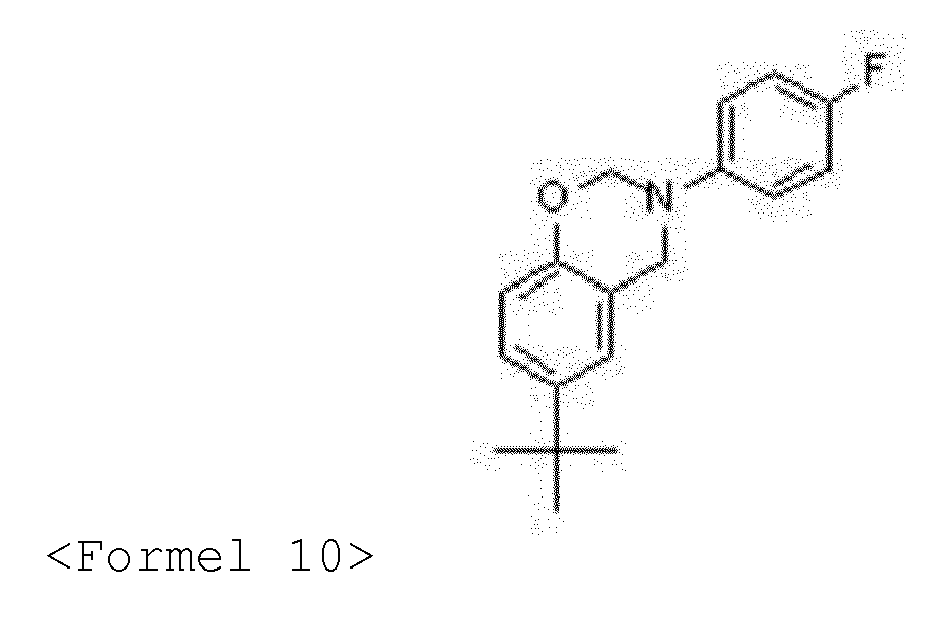
- the first benzoxazine-based monomer of Formula 3 may be one of the compounds represented by Formulae 5 through 14 below.
- a method of synthesizing the crosslinked material formed of a polymerized product of the first benzoxazine-based monomer of Formula 3, the second benzoxazine-based monomer of Formula 4 and the polybenzimidazole-base complex is as follows.
- At least one selected from the first benzoxazine-based monomer of Formula 3 and the second benzoxazine-based monomer of Formula 4, and the polybenzimidazole-base complex are mixed in a predetermined ratio.
- the amount of the polybenzimidazole-base complex may be in the range of 5 to 95 parts by weight based on 100 parts by weight of the total weight of the at least one selected from the first benzoxazine-based monomer and the second benzoxazine-based monomer.
- the electrolyte membrane When the amount of the polybenzimidazole-base complex is less than 5 parts by weight, the electrolyte membrane may not be impregnated with a phosphoric acid, and thus proton conductivity of the electrolyte membrane may be reduced. On the other hand, when the amount of the polybenzimidazole-base complex is greater than 95 parts by weight, the crosslinked material may be dissolved in polyphosphoric acid due to the presence of excessive phosphoric acid so that gas permeation occurs.
- the amount of the second benzoxazine-based monomer of Formula 4 may be in the range of 0.5 to 50 parts by weight, or more specifically in the range of 1 to 10 parts by weight based on 100 parts by weight of the first benzoxazine-based monomer of Formula 3.
- the amount of the second benzoxazine-based monomer of Formula 4 is less than 0.5 parts by weight, the physical and chemical properties of an electrolyte membrane in more than a critical impregnation amount of a proton conductor such as a phosphoric acid may be degraded.
- the crosslinking density of the polybenzimidazole-base complex may be highly concentrated so that doping of a proton conductor may not be easy.
- the mixture is cured to obtain a crosslinked material through an intercrosslinking reaction. That is, the first benzoxazine-based monomer and the second benzoxazine-based monomer are polymerized (cured) with the polybenzimidazole-base complex through thermal ring opening polymerization to form a polymer matrix.
- the polymerization reaction proceeds with a gradual adjustment of temperature, and may be performed at a temperature for the curing reaction and at a reaction time of at least 7 hours to form a network structure.
- the temperature of the curing reaction varies depending on characteristics of the first benzoxazine-based monomer, the second benzoxazine-based monomer, and the polybenzimidazole-base complex, but is typically in the range of 50 to 250°C.
- the temperature of the curing reaction is less than 50°C, the curing reaction itself may not be performed; on the other hand, when the temperature of the curing reaction is greater than 250°C, unreacted materials may be obtained.
- the time of the curing reaction depends on the temperature of the curing reaction, and may be at least 7 hours, or more specifically, in the range of 8 to 20 hours at the temperature range described above.
- Chemical and physical properties of the crosslinked material formed of a polymerized product of at least one selected from the first benzoxazine-based monomer of Formula 1 and the second benzoxazine-based monomer of Formula 2 and a cross-linkable compound are as follows.
- the crosslinked material has thermosetting properties, and thus is not dissolved in an organic solvent, acid, or base. Therefore, the molecular weight of the crosslinked material is difficult to measure using gel permeation chromatography (GPC), which is the most general method used to obtain the molecular weight of existing polymers.
- GPC gel permeation chromatography
- the crosslinked material has the strong acid trapping ability of the benzoxazine-based compound, has improved mechanical characteristics due to crosslinking, and is not dissolved in a polyphosphoric acid, and thus is very chemically stable.
- An electrolyte membrane prepared using the crosslinked material has excellent phosphoric acid retention, and has also improved mechanical and chemical stability.
- the crosslinked material can be obtained using a polymerization process that does not require a polymerization initiator or a separate crosslinking agent, but simply uses heat. Thus, mass production of the crosslinked material is easy in terms of preparation process.
- the starting material used in synthesis of the crosslinked material is very inexpensive. Thus, manufacturing costs can be reduced.
- the electrolyte membrane formed of the crosslinked material has highly maintained mechanical and chemical stabilities even when an impregnation amount of a proton conductor such as a phosphoric acid is increased in order to increase proton conductivity, and thus can be usefully used in a fuel cell for operation at high temperature under unhumidified conditions.
- a proton conductor such as a phosphoric acid
- a method of preparing an electrolyte membrane using the crosslinked material, according to an embodiment of the present invention, is as follows.
- At least one selected from the first benzoxazine-based monomer of Formula 3 and the second benzoxazine-based monomer of Formula 4 described above, and the polybenzimidazole-base complex as also described above are blended, and then the mixture is cured at a temperature in the range of 50 to 250°C, and particularly in the range of 80 to 220°C. Subsequently, the resultant is impregnated with a proton conductor such as acid to form an electrolyte membrane.
- At least one selected from the first benzoxazine-based monomer of Formula 3 and the second benzoxazine-based monomer of Formula 4 and the polybenzimidazole-base complex as described above are mixed together. Using the mixture, an electrolyte membrane is formed.
- the formation of the electrolyte membrane may be performed using a tape casting method or a conventional coating method.
- the conventional coating method may be a method in which the mixture is cast onto a support using a doctor blade.
- a doctor blade with a 250 to 500 ⁇ m gap may be used.
- the process of forming the electrolyte membrane further includes separating the electrolyte membrane from the support, between the time when curing of the mixture occurs and the time when impregnation of the resultant with acid occurs.
- the cured mixture is immersed in distilled water at a temperature in the range of 60 to 80°C.
- the support can be any support that can support an electrolyte membrane, such as, for example, a glass substrate, a polyimide film, a polyethyleneterephthalate film, or the like.
- an electrolyte membrane such as, for example, a glass substrate, a polyimide film, a polyethyleneterephthalate film, or the like.
- a process of filtering the mixture may be further performed.
- the tape cast membrane is cured by heat treatment, and then is impregnated with a proton conductor such as acid to form an electrolyte membrane.
- the proton conductor may be the same as described above with respect to forming an electrolyte membrane using the polybenzimidazole-base complex by itself (that is, without a benzoxazine-based monomer and may be used in the same amounts as described above.
- the electrolyte membrane prepared using the crosslinked material can be used as a hydrogen ion conductive membrane for a fuel cell.
- membrane-electrode assembly for a fuel cell using the electrolyte membrane is as follows.
- MEA membrane-electrode assembly
- the MEA may be formed by positioning electrodes including the catalyst layer at respective sides of the electrolyte membrane prepared using the processes described above, and then joining the electrolyte membrane and the electrodes together at a high temperature and under a high pressure, or coating on a polymer film a composition for an electrode catalyst layer, the composition including a catalyst metal, and then joining a fuel diffusion layer to the polymer membrane.
- the joining is performed under a pressure in the range of 0.1 to 3 ton/cm 2 , and particularly about 1 ton/cm 2 , in a state reached when the MEA is heated up to a temperature that softens the electrolyte membrane (for example, up to about 125°C).
- a bipolar plate is disposed on each side of the MEA to manufacture a fuel cell.
- the bipolar plate has grooves that supply fuel, and functions as a current collector.
- the catalyst used in the preparation of the MEA may be platinum alone, or an alloy or mixture of platinum and at least one metal selected from the group consisting of gold, palladium, rhodium, iridium, ruthenium, tin, molybdenum, cobalt, and chrome.
- the fuel cell may be preferably be a polymer electrolyte membrane (PEM) fuel cell.
- PEM polymer electrolyte membrane
- C 1 -C 20 alkyl group refers to methyl, ethyl, propyl, isobutyl, sec-butyl, pentyl, iso-amyl, hexyl, or the like.
- the C 1 -C 20 alkyl group may be unsubstituted, or at least one hydrogen atom of the alkyl group may be substituted with a halogen atom, a C 1 -C 20 alkyl group substituted with a halogen atom (for example, CCF 3 , CHCF 2 , CH 2 F, CCl 3 , and the like), a hydroxyl group, a nitro group, a cyano group, an amino group, an amidino group, hydrazine, hydrazone, a carboxyl group or a salt thereof, a sulfonic acid group or a salt thereof, a phosphoric acid or a salt thereof, a C 1 -C 20 alkyl group, a C 2 -C 20 alkenyl group, a C 2 -C 20 alkynyl group, a C 1 -C 20 heteroalkyl group, a C 6 -C 20 aryl group, a C 6 -C 20
- C 2 -C 20 alkenyl group refers to vinylene, arylene, or the like.
- the C 2 -C 20 alkenyl group may be unsubstituted, or at least one hydrogen atom of the alkenyl group may be substituted with one of the substituents described above with respect to the alkyl group.
- C 2 -C 20 alkynyl group refers to acetylene, or the like.
- the C 2 -C 20 alkynyl group may be unsubstituted, or at least one hydrogen atom of the alkynyl group may be substituted with one of the substituents described above with respect to the alkyl group.
- C 1 -C 20 alkylene group refers to methylene, ethylene, propylene, isobutylene, sec-butylene, pentylene, iso-amylene, hexylene, or the like.
- the C 1 -C 20 alkylene group may be unsubstituted, or at least one hydrogen atom of the alkylene group may be substituted with one of the substituents described above with respect to the alkyl group.
- C 2 -C 20 alkenylene group refers to an allyl group, or the like.
- the C 2 -C 20 alkenylene group may be unsubstituted, or at least one hydrogen atom of the alkenylene group may be substituted with one of the substituents described above with respect to the alkyl group.
- C 2 -C 20 alkynylene group refers to a diradical acetylene group, or the like.
- the C 2 -C 20 alkynylene group may be unsubstituted, or at least one hydrogen atom of the alkynylene group may be substituted with one of the substituents described above with respect to the alkyl group.
- aryl group refers to a C 6 -C 20 carbocyclic aromatic system containing at least one ring, wherein the rings can be attached to each other pendantly method or fused with each other.
- aryl refers to an aromatic radical such as phenyl, naphthyl, tetrahydronaphthyl, or the like.
- the aryl group may be unsubstituted or may have a substituent such as haloalkylene, nitro, cyano, alkoxy, and lower alkyl amino.
- at least one hydrogen atom of the aryl group may be substituted with one of the substituents described above with respect to the alkyl group.
- arylene group refers to a diradical C 6 -C 20 carbocyclic aromatic system containing at least one ring, wherein the rings can be attached to each other pendantly method or fused with each other.
- arylene refers to an aromatic diradical, such as phenylene, naphthylene, tetrahydronaphthylene, or the like.
- the arylene group may have been unsubstituted or may have a substituent such as haloalkylene, nitro, cyano, alkoxy, and lower alkyl amino.
- at least one hydrogen atom of the arylene group may be substituted with one of the substituents described above with respect to the alkyl group.
- arylalkyl group refers to a group in which at least one of the hydrogen atoms in an aryl group as defined above is substituted with a group such as lower alkyl, for example, methyl, ethyl, propyl, or the like.
- the arylalkyl group may be benzyl, phenylethyl, or the like.
- At least one hydrogen atom of the arylalkyl group may be substituted with one of the substituents described above with respect to the alkyl group.
- heteroaryl group refers to a monovalent aromatic organic group that contains 1, 2 or 3 hetero atoms selected from the group consisting of N, O, P, and S and has 1 to 20 carbon atoms.
- the heteroaryl group may be unsubstituted, or at least one hydrogen atom of the heteroaryl group may be substituted with one of the substituents described above with respect to the alkyl group.
- heteroarylene group refers to a bivalent aromatic organic group that contains 1, 2 or 3 hetero atoms selected from the group consisting of N, O, P, and S and has 1 to 20 carbon atoms.
- the heteroarylene group may be unsubstituted or at least one hydrogen atom of the heteroarylene group may be substituted with one of the substituents described above with respect to the alkyl group.
- heteroarylalkyl group refers to a group in which at least one of the hydrogen atoms of a heteroaryl group as described above is substituted with an alkyl group. At least one hydrogen atom of the heteroarylalkyl group may be substituted with one of the substituents described above with respect to the alkyl group.
- carbocyclic group refers to a C 5 -C 10 non-aromatic cyclic group such as a cyclohexyl group.
- the carbocyclic group may be unsubstituted, or at least one hydrogen atom of the carbocyclic group may be substituted with one of the substituents described above with respect to the alkyl group.
- carbocyclicalkyl group refers to a group in which at least one of the hydrogen atoms of the carbocyclic group as described above is substituted with an alkyl group. At least one hydrogen atom of the carbocyclicalkyl group may be substituted with one of the substituents described above with respect to the alkyl group.
- heterocyclic group refers to a non-aromatic 5-10 membered cyclic group containing a hetero atom such as nitrogen, sulfur, phosphorus, oxygen, and the like.
- the heterocyclic group may be unsubstituted or at least one hydrogen atom of the heterocyclic group may be substituted with one of the substituents described above with respect to the alkyl group.
- heterocyclicalkyl group refers to a group in which some of the hydrogen atoms of the heterocyclic group as described above are substituted with an alkyl group. At least one hydrogen atom of the heterocyclicalkyl group may be substituted with one of the substituents described above with respect to the alkyl group.
- the residual phosphoric acid in the polymer was removed using a 10% ammonium hydroxide solution and a Soxhlet device. The phosphoric acid removal process was performed until the phosphorous residue in the polymer could not be confirmed as present by elemental analysis.
- the obtained polymer was dried under pressure at 50°C for 3 days to obtain about 6 g of polymer (poly[2,2'-(m-phenylene)-5,5'-bibenzimidazole] (PBI)).
- the obtained PBI was precipitated using methanol, and the formed precipitate was washed with methanol to obtain PBI.
- the crude product was sequentially washed with an aqueous 1 N NaOH solution twice and with distilled water once, and then dried using magnesium sulfate. Subsequently, the resultant was filtered and then the solvent was removed therefrom. Then, the resultant was dried under vacuum to obtain the benzoxazine-based monomer of Formula 6 with a yield of 95%.
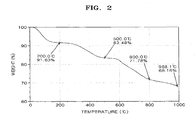
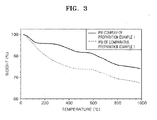
- FIGS. 1 through 3 are graphs showing thermogravimetric analysis (TGA) results of the polybenzimidazole-base complex of Preparation Example 1 and PBI of Comparative Preparation Example 1.
- FIG. 1 is a graph showing thermogravimetric analysis (TGA) results of PBI prepared in Comparative Preparation Example 1
- FIG. 2 is a graph showing TGA results of PBI prepared in Preparation Example 1 according to the present invention
- FIG. 3 is a combined graph showing the results of both FIGS. 1 and 2 .
- the polybenzimidazole-base complex of Preparation Example 1 had a thermal decomposition initiation temperature of 200°C and was thermally decomposed at a temperature in the range of 200 to 500°C.
- the PBI of Comparative Preparation Example 1 was rapidly thermally decomposed at a temperature in the range of 200 to 500°C and had a thermal decomposition initiation temperature of 500°C.
- FIGS. 4 and 5 are graphs showing nuclear magnetic resonance (NMR) analysis data of the polybenzimidazole-base complex of Preparation Example 1 and PBI of Comparative Preparation Example 1, respectively.
- ICP inductively coupled plasma
- the polybenzimidazole-base complex of Preparation Example 1 had an amount of sodium of about 1,170 ppm. A metal sodium was not detected in the sample obtained by impregnating PBI of Comparative Preparation Example 1 with a phosphoric acid.
- the polybenzimidazole-base complex of Preparation Example 1 was impregnated with phosphoric acid at 80°C for 2.5 hours to form an electrolyte membrane.
- the impregnation amount of the phosphoric acid was about 375 parts by weight with respect to 100 parts by weight of the total weight of the electrolyte membrane.
- Carbon paper was cut to a size of 4x7 cm 2 , fixed on a glass plate, and coated by a doctor blade (Sheen instrument). The gap interval of the doctor blade was adjusted to 600 ⁇ m.
- the slurry to form the cathode catalyst layer was coated onto the carbon paper, and the resultant was dried at room temperature for 1 hour, dried at 80°C for 1 hour, dried at 120°C for 30 minutes, and dried at 150°C for 15 minutes to prepare a cathode (a fuel electrode).
- the loading amount of PtCo in the prepared cathode was in the range of 2.2 to 2.4 mg/cm 2 .
- An electrode prepared using the following processes was used as an anode.
- 2 g of a catalyst in which 50 wt% of Pt was supported on carbon and 9 g of NMP as a solvent were added to a stirrer, and the mixture was stirred for 2 minutes using a high speed stirrer.
- a solution in which 0.05 g of polyvinylidenefluoride was dissolved in 1 g of NMP was added to the mixture, and the resultant was further stirred for 2 minutes to prepare a slurry used to form an anode catalyst layer.
- the slurry used to form an anode catalyst layer was coated onto carbon paper coated with a microporous layer using a bar coater. As a result, preparation of the anode was completed.
- the loading amount of Pt in the prepared anode was in the range of 1.1 to 1.34 mg/cm 2 .
- the electrolyte membrane was disposed between the cathode and the anode to prepare a MEA.
- the cathode and anode were not impregnated with phosphoric acid.
- a TEFLON membrane for a main gasket with a thickness of 200 ⁇ m and a TEFLON membrane for a subgasket with a thickness of 20 ⁇ m were joined and disposed between the electrode and the electrolyte membrane.
- Electricity was generated by causing hydrogen to flow into the anode (flowrate: 100 ccm) and causing air to flow into the cathode (flowrate: 250 ccm) at 150°C under a condition where the electrolyte membrane was not humidified, and characteristics of the fuel cell were measured.
- the crosslinked material of Preparation Example 2 was impregnated with 85 wt% of phosphoric acid at 80°C for 2.5 hours to form an electrolyte membrane.
- the impregnation amount of the phosphoric acid was about 500 parts by weight with respect to 100 parts by weight of the total weight of the electrolyte membrane.
- a PBI electrode was manufactured by using PBI and polyvinylidene fluoride (PVDF) as binders to prepare a slurry for a catalyst layer and coating the slurry onto carbon paper coated with a microporous layer by using a bar coater.
- the loading amount of Pt in the prepared PBI electrode was in the range of 1.0 to 1.4 mg/cm 2 .
- Pt-Co alloy which is known to prevent phosphoric acid anions from being absorbed, resulting in improvement in catalyst activity, was used as a catalyst
- only polyvinylidenefluoride was used as the binder to prepare a catalyst ink, and then the catalyst ink was coated on carbon paper coated with a microporous layer by using a bar coater to manufacture an electrode.
- the loading amount of Pt in the prepared electrode was in the range of 2.2 to 2.4 mg/cm 2 .
- the crosslinked material of Preparation Example 2 impregnated with a phosphoric acid was introduced between the electrodes to manufacture a membrane-electrode assembly (MEA) and thus the manufacture of a fuel cell using the MEA was completed.
- MEA membrane-electrode assembly
- a fuel cell was manufactured in the same manner as in Example 1, except that PBI of Comparative Preparation Example 1 was used instead of the polybenzimidazole-base complex of Preparation Example 1 in the preparation of the electrolyte membrane, and the impregnation amount of the phosphoric acid was about 309 parts by weight with respect to 100 parts by weight of the total weight of the electrolyte membrane. Performance of the fuel cell was then evaluated.
- FIGS. 6 and 7 respectively show performance evaluation results of the fuel cells manufactured in Example 1 and Comparative Example 1.
- the fuel cell of Example 1 ( FIG. 6 ) had improved voltage characteristics with respect to current density, compared with the fuel cell of Comparative Example 1 ( FIG. 7 ).
- the reference legends "D1," D2,” D5,” D9,” and “D14" respectively indicate the first, second, fifth, ninth and fourteen day of operation of the fuel cell of Example 1;
- the reference legends "D3,” D4,” and “D7” respectively indicate the first, second, fifth, ninth and fourteen day of operation of the fuel cell of Example 1
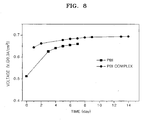
- FIG. 8 is a graph showing aging speed of fuel cells of Example 1 and Comparative Example 1.
- the fuel cell of Example 1 using the polybenzimidazole-base complex had a maximum performance of about 22 mV greater than that of the fuel cell of Comparative Example 1.
- FIG. 9 is a graph showing a change in cell potential with respect to current density of the fuel cells of Example 2 and Comparative Example 1. Referring to FIG. 9 , the evaluations were performed based on a loading amount of a catalyst in the same electrode and an activation time of 7 days.
- Example 2 had improved cell potential characteristics compared with the fuel cell of Comparative Example 1.
Landscapes
- Chemical & Material Sciences (AREA)
- Chemical Kinetics & Catalysis (AREA)
- Engineering & Computer Science (AREA)
- Manufacturing & Machinery (AREA)
- General Chemical & Material Sciences (AREA)
- Life Sciences & Earth Sciences (AREA)
- Sustainable Development (AREA)
- Sustainable Energy (AREA)
- Electrochemistry (AREA)
- Crystallography & Structural Chemistry (AREA)
- Health & Medical Sciences (AREA)
- Medicinal Chemistry (AREA)
- Polymers & Plastics (AREA)
- Organic Chemistry (AREA)
- Composite Materials (AREA)
- Fuel Cell (AREA)
- Macromolecular Compounds Obtained By Forming Nitrogen-Containing Linkages In General (AREA)
- Conductive Materials (AREA)
- Compositions Of Macromolecular Compounds (AREA)
- Phenolic Resins Or Amino Resins (AREA)
Claims (13)
- Polybenzimidazolbasiskomplex, umfassend ein polybenzimidazolbasiertes Material und eine Base, wobei in einem 1H-Kernspinresonanz-(1H-NMR)-Spektrum einer Lösung von 10 mg des Polybenzimidazolbasiskomplexes in 0,7 ml DMSO d6, das auf einem NMR-Spektrometer vom Typ Bruker DPX300 aufgezeichnet wird, Spitzenwerte des 1H-Kernspinresonanz-(1H-NMR)-Spektrums des Polybenzimidazolbasiskomplexes bei chemischen Verschiebungen von 9,14±0,5, 8,32±0,5, 7,92±0,5, 7,75±0,5 und 7,62±0,5 in dem 1H-NMR-Spektrum erkannt werden, wobei die Base mindestens eine ist, die ausgewählt ist aus der Gruppe bestehend aus Natriumcarbonat (Na2CO3), Natriumwasserstoffcarbonat (NaHCO3), Kaliumcarbonat (K2CO3) , Kaliumwasserstoffcarbonat (KHCO3), Lithiumcarbonat (Li2CO3) , Rubidiumcarbonat (Rb2CO3) , Caesiumcarbonat (Cs2CO3) , Ammoniumcarbonat ((NH4)2CO3) und Ammoniumwasserstoffcarbonat ((NH4)HCO3).
- Polybenzimidazolbasiskomplex nach Anspruch 1, wobei das polybenzimidazolbasierte Material Poly[2,2'-(m-phenylen)-5,5'-bibenzimidazol] (PBI) oder Poly(2,5-benzimidazol) (ABPBI) ist.
- Verfahren zur Herstellung eines Polybenzimidazolbasiskomplexes nach einem der Ansprüche 1 oder 2, umfassend:Auflösen eines polybenzimidazolbasierten Materials in einem organischen Lösungsmittel, um eine Polybenzimidazollösung zu erhalten; undZugeben einer Base zu der Polybenzimidazollösung und Mischen der Mischung und danach Wärmebehandeln des Ergebnisses.
- Verfahren nach Anspruch 3, wobei die Wärmebehandlung bei einer Temperatur im Bereich von 60 bis 150 °C ausgeführt wird.
- Vernetztes Material, umfassend ein polymerisierte Produkt aus (i) dem Polybenzimidazolbasiskomplex nach einem der Ansprüche 1 oder 2 und (ii) mindestens einem, das ausgewählt ist aus einem ersten benzoxazinbasierten Monomer der folgenden Formel 3 und einem zweiten benzoxazinbasierten Monomer der folgenden Formel 4:

R2 eine substituierte oder unsubstituierte C1-C20-Alkylgruppe, eine substituierte oder unsubstituierte C2-C20-Alkenylgruppe, eine substituierte oder unsubstituierte C2-C20-Alkynylgruppe, eine substituierte oder unsubstituierte C6-C20-Arylgruppe, eine substituierte oder unsubstituierte C7-C20-Arylalkylgruppe, eine substituierte oder unsubstituierte C2-C20-Heteroarylgruppe, eine substituierte oder unsubstituierte C2-C20-Heteroarylalkylgruppe, eine substituierte oder unsubstituierte carbocyclische C4-C20-Gruppe, eine substituierte oder unsubstituierte carbocyclische C4-C20-Alkylgruppe, eine substituierte oder unsubstituierte heterocyclische C2-C20-Gruppe oder eine substituierte oder unsubstituierte heterocyclische C2-C20-Alkylgruppe ist,
R3 ausgewählt ist aus der Gruppe bestehend aus einer substituierten oder unsubstituierten C1-C20-Alkylengruppe, einer substituierten oder unsubstituierten C2-C20-Alkenylengruppe, einer substituierten oder unsubstituierten C2-C20-Alkynylengruppe, einer substituierten oder unsubstituierten C6-C20-Arylengruppe, einer substituierten oder unsubstituierten C2-C20-Heteroarylengruppe, -C(=O)- und -SO2-. - Vernetztes Material nach Anspruch 5, wobei das erste benzoxazinbasierte Monomer eine Verbindung ist, die durch eine der folgenden Formeln 5 bis 14 dargestellt wird.



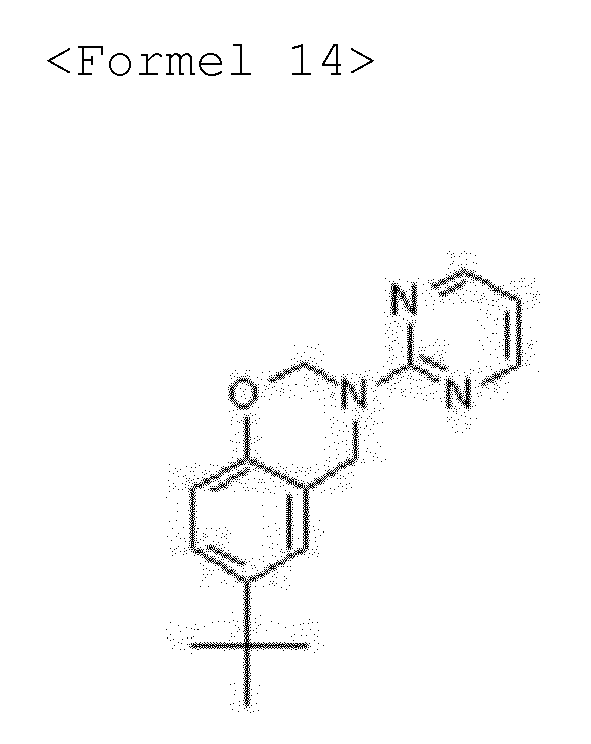
- Vernetztes Material nach Anspruch 5 oder 6, wobei das zweite benzoxazinbasierte Monomer eine Verbindung ist, die durch eine der folgenden Formeln 15 bis 19 dargestellt wird;


- Vernetztes Material nach Anspruch 5, das ein polymerisiertes Dreikomponentenergebnis eines ersten benzoxazinbasierten Monomers der folgenden Formel 6; eines zweiten benzoxazinbasierten Monomers der folgenden Formel 16; und des Polybenzimidazolbasiskomplexes ist;
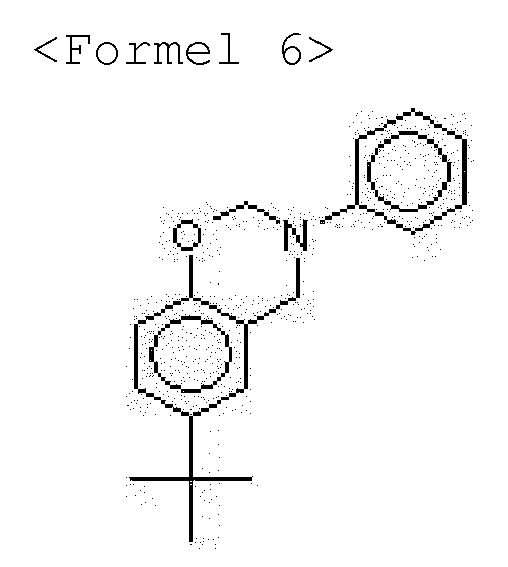

- Vernetztes Material nach Anspruch 5, das ein polymerisiertes Produkt des Polybenzimidazolbasiskomplexes, mindestens eines erstes benzoxazinbasierten Monomers der Formel 3 und mindestens eines zweiten benzoxazinbasierten Monomers der Formel 4 ist.
- Vernetztes Material nach Anspruch 9, wobei die Menge des mindestens einen zweiten benzoxazinbasierten Monomers im Bereich von 0,5 bis 50 Gewichtsteilen basierend auf 100 Gewichtsteilen des mindestens einen ersten benzoxazinbasierten Monomers ist.
- Elektrolytmembran, umfassend den Polybenzimidazolbasiskomplex nach einem der Ansprüche 1 oder 2 oder das vernetzte Material nach einem der Ansprüche 5 bis 10.
- Elektrolytmembran, ferner umfassend mindestens eine Protonenleiter, der ausgewählt ist aus einer Phosphorsäure, einer Phosphonsäure und einer organischen C1-C20-Phosphonsäure.
- Brennstoffzelle, umfassend die Elektrolytmembran nach Anspruch 12.
Applications Claiming Priority (1)
| Application Number | Priority Date | Filing Date | Title |
|---|---|---|---|
| KR1020070102579A KR101366808B1 (ko) | 2007-10-11 | 2007-10-11 | 폴리벤즈이미다졸-염기 복합체, 이로부터 형성된폴리벤조옥사진계 화합물의 가교체 및 이를 이용한연료전지 |
Publications (2)
| Publication Number | Publication Date |
|---|---|
| EP2048183A1 EP2048183A1 (de) | 2009-04-15 |
| EP2048183B1 true EP2048183B1 (de) | 2014-01-15 |
Family
ID=40193747
Family Applications (1)
| Application Number | Title | Priority Date | Filing Date |
|---|---|---|---|
| EP08166328.8A Ceased EP2048183B1 (de) | 2007-10-11 | 2008-10-10 | Komplex auf Polybenzimidazol-Base, Vernetzungsmaterial von daraus gebildetem Polybenzoxazinen und Brennstoffzelle damit |
Country Status (4)
| Country | Link |
|---|---|
| US (1) | US8298450B2 (de) |
| EP (1) | EP2048183B1 (de) |
| JP (1) | JP2009091580A (de) |
| KR (1) | KR101366808B1 (de) |
Families Citing this family (28)
| Publication number | Priority date | Publication date | Assignee | Title |
|---|---|---|---|---|
| US9096725B2 (en) | 2009-04-24 | 2015-08-04 | Samsung Electronics Co., Ltd. | Cross-linked polyazole, method of preparing the polyazole, electrode for fuel cell including the cross-linked polyazole, electrolyte membrane for fuel cell including the cross-linked polyazole, method of manufacturing the electrolyte membrane, and fuel cell including the cross-linked polyazole |
| CN102668204B (zh) * | 2009-11-14 | 2015-09-09 | 巴斯夫欧洲公司 | 使含氮聚合物机械稳定的方法 |
| US8420732B2 (en) * | 2009-12-21 | 2013-04-16 | Pbi Performance Products, Inc. | Polybenzimidazole solution in an ionic liquid |
| US20110189581A1 (en) * | 2010-02-04 | 2011-08-04 | Samsung Electronics Co., Ltd. | Compound, cross-linked material thereof, double cross-linked polymer thereof, and electrolyte membrane, electrode for fuel cell and fuel cell including same |
| US9051433B2 (en) | 2010-02-04 | 2015-06-09 | Samsung Electronics Co., Ltd. | Polymer and cross-linked polymer composition, electrode and electrolyte membrane including cross-linked polymer, and fuel cell including electrode and electrolyte membrane |
| US9112232B2 (en) | 2010-02-05 | 2015-08-18 | Samsung Electronics Co., Ltd. | Composition, polymer thereof, electrode and electrolyte membrane for fuel cell, and fuel cell including the same |
| KR101670966B1 (ko) | 2010-02-09 | 2016-11-09 | 삼성전자주식회사 | 하이퍼브랜치 폴리머, 이를 포함한 연료전지용 전극과 전해질막 및 이를 채용한 연료전지 |
| JP5728252B2 (ja) | 2010-03-03 | 2015-06-03 | 三星電子株式会社Samsung Electronics Co.,Ltd. | 組成物並びにその製造方法、該組成物を利用した電極及び該電極を採用した燃料電池 |
| EP2363820B1 (de) * | 2010-03-04 | 2019-07-03 | Karlsruher Institut für Technologie | Verfahren und System zur Bestimmung der lösungsmittelzugänglichen Oberfläche und deren Derivate eines Moleküls |
| WO2011151775A1 (en) * | 2010-05-31 | 2011-12-08 | Basf Se | Mechanically stabilized polyazoles |
| KR20130020000A (ko) * | 2011-08-18 | 2013-02-27 | 삼성전자주식회사 | 다공성막, 이를 포함하는 전해질막, 그 제조방법 및 이를 채용한 연료전지 |
| US9283523B2 (en) | 2012-05-25 | 2016-03-15 | Pbi Performance Products, Inc. | Acid resistant PBI membrane for pervaporation dehydration of acidic solvents |
| DE112013003507B4 (de) * | 2012-07-12 | 2026-02-05 | Keki Hormusji Gharda | Temperaturbeständige Polymerzusammensetzung und Verfahren zu deren Herstellung |
| CN103880121B (zh) | 2012-12-20 | 2016-12-28 | 通用电气公司 | 水处理系统与方法 |
| GB201302016D0 (en) * | 2013-02-05 | 2013-03-20 | Johnson Matthey Fuel Cells Ltd | Catalyst |
| WO2015088579A1 (en) | 2013-12-09 | 2015-06-18 | General Electric Company | Polymeric-metal composite electrode-based electrochemical device for generating oxidants |
| US10188992B2 (en) * | 2015-09-18 | 2019-01-29 | Board Of Regents, The University Of Texas System | Polybenzimidazoles and methods of making and using thereof |
| CN116023659B (zh) * | 2016-08-04 | 2024-09-27 | 西蒙弗雷泽大学 | 交联的氢氧化物稳定的聚苯并咪唑鎓和聚咪唑鎓膜以及离聚物 |
| GR1009335B (el) * | 2016-09-26 | 2018-07-31 | Ιτε/Ιεχμη (Ιδρυμα Τεχνολογιας Και Ερευνας/Ινστιτουτο Επιστημων Χημικης Μηχανικης) | Διασυνδεδεμενοι πληρως αρωματικοι πολυμερικοι ηλεκτρολυτες αγωγης πρωτονιων που βασιζονται σε ομαδες κινολινης |
| CN109193011B (zh) * | 2018-08-20 | 2021-09-21 | 深圳大学 | 一种用于制作质子交换膜的聚合物及制备方法与应用 |
| EP3850035A1 (de) | 2018-09-14 | 2021-07-21 | University of South Carolina | Neues verfahren zur herstellung von pbi-filmen ohne organische lösungsmittel |
| CN112956056B (zh) | 2018-09-14 | 2024-10-01 | 南卡罗来纳大学 | 用于氧化还原液流电池的低渗透性聚苯并咪唑(pbi)膜 |
| CN112955498B (zh) | 2018-09-14 | 2024-05-10 | 南卡罗来纳大学 | 用于氧化还原液流电池的聚苯并咪唑(pbi)膜 |
| CN110212223A (zh) * | 2019-06-24 | 2019-09-06 | 云南省能源研究院有限公司 | 一种四元电解质凝胶聚合物电解液的制备方法及其应用 |
| US11777124B2 (en) | 2020-03-06 | 2023-10-03 | University Of South Carolina | Proton-conducting PBI membrane processing with enhanced performance and durability |
| CN112029132B (zh) * | 2020-08-14 | 2021-04-27 | 中国地质大学(武汉) | 半固态聚合物电解质及制备方法、锂金属电池 |
| CN116515110B (zh) * | 2023-04-20 | 2025-01-28 | 佛山大学 | 一种改性聚苯并咪唑及其制备方法 |
| CN120703140B (zh) * | 2025-05-22 | 2026-04-17 | 西湖大学 | 一种离子交换膜中钠离子的检测方法和应用 |
Family Cites Families (80)
| Publication number | Priority date | Publication date | Assignee | Title |
|---|---|---|---|---|
| US4828699A (en) * | 1987-08-20 | 1989-05-09 | Hoechst Celanese Corporation | Process for the production of microporous polybenzimidazole articles |
| US5098985A (en) | 1988-10-11 | 1992-03-24 | The Dow Chemical Company | Copolymers containing polybenzoxazole, polybenzothiazole and polybenzimidazole moieties |
| US5250633A (en) * | 1991-01-29 | 1993-10-05 | Hoechst Celanese Corp. | Fibers and fibrets from blends of polybezimidazoles and aromatic polyamides, aromatic polyamide-hydrazides or aromatic polyamides containing heterocyclic linkages |
| JPH05283082A (ja) | 1992-04-02 | 1993-10-29 | Mitsubishi Heavy Ind Ltd | ガス拡散電極及びその製造方法 |
| US5410012A (en) | 1993-03-05 | 1995-04-25 | The United States Of America As Represented By The Administrator Of The National Aeronautics And Space Administration | Poly(N-arylenebenzimidazoles) via aromatic nucleophilic displacement |
| US5412059A (en) | 1993-04-05 | 1995-05-02 | The United States Of America As Represented By The Administrator Of The National Aeronautics And Space Administration | Polybenzimidazoles via aromatic nucleophilic displacement |
| US5525436A (en) | 1994-11-01 | 1996-06-11 | Case Western Reserve University | Proton conducting polymers used as membranes |
| JPH1025343A (ja) | 1996-07-10 | 1998-01-27 | Sumitomo Durez Co Ltd | 熱硬化性樹脂組成物 |
| US6042968A (en) | 1997-07-16 | 2000-03-28 | Aventis Research & Technologies Gmbh & Co. Kg | Process for producing polybenzimidazole fabrics for use in fuel |
| US5945233A (en) | 1997-07-16 | 1999-08-31 | Avents Research & Technologies Gmbh & Co. Kg | Process for producing polybenzimidazole pastes and gels for use in fuel cells |
| JPH1197011A (ja) | 1997-09-17 | 1999-04-09 | Unitika Ltd | 非水リチウム二次電池 |
| AU3704400A (en) | 1999-03-04 | 2000-09-21 | E.I. Du Pont De Nemours And Company | Fused bicyclic oxazinone and thiazinone fungicides |
| JP2001019844A (ja) | 1999-07-09 | 2001-01-23 | Asahi Chem Ind Co Ltd | 硬化性ポリフェニレンエーテル樹脂組成物 |
| US6682842B1 (en) | 1999-07-31 | 2004-01-27 | The Regents Of The University Of California | Composite electrode/electrolyte structure |
| WO2001034581A1 (en) | 1999-11-05 | 2001-05-17 | The Dow Chemical Company | High char yield benzoxazine compositions |
| ATE528814T1 (de) | 1999-12-06 | 2011-10-15 | Hitachi Chemical Co Ltd | Brennstoffzelle, brennstoffzellenseparator und herstellungsverfahren dafür |
| JP2001270891A (ja) | 2000-03-24 | 2001-10-02 | Asahi Kasei Corp | ベンゾオキサジン環を有するリン酸エステル |
| JP2001271070A (ja) | 2000-03-27 | 2001-10-02 | Asahi Kasei Corp | 難燃剤 |
| JP2001345106A (ja) | 2000-03-31 | 2001-12-14 | Japan Storage Battery Co Ltd | 燃料電池用電極およびその製造方法 |
| GB0016752D0 (en) | 2000-07-08 | 2000-08-30 | Johnson Matthey Plc | Electrochemical structure |
| WO2002014334A1 (fr) | 2000-08-10 | 2002-02-21 | Nippon Kayaku Kabushiki Kaisha | Composes phenoles, compositions de resine et produits polymerises obtenus a partir de ces compositions de resine |
| US6855674B2 (en) | 2000-12-22 | 2005-02-15 | Infineum International Ltd. | Hydroxy aromatic Mannich base condensation products and the use thereof as soot dispersants in lubricating oil compositions |
| US20020127474A1 (en) | 2001-01-09 | 2002-09-12 | E.C.R.-Electro-Chemical Research Ltd. | Proton-selective conducting membranes |
| EP1366053B1 (de) | 2001-01-22 | 2005-01-05 | Huntsman Advanced Materials (Switzerland) GmbH | Mittel zur flammschutzausrüstung |
| CN1262032C (zh) | 2001-01-26 | 2006-06-28 | 东丽株式会社 | 高分子电解质膜与其制造方法以及用其制造的固体高分子型燃料电池 |
| JP2002260682A (ja) | 2001-03-02 | 2002-09-13 | Nisshinbo Ind Inc | 燃料電池セパレータ用組成物、燃料電池セパレータ及びその製造方法並びに固体高分子型燃料電池 |
| CA2379505A1 (en) | 2001-04-02 | 2002-10-02 | Hidenori Tanaka | Coating composition containing benzoxazine compound |
| JP2003012747A (ja) | 2001-06-28 | 2003-01-15 | Nippon Steel Chem Co Ltd | アセチニル基含有硬化性樹脂 |
| JP2003012924A (ja) | 2001-07-02 | 2003-01-15 | Nippon Steel Chem Co Ltd | 硬化性樹脂組成物 |
| US6620905B1 (en) | 2002-02-23 | 2003-09-16 | National Starch And Chemical Investment Holding Corporation | Curable compositions containing benzoxazine |
| JPWO2003079475A1 (ja) | 2002-03-20 | 2005-07-21 | 株式会社三昌化工 | 燃料電池用セパレータ、その製造方法および該燃料電池用セパレータを用いた燃料電池 |
| JP2003286320A (ja) | 2002-03-28 | 2003-10-10 | Nippon Steel Chem Co Ltd | アリル基含有熱硬化性樹脂及び硬化物 |
| JP2003297386A (ja) | 2002-04-08 | 2003-10-17 | Nisshinbo Ind Inc | 燃料電池セパレータ及びその製造方法 |
| US7125624B2 (en) | 2002-04-08 | 2006-10-24 | Nisshinbo Industries, Inc. | Fuel cell separator and method of manufacture |
| JP4228040B2 (ja) | 2002-05-08 | 2009-02-25 | 東洋紡績株式会社 | スルホン酸基および/またはホスホン酸基を有するポリベンザゾール系化合物、それを含む樹脂組成物、樹脂成形物、固体高分子電解質膜、固体電解質膜/電極触媒層複合体およびその複合体の製造方法 |
| CA2485971A1 (en) * | 2002-05-13 | 2004-05-21 | Polyfuel, Inc. | Ion conductive block copolymers |
| JP2004043547A (ja) | 2002-07-09 | 2004-02-12 | Nippon Steel Chem Co Ltd | イミド構造を有する熱硬化性樹脂、その硬化物及び熱硬化性樹脂組成物 |
| JPWO2004009708A1 (ja) | 2002-07-19 | 2005-11-17 | 新日鐵化学株式会社 | 硬化性樹脂組成物 |
| US6987163B2 (en) | 2002-08-07 | 2006-01-17 | Research Foundation Of The State University Of New York | Modified polybenzimidazole (PBI) membranes for enhanced polymer electrochemical cells |
| DE10242017B4 (de) | 2002-09-11 | 2006-12-21 | Schill + Seilacher Aktiengesellschaft | Härter für Epoxidharze, dessen Verwendung und damit gehärtetes Epoxidharz |
| JP2004103494A (ja) | 2002-09-12 | 2004-04-02 | Sansho Kako:Kk | 燃料電池用セパレータ、その製造方法および該燃料電池用セパレータを用いた燃料電池 |
| DE10246461A1 (de) | 2002-10-04 | 2004-04-15 | Celanese Ventures Gmbh | Protonenleitende Polymermembran enthaltend Polyazolblends und deren Anwendung in Brennstoffzellen |
| JP3928611B2 (ja) | 2002-10-08 | 2007-06-13 | 東洋紡績株式会社 | ポリアリーレンエーテル系化合物、それを含有する組成物、およびそれらの製造方法 |
| US7649025B2 (en) * | 2002-10-17 | 2010-01-19 | Toyo Boseki Kabushiki Kaisha | Composite ion-exchange membrane |
| JP4145640B2 (ja) | 2002-11-28 | 2008-09-03 | 新日鐵化学株式会社 | プリント回路基板用耐熱接着フィルム及びその製造方法 |
| JP4317005B2 (ja) | 2003-03-25 | 2009-08-19 | 富士フイルム株式会社 | シリカゲル組成物、プロトン交換膜電極膜複合体、及び燃料電池 |
| US20040206953A1 (en) | 2003-04-16 | 2004-10-21 | Robert Morena | Hermetically sealed glass package and method of fabrication |
| WO2004101509A2 (en) | 2003-05-06 | 2004-11-25 | Case Western Reserve University | Functionalized benzoxazines, polymers and copolymers thereof |
| US7157509B2 (en) | 2003-06-27 | 2007-01-02 | Henkel Corporation | Curable compositions |
| JP4834949B2 (ja) | 2003-07-24 | 2011-12-14 | 東レ株式会社 | 熱硬化性樹脂組成物およびそれを用いた電子部品 |
| US20050042961A1 (en) | 2003-08-18 | 2005-02-24 | Henkel Loctite Corporation | Curable compositions for advanced processes, and products made therefrom |
| KR100528345B1 (ko) | 2003-08-29 | 2005-11-15 | 삼성에스디아이 주식회사 | 고분자 나노 복합막 및 이를 채용한 연료 전지 |
| JP4380272B2 (ja) | 2003-09-08 | 2009-12-09 | 住友ベークライト株式会社 | エポキシ樹脂組成物およびそれを用いた半導体装置 |
| DE602004031958D1 (de) | 2003-09-17 | 2011-05-05 | Asahi Chemical Ind | Membran-elektrodenbaugruppe für eine festpolymer-brennstoffzelle |
| KR100570640B1 (ko) | 2003-10-22 | 2006-04-12 | 삼성에스디아이 주식회사 | 바이폴러 플레이트용 복합재료 |
| KR100570745B1 (ko) | 2003-10-30 | 2006-04-12 | 삼성에스디아이 주식회사 | 폴리(2,5-벤즈이미다졸)의 제조방법 |
| JP2005283082A (ja) | 2004-03-29 | 2005-10-13 | Shigeyuki Nakamura | 燃焼ガス乾燥処理方式 |
| KR100589345B1 (ko) * | 2004-06-30 | 2006-06-14 | 삼성에스디아이 주식회사 | 술폰화 폴리벤즈이미다졸의 제조방법과 이로부터 제조된술폰화 폴리벤즈이미다졸 및 이를 포함하는 고분자 전해질막 |
| KR100542203B1 (ko) | 2004-06-30 | 2006-01-10 | 삼성에스디아이 주식회사 | 연료전지용 바인더 조성물, 막-전극 접합체 및 막-전극접합체의 제조방법 |
| US20070238723A1 (en) | 2004-10-15 | 2007-10-11 | Goble Stephen D | Benzoxazinyl-amidocyclopentyl-heterocyclic modulators of chemokine receptors |
| JP2006147165A (ja) | 2004-11-16 | 2006-06-08 | Samsung Sdi Co Ltd | 固体高分子電解質膜とこの製造方法およびこれを用いた燃料電池 |
| JP5140907B2 (ja) | 2005-06-03 | 2013-02-13 | 東洋紡株式会社 | プロトン伝導性高分子膜およびその製造方法およびそれを用いた燃料電池 |
| WO2006132207A1 (ja) | 2005-06-09 | 2006-12-14 | Toyo Boseki Kabushiki Kaisha | スルホン酸基含有ポリマーおよびその製造方法、該スルホン酸基含有ポリマーを含有する樹脂組成物、高分子電解質膜、高分子電解質膜/電極接合体、燃料電池 |
| KR100818254B1 (ko) * | 2005-09-03 | 2008-03-31 | 삼성에스디아이 주식회사 | 폴리벤조옥사진계 화합물, 이를 포함한 전해질막 및 이를채용한 연료전지 |
| KR100818253B1 (ko) | 2005-09-03 | 2008-04-01 | 삼성에스디아이 주식회사 | 폴리벤조옥사진계 화합물, 이를 포함한 전해질막 및 이를채용한 연료전지 |
| EP2218748B1 (de) * | 2005-09-03 | 2012-10-10 | Samsung SDI Co., Ltd. | Polybenzoxazin Verbindung, Elektrolyt-Membran enthaltend dieser Verbindung und Elektrolyt-Membran benutzende Brenndstofzell |
| KR100754374B1 (ko) | 2006-02-07 | 2007-08-31 | 삼성에스디아이 주식회사 | 폴리벤조옥사진계 화합물을 이용한 전해질막 및 그제조방법 |
| JP4839889B2 (ja) | 2006-02-28 | 2011-12-21 | カシオ計算機株式会社 | 液晶表示装置 |
| KR100818255B1 (ko) | 2006-05-29 | 2008-04-02 | 삼성에스디아이 주식회사 | 폴리벤조옥사진계 화합물, 이를 포함한 전해질막 및 이를채용한 연료전지 |
| KR101386162B1 (ko) | 2006-07-21 | 2014-04-18 | 삼성에스디아이 주식회사 | 연료전지용 전극 및 이를 채용한 연료전지 |
| TWI295288B (en) | 2006-08-17 | 2008-04-01 | Univ Nat Chunghsing | New route for the synthesis of benzoxazine |
| KR100745741B1 (ko) | 2006-08-22 | 2007-08-02 | 삼성에스디아이 주식회사 | 연료전지용 막 전극 접합체 및 이를 채용한 연료전지 |
| KR100829552B1 (ko) | 2006-11-22 | 2008-05-14 | 삼성에스디아이 주식회사 | 연료전지용 전극 첨가제, 이를 포함한 연료전지용 전극, 그제조방법 및 이를이용한 연료전지 |
| KR100893523B1 (ko) | 2006-12-15 | 2009-04-17 | 삼성에스디아이 주식회사 | 연료전지용 전극, 그 제조방법 및 이를 채용한 연료전지 |
| KR100790854B1 (ko) * | 2006-12-29 | 2008-01-03 | 삼성에스디아이 주식회사 | 고분자 전해질막 및 이를 구비한 연료전지 |
| KR101537311B1 (ko) * | 2007-11-02 | 2015-07-17 | 삼성전자주식회사 | 연료전지용 전해질막 및 이를 이용한 연료전지 |
| EP2062891B1 (de) * | 2007-11-06 | 2012-08-08 | Samsung Electronics Co., Ltd. | Auf Benzoxazin basierendes Monomer, entsprechendes Polymer, Elektrode für eine Brennstoffzelle, die das Polymer enthält, Elektrolytmembran für eine Brennstoffzelle, die das Polymer enthält, und Brennstoffzelle, die die Elektrode einsetzt |
| CN101220153B (zh) | 2007-12-11 | 2010-04-07 | 山东大学 | 二元酚型含磷高阻燃性苯并噁嗪树脂的制备方法 |
| US9096725B2 (en) * | 2009-04-24 | 2015-08-04 | Samsung Electronics Co., Ltd. | Cross-linked polyazole, method of preparing the polyazole, electrode for fuel cell including the cross-linked polyazole, electrolyte membrane for fuel cell including the cross-linked polyazole, method of manufacturing the electrolyte membrane, and fuel cell including the cross-linked polyazole |
| US20110189581A1 (en) * | 2010-02-04 | 2011-08-04 | Samsung Electronics Co., Ltd. | Compound, cross-linked material thereof, double cross-linked polymer thereof, and electrolyte membrane, electrode for fuel cell and fuel cell including same |
-
2007
- 2007-10-11 KR KR1020070102579A patent/KR101366808B1/ko not_active Expired - Fee Related
-
2008
- 2008-10-08 US US12/247,338 patent/US8298450B2/en active Active
- 2008-10-10 JP JP2008264531A patent/JP2009091580A/ja not_active Withdrawn
- 2008-10-10 EP EP08166328.8A patent/EP2048183B1/de not_active Ceased
Also Published As
| Publication number | Publication date |
|---|---|
| KR101366808B1 (ko) | 2014-02-25 |
| US8298450B2 (en) | 2012-10-30 |
| EP2048183A1 (de) | 2009-04-15 |
| JP2009091580A (ja) | 2009-04-30 |
| US20090098437A1 (en) | 2009-04-16 |
| KR20090037117A (ko) | 2009-04-15 |
Similar Documents
| Publication | Publication Date | Title |
|---|---|---|
| EP2048183B1 (de) | Komplex auf Polybenzimidazol-Base, Vernetzungsmaterial von daraus gebildetem Polybenzoxazinen und Brennstoffzelle damit | |
| EP2056390B1 (de) | Elektrolytmembran für Brennstoffzelle und Brennstoffzelle enthaltend diesselbe | |
| EP2202261B1 (de) | Hyperverzweigtes Polymer, Elektrode für Brennstoffzellen mit dem hyperverzweigten Polymer, Elektrolytmembran für Brennstoffzellen mit dem hyperverzweigten Polymer und Brennstoffzelle mit mindestens einer Elektrode und der Elektrolytmembran | |
| US8148028B2 (en) | Polybenzoxazines, electrolyte membrane comprising the same, and fuel cell employing the electrolyte membrane | |
| EP2253654B1 (de) | Vernetztes polyazol, verfahren zur herstellung von polyazol, elektrode für brennstoffzellen mit dem vernetzten polyazol, elektrolytmembran für brennstoffzellen mit dem vernetzten polyazol, verfahren zur herstellung der elektrolytmembran und brennstoffzelle mit dem vernetzten polyazol | |
| EP2221302B1 (de) | Auf Benzoxazin basierendes Monomer, entsprechendes Polymer, Elektrode für eine Brennstoffzelle, die das Polymer enthält, Elektrolytmembran für eine Brennstoffzelle, die das Polymer enthält, und Brennstoffzelle, die die Elektrode einsetzt | |
| KR100754374B1 (ko) | 폴리벤조옥사진계 화합물을 이용한 전해질막 및 그제조방법 | |
| EP2055706B1 (de) | Elektrode und Elektrolytmembran für eine Brennstoffzelle, die ein auf Naphthoxazin basierendes Polymer enthält, und Brennstoffelektrode, die die Elektrode einsetzt | |
| EP2433947B1 (de) | Phosphor enthaltendes, auf Benzoxazin basierendes Monomer | |
| EP2058321B1 (de) | Phosphor enthaltendes Monomer, entsprechendes Polymer, Elektrode für eine Brennstoffzelle, die das Polymer enthält, Elektrolytmembran für eine Brennstoffzelle, die das Polymer enthält, und Brennstoffelektrode, die die Elektrode einsetzt | |
| US8252890B2 (en) | Benzoxazine-based monomer, polymer thereof, electrode for fuel cell including the same, electrolyte membrane for fuel cell including the same, and fuel cell using the same | |
| KR101537310B1 (ko) | 연료전지용 전해질막 및 이를 이용한 연료전지 | |
| EP2221303B1 (de) | Auf Benzoxazin basierendes Monomer, entsprechendes Polymer, Elektrode für eine Brennstoffzelle, die das Polymer enthält, Elektrolytmembran für eine Brennstoffzelle, die das Polymer enthält, und Brennstoffzelle, die die Elektrode einsetzt | |
| KR20100069488A (ko) | 하이퍼브랜치 폴리머, 이를 포함하는 연료전지용 전극, 이를 포함하는 연료전지용 전해질막 및 이를 채용한 연료전지 | |
| KR101138872B1 (ko) | 나프토옥사진계 모노머, 그 중합체, 이를 포함하는 연료전지용 전극, 이를 포함하는 연료전지용 전해질막 및 이를 채용한 연료전지 | |
| KR101670966B1 (ko) | 하이퍼브랜치 폴리머, 이를 포함한 연료전지용 전극과 전해질막 및 이를 채용한 연료전지 | |
| KR20110126033A (ko) | 화합물, 이를 포함하는 조성물, 이를 이용한 연료전지용 전극, 이를 이용한 연료전지용 전해질막 및 이를 채용한 연료전지 |
Legal Events
| Date | Code | Title | Description |
|---|---|---|---|
| PUAI | Public reference made under article 153(3) epc to a published international application that has entered the european phase |
Free format text: ORIGINAL CODE: 0009012 |
|
| AK | Designated contracting states |
Kind code of ref document: A1 Designated state(s): AT BE BG CH CY CZ DE DK EE ES FI FR GB GR HR HU IE IS IT LI LT LU LV MC MT NL NO PL PT RO SE SI SK TR |
|
| AX | Request for extension of the european patent |
Extension state: AL BA MK RS |
|
| 17Q | First examination report despatched |
Effective date: 20090918 |
|
| 17P | Request for examination filed |
Effective date: 20090819 |
|
| AKX | Designation fees paid |
Designated state(s): DE FR GB IT |
|
| RAP1 | Party data changed (applicant data changed or rights of an application transferred) |
Owner name: SAMSUNG ELECTRONICS CO., LTD. |
|
| GRAP | Despatch of communication of intention to grant a patent |
Free format text: ORIGINAL CODE: EPIDOSNIGR1 |
|
| INTG | Intention to grant announced |
Effective date: 20130830 |
|
| GRAS | Grant fee paid |
Free format text: ORIGINAL CODE: EPIDOSNIGR3 |
|
| GRAA | (expected) grant |
Free format text: ORIGINAL CODE: 0009210 |
|
| AK | Designated contracting states |
Kind code of ref document: B1 Designated state(s): DE FR GB IT |
|
| REG | Reference to a national code |
Ref country code: GB Ref legal event code: FG4D |
|
| REG | Reference to a national code |
Ref country code: DE Ref legal event code: R096 Ref document number: 602008029908 Country of ref document: DE Effective date: 20140227 |
|
| REG | Reference to a national code |
Ref country code: DE Ref legal event code: R082 Ref document number: 602008029908 Country of ref document: DE Representative=s name: PATENT- UND RECHTSANWAELTE KRAUS & WEISERT, DE Ref country code: DE Ref legal event code: R082 Ref document number: 602008029908 Country of ref document: DE Representative=s name: KRAUS & WEISERT PATENTANWAELTE PARTGMBB, DE |
|
| REG | Reference to a national code |
Ref country code: DE Ref legal event code: R097 Ref document number: 602008029908 Country of ref document: DE |
|
| PLBE | No opposition filed within time limit |
Free format text: ORIGINAL CODE: 0009261 |
|
| STAA | Information on the status of an ep patent application or granted ep patent |
Free format text: STATUS: NO OPPOSITION FILED WITHIN TIME LIMIT |
|
| 26N | No opposition filed |
Effective date: 20141016 |
|
| REG | Reference to a national code |
Ref country code: DE Ref legal event code: R097 Ref document number: 602008029908 Country of ref document: DE Effective date: 20141016 |
|
| PG25 | Lapsed in a contracting state [announced via postgrant information from national office to epo] |
Ref country code: IT Free format text: LAPSE BECAUSE OF FAILURE TO SUBMIT A TRANSLATION OF THE DESCRIPTION OR TO PAY THE FEE WITHIN THE PRESCRIBED TIME-LIMIT Effective date: 20140115 |
|
| REG | Reference to a national code |
Ref country code: FR Ref legal event code: PLFP Year of fee payment: 9 |
|
| REG | Reference to a national code |
Ref country code: FR Ref legal event code: PLFP Year of fee payment: 10 |
|
| REG | Reference to a national code |
Ref country code: FR Ref legal event code: PLFP Year of fee payment: 11 |
|
| PGFP | Annual fee paid to national office [announced via postgrant information from national office to epo] |
Ref country code: FR Payment date: 20210930 Year of fee payment: 14 |
|
| PGFP | Annual fee paid to national office [announced via postgrant information from national office to epo] |
Ref country code: GB Payment date: 20210915 Year of fee payment: 14 |
|
| PGFP | Annual fee paid to national office [announced via postgrant information from national office to epo] |
Ref country code: DE Payment date: 20210914 Year of fee payment: 14 |
|
| REG | Reference to a national code |
Ref country code: DE Ref legal event code: R119 Ref document number: 602008029908 Country of ref document: DE |
|
| GBPC | Gb: european patent ceased through non-payment of renewal fee |
Effective date: 20221010 |
|
| P01 | Opt-out of the competence of the unified patent court (upc) registered |
Effective date: 20230530 |
|
| PG25 | Lapsed in a contracting state [announced via postgrant information from national office to epo] |
Ref country code: FR Free format text: LAPSE BECAUSE OF NON-PAYMENT OF DUE FEES Effective date: 20221031 Ref country code: DE Free format text: LAPSE BECAUSE OF NON-PAYMENT OF DUE FEES Effective date: 20230503 |
|
| PG25 | Lapsed in a contracting state [announced via postgrant information from national office to epo] |
Ref country code: GB Free format text: LAPSE BECAUSE OF NON-PAYMENT OF DUE FEES Effective date: 20221010 |