EP2054005B1 - Druckaktuator - Google Patents
Druckaktuator Download PDFInfo
- Publication number
- EP2054005B1 EP2054005B1 EP07805370A EP07805370A EP2054005B1 EP 2054005 B1 EP2054005 B1 EP 2054005B1 EP 07805370 A EP07805370 A EP 07805370A EP 07805370 A EP07805370 A EP 07805370A EP 2054005 B1 EP2054005 B1 EP 2054005B1
- Authority
- EP
- European Patent Office
- Prior art keywords
- pressure actuator
- memory material
- heating elements
- shape memory
- pressure
- Prior art date
- Legal status (The legal status is an assumption and is not a legal conclusion. Google has not performed a legal analysis and makes no representation as to the accuracy of the status listed.)
- Not-in-force
Links
- 239000012781 shape memory material Substances 0.000 claims abstract description 149
- 238000010438 heat treatment Methods 0.000 claims abstract description 98
- 230000008859 change Effects 0.000 claims description 25
- 238000001816 cooling Methods 0.000 claims description 13
- 239000000463 material Substances 0.000 claims description 13
- 238000003825 pressing Methods 0.000 claims description 10
- 230000006870 function Effects 0.000 claims description 9
- 238000005259 measurement Methods 0.000 claims description 9
- 241001465754 Metazoa Species 0.000 claims description 8
- 239000011159 matrix material Substances 0.000 claims description 7
- 239000002470 thermal conductor Substances 0.000 claims description 5
- 238000004590 computer program Methods 0.000 claims description 4
- 239000010409 thin film Substances 0.000 claims description 4
- 238000000034 method Methods 0.000 description 15
- 229910001285 shape-memory alloy Inorganic materials 0.000 description 10
- 229920000431 shape-memory polymer Polymers 0.000 description 9
- 239000000835 fiber Substances 0.000 description 8
- 239000004753 textile Substances 0.000 description 7
- 229910000734 martensite Inorganic materials 0.000 description 6
- 229910001566 austenite Inorganic materials 0.000 description 5
- 239000002537 cosmetic Substances 0.000 description 5
- 230000035876 healing Effects 0.000 description 5
- 230000010354 integration Effects 0.000 description 5
- 229920000642 polymer Polymers 0.000 description 5
- 230000008569 process Effects 0.000 description 5
- 230000007704 transition Effects 0.000 description 5
- 206010052428 Wound Diseases 0.000 description 3
- 208000027418 Wounds and injury Diseases 0.000 description 3
- 238000010586 diagram Methods 0.000 description 3
- 238000005516 engineering process Methods 0.000 description 3
- 239000004744 fabric Substances 0.000 description 3
- 239000011888 foil Substances 0.000 description 3
- 238000009413 insulation Methods 0.000 description 3
- 239000004033 plastic Substances 0.000 description 3
- 229920003023 plastic Polymers 0.000 description 3
- 239000004677 Nylon Substances 0.000 description 2
- 101100219167 Saccharomyces cerevisiae (strain ATCC 204508 / S288c) BUL1 gene Proteins 0.000 description 2
- 230000000694 effects Effects 0.000 description 2
- 238000009956 embroidering Methods 0.000 description 2
- 210000003205 muscle Anatomy 0.000 description 2
- 229920001778 nylon Polymers 0.000 description 2
- 239000011505 plaster Substances 0.000 description 2
- 229920000728 polyester Polymers 0.000 description 2
- 238000011084 recovery Methods 0.000 description 2
- 231100000241 scar Toxicity 0.000 description 2
- 230000001225 therapeutic effect Effects 0.000 description 2
- 210000001519 tissue Anatomy 0.000 description 2
- 230000003245 working effect Effects 0.000 description 2
- 229920000742 Cotton Polymers 0.000 description 1
- 229910017535 Cu-Al-Ni Inorganic materials 0.000 description 1
- 229910017773 Cu-Zn-Al Inorganic materials 0.000 description 1
- 239000004952 Polyamide Substances 0.000 description 1
- 229920000297 Rayon Polymers 0.000 description 1
- 208000007536 Thrombosis Diseases 0.000 description 1
- 206010046996 Varicose vein Diseases 0.000 description 1
- 238000009825 accumulation Methods 0.000 description 1
- 239000000654 additive Substances 0.000 description 1
- 230000000996 additive effect Effects 0.000 description 1
- 229910045601 alloy Inorganic materials 0.000 description 1
- 239000000956 alloy Substances 0.000 description 1
- 229910021417 amorphous silicon Inorganic materials 0.000 description 1
- 238000009530 blood pressure measurement Methods 0.000 description 1
- 238000005352 clarification Methods 0.000 description 1
- 238000004891 communication Methods 0.000 description 1
- 238000010276 construction Methods 0.000 description 1
- 239000003814 drug Substances 0.000 description 1
- 239000013013 elastic material Substances 0.000 description 1
- 230000005611 electricity Effects 0.000 description 1
- 230000006355 external stress Effects 0.000 description 1
- 239000012530 fluid Substances 0.000 description 1
- 230000009477 glass transition Effects 0.000 description 1
- 239000003292 glue Substances 0.000 description 1
- 239000008187 granular material Substances 0.000 description 1
- 230000003993 interaction Effects 0.000 description 1
- 239000010985 leather Substances 0.000 description 1
- 230000003446 memory effect Effects 0.000 description 1
- 229910001000 nickel titanium Inorganic materials 0.000 description 1
- 229920002647 polyamide Polymers 0.000 description 1
- 229920002635 polyurethane Polymers 0.000 description 1
- 239000004814 polyurethane Substances 0.000 description 1
- 239000000843 powder Substances 0.000 description 1
- 230000005855 radiation Effects 0.000 description 1
- 230000009467 reduction Effects 0.000 description 1
- 230000004044 response Effects 0.000 description 1
- 230000002441 reversible effect Effects 0.000 description 1
- 238000009958 sewing Methods 0.000 description 1
- 239000000126 substance Substances 0.000 description 1
- 239000000758 substrate Substances 0.000 description 1
- 229920002994 synthetic fiber Polymers 0.000 description 1
- 239000012209 synthetic fiber Substances 0.000 description 1
- 230000009466 transformation Effects 0.000 description 1
- 238000009423 ventilation Methods 0.000 description 1
- 238000009941 weaving Methods 0.000 description 1
- 210000002268 wool Anatomy 0.000 description 1
Images


Classifications
-
- A—HUMAN NECESSITIES
- A61—MEDICAL OR VETERINARY SCIENCE; HYGIENE
- A61H—PHYSICAL THERAPY APPARATUS, e.g. DEVICES FOR LOCATING OR STIMULATING REFLEX POINTS IN THE BODY; ARTIFICIAL RESPIRATION; MASSAGE; BATHING DEVICES FOR SPECIAL THERAPEUTIC OR HYGIENIC PURPOSES OR SPECIFIC PARTS OF THE BODY
- A61H1/00—Apparatus for passive exercising; Vibrating apparatus; Chiropractic devices, e.g. body impacting devices, external devices for briefly extending or aligning unbroken bones
- A61H1/02—Stretching or bending or torsioning apparatus for exercising
-
- A—HUMAN NECESSITIES
- A61—MEDICAL OR VETERINARY SCIENCE; HYGIENE
- A61H—PHYSICAL THERAPY APPARATUS, e.g. DEVICES FOR LOCATING OR STIMULATING REFLEX POINTS IN THE BODY; ARTIFICIAL RESPIRATION; MASSAGE; BATHING DEVICES FOR SPECIAL THERAPEUTIC OR HYGIENIC PURPOSES OR SPECIFIC PARTS OF THE BODY
- A61H1/00—Apparatus for passive exercising; Vibrating apparatus; Chiropractic devices, e.g. body impacting devices, external devices for briefly extending or aligning unbroken bones
- A61H1/008—Apparatus for applying pressure or blows almost perpendicular to the body or limb axis, e.g. chiropractic devices for repositioning vertebrae, correcting deformation
-
- A—HUMAN NECESSITIES
- A61—MEDICAL OR VETERINARY SCIENCE; HYGIENE
- A61H—PHYSICAL THERAPY APPARATUS, e.g. DEVICES FOR LOCATING OR STIMULATING REFLEX POINTS IN THE BODY; ARTIFICIAL RESPIRATION; MASSAGE; BATHING DEVICES FOR SPECIAL THERAPEUTIC OR HYGIENIC PURPOSES OR SPECIFIC PARTS OF THE BODY
- A61H2201/00—Characteristics of apparatus not provided for in the preceding codes
- A61H2201/02—Characteristics of apparatus not provided for in the preceding codes heated or cooled
- A61H2201/0207—Characteristics of apparatus not provided for in the preceding codes heated or cooled heated
-
- A—HUMAN NECESSITIES
- A61—MEDICAL OR VETERINARY SCIENCE; HYGIENE
- A61H—PHYSICAL THERAPY APPARATUS, e.g. DEVICES FOR LOCATING OR STIMULATING REFLEX POINTS IN THE BODY; ARTIFICIAL RESPIRATION; MASSAGE; BATHING DEVICES FOR SPECIAL THERAPEUTIC OR HYGIENIC PURPOSES OR SPECIFIC PARTS OF THE BODY
- A61H2201/00—Characteristics of apparatus not provided for in the preceding codes
- A61H2201/02—Characteristics of apparatus not provided for in the preceding codes heated or cooled
- A61H2201/0214—Characteristics of apparatus not provided for in the preceding codes heated or cooled cooled
-
- A—HUMAN NECESSITIES
- A61—MEDICAL OR VETERINARY SCIENCE; HYGIENE
- A61H—PHYSICAL THERAPY APPARATUS, e.g. DEVICES FOR LOCATING OR STIMULATING REFLEX POINTS IN THE BODY; ARTIFICIAL RESPIRATION; MASSAGE; BATHING DEVICES FOR SPECIAL THERAPEUTIC OR HYGIENIC PURPOSES OR SPECIFIC PARTS OF THE BODY
- A61H2201/00—Characteristics of apparatus not provided for in the preceding codes
- A61H2201/02—Characteristics of apparatus not provided for in the preceding codes heated or cooled
- A61H2201/0221—Mechanism for heating or cooling
- A61H2201/0228—Mechanism for heating or cooling heated by an electric resistance element
-
- A—HUMAN NECESSITIES
- A61—MEDICAL OR VETERINARY SCIENCE; HYGIENE
- A61H—PHYSICAL THERAPY APPARATUS, e.g. DEVICES FOR LOCATING OR STIMULATING REFLEX POINTS IN THE BODY; ARTIFICIAL RESPIRATION; MASSAGE; BATHING DEVICES FOR SPECIAL THERAPEUTIC OR HYGIENIC PURPOSES OR SPECIFIC PARTS OF THE BODY
- A61H2201/00—Characteristics of apparatus not provided for in the preceding codes
- A61H2201/02—Characteristics of apparatus not provided for in the preceding codes heated or cooled
- A61H2201/0221—Mechanism for heating or cooling
- A61H2201/025—Mechanism for heating or cooling by direct air flow on the patient's body
-
- A—HUMAN NECESSITIES
- A61—MEDICAL OR VETERINARY SCIENCE; HYGIENE
- A61H—PHYSICAL THERAPY APPARATUS, e.g. DEVICES FOR LOCATING OR STIMULATING REFLEX POINTS IN THE BODY; ARTIFICIAL RESPIRATION; MASSAGE; BATHING DEVICES FOR SPECIAL THERAPEUTIC OR HYGIENIC PURPOSES OR SPECIFIC PARTS OF THE BODY
- A61H2201/00—Characteristics of apparatus not provided for in the preceding codes
- A61H2201/02—Characteristics of apparatus not provided for in the preceding codes heated or cooled
- A61H2201/0221—Mechanism for heating or cooling
- A61H2201/0285—Mechanism for heating or cooling with Peltier elements
Definitions
- the invention concerns a pressure actuator.
- JP 2006 006 580 discloses a massage device for applying pressure locally.
- a goal of the invention is to provide a means for facilitating a healing and/or cosmetic process.
- the invention comprises a pressure actuator, provided with a carrier structure, shape memory material, integrated with and/or attached to the carrier structure, and a plurality of heating elements in the vicinity of the shape memory material that is configured to at least locally vary the shape of the shape memory material that is in the vicinity of the heating element.
- the shape change of the shape memory material (and hence the pressure actuator) is limited to the shape memory material that is in the vicinity of the corresponding heating element, such that a local shape change is induced.
- pressure applied to a body can be controlled locally, thereby facilitating a healing and/or cosmetic process.
- local pressure can be advantageously controlled by controlling the heating elements individually, for example by means of active matrix addressing and/or a control circuit, providing an dynamically controlled pressure actuator.
- a method for applying pressure to a human or animal body comprising a pressure actuator for applying said pressure, preferably by means of shape memory material, wherein the pressure actuator is at least partly flexible, wherein pressure applied to the body is controlled, at least in location and/or time by means of a circuit.
- said goals can be achieved individually or in combination by a method for applying pressure to a human or animal body, wherein pressure is applied to said body via shape memory material, wherein the shape memory material is heated at a pattern along its surface such that the shape memory material changes shape locally, approximately according to said pattern.
- said goals can be achieved individually or in combination by the use of shape memory material in devices for applying pressure to the body, wherein the shape memory material locally changes shape, at least in the direction of the body, preferably approximately perpendicular to the body.
- a computer program product configured to individually drive heating elements and/or groups thereof via a circuit, wherein the heating elements are configured to at least locally heat shape memory material for applying pressure to a human or animal body, wherein the computer program product is configured to control the local shape change of said memory material by said driving of said heating elements, at least in location and/or time.
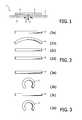
- Fig. 1 shows a schematic cross section of an embodiment of a pressure actuator 1, in side view.
- the shown pressure actuator 1 comprises SMM (shape memory material) 2 and heating elements 3.
- a carrier structure 4 is provided to which the SMM 2 and heating elements 3 are attached.
- the SMM 2 is caused to change shape by heating.
- heating elements 3 are provided.
- the changing of the shape of the SMM 2 causes the pressure actuator 1 to apply a pressure P, for example to the skin 7 of a person.
- the carrier structure 4 is at least partly flexible, e.g. to prevent too much counterforce on the SMM 2. This is also advantageous for wearing the structure like a garment or dressing.
- applications for the pressure actuator 1 include massage bandage, therapeutic pressure bandage (e.g. to prevent thrombosis, bed soars), massage seat (e.g. in cars or airplanes), haptics transmitter, touch interactions for mobile devices and/or virtual reality, acupressure, pressure garments for bum patients, therapeutic garments, e.g. stockings for varicose vein patients, body contour correcting garments, pressure suits, and more.
- therapeutic garments are already an important part for healing burn wounds, wherein the causing of scar tissue can be reduced by applying pressure the forming of scar tissue can be reduced.
- Shape memory materials (SMM) 2 are materials with the unique property to recover a memorised shape subsequent to mechanical deformation by induced temperature change of the material.
- SMM comprises shape memory polymers (SMP) and shape memory alloys (SMA), which for example are commercially available in forms such as fibres, filaments, ribbons, tubes, plates and granules, and powders in the case of SMA.
- SMP shape memory polymers
- SMA shape memory alloys
- Known SMP's include polyurethane and polystyrene-block-butadiene.
- Known SMA's generally include NiTi-based or Cu-based alloys, for example Cu-Zn-Al or Cu-Al-Ni. As multiple SMM's can be applied according to the invention, clearly, the invention should not be limited to the mentioned SMM's.
- the SMM 2 comprises one-way SMM 2
- the SMM 2 comprises two-way SMM 2.
- a one-way SMM 2 changes from a temporary deformed shape to a memorised shape by heating, when passing a temperature referred to as transition temperature (Tg).
- Tg transition temperature
- step a represents the memorised shape.
- step b the SMM 2 is deformed, wherein the energy produced by the mechanical deformation is stored in the material. This energy is then released upon heating in step c, facilitating the recovery process to the original memorised shape.
- step d cooling the SMM 2 will in principle not affect the shape.
- Two-way SMM's 2 have a reversible phase transformation.
- Fig. 3 illustrates the shape change process for a two-way SMM 2.
- Step a - c show the same effect as the one-way SMM 2 example of Fig. 2 .
- cooling will change the shape of the SMM 2 back to the shape after mechanical deformation, without the need to apply external stress.
- the shape after mechanical deformation will be referred to as second memorised shape.
- controlling the heating and cooling may be critical for the SMM's 2 response time.
- SMM's 2 could be employed depending on parameters such as for example recovering strain, temperature control requirements, functional fatigue, etc.
- additive elastic material is employed in the pressure actuator 1 to assist and/or oppose certain shape changes of the SMM 2.
- the temperatures that have to be applied depend on the properties of the SMM 2 that is used. Depending on the properties of the SMM 2 and/or temperatures applied to the SMM 2, the SMM 2 recover its memorised and/or second memorised shape fully or partly.
- Pressure actuators 1 are also meant to comprise one-way SMM's 2, that behave as two-way SMM's 2 as a result of combining them with textile material that has a Young's modulus that has a specific relationship with the Young's modulus of the concerning SMM 2, such as mentioned in the not yet pre-published European patent application number EP 05106301.4 .
- SMP's are polymers at which a recovery process can occur depending on the Tg (glass transition temperature) of the polymer.
- Tg glass transition temperature
- the mechanical properties of the particular SMP changes.
- Below Tg the SMP is relatively rigid and plastically deformable, whereas above Tg the material is soft and may be elastic and partly plastic, depending on the temperature relative to Tg.
- Two-way SMP's are known, for example from international patent application publication number WO 2004056547 .
- SMA's have the same or similar temperature induced transition properties as SMP's.
- the memory effect is originated from a phase transition above a certain temperature, during which the material changes from Martensite to Austenite phase.
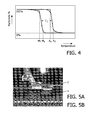
- the low temperature phase is the martensite (M) phase and the high temperature is referred to as the austenite (A) phase, as can be seen from the exemplary diagram in Fig. 4 .
- the temperature ranges of these phases may vary depending on if the material is heated or cooled.
- M s refers to martensite start, i.e.
- SMA's are plastic and relatively easy to deform in the martensite phase, also referred to as below Tg, whereas at temperatures in the austenite phase, also referred to as above Tg, the material is elastic with a relatively large Young's modulus.
- the shape change of SMM's 2 can be controlled using heating elements 3. Also the SMM's 2 can be heated by applying electricity to SMM's 2, particularly SMA's, as opposed to using separate heating elements 3. Said shape change can be used to apply pressure to a human or animal body.
- a carrier structure 4 can comprise a fabric and/or bandage so that it can be worn on the body and allow shape change of the SMM 2.
- a shape change 2a indicated by dotted lines, occurs in the SMM 2 which may cause a shape change 6a, also indicated by dotted lines, in another layer 6 of the pressure actuator 1.
- the pressure actuator 1 may exert a varying pressure P, for example by a skin 7.
- Carrier structures 4 that are suitable for the pressure actuator 1 can include, but are not limited to, bandage, plaster, plaster cast, dressings, textile, foil, woven and non-woven structures, plastics, particularly polymers, particularly polymer fabrics, e.g. nylon and polyester, yarns, fibres, wherein suitable fibers include natural textile fibers, such as cotton or wool fibers, regenerated fibers, such as viscose, and synthetic fibers such as polyester, polyamide (nylon) or polyacrylic fibers, rubbery substances, leather, animal skin.
- the carrier structure 4 may comprise holes for ventilation and/or cooling, insulation layers 5, cooling layers 6, etc (see for example Figs. 8A or 10A ).
- the carrier structure 4 may also be transparent. In other cases, the carrier structure 4 is made of the SMM 2 and/or one or multiple heating elements 3, such that the SMM 2 and/or heating elements 3 have carrier structure function.
- the attachment of SMM's 2 to or integration with textile materials can be done in various ways.
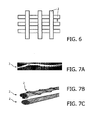
- the SMM's 2 can be embroidered, as indicated in Fig. 5 , or for example sewn or stitched, as schematically indicated in Fig. 6 , on the carrier structure 4.
- a SMM 2 is shown that comprises a yarn of fibres.
- any shape of SMM 2 such as a surface shaped, tube shaped, ribbon shaped or wire shaped SMM 2 could be embroidered onto the carrier structure 4.
- ribbons or plates of SMM 2 are shown that are embroidered, for example by sewing. Alternatively, it can be glued to the fabric using special textile glues or other methods such as for example Velcro.
- the carrier structure 4 can for example be woven, knitted or non-woven.
- the SMM 2 could be interwoven into the carrier structure 4.
- the SMM 2 in fibre form can be twisted together, as can be seen from Fig. 7A or wrapped around other common textile fibres, as can be seen from Figs. 7B and 7C .
- the SMM 2 in fibre form could be combined with other monofilaments from textile sources to form a multifilament that could be woven, knitted or be held together by weaving of the yarn and/or twisting of the fibers.
- substantially the whole of the carrier structure 4 may be configured from SMM 2, or at least a substantial part of the carrier structure 4.
- the SMM 2 also comprises the heating element 3, as can be seen from Fig. 8A , thus providing integration of heating elements 3 in SMM's 2, i.e. integral heating elements 3 or integral SMM's 2, which will also be referred to as SMM's 2.
- SMM's 2 When an electrical current is passed through the (integral) SMM 2, the SMM 2 warms up and will change shape, as can be seen from Figs. 8B-G , wherein Figs. 8B , 8D , 8F , 8G represent a top view of embodiments of cross section VIII - VIII shown in Fig. 8A .
- Figs. 8B , 8D , 8F , 8G represent a top view of embodiments of cross section VIII - VIII shown in Fig. 8A .
- Figs. 8B , 8D , 8F , 8G represent a top view of embodiments of cross section VIII - VIII shown in Fig. 8A .
- 8B , 8D , 8F , 8G may represent embodiments of cross section XI - XI (see Fig. 10A ), except for the fact that the heating elements 3 are separately provided or may be added to the integration of heating elements 3 and SMM's 2.
- heating of the SMM 2 will cause a length 1 reduction of the SMM 2.
- Figs. 8F and 8G wherein the carrier structure 4 contracts, indicated by arrows C.
- a memorised shape may be obtained that has a reversed effect, i.e. wherein heat causes an increase in length 1 of the SMM 2 element.
- Such linear length changes can be transformed into a pressure change, for example by configuring the material in the form of a bandage 1, e.g. to be wrapped around a body part like an arm or leg. This is illustrated in Figs. 8C and 8E , wherein heating the SMM 2 results in a higher or lower pressure exerted by the bandage 1.
- SMM's 2 are configured in the form of a meandering structure ( Fig. 8D ) or a spiral ( Fig. 8F ). In these embodiments, heating the SMM's 2 may result in a change in pressure at all or at least many points along the pressure actuator 1.
- a plurality of SMM 2 wires or other types SMM's elements 2 are applied, for example to allow the possibility to realise different pressures, pressure changes and/or pressure directions at different points along the pressure actuator 1.
- These plurality of SMM's within the pressure actuators 1 may also have different construction properties, for example different masses and/or orientations, for example to allow different pressures. For example, a gradually increasing pressure gradient along the pressure actuator 1 can be realised.
- the temperature of the SMM's 2 is changed as a function of time and/or along the pressure actuator 1, in such a way, that a pulsing pressure is exerted by the pressure actuator 1.
- This may for example be applied with a single SMM wire 2.
- pressure waves which move along the pressure actuator 1 are obtained, e.g. when a plurality of SMM wires 2 are arranged along the pressure actuator 1.
- separate layers 5, 6 are applied.
- an insulating layer 5 can be arranged such that less power is needed to heat the SMM's 2 or to prevent heating of the skin 7.
- cooling elements and/or a cooling layer and/or another insulation layer 6 may be applied, for example near the inside 9 of the pressure actuator 1, i.e. between the heating elements 3 and the skin 7 during use of the pressure actuator 1. This may prevent heating of the skin 7.
- these layers or elements 5, 6 may be used to cool and/or heat the SSM 2 more quickly, for example to be able to apply pressure changes more quickly.
- An example of a cooling element 6 that can be applied near a heating element 3 may be a Peltier device. This may be advantageous to apply certain pressure patterns as a function of time and/or along the pressure actuator 1 such as for example local pressure changes, pressure waves, pressures pulses, pressure gradients, etc.
- the pressure actuator 1 comprises abovementioned integration of SMM 2 and integral heating elements 3A, which integration will be referred to zaps SMM 2, and separate heating elements 3B, as can be seen from Fig. 9 .
- the current passing through the SMM 2 may be insufficient to reach the temperature for changing the shape of the SMM 2.
- An additional array of heating elements 3B is arranged at a certain angle, for example approximately 90°, to the SMM's 2.
- the SMM 2 is locally heated, by the accumulation of heat generated by the current through heating elements 3A/SMM2 and heating elements 3B, enough to locally change shape, i.e. exceed the T g .
- the T g is not exceeded at certain distances that are far enough from said intersections 10. In this way, a local shape change of the SMM 2 can be induced.
- the same principle as illustrated in Fig. 9 can be applied, wherein the SMM's 2 are not integrated with heating elements 3A, i.e. do not perform the double function of SMM 2 and heating elements 3.
- the SMM's 2 (not comprising heating elements 3A) are locally heated by the heating elements 3B, enough to change shape locally.
- an array of heating elements 3 is provided. This allows for a local heating of the SMM 2 and thus, local changes in pressure, for example at different locations along the pressure actuator 1.
- These heating elements 3 can be driven, for example by a control circuit 11, to induce previously mentioned patterns such as pressure pulses, waves and/or gradients in a controlled way. Being able to apply and adjust local pressure is advantageous for many applications, for example in pressure garments for bum wounds or varicose patients, in Fig. correcting garments, and more.
- Said control circuit 11 could also drive the heating elements 3 based on input that is received from a muscle tone measurement device (not shown), such that an intelligent, dynamic pressure actuator 1 is achieved.
- the pressure actuator 1 can react automatically to set the pressure P of the pressure actuator 1.
- measurement devices may for example comprise, but are not limited to, muscle tone measurement devices, pressure measurement devices, (wherein said pressure may for example be surface pressure, weight or ambient pressure), wound measurement devices, fluid measurement devices and/or colour measurement devices.
- Such measurement devices may be connected to or integrated in the pressure actuator 1, for example via the control circuit 11, for example by means of connecting elements or by means of wireless communication.
- An one or two-dimensional array of heating elements 3, such as shown in Fig. 10A may provide a flexibility for creating pressure patterns along the pressure actuator 1 and/or as a function of time.
- SMM's 2 in the vicinity of an activated heating element 3 will be deformed, such that pressure can be localised.
- relatively precisely localised pressures can be applied as a function of time with the aid of a large number of heating elements 3 in an array.
- this embodiment could be useful in the field of haptics, since for example the touch of one or multiple fingers can be simulated.
- a multiplicity of pressure waves can be exerted by the pressure actuator 1 along a surface of the pressure actuator 1 as a function of orientation, location and/or time.
- the SMM 2 is arranged in the carrier structure 4 such that in use the pressure change takes place perpendicular to the skin 7, i.e. to the surface 9 or 10 of the pressure actuator 1.
- the pressure exerted to the skin 7 should preferably at least be directed towards the skin 7.
- a pressure change is exerted by the SMM 2 in a direction away from a surface 9 of the actuator 1, and more preferably perpendicular to said surface 9.
- Said pressure is indicated by arrows P in a cross sectional side view of a pressure actuator 1 in Fig. 1 . Therefore, in an embodiment, the SMM 2 is arranged as wires in a mesh, as can be seen from the cross sectional top view illustrated in Fig.
- the SMM's 2 may be configured in any longitudinal shape to achieve a mesh, e.g. ribbons, tubes, etc. By being arranged in a mesh, the SMM 2 will have less tendency to rotate along its axis, such that an advantageous pressure direction P can be obtained. In other embodiments, preventing orientation and/or controlling the pressure P direction can be obtained by using ribbons and/or plates of SMM2 and/or embroidering the SMM 2.
- a thermal conductor 12 is provided. This thermal conductor can be provided between the heating elements 3 and the SMM 2, as can be seen from 10A. Also a thermal conductor 12 can be arranged between the cooling element or layer 6 and the SMM 2. Thermal conductors 12 may be materials that have good conductivity such as for example a foil, oil and/or gel.
- One or more insulation layers 5 and/or cooling layers and/or elements 6 may be provided, e.g. to prevent the heat from the heating elements 3 and/or the SMM 2 from reaching the skin 7. Note that in some circumstances, heat may intentionally be allowed to be passed to the skin 7, in which case the layer and/or elements 6 may be configured to allow the transfer of at least a portion of the generated heat to the skin 7.
- the heating elements 3 may comprise any of the known heating principles, e.g. resistive heating, peltier elements, radiation heating, radio frequency heating, microwave heating, etc.
- the heating elements 3 comprise thin film heating elements 3, also referred to as thin film resistive heating elements 3 or thin foil heating elements 3. This technology can be conveniently implemented on a flexible carrier structure 4 or substrate 4.
- the heating elements are addressed according to the same principles as used in thin film electronics technologies, such as for example active matrix displays in large area electronics, e.g. amorphous-Si, LTPS, organic TFT's, etc.
- active matrix displays in large area electronics
- amorphous-Si, LTPS, organic TFT's etc.
- the number of drivers for the heating elements 3 may be reduced, as opposed by driving each, or particular groups of heating elements 3.
- the heating elements 3 may still be individually addressable allowing local pressure changes in the pressure actuator 1.
- the drivers for driving the heating elements 3, i.e. in active matrix circuitry may be integrated current sources for the heating elements 3, the application of which is known in the field of large area electronics.
- temperature sensors 13 may be provided. Temperature sensors 13 can be used to control the temperature of the heating elements 3. For example, by using these, the temperature that is needed to introduce pressure change can be limited to the temperature that is needed, such that power consumption and unnecessary heating, e.g. of the skin 7, can be limited.
- the temperature sensor 13 is incorporated in the heating element 3, for example, such that an array of heating elements 3 and temperature sensors 13 can be manufactured by using large area electronics and/or active matrix technology. Also here, active matrix techniques can be implemented to drive both the sensors 13 and heating elements 3. In another embodiment the sensor 13 may be arranged in the vicinity of the SMM 2.
- a single heating element 3 is arranged to cooperate with multiple SMM's 2 which are configured to have different properties (e.g. mass, orientation, Tg), such that the pressure varies along the pressure actuator 1.
- the invention further defines a method for applying pressure to a human or animal body.
- said method comprises a pressure actuator for applying said pressure by means of shape memory material, wherein the pressure actuator is at least partly flexible, wherein pressure applied to the body is controlled, at least in location and/or time by means of a circuit.
- the pressure is applied away from the pressure applying surface of the pressure actuator.
- the invention further defines a method for applying pressure to a human or animal body, wherein pressure is applied to said body via shape memory material, wherein the shape memory material is heated at a pattern along its surface such that the shape memory material changes shape locally, approximately according to said pattern.
- the invention further defines a pressure actuator.
- said pressure actuator is provided with a carrier structure, shape memory material, integrated with and/or attached to the carrier structure, and a plurality of heating elements in the vicinity of the shape memory material that is configured to locally vary the shape of the shape memory material that is in the vicinity of the heating elements.
- the plurality of heating elements and the shape memory material are separately arranged.
- the plurality of heating elements is configured to vary temperature within the shape memory material locally.
- the carrier structure is at least partly flexible.
- the invention further defines a use of shape memory material in devices for applying pressure to the body, wherein the shape memory material locally changes shape, at least in the direction of the body, preferably approximately perpendicular to the body.
- the invention is not limited to the field of medicine, cosmetics, but could also be applied in other fields, such as for example electronic equipment, fashion.
- the product may for example also be applied as a specific type of life style element and/or be incorporated into clothing, furniture, etc.
Landscapes
- Health & Medical Sciences (AREA)
- Public Health (AREA)
- Physical Education & Sports Medicine (AREA)
- Rehabilitation Therapy (AREA)
- Life Sciences & Earth Sciences (AREA)
- Animal Behavior & Ethology (AREA)
- Pain & Pain Management (AREA)
- General Health & Medical Sciences (AREA)
- Veterinary Medicine (AREA)
- Epidemiology (AREA)
- Thermotherapy And Cooling Therapy Devices (AREA)
- Micromachines (AREA)
- Fluid-Pressure Circuits (AREA)
- Massaging Devices (AREA)
- Finger-Pressure Massage (AREA)
- Prostheses (AREA)
- Resistance Heating (AREA)
Claims (15)
- Druckaktuator, versehen mit einer Trägerstruktur, einem Formgedächtnismaterial, das in die Trägerstruktur integriert und/oder an dieser angebracht ist, dadurch gekennzeichnet, dass mehrere Heizelemente in der Nähe des Formgedächtnismaterials so konfiguriert sind, dass sie die Form des Formgedächtnismaterials, das sich in der Nähe der Heizelemente befindet, lokal verändern.
- Druckaktuator nach Anspruch 1, wobei die mehreren Heizelemente und das Formgedächtnismaterial getrennt angeordnet sind.
- Druckaktuator nach einem der vorangegangenen Ansprüche, wobei die mehreren Heizelemente aus einer Aktivmatrix-gesteuerten Anordnung von Heizelementen, vorzugsweise Dünnfilm-Heizelementen, bestehen.
- Druckaktuator nach einem der vorangegangenen Ansprüche, wobei das Formgedächtnismaterial so konfiguriert ist, dass bei Gebrauch von dem Formgedächtnismaterial ein Druck in einer gesteuerten Richtung, vorzugsweise in einer Richtung in etwa senkrecht zu einer Oberfläche des Druckaktuators, ausgeübt wird.
- Druckaktuator nach einem der vorangegangenen Ansprüche, wobei das Formgedächtnismaterial so konfiguriert ist, dass bei Gebrauch ein Druck zumindest von einer Oberfläche des Druckaktuators entfernt ausgeübt wird, wobei sich die Oberfläche während des Gebrauchs des Druckaktuators in Kontakt mit dem Körper, vorzugsweise in etwa senkrecht zu der Oberfläche, befindet.
- Druckaktuator nach einem der vorangegangenen Ansprüche, der in der Nähe des Formgedächtnismaterials und/oder der mehreren Heizelemente mit mindestens einem Temperatursensor versehen ist, wobei der mindestens eine Temperatursensor vorzugsweise aus einer Anordnung von Temperatursensoren besteht.
- Druckaktuator nach einem der vorangegangenen Ansprüche, wobei der Druckaktuator zumindest eine Innenseite aufweist, die während des Gebrauchs an den Körper oder in Körpernähe angelegt wird, wobei zwischen der Innenseite und dem Formgedächtnismaterial ein Wärmeisolator vorgesehen ist.
- Druckaktuator nach einem der vorangegangenen Ansprüche, wobei ein Steuerkreis vorgesehen und so konfiguriert ist, dass er entlang dem Druckaktuator Druckmuster als eine Funktion der Position, der Ausrichtung und/oder der Zeit erzeugt.
- Druckaktuator nach Anspruch 8, wobei eine Messeinrichtung vorgesehen ist, um Eingangsdaten für den Steuerkreis bereitzustellen.
- Druckaktuator nach einem der vorangegangenen Ansprüche, wobei mindestens ein Kühlelement in der Nähe der mehreren Heizelemente und/oder des Formgedächtnismaterials vorgesehen ist.
- Druckaktuator nach einem der vorangegangenen Ansprüche, der zwischen den mehreren Heizelementen und dem Formgedächtnismaterial und/oder zwischen dem mindestens einen Kühlelement und dem Formgedächtnismaterial mit einem Wärmeleiter versehen ist.
- Druckaktuator nach einem der vorangegangenen Ansprüche, wobei das Formgedächtnismaterial mindestens ein integrales Heizelement umfasst.
- Druckaktuator nach einem der vorangegangenen Ansprüche, wobei es sich bei der Trägerstruktur um das Formgedächtnismaterial (SMM) und/oder die mehreren Heizelemente handelt.
- Bekleidungsartikel und/oder Verband mit einem Druckaktuator nach einem der vorangegangenen Ansprüche.
- Computerprogrammprodukt, das so konfiguriert ist, dass es mehrere Heizelemente und/oder Gruppen derselben über eine Schaltung einzeln ansteuert, wobei die Heizelemente so konfiguriert sind, dass sie das Formgedächtnismaterial lokal erwärmen, um auf einen menschlichen Körper oder Tierkörper Druck auszuüben, wobei das Computerprogrammprodukt so konfiguriert ist, dass es durch das Ansteuern der Heizelemente die lokale Formänderung des Gedächtnismaterials zumindest in Position und/oder Zeit steuert.
Priority Applications (1)
| Application Number | Priority Date | Filing Date | Title |
|---|---|---|---|
| EP07805370A EP2054005B1 (de) | 2006-08-17 | 2007-08-10 | Druckaktuator |
Applications Claiming Priority (3)
| Application Number | Priority Date | Filing Date | Title |
|---|---|---|---|
| EP06119109 | 2006-08-17 | ||
| PCT/IB2007/053179 WO2008020377A2 (en) | 2006-08-17 | 2007-08-10 | Pressure actuator and methods for applying pressure |
| EP07805370A EP2054005B1 (de) | 2006-08-17 | 2007-08-10 | Druckaktuator |
Publications (2)
| Publication Number | Publication Date |
|---|---|
| EP2054005A2 EP2054005A2 (de) | 2009-05-06 |
| EP2054005B1 true EP2054005B1 (de) | 2011-07-27 |
Family
ID=38921384
Family Applications (1)
| Application Number | Title | Priority Date | Filing Date |
|---|---|---|---|
| EP07805370A Not-in-force EP2054005B1 (de) | 2006-08-17 | 2007-08-10 | Druckaktuator |
Country Status (9)
| Country | Link |
|---|---|
| US (1) | US20100234779A1 (de) |
| EP (1) | EP2054005B1 (de) |
| JP (1) | JP2010500895A (de) |
| KR (1) | KR20090038904A (de) |
| CN (1) | CN101505707B (de) |
| AT (1) | ATE517600T1 (de) |
| BR (1) | BRPI0715879A2 (de) |
| ES (1) | ES2370178T3 (de) |
| WO (1) | WO2008020377A2 (de) |
Families Citing this family (34)
| Publication number | Priority date | Publication date | Assignee | Title |
|---|---|---|---|---|
| GB0811874D0 (en) * | 2008-06-30 | 2008-07-30 | Nemaura Pharma Ltd | Patches for reverse iontophoresis |
| JP4828582B2 (ja) * | 2008-07-15 | 2011-11-30 | 日本航空電子工業株式会社 | 形状記憶合金アクチュエータ |
| GB2470185B (en) * | 2009-05-11 | 2015-07-29 | Univ Bolton | Pressure actuator |
| KR101604080B1 (ko) | 2009-07-21 | 2016-03-17 | 삼성전자주식회사 | 혈관 가압 커프, 상기 혈관 가압 커프를 구비한 혈압 측정 장치, 및 상기 혈압 측정 장치를 이용한 혈압 측정 방법 |
| US9222203B2 (en) * | 2010-06-30 | 2015-12-29 | The Hong Kong Polytechnic University | Items of clothing having shape memory |
| DE102010048083A1 (de) * | 2010-10-04 | 2012-04-05 | Bauerfeind Ag | Formgedächtniselemente für medizinische Hilfsmittel |
| DE102012007059A1 (de) * | 2012-04-02 | 2013-10-02 | Bauerfeind Ag | Maschenware, enthaltend ein Formgedächtnismaterial und ein Quellmittel |
| US9903350B2 (en) * | 2012-08-01 | 2018-02-27 | The Board Of Regents, The University Of Texas System | Coiled and non-coiled twisted polymer fiber torsional and tensile actuators |
| WO2014172248A1 (en) * | 2013-04-16 | 2014-10-23 | Drexel University | Radial compression utilizing a shape-memory alloy |
| US9271890B1 (en) | 2014-02-11 | 2016-03-01 | Compression Kinetics, Inc. | Compression garment apparatus |
| US11672729B2 (en) | 2014-02-11 | 2023-06-13 | Koya Medical, Inc. | Compression garment |
| JP5971773B2 (ja) * | 2014-04-06 | 2016-08-17 | トヨタ自動車株式会社 | 面形状可変装置 |
| KR101596883B1 (ko) * | 2014-07-10 | 2016-02-23 | 더인터맥스(주) | 자가 응답 특성 고분자 소재에 의한 능동 제어 섬유 |
| US11821409B2 (en) * | 2015-01-06 | 2023-11-21 | The Boeing Company | Environmental aspect control assembly |
| WO2016153917A1 (en) * | 2015-03-23 | 2016-09-29 | Miga Motor Company | Body massager using shape memory alloy components |
| JP2018531641A (ja) * | 2015-09-16 | 2018-11-01 | コーニンクレッカ フィリップス エヌ ヴェKoninklijke Philips N.V. | 指圧装置 |
| JP6568951B2 (ja) * | 2015-11-20 | 2019-08-28 | オリンパス株式会社 | 硬度可変アクチュエータ |
| US10240688B2 (en) | 2016-06-29 | 2019-03-26 | Ecole Polytechnique Federale De Lausanne (Epfl) | Device having a plurality of latching micro-actuators and method of operating the same |
| JP6588681B1 (ja) * | 2016-08-31 | 2019-10-09 | コーニンクレッカ フィリップス エヌ ヴェKoninklijke Philips N.V. | 受表面の弾性を分析するための表面分析装置および方法 |
| WO2018106941A1 (en) * | 2016-12-08 | 2018-06-14 | Lintec Of America, Inc. | Improvements in artificial muscle actuators |
| WO2018150372A1 (en) | 2017-02-16 | 2018-08-23 | Koya, Inc. | Compression garment |
| US11433425B2 (en) | 2017-05-10 | 2022-09-06 | Sony Corporation | Actuator, driving member, tactile sense presenting device, and driving device |
| CN107510577B (zh) * | 2017-09-29 | 2018-08-24 | 南京昱晟机器人科技有限公司 | 一种下肢康复训练机器人及其训练方法 |
| WO2019104164A1 (en) * | 2017-11-22 | 2019-05-31 | Lintec Of America, Inc. | Embedded conductive wires in polymer artificial muscle actuating devices |
| CN108858136B (zh) * | 2018-05-16 | 2021-11-05 | 大连交通大学 | 一种分布式驱动的变刚度关节助力机构 |
| US11372481B2 (en) | 2020-04-14 | 2022-06-28 | Ecole Polytechnique Federale De Lausanne (Epfl) | Hydraulically amplified dielectric actuator taxels |
| CA3183947A1 (en) | 2020-06-10 | 2021-12-16 | Koya Medical, Inc. | Electro-actuatable compression garments with shape memory elements |
| CN113813174A (zh) * | 2020-07-22 | 2021-12-21 | 上海智彬电气设备有限公司 | 一种温度可变的蕲艾灸贴 |
| WO2022020370A1 (en) | 2020-07-23 | 2022-01-27 | Koya Medical, Inc. | Quick connect anchoring buckle |
| EP4014943B1 (de) * | 2020-12-16 | 2025-08-13 | Essity Hygiene and Health Aktiebolag | Aktive kompressionsvorrichtung und druckeinheit |
| JP2024523155A (ja) | 2021-06-25 | 2024-06-28 | コヤ・メディカル・インコーポレイテッド | リンパ診断装置 |
| JP2025505130A (ja) | 2022-02-10 | 2025-02-21 | コヤ・メディカル・インコーポレイテッド | 圧迫ガーメント装置 |
| KR102873786B1 (ko) * | 2022-03-28 | 2025-10-20 | 고려대학교 산학협력단 | 혈류조절용 혈관클립 |
| CN118932629B (zh) * | 2024-07-23 | 2026-01-06 | 清华大学 | 一种基于记忆合金的可变形变色复合织物及其制造方法 |
Family Cites Families (22)
| Publication number | Priority date | Publication date | Assignee | Title |
|---|---|---|---|---|
| JP3045403B2 (ja) * | 1990-12-28 | 2000-05-29 | 福岡県 | 床ずれ防止用シーツ |
| SE503018C2 (sv) * | 1994-03-17 | 1996-03-11 | Ffv Aerotech Ab | Anordning för att utöva tryck på människokropp |
| US5979456A (en) * | 1996-04-22 | 1999-11-09 | Magovern; George J. | Apparatus and method for reversibly reshaping a body part |
| US20020061692A1 (en) * | 1996-10-17 | 2002-05-23 | Helge G. Steckmann | Flat composite fabric with memory metal and its applications |
| US6447478B1 (en) * | 1998-05-15 | 2002-09-10 | Ronald S. Maynard | Thin-film shape memory alloy actuators and processing methods |
| US6478656B1 (en) * | 1998-12-01 | 2002-11-12 | Brava, Llc | Method and apparatus for expanding soft tissue with shape memory alloys |
| US6111233A (en) * | 1999-01-13 | 2000-08-29 | Malden Mills Industries, Inc. | Electric heating warming fabric articles |
| JP2002066968A (ja) * | 2000-09-04 | 2002-03-05 | Olympus Optical Co Ltd | マニピュレータ |
| GB0031616D0 (en) * | 2000-12-27 | 2001-02-07 | Koninkl Philips Electronics Nv | |
| US6755795B2 (en) * | 2001-10-26 | 2004-06-29 | Koninklijke Philips Electronics N.V. | Selectively applied wearable medical sensors |
| US20030181116A1 (en) * | 2002-03-22 | 2003-09-25 | Koninklijke Philips Electronics N.V. | Tactile feedback device |
| JP4161045B2 (ja) * | 2002-07-04 | 2008-10-08 | 独立行政法人産業技術総合研究所 | 形状記憶合金アクチュエータ |
| AU2002951193A0 (en) * | 2002-09-04 | 2002-09-19 | Northern Sydney Area Health Service | Movement faciliatation device |
| US7032282B2 (en) * | 2002-10-19 | 2006-04-25 | General Motors Corporation | Releasable fastener system |
| JP4362307B2 (ja) * | 2003-04-09 | 2009-11-11 | 九州日立マクセル株式会社 | 治療用パッド及び電気治療器 |
| US7294102B2 (en) * | 2003-04-14 | 2007-11-13 | Pentax Corporation | Method and apparatus for providing depth control or z-actuation |
| US7491185B2 (en) * | 2003-08-21 | 2009-02-17 | Boston Scientific Scimed, Inc. | External counterpulsation device using electroactive polymer actuators |
| JP4273902B2 (ja) * | 2003-09-25 | 2009-06-03 | パナソニック電工株式会社 | 形状記憶合金アクチュエータ |
| JP2005133553A (ja) * | 2003-10-28 | 2005-05-26 | Matsushita Electric Works Ltd | 形状記憶合金アクチュエータ |
| JP2006006580A (ja) * | 2004-06-25 | 2006-01-12 | Matsushita Electric Works Ltd | マッサージ装置 |
| US20060122544A1 (en) * | 2004-12-03 | 2006-06-08 | Gary Ciluffo | Therapeutic "smart" fabric garment including support hose, body garments, and athletic wear |
| EP1677014B1 (de) * | 2004-12-30 | 2007-04-25 | C.R.F. Società Consortile per Azioni | Formgedächtnisbetätigungseinrichtung mit Überspannungsschädensschutz |
-
2007
- 2007-08-10 BR BRPI0715879-3A patent/BRPI0715879A2/pt not_active IP Right Cessation
- 2007-08-10 JP JP2009524280A patent/JP2010500895A/ja active Pending
- 2007-08-10 KR KR1020097003003A patent/KR20090038904A/ko not_active Withdrawn
- 2007-08-10 CN CN2007800306053A patent/CN101505707B/zh not_active Expired - Fee Related
- 2007-08-10 WO PCT/IB2007/053179 patent/WO2008020377A2/en not_active Ceased
- 2007-08-10 AT AT07805370T patent/ATE517600T1/de not_active IP Right Cessation
- 2007-08-10 ES ES07805370T patent/ES2370178T3/es active Active
- 2007-08-10 US US12/377,683 patent/US20100234779A1/en not_active Abandoned
- 2007-08-10 EP EP07805370A patent/EP2054005B1/de not_active Not-in-force
Also Published As
| Publication number | Publication date |
|---|---|
| WO2008020377A2 (en) | 2008-02-21 |
| WO2008020377A3 (en) | 2008-04-10 |
| ES2370178T3 (es) | 2011-12-13 |
| BRPI0715879A2 (pt) | 2013-08-13 |
| CN101505707B (zh) | 2012-04-18 |
| JP2010500895A (ja) | 2010-01-14 |
| US20100234779A1 (en) | 2010-09-16 |
| ATE517600T1 (de) | 2011-08-15 |
| CN101505707A (zh) | 2009-08-12 |
| KR20090038904A (ko) | 2009-04-21 |
| EP2054005A2 (de) | 2009-05-06 |
Similar Documents
| Publication | Publication Date | Title |
|---|---|---|
| US20100234779A1 (en) | Pressure actuator and methods for applying pressure | |
| Sanchez et al. | Textile technology for soft robotic and autonomous garments | |
| Yuen et al. | Active variable stiffness fibers for multifunctional robotic fabrics | |
| US12297593B2 (en) | Multifunctional active yarns and textiles | |
| EP3582739B1 (de) | Kompressionskleidung | |
| EP2314744A2 (de) | Elektrisch leitfähige pad-struktur und herstellungsverfahren dafür | |
| US20240231489A1 (en) | Wearable interface devices with tactile functionality | |
| Kim et al. | KnitDermis: Fabricating tactile on-body interfaces through machine knitting | |
| US10007347B1 (en) | Fiber actuator for haptic feedback | |
| KR101619515B1 (ko) | 도전성 패드 및 그 제조방법 | |
| Jiralerspong et al. | Soft robotic devices for mechanotherapy of the upper and lower extremities | |
| AU2004311573B2 (en) | Heated garment system | |
| CN202456505U (zh) | 一种膝肘关节加热防护织物 | |
| AU2021404499B2 (en) | Active compression device and pressure unit | |
| Carosio et al. | Smart and hybrid materials: perspectives for their use in textile structures for better health care | |
| CN102551948B (zh) | 一种加热防护织物和系统 | |
| US20250101642A1 (en) | Yarns of shape memory polymers and uses thereof | |
| Kim | Leveraging Fabric Substructure Variations of Actuator-Integrated Robotic Textiles for Wearable Applications | |
| Sanchez | Textiles as the Basis for Integrated Soft Robots | |
| CN118593306A (zh) | 一种可穿戴人工肌肉装置 | |
| KR20240084369A (ko) | 휴대용 모듈형 근력보조슈트 |
Legal Events
| Date | Code | Title | Description |
|---|---|---|---|
| PUAI | Public reference made under article 153(3) epc to a published international application that has entered the european phase |
Free format text: ORIGINAL CODE: 0009012 |
|
| 17P | Request for examination filed |
Effective date: 20090317 |
|
| AK | Designated contracting states |
Kind code of ref document: A2 Designated state(s): AT BE BG CH CY CZ DE DK EE ES FI FR GB GR HU IE IS IT LI LT LU LV MC MT NL PL PT RO SE SI SK TR |
|
| AX | Request for extension of the european patent |
Extension state: AL BA HR MK RS |
|
| DAX | Request for extension of the european patent (deleted) | ||
| GRAP | Despatch of communication of intention to grant a patent |
Free format text: ORIGINAL CODE: EPIDOSNIGR1 |
|
| RTI1 | Title (correction) |
Free format text: PRESSURE ACTUATOR |
|
| GRAS | Grant fee paid |
Free format text: ORIGINAL CODE: EPIDOSNIGR3 |
|
| GRAA | (expected) grant |
Free format text: ORIGINAL CODE: 0009210 |
|
| AK | Designated contracting states |
Kind code of ref document: B1 Designated state(s): AT BE BG CH CY CZ DE DK EE ES FI FR GB GR HU IE IS IT LI LT LU LV MC MT NL PL PT RO SE SI SK TR |
|
| REG | Reference to a national code |
Ref country code: GB Ref legal event code: FG4D |
|
| REG | Reference to a national code |
Ref country code: CH Ref legal event code: EP |
|
| REG | Reference to a national code |
Ref country code: DE Ref legal event code: R096 Ref document number: 602007016132 Country of ref document: DE Effective date: 20110922 |
|
| REG | Reference to a national code |
Ref country code: NL Ref legal event code: T3 |
|
| REG | Reference to a national code |
Ref country code: GB Ref legal event code: 746 Effective date: 20110927 |
|
| REG | Reference to a national code |
Ref country code: DE Ref legal event code: R084 Ref document number: 602007016132 Country of ref document: DE Effective date: 20110920 |
|
| REG | Reference to a national code |
Ref country code: ES Ref legal event code: FG2A Ref document number: 2370178 Country of ref document: ES Kind code of ref document: T3 Effective date: 20111213 |
|
| PG25 | Lapsed in a contracting state [announced via postgrant information from national office to epo] |
Ref country code: MT Free format text: LAPSE BECAUSE OF FAILURE TO SUBMIT A TRANSLATION OF THE DESCRIPTION OR TO PAY THE FEE WITHIN THE PRESCRIBED TIME-LIMIT Effective date: 20110727 |
|
| REG | Reference to a national code |
Ref country code: AT Ref legal event code: MK05 Ref document number: 517600 Country of ref document: AT Kind code of ref document: T Effective date: 20110727 |
|
| PG25 | Lapsed in a contracting state [announced via postgrant information from national office to epo] |
Ref country code: PT Free format text: LAPSE BECAUSE OF FAILURE TO SUBMIT A TRANSLATION OF THE DESCRIPTION OR TO PAY THE FEE WITHIN THE PRESCRIBED TIME-LIMIT Effective date: 20111128 Ref country code: FI Free format text: LAPSE BECAUSE OF FAILURE TO SUBMIT A TRANSLATION OF THE DESCRIPTION OR TO PAY THE FEE WITHIN THE PRESCRIBED TIME-LIMIT Effective date: 20110727 Ref country code: SE Free format text: LAPSE BECAUSE OF FAILURE TO SUBMIT A TRANSLATION OF THE DESCRIPTION OR TO PAY THE FEE WITHIN THE PRESCRIBED TIME-LIMIT Effective date: 20110727 Ref country code: IS Free format text: LAPSE BECAUSE OF FAILURE TO SUBMIT A TRANSLATION OF THE DESCRIPTION OR TO PAY THE FEE WITHIN THE PRESCRIBED TIME-LIMIT Effective date: 20111127 Ref country code: LT Free format text: LAPSE BECAUSE OF FAILURE TO SUBMIT A TRANSLATION OF THE DESCRIPTION OR TO PAY THE FEE WITHIN THE PRESCRIBED TIME-LIMIT Effective date: 20110727 |
|
| PG25 | Lapsed in a contracting state [announced via postgrant information from national office to epo] |
Ref country code: PL Free format text: LAPSE BECAUSE OF FAILURE TO SUBMIT A TRANSLATION OF THE DESCRIPTION OR TO PAY THE FEE WITHIN THE PRESCRIBED TIME-LIMIT Effective date: 20110727 Ref country code: AT Free format text: LAPSE BECAUSE OF FAILURE TO SUBMIT A TRANSLATION OF THE DESCRIPTION OR TO PAY THE FEE WITHIN THE PRESCRIBED TIME-LIMIT Effective date: 20110727 Ref country code: GR Free format text: LAPSE BECAUSE OF FAILURE TO SUBMIT A TRANSLATION OF THE DESCRIPTION OR TO PAY THE FEE WITHIN THE PRESCRIBED TIME-LIMIT Effective date: 20111028 Ref country code: CY Free format text: LAPSE BECAUSE OF FAILURE TO SUBMIT A TRANSLATION OF THE DESCRIPTION OR TO PAY THE FEE WITHIN THE PRESCRIBED TIME-LIMIT Effective date: 20110727 Ref country code: SI Free format text: LAPSE BECAUSE OF FAILURE TO SUBMIT A TRANSLATION OF THE DESCRIPTION OR TO PAY THE FEE WITHIN THE PRESCRIBED TIME-LIMIT Effective date: 20110727 Ref country code: LV Free format text: LAPSE BECAUSE OF FAILURE TO SUBMIT A TRANSLATION OF THE DESCRIPTION OR TO PAY THE FEE WITHIN THE PRESCRIBED TIME-LIMIT Effective date: 20110727 |
|
| PG25 | Lapsed in a contracting state [announced via postgrant information from national office to epo] |
Ref country code: MC Free format text: LAPSE BECAUSE OF NON-PAYMENT OF DUE FEES Effective date: 20110831 |
|
| REG | Reference to a national code |
Ref country code: CH Ref legal event code: PL |
|
| PG25 | Lapsed in a contracting state [announced via postgrant information from national office to epo] |
Ref country code: SK Free format text: LAPSE BECAUSE OF FAILURE TO SUBMIT A TRANSLATION OF THE DESCRIPTION OR TO PAY THE FEE WITHIN THE PRESCRIBED TIME-LIMIT Effective date: 20110727 Ref country code: CH Free format text: LAPSE BECAUSE OF NON-PAYMENT OF DUE FEES Effective date: 20110831 Ref country code: CZ Free format text: LAPSE BECAUSE OF FAILURE TO SUBMIT A TRANSLATION OF THE DESCRIPTION OR TO PAY THE FEE WITHIN THE PRESCRIBED TIME-LIMIT Effective date: 20110727 Ref country code: LI Free format text: LAPSE BECAUSE OF NON-PAYMENT OF DUE FEES Effective date: 20110831 |
|
| REG | Reference to a national code |
Ref country code: IE Ref legal event code: MM4A |
|
| PG25 | Lapsed in a contracting state [announced via postgrant information from national office to epo] |
Ref country code: RO Free format text: LAPSE BECAUSE OF FAILURE TO SUBMIT A TRANSLATION OF THE DESCRIPTION OR TO PAY THE FEE WITHIN THE PRESCRIBED TIME-LIMIT Effective date: 20110727 Ref country code: EE Free format text: LAPSE BECAUSE OF FAILURE TO SUBMIT A TRANSLATION OF THE DESCRIPTION OR TO PAY THE FEE WITHIN THE PRESCRIBED TIME-LIMIT Effective date: 20110727 |
|
| PGFP | Annual fee paid to national office [announced via postgrant information from national office to epo] |
Ref country code: DE Payment date: 20120119 Year of fee payment: 5 |
|
| PLBE | No opposition filed within time limit |
Free format text: ORIGINAL CODE: 0009261 |
|
| STAA | Information on the status of an ep patent application or granted ep patent |
Free format text: STATUS: NO OPPOSITION FILED WITHIN TIME LIMIT |
|
| PG25 | Lapsed in a contracting state [announced via postgrant information from national office to epo] |
Ref country code: DK Free format text: LAPSE BECAUSE OF FAILURE TO SUBMIT A TRANSLATION OF THE DESCRIPTION OR TO PAY THE FEE WITHIN THE PRESCRIBED TIME-LIMIT Effective date: 20110727 |
|
| 26N | No opposition filed |
Effective date: 20120502 |
|
| PG25 | Lapsed in a contracting state [announced via postgrant information from national office to epo] |
Ref country code: IE Free format text: LAPSE BECAUSE OF NON-PAYMENT OF DUE FEES Effective date: 20110810 |
|
| REG | Reference to a national code |
Ref country code: DE Ref legal event code: R097 Ref document number: 602007016132 Country of ref document: DE Effective date: 20120502 |
|
| PGFP | Annual fee paid to national office [announced via postgrant information from national office to epo] |
Ref country code: GB Payment date: 20120831 Year of fee payment: 6 |
|
| PGFP | Annual fee paid to national office [announced via postgrant information from national office to epo] |
Ref country code: TR Payment date: 20120806 Year of fee payment: 6 |
|
| PGFP | Annual fee paid to national office [announced via postgrant information from national office to epo] |
Ref country code: FR Payment date: 20120913 Year of fee payment: 6 Ref country code: IT Payment date: 20120823 Year of fee payment: 6 |
|
| PGFP | Annual fee paid to national office [announced via postgrant information from national office to epo] |
Ref country code: BE Payment date: 20120928 Year of fee payment: 6 Ref country code: NL Payment date: 20120829 Year of fee payment: 6 |
|
| PGFP | Annual fee paid to national office [announced via postgrant information from national office to epo] |
Ref country code: ES Payment date: 20120928 Year of fee payment: 6 |
|
| PG25 | Lapsed in a contracting state [announced via postgrant information from national office to epo] |
Ref country code: LU Free format text: LAPSE BECAUSE OF NON-PAYMENT OF DUE FEES Effective date: 20110810 |
|
| PG25 | Lapsed in a contracting state [announced via postgrant information from national office to epo] |
Ref country code: BG Free format text: LAPSE BECAUSE OF FAILURE TO SUBMIT A TRANSLATION OF THE DESCRIPTION OR TO PAY THE FEE WITHIN THE PRESCRIBED TIME-LIMIT Effective date: 20111027 |
|
| PG25 | Lapsed in a contracting state [announced via postgrant information from national office to epo] |
Ref country code: DE Free format text: LAPSE BECAUSE OF NON-PAYMENT OF DUE FEES Effective date: 20130301 |
|
| REG | Reference to a national code |
Ref country code: DE Ref legal event code: R119 Ref document number: 602007016132 Country of ref document: DE Effective date: 20130301 |
|
| PG25 | Lapsed in a contracting state [announced via postgrant information from national office to epo] |
Ref country code: TR Free format text: LAPSE BECAUSE OF FAILURE TO SUBMIT A TRANSLATION OF THE DESCRIPTION OR TO PAY THE FEE WITHIN THE PRESCRIBED TIME-LIMIT Effective date: 20110727 Ref country code: HU Free format text: LAPSE BECAUSE OF FAILURE TO SUBMIT A TRANSLATION OF THE DESCRIPTION OR TO PAY THE FEE WITHIN THE PRESCRIBED TIME-LIMIT Effective date: 20110727 |
|
| BERE | Be: lapsed |
Owner name: KONINKLIJKE PHILIPS ELECTRONICS N.V. Effective date: 20130831 |
|
| REG | Reference to a national code |
Ref country code: NL Ref legal event code: V1 Effective date: 20140301 |
|
| GBPC | Gb: european patent ceased through non-payment of renewal fee |
Effective date: 20130810 |
|
| PG25 | Lapsed in a contracting state [announced via postgrant information from national office to epo] |
Ref country code: NL Free format text: LAPSE BECAUSE OF NON-PAYMENT OF DUE FEES Effective date: 20140301 |
|
| REG | Reference to a national code |
Ref country code: FR Ref legal event code: ST Effective date: 20140430 |
|
| PG25 | Lapsed in a contracting state [announced via postgrant information from national office to epo] |
Ref country code: IT Free format text: LAPSE BECAUSE OF NON-PAYMENT OF DUE FEES Effective date: 20130810 Ref country code: BE Free format text: LAPSE BECAUSE OF NON-PAYMENT OF DUE FEES Effective date: 20130831 |
|
| PG25 | Lapsed in a contracting state [announced via postgrant information from national office to epo] |
Ref country code: GB Free format text: LAPSE BECAUSE OF NON-PAYMENT OF DUE FEES Effective date: 20130810 |
|
| REG | Reference to a national code |
Ref country code: ES Ref legal event code: GC2A Effective date: 20140811 |
|
| PG25 | Lapsed in a contracting state [announced via postgrant information from national office to epo] |
Ref country code: FR Free format text: LAPSE BECAUSE OF NON-PAYMENT OF DUE FEES Effective date: 20130902 |
|
| PG25 | Lapsed in a contracting state [announced via postgrant information from national office to epo] |
Ref country code: ES Free format text: LAPSE BECAUSE OF NON-PAYMENT OF DUE FEES Effective date: 20130811 |