EP2055778A1 - Plante mutante et son procédé de production - Google Patents
Plante mutante et son procédé de production Download PDFInfo
- Publication number
- EP2055778A1 EP2055778A1 EP07830130A EP07830130A EP2055778A1 EP 2055778 A1 EP2055778 A1 EP 2055778A1 EP 07830130 A EP07830130 A EP 07830130A EP 07830130 A EP07830130 A EP 07830130A EP 2055778 A1 EP2055778 A1 EP 2055778A1
- Authority
- EP
- European Patent Office
- Prior art keywords
- gene
- plant
- seq
- protein
- cpl3
- Prior art date
- Legal status (The legal status is an assumption and is not a legal conclusion. Google has not performed a legal analysis and makes no representation as to the accuracy of the status listed.)
- Withdrawn
Links
Images







Classifications
-
- C—CHEMISTRY; METALLURGY
- C07—ORGANIC CHEMISTRY
- C07K—PEPTIDES
- C07K14/00—Peptides having more than 20 amino acids; Gastrins; Somatostatins; Melanotropins; Derivatives thereof
- C07K14/415—Peptides having more than 20 amino acids; Gastrins; Somatostatins; Melanotropins; Derivatives thereof from plants
-
- C—CHEMISTRY; METALLURGY
- C12—BIOCHEMISTRY; BEER; SPIRITS; WINE; VINEGAR; MICROBIOLOGY; ENZYMOLOGY; MUTATION OR GENETIC ENGINEERING
- C12N—MICROORGANISMS OR ENZYMES; COMPOSITIONS THEREOF; PROPAGATING, PRESERVING, OR MAINTAINING MICROORGANISMS; MUTATION OR GENETIC ENGINEERING; CULTURE MEDIA
- C12N15/00—Mutation or genetic engineering; DNA or RNA concerning genetic engineering, vectors, e.g. plasmids, or their isolation, preparation or purification; Use of hosts therefor
- C12N15/09—Recombinant DNA-technology
- C12N15/63—Introduction of foreign genetic material using vectors; Vectors; Use of hosts therefor; Regulation of expression
- C12N15/79—Vectors or expression systems specially adapted for eukaryotic hosts
- C12N15/82—Vectors or expression systems specially adapted for eukaryotic hosts for plant cells, e.g. plant artificial chromosomes (PACs)
- C12N15/8241—Phenotypically and genetically modified plants via recombinant DNA technology
- C12N15/8261—Phenotypically and genetically modified plants via recombinant DNA technology with agronomic (input) traits, e.g. crop yield
-
- Y—GENERAL TAGGING OF NEW TECHNOLOGICAL DEVELOPMENTS; GENERAL TAGGING OF CROSS-SECTIONAL TECHNOLOGIES SPANNING OVER SEVERAL SECTIONS OF THE IPC; TECHNICAL SUBJECTS COVERED BY FORMER USPC CROSS-REFERENCE ART COLLECTIONS [XRACs] AND DIGESTS
- Y02—TECHNOLOGIES OR APPLICATIONS FOR MITIGATION OR ADAPTATION AGAINST CLIMATE CHANGE
- Y02A—TECHNOLOGIES FOR ADAPTATION TO CLIMATE CHANGE
- Y02A40/00—Adaptation technologies in agriculture, forestry, livestock or agroalimentary production
- Y02A40/10—Adaptation technologies in agriculture, forestry, livestock or agroalimentary production in agriculture
- Y02A40/146—Genetically Modified [GMO] plants, e.g. transgenic plants
Definitions
- the present invention relates to a mutated plant having characteristic morphologies and a method for production thereof.
- Non-Patent Document 1 discloses CAPRICE (hereinafter referred to as a CPC protein), which is a protein having the R3 MYB motif and is usually involved in root hair cell differentiation in Arabidopsis thaliana.
- Non-Patent Document 2 describes that cell-to-cell movement of such CPC protein (from non-root hair cells to root hair cells) takes place such that the CPC protein suppresses the expression of the homeodomain-leucine zipper gene (GLABRA2).
- GLABRA2 homeodomain-leucine zipper gene
- Non-Patent Documents 3 and 4 The group of David Marks analyzed the relationship between TRY and At1g01380 (ETC1) and they demonstrated that GL3 controls TRY gene expression but not ETC1 expression.
- Non-Patent Document 1 Wada, T., Tachibana, T., Shimura, Y., and Okada, K. (1997). Epidermal cell differentiation in Arabidopsis determined by a Myb homolog, CPC. Science 277, 1113-1116 .
- Non-Patent Document 2 Wada, T., Kurata, T., Tominaga, R., Koshino-Kimura, Y., Tachibana, T., Goto, K., Marks, M.D., Shimura, Y., and Okada, K. (2002).
- Non-Patent Document 3 Kirik, V., Simon, M., Huelskamp, M., and Schiefelbein, J. (2004b).
- the ENHANCER OF TRY AND CPC1 gene acts redundantly with TRIPTYCHON and CAPRICE in trichome and root hair cell patterning in Arabidopsis. Dev Biol 268, 506-513 .
- Non-Patent Document 4 Kirik, V., Simon, M., Wester, K., Schiefelbein, J., and Hulskamp, M. (2004a). ENHANCER of TRY and CPC 2 (ETC2) reveals redundancy in the region-specific control of trichome development of Arabidopsis. Plant Mol Biol 55, 389-398 .
- Non-Patent Document 5 Esch, J. J., Chen, M. A., Hillestad, M., and Marks, M.D. (2004). Comparison of TRY and the closely related At1g01380 gene in controlling Arabidopsis trichome patterning. Plant J 40, 860-869 .
- the present invention encompasses the following.
- the mutated plant of the present invention is obtained by deleting the function of a specific protein found in the wild-type plant.
- the mutated plant of the present invention is characterized in that it grows to a larger size than the wild-type plant.
- the mutated plant of the present invention is characterized in that its weight (measured when cultivated to attain a size comparable to that of the wild-type plant under the same conditions) is significantly greater than that of the wild-type plant.
- the mutated plant of the present invention is characterized in that it flowers earlier than the wild-type plant.
- deleting the function of a protein used herein is intended to include deletion of a gene encoding the protein from the genome, inhibition of the expression of a gene encoding the protein, and reduction of the activity of the protein.
- examples of a method for deleting a gene encoding particular protein that can be used include, but are not limited to, a method involving homologous recombination and a method using a transposon(s).
- a method for deleting a gene encoding particular protein include, but are not limited to, a method involving homologous recombination and a method using a transposon(s).
- the full-length sequence or a partial sequence of the gene may be deleted.
- examples of a method for inhibiting the expression of a gene encoding a particular protein include, but are not limited to, a method for deleting a promoter that controls the expression of the gene, a method for substituting a promoter that controls the expression of the gene with an expression-inducing promoter, a method for mutating a promoter that controls the expression of the gene, a method for degrading transcription products of the gene via RNA interference, and a method for inhibiting translation of the gene with the use of antisense RNA.
- an example of a method for reducing the activity of a particular protein includes a method which comprises making a substance having a function to specifically bind to the protein and to suppress its activity to be acted on the protein.
- a substance having a function to specifically bind to the protein and to suppress its activity to be acted on the protein examples include an antibody and a suppressor capable of inhibiting the function of the protein.
- the function of the protein encoded by the gene registered as At4g01060 in Arabidopsis thaliana is deleted.
- the gene registered as At4g01060 is herein referred to as the CPL3 gene, which encodes a protein having a CPC-like Myb sequence.
- the nucleotide sequence of the CPL3 gene is depicted in SEQ ID NO: 1.
- the amino acid sequence of the CPL3 protein encoded by the CPL3 gene is depicted in SEQ ID NO: 2.
- the mutated plant of the present invention lacks the function of the following protein (1), (2) or (3):
- more amino acids means, for example, 2 to 33 amino acid residues, preferably 2 to 15 amino acid residues, and more preferably 2 to 5 amino acid residues.
- positions into which a substitution, deletion, addition, or insertion of one or more amino acids is introduced include regions of positions 3 to 5 and 21 to 32, and the position 77 and the following regions in the amino acid sequence set forth in SEQ ID NO: 2. Since these regions are non-CPC-like Myb sequence regions, the function of the CPL3 protein would not be significantly affected by introducing a substitution, deletion, addition, or insertion of one or more amino acids into said regions.
- more nucleotides means, as derived from the above expression “more amino acids,” for example, 6 to 99 nucleotides, preferably 6 to 45 nucleotides, and more preferably 6 to 15 nucleotides.
- examples of a position into which a substitution, deletion, addition, or insertion of one or more nucleotides is introduced include, as derived from the above “more amino acids,” the regions of the positions 9 to 15 and 63 to 96, and the position 231 and the following regions in the nucleotide sequence set forth in SEQ ID NO: 1.
- the present invention can be applied to any plant.
- the present invention can be applied to any plant as long as the wild-type plant contains a protein defined as above.
- the present invention is applied particularly preferably to a dicotyledon and most preferably to a plant of the family Brassicaceae represented by Arabidopsis thaliana.
- Examples of a plant of the family Brassicaceae that can be used include plants belonging to the genus Brassica such as napa cabbage ( Hakusai ) ( B. campestris ), Japanese mustard spinach ( Komatsuna ) ( B. campestris var. peruviridis ), Karashina ( B. juncea ), Takana ( B. juncea var. integlifolia ), Hagoromo kanran (kale) ( B. oleracea var. acephala ), Habotan ( B. oleracea var. acephala ), cauliflower ( B. oleracea var. botrytis ), cabbage ( B. oleracea var.
- examples of a plant of the family Brassicaceae that can be used include plants belonging to the genus Nasturtium such as Cresson (watercress) (N. officinale ); plants belonging to the genus Lepidium such as Garden cress (cress) ( L. sativum); plants belonging to the genus Raphanus such as seeding radish ( R. sativus ) and radish ( R. sativus var. radicula ); plants belonging to the genus Eruca such as Rocket ( Rucola ) ( E. vesicaria ); plants belonging to the genus Wasabia / Eutrema such as Japanese horseradish ( W.
- genus Nasturtium such as Cresson (watercress) (N. officinale )
- plants belonging to the genus Lepidium such as Garden cress (cress) ( L. sativum)
- plants belonging to the genus Raphanus such as seeding radish ( R. s
- plants belonging to the genus Armoracia such as horseradish ( A. rusticana ); plants belonging to the genus Matthiola such as Mathiola incana (stock) ( M. incana ); plants belonging to the genus Capsella such as shepherd's purse (C. bursa-pastoris ); plants belonging to the genus Arabidopsis such as Arabidopsis thaliana (Thale Cress or Mouse-ear Cress); plants belonging to the genus Orychophragmus such as Orychophragmus violaceus ( Shokatsusai or Murasakihanana ); and plants belonging to the genus Rorippa.
- Armoracia such as horseradish ( A. rusticana )
- plants belonging to the genus Matthiola such as Mathiola incana (stock) ( M. incana )
- plants belonging to the genus Capsella such as shepherd's purse (C. bursa-pastoris )
- the mutated plant of the present invention is not limited to the above dicotyledons and it may be a monocotyledon represented by rice.
- the CPL3 gene has 63% homology at the amino acid level with LOC_Os01g43180 and 59% homology at the amino acid level with LOC_Os01g43230.
- the amino acid sequence of the protein encoded by LOC_Os01g43180 is depicted in SEQ ID NO: 3.
- the amino acid sequence of the protein encoded by LOC_Os01g43230 is depicted in SEQ ID NO: 4.
- LOC_Os01g43180 and LOC_Os01g43230 homologies with the TRY gene, the CPC gene, the ETC1 gene, and the ETC2 gene were calculated.
- LOC_Os01g43180 has 61% homology at the amino acid level with CPC, 54% homology at the amino acid level with ETC2, 53% homology at the amino acid level with ETC1, and 51% homology at the amino acid level with TRY.
- LOC_Os01g43230 has 56% homology at the amino acid level with ETC2, 54% homology at the amino acid level with CPC, 49% homology at the amino acid level with ETC1, and 44% homology at the amino acid level with TRY. Fig.
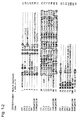
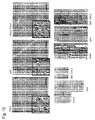
- 1-1 is a phylogenetic tree showing the above results. Further, fig. 1-2 shows the results of alignment of the amino acid sequences of LOC_Os01g43180, LOC_Os01g43230, CPC, TRY, ETC1, ETC2, and CPL3.
- LOC_Os01g43180 and LOC_Os01g43230 found in the rice genome have the highest homology with CPL3 among proteins each comprising a CPC-like Myb sequence. Therefore, it can be judged that LOC_Os01g43180 and LOC_Os01g43230 have a high probability of having functions equivalent to those of the CPL3 gene of Arabidopsis thaliana.
- the mutated plant of the present invention as defined above is characterized in that it grows to a larger size than the wild-type plant.
- productivity improvement can be expected as a result of size enlargement according to the present invention.
- a substance is produced in a target plant for mutation, it is possible to improve the productivity of such useful substance according to the present invention.
- such substance may be a substance originally produced by the wild-type plant or a substance produced via transformation of the wild-type plant.
- the mutated plant of the present invention is characterized in that it flowers earlier than the wild-type plant. Therefore, fruit or seed formation can be promoted and thus the mutated plant of the present invention is advantageous in that it is possible to harvest a crop that can usually be harvested just once a year a plurality of times a year. Moreover, such characteristics of the mutated plant of the present invention enable to save time and cost for crop harvesting.
- the Arabidopsis thaliana ecotype Col-0 (hereinafter referred to as the "wild-type Arabidopsis thaliana” ) was used as the wild-type plant.
- a cpl3-1 mutant in which a gene comprising the nucleotide sequence set forth in SEQ ID NO: 1 had been mutated was screened form the Wisconsin T-DNA group.
- a try-29760 mutant in which the TRY gene had been mutated, an etc1-1 mutant in which the ETC1 gene had been mutated, and an etc2-40390 mutant in which the ETC2 gene had been mutated were isolated from the SALK T-DNA group.
- a cpc-2 mutant in which the CPC gene had been mutated (disclosed in Kurata, T et al. Cell-to-cell movement of the CAPRICE protein in Arabidopsis root epidermal cell differentiation. Development 132, 5387-5398 (2005 )) was prepared.
- Fig. 2 shows T-DNA insertion sites in the obtained mutants.
- a 0.7-kb PCR fragment containing the ETC1 gene was first amplified using TW1169 and TW1170.
- a 1.4-kb PCR fragment containing the ETC2 gene was amplified using TW1165 and TW1166.
- a 0.8-kb PCR fragment containing the CPL3 gene was amplified using TW1167 and TW1168.
- a 1.4-kb PCR fragment containing the TRY gene was amplified using RT91 and RT92.
- PCR fragments were each subcloned into pBluescript SK+ (Stratagene) with the use of Pyrobest DNA polymerase (Takara, Japan).
- the prepared plasmids were designated as pBS-ETC1, pBS-ETC2, pBS-CPL3, and pBS-TRY.
- fragments obtained by treating pBS-ETC1, pBS-ETC2, and pBS-CPL3 with Acc 65I and Sal I were separately inserted into the Acc 65I and Sal I sites of a pCHF3 binary vector ( Jarvis, P. et al., An Arabidopsis mutant defective in the plastid general protein import apparatus. Science 282, 100-103 (1998 )) such that 35S::ETC1, 35S:: ETC2, and 35S::CPL3 constructs were prepared.
- 35S::TRY construct was prepared in the manner described above, except that pBS-TRY was treated with Bam HI and Sal I.
- the following constructs were prepared in order to obtain transformants highly expressing a GFP fusion protein, each of which comprises the respective gene linked to the GFP gene.
- a 2.3-kb PCR fragment containing the ETC1 gene was amplified using RT67 and RT68. The resultant was subjected to restriction enzyme treatment with the use of Sal I and Sma I.
- a 4.0-kb PCR fragment containing the ETC2 gene was amplified using RT69 and RT70. The resultant was digested with Sal I and Eco RV.
- a 3.0-kb PCR fragment was amplified using RT71 and RT72. The resultant was subjected to restriction enzyme treatment with the use of Sal I and Eco RV.
- pBS-ETC1:2xGFP pBS-ETC2:2xGFP
- pBS-CPL3:2xGFP pBS-TRY:2xGFP
- a fragment obtained by treating pBS-ETC1:2xGFP with Sal I and Xba I was inserted into the Sal I and Xba I sites of a pJHA212K binary vector ( Yoo, S. Y. et al., The 35S promoter used in a selectable marker gene of a plant transformation vector affects the expression of the transgene. Planta 221, 523-530 (2005 )).
- a fragment obtained by treating pBS-ETC2:2xGFP with Sal I and Sac II was inserted into the Sal I and Sma I sites of a pJHA212K binary vector.
- fragments obtained by treating pBS-CPL3:2xGFP and pBS-TRY:2xGFP with Sal I and Sac I were separately inserted into the Sal I and Sac I sites of a pJHA212K binary vector.
- the following constructs were prepared in order to obtain transformants expressing the GUS protein, each of which comprises the GUS gene linked to the promoter sequence of the respective gene. Specifically, a 1.9-kb PCR fragment containing the ETC1 gene promoter region was amplified using RT46 and RT47. Also, a 3.0-kb PCR fragment containing the ETC2 gene promoter region was amplified using RT48 and RT49. Further, a 2.4-kb PCR fragment containing the CPL3 gene promoter region was amplified using RT50 and RT51. Furthermore, a 3.0-kb PCR fragment containing the TRY gene promoter region was amplified using RT88 and RT89.
- the obtained amplification fragments were each treated with Not I and Acc I and then subcloned into pBS.
- the prepared plasmids were designated as pBS-ETC1, pBS-ETC2, pBS-CPL3, and pBS-TRY, respectively.
- fragments obtained by treating pBS-ETC1 and pBS-CPL3 with Sal I and Bam HI were separately inserted into the Sal I and Bam HI sites of a pBI101 binary vector (Clontech Laboratories, Inc., CA, USA).
- the obtained plasmids were designated as ETC1promoter::GUS and CPL3promoter::GUS.
- fragments obtained by treating pBS-ETC2 and pBS-TRY with Sal I and Xba I were separately inserted into the Sal I and Xba I sites of a pBI101 binary vector.
- the obtained plasmids were designated as ETC2promoter::GUS and TRYpromoter::GUS.
- Transformation was carried out in accordance with the method disclosed in Kurata, T. et al., The YORE-YORE gene regulates multiple aspects of epidermal cell differentiation in Arabidopsis. Plant J 36, 55-66 (2003 ) with the use of the resultant 35S::ETC1, 35S:: ETC2, 35S::CPL3, ETC1::ETC1:2xGFP, ETC2::ETC2:2xGFP, CPL3::CPL3:2xGFP, TRY::TRY:2xGFP, ETC1 promoter::GUS, CPL3 promoter::GUS, ETC2 promoter::GUS, and TRY promoter::GUS.
- Double mutants and triple mutants with respect to the CPC gene, the TRY gene, the ETC1 gene, the ETC2 gene, and the CPL3 gene were identified by identifying homozygotes of the etc1-1 mutant, the etc2-40390 mutant, and the cpl3-1 mutant isolated in Experimental example 1 in the F2 generation, by PCR.
- Fig. 3 shows the results of determining the root hair numbers in mutants, the obtained double mutants and triple mutants with respect to the respective genes.
- the root hair number slightly decreased in the cpl3-1 mutant.
- the root hair number significantly decreased or substantially no root hair was observed in the double mutant with respect to the CPC gene and the TRY gene, the double mutant with respect to the CPC gene and the ETC1 gene, and the triple mutant with respect to the TRY gene, the CPL3 gene, and the CPC gene.
- Fig. 4 shows the results of determining the trichome number in mutants, the obtained double mutants and triple mutants, with respect to the respective gene.
- the trichome number increased in the cpl3-1 mutant compared with the wild-type plant, as in the case of the cpc-2 mutant.
- the trichome number further increased in the triple mutant with respect to the TRY gene, the CPC gene, and the CPL3 gene.
- the quadruple mutant with respect to the TRY gene, the CPC gene, the ETC1 gene, and the CPL3 gene a further increased number of trichomes were formed and the entire primary surfaces of leaves were covered with trichomes.
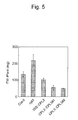
- Fig. 5 shows the results of measuring the raw weight in the respective plant at the same growth stage.
- Fig. 6 shows images of the respective plant at such stage.
- the mutant lacking the CPL3 gene grew to a larger size than the wild-type plant.
- the growth of transformant overexpressing the CPL3 gene was equivalent to 30% of the growth of the wild-type plant.
- the growth of each of the mutants lacking the CPC gene, the ETC 1 gene, the ETC2 gene, or the TRY gene was merely comparable to the growth of the wild-type plant (the results are not shown).
- fig. 7 shows the results of polyploidy verification for the respective plant.
- the respective plant 2 weeks after seeding was subjected to measurement for polyploidy with the use of a Ploidy Analtzer PA Flow Cytometer (Partec) according to the manufacturer' s instructions.
- the 16C peak significantly increased in the mutant lacking the CPL3 gene.
- the results suggest that the mutant lacking the CPL3 gene exhibits a phenotype related to an improvement in cell size due to promoted endoreduplication.
- fig. 8 shows the results of determining the true leaf number in the respective plant.
- Fig. 9 shows results of determining the number of days until bolting of the respective plant. As seen from figs. 8 and 9 , the mutant lacking the CPL3 gene flowered earlier than the wild-type plant and the other mutants and transformants.
- Fig. 10 shows the results. As seen from fig. 10 , the following features were exhibited by the mutant lacking the CPL3 gene compared with the wild-type plant and transformants overexpressing the CPL3 gene: enlargement in leaf epidermal cells and elongation in hypocotyls. In addition, table 2 lists the results of measuring the leaf size and determining epithelial cell number for the respective plant.
- the mutant lacking the CPL3 gene grew to a larger size than the wild-type plant, although the cell number of the mutant did not increase beyond that of the wild-type plant. Thus, it has been revealed that growth at the individual cell level is promoted in the mutant lacking the CPL3 gene to a greater extent than those of the wild-type plant.
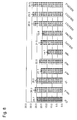
- Fig. 11 shows the results. As shown in fig. 11 , every transformant constitutively expressing the relevant gene under the 35S promoter exhibited a higher root hair number than the wild-type plant. However, the transformant expressing the CPL3 gene under the control of the 35S promoter exhibited a moderately higher root hair number than the other transformants. Further, the transformant overexpressing the ETC1 gene under the control of the ETC1 promoter exhibited a higher root hair number than the other transformants overexpressing the relevant gene under the control of its own promoter, and the wild-type plant.
- fig. 12 shows the results of determining the trichome number in the respective transformant in the manner described above. As shown in fig. 12 , all transformants, excluding the transformant overexpressing the ETC2 gene under the control of the ETC2 promoter, completely lacked trichomes. Also, the transformant overexpressing the ETC2 gene under the control of the ETC2 promoter had a sharply lower trichome number than the wild-type plant.
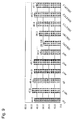
- Fig. 13 shows the results.
- the expression patterns of gene products of the individual genes were examined with the use of the transformants highly expressing the GFP fusion protein (each of which comprises the respective gene), prepared in Experimental example 2.
- Fig. 14 shows the results.
- Fig. 14 also shows the results of examining the expression pattern of the respective gene by RT-PCR and in situ hybridization.
- gene products of the CPC gene, TRY gene, and ETC1 gene accumulated specifically in non-root hair cells (hairless cells) of young-leaf trichomes and of root epidermis.
- gene products of the ETC2 gene and CPL3 gene accumulated specifically in leaf epidermal cells comprising adaxial-side stomatal guard cells, and not in roots and trichomes.
- the CPL3 gene was expressed in a limited manner in stomatal guard cells of leaves, cotyledons, hypocotyls, and petioles, compared to the ETC3 gene.
- Example 2 In this Example, cpc, try, etc1, etc2, and cpl3 knockout mutants identified as in the case of Example 1 and a CPL3-overexpressing plant prepared as in the case of Experimental example 2 were examined in terms of time of flowering and leaf number.
- Table 3 shows the results of examining the above mutant plants in terms of time of flowering and leaf number at flowering. Incidentally, the data is expressed as the mean ⁇ SD from at least 10 plants for a single experiment.
- Table 3 Phenotype Time of flowering (day)
- Leaf number Col-0 37.6 ⁇ 0.5 17.4 ⁇ 0.6
- cpl3 28.9 ⁇ 0.5 8.2 ⁇ 0.3
- cpc 39.6 ⁇ 0.5 19.2 ⁇ 0.6 try 36.0 ⁇ 0.8 14.3 ⁇ 0.6 etc1 40.6 ⁇ 0.8 19.3 ⁇ 0.8 etc2 39.0 ⁇ 0.5 14.1 ⁇ 1.9
- the cpl3 knockout-mutated plant flowered earlier than the wild-type plant (28.9 ⁇ 0.5 days versus 37.6 ⁇ 0.5 days). In addition, the leaf number thereof was lower than that of the wild-type plant (8.2 ⁇ 0.3 versus 17.4 ⁇ 0.6). On the other hand, there was no significant difference between the wild-type plant and the cpc, try, etc1, or etc2 mutated plant (table 3).
- the 35S:CPL3 transgenic plant flowered slightly later than the wild-type plant (41.1 ⁇ 1.1 versus 37.6 ⁇ 0.5). In addition, the leaf number thereof was higher than that of the wild-type plant (28.5 ⁇ 1.7 versus 17.4 ⁇ 0.6).
- PCR amplification included a denaturation step at 95°C for 30 seconds, followed by reaction at 95°C for 5 seconds and 60°C for 30 seconds (45 cycles for CPL3 and 40 cycles for CO, FT, SOC1, and ACT2).
- the relative mRNA levels were calculated with iQ5 software (Bio-Rad) and normalized to the ACT2 mRNA concentration.
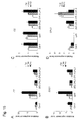
- the FT and SOC1 expression levels of the cpl3 knockout mutant were higher than those of the wild-type plant under long day (LD) conditions during leaf growth.
- the FT expression levels of 21-day-old leaves of the cpl3 knockout mutant were approximately 7.5-fold higher than those of the wild-type plant.
- the SOC1 expression levels thereof were 3.2-fold higher than the same ( figs. 15A and 15B ).
- There was no significant difference between the cpl3 knockout mutant and the wild-type plant in terms of CO expression ( fig. 15C ).
- the present invention it is possible to provide a novel mutated plant that grows to a larger size or flowers earlier than the wild-type plant and a method for production thereof.
- the mutated plant of the present invention achieves a larger size than that of the wild-type plant.
- the productivity of a substance extracted from a plant can be improved.
- the mutated plant of the present invention flowers earlier than the wild-type plant and thus fruit or seed formation can be improved.
Landscapes
- Health & Medical Sciences (AREA)
- Life Sciences & Earth Sciences (AREA)
- Genetics & Genomics (AREA)
- Chemical & Material Sciences (AREA)
- Organic Chemistry (AREA)
- Molecular Biology (AREA)
- Engineering & Computer Science (AREA)
- Bioinformatics & Cheminformatics (AREA)
- Biophysics (AREA)
- Biotechnology (AREA)
- General Engineering & Computer Science (AREA)
- General Health & Medical Sciences (AREA)
- Biomedical Technology (AREA)
- Biochemistry (AREA)
- Wood Science & Technology (AREA)
- Zoology (AREA)
- Physics & Mathematics (AREA)
- Microbiology (AREA)
- Plant Pathology (AREA)
- Cell Biology (AREA)
- Botany (AREA)
- Gastroenterology & Hepatology (AREA)
- Medicinal Chemistry (AREA)
- Proteomics, Peptides & Aminoacids (AREA)
- Breeding Of Plants And Reproduction By Means Of Culturing (AREA)
- Peptides Or Proteins (AREA)
Applications Claiming Priority (2)
| Application Number | Priority Date | Filing Date | Title |
|---|---|---|---|
| JP2006278988 | 2006-10-12 | ||
| PCT/JP2007/070396 WO2008044800A1 (fr) | 2006-10-12 | 2007-10-12 | Plante mutante et son procédé de production |
Publications (2)
| Publication Number | Publication Date |
|---|---|
| EP2055778A1 true EP2055778A1 (fr) | 2009-05-06 |
| EP2055778A4 EP2055778A4 (fr) | 2010-05-05 |
Family
ID=39282984
Family Applications (1)
| Application Number | Title | Priority Date | Filing Date |
|---|---|---|---|
| EP07830130A Withdrawn EP2055778A4 (fr) | 2006-10-12 | 2007-10-12 | Plante mutante et son procédé de production |
Country Status (5)
| Country | Link |
|---|---|
| US (1) | US20090222953A1 (fr) |
| EP (1) | EP2055778A4 (fr) |
| JP (1) | JPWO2008044800A1 (fr) |
| CN (1) | CN101679981A (fr) |
| WO (1) | WO2008044800A1 (fr) |
Families Citing this family (1)
| Publication number | Priority date | Publication date | Assignee | Title |
|---|---|---|---|---|
| US9932601B2 (en) * | 2010-06-18 | 2018-04-03 | The Regents Of The University Of California | Inhibition of Snl6 expression for biofuel production |
Family Cites Families (8)
| Publication number | Priority date | Publication date | Assignee | Title |
|---|---|---|---|---|
| JP4051719B2 (ja) * | 1996-04-26 | 2008-02-27 | 東洋紡績株式会社 | シロイヌナズナの根毛形成開始を制御するcpc遺伝子及びそれを導入した植物 |
| US7345217B2 (en) * | 1998-09-22 | 2008-03-18 | Mendel Biotechnology, Inc. | Polynucleotides and polypeptides in plants |
| WO2005047516A2 (fr) * | 2003-11-13 | 2005-05-26 | Mendel Biotechnology, Inc. | Regulateurs transcriptionnels de plantes |
| US20050086718A1 (en) * | 1999-03-23 | 2005-04-21 | Mendel Biotechnology, Inc. | Plant transcriptional regulators of abiotic stress |
| US7511190B2 (en) * | 1999-11-17 | 2009-03-31 | Mendel Biotechnology, Inc. | Polynucleotides and polypeptides in plants |
| US7223904B2 (en) * | 1999-02-18 | 2007-05-29 | Mendel Biotechnology, Inc. | Plant gene sequences II |
| US20040006797A1 (en) * | 2002-04-05 | 2004-01-08 | Lifang Shi | MYB transcription factors and uses for crop improvement |
| JP2006278988A (ja) | 2005-03-30 | 2006-10-12 | Seiko Epson Corp | 誘電体薄膜の形成方法及びそれを用いて製造された誘電体膜を備えた圧電体装置 |
-
2007
- 2007-10-12 US US12/281,151 patent/US20090222953A1/en not_active Abandoned
- 2007-10-12 WO PCT/JP2007/070396 patent/WO2008044800A1/fr not_active Ceased
- 2007-10-12 JP JP2008538786A patent/JPWO2008044800A1/ja not_active Abandoned
- 2007-10-12 CN CN200780037700A patent/CN101679981A/zh active Pending
- 2007-10-12 EP EP07830130A patent/EP2055778A4/fr not_active Withdrawn
Non-Patent Citations (2)
| Title |
|---|
| Anonymous: "Riken Plant Science Center - 2006 annual report"[Online] 2006, pages 1-72, XP002572759 RIKEN YOKOHAMA INSTITUTE Retrieved from the Internet: URL:http://www.psc.riken.jp/outline/annual/pdf/report2006.pdf> [retrieved on 2010-03-11] * |
| See also references of WO2008044800A1 * |
Also Published As
| Publication number | Publication date |
|---|---|
| JPWO2008044800A1 (ja) | 2010-02-18 |
| CN101679981A (zh) | 2010-03-24 |
| WO2008044800A1 (fr) | 2008-04-17 |
| US20090222953A1 (en) | 2009-09-03 |
| EP2055778A4 (fr) | 2010-05-05 |
Similar Documents
| Publication | Publication Date | Title |
|---|---|---|
| US8785724B2 (en) | Regulator for flowering time, transgenic plant transformed with the same, and method for regulating flowering time | |
| CN105611828A (zh) | 干扰基因表达的hd-zip转录因子抑制以产生具有增强的性状的植物 | |
| US20150007360A1 (en) | Method for plant improvement | |
| EP1353943A1 (fr) | Nouveau gene codant une proteine de sequence f regulant la longevite de feuilles dans arabidopsis thaliana et son gene mutant | |
| KR100647767B1 (ko) | 신규 녹색지속유전자 및 녹색지속성 변이식물체의 제조방법 | |
| Zhou et al. | CHB2, a member of the SWI3 gene family, is a global regulator in Arabidopsis | |
| KR101850003B1 (ko) | 식물의 노화 지연 기능 및 스트레스 내성 기능을 갖는 athg1 단백질과 그 유전자 및 이들의 용도 | |
| EP1948683B1 (fr) | Gene emp4 | |
| US20090222953A1 (en) | Mutated plant and method for production thereof | |
| KR100832257B1 (ko) | 식물 디옥시하이푸신 신타제, 식물 진핵성 개시 인자5에이를 인코딩하는 디엔에이, 형질전환 식물 및식물에서의 프로그램화된 노화와 세포 사멸의 조절방법 | |
| KR101855137B1 (ko) | 식물의 생산성 증대 기능, 노화 지연 기능 및 스트레스 내성 기능을 갖는 atpg8 단백질과 그 유전자 및 이들의 용도 | |
| CN109762840B (zh) | 超量表达白菜myb55在甘蓝型油菜分子育种中的应用 | |
| AU765413B2 (en) | Light-repressible promoters | |
| US7179957B1 (en) | Method for altering nitrogen or oil content of seeds by down regulating AGL11 expression or activity | |
| JP2011188744A (ja) | 高温耐性植物及びそのスクリーニング方法 | |
| KR20130095482A (ko) | 식물의 생산성 증대 기능, 노화 지연 기능 및 스트레스 내성 기능을 갖는 atpg3 단백질과 그 유전자 및 이들의 용도 | |
| KR101592863B1 (ko) | 왜성 표현형을 나타내는 D-h 유전자 및 이의 용도 | |
| KR101555270B1 (ko) | 식물의 바이오매스 생산성 또는 종자 수확량을 증가시키는 애기장대 유래 At3g52740 유전자 및 이의 용도 | |
| WO2007119381A1 (fr) | Gene participant a la tolerance a l'aluminium et son utilisation | |
| JP2004121122A (ja) | 植物の葉形成関連タンパク質as2、及びそれをコードする遺伝子 | |
| Opsahl-Sorteberg | GASA4, one of the 14 member Arabidopsis GASA family of small polypeptides, regulates flowering and seed development | |
| JP2003144170A (ja) | 生殖成長期の分裂組織の形成に関与する新規遺伝子、およびそのタンパク質、並びにその利用方法 |
Legal Events
| Date | Code | Title | Description |
|---|---|---|---|
| PUAI | Public reference made under article 153(3) epc to a published international application that has entered the european phase |
Free format text: ORIGINAL CODE: 0009012 |
|
| 17P | Request for examination filed |
Effective date: 20090305 |
|
| AK | Designated contracting states |
Kind code of ref document: A1 Designated state(s): AT BE BG CH CY CZ DE DK EE ES FI FR GB GR HU IE IS IT LI LT LU LV MC MT NL PL PT RO SE SI SK TR |
|
| AX | Request for extension of the european patent |
Extension state: AL BA HR MK RS |
|
| A4 | Supplementary search report drawn up and despatched |
Effective date: 20100406 |
|
| 17Q | First examination report despatched |
Effective date: 20100712 |
|
| STAA | Information on the status of an ep patent application or granted ep patent |
Free format text: STATUS: THE APPLICATION IS DEEMED TO BE WITHDRAWN |
|
| 18D | Application deemed to be withdrawn |
Effective date: 20110125 |