EP2062968A1 - Bakterienstamm mit antiallergischer aktivität sowie getränk, lebensmittel und antiallergikum mit zelle des bakterienstamms - Google Patents
Bakterienstamm mit antiallergischer aktivität sowie getränk, lebensmittel und antiallergikum mit zelle des bakterienstamms Download PDFInfo
- Publication number
- EP2062968A1 EP2062968A1 EP07792734A EP07792734A EP2062968A1 EP 2062968 A1 EP2062968 A1 EP 2062968A1 EP 07792734 A EP07792734 A EP 07792734A EP 07792734 A EP07792734 A EP 07792734A EP 2062968 A1 EP2062968 A1 EP 2062968A1
- Authority
- EP
- European Patent Office
- Prior art keywords
- bacterial strain
- ova
- activity
- ige
- cells
- Prior art date
- Legal status (The legal status is an assumption and is not a legal conclusion. Google has not performed a legal analysis and makes no representation as to the accuracy of the status listed.)
- Granted
Links
Images





Classifications
-
- A—HUMAN NECESSITIES
- A23—FOODS OR FOODSTUFFS; TREATMENT THEREOF, NOT COVERED BY OTHER CLASSES
- A23L—FOODS, FOODSTUFFS OR NON-ALCOHOLIC BEVERAGES, NOT OTHERWISE PROVIDED FOR; PREPARATION OR TREATMENT THEREOF
- A23L33/00—Modifying nutritive qualities of foods; Dietetic products; Preparation or treatment thereof
- A23L33/10—Modifying nutritive qualities of foods; Dietetic products; Preparation or treatment thereof using additives
- A23L33/135—Bacteria or derivatives thereof, e.g. probiotics
-
- A—HUMAN NECESSITIES
- A23—FOODS OR FOODSTUFFS; TREATMENT THEREOF, NOT COVERED BY OTHER CLASSES
- A23L—FOODS, FOODSTUFFS OR NON-ALCOHOLIC BEVERAGES, NOT OTHERWISE PROVIDED FOR; PREPARATION OR TREATMENT THEREOF
- A23L2/00—Non-alcoholic beverages; Dry compositions or concentrates therefor; Preparation or treatment thereof
- A23L2/40—Effervescence-generating compositions
-
- A—HUMAN NECESSITIES
- A23—FOODS OR FOODSTUFFS; TREATMENT THEREOF, NOT COVERED BY OTHER CLASSES
- A23L—FOODS, FOODSTUFFS OR NON-ALCOHOLIC BEVERAGES, NOT OTHERWISE PROVIDED FOR; PREPARATION OR TREATMENT THEREOF
- A23L2/00—Non-alcoholic beverages; Dry compositions or concentrates therefor; Preparation or treatment thereof
- A23L2/52—Adding ingredients
-
- A—HUMAN NECESSITIES
- A61—MEDICAL OR VETERINARY SCIENCE; HYGIENE
- A61K—PREPARATIONS FOR MEDICAL, DENTAL OR TOILETRY PURPOSES
- A61K35/00—Medicinal preparations containing materials or reaction products thereof with undetermined constitution
- A61K35/66—Microorganisms or materials therefrom
- A61K35/74—Bacteria
- A61K35/741—Probiotics
- A61K35/744—Lactic acid bacteria, e.g. enterococci, pediococci, lactococci, streptococci or leuconostocs
- A61K35/747—Lactobacilli, e.g. L. acidophilus or L. brevis
-
- A—HUMAN NECESSITIES
- A61—MEDICAL OR VETERINARY SCIENCE; HYGIENE
- A61P—SPECIFIC THERAPEUTIC ACTIVITY OF CHEMICAL COMPOUNDS OR MEDICINAL PREPARATIONS
- A61P37/00—Drugs for immunological or allergic disorders
-
- A—HUMAN NECESSITIES
- A61—MEDICAL OR VETERINARY SCIENCE; HYGIENE
- A61P—SPECIFIC THERAPEUTIC ACTIVITY OF CHEMICAL COMPOUNDS OR MEDICINAL PREPARATIONS
- A61P37/00—Drugs for immunological or allergic disorders
- A61P37/08—Antiallergic agents
-
- A—HUMAN NECESSITIES
- A61—MEDICAL OR VETERINARY SCIENCE; HYGIENE
- A61P—SPECIFIC THERAPEUTIC ACTIVITY OF CHEMICAL COMPOUNDS OR MEDICINAL PREPARATIONS
- A61P43/00—Drugs for specific purposes, not provided for in groups A61P1/00-A61P41/00
-
- C—CHEMISTRY; METALLURGY
- C12—BIOCHEMISTRY; BEER; SPIRITS; WINE; VINEGAR; MICROBIOLOGY; ENZYMOLOGY; MUTATION OR GENETIC ENGINEERING
- C12C—BEER; PREPARATION OF BEER BY FERMENTATION; PREPARATION OF MALT FOR MAKING BEER; PREPARATION OF HOPS FOR MAKING BEER
- C12C12/00—Processes specially adapted for making special kinds of beer
- C12C12/002—Processes specially adapted for making special kinds of beer using special microorganisms
- C12C12/008—Lactic acid bacteria
-
- C—CHEMISTRY; METALLURGY
- C12—BIOCHEMISTRY; BEER; SPIRITS; WINE; VINEGAR; MICROBIOLOGY; ENZYMOLOGY; MUTATION OR GENETIC ENGINEERING
- C12N—MICROORGANISMS OR ENZYMES; COMPOSITIONS THEREOF; PROPAGATING, PRESERVING, OR MAINTAINING MICROORGANISMS; MUTATION OR GENETIC ENGINEERING; CULTURE MEDIA
- C12N1/00—Microorganisms; Compositions thereof; Processes of propagating, maintaining or preserving microorganisms or compositions thereof; Processes of preparing or isolating a composition containing a microorganism; Culture media therefor
- C12N1/20—Bacteria; Culture media therefor
-
- C—CHEMISTRY; METALLURGY
- C12—BIOCHEMISTRY; BEER; SPIRITS; WINE; VINEGAR; MICROBIOLOGY; ENZYMOLOGY; MUTATION OR GENETIC ENGINEERING
- C12N—MICROORGANISMS OR ENZYMES; COMPOSITIONS THEREOF; PROPAGATING, PRESERVING, OR MAINTAINING MICROORGANISMS; MUTATION OR GENETIC ENGINEERING; CULTURE MEDIA
- C12N1/00—Microorganisms; Compositions thereof; Processes of propagating, maintaining or preserving microorganisms or compositions thereof; Processes of preparing or isolating a composition containing a microorganism; Culture media therefor
- C12N1/20—Bacteria; Culture media therefor
- C12N1/205—Bacterial isolates
-
- C—CHEMISTRY; METALLURGY
- C12—BIOCHEMISTRY; BEER; SPIRITS; WINE; VINEGAR; MICROBIOLOGY; ENZYMOLOGY; MUTATION OR GENETIC ENGINEERING
- C12P—FERMENTATION OR ENZYME-USING PROCESSES TO SYNTHESISE A DESIRED CHEMICAL COMPOUND OR COMPOSITION OR TO SEPARATE OPTICAL ISOMERS FROM A RACEMIC MIXTURE
- C12P13/00—Preparation of nitrogen-containing organic compounds
- C12P13/005—Amino acids other than alpha- or beta amino acids, e.g. gamma amino acids
-
- C—CHEMISTRY; METALLURGY
- C12—BIOCHEMISTRY; BEER; SPIRITS; WINE; VINEGAR; MICROBIOLOGY; ENZYMOLOGY; MUTATION OR GENETIC ENGINEERING
- C12P—FERMENTATION OR ENZYME-USING PROCESSES TO SYNTHESISE A DESIRED CHEMICAL COMPOUND OR COMPOSITION OR TO SEPARATE OPTICAL ISOMERS FROM A RACEMIC MIXTURE
- C12P7/00—Preparation of oxygen-containing organic compounds
- C12P7/40—Preparation of oxygen-containing organic compounds containing a carboxyl group including Peroxycarboxylic acids
- C12P7/52—Propionic acid; Butyric acids
-
- A—HUMAN NECESSITIES
- A23—FOODS OR FOODSTUFFS; TREATMENT THEREOF, NOT COVERED BY OTHER CLASSES
- A23V—INDEXING SCHEME RELATING TO FOODS, FOODSTUFFS OR NON-ALCOHOLIC BEVERAGES AND LACTIC OR PROPIONIC ACID BACTERIA USED IN FOODSTUFFS OR FOOD PREPARATION
- A23V2002/00—Food compositions, function of food ingredients or processes for food or foodstuffs
-
- A—HUMAN NECESSITIES
- A23—FOODS OR FOODSTUFFS; TREATMENT THEREOF, NOT COVERED BY OTHER CLASSES
- A23V—INDEXING SCHEME RELATING TO FOODS, FOODSTUFFS OR NON-ALCOHOLIC BEVERAGES AND LACTIC OR PROPIONIC ACID BACTERIA USED IN FOODSTUFFS OR FOOD PREPARATION
- A23V2400/00—Lactic or propionic acid bacteria
- A23V2400/11—Lactobacillus
- A23V2400/121—Brevis
-
- A—HUMAN NECESSITIES
- A61—MEDICAL OR VETERINARY SCIENCE; HYGIENE
- A61K—PREPARATIONS FOR MEDICAL, DENTAL OR TOILETRY PURPOSES
- A61K35/00—Medicinal preparations containing materials or reaction products thereof with undetermined constitution
- A61K2035/11—Medicinal preparations comprising living procariotic cells
- A61K2035/115—Probiotics
-
- C—CHEMISTRY; METALLURGY
- C12—BIOCHEMISTRY; BEER; SPIRITS; WINE; VINEGAR; MICROBIOLOGY; ENZYMOLOGY; MUTATION OR GENETIC ENGINEERING
- C12R—INDEXING SCHEME ASSOCIATED WITH SUBCLASSES C12C - C12Q, RELATING TO MICROORGANISMS
- C12R2001/00—Microorganisms ; Processes using microorganisms
- C12R2001/01—Bacteria or Actinomycetales ; using bacteria or Actinomycetales
- C12R2001/225—Lactobacillus
- C12R2001/24—Lactobacillus brevis
Definitions
- the present invention relates to a bacterial strain with antiallergic activity, and to beverages, foods and antiallergic agents containing cells thereof.
- the present invention provides a bacterial strain belonging to Lactobacillus brevis subspecies brevis , which strain is capable of growing in effervescent alcoholic beverages, produces ⁇ -aminobutyric acid (GABA) and has antiallergic activity.
- GABA ⁇ -aminobutyric acid
- the present inventors have discovered that among lactic acid bacteria of Lactobacillus brevis , bacterial strains belonging to the subspecies brevis , in particular, effectively induce the production of Th1 cytokines by mouse spleen cells and inhibit the production of IgE. These activities are effective for the prevention and treatment of human allergic diseases, and are notably potent compared to the hitherto-reported lactic acid bacteria strains.
- Lactic acid bacteria have been conventionally used in fermented food products and are far safer for the human body than chemically synthesized antiallergic drugs. Ordinary lactic acid bacteria cannot grow in effervescent alcoholic beverages, while the bacterial strain of the invention is capable of growing in effervescent alcoholic beverages.
- This property can be utilized to separate the bacterial strain of the invention from other lactic acid bacteria strains with no antiallergic activity. Also, since the bacterial strain of the invention produces ⁇ -aminobutyric acid (GABA), it has anti-stress activity as well as antiallergic activity, and is therefore expected to have a robust, multifaceted effect in the prevention and treatment of allergic diseases which correlate with physical and psychological stress.
- GABA ⁇ -aminobutyric acid
- a particularly preferred example of such a bacterial strain is Lactobacillus brevis subspecies brevis SBC8803 (FERM BP-10632).
- the antiallergic activity is preferably activity which promotes interferon ⁇ and/or interleukin 12 production.
- Interferon ⁇ is a cytokine secreted by Th1 cells. As well as inhibiting the production of IgE by B cells, it enhances the cell-mediated immunity of killer T cells, macrophages and the like, which attack viruses, filamentous fungi, tubercle bacilli, etc.
- Interleukin 12 is a cytokine secreted by antigen-presenting cells such as macrophages. It stimulates NK cells and induces Th1 cells, and further induces the production of interferon ⁇ by Th1 cells. Since the bacterial strain of the invention promotes the production of interferon ⁇ and/or interleukin 12 and inhibits the production of IgE, it can inhibit type I allergic reaction.
- the antiallergic activity is preferably activity which inhibits IgE production.
- IgE is a substance which causes allergic diseases. Specifically, IgE is produced in response to invasion by allergens, and binds to mast cells or basophils to establish sensitization. Upon subsequent exposure to the same allergen, IgE recognizes the allergen and causes release of inflammatory substances such as histamines from mast cells or basophils. This allergic reaction is responsible for various symptoms including bronchial constriction and urticaria, and leads to allergic diseases, such as pollen hypersensitivity, allergic rhinitis, atopic dermatitis and asthma, depending on the site of onset. Since the bacterial strain of the invention inhibits the production of IgE, it can inhibit allergic reaction and can thus be used for the prevention and treatment of such allergic diseases.
- cells of the aforementioned bacterial strain have antiallergic activity and are safe for the human body, they can be used as a health food ingredient in beverages and foods.
- the aforementioned bacterial strain produces ⁇ -aminobutyric acid (GABA), they have anti-stress activity, hypotensive activity and tranquilizing property, and are therefore highly useful as a health food ingredient.
- GABA ⁇ -aminobutyric acid
- the present invention still further provides antiallergic agents containing cells of the aforementioned bacterial strain as an active ingredient.
- antiallergic agents containing them as an active ingredient can be utilized as antiallergic agents that are safer than chemically synthesized drugs.
- the present invention provides a bacterial strain belonging to Lactobacillus brevis subspecies brevis , which has more potent antiallergic activity than hitherto-known lactic acid bacteria strains.
- the bacterial strain of the invention is capable of growing in effervescent alcoholic beverages, and this property can be utilized to separate the bacterial strain of the invention from other lactic acid bacteria strains with no antiallergic activity.
- GABA ⁇ -aminobutyric acid
- the present invention further provides highly safe beverages, foods and antiallergic agents which contain cells of the aforementioned bacterial strain and have antiallergic activity.
- the bacterial strain of the invention is a bacterial strain belonging to Lactobacillus brevis subspecies brevis , which strain is capable of growing in effervescent alcoholic beverages, produces ⁇ -aminobutyric acid (GABA) and has antiallergic activity.
- GABA ⁇ -aminobutyric acid
- Lactobacillus brevis consists of the following four subspecies: brevis , gravesensis , otakiensis and coagulants .
- the aforementioned bacterial strain belongs to the subspecies brevis .
- Bacterial strains belonging to the subspecies brevis can be separated based on, for example, their 16S ribosomal DNA nucleotide sequences and differences in production of acids from sugars, and can be classified as bacterial strains not belonging to the subspecies gravesensis , subspecies otakiensis or subspecies coagulans .
- the "antiallergic activity” means activity which inhibits allergic reaction.
- the "allergy” refers to a condition in which antibodies have been produced in the body as a result of ingestion of, or contact with, a certain substance, and subsequent ingestion of, or contact with, the same substance provokes an excessive antigen-antibody reaction which causes a pathological symptom.
- the "allergic reaction” means a phenomenon wherein an immune response, which is a defense mechanism of the body, causes an attack on the body's own cells or ingested food, which should not be eliminated.
- An immune response involves antigen-presenting cells, T cells and B cells, and mainly IgG and IgA are produced in a humoral immune response.
- an allergic reaction involves primarily Th2 cells, and IgE is produced at a concentration 100 to 10,000 times higher than in an ordinary immune response. This abundant IgE binds to mast cells and stimulates release of inflammatory substances such as histamines and leukotrienes from the mast cells.
- antiallergic activity examples include activity on antigen-presenting cells, T cells or mast cells, which activity inhibits the production of IgE or the release of the aforementioned inflammatory substances; and activity which causes a shift of the Th1/Th2 balance toward Th1. More specifically, examples are: activity which inhibits IgE production; and activity which promotes interferon ⁇ and interleukin 12 production.
- the antiallergic activity of the aforementioned bacterial strain is preferably activity which inhibits IgE production, activity which promotes interferon ⁇ production, and/or activity which promotes interleukin 12 production, and more preferably, the bacterial strain has two or more of these activities.
- Bacterial strains belonging to Lactobacillus brevis subspecies brevis can be easily isolated from nature, and can be identified by examining their 16S ribosomal DNA nucleotide sequences. They can also be purchased from cell banks such as ATCC.
- Bacterial strains belonging to Lactobacillus brevis subspecies brevis which are capable of growing in effervescent alcoholic beverages can be selected out by the method described in Japanese Patent Application Laid-Open No. 2003-250557 .
- the screening can be carried out as follows. PCR is performed on genomic DNA of bacterial strains belonging to Lactobacillus brevis subspecies brevis using a prescribed primer set (a primer set comprising oligonucleotides composed of the nucleotide sequences listed as SEQ ID NO: 1 and SEQ ID NO: 2 in the Sequence Listing of Japanese Patent Application Laid-Open No. 2003-250557 ), and the amplified DNA gyrase subunit B gene fragments are cut with a restriction enzyme.
- a primer set a primer set comprising oligonucleotides composed of the nucleotide sequences listed as SEQ ID NO: 1 and SEQ ID NO: 2 in the Sequence Listing of Japanese Patent Application Laid-Open No. 2003-25
- restriction enzyme cleavage patterns are analyzed after acrylamide gel electrophoresis, and bacterial strains belonging to group IIb are selected out. Restriction enzyme cleavage patterns fall roughly into 4 groups, and the bacterial strains capable of growing in effervescent alcoholic beverages have been known to belong to group IIb.
- Such bacterial strains can also be selected out by inoculating bacterial strains belonging to Lactobacillus brevis subspecies brevis in an effervescent alcoholic beverage, culturing them, and determining whether they can grow or not. Although 30°C is more suitable, the cultivation temperature may be 15°C to 45°C and is preferably 20°C to 37°C, especially around 30°C.
- Bacterial strains belonging to Lactobacillus brevis subspecies brevis which produce ⁇ -aminobutyric acid (GABA) can be selected out by analyzing culture supernatants with an amino acid analyzer or the like and determining the GABA contents.
- Bacterial strains belonging to Lactobacillus brevis subspecies brevis which have antiallergic activity can be selected out by examining whether or not bacterial strains have, for example, i) activity which promotes interferon ⁇ and interleukin 12 production by mouse spleen cells, ii) activity which inhibits IgE production induced in spleen cells of ovalbumin (OVA)-immunized mice, or iii) activity which inhibits the production of IgE secreted into the peripheral blood of OVA-immunized mice.
- OVA ovalbumin
- the presence or absence of activity which promotes interferon ⁇ and interleukin 12 production can be determined as follows. Spleen cells are extracted from mouse spleens and cultured. A cell suspension prepared by sterilizing cells of the test strain is added thereto, and the mixture is cultured for a prescribed period of time. Then, the amounts of interferon ⁇ and interleukin 12 secreted from the spleen cells are measured by ELISA or the like.
- the presence or absence of activity which inhibits IgE production can be determined as follows. Spleen cells are extracted from OVA-immunized mice 2 weeks after booster immunization and cultured. A cell suspension prepared by sterilizing cells of the test strain and OVA are added thereto, and the mixture is cultured for a prescribed period of time. Then, the amount of IgE secreted from the spleen cells is measured by ELISA or the like.
- Cells of the aforementioned bacterial strain can be added to beverages and foods with a view to preventing or treating allergic diseases.
- beverages and foods may consist entirely of the bacterial cells, or may contain additives commonly used in the relative field.
- additives there may be mentioned, for example, apple fiber, soybean fiber, meat extract, black vinegar extract, gelatin, corn starch, honey, animal and vegetable oil and fat, monosaccharides such as glucose, disaccharides such as sucrose, fructose and mannitol, polysaccharides such as dextrose and starch, sugar alcohols such as erythritol, xylitol and sorbitol, vitamins such as vitamin C, and the like. These additives may be used alone or in combinations.
- They may also be blended as food additives into various types of beverages and foods, such as special health foods, special nutritional foods, nutritional supplements, health foods, functional foods and patient foods, with a view to preventing, or alleviating the symptoms of, allergic diseases.
- the 13 bacterial strains belonging to Lactobacillus brevis subspecies brevis and strain X belonging to Lactobacillus rhamnosus were screened for ability to grow in beer.
- the screening was carried out in the manner described in Japanese Patent Application Laid-Open No. 2003-250557 .
- PCR was performed on the genomic DNA of each lactic acid bacteria strain using a prescribed primer set (a primer set comprising oligonucleotides composed of the nucleotide sequences listed as SEQ ID NO: 1 and SEQ ID NO: 2 in the Sequence Listing of Japanese Patent Application Laid-Open No. 2003-250557 ).
- the amplified DNA gyrase subunit B gene fragment was cut with a restriction enzyme, and the restriction enzyme cleavage pattern was analyzed after acrylamide gel electrophoresis.
- restriction enzyme cleavage patterns fall roughly into 4 groups, and the bacterial strains capable of growing in beer have been known to belong to group IIb.
- the 13 bacterial strains belonging to Lactobacillus brevis subspecies brevis were all determined to be capable of growing in beer, whereas strain X belonging to Lactobacillus rhamnosus was not determined to be capable of growing in beer. Then, these bacterial strains were actually inoculated into beer to confirm whether or not they were capable of growing in beer, and the same results were obtained.
- each bacterial strain was cultured statically in MRS broth (Difco) (composition: 1% proteose peptone, 1% beef extract, 0.5% yeast extract, 2% glucose, 0.1% Tween 80, 0.5% ammonium citrate, 0.01% magnesium sulfate, 0.005% manganese sulfate, 0.2% dipotassium phosphate) for 3 days under an anaerobic condition (N 2 -CO 2 -H 2 (90:5:5) gas). Then, the culture solution was centrifuged at 1500 rpm for 10 minutes, and cells of each strain were recovered.
- MRS broth Contifco
- the obtained cells were washed with PBS, lyophilized, and suspended in PBS to a final concentration of 1 mg/mL.
- the cell suspensions thus obtained were subjected to autoclave sterilization (121°C, 15 min) and used in the following experiment.
- the interferon ⁇ production-promoting effects of the 13 bacterial strains belonging to Lactobacillus brevis subspecies brevis were evaluated by addind a cell suspension of each bacterial strain to mouse spleen cells, culturing the mixture for a prescribed period of time, and measuring the amount of interferon ⁇ secreted from the spleen cells.
- spleens were aseptically extracted from 6-week-old BALB/c mice (female) and immersed in RPMI 1640 medium containing 10% FBS. The spleens were then transferred to a dish and ground with a pestle, and the mouse spleen cell suspension was passed through a nylon filter net with an opening size of 70 ⁇ m and wire diameter of 39 ⁇ m (Nippon Rikagaku Kikai). The mouse spleen cell suspension that had passed through the nylon filter net was centrifuged at 1500 rpm for 10 minutes.
- a hemolysis reagent (0.16 M ammonium chloride, Tris-HCl, pH 7.2) was added to the precipitated mouse spleen cells, and the mixture was allowed to stand for 5 minutes at room temperature. Then, fresh RPMI 1640 medium containing 10% FBS was added to wash the mouse spleen cells, and the mixture was centrifuged at 1500 rpm for 10 minutes. After discarding the supernatant, RPMI 1640 medium containing 10% FBS was added to bring the cell concentration to 5 ⁇ 10 6 cells/mL. The mouse spleen cells thus obtained were used in the following experiment.
- mice spleen cells were seeded in a 96-well plate at a density of 2.5 ⁇ 10 6 cells/mL, and cultured in RPMI 1640 medium containing 10% FBS under conditions of 37°C, 5% CO 2 .
- a cell suspension of each bacterial strain (final concentration: 10 ⁇ g/mL) was added to each well in which the mouse spleen cells were being cultured. After 72 hours, interferon ⁇ secreted into the culture supernatant was quantified by ELISA.
- LPS Lipopolysaccharide
- Quantification of interferon ⁇ by ELISA was carried out as follows. First, 50 ⁇ L of a primary antibody (rabbit anti-mouse/rat interferon- ⁇ , BioSource) prepared to 1.25 ⁇ g/mL was added to each well of a 96-well plate (Maxisorp Immunoplate, Nunk), and the mixture was allowed to stand overnight at 4°C for fixation. Then, the 96-well plate was washed 3 times with wash buffer and subjected to blocking with 1% bovine serum albumin (BSA) (Sigma).
- BSA bovine serum albumin
- each culture supernatant or an interferon ⁇ standard with a known concentration of interferon ⁇ was added to each well and allowed to react with the anti-interferon ⁇ primary antibody for 90 minutes.
- 50 ⁇ L of a secondary antibody (anti-mouse/rat interferon ⁇ biotin conjugate, BioSource) prepared to 0.5 ⁇ g/mL was added to each well and allowed to react at room temperature for 90 minutes. Then, each well was washed 5 times with wash buffer, and streptavidin-HRP (BioSource) was added and allowed to react.
- TMB tetramethylbenzidine
- TMB tetramethylbenzidine
- 2N sulfuric acid was added to each well to terminate the reaction, and the absorbance at 450 nm was measured.
- a standard curve was prepared from the absorbances of the interferon ⁇ standards, and interferon ⁇ produced by the mouse spleen cells was quantified using the standard curve.
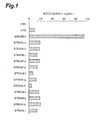
- Fig. 1 shows the amount of interferon ⁇ produced by mouse spleen cells upon addition of a cell suspension of each of the 13 bacterial strains belonging to Lactobacillus brevis subspecies brevis.
- SBC8803 belonging to Lactobacillus brevis subspecies brevis induced interferon ⁇ production by mouse spleen cells, and the amount produced was significantly greater compared to LPS and the other bacterial strains belonging to Lactobacillus brevis subspecies brevis (strains a to 1).
- strain SBC8803 which exhibited interferon ⁇ production-inducing activity, was deposited with the International Patent Organism Depositary, National Institute of Advanced Industrial Science and Technology (Tsukuba Central 6, 1-1, Higashi 1-chome Tsukuba-shi, Ibaraki-ken 305-8566 Japan), an international depositary authority, on June 28, 2006 under accession number FERM BP-10632.
- SBC8803 which had exhibited an interferon ⁇ production-promoting effect on mouse spleen cells, was evaluated with respect to its Th1 cytokine (interferon ⁇ and interleukin 12) production-promoting effect, Th2 cytokine (interleukin 4) production-inhibiting effect and IgE production-inhibiting effect on spleen cells of OVA-immunized mice. Also, strains b and c belonging to Lactobacillus brevis subspecies brevis and strain X belonging to Lactobacillus rhamnosus were examined in the same manner and compared with SBC8803.
- OVA-immunized mice were prepared by intraperitoneally administering OVA to 6-week-old BALB/c mice (female) to induce allergy.
- an OVA antigen solution was prepared by dissolving 100 ⁇ g of OVA (ovalbumin, eggwhite, purified; Worthington Biochemical) and 10 mg of aluminum hydroxide in 1 mL of PBS, and 200 ⁇ L thereof was administered intraperitoneally to the mice as a primary immunization.
- OVA antigen solution was prepared in the same manner as described above, and 200 ⁇ L thereof was administered intraperitoneally to the mice as a booster immunization. Allergy occurred in the boosted mice after about one week, and these mice were used as OVA-immunized mice in the following experiment.
- spleens were aseptically extracted from the OVA-immunized mice, and spleen cells were prepared by the same procedure as described above.
- Quantification of interferon ⁇ by ELISA was carried out in the same manner as described above.
- ELISA was performed by the same procedure as used for the quantification of interferon ⁇ , except that 1 ⁇ g/mL of purified anti-mouse IL-12 (p40/p70) (BD Pharmingen) was used as the primary antibody and 1 ⁇ g/mL of biotinylated anti-mouse IL-12 (p40/p70) (BD Pharmingen) was used as the secondary antibody.
- ELISA was performed by the same procedure as used for the quantification of interferon ⁇ , except that 1 ⁇ g/mL of monoclonal anti-mouse IL-4 antibody (R&D Systems) was used as the primary antibody and 1 ⁇ g/mL of biotinylated anti-mouse IL-4 antibody (R&D Systems) was used as the secondary antibody.
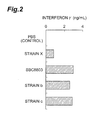
- Fig. 2 shows the amount of interferon ⁇ produced by spleen cells of OVA-immunized mice upon addition of OVA and a cell suspension of each bacterial strain.
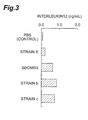
- Fig. 3 shows the amount of interleukin 12 produced by spleen cells of OVA-immunized mice upon addition of OVA and a cell suspension of each bacterial strain.
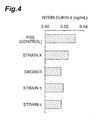
- Fig. 4 shows the amount of interleukin 4 produced by spleen cells of OVA-immunized mice upon addition of OVA and a cell suspension of each bacterial strain.
- Fig. 5 is a graph showing the interferon ⁇ /interleukin 4 ratio calculated as an index of the Th1/Th2 balance.
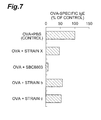
- OVA-specifc IgE 2.5 ⁇ 10 6 spleen cells were seeded in a 48-well plate (cell density: 2.5 ⁇ 10 6 cells/mL), and cultured in RPMI 1640 medium containing 10% FBS under conditions of 37°C, 5% CO 2 .
- OVA final concentration: 100 ⁇ g/mL
- a cell suspension of each bacterial strain final concentration: 1 ⁇ g/mL
- the spleen cells were washed 3 times with fresh medium to remove the OVA, and a cell suspension of each bacterial strain was again added to the washed spleen cells to bring the concentration to 1 ⁇ g/mL.
- TMB tetramethylbenzidine
- TMB tetramethylbenzidine
- 2N sulfuric acid was added to each well to terminate the reaction, and the absorbance at 450 nm was measured.
- a standard curve was prepared from the absorbances of the IgE standards, and IgE produced by the OVA mouse spleen cells was quantified using the standard curve. The amount of OVA-specific IgE was expressed as a value relative to the absorbance of the control (negative control), due to the lack of an OVA-specific IgE standard.
- strains b and c and strain X belonging to Lactobacillus rhamnosus exhibited weak activities compared to SBC8803, although they inhibited OVA-induced production of total IgE and OVA-specific IgE.
- SBC8803 belonging to Lactobacillus brevis subspecies brevis has an interferon ⁇ and interleukin 12 production-promoting effect and an IgE production-inhibiting effect, and that it exhibits more potent antiallergic activity compared to hitherto-known lactic acid bacteria strains.
- SBC8803 which had been shown to have potent antiallergic activity in the in vitro experiments, was evaluated in vivo with respect to its IgE production-inhibiting effect in OVA-immunized mice. Also, strain X belonging to Lactobacillus rhamnosus was examined in the same manner and compared with SBC8803.
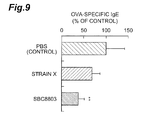
- OVA-immunized mice were prepared by primary and booster immunizations with OVA (ovalbumin, eggwhite, purified; Worthington Biochemical) in the same manner as described above. They were divided into 3 groups of 10 mice each based on body weight, and a cell suspension of SBC8803 or strain X or PBS (control) was administered intraperitoneally at 200 ⁇ L once every two days from one week before primary immunization to one week after booster immunization. Each cell suspension was prepared by suspending lyophilized bacterial cells in PBS to a final concentration of 1 mg/mL and subjecting the suspension to autoclave sterilization (121°C, 15 min) in the same manner as described above.
- Fig. 8 shows the amount of total IgE secreted into the peripheral blood of OVA-immunized mice after intraperitoneal administration of each bacterial strain.
- Fig. 9 shows the amount of OVA-specific IgE secreted into the peripheral blood of OVA-immunized mice after intraperitoneal administration of each bacterial strain.
- the double asterisks (**) in the graphs indicate that the difference from control is statistically significant at p ⁇ 0.01.
- strain X belonging to Lactobacillus rhamnosus exhibited a weak activity compared to SBC8803 and its effect was not statistically significant compared to control, although it suppressed total IgE and OVA-specific IgE secreted into the peripheral blood of OVA mice.
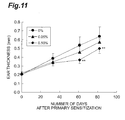
- NC/Nga mice of each group were freely fed a control diet containing no SBC8803, a mixed diet containing 0.05% SBC8803 or a mixed diet containing 0.5% SBC8803 from 2 weeks before the primary sensitization to the end of the test.
- the dermatitis scores, ear thicknesses and serum IgE antibody levels of NC/Nga mice of each group were measured over time, and the average values were determined and compared between the groups.
- the dermatitis scores were measured by the method of Matsuda et al. ( Matsuda et al., Int. Immunol., 1997, Vol. 9, p.461-466 ). Specifically, the extents of redness, hemorrhage, edema, alopecia, skin loss and rash were examined and scored on a scale of 0 to 3, with 0 representing lack of symptoms, 1 representing mild symptoms, 2 representing moderate symptoms and 3 representing serious symptoms.
- the ear thicknesses were measured using a dial thickness gauge (Mitsutoyo).
- the serum IgE antibody levels were measured by sandwich ELISA mentioned above.
- Fig. 10 shows the time-dependent changes in dermatitis score of NC/Nga mice fed a mixed diet containing SBC8803.
- the single asterisks (*) in the graph indicate that the difference from the NC/Nga mice fed the control diet is statistically significant at p ⁇ 0.05, and the double asterisks (**) indicate that the difference from the NC/Nga mice fed the control diet is statistically significant at p ⁇ 0.01.
- Fig. 11 shows the time-dependent changes in ear thickness of NC/Nga mice fed a mixed diet containing SBC8803.
- the double asterisks (**) in the graph indicate that the difference from the NC/Nga mice fed the control diet is statistically significant at p ⁇ 0.01.
- Fig. 12 shows the time-dependent changes in serum IgE antibody level of NC/Nga mice fed a mixed diet containing SBC8803.
- the single asterisks (*) in the graph indicate that the difference from the NC/Nga mice fed the control diet is statistically significant at p ⁇ 0.05, and the double asterisks (**) indicate that the difference from the NC/Nga mice fed the control diet is statistically significant at p ⁇ 0.01.
- SBC8803 belonging to Lactobacillus brevis subspecies brevis was inoculated into 100 mL of liquid medium (3% malt extract (Difco), 2% yeast extract (Difco), 0.2% sodium glutamate, pH 6.0) and cultured statically for 4 days. Then, the culture solution of SBC8803 was centrifuged at 1500 rpm for 10 minutes and the culture supernatant was recovered. GABA contained in the culture supernatant was quantified by HPLC.
- the HPLC conditions were as follows:
- SBC8803 produced 102.5 ⁇ mol/L of GABA in the culture supernatant.
- Lactic acid-fermented fruit juice was produced using SBC8803 having antiallergic activity, and sensory evaluation of aroma and taste was performed on the lactic acid-fermented fruit juice.
- Table 2 shows the type of fruit, sugar content and pH of each juice used for the lactic acid fermentation.
- Table 3 shows the turbidity, lactic acid content and sensory evaluation results for each lactic acid-fermented juice.
- lactic acid fermentation by SBC8803 proceeded to produce a lactic acid-fermented fruit juice having no yogurt flavor and retaining the flavor of the original juice.
- the fermentation using apple juice further yielded a gentle aroma and fresh acidity, which are desirable properties for a lactic acid-fermented beverage.
- the bacterial strain of the invention is capable of growing in effervescent alcoholic beverages, and this property can be utilized to separate the bacterial strain of the invention from other lactic acid bacteria strains with no antiallergic activity. Also, since the bacterial strain of the invention produces ⁇ -aminobutyric acid (GABA), it has anti-stress activity as well as antiallergic activity, and is therefore expected to have a robust effect in the prevention and treatment of allergic diseases which correlate with physical and psychological stress.
- GABA ⁇ -aminobutyric acid
- the present invention further provides highly safe beverages, foods and antiallergic agents which contain cells of the aforementioned bacterial strain and have antiallergic activity.
Landscapes
- Life Sciences & Earth Sciences (AREA)
- Health & Medical Sciences (AREA)
- Chemical & Material Sciences (AREA)
- Engineering & Computer Science (AREA)
- Organic Chemistry (AREA)
- Wood Science & Technology (AREA)
- Zoology (AREA)
- Bioinformatics & Cheminformatics (AREA)
- Microbiology (AREA)
- General Health & Medical Sciences (AREA)
- Genetics & Genomics (AREA)
- Biotechnology (AREA)
- General Engineering & Computer Science (AREA)
- Biochemistry (AREA)
- Medicinal Chemistry (AREA)
- Food Science & Technology (AREA)
- General Chemical & Material Sciences (AREA)
- Chemical Kinetics & Catalysis (AREA)
- Mycology (AREA)
- Polymers & Plastics (AREA)
- Nutrition Science (AREA)
- Veterinary Medicine (AREA)
- Pharmacology & Pharmacy (AREA)
- Animal Behavior & Ethology (AREA)
- Public Health (AREA)
- Virology (AREA)
- Biomedical Technology (AREA)
- Tropical Medicine & Parasitology (AREA)
- Nuclear Medicine, Radiotherapy & Molecular Imaging (AREA)
- Molecular Biology (AREA)
- Epidemiology (AREA)
- Immunology (AREA)
- Pulmonology (AREA)
- Medicines Containing Material From Animals Or Micro-Organisms (AREA)
- Coloring Foods And Improving Nutritive Qualities (AREA)
- Micro-Organisms Or Cultivation Processes Thereof (AREA)
- Medicines That Contain Protein Lipid Enzymes And Other Medicines (AREA)
Applications Claiming Priority (2)
| Application Number | Priority Date | Filing Date | Title |
|---|---|---|---|
| JP2006224765 | 2006-08-21 | ||
| PCT/JP2007/066121 WO2008023663A1 (en) | 2006-08-21 | 2007-08-20 | Bacterial strain having anti-allergic activity, and beverage, food and anti-allergic agent comprising cell of the bacterial strain |
Publications (3)
| Publication Number | Publication Date |
|---|---|
| EP2062968A1 true EP2062968A1 (de) | 2009-05-27 |
| EP2062968A4 EP2062968A4 (de) | 2011-02-02 |
| EP2062968B1 EP2062968B1 (de) | 2012-03-28 |
Family
ID=39106749
Family Applications (1)
| Application Number | Title | Priority Date | Filing Date |
|---|---|---|---|
| EP07792734A Active EP2062968B1 (de) | 2006-08-21 | 2007-08-20 | Bakterienstamm mit antiallergischer aktivität sowie getränk, lebensmittel und antiallergikum mit zelle des bakterienstamms |
Country Status (7)
| Country | Link |
|---|---|
| US (2) | US20110002901A1 (de) |
| EP (1) | EP2062968B1 (de) |
| JP (1) | JP5066091B2 (de) |
| AT (1) | ATE551419T1 (de) |
| CA (1) | CA2661381A1 (de) |
| DK (1) | DK2062968T3 (de) |
| WO (1) | WO2008023663A1 (de) |
Cited By (2)
| Publication number | Priority date | Publication date | Assignee | Title |
|---|---|---|---|---|
| EP2251019A4 (de) * | 2008-01-15 | 2011-03-16 | Sapporo Breweries | Mittel zur prävention von alkoholischer hepatopathie |
| EP2821073A4 (de) * | 2012-03-02 | 2016-01-27 | Nat Inst Of Advanced Ind Scien | Mittel zur verbesserung des biorhythmus |
Families Citing this family (11)
| Publication number | Priority date | Publication date | Assignee | Title |
|---|---|---|---|---|
| JP5526320B2 (ja) * | 2008-09-04 | 2014-06-18 | 国立大学法人旭川医科大学 | 腸管保護剤 |
| WO2011125619A1 (ja) | 2010-04-08 | 2011-10-13 | 国立大学法人旭川医科大学 | 腸管保護剤 |
| CN102626138B (zh) * | 2012-04-06 | 2013-10-02 | 光明乳业股份有限公司 | 含γ-氨基丁酸的褐色发酵乳基料、乳饮料及其制备方法 |
| JP6381869B2 (ja) * | 2012-12-12 | 2018-08-29 | 島根県 | 肝臓中性脂肪低減作用を有する津田かぶ由来の乳酸菌 |
| JP6671652B2 (ja) * | 2013-06-13 | 2020-03-25 | 国立研究開発法人産業技術総合研究所 | 体温上昇剤 |
| JP5990209B2 (ja) * | 2014-03-12 | 2016-09-07 | サッポロビール株式会社 | レモン果汁発酵液の製造方法 |
| JP6456997B2 (ja) * | 2017-03-16 | 2019-01-23 | 公益財団法人 佐賀県地域産業支援センター | アスパラガス抽出物の製造方法 |
| EA202090556A1 (ru) * | 2017-09-21 | 2020-07-10 | Сами Лабс Лимитед | Композиция алкогольного напитка, содержащая bacillus coagulans |
| WO2019106852A1 (ja) * | 2017-11-28 | 2019-06-06 | シャープ株式会社 | イオン発生装置、器具、空調空間の提供方法、ストレス低減方法、集中度向上方法、および快適度向上方法 |
| CN108410605A (zh) * | 2018-05-11 | 2018-08-17 | 大连工业大学 | 一种酸爽啤酒的制备方法 |
| CN118947780B (zh) * | 2024-07-29 | 2025-05-09 | 江南大学 | 一种利用具有调节肠道菌群能力的高产gaba短乳杆菌菌株在生产植物基发酵乳中的应用 |
Family Cites Families (9)
| Publication number | Priority date | Publication date | Assignee | Title |
|---|---|---|---|---|
| JPS60206826A (ja) * | 1984-03-30 | 1985-10-18 | Hitachi Ltd | ポリエステルの製造方法 |
| JPH0755908B2 (ja) * | 1992-11-24 | 1995-06-14 | 財団法人京都パストゥール研究所 | 免疫機能助長剤 |
| JPH092959A (ja) * | 1995-06-16 | 1997-01-07 | Yakult Honsha Co Ltd | IgE抗体産生抑制剤および抗アレルギー剤 |
| JPH10309178A (ja) | 1997-05-09 | 1998-11-24 | Wakamoto Pharmaceut Co Ltd | ビフィズス菌を有効成分とする抗アレルギー剤および醗酵食品 |
| JP2000095697A (ja) | 1998-09-18 | 2000-04-04 | Advance Co Ltd | 抗アレルギー剤 |
| JP4084949B2 (ja) | 2002-02-28 | 2008-04-30 | サッポロビール株式会社 | ジャイレース遺伝子を用いてラクトバチルス・ブレビス菌のビール混濁性を判定する方法 |
| JP2006502973A (ja) * | 2002-05-20 | 2006-01-26 | ケムストップ ピーティーワイ リミテッド | 物質の調製および活性化のための工程ならびにそれを製造する手段 |
| EP1759597B1 (de) | 2003-03-13 | 2009-01-21 | Kirin Holdings Kabushiki Kaisha | Probiotische Zusammensetzung |
| US7351572B2 (en) * | 2004-10-15 | 2008-04-01 | Genmont Biotech Inc. | Microorganism strain GM-090 of Lactobacillus fermentum and its use for stimulating IFN-γ secretion and/or treating allergy |
-
2007
- 2007-08-20 EP EP07792734A patent/EP2062968B1/de active Active
- 2007-08-20 CA CA002661381A patent/CA2661381A1/en not_active Abandoned
- 2007-08-20 US US12/438,411 patent/US20110002901A1/en not_active Abandoned
- 2007-08-20 AT AT07792734T patent/ATE551419T1/de active
- 2007-08-20 JP JP2008530894A patent/JP5066091B2/ja active Active
- 2007-08-20 WO PCT/JP2007/066121 patent/WO2008023663A1/ja not_active Ceased
- 2007-08-20 DK DK07792734.1T patent/DK2062968T3/da active
-
2015
- 2015-04-09 US US14/682,383 patent/US10306908B2/en active Active
Cited By (4)
| Publication number | Priority date | Publication date | Assignee | Title |
|---|---|---|---|---|
| EP2251019A4 (de) * | 2008-01-15 | 2011-03-16 | Sapporo Breweries | Mittel zur prävention von alkoholischer hepatopathie |
| US8747836B2 (en) | 2008-01-15 | 2014-06-10 | Sapporo Breweries Limited | Agent for prevention of alcoholic hepatopathy |
| EP2821073A4 (de) * | 2012-03-02 | 2016-01-27 | Nat Inst Of Advanced Ind Scien | Mittel zur verbesserung des biorhythmus |
| US10695383B2 (en) | 2012-03-02 | 2020-06-30 | National Institute Of Advanced Industrial Science And Technology | Circadian rhythm-improving agent |
Also Published As
| Publication number | Publication date |
|---|---|
| EP2062968B1 (de) | 2012-03-28 |
| EP2062968A4 (de) | 2011-02-02 |
| WO2008023663A1 (en) | 2008-02-28 |
| CA2661381A1 (en) | 2008-02-28 |
| JP5066091B2 (ja) | 2012-11-07 |
| US20150208709A1 (en) | 2015-07-30 |
| ATE551419T1 (de) | 2012-04-15 |
| JPWO2008023663A1 (ja) | 2010-01-07 |
| US10306908B2 (en) | 2019-06-04 |
| US20110002901A1 (en) | 2011-01-06 |
| DK2062968T3 (da) | 2012-05-14 |
Similar Documents
| Publication | Publication Date | Title |
|---|---|---|
| US10306908B2 (en) | Bacterial strain having anti-allergic activity, and beverage, food and anti-allergic agent comprising cell of the bacterial strain | |
| JP3585487B1 (ja) | 抗アレルギー用組成物 | |
| EP2966164B1 (de) | Isolierter mikroorganismusstamm lactobacillus gasseri mcc2 dsm23882 und dessen | |
| JP7280069B2 (ja) | 機能性消化管障害予防又は改善用組成物、並びに、該機能性消化管障害予防又は改善用組成物を用いた医薬品組成物及び飲食品組成物 | |
| CN111902531B (zh) | 用于改善、预防或治疗类风湿性关节炎的长双歧杆菌rapo菌株及包含其的组合物 | |
| KR20180123737A (ko) | 박테리아성 히스타민의 산물 및 이의 용도 | |
| JPWO2008023665A1 (ja) | 抗アレルギー作用及び免疫賦活作用を有する菌株、並びにその菌株を含有する飲料、食品、抗アレルギー剤及び免疫賦活剤 | |
| Manshin et al. | Probiotic yeast Saccharomyces cerevisiae var. boulardii: properties and peculiarities of use in functional foods development | |
| KR20240118626A (ko) | 락티플란티바실러스 플란타럼 y7 균주를 포함하는 장 기능 개선용 조성물 | |
| KR102779341B1 (ko) | 락티플란티바실러스 플란타룸 균주, 그의 유래의 배양액및 그의 항알러지 용도 | |
| EP4687932A2 (de) | Probiotische und postbiotische zusammensetzungen, produkte und verwendungen davon | |
| KR102293724B1 (ko) | 신규 락토바실러스 플란타룸 knut 0118 균주 및 이의 용도 | |
| JPWO2008023664A1 (ja) | 抗アレルギー作用を有する菌株並びにその菌株を含有する飲料、食品及び抗アレルギー剤 | |
| KR20240086744A (ko) | 엔테로코커스 패시움 lcm001 균주를 포함하는 생리전증후군 완화 또는 치료용 약학적 조성물 | |
| KR102833631B9 (ko) | 락토코커스 락티스 균주 및 이의 용도 | |
| JP7355319B2 (ja) | IL‐1β及び/又はIL‐6の発現抑制剤を含む、脳内炎症に起因する疲労を予防、及び/又は、改善するための抗疲労組成物とその利用 | |
| RU2798872C2 (ru) | ШТАММ Lactobacillus gasseri KBL697 И ЕГО ПРИМЕНЕНИЕ | |
| KR20240161867A (ko) | 엔테로코커스 락티스 lcm001 균주를 포함하는 생리전증후군 완화 또는 치료용 약학적 조성물 | |
| KR100854816B1 (ko) | 항알레르기용 조성물 | |
| KR20260045978A (ko) | 비피도박테리움 스터코리스 균주 및 이의 용도 | |
| KR20240110171A (ko) | 지방세포의 지방축적 억제능을 갖는 Lactobacillus reuteri KCL018 균주, 이의 배양액 또는 균체 추출물을 포함하는 조성물 | |
| KR20240110172A (ko) | 지방세포의 지방축적 억제능을 갖는 Lactobacillus pentosus KCL032 균주, 이의 배양액 또는 균체 추출물을 포함하는 조성물 | |
| TW202509208A (zh) | 植物乳植物桿菌屬菌株、源自其的培養液及其抗過敏用途 | |
| KR20240081168A (ko) | 칸디다 알비칸즈에 대하여 항균 활성을 갖는 신규한 균주 및 이의 용도 | |
| KR20240081161A (ko) | 칸디다 알비칸즈에 대하여 항균 활성을 갖는 신규한 균주 및 이의 용도 |
Legal Events
| Date | Code | Title | Description |
|---|---|---|---|
| PUAI | Public reference made under article 153(3) epc to a published international application that has entered the european phase |
Free format text: ORIGINAL CODE: 0009012 |
|
| 17P | Request for examination filed |
Effective date: 20090320 |
|
| AK | Designated contracting states |
Kind code of ref document: A1 Designated state(s): AT BE BG CH CY CZ DE DK EE ES FI FR GB GR HU IE IS IT LI LT LU LV MC MT NL PL PT RO SE SI SK TR |
|
| AX | Request for extension of the european patent |
Extension state: AL BA HR MK RS |
|
| A4 | Supplementary search report drawn up and despatched |
Effective date: 20110103 |
|
| GRAP | Despatch of communication of intention to grant a patent |
Free format text: ORIGINAL CODE: EPIDOSNIGR1 |
|
| DAX | Request for extension of the european patent (deleted) | ||
| GRAS | Grant fee paid |
Free format text: ORIGINAL CODE: EPIDOSNIGR3 |
|
| GRAA | (expected) grant |
Free format text: ORIGINAL CODE: 0009210 |
|
| AK | Designated contracting states |
Kind code of ref document: B1 Designated state(s): AT BE BG CH CY CZ DE DK EE ES FI FR GB GR HU IE IS IT LI LT LU LV MC MT NL PL PT RO SE SI SK TR |
|
| REG | Reference to a national code |
Ref country code: GB Ref legal event code: FG4D |
|
| REG | Reference to a national code |
Ref country code: CH Ref legal event code: EP |
|
| REG | Reference to a national code |
Ref country code: AT Ref legal event code: REF Ref document number: 551419 Country of ref document: AT Kind code of ref document: T Effective date: 20120415 |
|
| REG | Reference to a national code |
Ref country code: IE Ref legal event code: FG4D |
|
| REG | Reference to a national code |
Ref country code: DK Ref legal event code: T3 |
|
| REG | Reference to a national code |
Ref country code: DE Ref legal event code: R096 Ref document number: 602007021644 Country of ref document: DE Effective date: 20120524 |
|
| REG | Reference to a national code |
Ref country code: NL Ref legal event code: VDEP Effective date: 20120328 |
|
| PG25 | Lapsed in a contracting state [announced via postgrant information from national office to epo] |
Ref country code: LT Free format text: LAPSE BECAUSE OF FAILURE TO SUBMIT A TRANSLATION OF THE DESCRIPTION OR TO PAY THE FEE WITHIN THE PRESCRIBED TIME-LIMIT Effective date: 20120328 |
|
| LTIE | Lt: invalidation of european patent or patent extension |
Effective date: 20120328 |
|
| PG25 | Lapsed in a contracting state [announced via postgrant information from national office to epo] |
Ref country code: FI Free format text: LAPSE BECAUSE OF FAILURE TO SUBMIT A TRANSLATION OF THE DESCRIPTION OR TO PAY THE FEE WITHIN THE PRESCRIBED TIME-LIMIT Effective date: 20120328 Ref country code: LV Free format text: LAPSE BECAUSE OF FAILURE TO SUBMIT A TRANSLATION OF THE DESCRIPTION OR TO PAY THE FEE WITHIN THE PRESCRIBED TIME-LIMIT Effective date: 20120328 Ref country code: GR Free format text: LAPSE BECAUSE OF FAILURE TO SUBMIT A TRANSLATION OF THE DESCRIPTION OR TO PAY THE FEE WITHIN THE PRESCRIBED TIME-LIMIT Effective date: 20120629 |
|
| REG | Reference to a national code |
Ref country code: AT Ref legal event code: MK05 Ref document number: 551419 Country of ref document: AT Kind code of ref document: T Effective date: 20120328 |
|
| PG25 | Lapsed in a contracting state [announced via postgrant information from national office to epo] |
Ref country code: CY Free format text: LAPSE BECAUSE OF FAILURE TO SUBMIT A TRANSLATION OF THE DESCRIPTION OR TO PAY THE FEE WITHIN THE PRESCRIBED TIME-LIMIT Effective date: 20120328 |
|
| PG25 | Lapsed in a contracting state [announced via postgrant information from national office to epo] |
Ref country code: RO Free format text: LAPSE BECAUSE OF FAILURE TO SUBMIT A TRANSLATION OF THE DESCRIPTION OR TO PAY THE FEE WITHIN THE PRESCRIBED TIME-LIMIT Effective date: 20120328 Ref country code: BE Free format text: LAPSE BECAUSE OF FAILURE TO SUBMIT A TRANSLATION OF THE DESCRIPTION OR TO PAY THE FEE WITHIN THE PRESCRIBED TIME-LIMIT Effective date: 20120328 Ref country code: CZ Free format text: LAPSE BECAUSE OF FAILURE TO SUBMIT A TRANSLATION OF THE DESCRIPTION OR TO PAY THE FEE WITHIN THE PRESCRIBED TIME-LIMIT Effective date: 20120328 Ref country code: PL Free format text: LAPSE BECAUSE OF FAILURE TO SUBMIT A TRANSLATION OF THE DESCRIPTION OR TO PAY THE FEE WITHIN THE PRESCRIBED TIME-LIMIT Effective date: 20120328 Ref country code: IS Free format text: LAPSE BECAUSE OF FAILURE TO SUBMIT A TRANSLATION OF THE DESCRIPTION OR TO PAY THE FEE WITHIN THE PRESCRIBED TIME-LIMIT Effective date: 20120728 Ref country code: SI Free format text: LAPSE BECAUSE OF FAILURE TO SUBMIT A TRANSLATION OF THE DESCRIPTION OR TO PAY THE FEE WITHIN THE PRESCRIBED TIME-LIMIT Effective date: 20120328 Ref country code: EE Free format text: LAPSE BECAUSE OF FAILURE TO SUBMIT A TRANSLATION OF THE DESCRIPTION OR TO PAY THE FEE WITHIN THE PRESCRIBED TIME-LIMIT Effective date: 20120328 Ref country code: SE Free format text: LAPSE BECAUSE OF FAILURE TO SUBMIT A TRANSLATION OF THE DESCRIPTION OR TO PAY THE FEE WITHIN THE PRESCRIBED TIME-LIMIT Effective date: 20120328 |
|
| PG25 | Lapsed in a contracting state [announced via postgrant information from national office to epo] |
Ref country code: SK Free format text: LAPSE BECAUSE OF FAILURE TO SUBMIT A TRANSLATION OF THE DESCRIPTION OR TO PAY THE FEE WITHIN THE PRESCRIBED TIME-LIMIT Effective date: 20120328 Ref country code: PT Free format text: LAPSE BECAUSE OF FAILURE TO SUBMIT A TRANSLATION OF THE DESCRIPTION OR TO PAY THE FEE WITHIN THE PRESCRIBED TIME-LIMIT Effective date: 20120730 |
|
| PG25 | Lapsed in a contracting state [announced via postgrant information from national office to epo] |
Ref country code: AT Free format text: LAPSE BECAUSE OF FAILURE TO SUBMIT A TRANSLATION OF THE DESCRIPTION OR TO PAY THE FEE WITHIN THE PRESCRIBED TIME-LIMIT Effective date: 20120328 Ref country code: NL Free format text: LAPSE BECAUSE OF FAILURE TO SUBMIT A TRANSLATION OF THE DESCRIPTION OR TO PAY THE FEE WITHIN THE PRESCRIBED TIME-LIMIT Effective date: 20120328 |
|
| PLBE | No opposition filed within time limit |
Free format text: ORIGINAL CODE: 0009261 |
|
| STAA | Information on the status of an ep patent application or granted ep patent |
Free format text: STATUS: NO OPPOSITION FILED WITHIN TIME LIMIT |
|
| PG25 | Lapsed in a contracting state [announced via postgrant information from national office to epo] |
Ref country code: IT Free format text: LAPSE BECAUSE OF FAILURE TO SUBMIT A TRANSLATION OF THE DESCRIPTION OR TO PAY THE FEE WITHIN THE PRESCRIBED TIME-LIMIT Effective date: 20120328 |
|
| 26N | No opposition filed |
Effective date: 20130103 |
|
| REG | Reference to a national code |
Ref country code: CH Ref legal event code: PL |
|
| PG25 | Lapsed in a contracting state [announced via postgrant information from national office to epo] |
Ref country code: MC Free format text: LAPSE BECAUSE OF NON-PAYMENT OF DUE FEES Effective date: 20120831 |
|
| REG | Reference to a national code |
Ref country code: DE Ref legal event code: R097 Ref document number: 602007021644 Country of ref document: DE Effective date: 20130103 |
|
| PG25 | Lapsed in a contracting state [announced via postgrant information from national office to epo] |
Ref country code: CH Free format text: LAPSE BECAUSE OF NON-PAYMENT OF DUE FEES Effective date: 20120831 Ref country code: LI Free format text: LAPSE BECAUSE OF NON-PAYMENT OF DUE FEES Effective date: 20120831 Ref country code: ES Free format text: LAPSE BECAUSE OF FAILURE TO SUBMIT A TRANSLATION OF THE DESCRIPTION OR TO PAY THE FEE WITHIN THE PRESCRIBED TIME-LIMIT Effective date: 20120709 |
|
| REG | Reference to a national code |
Ref country code: IE Ref legal event code: MM4A |
|
| PG25 | Lapsed in a contracting state [announced via postgrant information from national office to epo] |
Ref country code: BG Free format text: LAPSE BECAUSE OF FAILURE TO SUBMIT A TRANSLATION OF THE DESCRIPTION OR TO PAY THE FEE WITHIN THE PRESCRIBED TIME-LIMIT Effective date: 20120628 Ref country code: IE Free format text: LAPSE BECAUSE OF NON-PAYMENT OF DUE FEES Effective date: 20120820 |
|
| PG25 | Lapsed in a contracting state [announced via postgrant information from national office to epo] |
Ref country code: MT Free format text: LAPSE BECAUSE OF FAILURE TO SUBMIT A TRANSLATION OF THE DESCRIPTION OR TO PAY THE FEE WITHIN THE PRESCRIBED TIME-LIMIT Effective date: 20120328 |
|
| PG25 | Lapsed in a contracting state [announced via postgrant information from national office to epo] |
Ref country code: TR Free format text: LAPSE BECAUSE OF FAILURE TO SUBMIT A TRANSLATION OF THE DESCRIPTION OR TO PAY THE FEE WITHIN THE PRESCRIBED TIME-LIMIT Effective date: 20120328 |
|
| PG25 | Lapsed in a contracting state [announced via postgrant information from national office to epo] |
Ref country code: LU Free format text: LAPSE BECAUSE OF NON-PAYMENT OF DUE FEES Effective date: 20120820 |
|
| PG25 | Lapsed in a contracting state [announced via postgrant information from national office to epo] |
Ref country code: HU Free format text: LAPSE BECAUSE OF FAILURE TO SUBMIT A TRANSLATION OF THE DESCRIPTION OR TO PAY THE FEE WITHIN THE PRESCRIBED TIME-LIMIT Effective date: 20070820 |
|
| REG | Reference to a national code |
Ref country code: FR Ref legal event code: PLFP Year of fee payment: 10 |
|
| REG | Reference to a national code |
Ref country code: FR Ref legal event code: PLFP Year of fee payment: 11 |
|
| REG | Reference to a national code |
Ref country code: FR Ref legal event code: PLFP Year of fee payment: 12 |
|
| PGFP | Annual fee paid to national office [announced via postgrant information from national office to epo] |
Ref country code: DK Payment date: 20250814 Year of fee payment: 19 Ref country code: DE Payment date: 20250702 Year of fee payment: 19 |
|
| PGFP | Annual fee paid to national office [announced via postgrant information from national office to epo] |
Ref country code: GB Payment date: 20250703 Year of fee payment: 19 |
|
| PGFP | Annual fee paid to national office [announced via postgrant information from national office to epo] |
Ref country code: FR Payment date: 20250703 Year of fee payment: 19 |