EP2067857B1 - Procede de production de dipeptide - Google Patents
Procede de production de dipeptide Download PDFInfo
- Publication number
- EP2067857B1 EP2067857B1 EP07828326A EP07828326A EP2067857B1 EP 2067857 B1 EP2067857 B1 EP 2067857B1 EP 07828326 A EP07828326 A EP 07828326A EP 07828326 A EP07828326 A EP 07828326A EP 2067857 B1 EP2067857 B1 EP 2067857B1
- Authority
- EP
- European Patent Office
- Prior art keywords
- protein
- dna
- dipeptide
- transformant
- amino acid
- Prior art date
- Legal status (The legal status is an assumption and is not a legal conclusion. Google has not performed a legal analysis and makes no representation as to the accuracy of the status listed.)
- Not-in-force
Links
Images
Classifications
-
- C—CHEMISTRY; METALLURGY
- C12—BIOCHEMISTRY; BEER; SPIRITS; WINE; VINEGAR; MICROBIOLOGY; ENZYMOLOGY; MUTATION OR GENETIC ENGINEERING
- C12N—MICROORGANISMS OR ENZYMES; COMPOSITIONS THEREOF; PROPAGATING, PRESERVING, OR MAINTAINING MICROORGANISMS; MUTATION OR GENETIC ENGINEERING; CULTURE MEDIA
- C12N9/00—Enzymes; Proenzymes; Compositions thereof; Processes for preparing, activating, inhibiting, separating or purifying enzymes
- C12N9/10—Transferases (2.)
-
- C—CHEMISTRY; METALLURGY
- C12—BIOCHEMISTRY; BEER; SPIRITS; WINE; VINEGAR; MICROBIOLOGY; ENZYMOLOGY; MUTATION OR GENETIC ENGINEERING
- C12P—FERMENTATION OR ENZYME-USING PROCESSES TO SYNTHESISE A DESIRED CHEMICAL COMPOUND OR COMPOSITION OR TO SEPARATE OPTICAL ISOMERS FROM A RACEMIC MIXTURE
- C12P21/00—Preparation of peptides or proteins
- C12P21/02—Preparation of peptides or proteins having a known sequence of two or more amino acids, e.g. glutathione
Definitions
- the present invention relates to a protein having dipeptide-synthesizing activity, a DNA encoding the protein, a recombinant DNA c ontaining the DNA, a transformant obtained via transformation with the recombinant DNA, a process for producing a protein having dipeptide-synthesizing activity, a process for producing a dipeptide using a protein having dipeptide-synthesizing activity, and a process for producing a dipeptide using a microorganism or a transformant that produces a protein having dipeptide-synthesizing activity.
- basilicin synthetase that is known to produce dipeptide by peptide bond forming activity at an ⁇ -carboxyl group of L-amino acid, which is a synthetic enzyme of a dipeptide antibiotic derived from a microorganism belonging to the genus Bacillus.
- Basilicin synthetase is known to have activity of synthesizing basilicin (L-alanyl-L-anticapsin, L-Ala-L-anticapsin) and L-alanyl-L-alanine (L-Ala-L-Ala) (see J. Ind. Microbiol., 2, 201-208 (1987 ) and Enzyme. Microbial. Technol., 29, 400-406 (2001 )). It has been recently reported that this enzyme has activity of forming various dipeptides from the same or different free amino acids in various combinations (see WO 2004/058960 ).
- Bacillus subtilis ATCC6633 is known to produce peptide antimicrobials, rhizocticin A (L-Arg-L-2-amino-5-phosphono-3-cis-pentenoic acid, L-Arg-L-APPA), rhizocticin B (L-Val-L-Arg-L-APPA), rhizocticin C (L-Ile-L-Arg-L-APPA), and rhizocticin D (L-Leu-L-Arg-L-APPA) (see Arch. Micromiol., 153, 276-281 (1990 )).
- the biosynthetic pathway thereof, proteins involved in the biosynthesis thereof, and genes involved in the biosynthesis thereof remain unknown.
- An object of the present invention is to provide a protein having dipeptide-synthesizing activity, a DNA encoding the protein, a recombinant DNA containing the DNA, a transformant obtained via transformation with the recombinant DNA, a process for producing a protein having dipeptide-synthesizing activity using the transformant or the like, a process for producing a dipeptide using the protein having dipeptide-synthesizing activity, and a process for producing a dipeptide using a culture or the like of a transformant or a microorganism that produces the protein having dipeptide-synthesizing activity as an enzyme source.
- the present invention relates to the following (1) to (8).
- [2] a protein consisting of an amino acid sequence that has 80% or more homology with the amino acid sequence shown by SEQ ID NO: 1, and having dipeptide-synthesizing activity.
- a process for producing the protein of (1) above comprising culturing a microorganism capable of producing the protein of (1) above in a medium, forming and accumulating the protein in a culture, and recovering the protein from the culture, wherein the microorganism capable of producing the protein of (1) above is the transformant according to any one of (4) to (6).
- a process for producing a dipeptide comprising allowing a culture or a treated culture of a microorganism capable of producing the protein of (1) above, and one or more kinds of amino acid to be present in an aqueous medium, forming and accumulating the dipeptide in the medium, and then recovering the dipeptide from the medium, wherein the microorganism capable of producing the protein of (1) above is the transformant according to any one of (4) to (6) above.
- a protein having dipeptide-synthesizing activity can be produced. Furthermore, a dipeptide can be produced using the protein or a transformant or a microorganism capable of producing the protein.
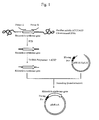
- P T7 denotes T7 promoter gene and "His-tag” denotes a histidine tag (His-tag) sequence.
- Examples of the protein of the present invention include:
- the above protein consisting of an amino acid sequence that has a deletion, a substitution, or an addition of one or more amino acids and having dipeptide-synthesizing activity can be obtained by site-directed mutagenesis according to Molecular Cloning, A Laboratory Manual, 2nd Edition Cold Spring Harbor Laboratory Press (1989 ) (hereinafter, abbreviated as Molecular Cloning, 2 nd Edition), Current Protocols in Molecular Biology, John Wiley & Sons (1987-1997 ) (hereinafter, abbreviated as Current Protocols In Molecular Biology), Nucleic Acids Research, 10, 6487 (1982 ), Proc. Natl. Acad. Sci.
- the protein can be obtained by introducing site-specific mutation into a DNA encoding a protein comprising the amino acid sequence shown by SEQ ID NO: 1..
- the number of amino acids to be deleted, substituted, or added is not particularly limited, but is the number such that deletion, substitution, or addition can be carried out by a known method such as the above site-specific mutagenesis.
- the number of amino acids is 1 to dozens of, preferably 1 to 20, more preferably 1 to 10, and further more preferably 1 to 5.
- a deletion, a substitution, or an addition of one or more amino acids in the amino acid sequence shown by SEQ ID NO: 1 means that, at any position in such sequence, 1 or a plurality of amino acids may be deleted, substituted, or added.
- amino acid positions in which amino acid deletion, substitution, or addition can be introduced include one to several amino acid positions on the N-terminal side and the C-terminal side of the amino acid sequence shown by SEQ ID NO: 1.
- Amino acids to be substituted or added may be natural or unnatural.
- natural amino acids include L-alanine, L-asparagine, L-aspartic acid, L-arginine, L-glutamine, L-glutamic acid, glycine, L-histidine, L-isoleucine, L-leucine, L-lysine, L-methionine, L-phenylalanine, L-proline, L-serine, L-threonine, L-tryptophan, L-tyrosine, L-valine, and L-cysteine.
- amino acids in the same group can be substituted with each other.
- Group A leucine, isoleucine, norleucine, valine, norvaline, alanine, 2-aminobutanoic acid, methionine, O-methylserine, t-butylglycine, t-butylalanine, and cyclohexylalanine
- Group B aspartic acid, glutamic acid, isoaspartic acid, isoglutamic acid, 2-aminoadipic acid, and 2-aminosuberic acid
- Group C asparagine and glutamine
- Group D lysine, arginine, ornithine, 2,4-diaminobutanoic acid, and 2,3-diaminopropionic acid
- Group E proline, 3-hydroxyproline, and 4-hydroxyproline
- Group F serine, threonine, and homoserine
- Group G phenylalanine and
- the protein of the present invention desirably has 80% or more, preferably 90% or more, more preferably 94% or more, further more preferably 98% or more, and particularly preferably 99% or more homology with the amino acid sequence shown by SEQ ID NO: 1 so that the protein has dipeptide-synthesizing activity.
- a protein consisting of an amino acid sequence having 80% or more, preferably 90% or more, more preferably 94% or more, further more preferably 98% or more, and particularly preferably 99% or more homology with the amino acid sequence shown by SEQ ID NO: 1, and having dipeptide-synthesizing activity is also the protein of the present invention.
- Amino acid sequence homology can be determined using BLAST and FASTA as described above.
- An example of a method for confirming that the protein of the present invention is a protein having dipeptide-synthesizing activity involves preparing a transformant that expresses the protein of the present invention by a DNA recombination method, producing the protein of the present invention using the transformant, allowing the protein of the present invention, one or more kinds of amino acid, preferably two kinds of amino acid selected from among L-amino acid and glycine, and ATP to be present in an aqueous medium, and then analyzing by HPLC or the like whether or not a dipeptide is formed and accumulated in the aqueous medium.
- Examples of the DNA of the present invention include:
- hybridizing refers to a step such that a DNA hybridizes to a DNA having a specific nucleotide sequence or a part of the DNA. Therefore, the DNA having a specific nucleotide sequence or a nucleotide sequence of a part of the DNA is useful as a probe for Northern or Southern blot analysis or may be a DNA with a length such that the DNA can be used as an oligonucleotide primer for PCR analysis.
- An example of a DNA to be used as a probe for Northern or Southern blot analysis is a DNA with a length of at least 100 nucleotides or more, preferably 200 nucleotides or more, and more preferably 500 nucleotides or more.
- An example of a DNA to be used as an oligonucleotide primer is a DNA with a length of at least 10 nucleotides or more and preferably 15 nucleotides or more.
- the above stringent conditions are, for example, conditions under which a DNA-immobilized filter and a probe DNA are incubated overnight at 42°C in a solution containing 50% formamide, 5 ⁇ SSC (750 mM sodium chloride, 75 mM sodium citrate), 50 mM sodium phosphate (pH 7.6), 5 ⁇ Denhardt's solution, 10% dextran sulfate, and denatured 20 ⁇ g/L salmon sperm DNA, following which the filter is washed in a 0.2 ⁇ SSC solution at approximately 65°C, for example. Less stringent conditions can also be employed herein.
- Stringent conditions can be varied via adjustment of formamide concentration (the lower the formamide concentration, the less the stringency), change of salt concentration, and change of temperature conditions.
- Such less stringent conditions are, for example, conditions under which incubation is carried out overnight at 37°C in a solution containing 6 ⁇ SSCE (20 ⁇ SSCE: 3 mol/L sodium chloride, 0.2 mol/L sodium dihydrogenphosphate, 0.02 mol/L EDTA, and pH 7.4), 0.5% SDS, 30% formamide, and denatured 100 ⁇ g/L salmon sperm DNA, followed by washing using 1 ⁇ SSC and 0.1% SDS solutions at 50°C.
- Even less stringent conditions are, for example, the above less stringent conditions under which hybridization is carried out using a solution with a high salt concentration (e.g., 5 ⁇ SSC), followed by washing.
- Various conditions described above can also be set by adding or changing a blocking reagent to be used to suppress the background conditions of a hybridization experiment.
- a blocking reagent may be associated with changes in hybridization conditions, and may thus be used to adjust the conditions.
- An example of a DNA that can hybridize under the above-mentioned stringent conditions is a DNA having at least 80% or more, preferably 90% or more, more preferably 94% or more, further more preferably 98% or more, and particularly preferably 99% or more homology with the nucleotide sequence of the DNA of any one of [1] to [3] above, when calculation is performed based on the above parameters using the above program such as BLAST or FASTA.
- Nucleotide sequence homology can be determined using the above-mentioned program such as BLAST or FASTA.
- a DNA hybridizing to the above DNA under stringent conditions is a DNA encoding a protein having dipeptide-synthesizing activity
- a method that involves preparing a recombinant DNA that expresses the DNA, purifying the relevant protein from a culture that is obtained by culturing a microorganism (the microorganism is obtained by introducing the recombinant DNA into host cells), and then allowing the purified protein to be used as an enzyme source, and one or more kinds of amino acid and preferably two kinds of amino acid selected from among L-amino acid and glycine to be present in an aqueous medium, and then analyzing by HPLC or the like whether or not a dipeptide is formed and accumulated in the aqueous medium.
- Microorganisms and transformants to be used for the process of the present invention are not particularly limited as long as they are microorganisms and transformants capable of producing the protein of the present invention.
- microorganisms include preferably microorganisms belonging to the genus Bacillus, preferably microorganisms belonging to Bacillus subtilis, and more preferably Bacillus subtilis ATCC6633.
- transformant include transformants obtained via transformation with a DNA encoding the protein of the present invention.
- transformants obtained via transformation with a DNA encoding the protein of the present invention include transformants obtained via transformation of host cells with a recombinant DNA containing the DNA in 2 above according to a known method.
- host cells include prokaryotes such as bacteria, yeast, animal cells, insect cells, and plant cells, preferably prokaryotes such as bacteria, and more preferably microorganisms belonging to the genus Escherichia.
- the DNA of the present invention can be obtained by carrying out Southern hybridization for a chromosomal DNA library of a microorganism belonging to the genus Bacillus, preferably a microorganism belonging to Bacillus subtilis, and more preferably Bacillus subtilis ATCC6633 using a probe that can be designed based on the nucleotide sequence shown by SEQ ID NO: 2, for example.
- the DNA can be obtained by carrying out PCR [ PCR Protocols, Academic Press (1990 )] using primer DNAs that can be designed based on the nucleotide sequence shown by SEQ ID NO: 2 and a chromosomal DNA of a microorganism, preferably a microorganism belonging to the genus Bacillus, more preferably a microorganism belonging to Bacillus subtilis, and further more preferably Bacillus subtilis ATCC6633 as a template.
- various gene sequence databases are searched for a sequence having 85% or more, preferably 90% or more, more preferably 95% or more, further more preferably 98% or more, and particularly preferably 99% or more homology with the nucleotide sequence of a DNA encoding the amino acid sequence shown by SEQ ID NO: 1.
- the DNA of the present invention or a DNA to be used in the process of the present invention can also be obtained by the above-mentioned method from chromosomal DNAs, cDNA libraries, and the like of organisms having the nucleotide sequence.
- the nucleotide sequence of the thus obtained DNA can be determined by directly incorporating the DNA into or digesting the DNA with an appropriate restriction enzyme or the like and then incorporating into a vector by a conventional method, introducing the thus obtained recombinant DNA into host cells, and then analyzing the resultant using a generally employed nucleotide sequence analysis method, such as a dideoxy chain termination method [ Proc. Natl. Acad. Sci., U.S.A., 74, 5463 (1977 )] or a nucleotide sequence analyzer such as an ABI3700 DNA analyzer (Applied Biosystems).
- a generally employed nucleotide sequence analysis method such as a dideoxy chain termination method [ Proc. Natl. Acad. Sci., U.S.A., 74, 5463 (1977 )] or a nucleotide sequence analyzer such as an ABI3700 DNA analyzer (Applied Biosystems).
- the full-length DNA can be obtained by carrying out Southern hybridization or the like for a chromosomal DNA library using the partial-length DNA as a probe.
- a target DNA can also be prepared by chemical synthesis using a Model 8905 DNA Synthesizer (Perseptive Biosystems) or the like.
- An example of a DNA obtained as described above is a DNA having the nucleotide sequence shown by SEQ ID NO: 2.
- Examples of a vector into which the DNA of the present invention is incorporated include pBluescriptII KS(+) (Stratagene), pDIRECT [ Nucleic Acids Res., 18, 6069 (1990 )], pCR-Script Amp SK(+) (Stratagene), pT7Blue (Novagen), pCR II (Invitrogen Corporation), and pCR-TRAP (GeneHunter).
- Examples of host cells include microorganisms belonging to the genus Escherichia .
- Examples of such microorganisms belonging to the genus Escherichia include Escherichia coli XL1-Blue, Escherichia coli XL2-Blue, Escherichia coli DHI, Escherichia coli MC1000, Escherichia coli ATCC 12435, Escherichia coli W1485, Escherichia coli JM109, Escherichia coli HB101, Escherichia coli No.49, Escherichia coli W3110, Escherichia coli NY49, Escherichia coli MP347, Escherichia coli NM522, Escherichia coli BL21, and Escherichia coli ME8415.
- Any method can be used as a method for introducing a recombinant DNA, as long as it is a method for introducing a DNA into the above host cells.
- Examples of such method include a method using calcium ions [ Proc. Natl. Acad. Sci., U.S.A., 69, 2110 (1972 )], a protoplast method (JP Patent Publication (Kokai) No. 63-248394 (1988 )), and electroporation [ Nucleic Acids Res., 16, 6127 (1988 )].
- An example of the transformant of the present invention obtained by the above method is Escherichia coli Rosetta (DE3)/pBsRzcA that is a microorganism possessing a recombinant DNA containing a DNA having the nucleotide sequence shown by SEQ ID NO: 2.
- a DNA fragment with an appropriate length containing a portion that encodes the protein of the present invention is prepared, as necessary. Also, the nucleotide sequence of a part that encodes the protein is subjected to nucleotide substitution so as to prepare an optimum codon for expression in a host. As a result, a transformant with an improved productivity of the protein can be obtained.
- a recombinant DNA is prepared by inserting the DNA fragment downstream of a promoter of an appropriate expression vector.
- the thus prepared recombinant DNA is introduced into host cells appropriate for the expression vector, so that a transformant that produces the protein of the present invention can be obtained.
- Any host cells can be used, as long as they can express a target gene, such as prokaryotes (e.g., bacteria), yeast, animal cells, insect cells, and plant cells.
- prokaryotes e.g., bacteria
- yeast e.g., yeast
- animal cells e.g., insect cells
- plant cells e.g., plant cells
- Expression vectors to be used herein can autonomously replicate within the host cells or can be incorporated into a chromosome and contains a promoter at a position into which the DNA of the present invention can be transcribed.
- a recombinant DNA having the DNA of the present invention is preferably autonomously replicable in a prokaryote, and containing a promoter, a ribosome binding sequence, the DNA of the present invention, and a transcription termination sequence.
- a gene controlling a promoter may also be contained.
- expression vectors include pBTrp2, pBTac1, pBTac2, pHelix1 (all of them are manufactured by Roche Diagnostics K.K.), pKK233-2 (Amersham ⁇ Pharmacia ⁇ Biotech), pSE280 (Invitrogen Corporation), pGEMEX-1 (Promega), pQE-8 (QIAGEN), pET-3 (Novagen), pKYP10 (JP Patent Publication (Kokai) No. 58-110600 A (1983 )), pKYP200 [ Agric. Biol. Chem., 48, 669 (1984 )], pLSA1 [ Agric. Biol.
- any promoter may be used herein, as long as it functions within host cells such as Escherichia coli.
- promoters include promoters derived from Escherichia coli or a phage, such as a trp promoter (P trp ), a lac promoter (P lac ), a P L promoter, a P R promoter, and a P SE promoter, an SPO1 promoter, an SPO2 promoter, and a penP promoter.
- P trp promoter
- P lac lac
- P L promoter a lac promoter
- P SE promoter a P L promoter
- SPO1 promoter an SPO2 promoter
- penP promoter a promoter
- artificially designed and altered promoters and the like can also be used herein, such as promoters in which two P up are arranged in series, a tac promoter, a lacT7 promoter, and a let I promoter.
- an xylA promoter [ Appl. Microbiol. Biotechnol., 35, 594-599 (1991 )] to be expressed in a microorganism belonging to the genus Bacillus
- a P54-6 promoter [ Appl. Microbiol. Biotechnol., 53, 674-679 (2000 )] to be expressed in a microorganism belonging to the genus Corynebacterium , or the like can also be used.
- a plasmid in which the distance between Shine-Dalgarno sequence that is a ribosome binding sequence and the initiation codon is appropriately regulated (e.g., 6 to 18 nucleotides) is preferably used.
- a transcription termination sequence is not always required, but a transcription termination sequence is preferably arranged immediately following a structural gene.
- prokaryotes include microorganisms belonging to the genus Escherichia, the genus Bacillus, the genus Brevibacterium , the genus Corynebacterium , the genus Microbacterium , the genus Serratia , the genus Pseudomonas , the genus Agrobacterium , the genus Alicyclobacillus , the genus Anabena, the genus Anacystis , the genus Arthrobacter , the genus Azotobacter , the genus Chromatium , the genus Erwinia , the genus Methylobacterium , the genus Phormidium , the genus Rhodobacter , the genus Rhodopseudomonas, the genus Rhodospirillum , the genus Scenedesmus , the genus Streptomyces , the genus Syn
- microorganisms include Escherichia coli XL1-Blue, Escherichia coli XL2-Blue, Escherichia coli DH1, Escherichia coli DH5 ⁇ , Escherichia coli MC1000, Escherichia coli KY3276, Escherichia coli W1485, Escherichia coli JM109, Escherichia coli HB101, Escherichia coli No.49, Escherichia coli W3110.
- Rhodobacter capsulatus Rhodobacter sphaeroides, Rhodopseudomonas blastica, Rhodopseudomonas marina , Rhodopseudomonas palustris, Rhodospirillum rubrum, Rhodospirillum salexigens, Rhodospirillum salinarum , Streptomyces ambofaciens, Streptomyces aureofaciens, Streptomyces aureus, Streptomyces fungicidicus, Streptomyces griseochromogenes, Streptomyces griseus, Streptomyces lividans, Streptomyces olivogriseus, Streptomyces rameus , Streptomyces tanashiensis, Streptomyces vinaceus, and Zymomonas mobilis.
- Any method can be used as a method for introducing a recombinant DNA, as long as it is a method for introducing a DNA into the above host cells.
- Examples of such method include a method using calcium ions [ Proc. Natl. Acad. Sci., U.S.A., 69, 2110 (1972 )], a protoplast method (JP Patent Publication (Kokai) No. 63-248394 A (1988 )), and electroporation [ Nucleic Acids Res., 16, 6127 (1988 )].
- yeast When yeast is used as a host cell, YEp13 (ATCC37115), YEp24 (ATCC37051), YCp50 (ATCC37419), pHS19, pHS15, or the like can be used as an expression vector.
- Any promoter can be used as long as it functions within a yeast strain.
- Examples of such promoter include a PHO5 promoter, a PGK promoter, a GAP promoter, an ADH promoter, a gal 1 promoter, a gal 10 promoter, a heat shock polypeptide promoter, an MF ⁇ 1 promoter, and a CUP 1 promoter.
- yeast examples include yeast strains belonging to the genus Saccharomyces , the genus Schizosaccharomyces , the genus Kluyveromyces , the genus Trichosporon , the genus Schwanniomyces , the genus Pichia , and the genus Candida.
- yeast strains include Saccharomyces cerevisiae , Schizosaccharomyces pombe , Kluyveromyces lactis , Trichosporon pullulans , Schwanniomyces alluvius , Pichia pastoris , and Candida utilis .
- Any method for introducing a recombinant DNA can be used, as long as it is a method for introducing a DNA into yeast.
- Examples of such method include electroporation [ Methods Enzymol., 194, 182 (1990 )], the spheroplast method [ Proc. Natl. Acad. Sci., U.S.A., 81, 4889 (1984 )], and the lithium acetate method [ J. Bacteriol., 153, 163 (1983 )].
- examples of expression vectors that can be used herein include pcDNAI, pcDM8 (commercially available from Funakoshi Corporation), pAGE107 (JP Patent Publication (Kokai) No. 3-22979 A (1991 )), pAS3-3 (JP Patent Publication (Kokai) No. 2-227075 A (1990 )), pCDM8 [ Nature, 329, 840 (1987 )], pcDNAI/Amp (Invitrogen Corporation), pREP4 (Invitrogen Corporation), pAGE103 [ J. Biochem, 101, 1307 (1987 )], pAGE210, pAMo, and pAMoA.
- Any promoter can be used, as long as it functions within animal cells.
- Examples of such promoter include a cytomegalovirus (CMV) IE (immediate early) gene promoter or SV40 early promoter, a metallothionein promoter, a retroviral promoter, a heat shock promoter, and an SRa promoter.
- CMV cytomegalovirus
- a human CMV IE gene enhancer can be used together with a promoter.
- animal cells examples include mouse myeloma cells, rat myeloma cells, mouse hybridoma cells, Namalwa cells or Namalwa KJM-1 cells that are human cells, human fetal kidney cells, human leukemia cells, African green monkey kidney cells, CHO cells that are Chinese hamster cells, and HBT5637 (JP Patent Publication (Kokai) No. 63-299 A (1988 ).
- mouse myeloma cells include SP2/0 and NSO.
- rat myeloma cells include YB2/0.
- human fetal kidney cells include HEK293 (ATCC CRL-1573).
- human leukemia cells include BALL-1.
- African green monkey kidney cells include COS-1 and COS-7.
- Any method can be used for introducing a recombinant DNA, as long as it is a method for introducing DNA into animal cells.
- Examples of such method include electroporation [ Cytotechnology, 3, 133 (1990 )], a calcium phosphate method (JP Patent Publication (Kokai) No. 2-227075 A (1990 )), lipofection [ Proc. Natl. Acad. Sci., U.S.A., 84, 7413 (1987 )], and a method described in Virology, 52, 456 (1973 ).
- a protein When insect cells are used as hosts, a protein can be produced by a method described in Baculovirus Expression Vectors, A Laboratory Manual, W. H. Freeman and Company, New York (1992 ), Current Protocols in Molecular Biology, Molecular Biology, A Laboratory Manual, Bio/Technology, 6, 47 (1988 ), or the like.
- a recombinant gene transfer vector and baculovirus are co-introduced into insect cells and then a recombinant virus is obtained in a supernatant obtained by culturing insect cells.
- the insect cells are further infected with the recombinant virus, so that the protein can be produced.
- Examples of such gene transfer vector to be used in the method include pVL1392, pVL1393, and pBlueBacIII (all of them are manufactured by Invitrogen Corporation).
- Autographa californica nuclear polyhedrosis virus that infects insects of the genus Mamestra (the subfamily Hadeninae , the family Noctuidae ) can be used, for example.
- ovary cells of Spodoptera frugiperda As insect cells, ovary cells of Spodoptera frugiperda , ovary cells of Trichoplusia ni , cultured cells derived from silkworm ovary, and the like can be used.
- ovary cells of Spodoptera frugiperda include Sf9 and Sf21 (Baculovirus Expression Vectors: A Laboratory Manual).
- ovary cells of Trichoplusia ni include High 5 and BTI-TN-5B1-4 (Invitrogen Corporation).
- cultured cells derived from silkworm ovary include Bombyx mori N4 and the like.
- Examples of a method for co-introduction of the above recombinant gene transfer vector and the above baculovirus into insect cells for preparation of a recombinant virus include a calcium phosphate method (JP Patent Publication (Kokai) No. 2-227075 A (1990 )), and lipofection [ Proc. Natl. Acad. Sci., U.S.A., 84, 7413 (1987 )].
- examples of expression vectors include a Ti plasmid and a tobacco mosaic virus vector.
- Any promoter can be used, as long as it functions within plant cells.
- Examples of such promoter include a cauliflower mosaic virus (CaMV) 35S promoter and a rice actin 1 promoter.
- host cells include plant cells of tobacco, potato, tomato, carrot, soybean, rapeseed, alfalfa, rice, wheat, barley, and the like.
- Any method for introducing a recombinant vector can be used, as long as it is a method for introducing a DNA into plant cells.
- Examples of such method include a method using Agrobacterium (JP Patent Publication (Kokai) No. 59-140885 A (1984 ), JP Patent Publication (Kokai) No. 60-70080 A (1985 ), WO94/00977 ), electroporation (JP Patent Publication (Kokai) No. 60-251887 A (1985 )), a method using a particle gun (gene gun) ( JP Patent No. 2606856 and JP Patent No.2517813 ).
- a transformant obtained by the method in 5 above is cultured in a medium, the protein of the present invention is formed and accumulated in the culture, and then the protein is recovered from the culture. Thus, the protein can be produced.
- a host for the above transformant for production of the protein of the present invention may be any of a prokaryote, yeast, an animal cell, an insect cell, a plant cell, and the like.
- Specific examples of such host include preferably prokaryotes such as bacteria, more preferably microorganisms belonging to the genus Escherichia, and further more preferably microorganisms belonging to Escherichia coli.
- the protein When the protein is expressed by yeast, animal cells, insect cells, or plant cells, the protein to which a sugar or a sugar chain has been added can be obtained.
- the above transformant can be cultured in a medium according to a method generally employed for culturing a host.
- Both a natural medium and a synthetic medium may be used as media for culturing a transformant obtained using a prokaryote such as Escherichia coli or an eukaryote such as yeast as a host, as long as it contains a carbon source, a nitrogen source, inorganic salts, and the like that can be assimilated by the relevant organisms and enables efficient culturing of the transformant.
- a prokaryote such as Escherichia coli or an eukaryote such as yeast
- a prokaryote such as Escherichia coli
- an eukaryote such as yeast
- Any carbon source can be used herein, as long as it can be assimilated by organisms.
- Examples of such carbon source include carbohydrates such as glucose, fructose, sucrose, molasses containing them, and starch or starch hydrolysate, organic acids such as acetic acid and propionic acid, and alcohols such as ethanol and propanol.
- Examples of a nitrogen source that can be used herein include ammonia, ammonium salts of inorganic acids or organic acids such as ammonium chloride, ammonium sulfate, ammonium acetate, and ammonium phosphate, other nitrogen-containing compounds, and, peptone, a meat extract, a yeast extract, corn steep liquor, casein hydrolysate, soybean cake and soybean cake hydrolysate, various fermentation microbes, and digests thereof.
- ammonia ammonium salts of inorganic acids or organic acids such as ammonium chloride, ammonium sulfate, ammonium acetate, and ammonium phosphate, other nitrogen-containing compounds, and, peptone, a meat extract, a yeast extract, corn steep liquor, casein hydrolysate, soybean cake and soybean cake hydrolysate, various fermentation microbes, and digests thereof.
- monopotassium phosphate dipotassium phosphate
- magnesium phosphate magnesium sulfate
- sodium chloride ferrous sulfate
- manganese sulfate copper sulfate
- calcium carbonate calcium carbonate
- Culturing is generally carried out under aerobic conditions by shaking culture, deep aeration stirring culture, or the like.
- the culturing temperature preferably ranges from 15°C to 40°C.
- the culturing time generally ranges from 5 hours to 7 days.
- the pH during culturing is maintained between 3.0 and 11.
- the pH is adjusted using inorganic or organic acid, an alkaline solution, urea, calcium carbonate, ammonia, or the like.
- an antibiotic such as ampicillin or tetracycline may be added to a medium during culturing if necessary.
- an inducer may be added to a medium as necessary.
- a microorganism transformed with an expression vector containing a lac promoter is cultured, isopropyl- ⁇ -D-thiogalactopyranoside or the like may be added to the medium.
- indoleacrylic acid or the like may be added to the medium.
- a generally employed RPMI1640 medium J. Am. Med. Assoc., 199, 519 (1967 )], Eagle's MEM medium [ Science, 122, 501 (1952 )], DMEM medium [ Virology, 8, 396 (1959 )], or 199 medium [ Proc. Soc. Biol. Med., 73, 1 (1950 )] or such medium supplemented with fetal calf serum or the like can be used.
- Culturing is generally carried out under conditions of pH6 to 8, 25°C to 40°C, the presence of 5% CO 2 , and the like for 1 to 7 days.
- an antibiotic such as kanamycin, penicillin, or streptomycin may be added to medium during culturing, as necessary.
- a generally employed TNM-FH medium Pulsen
- Sf-900 II SFM medium Life Technologies
- ExCell400 ExCell405 [all of them are manufactured by JRH Biosciences]
- Grace's Insect Medium Nature, 195, 788 (1962 )]
- Culturing is generally carried out under conditions of pH6 to 7, 25°C to 30°C, and the like for 1 to 5 days.
- an antibiotic such as gentamicin may be added to a medium during culturing, as necessary.
- a transformant obtained using a plant cell as a host can be cultured as cells or caused to differentiate into plant cells or organs and then cultured.
- a medium for culturing the transformant a generally employed Murashige and Skoog (MS) medium, White medium, or such medium supplemented with a plant hormone such as auxin or cytokinin can be used.
- Culturing is generally carried out under conditions of pH5 to 9, 20°C to 40°C, and for 3 to 60 days.
- an antibiotic such as kanamycin or hygromycin may be added to a medium during culturing, as necessary.
- Examples of the process for producing the protein of the present invention include a process that comprises allowing the protein produced within host cells, a process that comprises allowing the protein to be secreted outside the host cells, and a process that comprises allowing the protein to be produced on the extracellular membranes of the host cells.
- the structure of the protein to be produced can be varied depending on the selected method.
- the protein of the present invention When the protein of the present invention is produced within host cells or on the extracellular membranes of host cells, the protein can be actively secreted by the host cells extracellularly via application of the method of Paulson et al [J. Biol. Chem., 264, 17619 (1989 )], the method of Row et al [Proc. Natl. Acad. Sci., U.S.A., 86, 8227 (1989 ), Genes Develop., 4, 1288(1990 )], or the method described in JP Patent Publication (Kokai) No. 05-336963 A (1993 ), WO94/23021 , or the like.
- a protein containing the active site of the protein of the present invention is produced in a form such that a signal peptide is added in front of the protein.
- the protein can be actively secreted outside the host cells.
- the productivity can also be increased using a gene amplification system using a dihydrofolate reductase gene or the like.
- gene-transferred animal or plant cells are caused to redifferentiate, so that animal individuals (transgenic non-human animals) or plant individuals (transgenic plants) into which a gene has been introduced are produced and the protein of the present invention can also be produced using these animal individuals or plant individuals.
- a transformant producing the protein of the present invention is an animal or a plant individual
- such transformant is raised or cultivated according to a general method and then caused to form and accumulate the protein.
- the protein is recovered from the animal individual or the plant individual, so that the protein can be produced.
- An example of a process for producing the protein of the present invention using an animal individual is a process by which the protein of the present invention is produced in animals that have been produced by introducing a gene according to a known method [ Am. J. Clin. Nutr., 63, 639S (1996 ), Am. J. Clin. Nutr., 63, 627S (1996 ), Biotechnology, 9 830 (1991 )].
- the protein of the present invention can be produced by raising transgenic non-human animals in which the DNA of the present invention or a DNA to be used in the production processes of the present invention has been introduced, forming and accumulating the protein in the animals, and then recovering the protein from the animals, for example.
- places in which the protein is formed and accumulated in animals include the milk of animals (JP Patent Publication (Kokai) No. 63-309192 A (1988 )) and eggs.
- Any promoter can be used in this case, as long as it functions within animals.
- Examples of such promoter that is preferably used include mammary-cell-specific promoters such as an ⁇ casein promoter, a ⁇ casein promoter, a ⁇ lactoglobulin promoter, and a whey acid protein promoter.
- An example of a process for producing the protein of the present invention using a plant individual is a process that involves cultivating a transgenic plant (into which a DNA encoding the protein of the present invention has been introduced) according to a known method [ Tissue Culture, 20 (1994 ), Tissue Culture, 21 (1995 ), Trends Biotechnol., 15, 45 (1997 )], forming and accumulating the protein in the plant, and then recovering the protein from the plant, so as to produce the protein.
- the protein of the present invention when the protein of the present invention is produced in a soluble state within the cells, after completion of culturing, the cells are collected by centrifugation, suspended in a water-based buffer, and then disrupted using a ultrasonic disintegrator, French press, Manton-Gaulin homogenizer, dyno mill, or the like, thereby obtaining a cell-free extract.
- a ultrasonic disintegrator French press, Manton-Gaulin homogenizer, dyno mill, or the like
- a purified proteins can be obtained from supernatants obtained by centrifugation of the cell-free extracts using one of or a combination of general enzyme isolation and purification techniques, that is, solvent extraction, a salting-out method using ammonium sulfate or the like, demineralization, precipitation using an organic solvent, anion exchange chromatography using a resin such as diethylaminoethyl (DEAE)-Sepharose or DIAION HPA-75 (Mitsubishi Chemical Corporation), cation exchange chromatography using a resin such as S-Sepharose FF (Pharmacia), hydrophobic chromatography using a resin such as butyl Sepharose or phenyl Sepharose, gel filtration using a molecular sieve, affinity chromatography, electrophoresis such as chromatofocusing and isoelectric focusing, and the like.
- general enzyme isolation and purification techniques that is, solvent extraction, a salting-out method using ammonium sulfate or the like,
- the protein when the protein is produced in an insoluble form formed within cells, cells are collected and disrupted similarly, and then centrifuged to obtain a precipitated fraction. The protein is then recovered from the fraction by a general method and then the insoluble form of the protein is solubilized using a protein denaturation agent.
- the solution obtained by solubilization is diluted to prepare a dilute solution such that it contains no protein denaturation agent or the concentration of the protein denaturation agent is low enough so that the protein is not denatured.
- the solution is dialyzed.
- the protein is formed to have a normal conformation, and then a purified protein can be obtained by isolation and purification techniques similar to the above.
- the protein of the present invention or a derivative such as a sugar-modified product thereof is secreted extracellularly, the protein or a derivative such as a glycosylated product thereof can be recovered in the supernatant of the culture.
- the culture is treated by a technique similar to the above such as centrifugation, so as to obtain a soluble fraction.
- a purified protein can be obtained from the soluble fraction using isolation and purification techniques similar to the above.
- An example of the thus obtained protein is a protein having the amino acid sequence shown by SEQ ID NO: 1.
- the protein of the present invention is produced in the form of a fusion protein with another protein and then the protein can also be purified by affinity chromatography using a substance that has affinity for the protein of interest fused to the other protein.
- affinity chromatography using a substance that has affinity for the protein of interest fused to the other protein.
- the protein of the present invention is produced as a fusion protein with protein A and then the protein of interest can be purified by affinity chromatography using immunoglobulin G.
- the protein of the present invention is produced as a fusion protein with a Flag peptide and then the protein can also be purified by affinity chromatography using an anti-Flag antibody [ Proc. Natl. Acad. Sci., U.S.A., 86, 8227 (1989 ), Genes Develop., 4, 1288 (1990 )].
- the protein is produced as a fusion protein with polyhistidine and then can be purified by affinity chromatography using a metal coordination resin having high affinity for polyhistidine.
- the protein can also be purified by affinity chromatography using an antibody against the protein itself.
- the protein of the present invention can be produced by a chemical synthesis method such as a Fmoc method (fluorenylmethyloxycarbonyl method), a tBoc method (t-butyloxycarbonyl method), or the like.
- the protein can also be chemically synthesized using a peptide synthesizer of Advanced ChemTech, Perkin Elmer Co., Ltd., Pharmacia, Protein Technology Instrument, Synthecell-Vega, Applied Biosystems, Shimadzu Corporation, or the like.
- the culture or the treated culture of a microorganism or a transformant in 3 above, or the protein of the present invention in 1 above and one or more kinds of amino acid are allowed to be present in an aqueous medium.
- a dipeptide is formed and accumulated in the medium, and then the dipeptide is recovered from the medium, so that the dipeptide can be produced.
- any combinations of any amino acids may be used as one or two kinds of amino acid to be used as a substrate, as long as they are selected from the group consisting of L-amino acid, Gly, and ⁇ -alanine ( ⁇ -Ala).
- L-amino acid examples include one or two kinds of amino acid selected from among L-Ala, L-Gln, L-Glu, L-Val, L-Leu, L-Ile, L-Pro, L-Phe, L-Trp, L-Met, L-Ser, L-Thr, L-Cys, L-Asn, L-Tyr, L-Lys, L-Arg, L-His, L-Asp , Gly, and ⁇ -Ala.
- amino acids to be used in the above process include: preferably a combination of one kind of amino acid selected from among L-Arg, L-Lys, and L-His and an amino acid selected from the group consisting of L-amino acid, Gly, and ⁇ -Ala and more preferably a combination of L-Arg with L-Ala, L-Gln, L-Glu, L-Val, L-Leu, L-Ile, L-Pro, L-Phe, L-Trp, L-Met, L-Ser, L-Thr, L-Cys, L-Asn, L-Lys, L-Arg, L-His, L-Asp, and Gly; and a combination of L-Lys alone and particularly preferably a combination of L-Arg with one kind of amino acid selected from among L-Ala, L-Arg, L-Ser, L-His, L-Asn, and Gly.
- 0.01 mg to 100 mg and preferably 0.1 mg to 10 mg of the protein of the present invention is added per mg of amino acid to be used as a substrate.
- amino acid to be used as a substrate is added initially or during the reaction to an aqueous medium at a concentration ranging from 0.1 g/L to 500 g/L and preferably ranging from 0.2 g/L to 200 g/L.
- ATP can be used as an energy source at a concentration ranging from 0.5 mmol to 10 mol/L.
- An aqueous medium to be used in the above process may have any ingredients or composition, as long as a reaction for dipeptide production is not inhibited.
- aqueous medium examples include water, a phosphate buffer, a carbonate buffer, an acetate buffer, a borate buffer, a citrate buffer, and a tris buffer.
- such an aqueous medium may contain alcohols such as methanol and ethanol, esters such as ethyl acetate, ketones such as acetone, and amides such as acetamide.
- the reaction for dipeptide production is carried out in an aqueous medium under conditions of pH 5 to 11 and preferably pH6 to 10, and 20°C to 50°C and preferably 25°C to 45°C for 2 to 150 hours and preferably 6 to 120 hours.
- Examples of a dipeptide to be produced by the above process include: a dipeptide in which one or two kinds of amino acid selected from among L-Ala, L-Gln, L-Glu, L-Val, L-Leu, L-Ile, L-Pro, L-Phe, L-Trp, L-Met, L-Ser, L-Thr, L-Cys, L-Asn, L-Tyr, L-Lys, L-Arg, L-His, L-Asp, Gly, and ⁇ -Ala are linked via peptide bonds; preferably a dipeptide in which one kind of amino acid selected from among L-Arg, L-Lys, and L-His and one kind of amino acid selected from the group consisting of L-amino acid, Gly, and ⁇ -Ala are linked via peptide bonds; more preferably a dipeptide in which L-Arg and one kind of amino acid selected from among L-Ala, L-Gln, L-Glu, L-
- An example of the culture of a microorganism or a transformant, which is used as an enzyme source in the process of the present invention is a culture that is obtained by culturing the microorganism or the transformant by the culturing method in 6 above.
- Examples of the treated culture of a microorganism or a transformant include those containing living cells retaining functions, as enzyme sources, similar to those of the culture, such as a concentrated culture, a dried culture, cell obtained by centrifugation, filtration, or the like of the culture, a dried cell, a freeze-dried cell, a cell treated with a surfactant, a cell treated with a solvent, a cell treated with an enzyme, and an immobilized cell.
- an example of one or more kinds of amino acid to be used as a substrate is an amino acid(s) similar to that (those) in (1) above.
- the amount of the enzyme source differs depending on the specific activity or the like of the enzyme source. For example, 5 mg to 1000 mg and preferably 10 mg to 400 mg as wet microbial weight (weight of wet microbial mass) of the enzyme source is added per mg of amino acid to be used as a substrate.
- Amino acid to be used as a substrate can be added into an aqueous medium in a manner similar to that in (1) above.
- ATP is allowed to be present in an aqueous medium in a manner similar to that in (1) above, so that ATP can be used as an energy source.
- Media in (1) above can be used as aqueous media.
- a supernatant of the culture of a microorganism or a transformant, which is used as an enzyme source can also be used as an aqueous medium.
- a surfactant or an organic solvent may also be added into an aqueous medium, as necessary.
- Any surfactant may be used herein, as long as it accelerates the production of galactose-containing complex carbohydrate.
- surfactant include nonionic surfactants such as polyoxyethylene octadecylamine (e.g., NYMEEN S-215, NOF Corporation), cationic surfactants such as cetyltrimethylammonium bromide and alkyldimethylbenzylammonium chloride (e.g., cation F2-40E, NOF Corporation), anionic surfactants such as lauroyl sarcosinate, and tertiary amines such as alkyldimethylamine (e.g., tertiary amine FB, NOF Corporation).
- nonionic surfactants such as polyoxyethylene octadecylamine (e.g., NYMEEN S-215, NOF Corporation), cationic surfactants such
- Such a surfactant is generally used at a concentration ranging from 0.1 g/l to 50 g/l.
- examples of an organic solvent include xylene, toluene, aliphatic alcohol, acetone, and ethyl acetate and such an organic solvent is generally used at a concentration ranging from 0.1 ml/l to 50 ml/l.
- reaction conditions for a reaction for dipeptide production are the same conditions as those in (1) above, for example.
- dipeptide to be produced by the above process is the same dipeptide as that in (1) above.
- a dipeptide that is formed and accumulated in an aqueous medium can be recovered by a general method using activated carbon, an ion exchange resin, or the like, or extraction using an organic solvent, crystallization, thin-layer chromatography, high-performance liquid chromatography, or the like.
- a rhizocticin synthetase gene encoding a protein with unknown functions was obtained as follows, having the nucleotide sequence shown by SEQ ID NO: 2 existing on the chromosomal DNA of Bacillus subti / is ATCC6633.
- Bacillus subtilis ATCC6633 was spread on an YPGA medium [7 g/L yeast extract (Difco), 7 g/L bacto peptone (Difco), 7 g/L glucose, and 1.5 g/L agar] and statically cultured at 30°C overnight.
- YPGA medium 7 g/L yeast extract (Difco), 7 g/L bacto peptone (Difco), 7 g/L glucose, and 1.5 g/L agar
- One platinum loop of the thus grown cells was inoculated in 3 mL of YPG medium [7 g/L yeast extract (Difco), 7 g/L bacto peptone (Difco), and 7 g/L glucose]
- Chromosomal DNA was prepared using a Dneasy Kit (QIAGEN) from cells collected by centrifugation.
- primer A and primer B DNAs having the nucleotide sequences shown by SEQ ID NOS: 3 and 4 (hereinafter, referred to as primer A and primer B, respectively) were synthesized using a Model 8905 DNA Synthesizer (Perseptive Biosystems).
- PCR was carried out using the above primer A and primer B and the chromosomal DNA of Bacillus subtilis ATCC6633 as a template. PCR was carried out as follows. 50 ⁇ L of a reaction solution containing 0.50 pg of total DNA, the primers (0.3 ⁇ mol/L each), 1 unit of KOD plus DNA polymerase (Toyobo Co., Ltd.), 5 ⁇ L of ⁇ 10 buffer for KOD plus DNA polymerase (Toyobo Co., Ltd.), and dNTP (200 ⁇ mol/L each) (dATP, dGTP, dCTP, and dTTP) was prepared.
- reaction solution containing 1.46 ⁇ L of the remaining reaction solution, 2.5 mM dGTP, 5 mM dithiothreitol (DTT), 1 unit of T4 DNA polymerase, and 2 ⁇ L of ⁇ 1 0 buffer for T4 DNA polymerase (Novagen) was prepared. After 30 minutes of reaction at 22°C, the reaction was stopped by heating at 75°C for 20 minutes.
- reaction solution 2 ⁇ L was mixed with 1 ⁇ L of LIV vector pET-30 Xa/LIC (Novagen). After 5 minutes of reaction at 22°C, 1 ⁇ L of 25 mM EDTA was added to the mixture and then a reaction was further carried out at 22°C.
- Escherichia coli strain JM109 was transformed by a heat shock method using the reaction solution.
- the transformant was applied on LB agar medium containing 25 ⁇ g/mL kanamycin and was incubated at 30°C overnight, so that a transformed cell was selected.
- the transformed cell was cultured overnight in LB medium containing 20 ⁇ g/ml kanamycin.
- a plasmid was prepared by an alkaline SDS method (Molecular Cloning, 3 rd Edition) from the thus obtained culture solution.
- plasmid had a structure in which an approximately 1.2-kb DNA fragment (obtained above) had been inserted into pET-30 Xa/LIC. This plasmid was designated pBsRzcA.
- Escherichia coli strain Rosetta (DE3) (Novagen) was transformed with pBsRzcA by a method using calcium ions.
- the transformant was applied on LB agar medium containing 25 ⁇ g/mL kanamycin and 25 ⁇ g/mL chloramphenicol and then the transformant was cultured overnight at 30°C, so that a transformed cell was selected.
- a plasmid was extracted according to a known method from colonies of the transformant that had grown. The structure was analyzed using a restriction enzyme, so as to confirm that pBsRzcA was obtained.
- the transformed cell was designated Escherichia coli Rosetta (DE3)/pBsRzcA.
- Escherichia coli Rosetta (DE3)/pBsRzcA obtained in Example I was inoculated in a test tube containing 3 mL of LB medium containing 25 ⁇ g/mL kanamycin and 25 ⁇ g/mL chloramphenicol, followed by 12 hours of shaking culture at 37°C. 1 mL of the thus obtained culture solution was introduced into a 500-mL Erlenmeyer flask containing 100 mL of LB medium containing 25 ⁇ g/mL kanamycin and 25 ⁇ g/mL chloramphenicol.
- IPTG isopropyl- ⁇ -D-thiogalactopyranoside
- His-tagged protein was purified using HisTrap (His-tagged protein purification kit, Amersham).
- a reaction solution was prepared containing the purified His-tagged protein (0.1 mg/mL) obtained in Example 2, 50 mmol/L Tris-HGl buffer (pH 8.0), 12.5 mmol/L magnesium sulfate, 12.5 mmol/L ATP, 12.5 mmol/L L-arginine, and one kind of L-amino acid (12.5 mmol/L) (selected from among L-alanine (L-Ala), L-glutamine (L-Gln), L-glutamic acid (L-Glu), L-valine (L-Val), L-leucine (L-Leu), L-isoleucine (L-Ile), L-proline (L-Pro), L-phenylalanine (L-Phe), L-tryptophan (L-Trp), L-methionine (L-Met), L-serine (L-Ser), L-threonine (L-Thr), L-cysteine (L-Cys), L-as
- L-Asn L-lysine
- L-Arg L-arginine
- L-His L-histidine
- L-Asp L-aspartic acid
- Reaction was carried out at 30°C for 17 hours.
- a reaction solution was prepared, containing the purified His-tagged protein (0.1 mg/mL) obtained in Example 2, 50 mmol/L Tris-HCl buffer (pH 8.0), 12.5 mmol/L magnesium sulfate, 12.5 mmol/L ATP, and 25 mmol/L L-lysine. Reaction was carried out at 30°C for 17 hours.
- the thus formed products were identified by three types of technique including determination of the amounts of phosphoric acid that had been liberated in the reaction solutions using a Determiner L IP (Kyowa Medex Co., Ltd.), MALDI-TOFMS (Matrix Assisted Laser Desorption/Ionization - Time of Flight Mass Spectrometry) analysis, and NMR (Nuclear Magnetic Resonance) analysis.
- L-Arg was bound to an L-amino acid selected from among L-Ala, L-Gln, L-Glu, L-Val, L-Leu, L-Ile, L-Pro, L-Phe, L-Trp, L-Met, L-Ser, L-Thr, L-Cys, L-Asn, L-Lys, L-His, and L-Asp or bound to Gly; and the production of Arg-Arg and Lys-Lys was confirmed.
- L-amino acid selected from among L-Ala, L-Gln, L-Glu, L-Val, L-Leu, L-Ile, L-Pro, L-Phe, L-Trp, L-Met, L-Ser, L-Thr, L-Cys, L-Asn, L-Lys, L-His, and L-Asp or bound to Gly; and the production of Arg-Arg and Lys-Lys was confirmed.
- the protein of the present invention has activity of linking one or two kinds of amino acid via peptide bonds, so as to produce various dipeptides.
- a protein having dipeptide-synthesizing activity can be produced.
- a dipeptide can be produced using the protein, or a transformant or a microorganism capable of producing the protein.
Landscapes
- Life Sciences & Earth Sciences (AREA)
- Chemical & Material Sciences (AREA)
- Organic Chemistry (AREA)
- Health & Medical Sciences (AREA)
- Zoology (AREA)
- Engineering & Computer Science (AREA)
- Wood Science & Technology (AREA)
- Genetics & Genomics (AREA)
- Bioinformatics & Cheminformatics (AREA)
- Microbiology (AREA)
- General Health & Medical Sciences (AREA)
- Biotechnology (AREA)
- Molecular Biology (AREA)
- Biochemistry (AREA)
- General Engineering & Computer Science (AREA)
- Medicinal Chemistry (AREA)
- Biomedical Technology (AREA)
- Proteomics, Peptides & Aminoacids (AREA)
- Chemical Kinetics & Catalysis (AREA)
- General Chemical & Material Sciences (AREA)
- Preparation Of Compounds By Using Micro-Organisms (AREA)
- Micro-Organisms Or Cultivation Processes Thereof (AREA)
- Peptides Or Proteins (AREA)
Claims (8)
- Protéine selon le [1] ou [2] suivant :[1] une protéine ayant la séquence d'acides aminés représentée par la SEQ ID NO: 1 ; et[2] une protéine consistant en une séquence d'acides aminés présentant 80 % d'homologie ou plus avec la séquence d'acides aminés représentée par la SEQ ID NO: 1, et ayant une activité de synthèse dipeptidique.
- ADN selon l'un quelconque des [1] à [3] suivants :[1] un ADN codant pour la protéine selon la revendication 1 ;[2] un ADN ayant la séquence nucléotidique représentée par la SEQ ID NO: 2 ;
et[3] un ADN s'hybridant dans des conditions stringentes à un ADN consistant en une séquence nucléotidique complémentaire de la séquence nucléotidique représentée par la SEQ ID NO: 2, et codant pour une protéine ayant une activité de synthèse dipeptidique. - ADN recombinant contenant l'ADN selon la revendication 2.
- Transformant non humain ayant l'ADN recombinant selon la revendication 3.
- Transformant selon la revendication 4, lequel transformant est obtenu en utilisant un micro-organisme en tant qu'hôte.
- Transformant selon la revendication 5, où le micro-organisme appartient au genre Escherichia.
- Procédé pour produire la protéine selon la revendication 1, consistant à mettre en culture un micro-organisme capable de produire la protéine selon la revendication 1 dans un milieu, à former et à accumuler la protéine dans une culture, et à recueillir la protéine à partir de la culture, où le micro-organisme capable de produire la protéine selon la revendication 1 est le transformant selon l'une quelconque des revendications 4 à 6.
- Procédé pour produire un dipeptide, consistant à permettre à une culture ou une culture traitée d'un micro-organisme capable de produire la protéine selon la revendication 1 ou la protéine selon la revendication 1, et un ou plusieurs types d'aminoacides d'être présents dans un milieu aqueux, à former et à accumuler le dipeptide dans le milieu, puis à recueillir le dipeptide à partir du milieu, où le micro-organisme capable de produire la protéine selon la revendication 1 est le transformant selon l'une quelconque des revendications 4 à 6.
Applications Claiming Priority (2)
| Application Number | Priority Date | Filing Date | Title |
|---|---|---|---|
| JP2006258278 | 2006-09-25 | ||
| PCT/JP2007/068509 WO2008038613A1 (fr) | 2006-09-25 | 2007-09-25 | Procédé de production de dipeptide |
Publications (3)
| Publication Number | Publication Date |
|---|---|
| EP2067857A1 EP2067857A1 (fr) | 2009-06-10 |
| EP2067857A4 EP2067857A4 (fr) | 2010-05-26 |
| EP2067857B1 true EP2067857B1 (fr) | 2012-04-11 |
Family
ID=39230049
Family Applications (1)
| Application Number | Title | Priority Date | Filing Date |
|---|---|---|---|
| EP07828326A Not-in-force EP2067857B1 (fr) | 2006-09-25 | 2007-09-25 | Procede de production de dipeptide |
Country Status (5)
| Country | Link |
|---|---|
| US (1) | US7939294B2 (fr) |
| EP (1) | EP2067857B1 (fr) |
| JP (1) | JP5256039B2 (fr) |
| AT (1) | ATE553194T1 (fr) |
| WO (1) | WO2008038613A1 (fr) |
Families Citing this family (4)
| Publication number | Priority date | Publication date | Assignee | Title |
|---|---|---|---|---|
| JPWO2009028253A1 (ja) * | 2007-08-31 | 2010-11-25 | 協和発酵バイオ株式会社 | ペプチドの製造法 |
| JP5997693B2 (ja) * | 2011-07-06 | 2016-09-28 | 松谷化学工業株式会社 | アルスロバクターグロビホルミスの生産する酵素 |
| RU2012129311A (ru) | 2012-07-11 | 2014-01-20 | Закрытое акционерное общество " Научно-исследовательский институт Аджиномото-Генетика" (ЗАО "АГРИ") | Днк, кодирующая дипептид-синтезирующий фермер (варианты), бактерия рода escherichia и способ получения дипептидов с ее использованием |
| RU2560980C2 (ru) * | 2013-07-11 | 2015-08-20 | Закрытое акционерное общество "Научно-исследовательский институт Аджиномото-Генетика" (ЗАО "АГРИ") | ДНК, КОДИРУЮЩАЯ ДИПЕПТИД-СИНТЕЗИРУЮЩИЙ ФЕРМЕНТ (ВАРИАНТЫ), БАКТЕРИЯ РОДА Escherichia И СПОСОБ ПОЛУЧЕНИЯ ДИПЕПТИДОВ С ЕЕ ИСПОЛЬЗОВАНИЕМ |
Family Cites Families (18)
| Publication number | Priority date | Publication date | Assignee | Title |
|---|---|---|---|---|
| JPS58110600A (ja) | 1981-12-25 | 1983-07-01 | Kyowa Hakko Kogyo Co Ltd | ヒトβ型インタ−フエロン遺伝子を含む組みかえ体プラスミド |
| ATE255162T1 (de) | 1983-01-13 | 2003-12-15 | Max Planck Gesellschaft | Transgene dicotyledone pflanzenzellen und pflanzen |
| NL8300698A (nl) | 1983-02-24 | 1984-09-17 | Univ Leiden | Werkwijze voor het inbouwen van vreemd dna in het genoom van tweezaadlobbige planten; agrobacterium tumefaciens bacterien en werkwijze voor het produceren daarvan; planten en plantecellen met gewijzigde genetische eigenschappen; werkwijze voor het bereiden van chemische en/of farmaceutische produkten. |
| ATE204017T1 (de) | 1984-05-11 | 2001-08-15 | Syngenta Participations Ag | Transformation von pflanzenerbgut |
| ZA872705B (en) | 1986-04-22 | 1987-10-05 | Immunex Corporation | Human g-csf protein expression |
| PT85874B (pt) | 1986-10-09 | 1990-07-31 | Ciba Geigy Ag | Processo para a preparacao de oligo-peptidos com accao antibiotica |
| JPS63233798A (ja) | 1986-10-09 | 1988-09-29 | Kyowa Hakko Kogyo Co Ltd | 5′−グアニル酸の製造法 |
| IL84459A (en) | 1986-12-05 | 1993-07-08 | Agracetus | Apparatus and method for the injection of carrier particles carrying genetic material into living cells |
| EP0832981A1 (fr) | 1987-02-17 | 1998-04-01 | Pharming B.V. | Séquences d'ADN pour diriger des protéines vers les glandes mammaires, afin d'être secrétées efficacement |
| JP2545078B2 (ja) | 1987-04-06 | 1996-10-16 | 協和醗酵工業株式会社 | 核酸関連物質の製造法 |
| JP2928287B2 (ja) | 1988-09-29 | 1999-08-03 | 協和醗酵工業株式会社 | 新規ポリペプチド |
| JPH0322979A (ja) | 1989-06-19 | 1991-01-31 | Kyowa Hakko Kogyo Co Ltd | 新規プラスミノーゲン活性化因子 |
| US5204253A (en) | 1990-05-29 | 1993-04-20 | E. I. Du Pont De Nemours And Company | Method and apparatus for introducing biological substances into living cells |
| JP3131322B2 (ja) | 1991-12-17 | 2001-01-31 | 協和醗酵工業株式会社 | 新規α2→3シアリルトランスフェラーゼ |
| ATE398679T1 (de) | 1992-07-07 | 2008-07-15 | Japan Tobacco Inc | Verfahren zur transformation einer monokotyledon pflanze |
| JP3756946B2 (ja) | 1993-03-29 | 2006-03-22 | 協和醗酵工業株式会社 | α1,3−フコシルトランスフェラーゼ |
| KR100555161B1 (ko) | 1996-09-17 | 2006-11-30 | 교와 핫꼬 고교 가부시끼가이샤 | 당뉴클레오티드류및복합당질의제조법 |
| WO2004058960A1 (fr) | 2002-12-26 | 2004-07-15 | Kyowa Hakko Kogyo Co., Ltd. | Procede de production d'un dipeptide |
-
2007
- 2007-09-25 WO PCT/JP2007/068509 patent/WO2008038613A1/fr not_active Ceased
- 2007-09-25 AT AT07828326T patent/ATE553194T1/de active
- 2007-09-25 JP JP2008536367A patent/JP5256039B2/ja not_active Expired - Fee Related
- 2007-09-25 EP EP07828326A patent/EP2067857B1/fr not_active Not-in-force
- 2007-09-25 US US12/442,472 patent/US7939294B2/en not_active Expired - Fee Related
Also Published As
| Publication number | Publication date |
|---|---|
| US20100129866A1 (en) | 2010-05-27 |
| EP2067857A1 (fr) | 2009-06-10 |
| US7939294B2 (en) | 2011-05-10 |
| WO2008038613A1 (fr) | 2008-04-03 |
| JP5256039B2 (ja) | 2013-08-07 |
| EP2067857A4 (fr) | 2010-05-26 |
| ATE553194T1 (de) | 2012-04-15 |
| JPWO2008038613A1 (ja) | 2010-01-28 |
Similar Documents
| Publication | Publication Date | Title |
|---|---|---|
| US7514242B2 (en) | Process for producing dipeptides | |
| EP2067857B1 (fr) | Procede de production de dipeptide | |
| US20100248307A1 (en) | Peptide production method | |
| US20070243581A1 (en) | Process for Producing Dipeptides | |
| US9081199B2 (en) | Process for the production of dipeptides by a dipeptide-synthesizing enzyme | |
| JPWO2007066430A1 (ja) | ペプチドの製造法 | |
| US20090068713A1 (en) | Process for producing gamma-glutamylamide compounds | |
| JP5121462B2 (ja) | ジペプチドの製造法 | |
| JP2009171948A (ja) | ジペプチドの製造法 | |
| JPWO2008056759A1 (ja) | ジペプチドの製造法 | |
| JPWO2002033070A1 (ja) | N−アセチルノイラミン酸合成酵素および該酵素をコードするdna | |
| HK1099047A (en) | Process for producing dipeptide |
Legal Events
| Date | Code | Title | Description |
|---|---|---|---|
| PUAI | Public reference made under article 153(3) epc to a published international application that has entered the european phase |
Free format text: ORIGINAL CODE: 0009012 |
|
| 17P | Request for examination filed |
Effective date: 20090326 |
|
| AK | Designated contracting states |
Kind code of ref document: A1 Designated state(s): AT BE BG CH CY CZ DE DK EE ES FI FR GB GR HU IE IS IT LI LT LU LV MC MT NL PL PT RO SE SI SK TR |
|
| AX | Request for extension of the european patent |
Extension state: AL BA HR MK RS |
|
| A4 | Supplementary search report drawn up and despatched |
Effective date: 20100428 |
|
| GRAP | Despatch of communication of intention to grant a patent |
Free format text: ORIGINAL CODE: EPIDOSNIGR1 |
|
| DAX | Request for extension of the european patent (deleted) | ||
| GRAC | Information related to communication of intention to grant a patent modified |
Free format text: ORIGINAL CODE: EPIDOSCIGR1 |
|
| GRAS | Grant fee paid |
Free format text: ORIGINAL CODE: EPIDOSNIGR3 |
|
| GRAA | (expected) grant |
Free format text: ORIGINAL CODE: 0009210 |
|
| AK | Designated contracting states |
Kind code of ref document: B1 Designated state(s): AT BE BG CH CY CZ DE DK EE ES FI FR GB GR HU IE IS IT LI LT LU LV MC MT NL PL PT RO SE SI SK TR |
|
| REG | Reference to a national code |
Ref country code: GB Ref legal event code: FG4D |
|
| REG | Reference to a national code |
Ref country code: CH Ref legal event code: EP |
|
| REG | Reference to a national code |
Ref country code: AT Ref legal event code: REF Ref document number: 553194 Country of ref document: AT Kind code of ref document: T Effective date: 20120415 |
|
| REG | Reference to a national code |
Ref country code: IE Ref legal event code: FG4D |
|
| REG | Reference to a national code |
Ref country code: DE Ref legal event code: R096 Ref document number: 602007021993 Country of ref document: DE Effective date: 20120606 |
|
| REG | Reference to a national code |
Ref country code: NL Ref legal event code: VDEP Effective date: 20120411 |
|
| REG | Reference to a national code |
Ref country code: AT Ref legal event code: MK05 Ref document number: 553194 Country of ref document: AT Kind code of ref document: T Effective date: 20120411 |
|
| LTIE | Lt: invalidation of european patent or patent extension |
Effective date: 20120411 |
|
| PG25 | Lapsed in a contracting state [announced via postgrant information from national office to epo] |
Ref country code: CY Free format text: LAPSE BECAUSE OF FAILURE TO SUBMIT A TRANSLATION OF THE DESCRIPTION OR TO PAY THE FEE WITHIN THE PRESCRIBED TIME-LIMIT Effective date: 20120411 Ref country code: IS Free format text: LAPSE BECAUSE OF FAILURE TO SUBMIT A TRANSLATION OF THE DESCRIPTION OR TO PAY THE FEE WITHIN THE PRESCRIBED TIME-LIMIT Effective date: 20120811 Ref country code: PL Free format text: LAPSE BECAUSE OF FAILURE TO SUBMIT A TRANSLATION OF THE DESCRIPTION OR TO PAY THE FEE WITHIN THE PRESCRIBED TIME-LIMIT Effective date: 20120411 Ref country code: LT Free format text: LAPSE BECAUSE OF FAILURE TO SUBMIT A TRANSLATION OF THE DESCRIPTION OR TO PAY THE FEE WITHIN THE PRESCRIBED TIME-LIMIT Effective date: 20120411 Ref country code: FI Free format text: LAPSE BECAUSE OF FAILURE TO SUBMIT A TRANSLATION OF THE DESCRIPTION OR TO PAY THE FEE WITHIN THE PRESCRIBED TIME-LIMIT Effective date: 20120411 Ref country code: SE Free format text: LAPSE BECAUSE OF FAILURE TO SUBMIT A TRANSLATION OF THE DESCRIPTION OR TO PAY THE FEE WITHIN THE PRESCRIBED TIME-LIMIT Effective date: 20120411 |
|
| PG25 | Lapsed in a contracting state [announced via postgrant information from national office to epo] |
Ref country code: PT Free format text: LAPSE BECAUSE OF FAILURE TO SUBMIT A TRANSLATION OF THE DESCRIPTION OR TO PAY THE FEE WITHIN THE PRESCRIBED TIME-LIMIT Effective date: 20120813 Ref country code: SI Free format text: LAPSE BECAUSE OF FAILURE TO SUBMIT A TRANSLATION OF THE DESCRIPTION OR TO PAY THE FEE WITHIN THE PRESCRIBED TIME-LIMIT Effective date: 20120411 Ref country code: GR Free format text: LAPSE BECAUSE OF FAILURE TO SUBMIT A TRANSLATION OF THE DESCRIPTION OR TO PAY THE FEE WITHIN THE PRESCRIBED TIME-LIMIT Effective date: 20120712 Ref country code: LV Free format text: LAPSE BECAUSE OF FAILURE TO SUBMIT A TRANSLATION OF THE DESCRIPTION OR TO PAY THE FEE WITHIN THE PRESCRIBED TIME-LIMIT Effective date: 20120411 |
|
| PG25 | Lapsed in a contracting state [announced via postgrant information from national office to epo] |
Ref country code: BE Free format text: LAPSE BECAUSE OF FAILURE TO SUBMIT A TRANSLATION OF THE DESCRIPTION OR TO PAY THE FEE WITHIN THE PRESCRIBED TIME-LIMIT Effective date: 20120411 |
|
| PG25 | Lapsed in a contracting state [announced via postgrant information from national office to epo] |
Ref country code: EE Free format text: LAPSE BECAUSE OF FAILURE TO SUBMIT A TRANSLATION OF THE DESCRIPTION OR TO PAY THE FEE WITHIN THE PRESCRIBED TIME-LIMIT Effective date: 20120411 Ref country code: SK Free format text: LAPSE BECAUSE OF FAILURE TO SUBMIT A TRANSLATION OF THE DESCRIPTION OR TO PAY THE FEE WITHIN THE PRESCRIBED TIME-LIMIT Effective date: 20120411 Ref country code: NL Free format text: LAPSE BECAUSE OF FAILURE TO SUBMIT A TRANSLATION OF THE DESCRIPTION OR TO PAY THE FEE WITHIN THE PRESCRIBED TIME-LIMIT Effective date: 20120411 Ref country code: RO Free format text: LAPSE BECAUSE OF FAILURE TO SUBMIT A TRANSLATION OF THE DESCRIPTION OR TO PAY THE FEE WITHIN THE PRESCRIBED TIME-LIMIT Effective date: 20120411 Ref country code: DK Free format text: LAPSE BECAUSE OF FAILURE TO SUBMIT A TRANSLATION OF THE DESCRIPTION OR TO PAY THE FEE WITHIN THE PRESCRIBED TIME-LIMIT Effective date: 20120411 Ref country code: AT Free format text: LAPSE BECAUSE OF FAILURE TO SUBMIT A TRANSLATION OF THE DESCRIPTION OR TO PAY THE FEE WITHIN THE PRESCRIBED TIME-LIMIT Effective date: 20120411 Ref country code: CZ Free format text: LAPSE BECAUSE OF FAILURE TO SUBMIT A TRANSLATION OF THE DESCRIPTION OR TO PAY THE FEE WITHIN THE PRESCRIBED TIME-LIMIT Effective date: 20120411 |
|
| PLBE | No opposition filed within time limit |
Free format text: ORIGINAL CODE: 0009261 |
|
| STAA | Information on the status of an ep patent application or granted ep patent |
Free format text: STATUS: NO OPPOSITION FILED WITHIN TIME LIMIT |
|
| PG25 | Lapsed in a contracting state [announced via postgrant information from national office to epo] |
Ref country code: IT Free format text: LAPSE BECAUSE OF FAILURE TO SUBMIT A TRANSLATION OF THE DESCRIPTION OR TO PAY THE FEE WITHIN THE PRESCRIBED TIME-LIMIT Effective date: 20120411 |
|
| 26N | No opposition filed |
Effective date: 20130114 |
|
| PG25 | Lapsed in a contracting state [announced via postgrant information from national office to epo] |
Ref country code: MC Free format text: LAPSE BECAUSE OF NON-PAYMENT OF DUE FEES Effective date: 20120930 Ref country code: ES Free format text: LAPSE BECAUSE OF FAILURE TO SUBMIT A TRANSLATION OF THE DESCRIPTION OR TO PAY THE FEE WITHIN THE PRESCRIBED TIME-LIMIT Effective date: 20120722 |
|
| REG | Reference to a national code |
Ref country code: CH Ref legal event code: PL |
|
| REG | Reference to a national code |
Ref country code: DE Ref legal event code: R097 Ref document number: 602007021993 Country of ref document: DE Effective date: 20130114 |
|
| GBPC | Gb: european patent ceased through non-payment of renewal fee |
Effective date: 20120925 |
|
| REG | Reference to a national code |
Ref country code: IE Ref legal event code: MM4A |
|
| REG | Reference to a national code |
Ref country code: FR Ref legal event code: ST Effective date: 20130531 |
|
| PG25 | Lapsed in a contracting state [announced via postgrant information from national office to epo] |
Ref country code: GB Free format text: LAPSE BECAUSE OF NON-PAYMENT OF DUE FEES Effective date: 20120925 Ref country code: LI Free format text: LAPSE BECAUSE OF NON-PAYMENT OF DUE FEES Effective date: 20120930 Ref country code: IE Free format text: LAPSE BECAUSE OF NON-PAYMENT OF DUE FEES Effective date: 20120925 Ref country code: BG Free format text: LAPSE BECAUSE OF FAILURE TO SUBMIT A TRANSLATION OF THE DESCRIPTION OR TO PAY THE FEE WITHIN THE PRESCRIBED TIME-LIMIT Effective date: 20120711 Ref country code: CH Free format text: LAPSE BECAUSE OF NON-PAYMENT OF DUE FEES Effective date: 20120930 |
|
| PG25 | Lapsed in a contracting state [announced via postgrant information from national office to epo] |
Ref country code: FR Free format text: LAPSE BECAUSE OF NON-PAYMENT OF DUE FEES Effective date: 20121001 |
|
| PG25 | Lapsed in a contracting state [announced via postgrant information from national office to epo] |
Ref country code: MT Free format text: LAPSE BECAUSE OF FAILURE TO SUBMIT A TRANSLATION OF THE DESCRIPTION OR TO PAY THE FEE WITHIN THE PRESCRIBED TIME-LIMIT Effective date: 20120411 |
|
| PG25 | Lapsed in a contracting state [announced via postgrant information from national office to epo] |
Ref country code: TR Free format text: LAPSE BECAUSE OF FAILURE TO SUBMIT A TRANSLATION OF THE DESCRIPTION OR TO PAY THE FEE WITHIN THE PRESCRIBED TIME-LIMIT Effective date: 20120411 |
|
| PG25 | Lapsed in a contracting state [announced via postgrant information from national office to epo] |
Ref country code: LU Free format text: LAPSE BECAUSE OF NON-PAYMENT OF DUE FEES Effective date: 20120925 |
|
| PG25 | Lapsed in a contracting state [announced via postgrant information from national office to epo] |
Ref country code: HU Free format text: LAPSE BECAUSE OF FAILURE TO SUBMIT A TRANSLATION OF THE DESCRIPTION OR TO PAY THE FEE WITHIN THE PRESCRIBED TIME-LIMIT Effective date: 20070925 |
|
| PGFP | Annual fee paid to national office [announced via postgrant information from national office to epo] |
Ref country code: DE Payment date: 20160929 Year of fee payment: 10 |
|
| REG | Reference to a national code |
Ref country code: DE Ref legal event code: R119 Ref document number: 602007021993 Country of ref document: DE |
|
| PG25 | Lapsed in a contracting state [announced via postgrant information from national office to epo] |
Ref country code: DE Free format text: LAPSE BECAUSE OF NON-PAYMENT OF DUE FEES Effective date: 20180404 |