EP2086191A1 - Égalisateur et procédé associé - Google Patents
Égalisateur et procédé associé Download PDFInfo
- Publication number
- EP2086191A1 EP2086191A1 EP08001944A EP08001944A EP2086191A1 EP 2086191 A1 EP2086191 A1 EP 2086191A1 EP 08001944 A EP08001944 A EP 08001944A EP 08001944 A EP08001944 A EP 08001944A EP 2086191 A1 EP2086191 A1 EP 2086191A1
- Authority
- EP
- European Patent Office
- Prior art keywords
- tap
- echo
- equalizer
- feedback filter
- current
- Prior art date
- Legal status (The legal status is an assumption and is not a legal conclusion. Google has not performed a legal analysis and makes no representation as to the accuracy of the status listed.)
- Ceased
Links
- 238000000034 method Methods 0.000 title claims description 21
- 230000003044 adaptive effect Effects 0.000 claims description 4
- 238000013178 mathematical model Methods 0.000 description 8
- 238000010586 diagram Methods 0.000 description 6
- 238000001514 detection method Methods 0.000 description 3
- 239000008186 active pharmaceutical agent Substances 0.000 description 2
- 238000012986 modification Methods 0.000 description 2
- 230000004048 modification Effects 0.000 description 2
- 230000001419 dependent effect Effects 0.000 description 1
- 238000011161 development Methods 0.000 description 1
- 230000018109 developmental process Effects 0.000 description 1
- 230000000694 effects Effects 0.000 description 1
Images


Classifications
-
- H—ELECTRICITY
- H04—ELECTRIC COMMUNICATION TECHNIQUE
- H04L—TRANSMISSION OF DIGITAL INFORMATION, e.g. TELEGRAPHIC COMMUNICATION
- H04L25/00—Baseband systems
- H04L25/02—Details ; arrangements for supplying electrical power along data transmission lines
- H04L25/03—Shaping networks in transmitter or receiver, e.g. adaptive shaping networks
- H04L25/03006—Arrangements for removing intersymbol interference
- H04L25/03012—Arrangements for removing intersymbol interference operating in the time domain
- H04L25/03019—Arrangements for removing intersymbol interference operating in the time domain adaptive, i.e. capable of adjustment during data reception
- H04L25/03057—Arrangements for removing intersymbol interference operating in the time domain adaptive, i.e. capable of adjustment during data reception with a recursive structure
-
- H—ELECTRICITY
- H04—ELECTRIC COMMUNICATION TECHNIQUE
- H04N—PICTORIAL COMMUNICATION, e.g. TELEVISION
- H04N5/00—Details of television systems
- H04N5/14—Picture signal circuitry for video frequency region
- H04N5/21—Circuitry for suppressing or minimising disturbance, e.g. moiré or halo
- H04N5/211—Ghost signal cancellation
-
- H—ELECTRICITY
- H04—ELECTRIC COMMUNICATION TECHNIQUE
- H04L—TRANSMISSION OF DIGITAL INFORMATION, e.g. TELEGRAPHIC COMMUNICATION
- H04L25/00—Baseband systems
- H04L25/02—Details ; arrangements for supplying electrical power along data transmission lines
- H04L25/03—Shaping networks in transmitter or receiver, e.g. adaptive shaping networks
- H04L25/03006—Arrangements for removing intersymbol interference
- H04L2025/03433—Arrangements for removing intersymbol interference characterised by equaliser structure
- H04L2025/03439—Fixed structures
- H04L2025/03445—Time domain
- H04L2025/03471—Tapped delay lines
- H04L2025/03484—Tapped delay lines time-recursive
- H04L2025/0349—Tapped delay lines time-recursive as a feedback filter
-
- H—ELECTRICITY
- H04—ELECTRIC COMMUNICATION TECHNIQUE
- H04L—TRANSMISSION OF DIGITAL INFORMATION, e.g. TELEGRAPHIC COMMUNICATION
- H04L25/00—Baseband systems
- H04L25/02—Details ; arrangements for supplying electrical power along data transmission lines
- H04L25/03—Shaping networks in transmitter or receiver, e.g. adaptive shaping networks
- H04L25/03006—Arrangements for removing intersymbol interference
- H04L2025/03433—Arrangements for removing intersymbol interference characterised by equaliser structure
- H04L2025/03535—Variable structures
- H04L2025/03547—Switching between time domain structures
- H04L2025/03566—Switching between time domain structures between different tapped delay line structures
- H04L2025/03573—Switching between time domain structures between different tapped delay line structures between recursive and non-recursive
-
- H—ELECTRICITY
- H04—ELECTRIC COMMUNICATION TECHNIQUE
- H04L—TRANSMISSION OF DIGITAL INFORMATION, e.g. TELEGRAPHIC COMMUNICATION
- H04L25/00—Baseband systems
- H04L25/02—Details ; arrangements for supplying electrical power along data transmission lines
- H04L25/03—Shaping networks in transmitter or receiver, e.g. adaptive shaping networks
- H04L25/03006—Arrangements for removing intersymbol interference
- H04L2025/03592—Adaptation methods
- H04L2025/03598—Algorithms
- H04L2025/03681—Control of adaptation
Definitions
- the present invention relates to an equalizer and related method for lowering error rate of an equalizer according to the pre-characterizing clauses of claims 1 and 6.
- a decision feedback equalizer is one kind of wide-spreading equalizers. Because the DFE can remove post echo effect completely, its performance is much better than that of a transversal filter in early periods.
- the DFE has a disadvantage of error propagation. That is to say, if there is an error occurred in the detected symbol, there is also an error occurred in its feedback value. This error will result in a wrong detection and thereby lead to a chain reaction. Such error propagation becomes much more serious if post-echo has a large intensity. Hence, the DFE in the prior art should be improved further.
- the present invention aims at providing an equalizer and related method that prevents error propagation caused by the equalizer.
- the claimed equalizer includes a feed-forward filter, a feedback filter, and a checking module.
- the feed-forward filter is used for reducing post-echo with N taps.
- the feedback filter is coupled to the feed-forward filter for reducing post-echo with M taps, wherein N and M are both integers, and N is smaller than M.
- the checking module is coupled to the feed-forward filter and the feedback filter for checking whether a tap number of a current tap utilized for reducing post-echo exceeds N to generate a checking result.
- a target tap coefficient with the tap number of the current tap in the feedback filter is assigned with a designated value when the checking result indicates that the tap number of the current tap utilized for reducing post-echo does not exceed N.
- the claimed method includes using the feed-forward filter to reduce post-echo with N taps, using a feedback filter to reduce post-echo with M taps, and checking whether a tap number of a current tap utilized for reducing post-echo exceeds N to generate a checking result, wherein N and M are both integers, and N is smaller than M.
- a target tap coefficient with the tap number of the current tap in the feedback filter is assigned with a designated value when the checking result indicates that the tap number of the current tap utilized for reducing post-echo does not exceed N.
- FIG.1 is a diagram of an equalizer 100 according to the prior art.
- the equalizer 100 is a DFE and includes a feed-forward filter 120, a slicer 140, a feedback filter 160, and an adder 170.
- y n represents an input signal of the equalizer 100
- ⁇ n represents an output signal of the equalizer 100, i.e. an estimated value of the output signal.
- Î n represents a detection result for performing a hard decision on ⁇ n by the slicer 140.
- f k and b k respectively represent tap coefficients of the feed-forward filter 120 and the feedback filter 160.
- the feed-forward filter 120 is used for reducing pre-echo with P taps and for reducing post-echo with N taps.
- the feedback filter 160 is used for reducing post-echo with M taps.
- the post-echo reduction has relations with the tap coefficient b k (k has a range from 0 to (M-1)) and the tap coefficient f k (k has a range from 1 to N).
- the tap coefficient f k of the feed-forward filter 120 and the tap coefficient b k of the feedback filter 160 are updated by using adaptive algorithms in general.
- ⁇ represents a step size of LMS algorithm.
- ⁇ represents a step size of LMS algorithm.
- FIG.2 is a diagram of an equalizer 200 according to an embodiment of the present invention.
- the equalizer 200 is implemented using a DFE with LMS algorithm, but is not limited to this only and can be equalizers of other types.
- the equalizer 200 includes, but is not limited to, a feed-forward filter 220, a slicer 240, a feedback filter 260, an adder 270, and a checking module 280.
- y n represents an input signal of the equalizer 200
- ⁇ n represents an output signal of the equalizer 200, i.e. an estimated value of the output signal.
- Î n represents a detection result for performing a hard decision on ⁇ n by the slicer 240.
- f k and b k respectively represent tap coefficients of the feed-forward filter 220 and the feedback filter 260.
- the feed-forward filter 220 is used for reducing pre-echo with P taps and for reducing post-echo with N taps.
- the feedback filter 260 is used for reducing post-echo with M taps.
- P, N and M are all integers, and N is smaller than M.
- P, N and M are not fixed, and can be set depending on demands of designers.
- the checking module 280 is coupled to the feed-forward filter 220 and the feedback filter 260 for checking whether a tap number k of a current tap utilized for reducing post-echo exceeds N to generate a checking result.
- An estimated tap coefficient b' with the tap number k of the current tap in the feedback filter 260 is generated by above equation (7). If the tap number k of the current tap utilized for reducing post-echo does not exceed N (i.e., k ⁇ N), a target tap coefficient b k (n+1) with the tap number k of the current tap in the feedback filter 260 is assigned with a designated value DS1 (i.e., set by above equation (8-1)).
- the target tap coefficient b k (n+1) with the tap number k of the current tap in the feedback filter 260 is equal to the estimated tap coefficient b' (i.e., set by above equation (8-2)).
- the tap weights of the feedback filter 260 are restricted at the designated value DS1 and the feed-forward filter 220 is used for reducing the majority of post-echo.
- N ⁇ k ⁇ M the tap weights of the feedback filter 260 are not restricted and only the feedback filter 260 is used for reducing post-echo. In this way, error propagation can be avoided due to the tap weights of the feedback filter 260 being restricted when k ⁇ N.
- the designated value DS1 is a limited value for constraining the tap weights of the feedback filter 260 and should be a small value, for example, 0.2. However, those skilled in the art should readily appreciate that this is not a limitation of the present invention, and the designated value DS1 can be designed depending on user's demands. Furthermore, the operations how the feed-forward filter 220 reduces pre-echo are not emphases of the present invention and it is therefore not detailed herein for brevity.
- equations employed in the second example are similar to that in the first example.
- the difference between the second example and the first example is that equations (8-3) and (8-4) in the second example are respectively used for replacing the equations (8-1) and (8-2) in the first example.
- the estimated tap coefficient b' with the tap number k of the current tap in the feedback filter 260 is generated by the equation (7).
- the target tap coefficient b k (n+1) with the tap number k of the current tap in the feedback filter 260 is assigned with the designated value DS1 (i.e., set by above equation (8-3)); otherwise, the target tap coefficient b k (n+1) with the tap number k of the current tap in the feedback filter 260 is equal to the estimated tap coefficient b' (i.e., set by above equation (8-4)).
- the feed-forward filter 220 has the ability to reduce post-echo. Therefore, the tap weights of the feedback filter 260 are restricted at the designated value DS1 and the feed-forward filter 220 is used for reducing the majority of post-echo. Otherwise, the tap weights of the feedback filter 260 are not restricted and only the feedback filter 260 is used for reducing post-echo. In this way, error propagation can be avoided due to the tap weights of the feedback filter 260 being restricted when b'>Th1 and k ⁇ N.
- FIG.3 is a flowchart illustrating a method for lowering error rate of an equalizer according to an embodiment of the present invention. The method includes, but is not limited to, the following steps:
- the feed-forward filter 220 is used for reducing post-echo with N taps and the feedback filter 260 is used for reducing post-echo with M taps.
- the checking module 280 checks whether a tap number k of a current tap utilized for reducing post-echo exceeds N to generate the checking result.
- the target tap coefficient b k (n+1) with the tap number k of the current tap in the feedback filter 260 is assigned with the designated value DS1 (equation (8-1) and Step 310); otherwise, the target tap coefficient b k (n+1) with the tap number k of the current tap in the feedback filter 260 is equal to the estimated tap coefficient b' (equation (8-2) and Step 312).
- FIG.4 is a flowchart illustrating a method for lowering error rate of an equalizer according to another embodiment of the present invention. The method includes, but is not limited to, the following steps:
- the steps shown in FIG.4 are similar to that in FIG.3 , and the embodiment of FIG.4 is a variant of the embodiment of FIG.3 . The difference between them is that the flow in FIG.4 further checks whether the estimated tap coefficient with the tap number of the current tap in the feedback filter exceeds a threshold value (i.e. the step 408).
- the steps shown in FIG.4 are collocated with the components shown in FIG.2 and the mathematical model of the equalizer 200 listed in the second example for further detailed descriptions of operating manners.
- the feed-forward filter 220 is used for reducing post-echo with N taps and the feedback filter 260 is used for reducing post-echo with M taps.
- the checking module 280 checks whether a tap number k of a current tap utilized for reducing post-echo exceeds N and whether the estimated tap coefficient b' with the tap number k of the current tap in the feedback filter 260 exceeds a threshold value Th1 to generate the checking result.
- the target tap coefficient b k (n+1) with the tap number k of the current tap in the feedback filter 260 is assigned with the designated value DS1 (equation (8-3) and Step 310); otherwise, the target tap coefficient b k (n+1) with the tap number k of the current tap in the feedback filter 260 is equal to the estimated tap coefficient b' (equation (8-4) and Step 312).
- steps of the method shown in FIG.3 and FIG.4 need not be in the exact order shown and need not be contiguous, that is, other steps can be intermediate.
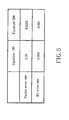
- FIG.5 is a diagram showing a table presenting performance comparison between the equalizer 100 in FIG.1 and the equalizer 200 in FIG.2 .
- h t ⁇ t + ⁇ ⁇ t - 1 ⁇ ⁇ s + ⁇ ⁇ t - 2 ⁇ ⁇ s
- the abovementioned multi-path is the Brazil E channel used for verifying ATSC performance, and its carrier-to-noise ratio is set as 25dB.
- the equalizer 100 if the equalizer 100 is used for receiving the received signal, its packet error rate reaches to 0.55 and its bit error rate is equal to 0.006.
- the equalizer 200 is used for receiving the received signal, its packet error rate is equal to 0.0001 and its bit error rate is 0.001. Both the packet error rate and the bit error rate of the equalizer 200 are substantially improved.
- the equalizer 200 is a DFE with LMS algorithm, but is not limited to this configuration only and can be implemented using equalizers of other types.
- P, N and M are not fixed, and can be set depending on demands of designers.
- the designated value DS1 and the threshold value TH1 are not fixed, too.
- the present invention provides an equalizer and related method.
- both the feed-forward filter 220 and the feedback filter 260 can be used for reducing post-echo.
- K ⁇ N or K ⁇ N and b'>Th1
- the tap weights of the feedback filter 260 are restricted at the designated value DS1 and the feed-forward filter 220 is used for reducing the majority of post-echo.
- the tap weights of the feedback filter 260 being restricted when k ⁇ N (or K ⁇ N and b'>Th1). Therefore, both the packet error rate and the bit error rate of the equalizer 200 are substantially improved.
- the equalizer 200 and related method disclosed in the present invention are much more suitable for such situations.
Landscapes
- Engineering & Computer Science (AREA)
- Signal Processing (AREA)
- Multimedia (AREA)
- Power Engineering (AREA)
- Computer Networks & Wireless Communication (AREA)
- Cable Transmission Systems, Equalization Of Radio And Reduction Of Echo (AREA)
- Filters That Use Time-Delay Elements (AREA)
Priority Applications (2)
| Application Number | Priority Date | Filing Date | Title |
|---|---|---|---|
| EP08001944A EP2086191A1 (fr) | 2008-02-01 | 2008-02-01 | Égalisateur et procédé associé |
| TW97116661A TWI380648B (en) | 2008-02-01 | 2008-05-06 | Equalizer and related method |
Applications Claiming Priority (1)
| Application Number | Priority Date | Filing Date | Title |
|---|---|---|---|
| EP08001944A EP2086191A1 (fr) | 2008-02-01 | 2008-02-01 | Égalisateur et procédé associé |
Publications (1)
| Publication Number | Publication Date |
|---|---|
| EP2086191A1 true EP2086191A1 (fr) | 2009-08-05 |
Family
ID=39739319
Family Applications (1)
| Application Number | Title | Priority Date | Filing Date |
|---|---|---|---|
| EP08001944A Ceased EP2086191A1 (fr) | 2008-02-01 | 2008-02-01 | Égalisateur et procédé associé |
Country Status (2)
| Country | Link |
|---|---|
| EP (1) | EP2086191A1 (fr) |
| TW (1) | TWI380648B (fr) |
Citations (3)
| Publication number | Priority date | Publication date | Assignee | Title |
|---|---|---|---|---|
| WO2003034673A2 (fr) | 2001-10-16 | 2003-04-24 | Koninklijke Philips Electronics N.V. | Appareil et procede permettant de limiter la valeur de coefficients de prise de filtre de retroaction dans un egaliseur a retour de decision |
| US20040001540A1 (en) | 2002-07-01 | 2004-01-01 | William Jones | Method and apparatus for channel equalization |
| US20040252755A1 (en) | 1999-08-13 | 2004-12-16 | Broadcom Corporation | Decision feedback equalizer and precoder ramping circuit |
-
2008
- 2008-02-01 EP EP08001944A patent/EP2086191A1/fr not_active Ceased
- 2008-05-06 TW TW97116661A patent/TWI380648B/zh not_active IP Right Cessation
Patent Citations (3)
| Publication number | Priority date | Publication date | Assignee | Title |
|---|---|---|---|---|
| US20040252755A1 (en) | 1999-08-13 | 2004-12-16 | Broadcom Corporation | Decision feedback equalizer and precoder ramping circuit |
| WO2003034673A2 (fr) | 2001-10-16 | 2003-04-24 | Koninklijke Philips Electronics N.V. | Appareil et procede permettant de limiter la valeur de coefficients de prise de filtre de retroaction dans un egaliseur a retour de decision |
| US20040001540A1 (en) | 2002-07-01 | 2004-01-01 | William Jones | Method and apparatus for channel equalization |
Non-Patent Citations (2)
| Title |
|---|
| IAN J FEVRIER ET AL: "Reduced Complexity Decision Feedback Equalization for Multipath Channels with Large Delay Spreads", IEEE TRANSACTIONS ON COMMUNICATIONS, vol. 47, no. 6, 1 June 1999 (1999-06-01), IEEE SERVICE CENTER, PISCATAWAY, NJ, US, XP011009428, ISSN: 0090-6778 * |
| XUAN HUAN NGUYEN ET AL: "On the constrained MMSE decision feedback equalization for MIMO wireless systems", ASIA-PACIFIC CONFERENCE ON COMMUNICATIONS, 3 October 2005 (2005-10-03), PISCATAWAY, NJ, USA,IEEE, pages 329 - 333, XP010860796, ISBN: 978-0-7803-9132-1 * |
Also Published As
| Publication number | Publication date |
|---|---|
| TW200935832A (en) | 2009-08-16 |
| TWI380648B (en) | 2012-12-21 |
Similar Documents
| Publication | Publication Date | Title |
|---|---|---|
| US20080205504A1 (en) | Decision feedback equalizers and equalizing methods thereof | |
| US8116364B2 (en) | Selective slicing equalizer | |
| US10742453B1 (en) | Nonlinear equalizer with nonlinearity compensation | |
| EP0604208A2 (fr) | Equilibreur adaptatif | |
| CN112511473B (zh) | 一种自动步长lms时域均衡滤波器及其实现方法 | |
| EP4250652B1 (fr) | Dispositif de détection et de correction d'erreurs capable de détecter la position de tête d'erreurs suspectes | |
| WO1999023796A1 (fr) | Filtrage d'erreur dans un egaliseur a decision retroactive | |
| US20060200511A1 (en) | Channel equalizer and method of equalizing a channel | |
| US20100158096A1 (en) | Equalization apparatus and method of compensating distorted signal and data receiving apparatus | |
| KR20140011286A (ko) | 수신기 이득 적응에 기반한 송신기 등화 계수를 적응하는 방법 및 장치 | |
| JPH08256093A (ja) | 判定帰還形等化器 | |
| EP2086191A1 (fr) | Égalisateur et procédé associé | |
| CN101567862A (zh) | 用于通信接收器中的均衡系统与执行均衡的方法 | |
| CN1242562C (zh) | 具输出电平积分对准的自适应均衡器 | |
| US20090207900A1 (en) | Apparatus for Stabilizing Convergence of an Adaptive Line Equalizer | |
| US20100091830A1 (en) | Equalizer and method for configuring the equalizer | |
| JP4681813B2 (ja) | タップ係数更新方法及びタップ係数更新回路 | |
| JP5257080B2 (ja) | 等化器 | |
| US8644369B1 (en) | Equalizer adaptation for heavily compressed or clipped communications signals | |
| US7826523B2 (en) | Effective adaptive filtering techniques | |
| US7289559B2 (en) | Method for updating coefficients in decision feedback equalizer | |
| US8194728B2 (en) | Tap/group-revivable decision feedback equalizing method and equalizer using the same | |
| US7733951B2 (en) | Equalization method with adjustable equalizer span | |
| JPH0435113A (ja) | 判定帰還形等化器 | |
| JP4373118B2 (ja) | Hdtvシステムにおける櫛型フィルタを備えた等化器システムおよび方法 |
Legal Events
| Date | Code | Title | Description |
|---|---|---|---|
| PUAI | Public reference made under article 153(3) epc to a published international application that has entered the european phase |
Free format text: ORIGINAL CODE: 0009012 |
|
| AK | Designated contracting states |
Kind code of ref document: A1 Designated state(s): AT BE BG CH CY CZ DE DK EE ES FI FR GB GR HR HU IE IS IT LI LT LU LV MC MT NL NO PL PT RO SE SI SK TR |
|
| AX | Request for extension of the european patent |
Extension state: AL BA MK RS |
|
| 17P | Request for examination filed |
Effective date: 20100122 |
|
| 17Q | First examination report despatched |
Effective date: 20100308 |
|
| AKX | Designation fees paid |
Designated state(s): DE FR GB |
|
| STAA | Information on the status of an ep patent application or granted ep patent |
Free format text: STATUS: THE APPLICATION HAS BEEN REFUSED |
|
| 18R | Application refused |
Effective date: 20190119 |